❌

Normal view

Vadico, parceiro de Noel, compositor maior, ĂŠ resgatado pelo Selo Sesc

Vadico, caixa com três discos, divididos por temas, resgatando a música do compositor paulista Oswaldo Gogliano (1910/1962), ou simplesmente Vadico. Lançado pelo Selo Sesc, este Ê o mais importante projeto de memória realizado este ano no país. Pois não se limita ao que Vadico deixou gravado no Brasil.

O pesquisador e músico Franco Galvão valeu-se de 541 partituras de Vadico encontradas numa universidade do Illinois. 170 músicos foram envolvidos no projeto, que reúne nomes como Guinga, Nå Ozzeti, ZÊ Manoel, ZÊ Renato, Nailor Proveta, a orquestra de câmera da USP, entre outros. Literalmente, promoveu-se o resgate de Vadico.

Quem sabe um mínimo de música brasileira, sabe de Noel Rosa, e conhece, pelo menos, estes clåssicos do Poeta da Vila, Conversa de Botequim, Feitio de Oração  Feitiço da Vila e Pra Que Mentir? Poucos, porÊm, têm ideia de que o autor das melodias dessas cançþes Ê um pianista paulistano, filho de italianos, Oswaldo Gogliano, ou simplesmente Vadico.

Morto Noel, em 1938, Vadico, no ano seguinte, integrando a orquestra do maestro Romeu Silva,  foi tocar nos Estados Unidos, e acabou ficando por lå durante 15 anos. Acompanhou Carmen Miranda, quando ela se mudou para Hollywood. Depois de Carmen, foi pianista de Katherine Durham, dona de uma companhia de dança moderna, uma das mais importantes artistas negras americanas do sÊculo 20 (O que não impediu que fosse barrada num hotel chique de São Paulo por causa da cor da sua pele). TambÊm fez músicas para a Disney.

Vadico retornou ao Brasil em 1956. Atuou em vårias frentes. Não topou criar a música de Orfeu do Carnaval, de Vinícius de Morars, e abriu caminho para a parceria do poeta com o então pouco conhecido Tom Jobim. Vadico faleceu, em 1962,  no Rio, aos 52 anos, de um infarto fulminante, no estúdio da gravadora Columbia.

DHS Said They Searched Man Who Wiped GrapheneOS Phone for Child Abuse Material. They Lied

DHS Said They Searched Man Who Wiped GrapheneOS Phone for Child Abuse Material. They Lied

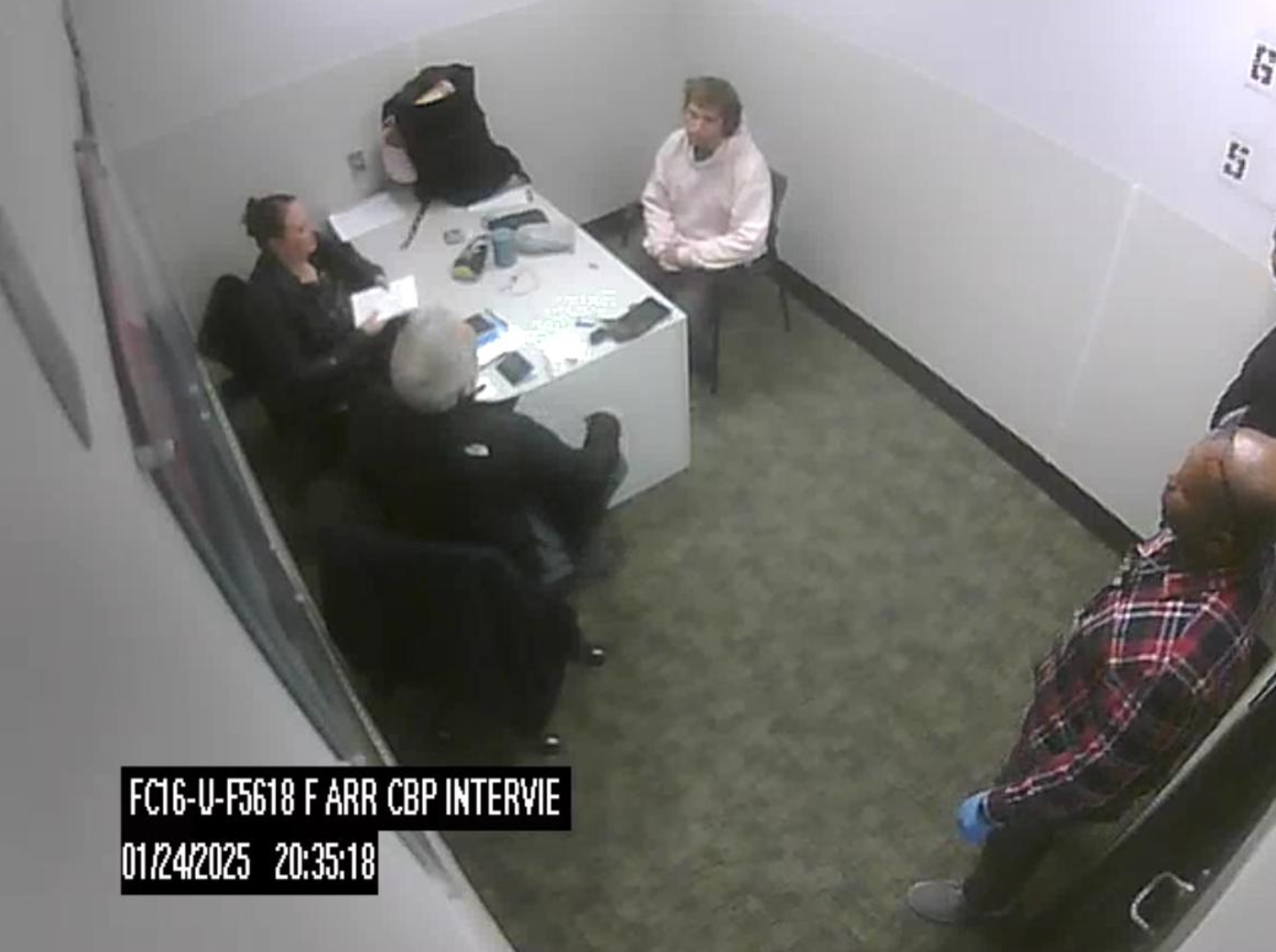
When a Department of Homeland Security official sent out an alert to stop Samuel Tunick, a Stop Cop City activist, at an airport in January 2025, they said the reason was because he was suspected of “terrorist activities,” according to new filed court records which include a screenshot of the alert and photos of Tunick’s interrogation.

Tunick ultimately provided Customs and Border Protection (CBP) officials with a code that, when entered, wiped his security- and privacy-focused GrapheneOS phone. Tunick is now being criminally charged for that alleged act, in one of the most high profile technology civil rights cases in recent memory.

The court records also showed that CBP officials lied to Tunick during his interrogation. Instead of saying he was being targeted for suspected terrorism — although this search happened just at the start of the second Trump administration, it has dramatically broadened what organizations or people may be considered such — they said they needed his phone to look for “kiddie porn.”

‘Reverse-Engineer Anything’ Is the New Wild West of AI

‘Reverse-Engineer Anything’ Is the New Wild West of AI

Over the weekend, it became fashionable to use AI to replace the operating systems on smart TVs with vibe coded or AI reverse-engineered ones to make them less bloated. People have taken proprietary internet-of-things devices that were bricked and abandoned by their creators and used AI to hack them and install new software on them, giving functionality the original developers took away.  

In the last few days I have seen people hack smart picture frames to become AI-powered smart calendars, baby monitors to remove all ads, and bricked Lululemon mirrors to bring them back to life with new software. And dozens and dozens of TVs to install AI-written software that removes bloatware, ads, and simplifies the user interface. 

What we’re seeing is vibe coding, but instead of making something from scratch, people are using AI to take an existing piece of software and replicate its features, its functionality, or cloning it wholesale. In some cases, people are using AI to take a proprietary piece of hardware and install some version of open source software on it. All of this is some mix of “decompiling,” “reverse-engineering,” “hacking,” vibe coding, AI slop, and stealing. It is the plagiarism machine being used for plagiarism, but also it is random people using AI to take control back over devices whose proprietary software was used to arbitrarily lock away basic functionality, to add advertisements, surveillance, and bloat to devices that probably shouldn’t have them, or whose functionality was bricked altogether. 

“All I am hearing from software engineers is that software-as-a-service is dying as a business model,” Mike Nolan, who studies the politics of open source software, told 404 Media about the recent spate of AI-driven clones. “It’s becoming so easy to recreate the functionality that you want [with AI.]”

“The barrier for recreating this stuff is lower, so a lot of people are doing it for fun,” he added. “But there’s a lot of work associated with maintaining software so there may be a lot of instances where the software may not be reliable enough to use—I don’t know how many companies are going to be adopting these clones.”

In one example, a user named Gathin wrote in a post on X: “Vibe coded my parents’ TV this afternoon! It was showing a sponsored ad before you could even get to Netflix. Gave Claude Code the model number, it found the TV on wifi, removed 25 Xiaomi packages and wrote a new launcher.” That post has allegedly been viewed more than 6 million times. “Looks like an Apple TV now lol.”

It has been possible to do a lot of this for a long time using open source, human-coded repositories. There are many communities of people who have spent hundreds of hours bringing bricked internet-of-things hardware from the dead or finding vulnerabilities that allow one to modify or repair devices that have proprietary software on them. 

But over the weekend, a project called “Reverse Engineer Anything” became one of the most viral GitHub repositories in recent memory, with more than 342,000 stars as of the time I’m writing this. The project uses AI to deconstruct features in other pieces of software, and allows the user to replicate them: “See a feature in an app that you want in your own product? Ask your agent to investigate it with REA. It can inspect the app without its source code, explain how the feature works, show the evidence, and build a version for your project.”

What this promises is a way to easily clone and modify other people’s products; it is the same general principle that has in recent weeks allowed for the viral, AI-driven clones of Adobe’s Creative Cloud software, Microsoft Office and the “decompilation” of hundreds of different video games. This tactic is being used not just on software you run on your computer, but also to reverse-engineer and modify the embedded software on physical devices. 

A person who claims to make guitar pedals, for example, claimed on Hacker News that he used AI to clone the effects algorithms of three of his competitors using AI: “In the past 72 hours I have ONE-SHOT decompiled 3 of my main competitors products. Like, I could in theory just stick them in a box and resell them […] Basically, anyone with a Claude subscription can now rip off [sic] any best-in-class algorithm from any competitor.”

It is not necessarily the case that everyone will be writing and running their own software or that Adobe or Microsoft are screwed. But I’ve seen enough to say that the “decompiling” or “reverse-engineer anything” craze is going to have an actual real-world impact on software companies, coding communities, and open-source projects. 

One of the criticisms I heard last week after writing about video game “decompiling” communities being overrun with AI-powered decompilations, ports, and clones is that a lot of the AI decompilations are not actually “decompiling” anything — that the resulting source code usually isn’t the same as the original, and that the resulting software has weird bugs, is of low quality, or doesn’t fully work. 

But that’s one of the main problems here: AI-powered, cloned software often has bugs that the person using the AI doesn’t understand or know how to fix, and people are doing it anyway, using the software anyway, and unleashing it on the world and on these communities at a speed with which it cannot be vetted or moderated. Part of the reason that this will have an impact is specifically because, at least in the short term, a lot of this software will suck: The ability to cheaply and quickly clone software and modify features is going to have some sort of sloppifying impact on society whether you vibecode software or not. Unlike some of Silicon Valley’s wildest sickos, I do not expect most people to vibe code their own software or to hack their baby monitors, but like AI slop on social media or on menus, flyers, and billboards, you do not need to actually use AI or think that it’s good in order to be affected by this. 

Inevitably, poorly coded, barely-functional, insecure software is going to be installed on critical hardware, which will lead to devices and networks being hacked; reverse-engineering communities and open source projects are going to be overrun with people Kool-Aid manning in with “their” AI projects and code. 

All of this has been enabled by the agentification of AI, improving models, and the removal of guardrails. It is now possible to tell an AI to go do something, and to generally have it do that thing. This is leading to more people making more things and more AI agents acting in annoying and perhaps antisocial ways on the internet—we are likely to see an onslaught of semi-functional software and hardware slop, which will have knock-on effects for us all.

We are going to see hastily-created hardware startups using poorly cloned software that barely works, we are going to go to restaurants and be asked to order through a touch screen using cloned software with bizarre bugs. We are going to see people installing and using random code that they know nothing about on internet-connected physical hardware; and we are likely to see hackers try to infiltrate this process to include malware on some of that code. We are going to see smaller software and hardware companies killed by competitors who used AI to steal their products and undercut them. But what people use this for is likely to be a bit of a mixed bag; we are also likely going to see decompiled software used to remove manufacturer guardrails on products that never should have existed in the first place.

Most studies criticizing the Nova classification of ultra-processed foods are funded by food companies

Jerry Mande of Nourish Science sent me this item from The Examination: Junk food researcher finds hidden hand in ultraprocessed foods debate.

This, in turn, referred to Nine in ten research papers disputing definition of ultraprocessed foods have industry ties, study finds.

This, in further turn, referred to a study in the American Journal of Public Health: Characterizing Food Industry Affiliations Among Critics of the Nova Food Classification System: A Systematic Review. Am J Public Health. 2026 Nov;116(11):1790-1799. doi: 10.2105/AJPH.2026.308691. Epub 2026 Sep 17.

Results

Of 69 articles from 2009 to 2025 criticizing the Nova classification system for ultra-processed foods or defending ultra-processed foods:

  • 91.3% involved at least 1 industry-affiliated author
  • 68.5% of 232 total authors had food industry ties
  • 65.2% of articles were published in journals associated with nutrition societies with disclosed industry partnerships.

Arguments defending or promoting ultraprocessed foods appeared in

  • 39.7% of articles with direct industry ties
  • 60.0% with organizational or governmental industry ties
  • 16.7% of articles with no identified ties.

Conclusion

Given the tobacco industry’s well-documented strategy of manufacturing academic doubt about its products’ harms, these findings raise concern that the food industry may be following a similar playbook as evidence for the health risks of ultraprocessed foods continues to grow.

Comment

These results certainly do raise concern.  They confirm what I’ve long suspected.  The food industry does not like the concept of ultra-processed food.  Defining it makes research possible.  This research shows diets high in ultra-processed foods to be bad for health.  If people eat less of them, sales and profits will decline (and this is already happening).  The main opposition to defining ultra-processed foods and advice to eat less of them comes from the food industry (other opposition comes from nutrition researchers who object to the focus on processing rather than nutrient content).  This study provides further evidence for the bias introduced by industry funding of research.

The bottom line: not eating too much ultra-processed junk food is likely to improve health.

The post Most studies criticizing the Nova classification of ultra-processed foods are funded by food companies appeared first on Food Politics by Marion Nestle

Scientists Discover A Strange Particle Explains the Origin of Reality

Scientists Discover A Strange Particle Explains the Origin of Reality

Scientists have discovered that an exotic particle that existed at the birth of the universe might solve one of the biggest mysteries in cosmology and help explain reality as we know it, according to a new study in Physical Review Letters.

Our modern universe is dominated by matter, but it also contains fleeting amounts of antimatter, which is like a bizarro version of matter made of particles with the same mass, but opposite electrical charges. For instance, matter contains positively-charged protons and negatively-charged electrons, whereas antimatter is made up of the inverse: negatively-charged antiprotons and positively-charged positrons. 

As a result of these opposite features, matter and antimatter particles annihilate each other when they meet. This mutual destruction is the source of a major cosmic mystery, given that equal amounts of matter and antimatter are predicted to have formed in the split-seconds following the Big Bang. Yet somehow, matter emerged as the far more dominant substance in the cosmos, an asymmetry that has yet to be explained.

Now, a pair of scientists have pinpointed an overlooked particle, known as the heaviest decoupled right-handed neutrino (RHN), as a solution to this problem—plus, they predict that their hypothesis could be experimentally tested in the future. 

🌘
Subscribe to 404 Media to get The Abstract, our newsletter about the most exciting and mind-boggling science news and studies of the week.

“No one talks about this decoupled right-handed neutrino,” Rishav Roshan, a research fellow at the University of Southampton and a co-author of the study, told 404 Media. “We realized that this decoupled right-handed neutrino could alter the expansion of the universe and affect the matter-antimatter asymmetry of the universe.”

“This thing was present in the literature for a very long time, and for some reason people did not pay that much attention to this particular point,” he added.

Scientists Discover A Strange Particle Explains the Origin of Reality
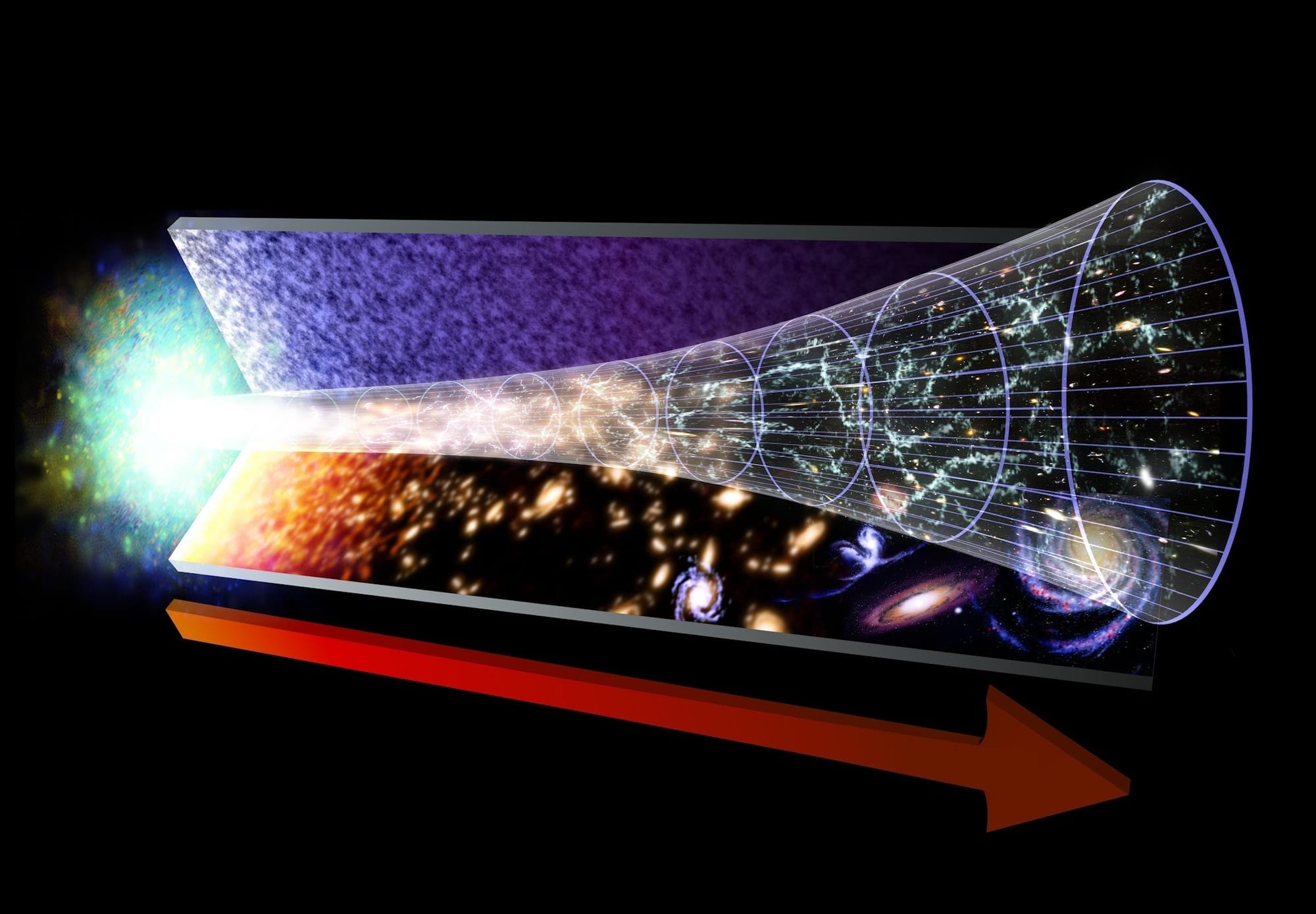
A graphic summary of the new study. 

This particle is the heaviest of a trio of hypothetical decoupled RHNs that existed briefly after the Big Bang, and are key to the “minimal seesaw model” that explains the origin of modern neutrinos, which are extremely lightweight particles that are abundant in the universe today.  

“The heaviest decoupled right-handed neutrino is a particle that exists in the minimal seesaw model but interacts very weakly with regular matter, making it nearly invisible to current experiments,” Roshan told 404 Media. For this reason, he noted that this particle has been “overlooked because many researchers focus on the lighter neutrinos” and view “the heavy states as irrelevant due to their minimal influence on observable physics.”

Roshan and co-author Sudipta Show, a postdoctoral researcher at the Indian Institute of Technology Kanpur, had a hunch that this exotic heavy particle could have played a role in the domination of matter in the early universe. In their new study, they included the particles in models of the primordial universe, which suggested that the particle could have slowly decayed, creating an imbalance in particles known as “leptons”—a class that includes different “flavors” such as electrons, muons, and neutrinos—that was then amplified into the larger matter-antimatter imbalance. 

“In the early universe, when this heavy neutrino was produced, the temperature of the universe was extremely high, much greater than the mass energy of this neutrino, and it behaved as radiation,” Roshan explained over email. “As the universe began to expand, its temperature slowly decreased.” 

“Once the temperature fell below the mass energy of the heavy neutrino, the particle became non-relativistic and started to behave like matter due to its extremely weak interactions, influencing the dynamics of the universe's expansion and affecting the creation of matter versus antimatter,” he continued.

Scientists have already pinpointed the process of uneven lepton and antilepton formation—known as leptogenesis—as a leading explanation for how matter dominated the universe. Roshan and Show now demonstrate that the heaviest decoupled RHN is key to this hypothesis and should be included in future models.

Moreover, the team noted that a new generation of observatories could potentially detect this process hidden in gravitational waves, which are ripples in spacetime. Current detectors, such as the Laser Interferometer Gravitational-Wave Observatory (LIGO) can pick up gravitational waves made by cataclysmic events, such as mergers between black holes. But a spate of advanced detectors, due to come online in the 2030s and 2040s, are designed to tune into “primordial” waves from the split-seconds after the Big Bang, which may contain spectral signs of the heaviest decoupled RHN. 

“Future detectors like SKA, LISA, DECIGO, and ET could potentially observe these signatures. These instruments are being developed to detect gravitational waves, with some expected to come online within the next few years. If successful, they could pick up signals related to the heavy neutrino’s effects on the early universe,” Roshan wrote over email.

“Solving the matter-antimatter asymmetry question could transform our understanding of cosmic evolution and the fundamental laws of physics,” he added. “It may challenge or refine the Standard Model and influence theories of the universe's formation and structure. A new understanding of this asymmetry could also lead to insights about dark matter and the early moments of the universe, potentially reshaping our view of cosmic history.”

Benito di Paula usava a linguagem do povo, e ĂŠ onipresente no repertĂłrio dos artistas de barzinhos

O fluminense (de Nova Friburgo) Uday Veloso, melhor dizendo, Benito di Paula, cuja morte, aos 85 anos, foi anunciada nesse domingo, 18 de outubro, foi um dos maiores hitmakers dos anos 70. Mas teve um inĂ­cio claudicante. Seu LP de estreia, nĂŁo foi sucesso de vendas, embora trouxesse ViolĂŁo NĂŁo Se Empresta a NinguĂŠm, samba muito cantado em todo o paĂ­s no carnaval de 1970.

Benito cometeu bobeira, abriu o disco com Apesar de VocĂŞ, o samba de Chico Buarque, que seria proscrito, proibido em todo territĂłrio nacional. O ĂĄlbum do cantor novato tambĂŠm foi recolhido. Mas a Copacabana acreditou nele, e investiu em mais um LP, Ela (1972) que tambĂŠm nĂŁo aconteceu. Acertou no prĂłximo, Um Novo Samba (1974). Este rendeu uma trinca de blockbusters radiofĂ´nicos: Se NĂŁo For Por Amor, Retalhos de Cetim e Que Beleza. DaĂ­ em diante foi sĂł hits.

Nesse disco, Benito di Paula definiu seu estilo. 1974 é o marco zero de um novo tipo de samba, de letras românticas ou bem humoradas, menos sincopado, meio baladão, de apelo fácil. O avô do que chamam hoje de pagode. Atribuem ao crítico carioca Tárik de Souza o rótulo pejorativo de “samba jóia”, que englovava ainda, ente outros, Luiz Ayrão, Wando, Luiz Américo, Gilson de Souza, Agepê. O Originais do Samba também flertou com o estilo.

Mas nenhum dos praticantes emplacou tantos sucessos quanto Benito de Paulo, ruim de crítica e bom de público. O samba jóia, de certa forma, surgiu graças à censura. Exatamente no auge da prensa nos grandes nomes da geração dos festivais. Suas letras passavam por longe da política.  Não se sabe onde encontraram o link da música de Benito di Paula com o jazz, do qual seu piano não trazia nada. Estava mais para o velho bolero.

Seu sucesso atravessou a dÊcada, e arrefeceu nos anos 80. Nessa dÊcada ele continuou gravando uma mÊdia de um disco por ano. Na dÊcada seguinte, houve uma mudança geral na música brasileira, com manguebeat, pagode romântica, axÊ, fuleiragem, sertanejo. Benito di Paula não se encaixava em nenhum desses nichos.

Ele passou a gravar em espaços cada vez longos, Em 1996, lançou Baileiro, pela Paradoxx, e só voltou a lançar disco em 2009, pela EMI, com CD e DVD ao vivo. Disco novo somente em 2017, Essa Felicidade É Nossa, pelo selo 74 Music, quase todo repertório é autoral, mas assinado como Uday Vellozo (tem participação de Fernanda Takai). Seu disco final, foi dividido com o filho, Rodrigo Vellozo, o independente O Infalível Zen, de 2001.

Embora seus discos não atraíssem mais compradores, nem tocassem no rådio ou TV (atÊ porque esses o formato desses veículos sofreu mudanças radicais), Benito di Paula continuou nos palcos e na estrada, tanta a popularidade do seu repertório.  Onde sua música pode ser ouvida com frequência. Seus clåssicos são obrigatórios no repertório dos artistas e grupos que animam barzinhos país afora.

(Foto: Benito di Paula com Oswaldo Sargentell, reproduzida de O Cruzeiro)

❌