Anti-vaccine Health Secretary Robert F. Kennedy Jr. announced the names of eight new members of a 16-person federal task force intended to make scientifically independent, evidence-based recommendations on an array of preventive medicine services for Americans—from depression screening to statin use, colonoscopies, and mammograms.
Recommendations from the panel—the US Preventive Services Task Force (USPSTF)—don't simply provide guidance for Americans; they also determine access. The USPSTF is supposed to use a rigorous, transparent framework for evaluating evidence and sets graded recommendations on an A to D scale. Health insurance providers are required to cover, at no cost, all preventive services that are given recommendations of an A or B grade.
Kennedy has sidelined the USPSTF for more than a year, canceling its meetings and refusing to appoint new members as terms expired and members left. In May, Kennedy also fired two leaders, sparking outcry and exacerbating fears that he would corrupt the nonpartisan independent panel by stacking it with unqualified ideological allies—which he did with an influence vaccine advisory committee at the Centers for Disease Control and Prevention.
As European militaries adapt to the use of AI and drones in modern warfare, a NATO-backed startup is helping to deploy AI-driven target detection and selection that can run on small drones for surveillance and attack missions.
The company, Scaleout Systems, was originally founded by researchers from Uppsala University in Sweden in 2018, and initially focused on training and deploying machine learning models directly on the hardware available in commercial trucks and other vehicles. But once Russia launched its full-scale invasion of Ukraine in 2022, the company pivoted toward defense applications.
“With the war in Ukraine and a shifting world, we realized that this technology can be very important to operationalize edge data and sensor data for machine learning to make sure that NATO allies have found that strategic advantage,” Andreas Hellander, cofounder and CEO of Scaleout Systems, told Ars.
Google's AI models may not be in the lead by most measures right now, but the company does have one key advantage: your data. If you're deep in the Google ecosystem, Gemini models have a lot of context on you already. Google's latest Google Labs experiment, known as CC, aims to expand that kind of customization to the whole family.
CC is an evolution of something that Google announced in 2025. The original CC eventually became Gemini's Daily Brief, which churns through the data in your Google account to offer daily action items and suggestions. The new CC has a similar goal, but it's designed to be a shared resource for up to six users in a family.
Google says that CC has its own Google account, allowing each family member to interact with it (or not) as they choose. For example, CC only sees emails from its connected users if they are explicitly shared. You can do that by designating certain addresses as always available to the agent—something like school scheduling emails. You can also send content to CC via email or Google Chat. The agent can even monitor a shared Google Drive folder, into which you can dump invitations, documents, and other content.
For years, Microsoft and OpenAI have fought to keep certain information out of the public eye in their fight with news organizations that have accused the AI firms of teaming up to violate copyright laws by stealing tons of news content to train AI.
However, now the details that should never have been marked confidential are starting to leak. In a motion for summary judgment that was unsealed Thursday from news plaintiffs led by The New York Times, internal documents are exposed that news groups alleged show exactly how Microsoft and OpenAI viewed the threat to news before unleashing new AI products like ChatGPT and Copilot.
Perhaps most explosively, Microsoft Director of Applied Science Brent Hecht repeatedly warned in documents that scraping news for AI training was “an astonishing theft of unprecedented proportions,” calling it perhaps the “largest theft of labor in human history,” news orgs said. In another document, Hecht contradicted Microsoft and OpenAI’s argument that training AI on news content is fair use, suggesting that the plan to widely scrape news made “a complete mockery of the idea of ‘fair use.’”
By framing their efforts as a “slowdown” rather than an industry-wide push for better security standards, AI labs may have set themselves up for years of regulatory headaches.
US Rep. Darrell Issa (R-Calif.) has proposed a law that would require Internet service providers and other network operators to block foreign piracy websites. Issa's bill would help copyright holders obtain judicial blocking orders to be served to ISPs, domain name resolution services, and virtual private networks.
Issa, who is retiring from the House at the end of this year, is the latest in a string of Republican and Democratic lawmakers to propose a site-blocking regime that's been sought by the Motion Picture Association (MPA). He submitted the bill this week, after indicating in a June 30 hearing that he planned to introduce site-blocking legislation.
"While millions of listings for copyright-infringing content are removed every day under [the] notice-and-takedown process set forth in the Digital Millennium Copyright Act, right-holders have raised concerns with the speed," Issa said at the hearing. Issa asked, "Can we do it at the speed of sound? Can we do it at the speed of light? More importantly, in a 45-minute or sometimes a fraction of that live sports broadcast, can we do it soon enough to make it no longer profitable for those who pop up and sell their clandestine wares?"
The Dreamforce conference became an unlikely battleground for the CEOs of OpenAI, Anthropic, and Nvidia to debate whether AI development should slow down.
In response to a new European Union law, AI platforms are implementing new schemes for watermarking the content they generate. Anthropic recently disclosed its future Claude models will use SynthID-Text, an approach Google created and released as open source. It uses a secret key that subtly changes the process a model uses for choosing the next word in a sentence. Whereas a top next word choice might be “cloudy,” the key might change it to “overcast.” Anyone who knows the key can determine if it was generated by the platform using it.
New research shows that SynthID-Text can change not just word selection but also the tools a model invokes and the chances it will adhere to or disregard safety guardrails it has been trained to follow. The threat can become greater in the face of an adversarial prompt, in which an attacker attempts to cause a model to carry out a harmful action, such as revealing a password or other sensitive information. Instructions that normally wouldn’t be followed will, in some cases, be performed once the watermarking is deployed. The finding underscores the need for developers to thoroughly test how their LLMs and agents behave when watermarking is in place.
Changing safety behavior
“As compared to the same models without watermarking, it is definitely going to change their behavior, especially when we place it under adversarial conditions, or we make these models call tools when they’re powering an agent,” Andrea Siposova, an AI security researcher at Lasso Security, told Ars. “Watermarking is made to not be perceptible to a reader, but we know that when we are changing anything about what the model is generating, it is going to cause some tradeoffs, it’s going to show up somewhere.”
Flock created a fake police department called “Flock City PD” that it used to search a series of live automated license plate readers in several U.S. cities during demonstrations of its surveillance system’s capabilities, public records show. The records show that Flock City PD searched real cameras for people holding signs, “crowds,” people wearing masks, and more, according to audit logs shared with 404 Media.
Flock City PD also searched extremely sensitive queries, which Flock told 404 Media were done to prove that the system would not actually perform these searches and that its moderation tools worked. These searches included “coexist bumper sticker,” “vehicle a pretty girl would drive,” “white truck with a trump sticker,” “religious cars,” “Star of David,” and “don’t tread on me flag.”
Flock employees accessing live cameras for sales purposes, and showing police specifically how to do dubious searches, have become political flashpoints in the backlash against the company. In April, we reported that Flock employees regularly accessed live cameras in Dunwoody, Georgia, at a children’s gymnastics room, at a playground, in a school, at a pool, and in a Jewish community center in the city while demoing the company’s tech to cops. Audit logs obtained by Jason Hunyar, the Dunwoody resident who originally discovered this access, show that an entity called “Flock City PD” also searched live Dunwoody cameras for all sorts of politically contentious topics during sales demos with police. This included searches for behavior that is expressly protected by the First Amendment.
The Flock City PD searches. "Allow" means the search was allowed, "warn" means a popup box appeared, and "block" means the search was blocked
Flock accounts called “Flock City PD - Law Enforcement Demo,” “Flock Intelligence,” and “Flock Safety - Commercial Sales Demo” ran searches in Dunwoody and Bryan, Texas, as well as a handful of other unknown jurisdictions, for “coexist bumper sticker,” “Star of David,” “person wearing a mask,” “crowd,” “vehicle with a political sticker,” “man holding rifle,” “person in scrubs,” “don’t tread on me flag,” “car that a pretty girl would drive,” and “vehicle with trump bumper sticker,” among other searches. All of these were “FreeForm” searches, meaning Flock’s AI image recognition algorithm would determine what would be returned. The audit logs show that not all of these searches were allowed by Flock’s system, and that its moderation tools either blocked some of the searches or displayed a warning prompt before doing the search.
A Flock spokesperson told 404 Media that some of the searches were done specifically to show the types of searches cops shouldn’t do, and to show some of the guardrails Flock had put in place to prevent these searches. For example, the searches for “vehicle a pretty girl would drive,” is listed as having a moderation “block.” A search for a person with “Star of David” was also listed as having a moderation block, but a search for “Star of David” on a vehicle raised a warning box about the nature of the search before allowing it to proceed.
The searches highlight how Flock employees regularly performed real, invasive searches on real cameras to demonstrate how its technology works; residents of Dunwoody have repeatedly told their city council that they feel like their privacy is being violated as an experiment and sales demonstration for a private company. After Hunyar and 404 Media reported on Flock cameras being accessed in sensitive locations by Flock employees, the company and the city said Dunwoody’s cameras would no longer be used for sales demonstration purposes. The Flock spokesperson said that these demonstrations were done to show police officers what not to do, and said that the “Flock City PD” account no longer searches on any real cameras. They added, “the Flock City PD demo environment is now isolated, and law enforcement agencies cannot form a sharing relationship with it.”
A recent Flock training webinar seen by 404 Media shows a Flock employee logged into the Flock City PD account having access to cameras that seem to be explicitly for training purposes, with names like “Flock Warehouse - LPR Demo Cameras,” “Circle K - Demo,” “Tennessee Demo Cameras,” “Scottsdale AZ Demo Video Cameras,” and “ALPR Demo.”
“Flock City PD is a demo and testing organization name used for law enforcement demonstrations and for our development engineers to conduct testing. Those searches were part of testing and validating FreeForm search moderation and related safeguards. These were not investigative searches conducted by a customer agency,” the Flock spokesperson told 404 Media. “That is also the context for prompts such as ‘Star of David’ or ‘large group with signs.’ These types of prompts are testing the safeguards of the system — that it appropriately blocks offensive or sensitive searches, or flags searches that may implicate First Amendment protections. Our policy is designed so that offensive or slur-based searches do not yield results, and prompts that may implicate First Amendment concerns trigger notice and audit review. As you can see in your screenshot — the safeguards we built are working.”
The audit logs show, however, that many of the sensitive searches were not blocked. Searches for “crowd,” “a person wearing scrubs,” “large group with signs” were all explicitly allowed. More sensitive searches, such as for “vehicle with trump bumper sticker,” “don’t treat on me flag,” “coexist number sticker,” “religious cars,” and “Star of David” had a warning box pop up, but Flock says in a blog post published in April that police can bypass this: “Searches for specific content that could potentially implicate First Amendment rights will trigger a pop-up warning the user and advising that this search will be sent to a superior for auditing if the user chooses to proceed.”
In a blog post explaining how it tests Flock, the company wrote, “some vehicle bumper stickers contain words and symbols indicating religious affiliations or nationalities, and the moderation policy needs to recognize, flag, and block these searches. Just like vehicle identification, these algorithms need to be trained in the real world using real-life examples. Those might be training and demo searches for things like ‘Cross bumper sticker,’ ‘Star of David,’ or ‘Japanese flag.’ These searches, if performed, should not return results.”
Dunwoody residents have made clear that they understand that Flock needs to test its systems, but they did not sign up to be guinea pigs for a surveillance company.
“Flock's claims that they impose restrictions on what users can search for in their database provides the opposite assurance of what they seem to purport. In doing so, they admit that their dynamic surveillance network does in fact capture this sensitive information, and that the gate to that information is controlled solely by the policies of a for-profit corporation,” Hunyar told 404 Media. “As shown in previous demos, their willingness to continuously monitor and catalogue the actions of law abiding citizens exercising their constitutionally protected rights should worry anyone who plans to exercise them now or in the future."
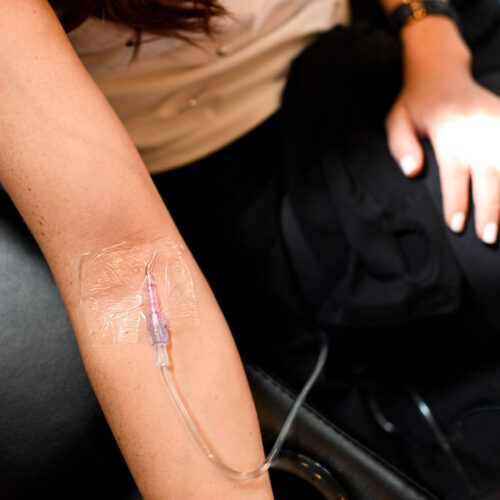
The people had received IV drips containing glutathione, which is sold—without evidence—for purposes like detoxification, immune support, increased energy, and skin brightening. Glutathione is an antioxidant that's found naturally in the body. It has been studied as a potential treatment for various ailments, but so far there is little to no evidence-backed use for the tripeptide; there are no FDA-approved glutathione products in the US.
Nevertheless, it's commonly used as a supplement and promoted as having various benefits. It's most often used in supplement pills, taken by mouth. But popular wellness clinics offering IV drips of vitamins and other supplements have also been offering glutathione. According to the CDC and FDA, the problem is that specialty drug makers, called compounding pharmacies, are making these IV drips using glutathione powders that are graded for dietary supplements taken orally. This grading is critically different from that of purified products graded for use in sterile injectable drugs.
When we first drove the Hyundai Ioniq 5 at the end of 2021, it didn’t take much exposure to the angular electric vehicle to find much about it appealing. Back then, an 800 V architecture had only really been seen in expensive high-end EVs from Porsche, but here was a mainstream model with that same technology—and even faster fast-charging, taking just 18 minutes to go from 10–80 percent. The retro looks didn’t hurt either, channeling the boxy hatches styled by Giorgetto Giugiaro in the 1970s and '80s. But five years is a long time in the car world, and the compact electric crossover segment is far more competitive than it was when the Ioniq 5 debuted. We figured it was worth spending some more time with one to see how it still stacks up.
Although the Ioniq 5 range starts at $35,000 for the standard range model, our test car was a 2026 Ioniq 5 AWD Limited, which has an 84 kWh battery pack—part of the lifecycle refresh in early 2025 that also swapped in a NACS (J3400) charge port in place of the CCS1 port you’d find on earlier cars. Among the other additions that arrived as part of the 2025 refresh was a rear windshield wiper, which was sorely needed at launch.
This range-topping trim starts at $45,075, with an extra $3,900 for the addition of the front electric motor that gives the AWD version a combined output of 320 hp (239 kW) and 446 lb-ft (605 Nm). The added traction of AWD (when you have grip) is desired by many, but you do trade something for it: efficiency. The AWD version has an EPA range of 269 miles (432 km) versus 318 miles (512 km) for the rear-wheel drive variant.
Click this link https://boot.dev/?promo=LTT and use my code LTT to get 25% off your first payment for boot.dev.
Can’t figure out which video doorbell to buy? I spent over $2000 US dollars on the best smart doorbells to help you decide which one should be securing your front door. All of these have similar features, but the quality and price you pay to access them might surprise you.
Discuss on the forum: https://linustechtips.com/topic/1642820-i-tried-all-the-best-doorbells/
Check out the Doorbell Cameras from the video!
**Budget Doorbells:**
HAVION D1 Wireless Video Doorbell Camera: https://geni.us/oy7n4
Blink Battery Doorbell 2K+ (newest model): https://geni.us/c8l6Fke
Orbitell 1080p Wireless Wi-Fi Video Doorbell Camera: https://geni.us/3B7s8
Arlo Video Doorbell HD (2nd Gen): https://geni.us/u4uhN
**Mid-Tier Doorbells:**
WYZE Wireless Duo Cam Doorbell Camera: https://geni.us/8i3wBI
Eufy Security Video Doorbell C31: https://geni.us/CSIUa
Ubiquiti UniFi Doorbell Lite Black (UVC-Doorbell-B): https://geni.us/HCfHJr
Tp-link Tapo 2K+ Wired or Battery Powered Smart Video Doorbell: https://geni.us/QJAf
Ring Battery Doorbell 2K: https://geni.us/GyWiz
**Premium Doorbells:**
Ubiquiti Networks G4 Doorbell Pro: https://geni.us/VMs4w3
Eufy Security Video Doorbell E340: https://geni.us/yKGNQ
Google Nest Doorbell: https://geni.us/El1UKZ
Ring Battery Doorbell 4K Pro: https://geni.us/Gqqfi
Check out our Channel Partners:
Secretlab
- Grab a TITAN Evo ergonomic gaming chair: https://lmg.gg/secretlabltt
- Grab an ATLAS ergonomic office chair: https://lmg.gg/secretlablttatlas
PIA
- Get the VPN of our choice: https://www.piavpn.com/ltt
dbrand
- Buy a "Circuit" series skin for your device: https://dbrand.com/pcb
► SHOP LTT PRODUCTS: https://lttstore.com
► GET EXCLUSIVE CONTENT ON FLOATPLANE: https://lmg.gg/lttfloatplane
► DIVE DEEPER ON THE LTT LABS WEBSITE: https://lmg.gg/labs
► SPONSORS, AFFILIATES, AND PARTNERS: https://lmg.gg/partners
Purchases made through some store links may provide some compensation to Linus Media Group. Affiliate links powered in part by https://affilimate.com/?aid=ghz1izbpb
Linus Sebastian is an investor in Framework Computer, Inc and HexOS by Eshtek.
CHAPTERS
---------------------------------------------------
0:00 Intro
1:49 Overview of Bells
2:09 Budget Doorbells
5:11 Mid-Tier Doorbells
9:35 Mid-Tier Image Quality
10:30 Flagship Doorbells
13:38 Flagship Image Quality
14:22 The Verdict
17:18 Outro
For a while now, the issue of "AI alignment" (i.e., how well an AI model's actions line up with the intentions of its creator and/or user) has been a core concern and topic of discussion among AI safety researchers. Since OpenAI's disclosure of the infamous Hugging Face hacking incident in July, the concept of "AI alignment" has itself broken containment and increasingly become a mounting concern and subject of conversation among the general public.
Perhaps in recognition of that, OpenAI committed this week to a new framework for disclosing "instances of model misalignment at OpenAI," including six examples of "unexpected or concerning model behavior" observed within the company in the past six months. The company said that publishing details of these incidents will hopefully "[allow] others to investigate the same problems, test our explanations, and improve mitigations."
Do as I say, not as you do
Among OpenAI's newly disclosed "misalignment" reports this week, the one that most resembled a sci-fi story about a rogue AI trying to break free involved an instance of "self-generated prompt injections." In attempting to scan a library catalog for examples from a "best books" list, the model perplexingly used its "compaction" function (where it summarizes data and findings for later retrieval) with megalomaniacal instructions such as:

 Login
Login