Recently unsealed court documents in the New York Times' case against OpenAI and Microsoft are pretty damning. The companies' own documentation warned that it was starting a "doom loop" that would damage the web, characterized its scraping of data to train its models as the "largest theft of labor in human history," and that it made a "complete mockery of the idea of fair use."
Many of the most eye-catching quotes from the document come from Microsoft's Director of Applied Science, Brent Hecht. Though, the company has tried to distance itself from Hecht's assertions. Microsoft spokesperson Alex Haurek told The Verge that "These comments ref …
The US narrowly avoided boarding a Chinese ship based on an "entirely false" US intelligence report generated with the help of AI tools, according to a CNN report.
That erroneous intelligence, submitted by a US Special Operations Command analyst, suggested the Chinese ship was transporting nuclear arms program components through the Middle East, according to "four sources familiar with the episode" cited by CNN. The US military was preparing to intercept and board the ship, with air support, before officials discovered a chatbot used in generating the report had "inaccurately identified the material the ship was carrying."
One source told CNN the AI-powered fiasco "almost started a war."
An AI tool is set to start advising air traffic controllers on managing air traffic in the congested airspace above the Washington, DC, area. The expected launch would be the first step toward a planned nationwide rollout covering the 29 million square miles of US national airspace overseen by the Federal Aviation Administration.
The FAA describes the SMART system as using AI models to predict air traffic flows and identify potential conflicts based on operational factors like airline schedules, weather, airport capacity, and airspace conditions. US government and industry officials told The Wall Street Journal that SMART could debut for the three major airports in the Washington, DC, area as soon as Monday, September 21.
The decision to launch SMART in a limited scope before going nationwide is the “right call,” said Philip Mann, principal consultant at Vector Strategic Consulting LLC, where he advises on aviation safety and AI governance. Mann previously worked at the FAA in multiple roles for 17 years.
Virginia Gov. Abigail Spanberger ordered the state government to take steps that could empower local communities to have a larger say in data center development and slow down approvals in a state that is already home to the data center capital of the world.
Executive Order 22 bans executive branch officials from signing nondisclosure agreements for data center projects, requires expedited noise regulations, and requires a review of backup-generation operations used by data centers, among other requirements. The order also establishes an AI task force responsible for evaluating how the state government can address risks to Virginians like wo …
The Federal Communications Commission yesterday approved Paramount Skydance's plan to sell large equity stakes to the sovereign wealth funds of Saudi Arabia, the United Arab Emirates, and Qatar.
Under US law, companies with licenses to run broadcast stations need FCC approval to have direct or indirect foreign ownership exceeding 25 percent of the company's stock. Paramount says its indirect foreign ownership will reach 49.5 percent after it receives investments from the sovereign wealth funds and filed a petition asking the FCC to waive the foreign ownership limit.
Paramount, the owner of CBS, holds FCC licenses for the 28 local CBS stations that it owns and operates. Paramount is buying Warner Bros. Discovery in a $111 billion deal that is being partially financed with foreign investment but hasn't completed the acquisition because US states filed a lawsuit that aims to block the merger. Trump's Department of Justice approved the merger.
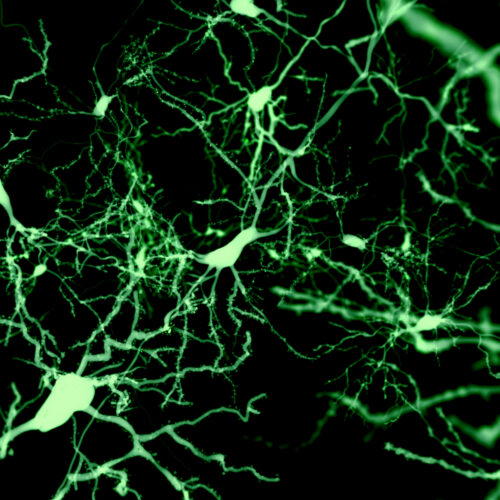
For a long time, sleep research has treated the cerebral cortex as a passive follower reacting to signals from the deep brain. “Usually, sleep is associated with being controlled by subcortical regions,” said Geoffrey Terral, a neuroscientist at the Albert Einstein College of Medicine in New York.
The cortex is where the slow rhythms of deep sleep can be seen, but researchers assumed the signals that triggered them originated elsewhere. In a recent Nature study, Terral and Renata Batista-Brito, who runs the lab, report a population of cortical cells that challenges that assumption.
These cortical cells make up only around one percent of the cortex's inhibitory neurons, and switching them on in a mouse puts the animal to sleep. “What our work shows is that the cortex can not only see this rhythm but also initiate it by itself, and this is sufficient to promote sleep,” Terral said.
On Wednesday, US government officials removed a Chinese AI search tool that was briefly deployed on the Federal Register website, Reuters reported.
The change came after social media users noticed an apparent contradiction: The National Archives was using one of Alibaba’s Qwen AI models, even as top US law enforcement claimed that such models illegally copy US frontier models. Earlier this month, the Federal Bureau of Investigation (FBI) named Alibaba among six leading Chinese firms allegedly conducting “industrial-scale distillation” that the agency says is helping America’s biggest competitor cut costs and development time in the race for global AI leadership.
It’s unclear when exactly the National Archives, which runs the Federal Register website, began offering visitors the option to use a Qwen model to search public comments on proposed regulations. So far, the independent agency tasked with increasing public access to federal government documents has not commented on the removal and did not respond to Ars’ request for comment. The White House and the FBI have also not commented.
TeamPCP pulled off the worst-ever software supply-chain hacking spree and breached thousands of companies. Now Google’s threat intelligence group says it had a mole inside the hackers’ inner circle.
In this collaboration with our friends at The Intercept, 404 Media's Jason Koebler and the Intercept's Sam Biddle and Akela Lacy discuss the ways AI is already used to empower private surveillance companies that filter data to the government, how AI is used in war, and the prospect of an AI apocalypse. This podcast was recorded live in Los Angeles at The Loved One on September 12.
This is Behind the Blog, where we share our behind-the-scenes thoughts about how a few of our top stories of the week came together. This week, we discuss just doing it, machines that eat the internet, and an eavesdropping watch.
EMANUEL: It is a foundational, defining feature of 404 Media, but I sometimes forget that when I’m having trouble with a story, I need to just do it.
This is most of all true when it comes to reporting. I spent a couple of weeks looking into AI generated music on Spotify appearing under the names of real artists. It’s an issue I and many other publications have reported on in the past, but whenever I look into it I am shocked by how prevalent the issue is. If you talk to any musician or spend some time clicking around music platforms yourself, you’re going to quickly find hundreds of examples of this abuse of the digital music distribution system.
The reliably Republican South Dakota senate seat has an incumbent on the ballot. But PACs associated with AI labs and investors have already spent more money on the race than actual residents have.
Abnormal beating of airway cilia from a child with Primary Ciliary Dyskinesia, a genetic disorder affecting respiratory function. Credit: Ning Xu, Tsinghua University
A Chinese optical engineer is the winner of this year's Small World in Motion competition, sponsored by Nikon. Ning Xu of Tsinghua University in Beijing beat out 346 other video entries from 40 different countries with his super-resolution video (above) of the abnormal beating of cilia in the airways of a child with a rare genetic respiratory disorder.
Founded in 2011, the Nikon Small World in Motion competition is a spinoff of the company's Small World Photomicrography Competition, which has been around since 1974. Both are meant "to showcase the beauty and complexity of things seen through the light microscope"—one through still photographs, the other through photovideography, taking advantage of all the technological advances that now allow users to make movies or time-lapse images through the microscope.
Primary ciliary dyskinesia (PCD) is a genetic disorder that adversely affects the tiny hairlike structures that line the lungs, among other areas. Their wavelike motion helps move around germs, mucus, dust, and other irritants so the body can dispel them via coughing or sneezing. In people born with PCD, there is something wrong with those cilia, so those irritants build up, causing respiratory infections, among other complications. The cilia might be the wrong size, the wrong shape, or missing altogether. They might move abnormally or not move at all.
Cyber researchers broke into OpenAI using its key rival Anthropic’s software, highlighting vulnerabilities in the ChatGPT maker’s security as leading AI companies face mounting scrutiny over safety.
A small cyber security group gained access to an OpenAI employee’s ChatGPT account, which permitted them to read private software information and suggest changes.
The researchers had been given access to an Anthropic tool specifically designed for security professionals, and were paid for the work as part of a program to find vulnerabilities before they could be exploited by bad actors.
The satirical collaboration between a creative studio and the music producer behind Big Data, “Bezzy” is a cute little doll that spews the sounds of real data centers.
 Login
Login