Start building your website today! Visit https://squarespace.syuh.net/LTT and use offer code LTT for 10% off
First-party Xbox and PlayStation controllers are built to last, but they’re often missing features that have become standard on much cheaper third-party options. David and Linus are taking an old Xbox One controller and a drifting Dual Sense and giving them some serious upgrades.
Discuss on the forum: https://linustechtips.com/topic/1643294-i-spent-over-10-hours-upgrading-my-controllers/
Upgrade an Xbox One S (1708) to Xbox Series Controller: https://www.reddit.com/r/xbox/comments/1pzdxf1/xbox_one_s_controller_1708_to_an_xbox_series/
Check out our Channel Partners:
Secretlab
- Grab a TITAN Evo ergonomic gaming chair: https://lmg.gg/secretlabltt
- Grab an ATLAS ergonomic office chair: https://lmg.gg/secretlablttatlas
PIA
- Get the VPN of our choice: https://www.piavpn.com/ltt
dbrand
- Buy a "Circuit" series skin for your device: https://dbrand.com/pcb
► SHOP LTT PRODUCTS: https://lttstore.com
► GET EXCLUSIVE CONTENT ON FLOATPLANE: https://lmg.gg/lttfloatplane
► DIVE DEEPER ON THE LTT LABS WEBSITE: https://lmg.gg/labs
► SPONSORS, AFFILIATES, AND PARTNERS: https://lmg.gg/partners
Purchases made through some store links may provide some compensation to Linus Media Group. Affiliate links powered in part by https://affilimate.com/?aid=ghz1izbpb
Linus Sebastian is an investor in Framework Computer, Inc and HexOS by Eshtek.
CHAPTERS
---------------------------------------------------
0:00 Intro
2:04 Prepping the mods
6:58 An unexpected guest
7:28 Replacing the joysticks
10:07 Many mods all at once
13:18 How's it going boys?
20:08 It's all coming together
22:37 Would you do it again?
23:53 womp womp...
24:53 The result
29:55 Outro
Welcome back to the Abstract! These are the studies this week that searched for the ur-animals, wandered the poles, rained on Mars, and destroyed the solar system.
First, scientists present new evidence that the first animals appeared more than 800 million years ago, a truly ancient origin that suggests our metazoan ancestors survived a period known as Snowball Earth, when our planet is thought to have been nearly completely frozen. Then: Earth’s poles won’t sit still, the sepulchral stuff of life, and a dramatically shortened lifespan for our solar neighborhood.
When did the first animals emerge on Earth? It’s a question that has provoked centuries of scholarly debate, and also inspired some wonderful answers in myth and legend (I’m partial to the Bible’s tidy solution: day six checklist).
The earliest animals that are clearly preserved in the fossil record lived during the Ediacara period some 574 million years ago, but the origins of our diverse metazoan family are likely much older. Now, scientists suggest that animals may have appeared on Earth a whopping 800 million years ago, during the ancient Tonian era, according to a new estimate of the dawn of animals.
“The timing of the origin of animals on Earth has puzzled scientists for centuries,” said researchers led by Orin Lole Durbin who was at the University of Oxford during this research and is now at Virginia Tech. “Unambiguous animal body fossils within the Ediacara Macrobiota provide a hard minimum calibration of 574 [million years] for crown Metazoa. Animals must have evolved before this date. Determining a maximum calibration for animals (a date at which they had not yet evolved) is a more complex task.”
Estimated timeline for the origin of animals based on molecular clock analyses. The grey bar on the right of the image is the origin of animals based on an Ediacaran upper calibration. The grey bar to the left is the origin based on older deposits in the Tonian period, as suggested by the new study. Image: Orin Lole Durbin.
The team turned to molecular clock analysis, a technique that uses the rate of genetic mutations in lineages as a rough way to reconstruct evolutionary timelines. The researchers focused on two fossil deposits—China’s Weng'an Biota and Mongolia’s Kheseen Biota, which date back 590 and 550 million years respectively—to extend the possible timeline of animals back more than 200 million years earlier.
If animals really did appear in the Tonian era, it means that our earliest metazoan ancestors survived episodes of so-called “Snowball Earth,” when our planet was almost fully covered in ice. These early critters were likely simple marine sponges and comb jellies that lived for hundreds of millions of years until their descendents exploded into the kaleidoscopic variety of animals that persist to this day.
“The possibility of a pre-Ediacaran origin and diversification of animals means we cannot discount hypotheses that link the timing of animal diversification to Cryogenian Snowball Earth glaciations,” according to the study. “The causes and trajectory of animal evolution will remain uncertain until paleontological and geochemical data provide sufficient confidence in maximum calibrations to ensure a reliable timescale.”
Earth is a roiling mess of shifting continents and squishy innards, a situation that constantly throws its spin axis off balance and prompts the geographic poles to drift. This phenomenon, known as true polar wander (TPW), is distinct from Earth’s wandering magnetic poles, which are shaped by interior core-mantle processes.
Right now, TPW is clocked at a slow rate of 10 centimeters per year, but scientists have found evidence of “fast” episodes of TPW that pushed the poles off by thousands of miles over millions of years, which has knock-on effects for ocean and land distribution across the globe.
A team has now pinpointed several of these fast episodes over the past 320 million years, “confirming that protracted rapid TPW has occurred on Earth and that couplings among Earth’s rotational dynamics, mantle processes, and surface environments can be strongly episodic,” according to their study.
“These findings refute the view of TPW as negligible or persistently slow and highlight the need to consider TPW as an episodic control on sea level change and likely other global environmental and biological dynamics,” said researchers led by Mathew Domeier of the University of Oslo.
In addition to these long-term natural changes, recent human activity has slightly impacted TPW, especially the construction of dams and the glacial melt of anthropogenic climate change. So the next time you address a letter to Santa at the North Pole for your kid—or yourself, no judgement—make sure you have the most up-to-date coordinates.
Formaldehyde, the toxic chemical, has a bit of a morbid reputation—exposure to it can be fatal and it’s a common ingredient used to embalm corpses. But, paradoxically, formaldehyde (H2CO) also helped pave the way for the emergence of life on Earth as a precursor of bioessential elements such as sugars, amino acids, and nucleobases.
If life ever flourished on Mars, formaldehyde would likely also have been part of the story. To map out the possible distribution of the chemical on ancient Mars, scientists ran models of its atmosphere between 3.6 and 3.8 billion years ago, when the red planet was warmer and wetter. The results showed that formaldehyde was strongly associated with water vapor, suggesting that the chemical rained down from the ancient skies into Martian waterways.
“Significant atmospheric deposition of H2CO is observed over water bodies, including the northern ocean,” said researchers led by Shungo Koyama of Tohoku University. “We suggest that basins adjacent to persistently humid regions, which likely experienced H2CO accumulation and subsequent organic synthesis, could be potential landing sites for future missions to investigate ancient chemical evolution and whether it led to the origin of life.”
Hopefully, future missions to Mars will leave any signs of life with no place left to formalde-hide.
I hate to be the bearer of bad news, but the solar system has been diagnosed with terminal instability and has been given a mere six billion years to live.
That’s the upshot of a new study that modelled the solar system’s future as the Sun becomes a red giant star and, ultimately, collapses into a stellar husk called a white dwarf.
Though the dying Sun will consume Mercury, Venus, and perhaps even Earth, scientists have previously assumed that the giant outer planets might be relatively unscathed by its death—perhaps surviving for up to 100 billion years after the main-sequence lights go out. But updated simulations suggest that these distant objects may be thrown into fatal chaos as early as the red giant phase, and that they are unlikely to survive more than a billion years after the Sun’s transition to a white dwarf.
The future of Earth is bright, literally. Image: Celestia
“[Isaac] Newton, contemplating the drifting orbits of Jupiter and Saturn, suspected that the planetary order was mortal, and three centuries of celestial mechanics…have progressively deferred that verdict, most recently to timescales far beyond the age of the Universe,” said researchers led by Konstantin Batygin of the California Institute of Technology. “Our results return the solar system’s dissolution to astrophysically familiar territory, and relocate its cause: not the slow seep of chaos, nor the chance encounter with a passing star, but the Sun itself, which in dying does not merely enlarge the planetary system it built—it shakes it, and more often than not, spills it.”
“Newton’s envisioned instability is real after all,” the team. “He was mistaken only about the perpetrator.”
What a great story to kick off this spooky season! Planetary order is mortal, but cosmic horror is eternal.
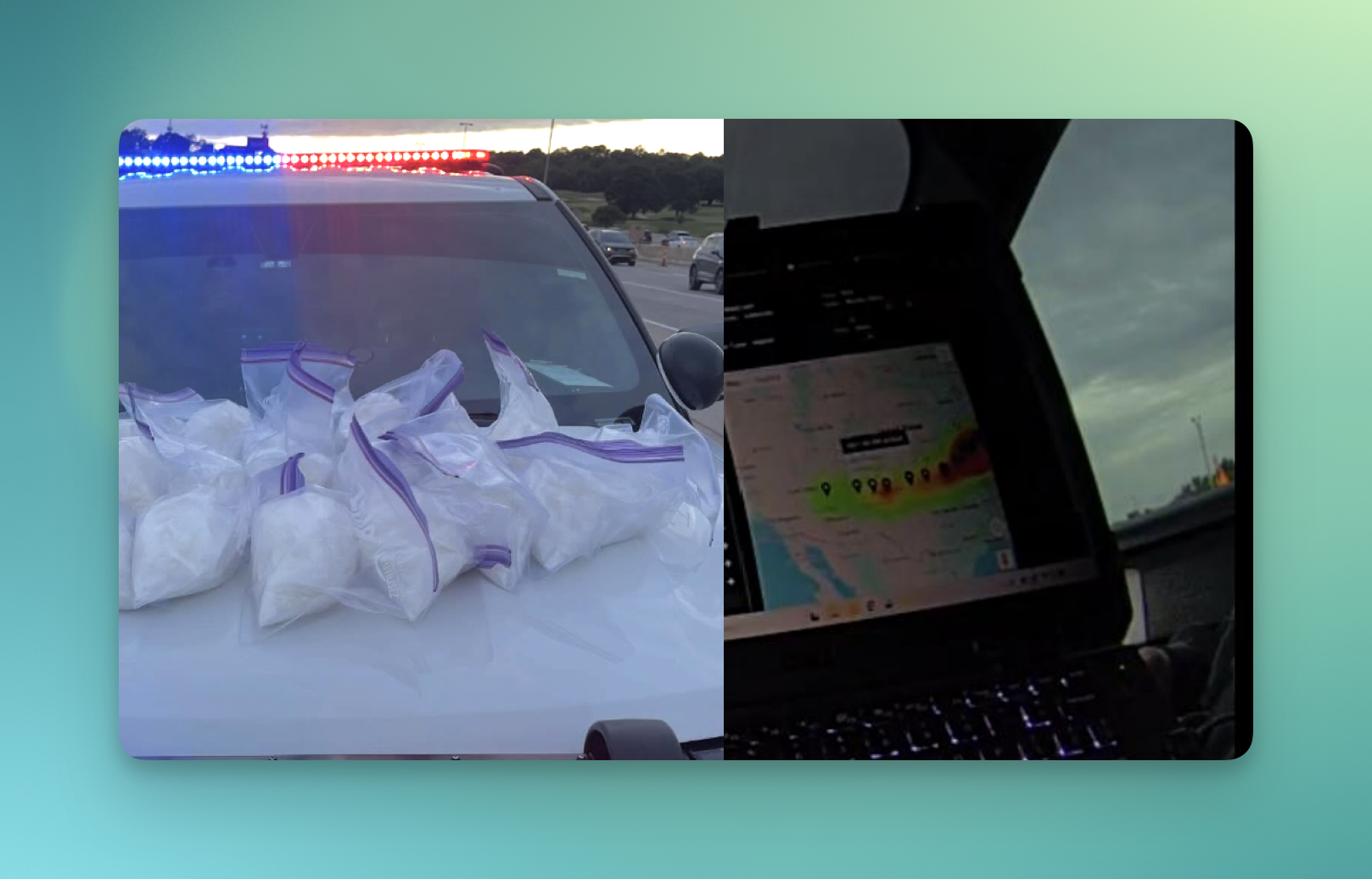
A federal judge in Oklahoma ruled Thursday that a police officer violated the Fourth Amendment rights of a woman accused of meth trafficking when he searched her license plate in Flock’s automated license plate reader system simply because her license plate was from California, then used her travel history as part of the reason to search her car. The judge’s opinion is one of the first times a federal judge has decided Flock searches can be unconstitutional, and suggested that Flock’s network is “a type of indiscriminate mass surveillance.”
The officer’s “use of the ALPR Systems was an Unconstitutional Warrantless Search,” and “was not supported by probable cause, and it was done without a warrant in violation of [the defendant’s] Fourth Amendment rights,” the judge, Sara Hill, wrote, implying that the law enforcement officer should have obtained a warrant before searching for the vehicle in Flock’s system. There are currently more than a hundred thousand warrantless searches of the Flock system every month, according to audit logs viewed by 404 Media. Hill's decision will not set a binding precedent and there are several other cases throughout the nation considering the legality of warrantless ALPR searches.
Hill argued that previous judge opinions saying Flock searches were not a Fourth Amendment violation because they track cars in public do not consider the context that Flock’s nationwide network is quickly “approaching dragnet-type law enforcement practice,” and that courts should update their understanding of the technology moving forward.
The circumstances of the court case are really interesting and highlight how commonplace Flock searches have become for police, and the depth of the information they can reveal. In May, a Tulsa County Deputy Sheriff named Freddie Alaniz was parked along the side of the highway in Oklahoma when he saw a Mazda SUV driven by a woman named Melisa Kyle with a California license plate pass by. “Alaniz then pulled his vehicle on the highway to follow the Mazda for no apparent reason other than the fact that it had a California license plate. Alaniz also ran a query on the Flock system for the California license plate number on the Mazda SUV,” Hill wrote. Alaniz then ostensibly pulled Kyle over for changing lanes without a turn signal.
Alaniz interrogated Kyle about her travel “while he continued to review the ALPR systems for the car she was driving,” the judge wrote. Alaniz made Kyle recount everything she had done in the last several days, and compared it to the Flock data. He told her that because she was only in California for a short period of time, he suspected her of trafficking drugs. He used her travel history as seen in the Flock system as part of the justification to search her car; she was found to have 91 pounds of meth in the vehicle. Hill ruled that all Flock evidence and all evidence from Alaniz’s search of the car must be thrown out.
“The Fourth Amendment requires courts to draw a line when the cost is too great. Alaniz’s search in just the ALPR system provided him with more than 50 individual records of Kyle’s whereabouts across the country for an entire month,” Hill wrote. “The Court finds that because the ALPR systems Alaniz used to search Kyle’s historical location information intruded on her reasonable expectation of privacy in the whole of her physical movements, it was a search under the Fourth Amendment. Based on the information in the record, the only reason Alaniz conducted that search was because he saw her license plate was from California.”
“The factors that the government relies upon are the same type of circumstances that everyday Americans encounter on long road trips for many legitimate reasons. Many of us drive longer than we want to get to a desired destination, or to no destination at all other than the road and sights ahead,” she added.
The decision is a landmark one, and comes in the aftermath of the Supreme Court’s Chatrie v United States decision that found police accessing a person’s digital data, including cell phone location data, constituted a search.
“The opinion is pretty amazing. It recognizes one thing that courts ignore which is the sheer breadth of these systems, that they collect so much information about so many people in a way that sets them apart. This decision ascribes appropriate weight to the fact police are building out this massive database that can reveal incredibly intimate details of people’s lives,” Michael Soyfer, a lawyer at the Institute for Justice, which has studied Flock camera abuse and is litigating several cases on Fourth Amendment grounds, told 404 Media. “It’s extremely important. The way courts have resolved these cases previously has been way too myopic and has ignored the depths of these systems and the sweeping modes of surveillance that allow police to reconstruct the movements of anyone in the country.”
The new decision also immediately invalidates the core argument that Flock’s CEO Garrett Langley has made saying that Flock was not a constitutional issue. “You and I don’t get to pick what’s a constitutional violation and what’s not. We have judges, we have elected officials, there’s a process for that. We follow the law, we follow the Constitution. So far, in our belief and what will be for a long time, the courts have deemed this is not a warrantless search; this is a valid product as it relates to the Fourth Amendment. So I don’t see any change there,” Langley told The Drive in July, adding the issue was “pretty cut and dry.”
Notably, Hill suggested that other courts that have ruled Flock searches do not constitute a Fourth Amendment search were likely wrong to do so, and that they have not considered the widespread and automated context of the AI-powered surveillance system.
Previous decisions that ruled ALPR searches do not require a warrant have leaned on a Supreme Court case called United States v Knotts, in which police put a tracking device in a chemical container after being tipped off that an employee of a chemical plant was stealing from their employer. That case was decided in 1983 and found, “[a] person travelling in an automobile on public thoroughfares has no reasonable expectation of privacy in his movements from one place to another.” But Hill wrote, “that language exists in the context of the facts presented in the case. Rather than a large-scale, dragnet-type surveillance system like the ALPR technology in this case, the Court in Knotts was confronted with much less sophisticated technology.”
“The Court acknowledges that people, in at least a broad sense, do not have a reasonable expectation of privacy in their movements on a public roadway,” Hill wrote. “But by virtue of how ALPR technology works, Alaniz and other officers using these systems have access to a continuously updated location history for all vehicles caught on ALPR cameras within the network. This is a type of indiscriminate mass surveillance. It is not targeted on a single individual, as in Carpenter [another Supreme Court case about phone data specifically]. It is a tool that collects information about all vehicles that pass by any network-connected camera at all times, and it serves up the information to law enforcement on demand.”
We have seen several cases in which cops have used Flock data to pull people over because they have crossed state lines, then have worked backward to justify their travel patterns as a reason to search their vehicles.
“We’re seeing that repeatedly with police flagging whatever they’ll call suspicious patterns of movement. Federal agents were using ALPRs to monitor cars making day trips across the border and back to manufacture a basis to stop them, interrogate the drivers and search them,” Soyfer said. “I think Flock is going to automate that using AI where cops can set alerts for those kinds of travel patterns. When we’re arguing these systems are very powerful and can show a lot about people’s movements, cops dismiss this as speculative or not possible, but then they deploy this strategy against people who they stop all the time.”
A Flock spokesperson told 404 Media, "Flock was not a party to this case. The ruling goes against the overwhelming weight of authority in similar cases across the country, including multiple recent decisions in Oklahoma, and we expect it will be appealed and ultimately overturned. This ruling is limited to the specific facts of this case. It does not set controlling precedent and does not affect law enforcement agencies’ continued use of these important public safety technologies."
This article has been updated with comment from Flock Safety.
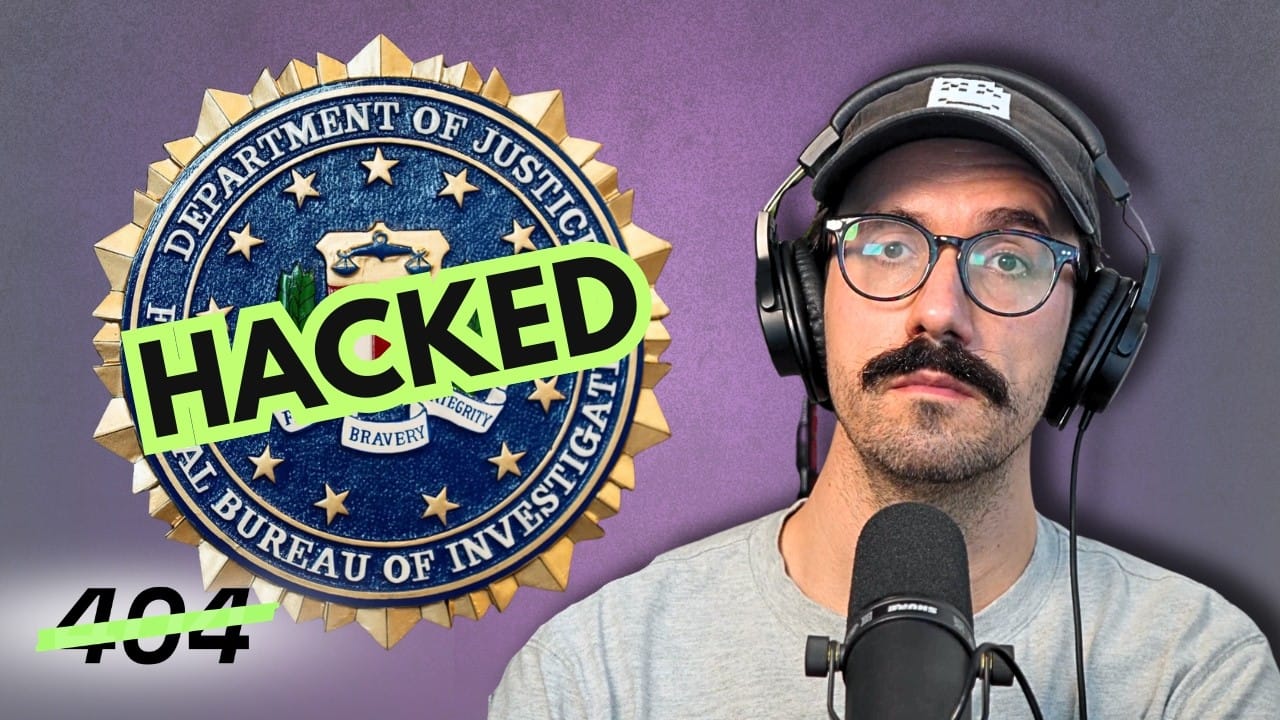
We start this week with Joseph’s stories on the massive FBI hack. 404 Media broke this news and continued to cover the breach of data on all FBI employees and their spouses. After the break, Jason tells us how a surveillance company is telling cops it wants to add facial recognition tech to Flock camera data. In the subscribers-only section, Jason and Joseph chat all about Muse, Meta’s new agentic AI, and how humans are actually behind some of the tasks. Because of course.
Listen to the weekly podcast on Apple Podcasts,Spotify, or YouTube. Become a paid subscriber for access to this episode's bonus content and to power our journalism. If you become a paid subscriber, check your inbox for an email from our podcast host Transistor for a link to the subscribers-only version! You can also add that subscribers feed to your podcast app of choice and never miss an episode that way. The email should also contain the subscribers-only unlisted YouTube link for the extended video version too. It will also be in the show notes in your podcast player.
We round up the best new features of GNOME 51 desktop environments. GNOME 51 brings a calmer, more practical desktop. One of the major highlights is smoother motion under load. Mutter’s reworked frame scheduling and screen frame delivery help animations stay smooth when the system is busy. Screen recording is faster too, because GNOME now...
This is Behind the Blog, where we share our behind-the-scenes thoughts about how a few of our top stories of the week came together. This week, we discuss inbox slop, Claude cults, and more.
JOSEPH: This is something I’ve been thinking about for a while. Jason and Emanuel covered iLands, the AI agents that email people offering to do work. My thing isn’t exactly the same, but similar.
For months, I’ve been noticing that many people email me ‘tips’ (I put in quotation marks because they’re sometimes not tips, but more, my Instagram account was banned, please help me) that are CLEARLY written by AI. I can tell this because the AI responses seem to keep using the same or similar words that it believes would apply to journalists, or are how journalists speak, but as a real, human journalist for more than ten years, I know that journalists don’t actually speak like that.
Get a free 15-day trial of Odoo’s all-in-one business solution and see how it can make your life easier! Check it out at https://www.odoo.com/ltt
It is HOT in the Tech House, and we're tired of sweating buckets. Time to install some air conditioning, and Linus has some opinions. It's a heat pump with mini splits all day.
Discuss on the forum: https://linustechtips.com/topic/1643181-i-have-strong-feelings-about-air-conditioning-in-the-tech-house/
Check out our Channel Partners:
Secretlab
- Grab a TITAN Evo ergonomic gaming chair: https://lmg.gg/secretlabltt
- Grab an ATLAS ergonomic office chair: https://lmg.gg/secretlablttatlas
PIA
- Get the VPN of our choice: https://www.piavpn.com/ltt
dbrand
- Buy a "Circuit" series skin for your device: https://dbrand.com/pcb
► SHOP LTT PRODUCTS: https://lttstore.com
► GET EXCLUSIVE CONTENT ON FLOATPLANE: https://lmg.gg/lttfloatplane
► DIVE DEEPER ON THE LTT LABS WEBSITE: https://lmg.gg/labs
► SPONSORS, AFFILIATES, AND PARTNERS: https://lmg.gg/partners
Purchases made through some store links may provide some compensation to Linus Media Group. Affiliate links powered in part by https://affilimate.com/?aid=ghz1izbpb
Linus Sebastian is an investor in Framework Computer, Inc and HexOS by Eshtek.
CHAPTERS
---------------------------------------------------
0:00 Intro
2:17 Spec'ing mini splits
3:39 How it works
5:02 Mounting
8:08 Connecting the lines
12:14 The condenser
14:36 Looking for leaks
16:11 Feel that frosty air, boys
20:53 Outro
Correction:
13:57 -15-degrees Celsius is 5-degrees Fahrenheit
Student journalists meet the moment, as we’ve seen most recently this week. As the Cornell University sexual abuse case highlights the importance of student journalism, public records reveal how schools try to censor on-campus news outlets. Claire Woodcock talked to students and legal experts about how censorship from above impacts their work. “One of the biggest things we’ve certainly found with censors over the years is they want to be called everything but a censor,” one expert said. “What they’re doing is everything but censorship.”
Student journalists, their advisors, and legal advocates say colleagues and administrators are attempting to undermine student reporting on Jeffrey Epstein, Gaza, and other issues that public institutions would rather not have their reputations connected to.
Public records obtained by 404 Media show administrators taking meetings with parents and alumni when they take issue with student reporting and asking advisors to compromise their professional ethics. They also show escalating tensions between student newsroom staff and administrators, prompting more legal aid requests to advocacy groups.
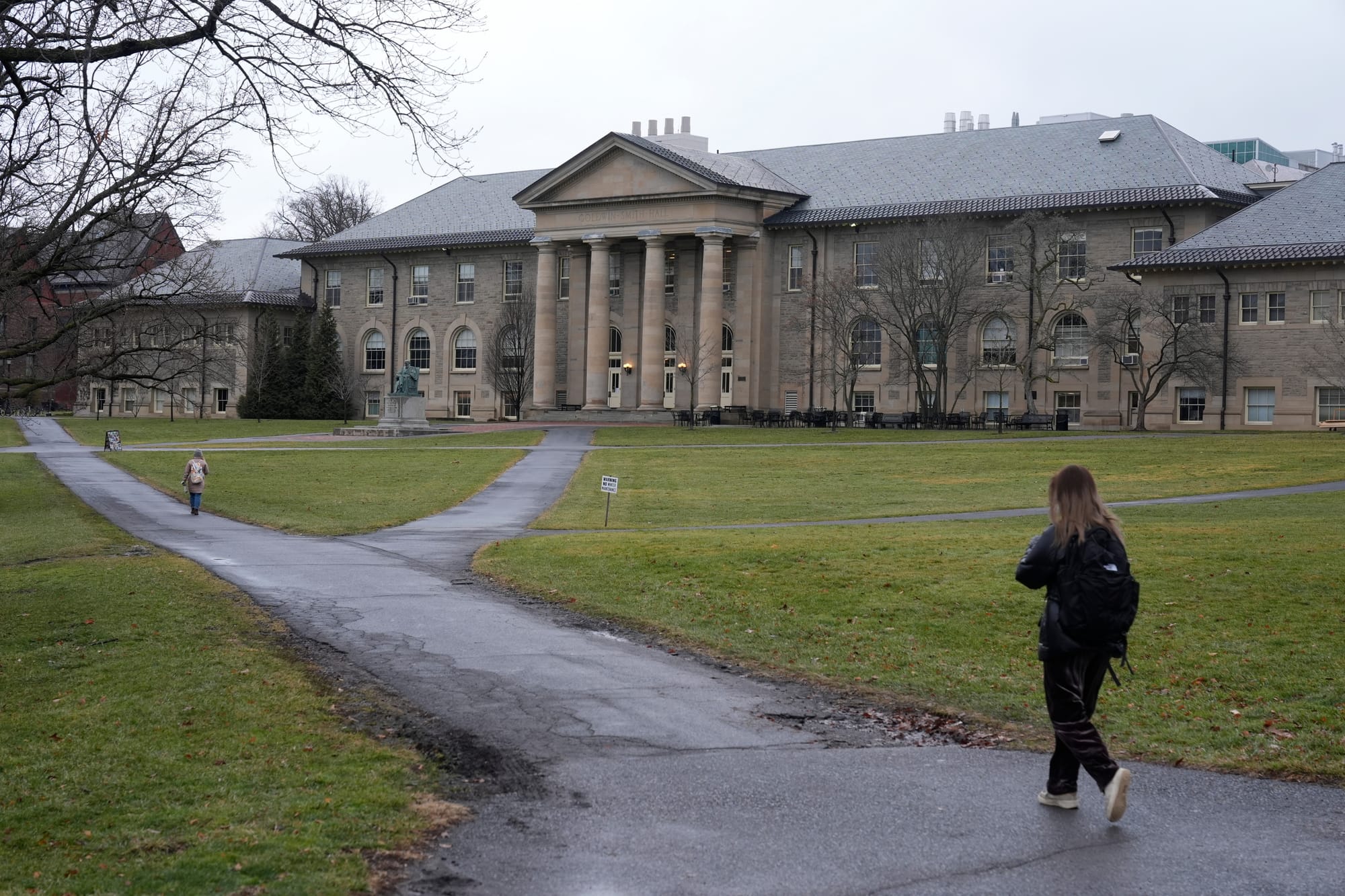
This comes as student journalists at The Cornell Daily Sun earned recognition for breaking the “Cornell Seven” story regarding the lawsuit filed in New York’s trial court last month by a Jane Doe accusing current and former Cornell University students of drugging and sexual abuse. The student journalists told The Cut this week that a vague university and campus police statement from nearly two years ago prompted more questions than answers. Such is the basis for most accountability journalism on college campuses.
The cases we reviewed involved the phase of the reporting process that comes later, where a factual dispute the newsroom has defended or a complaint where the person doesn’t bother to explain what is allegedly wrong with the students’ reporting.
In Colorado, a high school social studies teacher emailed the student publication’s advisor at the time, accusing a student’s opinion piece called “Why is Gaza Important?”of being “published with factually inaccurate and racist information,” but then said in the same email, “I’m not going to start listing the inaccuracies along with the omissions.”
In California, a high school principal told a student journalism advisor to redact the name of an individual threatening to sue the district for defamation after student journalists published an Instagram carousel to their school’s newspaper account about the number of times their county turned up in the Epstein files. In this case, which has already been widelyreported on, the administrator told the journalism advisor to redact the name of the woman who was threatening suit without determining whether the reporter made a factual mistake (the students did not).
“I can’t remove the name without your help,” the principal told the advisor via email, after the advisor said the students would first seek legal guidance from the Student Press Law Center before taking any actions.
Soon after the op-ed was published, the student newspaper’s advisor was reassigned to another role within the district. The advisor from the California school district stepped down from her role during the last school year; she now consults schools and nonprofits on best practices for their student media programs. Mike Hiestand, who is a lawyer with the Student Press Law Center, has spent decades advising student newsrooms. He says it’s common for administrators to target advisors, adding that it’s one of the more effective censorship methods available to them.
“School officials, they see employees as kind of an easy target over whom they have some authority, and they know that in many places, that relationship between the students and their advisor is a tight one,” Hiestand told 404 Media. “Unfortunately, some school officials take advantage of that bond and definitely go after advisors.”
In 2025, the Student Press Law Center (SPLC) claimed that the nonprofit had responded to nearly 1,000 hotline inquiries from student newsrooms in 46 states and Washington D.C. The most common inquiries involved censorship, libel and copyright. Overall, SPLC says calls are down, but hotline inquiries about censorship specifically are up 17 percent from the year prior.
“One of the biggest things we’ve certainly found with censors over the years is they want to be called everything but a censor,” he added. “What they’re doing is everything but censorship.”
This tracks with what 404 Media is observing through public records requests into school, library and university censorship. The same state laws that have been used to restrict how topics like race, gender, and systemic inequality can be accessed and taught have also put student journalists covering those beats in a bind.
Records from Pensacola State College obtained by 404 Media show that last spring, an administrator tried to block funding for a journalism professor to print students’ class assignments for their portfolios because at least one of the stories involved reporting on the LGBTQ+ community. The campus later relented and agreed to release funding for students’ portfolios. In an email to the advisor, an administrator involved in the situation wrote that “the proper role of administration is to facilitate rather than impede the completion of legitimate classroom projects.”
“When you have a principal coming in who doesn’t have a lick of journalism experience claiming that they’re there to guide young journalists, that’s where I have problems,” Hiestand said. “Every principal and every superintendent in the country seems to think that they are qualified editors.”
Similar verbiage has appeared in other public records requests involving student journalists, like in the case of a Maryland school district memo about principals reading and approving every story before publication. In the memo, the chief of schools wrote that “[a]s responsible adults and educational leaders, we have the duty to guide the work of our students as they are developing their skills in a school setting during a school-directed activity.” But internal correspondence obtained by 404 Media suggests that the memo was “really to be sure an administrator could initial any printed posters, review school apparel, and scan over the yearbook to be sure that there is no violation” of the student handbook.
Marie McMullan, program manager and counsel for the Student Press Legal Hotline with the Foundation for Individual Rights and Expression, says so far, 2026 has been a very consequential year for students leading their school publications.
“Student journalists are a very bright group,” McMullan told 404 Media. “They are great at sounding the alarm and bringing advocates out of the really blatant examples. But I always just worry about making sure that student journalists know their rights so that they can assert them in cases where there are subtler forms of censorship.”
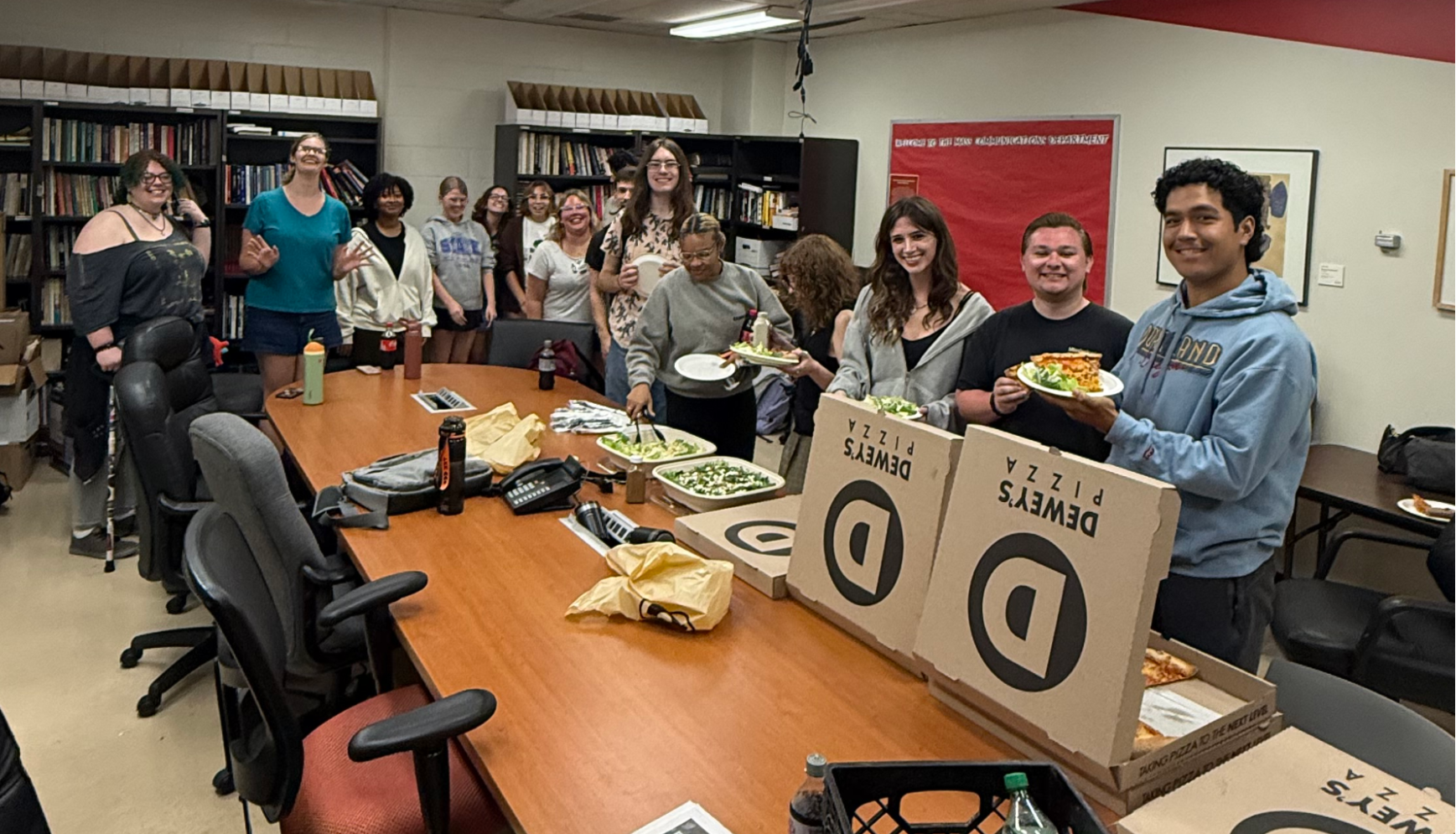
At Southern Illinois University Edwardsville (SIUE), student reporters with The Alestle, the university’s student newspaper, claim that the institution’s marketing and communications department had become more insistent on attending interviews conducted by student reporters in recent months. The department took issue with editor-in-chief Dylan Hembrough’s framing of the dispute, calling several of the claims “inaccurate.” In an interview with 404 Media, Hembrough said the paper investigated and determined there was nothing inaccurate about the story. When Hembrough did not retract the story, the executive director of marketing and communications at SIUE sent an open letter to the entire campus—a mailing list of more than 14,000 people, including faculty and staff—taking issue with that story, along with other stories throughout the years as well.
“The Alestle appears willing to substitute alarming headlines for verified facts, to rely on posturing rather than careful reporting and to treat corrections as an inconvenience rather than a professional obligation,” the open letter reads. With the letter was a link to a 27-page document of corrections the department expected student leadership to act on.
“I have been on the other side of panicking over things like this,” Hembrough told 404 Media. “Something that has helped me get through that, or at least stave it off, is the idea that the truth is more important than whatever I feel about it. Embarrassment or humiliation should have no bearing on how or even whether a publication makes a correction.”
Then in September, Hembrough learned via email that he was being investigated by the campus police for harassment against the department. When Hembrough’s journalism advisor asked the officer to clarify on what grounds, the officer said the report was based on a line in an email, which read: “Marketing and communications’ insistence on interfering with our newsgathering process is dangerous and detrimental to both press freedom and freedom of speech.” Hembrough shared his email with 404 Media, which reads as an editor defending another student reporter’s right to conduct an interview without the department exercising prior restraint over the publication. In her statement to campus police, she reportedly told the officer that “other members of my office have approached me stating Alestle reporters have been by my office uninvited,” and that she didn’t have a lock on her door.
“Due to the media between Marketing and Communications and the Alestle I am worried a ‘January 6th’ type of crowd may be outside my office,” the complainant told the officer, according to the campus police report. The officer advised her to contact facilities management about getting a lock for her office door and concluded that the facts of the case don’t “meet the statutory threshold for Harassment by Electronic Communications.”
The public records reviewed by 404 Media from SIUE support the claims The Alestle’s journalists make throughout their reporting on the department. SIUE did not respond to 404 Media’s request for comment.
The situation at SIUE serves as an example of a dispute about institutional reputation that’s escalated to involve campus law enforcement, but law enforcement nonetheless. McMullan says this escalation has an undeniable chilling effect on free speech, noting that policies and laws that public institutions use to silence young reporters still need to abide by the First Amendment. But overall, she’s impressed with how students at SIUE and other campuses are meeting the moment, even when the adults in the room aren’t.
“Whether it’s in a court of public opinion or a court of law, students are not accepting censorship,” she said. “They’re pushing back against it.”
Uma Inteligência Artificial que não conversa, não gera texto e nem escreve código, mas que está deixando desenvolvedores e grandes empresas de queixo caído? Conheça o Jev, o novo modelo de IA da TypeSafe AI que propõe uma mudança radical na forma como integramos IA aos nossos sistemas e softwares.
Jev vs. LLMs: Descubra quando usar cada um na arquitetura do seu agente ou aplicação.
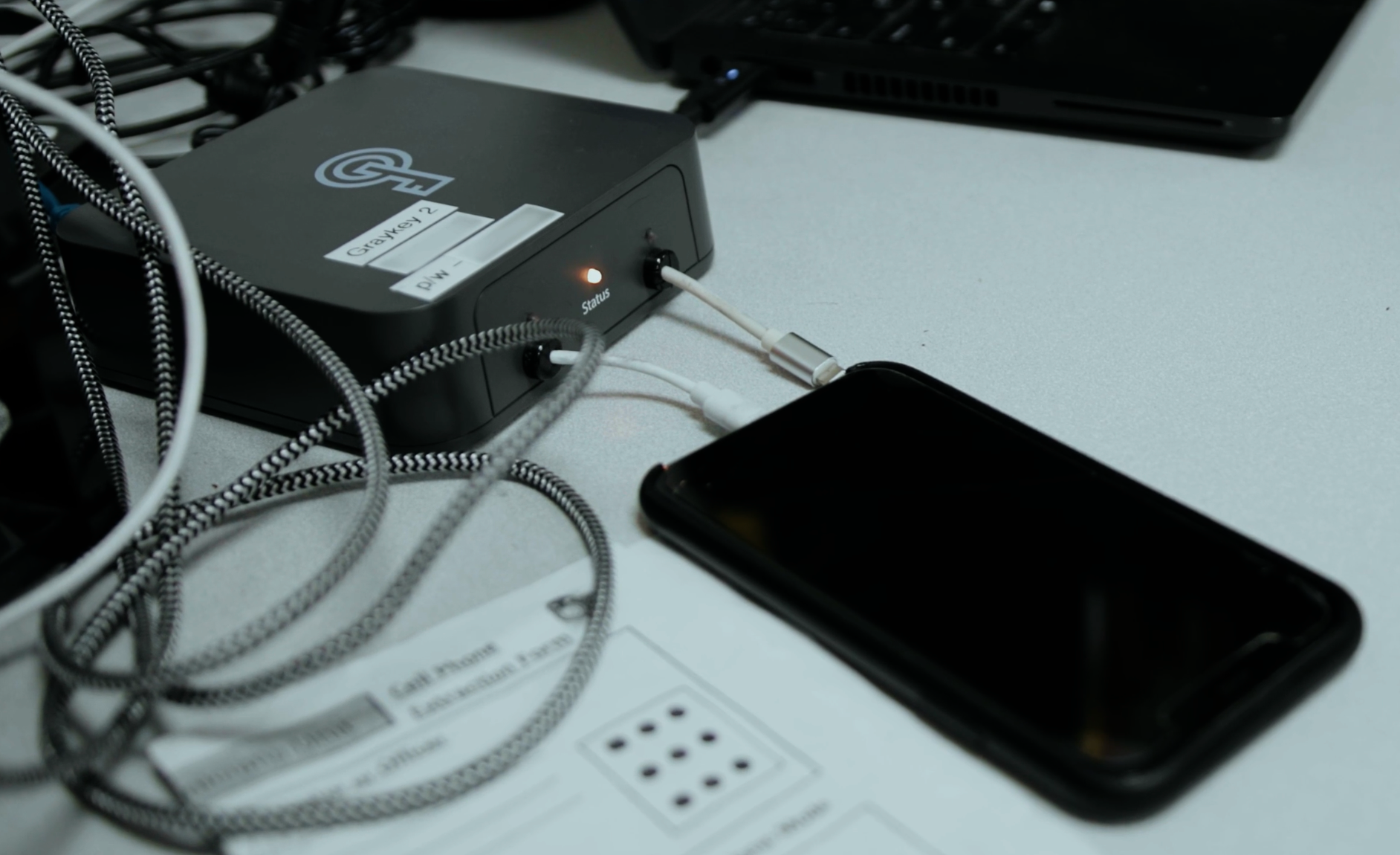
A company that makes phone hacking devices claims to have developed a solution that freezes iPhones in a state that lets cops more easily access sensitive data inside them, according to a video obtained by 404 Media.
This is the latest salvo in the never-ending battle between Apple and companies that help cops — sometimes those in authoritariancountries — break into iPhones.
In November 2024, 404 Media revealed Apple quietly introduced a new feature in iOS that automatically reboots an iPhone that has not been unlocked for 72 hours. The idea behind this so-called “inactivity reboot” is to revert the phone to a state that makes it harder for police to break into the device, and thus extract sensitive data from it with forensics technology.
At the time of Apple’s change, law enforcement agents expressed concern about this new feature, given that oftentimes they can’t immediately try to break into iPhones that have been seized. That could be because police are still waiting for a court authorization to do so, or there is simply a backlog of devices to unlock, for example.
The new technology to get around inactivity reboot was developed by Magnet Forensics, the company behind GrayKey, a popular tool sold to law enforcement agencies that allows them to unlock and access data stored in iPhones and Android smartphones. Magnet has developed a new device called GrayKey Preserve and a feature for its regular GrayKey devices called Evidence Preservation Mode, according to the video.
Chipmaker AMD and world models company World Labs announced that AMD will acquire the AI company by the end of the year, pending regulatory approval. The transaction is valued at $8.2 billion.
In 2024, computer vision scientist Fei-Fei Li founded World Labs with fellow researchers Justin Johnson, Christoph Lassner, and Ben Mildenhall, with $230 million in funding, some of which came from AMD.
The company began working on new world models, which are AI models that aim to provide a useful, predictive simulation of the physical world. Competing architectures exist (earlier this year, Ars interviewed World Labs co-founder Ben Mildenhall and others in the field about exactly that), but many involve training a model on vast amounts of video data.
Broadcasters should be ordered to stop running Trump commercials that appear to violate US laws, consumer advocacy group Public Citizen said today in a complaint to the Federal Communications Commission and Federal Trade Commission. The ads appear to violate laws against using taxpayer funds for propaganda and a law that restricts political activity by federal government employees, the group said.
"The most recent of these taxpayer-funded campaign ads, entitled 'The Final Battle,' is a copied version of an ad that the Trump campaign committee issued in the 2024 election," Public Citizen wrote. "In dead serious black-and-white footage, Trump is seen marching down a corridor with a stern look, while the audio blares: 'This is the final battle. With you at my side, we will demolish the deep state. We will expel the warmongers from our government.' A notice at the bottom of the screen announces: 'Paid for by the US government.'"
Trump also says in the ad, "We will cast out the communists, Marxists, and fascists. We will throw off the sick political class that hates our country, we will rout the fake news media, and we will liberate America from these villains once and for all." It uses the same video and audio from an ad Trump used in 2024, with the main difference being that the 2024 version was paid for by Trump's campaign committee instead of the US government. The White House claims its recent ads are public service announcements.
Decálogo para Soberania Digital: https://decalogo.soberania.digital/
Nesse episódio do Tecnopolítica, Sergio Amadeu conversa com o hacker e ativista Uirá Porã sobre o decálogo da soberania digital e os desafios que as eleições de 2026 colocam para o Brasil.
Uirá Porã é uma das lideranças da Rede pela Soberania Digital e discute como a dependência de infraestruturas digitais controladas por big techs, o uso de algoritmos e a desinformação podem interferir no processo eleitoral, além dos dez pontos que compõem o decálogo pensado para orientar políticas públicas de soberania tecnológica no país.
👥 Apresentadores
Sérgio Amadeu é sociólogo, professor da UFABC e pesquisador do CNPq, com atuação destacada na defesa da democratização da comunicação e da soberania tecnológica. Autor de livros e artigos, é referência em debates sobre privacidade, software livre e cultura digital.
📌 Equipe
Coordenação e autoria dos podcasts: Sérgio Amadeu da Silveira
Criação de arte e edição: Tutti Marketing
Conteúdos e divulgação: Tutti Marketing e Gabriel Boscardim de Moraes
🔗 ACESSE OS CURSOS NO PORTAL DO TECNOPOLÍTICA: https://tecnopolitica.blog.br/
Instagram: https://www.instagram.com/podtecnopolitica/
For two decades, largely in service to the International Space Station, NASA has sought to foster an "economy" in low-Earth orbit.
Twenty years ago, with a program to develop private spacecraft for cargo delivery to the space station, NASA sought to "stimulate efforts within the private sector to develop and operate safe, reliable, and cost-effective commercial space transportation systems." In recent years this has expanded to creating an entire commercial ecosystem in orbit, with transportation, space stations, manufacturing, tourism, and more, such that NASA is one of many customers in the market.
In April 2024, the space agency explicitly laid out its philosophy: "NASA supports a robust commercial space economy that advances American industry and promotes technological discovery through in-space work and research. NASA remains committed to fostering innovation and collaboration within the American space industry."

 Login