❌

Normal view

Meta is making a standalone Muse AI gadget

Meta is building a dedicated hardware device for its new Muse AI agent. The product, called Muse Charm, was briefly shown off by Meta CEO Mark Zuckerberg at the end of tonight's Meta Connect presentation. It looks almost like a chunky smartwatch without the strap - just a big screen, plus a little lanyard for carrying the device around.

The Muse Charm has a fingerprint sensor on the top right corner that you can press to activate and begin speaking to the agent. There appears to be a small camera on the device as well, plus what looks like at least three holes for microphones on the front. Zuckerberg said you don't have to unlock a phone or …


Read the full story at The Verge.

Meta Connect 2026: The 7 biggest announcements

A close up of a mix of Meta Glasses

Meta announced a slate of new wearables during its annual Meta Connect showcase on Wednesday. The star of the event was the new Meta VR Glasses, which pack virtual reality tech into a lightweight smart glasses-style frame with a tethered puck. Meta also announced new pairs of screen-free smart glasses, along with some new AI features and style and frame options.

You can catch up on all the highlights from this year's Meta Connect below.

Meta VR Glasses bring virtual reality to a lighter form factor

Meta's latest wearable offers full virtual reality in a smart glasses-style form factor. Unlike a typical VR headset, the VR Glasses don't h …

Read the full story at The Verge.

Meta’s next VR device isn’t a headset — it’s glasses

The Meta VR Glasses. | Photo by Brett Putman / The Verge

Meta is launching new VR hardware: a pair of glasses. The new Meta VR Glasses sit on your ears like a typical pair of glasses instead of being strapped over your head, but they still have immersive displays for watching movies, playing games, and getting work done. Imagine a pair of hefty black sunglasses with blacked-out lenses on the outside, but the components of a typical VR headset distributed between the device on your head and a computing puck in your pocket.

The idea is to give you a way to experience VR in a much lighter and more approachable form factor than Vision Pro or Meta Quest-style headsets. I got to try the VR Glasses at M …

Read the full story at The Verge.

Muse is coming to Meta smart glasses

A promotional image of a person using the Hearing Enhancement feature on Meta AI glasses

Just a couple of weeks after launching Muse, Meta announced that it's "working on" bringing the agent to its smart glasses, including the new glasses it unveiled at Meta Connect. Users will be able to activate Muse from their glasses by saying its name and ask it to handle tasks like guiding a workout, logging meals, or helping them shop for products they're looking at.

Muse is just one of several major updates coming to Meta's glasses. They're also getting some new accessibility features, like a Hearing Enhancement feature Meta says is "FDA-cleared software for adults with perceived mild to moderate hearing loss." It will be available lat …

Read the full story at The Verge.

Meta ditches the camera on its newest smart glasses

The Ray-Ban Meta Audio Glasses have no cameras. | Photo by Brett Putman / The Verge

Walking around Meta Connect 2026, everyone's sporting smart glasses in all sorts of shapes, colors, and sizes. It's a marked difference here, a tech bubble where "pervert glasses" are not a concern.

Outside Connect, the public backlash against wearable surveillance tech - a catchall term that encompasses not just smart glasses, but also smartwatches and AI pendants - is gaining steam. So it's incredibly curious timing that this year, the company is launching Ray-Ban Meta Audio Glasses: smart glasses infused with Meta AI, but with no camera for recording others.

To hear Meta tell it, that's a coincidence. Audio-only glasses have been years …

Read the full story at The Verge.

Meta is making Muse more powerful and will let you video chat with it, too

The Muse AI mascot and logo.

Meta is quickly iterating on its new Muse AI agent, announcing a bunch of updates today that make the bot more capable and able to chat with you in more ways.

Muse agents are getting their own email addresses that they can use for accomplishing tasks. You'll also be able to communicate with your Muse agent over the new email addresses, too. In addition, the recently launched Muse Mac app will be getting the ability to use your computer.

Meta is also going to give you another way to chat with its popular AI agent: video calls. Since its recent launch, the primary way to talk with Muse was through a chat interface, but you'll soon be able to …

Read the full story at The Verge.

Meta Connect 2026: The biggest news and announcements

It’s about time for Meta Connect, the company’s annual product launch event. This year, given the company’s major focus on AI and wearables like smart glasses, it seems likely that we’ll see updates from CEO Mark Zuckerberg and his team on those categories. The company has been facing significant scrutiny because of how some users have been covertly recording other people using the glasses, meaning that one of the biggest announcements of the show could be its rumored camera-free pair.

Connect has also traditionally been a venue for updates on Meta’s VR hardware and software. While the company has scaled back its VR ambitions, a recent leak seemingly revealing some kind of unannounced mixed reality glasses could indicate that Meta will show off new immersive headwear technology during the event.

Zuckerberg’s keynote is scheduled to begin at 7PM ET / 4PM PT on Wednesday, September 23rd. Follow along with all of our coverage right here.

Meta Connect 2026 live blog: On the ground at Mark Zuckerberg’s next big product launch

It's time once again for Meta's annual September product launch event, and The Verge is on the ground in Menlo Park to cover the show live. Meta says that today's keynote by Mark Zuckerberg will be about how "Meta is building a future for everyone" - something he wrote at length about in a recent essay about AI, smart glasses, and more. That means we can expect more news from Zuckerberg and his team on those topics; perhaps we'll hear more about Meta's recently launched Muse AI agent and new glasses hardware.

Whatever Zuckerberg and Meta have to say about smart glasses will be particularly notable. The company is dealing with an outpouring …

Read the full story at The Verge.

RFK Jr.'s CDC isn’t letting states order COVID-19 shots for kids, blocking access

As respiratory virus season nears and fall vaccination drives get underway, more than half of US children are facing uncertainty over access to this year's COVID-19 shot. The Centers for Disease Control and Prevention has unexpectedly delayed the distribution of the shots to a key federal program and some states.

Usually, the CDC would allow states to order the newly available seasonal COVID-19 vaccines through the federal Vaccine for Children (VFC) program, which provides vaccines at no cost to children who are uninsured, underinsured, Medicaid-eligible, or Indigenous people in the US. Approximately 52 percent of all US children are eligible for vaccines through the program.

Additionally, The Guardian reports that at least 11 states and one US territory are part of a universal vaccine purchase program, in which they buy all vaccines for children—regardless of their ability to pay or insurance status—through contracts otherwise for the VFC. The 11 states and one territory include: Alaska, Connecticut, Hawaii, Maine, Massachusetts, New Hampshire, New Mexico, Rhode Island, Vermont, Washington, Wyoming, and American Samoan.

Read full article

Comments

© Getty | The Washington Post, Bill O'Leary

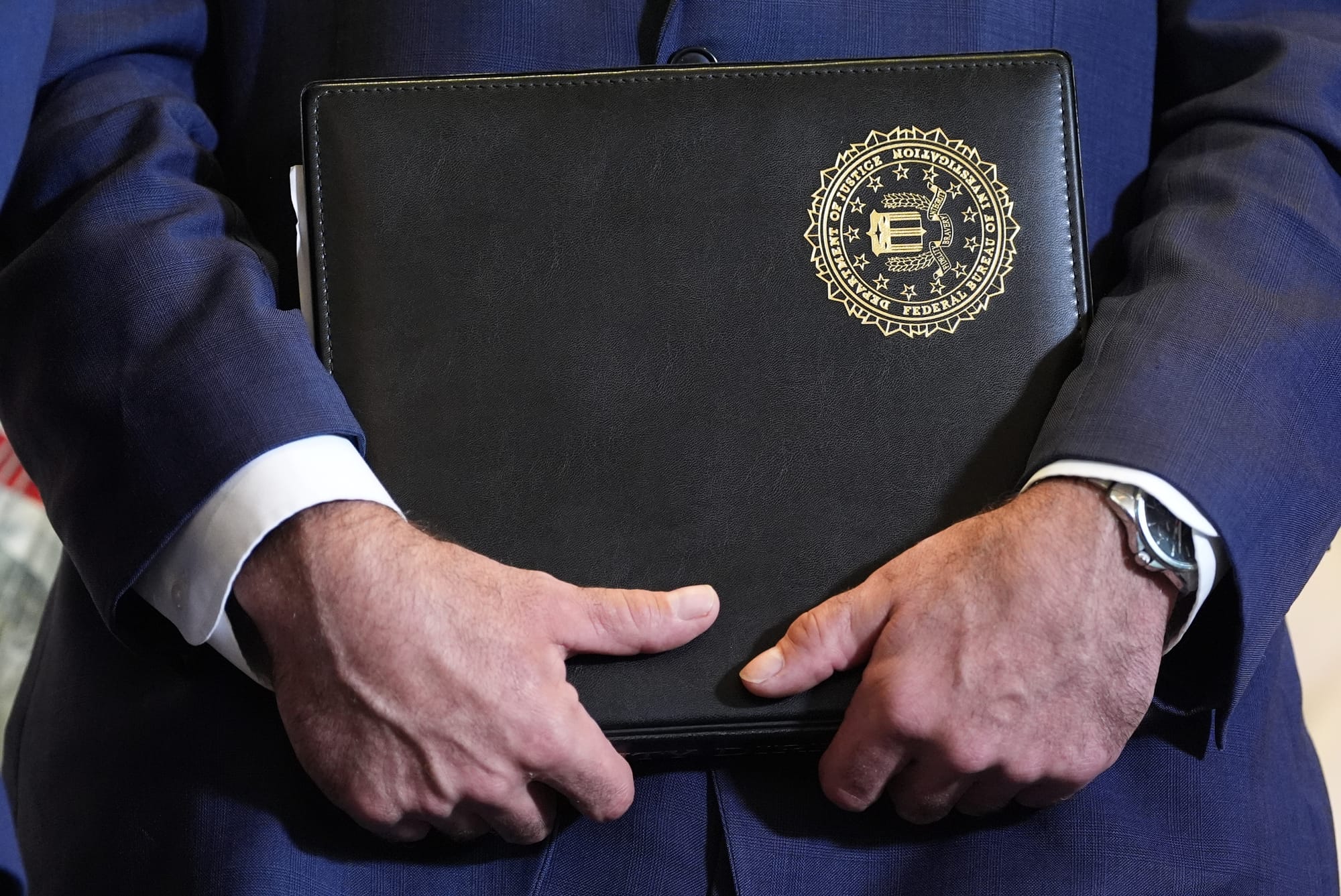
FBI Hack Exposed FBI’s Own Hacking Unit

FBI Hack Exposed FBI’s Own Hacking Unit

The catastrophic hack of at least thousands of FBI officials’ personal data, including their addresses, phone numbers, and even their spouses, includes members of the FBI’s secretive hacking team, potentially revealing who exactly is in that unit, 404 Media has found.

The findings further highlight how sensitive the stolen data is, and how valuable it may be to criminals or to foreign intelligence agencies. There is very little public information about the FBI’s hacking unit, including the operations it conducts, the tools it uses, or which agents are part of it.

💡
Do you work at the FBI? Do you know anything else about this hack? I would love to hear from you. Using a non-work device, you can message me securely on Signal at joseph.404 or send me an email at joseph@404media.co.

FBI rushes to investigate if ShinyHunters hack of thousands of employees is real

The FBI is now investigating claims from a hacker group that thousands of current and former employees’ personal data was stolen after the group exploited a previously unknown bug found on an agency jobs website.

On Tuesday, 404 Media reported that ShinyHunters took down the agency site, FBIJobs.gov, then posted a banner on the homepage that said “THIS SITE HAS BEEN SEIZED BY SHINYHUNTERS.”

About two to three terabytes of data were taken, ShinyHunters told The New York Times. None of the data has been leaked yet, but it included “names of current and former agents as well as applicants and corresponding home addresses, phone numbers, names of spouses, certain medical information, and other data.” According to Bloomberg, the data could be used to potentially retaliate against agents, with one sample appearing to include “potentially sensitive professional information on the FBI employees’ work focus such as counter-intelligence work on China, Russia and Iran, as well as work against street gangs.”

Read full article

Comments

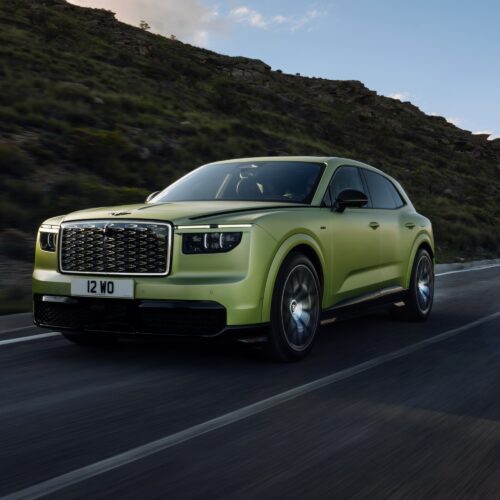
Here's the Torcal, the first fully electric Bentley

A few weeks ago, Bentley gave Ars a ride in a new camouflaged electric vehicle. Named after a Spanish rock formation, the Torcal is the brand’s first battery EV, and today the production car had its formal unveiling. That camo was effective: The real car is less bulbous and more blocky than its disguise would suggest. And it’s fair to say it brings some of the ideas of the EXP 15 concept to the road—even if that didn’t include that show car’s elegant, stretched proportions. It’s smaller than the Bentayga, and it should slot beneath that model in pricing (or the PHEV version of it, at least), though Bentley has yet to reveal exactly how much US buyers can expect to pay.

Underneath the bodywork are some relatively familiar underpinnings; Bentley shares technology with Porsche as both are part of the greater Volkswagen Group empire. The power output might not be as prodigious as the electric Porsche Cayenne but should be sufficient nonetheless. The standard car will offer peak outputs of 810 hp (604 kW) and 880 lb-ft (1,194 Nm), enough for a 3.3-second 0–60 mph time (0–100 km/h takes 3.4 seconds).

Two Bentley Torcals drive away from the camera The EXP 15's influence is stronger at the rear. Credit: Bentley

The more powerful Torcal S boasts 875 hp (653 kW) and 995 lb-ft (1,350 Nm) at its most potent; this is capable of 60 mph from a standing start in a mere 2.8 seconds (2.9 to 100 km/h) and an increased top speed of 162 mph (260 km/h), up from 155 mph (250 km/h) for the standard version, either of which are academic outside certain stretches of German highway.

Read full article

Comments

© Bentley

❌