Normal view

Layoffs: a sign of flagging food industry sales

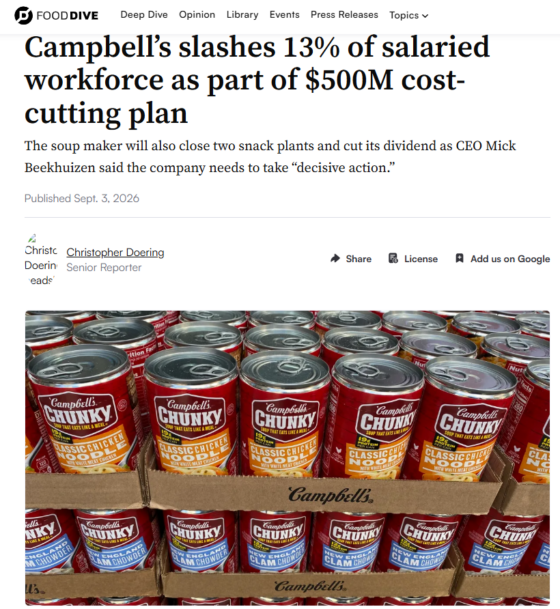
I was struck by this announcement

Campbell’s is not the only one.  Also see:

What’s going on?  I see four reasons for declining food sales.

  • RFK Jr says the food industry is poisoning America
  • Health advocacy to reduce intake of ultra-processed foods
  • The effect of GLP-1 agonist drugs in reducing food intake
  • Inflation in food prices

These trends may do wonders for health.

But to the food industry, they are a worry: eating less is bad for business.

The post Layoffs: a sign of flagging food industry sales appeared first on Food Politics by Marion Nestle

Who is lobbying about the forthcoming school food rules?

If you want to know why school food is so controversial, and improving its nutrition quality is so difficult, follow the money.

A reader, Jennifer Windh, says she is a mom of a second grader in Texas (Tomball School District) and a member of “Make Texans Healthy Again.”  She tells me she asked ChatGPT to summarize information about food lobbying on the new school food rules:

I’ve been tracking USDA’s forthcoming proposed rule updating the Child Nutrition Programs to align with the 2025–2030 Dietary Guidelines for Americans (RIN 0584-AF17). USDA sent the proposed rule to the White House Office of Information and Regulatory Affairs (OIRA) for review on July 20, and USDA’s regulatory agenda currently targets publication in September.

While the proposed rule itself is not yet public, OIRA’s public meeting records give us some clues about what may be under consideration. Outside groups can request meetings with OIRA while a significant regulation is under review, and OIRA publishes the identity of the groups, attendees, and materials they submit.

Much applause to Jennifer for digging into who is pushing OIRA about food and nutrition standards for school meals.

Date Organization Key Participants / Interests Documents Submitted
Aug. 10 USA Rice Tracy Gensler; Cameron Jacobs USA Rice Proposed School Meal Nutrition Standards Final OMB
Aug. 11 American Bakers Association Campbell Genn; Eric Dell; Rasma Zvaners; others None listed
Aug. 13 American Frozen Food Institute AFFI; Schwan’s; Wyman’s; Wawona Frozen Foods; Conagra; J.M. Smucker 3 documents concerning smoothies/frozen foods
Aug. 14 National CACFP Association McKenzie Brunner; Alexia Thex CACFP Alignment and Reality of Implementing 2025–2030 DGAs
Sept. 1 Plant Powered School Meals Coalition Physicians Committee for Responsible Medicine; Alexandria City Public Schools; Plant Powered School Meals Coalition 5 documents concerning meat/MMA requirements, nondairy milk, processed meat, and related issues
Sept. 2 School Nutrition Association SNA; Caprock Strategies None confirmed
Sept. 3 The Grain Chain Campbell Genn None confirmed
Sept. 4 Urban School Food Alliance Urban School Food Alliance; OFW Law None confirmed
Sept. 8 TBD Meeting occurred/scheduled; full organization and participant information needs confirmation TBD
Sept. 11 – 2:00 p.m. ET TBD OIRA meeting on USDA school-food rule TBD
Sept. 11 – 2:30 p.m. ET Meat Institute appears to be requestor Susan Backus listed as requestor; final OIRA participant list pending TBD

The table does not say what these participants were asking for, but let’s speculate.  The new dietary guidelines call for more real food, less highly processed food, and less sugar, but more protein, healthy fats, and whole milk dairy.

The trade associations want the USDA to require meals to have more of their products: rice, bread (not too much whole wheat), frozen foods, grains (preferably not whole), and meat.

The National CACFP (Child and Adult Care Food Program) Association advocates for this desperately underfunded program and surely is asking for more funding to comply with new DGA standards.

The Plant Powered groups want more plant foods and less meat and dairy.

The Urban School Food Alliance works with school districts to provide healthy food to low-income kids.  I’ll bet it’s asking for more funding too.

Of special interest is the position of the School Nutrition Association, which supposedly represents school food service workers.

It is heavily sponsored by food companies.   Its position on forthcoming rules is that

Any new rules limiting UPFs in schools must ensure meal programs are permitted to serve nutrient-dense, pre-prepared foods. Schools are simply not equipped to scratch prepare all menu items – more than 93% cited the need for more staff, culinary training, equipment and infrastructure to reduce reliance on UPFs.

To see what attempts to improve the nutritional quality of school meals are up against, take a look at the SNA’s talking points defending highly processed snack foods as well as sugary foods.

As it happens, a new analysis shows that basically all snack foods sold in schools are ultra-processed.

And another analysis of 10,000 school lunches, Beyond the Nugget: The Hidden Health Risks of Industrially Produced Animal Proteins—and the Path Toward Better School Lunchesfrom Friends of the Earth and Chef Ann Foundation, finds that they are “dominated by industrially produced meat and cheese, raising concerns about children’s exposure to known carcinogens, ingredients of concern and potentially undisclosed contaminants, including veterinary drug, dioxin and pesticide residues.”

The big questions:

  • Will the calls for less ultra-processed food and sugar survive this kind of lobbying opposition?
  • Will school meals get enough funding to do what the guidelines call for?

I can’t wait to find out.

The post Who is lobbying about the forthcoming school food rules? appeared first on Food Politics by Marion Nestle

Industry-funded study of the week: dairy trans fats

I learned about this one from a press release: Natural trans fats in dairy do not raise heart disease risk.

Trans fats found naturally in dairy foods such as milk, butter and cheese do not increase the risk of heart disease or type 2 diabetes, a new study has found.

Who, I wondered, could possibly have paid for this study?

Bingo!

This research was funded by the National Dairy Council (USA). Several authors work for or receive funding from dairy interbranch or industry organisations.

I could see why the dairy industry would fund something like this.

Ruminants—cattle and dairy cows—naturally hydrogenate unsaturated fatty acids and convert them to trans fats, the bad kind that raise the risk of heart disease.

Meat and dairy producers would love to be able to show that naturally hydrogenated trans fats are healthier than those that are artificially hydrogenated.  Hence this study.

The study:  Gayet-Boyer, C., Tenenhaus-Aziza, F., Torres-Gonzalez, M., Givens, D.I., & Schweitzer, C. (2026). Trans fatty acids from dairy foods do not affect risk of cardiometabolic diseases: Systematic review and meta-analysis of evidence from randomized controlled trials and systematic review of prospective cohort studies. Nutrition Research, 150, 33–48. https://doi.org/10.1016/j.nutres.2026.03.009

Comment: Would independent scientists who demonstrated the harm of artificial trans fats find something different with ruminant trans fats?  I’d like to see those studies.

The post Industry-funded study of the week: dairy trans fats appeared first on Food Politics by Marion Nestle

What are the top food brands?

The industry newsletter, FoodNavigator, reports the top  international Big Food companies.

The full list is here.

Nestlé (no relation) is the clear winner.

Among the top 10, only Danone and Tyson report lower sales in 2026 than in 2025. I can only speculate about the reasons, but am guessing problems in the beef supply and reduced consumer demand as factors for Tyson, and maybe the infant formula recalls affected Danone?

It’s interesting that only four of these brands are in the U.S.  Actually, only three U.S. companies are involved since both Lay’s and Doritos are owned by PepsiCo.  Two companies are Swiss and two are Chinese.

Of special interest: Both Yili and Mengniu sell dairy products: milk, yogurt, ice cream, and cheese.  But almost all Chinese people have problems digesting lactose.

When I was in Beijing in 2019, I was told that the Chinese government wants its people to consume these foods in the belief that dairy products promote growth in children’s height.

If this list just looked at the U.S., Walmart would head the list.

The post What are the top food brands? appeared first on Food Politics by Marion Nestle

Reflections on my 90th birthday—and food politics

Today is my 90th birthday, and this is my 5765th post on this site since starting it in 2007.

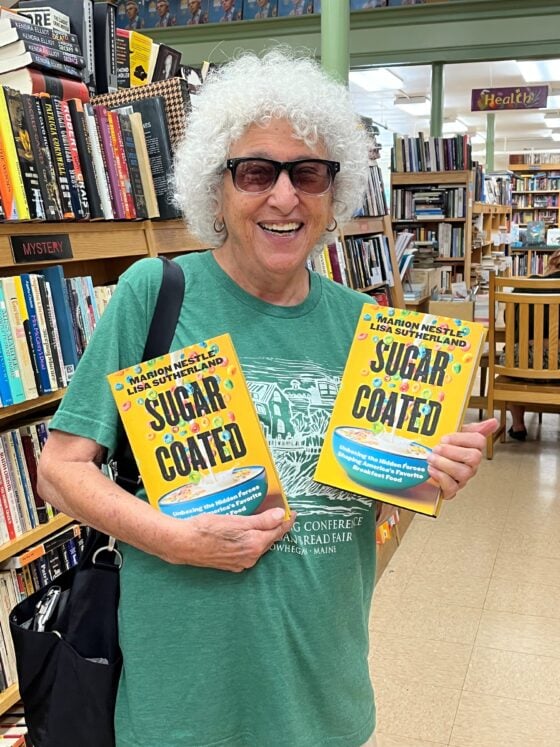
To quote the late Gloria Steinem, this is what 90 looks like.

Photo taken at Autumn Leaves Books, Ithaca, July 2026


As should be obvious, I have had a hugely fortunate life.

I was born into a poor family but came of age during the now-understood-to-be-unique period between the end of World War II and the election of Ronald Reagan.  Then, a university education was essentially free; I paid $32 per semester in fees to the University of California Berkeley.  Housing was affordable; the first house I bought cost $14,500.  Anyone with a modest academic salary could expect to lead a solid middle-class life.  And for women, doors were beginning to open.

I was in graduate school in the early 1960s, a time when we thought we were changing the world.  We were going to end the war in Vietnam, end poverty, obtain civil rights, get equity for women, protect the environment, end injustice, curb corporate power.  We could see these changes happening.  The future was going to be better, and for everyone.

That was my normal.  I had no idea how unusual that 30-year period would turn out to be, or how powerful the backlash against it.

I was lucky enough to find work—teaching, writing, speaking—that I found deeply engrossing, stimulating, and rewarding.  I still do.

As for my ability to continue to do these things?  Good nutrition, of course,  And even more luck.

My book, Food Politics, turns 25 next year and I recently submitted a new Preface and Afterword for its 25th anniversary edition (forthcoming, February 2027).

Here is how I ended the Afterword:

I am often asked how I remain hopeful in the light of the food industry’s power to control and corrupt government. My answer: the food movement. I see its effects everywhere. Healthier foods are more widely available than when Food Politics first appeared. Increasing numbers of people, old and young, care about food issues and want to improve the food system. Every place I travel, I see more schools serving healthier and better-tasting meals, more farmers’ markets, more young people wanting to farm, more concern about humane farm animal production, more backyard chickens and urban gardens, and more attention to local, seasonal, and sustainable food. Most gratifying, more people understand the politics. A quarter century ago, I could not use the word “capitalism” in class or lectures without turning off the room. Now when I talk about food system problems, someone invariably challenges me: “but aren’t you talking about capitalism?” Yes, I am, and late-stage capitalism at that.

When my NYU department started food studies programs in 1996, we were virtually alone.[i] Today, colleges and universities host food programs and courses in practically every department and unit, all teaching students how to think critically about—and engage in—the country’s most pressing economic, political, social, and health problems. Food issues are a lens into those problems. They are high on the agendas of local, state, national, and international governments. The media cover agriculture, food, and nutrition extensively and, as a reporter once told me, command so much national attention that food issues constitute a Full Employment Act.

I especially see hope at the grassroots level. Many communities are engaged in efforts to improve school meals, reduce childhood obesity, align agricultural production with health goals, and make healthier food more available and affordable for all. Advocates are increasingly learning and following well-established strategies for achieving social change. To the extent they do, they have a good chance at success.[ii]

Today’s challenge is to take advocacy to the national level. If I could wave a magic wand, here is what I would do to make healthy food choices more available, accessible, affordable, and desirable—the default—and not only in the United States.

  • Conduct ongoing national education campaigns to promote healthful choices.
  • Refocus agricultural production subsidies on food for people rather than feed for livestock animals and ethanol and diesel fuel for cars and airplanes.
  • Increase taxes on unhealthful foods and support lower prices for healthful foods.
  • Restrict marketing of unhealthful foods and promote marketing of healthful foods.
  • Enact a universal basic income program so everyone can afford to eat healthfully.
  • Enact a universal school meals program—with adequate funding—so all children have access to healthful breakfasts and lunches.
  • Overturn Citizens United and get money out of politics.
  • Reform Wall Street to require corporations to provide benefits to their workers, communities, and society as well as to stockholders.

These ideas may sound like pie in the sky, but I deeply believe that setting goals—even those that seem highly unattainable—is a useful public health strategy. Unrealistic goals can educate, expand expectations, promote critical thinking, motivate action, attract resources, and encourage accountability. Sometimes, with skill and luck, they can even be achieved.[iii] Efforts to create better and more equitable food systems are prime expressions of democracy in action—of the people, by the people, for the people. They are well worth engagement, advocacy, and activism, and deserve everyone’s support.

Notes

[i] Bentley A, Parasecoli F, Ray K, eds. Practicing Food Studies. New York: NYU Press, 2024.

[ii] Bobo KA, Max S, Bobo K, et al. Organizing for Social Change: Midwest Academy Manual for Activists. New York: Seven Locks Press, 2001.

[iii] Eyal N, Sjöstrand M. On knowingly setting unrealistic goals in public health. Am J Public Health 2020;110(4):480–484. doi: 10.2105/AJPH.2019.305428.

The post Reflections on my 90th birthday—and food politics appeared first on Food Politics by Marion Nestle

Yuka’s report on ultra-processed foods: Don’t miss it.

Yuka, the wildly popular (88 million users) supermarket app for analyzing food labels for nutritional value and health impact, has produced a terrific report: Ultra-Processed Foods: Decoding a Food Transformation with Major Health Consequences.

The report

  • Reviews the history of food processing
  • Defines ultra-processed foods
  • Reviews their health risks
  • Explain how they affect health
  • Describes the food system that produces them
  • Explains how to identify them and make better choices

The report is beautifully illustrated, especially with examples of the marketing of ultra-processed foods and drinks to children.

The illustrations also illustrate the major concepts, ingredient extraction, in this case.

As for how to tell the difference between a processed and an ultra-processed food, try this:

The report is written clearly and covers the territory.  If you want to understand ultra-processed foods, here’s the best way to do it that I’ve seen.  High marks to the authors, Yuka’s Julie Chapon, CEO and Co-Founder Gabriela Mourad Vicenssuto.

The post Yuka’s report on ultra-processed foods: Don’t miss it. appeared first on Food Politics by Marion Nestle

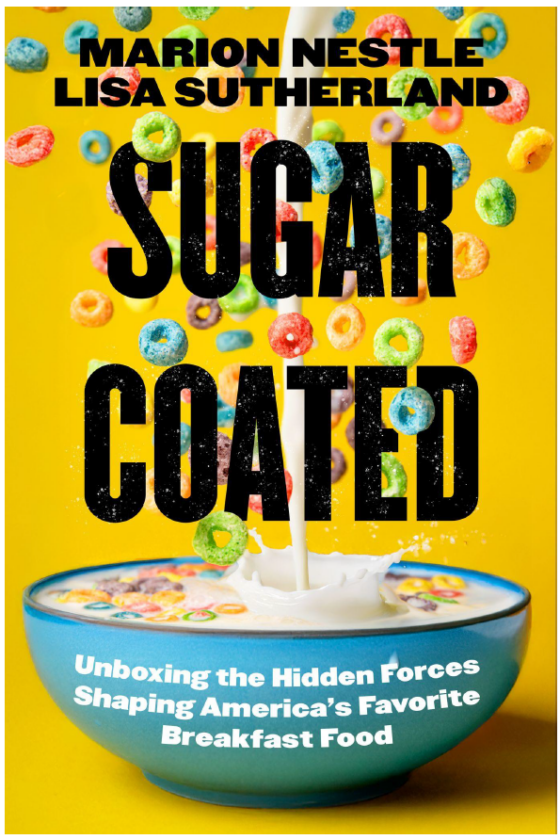
Sugar-Coated: published today!

My co-author, Lisa Sutherland, is a former vice president of Kellogg.  We had a great time writing this.

Information about the book is here.

For a 30% discount at that site, use code UCPSAVE30.

Here’s the official launch invitation

Please come to the celebration and launch for my new book, Tuesday, September 8 | 6:00–8:00 p.m. | NYU Bobst Library.  Registration and further information are here.

The post Sugar-Coated: published today! appeared first on Food Politics by Marion Nestle

RIP Gloria Steinem, 1934-2026

Gloria Steinem was very much a heroine of my generation.  I did not know her personally, although I met her once.  It was a memorable occasion.

Gloria Steinem, Padma Lakshmi, Ruth Reichl, and me in 2021.

This was a meeting at Gloria’s house to discuss menopause, of all things.  I could not figure out why I was invited—I’m a little late for that discussion.  It turned out that one of the women there, a donor to Gloria’s foundation apparently,  had developed a line of menopause products and wanted us to know about them.

Whatever.  I was thrilled to be there and have the chance to meet her.

We are the same generation.  We came of age at a time when women opportunities for women to work, let alone have careers, were limited.

We did cross paths.  We were at the same youth festival in Vienna in 1959.  She was funded by the CIA; I was not.  We did not meet.

But I knew about her work from early on.  I loved her account of posing as a Playboy bunny.  I could see how MS magazine provided an intellectual basis for the women’s movement.

It even provoked new thoughts about the food movement.  My all-time favorite article (I am mentioned in it) is The Feminist Food Revolution.  It asked a question I had never thought of: Why do men keep getting all the credit for the food movement?

She was a tireless advocate for better opportunities for women, and an inspiration to keep on advocating.

I wish I had known her better.

Here’s The New York Times obituary.  It’s on the top of the front page of the print copy, as well it should.

The post RIP Gloria Steinem, 1934-2026 appeared first on Food Politics by Marion Nestle

RIP Wendell Berry, 1934 – 2026

Alas, we must now mourn the death of one of the great heroes of food politics, the honorable and immensely inspiring Wendell Berry.

His very existence was enough for hope that a decent food system might some day be possible in the United States.

When I think of his writings—his many books, essays, and poems—the words “decency” and “values” leap to mind.

He believed so deeply in the inherent worth of agrarian life—the idea that small-scale, sustainable, organic, regenerative agriculture, plant and animal, is the bedrock of a healthy, moral, and ethical life.  He lived that life.

He also believed that agrarian values are fundamental to healthy, moral, and ethical societies.

Ethics.  Imagine that.

I was honored to meet him for the first time at his home in Port Royal, Kentucky in 2007.  I have had this photo on the wall of my NYU office ever since.

He was a constant source of inspiration.

What a loss.

I’ve collected a few memorial items recently posted.

Go with your love to the fields.
Lie down in the shade. Rest your head
in her lap. Swear allegiance
to what is nighest your thoughts.
As soon as the generals and the politicos
can predict the motions of your mind,
lose it. Leave it as a sign
to mark the false trail, the way
you didn’t go. Be like the fox
who makes more tracks than necessary,
some in the wrong direction.
Practice resurrection.

When despair for the world grows in me
and I wake in the night at the least sound
in fear of what my life and my children’s lives may be,
I go and lie down where the wood drake
rests in his beauty on the water, and the great heron feeds.
I come into the peace of wild things
who do not tax their lives with forethought
of grief. I come into the presence of still water.
And I feel above me the day-blind stars
waiting with their light. For a time
I rest in the grace of the world, and am free.

The fragment of the earth
that is now me is only on its way
through me. It is on its way
from having been a tree,
a school of fish, a terrapin,
a flock of birds. It will pass
through all those forms again.

Addition

Civil Eats on Remembering Wendell Berry (my comment is included, along with those of many others)

The post RIP Wendell Berry, 1934 – 2026 appeared first on Food Politics by Marion Nestle

SNAP waivers are associated with short-term decreases in soda purchases

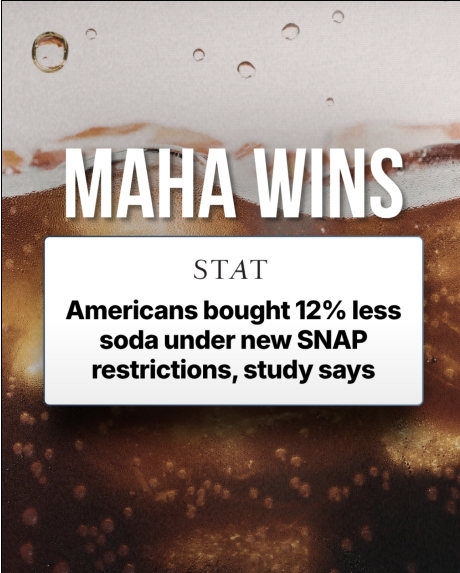
MAHA has announced a big win.

A study of purchase data from states with SNAP food restriction waivers, “Short-Run Impacts of SNAP Restriction Waivers on Beverage Purchases,finds a 13% decrease in soda purchases within the first two months, with even larger decreases in the poorest households (18.5%).  Yes, 13%, not 12% as the MAHA win poster says.

The study: Frisvold DE, Rojas FL.  Short-run impacts of SNAP restriction waivers on beverage purchases.  National Bureau of Economic Research, August 2026.  doi: 10.3386/w35613.

Background: Just published USDA data from 2023 show households participating in SNAP to consume more sugar-sweetened beverages than non-participating households.  A USDA study in 2016 showed similar results.

Attempts to restrict sodas on SNAP have been rejected by the USDA for years, but under the Trump administration, it has approved SNAP food restriction waivers for 23 states.  At the moment, 8 states have banned sugary drinks, 10 are in the process of implementing bans, and the policy in 5 states is under litigation.

Some economists have argued that SNAP participants would just use their own money to buy sugary drinks.  This study found that they did not.

According to the New York Times,

Fetch, a rewards app, found similar results in its data. Fetch users upload grocery and other receipts to receive coupons, allowing the company to track payment methods, including SNAP. In the company’s sample, SNAP households spent about 12 percent less on soda in the first three months of 2026 compared with the same period the year before. Water, coffee and juice purchases did not decline.

But some analysts say SNAP Food Restrictions May Help or Hurt—But We Will Probably Never Know.  They are particularly concerned about the lack of appropriate data sources for evaluation of the policy, and the potentially negative impacts of the policies—especially a decline in SNAP participation.

The Trump administration’s tightened rules for SNAP eligibility has already resulted in 5.6 million fewer enrollees compared with last year.

Declines in enrollment can be tracked here and here.

Comment

I’ve long supported restrictions on sugary beverages on SNAP, something intended from the time the program first started by blocked by the soda industry and retailers (the principal beneficiaries of SNAP).  But I wanted USDA waivers to come with rigorous evaluations plans that included not only purchase data, but also how participants felt about the bans and dealt with them.

The current waivers appear to me to be punitive, in line with the Trump administration’s other efforts to reduce SNAP enrollment—something it is achieving quite well.

So here’s another MAHA win: a big decline in SNAP enrollment.  They aren’t boasting about that one though, at least not publicly.

The post SNAP waivers are associated with short-term decreases in soda purchases appeared first on Food Politics by Marion Nestle

Industry-funded study of the week: avocados again

When I saw the title of this study, I thought I’ll bet the Hass Avocado people paid for this one.

Bingo.

This is a classic example of an industry-funded study producing the desired result.

  • The study: LeBeau K, Segovia-Siapco G, Heskey C …  The Effect of Including 1 Avocado Daily in a Habitual Diet on the Glycemic Index and Glycemic Load in Free-Living Adults with Overweight/Obesity. Current Developments in Nutrition, 2026; 10
  • Methods: This secondary analysis used data from the Habitual Diet and Avocado Trial, a multicenter, randomized, parallel-arm study involving 1008 adults with elevated waist circumference. Participants were randomly assigned to either an avocado-supplemented group, instructed to consume 1 large avocado daily with their usual diet, or a control group who maintained their habitual diet and avoided avocados.
  • Results: Among 961 participants with complete data (73% females, mean age 50.5 y), the avocado-supplemented group showed a reduction in dietary GL by 13.7 points (95% confidence interval: 17.0, 10.4; P < 0.001) compared with the control. Food groups contributed similar amounts to the overall GL, except for avocado.
  • Conclusions: Daily consumption of 1 avocado within the habitual diet significantly reduced GL by almost 14 points, without requiring significant dietary changes. This suggests that incorporating a single nutrient-dense food like avocado can effectively improve the GL simply and sustainably.
  • Conflict of interest: The authors report no conflicts of interest.
  • Funding: The study was funded by the Hass Avocado Board, which had no role in data collection, data analysis, interpretation, or writing the manuscript.

Comment

This also is a classic demonstration of failure to recognize conflicted interests when they exist.  Funding research automatically generates conflicted interests, whether the authors recognize it or not, as these authors do not.  The Hass Board does not have to be involved in data collection, interpretation, or writing.  The mere fact of its funding the study trial establishes its vested interest in the outcome.

The post Industry-funded study of the week: avocados again appeared first on Food Politics by Marion Nestle

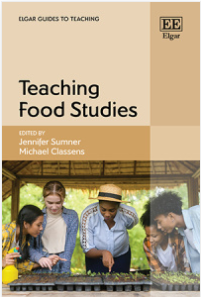
Weekend Reading: Teaching Food Studies

Summer J, Classens M, eds.  Teaching Food Studies.  Elgar Guides to Teaching.  Edward Elgar, 2026. 310 pages.

I wrote the Foreword to this book (see below), but when it arrived I was stunned and utterly honored to see its dedication: “To Marion Nestle and Mustafa Koç, principled and generous food justice leaders.  And to our families who inspire and nourish us.”

Here’s my Foreword.

In 1996, my NYU department was lucky enough to turn proverbial lemons into lemonade by taking advantage of an academic crisis and creating the first degree-granting programs in Food Studies, undergraduate, master’s, and doctoral.  At the time, Boston University offered a master’s degree in Gastronomy.  There may have been a few courses on food in other university departments, but food was widely considered unworthy of serious inquiry.  The first question everyone asked me was “why would anyone want to study about food?”

Now, I laugh when I remember that question.  As I and my NYU colleagues recount in our book, Practicing Food Studies (NYU Press, 2024), we did not realize we were starting a movement.  We viewed food as a lens through which to view, engage with, and critically investigate the most urgent issues raised by food systems, their societal, economic, and behavioral determinants, and their consequences for health and the environment.

By now, I can no longer count the number and breadth of currently available food studies and food systems programs, domestic and international; they can be found through two professional organizations that meet together every summer: the Association for the Study of Food and Society and the Agriculture, Food & Human Values Society.  Members have access to a wide range of online course syllabi and teaching materials.

Teaching Food Studies is a welcome and I predict a soon-to-be-utterly-essential addition to these materials.  As far as I can tell, food studies courses, concentrations, and programs are now offered in practically every academic discipline, with their content determined by the theory and methods of each particular discipline but also by the specific interests of the teaching faculty.  If you are a assigned a course on food, begin with this new volume, quirky and individualistic as it is.

This book covers an astonishing range of topics from course titles (e.g., culinary diplomacy, food politics, food systems policy), to concepts (being critical, nutritionism, intersectionality), to food categories (ultra-processed, local food, school food), to practices (food podcasts, sustainable consumption, vertical plant factories), to food advocacy (collective action, digital food activism, voting with your fork).  One quirk is that the chapters are listed alphabetically, making them head-spinning to read in order.

But they are wonderful to read, and this book is one terrific resource.  Each chapter introduces a concept, the debates around that concept, and how the concept fits into food studies.  Most rewarding, the author(s) give deeply personal, opinionated, experience-based accounts of how teach the concepts and engage students.  The chapters are short, but packed with useful information, especially actual course assignments ranging from theory to application.

The authors, mostly unknown to me, are real teachers dealing with real students from real classrooms.  This book is about teaching, the real deal. I did not write the chapter on food politics, Gyorgyi Scrinis did not write the one on nutritionism, and Carlos Monteiro did not write the ultra-processed chapter.  Instead, all of us are honored by having our work taught and cited.

I found this book to be fun to read.  Some of the chapters describe concepts that are new to me, prefigurative politics, for example, defined here as the values and principles of the society we aspire to create in the future.   I also found it inspirational.  I particularly liked its emphasis on finding ways to overcome students’ feelings of hopelessness when they realize that dealing with systemic food system (and global) problems requires more than changing individual behavior.  I also appreciated the citations to the resources in the wide range of fields unfamiliar to me.  Anyone reading this book will learn new and fascinating things about food and food systems.  I certainly did.

I also appreciated the editors’ focus on the importance of teaching critical thinking about food issues, while never neglecting the need to provide students with ample reasons for agency and hope.  I can’t think of a better way to do this than through food studies.  This book is a treasure.  Use it, and enjoy!


Marion Nestle, New York University

October 2025

___________________

Arriving Sept 8. For a 30% discount, pre-order here using code UCPSAVE30.


The post Weekend Reading: Teaching Food Studies appeared first on Food Politics by Marion Nestle

Cannabis edibles: an update of sorts

I collect items about cannabis edibles and just realized nothing new has come in for a for a long time.  Not much is happening with these products since President Trump reclassified marijuana as a Class III (less dangerous) drug. 

The FDA regulates cannabis edibles but has not said anything new about them for the last two years (since July 2024).

On the reclassification

International regulation

New CBD edibles

New CBD drinks

Oops: Psilocin edibles

Comment

To put it mildly, these products are not tightly regulated.  They may contain more or less of the active ingredient than what is on the label.  Be careful with them.  And keep them away from kids and pets.

____________________

Arriving Sept 8. For a 30% discount, pre-order here using code UCPSAVE30.

The post Cannabis edibles: an update of sorts appeared first on Food Politics by Marion Nestle

The root cause of the massive Cyclospora outbreak: industry consolidation

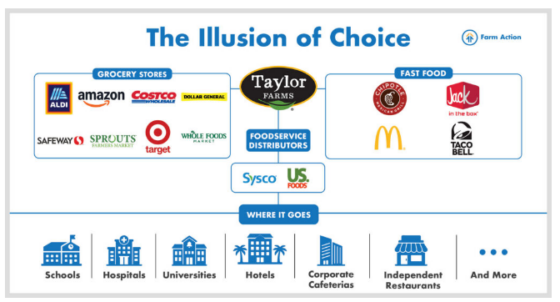
Farm Action has produced a riveting new report: Taylor Farms: How One Company’s Reach Became a National Risk.

Many, but by no means all, Cyclospora cases have been traced back to a Taylor farm in Mexico.

From the Farm Action report:

What you can do:

  • Buy directly from local farms whenever possible through farmers markets, community-supported agriculture programs, farm stands, and direct online sales.
  • Ask grocery stores, restaurants, schools, and institutions where their produce comes from and encourage them to source from local and regional farms.
  • Advocate for public policies that strengthen competition, transparency, and market access for independent farmers.

____________________

Arriving Sept 8. For a 30% discount, pre-order here using code UCPSAVE30.

The post The root cause of the massive Cyclospora outbreak: industry consolidation appeared first on Food Politics by Marion Nestle

PCRM sues government to cancel the 2025-2030 Dietary Guidelines

As anyone familiar with my work will know, I have made a career out of commenting on government dietary advice.  The Dietary Guidelines for Americans are particularly entertaining as quintessential examples of food politics in action, the latest ones in particular.

To summarize: They offered two excellent messages–Eat Real Food, and limit ultra-processed foods–but undermined them with unsubstantiated advice (double the protein), inconsistencies (eat more sources of saturated fat, but limit it to 10% of calories), omissions (salt, mentioned but no guideline), and errors (no, beef tallow is not a source of essential fatty acids).

And now the latest: The Physicians Committee for Responsible Medicine (PCRM) has sued to have the guidelines withdrawn and not used.

Guidelines Violated Federal Law Requiring Transparency, Balance, and Evidence…A “Secret Panel” of food-industry insiders handpicked by the Department of Health and Human Services and the U.S. Department of Agriculture illegally influenced the recommendations in the 2025-2030 Dietary Guidelines for Americans, argues a lawsuit the Physicians Committee for Responsible Medicine filed with the United States District Court for the District of Columbia on Aug. 19, 2026…“The government allowed the meat and dairy industries to ghostwrite the Dietary Guidelines,” said Physicians Committee President Neal D. Barnard, MD. “They put money in industry’s pocket and cholesterol in Americans’ arteries.”

PCRM is a Washington, DC-based group “dedicated to saving and improving human and animal lives through plant-based diets and ethical and effective scientific research.”

It particularly objects to the way the new guidelines and pyramid food guide prioritize meat and dairy foods.

Its lawsuit focuses on the unusually hasty and non-FACA [Federal Advisory Committee Act] process:

Instead of issuing Dietary Guidelines based on an internal review of the DGAC Report as had been the longstanding practice, Defendants, without any oversight or public  input, hastily assembled a handpicked panel of meat, dairy, and fad diet industry insiders (“Secret Panel”) for the purpose of attacking the FACA-compliant
DGAC Report and creating a substantially altered report entitled The Scientific Foundation for the Dietary Guidelines for Americans, 2025–2030….Although Defendants had previously vowed to “toss out the people who were writing the guidelines with conflicts of interest,” Defendants assembled a Secret Panel that was rife with conflicts of interest…Defendants then published Dietary Guidelines tha…embrace saturated fats, halve the recommended fruit and vegetable servings, remove daily alcohol intake limits, and promote fad diets.

PCRM says the 2025–2030 Dietary Guidelines pose dangers to

  • Children, whose school food programs must adhere to the Dietary Guidelines
  • Individuals with medical conditions who might follow the baseless medical advice incorporated into the Dietary Guidelines
  • Americans who are at risk for diet-related diseases, including obesity, diabetes, and cardiovascular disease, and might follow the scientifically unfounded Dietary Guidelines, which are designed to promote fatty, high-cholesterol products of industries with which the Dietary Guidelines’ authors are affiliated.

I can’t wait to see what happens with this one.  Stay tuned.

The post PCRM sues government to cancel the 2025-2030 Dietary Guidelines appeared first on Food Politics by Marion Nestle

Our current investment system does not work for food companies or us

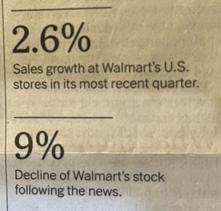
This, from the New York Times on August 21.

Here’s the headline:

A sales growth of ONLY 2.6% dropped Walmart’s stock by 9%.

OK, Walmart isn’t all about food, but it has larger food sales than any other place by a wide margin.

As I keep saying, I’m not against profit.

But the idea that 2.6% growth is insufficient to please stockholders explains everything about what’s wrong with our food system.

People and pets can only eat so much.  All food-selling enterprises cannot continue to grow infinitely.

I’ think a good argument can be made that the bad things food companies do to employees, customers, animals, and the environment result directly from stockholder pressures to grow sales and profits, quarter after quarter.

System change, anyone?

The post Our current investment system does not work for food companies or us appeared first on Food Politics by Marion Nestle

Weekend reading: a deep dive into prison food

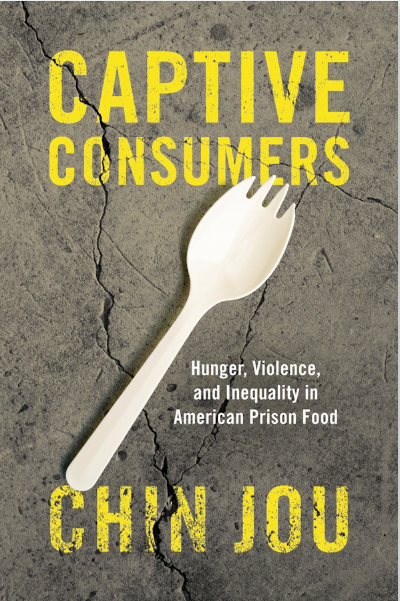
Chin Jou.  Captive Consumers: Hunger, Violence, and Inequality in American Prison Food.  University of North Carolina Press, 2026.  344 pages.

I have been a fan of Chin Jou’s work for a long time and did a blurb for her latest book:

Captive Consumers is a tough, uncompromising, and utterly compelling analysis of the ways America’s mass incarceration system uses food as punishment, and must become more humane.

From the publisher:

Using a wealth of sources from untapped historical records to prison newspapers, Jou excavates the voices of the incarcerated and shows that prison food dehumanizes the imprisoned, compounds racial and class inequalities, and induces more violence—ultimately making carceral institutions more dangerous. But this compelling book also illuminates how people behind bars have reasserted their identities, resourcefulness, and humanity through self-prepared food even as prison food services profit from lucrative, taxpayer-funded contracts that reward cost-cutting over care. If US corrections systems continue to perpetuate physical and psychological violence through food, Jou argues, Americans will suffer not just wasted tax dollars but the cost of bringing traumatized, ailing, and hungry formerly incarcerated people back into society.

____________________

Arriving Sept 8. For a 30% discount, pre-order here using code UCPSAVE30.

The post Weekend reading: a deep dive into prison food appeared first on Food Politics by Marion Nestle

Sonia Hirsch + Vivi Alface conversam sobre saúde e excesso de açúcar

💾

Sonia Hirsch, jornalista e escritora, e Vivi Alface, terapeuta naturopata, conversam sobre o trabalho que dá ser saudável e contam uma novidade: o Clube da Turma Doce, para quem vive com diabete tipo 2, pré-diabete ou quase isso. Mediação de Laura Neis.

Informações sobre os protocolos de faxina geral de Vivi: https://chat.whatsapp.com/D7yGfHkKKkP0HpYKwlzz15

Contato sobre o Clube da Turma Doce: https://chat.whatsapp.com/BCoHLRojm6YA8pDN2UugFX
❌