The Omani novelist Jokha al-Harthi and the translator Marilyn Booth won this year's Man Booker International prize for fiction in translation, for the novel Celestial Bodies, an account of three sisters living in the village of al-Awafi in an Oman on the brink of change. A couple of days after the announcement, at Waterstones book shop in Piccadilly, the winners spoke to the Turkish novelist Elif Shafak about the novel, Arabic culture and modernisation, translation, and women’s wisdom.
Anna Katharina Schaffner on the cultural history of fat and fat phobia; the TLS's travel editor Catharine Morris on why Paris will always be disappointing, the solitude of open spaces, and the problem with "Victor" the archetypal travel writer; an extract from the 2019 Man Booker International prize-winning Celestial Bodies by Jokha al-Harthi, read by the novel's translator Marilyn Booth
Books
Fat: A cultural history of the stuff of life by Christopher E. Forth
The Truth About Fat by Anthony Warner
Fearing the Black Body: The racial origins of fat phobia by Sabrina Strings
We’ll Never Have Paris, edited by Andrew Gallix
The Solace of Open Spaces by Gretel Ehrlich
Heida: A shepherd at the edge of the world by Steinunn Sigurðardóttir and Heiða Ásgeirsdóttír, translated by Philip Roughton
Where the Hornbeam Grows: A journey in search of a garden by Beth Lynch
The Cambridge History of Travel Writing, edited by Nandini Das and Tim Youngs
Celestial Bodies by Jokha al-Harthi, translated by Marilyn Booth
Esta edição do programa A voz humana, de Eucanaã Ferraz, está no site da Rádio Batuta desde 19/1/2016. https://bit.ly/2VBIIdx
A música vocal quando desprovida de textos pode atingir momentos sublimes, como mostra Eucanaã Ferraz neste programa dedicado aos vocalises. Ele selecionou cinco exemplos, a começar pela inesquecível versão de Galina Vishnevskaya para peça de Rachmaninoff.
Duo Alterno: Tiziana Scandaletti (voz) e Riccardo Piacentini (piano) – Vocalizzo sopra Ma se mi toccano dov’è il mio debole dal Barbiere di Siviglia (Marcello Abbado)
Lise Vachon – Vocalise
Concepção, roteiro e apresentação: Eucanaã Ferraz
Edição e sonorização: Filipe Di Castro
Imagem: Detalhe da partitura de Vocalise, op. 34, n° 14. de Rachmaninoff
Site da Batuta: https://radiobatuta.com.br/
Site do IMS: https://ims.com.br/
Facebook: https://www.facebook.com/radiobatuta/
Twitter: https://twitter.com/radiobatuta
Instagram: http://instagram.com/imoreirasalles
Esta edição do programa A voz humana, de Eucanaã Ferraz, está no site da Rádio Batuta desde 2/2/2016. https://bit.ly/2HsID8b
O novo episódio de A voz humana é dedicado à poesia, mas quando ela é musicada ou recitada com alguma intervenção musical. Eucanaã Ferraz apresenta uma gravação caseira do "Soneto de separação", com Tom Jobim e Vinicius de Moraes, e outras experiências envolvendo grandes poetas e compositores.
Repertório
Stella Doufexis (com Daniel Heide, piano) – Trois poèmes de Stéphane Mallarmé – 1 Soupir (versos de S. Mallarmé, melodia de Claude Debussy)
Brigitte Balleys (com Billy Eidi, piano) – Le nègre, locutions e souvenirs d’enfance (versos de J. Cocteau, melodia de Arthur Honegger)
Tetê Espíndola – Jaguadarte (versos de Lewis Carroll, tradução de Augusto de Campos, melodia de Arrigo Barnabé)
Diamanda Galás – Epístola a los transeúntes (versos de César Vallejo, melodia de D. Gallas)
Vinicius de Moraes e Tom Jobim – Soneto de separação (Tom Jobim e Vinicius de Moraes)
Jacques Prévert – Chanson des sardinières (J. Prévert)
William Burroughs – Old Western Movies (Jack Kerouac e Tomandandy)
Herberto Helder – No sorriso louco das mães (versos de H. Helder, melodia de Francisco Ribeiro)
Concepção, roteiro e apresentação: Eucanaã Ferraz
Edição e sonorização: Filipe Di Castro
Imagem: Cena de balé de Pina Bausch. Foto de Helmut Newton, 1983
Site da Batuta: https://radiobatuta.com.br/
Site do IMS: https://ims.com.br/
Facebook: https://www.facebook.com/radiobatuta/
Twitter: https://twitter.com/radiobatuta
Instagram: http://instagram.com/imoreirasalles
Esta edição do programa A voz humana, de Eucanaã Ferraz, está no site da Rádio Batuta desde 16/2/2016. https://bit.ly/2Qc3rDv
Eucanaã Ferraz não se propõe a traçar um painel da história do canto a capella, iniciada com o canto gregoriano. Ele selecionou alguns belos exemplos de interpretações em que a música se resume à voz humana, sem acompanhamento instrumental. Começa na África e passa por gravações marcantes como a de Sarah Vaughan para "Nature boy".
Repertório
Ladysmith Black Mambazo – Emafini
Sarah Vaughan – Nature boy (Eden Ahbez)
Caetano Veloso – Love for sale (Cole Porter)
The Fleetwoods – Mr. Blue (Dewayne Blackwell)
Pete Seeger – Where have all the flowers gone (P. Seeger e Joe Hickerson)
Theatre of Voices & Paul Hillier – Story (John Cage sore texto de Gertrude Stein)
Suzanne Vega – Tom’s dinner (S. Vega)
Björk – Öll birtan
Morcheeba – Blood like lemonade
Concepção, roteiro e apresentação: Eucanaã Ferraz
Edição e sonorização: Filipe Di Castro
Foto de Haruo Ohara/Acervo IMS
Site da Batuta: https://radiobatuta.com.br/
Site do IMS: https://ims.com.br/
Facebook: https://www.facebook.com/radiobatuta/
Twitter: https://twitter.com/radiobatuta
Instagram: http://instagram.com/imoreirasalles
Esta edição do programa A voz humana, de Eucanaã Ferraz, está no site da Rádio Batuta desde 23/2/2016. https://bit.ly/30ubbp3
Tomando emprestado o título de um livro de Ferreira Gullar, Eucanaã Ferraz reuniu em “Muitas vozes” não só corais, mas variadas experiências vocais que vão além de um solista. Peças com certa “corpulência vocal”, como diz Eucanaã. O passeio começa pela Itália do século XVI e passa, entre outros lugares, por Bulgária, Espanha, Brasil e pela pouco conhecida República de Tuva.
Repertório
Les Arts Florissants – Si ch’io vorrei morire (Monteverdi)
Vozes do Sul / Vitorino e Janita Salomé – Ao romper da bela aurora
Bulgarian State Television Female Choir – Lazarski Bouenets (anônimo)
Imagem: Twins (fragmento), de Max Bill (1972)
Site da Batuta: https://radiobatuta.com.br/
Site do IMS: https://ims.com.br/
Facebook: https://www.facebook.com/radiobatuta/
Twitter: https://twitter.com/radiobatuta
Instagram: http://instagram.com/imoreirasalles
Esta edição do programa A voz humana, de Eucanaã Ferraz, está no site da Rádio Batuta desde 1/3/2016. https://bit.ly/2YDFfwI
Demetrio Stratos (1945-1979) nasceu no Egito, filho de pais gregos, e chegou a integrar uma banda de rock na Itália. Mas se tornou célebre por suas experiências vocais radicais. Era capaz, por exemplo, de diplofonias, triplofonias e quadrifonias, situações em que a voz emite mais de uma nota ao mesmo tempo. Para Eucanaã Ferraz, “as vocalizações de Stratos estão para o canto como a pintura abstrata está para a figuração”. O cantor também era um rigoroso pesquisador e estudou, sobretudo, as técnicas de canto orientais.
Repertório
Segmenti uno
Segmenti due
Segmenti tre
Passagi 1, 2
Flautofonie ed altro
Todas as composições e interpretações são de Demetrio Stratos.
Concepção, roteiro e apresentação: Eucanaã Ferraz
Edição e sonorização: Filipe Di Castro
Foto de Marcel Gautherot/Acervo IMS
Site da Batuta: https://radiobatuta.com.br/
Site do IMS: https://ims.com.br/
Facebook: https://www.facebook.com/radiobatuta/
Twitter: https://twitter.com/radiobatuta
Instagram: http://instagram.com/imoreirasalles
Esta edição do programa A voz humana, de Eucanaã Ferraz, está no site da Rádio Batuta desde 8/3/2016. https://bit.ly/2WWXk8y
Consagrado na música popular, o formato voz-e-violão também tem grandes momentos na esfera clássica, como mostram peças selecionadas por Eucanaã Ferraz para este programa. Ele, porém, não deixou de fora os mestres brasileiros Dorival Caymmi e João Gilberto.
Repertório
Alyssa Anderson (voz) e Joseph Spoelstra (violão) –Trois romances, op. 13, III. Besoin d’aimer (Mauro Giuliani)
Lucia Rizzi (voz) e Frédéric Zigante (vioão) – 6 Deustsch Lieder, Op. 72, IV, Ghasel (Louis Spohr)
Ryan de Ryke Wanders (voz) e Brandon J. Acker (vioão) – Nachtlied I, D. 224 (Franz Schubert)
Dorival Caymmi (voz e violão) – A jangada voltou só (D. Caymmi) –
Peter Pears (voz) e Julian Bream (vioão) – Songs from the Chinese, Op. 58; The Big Chariot (Benjamin Britten)
João Gilberto (voz e violão) – Avarandado (Caetano Veloso)
Violeta Parra (voz e violão) – El gavilán (V. Parra)
Concepção, roteiro e apresentação: Eucanaã Ferraz
Edição e sonorização: Filipe Di Castro
"La musique" (detalhe), Henri Matisse, 1939. Albright-Knox Art Gallery, Buffalo, Nova York
Site da Batuta: https://radiobatuta.com.br/
Site do IMS: https://ims.com.br/
Facebook: https://www.facebook.com/radiobatuta/
Twitter: https://twitter.com/radiobatuta
Instagram: http://instagram.com/imoreirasalles
Esta edição do programa A voz humana, de Eucanaã Ferraz, está no site da Rádio Batuta desde 15/3/2016. https://bit.ly/2QcK11n
Os acalantos atravessam gerações graças à tradição oral, como mostram alguns temas deste programa de Eucanaã Ferraz. Outros nasceram já como criações de compositores populares, casos dos de Dorival Caymmi e dos irmãos Gershwin, etapas finais desta seleção feita, no bom sentido, para dormir.
Repertório
Kel Ansar Tuaregs – Bell’ilba (anônimo)
Anônimo – [Canção de ninar] (anônimo)
Anônimo – Këngë Djepi (anônimo)
B. Arundhathi – Omanathinkal Kidavo (Irayimman Thampi)
Nana Caymmi e Dorival Caymmi – Acalanto (D. Caymmi)
Barbara Hendricks – Summertime (George e Ira Gershwin)
Concepção, roteiro e apresentação: Eucanaã Ferraz
Edição e sonorização: Filipe Di Castro
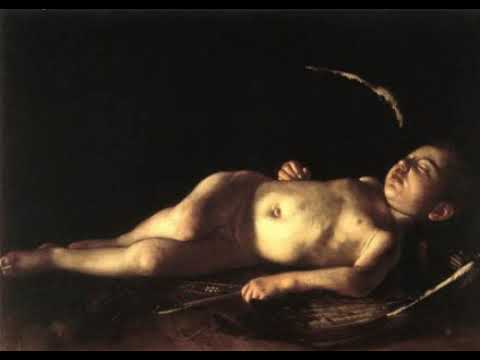
Imagem: Amorino dormiente, de Caravaggio, c. 1608, Galleria Palatina, Palazzo Pitti, Florença.
Site da Batuta: https://radiobatuta.com.br/
Site do IMS: https://ims.com.br/
Facebook: https://www.facebook.com/radiobatuta/
Twitter: https://twitter.com/radiobatuta
Instagram: http://instagram.com/imoreirasalles
Esta edição do programa A voz humana, de Eucanaã Ferraz, está no site da Rádio Batuta desde 22/3/2016. https://bit.ly/2Hr6XHb
O grito é o som mais intenso que a voz humana pode produzir. Às vezes, seu timbre pode ferir o ouvido e afetar fortemente aqueles que o ouvem. Mas o grito também pode ser dramático e extremamente musical. Eucanaã Ferraz selecionou exemplos marcantes, interjeições do teatro Nô japonês, aboios de vaqueiro recolhidos por Mário de Andrade, além de temas interpretados por Yoko Ono e Patty Waters.
Repertório
Anônimos – Interjeições no teatro Nô (anôn.)
Anônimos – Gritos e sanza (anôn.)
Anônimos – Coro em kecak (anôn.)
Anônimo – Aboios (anôn.)
Yoko Ono & John Zorn – Blink (Yoko Ono e J. Zorn)
Patty Waters – Black is the color of my true love’s hair (anôn.)
Concepção, roteiro e apresentação: Eucanaã Ferraz
Edição e sonorização: Filipe Di Castro
Imagem: "Mural", Jackson Pollock, 1943. University of Iowa Museum of Art (EUA)
Site da Batuta: https://radiobatuta.com.br/
Site do IMS: https://ims.com.br/
Facebook: https://www.facebook.com/radiobatuta/
Twitter: https://twitter.com/radiobatuta
Instagram: http://instagram.com/imoreirasalles
Esta edição do programa A voz humana, de Eucanaã Ferraz, está no site da Rádio Batuta desde 12/4/2016. https://bit.ly/2VVw0er
Se no episódio anterior, "O cristal", Eucanaã Ferraz destacava limpidez e transparência, agora é o avesso: intensidade, perturbação. São vozes como as do afro-americano Screamin’ Jay Hawkins em "I put a spell on you" (canção posteriormente marcada pela interpretação de Nina Simone) e do espanhol José Menese, um cantor andaluz de flamenco.
Repertório
Yma Sumac – Chuncho (Moisés Vivanco)
Screamin’ Jay Hawkins – I put a spell on you (J. Hawkins)
Leon Thomas – Echoes (L. Thomas)
Concha Buika – Volver, Volver (Vicente Fernandez)
José Menese – Día grande (J. Menese)
Concepção, roteiro e apresentação: Eucanaã Ferraz
Edição e sonorização: Filipe Di Castro
Imagem: "Buttress", de Franz Kline, 1956, The Museum of Contemporary Art, Los Angeles.
Site da Batuta: https://radiobatuta.com.br/
Site do IMS: https://ims.com.br/
Facebook: https://www.facebook.com/radiobatuta/
Twitter: https://twitter.com/radiobatuta
Instagram: http://instagram.com/imoreirasalles
Esta edição do programa A voz humana, de Eucanaã Ferraz, está no site da Rádio Batuta desde 5/4/2016. https://bit.ly/2Qd2dI6
Eucanaã Ferraz inicia um par de programas chamados "O cristal" e "A chama", conceitos tomados emprestados do escritor italiano Italo Calvino. Neste episódio, estão cantos que sugerem limpidez e transparência, como interpretações selecionadas de Caetano Veloso e Milton Nascimento.
Repertório
Etsuko Chida – Yashiyo Jishi (anôn.)
Caetano Veloso – Tudo, tudo, tudo (C. Veloso)
Theatre of voices – It was terrible cold (David Lang)
Ian Bostridge – Abschied – melodrama, D.829 (Schubert)
Milton Nascimento – Lua girou (adaptação de Milton Nascimento para tema popular)
Elisabeth Speiser e Irwin Gage (piano) – Ariettes Oubbliées, L. 60, No. 3, L’ombre des arbres (Claude Debussy e Paul Verlaine)
Jessye Norman – Four last songs / Vier Letzte Lieder / 2. September (Richard Strauss e Hermann Hesse)
Concepção, roteiro e apresentação: Eucanaã Ferraz
Edição e sonorização: Filipe Di Castro
Imagem: Sem título, 1942. Josef Albers. Museu San Ildefonso, Cidade do México.
Site da Batuta: https://radiobatuta.com.br/
Site do IMS: https://ims.com.br/
Facebook: https://www.facebook.com/radiobatuta/
Twitter: https://twitter.com/radiobatuta
Instagram: http://instagram.com/imoreirasalles
Esta edição do programa A voz humana, de Eucanaã Ferraz, está no site da Rádio Batuta desde 19/4/2016. https://bit.ly/2WW51vH
Tomando emprestado para o título do programa uma frase do artista plástico Hélio Oiticica, Eucanaã Ferrez reúne gravações nas quais a voz é experimentada de modos diversos, ampliando a exploração do canto, da interpretação e da composição com resultados surpreendentes.
Repertório
Charles Dodge – Speech songs, fragmento 1, When I am with you (C. Dodge)
Theatre of Voices – Young turtles assymetries (Jackson Mac Low)
Pamela Z – 50; for Charles Amikhanian (Pamela Z)
Katya Guedes – Ofélia presa nas cordas de um piano (Jocy de Oliveira)
Concepção, roteiro e apresentação: Eucanaã Ferraz
Edição e sonorização: Filipe Di Castro
Imagem: Obra de Lygia Clark, foto de Eucanaã Ferraz, outubro/2012, São Paulo
Site da Batuta: https://radiobatuta.com.br/
Site do IMS: https://ims.com.br/
Facebook: https://www.facebook.com/radiobatuta/
Twitter: https://twitter.com/radiobatuta
Instagram: http://instagram.com/imoreirasalles
Esta edição do programa A voz humana, de Eucanaã Ferraz, está no site da Rádio Batuta desde 26/4/2016. https://bit.ly/2Hy8Jqp
A distância a que se refere o título do programa se dá no espaço e no tempo. Eucanaã Ferraz selecionou cantos muito antigos mantidos pela tradição oral. Vêm, dentre outros países, do Líbano, da Índia e do Tibete.
Repertório
Ali Kondi, Nevruz Kondi e grupo de camponeses (Albânia) – Fuat Bahani (anôn.)
Yûsuf al-Tâj (Líbano) – La-sbat mâ yi’ûd az-zamân [É certo que o passado não voltará mais]
Mudi Kondan, C. Venkatarama e Vellore Gopalachari (Índia) – Improvisação pallavi (anôn.)
Imas Permas (Indonésia) – sem título – música de concerto tembang sunda (anôn.)
Monges budistas do Colégio Tântrico de Gyütö (Tibete) – sem título (anôn.)
Constantin Staicu (Romênia) – Sarpele [Serpente]
Bac Nam Ngu (Vietnam) – Canto feiticeiro (anôn.)
The Bulgarian State Radio & Television Female Choir (Bulgária) – Kalimankou Denkou [A reunião da noite] (anôn.)
Concepção, roteiro e apresentação: Eucanaã Ferraz
Edição e sonorização: Filipe Di Castro
Imagem: Cena do filme "Edipo Re", direção de Pier Paolo Pasolini, 1968.
Site da Batuta: https://radiobatuta.com.br/
Site do IMS: https://ims.com.br/
Facebook: https://www.facebook.com/radiobatuta/
Twitter: https://twitter.com/radiobatuta
Instagram: http://instagram.com/imoreirasalles
No último século, os animais vertebrados desapareceram da face da terra numa velocidade cem vezes mais rápida do que o normal. Isso significa que o planeta está vivendo a sexta extinção em massa.
A última foi há 65 milhões de anos, quando um asteroide se chocou com a terra e fulminou os dinossauros. Agora esse processo tem uma causa diferente: a explosão populacional do Homo sapiens. Boa parte desses impactos são causados pela agricultura, que tem sido feita de forma nada amigável ao ambiente.
Até meados de maio, por exemplo, o governo Federal tinha aprovado o registro de 166 novos agrotóxicos. Quarenta e oito deles são da classe I, que apresenta o maior risco toxicológico.
Diante desse quadro, tentamos responder algumas perguntas. Quais são as saídas para essa situação? É possível cultivar alimentos em grande escala sem os impactos atuais? Ou, numa saída mais extrema, é hora de a humanidade parar de crescer? E se for esse o caso, existe alguma forma de isso acontecer sem grandes catástrofes sociais?
*** Você pode assinar o podcast gratuitamente no iTunes, no Spotify, no YouTube e nos principais aplicativos de podcast ***
Economista, com mestrado e doutorado em Desenvolvimento Econômico pela Universidade Estadual de Campinas. Presidente regional da Sociedade Brasileira de Economia Ecológica.
To mark the bicentenary of Queen Victoria's birth, the TLS's history editor David Horspool guides us through all manner of Victorian matters, including the Widow of Windsor's mastery of soft power, how different things might have been had she been born a boy, how the Victorians amused themselves, and the Rebecca Riots; we also have a symposium in this week's paper, asking writers and thinkers – including Steven Pinker and Bernardine Evaristo – to tell us about the important books from their childhoods. To discuss this – and to share our own youthful reading – we're joined in the studio by a [insert collective noun here] of TLS editors
Go to www.the-tls.co.uk/ to read a selection of articles from our Victorian special issue, and much more.
Our symposium was prompted by an initiative – Books To Inspire – launched by Hay Festival Wales, aiming to compile a crowd-sourced list of titles to inspire the next generation. Find out more at hayfestival.com
Esta edição do programa A voz humana, de Eucanaã Ferraz, está no site da Rádio Batuta desde 9/2/2016. https://bit.ly/2QbdUPE
A relação da voz com o que é transcendente, místico, religioso é o tema deste programa de Eucanaã Ferraz. A seleção é ecumênica, de uma peça sacra a louvores a orixás, tendo no percurso um spiritual.
Academy of Ancient Music – Eternity’s sunrise (John Tavener)
Kathleen Battle – Swing low, Sweet chariot
Mia Doi Todd – Canto de Yemanjá (Baden Powell e Vinicius de Moraes)
Teresa Berganza – Xangô (adaptação de Villa Lobos) e O’Kinimbá (adaptação de Villa Lobos)
Concepção, roteiro e apresentação: Eucanaã Ferraz
Edição e sonorização: Filipe Di Castro
Imagem: São Jerônimo (detalhe), de Caravaggio. Galleria Borghese
Site da Batuta: https://radiobatuta.com.br/
Site do IMS: https://ims.com.br/
Facebook: https://www.facebook.com/radiobatuta/
Twitter: https://twitter.com/radiobatuta
Instagram: http://instagram.com/imoreirasalles
Esta edição do programa A voz humana, de Eucanaã Ferraz, está no site da Rádio Batuta desde 26/1/2016. https://bit.ly/2VC2Hsy
No novo programa da série, Eucanaã Ferraz seleciona preciosos exemplos de scats, aquelas vocalizações bastante utilizadas no jazz e que equivalem a solos instrumentais. Para ele, cada cantor tem a sua personalidade musical revelada no tipo de scat, na escolha das sílabas, no colorido alcançado, muitas vezes com efeitos humorísticos.
Repertório
Cab Calloway & his Cotton Club Orchestra – Zaz zuh zaz
The Mills Brothers – Diga, diga doo
Dizzy Gillespie and his Orchestra – Oop pop a da
Ella Fitzgerald – How high the moon?
Henri Salvador – Stompin’ at Savoy
Chet Baker – Look for the silver linning
Anita O’Day – Sing, sing, sing
Concepção, roteiro e apresentação: Eucanaã Ferraz
Edição e sonorização: Filipe Di Castro
Foto de Madalena Schwartz / Acervo IMS
Site da Batuta: https://radiobatuta.com.br/
Site do IMS: https://ims.com.br/
Facebook: https://www.facebook.com/radiobatuta/
Twitter: https://twitter.com/radiobatuta
Instagram: http://instagram.com/imoreirasalles
Esta edição do programa A voz humana, de Eucanaã Ferraz, está no site da Rádio Batuta desde 12/01/2016. https://bit.ly/2EkWWtt
O canto muitas vezes se mistura com a fala. Também pode se converter em recitativo, quando é declamado. Eucanaã Ferraz selecionou alguns exemplos especiais para o segundo programa da série. Um deles é o casamento entre os sons de Hermeto Pascoal e o poema e a voz de Mário Lago.
Repertório
Philip Glass – Einstein on the beach, Knee play 1 (P. Glass)
Laurie Anderson – O Superman (L. Anderson)
Jane Manning – Pierrot lunaire – 1 (A. Shoenberg)
Hermeto Pascoal e Mário Lago – Três coisas (H. Pascoal e M. Lago)
Chavela Vargas – La llorona
Concepção, roteiro e apresentação: Eucanaã Ferraz
Edição e sonorização: Filipe Di Castro
Imagem: Madonna del Magnificat (detalhe), Boticceli. Foto de Eucanaã Ferraz (Uffizi, Florença)
Site da Batuta: https://radiobatuta.com.br/
Site do IMS: https://ims.com.br/
Facebook: https://www.facebook.com/radiobatuta/
Twitter: https://twitter.com/radiobatuta
Instagram: http://instagram.com/imoreirasalles
The comedian and writer Helen Lederer joins us to discuss gender and comedy and the new Comedy Women In Print Prize; Lucy Dallas considers a clutch of novels in which animals might offer a little respite from human company; the TLS’s philosophy editor Tim Crane guides us through the riches of this week’s philosophy issue, including how the advent of biological immortality might augur “the greatest inequality experienced in all human history” and what happened when Michel Foucault took LSD in Death Valley
To Leave with the Reindeer by Olivia Rosenthal, translated by Sophie Lewis
Animalia by Jean-Baptiste del Amo, translated by Frank Wynne
The Animal Gazer by Edgardo Franzosini, translated by Michael F. Moore
“The last mortals: why we are especially unfortunate to die, when our near-descendants could be immortal", by Regini Rini – see this week’s TLS (in print and online)
Foucault in California: A true story, wherein the great French philosopher drops acid in the Valley of Death by Simeon Wade

 Login
Login