A new state tool lets you tell data brokers to stop tracking you. Will they comply? Help us investigate.
Hello there,
Our names are Colin and Mohamed, and we’re both journalists at CalMatters and The Markup.
If you haven’t heard yet, California is offering a new way for people to protect their data — and we want your help tracking its rollout and effectiveness.
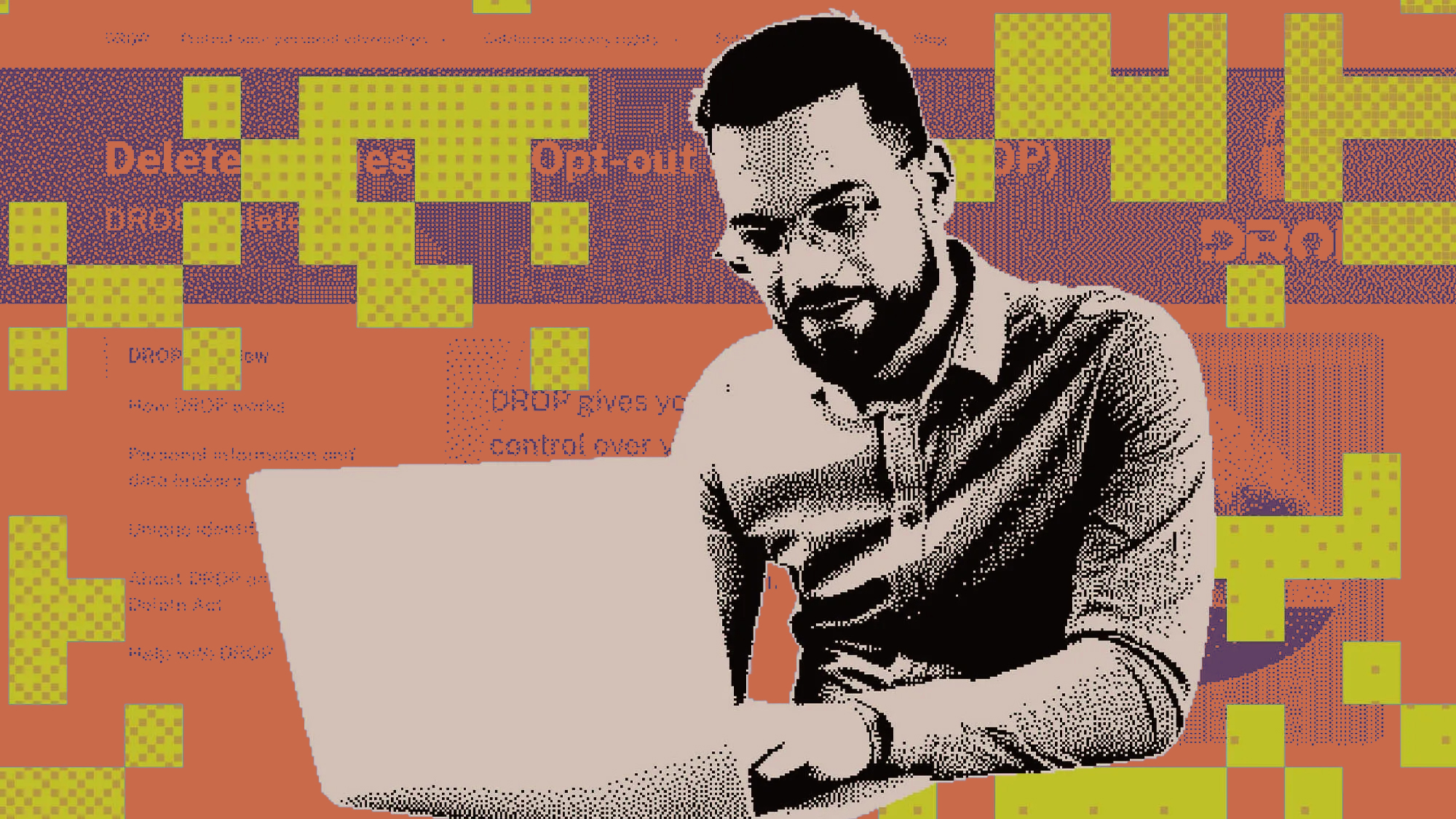
Starting at the beginning of this year, the California Privacy Protection Agency allowed residents of the state to sign up for the Delete Request and Opt-out Platform, or DROP. The tool lets consumers send an instant request to hundreds of data brokers, asking them to delete their data and stop tracking them.
The brokers are required to start processing those requests in August. We reported on the tool’s launch, and as new requests are processed, we’ll keep following the story.
CalMatters and The Markup want to keep tabs on whether data companies comply with DROP, and that’s where we need your help.
Californians have the right to know about the personal information a business collects about them and to control how it is used and shared. We’ll walk you through how to exercise those rights with some of the largest data brokers in the country and how to share what they tell you with us. Then, after the DROP deadline, we’ll walk you through how to do it again, and we’ll help you figure out if the information companies have about you changed, grew, or was deleted.
If you don’t live in California, but have friends or family in California who would be interested in helping us investigate, please share this article with them.
Mientras en Islandia o Venezuela certificamos la defunción de masas de hielo milenarias, en las remotas montañas de Baltistán los habitantes "casan" glaciares para combatir la sequía. Si aún no eres socio y quieres escuchar completo este nuevo episodio, primero hazte socio en este enlace
Puedes escuchar el cuarto episodio completo del mítico podcast de ciencia y humor en este enlace de elDiario.es
Cada año, la Tierra pierde 273.000 millones de toneladas de hielo, el equivalente a tres piscinas olímpicas derritiéndose cada segundo. Para visibilizar este drama, el ser humano ha comenzado a oficiar melancólicos funerales, como el celebrado en 2019 para despedir al glaciar islandés Okjökull, o la creación de un cementerio simbólico con lápidas talladas en hielo para recordar a los colosos caídos. La tragedia avanza de forma implacable en todo el planeta: la reciente práctica desaparición del glaciar de La Corona, en el pico Humboldt, ha convertido a Venezuela en el primer país de los Andes en quedarse sin una sola de sus cumbres heladas.
Esta pérdida irreparable trasciende los meros datos científicos y nos golpea profundamente a nivel emocional, ya que tendemos a percibir a los glaciares casi como entidades vivas. La investigadora Alejandra Melfo señala la “coincidencia cósmica” que supone que, tras decenas de miles de años de existencia, sea precisamente la actual generación la que deba presenciar el fin de estas nieves eternas. Su reflexión, llena de poesía y desolación frente a un territorio climático inexplorado, sirvió de inspiración para que el músico Jorge Drexler compusiera una canción dedicada a honrar estas heridas y encontrar la manera de despedir a los glaciares.
Frente a esta desolación, surgen respuestas asombrosas como las de Baltistán, en el Himalaya, donde los habitantes combaten la sequía celebrando insólitas “bodas” entre hielos distintos para engendrar pequeños glaciares que les garanticen agua. Y, en los Pirineos, el glaciar del Monte Perdido agoniza y pierde grosor a tal velocidad que los expertos calculan que podría desaparecer por completo en apenas una década. Acompáñanos en este recorrido por las diferentes formas de despedir a los glaciares a lo largo y ancho del planeta.
Puedes escucharlo completoen nuestra web. Si no eres socio, puedes suscribirte en este enlace
***
Agradecimientos: Alejandra Melfo (doctora en astrofísica e investigadora del glaciar de La Corona), Jorge Drexler (cantante), Sebastián (guía local en los Andes), Eñaut Izaguirre Estíbaliz (geógrafo, glaciólogo e investigador del Instituto Pirenaico de Ecología del CSIC), Sergio Henrique Faria (director del Laboratorio de Hielo del Centro Vasco para el Cambio Climático), Nicolás González (investigador del Laboratorio de Hielo), Tehzeeb Bano (investigadora de la Universidad de Guelph), Ahmnad Nazir (supervisor del programa de sembrado de glaciares de la agencia Aga Khan), Zakir Hussain (profesor de la Universidad de Baltistán y asesor de la ONU), Lisa Kranz (miembro de la expedición)
***
¿Qué es Catástrofe Ultravioleta? Catástrofe Ultravioleta es un podcast de Antonio Martínez Ron, Javier Peláez y Javi Álvarez que trata de acercar el mundo de la ciencia a través de los más diversos ámbitos de conocimiento. El programa de ciencia ganador de un Ondas regresa con 10 episodios monotemáticos que se publicarán los jueves, cada dos semanas. Cada episodio es una experiencia sonora que ofrece una aproximación a la realidad desde perspectivas inesperadas y una buena dosis de humor.
To get Obscura, you don't even need to link a personal email to your account. So if you, want a privacy first VPN go to https://obscura.com/CASPIAN or scan the QR code and get 25% off a subscription for only $6/month
If Trump’s deal with Iran falls apart, the United States has five routes into Iran.
If you want to support CaspianReport, the best way is simple: watch, like, and share the videos. For direct support, you can join as a member or contribute; every bit helps keep the channel independent and improves the quality of the work.
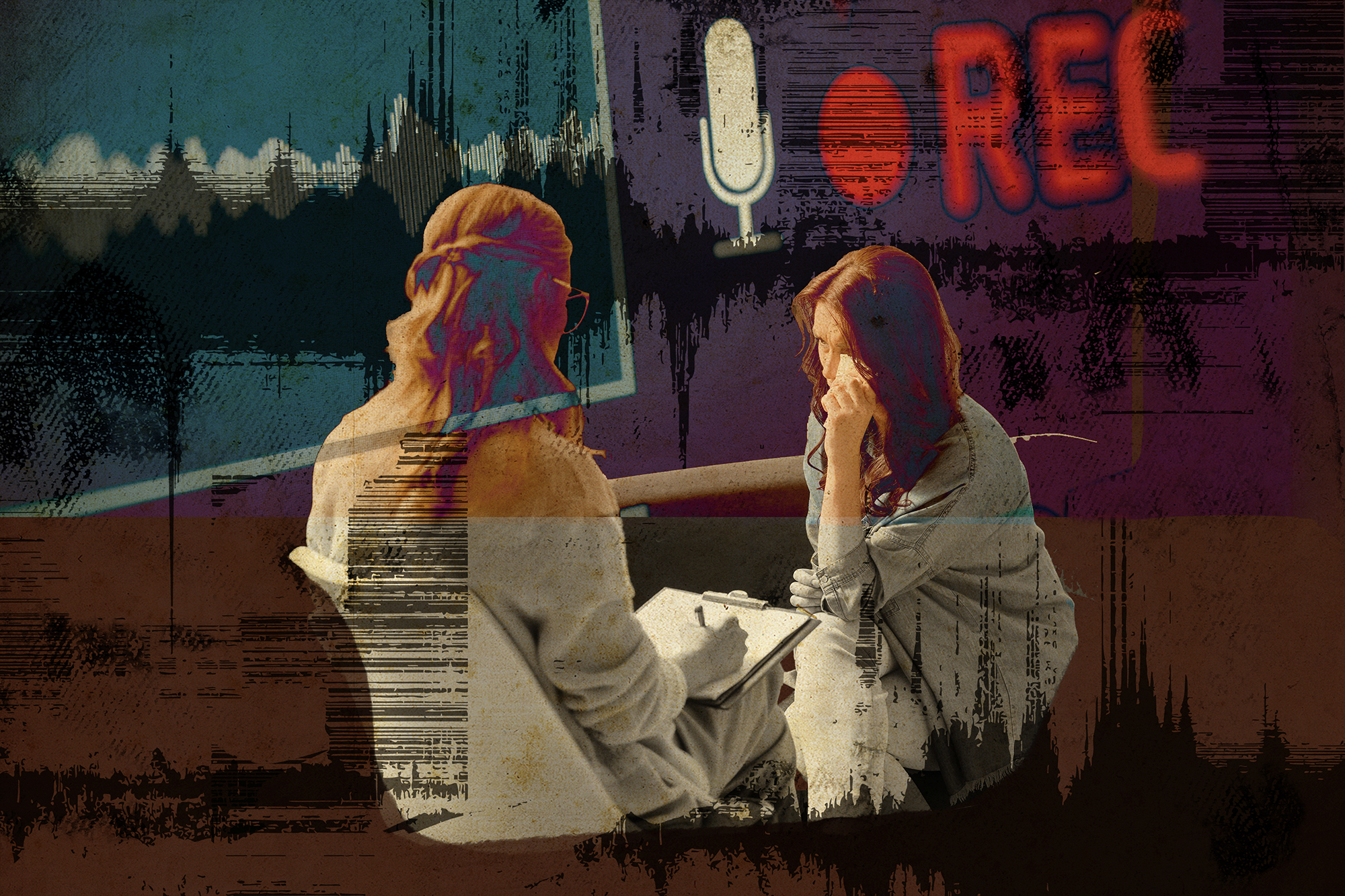
Mental health providers are increasingly using AI technology to record conversations, raising privacy concerns among patients and practitioners.
Illustration by Roxsy Lin, American Community Media
In 2024, Kaiser Permanente announced the rollout of Abridge. Described in a press release as “ambient listening technology,” the AI-powered scribe is designed to help clinicians including mental health providers securely capture clinical notes during patient visits.
But what the description fails to indicate is that the tool records entire medical appointments, including deeply personal mental health sessions.
During these sessions, mental health professionals are required to obtain patients’ consent before using the tool. However, as shared by multiple providers, that consent process does not include explanations about how the information is handled. Nor does it say how long and where recordings are stored, or who has access to the data.
This happens in part because that information has not been shared with providers, despite their attempts to obtain it.
‘Empty assurances’
Ilana Marcucci-Morris chose not to use the platform with her patients. She is a licensed clinical social worker with Kaiser psychiatry in Oakland, California. She is also a member of a bargaining committee. In that role, she regularly meets with various Kaiser representatives, including Northern California’s director of mental health.
Marcucci-Morris describes how, during those meetings, she and other committee members have asked questions about patient privacy protections, HIPAA compliance, and the safeguards in place for the use of these technologies.
According to her, the response from leadership has often been empty assurances: “We are compliant. That’s it. That’s all you need to know. We vet the technology, therapist. Don’t worry. That’s not your job. We have tech experts. That’s their job,” Marcucci-Morris said in an interview with American Community Media.
“They won’t show us, right? And my feeling is, if you have nothing to hide and you’re doing it totally […] ethically, then you would show us, prove it. They can’t, and they won’t, and they declined to when we ask.”
Ligia Pacheco is a psychiatric social worker who provides remote therapy services for Kaiser patients in Southern California. She said Kaiser also refused her requests to provide further explanations.
In an interview with American Community Media, Pacheco recalled how a coworker once raised concerns to a supervisor. The response: that “it’s unprofessional for you to provide your personal beliefs on AI in our work setting.”
For Pacheco, “that leads to just low morale, no space to advocate for patients. We’re supposed to be the voice of patients who are coming in their most vulnerable state. And we can’t even be that voice for them, so we feel discouraged.”
“Patient after patient after patient”
Providers have been required to see more patients in recent years. That creates intense pressure to keep up with documentation and workloads, Marcucci-Morris highlighted.
“You’re just like seeing patient after patient after patient after patient with barely enough time to go to the bathroom, eat a snack […] get some fresh air,” she said.
According to Marcucci-Morris, refusing to manage the increased patient volume can be treated as a failure to meet job expectations. It may also lead to disciplinary action.
As a union steward, she said she often represents colleagues during workplace investigations related to delayed documentation or difficulties managing heavy caseloads. In those situations, she said management frequently recommends the use of Abridge to save time and avoid further discipline.
In her view, the providers she knows who use the technology are not doing so because they support or trust it. Rather, it is because they feel pressured to protect their jobs and comply with workplace demands.
“I consider that to be coercive because you’re putting someone in a position to either lose their job or use the software. That’s another choice that’s under duress,” she explained.
Provider, patient concerns
Brian Hoberman is chief information officer for The Permanente Medical Group. In a Kaiser press release, he said, “Abridge’s advanced technology supports our doctors’ well-being by reducing the documentation burden.”
He added, “We implemented this new technology after careful review and diligent testing and found it to be well received by patients and doctors…”
For at least one patient interviewed for this story such assurances fall short.
“I fear that this kind of information that’s being recorded now can get into the wrong hands,” said the patient, who asked not to be identified for privacy reasons. “I may not want my employers, I may not want my family members, I might not want people to know some of these very kind of intimate conversations and deep conversations I have with my doctors [and] with my mental health provider.”
Adriana Webb is a social worker at Kaiser Panorama City in Los Angeles. “I work with patients who have sensitive medical diagnoses, like […] HIV and AIDS, and a lot of times my patients don’t even want that in their chart.”
A spokesperson for Kaiser Permanente insisted in an emailed response to American Community Media that clinicians are required to gain patient consent prior to using Abridge. “No one is recorded without their knowledge and consent,” the statement read.
It added that recordings are stored for no longer than 14 days, and that data processing meets all HIPAA requirements as well as Kaiser Permanente’s own privacy and security standards.
“Abridge helps clinicians spend more time focused on patients and less time on administrative tasks,” it said.
Weaponizing mental health data
According to Nicole Alvarez, senior analyst for technology policy at the Center for American Progress, “a record of someone’s lowest moments can be used against them in ways that, you know, […] a high blood pressure reading cannot.”
She said mental health data can be especially sensitive because of the stigma surrounding mental health conditions. For patients, that stigma carries real-world consequences in areas such as employment, child custody cases, immigration matters, and security clearances. She emphasized that, like other forms of personal data, mental health information can be weaponized against individuals.
Agreements between health systems and AI vendors can vary widely, she said. This includes terms related to whether audio recordings or transcripts can be used to train AI models, whether patient data is de-identified, how long the data is retained, whether it can be shared with other clients, and what happens to the information once a contract ends.
Kaiser insists any data it collects is not used to train AI models.
Still, in Alvarez’ experience, patients often have little visibility into these arrangements. She argued that health systems have a responsibility to clearly disclose how patient information is being handled and used.
Alvarez also emphasized that, in most cases, patients have the right to refuse recordings. But, she said, the opt-out process is not always clearly presented. According to her, consent options may range from direct questions at check-in to language buried in intake paperwork, making it important for patients to carefully review forms and disclosures.
She said meaningful consent requires patients not only to know they are being recorded and that they can decline, but also to understand how their information may be stored, shared, or used afterward.
Coercive consent
Pacheco experienced this during a personal appointment at Kaiser. Her doctor did not ask for permission to use the app and instead informed her that it would be used. After a moment, she decided to refuse the platform’s use. Although the doctor stopped the recording, she felt a noticeable discomfort in the doctor’s demeanor afterward.
She later decided to change doctors.
Situations like this are a concern for Marcucci-Morris, who said the company’s approach to obtaining consent for the use of Abridge during appointments can feel manipulative and coercive. In her view, providers are trained to present the tool in a way that places the needs of patients and doctors in opposition to one another.
She explained that patients are often told the system will help doctors with documentation, reduce burnout, and allow them to spend more time with their families. As a result, patients may feel guilty declining the use of the tool because they do not want to make their provider’s job harder.
She believes this framing pressures patients into agreeing rather than allowing them to make a fully comfortable and independent decision.
According to Kaiser, Abridge is available in “40 hospitals and more than 600 medical offices in eight states and the District of Columbia,” part of a larger embrace of AI technology by the health care industry. Abridge operates in more than 14 languages.
American Community Media reached out multiple times to Abridge AI Inc. for comment but received no response. According to the company’s website, Abridge describes itself as a “Business Associate” to providers. Patients are advised to consult providers’ privacy policies for information on how their data is protected.
“Therapy is most effective in privacy and when trust is achieved through two human beings,” said Marcucci-Morris. For her, “healing occurs when human empathy is offered sincerely as part of any sort of mental health treatment relationship.”
She added, “I believe recording a therapy session changes human behavior. It changes the patient’s demeanor.”
While American policymakers see a deal with Iran as the end of a crisis, the Israelis see it as the beginning of a far more dangerous one.
We used DeltaSweep throughout this episode to track the Strait of Hormuz, ships, military activity, and key infrastructure in real time. You can try the same dashboard yourself at https://www.deltasweep.com
Geography has a way of outlasting politics, and few places demonstrate that better than Cuba.
The maps, ship trackers, intelligence feeds, and datasets you see in our videos all come from DeltaSweep. We originally built it for our own research, but we've now opened it to the public. If you've ever wondered how we connect the dots behind a story, this is where much of that work begins.
Rep. Justin Pearson, D‑Memphis, is blocked by the Sergeant at Arms as he tries to enter a Senate Judiciary Committee meeting on the second day of a special redistricting session at the Tennessee State Office Building. Republicans have reconvened behind closed doors after protesters shut down the previous day’s hearing on a GOP plan to dismantle Memphis’s lone majority‑Black congressional district.
The discussion reads Hester’s doorway standoff as a live test of whether civil‑rights‑era victories on access and representation can withstand today’s more openly authoritarian playbook.
Sign up at our new newsletter platform, ReadingthePictures.media, for our latest posts and videos.
Play Supremacy World War 3 for FREE on PC, iOS, or Android:
💥 https://con.onelink.me/kZW6/r4plwl99
Receive a Unique Starter Pack with a free Seasonal Unit the
Elite Railgun and value of USD 40, available only for the next 30 days!
As tensions rise between Washington and Havana, we examine why Cuba is once again becoming a major focus of US foreign policy.
If you want to support CaspianReport, the best way is simple: watch, like, and share the videos. For direct support, you can join as a member or contribute; every bit helps keep the channel independent and improves the quality of the work.
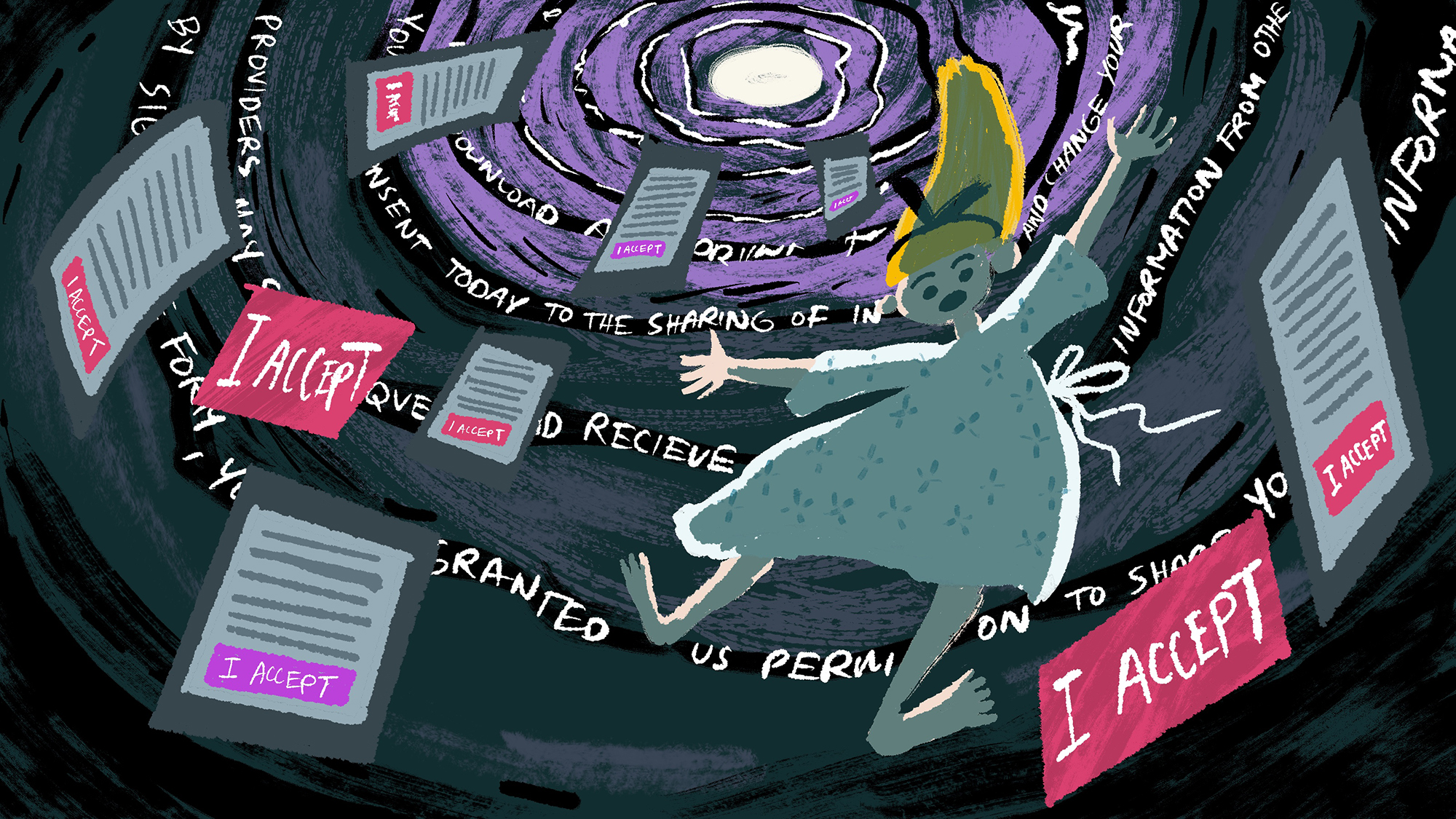
Dark patterns force patients to share their data with big healthcare networks, even when the privacy form they’re signing explicitly says they can opt-out.
Gabriel Hongsdusit
When Paula Stannard, one of the federal government’s top healthcare privacy officials, visited her eye doctor this year, she was asked to sign a form, acknowledging she’d received a privacy notice about how the office would use her health data.
“Had I received the notice of privacy practices? No,” she told an audience at one of the nation’s largest health industry conferences in March.
“I did not want to tell them who I was and why they should not be doing that,” said Stannard, who is director of the Office for Civil Rights at the U.S. Department of Health and Human Services. “But I did write a note that says, ‘I have not received this. I am not acknowledging receipt.’”
Stannard’s story is all too common.
Over the last year, I’ve interviewed more than 20 patients, healthcare providers, experts and advocates about the privacy forms they must sign to get care at their providers’ offices.
Time and again I was told the same thing: Across the country, from large hospital systems to small, private clinics, patients are being asked to sign waivers blindly without knowing exactly what they’re signing.
When patients ask to see more, staff usually don’t have an easy way to show them. When patients do get the forms, it tells them all the ways their medical data will be shared and reused, and some of the ways patients can refuse. But electronic systems make it impossible to opt out on the spot, requiring follow up emails.
Records sharing between unaffiliated providers through these networks can benefit patients by making their scattered records more visible to the provider who is treating them.
In other cases, companies, such as GuardDog, have admitted to accessing patient records “under the guise of treatment” and funneling them to personal injury law firms.
There’s not much patients can do to limit the risks of their data being available across networks, except by aggressively pursuing opt-outs when providers offer them. Turns out, that can be pretty hard to do.
Gale Oleson is a retired dermatologist in Missouri who recalled visiting the emergency room after a hand injury.
“They hand me the signature pad,” he said. “They said, you have to sign this so we can do the procedure. And I said, well, I don’t know what the heck I’m signing. Is it like you get my house today? You know, you could be taking my car, you know, signing over my life insurance. And they just laugh, you know?
“… In those situations, I’ve had them either turn the screen to me or I request that they print out a copy for me to review and they’ve always done it, but it’s always a ‘I forgot how a printer works’ kind of thing.”
Experts have a name for this practice: “Dark patterns,” which are manipulative design choices that steer people into doing things or making decisions they otherwise would not make. It’s easier to check the box to say that you’ve received the privacy notice, even if you haven’t. It’s easier to sign the digital signature box, even if you can’t see what you’re signing.
The alternative — saying you didn’t get the privacy notice, or asking repeatedly to see what you’re signing — sounds like a simple request, but can be scary for patients. Many of the patients I’ve interviewed, including a lawyer who works as a privacy advocate, told me they’re afraid that speaking up or pushing back against terms they don’t agree to will make health providers categorize them as inconvenient patients and make it harder to get the care they need.
As a privacy researcher, I’ve experienced this hesitation myself. Last year, I wrote about the epic lengths I went through to get a copy of the consent forms I signed when my toddler needed surgery. When my child was strapped to a movable bed, the surgeon standing there at the ready, I was asked to verify my signature on a consent form. When I asked if I could have a copy of it, a nurse said she wasn’t allowed to give it to me — and sent me to a ghost office at another hospital to search for it. In the moment, I let it go, so I wouldn’t hold up the surgery. Later, after asking multiple people for help, I was finally able to get a copy.
To experience more of what patients have to deal with and test whether they’re able to successfully get the information they need, say no, or opt-out of having their data shared, I checked out over a dozen health care systems myself by registering and going to appointments in Iowa, New Jersey, New York, Ohio, Oregon, South Carolina and Virginia.
One telehealth appointment with a provider showed me how easily dark patterns force patients to share their data with big healthcare networks, even when the privacy form they’re signing explicitly says they can opt-out.
In October 2025, I booked a telehealth appointment with a women’s health clinic in Virginia, after a source was frustrated with the clinic’s check-in process. During registration, I was asked to sign their notice of privacy practices. It’s the same type of form that Stannard never got, but was asked to say she did.
The notice told me that I was giving them permission to let my physician share my health data with a health information exchange, a network that allows providers to search my medical records, like lab results or medical history, from other health organizations when they treat me. These networks can be regional, state-wide or national in reach. The privacy notice says that by signing the form, “you agree to have your medical information shared.”
It also says I have two other choices:
Say no by following instructions on the opt-out form, but there’s no link to the form.
Say yes now and kick off the opt-out process later by sending an email. An email address is provided.
But when I got to the end of the privacy notice, I wasn’t allowed to say no. I had only one choice: “I accept.” After that, there’s a spot to type my name “to accept the policy,” check a box that I understand that I’m electronically signing, and a big button to “Continue.”
I ignored the accept button and tried clicking “Continue.” An error message told me I couldn’t move forward unless I hit “I accept.”
I was at a crossroads. The privacy notice literally describes “Say No Thanks” as a choice, but doesn’t let me pick it.
At this point, most of the patients I’ve interviewed would probably click “I accept” and move on, even if they wanted to keep their information private. But I was researching what patients have to do for healthcare systems to honor their wishes around consent and privacy, so I stopped filling out the form.
Instead, I emailed the address on the privacy notice. I was surprised that an employee got back to me that day, shared the opt-out request form, and confirmed that “registration is required to opt-in.” She also told me her company, which manages this consent process for the information exchange, will process my opt-out after I sign it and they’re able to process it. The risk is that they might not do it before my appointment. I emailed her back and asked what we should do about this, since the original privacy notice says, “Please note, your opt-out does not affect health information that was disclosed through HIE [health information exchanges] prior to the time that you opted out.” How could we make sure none of my information is shared?
The next day, she replied that her company would proactively opt me out of the information exchange, that I should still complete the opt-out form she sent me, and that “You should now be able to complete your check-in, and the setting will remain unchanged.”
When I went back to check in for my appointment, I clicked “I accept,” because the health services company assured me nothing will change. Just to be safe, I wrote “I opt out of HIE” and my initials, “AR” into the box where I’m supposed to write my name.
When I wrote to a manager of the women’s clinic about this, they stood by Privia’s process and said that Privia makes themselves available for patients who want to opt-out.
“This is a dark pattern,” said Lior Strahilevitz, a legal scholar at the University of Chicago who has published papers on privacy and dark patterns and teaches health law. In fact, Strahilevitz sees multiple dark patterns in the patient registration process I went through.
One is called an “obstruction dark pattern,” which means the design makes it harder for patients to make any choice except the one healthcare providers want.
Another dark pattern was “visual interference” where the interface makes it hard on the patient. “The patient’s going to have to face inordinate burdens in order to make an autonomous choice,” he said, because they will need to go “outside the user interface, outside the screens, in order to exercise your opt-out rights.”
Lucia Savage, former chief privacy officer at the federal health IT office, called the Office of the National Coordinator for Health IT, said that problems like this can happen when people carelessly put physical forms online. “This isn’t really a design at all,” she said. “This is just a bunch of paper pasted onto a web page. Could you even really call it design?”
So, is all of this legal?
Legal experts point out that only one element of the check-in process violates the spirit of health privacy law, and it’s not the part I expected.
In Virginia, where I had my appointment, it’s legal for providers to opt patients in at registration and give them a way to opt-out later.
Some states, like Florida and New York, require providers to get a patient’s explicit consent before they can share or access a patient’s data from information exchanges. Other states, like Arizona and Maryland have laws that allow data-sharing through health information exchanges by default, as long as providers tell patients and give them a way to opt-out. Some states have not passed any additional regulations, which means they follow the federal baseline. Federally, under the Health Insurance Portability and Accountability Act (HIPAA), sharing a patients’ data in a health exchange is legal.
According to Sarah Jaromin, a health policy specialist at the National Conference of State Legislatures, in Virginia, there is no current state policy with explicit opt-in or opt-out requirements.
Craig Konnoth, a law professor at the University of Virginia who specializes in health and civil rights looked at the privacy notice I was asked to accept. “You have the choice as to whether your data is going to be used. In this particular situation, ‘we are going to use your data until you file in the opt-out paperwork’ — then that’s actually kosher,” he said.
What experts say violates the spirit of the law, however, is requiring that patients sign the privacy notice itself.
When I was checking in, the privacy notice forced me to add my signature and click “I accept” before I could click “Continue.”
“What becomes problematic for me is that you can’t actually proceed. The design forces you to do something that the HIPAA privacy rule does not require you to do,” said Stacey Tovino, a professor who teaches HIPAA privacy law at the University of Oklahoma College of Law. (Full disclosure: As a part of my role as Director of Sociotechnical Research at The Markup and CalMatters, I am combining a broader journalistic investigation with a small ethnographic research studying on digital patient intake procedures, The Markup paid Tovino to consult on the HIPAA implications of my findings, but she did not participate in data-collection or editorial decision-making.)
“Nothing in HIPAA requires them to make you sign the notice,” said Tovino. “If they don’t obtain the signature they simply have to document why they didn’t get it.”
There’s an important nuance here. At a doctor’s office, patients usually have to sign and give consent to treatment and financial responsibility policies before they can actually get medical care. But when it comes to privacy notices, HIPAA only requires healthcare providers to ask that patients acknowledge receiving it. Patients should be able to ignore it.
Many of the privacy-focused patients I interviewed, including those who also work as doctors and nurses, deliberately decline to sign a notice of privacy practices if it contains terms they disagree with. But when modern check-in technology refuses to let a patient move forward without agreeing to the notice of privacy practices, is that legal?
Emily Hilliard, press secretary at the U.S. Department of Health and Human Services (HHS), confirmed that the HIPAA privacy rule does not require providers to get a patient’s consent to their privacy notice, but it also does not “prohibit covered entities from requiring individuals to acknowledge, or agree to the terms of, an NPP.”
In other words, requiring patients to agree to a privacy notice before getting treatment is legal.
“Likely because HHS never envisioned this happening, HIPAA does not explicitly prohibit a covered entity from requiring an acknowledgement of receipt of the notice of privacy practices as a condition of treatment,” said Adam Greene, a partner at the law firm Davis Wright Tremaine who focuses on health information, privacy and security.
“HHS has heard about widespread problems with the acknowledgment of receipt of the notice of privacy practices becoming an obstacle to patient care and a cause of confusion,” he said. “In 2021, they issued a proposed rule that, amongst other things, proposed deleting the requirement for an acknowledgment of receipt of the notice of privacy practices.” The rule was never finalized, but it is back on the agenda this year.
Stannard confirmed that at HHS, “we are in the process of finalizing the rule which includes some additional requirements for the notice of privacy practices.”
The current proposed rule includes, “Eliminating the requirement to obtain an individual’s written acknowledgment of receipt of a direct treatment provider’s Notice of Privacy Practices.”
Experts say patients should be able to opt out immediately — not eventually
Legal experts say that regulators can fix this problem with one fell swoop: make it a rule that companies must let patients opt-out right away, at the same moment they’re notified that they can.
“Amend these [federal] regulations to say covered entities shall not impose an undue burden on people trying to opt out. Covered entities shall not make it functionally problematic. Covered entities shall not, in registration documents, force people to proceed, thus waiving their right to opt out at the earliest possible time,” Tovino said.
She suggested that when a company notifies someone of their right to opt out, the next sentence should include a link to do so.
Savage agreed that this change would “absolutely” be a substantial intervention. “I believe that’s something OCR [Office of Civil Rights at HHS] could do in regulations.”
At the same event where Stannard shared that her eye doctor asked her to acknowledge a privacy notice she never got, I asked her, “Would updating the privacy rule to require a live link when patients make a choice to opt out or into sharing their information be empowering to Americans as individual patients?” She’d just spoken about U.S. Health Secretary Robert F. Kennedy Jr.’ s agenda “to empower individuals with their own health information.”
“That’s an interesting idea,” Stannard responded. “I don’t remember if we’ve considered it before. It’s certainly something that we could consider going forward.”
One registration form, but a cocktail of technology companies
Navigating the dark patterns in the check-in process was difficult. What I’ve learned however, is that it’s hard to know who picked that interface to use with patients. Did it come from the clinic or the sprawl of vendors that health facilities have come to rely on?
Private clinics often partner with multiple outside companies (vendors covered by HIPAA) to get technology and administrative support. My appointment involved three different companies:
The mobile link I received to check-in for my appointment comes from a company named Phreesia, which handles patient-facing software, like consents, medical screening surveys and payment. When a patient clicks through those consent forms in the U.S., it goes through Phreesia every 1 in 6 patient visits.
The clinic had joined Privia Health, which handles management services for nearly 5,000 providers across 15 states, which affect 5.2 millions patients, according to a 2025 press release. The privacy notice I struggled with sent me to Privia’s medical records office to opt out. Phreesia’s logo was also on the copy of my forms that the clinic emailed me.
Finally, for my second telehealth appointment six months later, the clinic sent me a link with the name of another vendor, “athenahealth,” in it. The clinic had replaced Phreesia with athenahealth entirely.
“Unless you’re a really giant system,” said Savage, “you don’t have internal expertise on how to do this. So you buy it. You buy what’s plug-and-play and what’s affordable.”
The Markup and CalMatters asked all three companies who was responsible for the design of the patient registration interface, and no company gave us a clear answer.
Privia: “Privia is committed to the privacy and security rights of our patients’ information and to ensuring we comply with all regulatory requirements regarding our use of that information,” said Robert Borchert, senior vice president of investor and corporate communications at Privia Health.
athenahealth: “athenahealth provides technology that healthcare providers use to manage patient registration and clinical workflows … configured according to each provider’s requirements and applicable law,” read a statement from athenahealth, provided by Nikki D’Addario, senior public relations manager.
Phreesia: “It is the provider’s form and they determine the content and interface options,” said Dori Zweig Young, Phreesia spokesperson.
None of the companies responded to detailed written questions about how much control clinics have over the interface.
A blindspot for regulators and how it can be fixed
Strahilevitz explained, however, that agencies like the FTC and CFPB, which have been the most active on regulating dark patterns, regulate privacy within their zones, and only occasionally take on boundary cases.
“Health privacy, for the most part, is going to be primarily addressed by HIPAA and Health and Human Services rather than the FTC Act and the Federal Trade Commission,” he said. “There are limits on [the Commission’s] ability to protect patient privacy because that’s basically another entity’s job.”
Greene and Savage both agreed that the Federal Trade Commission has jurisdiction to enforce against dark patterns as unfair or deceptive practices in for-profit healthcare entities. The clinic I went to, like hundreds of thousands across the country, is for-profit.
But HHS has a broader mandate to regulate healthcare organizations, including non-profit hospitals.
For example, Strahilevitz said, in consumer finance, regulators at the Consumer Financial Protection Bureau treat a practice as unfair or deceptive when a consumer cannot reasonably avoid the resulting injury. Just as hard-to-cancel online subscriptions force people to pay more, maze-like opt-out structures force patients to pay with their data by default.
Strahilevitz said this provides a framework for thinking about privacy injuries in healthcare. An information exchange could serve as a clearing house for information about a patient’s abortion, which has a clear potential for injury if that information becomes known in a state where abortion treatments are criminalized.
“In other privacy contexts, the courts have said where it’s literally possible to opt out of something but, practically quite difficult, unduly onerous, then we’re not going to treat that as creating an opt-out right,” he said.
Savage sees more opportunities in carrots than sticks to get to best practices. She argued that the government could invest in good interface design that’s open source and available for anyone to use, and the federal health IT office, where she used to work, could create competitions focused on improving the technical tools that providers buy and use.
If the big technology vendors that independent clinics are already using make these changes, it could affect millions of patients.
State regulation is another possible solution. Strahilevitz said that scrutiny of dark patterns is spreading as states, like California, and regulatory agencies, like the FTC, seek to reign in unfair or deceptive practices through the simple intervention that it should be as easy to cancel as it is to subscribe, with one click.
“I hope that at some point, we’ll get to a point where symmetry of choice is the law of the land, not only with respect to consumer privacy in some states, but to these kinds of medical privacy or financial privacy or other contexts,” he said.
The Markup and CalMatters showed how website code could make it harder for Californians to exercise their right to remove personal data. Now much of that code has disappeared.
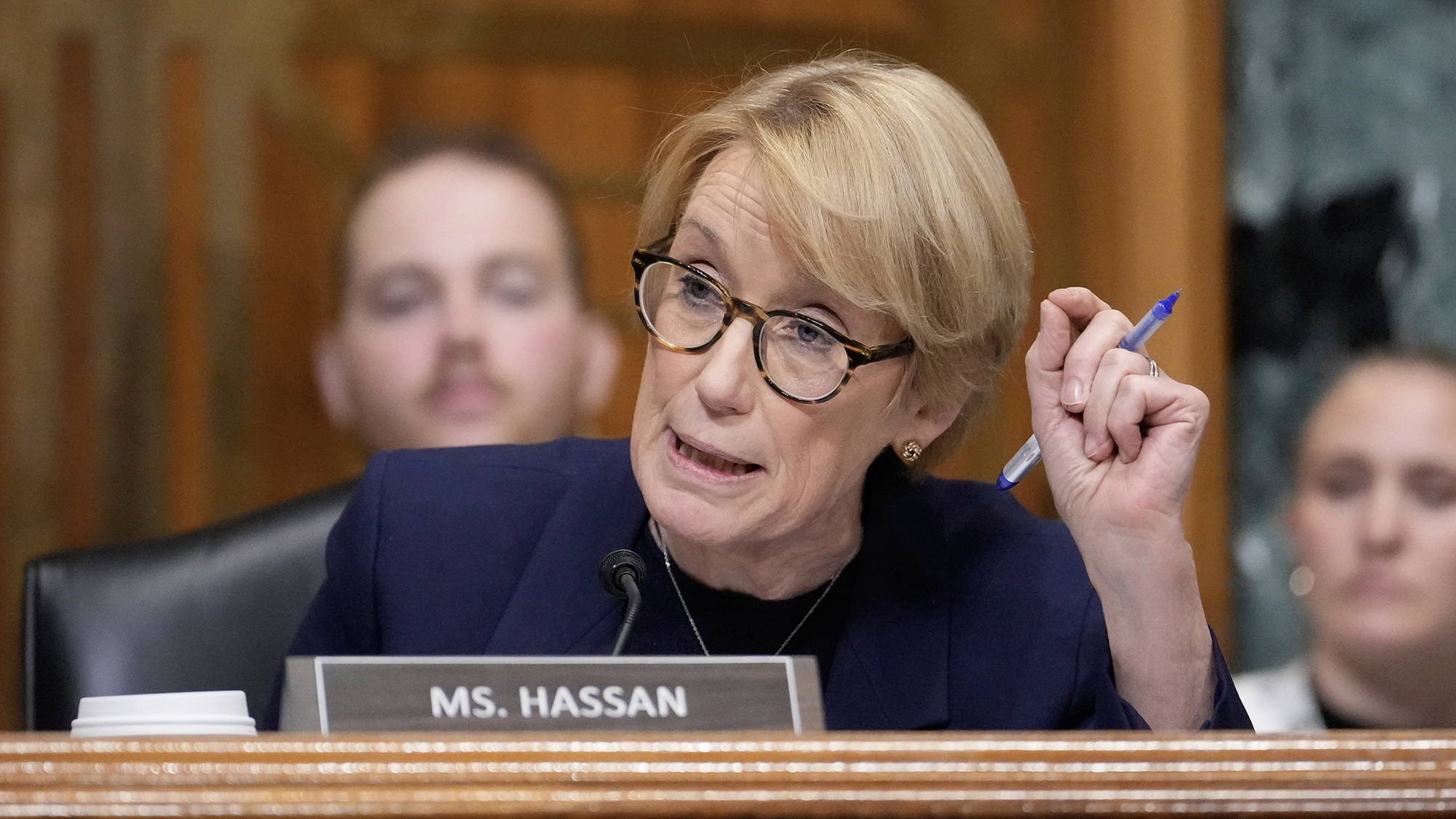
Sen. Maggie Hassan pressed data brokers to make it easier to opt out of their systems, citing an investigation by The Markup and CalMatters, published in partnership with WIRED. U.S. Sen. Maggie Hassan speaks during a Senate Finance Committee on Capitol Hill in Washington, D.C. on March 14, 2025. Photo by Ben Curtis, AP Photo
More data brokers have changed their practices in response to reporting from The Markup and CalMatters as well as a subsequent Senate investigation.
Data brokers — companies that collect and sell access to often-sensitive information on consumers — are required to register in the state of California and provide a way for consumers to request their data be deleted.
Last year, an investigation by The Markup and CalMatters, published in collaboration with WIRED, showed that many of those companies placed code on the web pages for making those requests that prevented them from appearing in search results. The “no-index” code tells search engines like Google not to catalog those pages, making it less likely that anyone would see them. Experts said that’s a hurdle for Californians looking to exercise their legal rights.
Last year’s investigation found 35 data brokers were using the code, 12 of whom soon removed it and allowed their pages to appear in search results.
Today, only eight of those 35 brokers are still hiding their deletion pages, according to another review done by The Markup and CalMatters this week. That includes five major data brokers who came under Senate investigation.
After The Markup and CalMatters published their report, the top Democrat on the Senate Joint Economic Committee minority, New Hampshire Democratic Sen. Maggie Hassan, sent letters to five data brokers questioning them about their practices.
Four of the companies — IQVIA Digital, Comscore, Telesign Corporation and 6sense Insights — engaged with the Senate committee about their practices and agreed to make their pages visible in search, according to a report the committee later released. The report also estimated that consumers have lost more than $20 billion from fraud and identity theft related to broker data breaches.
In an addendum to their initial findings released last week, the committee said that the fifth company facing questioning, Findem, also belatedly removed its “no-index” code, making its deletion pages visible in search engines.
One of the data brokers no longer hiding its opt-out page, BrightCheck, has a broken opt-out page and no longer appears on California’s broker registry.
Data brokers that hid opt-out pages from search engines
Of 499 brokers registered with the state of California, The Markup and CalMatters in August 2025 found 35 instructing search engines to ignore pages with instructions on how consumers can remove their data. As of May 2026, only eight had such instructions.
Chart: Tomas Apodaca
·
Source:
California Privacy Protection Agency 2025 Data Broker Registry
Of the eight brokers still hiding their deletion pages, only one, a company called Fideo, responded to a request for comment about whether they would continue using the code on their pages.
Jason Soni, a spokesperson for Fideo, which uses data for crime and fraud prevention purposes, said the company intentionally “chose not to display the application page itself in Google search results for technical and consumer experience reasons.” Consumers, he said, can make requests starting “from our homepage and public privacy resources, which provide the right context, routing, and instructions for privacy requests,” instead of starting at the application page.
“Americans deserve a choice over whether their personal data is collected, used, and sold for profit or not,” Hassan said in a statement released alongside the amended report. “Data brokers like Findem have a responsibility to provide that choice with clear, user-friendly opt-out functions and straightforward privacy policies.
DeltaSweep is a real-time OSINT platform built to track military activity, geopolitical developments, and emerging events across the Middle East.
Built using the same research workflow behind CaspianReport, the platform combines military aircraft tracking, naval monitoring, satellites, GPS jamming detection, OSINT feeds, military bases, and resource infrastructure into a single operational dashboard.
This is not a sponsorship. I’m one of the co-founders of the project, and after years of juggling dozens of separate tools and trackers, we decided to build our own system.
Join Freecash today by clicking on the link https://bit.ly/4cRYdc7 and enjoy an extra $10 on your first offer!
Trump has been skeptical of NATO since taking office. So what happens if he follows through, and America stops showing up?
If you want to support CaspianReport, the best way is simple: watch, like, and share the videos. For direct support, you can join as a member or contribute; every bit helps keep the channel independent and improves the quality of the work.
Escucha el segundo episodio de 'La memoria en ruinas', un podcast sobre el patrimonio español que se resiste a desaparecer
El capítulo 2 de La memoria en ruinas profundiza en la sorprendente realidad que José María Sadia y Andrea Morán acaban de descubrir: que España fue una especie de casa de subastas a principios del siglo XX. La profesora María José Martínez Ruiz, una de las mayores expertas en el comercio del arte, explica cómo anticuarios y agentes internacionales se llevaron de nuestro país todo tipo de joyas artísticas para vendérselas a magnates americanos como William Randolph Hearst, o a museos de prestigio, como el Metropolitan de Nueva York.
María José Martínez Ruiz
En esta segunda entrega, los periodistas se preguntan si todos estos tesoros nos fueron robados o si, por el contrario, fuimos nosotros quienes los vendimos.
Joan Molina
En busca de pistas certeras, visitarán un enclave que vivió uno de los fenómenos de expolio (o autoexpolio) más dolorosos de la Historia del arte. Se trata de la sustracción de una obra maestra, las pinturas murales de la ermita de San Baudelio de Berlanga. Un viaje final tratará de dar respuesta a una cuestión de lo más enigmática: ¿Dónde están actualmente las pinturas románicas de la iglesia soriana?
**
Puedes escuchar los 10 episodios de ‘La memoria en ruinas’ en nuestra web y en tu plataforma de audio favorita:
La memoria es ruinas es una producción de elDiario.es. Si te gusta lo que hacemos, necesitamos tu apoyo. Hazte socia, hazte socio, en elDiario.es/socio
Financiado por la Unión Europea – Next Generation EU
La proposición de ley de Sumar para que los nacidos en el Sáhara Occidental antes de 1976 y sus descendientes puedan tener la nacionalidad española aviva la esperanza en los saharauis
Entrevista - Bucharaya Hamudi: “El socialismo español del ‘No a la guerra’ se contradice con la posición de Pedro Sánchez sobre el Sáhara Occidental”
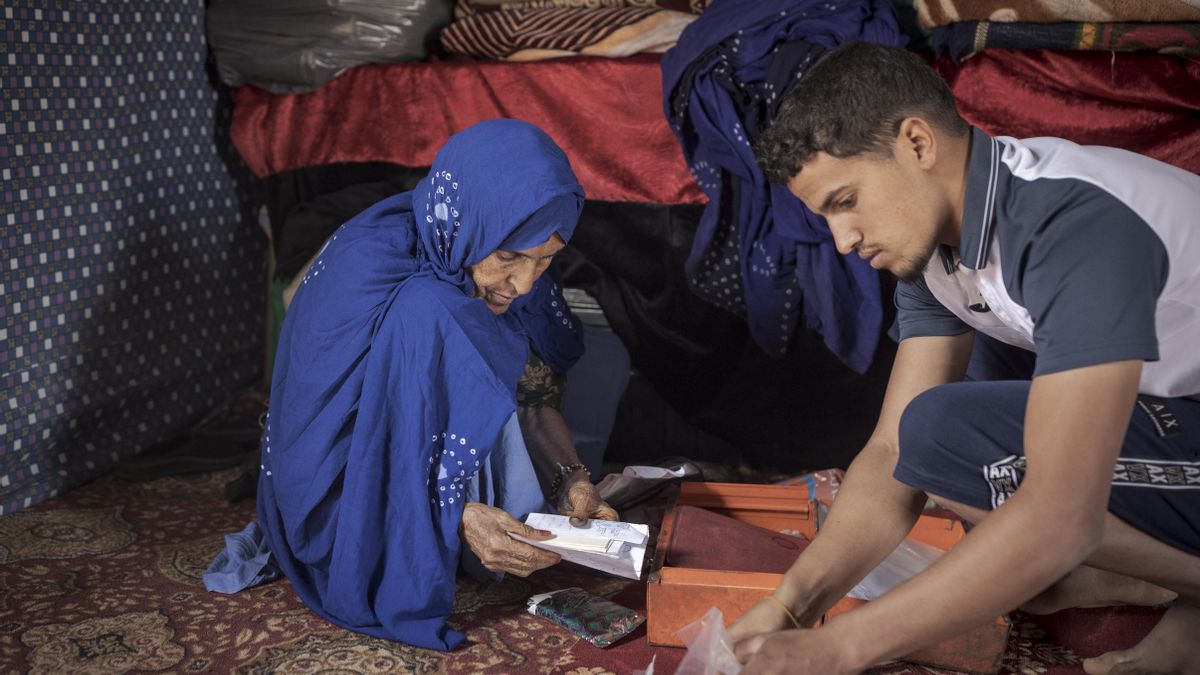
Revuelve en una caja para encontrar los recuerdos de sus días en el Sáhara español. Del cofre metalizado salen algunos papeles escritos en castellano, una hoja de un cuaderno Rubio de la escuela donde llevaba entonces a su hijo. El maletín naranja acumula lo poco material que conserva de los años en que su vida no se limitaba a esperar para regresar, pero Um El Fadli no encuentra su tarjeta de identidad española, la que le acreditaba como ciudadana de la que fuera la provincia número 53. No pensó que, tras décadas del abandono de España, la podría llegar a utilizar para solicitar la nacionalidad española.
Ahora, una proposición de ley impulsada por Sumar en el Congreso Español, ha avivado sus esperanzas. La mujer septuagenaria no había oído nada del proyecto legislativo que plantea el reconocimiento de la nacionalidad a los ciudadanos nacidos en el Sáhara Occidental durante la época colonial, pero su nieto asiente con entusiasmo al oír hablar de la iniciativa.
La abuela, al conocer los detalles durante los días en que se celebra en su campamento el Festival del Cine del Sáhara Occidental (Fisáhara), asiente para confirmar que, en caso de salir adelante la medida, pediría la nacionalidad española; pero estira su dedo índice, lo coloca delante de su rostro y lo mueve de un lado a otro para enfatizar su respuesta negativa a la pregunta que acaba de escuchar.
– Si obtuviera la nacionalidad, ¿querría vivir en España?
– No. No me iría. Me quedaría aquí. Quiero regresar a mi tierra, no quiero ir a ninguna otra parte. Y si no llega la independencia a tiempo, estaré aquí.
Ese “aquí” es el campamento de refugiados saharauis de Auserd, uno de los cinco asentamientos levantados por los propios saharauis en el desierto de Tinduf (Argelia), tras su huida de la ocupación marroquí del Sáhara Occidental y el posterior abandono español. Es la tierra árida, cedida por Argelia al Frente Polisario, donde sobreviven en condiciones climáticas extremas, bajo la dependencia total de la ayuda humanitaria. Es aquel lugar nacido para desaparecer, cuyas jaimas y casas de adobe fueron construidas bajo la promesa de provisionalidad, pero permanecen 50 años después, como también continúa la vida convertida en causa de Um El Fadli. Es aquí donde decide quedarse si pudiese marcharse, pero mira a su nieto y entiende que en su caso puede ser diferente.
Um El Fadli durante la conversación con elDiario.es.
Si Um El Fadli y otras personas nacidas en el Sáhara Occidental antes de 1975 querrían acogerse a su derecho de obtener la nacionalidad española, no es con el objetivo de dejar el campamento de refugiados donde viven y trasladarse a España, pese a sus complicadas condiciones de vida. Una decena de saharauis mayores responden negativamente cuando elDiario.es les pregunta por la posibilidad de migrar, pero todos ellos confirman su deseo de pedir igualmente la nacionalidad en caso de salir adelante la normativa que estudia el Congreso.
Más allá de los beneficios intrínsecos ligados a contar con un pasaporte europeo, los saharauis expulsados de la antigua colonia española hablan del reconocimiento de un derecho que consideran suyo, pero les fue arrebatado. “Es nuestro derecho. Yo tenía DNI español, convivía con los españoles, mi marido trabajaba para una empresa española y, de la noche a la mañana, desaparecieron, tuvimos que escapar y aquí estamos”, dice la señora de 70 años, sentada en una colorida jaima junto a su nieto, que tiene la edad que ella tenía cuando Marruecos inició la llamada “Marcha Verde”, que ellos bautizaron como “Marcha Negra”, y otras mujeres a su alrededor. Ya que España abandonó la antigua colonia al inicio de la ocupación marroquí, dice, ese pasaporte puede darles un respiro ante algunas de las necesidades que enfrentan en los campamentos. Con unos servicios sanitarios sin apenas recursos y una ayuda humanitaria recortada, las razones médicas son las más mencionadas entre quienes pedirían la nacionalidad española si saliese adelante la normativa planteada.
Algunas también mencionan las puertas que un pasaporte español les abriría a sus hijos o nietos para poder formarse, trabajar en España y , así, ayudar a la economía familiar. O, simplemente, contar con la mera posibilidad de viajar en determinadas ocasiones para visitar a seres queridos o alejarse por temporadas de la vida en el desierto. “Me gustaría tener la nacionalidad por si necesitase ir al hospital si enfermo, o para hacer más fácil que mi nieto pueda ir, porque allí es más fácil estudiar y encontrar un trabajo”, dice la señora, mientras el joven la mira y asiente.
Algunos de sus amigos, cansados de esperar para hacerlo por la vía legal, se subieron a bordo de una patera desde Argelia. “Yo quiero irme para ayudar a mi abuela y a mi familia, pero le he prometido que solo iría si consigo un visado”, dice el joven poco después, ya sin Um cerca.
El nieto de Um, de 21 años, que desearía migrar a España en caso de que sus ascendientes lograsen la nacionalidad.
El proyecto de ley da un paso
Después de más de un año con el texto en un cajón, la proposición de ley de Sumar para que los nacidos en el Sáhara Occidental antes de 1976 y sus descendientes –cumpliendo una serie de requisitos– puedan tener la nacionalidad española ha dado esta semana un paso más en el Congreso con la constitución de la ponencia de la iniciativa. También la posibilidad de que los hijos de quienes nacieron en el Sáhara español tengan más facilidades para obtener la nacionalidad: en un plazo de 5 años desde la inscripción en el Registro Civil de sus progenitores, ellos también podrían solicitar la ciudadanía. En caso de vivir en España, solo se les exigiría haber residido dos años en el país, el mismo plazo reducido que se les pide a los nacionales de otras excolonias españolas o países con fuertes lazos culturales.
En febrero de 2025, el Parlamento aprobó la toma en consideración de la medida con el respaldo de todas las fuerzas políticas excepto del PSOE. La diputada de Sumar Tesh Sidi, de origen saharaui, celebró el desbloqueo de la medida y aseguró que su partido tratará de acercarse al resto de formaciones con el objetivo de presionar al PSOE. “Con el Partido Socialista, en materia del Sáhara, hay que seguir presionándoles porque sabemos que no les es cómodo aprobar esta norma, por lo que sea, pero vamos a seguir ahí”, dijo la parlamentaria.
En el mismo campamento de refugiados donde nació y pasó sus primeros años Tesh Sidi, la wilaya de Auserd, algunos jóvenes saharauis o adultos de mediana edad asienten con cierta ilusión cuando se les pregunta por la iniciativa parlamentaria. “Ojalá salga adelante. Tengo todas mis esperanzas en esa ley y lo estoy siguiendo desde que salió”, dice una mujer, que prefiere no dar su nombre. Es madre de dos hijos que viven actualmente en España en un limbo legal a la espera de su petición de apatridia. “Mis hijos ahora no pueden trabajar. Si saliese eso, les ayudaría mucho”, dice la mujer, mientras el fuerte viento de un conato de siroco golpea la jaima donde se refugia.
DNI español del marido de otra de las mujeres saharauis a las que le gustaría optar a la nacionalidad
También desde el desierto, a través de su móvil, conoció los cambios de la ley de regularización extraordinaria española, que, en la práctica, supuso otro golpe para los saharauis. “Me pareció muy injusto. Ellos pensaban que iban a conseguir los papeles. Llevan mucho tiempo esperando la respuesta [de la petición de apatridia] y ahora no pueden hacer nada”, explica la mujer.
La estabilidad de los saharauis que viven en el exterior impacta directamente en las condiciones de vida de sus familias en los campamentos y en muchos proyectos desarrollados por quienes pasan unas temporadas en España y otras en Tindouf. Pese a que todas las casas de adobe parecen similares unas de otra, su interior da pistas de quienes cuentan con seres queridos en otros países, la mayoría en España, y quienes no. Los baños, las telas que cubren las paredes de cada espacio, las cortinas, hablan de quienes tienen algún miembro de su familia en el exterior.
El nuevo paso de la iniciativa parlamentaria llega después de que el Gobierno decidiese en el último momento la exclusión de los solicitantes de apatridia –saharauis en su mayoría en España– de la regularización extraordinaria, por lo que la aprobación de esta ley podría suponer un contrapeso al que ha sido considerado como el último varapalo del Gobierno de Pedro Sánchez a la población procedente de la excolonia española.
Dahda Mohamed Mahmud transmite la presencia y tranquilidad habitual en las mujeres saharauis. La mujer, nacida en el Sáhara Occidental en época colonial. Frente a una bandeja, la señora intercambia los pequeños vasos del ritual del té y concentra las miradas de sus compañeras de jaima. Su caso ejemplifica la manera en la que afrontan las generaciones mayores la posibilidad de tener la nacionalidad española. La mujer, de 70 años, nacida en el Sáhara Occidental durante la época colonial, cuenta actualmente con la nacionalidad española, pero ese reconocimiento no ha cambiado su día a día. “He ido un par de veces a España. Tenía que estar presencialmente para arreglar los papeles. También fui para ver a mi hijo y hacer alguna revisión médica”, detalla. “Pero no me quedo mucho tiempo y siempre vuelvo, prefiero estar aquí con mi marido y mis hijas”, añade la saharaui.
Dadah en una de las jaimas tradicionales desplegadas durante el FiSáhara para mostrar la vida tradicional nómada saharaui.
Para los saharauis, tampoco es sencillo pedir la nacionalidad si ya viven en suelo español. Mientras los ciudadanos procedentes de otras excolonias o países con fuertes lazos culturales con España, como Guinea Ecuatorial o América Latina, tienen plazos reducidos debido a esas conexiones históricas, esta ventaja no se cumple con quienes proceden del Sáhara Occidental. En el asiento trasero de un todoterreno aparcado en la árida explanada donde estos días se levanta la infraestructura del Fisáhara, Brahim Chagaf explica a elDiario.es parte de su odisea para tratar de conseguir su derecho a la ciudadanía. El saharaui vive desde hace más de una década entre Navarra y los campamentos de refugiados saharauis. Hace poco más de un mes, cuenta, solicitó la nacionalidad española y se encuentra a la espera de la resolución.
A su llegada a España, presentó a varios abogados el DNI español de su madre para acreditar que sus progenitores nacieron en el Sáhara español. “Yo llevé la documentación de mi madre, pero no me ha servido de nada. De hecho les hacía un poco de gracia a los abogados con los que hablaba, diciendo que eso no valía”, explica el saharaui, quien fue director de la escuela de cine. “Creo que no es justo, siendo yo hijo de españoles. Mi madre tiene el DNI español. Si España lo haya hecho tan mal, debería repararse. No acepto que sean tan justos para unas cosas, con Irán y Palestina, y tan injustos para otra. La causa saharaui es un asunto por resolver, como lo son los crímenes del franquismo”, añade en referencia a la posición del Gobierno de Pedro Sánchez con el Sáhara Occidental.
¿Ayuda o merma la causa?
“Yo no quiero ni la apatridia y no querría la nacionalidad. Las considero como herramientas. Yo quiero vivir libre y tener el derecho internacional de la libre circulación para cada persona humana, y eso no lo puedo tener sin tener primero la apatridia que me puede permitir estar 10 años en España para que pueda solicitar la nacionalidad española”, explica el saharaui en perfecto castellano. “Estamos hablando de un país que ha ocupado un territorio durante años. ¿No puedo ir cuando me da la gana? Entonces, España obligó a los saharauis a tener el DNI y estar bajo su control y ¿ahora no puedo vivir yo allí? Va más allá de si la nacionalidad nos sirve de algo o no”.
Hay quienes piensan que, si la ley de nacionalidad para los saharauis saliese adelante, la causa correría el riesgo de desinflarse, ante la posibilidad de que muchos jóvenes pudiesen abandonar los campamentos de refugiados de Tindouf. Fuentes del Frente Polisario rechazan esa idea, pues consideran que muchos decidirán permanecer, y creen que es una idea que trata de trasladar el PSOE para justificar su rechazo a la medida. “Son muchos los saharauis que irían y volverían. Pueden pasar temporadas allí, ir al médico o estudiar, pero no se desligarían de los campamentos ni de la causa”, dice Abdula Arabi, representante del Polisario en España, que considera que incluso puede dar más fuerza a sus denuncias.
“Nuestra lucha va a seguir. No necesitamos seguir en un desierto inhóspito, cuando la lucha pacífica aquí es insostenible. Creo que somos más cómodos calladitos aquí en el desierto. Podemos estar en cualquier sitio resistiendo y vamos a seguir reivindicando nuestro derecho al retorno a nuestra tierra. Quiero la independencia del Sáhara Occidental, quizá otros no, pero queremos votar en el maldito referéndum y decidir”, clama el saharaui. Y qué mejor manera para reivindicarlo que reconocer nuestros derechos. Y eso es simplemente lo que haría esa ley que estudia el Congreso, reconocer nuestros derechos“, concluye.
Tech companies like Google, Facebook and Microsoft are ignoring data controls mandated under California law, researchers say.
Photo by Zamek, VIEWpress via Getty Images
A new audit has found that websites across the internet may be failing to abide by California privacy law, ignoring a requirement to not track visitors who set a privacy control.
The report, from researchers at webXray, a firm headed by a former Google privacy engineer, said the findings suggest major companies may be simply ignoring the law, and could point to “industrial-scale noncompliance with California requirements.”
The stakes are potentially high. WebXray estimates that if the California Privacy Protection Agency fined all of the websites it found failing to comply with the law, it could result in billions of dollars in penalties.
“While we don’t have comment on the finding of this specific report,” Tom Kemp, executive director of the privacy protection agency, said in a statement, “we do appreciate that the report brings visibility to the importance of opt out rights.”
Under California law, businesses are required to respect a signal called the Global Privacy Control. If users navigate the web with the control turned on — either through a setting in the browser or a third-party tool — it tells websites not to sell or share their personal information.
To understand whether the law is truly being respected, the researchers visited more than 7,000 popular websites from a California internet address. According to the report, major tech companies continued to track users, even with the signal turned on.
Google continued to track users in 86% of cases despite receiving the signal, according to the report. When visitors traveled to the websites while using the signal, the sites still frequently set a cookie from Google to follow those visitors.
Similarly, according to the report, Microsoft failed to honor the signal in 50% of instances.
The report found that trackers from Facebook parent company Meta don’t just ignore the signal — they fail to check for it at all, leading to tracking 69% of the time despite the signal.
All of those failures could be remedied with slight changes to the tracking code to respect the signal, the engineers said in the report.
“They don’t make any substantive effort to comply,” said Tim Libert, founder and chief executive of webXray.
The report also found that third-party tools that purport to help businesses place advertisements that comply with the law still frequently failed to honor the anti-tracking signal. In one case, a product did not honor those requests more than 90% of the time, the report found.
The tech companies dispute the idea that they are failing to abide by the law.
“As outlined in our Privacy Statement, when we receive a GPC signal, we opt the user out of sharing personal data with third parties for personalized advertising, and our advertising systems are designed to reflect that choice,” Courtney Ramirez, a Microsoft spokesperson, said in a statement. “Certain Microsoft cookies are necessary for operational purposes, and may therefore be placed and read even when a GPC signal is detected.”
Jackie Berté, a spokesperson for Google, said the company complies with the law and that the audit was “based on a fundamental misunderstanding of how our products work.”
A spokesperson for Meta didn’t immediately respond to a request for comment.
“The idea that I misunderstand anything is a demonstrable falsehood,” Libert said, pointing out his work on cookie policy at Google.
“I would assert that, when I was there, I knew more about it than anybody else,” he added.
Learn more about Sparc AI (CSE: SPAI) (OTCQB: SPAIF) at https://www.sparcai.co/ and view the stock overview here: https://www.tradingview.com/symbols/CSE-SPAI/
DISCLAIMER: This advertisement has been disseminated on behalf of Sparc AI. I have been compensated by Senergy Capital to produce and distribute this video. This content is for informational purposes only and does not constitute financial advice or a recommendation to buy or sell any securities. Viewers should consult a qualified financial professional before making any investment decisions. Investing in small-cap companies involves significant risk, including potential loss of capital, and past performance is not indicative of future results. Please do your own research (DYOR) before making any investment decisions.
The Lomonosov Ridge under the Arctic drives territorial claims by Denmark, Russia, and Canada. The US, unable to claim it directly, seeks influence through Denmark.
If you want to support CaspianReport, the best way is simple: watch, like, and share the videos. For direct support, you can join as a member or contribute; every bit helps keep the channel independent and improves the quality of the work.
Bill addresses an issue investigated by The Markup last year.
Lauren Justice for CalMatters
A California bill to protect people on online dating apps from violence has critics arguing that the measure would put a “scarlet letter” on certain users.
But that’s a feature, not a bug in the proposal.
The state Senate’s public safety committee this week passed a bill that would require online dating services to run criminal background checks on California users. If the user is a registered sex offender or has been convicted of a violent felony, domestic violence, an assault or a hate crime, the dating service must “place a flag” on the user’s profile to let others know.
Bill author, state Sen. Caroline Menjivar, said that “dating apps have not provided an adequate level of safety for their users.” At the hearing she cited a 2019 Columbia Journalism Investigations survey that found that more than a third of women polled said they were sexually assaulted or raped by someone they met on a dating app.
The Markup last year published an investigation that showed people accused of sexual violence managed to stay on the apps even after victims reported them.
Menjivar, a Van Nuys Democrat, added: “If women, mostly women, continue to be raped or murdered — like another woman (who) was murdered and her body was set on fire last year after a man met her on a dating app — those are the incidents we’re looking to prevent.”
But besides labeling users with a “scarlet letter,” implementing the policy would require dating platforms to collect a significant amount of personal data to avoid misidentifying users, argued Jose Torres, a deputy executive director for the industry group TechNet.
In a rare break with his Democratic colleagues, Sen. Scott Wiener of San Francisco voted against the bill, saying it might have “significant unintended consequences in terms of people’s privacy.” But Wiener’s opposition, along with Republican Sen. Kelly Seyarto of Murrieta, was not enough to stop the bill from advancing out of the six-member committee, according to the Digital Democracy database from CalMatters, of which The Markup is a part.
With four Democratic lawmakers giving the green light, Menjivar said she plans to amend the measure in response to criticism related to the categories of crime and operational challenges — and that legislators are “going to see a dramatically different bill” when it’s presented to the privacy committee on April 20.
Stay better informed https://ground.news/caspian and access worldwide perspectives on global developments. Subscribe for 40% off unlimited access through my link.
The ceasefire between the US and Iran is already falling apart, with conflicting terms, unchanged war objectives, and a continued military buildup signaling that the conflict is far from over.
If you want to support CaspianReport, the best way is simple: watch, like, and share the videos. For direct support, you can join as a member or contribute; every bit helps keep the channel independent and improves the quality of the work.
👉 Grab your free seat to the 2-Day AI Mastermind:
https://link.outskill.com/CASREPAP2
🔐 100% Discount for the first 1000 people
💥 Dive deep into AI and Learn Automations, Build AI Agents, Make videos & images – all for free!
🎁 Bonuses worth $5100+ if you join and attend
Dubai was built on certainty, but as missiles, capital flight, and slowing trade begin to shake confidence, the very foundation of its model is being put to the test.
If you want to support CaspianReport, the best way is simple: watch, like, and share the videos. For direct support, you can join as a member or contribute; every bit helps keep the channel independent and improves the quality of the work.
This photo was taken by freelance photojournalist Madison Swart. A day after an ICE agent shot and killed Renee Nicole Good in Minneapolis, anti‑ICE demonstrators gathered at One World Trade Center in New York, where former Homeland Security Secretary Kristi Noem was speaking. Outside, protesters held the sidewalk for hours, demanding that ICE be removed from the city. In this photograph, a figure in a bright green alien costume confronts a Secret Service officer, turning the language of immigration enforcement into a surreal, satirical clash over who is deemed foreign—and who truly belongs.
In our latest Chatting the Pictures video, we discuss how "tactical frivolity"—dressing as a three-eyed alien—exposes the absurdity of ICE enforcement by mirroring state surveillance back at authorities. We examine the layered symbolism of the costume, from "resident alien" reclaiming language against Trump's parsing to the three eyes as visual commentary on paranoia and control. We also analyze how the photographer's positioning behind the officer reveals the gap between what authorities perceive as threatening and the actual reality they confront, ultimately questioning who the true "other" is in immigration enforcement.
Sign up at our new newsletter platform, ReadingthePictures.media, for our latest posts and videos.

 Login