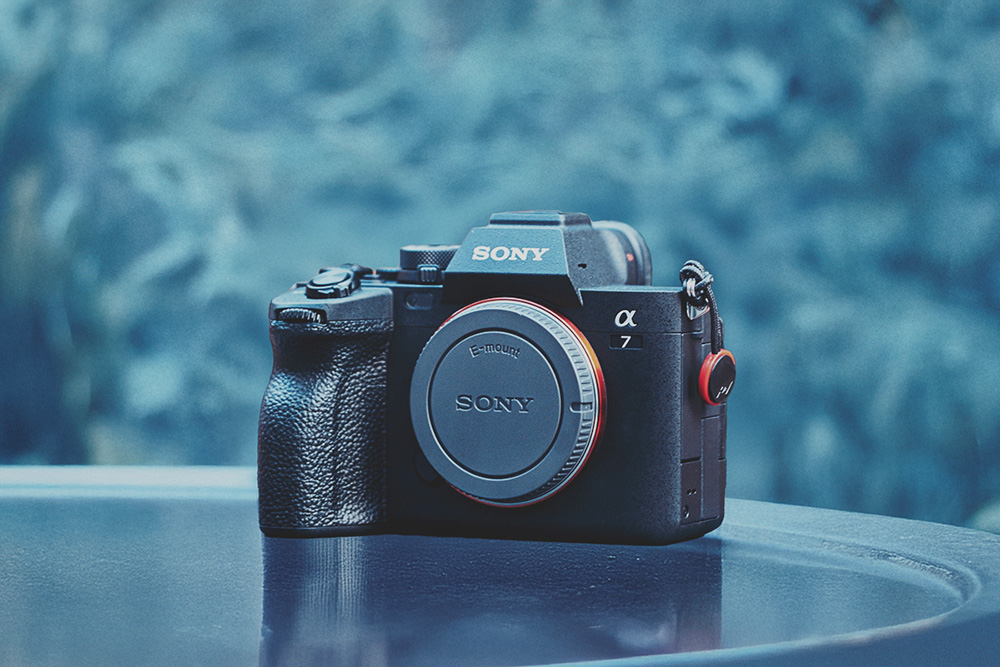
The release of the Sony a7v has been met with a wave of negativity, especially now that the supposed ‘standard model’ mid-range camera price has been bumped to nearly $3000 + tax and a lot more in some regions, like in the UK where the USD-converted price works out at an insane $3600 inc. VAT, despite the Japanese yen being at historically low levels versus the British Pound.
The Sony a7v specs are equivalent to the Nikon Z6 Mark III which is over $1000 less expensive and a mint condition used Z8 a little cheaper also, with far better specs in every area – especially in the cinematic-video department.
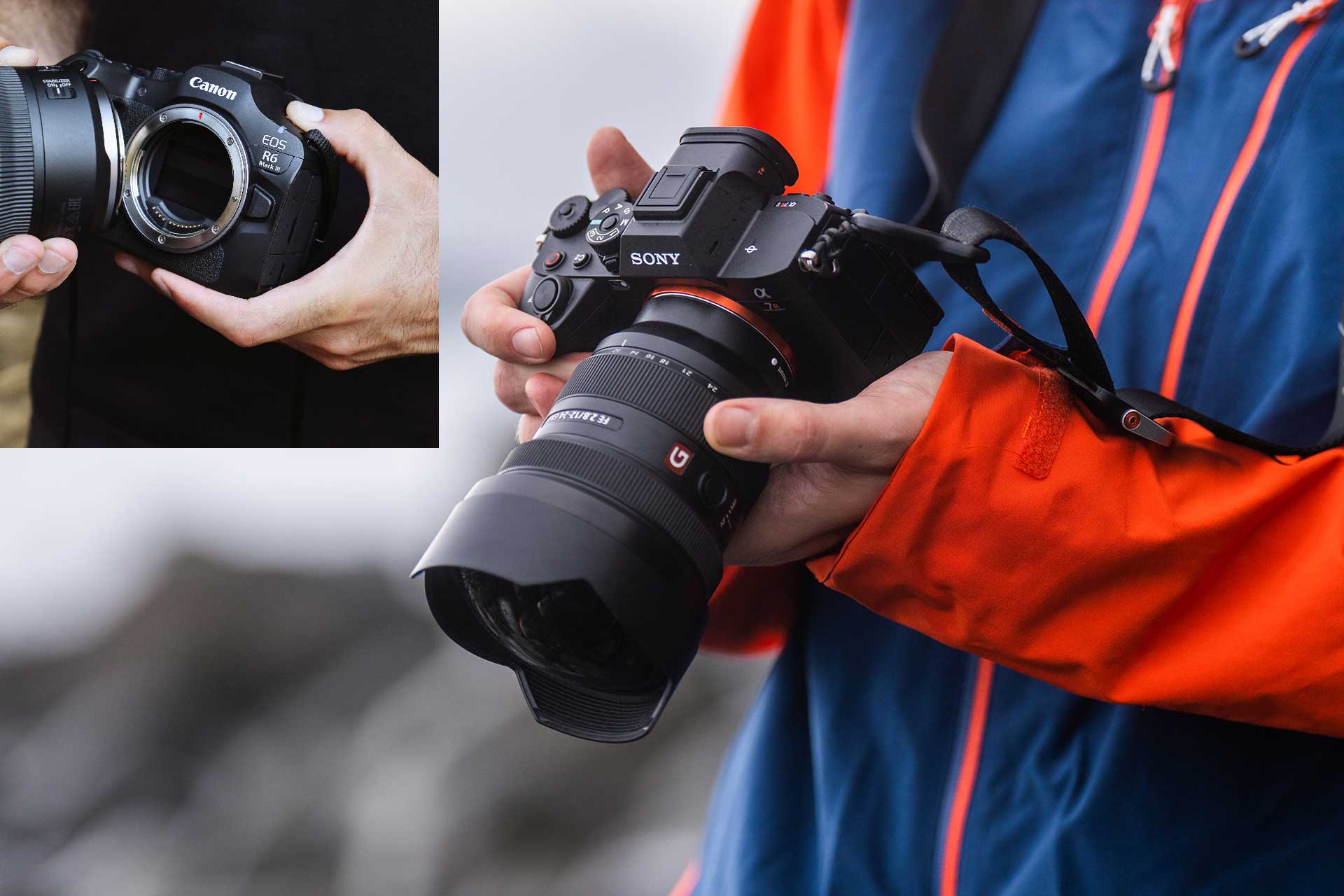
The Sony-badge premium appears to be a real thing – and it is putting Sony at a disadvantage vs Canon and Nikon. The Canon EOS R6 Mark III is a better spec and also less expensive, for video it is almost a different league of spec altogether with 7K RAW and Open Gate. The price of the a7v also gets close to a used Sony a1 flagship professional body, the full fat stacked sensor of which there is nothing ‘partial’ about, and the Canon Cinema EOS C50 full frame Nikon Zr competitor, which is just £400 more than the a7v!
But as usual online, people tend to want to believe that only one opinion can be true at once.
Quantum camera
In fact the Sony a7v is a prime example of quantum physics.
A superposition of two different opinions, where both can be true at once applies to this camera.
All the negativity has it’s basis in the truth.
And all the positivity and people putting down pre-orders for it are right as well.
And it all depends on the observer.
It is true that the Sony name now demands a premium, more so than ever before – because E-mount is the best mount. Pure and simple. It has been around the longest out of all the full frame mirrorless cameras, benefits from Sigma’s range and the best cheapest full spectrum of Chinese lenses, and it has the best selection of glass all-round, native or otherwise. For those who are ‘locked-in’ to a mount, it doesn’t matter how much Nikon Z undercut Sony on price with a Z8 or Zr if you have to spend $6000 on lenses and go through the pain of using shitty eBay to sell your Sony glass.
At the same time, it is true the spec is closer to the Nikon Z6 Mark III end of the market than $3000, and somewhat a safe release with nothing that special to jump up and down about – but at the same time, it is closer to the flagship a1 series than a standard a7 has ever been, and corporate price gouging is only part of the picture – the Trump tariffs have pumped up prices even in the UK, where the USD price seems to dictate to other countries what they can charge for cameras. Thanks very much America.
And yes, Sony are now the new Canon. They have a captive, locked-in loyal user-base in the millions, who are happy with what’s being offered and don’t see the appeal of switching systems just to get some niche video feature or whatever.
This is what Panasonic is finding out with the S1R II and S1 II which are fantastic cameras with the broadest range of features ever but nobody but a small number of Lumix loyalists cares.
This is the hard truth of the camera industry in 2025, sadly.
The negative chatter about Sony recently, is not just regarding the a7v though. The firmware bootloop problem is a topic that really deserves a negative discourse and yet as usual, the mainstream camera advertorial media is not talking about it.
This is a situation worthy of a class-action lawsuit, where it appears Sony, knowing there was a software issue with recent firmware updates across all their top models – rather than come clean and do a recall programme, chose to charge people out of warranty to swap out perfectly fine hardware like sensors and mainboards at the cost of thousands of dollars claiming it was the fix.
But as my adventure with the bootloopy a7 IV shows, the mere act of updating the firmware again (for example from 5.0 to 5.1) completely cured the issue, and that it was likely due to some corrupt software settings, because of bad programming by Sony’s firmware engineers in Japan.
For this, Sony definitely deserves the negativity.
For the Sony a7v, not so much. It’s a perfectly fine camera, even if it doesn’t set the Earth on fire.
The Canon EOS R6 Mark III is the first mid-range Canon EOS R camera that’s a true contender for top-specs in the $2800 price region. What’s even more impressive is that Canon are achieving full frame 4K/120p with no crop and 12bit 7K 60P RAW video without a stacked sensor – not even a partially stacked sensor. Funnily enough, neither is it even a backside illuminated (BSI) sensor.
So what magic sauce is Canon using to out-spec the partially stacked sensor cameras from Sony, Panasonic and Nikon?
Sensor tech
Canon are still with their proprietary CMOS sensor technology, introduced as far back as 2002 with the Canon 1D Mark II. Humorously, the first Canon 1D used a Panasonic CCD. Their CMOS technology wasn’t quite ready for it. Since then, Canon have pioneered the way in CMOS sensors, the technology that swept aside CCD for speed and resolution, as well as introducing the world to DSLR video.
By the late 2010s however, it looked like Sony had overtaken them. Backside illuminated sensors, stacked sensors with the RX100 VI and Sony a9, the first to 60 megapixel and if you count the Fujifilm GFX 100 the first to 100.
But then something unexpected happened. In 2020 Canon struck back with the Canon EOS R5, shackles were well and truly taken off with much faster sensors and image processing, yet still no stacked sensor or even BSI design in sight, which Sony introduced as a way to improve the low light performance of very small chips in phones.
The truth is that BSI isn’t really needed for large full frame sensors, and there are other ways to improve the readout speed of a CMOS sensor, other than solder-bumping a buffer memory chip onto the back of the mainboard.
Although Canon does have stacked sensor designs, like in the EOS R3 – I can confidently say the EOS R6 Mark III has a cutting 33MP edge sensor in every way – despite not using Sony’s technology.
They have built on the latest Canon architecture of the EOS R5. Canon are back to their best in a mid-range body for the first time in MANY years… No more cropping, no more rolling shutter issues and plenty of frame rates in the region of 60p and 120p.
The only Sony sensor technology Canon still lacks is a global shutter design for full frame mirrorless cameras, although they are now working on one.
Lenses – RF vs Sony E-mount
I’ll start by prefacing this comparison, with a little bias. I am a big fan of Sony’s E-mount ecosystem, with the full range of Sigma ART lenses, the full gamut of Tamron, and the fact that miraculous adapters from Techart exist to autofocus all my vintage glass on a full frame camera. This is a BIG DEAL.
Sony a7 IV with Techart PRO Leica M Autofocus Adapter II LM-EA9
It is something Canon RF mount simply doesn’t offer, and the longer flange distance prevents the adaptation of other mirrorless lenses to the system as well. For example on Nikon Z mount you can use E-mount lenses with native-level autofocus performance.
I also not a big fan of Canon’s native RF lenses. The best ones are too big, extremely expensive and can of course only be used on one system, whereas the good old EF range goes on anything (Even the Fujifilm GFX 100).
That said if you’re fully invested in RF lenses and don’t use vintage glass, the point is moot.
Used vs new
Not only will we be looking at the R6 Mark III and how it compares to the Sony a7 V, but I think it’s worth also comparing to the best value for money USED Canon bodies in 2025, in particular the original EOS R5 which is now just $2000 / £1800 used, and the EOS R3 which has come down to around $3200 used, or £2800, the same as a brand new R6 Mark III.
Buying used is a no-brainer for me as most outlets now offer a long warranty with used gear – as long as 5 years in the case of CEX in the UK, although WEX and MPB only offer 6 months.
Above, on the used market a Fuji GFX 100 or an EOS R5 for £1775 is hard to argue with – plus a FIVE year warranty at CEX in the UK
Filmmaking specs – image quality, frame rate and codecs
7K DCI 60p RAW is the stand out feature of the Canon EOS R6 Mark III compared to the Sony a7 V.
For all the talk of stacked sensors or partially stacked sensors, the EOS R5C back in 2021 proves that to achieve the readout speeds necessary for 8K at 60fps, or full width 4K 120fps – a plain old FSI CMOS can do the job just fine. The “stacked sensor” architecture is a bit misleading anyway – the buffer memory is not stacked onto the sensor but onto the back of the image processor, on the mainboard. I know this because I have disassembled stacked sensor Sony cameras, such as the RX100 V.
Compared to that 7K RAW, the a7 V tops out at Ultra HD – not even DCI 4K – and there is absolutely no raw or uncompressed video not even via HDMI. It used to be that Canon got the cripple hammer out to protect the Cinema EOS line – now it seems the hammer has a Sony badge! The FX series is what Sony want you to buy for their top video feature set. That said, the a7 V builds on the already very capable image quality of the Sony FX2 and Sony a7 IV – a 7K readout downsampled to UHD – and cures one of the biggest weaknesses – the high rolling shutter, and lack of full width 4K 60p.
The a7 V is like the Nikon Z6 III in 4K/120p mode though – it crops to 1.5x S35mm (APS-C). Whereas the R6 III is like the original EOS R5… full width 4K 120p, albeit pixel binned and not a full pixel readout.
There will be some moire therefore, but nowhere near as much as in the days of plain old line-skipped 1080p.
It’s worth mentioning at this point the Nikon partially stacked sensors – the Zr and Z6 Mark III both do 6K/60p RAW recording – so the Sony is behind these too. The Panasonic S1 II offers 6K open gate raw, 5.7K 60p and 4K/120p is just a 1.17x crop of the full width of the sensor, rather than 1.5x.
The EOS R6 III has open gate recording too – only at up to 30p but that’s new for Canon. For the first time you can put an anamorphic lens on a Canon stills camera without regrets.
So…
It’s clear win for the Canon, Nikon and Panasonic competition over the Sony a7 V if you want higher resolution video than 4K or internal RAW recording.
Video autofocus reputation
In the earlier days Dual Pixel AF had a clear lead over the competition in video autofocus, but switching to video mode now sees Sony take a clear lead on their latest cameras. Canon’s autofocus is by no means back of the pack – but it’s behind Sony and Nikon in terms of reliability, subject tracking and the occurrence of hunting with tricky subjects in video mode.
Canon reserves the best AF for stills on the EOS R3 and R1.
Rolling shutter
The characteristic distortion of fast horizontal movement takes the form of rolling shutter, as the sensor is read from top to bottom. Above 30ms is considered slow, and unsuitable for whip pans, fast action, sports, boxing, or trains arriving – you get the idea. 20ms is considered the middle-of-the-road value today, whereas sub 15ms is in the safe region, under 10ms even better, 5ms the current state of the art (although often you’ll have to shoot at 120fps to take advantage of it). Take a look at the figures below:
Canon EOS R6 Mark III – 18ms to 7ms
18ms is the R6 III in 7K open gate, the slowest 30p mode with the highest resolution. This is actually quite reasonable. In 7K DCI for Canon RAW, and in the oversampled 4K/60/24p modes, this comes down to a very respectable 14ms. Disabling the full pixel readout but maintaining the full width of the sensor, the R6 Mark III picks up the pace in all the pixel-binned modes such as “standard” 4K as opposed to the oversampled-from-7K “fine” mode, and in 120fps. The value in these modes is an impressive 7ms.
Sony a7 V – 15ms to 7ms
The Sony has the same readout speed, with the absence of an open gate mode. In 4K/24p and 60p we have 15ms, in the 4K/120p Super 35mm crop mode it is 7ms. So, exactly as the EOS R6 III in this department and with very little to worry about. This new Sony sensor has half the rolling shutter of its predecessor.
Video assists and LUTs
The R6 Mark III has wave form, false colour and custom LUTs. The Sony a7 V only has custom LUTs. Neither camera allows you to bake-in the colour science of a LUT into recorded footage – the output is always 10bit LOG and the LUT has to be applied in post. This is one area where the Panasonic S1R II and S1 II have the advantage. Don’t like Sony’s colour science for Rec.709 video or for JPEGs? Well, you’re stuck with it. On the Canon side, the default colour is quite good – but it has none of the film simulations or more characterful filters that we enjoy from other brands.
The latest Panasonic cameras are leading the pack when it comes to video assists and monitoring. Vectorscope, anamorphic desqueeze, shutter angle and Real-time LUTs put Canon and Sony in the shade.
Body-design and ergonomics
Sony have a winning formula for the rear-screen. It has the best tilt and swivel mechanism (same as the a1 II and a7r V), but at same time remains as slim and as lightweight as possible. When this kind of mechanism was first pioneered by the Panasonic S1H, it was rather clunky. The Sony system is a big improvement. The Canon EOS R6 Mark III makes do with a consumer-friendly standard swivel screen hinge, the likes have graced consumer cameras since the days of CCD compacts. The Canon R6 Mark III screen design wouldn’t be out of place on a Powershot G1 from 2002.
The Sony screen is also larger – at 3.2″ vs 3.0″ and believe me you do get to tell the difference even if small.
Versus used bargain Canon EOS R3 and EOS R5 OG
So the original R5 is basically very similar in spec to the R6 Mark III, and although it lacks the newer autofocus and some of the newer video features like custom LUTs, you still get that very high resolution RAW, at 8K on the R5, and full width 4K/120p without a crop. The sensor readout speed is very similar, with the same low rolling shutter figures. The price is a full $1000 lower, depending on where you shop for your used cameras. Having said all that, I think the R6 Mark III finally surpasses it though. It has taken 5 years but it’s there – maybe not in terms of outright resolution (7K vs 8K) but in terms of frame rates and features. There’s no 60p in 8K RAW on the EOS R5 OG… You’ll have to stump up for the R5C for that and lose IBIS. A used EOS R5 Mark II meanwhile, is of course much more expensive.
Compared to the EOS R3 is where things get interesting, but the R3 is a bit of a chonk – in the now old fashioned vertical grip style of a typical pro DSLR. However, the R3 is better in low light, thanks to a lower megapixel count. It has 6K RAW up to 60fps… Or 6K DCI 24p at some quite low-bitrates in Canon RAW Lite, approximately 600Mbit/s – which comes in handy for saving space. The minimum RAW bitrate in 7K on the R6 III is 960Mbit, and it can get as high as 2600Mbit which for many people is simply impractical.
That said the R6 III has both C-LOG 2 and 3, the R3 only C-LOG 3 – so you might find a smidgeon more dynamic range on the cheaper camera in video mode – whether those shadows will be less noisy however, is another matter.
The R3 also has the advantage of higher build quality, a better EVF and better rear screen resolution. Casting around the internet it was easy to find one for R6 Mark III prices… Around £2800, or as low as £2300 if you import a mint one from Japan.
14bit vs 12bit stills in e-shutter mode
The Sony a7 V uses a 14bit sensor readout for high-speed continuous burst shooting and in e-shutter mode for stills, the EOS R6 III drops to 12bit. The numbers might seem dramatic but the real-world difference is very small, less than half a stop of useable dynamic range in the RAW files.
Sony regularly advertises 15 or 16-stops dynamic range for their stills cameras and with the a7 V they did so again, unfortunately the 16 stops was not in the room when they said it, and the paranormal investigator couldn’t find it either. The truth is that if you try to push 10bit video or even 14bit RAW stills in post to show 16 stops it WILL look like garbage, you’ll lose the contrast in the scene, the tonality and quality of colour, and your HDR display will have to be set so bright it will add a digital sheen to everything and break your eyeballs. The only digital format with this kind of latitude that looks any good at all is the Alexa 35, and even that is nowhere near 16 stops after grading, and you need to use an IMAX projector to show it to people.
As in burst mode for stills, the R6 III offers 12bit in video mode – where most people shoot 10bit anyway – and it’s a dual gain sensor, with the second circuit coming in relatively early at just ISO 800. Worth a side note that the classic cinema frame rate of 24p is only available in DCI format mode (1.90:1 ratio, 4096 x 2160). This is because strictly speaking, 24p is not a video-centric frame rate for 16:9 HD or Ultra HD (3840 x 2160). Thus these are only 25p / 30p / 50p / 60p depending on whether you set the camera to PAL or NTSC… The NTSC video standard is 30p, not 24p. If you need 24p in 16:9 you’ll have to crop the 4096 x 2160 recordings in post.
Adding up the scores
For me the Canon EOS R6 III outscores the Sony a7 V in some significant video and cinema related areas, but out of the two I personally would pick the Sony – oddly enough!
So the reasoning goes as follows…
Although the Canon EOS R6 III beats the a7 V is in outright image quality in video mode – here they’re both very good. I will hand it to Canon for colour science and their insanely high data rate RAW codec in 7K. This is another level versus your standard Ultra HD 4K from Sony. That said, H.265 is actually VERY good and S-LOG 3 offers enough grading headroom for everyone. On the Canon side there’s an element of overkill to it. The image from the a7 V, like the a7 IV before it is good enough for almost every purpose, even Hollywood cinema and professional projections in a theatre. If it’s good enough for that and close to an FX3 which was used to shoot The Creator, it’s good enough for us, right?
The data rates and file sizes are very difficult to manage on the Canon – these RAW masters have to be deleted – you can’t really keep the precious material for long without incurring huge expenses on archival storage mediums. If you’re simply handing material over to a client and it’s gone – easy enough – but if you’re an individual artist or filmmaker who wants to keep years and years original 7K RAW 60p recordings… good luck with that.
The R6 III beats the a7 V for slow-motion. The 4K/120p = full frame, not an APS-C 1.5x crop only.
The R6 III has the edge on colour – with a foundation in colour film, and early pro DSLRs, Canon has built on the best colour science in the business. It’s just a shame that all the Photo Styles are essentially the same thing with subtle differences in contrast. The Sony has a more filmic range of filters, which attempt to ape what Fuji does so well with their film simulations. Out of the box it comes up short, but you can tailor it to perfection. Also, S-Cinetone, S-LOG 2 and S-LOG 3 all have extensive tuning parameters.
So although the a7 V lacks the eye-catching headline video specs of the R6 Mark III, it wins in a much more important area…
Sony E-mount is simply head and shoulders above RF. The native glass is better, there’s more of it, the third party situation is fantastic, as opposed to AWFUL on the Canon side, the adapters are better, it’s been around longer, and the IBIS works properly with adapted glass too. On the Canon RF cameras, IBIS performance is cripple hammered with adapters and reduces to such an extent you’ll question whether it’s even switched on. So for Leica M lenses, Minolta MD, and so forth you’re MUCH better off using them on the Sony, and use them I do, as there’s no way that modern glass gets close to the cinematic analogue look of the best vintage lenses.
The a7 V – and I’d never thought I’d say it – is arguably now the more sexy high-tech shooting experience too. The R6 Mark III, indeed all the Canon EOS R cameras have all the charm of a photocopier. Canon’s deft ergonomic touch has also deserted them. The materials and finish are awful, although Canon’s menus remain top notch and overall it’s a ‘smooth’ experience – the whole thing is just lacking in any sort of charm – a bit like Sony used to be. It is a work tool and the expensive RF lenses collect so much dirt in the fine pattern grain finish of the barrel, it’s horrible.
The Sony a7 V not only looks more enticing, more exciting, more futuristic – it is more advanced and better built too. Sony has banished all the ergonomic disasters of their past. The best feeling buttons, dials and screen mechanism, all in a very compact body with a very chunky grip, huge EVF and mega battery life. The Sony a7 V is not a mid-range body – it has more in common with the a7r V or even a1 II than ever before. Whereas between the EOS R6 Mark III and their flagship, the R1, there’s a big difference in quality and materials.
So even though Canon has after 5 years finally offered us an EOS R5 spec camera for mid-range prices (if you consider $3k mid-range that is!), there are things that temper my excitement somewhat
7K RAW has a degree of “overkill” about it – will you need it? Or does it just sound great on paper?
Good old 10bit 4K/H.265 looks great!
6K/7K/8K internal RAW recording is no longer exotic – it’s been around a while now. It’s common and affordable. The R5 offers it for under $2k used
Great specs on the video side are wonderful to see from Canon, but it doesn’t mean as much in an RF mount camera – the native lenses are charmless and expensive lunacy. For me, ergonomics and vintage lenses are WAY more important than simply the difference between 4K and 7K
Better autofocus for video and indeed stills on the Sony side now
Sony also has the better IBIS for manual focus lenses & vintage lenses via an adapter
Quite a lot of the a7 V and EOS R6 Mark III are similar… With equal performances in terms of rolling shutter, full frame, 4K 60fps without a crop, the same price and overall market position – but for me at least, the significant advantages of Sony’s mount win the contest for me versus the better overall Canon video specification.
On the other hand if you’re truly happy with EOS RF mount, the R6 Mark III will be an exceptional tool (for you).
Discover why the Coman M1 Pro is the $700 must-have for videographers! (There's also a $300 non-carbon version, see link below.)
This versatile monopod offers unmatched stability, flexibility, and innovative features to elevate your creative workflow. Designed for serious video work, it’s perfect for wildlife photography, birdwatching, or capturing cinematic footage in the field.
_________________________________________________________
Non-Carbon Version (More Affordable) - https://geni.us/gocF
Full Carbon Version (Lighter) - https://geni.us/ObsyTP
Affiliate links may earn Imaging Resource a commission
_________________________________________________________
Key highlights:
- Dozens of features, from quick-adjust legs to a locking pivot switch
- Fluid head for smooth, precise motion
- Stable feet with customizable resistance for real-world testing
- Quick-release system for effortless adjustments
- Modular design for DIY options, including compatibility with standard tripod heads
- Compact and lightweight alternative to bulky tripods
Whether you’re a creative professional seeking the best photography gear or exploring new tools for your projects, the Coman M1 Pro delivers exceptional value with its weather sealing, adaptability, and user-friendly design. Ready to transform your workflow? Read our in-depth report over on Imaging Resource for detailed reviews, benchmarks, and comparisons with other models. Don’t miss out—this monopod truly stands out as a game-changer in videography equipment!
With really filmic results, the filmmaker Lav Diaz decided to use the most compact Super 16mm rig out-there – the Panasonic GH7. It has a hypnotic hybrid documentary-cinematic look and the look of Super 16mm film, showing that the format of Micro Four Thirds is still every bit as brilliant in the right hands as full frame or Super 35mm – despite the large-sensor-craze of the 2020s!
According to Reddit, it was shot with native glass as well. The Panasonic 12mm F1.4 and 25mm primes. [Reddit Source]
The dynamic range is really up there with film isn’t it?
The final cut also shows off a perfect fine monochromatic grain and texture, just like real thing (Super 16mm film). Although it isn’t certain whether this is added in post, or straight out of camera in V-LOG, the look is absolutely fantastic.
The movie premiered at Cannes this year and will have a theatrical release just after Christmas.
ARRI which still builds cameras in Germany is to close two factories as the ongoing retraction in filmmaking continues to bite.
The closure of the two facilities which produce ARRI lighting equipment (which by the way, is the best in the industry) will result in 150 job losses in Germany.
This is a real chance for Canon or Sony to save ARRI and in return be the dominant player in cinema.
If the company continues without a buyer, the future doesn’t look particularly bright – despite having the best sensor technology of any cinema camera company, and THE industry standard cinema camera with the Alexa 35.
What an amazing foothold in the market they have.
And yet, says ARRI this week:
“Like many companies in the film industry, Arri is undergoing a significant transformation to address lasting shifts in market demand while reinforcing its core strengths”
The problem is that high-end cinema is almost dead thanks to endless sequels, shitty multiplexes and a shift to streaming, the quality of filmmaking just hasn’t been there and the urge to leave the house has never been less.
The other problem is that the massive boom in streaming has also faltered and there’s now a glut of content, a total over supply of crap and the work has dried up at such an extent that it has rippled throughout the entire ecosystem – even going so far as to tanking the value of vintage glass on eBay!
Where once you couldn’t let a day pass without seeing 30 silly commercials on Sky TV shot with old anamorphic lenses, the bubbles and cinematic fashions have all seem to have gone away leaving just a general uninteresting slop in its place.
With the threat of Ai, it’s obvious that a further dramatic transformation of the commercial videography world will happen.
But as Nikon has shown with their purchase of RED, a company like ARRI would be an ideal target for Sony and can be an ongoing success story if only the 90 year old folk that run our favourite Japanese companies grew an imagination.
The Panasonic GH7 I believe to be the final model, but the second hand value of some Micro Four Thirds cameras has been on the increase. Could the system still find it’s way to co-exist with a legion of cheap and small full frame cameras, or is it game over?
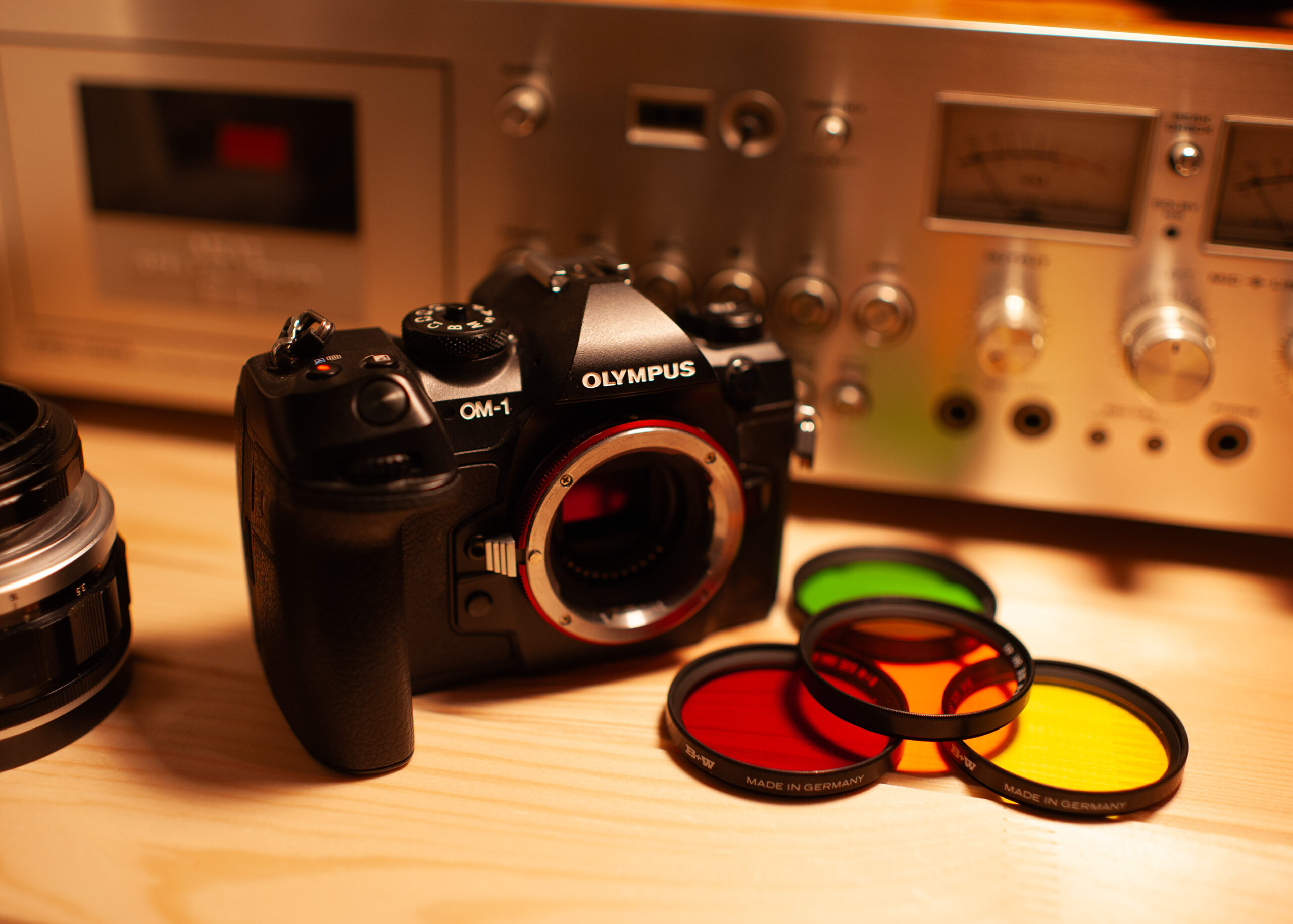
One of the most underrated cameras of today is the final Olympus MFT model, the OM-1. This was in development by Olympus before they withdrew from the business and sold out to the Japanese investment company behind the new OM System branding. So it’s an Olympus flagship through-and-through, and what a tragedy we never got to see a full frame Olympus camera!
But the OM-1 is competitive with the Sony a1 in many ways, and actually in some ways better and more feature-rich. The in-body stabilisation on this camera has never been bettered by anything else (although the Nikon Z f comes close).
The OM-1 can be picked up cheap these days, but actually some of the Micro Four Thirds cameras have been steadily on the rise. The Panasonic GX9, GX8 and GX80 to name but a few – the rangefinder style small-as-possible mirrorless cameras are in fashion. Interestingly the more video-orientated models like the GH5 and GH6 have seen the opposite trend – a complete collapse in value, as so much of the pro video market has since moved on to full frame.
OM-System has been recycling the guts of the OM-1 and E-M5 Mark III for a few years now, but they haven’t done new silicon or significant performance upgrades. Panasonic on the other-hand has brought new sensors and processors to the table, and the GH7 feels like a great swan-song.
But the future of Micro Four Thirds isn’t in video.
If it rises again, it’ll be because of the demand for smaller and smaller cameras and fast lenses. Something the Canon RF system for example really fails to deliver on.
I really enjoy my Panasonic GX80 with Kern Switar 26mm F1.1 c-mount lens, the look and form factor is unique and it feels like such a well put together piece of kit. The OM-1 feels like such a nice ergonomic all-rounder, with incredible performance – even though the video quality isn’t up to the same standard as the Panasonic GH7 or G9 Mark II.
The latter has seen some pretty dramatic price cuts, as Panasonic struggles to shift them. Putting a Micro Four Thirds sensor in the body of an S5 Mark II was always going to be a strange choice, as what gives Micro Four Thirds its unique selling point is that it isn’t just trying to be a cheaper full frame system camera, it’s a different kind of tool. They particularly excel at telephoto photography and video, wildlife, sports, and lightweight small zoom lenses compared to their massive full frame equivalents.
Typically for Panasonic the G9 II which has now been cut to 1399 euros, is a really nice spec – especially for filmmakers as it’s basically a GH7 in many ways, with 4K 120fps and a great codec. But if Panasonic had put the guts of this camera in a GX9 style rangefinder-esq. body it would have FLOWN off the shelves. It really puzzles me why they didn’t. Equally, had the GH7 dropped the SLR-style form factor for a slimmer Sony FX3 style more modular square design, it would have helped it capture some of the zeitgeist in video land.
There’s only really one deciding factor now in the future of the format, and that’s Panasonic.
Do they continue it, find a new direction, capitalise on the demand that older models show is still there, or call it quits and throw ALL their weight behind L-mount?
If Panasonic updated the little GM5, with a better EVF and latest sensor, perhaps refreshed the GX9 to make it higher-end and more current, with the latest G9 II tech and video features, then also get innovative with a third model that we’ve never seen before – perhaps a miniature Leica M-clone with rangefinder window, or a tiny Nikon S rangefinder style body full of metal with retro appeal, or even a little Hasselblad medium format camera replica with the G9 II sensor, Micro Four Thirds would capture the imagination again.
Photographers would be all over it, and documentary filmmakers would love a Super 16mm format camera with a pistol grip, Digital Bolex style and RAW codec.
Come on Pana…
Show some imagination and keep the Micro Four Thirds show on the road!
The LaCie Rugged SSD4 is put to the test in this real-world review to see if it lives up to its claims of being adventure-proof. Designed for creative professionals and photographers, this portable SSD boasts impressive durability with water, freeze, crush, and drop resistance, all while delivering blazing-fast USB-C transfer rates of up to 4,000 megabits per second. Perfect for demanding creative workflows, this drive offers capacities ranging from 1TB to 4TB—affordable and high-performing compared to other SSDs.
___________________________________________
*Check Price or Buy Now* - https://geni.us/DzgqUFN
___________________________________________
In this video, we take you through hands-on testing, including freezing, thawing, and drop tests, to showcase how it withstands abuse. You'll also hear about its standout features, like rugged weather sealing, and learn about a minor design flaw involving the USB-C port plug. Plus, we compare it to other models like the OWC1M2 Express to give you a comprehensive perspective on performance and longevity.
Whether you're looking for durable photography gear or a reliable portable SSD for your next project, this in-depth report will help you decide if the LaCie Rugged SSD4 fits your needs. Want to know more? Share your questions in the comments, and we’ll get you all the details!
For more honest reviews and expert insights, stay tuned to Imaging Resource—your trusted source for photography and imaging technology.
I will always remember what a Leica manager in Germany said to me, which went like this: “I have read your publication today, and I have to admit that the tone is from my point of view unreasonable. However, we respect that journalists can make up their mind independently. But I think even for your reputation within the worldwide video community this article might not be helpful.”
What surprised me most was not that he disagreed with my Leica SL2 review. It was that he felt I had a “reputation” within the worldwide video community.
How had this product manager at Leica come to such a revelation about me, a humble blogger and advocate of affordable filmmaking tools?
At first I thought some of the spies in Berlin had tipped him off. Perhaps they had put a neatly written memo out about the British and what we were like. Could it have been my nemesis, the Cinema5D crew in Austria?
In the end, I suspected none of that. Because to be disliked these days, it is apparently enough simply to tell the truth and be straight to the point about it.
That’s because, like the former Soviet Union we are living in a post-truth society with most Western nations following Putin’s media playbook where fake news is big money, and facts merely an inconvenience that get in the way money changing hands.
At the time of the Leica controversy, I was a Leica customer with the SL2, Leica Q and very firmly in the Leica M Typ 240 club when I feel like slowing down my photography and missing a lot of shots.
(Note for the Germans: The last line is a sarcastic joke – I do really like my Leica M Typ 240).
But the money the public gives to corporations and banks doesn’t seem to buy us much influence. When we bail out the banks, we don’t seem to get much of a say in how they are run or much of a share of the future profits. In turn, modern businesses never seem to invest any of their profits into their acquisitions, instead there always seems to be a hedge fund in there or a venture capitalist round, or a massive bank loan.
And if you follow the money, they don’t just want control of our corporations, they want control of the media and government too, which is textbook fascism.
Take the AI industry for example, which will crash the world’s economy next January, around the 15th if my calculations are correct and we’ll have to bail them out. If the truth mattered at all to people in the AI industry (especially investors) how would Microsoft justify giving so many billions of dollars to ChatGPT so that ChatGPT could give it back to NVidia and NVidia pass it back to Microsoft and they all live happily ever after ignoring the fact they have even less profit than Leica.
I only have to look at the supposedly “Liberal” government in the United Kingdom to realise that when it comes to money and powerful networks of crooks, they are willing to throw facts and factual journalism under the bus at every opportunity.
Take the BBC.
This is a British institution which was the pioneer of all broadcasting, the mother of all TV networks, at the peak of Western civilisation, and the BBC is still to this day a world leader in journalism, news and TV and it was even further ahead of the pack at a time when the internet and shouty dickheads on social media didn’t even exist, let alone Canadian YouTubers.
The BBC is a great dane in a room full of nasty little chihuahuas. I along with most of the country and 100% of the educated voted for a centre-left government last year in order to protect our institutions like the BBC and to stand up to the rising tide of fascism.
I voted so that my country would be better placed to stand up to Neo Nazism.
Instead, I may as well have voted for a customer service chat agent given what’s been achieved since.
Much to the detriment of the BBC, right-wing media companies are stronger than ever and Murdoch is more influential than ever before despite looking like something that crawled out of a pyramid. Even for him Trump is “a bit too right wing” (his own words) and at one point even Fox News were reluctant to go there. But go there, they did.
In fact go there, the whole fucking world did. Just like the shills in the camera industry do whenever then inconvenient truth gets in the way of affiliate link sales.
In our own tiny microcosm of life, I’ll give you an example.
Nearly all of them ignored Magic Lantern’s truthful journalism about the Canon EOS R5 overheating debacle, and my reporting of it and journalism involving fridge freezers…
Granted, this wasn’t as important as Emily Maitlis on the BBC exposing Prince Andrew lying about being a pedophile, but it was interesting in a camera sense.
Yet it has taken just one legal document from President Trump to the BBC over one edit in one episode of Panorama for the whole country to capitulate and sack the BBC’s bosses.
To be fair, they were useless and deserved to go.
But the injustice of it is clear.
The BBC has a social contract with the British public to stand up for the truth, and in return we pay for the BBC. When a proven liar and convicted criminal sues the BBC, he is in effect suing the people of the United Kingdom, and this isn’t a very nice thing to do after we were gracious enough to give him a full state visit where he met the King.
Whilst our own alleged island vacationer Mr Andrew Mountbatten persona-non-grata takes the brunt of the anger, the person Mr Epstein hired his prostitute from gets a full state visit. One assumes the Royals were thrilled to meet him. And he got a multi-billion dollar trade deal as well.
I as a non-fascist believer in free press, and British values, I think that all of this is deplorable and crosses the biggest red line on so many levels.
But that’s the inherent hypocrisy in our governments of today and one of the big reasons they keep losing to fascists and popularist idiots.
As a politician of the left-of-centre and decently informed (thanks in no small way to the BBC), do you stand up for your voters and their values, and stand up for the truth, or do you rub shoulders with pedophiles and rapists? It’s a tough choice, isn’t it?
What I learnt in the camera community was that when it comes to certain career focused individuals – personal growth, cash and social standing means you’re guaranteed to capitulate on your principals all the time, and that is as much a part of everyday life as filling the dishwasher. When it comes to the Big $D, these important values are a distinct afterthought… The sort of afterthought you have when closing a drawer, not the ones that keep you awake at night.
This is how the camera community, along with it the indie filmmaking community on Vimeo was sold out to the career-politicians of YouTube, Facebook and Instagram. Content creator workaholics who live and breathe money rather than artistic philosophies and principals… All in a big circle jerk with the camera PR marketing departments, and in return they get to grow their own online ego in order to showcase an ever expanding body of nothingness.
They have 100% of things in common with today’s politicians.
There’s no impartial, objective BBC of camera reviews, let alone another EOSHD. DPReview is now like advertorial. I could be savage and bitter, I could be rude, but that’s how critical thinking works, you fucking dumbasses.
Once you abandon your ability to be critical and start to sugar coat everything you do, you may as well surrender to the markets, and by extension – to neo fascism.
And this is exactly what the left have done in politics.
Rather than standing up for what’s right or for those who voted them into office, they have chosen to usher in a new era of career-liberalism and inequality, and they are the enablers of so many bad things, and bad people.
As a result the Germans are voting right wing for the first time since the 1930s and the Americans have turned into a full-on dystopian monarchy with a big fat ex-landlord TV celebrity as King.
Yet still the career-minded-liberals refuses to admit they got it wrong. It’s a sort of mass collective delusion, the kind that makes Kamala Harris believe she can run again and win. I have news for her – thanks to you, there won’t be another US election.
The career psychos with shiny faces and their nice intentions don’t seem to realise it. They’re too short sighted and too far gone up their own bottoms. They like to say it’s pragmatism. It’s actually cowardice, and the self defeating nature of it has been proof-tested.
Nobody wants to vote for this sick form of career growth and perverted pragmatism.
And as for the camera world…
It’s a fascinating microcosm of the wider problem, isn’t it? A case-study of what happens when shills rise to positions of power and into the positions of community gatekeepers.
When the camera community was being curated by outspoken artists or individuals speaking sense and giving their own professional and enthusiast insights, the filmmaking community by extension was so much more enjoyable and productive too.
Pro photographers have been notified by Panasonic that their support service is being terminated.
Those paying a membership fee to cover repairs will soon have to seek alternatives. There’s also been a memorandum put out online by the company, which you can see for the UK market at https://www.lumixpro.panasonic.com/uk/
This is quite an unusual move – can you imagine Nikon ending NPS or Canon Professional Services withdrawing support to all the sports photographers and journalists that use Canon or Nikon gear?
It looks like Panasonic has seen the domination of Canon, Nikon and Sony in the pro market and decided to withdraw and to no longer try and compete.
Could Panasonic exit the camera market in 2026?
If this is the beginning of the end for Lumix cameras, the reason might be little to do with photography or filmmaking.
In 2026 many are predicting a global recession caused by the collapse of the tech industry and over-investment in AI. Like the credit crunch in 2008 and the dot-com bubble in 2000, the banks have been pouring cash into some very questionable investments, and there’s absolutely vast sums involved and enormous geo-political risk. China for example could end the whole Western dominance of the AI market in one move – by invading Taiwan, where TSMC manufactures NVidia’s AI hardware.
In both of the last major economic shocks, excluding COVID, corporations cut back heavily on their workforce, and ordinary tax payers had to bail out the financial institutions to avoid a collapse.
Japanese companies are known to be very risk averse – for example in the banking collapse of 2008, Honda pulled out of all major marketing activities even Formula One.
If Panasonic were to cut 30% of their global workforce, the axe would most likely fall on the sectors of the company that are smallest or least profitable, and ones that have the least potential for future growth.
Now that cameras have retreated into a professional niche again, there’s probably not room for so many Japanese manufacturers all competing against each other in a market dominated by Canon and Sony.
I predict that Panasonic’s LUMIX division, OM System and Pentax will be the victims of the 2026 financial crash.
I hope this won’t be the case but I do think the chances are very high.
A retreat from pro cameras
Panasonic Pro Services offer repair and service for all the major S-series cameras, like the Panasonic S1H, S5 Mark II and 2025’s new S1R Mark II / S1 Mark II.
Who will repair, recondition or service Panasonic’s top of the line models going forward?
In my opinion, Panasonic is soft-quitting the market for professional photographers and videographers. The S1H Mark II is missing completely, and it’s been 6 years. The S1R Mark II and S1 Mark II as we’ve already seen, are priced like flagship cameras but use a similar body to the consumer-grade S5 series and use older sensor designs which are considered lower-end technology, instead of the latest cutting edge stacked sensors used by competitors Sony, Nikon, Canon and Fujifilm.
Hopefully Panasonic will be clarifying their service and repair plans for Lumix users in the coming days.
Affiliate links may earn Imaging Resoruce a comission
______________________________________________________
In this real-world testing, we explore what’s new in Canon’s latest model and how it stacks up for hybrid creators. Packed with incredible video capabilities like 7K raw recording, 4K120p with audio, and professional-grade codecs, this camera takes creative workflows to new heights. Still photographers will appreciate the upgraded 32.5MP sensor, but the real star is the video performance, including tools from Canon’s Cinema Line for a seamless shooting experience.
*Read Our Full Review* - https://www.imaging-resource.com/cameras/canon-r6-iii-hands-on-review-one-small-step-for-photography-one-giant-leap-for-video-kind/
Key features:
- 7K raw recording and oversampled 4K 10-bit 4:2:2
- Improved autofocus with pinpoint eye detection for people and animals
- Full-size HDMI port and CFexpress Type B slot for enhanced connectivity
- Shockless white balance transitions and waveform monitors for creative professionals
- ISO range up to 204,000 for challenging low-light scenarios
While the stills experience might not feel like a massive leap, the hybrid design makes the R6 Mark III a standout for creators balancing photography and video. How does it compare to other models like the R6 Mark II? And is it worth the upgrade? Let us know your thoughts in the comments!
For detailed results, benchmark comparisons, and DIY options, turn to Imaging Resource’s trusted in-depth report. Don’t forget to like, subscribe, and join us for more reviews of photography gear built for creative professionals.
CHAPTERS:
00:00 - Intro
00:08 - Video Camera Trends
01:02 - Video Features Overview
01:52 - Camera Body and Design
02:22 - Sensor Performance and Image Quality
03:18 - Autofocus Technology
04:10 - Audio Quality and Connectivity
04:37 - LCD Screen Features
04:52 - Target Audience for This Camera
06:05 - Outro
Fuji in many ways have taken over from Panasonic as the most highly rated niche creative force in the camera industry. Since they started taking video seriously with the X-T2, the green camp has got a lot of things right. The popularity of the X100 series. The purist photography experience of the X-Pro3, a camera I strangely really enjoy for video too. The GFX cameras have done extraordinarily well considering it’s carved out a whole new format, at very high prices. In fact, my all time favourite mirrorless camera of the last 15 years is the OG Fuji GFX 100.
But now it’s time for Fuji to get real about a full frame line-up.
There’s a big price gap between the X100 VI and GFX100RF for example, a camera which makes the Leica Q3 and Sony RX1 Mark III pricing look sane. Yet the market is begging, calling out for, insert cliched phrase here, for a full frame X100 VI with a sane price tag. Let’s face it, if you have silly money for a compact Leica is the only proper choice.
Full frame would solve other problems for Fuji too.
The X-Pro3 was a nice bold step into rangefinder land, but it’s in an odd place. It is neither a Leica M rangefinder, nor is it priced like one. It is not a Sony a7c Mark II competitor, but it IS priced like one. Nor is it really doing much to expand the popularity of XF-mount, and APS-C – because the X-H2 is a higher spec’ed, more modern do-it-all camera for the same price.
The way to differentiate the X-Pro series is to make it full frame and launch it alongside a new range of primes and a zoom. The initial lenses don’t even need to be that adventurous. Small primes, Leica M sized, and one small zoom – preferably a 28-70mm F2.8.
This would be joined by a 28mm F2, an 35mm F2 and a 50mm F1.4 which rather than aiming for technical perfection, go for character and small size instead.
Now you might say such a full frame adventure might kill the APS-C cameras, but you’d be wrong. You might say it would necessitate a price reduction on the high-end XF-mount cameras, and that the X-H2 would need to get even cheaper.
This has already been priced in. What dictates the price and sales numbers of the Fuji APS-C cameras are the mid-range full frame cameras from Sony, Nikon and Canon.
So the price of those nice XF mount cameras would stay the same.
What Fuji could definitely get away with is a higher price and higher margin on a full frame Fuji.
And a full frame Fuji is a what we need. Just ask me, who uses his GFX 100 not as a medium format camera but as a full frame mirrorless system.
I don’t have a single medium format lens for it, no native GFX mount lenses from Fuji. They’re big, clunky, expensive and slow.
What I like to do is adapt fast primes designed for full frame onto my GFX 100, and find what works the best. The rules are, no hard vignette, small, and with a very good quality mechanical focus ring.
These look glorious on the larger “Super full frame” sensor, unique in fact. So very different to sticking vintage glass on a full frame Sony.
So the GFX line will always have that same appeal – it’s an upgrade from full frame, but it’s never going to be mid-range, is it?
With so many mid-range full frame cameras eating Fuji’s carefully prepared APS-C breakfast, like the Nikon Z6 III, Sony a7 series and Canon EOS R8, it’s time Fuji told us that for just $500 more you could get something much more creative, with Fuji Film Simulations and X-Pro style Leica-ish ergonomics.
This would be the full frame camera that stands apart from a sea of black DSLR style mirrorless cameras, the sort of which are frankly all now a bit boring.
Fuji could even let Sigma swap the mount on their L-mount range to beef out the available optics at launch. It’s a no-brainer.
APS-C users will continue to buy APS-C cameras. GFX users will continue to flock to the high-end medium format bodies, but full frame users would have more reasons than ever to choose a Fujifilm.
Looking for great Fujifilm lenses that won't destroy your wallet? The Imaging Resource staff picks the best affordable Fujifilm X-mount options to find the best ones for different types of photographers and videographers. Whether you're shooting landscapes, portraits, or trying to capture wildlife from a distance, we have you covered.
________________________________________________________________________
Links below are affiliate links, we earn a commission on qualifying purchases.
- *Fujifilm XF 16mm f/2.8R WR* A compact, weather-sealed wide-angle prime for landscapes and street photography. - https://geni.us/PbFaqg
- *Fujifilm XF 10-24mm f/4 R OIS WR* - https://geni.us/QeV7X
- *Fujifilm XC 35mm f/2* A lightweight, sharp, and quiet standard prime for beginners. - https://geni.us/jUH5
- *Fujifilm XF 18-55mm f/2.8-4 R LM OIS* A versatile standard zoom with excellent image stabilization. - https://geni.us/XZcJz6
- *Sigma 100-400mm f/5-6.3 DG DN OS* Ideal for photographers needing super long reach without sacrificing portability.
- *Viltrox AF 75mm f/1.2 XF Pro* - https://geni.us/By0bP3
*Here are the categories we cover*
*Wide-Angle Prime* - Compact, weather-sealed, and perfect for landscapes and street photography when you want to travel light.
*Wide-Angle Zoom* - Gives you flexibility for those wider shots without having to swap lenses constantly.
*Standard Prime* - Sharp, lightweight, and quiet. This is where most beginners should start—it's just a really solid all-around lens.
*Standard Zoom* - The versatile workhorse with good image stabilization. Covers most everyday shooting situations.
*Telephoto Prime* - Want that creamy background blur for portraits without spending a fortune? This focal length delivers.
*Telephoto Zoom* - For when you need serious reach but don't want to carry around a giant lens. Perfect for wildlife and sports.
I break down the real-world performance of each category—what's sharp, what focuses fast, and which ones hold up in different conditions. Sure, every lens has its compromises, but you can build a really capable kit without breaking the bank.
If you want the full details with specific recommendations and side-by-side comparisons, check out the complete report on Imaging Resource.
What's your go-to budget Fujifilm lens? Drop it in the comments! And if you found this helpful, subscribe for more honest gear reviews.
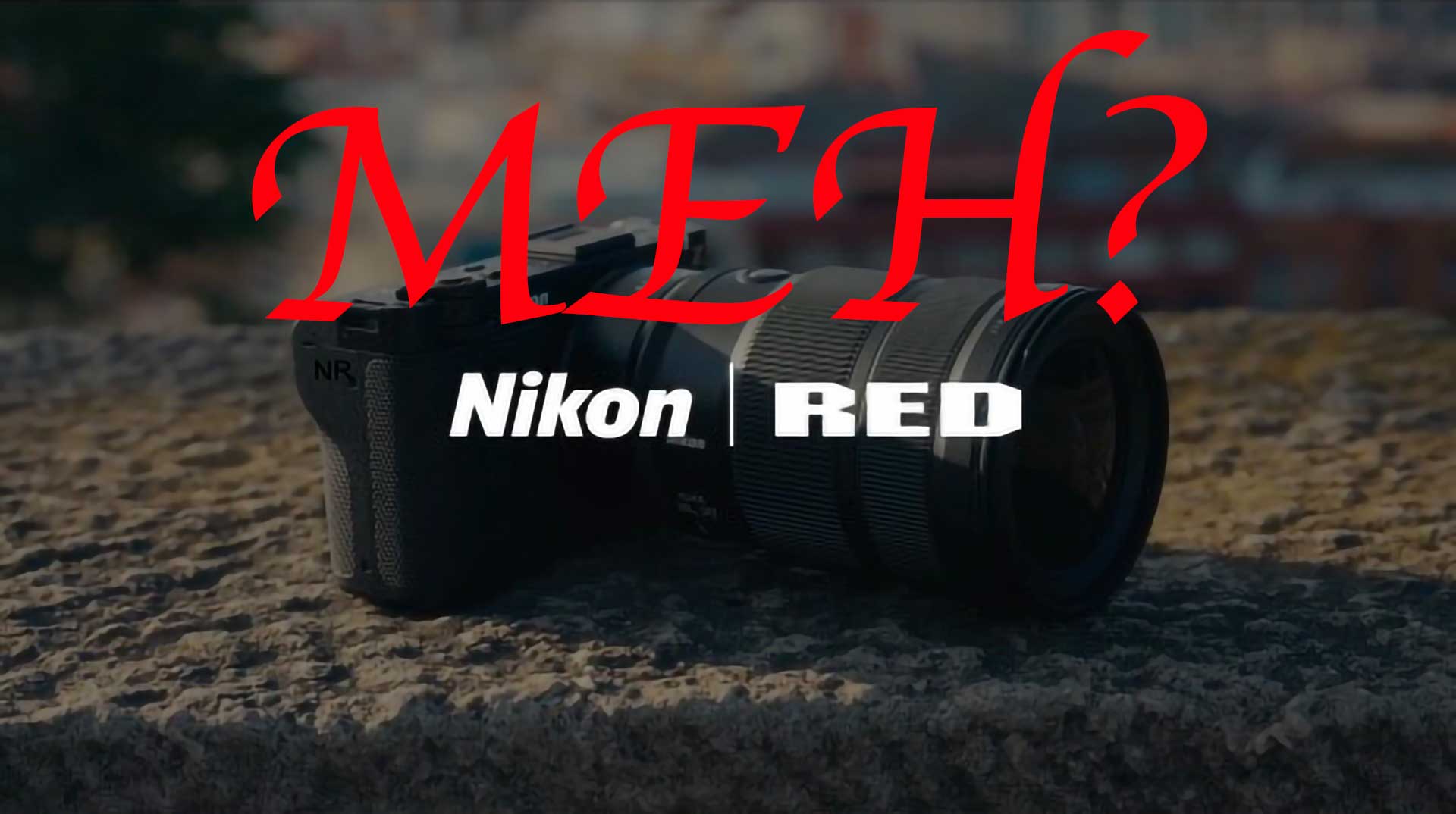
Nikon are a strange company, and you could say that Japan is a strange country. Having made cameras for 100 years, you’d think Nikon would know a thing or two about marketing cameras. Nikon bought RED for the cinema brand prestige. The original pioneer in digital cinema, is now apparently too unimportant to deserve a proper RED badge on the front of the Nikon Zr, the first Cinema Z camera which is less Hollywood, more vlogger.
Strange as it may seem, I am currently a RED user.
Yes there’s been dark things in the past, abusive lawsuits, unkind words and even unkinder YouTube videos but EOSHD has a RED EPIC sitting on the shelf. I want to sell it… 2000 euros for those interested. But that’s besides the point…
RED was one of cinema’s most valuable brands. Nikon’s deal to buy the pioneers of digital Hollywood cinematography was a decision Panasonic should have taken. A masterstroke, which gives them the best RAW codec license-free and the best brand. What’s more RED sold at the right time – just as the cinema industry headed into a death spiral.
But Nikon’s first hybrid stills/video camera with RED tech, the soon to be announced Nikon Zr is a cheapening of the once great cinema brand.
With this first Nikon x RED camera (x as in kisses?), the Japanese corporation had the chance to make a big cinematic statement. Canon have already done so… long, long ago, when in late 2011 Martin Scorsese appeared on stage introducing the Cinema EOS C300. This was a proper cinema camera, aimed at indies and docus and even TV crews.
Nikon’s debut with Cinema Z is a strange one, they have entered not cinema but content creation.
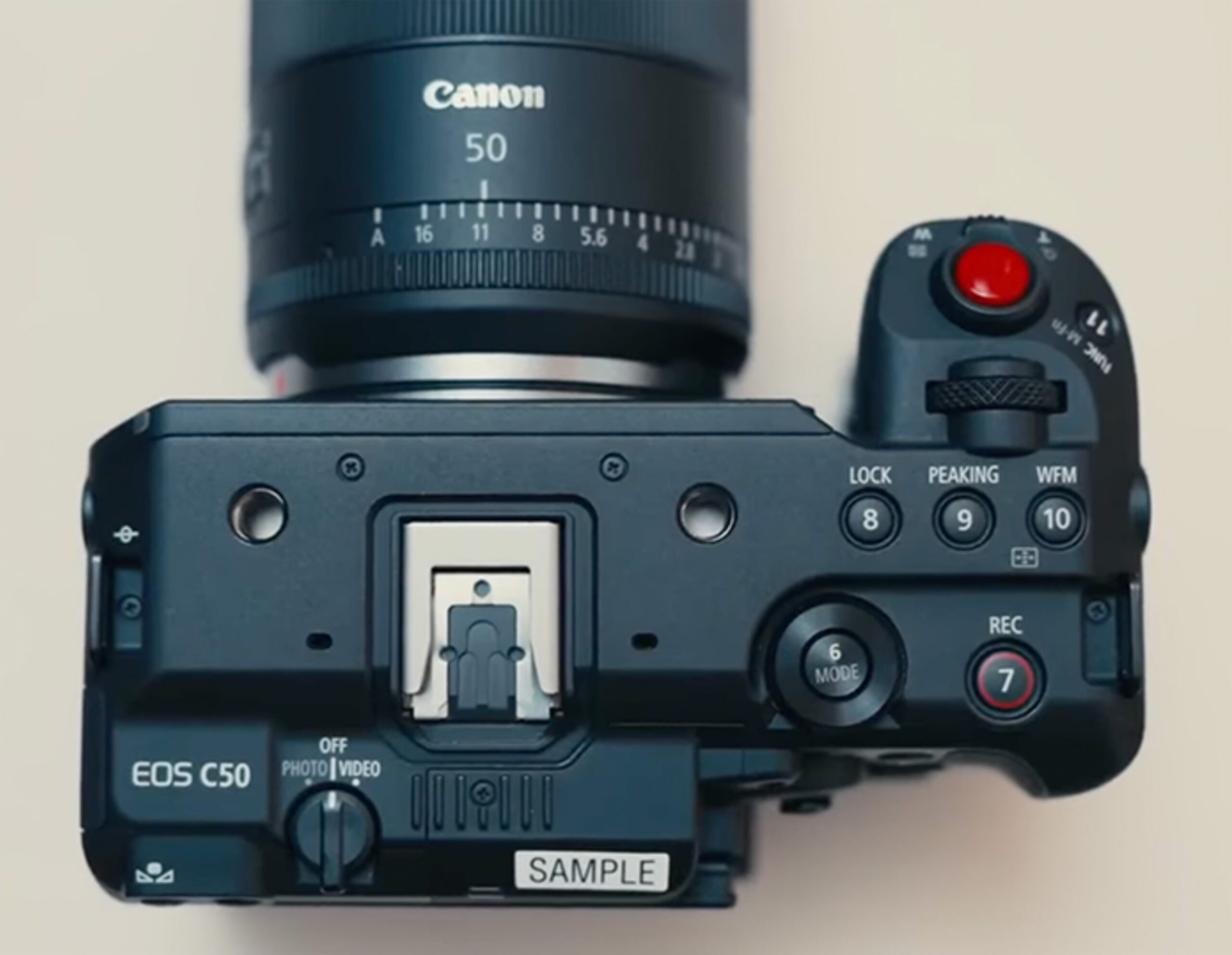
The Sony ZV1E-look-alike is a significantly less Hollywood, more consumer-point&shoot camera than the latest Canon hybrid… which actually bothers to uses the word “Cinema” properly in its name, the Cinema EOS C50. The Zr seems to strip back on what made the Sony FX3 and soon the Canon C50 so popular with video people…
High spec, high build quality, serious looks, and Cinema branding (and cinema usage in terms of the FX3 in feature-film production).
This makes me think Nikon does not have a good plan for RED, and indeed does not know how to market the brand.
Will we be getting a higher-end ZR8 soon?
Unless they quickly follow-up with something more exciting, with the RED badge actually on it more prominently, with headline specs that are at least Z8-level, with 8K REDCODE RAW at 60fps and 4K 120fps without a crop, the RED brand risks becoming like Hasselblad in 2025… a patent holder for an Asian corporation, and a badge for some colour profiles.
It’s not that the Nikon Zr is a terrible camera, it’s a similar concept to what I wanted RED to make way back in 2012 in the DSLR video days.
It’s just that the reborn, revitalised Japanese version of RED deserved to hit the headlines with a big splash and a big dollop of CINEMA.
“Content creator” camera does not have quite the same value.
What do you get when you take the viewfinder hump of a mirrorless camera?
A cinema camera, apparently.
The Sony FX3 really seems to have set a trend, but there looks to be important differences between the C50 and Zr.
The Zr (below) looks to be a more YouTuber style of camera, and appears to sport a very large 16:9 aspect ratio screen. It’s rumoured to have 6K RAW video along with IBIS. A bit more like a Sony ZV1E than an FX3, perhaps. We’ve yet to see what RED technology it implements, whether it’ll shoot N-RAW or REDCODE.
Whereas the Cinema EOS C50 looks to be aimed at the higher-end of the market, around the $4K mark, it is rumoured to lack IBIS and the RF mount isn’t as flexible or adaptable as Nikon Z, but it is one of the first Canon mirrorless cameras to shoot open gate, with an anamorphic mode.
Rumoured C50 specs:
32MP FF sensor
7k internal Raw at 50fps
4k 120p
Two base ISO of 800 and 6400
Open Gate
no IBIS
no built-in ND’s
1 CF express Type B and 1 SD slot
Price around 4.000 Euros
Rumoured Zr specs:
24MP partially stacked sensor (Z6 III)
6K RAW
IBIS
One SD card slot + one micro SD slot (Weird choice)
Price expected to be around $2500
The C50 is set to be officially announced later today, with the Zr to follow tomorrow (10th September).
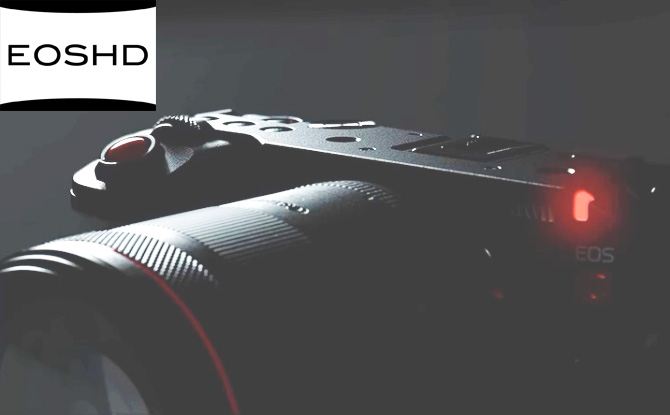
Canon will release a “Sony FX30” killer on September 9th. In a darkened teaser, Canon show the outline of the camera but brightening the image reveals some important details. The big red record button, and the Cinema EOS badge, a mirrorless camera style grip and twin control dials, as well as what looks like the very subtle outline of an EVF eye cup on the rear of the camera.
The model name of the camera hasn’t yet been announced, but given the EOS R50V as a recently announced entry level APS-C model we can expect this one to be called the Canon EOS R5V.
Rather than just a mere Sony FX30 competitor, the R5V could end-up being a high-end rival to the Sony FX3. Some rumours suggest the use of the full frame EOS R5 II sensor with 8K 60p and 4K 120p.
Canon is yet to enter the open gate anamorphic party but the rumours suggest the R5V could mark the debut of that feature too.
The Nikon Challenger
There’s also a suggestion on the EOSHD Forum that Nikon is preparing the announcement of a similar kind of camera with RED cinema camera technology – dubbed the Nikon Zr.
Stand-out features could be a new type of electronic ND technology on the Canon and Nikon bodies, as well as the long touted introduction of REDcode RAW on the Nikon Z-mount hybrid.
Nikon now holds a considerable patent advantage over Canon and Sony in cinema cameras.
Back in the RED DSMC days, the company held the patent for the Motion Mount which was an electronically variable ND filter which doubled as a global shutter. The modular swappable mount of the RED cameras allowed this Canon EF or PL mount to slot in an introduce the functionality. That’s an interesting patent Nikon now has in the arsenal for the rumoured Nikon Zr hybrid camera ecosystem.
Perhaps we can expect to see a Zr9, Zr8 and cheaper entry level Z50r cameras.
Meanwhile we get to find out what Canon has been up to on September 9th, don’t miss it.
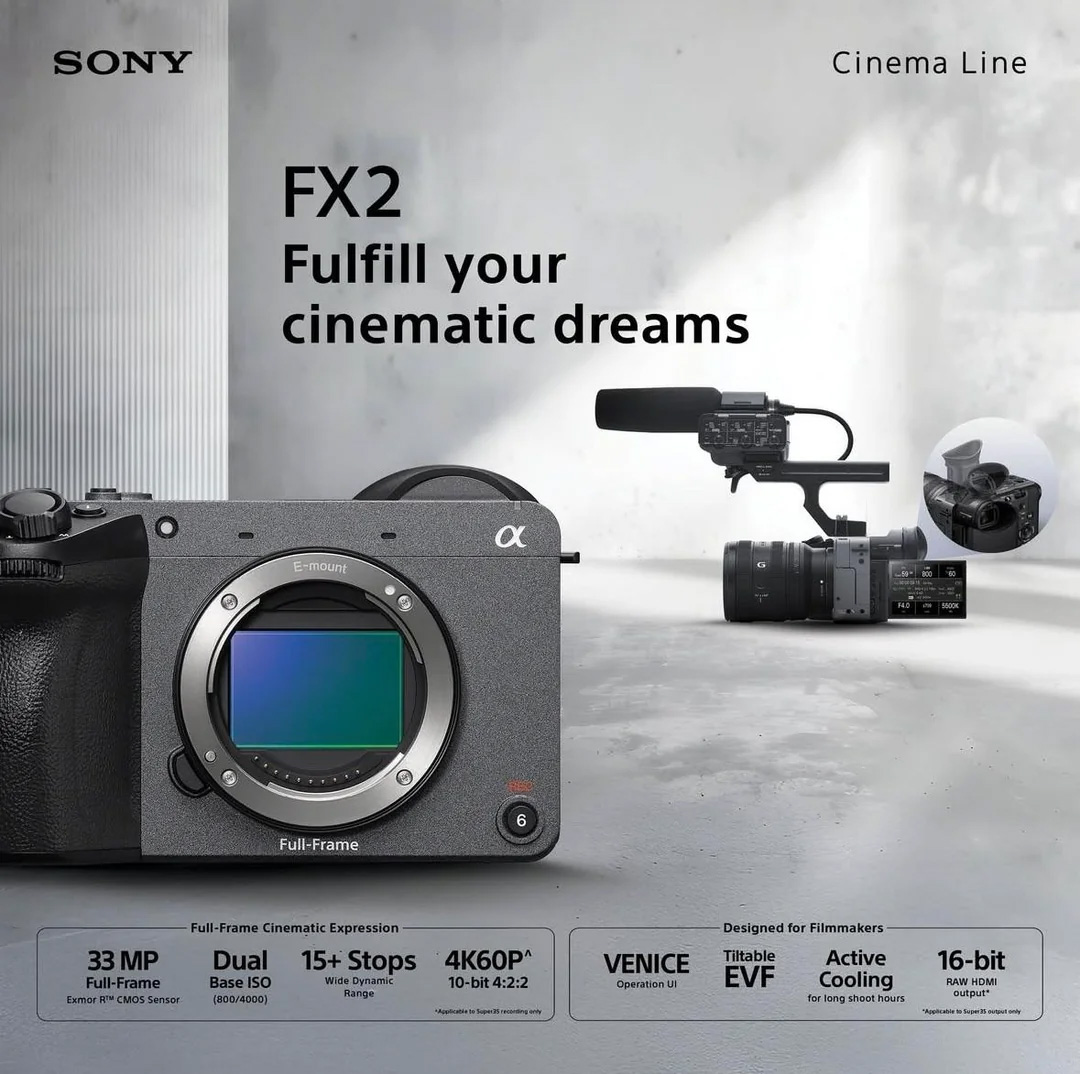
This is like the higher-spec Lumix S9 with EVF and mechanical shutter I wanted Panasonic to make. For $2700 the Sony FX2 is an interesting beast but it does have a few major caveats. 1 – quite a slow sensor with a lot of rolling shutter in 24p. 2 – Sony still doesn’t have an internal RAW recording codec to call their own, or even ProRes RAW in the FX2 – it has external RAW output only via HDMI and only in APS-C crop. 3. Unfortunately there’s still also no internal ND of any kind, which is strange considering the electronic ND equipped Sony FS5 is now over 10 years old. Sort it out Sony!
Although it doesn’t break any new ground, the FX2 at least brings some welcome new features for video users for not much more money than the Sony a7 IV.
The new dynamic steady-shot looks fantastic for handheld walking shots of moving subjects, although it does incur a very big crop. Autofocus is the best on the market and far ahead of Panasonic. The FX2 is also the first full frame hybrid video-focused Sony camera to feature a fully articulated EVF, which sets it apart from the more expensive FX3 in a nice way, it being far better for stills for a start. Much higher resolution 33mp vs 12mp too.
The solid 33MP sensor (from the a7 IV) has a very nice image and unlike the Panasonic S9 the FX2 has a mechanical shutter, in part because the sensor is rather slow and can’t get by without it. It has quite a bit of rolling shutter in the full pixel readout modes, and there’s no 4K/120p like the a7S III or FX3, and 4K/60p 10bit 422 is limited to Super 35mm crop mode only like the a7 IV.
The Venice UI for filmmakers and a quick video access panel, along with active cooling and 16bit RAW HDMI output round out an impressive feature-set for the price, with the camera being aimed at a very broad section of the market – enthusiasts and pros alike, including the people formerly known as artists and filmmakers that our modern corporate dystopia likes to call “content creators” and “influencers” instead, whose job it is to create content for consumption and influencing consumers to spend more money.
What use are we if we’re not either creating or consuming?
So just to TLDR…
a7 IV spec in an FX3 form factor, with nice articulated EVF, great stabilisation, mechanical shutter, but quite a slow sensor readout and no internal RAW codec or ND.
It’ll certainly be a nice camera to pick up used for under $2k in a few months.
A Fujifilm JPEG-only half-frame toy for 850 smackers, the latest Sony flagship for 7000 something + tax, and the new mid-range “standard model” S1 II from Panasonic yours for a bargain $4000 with ‘basic’ kit zoom. It all begs the question, have the Japanese lost the plot?
In the UK right now, I look at the “real” price of cameras – that is used items in very good condition. These are the prices that the customer decides are worth paying. The Panasonic S9 which launched for £1699 just a few months ago (body only) is now fetching a measly £750 at most retailers in mint condition, with the box and all accessories. It has been a total and abject failiure, the point where Panasonic has had to discount up to £800 off the box price (new) with the new 18-40mm kit lens. The fact remains this – Panasonic was asking for more than double what people were willing to pay, and for a “influencer camera” £700 more than the latest iPhone 16 Pro with a cutting edge camera.
I look at the global market situation, and the prices were crazy long before crazy US tariffs. Most foreign currency like the British pound or the Euro when converted to Japanese Yen now has a very favourable exchange rate for the Japanese corporations. When they repatriate their foreign income, they’re making more per £, € or $ than they did before, and unlike at the peak of Japanese industry most of their costs and manufacturing are outsourced to China or Vietnam, with cheaper labour and less need than before to pay so many more expensive Japanese wages. Camera sales have been generally going down and surely the way one encourages better sales is to lower prices. The Japanese have done the opposite, they have price gouged their most loyal customers on everything, from lenses to lens hoods, from cameras to lens adapters, it is an absolute joke of a business.
Overall meanwhile the price of consumer electronics continues to fall, you get more and more capability for your money, even from Apple. In every way, the Japanese camera companies are bucking the trend and giving us higher and higher prices, and shipping fewer and fewer units. Even at $7000 the Sony a1 II has been almost impossible to get hold of because they are shipping so few of them.
The depreciation when you drive your new camera off the forecourt is in some cases extremely scary.
There’s also now a trend for the popular mid-range models to cost the same as a flagship camera from a few years ago – in the region of $3500 to $4000. Panasonic who are forever chasing market share and trying to establish their new full frame line-up, officially took leave of their senses only this month with the launch of the S1 Mark II at over $3000, and closer to $4000 if you want a basic zoom lens.
Then again, looking at just the average price of full frame cameras over the last 12 months results in a new “normal retail price” of $4350. Looking at unit shipment levels of cameras and we are almost at 1999 levels, before even the launch of the first affordable DSLR and first decently performing compact camera.
And now presumably thinking they are being clever, Fujifilm have come along with a small sensor compact camera that doesn’t shoot RAW, with a slow to autofocus, slow aperture 10mm F2.8 lens (not even F1.8), that takes worse photos than a smartphone with less capability and no zoom, but appeals to the crowd of hipsters who want a compact film camera without the effort and don’t realise the Sony RX1 exists for $750 on eBay.
For this admittedly cute and different fashion trinket, Fuji has for some reason decided to aim for the $850 mark which is in X-T30 II territory, or similar to a used X100F. APS-C money for a 1 inch vertical crop sensor and terrible AF?
It’s getting to the point where I might never buy a new camera again.

 Login
Login