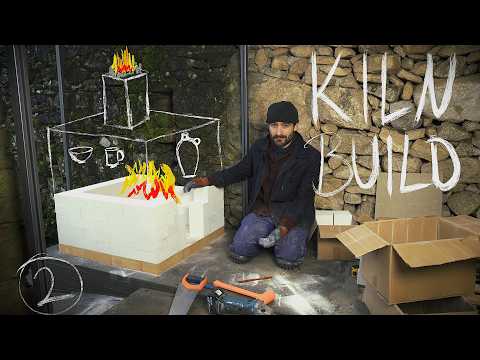
After the previous wood kiln design failed to reach temperature, I'm back at it with a new design. Here's the first firing in the new kiln.
IG: / tinkerandthink
Website: https://benshane.com/
Tinker and Think ethos: Combining the manual and cerebral. We cannot separate the mental and the physical, nor treat any endeavor as solely mental or solely physical. But this is precisely how we have come to talk about our world—blue collar vs. white collar, intellectual vs. athlete, book worm vs. adventurer. This is a false dichotomy. This channel promotes an approach that combines manual labor (pottery, carpentry, welding, bricklaying, concrete) with a smart, purposeful attitude (study, reading, science, math, poetry, and meditation). Our minds work best when they engage with our bodies. Our bodies perform best when connected to conscious mental action. Through intelligent manual work, we discover enjoyment, fulfillment, and human flourishing.
In my quest to build a wood-fired pottery kiln, I try out the very fashionable design: the fastfire kiln. Oxford Kilns has a lot of these. It's basically one half of an Olsen Fastfire kiln as described in The Kiln Book. Steve Mills has a similar design that he calls the Philosopher's Kiln.
After the first iteration of this kiln failed to reach temperature, I'm back at it with some thoughtful improvements.
Most importantly, I dive deep into the heart of wood kiln design: draft, and how chimney design affects draft. Draft is necessary to pull fresh air into the firebox to burn the wood. When a wood-fired pottery kiln isn't increasing in temperature as expected, insufficient draft should be the first suspected culprit.
The design uses Australian potter Steve Harrison's "Small Portable Woodfired Kiln" as a close reference for proportions. https://tonightmyfingerssmellofgarlic...
I use a combination of dense firebrick, soft firebrick (IFB), and refractory castable cement.The roof is a Nils Lou Minnesota flattop design, and the fire grate is welded out of old rebar. You can read Lou's book, The Art of Firing, for free on the Internet Archive. https://archive.org/details/artoffiri...
IG: / tinkerandthink
Website: https://benshane.com/
Tinker and Think ethos: Combining the manual and cerebral. We cannot separate the mental and the physical, nor treat any endeavor as solely mental or solely physical. But this is precisely how we have come to talk about our world—blue collar vs. white collar, intellectual vs. athlete, book worm vs. adventurer. But this is a totally false dichotomy. This channel promotes an approach that combines manual labor (pottery, carpentry, welding, bricklaying, concrete) with a smart, purposeful attitude (study, reading, science, math, poetry, and meditation). Our minds work best when they engage with our bodies. Our bodies perform best when connected to conscious mental action. Through intelligent manual work, we discover enjoyment, fulfillment, and human flourishing.
After building up the walls of the kiln, I have to begin a more difficult task: building a roof. Today I make a flat roof out of refractory bricks, inspired by Nils Lou's design for a Minnesota flattop kiln, for my small wood-fired pottery kiln that will hopefully reach 1300 degrees celsius, or cone 10.
I refer to Steve Harrison's "Small Portable Woodfired Kiln," Nils Lou's "The Art of Firing," and Fred Olsen's "The Kiln Book." They are all available to read for free on the Internet Archive.
I use a combination of dense firebrick and soft firebrick (IFB). There were quite a few obstacles in my attempt to build my first kiln roof, but I got through it and ended with something usable.
IG: https://www.instagram.com/tinkerandthink/
Website: https://benshane.com/
Tinker and Think ethos: Combining the manual and cerebral. We cannot separate the mental and the physical, nor treat any endeavor as solely mental or solely physical. But this is precisely how we have come to talk about our world—blue collar vs. white collar, intellectual vs. athlete, book worm vs. adventurer. But this is a totally false dichotomy. This channel promotes an approach that combines manual labor (pottery, carpentry, welding, bricklaying, concrete) with a smart, purposeful attitude (study, reading, science, math, poetry, and meditation). Our minds work best when they engage with our bodies. Our bodies perform best when connected to conscious mental action. Through intelligent manual work, we discover enjoyment, fulfillment, and human flourishing.
After preparing a suitable space for a kiln build, the next step is to build the kiln. Today I start stacking refractory bricks to build a small wood-fired pottery kiln that will hopefully reach 1300 degrees celsius, or cone 10.
The design uses Australian potter Steve Harrison's "Small Portable Woodfired Kiln" as a close reference for proportions. https://tonightmyfingerssmellofgarlic.com/2024/05/15/small-portable-woodfired-kilns/
I use a combination of dense firebrick, soft firebrick (IFB), and refractory castable cement. In the upcoming video, I'll be building the roof (a Nils Lou Minnesota flattop design) and welding a fire grate out of old rebar. You can read his book, The Art of Firing, for free on the Internet Archive. https://archive.org/details/artoffiring0000nils/mode/1up
IG: https://www.instagram.com/tinkerandthink/
Website: https://benshane.com/
Tinker and Think ethos: Combining the manual and cerebral. We cannot separate the mental and the physical, nor treat any endeavor as solely mental or solely physical. But this is precisely how we have come to talk about our world—blue collar vs. white collar, intellectual vs. athlete, book worm vs. adventurer. But this is a totally false dichotomy. This channel promotes an approach that combines manual labor (pottery, carpentry, welding, bricklaying, concrete) with a smart, purposeful attitude (study, reading, science, math, poetry, and meditation). Our minds work best when they engage with our bodies. Our bodies perform best when connected to conscious mental action. Through intelligent manual work, we discover enjoyment, fulfillment, and human flourishing.
Today, I'm starting a new project. building a wood-fired pottery kiln.
When done right, this can produce beautiful pots in a sustainable way. The problem is, I've never built a wood kiln. I have a lot to learn. Come along with me while I learn and experiment with kiln building, wood-firing pottery, pouring concrete, welding, and more.
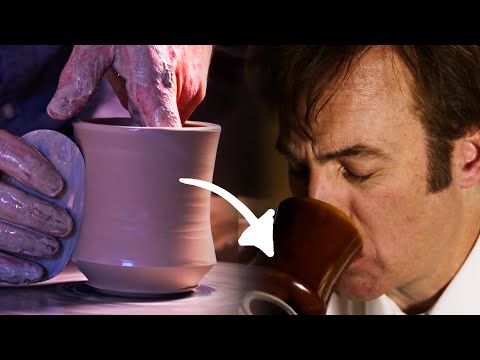
I made this coffee mug from Better Call Saul by hand. From choosing the right clay, throwing the exact shape on the potter's wheel, trimming, pulling a handle, and developing a matching glaze from scratch, this was a long and fun process.
Mica is a beautiful and useful silicate mineral that has been used for decorative and functional purposes all around the world for millenia. One use is to add it to clay to reduce thermal expansion, thereby making the pottery resistant to cracking with rapid temperature changes. This pottery can be safely used in the oven ir even of=ver direct flame.
Bats often wobble or even go flying off the wheelhead if they aren't secure. Here is my method for making sure the bat stays on the wheelhead while I throw. Flatten a thin layer of clay on the wheel, add a spiral groove, and stick the bat onto it. The bat suctions to the clay and won't go anywhere. You don't need a lot of clay.
Some glazes put copper or other heavy metals into your acidic drinks. Here's a simple test to begin learning about how safe and durable your new glaze recipe really is.
This isn't something to totally freak out about. But if you make pottery, it's your responsibility to make stable glazes.
If you make pottery for use in the kitchen or on the table, you have to make it easy to clean.
A simple test to begin learning about how safe and durable your new glaze recipe really is.
Check out other shorts for more tests to run. A simple test to begin learning about how safe and durable your new glaze recipe really is. Many more pottery videos on my channel.
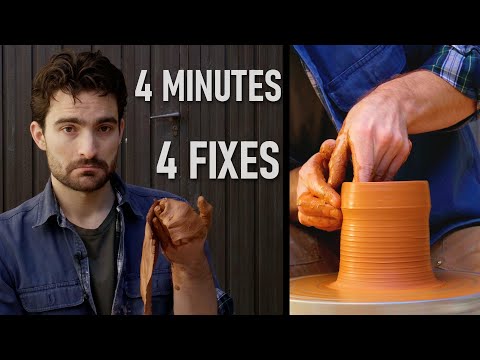
These are four problems I often see my pottery students struggle with when learning to pull cylinders on the wheel. I hope these tips help you diagnose what's going wrong, and gives you an idea of how to fix it. If you would like to see a longer, more in-depth video, let me know in the comments.

 Login
Login