Normal view

Blacklight, our privacy inspector tool, now tracks X and TikTok pixels

We’ve updated Blacklight, our popular privacy tool, to check for TikTok and X trackers.

Illustration of the Blacklight logo, with a purple swish behind it. On the bottom right hand corner is a star-shaped sticker with the words "UPDATE" and a wrench icon.
Gabriel Hongsdusit

Since 2020, readers have used Blacklight, our pioneering website privacy inspector tool, to run more than 18 million scans. Previously, Blacklight detected tracking pixels from Google and Meta. Today, we’re announcing that it can scan for two more digital trackers: TikTok and X pixels.

Scan a website

A tracking pixel is a small piece of code added to a website that sends information about the site’s users to the platform that operates the pixel. That can include details of a user’s activities, such as their browsing activity, purchases and searches. A website that embeds a pixel often does so to inform its advertising campaigns on the platform that create the pixel. When its pixel is embedded across many websites, the platform can compile a user’s data to build a detailed profile of their interests, behavior and other personal information. These profiles allow other businesses to buy ads from the platform to target categories of users — though this data can also be used for other purposes.

When you look up a website in Blacklight, it will now report if it finds the TikTok pixel or X pixel. More detailed information about the specific data being passed through pixels is also available by clicking on “Learn more” in the top right of the results, then clicking the link to “download an archive.”

To develop these new features, we partnered with a group of computer science students in Brandeis University’s Capstone in Software Engineering course. These students – Yiyou “Felix” Fan, Jiawen “Zena” Hu, Hengye Li, Hongchen “Steven” Yang and Yiquan “Frank” Zhang – researched and developed the features with the support of our product team.

Blacklight’s pixel detection features have already powered our Pixel Hunt investigations, which revealed that sensitive personal user information was being shared from government websites with Meta and Google, leading to lawsuits, removal of pixels from sites and increased government scrutiny. These new features give a fuller picture of the digital privacy landscape by exposing tracking pixels from two more companies.

We hope these new features will help you better understand what happens to your data as you navigate the internet. While Blacklight can’t say exactly what companies like TikTok and X do with our data, it can provide a starting point for deeper investigation into how that data is stored, shared and used across the web.

Do you have questions, suggestions or need help understanding your Blacklight results? You can always reach us at blacklight@themarkup.org

Mamdani to kill the NYC AI chatbot we caught telling businesses to break the law

New York mayor says terminating the ‘unusable’ bot will help close a budget gap

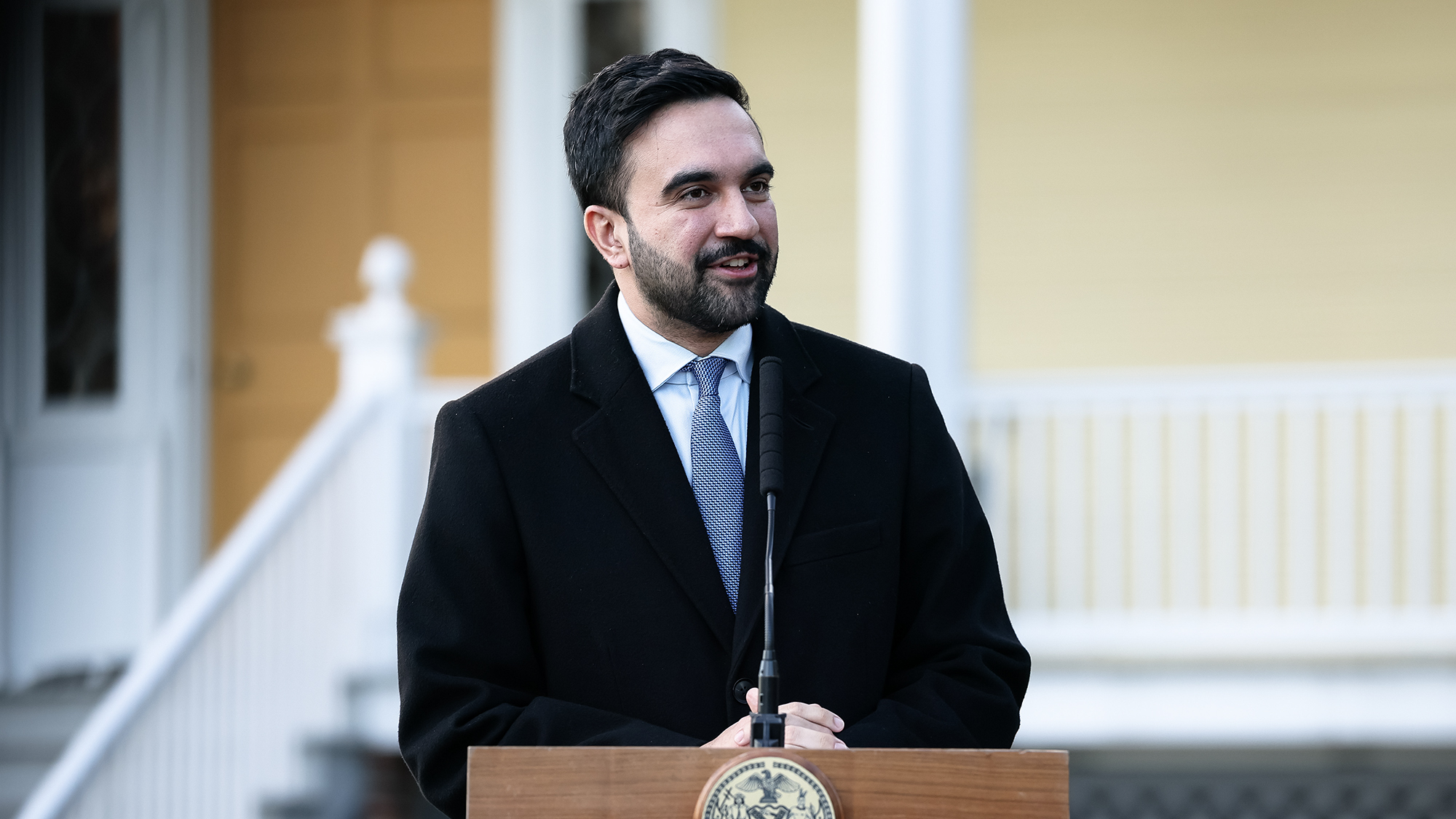
A person in a dark coat and light blue tie speaks at a wooden podium outdoors, smiling slightly as a microphone stands in front of them, with the pale yellow facade and white railing of a government building blurred in the background.
New York City Mayor Zohran Mamdani speaks at a press conference at Gracie Mansion in New York City, on Jan. 12, 2026. Michael M. Santiago, Getty Images

This article is co-reported with THE CITY, a non-profit newsroom that serves the people of New York. Sign up for its newsletter, The Scoop.

In a press conference this week on New York City’s $12 billion budget gap, Mayor Zohran Mamdani zeroed in on the previous administration’s artificial intelligence chatbot as one of “a number of different things we’re going to pursue for savings.”

The chatbot, which was released by the Eric Adams administration in fall of 2023, was meant to provide business owners with an accessible way to check city rules and regulations. But as first documented by The Markup and THE CITY, the bot provided answers that, if followed, would lead to illegal behavior by businesses, like taking a cut of employees’ tips.

A spokesperson for the mayor, Dora Pekec, confirmed in a text message that the new administration plans to take down the chatbot. She said a member of the Mamdani transition team had seen reporting on the bot from The Markup and THE CITY and presented it to the mayor as a possible place to save funds. 

At the press conference, Mamdani blamed Adams for the budget shortfall, saying he had been handed “a poisoned chalice.” To close the deficit, he said he would raise taxes on the wealthy and corporations and look “under the hood” of the city’s budget for potential savings. 

When pressed by reporters on what he might cut, he singled out the chatbot.

“The previous administration had an AI chatbot that was functionally unusable,” Mamdani said. “It was costing the administration around half a million dollars. That, in and of itself, is not something that can bridge this kind of a gap, but it’s an indication of the ways in which money has been spent while refusing to account for the actual costs of what these programs are.”

The bot, built using Microsoft’s cloud computing platform, was part of an ambitious overhaul of digital services in New York called MyCity. The project was meant to streamline access to government but was criticized for relying on outside contractors

It wasn’t clear how much it cost to maintain the chatbot. Just building the bot’s foundations reportedly cost nearly $600,000, close to the figure Mamdani provided. Pekec said they didn’t yet have a date for taking down the bot. 

A broken bot

Testing by The Markup and THE CITY in 2024 showed that, despite promises from the Adams administration, the chatbot would confidently provide incorrect and potentially harmful information to visitors, even on high-stakes topics.

When asked about housing policy, for example, the bot suggested landlords could discriminate against tenants with Section 8 vouchers. Despite being an intended resource for business owners, the bot didn’t know the minimum wage, and told users it was fine to refuse to accept cash for payment despite a city law to the contrary, enacted in 2020.

After The Markup and THE CITY’s initial report was published, readers continued peppering the bot with sometimes farcical questions, which it continued failing to answer properly. The Adams administration defended the bot, saying it would improve over time. 

“We’re identifying what the problems are, we’re gonna fix them, and we’re going to have the best chatbot system on the globe,” Adams said at a press conference. “People are going to come and watch what we’re doing in New York City.”

City administrators soon added disclaimers to the bot advising users to “not use its responses as legal or professional advice.” They also improved some of the bot’s answers, but also appeared to limit the kinds of questions the tool was willing to answer. 

Today, the bot advises visitors to “ask an NYC government question only” and cautions that “responses may occasionally produce inaccurate or incomplete content.” Visitors must agree to accept the bot’s limitations before using it.

Update (Feb. 4, 2026): The city has taken down the chatbot, writing on the bot’s web page that its “beta test has ended” and directing visitors to NYC.gov for government information.

❌