Normal view

Unequal Exchange of Labour in the World Economy

“Researchers have argued that wealthy nations rely on a large net appropriation of labour and resources from the rest of the world through unequal exchange in international trade and global commodity chains. Here we assess this empirically by measuring flows of embodied labour in the world economy from 1995–2021, accounting for skill levels, sectors and wages.

We find that, in 2021, the economies of the global North net-appropriated 826 billion hours of embodied labour from the global South, across all skill levels and sectors. The wage value of this net-appropriated labour was equivalent to €16.9 trillion in Northern prices, accounting for skill level. This appropriation roughly doubles the labour that is available for Northern consumption but drains the South of productive capacity that could be used instead for local human needs and development.

Unequal exchange is understood to be driven in part by systematic wage inequalities. We find Southern wages are 87–95% lower than Northern wages for work of equal skill. While Southern workers contribute 90% of the labour that powers the world economy, they receive only 21% of global income.”

Read more (open access): Hickel, J., Hanbury Lemos, M. & Barbour, F. Unequal exchange of labour in the world economy. Nat Commun 15, 6298 (2024). https://doi.org/10.1038/s41467-024-49687-y
Wild Craft: Wooden cargo ships of South India

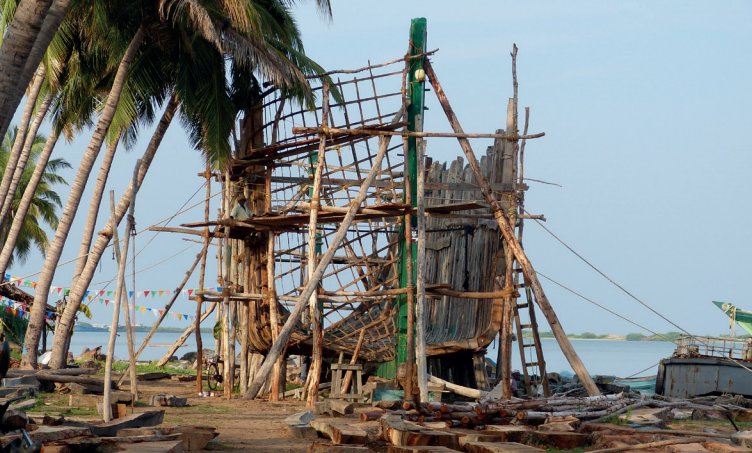
Giant wooden cargo ships that braved the oceans for thousands of years are still being made in the South Indian state of Tamil Nadu. Even as metal motorised ships became the norm, some shoreline communities in South India continue to craft this wooden cargo ship. In a blend of reason, creativity and hard work the communities engineered their past to forge a future. This book traces the transition of this tradition over time.

The authors have created a photo documentation using hundreds of images that capture the shipyard’s atmosphere to offer a narrative and the manufacture of these ships at each step of their construction. It analyzes the conditions of their economic viability and how it has evolved over time. Through visual anthropology this book offers a narrative of wooden cargo ship building and craftsmanship in south Asia.

The open access book can be downloaded from https://www.ifpindia.org/bookstore/wild-craft/.

There is also a video about the project: Of Wind and Wood. Sustainable cargo ships in France and in India.

The Ivan L. Collins Collection of Historic Vehicles in Miniature

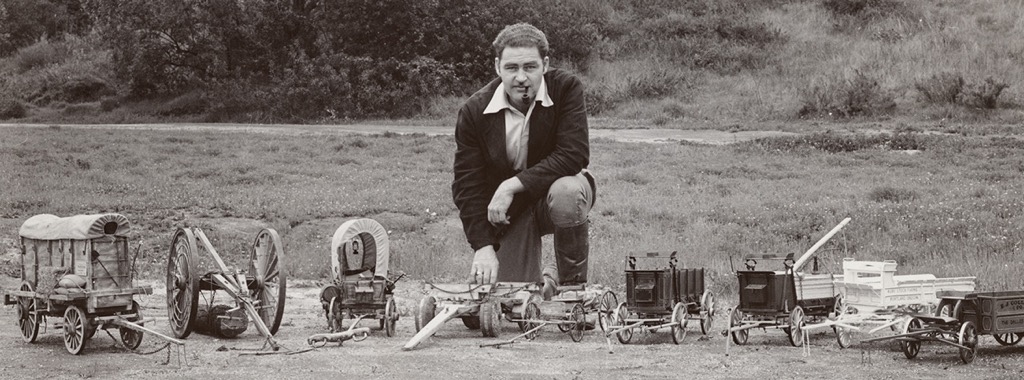
Ivan L. Collins created historically accurate models of horse-drawn vehicles using painstaking research to ensure that every detail was authentic. Built at one-eighth scale, these models represent transportation technology before the automobile. Collins saw this work as more than a hobby; his models were a way to preserve history for future generations.

See and read more:

https://www.ohs.org/museum/exhibits/models-in-motion-ivan-collins-miniature-vehicles.cfm
http://www.scalemodelhorsedrawnvehicle.co.uk/(Ivan%20Collins).htm

Thanks to David Barnes.

Image: Oregon Historical Society.

Published — 5 August 2024 No Tech Magazine

Back to the Future of the Internet

Earlier this year we organised an event in Barcelona, “Back To The Future Of The Internet”, in which we explored concepts from the Internet’s history that can help create a more sustainable future network. The video is now online:


Published — 3 June 2024 No Tech Magazine

The SmolPhone

“The SmolPhone project is an action research on the topic of low-tech in the domain of IT systems. Its practical aspects consist in designing a sort of low-tech smartphone offering some services of a classical smartphone with a one-week battery lifetime. The goal is not to optimize a typical smartphone but rather to reconsider the smartphone design space, exploring unusual architectures and evaluating the set of features that should be part of long-lasting smartphones.”

Quoted from: Rautureau, Aloïs, et al. “Quantifying the tiny-Small design of the SmolPhone.” ICT For Sustainability (ICT4S). 2024. Related articles.

Published — 25 May 2024 No Tech Magazine

After Comfort: A User’s Guide

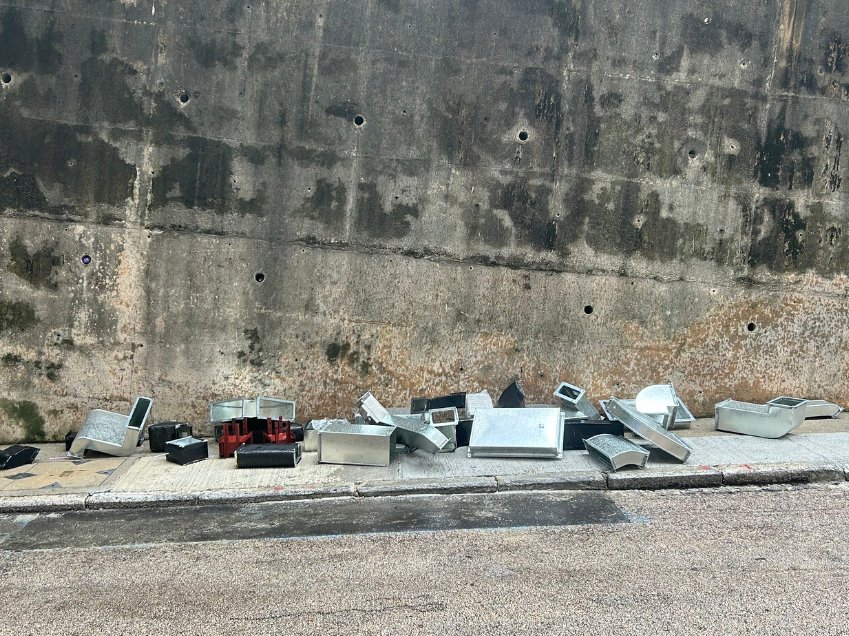
Image: Ducts in a row. Photo: Daniel A. Barber. Taken from: After Comfort: A User’s Guide.

Comfort is a construct. Many new commercial and institutional buildings built over the past few decades rely so heavily on fossil-fueled mechanical HVAC systems that they would be uninhabitable without them. Many of the stylistic and programmatic debates in architecture in these same decades similarly relied on HVAC for their explorations and innovations. In other cases, often at the residential scale, buildings have been produced with an expectation of cheap energy, which has meant that adequate insulation, cross ventilation, and other design-based passive thermal measures have not been considered. Our determinedly slow, casual move away from fossil fuels, with limited political or socio-economic support, is already resulting in “green inequity” and novel forms of thermal violence. Over the decades to come, enclaves where upper-class neighborhoods engage with expensive “green tech” such as electric vehicles and heat pumps will coexist alongside poorer areas that cannot afford to make any transition from the carbon-fueled lifestyles they need to get by.

After Comfort: A User’s Guide is a project by e-flux Architecture in collaboration with the University of Technology Sydney, the Technical University of Munich, the University of Liverpool, and Transsolar.

The Shrinking City

In Europe alone, there are more than 500 cities with continuous demographic shrinkage, which in many cases concern small‐ to medium‐sized, peripherally situated, former industrial cities. The surplus of space (land, buildings) in these cities and the diminished role of market parties might create favorable conditions for experimentation with alternative types and ways of urban development and land use. Moreover, in shrinking cities, there is also a need for urban development solutions that improve the quality of life in the absence of economic growth, and therefore there may also be more interest in the outcomes or lessons of urban degrowth experiments and a higher probability for larger‐scale uptake and implementation.

Read more: Hermans, Maurice, Joop de Kraker, and Christian Scholl. “The Shrinking City as a Testing Ground for Urban Degrowth Practices.” Urban Planning 9.2 (2024).

Published — 23 May 2024 No Tech Magazine

How Medieval Readers Customized their Manuscripts

Medieval manuscripts resisted obsolescence. Made by highly specialised craftspeople (scribes, illuminators, book binders) with labour-intensive processes using exclusive and sometimes exotic materials (parchment made from dozens or hundreds of skins, inks and paints made from prized minerals, animals and plants), books were expensive and built to last. They usually outlived their owners. Rather than discard them when they were superseded, book owners found ways to update, amend and upcycle books or book parts.

These activities accelerated in the fifteenth century. Most manuscripts made before 1390 were bespoke and made for a particular client, but those made after 1390 (especially books of hours) were increasingly made for an open market, in which the producer was not in direct contact with the buyer. Increased efficiency led to more generic products, which owners were motivated to personalise. It also led to more blank parchment in the book, for example, the backs of inserted miniatures and the blanks ends of textual components. Book buyers of the late fourteenth and throughout the fifteenth century still held onto the old connotations of manuscripts—that they were custom-made luxury items—even when the production had become impersonal.

Owners consequently purchased books made for an open market and then personalised them, filling in the blank spaces, and even adding more components later. This would give them an affordable product, but one that still smacked of luxury and met their individual needs. They kept older books in circulation by amending them, attached items to generic books to make them more relevant and valuable, and added new prayers with escalating indulgences as the culture of salvation shifted.

From: M Rudy, Kathryn. Piety in pieces: how medieval readers customized their manuscripts. Open Book Publishers, 2016.

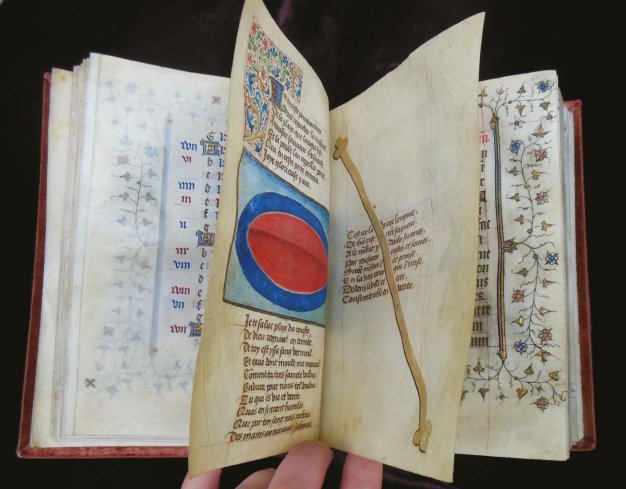
Image: Parchment diptych with the measurements of Christ’s length and side wound, inserted into a French book of hours. Paisley, Renfrew District Museum and Art Gallery, Ms. 1, fol. 13–14 forming a diptych. Photo © Author, CC BY 4.0.

Published — 19 May 2024 No Tech Magazine

No Tech Reader #48: Digital Technology

Published — 16 May 2024 No Tech Magazine

Ironwood Bicycles

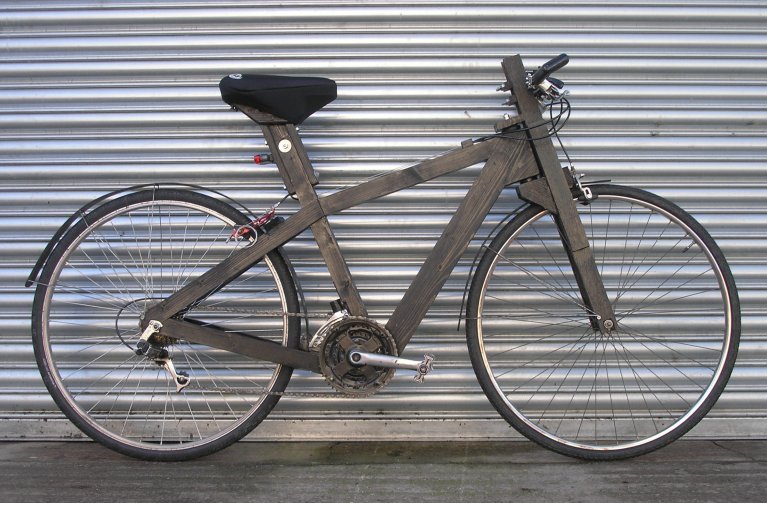
The Ironwood bicycle is a wooden framed bike that people could make themselves with commonly available materials. It has a laminated wooden frame and fork to which standard bicycle components are bolted. The frame can be made with basic carpentry and metalwork skills, without the need for welding or soldering. The design is intended for small scale bicycle production that would support local employment as an alternative to importing bicycles from around the world. More: http://www.ironwoodbicycle.com.

Published — 14 May 2024 No Tech Magazine
❌