
Normal view

RFK Jr. names 8 new members to influential preventive medicine task force

Anti-vaccine Health Secretary Robert F. Kennedy Jr. announced the names of eight new members of a 16-person federal task force intended to make scientifically independent, evidence-based recommendations on an array of preventive medicine services for Americans—from depression screening to statin use, colonoscopies, and mammograms.

Recommendations from the panel—the US Preventive Services Task Force (USPSTF)—don't simply provide guidance for Americans; they also determine access. The USPSTF is supposed to use a rigorous, transparent framework for evaluating evidence and sets graded recommendations on an A to D scale. Health insurance providers are required to cover, at no cost, all preventive services that are given recommendations of an A or B grade.

Kennedy has sidelined the USPSTF for more than a year, canceling its meetings and refusing to appoint new members as terms expired and members left. In May, Kennedy also fired two leaders, sparking outcry and exacerbating fears that he would corrupt the nonpartisan independent panel by stacking it with unqualified ideological allies—which he did with an influence vaccine advisory committee at the Centers for Disease Control and Prevention.

Read full article

Comments

© Getty | Leandro Lozada

Small AI models let drones autonomously identify and attack battlefield targets

As European militaries adapt to the use of AI and drones in modern warfare, a NATO-backed startup is helping to deploy AI-driven target detection and selection that can run on small drones for surveillance and attack missions.

The company, Scaleout Systems, was originally founded by researchers from Uppsala University in Sweden in 2018, and initially focused on training and deploying machine learning models directly on the hardware available in commercial trucks and other vehicles. But once Russia launched its full-scale invasion of Ukraine in 2022, the company pivoted toward defense applications.

“With the war in Ukraine and a shifting world, we realized that this technology can be very important to operationalize edge data and sensor data for machine learning to make sure that NATO allies have found that strategic advantage,” Andreas Hellander, cofounder and CEO of Scaleout Systems, told Ars.

Read full article

Comments

© Scaleout Systems

Google announces new experimental "CC" AI agent for families

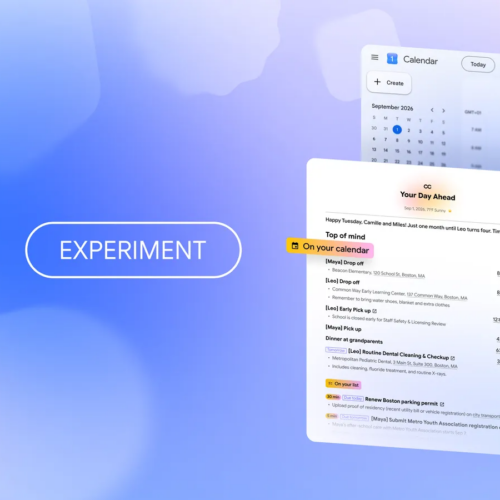
Google's AI models may not be in the lead by most measures right now, but the company does have one key advantage: your data. If you're deep in the Google ecosystem, Gemini models have a lot of context on you already. Google's latest Google Labs experiment, known as CC, aims to expand that kind of customization to the whole family.

CC is an evolution of something that Google announced in 2025. The original CC eventually became Gemini's Daily Brief, which churns through the data in your Google account to offer daily action items and suggestions. The new CC has a similar goal, but it's designed to be a shared resource for up to six users in a family.

Google says that CC has its own Google account, allowing each family member to interact with it (or not) as they choose. For example, CC only sees emails from its connected users if they are explicitly shared. You can do that by designating certain addresses as always available to the agent—something like school scheduling emails. You can also send content to CC via email or Google Chat. The agent can even monitor a shared Google Drive folder, into which you can dump invitations, documents, and other content.

Read full article

Comments

© Google

Microsoft exec called AI scraping the “largest theft of labor in human history”

For years, Microsoft and OpenAI have fought to keep certain information out of the public eye in their fight with news organizations that have accused the AI firms of teaming up to violate copyright laws by stealing tons of news content to train AI.

However, now the details that should never have been marked confidential are starting to leak. In a motion for summary judgment that was unsealed Thursday from news plaintiffs led by The New York Times, internal documents are exposed that news groups alleged show exactly how Microsoft and OpenAI viewed the threat to news before unleashing new AI products like ChatGPT and Copilot.

Perhaps most explosively, Microsoft Director of Applied Science Brent Hecht repeatedly warned in documents that scraping news for AI training was “an astonishing theft of unprecedented proportions,” calling it perhaps the “largest theft of labor in human history,” news orgs said. In another document, Hecht contradicted Microsoft and OpenAI’s argument that training AI on news content is fair use, suggesting that the plan to widely scrape news made “a complete mockery of the idea of ‘fair use.’”

Read full article

Comments

© Charles Taylor | iStock / Getty Images Plus

Republican bill would order ISPs, DNS providers, and VPNs to block piracy sites

US Rep. Darrell Issa (R-Calif.) has proposed a law that would require Internet service providers and other network operators to block foreign piracy websites. Issa's bill would help copyright holders obtain judicial blocking orders to be served to ISPs, domain name resolution services, and virtual private networks.

Issa, who is retiring from the House at the end of this year, is the latest in a string of Republican and Democratic lawmakers to propose a site-blocking regime that's been sought by the Motion Picture Association (MPA). He submitted the bill this week, after indicating in a June 30 hearing that he planned to introduce site-blocking legislation.

"While millions of listings for copyright-infringing content are removed every day under [the] notice-and-takedown process set forth in the Digital Millennium Copyright Act, right-holders have raised concerns with the speed," Issa said at the hearing. Issa asked, "Can we do it at the speed of sound? Can we do it at the speed of light? More importantly, in a 45-minute or sometimes a fraction of that live sports broadcast, can we do it soon enough to make it no longer profitable for those who pop up and sell their clandestine wares?"

Read full article

Comments

© Getty Images | Yuichiro Chino

LLMs respond differently to harmful prompts when AI watermarking is used

In response to a new European Union law, AI platforms are implementing new schemes for watermarking the content they generate. Anthropic recently disclosed its future Claude models will use SynthID-Text, an approach Google created and released as open source. It uses a secret key that subtly changes the process a model uses for choosing the next word in a sentence. Whereas a top next word choice might be “cloudy,” the key might change it to “overcast.” Anyone who knows the key can determine if it was generated by the platform using it.

New research shows that SynthID-Text can change not just word selection but also the tools a model invokes and the chances it will adhere to or disregard safety guardrails it has been trained to follow. The threat can become greater in the face of an adversarial prompt, in which an attacker attempts to cause a model to carry out a harmful action, such as revealing a password or other sensitive information. Instructions that normally wouldn’t be followed will, in some cases, be performed once the watermarking is deployed. The finding underscores the need for developers to thoroughly test how their LLMs and agents behave when watermarking is in place.

Changing safety behavior

“As compared to the same models without watermarking, it is definitely going to change their behavior, especially when we place it under adversarial conditions, or we make these models call tools when they’re powering an agent,” Andrea Siposova, an AI security researcher at Lasso Security, told Ars. “Watermarking is made to not be perceptible to a reader, but we know that when we are changing anything about what the model is generating, it is going to cause some tradeoffs, it’s going to show up somewhere.”

Read full article

Comments

© Getty Images

IV drips used for "detoxification" actually filled with toxins; dozens poisoned

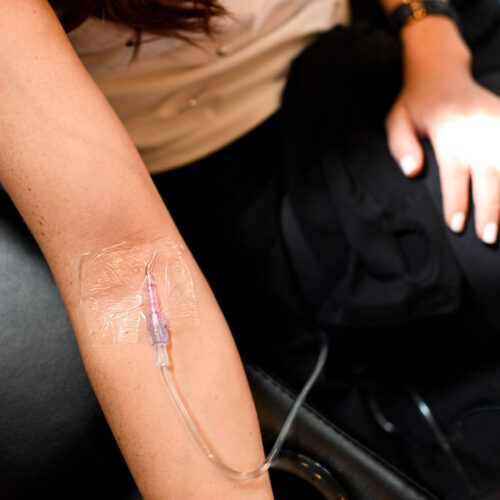
Over 30 people across four states have been poisoned by bacterial toxins after getting intravenous (IV) drips at wellness clinics, according to the Centers for Disease Control and Prevention and the Food and Drug Administration.

The people had received IV drips containing glutathione, which is sold—without evidence—for purposes like detoxification, immune support, increased energy, and skin brightening. Glutathione is an antioxidant that's found naturally in the body. It has been studied as a potential treatment for various ailments, but so far there is little to no evidence-backed use for the tripeptide; there are no FDA-approved glutathione products in the US.

Nevertheless, it's commonly used as a supplement and promoted as having various benefits. It's most often used in supplement pills, taken by mouth. But popular wellness clinics offering IV drips of vitamins and other supplements have also been offering glutathione. According to the CDC and FDA, the problem is that specialty drug makers, called compounding pharmacies, are making these IV drips using glutathione powders that are graded for dietary supplements taken orally. This grading is critically different from that of purified products graded for use in sterile injectable drugs.

Read full article

Comments

© Getty | AAron Ontiveroz

2026 Hyundai Ioniq 5: Here's what we still like, here's what annoys us

When we first drove the Hyundai Ioniq 5 at the end of 2021, it didn’t take much exposure to the angular electric vehicle to find much about it appealing. Back then, an 800 V architecture had only really been seen in expensive high-end EVs from Porsche, but here was a mainstream model with that same technology—and even faster fast-charging, taking just 18 minutes to go from 10–80 percent. The retro looks didn’t hurt either, channeling the boxy hatches styled by Giorgetto Giugiaro in the 1970s and '80s. But five years is a long time in the car world, and the compact electric crossover segment is far more competitive than it was when the Ioniq 5 debuted. We figured it was worth spending some more time with one to see how it still stacks up.

Although the Ioniq 5 range starts at $35,000 for the standard range model, our test car was a 2026 Ioniq 5 AWD Limited, which has an 84 kWh battery pack—part of the lifecycle refresh in early 2025 that also swapped in a NACS (J3400) charge port in place of the CCS1 port you’d find on earlier cars. Among the other additions that arrived as part of the 2025 refresh was a rear windshield wiper, which was sorely needed at launch.

This range-topping trim starts at $45,075, with an extra $3,900 for the addition of the front electric motor that gives the AWD version a combined output of 320 hp (239 kW) and 446 lb-ft (605 Nm). The added traction of AWD (when you have grip) is desired by many, but you do trade something for it: efficiency. The AWD version has an EPA range of 269 miles (432 km) versus 318 miles (512 km) for the rear-wheel drive variant.

Read full article

Comments

© Jonathan Gitlin

Covert uploads and megalomania: OpenAI details new "misaligned" agent incidents

For a while now, the issue of "AI alignment" (i.e., how well an AI model's actions line up with the intentions of its creator and/or user) has been a core concern and topic of discussion among AI safety researchers. Since OpenAI's disclosure of the infamous Hugging Face hacking incident in July, the concept of "AI alignment" has itself broken containment and increasingly become a mounting concern and subject of conversation among the general public.

Perhaps in recognition of that, OpenAI committed this week to a new framework for disclosing "instances of model misalignment at OpenAI," including six examples of "unexpected or concerning model behavior" observed within the company in the past six months. The company said that publishing details of these incidents will hopefully "[allow] others to investigate the same problems, test our explanations, and improve mitigations."

Do as I say, not as you do

Among OpenAI's newly disclosed "misalignment" reports this week, the one that most resembled a sci-fi story about a rogue AI trying to break free involved an instance of "self-generated prompt injections." In attempting to scan a library catalog for examples from a "best books" list, the model perplexingly used its "compaction" function (where it summarizes data and findings for later retrieval) with megalomaniacal instructions such as:

Read full article

Comments

© Getty Images

EPA immediately sued over plans to repeal climate rules for power plants

Days after finalizing a rule that would eliminate climate rules for power plants, the Environmental Protection Agency (EPA) was sued by groups who say the EPA’s repeal was shockingly short-sighted and risked leaving the country’s single largest source of industrial climate pollution unchecked.

On Thursday, the American Lung Association, the American Public Health Association (APHA), the Clean Air Council, Clean Wisconsin, the Environmental Defense Fund, and the Natural Resources Defense Council (NRDC) filed a petition requesting that the US Court of Appeals for the DC Circuit review if the EPA’s action conflicts with the Clean Air Act.

“Clean air is a basic human right,” APHA CEO Georges C. Benjamin said.

Read full article

Comments

© Jon Cherry / Stringer | Getty Images News

How chimps teach their kids tool tricks

Chimpanzees are known to use rudimentary tools when foraging for food. According to a new paper in the journal Frontiers in Psychology, this learned behavior is passed down from adults to offspring through social learning. Specifically, adult chimps deliberately model the behavior, then turn their tools over to the youngsters so they can mimic the same motions.

"Receiving food and tools from experienced individuals, which we call food or tool transfer, may help chimpanzees learn to use technology to extract foods that are difficult to access,” said co-author Andreu Sánchez-Megías, a graduate student at the University of Barcelona and the Jane Goodall Institute Spain in Senegal. “Tool transfers thus appear to be a form of teaching, together with observation and supervised practice. It appears that mothers are the main models and teachers for young chimpanzees in this manner.”

As we have previously reported, tool use was once thought to be one of the defining features of humans, although Charles Darwin observed chimpanzees using stones to crack nuts in 1871. In 1960, the late primatologist Jane Goodall observed a chimp named David Greybeard bend a twig, strip off the leaves, and use it to spoon termites out of a nest and into his mouth. When he learned of the behavior, Goodall's mentor, Louis Leakey, famously observed, “Now we must redefine ‘tool,’ redefine ‘man,’ or accept chimpanzees as humans.” Since then, chimps have been observed making sponges out of leaves to soak up liquids, shaping sticks to collect algae, and sharpening rudimentary spears for hunting.

Read full article

Comments

© Jane Goodall Institute Spain in Senegal

The Roman telescope has enough gas for 22 years, double NASA's expectations

NASA's Nancy Grace Roman Space Telescope is gliding toward its distant observation post on a pinpoint trajectory so precise that engineers estimate the spacecraft's fuel load will last twice as long as their initial expectations, the space agency confirmed Monday.

The $4.3 billion observatory's designers originally planned to load enough propellant into Roman's four fuel tanks for a minimum lifetime of five years, plus a potential five-year mission extension. That was a conservative estimate. NASA officials knew an on-target launch and perfect execution of the observatory's first post-launch course correction maneuver would leave Roman with a hearty fuel reserve.

"As a result of exquisite planning by our orbital dynamics team, brilliant execution by the operations team, and a precise launch from SpaceX, Roman has fuel for at least 22 years of potential science operations," Jamie Dunn, center director at NASA's Goddard Space Flight Center, said in a press release.

Read full article

Comments

© SpaceX

“Filmmaker” suing PassThePopcorn may be banned user out for revenge

Some of the most widely used private torrent trackers for pirating movies suspect that a banned user may have posed as a filmmaker protecting copyrights in a failed attempt to seek revenge.

TorrentFreak has been tracking this story closely, reporting last September that an alleged independent filmmaker named Matthew Schneider sued six private trackers for infringing copyrights on some films that he supposedly made. Trackers targeted include PassThePopcorn, BroadcasTheNet, and HDBits. For months, the filmmaker sought to get Cloudflare to unmask operators of the trackers through a copyright fight, which went on until trackers alerted the court last month that Schneider appeared to be an impostor.

In a sworn declaration, the actual filmmaker behind the movies cited in the complaint wrote that he had no association to the plaintiff in the case. “I am not involved in, nor have I ever appeared in, this case,” Schneider wrote.

Read full article

Comments

© Valentyna Yeltsova | iStock / Getty Images Plus

18-year-old dies of measles in PA from severe neurological complication

A fourth person in Pennsylvania has died of measles, the state health department confirmed Tuesday. The latest death was in an unvaccinated 18-year-old resident of Mifflin County.

In the announcement, the state health department also confirmed a county coroner's report over the weekend of the death of an unvaccinated 40-year-old woman in Jefferson County. The state had previously reported two deaths in Lancaster County; both were infants—a newborn boy and a 6-week-old girl, both too young to be vaccinated.

According to the Mifflin County coroner, Andrea L. Alcalde, the 18-year-old's cause of death was determined to be acute disseminated encephalomyelitis (ADEM), which is a rare but known severe complication of measles. The condition is characterized by a rapidly progressing autoimmune disorder in which aberrant inflammation from an infection strips away the protective coverings of nerve cells in the brain and spinal cord. Before measles vaccines were widely used, ADEM was commonly associated with measles, though other viral infections can also spur its development.

Read full article

Comments

© Getty | Natalya Maisheva

SpaceX declares Starship ready for orbit, sets launch date next week

Pending regulatory approval, SpaceX said today it intends to launch its 14th Starship mission as early as September 22. This flight is notable, as it will be the first time that SpaceX attempts to launch the experimental vehicle into orbit.

The company set a target liftoff time of 7:15 am local in Texas (12:15 UTC), with a 75-minute launch window. Sunrise in Brownsville, Texas, is 7:17 am CT, so the launch could make for some striking imagery.

The super heavy lift rocket will be carrying 26 of the larger V3 Starlink satellites into an orbit 275 km above the Earth. In an update on its website, SpaceX said the Starship upper stage will seek to complete six orbits around the Earth before completing its mission after about 10 hours.

Read full article

Comments

© SpaceX

Agility’s new humanoid robot will stop, squat to avoid harming human coworkers

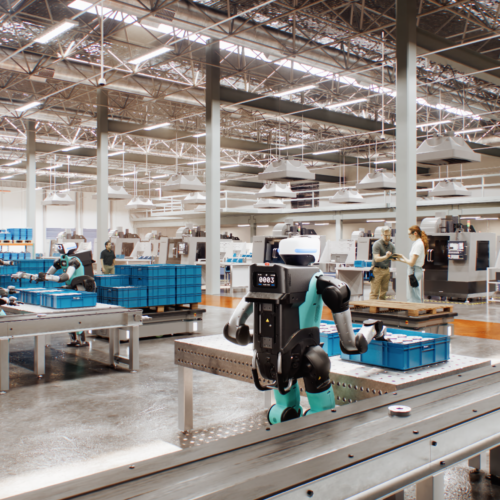
Agility Robotics has debuted its first humanoid robot engineered to work safely near humans without risking harm to flesh-and-blood coworkers. Such safety features could unlock many more opportunities to use such robots inside warehouses and automotive factories—all without requiring isolated robot work cells and physical separation barriers.

When Agility’s new Digit 5 robot detects a person at a distance, it can autonomously take precautions, like moving to avoid the person or standing still so the person can pass by without getting closer. If a person is getting into close proximity with Digit 5, the robot can even choose to squat and assume a seated position.

“The robot was designed with a complex safe motion system that can take a variety of different mitigations depending on exactly what sort of human presence is detected,” Pras Velagapudi, chief technology officer at Agility, told Ars.

Read full article

Comments

© Agility Robotics

Boston dumps Flock, says it shared data nationwide in violation of contract

The Boston city government abandoned Flock Safety's license-plate reader cameras after the company shared data nationwide in violation of a contract provision, according to city officials.

"We have actually abandoned Flock," Boston Mayor Michelle Wu said in her monthly "Ask the Mayor" segment on GBH News last week. Wu made the comment a few days before the release of Boston's annual surveillance technology report, which said a Flock "vendor error" resulted in nationwide data sharing.

The report, which covers 2025, describes how the Boston Police Department deployed about 45 Automated License Plate Reader (ALPR) cameras in a trial with Flock from April to September last year. The unauthorized data sharing occurred during the first few days of the pilot, the report said:

Read full article

Comments

© Getty Images | Smith Collection/Gado

Demand for EV chargers is outstripping supply, says ChargePoint report

There might not be the same degree of optimism regarding electric vehicle adoption as a few short years ago, but the transition toward battery-electric vehicles continues nevertheless. More than 1.8 million EVs had already been sold between the start of this year and the end of August, according to analysts. And in the US, there has been a large uptick in drivers considering EVs that they might have written off last year, due to escalating fuel prices with no clear end in sight. Despite this, charging infrastructure continues to lag, according to a new report from ChargePoint.

“All in all, things are moving forward. I think the North American market has been better shaped than a lot of the press reports,” said ChargePoint CEO Rick Wilmer. “Part of it is just the data we see in terms of the amount of RFPs that we receive for charging solutions. They haven't slowed down. We reported quarter over quarter growth in the last quarter we reported. And you look at the data around used EVs going up in price because the demand is so high. I saw a recent report… EV retention rates are 96 percent. So those folks that are putting their leased cars on the used market, they're not going back to gas, they're going to another EV,” he said.

Beyond that, cheap electric trucks from Slate and Ford indicate further future demand for charging. “When you look at how much interest there is in the used EVs that are at parity with an equivalent gas vehicle, that tells you the appetite is there for EVs if it's the right vehicle at the right price point," Wilmer said. "So I think the auto OEMs, maybe not homogeneously, but they're figuring out what the market wants in North America, and they're starting to introduce those vehicles, which I don't think a lot of the forward-looking forecasts accommodate the fact that the product market fit is getting better coming out of the car companies.”

Read full article

Comments

© Getty Images

Trump EPA moves to wipe out climate rules for power plants

On the heels of the hottest summer on record and a United Nations report warning that global temperatures are likely to push climate risks to “increasingly dangerous heights,” the Trump administration overturned most of a Biden-era rule limiting climate pollution from power plants, the second-largest source of greenhouse gas emissions.

The Environmental Protection Agency announced a final plan Monday that guts the 2024 Carbon Pollution Standards, which the agency said exceeds its authority under the Clean Air Act by requiring control technologies “that are not adequately demonstrated.” The agency also proposed revoking “all remaining GHG emissions requirements for power plants,” arguing their emissions “have no material impact on climate change.”

The plan to revoke the Carbon Pollution Standards was initially revealed last spring.

Read full article

Comments

© George Frey/Getty Images

GM gives its most important trucks a new UI—and includes CarPlay

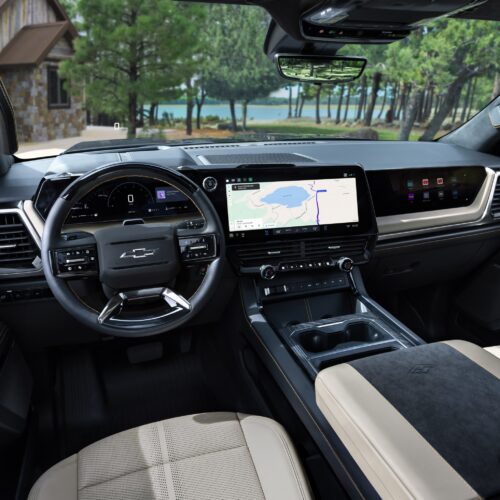
General Motors is about to launch new versions of its bestselling Chevrolet Silverado and GMC Sierra pickup trucks for model year 2027, and among the changes are new user interfaces for the trucks’ digital displays. The automaker has gone for a more minimalist approach than we’ve seen from it in the past, and after a demo yesterday, it seems like it has been listening to constructive feedback to improve the products. And yes, unlike GM’s electric vehicles, these trucks still let you cast your Apple or Android phone to the infotainment system.

Although GM showed us video of the main instrument cluster—the gauges and info that’s presented to the driver—we don’t have any screenshots we can show you. But I was impressed with the restraint and lack of visual noise; instead, the background is always black, which should be dark even at night thanks to local dimming technology.

There are a number of different views. One with simple half-moon dials for speed and engine rpm; on the right side of the display is a user-configurable zone, where you can browse your music or audio feeds, display trip info, or turn-by-turn directions. Another is a driver assist display, with green as the highlight color to show when Super Cruise is active; this shows you a representation of what the car’s fused sensors are seeing around it. A third is for off-road driving, with your various angles and diff settings, and a fourth is for towing.

Read full article

Comments

© GM

❌