Normal view

The Roman telescope has enough gas for 22 years, double NASA's expectations

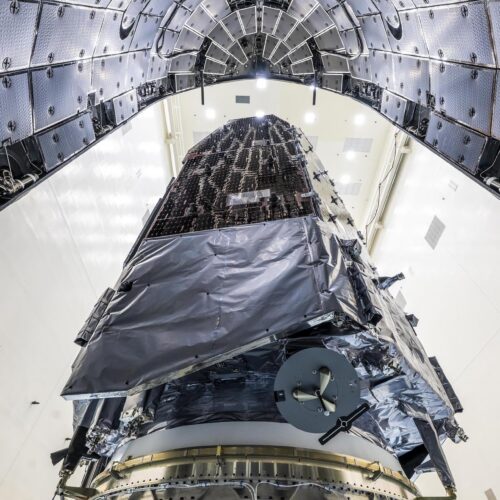
NASA's Nancy Grace Roman Space Telescope is gliding toward its distant observation post on a pinpoint trajectory so precise that engineers estimate the spacecraft's fuel load will last twice as long as their initial expectations, the space agency confirmed Monday.

The $4.3 billion observatory's designers originally planned to load enough propellant into Roman's four fuel tanks for a minimum lifetime of five years, plus a potential five-year mission extension. That was a conservative estimate. NASA officials knew an on-target launch and perfect execution of the observatory's first post-launch course correction maneuver would leave Roman with a hearty fuel reserve.

"As a result of exquisite planning by our orbital dynamics team, brilliant execution by the operations team, and a precise launch from SpaceX, Roman has fuel for at least 22 years of potential science operations," Jamie Dunn, center director at NASA's Goddard Space Flight Center, said in a press release.

Read full article

Comments

© SpaceX

“Filmmaker” suing PassThePopcorn may be banned user out for revenge

Some of the most widely used private torrent trackers for pirating movies suspect that a banned user may have posed as a filmmaker protecting copyrights in a failed attempt to seek revenge.

TorrentFreak has been tracking this story closely, reporting last September that an alleged independent filmmaker named Matthew Schneider sued six private trackers for infringing copyrights on some films that he supposedly made. Trackers targeted include PassThePopcorn, BroadcasTheNet, and HDBits. For months, the filmmaker sought to get Cloudflare to unmask operators of the trackers through a copyright fight, which went on until trackers alerted the court last month that Schneider appeared to be an impostor.

In a sworn declaration, the actual filmmaker behind the movies cited in the complaint wrote that he had no association to the plaintiff in the case. “I am not involved in, nor have I ever appeared in, this case,” Schneider wrote.

Read full article

Comments

© Valentyna Yeltsova | iStock / Getty Images Plus

18-year-old dies of measles in PA from severe neurological complication

A fourth person in Pennsylvania has died of measles, the state health department confirmed Tuesday. The latest death was in an unvaccinated 18-year-old resident of Mifflin County.

In the announcement, the state health department also confirmed a county coroner's report over the weekend of the death of an unvaccinated 40-year-old woman in Jefferson County. The state had previously reported two deaths in Lancaster County; both were infants—a newborn boy and a 6-week-old girl, both too young to be vaccinated.

According to the Mifflin County coroner, Andrea L. Alcalde, the 18-year-old's cause of death was determined to be acute disseminated encephalomyelitis (ADEM), which is a rare but known severe complication of measles. The condition is characterized by a rapidly progressing autoimmune disorder in which aberrant inflammation from an infection strips away the protective coverings of nerve cells in the brain and spinal cord. Before measles vaccines were widely used, ADEM was commonly associated with measles, though other viral infections can also spur its development.

Read full article

Comments

© Getty | Natalya Maisheva

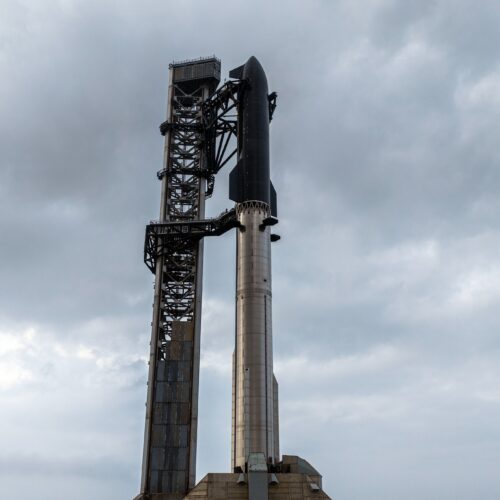
SpaceX declares Starship ready for orbit, sets launch date next week

Pending regulatory approval, SpaceX said today it intends to launch its 14th Starship mission as early as September 22. This flight is notable, as it will be the first time that SpaceX attempts to launch the experimental vehicle into orbit.

The company set a target liftoff time of 7:15 am local in Texas (12:15 UTC), with a 75-minute launch window. Sunrise in Brownsville, Texas, is 7:17 am CT, so the launch could make for some striking imagery.

The super heavy lift rocket will be carrying 26 of the larger V3 Starlink satellites into an orbit 275 km above the Earth. In an update on its website, SpaceX said the Starship upper stage will seek to complete six orbits around the Earth before completing its mission after about 10 hours.

Read full article

Comments

© SpaceX

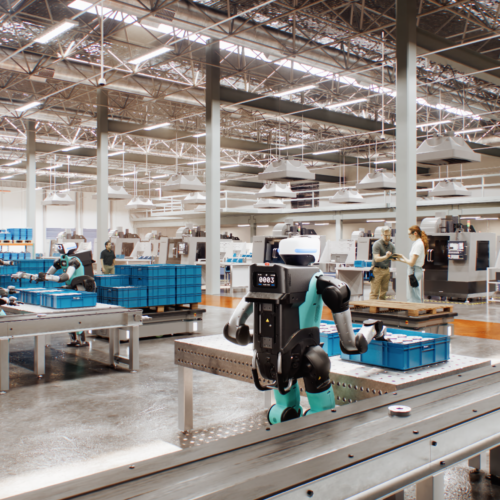
Agility’s new humanoid robot will stop, squat to avoid harming human coworkers

Agility Robotics has debuted its first humanoid robot engineered to work safely near humans without risking harm to flesh-and-blood coworkers. Such safety features could unlock many more opportunities to use such robots inside warehouses and automotive factories—all without requiring isolated robot work cells and physical separation barriers.

When Agility’s new Digit 5 robot detects a person at a distance, it can autonomously take precautions, like moving to avoid the person or standing still so the person can pass by without getting closer. If a person is getting into close proximity with Digit 5, the robot can even choose to squat and assume a seated position.

“The robot was designed with a complex safe motion system that can take a variety of different mitigations depending on exactly what sort of human presence is detected,” Pras Velagapudi, chief technology officer at Agility, told Ars.

Read full article

Comments

© Agility Robotics

Boston dumps Flock, says it shared data nationwide in violation of contract

The Boston city government abandoned Flock Safety's license-plate reader cameras after the company shared data nationwide in violation of a contract provision, according to city officials.

"We have actually abandoned Flock," Boston Mayor Michelle Wu said in her monthly "Ask the Mayor" segment on GBH News last week. Wu made the comment a few days before the release of Boston's annual surveillance technology report, which said a Flock "vendor error" resulted in nationwide data sharing.

The report, which covers 2025, describes how the Boston Police Department deployed about 45 Automated License Plate Reader (ALPR) cameras in a trial with Flock from April to September last year. The unauthorized data sharing occurred during the first few days of the pilot, the report said:

Read full article

Comments

© Getty Images | Smith Collection/Gado

Demand for EV chargers is outstripping supply, says ChargePoint report

There might not be the same degree of optimism regarding electric vehicle adoption as a few short years ago, but the transition toward battery-electric vehicles continues nevertheless. More than 1.8 million EVs had already been sold between the start of this year and the end of August, according to analysts. And in the US, there has been a large uptick in drivers considering EVs that they might have written off last year, due to escalating fuel prices with no clear end in sight. Despite this, charging infrastructure continues to lag, according to a new report from ChargePoint.

“All in all, things are moving forward. I think the North American market has been better shaped than a lot of the press reports,” said ChargePoint CEO Rick Wilmer. “Part of it is just the data we see in terms of the amount of RFPs that we receive for charging solutions. They haven't slowed down. We reported quarter over quarter growth in the last quarter we reported. And you look at the data around used EVs going up in price because the demand is so high. I saw a recent report… EV retention rates are 96 percent. So those folks that are putting their leased cars on the used market, they're not going back to gas, they're going to another EV,” he said.

Beyond that, cheap electric trucks from Slate and Ford indicate further future demand for charging. “When you look at how much interest there is in the used EVs that are at parity with an equivalent gas vehicle, that tells you the appetite is there for EVs if it's the right vehicle at the right price point," Wilmer said. "So I think the auto OEMs, maybe not homogeneously, but they're figuring out what the market wants in North America, and they're starting to introduce those vehicles, which I don't think a lot of the forward-looking forecasts accommodate the fact that the product market fit is getting better coming out of the car companies.”

Read full article

Comments

© Getty Images

Trump EPA moves to wipe out climate rules for power plants

On the heels of the hottest summer on record and a United Nations report warning that global temperatures are likely to push climate risks to “increasingly dangerous heights,” the Trump administration overturned most of a Biden-era rule limiting climate pollution from power plants, the second-largest source of greenhouse gas emissions.

The Environmental Protection Agency announced a final plan Monday that guts the 2024 Carbon Pollution Standards, which the agency said exceeds its authority under the Clean Air Act by requiring control technologies “that are not adequately demonstrated.” The agency also proposed revoking “all remaining GHG emissions requirements for power plants,” arguing their emissions “have no material impact on climate change.”

The plan to revoke the Carbon Pollution Standards was initially revealed last spring.

Read full article

Comments

© George Frey/Getty Images

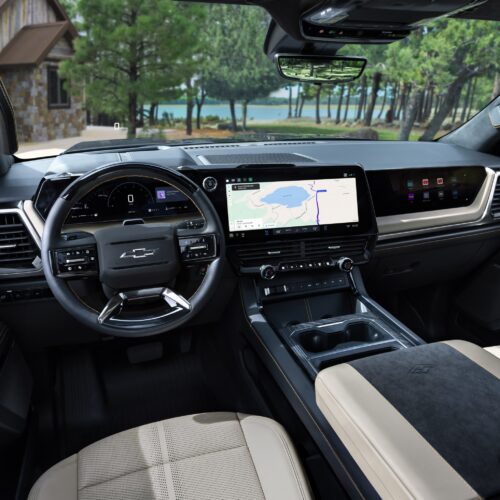
GM gives its most important trucks a new UI—and includes CarPlay

General Motors is about to launch new versions of its bestselling Chevrolet Silverado and GMC Sierra pickup trucks for model year 2027, and among the changes are new user interfaces for the trucks’ digital displays. The automaker has gone for a more minimalist approach than we’ve seen from it in the past, and after a demo yesterday, it seems like it has been listening to constructive feedback to improve the products. And yes, unlike GM’s electric vehicles, these trucks still let you cast your Apple or Android phone to the infotainment system.

Although GM showed us video of the main instrument cluster—the gauges and info that’s presented to the driver—we don’t have any screenshots we can show you. But I was impressed with the restraint and lack of visual noise; instead, the background is always black, which should be dark even at night thanks to local dimming technology.

There are a number of different views. One with simple half-moon dials for speed and engine rpm; on the right side of the display is a user-configurable zone, where you can browse your music or audio feeds, display trip info, or turn-by-turn directions. Another is a driver assist display, with green as the highlight color to show when Super Cruise is active; this shows you a representation of what the car’s fused sensors are seeing around it. A third is for off-road driving, with your various angles and diff settings, and a fourth is for towing.

Read full article

Comments

© GM

This Atlantic hurricane season is about to do something that hasn't happened in 175 years

Last week, the Atlantic hurricane season blew through its traditional peak—which comes around September 10—with nary a tropical wave in sight, let alone a storm or hurricane.

This is remarkable. Usually this is the time of year when sea surface temperatures reach their warmest in the tropics, and with a favorable atmosphere it should be smooth skating for tropical systems. But this year, the main region where most tropical systems develop is choked with Saharan dust and wind shear.

No one is complaining. Landfalling hurricanes are incredibly destructive for coastal areas and have the potential for considerable inland rainfall. Even storms at sea, in the Gulf of Mexico, can send energy prices skyrocketing—the last thing needed this year.

Read full article

Comments

© NOAA/Tropical Tidbits

Exclusive: Paying for frontier AI models buys 4-month head start at 5x the cost

The performance gap between frontier AI models from US tech companies and the best open-weights models from Chinese companies has closed to just 4.4 months, according to a Mozilla report. That explains why many companies are shifting to the significantly cheaper open models for routine work—and helps reveal a narrow band of workloads where frontier models are worth the cost.

Most organizations should ideally be using open models as the default for the majority of their work, according to the latest State of Open Source AI report from Mozilla, published on September 15 and shared with Ars prior to publication. The report highlights how a leading open model, Moonshot AI’s Kimi K3, achieves a composite AI performance score on the Artificial Analysis Intelligence Index that is just three points behind Anthropic’s Fable 5 closed frontier model, all while costing just 30 percent of the latter.

“[A Closed model] earns its premium in a few places: expert professional work, high-intensity retrieval, and long context,” Raffi Krikorian, chief technology officer at Mozilla, said in an email to Ars. “We see the decision to pay for closed [models] as workload-specific rather than organization-specific.”

Read full article

Comments

© Imen Ben Youssef / Hans Lucas / AFP via Getty Images

Volvo increases the batteries for 2028 XC60 and XC90 plug-in refresh

There must be a case of upgrade fever taking hold in Gothenburg. Yesterday, we saw the revised Volvo XC40; today it’s the turn of another pair of Volvo SUVs, the bestselling XC60 and the three-row XC90. While the styling changes are more subtle, the new plug-in hybrid powertrain—which more than doubles its real-world electric range—is most welcome.

Volvo had sold more than 2.7 million XC60s worldwide by the end of last year, so it’s an important car for the brand. Visually, there are changes to the “Thor’s Hammer” headlights: these keep their distinctive daylight running light signature but now hide matrix LED projectors within their depths. There’s a new front grille as well, one that has been slimmed down a little, together with tweaks to the bumpers, wings, and some other body panels.

On the inside, there’s a new ventilated leather interior option, and like the XC40, the new 11.2-inch infotainment system sports a Gemini personal assistant to enable conversational voice control of the android automotive OS-based infotainment system. Based on some brief testing, the new Gemini voice assistant does at least perform a lot better than the previous version, which, if anything, has degraded in ability over the past few years.

Read full article

Comments

© Volvo

For the first time, the US military confirms it has deployed weapons in orbit

Air Force Secretary Troy Meink made the first public declaration Monday that the United States has placed "space control weapons" in orbit, an announcement that will surely reverberate in the power centers of Beijing and Moscow.

Space Force officials have previously expressed their interest in acquiring space-based weapons, and Pentagon leaders have become more open to discussing space warfare in recent years. Therefore, Meink's announcement Monday at the Air and Space Forces Association's annual Air, Space & Cyber Conference near Washington, DC, was not entirely unexpected.

“Today, we continue to ensure we remain ready to meet the challenges of evolving threats, wherever they exist. This is why the United States now has on-orbit space control weapons capable of defending the joint force against hostile adversary action,” Meink said in prepared remarks.

Read full article

Comments

© US Space Force/David Dozoretz

❌