
Normal view

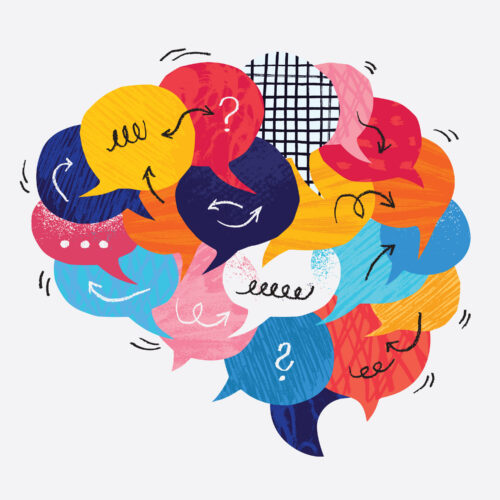
Learning another language may be one of the best ways to keep your brain healthy

Learning another language is a highly complex mental activity. It requires people to remember words, distinguish unfamiliar sounds, recognize patterns, work out grammatical rules, and retrieve the right expression at the right moment. All of this happens while listening, interpreting, and preparing a response.

Could all this mental activity also help keep an aging brain healthier? Research suggests it can.

Concerns about memory and dementia can send aging adults looking for ways to exercise their brain and maintain cognitive function, whether it is solving crossword puzzles or playing a musical instrument. Language learning might not seem like the same kind of brain exercise, but it is a complex activity that engages several mental processes at once.

Read full article

Comments

© DrAfter123/DigitalVision Vectors via Getty Images
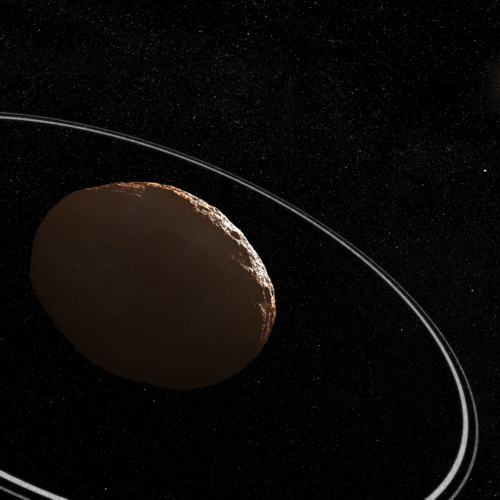
Rings around a tiny body have changed over the past decade

For decades, astronomers thought rings were something only giant planets had. That changed in 2013, when a small, dark body orbiting between Saturn and Uranus passed in front of a star and blinked twice on either side of the main event, revealing two narrow rings around an object barely 250 kilometers across. “It was a surprise,” says Pablo Santos-Sanz, an astronomer at the Instituto de Astrofísica de Andalucía in Granada, Spain. Ever since, the question has been what such rings are made of and how long they can last.

In a recent study, Santos-Sanz and his colleagues used the James Webb Space Telescope to watch the same body, now known as Chariklo, pass in front of a background star again. They found one of its rings had grown denser and the other had almost vanished. We don’t know exactly why.

Shadowing a star

The technique behind the observation is simple. “We predict when a Solar System object passes in front of a star,” Santos-Sanz said. The starlight dims for a moment, and the shape of that dip reveals the size, shape, and surroundings of the object that caused it. “This is particularly challenging for minor bodies, and more challenging for distant minor bodies,” he said.

Read full article

Comments

© NASA, ESA, CSA, Leah Hustak

❌