❌

Normal view

Worms mate in man's eyes, get plucked out right before larvae burst out

After two months of discomfort, a man in South Korea went to an eye clinic where doctors pulled 11 living, wriggling worms from his eyes. They apparently made the most of their time on the man's peepers; at the time of extraction, many of the female worms were pregnant. The man narrowly avoided having them spew their loads of living larvae directly into his eyes.

The man in this case was a 71-year-old crop farmer. He told doctors that for the previous two months he had the sensation of having something stuck in both his eyes, which were also red and blurry. When ophthalmologists took a look, they quickly saw the problem: multiple mobile, whitish roundworms. His eyes were not in good shape either, as one might expect. The blood vessels in the membrane over the eye, the conjunctiva, were enlarged, making his eyes look red. And the cells of his cornea—the transparent, dome-shaped outer layer of the eye—had eroded, potentially after the helminths' hanky-panky.

According to a case report published in the New England Journal of Medicine, the doctors gave the man a topical treatment to numb his eyes and then began plucking out the worms one by one with fine forceps. They collected 11 adult worms, which ranged in size from 11 to 22 mm.

Read full article

Comments

© New England Journal of Medicine, 2026

Meet the real-life Scottish surgeon who inspired Sherlock Holmes

Sir Arthur Conan Doyle created one of the most beloved fictional detectives of all time in Sherlock Holmes, spawning countless novels, films, TV series, and so forth featuring the sleuth. Far fewer people know about the real-life inspiration for Holmes: a renowned surgeon at Scotland's University of Edinburgh named Joseph Bell, who taught Doyle when the author was still a young medical student. Bell is the subject of a new, eminently readable biography, Sleuth-Hound: The Case of the Real Sherlock Holmes, by medical historian Lindsey Fitzharris.

A noted science communicator with a fondness for the medically macabre, Fitzharris published a biography of Scottish surgical pioneer Joseph Lister, The Butchering Art, in 2017—a great, if occasionally grisly, read. She followed up with 2022’s  The Facemaker: A Visionary Surgeon’s Battle to Mend the Disfigured Soldiers of World War I, about a WWI surgeon named Harold Gillies who rebuilt the faces of injured soldiers.

In 2020, Fitzharris hosted a documentary for the Smithsonian Channel, The Curious Life and Death Of…, exploring famous deaths, ranging from drug lord Pablo Escobar to magician Harry Houdini. Fitzharris performed virtual autopsies, experimented with blood samples, interviewed witnesses, and conducted real-time demonstrations in hopes of gleaning fresh insights. And last year she and her husband, caricaturist Adrian Teal, collaborated on an illustrated children's book, Dead Ends! Flukes, Flops, and Failures that Sparked Medical Marvels.

Read full article

Comments

© BBC

Apple releases iOS and macOS 27.2 with new Siri AI features, new Music logo

Today, Apple rolled out the 27.2 updates for its operating systems, including iOS, macOS, watchOS, tvOS, visionOS, and so on.

Let's start with iOS 27.2. This update is heavily focused on Siri AI. It adds a memory feature to Siri, so it can "recall your past conversations" and reference them when chatting with you. It also expands what data sources Siri can access when giving responses to include voicemails, Messages attachments, and more.

Read full article

Comments

© Apple

Apple reveals updated iPad mini with a bigger OLED screen for $700

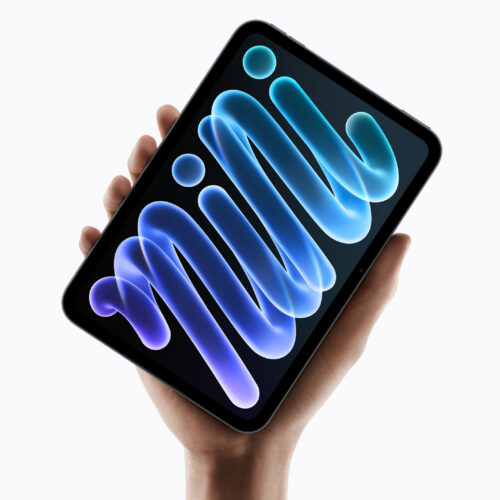
The iPhone Duo may be a bit of a risk right now, but there's a new mid-size Apple touchscreen device that might do the job. Starting at $699, the 8th-gen iPad mini price has gone up, but there are some big changes. Apple says the refreshed 8th-gen iPad mini marks the most significant update ever for its petite tablet, featuring an OLED screen and the A20 Pro chip that we first saw in the iPhone 18 Pro and iPhone Duo.

The new iPad mini has roughly the same footprint as the 2024 release, but the display is slightly larger thanks to a 24 percent reduction in bezel thickness. The device is almost a full millimeter thinner than the last iPad, coming in at just 5.4 mm. The chassis is also IP67 rated for water and dust protection. The 7th-Gen iPad mini didn't have any official IP rating.

The 8.5-inch Super Retina XDR display (up from 8.3 inches) moves on from the IPS technology of the last-gen device to adopt OLED. That means dapper blacks and a much higher peak brightness—1,200 nits versus just 500 nits for the previous mini. It can also manage 1-nit minimum brightness so as not to sear your retinas in a dark room. There will also be a nano-textured matte display option. The display experience on the new mini should be much more in line with what we've come to expect from Apple's Pro-level devices.

Read full article

Comments

© Apple

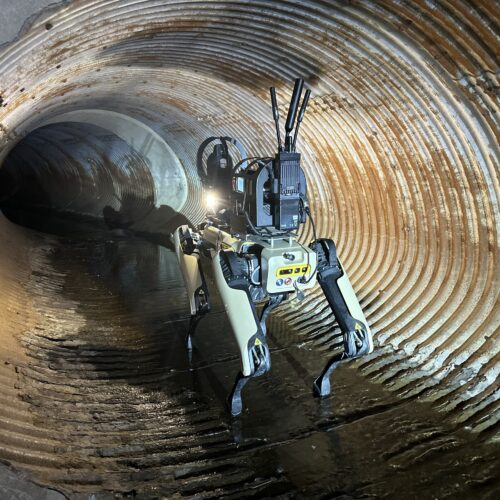
ICE plan to buy robot dogs spurs protest from hundreds of Boston Dynamics employees

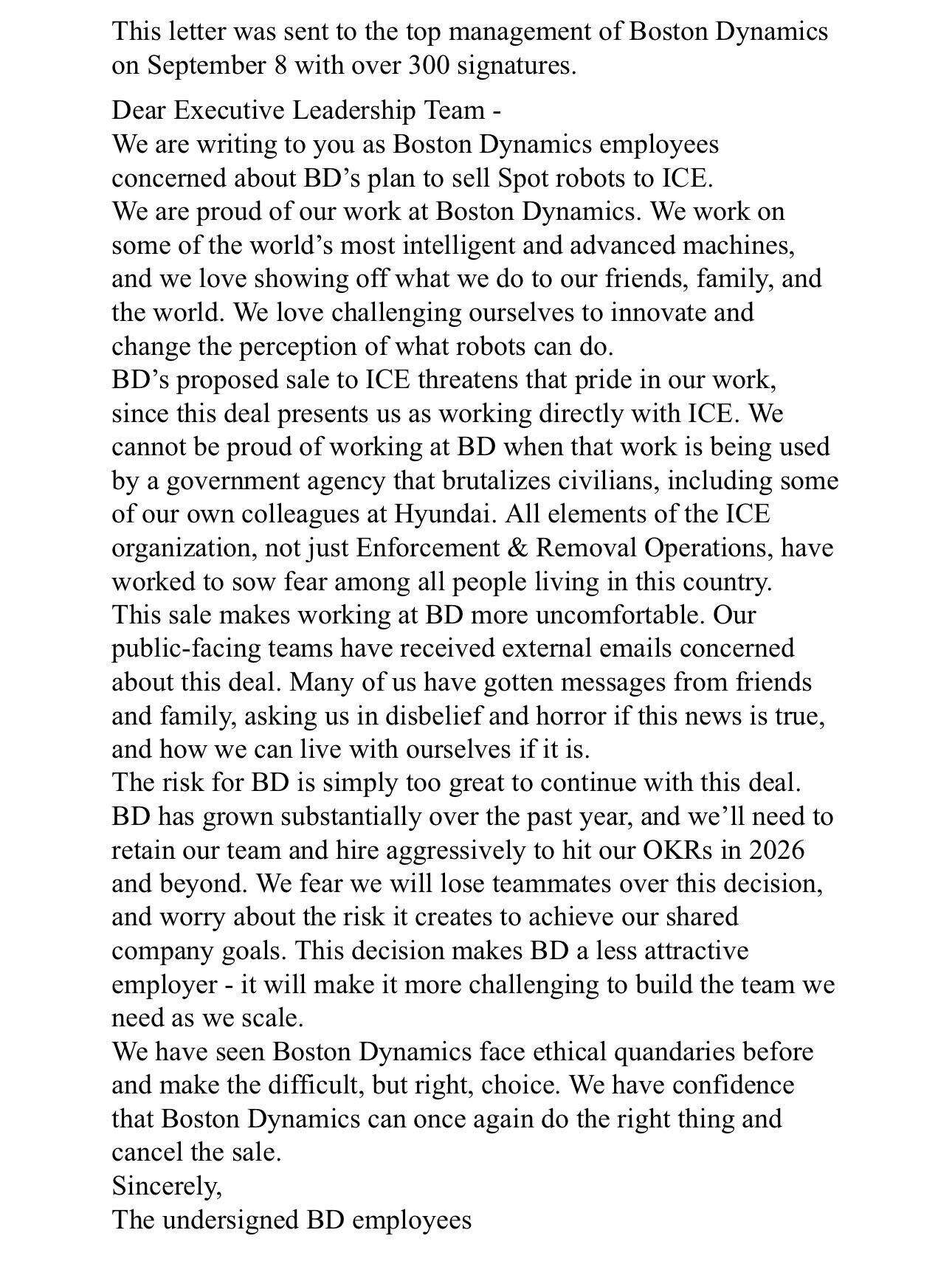
Hundreds of employees at the US robotics firm Boston Dynamics signed a petition calling for executives to halt a sale of the company’s robot dogs to US Immigration and Customs Enforcement—but executives stood by the deal, while saying the robots would not be weaponized.

On September 25, the Department of Homeland Security contract awarded $1.3 million to a Connecticut company called Radeco to provide ICE with modified versions of Boston Dynamics’ quadruped robots. But Boston Dynamics workers sent the petition letter with more than 300 signatures—half of them anonymous—to the company’s executives in early September and shared copies with The Boston Globe and WBUR public radio station.

“Many of us have gotten messages from friends and family, asking us in disbelief and horror if this news is true, and how we can live with ourselves if it is,” according to the petition. “The risk for Boston Dynamics is simply too great to continue with this deal.”

Read full article

Comments

© Radeco

Musk accuses Ukraine of violating Starlink terms with deadly drone strikes

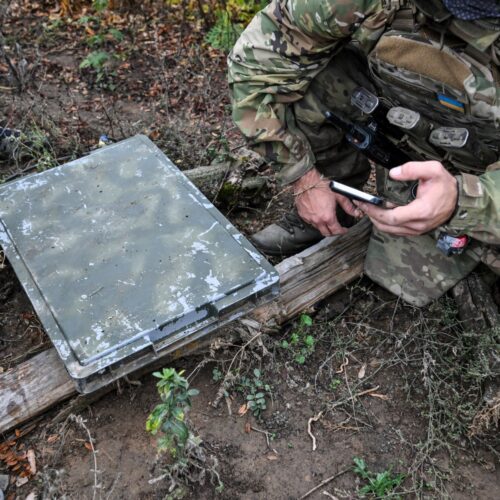
Elon Musk accused Ukraine of violating Starlink terms of service by using it for lethal drone strikes.

Musk said Ukraine used the Starlink commercial service for offensive drone strikes. Musk's comment on Saturday came after SpaceX imposed a restriction preventing Ukraine from using the satellite technology on drones flying above certain speeds.

One current and one former Ukraine official denied Musk's accusation and said previous limits imposed by SpaceX already prevented Ukraine's military from using Starlink in the way Musk described. Ukraine officials have accused Musk of throttling their use of Starshield, the military variant of Starlink that Ukraine has access to through a deal with the US government.

Read full article

Comments

© Dmytro Smolienko/Ukrinform/Future Publishing via Getty Images

Highway thieves are spoofing GPS to steal millions in data center-bound cargo

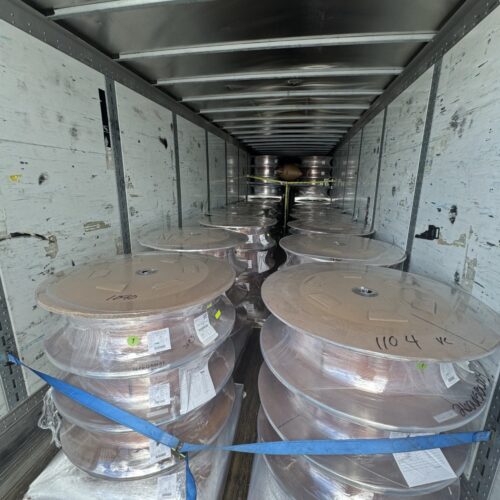
Highway thieves are using sophisticated digital tactics that investigators worry make it easy to rob trucks carrying millions in expensive data center equipment.

NBC News spoke to “several industry leaders, consultants, and investigators advising law enforcement” offices probing the biggest thefts yet and reported that since June, thieves have “made away with more than $100 million in data center freight.”

Here’s how they said thieves get away with it: First, thieves hack freight brokers’ accounts on shipment-listing websites and post fake shipments to lure real bids, then send a malicious link to any trucking companies that respond. Once victims click, thieves install software to take control of their accounts and start bidding on real shipments. Sometimes, a real delivery driver is hired to collect the cargo, unaware of the scam, and other times fake driver’s licenses are used to get accomplices hired. Either way, the goods are eventually transferred to a driver working with the thieves to resell the gear, and, in one of the largest thefts, tracking coordinates were spoofed to prevent digital monitoring.

Read full article

Comments

© via Cook County Sheriff's Office X

Some iPhone Duo screens are already failing

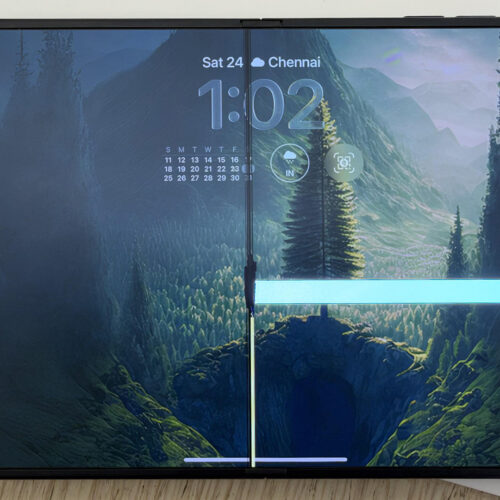
The iPhone Duo launched last week, offering anyone willing to spend $2,000 a chance to experience Apple's first foldable phone. For some early buyers, the morning after isn't going great. Despite the company's big talk about its "precision-engineered" hinge, some devices appear to have a hardware flaw that destroys the device's impressive internal display within hours (or minutes) of use.

The Internet is currently overflowing with images of busted iPhone Duos, all sporting almost identical damage. The OLED is marred by several bright lines originating just below the midpoint of the display. These bands of damaged pixels extend all the way to the bottom and right edges. Some units also show lines of dead pixels following the crease from the top to the area where the bright lines begin.

Anyone who has seen a damaged OLED panel will be familiar with this type of defect. When the layers of the display are damaged, the pixels no longer receive the correct voltage to illuminate them. Instead, they get the full driving voltage and are permanently on at maximum brightness. Some pixels can get no voltage, leaving them totally black. The only fix is to replace the OLED, but swapping the iPhone Duo's screen reportedly costs half as much as the device itself.

Read full article

Comments

© /u/Vishnu_RK

F1 in Texas: The American race that fans love to attend

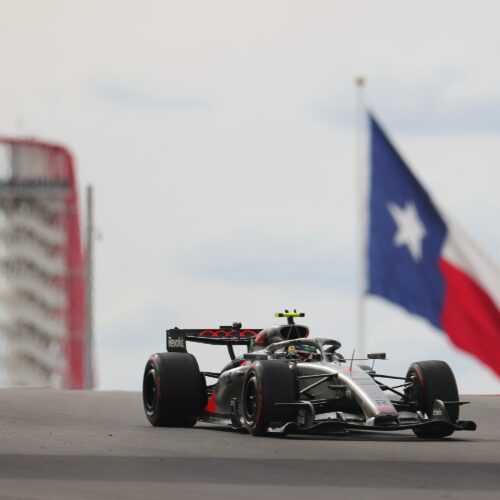
AUSTIN, Texas—Formula 1 returned to US shores this weekend with its annual visit to the Circuit of the Americas in Austin, Texas. Once in danger of falling off the calendar due to lack of interest, it’s now one of the most popular tracks on the calendar and, of the US’s three races, it's the one the real fans mostly attend.

Unlike Miami or Las Vegas, which race on temporary street circuits, COTA is a permanent race track with plenty of run-off areas instead of concrete walls. Designed by motorcycle racer Kevin Schwanz—Herman Tilke’s company did only the buildings and infrastructure, contrary to popular belief—the track combines a mix of corner speeds with challenging turn sequences, a few heavy braking zones, and plenty of elevation changes.

It’s a place Ars knows rather intimately by now. We’ve driven it in everything from an Audi TT-S to a Corvette ZR1 to a bicycle, and that’s just in the real world. Over the years, we’ve been there for F1 to learn about how the sport puts together its broadcasts, how Pirelli designs its tires, and how various tech partners help teams manage their data and strategies. We even saw the race through a neophyte’s eyes. And that’s just F1—we’ve logged many hours there with the World Endurance Championship and IMSA for the Lone Star Le Mans races in sweaty September.

Read full article

Comments

© Alex Slitz/LAT Images

Tesla gave up the EV crown. Now it wants to win the autonomy race.

Elon Musk’s “flying” Roadster jumped and flipped through the air this month in a stunt that went viral around the world. But his bigger bet is on changing the way Tesla makes money—and the wider car industry is scrambling to catch up.

Five days after the spectacle, made possible by compressed-gas thrusters developed by Musk’s SpaceX, he revealed the companies were exploring a merger that could accelerate his push into autonomous driving.

At stake is more than a technological race. Car groups, already grappling with growing Chinese competition, are seeking to move beyond a business model centered on vehicle sales towards one that also generates recurring revenues from software and AI-powered services.

Read full article

Comments

© Tesla

From impulse purchase to pocket studio: The M-Vave FM-1

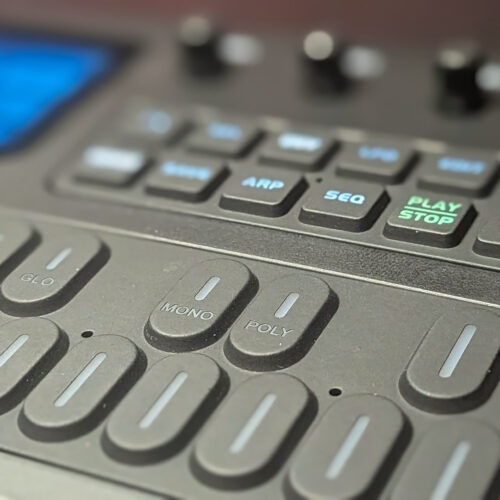
The M-Vave FM-1 is exactly the kind of device I have a weakness for. I may not have an intended use for the frequency-modulation synthesizer, but when a low price meets a high coolness factor, I'm powerless to keep it out of my cart.

Initially billed as a pocket cousin of the famous Yamaha DX7 synthesizer, the FM-1 is a bargain at only $59.72 after fees. At release, it was a cool device that did what it said on the box, but not much else.

But in July, some intrepid tinkerers on Reddit’s r/synthdiy board began reverse-engineering the FM-1's stock firmware to expand the device's abilities. By September, custom firmware began appearing. We're not even through October, and there are already more community firmware projects available to install on the FM-1 than I could ever hope to cover.

Read full article

Comments

© Nick Indge

❌