❌

Normal view

Her AI-Generated Video Swayed the Judge. The Court Said it Carried 'Undue Emotional Weight'

Her AI-Generated Video Swayed the Judge. The Court Said it Carried 'Undue Emotional Weight'

A man convicted of manslaughter in Arizona will be resentenced because an AI-generated video of his victim speaking from beyond the grave was ruled to have carried “undue emotional weight” as an impact statement. An appellate court in Arizona ruled that the manslaughter charge will remain, but the judge must reconsider the length of the man’s prison term because of AI.

In 2021, Gabriel Horcasitas shot and killed Christopher Pelkey during a road rage incident. A jury found him guilty of manslaughter. During Horcasitas’ sentencing hearing, Pelkey’s sister Stacey Wales played an AI-generated video of her brother as part of her victim’s impact statement. In the video, which she scripted with her own words that she made an AI generated likeness of Pelkey say, the AI avatar of Pelkey forgives his killer and said they “could have been friends” in another life. 

“I loved that video,” the judge said while handing down the maximum sentence of 10 and a half years.

Wales told 404 Media that her intent with the video was to sway the judge. “Isn’t that what you want human connection to be?” she said. “Do you ever come out of a movie and say: ‘Well, that was too emotional. That was too powerful. Human connection is powerful, and trying to convey that to somebody that's never known another person, this person on the earth, to convey their lifetime of 37 years down to a two-hour sentencing event is hard to do, and I think that victims and victims' families should be afforded every opportunity.”

After sentencing, Horcasitas appealed. He argued that the AI Pelkey video was inadmissible because it carried “undue emotional weight” and that the “lifelike AI recreation of the victim conveyed an authority and authenticity” had a “psychological impact” on the judge, according to court documents reviewed by 404 Media.

The appellate court agreed and cited State v. Rose, a 2007 murder case where a man was sentenced to death for the murder of a police officer. During the victim impact portion of the sentencing in that case, the judge saw photos of the police officer’s children at his graveside. The court said those photos almost crossed the line into prejudicing the judge.

“The AI video crossed that line. Unlike the photographs in Rose, which captured a particularly poignant moment for the young surviving victims, the AI video here [...] does not reflect actual events,” court documents said.

“It clearly impacted the sentencing judge, who said he ‘loved the video’ and felt it ‘was genuine,’ pointing to the AI victim’s ‘obvious forgiveness’ of Horcacistas,” the court documents said. “On this record, the judge’s consideration of the AI video so prejudiced Horcasitas as to render the sentencing procedure fundamentally unfair.”

Wales and the rest of Pelkey’s family have spent the last five years in and out of various court rooms related to his death. If the current ruling holds, then she'll travel to Arizona from New York and give the same statement she did the first time through her brother’s AI-generated mouth, minus the AI-generated video. The same judge who originally said “I loved that video” will do the sentencing.

“Likely, the same people will go back down and make their speeches, and I will be making my victims' impact statement that I wrote for myself the first time around again, and I will be delivering Chris's AI script sentiment again,” she said. “If I need to stand there and read it myself, which would be legally lawful, I am prepared to do that. Chris's sentiment does not change. The delivery method will.”

Wales said she wrote the words that came out of the AI version of her brother, they weren’t AI-generated. She also noted that only the judge, her family, and the Horcacistas family were the only people who saw it during the trial. “This was not offered as evidence. Juries never saw this,” she said. “This was only created after a verdict was solidified, a guilty verdict.”

She also noted that the AI video was only one of a larger piece of testimony given that day. “I think that [the judge] is unfairly represented with a soundbite,” she said. According to Wales, the judge spoke for around half an hour and only mentioned the AI video once. Wales herself uploaded the soundbite from the judge saying he loved the AI-generated impact statement to YouTube, where it went viral.

But she also said she understood that AI is a new technology and when she played the AI-generated video of her brother that she was doing something no one else had done yet. She compared it to the way courts thought of photography in the late 19th century. 

“It took about 15 years [...] and about five landmark cases in the United States that went all the way up to the Supreme Court before photography was an accepted standard to be used in the courtroom for evidence, identification, and testimony, et cetera,” she said. “I believe that's what we're seeing now with AI. It is a brand new medium.”

Wales said she understood she was setting a precedent, for good and for bad, and that she was OK with that. “There is always that first case, and so that mantle weighs on me that I need to be careful with how I defend this and how I explain the impetus, the goals, the motivations, and the veracity of what was created, because there are victims that depend on freedom of speech for the future, and I do believe that victims and their families should have every opportunity available to them to make their their points,” she said.

There’s no firm date for the new sentencing. “We do respect the court's opinion, and if we need to operate in those guardrails, I am prepared to read the same script that the AI version of Chris read the first time around,” she said. “His sentiment has not changed. Our opinion of what we believed he would think about this whole thing has not changed. The words I penned as Chris's imagined opinion still have not changed and will not change.”

404 @ 3

And 404's Flock coverage cited in proposed legislation.

Lawmakers Introduce Multiple Laws to Curb Flock After 404 Media Coverage

Lawmakers Introduce Multiple Laws to Curb Flock After 404 Media Coverage

Multiple Democrat, Republican, and Independent lawmakers have introduced new pieces of legislation that, if passed, would dramatically curb federal agencies’ access to Flock cameras, with the lawmakers referencing reporting by 404 Media in their explanations for why the legislation is needed.

On Friday Senator Bernie Sanders (I-Vt.), Representative Alexandria Ocasio-Cortez (D-N.Y.), and Senator Jeff Merkley (D-Ore.) announced the Ban Flock Act, which would prohibit federal agencies from using automatic license plate readers (ALPRs) and block federal funding from state and local governments that use the cameras. It would also let Americans sue the federal government for violation of their rights through ALPRs.

“At a time of growing concern about the unchecked power of artificial intelligence, Flock is eviscerating the very notion of privacy by installing tens of thousands of cameras in communities across America without their consent,” Sanders said in the announcement posted to his website. “Going to the doctor? Flock knows. Dropping your kid off at school? Flock is tracking you. Flock is always watching. We cannot allow America to become a surveillance state where a handful of AI oligarchs profit by giving the government the power to track our every movement.”

💡
Do you know anything else about Flock? I would love to hear from you. Using a non-work device, you can message me securely on Signal at joseph.404 or send me an email at joseph@404media.co.

Ocasio-Cortez said, “AI-powered cameras are keeping track of our every move and weaponizing this data against working people to make record profits. The widespread integration of this technology into American society is unconscionable.” Merkley added, “No one should have this unchecked surveillance power at their fingertips, which is why I’m teaming up with Senator Sanders to rein in this dangerous technology.”

Sanders’ announcement says that one reason for the legislation is Flock has shared state information with federal immigration officials. In May 2025, 404 Media revealed local cops were doing lookups in Flock for Immigration and Customs Enforcement (ICE). After that report, Flock made dramatic changes to its product, including stopping other agencies searching cameras in Illinois, California, and Virginia. Flock said it also introduced a new tool that blocks impermissible searches in real time. 

The announcement also said law enforcement have used Flock data to investigate protests against ICE raids and ‘No Kings’ demonstrations. 404 Media revealed both of these, reporting that California cops investigated an “immigration protest” using Flock lookups, and, using data from the Electronic Frontier Foundation, that cops used Flock to monitor No Kings protests around the country. 404 Media also recently reported Flock itself taught cops how to surveil No Kings protesters in a company webinar.

Hajar Hammado, senior policy advisor at activist and progressive policy group Demand Progress, said in a press release “The Ban Flock Act is the gold standard for any legislation working to fight invasive Flock cameras on the federal level. Flock and other ALPR companies have wormed their way into communities across the nation and drastic, all-encompassing action is needed to root them out.”

Senator Josh Hawley (R-Mo.) announced his own piece of proposed legislation late last month. The Stop Flock Abuse Act would require a written approval process for each search; force agencies to delete driver data after ten days, with exceptions for active investigations; and ban ALPR networks from incorporating facial recognition technology. During a recent senate hearing, Hawley pointed to 404 Media’s reporting specifically.

Separately, Representatives Greg Casar and Shontel Brown recently wrote to FBI Director Kash Patel asking how the agency plans to acquire nationwide access to ALPR data, Semafor reported. 404 Media first revealed this plan in May. The letter also referenced 404 Media’s reporting which revealed a cop in Texas used Flock to search ALPRs nationwide for a woman who self-administered an abortion.

Muse escapes containment

“Indiscriminate mass surveillance," a Meta Muse scoop, and more in today's daily newsletter.

arXiv Is Rate Limiting Submissions Because It Can’t Keep up With AI Slop

arXiv Is Rate Limiting Submissions Because It Can’t Keep up With AI Slop

arXiv, an open-access repository where researchers publish preprint academic research, has announced it will rate limit submissions because it has been inundated with AI-written papers. A researcher can now only send in two pieces per calendar month and have a total of three active submissions at any given time. In a blog post about the change, arXiv said AI has made it too easy to spam the publisher’s inbox and its volunteer moderation team is overwhelmed.

“The heart of arXiv’s process for detecting and rejecting low-quality papers is our many volunteer moderators,” Thomas Dietterich, an Oregon State University professor emeritus and the chair of arXiv’s editorial advisory council said in a statement. “We are so grateful that they donate their time and expertise every day. However, a relatively small proportion of authors are submitting a large number of low-quality papers and consuming a disproportionate fraction of the moderators’ time. This is unfair to authors who continue to submit quality papers — their papers can be delayed for days or weeks as a result.”

According to arXiv, it received 9,869 submissions in September 2016, 20,569 submissions in September 2024, and 40,363 submissions in September 2026. Submissions on the site have doubled in the last two years and have sextupled in the computer science category.

AI is driving this surge in multiple ways. Researchers are using LLM to parse massive data sets, write code, and design portions of experiments; some are also using AI to write the papers. “arXiv policy permits authors to employ AI as a tool in support of their research as long as it is disclosed and the research meets arXiv’s standards of scholarly interest and advances the field of research,” arXiv said in its rate limiting blog. “However, many of the submissions that arXiv is now receiving do not satisfy these requirements.”

arXiv said it’s seen an increase in “thin papers of narrow scope” as well as salami papers — where researchers write multiple articles based on one study. “There is also a marked increase in dense, AI-written papers. AI tools are making it easy for authors to flood arXiv and other repositories with these low-value papers,” it said.

Rate limiting was already part of arXiv’s policy, but it was originally left to each individual moderator’s discretion. “This policy update strives to fairly distribute the incredibly valuable work of our volunteer moderators who check that submissions meet these standards,” the publisher said.

This new policy is another part of a long battle the publication is having with AI-powered slop and spam. A little less than a year ago, the archive stopped accepting review articles and position papers in the computer science category and cited low effort LLM-written articles as the reason. In January it started requiring new authors to receive an endorsement from an existing author in the system. Previously the publisher accepted an academic email address as the sole qualifier. In May, arXiv took things a step farther and said it would ban researchers who submitted AI slop from the site for a year.

Meta Rushed to Fix Muse ‘VM Escape' Vulnerability Soon Before Launch

Meta Rushed to Fix Muse ‘VM Escape' Vulnerability Soon Before Launch

In the immediate weeks before Muse’s launch, Meta engineers found several security vulnerabilities in the company’s viral AI agent product, at least one of which could have allowed malicious users to break outside of Muse’s intended environment and access Meta’s own sensitive databases and services, 404 Media has learned. The issues were so severe that they reached Mark Zuckerberg and staff worked overtime to fix them.

These specific vulnerabilities were discovered before the launch of the product but required a multi-team “mad dash” to fix “a sudden spike in reported KVM escapes,” according to an internal post by Meta executives to its core infrastructure team seen by 404 Media. In order for Muse to work, a user gives the AI agent access to various important services and accounts that they own. On Meta’s end, each individual Muse instance runs on a kernel-based virtual machine, which connects to, but is supposed to be isolated from, Meta’s own critical infrastructure. A “KVM escape,” then, is when, through a security vulnerability, a Muse instance is able to escape from that virtual machine and interact with the system that runs it, or with other users’ virtual machines. 

💡
Do you know anything else about Muse's security? I would love to hear from you. Using a non-work device, you can message me securely on Signal at jason.404. Otherwise, send me an email at jason@404media.co.

According to a Meta source, as well as internal security documentation and internal posts viewed by 404 Media, at least one of the vulnerabilities could have allowed an outside attacker — that is, a normal Muse user — to access data in sensitive internal Meta databases. . At least one of the vulnerabilities was related to an exploit found in Linux kernel-based virtual machine code in July. 404 Media granted the Meta source anonymity to speak about sensitive security matters.

Several of the vulnerabilities were in the underlying Linux virtualization software that Meta uses for Muse. The security issue was considered serious enough that it was raised to Mark Zuckerberg, and several different security teams worked nights and weekends in the leadup to launch to fix the issues. This type of security push is not necessarily unusual prior to the launch of a major product, but is notable considering outside researchers have found several other security issues since Muse’s launch, and in the broader context of agentic AIs from OpenAI and other companies going on major hacking sprees. 

The Meta source said they felt security teams were asked to push hot fixes to these bugs as quickly as possible and in a way that wouldn’t delay Muse’s launch, leading to what they described as “half-baked protections being rushed out to enable the launch. Many senior engineers believe it’s inevitable we’re going to have a massive data breach as a result of Hatch.” Muse is called “Hatch” internally and in Meta’s codebase.

This security push was acknowledged in an internal post made by Meta’s vice president of core infrastructure Surupa Biswas, vice president of engineering Francois Richard, and senior director of engineering Josh Barry to the company’s core infrastructure team on September 18, 10 days following Muse’s launch. 

“With Muse, we are directly hosting and running agents on behalf of end users, a fundamentally different paradigm,” the post said. “A sudden spike in reported KVM escapes, plus heightened awareness of agentic safety issues made us rally on a service hardening push.” 

The post noted this push started on August 27 and lasted a “handful of weeks and weekends,” though Muse was released just 11 days later. The post says that the work involved taking steps to “reduce the surface area accessible to Hatch agents.” The teams also took steps to “constrain port/IP destinations Hatch and VMVM hosts can reach.”  

 A virtual machine escape of Muse is a potentially very serious security issue, and is classified as such in Meta’s bug bounty program. The company says it is willing to pay $300,000 to any security researcher who finds a bug that would allow for a VM escape, the highest payout it lists on its bug bounty website.

“Muse, an AI product from Meta, lets people create their own personalized AI agent — their Muse. Each Muse agent runs in a dedicated per-user virtual machine and connects to that user's own services: email, calendar, messaging, browsing, and third-party accounts. Because a Muse agent holds a user’s most sensitive data and can act on their behalf, we treat compromise of that boundary as a first-class security risk,” the company explains on the bug bounty page. The highest level of risk is “Compromise of Meta production and users beyond Muse” with a VM escape, which it describes as “reaching Meta production services or internal networks from Muse.” This is what at least one of the vulnerabilities could have been capable of, according to the Meta source.

In a statement to 404 Media, a Meta spokesperson said, “Muse is the first personal AI agent built for everyone and we’re proud of the work we’ve done to make it safe, secure and private, with built-in protections and user controls that put people in charge of how they use it. We’ve strengthened Muse through extensive dogfooding, agentic red teaming and our bug bounty program — and that work continues." 

Muse’s rollout has been uneven thus far. The agent has proven popular, or at least buzzy, for being able to do things like cancel subscriptions, make restaurant reservations, and book travel. But security researcher Patrick Wardle found a zero-day in Muse — a vulnerability that, to his knowledge, the company was not aware of at the time — that allowed apps and terminal commands to control a user’s Muse. Another Muse user was able to get Muse to export his Instagram followers, as well as his followers’ followers, something that shouldn’t be possible and which Meta’s security teams investigated, according to the Meta source.

“This issue is that Hatch makes the virtualization boundary a production security boundary,” Wardle told 404 Media of a potential Muse KVM escape. “We have users with root privileges inside a VM that is itself placed within Meta's production environment and given (by design) limited access to internal services. A single failure in KVM (or even a vulnerability or misconfiguration in an internally reachable service) can therefore turn arbitrary user code into production access. I feel like this design is inherently risky, particularly risky as AI lowers the cost of finding, analyzing, and exploiting exactly these kinds of complex virtualization vulnerabilities.”

“I know everything is always a tradeoff between usability and security, but this is why in top security environments, systems are air-gapped, as its always assumed that connected systems can be exploited,” he added. “Of course, there's no expectation to Meta to go that far, but having access to production environment literally one KVM escape away, is plain irresponsible.”

Our Solar System Is Terminally Unstable and Will Be Completely Destroyed, Study Finds

Our Solar System Is Terminally Unstable and Will Be Completely Destroyed, Study Finds

Welcome back to the Abstract! These are the studies this week that searched for the ur-animals, wandered the poles, rained on Mars, and destroyed the solar system.

First, scientists present new evidence that the first animals appeared more than 800 million years ago, a truly ancient origin that suggests our metazoan ancestors survived a period known as Snowball Earth, when our planet is thought to have been nearly completely frozen. Then: Earth’s poles won’t sit still, the sepulchral stuff of life, and a dramatically shortened lifespan for our solar neighborhood.

As always, for more of my work, check out my book First Contact: The Story of Our Obsession with Aliens, or subscribe to my personal newsletter The BeX Files. 

I trace my ancestry to Snowball Earth

Durbin, Orin Lole et al. “Re-evaluating molecular clock maximum age calibrations revives pre-Ediacaran divergence estimates for animals.” Science Advances.

When did the first animals emerge on Earth? It’s a question that has provoked centuries of scholarly debate, and also inspired some wonderful answers in myth and legend (I’m partial to the Bible’s tidy solution: day six checklist).

The earliest animals that are clearly preserved in the fossil record lived during the Ediacara period some 574 million years ago, but the origins of our diverse metazoan family are likely much older. Now, scientists suggest that animals may have appeared on Earth a whopping 800 million years ago, during the ancient Tonian era, according to a new estimate of the dawn of animals.

“The timing of the origin of animals on Earth has puzzled scientists for centuries,” said researchers led by Orin Lole Durbin who was at the University of Oxford during this research and is now at Virginia Tech. “Unambiguous animal body fossils within the Ediacara Macrobiota provide a hard minimum calibration of 574 [million years] for crown Metazoa. Animals must have evolved before this date. Determining a maximum calibration for animals (a date at which they had not yet evolved) is a more complex task.”

Our Solar System Is Terminally Unstable and Will Be Completely Destroyed, Study Finds

Estimated timeline for the origin of animals based on molecular clock analyses. The grey bar on the right of the image is the origin of animals based on an Ediacaran upper calibration. The grey bar to the left is the origin based on older deposits in the Tonian period, as suggested by the new study. Image: Orin Lole Durbin.

The team turned to molecular clock analysis, a technique that uses the rate of genetic mutations in lineages as a rough way to reconstruct evolutionary timelines. The researchers focused on two fossil deposits—China’s Weng'an Biota and Mongolia’s Kheseen Biota, which date back 590 and 550 million years respectively—to extend the possible timeline of animals back more than 200 million years earlier. 

If animals really did appear in the Tonian era, it means that our earliest metazoan ancestors survived episodes of so-called “Snowball Earth,” when our planet was almost fully covered in ice. These early critters were likely simple marine sponges and comb jellies that lived for hundreds of millions of years until their descendents exploded into the kaleidoscopic variety of animals that persist to this day.

“The possibility of a pre-Ediacaran origin and diversification of animals means we cannot discount hypotheses that link the timing of animal diversification to Cryogenian Snowball Earth glaciations,” according to the study. “The causes and trajectory of animal evolution will remain uncertain until paleontological and geochemical data provide sufficient confidence in maximum calibrations to ensure a reliable timescale.”

In short: Respect your sponge elders.  

In other news…

A pole-ing error

Domeier, Mathew et al. “Quadrupolar sea level fluctuations reveal episodes of rapid polar wander.” Science.

Earth is a roiling mess of shifting continents and squishy innards, a situation that constantly throws its spin axis off balance and prompts the geographic poles to drift. This phenomenon, known as true polar wander (TPW), is distinct from Earth’s wandering magnetic poles, which are shaped by interior core-mantle processes. 

Right now, TPW is clocked at a slow rate of 10 centimeters per year, but scientists have found evidence of “fast” episodes of TPW that pushed the poles off by thousands of miles over millions of years, which has knock-on effects for ocean and land distribution across the globe. 

A team has now pinpointed several of these fast episodes over the past 320 million years, “confirming that protracted rapid TPW has occurred on Earth and that couplings among Earth’s rotational dynamics, mantle processes, and surface environments can be strongly episodic,” according to their study.

“These findings refute the view of TPW as negligible or persistently slow and highlight the need to consider TPW as an episodic control on sea level change and likely other global environmental and biological dynamics,” said researchers led by Mathew Domeier of the University of Oslo. 

In addition to these long-term natural changes, recent human activity has slightly impacted TPW, especially the construction of dams and the glacial melt of anthropogenic climate change. So the next time you address a letter to Santa at the North Pole for your kid—or yourself, no judgement—make sure you have the most up-to-date coordinates.

It’s raining formaldehyde—formalallelujah! 

Koyama, Shungo et al “Global Distribution of Atmospheric Formaldehyde Deposition Correlated with Water Vapor on a Warm Early Mars.” The Planetary Science Journal.

Formaldehyde, the toxic chemical, has a bit of a morbid reputation—exposure to it can be fatal and it’s a common ingredient used to embalm corpses. But, paradoxically, formaldehyde (H2CO) also helped pave the way for the emergence of life on Earth as a precursor of bioessential elements such as sugars, amino acids, and nucleobases.

If life ever flourished on Mars, formaldehyde would likely also have been part of the story. To map out the possible distribution of the chemical on ancient Mars, scientists ran models of its atmosphere between 3.6 and 3.8 billion years ago, when the red planet was warmer and wetter. The results showed that formaldehyde was strongly associated with water vapor, suggesting that the chemical rained down from the ancient skies into Martian waterways.

“Significant atmospheric deposition of H2CO is observed over water bodies, including the northern ocean,” said researchers led by Shungo Koyama of Tohoku University. “We suggest that basins adjacent to persistently humid regions, which likely experienced H2CO accumulation and subsequent organic synthesis, could be potential landing sites for future missions to investigate ancient chemical evolution and whether it led to the origin of life.”

Hopefully, future missions to Mars will leave any signs of life with no place left to formalde-hide. 

Update the cosmic actuary tables

Batygin, Konstantin et al. “Terminal Instability of the Solar System Triggered by Stochastic Solar Mass Loss.” The Astrophysical Journal Letters.

I hate to be the bearer of bad news, but the solar system has been diagnosed with terminal instability and has been given a mere six billion years to live.  

That’s the upshot of a new study that modelled the solar system’s future as the Sun becomes a red giant star and, ultimately, collapses into a stellar husk called a white dwarf. 

Though the dying Sun will consume Mercury, Venus, and perhaps even Earth, scientists have previously assumed that the giant outer planets might be relatively unscathed by its death—perhaps surviving for up to 100 billion years after the main-sequence lights go out. But updated simulations suggest that these distant objects may be thrown into fatal chaos as early as the red giant phase, and that they are unlikely to survive more than a billion years after the Sun’s transition to a white dwarf.

Our Solar System Is Terminally Unstable and Will Be Completely Destroyed, Study Finds
The future of Earth is bright, literally. Image: Celestia

“[Isaac] Newton, contemplating the drifting orbits of Jupiter and Saturn, suspected that the planetary order was mortal, and three centuries of celestial mechanics…have progressively deferred that verdict, most recently to timescales far beyond the age of the Universe,” said researchers led by Konstantin Batygin of the California Institute of Technology. “Our results return the solar system’s dissolution to astrophysically familiar territory, and relocate its cause: not the slow seep of chaos, nor the chance encounter with a passing star, but the Sun itself, which in dying does not merely enlarge the planetary system it built—it shakes it, and more often than not, spills it.”

“Newton’s envisioned instability is real after all,” the team. “He was mistaken only about the perpetrator.”

What a great story to kick off this spooky season! Planetary order is mortal, but cosmic horror is eternal. 

Thanks for reading! See you next week.

Federal Judge Rules a Flock Search Was ‘Indiscriminate Mass Surveillance’ and Unconstitutional

Federal Judge Rules a Flock Search Was ‘Indiscriminate Mass Surveillance’ and Unconstitutional

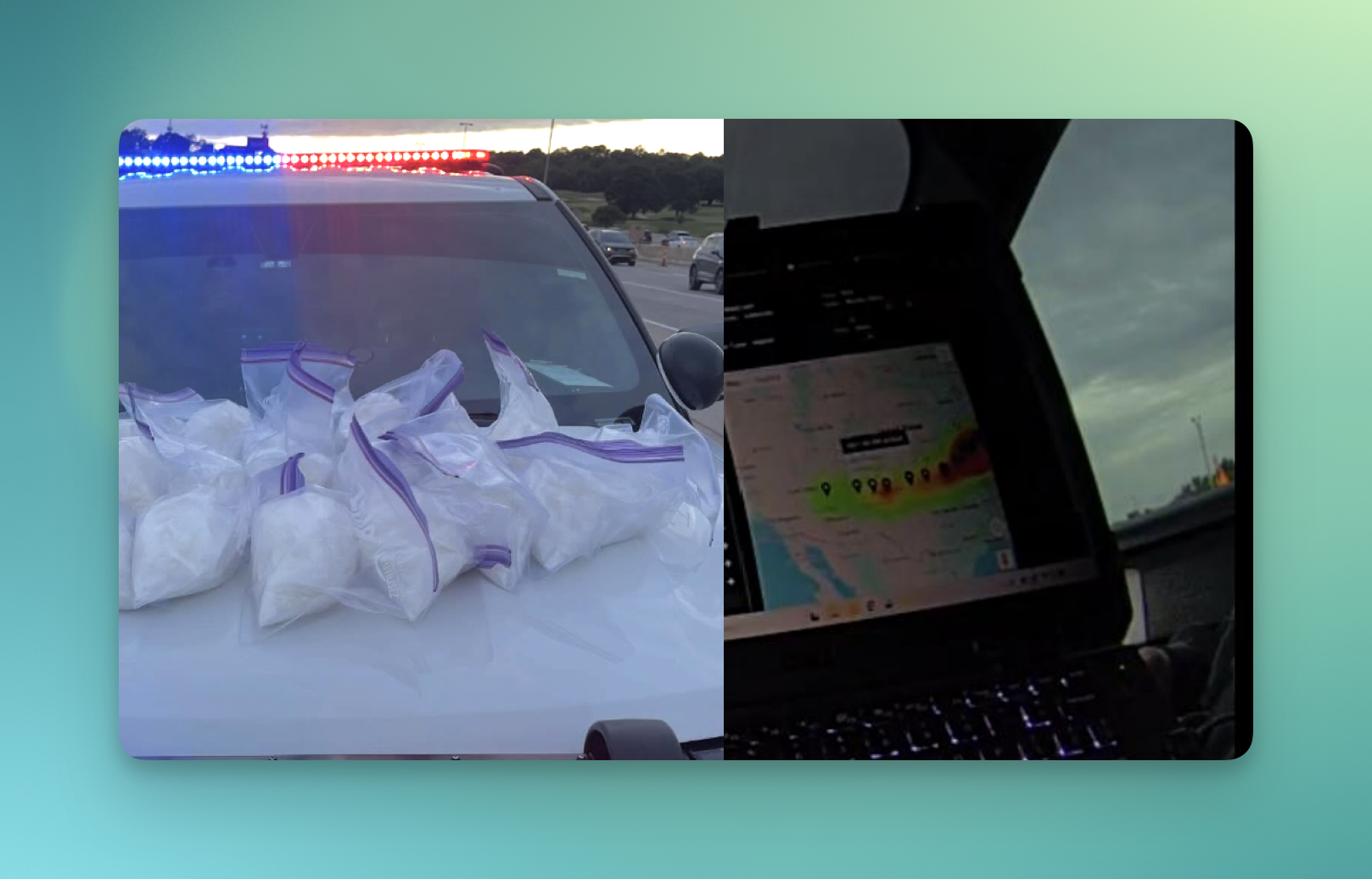
A federal judge in Oklahoma ruled Thursday that a police officer violated the Fourth Amendment rights of a woman accused of meth trafficking when he searched her license plate in Flock’s automated license plate reader system simply because her license plate was from California, then used her travel history as part of the reason to search her car. The judge’s opinion is one of the first times a federal judge has decided Flock searches can be unconstitutional, and suggested that Flock’s network is “a type of indiscriminate mass surveillance.”

The officer’s “use of the ALPR Systems was an Unconstitutional Warrantless Search,” and “was not supported by probable cause, and it was done without a warrant in violation of [the defendant’s] Fourth Amendment rights,” the judge, Sara Hill, wrote, implying that the law enforcement officer should have obtained a warrant before searching for the vehicle in Flock’s system. There are currently more than a hundred thousand warrantless searches of the Flock system every month, according to audit logs viewed by 404 Media. Hill's decision will not set a binding precedent and there are several other cases throughout the nation considering the legality of warrantless ALPR searches.

Hill argued that previous judge opinions saying Flock searches were not a Fourth Amendment violation because they track cars in public do not consider the context that Flock’s nationwide network is quickly “approaching dragnet-type law enforcement practice,” and that courts should update their understanding of the technology moving forward. 

The circumstances of the court case are really interesting and highlight how commonplace Flock searches have become for police, and the depth of the information they can reveal. In May, a Tulsa County Deputy Sheriff named Freddie Alaniz was parked along the side of the highway in Oklahoma when he saw a Mazda SUV driven by a woman named Melisa Kyle with a California license plate pass by. “Alaniz then pulled his vehicle on the highway to follow the Mazda for no apparent reason other than the fact that it had a California license plate. Alaniz also ran a query on the Flock system for the California license plate number on the Mazda SUV,” Hill wrote. Alaniz then ostensibly pulled Kyle over for changing lanes without a turn signal.

Alaniz interrogated Kyle about her travel “while he continued to review the ALPR systems for the car she was driving,” the judge wrote. Alaniz made Kyle recount everything she had done in the last several days, and compared it to the Flock data. He told her that because she was only in California for a short period of time, he suspected her of trafficking drugs. He used her travel history as seen in the Flock system as part of the justification to search her car; she was found to have 91 pounds of meth in the vehicle. Hill ruled that all Flock evidence and all evidence from Alaniz’s search of the car must be thrown out. 

“The Fourth Amendment requires courts to draw a line when the cost is too great. Alaniz’s search in just the ALPR system provided him with more than 50 individual records of Kyle’s whereabouts across the country for an entire month,” Hill wrote. “The Court finds that because the ALPR systems Alaniz used to search Kyle’s historical location information intruded on her reasonable expectation of privacy in the whole of her physical movements, it was a search under the Fourth Amendment. Based on the information in the record, the only reason Alaniz conducted that search was because he saw her license plate was from California.”

“The factors that the government relies upon are the same type of circumstances that everyday Americans encounter on long road trips for many legitimate reasons. Many of us drive longer than we want to get to a desired destination, or to no destination at all other than the road and sights ahead,” she added. 

The decision is a landmark one, and comes in the aftermath of the Supreme Court’s Chatrie v United States decision that found police accessing a person’s digital data, including cell phone location data, constituted a search. 

“The opinion is pretty amazing. It recognizes one thing that courts ignore which is the sheer breadth of these systems, that they collect so much information about so many people in a way that sets them apart. This decision ascribes appropriate weight to the fact police are building out this massive database that can reveal incredibly intimate details of people’s lives,” Michael Soyfer, a lawyer at the Institute for Justice, which has studied Flock camera abuse and is litigating several cases on Fourth Amendment grounds, told 404 Media. “It’s extremely important. The way courts have resolved these cases previously has been way too myopic and has ignored the depths of these systems and the sweeping modes of surveillance that allow police to reconstruct the movements of anyone in the country.” 

Hill’s opinion also comes on the back of a decision earlier this week in a case the Institute for Justice brought. In that, a jury found a traffic stop scheme involving license plate reader scans done by U.S. Border Patrol as part of a predictive policing unit were unconstitutional. 

The new decision also immediately invalidates the core argument that Flock’s CEO Garrett Langley has made saying that Flock was not a constitutional issue. “You and I don’t get to pick what’s a constitutional violation and what’s not. We have judges, we have elected officials, there’s a process for that. We follow the law, we follow the Constitution. So far, in our belief and what will be for a long time, the courts have deemed this is not a warrantless search; this is a valid product as it relates to the Fourth Amendment. So I don’t see any change there,” Langley told The Drive in July, adding the issue was “pretty cut and dry.”

Notably, Hill suggested that other courts that have ruled Flock searches do not constitute a Fourth Amendment search were likely wrong to do so, and that they have not considered the widespread and automated context of the AI-powered surveillance system.

Previous decisions that ruled ALPR searches do not require a warrant have leaned on a Supreme Court case called United States v Knotts, in which police put a tracking device in a chemical container after being tipped off that an employee of a chemical plant was stealing from their employer. That case was decided in 1983 and found, “[a] person travelling in an automobile on public thoroughfares has no reasonable expectation of privacy in his movements from one place to another.” But Hill wrote, “that language exists in the context of the facts presented in the case. Rather than a large-scale, dragnet-type surveillance system like the ALPR technology in this case, the Court in Knotts was confronted with much less sophisticated technology.”

“The Court acknowledges that people, in at least a broad sense, do not have a reasonable expectation of privacy in their movements on a public roadway,” Hill wrote. “But by virtue of how ALPR technology works, Alaniz and other officers using these systems have access to a continuously updated location history for all vehicles caught on ALPR cameras within the network. This is a type of indiscriminate mass surveillance. It is not targeted on a single individual, as in Carpenter [another Supreme Court case about phone data specifically]. It is a tool that collects information about all vehicles that pass by any network-connected camera at all times, and it serves up the information to law enforcement on demand.”

We have seen several cases in which cops have used Flock data to pull people over because they have crossed state lines, then have worked backward to justify their travel patterns as a reason to search their vehicles. 

“We’re seeing that repeatedly with police flagging whatever they’ll call suspicious patterns of movement. Federal agents were using ALPRs to monitor cars making day trips across the border and back to manufacture a basis to stop them, interrogate the drivers and search them,” Soyfer said. “I think Flock is going to automate that using AI where cops can set alerts for those kinds of travel patterns. When we’re arguing these systems are very powerful and can show a lot about people’s movements, cops dismiss this as speculative or not possible, but then they deploy this strategy against people who they stop all the time.”

A Flock spokesperson told 404 Media, "Flock was not a party to this case. The ruling goes against the overwhelming weight of authority in similar cases across the country, including multiple recent decisions in Oklahoma, and we expect it will be appealed and ultimately overturned. This ruling is limited to the specific facts of this case. It does not set controlling precedent and does not affect law enforcement agencies’ continued use of these important public safety technologies."

This article has been updated with comment from Flock Safety.

Podcast: The FBI Was Hacked. We’ve Seen the Data

Podcast: The FBI Was Hacked. We’ve Seen the Data

We start this week with Joseph’s stories on the massive FBI hack. 404 Media broke this news and continued to cover the breach of data on all FBI employees and their spouses. After the break, Jason tells us how a surveillance company is telling cops it wants to add facial recognition tech to Flock camera data. In the subscribers-only section, Jason and Joseph chat all about Muse, Meta’s new agentic AI, and how humans are actually behind some of the tasks. Because of course.

Listen to the weekly podcast on Apple Podcasts, Spotify, or YouTube. Become a paid subscriber for access to this episode's bonus content and to power our journalism. If you become a paid subscriber, check your inbox for an email from our podcast host Transistor for a link to the subscribers-only version! You can also add that subscribers feed to your podcast app of choice and never miss an episode that way. The email should also contain the subscribers-only unlisted YouTube link for the extended video version too. It will also be in the show notes in your podcast player.

Behind the Blog: Freaking Out

Behind the Blog: Freaking Out

This is Behind the Blog, where we share our behind-the-scenes thoughts about how a few of our top stories of the week came together. This week, we discuss inbox slop, Claude cults, and more.

JOSEPH: This is something I’ve been thinking about for a while. Jason and Emanuel covered iLands, the AI agents that email people offering to do work. My thing isn’t exactly the same, but similar.

For months, I’ve been noticing that many people email me ‘tips’ (I put in quotation marks because they’re sometimes not tips, but more, my Instagram account was banned, please help me) that are CLEARLY written by AI. I can tell this because the AI responses seem to keep using the same or similar words that it believes would apply to journalists, or are how journalists speak, but as a real, human journalist for more than ten years, I know that journalists don’t actually speak like that.

'Everything but censorship'

'Everything but censorship'

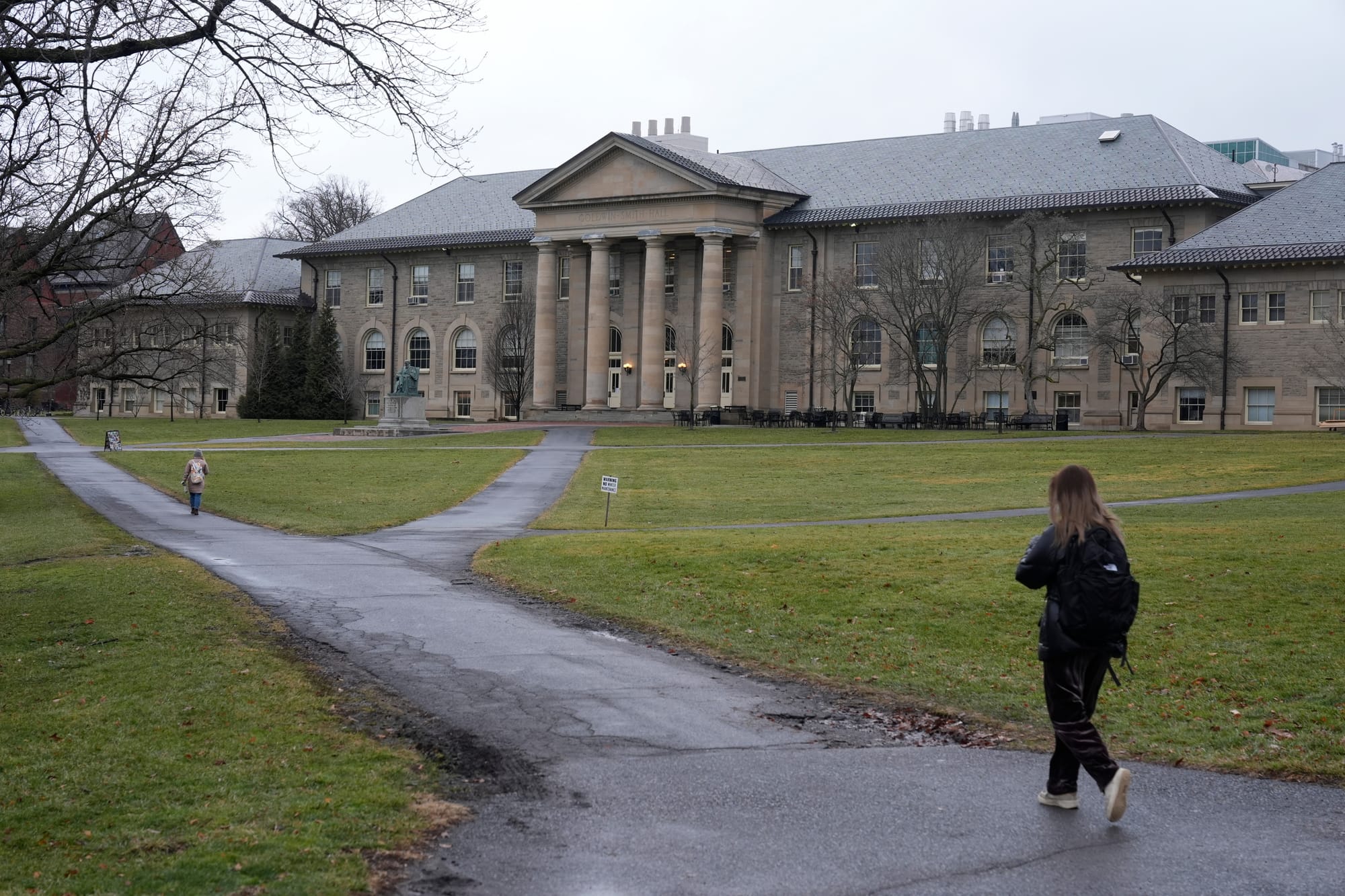
Student journalists meet the moment, as we’ve seen most recently this week. As the Cornell University sexual abuse case highlights the importance of student journalism, public records reveal how schools try to censor on-campus news outlets. Claire Woodcock talked to students and legal experts about how censorship from above impacts their work. “One of the biggest things we’ve certainly found with censors over the years is they want to be called everything but a censor,” one expert said. “What they’re doing is everything but censorship.” 

'Everything but censorship'
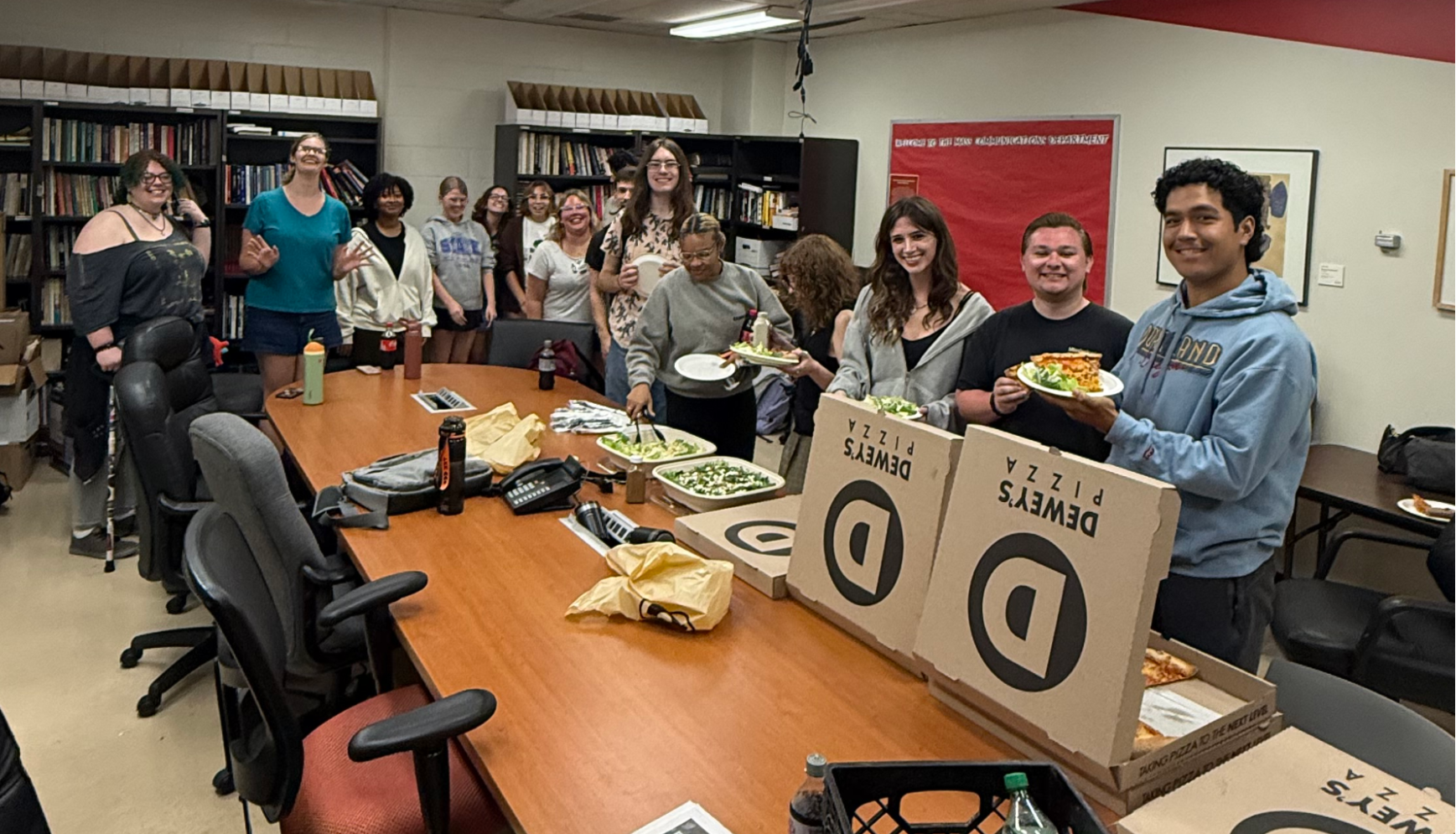
Staff of The Alestle. Photo via Marie McMullan.

How Schools and Universities Try to Censor Student Journalists

Student journalists, their advisors, and legal advocates say colleagues and administrators are attempting to undermine student reporting on Jeffrey Epstein, Gaza, and other issues that public institutions would rather not have their reputations connected to.

Public records obtained by 404 Media show administrators taking meetings with parents and alumni when they take issue with student reporting and asking advisors to compromise their professional ethics. They also show escalating tensions between student newsroom staff and administrators, prompting more legal aid requests to advocacy groups. 

This comes as student journalists at The Cornell Daily Sun earned recognition for breaking the “Cornell Seven” story regarding the lawsuit filed in New York’s trial court last month by a Jane Doe accusing current and former Cornell University students of drugging and sexual abuse. The student journalists told The Cut this week that a vague university and campus police statement from nearly two years ago prompted more questions than answers. Such is the basis for most accountability journalism on college campuses. 

The cases we reviewed involved the phase of the reporting process that comes later, where a factual dispute the newsroom has defended or a complaint where the person doesn’t bother to explain what is allegedly wrong with the students’ reporting. 

Read the full story here.

MORE FROM 404 

Look at my lawyer dawg. A New Mexico attorney used ChatGPT to generate briefs that included completely made-up witnesses and testimony while representing a man accused of shooting his wife. When the judges caught him, the lawyer blamed it on his own “stupidity.” I'll say.

How Schools and Universities Try to Censor Student Journalists

How Schools and Universities Try to Censor Student Journalists

Student journalists, their advisors, and legal advocates say colleagues and administrators are attempting to undermine student reporting on Jeffrey Epstein, Gaza, and other issues that public institutions would rather not have their reputations connected to.

Public records obtained by 404 Media show administrators taking meetings with parents and alumni when they take issue with student reporting and asking advisors to compromise their professional ethics. They also show escalating tensions between student newsroom staff and administrators, prompting more legal aid requests to advocacy groups. 

This comes as student journalists at The Cornell Daily Sun earned recognition for breaking the “Cornell Seven” story regarding the lawsuit filed in New York’s trial court last month by a Jane Doe accusing current and former Cornell University students of drugging and sexual abuse. The student journalists told The Cut this week that a vague university and campus police statement from nearly two years ago prompted more questions than answers. Such is the basis for most accountability journalism on college campuses. 

The cases we reviewed involved the phase of the reporting process that comes later, where a factual dispute the newsroom has defended or a complaint where the person doesn’t bother to explain what is allegedly wrong with the students’ reporting. 

In Colorado, a high school social studies teacher emailed the student publication’s advisor at the time, accusing a student’s opinion piece called “Why is Gaza Important?”of being “published with factually inaccurate and racist information,” but then said in the same email, “I’m not going to start listing the inaccuracies along with the omissions.”

In California, a high school principal told a student journalism advisor to redact the name of an individual threatening to sue the district for defamation after student journalists published an Instagram carousel to their school’s newspaper account about the number of times their county turned up in the Epstein files. In this case, which has already been widely reported on, the administrator told the journalism advisor to redact the name of the woman who was threatening suit without determining whether the reporter made a factual mistake (the students did not). 

“I can’t remove the name without your help,” the principal told the advisor via email, after the advisor said the students would first seek legal guidance from the Student Press Law Center before taking any actions.

How Schools and Universities Try to Censor Student Journalists

Soon after the op-ed was published, the student newspaper’s advisor was reassigned to another role within the district. The advisor from the California school district stepped down from her role during the last school year; she now consults schools and nonprofits on best practices for their student media programs. Mike Hiestand, who is a lawyer with the Student Press Law Center, has spent decades advising student newsrooms. He says it’s common for administrators to target advisors, adding that it’s one of the more effective censorship methods available to them. 

“School officials, they see employees as kind of an easy target over whom they have some authority, and they know that in many places, that relationship between the students and their advisor is a tight one,” Hiestand told 404 Media. “Unfortunately, some school officials take advantage of that bond and definitely go after advisors.” 

In 2025, the Student Press Law Center (SPLC) claimed that the nonprofit had responded to nearly 1,000 hotline inquiries from student newsrooms in 46 states and Washington D.C. The most common inquiries involved censorship, libel and copyright. Overall, SPLC says calls are down, but hotline inquiries about censorship specifically are up 17 percent from the year prior. 

“One of the biggest things we’ve certainly found with censors over the years is they want to be called everything but a censor,” he added. “What they’re doing is everything but censorship.” 

This tracks with what 404 Media is observing through public records requests into school, library and university censorship. The same state laws that have been used to restrict how topics like race, gender, and systemic inequality can be accessed and taught have also put student journalists covering those beats in a bind. 

Records from Pensacola State College obtained by 404 Media show that last spring, an administrator tried to block funding for a journalism professor to print students’ class assignments for their portfolios because at least one of the stories involved reporting on the LGBTQ+ community. The campus later relented and agreed to release funding for students’ portfolios. In an email to the advisor, an administrator involved in the situation wrote that “the proper role of administration is to facilitate rather than impede the completion of legitimate classroom projects.” 

“When you have a principal coming in who doesn’t have a lick of journalism experience claiming that they’re there to guide young journalists, that’s where I have problems,” Hiestand said. “Every principal and every superintendent in the country seems to think that they are qualified editors.” 

Similar verbiage has appeared in other public records requests involving student journalists, like in the case of a Maryland school district memo about principals reading and approving every story before publication. In the memo, the chief of schools wrote that “[a]s responsible adults and educational leaders, we have the duty to guide the work of our students as they are developing their skills in a school setting during a school-directed activity.” But internal correspondence obtained by 404 Media suggests that the memo was “really to be sure an administrator could initial any printed posters, review school apparel, and scan over the yearbook to be sure that there is no violation” of the student handbook. 

Marie McMullan, program manager and counsel for the Student Press Legal Hotline with the Foundation for Individual Rights and Expression, says so far, 2026 has been a very consequential year for students leading their school publications. 

“Student journalists are a very bright group,” McMullan told 404 Media. “They are great at sounding the alarm and bringing advocates out of the really blatant examples. But I always just worry about making sure that student journalists know their rights so that they can assert them in cases where there are subtler forms of censorship.”

At Southern Illinois University Edwardsville (SIUE), student reporters with The Alestle, the university’s student newspaper, claim that the institution’s marketing and communications department had become more insistent on attending interviews conducted by student reporters in recent months. The department took issue with editor-in-chief Dylan Hembrough’s framing of the dispute, calling several of the claims “inaccurate.” In an interview with 404 Media, Hembrough said the paper investigated and determined there was nothing inaccurate about the story. When Hembrough did not retract the story, the executive director of marketing and communications at SIUE sent an open letter to the entire campus—a mailing list of more than 14,000 people, including faculty and staff—taking issue with that story, along with other stories throughout the years as well. 

“The Alestle appears willing to substitute alarming headlines for verified facts, to rely on posturing rather than careful reporting and to treat corrections as an inconvenience rather than a professional obligation,” the open letter reads. With the letter was a link to a 27-page document of corrections the department expected student leadership to act on.

“I have been on the other side of panicking over things like this,” Hembrough told 404 Media. “Something that has helped me get through that, or at least stave it off, is the idea that the truth is more important than whatever I feel about it. Embarrassment or humiliation should have no bearing on how or even whether a publication makes a correction.” 

Then in September, Hembrough learned via email that he was being investigated by the campus police for harassment against the department. When Hembrough’s journalism advisor asked the officer to clarify on what grounds, the officer said the report was based on a line in an email, which read: “Marketing and communications’ insistence on interfering with our newsgathering process is dangerous and detrimental to both press freedom and freedom of speech.” Hembrough shared his email with 404 Media, which reads as an editor defending another student reporter’s right to conduct an interview without the department exercising prior restraint over the publication. In her statement to campus police, she reportedly told the officer that “other members of my office have approached me stating Alestle reporters have been by my office uninvited,” and that she didn’t have a lock on her door. 

“Due to the media between Marketing and Communications and the Alestle I am worried a ‘January 6th’ type of crowd may be outside my office,” the complainant told the officer, according to the campus police report. The officer advised her to contact facilities management about getting a lock for her office door and concluded that the facts of the case don’t “meet the statutory threshold for Harassment by Electronic Communications.” 

The public records reviewed by 404 Media from SIUE support the claims The Alestle’s journalists make throughout their reporting on the department. SIUE did not respond to 404 Media’s request for comment.

How Schools and Universities Try to Censor Student Journalists

The situation at SIUE serves as an example of a dispute about institutional reputation that’s escalated to involve campus law enforcement, but law enforcement nonetheless. McMullan says this escalation has an undeniable chilling effect on free speech, noting that policies and laws that public institutions use to silence young reporters still need to abide by the First Amendment. But overall, she’s impressed with how students at SIUE and other campuses are meeting the moment, even when the adults in the room aren’t.

“Whether it’s in a court of public opinion or a court of law, students are not accepting censorship,” she said. “They’re pushing back against it.”

Cops Can Bypass iPhone’s Automatic Reboot to Get Into Locked Phones, Leaked Video Claims

Cops Can Bypass iPhone’s Automatic Reboot to Get Into Locked Phones, Leaked Video Claims

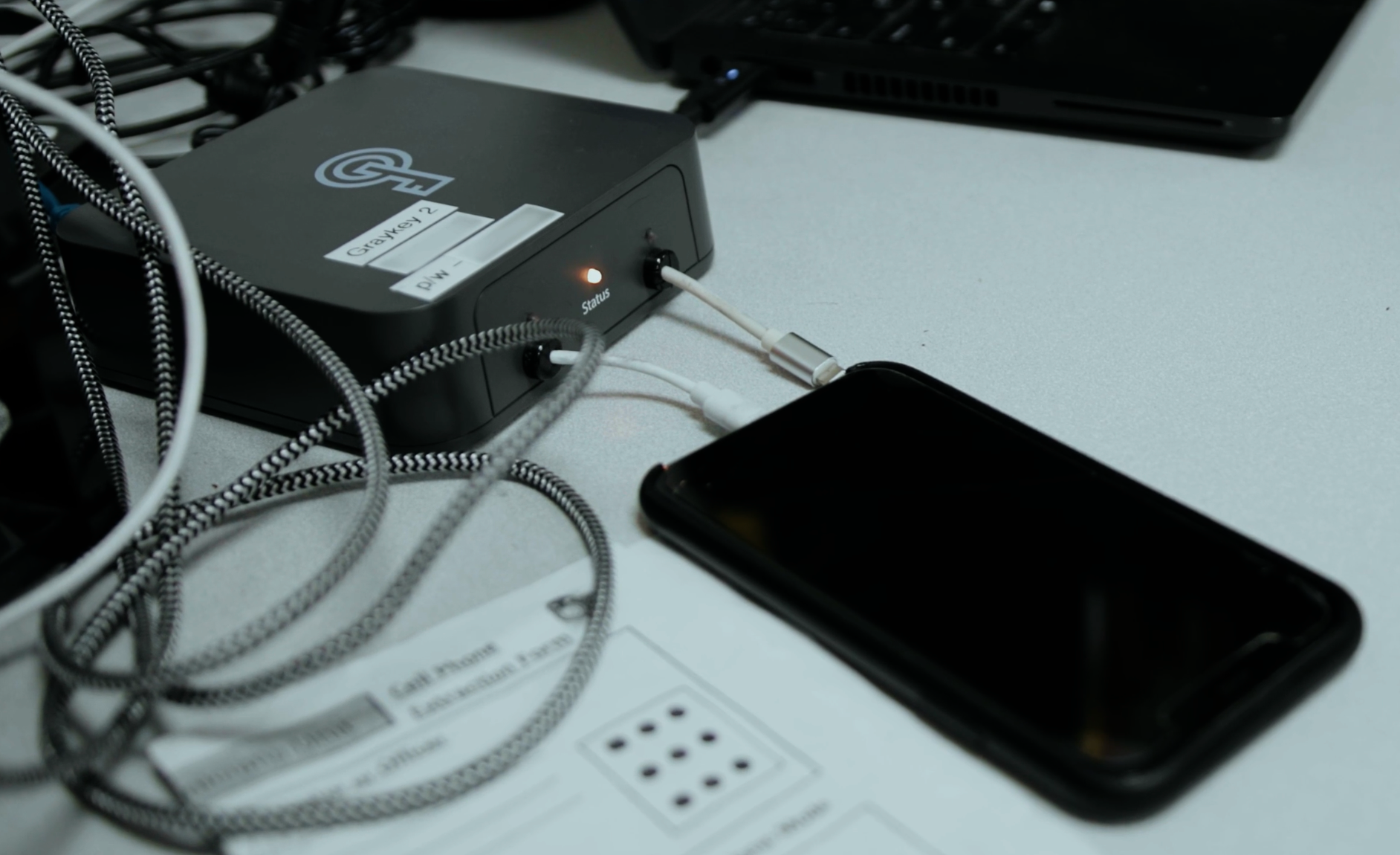
A company that makes phone hacking devices claims to have developed a solution that freezes iPhones in a state that lets cops more easily access sensitive data inside them, according to a video obtained by 404 Media.  

This is the latest salvo in the never-ending battle between Apple and companies that help cops — sometimes those in authoritarian countries — break into iPhones.

In November 2024, 404 Media revealed Apple quietly introduced a new feature in iOS that automatically reboots an iPhone that has not been unlocked for 72 hours. The idea behind this so-called “inactivity reboot” is to revert the phone to a state that makes it harder for police to break into the device, and thus extract sensitive data from it with forensics technology. 

At the time of Apple’s change, law enforcement agents expressed concern about this new feature, given that oftentimes they can’t immediately try to break into iPhones that have been seized. That could be because police are still waiting for a court authorization to do so, or there is simply a backlog of devices to unlock, for example.

The new technology to get around inactivity reboot was developed by Magnet Forensics, the company behind GrayKey, a popular tool sold to law enforcement agencies that allows them to unlock and access data stored in iPhones and Android smartphones. Magnet has developed a new device called GrayKey Preserve and a feature for its regular GrayKey devices called Evidence Preservation Mode, according to the video. 

Watch Body Cam of Man Arrested for Just Cussing at a County Meeting

Watch Body Cam of Man Arrested for Just Cussing at a County Meeting

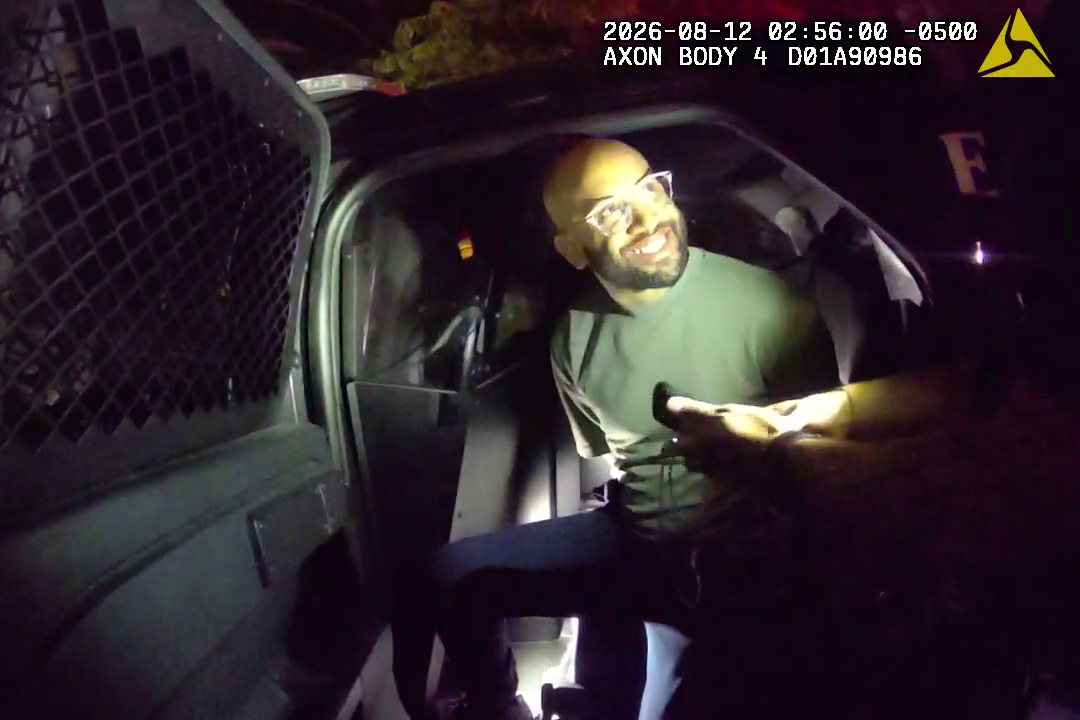
Last month Fort Worth, Texas police arrested political activist EJ Carrion a week after he cursed at a city council meeting. In his driveway, they told him the charge was “disrupting some kind of procession,” according to body cam footage of the arrest obtained by 404 Media.

Carrion was one of hundreds of Tarrant County residents who’d turned up for a Commissioner's Court meeting on August 4 to speak out against a plan to close a third of the area’s polling places. “You said you were all about cooling the temperature and yet you vote for this extremist bullshit. All of you are bullshit,” Carrion said during the meeting on August 4 before walking out the door.

A week later, Fort Worth Police pulled Carrion over in his driveway and arrested him.

“Why am I getting arrested?” Carrion asked?“So you have a warrant for disorderly conduct, disrupting a meeting. It’s from Tarrant County. I don’t have the details on it [...] it’s a misdemeanor warrant. We’ll take you to Tarrant County and you’ll see the judge and that’s it,” one of the officers said.

“Wait [...] see the judge?” Carrion said. “Guys [...] are you guys serious right now?”

“All it says for us is that you did have a warrant for your arrest from Tarrant County for a disorderly conduct for disrupting some type of procession. I’m not sure what the details are,” the police said.

“Because I disrupted a meeting [...] so because someone doesn’t like me, you’re arresting me? That’s what it sounds like,” Carrion said. “Because of fucking Tim O’Hare, it’s unbelievable.”

“Because of who?”

“Judge Tim O’Hare [...] he’s the biggest pussy,” Carrion said.

Judge Tim O’Hare is a county judge who presides over the Tarrant County Commission — one of the area’s ruling legislative bodies. Back in the August 4 meeting, O’Hare demanded police remove Carrion from the building. But Carrion was already leaving. “I’m walking out, small man,” Carrion said as he left.

As he was being arrested a week later, Carrion called a friend to tell him what was going on. “So, the judge put a warrant on you for getting kicked out of commissioner’s court?” The friend asked.“That’s what it sounds like,” Carrion said, his hands in cuffs while he sat in the back of a police car.

This is not the first time O’Hare has had people arrested for their behavior during public meetings. In 2025, O’Hare had two different people charged with Class A misdemeanors for clapping in support of someone’s speech during the public comment period of the meeting. On Monday, four women filed a federal lawsuit against O’Hare, claiming his tenure on the court has “created a culture of fear and chilled protected speech, cutting to the heart of the Constitution’s free speech and due process guarantees.” 

The Commission did, eventually, vote to reduce the number of polling places in the county. 

FBI Hack Exposed FBI’s Own Hacking Unit

FBI Hack Exposed FBI’s Own Hacking Unit

The catastrophic hack of at least thousands of FBI officials’ personal data, including their addresses, phone numbers, and even their spouses, includes members of the FBI’s secretive hacking team, potentially revealing who exactly is in that unit, 404 Media has found.

The findings further highlight how sensitive the stolen data is, and how valuable it may be to criminals or to foreign intelligence agencies. There is very little public information about the FBI’s hacking unit, including the operations it conducts, the tools it uses, or which agents are part of it.

💡
Do you work at the FBI? Do you know anything else about this hack? I would love to hear from you. Using a non-work device, you can message me securely on Signal at joseph.404 or send me an email at joseph@404media.co.

An Invisible Force Has a Mysterious Effect on Aging, Scientists Discover in 'Startling' Breakthrough

An Invisible Force Has a Mysterious Effect on Aging, Scientists Discover in 'Startling' Breakthrough

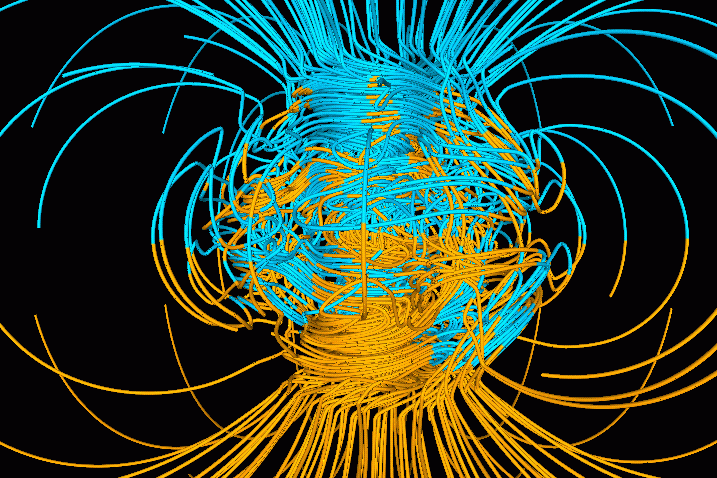
Scientists have discovered that the removal of Earth's magnetic field influences the lifespans of fruit flies in complex ways, a finding that sheds light on the aging process as well as the risks of future human space travel, according to a study published in the journal Aging on Wednesday. 

All life on Earth has evolved under the planet’s geomagnetic field, a vast bubble lined with electrical currents that is generated in the core and extends out into space. This protective magnetic shield is a major factor in Earth’s habitability, as it wards off harmful radiation from space, allowing life to flourish on the surface. 

Many migratory animals—including fish, birds, and insects—can clearly sense Earth’s magnetism and use it for navigation. But much less is known about how the field interacts with living cells and their components, such as mitochondria, the famous “powerhouses” that generate most of the energy that fuels life.

To better understand this mystery, scientists observed two populations of fruit flies in a “hypomagnetic” shield system, a cylindrical benchtop apparatus that essentially blocks the influence of Earth’s magnetic field. One group contained “wild-type” healthy flies, while the other was made up of “mutant” flies carrying a gene defect called Pink1, which is associated with early-onset Parkinson’s disease in humans and specifically involves mitochondrial dysfunction.

The removal of the magnetic field’s effect extended the lifespan of the Pink1 group by 20 percent but reduced their mobility, whereas the healthy flies experienced just the opposite—reduced lifespan, but improved mobility. 

“We had an idea that there would be a difference just based on the fact that we know that every organism has developed under a magnetic field,” said Jacob Reed, a PhD student in bioscience at the University of Nottingham who co-led the study, in a call with 404 Media. “But we didn't really plan that there would be this difference in the experiment.”

“I think we're the first to show that there's an effect in an organism that has a disease phenotype,” added co-lead Lisa Chakrabarti, a professor of biochemistry at the University of Nottingham, in the same call. “We're really drilling into what the differences are between having that applied pressure or relieving it.”  

An Invisible Force Has a Mysterious Effect on Aging, Scientists Discover in 'Startling' Breakthrough
Diagram illustrating the experiment. Image: University of Nottingham

While there is a lot of research into the effects of hypermagnetic fields on life—meaning magnetic fields that are stronger than Earth’s—the “biological consequences of hypomagnetic fields remain poorly understood,” according to the new study.

To fill in this research gap, Reed developed an initial pilot study of diseased and healthy flies using the magnetic shielding apparatus, and was surprised to find that the Pink1 population of flies seemed to live longer.

“I was really confused at first,” Reed recalled. “I was thinking: ‘Why are these Parkinson's flies living longer than some of the wild-type flies?’ I had to double-check all of my data. From that, we realized that was what's happening and developed the experiment.”

The team observed dozens of diseased and healthy flies living in these hypomagnetic spaces over the course of their lives, which normally last about two months. In particular, they monitored shifts in the energy metabolisms and chemical outputs of mitochondria using quantum diamond sensors. 

The experiment showed that the absence of Earth’s magnetic field changes how cells age and produce energy, producing clear and measurable effects on longevity. The researchers also saw shifts in locomotion by tracking how far flies climbed upward against gravity in their containers. However, it will take more research to unravel the complex mechanisms that underlie these observable changes.

“This is the early stage, where we can say there is a very real effect,” Chakrabarti said. “As soon as you take off the geomagnetic field, there are physiological effects that we can measure in the mitochondria, in the cellular physiology, and in big things like lifespan and climbing as well. It's a definite interaction between Earth's magnetic field and physiology.” 

The researchers plan to build on their work by studying different organisms in hypomagnetic fields to see if they experience similar mitochondrial and behavioral changes. This work could eventually inspire therapeutic treatments for humans with various conditions, and could also help prepare astronauts for deep space missions beyond Earth’s magnetic field. It is already well-known that astronauts are exposed to harmful radiation outside of the magnetic field, but little is known about the specific impact of the absence of the field itself on human physiology.

“The link with interplanetary space travel is absolutely key,” said Chakrabarti. “There could be subtle differences that we don't really notice while we're on Earth. Unless we know what those parameters are to measure, we're going to be sending astronauts up there that are potentially going to really suffer over the short, or even or the longer, term.”

“All of this is out there at the moment, but what we're saying is that we definitely see a really reproducible and startling effect of removing the geomagnetic field,” she concluded.

Woman Arrested, Dragged Away After Quietly Speaking About Flock at City Council Meeting

Woman Arrested, Dragged Away After Quietly Speaking About Flock at City Council Meeting

Mia Hyder had never attended a public meeting before when she showed up to the city council meeting in Springfield, Missouri. After briefly speaking at a podium during a public comment period, she was arrested and dragged away in handcuffs. 

“Hello, my name is Mylie Hyder. I’m a Springfield, Missouri constituent, and I’m here to oppose the usage of ALPR cameras, most commonly made by Flock Safety. These cameras are not just surveillance,” Hyder started.

“I’m sorry ma’am,”  Springfield Mayor Jeff Schrag said. Her mic was cut. A cop approached her at the podium.

Hyder held up both of her middle fingers while continuing to speak: “They are an invasion of our privacy,” she said.

The cop said, “You’re under arrest,” grabbed her arms, and pulled her out of the room. “I can do this all night. I get paid by the hour,” the cop added.

“Does this conclude the public hearing,” Schrag said. 

“Yes sir,” a council member responded. The meeting continued with a city employee talking about sidewalk code. 

Hyder was one of two people arrested in Springfield, Missouri on Monday during a city council meeting where tensions rose after the council stalled a review of the city’s Flock cameras.

Dozens of people showed up to the Springfield City Council Meeting on September 22 with plans to let city leaders know how they felt about the city’s use of automated license plate readers. There was a resolution before the council that would trigger a review of the controversial camera systems, but Schrag moved to send the resolution to committee and prevent public comment on the issue. 

The move passed 5 - 3, the crowd shouted at city leaders, and Schrag ordered citizens to clear the room and shut off cameras recording the event. As people left, police detained and ticketed Noah Powell. Later in the evening Mia Hyder tried to speak out about Flock during public comments about a housing issue. Police arrested her while Schrag looked on. “Sorry ma’m,” the mayor said as police led Hyder away in handcuffs.

Springfield has 41 Flock cameras, according to the Flock Transparency Portal. City councilor Brandon Jenson had proposed a resolution to “conduct a comprehensive review of all relevant contracts” related to the ALPR cameras. The council was set to vote on Jensons’ proposed review on Monday and hear comments from the community. But when the resolution came up during the meeting, Mayor Schrag immediately pushed to send it to a committee and avoid public comment.

Jenson spoke before the vote to push the resolution to a committee. “All I’m trying to do is get people answers to some real questions that they’ve brought to us for months. And it’s a shame that it comes to this sort of, I guess, theater that I’m a part of to try to get those answers,” he said. “This isn’t how government is supposed to run. It’s just disappointing. And we’re not even allowing folks to speak who clearly came out to share their voices tonight.”

When the council voted to send the bill to committee, someone in the crowd shouted “Bullshit!” Schrag tried to move on to the next agenda item, but the crowd booed and yelled. The mayor then paused the meeting, turned off the cameras, and cleared the room.

Police detained Powell, a freelance photographer in Springfield, as people filed out of the room. “I don’t have a lot of experience getting tickets or being detained,” Powell told 404 Media. “So this is kind of new for me.”

Footage obtained by 404 Media showed several people leaving the city council meeting and yelling at city leaders. Powell said he was the only person put in handcuffs, detained, and ticketed at that moment. The Springfield Police Department did not return 404 Media’s request for comment.

“Well, I said: ‘Jeff Schrag is a cuck.’ I said: ‘Fuck you Jeff.’ I said: ‘Worthless’ and then, also, the final thing I said was: ‘Jeff Schrag has a tiny, stinky, cock,’” Powell explained. “I just let myself get handcuffed and let them do whatever power trip they wanted to do. Got my ticket and left.”

Powell said he was only in handcuffs for five minutes. “They just wanted to put on a show,” he explained. Powell added that he planned to fight the charge in court. “I’ve already sought legal representation, so we’re going to see where it gets […] I don’t think I should have been put in cuffs. I read the law, the city ordinance, and it said that I should have just been asked to leave.”

Hyder told 404 Media that she’d just moved to the area and thought that the city council meeting would be a good place to get involved in the community. She said that she’d stayed behind when Schrag cleared the room earlier in the evening.“I don’t know why I stayed. I just felt like not staying was giving up,” she said. Hyder explained that she waited until the public comment period for a different issue, filled out a form to talk, and then got up to deliver a written statement about Flock cameras. She said she didn’t flip off the city council until she saw the police officer approaching.

“After I saw the police officer out of the corner of my eye and everyone was kind of yelling at me, and there was a lot of ruckus, that’s when I pulled out the double birds,” she said.

💡
Seen something at a city council meeting? I would love to hear from you. Using a non-work device, you can message me securely on Signal at +1 347 762-9212 or send me an email at matthew@404media.co.

The police officer who arrested her said Hyder was being charged with disrupting the peace. He took her into the hallway outside of the meeting and held her in handcuffs for around five minutes before issuing her a ticket and letting her go.

Hyder told 404 Media she didn’t regret it. “I feel like being silent would have been like being complicit,” she said. “I felt like it was kind of stupid that I disturbed the peace. Okay, yeah, I did flip them off. That wasn’t a shining moment, but I did that when I was about to be arrested. When I knew my time was up.”

Hyder added she’d continue to attend city council meetings.

Woman Arrested, Dragged Away After Quietly Speaking About Flock at City Council Meeting
A copy of Hyder's ticket.

Flock Out SGF, a local group that’s lobbying against ALPRs in Springfield, told 404 Media that the resolution was meant as a compromise. “Many people came out to the council meeting and had carefully prepared statements for public comment, but no citizens were heard,” they said. “The two individuals who were arrested for voicing their concerns in the face of being silenced were not unreasonable, and we stand by their actions.”

Powell and Hyder are just the two latest American citizens detained or arrested this year for their behavior during a city council meeting. In February a farmer was arrested in Oklahoma for going over his time during a data center meeting. In Kansas, police arrested a high school teacher for clapping during public comments. In Texas, cops arrested a man in his driveway for public disturbance a week after he said “bullshit” during a county meeting.

Springfield did not return 404 Media’s request for comment.

Americans Fear AI Will Make the World Worse, Love It Anyway

Americans Fear AI Will Make the World Worse, Love It Anyway

Most people in the world who use AI feel good about the technology and believe it will be a net positive for the future, according to a new study from Gallup. This is not the case in the United States, however, which is one of the few countries surveyed where negative emotions towards AI outweigh the positive. 

The new survey from Gallup and Microsoft polled people in 37 different countries about AI. “The study, which will ultimately cover 140 countries, measures public engagement with AI across five dimensions. In addition to emotional response, the survey captures awareness, frequency of use, expected impact and trust,” the study said.

Most people polled — a median of 81% — were aware AI tools exist, but only a median of 43% used them daily. Gallup told 404 Media it defined a “daily user” as an employed person who used AI everyday for either work or personal reasons or an unemployed person who used the tech every day.

The study found that people had a mixed, but generally optimistic, view of artificial intelligence. “AI engagement can be viewed as an adoption ladder, moving from awareness to ever having used AI and then to more frequent use,” the survey said. Generally — but not always — the more someone used AI the more they trusted its results, the more positive they felt towards it, and the more they believed it would help make a better future.

Digging in, however, the results are more complicated. Some people who reported positive feelings towards AI also said they didn’t trust its results. “People may therefore see considerable potential in AI even while remaining uncertain about whether they can rely on the information it provides,” the survey said. 

Daily users tended to trust AI “to provide accurate information,” according to the study. “The survey cannot establish whether greater trust leads people to use AI more often, whether experience with AI builds trust, or both. But the strength and consistency of the relationship suggest that trust and adoption are connected.”

Globally, most people surveyed felt good about AI and expected to improve their country. As AI adoption increased in a country, so too did positive feelings. But not in the United States, which was one of only three countries surveyed where negative emotions towards AI outweighed the positive.

Pablo Diego-Rosell, a senior scientist at Gallup, told 404 Media that he’d seen similar results in other western countries. “The Netherlands, Canada, the U.K., New Zealand, Ireland and Malta all rank near the top in terms of worry,” he said. He noted that he hasn’t seen survey results from some of the bigger European countries like Germany and France but said that worrying about AI “appears to be a uniquely Western phenomenon.”

Gallup called this the “Paradox of the Worried West.”

“The biggest unanswered question is causality. We see a very strong relationship between frequent AI use, greater trust and lower worry, but we do not know which direction that relationship runs,” Diego-Rosell said. “Does experience with AI make people more comfortable with it, or are people who already trust AI simply more willing to use it?”

“There is also a broader question about what trust in AI actually means. In this study, we measure one specific dimension: whether people trust AI to provide accurate information,” he added. “But trust in AI can also involve whether people believe it is reliable, safe, fair, transparent, protective of privacy, and likely to act in ways that serve their interests.

The west didn’t have a monopoly on negative emotions towards AI, however. The other two countries where negative emotions towards the technology outweighed the positive were Egypt and Palestine.

“One possibility is that these results partly reflect the broader emotional context in which people are evaluating AI. When people are living in environments where worry, stress or other negative emotions are already elevated, some of that broader emotional climate may shape how they react to a technology like AI,” Diego-Rosell said. “At the same time, our data do not allow us to determine how much of the response is specific to AI versus the wider circumstances people are experiencing.”

It’s possible that people in the US, Egypt, and Palestine are already anxious and worried and that this is coloring their perception of AI. Israel is waging war on Palestine, settling in its territory, and using AI to pick targets to bomb in Gaza.

Americans — where much of AI is built and first deployed — have been repeatedly told in the past few months by AI evangelists and company insiders that the technology could, literally, end all life on Earth. The constant stream of news stories about AI swarms “breaking containment” while AI experts claim there’s a one in ten chance the technology kills everyone on the planet probably had a hand in altering the American mood.

“The broader story is that public engagement with AI is much more complicated than simply being ‘for’ or ‘against’ it,” Diego-Rosell said. “People who are aware of AI are more likely to expect it to help than harm, and positive emotions outweigh negative ones. At the same time, trust in AI’s accuracy is considerably lower than optimism about its potential, and worry remains widespread in some countries. So optimism, skepticism and concern can coexist.”

‘We Hacked the FBI:’ Hackers Say They Have Data on All FBI Employees

‘We Hacked the FBI:’ Hackers Say They Have Data on All FBI Employees

A high profile hacking group claims it has breached multiple FBI-related services and stolen data “on all FBI employees and applicants.” A representative of the group, called ShinyHunters, told 404 Media the data includes FBI agents’ names, home addresses, phone number, and information on their spouse.

The data breach could be massively significant and may have all sorts of national security and counterintelligence implications. Criminals from the same ecosystem as ShinyHunters have previously used hacked data like phone records to track, intimidate, and harass the FBI agents investigating them. The highly sensitive data could also be a boon to foreign intelligence agencies who want to better understand how one of the most important law enforcement and intelligence agencies in the U.S. operates. And if the data fell into the hands of more criminals, FBI agents and their spouses could face serious threats to their safety.

“We hacked the FBI. We hold data on all FBI employees and applicants,” the representative of the group told 404 Media.

💡
Do you work at the FBI? Do you know anything else about this hack? I would love to hear from you. Using a non-work device, you can message me securely on Signal at joseph.404 or send me an email at joseph@404media.co.

Meta Tests Muse AI Agent Calls That Are Actually Made By Humans in a Call Center

Meta Tests Muse AI Agent Calls That Are Actually Made By Humans in a Call Center

Last week, Meta executives announced that its much-hyped AI agent, Muse, had a new feature: It could call businesses for you to do things like make a restaurant reservation or a haircut appointment. But in reality, Meta is testing having these calls being made by human beings in call centers, 404 Media has learned.

“We just expanded the @muse beta for outbound calls to US businesses,” Ryan Fox, the principal engineer on Muse posted on X on Sept. 16. Alexandr Wang, Meta’s chief AI officer, posted “we’re expanding our phone beta for muse!” 

we're expanding our ☎️ 📞 beta for muse! https://t.co/ZJnXM2vb4U

— Alexandr Wang (@alexandr_wang) September 16, 2026

Internally, however, the company announced the features to employees and said that it had “added a human agent layer for calls to get completed,” and that “Muse human agent calls [sic] is ready for company dogfooding,” or testing. 

“Muse doesn’t just dial a number. It calls a business on your behalf, handles the conversation, completes your request, and reports back with a transcript and a summary,” the internal message board post to employees, seen by 404 Media, reads. “It also no longer works alone. Muse is now able to hand requests to a trained human agent, who places the call and works it through.” 

“This is still a confidential, pre-launch product,” the post adds. “Please don’t share it, or anything it producers, with anyone outside the company.” 

Once again, a core feature of a major piece of AI technology will actually just be people working in a call center, doing work that a company says AI is doing. It is not clear how often or when a call is routed to a so-called “human agent,” and when a call is done exclusively by AI.

💡
Do you work for Meta or know anything more about Muse? I would love to hear from you. Using a non-work device, you can message me securely on Signal at jason.404. Otherwise, send me an email at jason@404media.co.

The fact that human beings are involved in the call raised questions among employees, who wondered both about the privacy implications of sharing people’s call requests with other human beings as well as the perception that its AI assistant wasn’t advanced enough to do calls on its own. 

“Not sure what I am missing here but why is this a ‘feature?,’ one employee wrote on Meta’s internal message board for workers. “This has potential for so much negative PR. It could portray us as ‘their AI is not good enough so they still need humans’ kind of coverage for this launch.” 

That Meta is at least sometimes letting human beings read users’ chats and make phone calls on their behalf is part of a time honored tradition in which companies launch an AI product, claim that it is AI, only for it to be later learned that human beings are doing some or all of the work. And it is the latest example of a tech giant passing potentially highly sensitive information to human beings; it is easy to imagine someone asking Muse to make a sensitive doctor’s appointment, for example, and the user not knowing that a human being might make that call. 

In internal communications seen by 404 Media, Meta suggested to employees that potentially sensitive information shared by the user with AI — and then passed to human contractors — was still safe because the contractors had undergone “a lot of training to make sure all your data is safe and secure.” An employee commented that the training “is not a [security] mechanism.”

“This is absolutely going to create a ton of outcry if we publicly launch this as default-on. It will kill all the goodwill and organic press we’re getting from early adopters,” they wrote. “Please think about how the headlines will scream ‘Meta uses humans behind the scenes to make calls’ or ‘Muse AI is actually independent contractors’ and result in a ton of bad press about the privacy and security of our data handling […] please PLEASE do not release this as-is and at least make this a user preference if we absolutely must launch this. Please.”

Other employees who had tested the system said that it was a “bad bad idea,” and that they were not made aware that a human being did the call for them until after the call had been made: The tester “was not made aware of the caller being human and was only told after,” one employee wrote. “So they were concerned with information that they shared with the assumption that it is the secure AI which is making the call. Even with clear indication of human calling, I can think of many scenarios where I wouldn’t be comfortable with this and I am not positive about how our users will react to this.” 

Various Meta employees and regular users have posted about Muse’s ability to make phone calls, and their experience with it. Ravid Shwartz Ziv, who does AI research at Meta, posted on X that “this week, Muse called customer service on my behalf. It navigated the phone tree, waited on hold, spoke with a human rep, and resolved the issue (worked great!). The crazy thing for me (besides that it works) is that the rep didn’t blink. Talking to a bot was completely natural to them.” Others have posted that the call function didn’t work, or that the person on the other end hung up on the agent (some have said that Muse did what it was supposed to do). 

“Internal testing, aka dogfooding, is core to the product development process. While the response from employees has been overwhelmingly positive, the entire point is to get feedback so we can implement safety and privacy protections and improve features before we release them publicly,” a Meta spokesperson told 404 Media. “We’re working with merchants to continue improving this potential calling feature, and will only roll it out when it's ready and with the proper disclosures.”

❌