Normal view

The root cause of the massive Cyclospora outbreak: industry consolidation

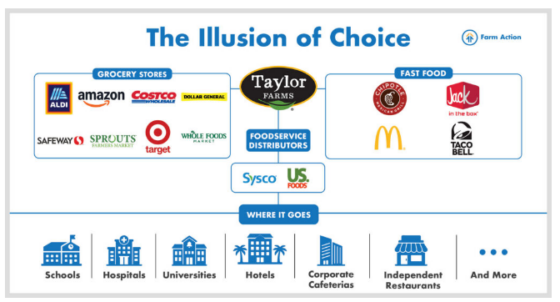
Farm Action has produced a riveting new report: Taylor Farms: How One Company’s Reach Became a National Risk.

Many, but by no means all, Cyclospora cases have been traced back to a Taylor farm in Mexico.

From the Farm Action report:

What you can do:

  • Buy directly from local farms whenever possible through farmers markets, community-supported agriculture programs, farm stands, and direct online sales.
  • Ask grocery stores, restaurants, schools, and institutions where their produce comes from and encourage them to source from local and regional farms.
  • Advocate for public policies that strengthen competition, transparency, and market access for independent farmers.

____________________

Arriving Sept 8. For a 30% discount, pre-order here using code UCPSAVE30.

The post The root cause of the massive Cyclospora outbreak: industry consolidation appeared first on Food Politics by Marion Nestle

PCRM sues government to cancel the 2025-2030 Dietary Guidelines

As anyone familiar with my work will know, I have made a career out of commenting on government dietary advice.  The Dietary Guidelines for Americans are particularly entertaining as quintessential examples of food politics in action, the latest ones in particular.

To summarize: They offered two excellent messages–Eat Real Food, and limit ultra-processed foods–but undermined them with unsubstantiated advice (double the protein), inconsistencies (eat more sources of saturated fat, but limit it to 10% of calories), omissions (salt, mentioned but no guideline), and errors (no, beef tallow is not a source of essential fatty acids).

And now the latest: The Physicians Committee for Responsible Medicine (PCRM) has sued to have the guidelines withdrawn and not used.

Guidelines Violated Federal Law Requiring Transparency, Balance, and Evidence…A “Secret Panel” of food-industry insiders handpicked by the Department of Health and Human Services and the U.S. Department of Agriculture illegally influenced the recommendations in the 2025-2030 Dietary Guidelines for Americans, argues a lawsuit the Physicians Committee for Responsible Medicine filed with the United States District Court for the District of Columbia on Aug. 19, 2026…“The government allowed the meat and dairy industries to ghostwrite the Dietary Guidelines,” said Physicians Committee President Neal D. Barnard, MD. “They put money in industry’s pocket and cholesterol in Americans’ arteries.”

PCRM is a Washington, DC-based group “dedicated to saving and improving human and animal lives through plant-based diets and ethical and effective scientific research.”

It particularly objects to the way the new guidelines and pyramid food guide prioritize meat and dairy foods.

Its lawsuit focuses on the unusually hasty and non-FACA [Federal Advisory Committee Act] process:

Instead of issuing Dietary Guidelines based on an internal review of the DGAC Report as had been the longstanding practice, Defendants, without any oversight or public  input, hastily assembled a handpicked panel of meat, dairy, and fad diet industry insiders (“Secret Panel”) for the purpose of attacking the FACA-compliant
DGAC Report and creating a substantially altered report entitled The Scientific Foundation for the Dietary Guidelines for Americans, 2025–2030….Although Defendants had previously vowed to “toss out the people who were writing the guidelines with conflicts of interest,” Defendants assembled a Secret Panel that was rife with conflicts of interest…Defendants then published Dietary Guidelines tha…embrace saturated fats, halve the recommended fruit and vegetable servings, remove daily alcohol intake limits, and promote fad diets.

PCRM says the 2025–2030 Dietary Guidelines pose dangers to

  • Children, whose school food programs must adhere to the Dietary Guidelines
  • Individuals with medical conditions who might follow the baseless medical advice incorporated into the Dietary Guidelines
  • Americans who are at risk for diet-related diseases, including obesity, diabetes, and cardiovascular disease, and might follow the scientifically unfounded Dietary Guidelines, which are designed to promote fatty, high-cholesterol products of industries with which the Dietary Guidelines’ authors are affiliated.

I can’t wait to see what happens with this one.  Stay tuned.

The post PCRM sues government to cancel the 2025-2030 Dietary Guidelines appeared first on Food Politics by Marion Nestle

Our current investment system does not work for food companies or us

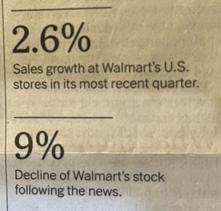
This, from the New York Times on August 21.

Here’s the headline:

A sales growth of ONLY 2.6% dropped Walmart’s stock by 9%.

OK, Walmart isn’t all about food, but it has larger food sales than any other place by a wide margin.

As I keep saying, I’m not against profit.

But the idea that 2.6% growth is insufficient to please stockholders explains everything about what’s wrong with our food system.

People and pets can only eat so much.  All food-selling enterprises cannot continue to grow infinitely.

I’ think a good argument can be made that the bad things food companies do to employees, customers, animals, and the environment result directly from stockholder pressures to grow sales and profits, quarter after quarter.

System change, anyone?

The post Our current investment system does not work for food companies or us appeared first on Food Politics by Marion Nestle

Weekend reading: a deep dive into prison food

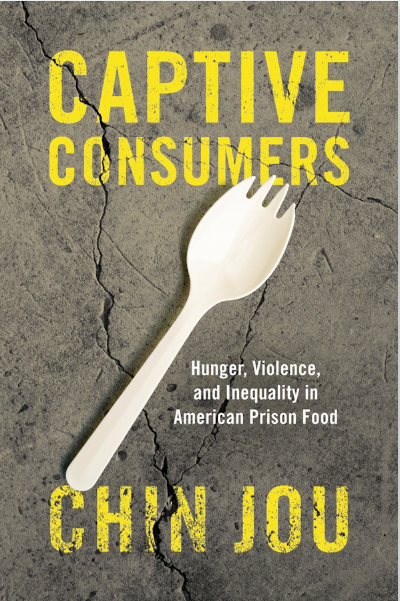
Chin Jou.  Captive Consumers: Hunger, Violence, and Inequality in American Prison Food.  University of North Carolina Press, 2026.  344 pages.

I have been a fan of Chin Jou’s work for a long time and did a blurb for her latest book:

Captive Consumers is a tough, uncompromising, and utterly compelling analysis of the ways America’s mass incarceration system uses food as punishment, and must become more humane.

From the publisher:

Using a wealth of sources from untapped historical records to prison newspapers, Jou excavates the voices of the incarcerated and shows that prison food dehumanizes the imprisoned, compounds racial and class inequalities, and induces more violence—ultimately making carceral institutions more dangerous. But this compelling book also illuminates how people behind bars have reasserted their identities, resourcefulness, and humanity through self-prepared food even as prison food services profit from lucrative, taxpayer-funded contracts that reward cost-cutting over care. If US corrections systems continue to perpetuate physical and psychological violence through food, Jou argues, Americans will suffer not just wasted tax dollars but the cost of bringing traumatized, ailing, and hungry formerly incarcerated people back into society.

____________________

Arriving Sept 8. For a 30% discount, pre-order here using code UCPSAVE30.

The post Weekend reading: a deep dive into prison food appeared first on Food Politics by Marion Nestle

❌