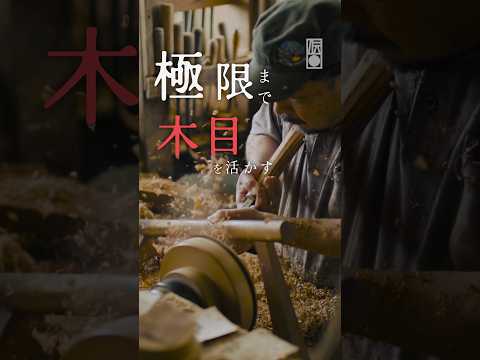
At the beginning of the 15th century, there lived in nearby mountains a lot of woodworkers who made wooden substrates on a lathe, then applied raw lacquer on them. This is said to be the origin of Odawara-shikki. Clear lacquer is used to reserve the beautiful wood-grain. Since the different parts of wood offer a different wood-grain, a careful selection of wood is required.
At the beginning of the 15th century, there lived in nearby mountains a lot of woodworkers who made wooden substrates on a lathe, then applied raw lacquer on them. This is said to be the origin of Odawara-shikki. Clear lacquer is used to reserve the beautiful wood-grain. Since the different parts of wood offer a different wood-grain, a careful selection of wood is required.
The making of Makabe-ishidoro originated about 500 years ago.
Various stonework has been crafted since olden times, as good quality granite is abundant in this region.
Ishidoro is a stone lantern made of granite,
and they are placed in shrine or temple precincts prized for its exquisite carving
and solemnity, providing rustic flavor to Japanese gardens.
The making of Makabe-ishidoro originated about 500 years ago.
Various stonework has been crafted since olden times, as good quality granite is abundant in this region.
Ishidoro is a stone lantern made of granite,
and they are placed in shrine or temple precincts prized for its exquisite carving
and solemnity, providing rustic flavor to Japanese gardens.
★詳細はこちら Click here for detail
https://kougeihin.jp/craft/1101/
ーーーーーーーーーー
■青山スクエアの公式WEBサイト official website
https://kougeihin.jp/
■工芸品を知る search for traditional crafts
https://kougeihin.jp/learn/
This ironware was started in the mid-17th century with artisans who were invited from Kyoto. The technique incolves pouring molten iron into a sand mold, whereby a kettle or a teakettle is casted. The sand lold with dots creates a tiny knobbed body on the kettle.
This ironware was started in the mid-17th century with artisans who were invited from Kyoto. The technique incolves pouring molten iron into a sand mold, whereby a kettle or a teakettle is casted. The sand lold with dots creates a tiny knobbed body on the kettle.
★詳細はこちら Click here for detail
https://kougeihin.jp/craft/0701/
ーーーーーーーーーー
■青山スクエアの公式WEBサイト official website
https://kougeihin.jp/
■工芸品を知る search for traditional crafts
https://kougeihin.jp/learn/
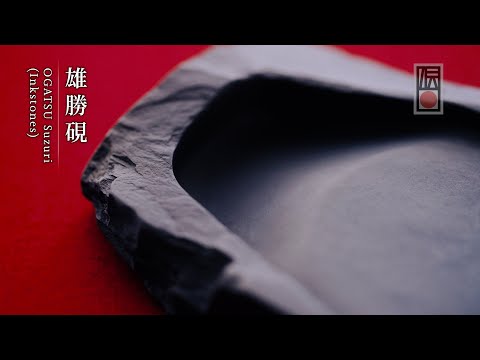
Ogatsu-suzuri originated around the 14th century. Suzuri (an inkstone) is an implement made from a claylike stone and used in calligraphy. An ink stick is rubbed on the inkstone with a small amount of water. The surface of the inkstone, though it appears smooth to the naked eye, works just like a file. This is due to the elements, such as quartz, copper, and iron, contained in the stone.
Ogatsu-suzuri originated around the 14th century. Suzuri (an inkstone) is an implement made from a claylike stone and used in calligraphy. An ink stick is rubbed on the inkstone with a small amount of water. The surface of the inkstone, though it appears smooth to the naked eye, works just like a file. This is due to the elements, such as quartz, copper, and iron, contained in the stone.
★詳細はこちら Click here for detail
https://kougeihin.jp/craft/1001/
ーーーーーーーーーー
■青山スクエアの公式WEBサイト official website
https://kougeihin.jp/
■工芸品を知る search for traditional crafts
https://kougeihin.jp/learn/
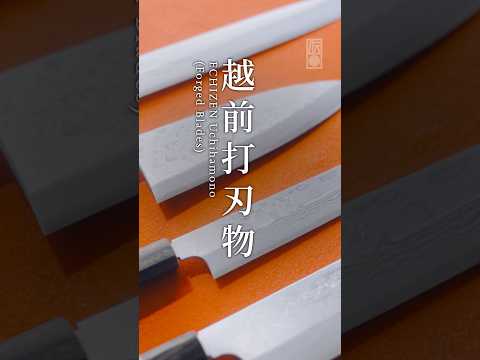
Echizen-uchihamono is said to have originated at the beginning of the 14th century. Craftsmen went to various places to collect lacquer sap for the lacquerware production industry nearby. At the same time they peddled sickles with the took with them. In this way they expanded their market for sickles throughtout Japan. Kitchen kneves, sickles, hatchets, and garden shears are manufactured ufilizing their highly specialized techniques.
Echizen-uchihamono is said to have originated at the beginning of the 14th century. Craftsmen went to various places to collect lacquer sap for the lacquerware production industry nearby. At the same time they peddled sickles with the took with them. In this way they expanded their market for sickles throughtout Japan. Kitchen kneves, sickles, hatchets, and garden shears are manufactured ufilizing their highly specialized techniques.
★詳細はこちら Click here for detail
https://kougeihin.jp/craft/0709/
ーーーーーーーーーー
■青山スクエアの公式WEBサイト official website
https://kougeihin.jp/
■工芸品を知る search for traditional crafts
https://kougeihin.jp/learn/
Mumyoi ware is made from red clay containing a large amount of iron oxide called “Mumyoi-do,” and was first produced in the early 19th century as Raku ware in red color mixed with Mumyoi-do, and the present Mumyoi ware, fired at high temperature and hardness, was completed in the Meiji period.
In principle, clay and glaze materials produced on Sado Island should be used, but with the advancement of technology and the ingenuity of potters over the years, glaze materials and forms have become more diverse in recent years, and each kiln produces products with different characteristics.

 Login
Login