To mark the bicentenary of Queen Victoria's birth, the TLS's history editor David Horspool guides us through all manner of Victorian matters, including the Widow of Windsor's mastery of soft power, how different things might have been had she been born a boy, how the Victorians amused themselves, and the Rebecca Riots; we also have a symposium in this week's paper, asking writers and thinkers – including Steven Pinker and Bernardine Evaristo – to tell us about the important books from their childhoods. To discuss this – and to share our own youthful reading – we're joined in the studio by a [insert collective noun here] of TLS editors
Go to www.the-tls.co.uk/ to read a selection of articles from our Victorian special issue, and much more.
Our symposium was prompted by an initiative – Books To Inspire – launched by Hay Festival Wales, aiming to compile a crowd-sourced list of titles to inspire the next generation. Find out more at hayfestival.com
Esta edição do programa A voz humana, de Eucanaã Ferraz, está no site da Rádio Batuta desde 9/2/2016. https://bit.ly/2QbdUPE
A relação da voz com o que é transcendente, místico, religioso é o tema deste programa de Eucanaã Ferraz. A seleção é ecumênica, de uma peça sacra a louvores a orixás, tendo no percurso um spiritual.
Academy of Ancient Music – Eternity’s sunrise (John Tavener)
Kathleen Battle – Swing low, Sweet chariot
Mia Doi Todd – Canto de Yemanjá (Baden Powell e Vinicius de Moraes)
Teresa Berganza – Xangô (adaptação de Villa Lobos) e O’Kinimbá (adaptação de Villa Lobos)
Concepção, roteiro e apresentação: Eucanaã Ferraz
Edição e sonorização: Filipe Di Castro
Imagem: São Jerônimo (detalhe), de Caravaggio. Galleria Borghese
Site da Batuta: https://radiobatuta.com.br/
Site do IMS: https://ims.com.br/
Facebook: https://www.facebook.com/radiobatuta/
Twitter: https://twitter.com/radiobatuta
Instagram: http://instagram.com/imoreirasalles
Esta edição do programa A voz humana, de Eucanaã Ferraz, está no site da Rádio Batuta desde 26/1/2016. https://bit.ly/2VC2Hsy
No novo programa da série, Eucanaã Ferraz seleciona preciosos exemplos de scats, aquelas vocalizações bastante utilizadas no jazz e que equivalem a solos instrumentais. Para ele, cada cantor tem a sua personalidade musical revelada no tipo de scat, na escolha das sílabas, no colorido alcançado, muitas vezes com efeitos humorísticos.
Repertório
Cab Calloway & his Cotton Club Orchestra – Zaz zuh zaz
The Mills Brothers – Diga, diga doo
Dizzy Gillespie and his Orchestra – Oop pop a da
Ella Fitzgerald – How high the moon?
Henri Salvador – Stompin’ at Savoy
Chet Baker – Look for the silver linning
Anita O’Day – Sing, sing, sing
Concepção, roteiro e apresentação: Eucanaã Ferraz
Edição e sonorização: Filipe Di Castro
Foto de Madalena Schwartz / Acervo IMS
Site da Batuta: https://radiobatuta.com.br/
Site do IMS: https://ims.com.br/
Facebook: https://www.facebook.com/radiobatuta/
Twitter: https://twitter.com/radiobatuta
Instagram: http://instagram.com/imoreirasalles
Esta edição do programa A voz humana, de Eucanaã Ferraz, está no site da Rádio Batuta desde 12/01/2016. https://bit.ly/2EkWWtt
O canto muitas vezes se mistura com a fala. Também pode se converter em recitativo, quando é declamado. Eucanaã Ferraz selecionou alguns exemplos especiais para o segundo programa da série. Um deles é o casamento entre os sons de Hermeto Pascoal e o poema e a voz de Mário Lago.
Repertório
Philip Glass – Einstein on the beach, Knee play 1 (P. Glass)
Laurie Anderson – O Superman (L. Anderson)
Jane Manning – Pierrot lunaire – 1 (A. Shoenberg)
Hermeto Pascoal e Mário Lago – Três coisas (H. Pascoal e M. Lago)
Chavela Vargas – La llorona
Concepção, roteiro e apresentação: Eucanaã Ferraz
Edição e sonorização: Filipe Di Castro
Imagem: Madonna del Magnificat (detalhe), Boticceli. Foto de Eucanaã Ferraz (Uffizi, Florença)
Site da Batuta: https://radiobatuta.com.br/
Site do IMS: https://ims.com.br/
Facebook: https://www.facebook.com/radiobatuta/
Twitter: https://twitter.com/radiobatuta
Instagram: http://instagram.com/imoreirasalles
The comedian and writer Helen Lederer joins us to discuss gender and comedy and the new Comedy Women In Print Prize; Lucy Dallas considers a clutch of novels in which animals might offer a little respite from human company; the TLS’s philosophy editor Tim Crane guides us through the riches of this week’s philosophy issue, including how the advent of biological immortality might augur “the greatest inequality experienced in all human history” and what happened when Michel Foucault took LSD in Death Valley
To Leave with the Reindeer by Olivia Rosenthal, translated by Sophie Lewis
Animalia by Jean-Baptiste del Amo, translated by Frank Wynne
The Animal Gazer by Edgardo Franzosini, translated by Michael F. Moore
“The last mortals: why we are especially unfortunate to die, when our near-descendants could be immortal", by Regini Rini – see this week’s TLS (in print and online)
Foucault in California: A true story, wherein the great French philosopher drops acid in the Valley of Death by Simeon Wade
Os transexuais não se identificam com o gênero de nascença. Diferentemente do que muita gente pensa, essa condição não está condicionada à orientação sexual. Ela se manifesta muito cedo, na primeira infância, quando as crianças começam notar as diferenças entre homens e mulheres.
A Organização Mundial de Saúde estima que uma em cada 30 mil pessoas nascidas no gênero masculino e uma em cada 100 mil pessoas nascidas no gênero feminino sejam transexuais.
Para essas pessoas, a adolescência, quando as características físicas do gênero com o qual elas não se identificam se acentuam, é um período de grande sofrimento. Muitas tomam medidas drásticas como automutilação ou cirurgias clandestinas.
Por isso, em alguns casos, a melhor saída é procurar ajuda profissional para bloquear a puberdade e iniciar um tratamento hormonal para posteriormente realizar uma cirurgia de redesignação sexual.
Atualmente esse processo todo pode ser feito gratuitamente no Brasil. Mas isso não diminui os desafios das pessoas trans, que ainda são vítimas de preconceito e violência. Para se ter uma ideia, o Brasil é o país que mais mata transexuais no mundo.
Como é viver num corpo em que você não se reconhece? Como o entendimento da transexualidade mudou ao longo do tempo? Como é o processo de bloqueio puberal e como são as cirurgias de redesignação sexual?
*** Você pode assinar o podcast gratuitamente no iTunes, no Spotify e nos principais aplicativos de podcast ***
Robert Macfarlane joins us to discuss our "peculiar times", the memory of ice, and the world beneath out feet; Margie Orford brings our attention to South Africa at a crucial moment in its history, twenty-five years since the first democratic election and as another makes its mark; Nicola Shulman offers a new theory about race in Disney's original Dumbo, from 1941
Underland: A deep time journey by Robert Macfarlane
The Café de Move-on Blues: In search of the new South Africa by Christopher Hope
As Avengers: Endgame is released, Roz Kaveney sweeps us through the shifting cast of superheroes and, latterly, heroines that populate the Marvel Universe, considers the evolving politics of the comic-book film, and answers the question on (some) people's lips: "but why...?"; Imogen Russell Williams's introduces some of the best writing on LGBTQ themes for children and young adults
Avengers: Endgame
Spiderman: Into the Spiderverse
Julian Is a Mermaid by Jessica Love
Aalfred and Aalbert by Morag Hood
Death in the Spotlight by Robin Stevens
Jack of Hearts (and Other Parts) by L. C. Rosen
Proud: Stories, poetry and art on the theme of pride, compiled by Juno Dawson
Estima-se que diariamente a ciência produza milhares de novos artigos. Boa parte deles se utilizam de métodos pouco rigorosos e são referendados por periódicos científicos conhecidos como predatórios – que basicamente publicam qualquer coisa, desde que se pague por isso.
Como consequência, há uma enxurrada de artigos provando as maravilhas curativas da cúrcuma, os benefícios do vinho tinto, ou as faculdades do chocolate como auxiliar no emagrecimento. Você certamente já topou com matéria sobre isso naquele suplemento dominical ou programa vespertino.
Mas como isso acontece pelos laboratórios ao redor do planeta? Por que cientistas se prestam a estudar tanta bobagem? Como esses estudos são conduzidos? E como essas pesquisas passam pelo crivo de pauteiros, repórteres e editores para chegar até você?
Escute e descubra!
*** Você pode assinar o podcast gratuitamente no iTunes, no Spotify e nos principais aplicativos de podcast ***
Repórter especial da Folha de S.Paulo, foi bolsista na Universidade de Georgetown, em Washington, em 2011, onde pesquisou sobre o conflito de interesses entre médicos e a indústria da saúde.
Economista com doutorado direto em Saúde Pública pela Faculdade de Saúde Pública (FSP) da Universidade de São Paulo (USP) e pós-doutorado na Universidade de Harvard. É professor doutor do Departamento de Epidemiologia da FSP/USP na área de estatísticas de saúde.
Jornalista e escritor, é autor das obras de divulgação científica “Livro dos Milagres”, “Pura Picaretagem” e “Livro da Astrologia”, além de diversos trabalhos de ficção científica, terror e mistério. Publicou artigos na Folha de S. Paulo, O Estado de S. Paulo, Zero Hora, entre outros. Atualmente está à frente da revista digital Questão de Ciência.
Ruth Scurr on the master biographer Robert A. Caro, whose subjects include Robert Moses, Lyndon B. Johnson and, now, himself; Dmitri Levitin talks us through Diogenes Laertius' Lives of the Eminent Philosophers, an eccentric and often inaccurate guide to early thinkers; Why bother with literary criticism? Whither this generation's Lionel Trilling? Michael LaPointe joins us to discuss
Working: Researching, interviewing, writing by Robert A. Caro
American Audacity: In defense of literary daring by William Giraldi
Hater: On the virtues of utter disagreeability by John Semley
Lives of the Eminent Philosophers, by Diogenes Laertius, translated by Pamela Mensch
A reação de ministros da corte suprema a suspeitas sobre o possível envolvimento de magistrados com corrupção política é alarmante porque viola a Constituição.
Leia mais (04/18/2019 - 02h00)
There is only one author to whom the TLS devotes an issue every year: William Shakespeare. Michael Caines talks us through the latest theories, research and reviews; Ian McEwan discusses his new novel, Machines Like Me
‘Still a giddy neighbour’ – Shakespeare’s parish in the 1590s, by Geoffrey Marsh, the TLS
The Bible on the Shakespearean Stage: Cultures of interpretation in Renaissance England, edited by Thomas Fulton and Kristen Poole
Believing in Shakespeare: Studies in longing, by Claire McEachern
Religious Conversion in Early Modern English Drama, by Lieke Stelling
What Blest Genius?: The Jubilee that made Shakespeare, by Andrew McConnell Stott
Shakespeare’s Rise to Cultural Prominence: Politics, print and alteration, 1642–1700, by Emma Depledge
Shakespeare: The theatre of our world, by Peter Conrad
Siril is a program for processing astronomical photographs.
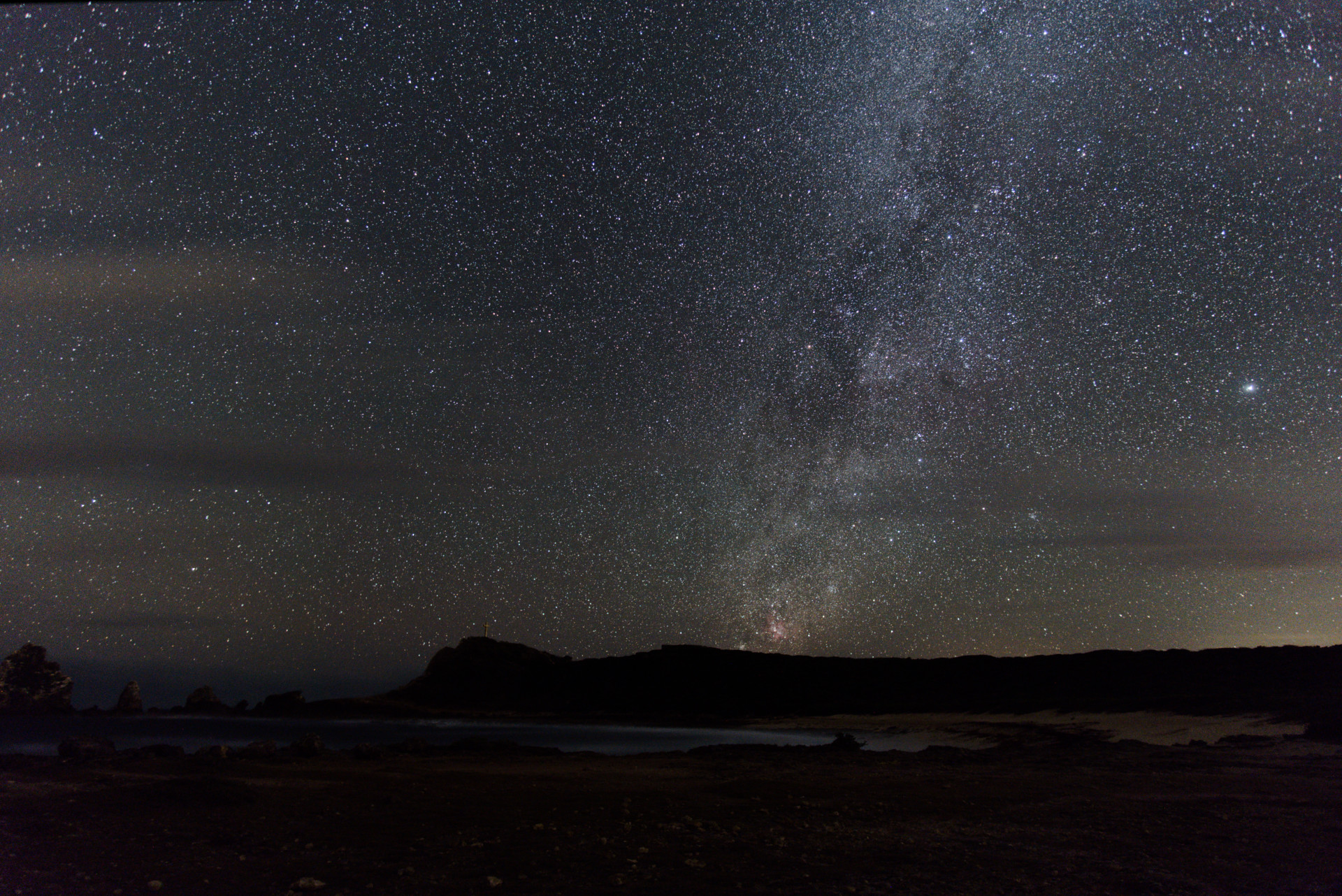
In this tutorial, I’ll show you how to process a nightscape in Siril 0.9.10.
It doesn’t intend to be comprehensive tutorial but rather to present a basic general workflow that is a good starting point for those who want to learn Siril.
For this purpose, I’m sharing the raw files I used for the image I presented here, except that for this tutorial I limited the number of frames for the sake of bandwidth and processing speed.
The Creations, by Sebastien Guyader
You can find and download the raw files here (~1GB).
Setup
The raw files are placed in specific sub-folders according to their use:
bias/offset frames → ./Bias (20 files)
dark frames → ./Darks (15 files)
flats field frames → ./Flats (15 files)
main subject/light frames → ./Lights (10 files)
Bias, dark, and flat field frames are also called “calibration” frames, their purpose being to improve the quality of the image by correcting the signal-to-noise ratio (in the case of bias and dark frames) and vignetting (with the flat frames).
There are several places where you can learn more about the different types of frames for astrophotography.
At the root of the folder, I placed two text files with the .ssf extension, these are scripts used by Siril for batch processing the files. Quite useful. If you want to run a script from Siril, place the .ssf files in ~/.siril/scripts. Upon restarting Siril, a new Scripts menu appears in the top menu bar, allowing you to launch the installed scripts.
I suggest you download the whole folder (~1GB), and move the scripts as indicated above. This way, if you set the working directory in Siril to the root of the folder, launching the script named processing_from_raw.ssf will automagically process the raws and create the output image in both .fit and .tif (16-bit) formats. Please note that in order to successfuly run the scripts, there must be a folder structure like the one used in this tutorial.
Step-by-step processing
I will present the steps I used to process an image of the Milky Way. I don’t know if it’s the best way, but it’s probably close to what the developers of Siril advise to do for the general case of starting from raw files (actually, I started from one of their scripts and just slightly adapted it).
We will start with processing the calibration files, and then processing the lights.
Preparing the bias frames
Set the working directory to the Bias sub-folder by clicking on Change dir….
We will use the 20 bias frames to generate a master-bias frame. To load the bias frames, click on the + button as shown (make sure that you select RAW DSLR Camera Files in the combo box) and select the bias frames located in the Bias subfolder.
In the “Sequence name” field, enter bias (or whatever you see fit) to set the prefix of the sequence and subsequent files, and click Convert to convert the files to the FITS format, which is the main format used by Siril. Note that you don’t need to demosaic the files yet, make sure the Debayer box is unchecked.
When done converting the bias frames, a window will pop up showing a preview of one of the bias frames. Note that since it’s not demosaiced, it will only show as a B&W channel image.
At this point, the bias frames are loaded and ready to be processed to make a master-bias frame.
In the Stacking tab, choose Average stacking with rejection as stacking method, and No normalisation under the normalisation combo box. You can leave the Sigma parameters at their default (unless you know or want to experiment for better values).
It should look like this:
Click on the Start stacking button. The resulting master-bias frame will be saved as bias_stacked.fit in the Bias subfolder.
Preparing the flat field frames
Since the flats also contain the sensor readout noise (contained in the bias frames), we should remove it by subtracting the master-bias.
In the File conversion tab, remove the files already loaded by clicking on the button located just below the - (minus) button, and by clicking on the + (plus) button select and load the flat frames located in the Flats subfolder.
Set the working directory to the Flats sub-folder by clicking on “Change dir…” and set the Sequence name as “flats”.
Like for the bias frames, ensure Debayer is unchecked, then click on Convert.
In the Pre-processing tab, check only the Use offset box, click on Browse to select the Bias/bias_stacked.fit file, and click on Start pre-processing.
To generate the master-flat, go to the Stacking tab, and this time set Normalisation to Multiplicative and the Stacking Method as Average with rejection.
Click on Start stacking to produce the pp_flat_stacked.fit master-flat frame in the Flats subfolder.
Preparing the dark frames
As with the bias and flats, you need to load the dark frames.
In the File conversion tab, remove the files already loaded, select and load the dark frames located in the Darks subfolder.
Set the working directory to the Darks sub-folder by clicking on Change dir…, and set Sequence name as darks.
Debayer should be unchecked.
Click on Convert.
The darks need to be stacked the same way as the bias frames. In the Stacking tab, choose Average with rejection and No normalisation.
Click Start Stacking.
The master-dark frame is saved as Darks/dark_stacked.fit.
Note: if you take images often in the same conditions (same air temperature, same exposure settings), you can save the dark_stacked and pp_flat_stacked files, and re-use them to process future light frames faster. I read on some forums that some astrophotographers keep their calibration files and use those for around 1 year, before taking new calibration frames.
Preparing the light frames
Now it’s time to start processing the light frames, by first subtracting the darks (which also contain the bias signal) and the flats (from which bias has already been subtracted).
Select the light frames in the File conversion tab.
Set the Sequence name to lights, and point the working directory to the Lights (Change dir...).
Convert the files, still without debayering.
Then go to the Pre-Processing tab, check Use dark, select the Darks/dark_stacked.fit file, check Use flat, and select the Flats/pp_flat_stacked.fit file.
Make sure that the other boxes are checked as in the following screenshot.
Note that “Cosmetic Correction” can also be done from the “Image Processing” tab.
Click Start pre-processing.
This will produce new FITS files with the prefix pp_light_ and the corresponding .seq file. These files are loaded.
Demosaicing the files
It’s time to demosaic our processed files. There’s something strange in the GUI, in that after pre-processing, when you uncheck “Use dark” and “Use flat” boxes, the “Debayer FITS images before saving” and the “Start pre-processing” button become grayed out.
In the File conversion tab, remove the selected files and load the 10 pp_light_000xx.fit files.
Check the Debayer box and write db_pp_light as the sequence name.
Click Convert.
The pre-processed lights will be saved as FITS files, and the corresponding db_pp_light.seq file loaded. Two preview windows will open this time, one with the 3 RGB channels separated, and one with the RGB composite image.
In the Register tab, select Global Star Alignment (deep-sky) from the registratrion method drop-down list and click Go register.
If you have more 8GB of RAM, you can try checking the Simplified Drizzle x2 box (it will up-sample the images by a factor 2, increasing the RAM usage by a factor 4). Siril will detect the stars and register each of the 10 images. The preview windows will be updated. By the way, you can play with the zoom and select AutoStretch to get a better preview of the selected image.
In the Stacking tab, make sure that Average with rejection is selected as the stacking method, and that Additive with scaling is set for Normalisation.
Click on Start stacking.
The resulting aligned and stacked image will be saved as Lights\r_db_pp_light_stacked.fit.
At this step, you can also save the resulting image as JPEG, TIFF, PNG, etc. for further processing in your favorite image editor. On the menu, just click on File > Save As, and pick the image format you wish (or right-click on the RGB windows and pick the format that best suits you).
Post-processing the image
Siril can do some more or less specialized post-processing to your image. I found it interesting to use.
While the stacked image is still loaded in Siril, you can apply a log transform (it is in linear mode in Siril). I haven’t found how to do it in the GUI, but you can simply type “log” in the “Console” field at the bottom of the Output logs tab, in the main window.
Still in the console field, you can use the command “crop” followed by the coordinates of the bounding box in pixels, to crop the image (some auto-detection tools in Siril require the image to be cropped to remove the borders introduced by aligning the images, in order to work properly). For example, my image can be cropped by typing crop 30 30 5950 3970.
You can apply green noise removal in the “Image Processing” tab > “Remove Green Noise…”.
Lucy-Richardson deconvolution can be applied in “Image Processing” menu option > “Deconvolution…”. 10 iterations and a Sigma value of 0.6 are a good starting point.
The resulting image can be saved as JPEG, TIFF, PNG, etc. for further processing in your favorite image editor or as a finished image if you’re satisfied.
Processing for the foreground
The problem with this whole process, is that because the images have been aligned with the stars as reference, the foreground will be blurred because earth moved between successive frames. What I do is to reprocess the light frames from just after the calibration step (i.e. after the dark and flat frames subtraction) but only skipping the stars registration step. By doing so, the foreground will undergo the same pre- and post-processing, and the resulting image will have a sharp foreground and trailing sky.
I provided a script (processing_from_raw_foreground.ssf) which will do that for you, if you already used the first script or if you use the same file naming convention as in the script.
Finally, in your favorite image editor, you can combine the “sky” and “foreground” images using a mask, to get both the sky and the foreground sharp.
Here’s what I obtained following these steps (but using the scripts), after just combining the 2 images in Gimp:
And after quick curve and saturation tweaking in Gimp:
A única parte do som de cinema gravada no set de filmagem é a fala dos atores. O restante – barulho de tiros, explosões, passos, portas abrindo, portas fechando, bocas beijando, bocas fumando, bocas mascando chiclete, afagos, tapas e socos – tudo isso é feito na pós-produção.
Como esse universo sonoro é criado por artistas de foley, editores de efeito e mixadores? Quais os paralelos entre o som inventado e o som real? Como o áudio cinematográfico mudou com o tempo? Como a tecnologia influenciou essas mudanças? E qual é o peso delas nos filmes que você vê no cinema? E o que, afinal, o alho-poró tem a ver com isso?
Escute e descubra!
*** Você pode assinar o podcast gratuitamente no iTunes, no Spotify e nos principais aplicativos de podcast ***
O núcleo familiar do presidente flertou durante meses com a tese segundo a qual o Brasil deveria ajudar os Estados Unidos a conter a expansão econômica da China na América Latina.
Leia mais (04/11/2019 - 02h00)
Shauneen Lambe on ephibiphobia, fear of the teenager, and why we get youth justice wrong; Alice Bloch considers new possibilities at the frontiers of sex and robotics; George Berridge explains why now is the time to take out shares in the novelist Max Porter
Why Children Follow Rules: Legal socialization and the development of legitimacy by Tom R. Tyler and Rick Trinkner
James Garbarino
Miller’s Children: Why giving teenage killers a second chance matters for all of us by James Garbarino
Turned On: Science, sex and robots by Kate Devlin
Grief is the Thing with Feathers by Max Porter, adapted by Enda Walsh (Barbican Theatre, before heading to New York)
Anna Picard discusses the problems of subject matter and sensationalism in the new opera Jack the Ripper: The Women of Whitechapel; Anna Vaux talks us through the Bauhaus school and its global influence, as well as Lucian Freud's compulsion to create and control
Books
Jack the Ripper:The Women of Whitechapel by Iain Bell, ENO, until April 12
Walter Gropius: Visionary founder of the Bauhaus by Fiona MacCarthy

 Login
Login