Login
LoginBeijos molhados, por favor
Dois no trem, sempre ele.
Leia mais (05/24/2024 - 11h57)

Casamento homoafetivo, lei que pune a homofobia: não há dúvida de que, no papel, os direitos da população LGBTQIA+ avançaram nos últimos anos. Mas como é a situação na prática? No 112º episódio do 451 MHz, o convidado é o professor de direito e colunista da seção Livros e Livres da Quatro Cinco Um, Renan Quinalha. Quinalha está lançando "Direitos LGBTI+: novos rumos da proteção jurídica" (Edições Sesc), coletânea de artigos organizada em conjunto com Emerson Ramos e Alexandre Melo Franco Bahia. Ele fala sobre os avanços e embates jurídicos da população LGBTI+ na última década. O episódio foi realizado com apoio da Lei de Incentivo à Cultura e Casa de Cultura do Parque. Apoie o 451 MHz: https://bit.ly/Assine451
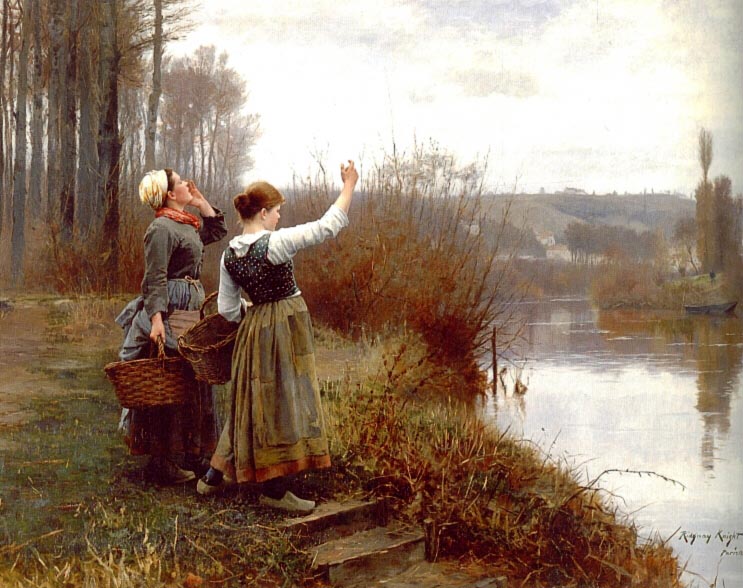
Hailing the Ferry, oil on canvas painting by Daniel Ridgway Knight, 1888, Pennsylvania Academy of the Fine Arts.
Medieval manuscripts resisted obsolescence. Made by highly specialised craftspeople (scribes, illuminators, book binders) with labour-intensive processes using exclusive and sometimes exotic materials (parchment made from dozens or hundreds of skins, inks and paints made from prized minerals, animals and plants), books were expensive and built to last. They usually outlived their owners. Rather than discard them when they were superseded, book owners found ways to update, amend and upcycle books or book parts.
These activities accelerated in the fifteenth century. Most manuscripts made before 1390 were bespoke and made for a particular client, but those made after 1390 (especially books of hours) were increasingly made for an open market, in which the producer was not in direct contact with the buyer. Increased efficiency led to more generic products, which owners were motivated to personalise. It also led to more blank parchment in the book, for example, the backs of inserted miniatures and the blanks ends of textual components. Book buyers of the late fourteenth and throughout the fifteenth century still held onto the old connotations of manuscripts—that they were custom-made luxury items—even when the production had become impersonal.
Owners consequently purchased books made for an open market and then personalised them, filling in the blank spaces, and even adding more components later. This would give them an affordable product, but one that still smacked of luxury and met their individual needs. They kept older books in circulation by amending them, attached items to generic books to make them more relevant and valuable, and added new prayers with escalating indulgences as the culture of salvation shifted.
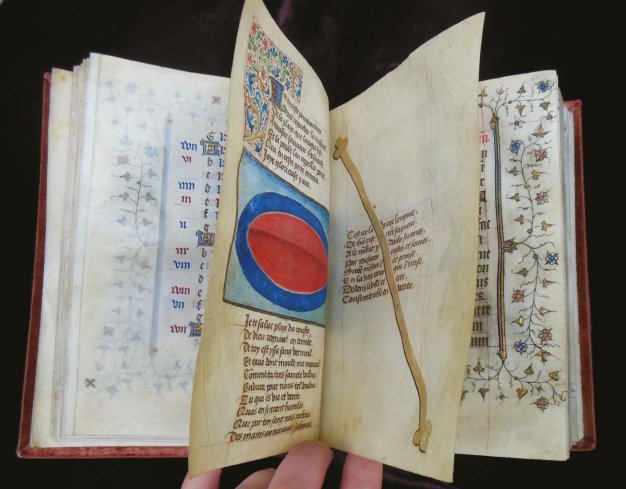
Image: Parchment diptych with the measurements of Christ’s length and side wound, inserted into a French book of hours. Paisley, Renfrew District Museum and Art Gallery, Ms. 1, fol. 13–14 forming a diptych. Photo © Author, CC BY 4.0.

This week, writers including Andrew O'Hagan, Rose Tremain, Ayobami Adebayo and Marian Keyes select their most memorable sporting moments; and we drop in on the European Writers' Festival at the British Library.
Produced by Charlotte Pardy
Hosted on Acast. See acast.com/privacy for more information.
Our series on the great political novels and plays resumes with George Eliot’s Middlemarch (1872), which has so much going on that it needs two episodes to unpack it. In this episode David discusses the significance of the book being set in 1829-32 and the reasons why Nietzsche was so wrong to characterise it as a moralistic tale. Plus he explains why a book about personal relationships is also a deeply political novel.
To get two bonus episodes from our recent Bad Ideas series – on Email and VAR – sign up now to PPF+ and enjoy ad-free listening as well www.ppfideas.com
Next time: Middlemarch (part 2) on marriage, hypocrisy, guilt and redemption.
Coming soon on the Great Political Fictions: Phineas Redux, Dr Jekyll and Mr Hyde, The Time Machine, Mother Courage and her Children, and much more.
Hosted on Acast. See acast.com/privacy for more information.
Learn more about your ad choices. Visit podcastchoices.com/adchoices


For our last episode in this series David is joined by Helen Lewis to discuss Mesmerism – aka animal magnetism – an eighteenth-century method of hypnosis for which great medical benefits were claimed. Was its originator, Franz Mesmer, a charlatan or a healer? Was his movement science or religion or something in between? And what can it tell us about twenty-first century phenomena from online social contagion to hypnotherapy?
To get two bonus Bad Ideas episodes – on Email and VAR – sign up now to PPF+, where you will also get all our past and future bonus episodes plus ad-free listening www.ppfieas.com
Coming next: The Great Political Fictions resumes with Middlemarch, the greatest of them all.
Hosted on Acast. See acast.com/privacy for more information.
Learn more about your ad choices. Visit podcastchoices.com/adchoices

The Ironwood bicycle is a wooden framed bike that people could make themselves with commonly available materials. It has a laminated wooden frame and fork to which standard bicycle components are bolted. The frame can be made with basic carpentry and metalwork skills, without the need for welding or soldering. The design is intended for small scale bicycle production that would support local employment as an alternative to importing bicycles from around the world. More: http://www.ironwoodbicycle.com.
This week, we look at the busy afterlives of two canonical characters: Nathalie Olah on Tom Ripley and Emelyne Godfrey on Sherlock Holmes.
'Ripley', on Netflix
'The Worlds of Sherlock Holmes: The inspiration behind the world’s greatest detective', by Andrew Lycett
Produced by Charlotte Pardy
Hosted on Acast. See acast.com/privacy for more information.
For our penultimate episode in this series David talks to Kathleen Stock about Roland Barthes’s idea of the Death of the Author (1967). Once very fashionable, the notion that readers not writers are the arbiters of what a text means has had a long and sometimes painful afterlife. As well as exploring its curious appeal and its persistent blindspots, Kathleen discusses her personal experience of how it can go wrong.
Two bonus Bad Ideas episodes for PPF+ subscribers – on Email and VAR – will be available very soon. Sign up now and get ad-free listening too! www.ppfideas.com
Coming Next: Helen Lewis on Mesmerism
Coming Soon: The Great Political Fictions Part 2, starting with Middlemarch
Hosted on Acast. See acast.com/privacy for more information.
Learn more about your ad choices. Visit podcastchoices.com/adchoices