Desde pequeña, Lorea Olávarri ha vivido una profunda conexión con la gastronomía: en su familia paterna “solo se habla de comida y se vive para comer”. Con influencias vascas y mexicanas, esta joven chef ha creado Lorenzo, un restaurante que entiende la cocina como un acto de memoria, donde sentarse a la mesa es un ritual que va mucho más allá de alimentarse.
Realización: Patricio Martínez
Entrevista: Regina Mitre
Looking for the perfect gift for the boat lover in your life? Our Orca plaques and Project Orca hats are now available in the Tips From a Shipwright online store—unique pieces inspired by the iconic vessel and crafted for fans of the project.
Lofting for Orca is moving steadily along, and we’re excited to share that new lines drawings for both Orca and Lou’s flat bottom skiff will be released soon. Big steps forward as we bring these classic boats back to life!
Shop now and support the build ➤ https://tipsfromashipwright.com/store-2/
We want to thank all our supporters and followers for helping us get this far! Keep following us on this journey and check out our website and social feeds for additional content.
No dia 05 de novembro, a Câmara dos Deputados aprovou o Projeto de Decreto Legislativo 3/25. Este PDL na prática suspende os efeitos da Resolução 258/2024 do Conselho Nacional dos Direitos da Criança e do Adolescente (Conanda), que trata do atendimento humanizado de meninas e adolescentes vítimas de violência sexual, garantindo o acesso ao aborto legal nos casos previstos em lei, de forma segura, sem revitimização e com a garantia da escuta protegida.
Se aprovado, o projeto dificulta o acesso ao aborto legal e seguro, em mais uma demonstração de como a mesma misoginia que mata pelas mãos dos homens, também pode violentar pelas mãos da lei.
O Pauta de hoje vai abordar o risco que esse projeto agora tramitando no Senado representa, a dificuldade de debater essa questão e os caminhos para se opor a mais essa tentativa de violar e dominar o corpo de mulheres e meninas no Brasil. Para essa conversa fundamental, a gente recebe novamente a antropóloga, professora e escritora Débora Diniz.Não esqueça de seguir e curtir o Pauta Pública nas plataformas de áudio.
Saiba que você pode ser aliado da Agência Pública e colaborar com esse trabalho. Saiba mais em apoie.apublica.orgou faça um pix de qualquer valor para contato@apublica.org. Contamos com seu apoio!
Que caminhos os livros abrem? Neste episódio, a poeta Nina Rizzi conversa com a colunista do 451 MHz Bruna Beber sobre como a leitura entrou em sua vida de menina da zona rural de São Paulo e se transformou numa via para a emancipação. Rizzi também fala da sua nova coletânea de poemas Diáspora Não é Lar (Pallas), que mistura trajetória pessoal e história coletiva usando diferentes línguas, como o "pretuguês" e o inglês falado pela comunidade negra dos Estados Unidos. Também tradutora, professora, pesquisadora e autora de livros para as infâncias, ela conta como sua escrita nasceu na era dos blogs na internet, se tornou uma maneira de dialogar com o presente e, hoje, se inspira muito na tradução, uma de suas grandes paixões.
Apoio: Lei Rouanet - Incentivo a Projetos Culturais.
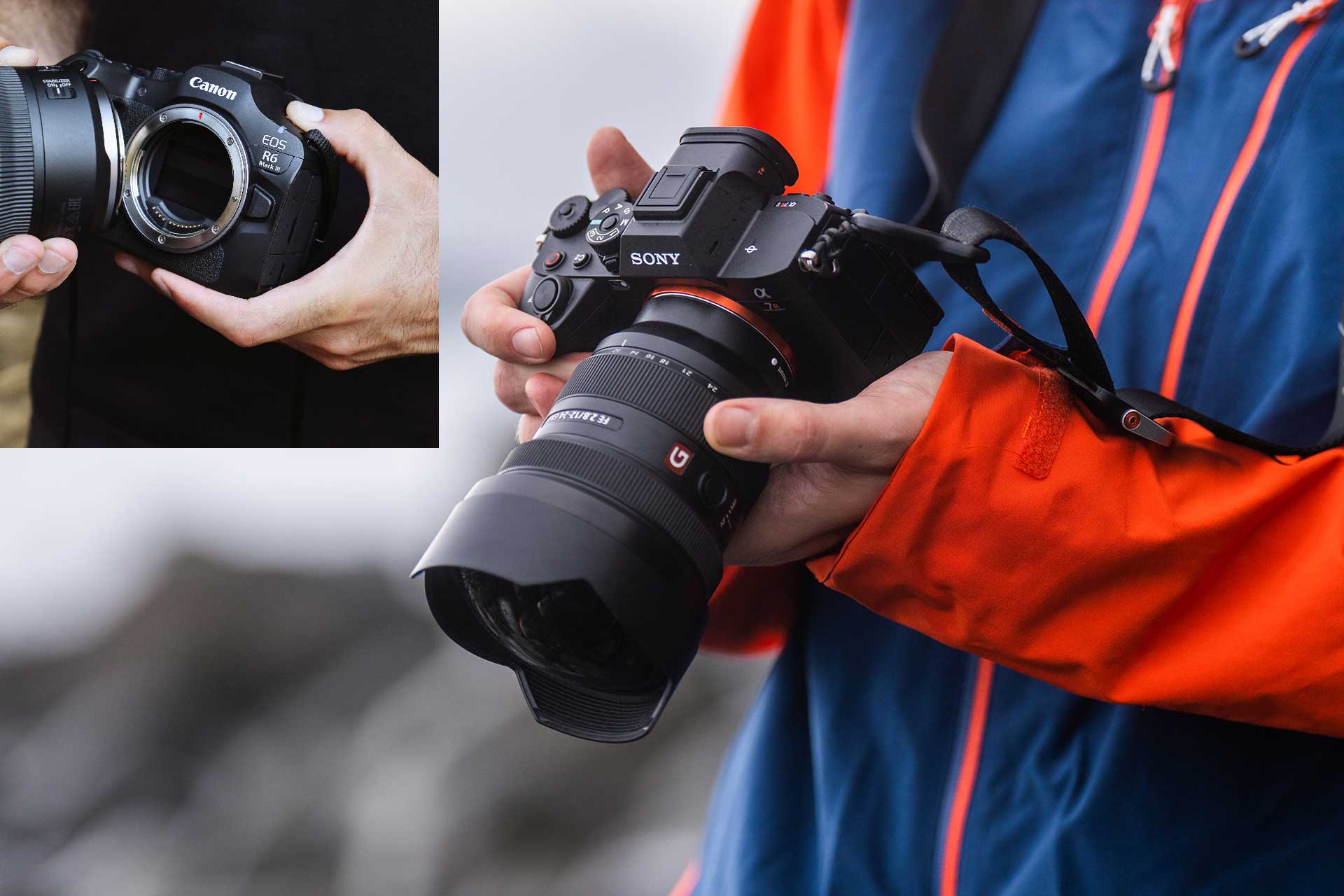
The Canon EOS R6 Mark III is the first mid-range Canon EOS R camera that’s a true contender for top-specs in the $2800 price region. What’s even more impressive is that Canon are achieving full frame 4K/120p with no crop and 12bit 7K 60P RAW video without a stacked sensor – not even a partially stacked sensor. Funnily enough, neither is it even a backside illuminated (BSI) sensor.
So what magic sauce is Canon using to out-spec the partially stacked sensor cameras from Sony, Panasonic and Nikon?
Sensor tech
Canon are still with their proprietary CMOS sensor technology, introduced as far back as 2002 with the Canon 1D Mark II. Humorously, the first Canon 1D used a Panasonic CCD. Their CMOS technology wasn’t quite ready for it. Since then, Canon have pioneered the way in CMOS sensors, the technology that swept aside CCD for speed and resolution, as well as introducing the world to DSLR video.
By the late 2010s however, it looked like Sony had overtaken them. Backside illuminated sensors, stacked sensors with the RX100 VI and Sony a9, the first to 60 megapixel and if you count the Fujifilm GFX 100 the first to 100.
But then something unexpected happened. In 2020 Canon struck back with the Canon EOS R5, shackles were well and truly taken off with much faster sensors and image processing, yet still no stacked sensor or even BSI design in sight, which Sony introduced as a way to improve the low light performance of very small chips in phones.
The truth is that BSI isn’t really needed for large full frame sensors, and there are other ways to improve the readout speed of a CMOS sensor, other than solder-bumping a buffer memory chip onto the back of the mainboard.
Although Canon does have stacked sensor designs, like in the EOS R3 – I can confidently say the EOS R6 Mark III has a cutting 33MP edge sensor in every way – despite not using Sony’s technology.
They have built on the latest Canon architecture of the EOS R5. Canon are back to their best in a mid-range body for the first time in MANY years… No more cropping, no more rolling shutter issues and plenty of frame rates in the region of 60p and 120p.
The only Sony sensor technology Canon still lacks is a global shutter design for full frame mirrorless cameras, although they are now working on one.
Lenses – RF vs Sony E-mount
I’ll start by prefacing this comparison, with a little bias. I am a big fan of Sony’s E-mount ecosystem, with the full range of Sigma ART lenses, the full gamut of Tamron, and the fact that miraculous adapters from Techart exist to autofocus all my vintage glass on a full frame camera. This is a BIG DEAL.
Sony a7 IV with Techart PRO Leica M Autofocus Adapter II LM-EA9
It is something Canon RF mount simply doesn’t offer, and the longer flange distance prevents the adaptation of other mirrorless lenses to the system as well. For example on Nikon Z mount you can use E-mount lenses with native-level autofocus performance.
I also not a big fan of Canon’s native RF lenses. The best ones are too big, extremely expensive and can of course only be used on one system, whereas the good old EF range goes on anything (Even the Fujifilm GFX 100).
That said if you’re fully invested in RF lenses and don’t use vintage glass, the point is moot.
Used vs new
Not only will we be looking at the R6 Mark III and how it compares to the Sony a7 V, but I think it’s worth also comparing to the best value for money USED Canon bodies in 2025, in particular the original EOS R5 which is now just $2000 / £1800 used, and the EOS R3 which has come down to around $3200 used, or £2800, the same as a brand new R6 Mark III.
Buying used is a no-brainer for me as most outlets now offer a long warranty with used gear – as long as 5 years in the case of CEX in the UK, although WEX and MPB only offer 6 months.
Above, on the used market a Fuji GFX 100 or an EOS R5 for £1775 is hard to argue with – plus a FIVE year warranty at CEX in the UK
Filmmaking specs – image quality, frame rate and codecs
7K DCI 60p RAW is the stand out feature of the Canon EOS R6 Mark III compared to the Sony a7 V.
For all the talk of stacked sensors or partially stacked sensors, the EOS R5C back in 2021 proves that to achieve the readout speeds necessary for 8K at 60fps, or full width 4K 120fps – a plain old FSI CMOS can do the job just fine. The “stacked sensor” architecture is a bit misleading anyway – the buffer memory is not stacked onto the sensor but onto the back of the image processor, on the mainboard. I know this because I have disassembled stacked sensor Sony cameras, such as the RX100 V.
Compared to that 7K RAW, the a7 V tops out at Ultra HD – not even DCI 4K – and there is absolutely no raw or uncompressed video not even via HDMI. It used to be that Canon got the cripple hammer out to protect the Cinema EOS line – now it seems the hammer has a Sony badge! The FX series is what Sony want you to buy for their top video feature set. That said, the a7 V builds on the already very capable image quality of the Sony FX2 and Sony a7 IV – a 7K readout downsampled to UHD – and cures one of the biggest weaknesses – the high rolling shutter, and lack of full width 4K 60p.
The a7 V is like the Nikon Z6 III in 4K/120p mode though – it crops to 1.5x S35mm (APS-C). Whereas the R6 III is like the original EOS R5… full width 4K 120p, albeit pixel binned and not a full pixel readout.
There will be some moire therefore, but nowhere near as much as in the days of plain old line-skipped 1080p.
It’s worth mentioning at this point the Nikon partially stacked sensors – the Zr and Z6 Mark III both do 6K/60p RAW recording – so the Sony is behind these too. The Panasonic S1 II offers 6K open gate raw, 5.7K 60p and 4K/120p is just a 1.17x crop of the full width of the sensor, rather than 1.5x.
The EOS R6 III has open gate recording too – only at up to 30p but that’s new for Canon. For the first time you can put an anamorphic lens on a Canon stills camera without regrets.
So…
It’s clear win for the Canon, Nikon and Panasonic competition over the Sony a7 V if you want higher resolution video than 4K or internal RAW recording.
Video autofocus reputation
In the earlier days Dual Pixel AF had a clear lead over the competition in video autofocus, but switching to video mode now sees Sony take a clear lead on their latest cameras. Canon’s autofocus is by no means back of the pack – but it’s behind Sony and Nikon in terms of reliability, subject tracking and the occurrence of hunting with tricky subjects in video mode.
Canon reserves the best AF for stills on the EOS R3 and R1.
Rolling shutter
The characteristic distortion of fast horizontal movement takes the form of rolling shutter, as the sensor is read from top to bottom. Above 30ms is considered slow, and unsuitable for whip pans, fast action, sports, boxing, or trains arriving – you get the idea. 20ms is considered the middle-of-the-road value today, whereas sub 15ms is in the safe region, under 10ms even better, 5ms the current state of the art (although often you’ll have to shoot at 120fps to take advantage of it). Take a look at the figures below:
Canon EOS R6 Mark III – 18ms to 7ms
18ms is the R6 III in 7K open gate, the slowest 30p mode with the highest resolution. This is actually quite reasonable. In 7K DCI for Canon RAW, and in the oversampled 4K/60/24p modes, this comes down to a very respectable 14ms. Disabling the full pixel readout but maintaining the full width of the sensor, the R6 Mark III picks up the pace in all the pixel-binned modes such as “standard” 4K as opposed to the oversampled-from-7K “fine” mode, and in 120fps. The value in these modes is an impressive 7ms.
Sony a7 V – 15ms to 7ms
The Sony has the same readout speed, with the absence of an open gate mode. In 4K/24p and 60p we have 15ms, in the 4K/120p Super 35mm crop mode it is 7ms. So, exactly as the EOS R6 III in this department and with very little to worry about. This new Sony sensor has half the rolling shutter of its predecessor.
Video assists and LUTs
The R6 Mark III has wave form, false colour and custom LUTs. The Sony a7 V only has custom LUTs. Neither camera allows you to bake-in the colour science of a LUT into recorded footage – the output is always 10bit LOG and the LUT has to be applied in post. This is one area where the Panasonic S1R II and S1 II have the advantage. Don’t like Sony’s colour science for Rec.709 video or for JPEGs? Well, you’re stuck with it. On the Canon side, the default colour is quite good – but it has none of the film simulations or more characterful filters that we enjoy from other brands.
The latest Panasonic cameras are leading the pack when it comes to video assists and monitoring. Vectorscope, anamorphic desqueeze, shutter angle and Real-time LUTs put Canon and Sony in the shade.
Body-design and ergonomics
Sony have a winning formula for the rear-screen. It has the best tilt and swivel mechanism (same as the a1 II and a7r V), but at same time remains as slim and as lightweight as possible. When this kind of mechanism was first pioneered by the Panasonic S1H, it was rather clunky. The Sony system is a big improvement. The Canon EOS R6 Mark III makes do with a consumer-friendly standard swivel screen hinge, the likes have graced consumer cameras since the days of CCD compacts. The Canon R6 Mark III screen design wouldn’t be out of place on a Powershot G1 from 2002.
The Sony screen is also larger – at 3.2″ vs 3.0″ and believe me you do get to tell the difference even if small.
Versus used bargain Canon EOS R3 and EOS R5 OG
So the original R5 is basically very similar in spec to the R6 Mark III, and although it lacks the newer autofocus and some of the newer video features like custom LUTs, you still get that very high resolution RAW, at 8K on the R5, and full width 4K/120p without a crop. The sensor readout speed is very similar, with the same low rolling shutter figures. The price is a full $1000 lower, depending on where you shop for your used cameras. Having said all that, I think the R6 Mark III finally surpasses it though. It has taken 5 years but it’s there – maybe not in terms of outright resolution (7K vs 8K) but in terms of frame rates and features. There’s no 60p in 8K RAW on the EOS R5 OG… You’ll have to stump up for the R5C for that and lose IBIS. A used EOS R5 Mark II meanwhile, is of course much more expensive.
Compared to the EOS R3 is where things get interesting, but the R3 is a bit of a chonk – in the now old fashioned vertical grip style of a typical pro DSLR. However, the R3 is better in low light, thanks to a lower megapixel count. It has 6K RAW up to 60fps… Or 6K DCI 24p at some quite low-bitrates in Canon RAW Lite, approximately 600Mbit/s – which comes in handy for saving space. The minimum RAW bitrate in 7K on the R6 III is 960Mbit, and it can get as high as 2600Mbit which for many people is simply impractical.
That said the R6 III has both C-LOG 2 and 3, the R3 only C-LOG 3 – so you might find a smidgeon more dynamic range on the cheaper camera in video mode – whether those shadows will be less noisy however, is another matter.
The R3 also has the advantage of higher build quality, a better EVF and better rear screen resolution. Casting around the internet it was easy to find one for R6 Mark III prices… Around £2800, or as low as £2300 if you import a mint one from Japan.
14bit vs 12bit stills in e-shutter mode
The Sony a7 V uses a 14bit sensor readout for high-speed continuous burst shooting and in e-shutter mode for stills, the EOS R6 III drops to 12bit. The numbers might seem dramatic but the real-world difference is very small, less than half a stop of useable dynamic range in the RAW files.
Sony regularly advertises 15 or 16-stops dynamic range for their stills cameras and with the a7 V they did so again, unfortunately the 16 stops was not in the room when they said it, and the paranormal investigator couldn’t find it either. The truth is that if you try to push 10bit video or even 14bit RAW stills in post to show 16 stops it WILL look like garbage, you’ll lose the contrast in the scene, the tonality and quality of colour, and your HDR display will have to be set so bright it will add a digital sheen to everything and break your eyeballs. The only digital format with this kind of latitude that looks any good at all is the Alexa 35, and even that is nowhere near 16 stops after grading, and you need to use an IMAX projector to show it to people.
As in burst mode for stills, the R6 III offers 12bit in video mode – where most people shoot 10bit anyway – and it’s a dual gain sensor, with the second circuit coming in relatively early at just ISO 800. Worth a side note that the classic cinema frame rate of 24p is only available in DCI format mode (1.90:1 ratio, 4096 x 2160). This is because strictly speaking, 24p is not a video-centric frame rate for 16:9 HD or Ultra HD (3840 x 2160). Thus these are only 25p / 30p / 50p / 60p depending on whether you set the camera to PAL or NTSC… The NTSC video standard is 30p, not 24p. If you need 24p in 16:9 you’ll have to crop the 4096 x 2160 recordings in post.
Adding up the scores
For me the Canon EOS R6 III outscores the Sony a7 V in some significant video and cinema related areas, but out of the two I personally would pick the Sony – oddly enough!
So the reasoning goes as follows…
Although the Canon EOS R6 III beats the a7 V is in outright image quality in video mode – here they’re both very good. I will hand it to Canon for colour science and their insanely high data rate RAW codec in 7K. This is another level versus your standard Ultra HD 4K from Sony. That said, H.265 is actually VERY good and S-LOG 3 offers enough grading headroom for everyone. On the Canon side there’s an element of overkill to it. The image from the a7 V, like the a7 IV before it is good enough for almost every purpose, even Hollywood cinema and professional projections in a theatre. If it’s good enough for that and close to an FX3 which was used to shoot The Creator, it’s good enough for us, right?
The data rates and file sizes are very difficult to manage on the Canon – these RAW masters have to be deleted – you can’t really keep the precious material for long without incurring huge expenses on archival storage mediums. If you’re simply handing material over to a client and it’s gone – easy enough – but if you’re an individual artist or filmmaker who wants to keep years and years original 7K RAW 60p recordings… good luck with that.
The R6 III beats the a7 V for slow-motion. The 4K/120p = full frame, not an APS-C 1.5x crop only.
The R6 III has the edge on colour – with a foundation in colour film, and early pro DSLRs, Canon has built on the best colour science in the business. It’s just a shame that all the Photo Styles are essentially the same thing with subtle differences in contrast. The Sony has a more filmic range of filters, which attempt to ape what Fuji does so well with their film simulations. Out of the box it comes up short, but you can tailor it to perfection. Also, S-Cinetone, S-LOG 2 and S-LOG 3 all have extensive tuning parameters.
So although the a7 V lacks the eye-catching headline video specs of the R6 Mark III, it wins in a much more important area…
Sony E-mount is simply head and shoulders above RF. The native glass is better, there’s more of it, the third party situation is fantastic, as opposed to AWFUL on the Canon side, the adapters are better, it’s been around longer, and the IBIS works properly with adapted glass too. On the Canon RF cameras, IBIS performance is cripple hammered with adapters and reduces to such an extent you’ll question whether it’s even switched on. So for Leica M lenses, Minolta MD, and so forth you’re MUCH better off using them on the Sony, and use them I do, as there’s no way that modern glass gets close to the cinematic analogue look of the best vintage lenses.
The a7 V – and I’d never thought I’d say it – is arguably now the more sexy high-tech shooting experience too. The R6 Mark III, indeed all the Canon EOS R cameras have all the charm of a photocopier. Canon’s deft ergonomic touch has also deserted them. The materials and finish are awful, although Canon’s menus remain top notch and overall it’s a ‘smooth’ experience – the whole thing is just lacking in any sort of charm – a bit like Sony used to be. It is a work tool and the expensive RF lenses collect so much dirt in the fine pattern grain finish of the barrel, it’s horrible.
The Sony a7 V not only looks more enticing, more exciting, more futuristic – it is more advanced and better built too. Sony has banished all the ergonomic disasters of their past. The best feeling buttons, dials and screen mechanism, all in a very compact body with a very chunky grip, huge EVF and mega battery life. The Sony a7 V is not a mid-range body – it has more in common with the a7r V or even a1 II than ever before. Whereas between the EOS R6 Mark III and their flagship, the R1, there’s a big difference in quality and materials.
So even though Canon has after 5 years finally offered us an EOS R5 spec camera for mid-range prices (if you consider $3k mid-range that is!), there are things that temper my excitement somewhat
7K RAW has a degree of “overkill” about it – will you need it? Or does it just sound great on paper?
Good old 10bit 4K/H.265 looks great!
6K/7K/8K internal RAW recording is no longer exotic – it’s been around a while now. It’s common and affordable. The R5 offers it for under $2k used
Great specs on the video side are wonderful to see from Canon, but it doesn’t mean as much in an RF mount camera – the native lenses are charmless and expensive lunacy. For me, ergonomics and vintage lenses are WAY more important than simply the difference between 4K and 7K
Better autofocus for video and indeed stills on the Sony side now
Sony also has the better IBIS for manual focus lenses & vintage lenses via an adapter
Quite a lot of the a7 V and EOS R6 Mark III are similar… With equal performances in terms of rolling shutter, full frame, 4K 60fps without a crop, the same price and overall market position – but for me at least, the significant advantages of Sony’s mount win the contest for me versus the better overall Canon video specification.
On the other hand if you’re truly happy with EOS RF mount, the R6 Mark III will be an exceptional tool (for you).
Neste vídeo vamos conversar um pouco sobre uma função do OpenDroneMap que permite alinhar dois conjuntos de dados.
Particularmente útil para análises temporais, ficou muito fácil processar um novo conjunto de fotos de uma região que já tenha sido processada no ODM/WebODM e fazer um alinhamento automático usando o processamento anterior como referência.
O SPAMLab é o Laboratório de Análise e Modelagem Espacial do Instituto de Astronomia, Geofísica e Ciências Atmosféricas (IAG) da USP.
Inscreva-se no canal: https://www.youtube.com/spamLabUSP/?sub_confirmation=1
Siga-nos nas redes sociais e acompanhe nosso trabalho:
Instagram: https://www.instagram.com/spamlab.usp
Site: https://spamlab.github.io/
Sketchfab: https://sketchfab.com/spamlab
This week, Camille Ralphs confides the highs and lows of travelling by Greyhound bus; and Alev Adil boards a train to join current night owls and bygone tourists.
'Greyhound', by Joanna Pocock
'Moonlight Express: Around the World by Night Train', by Monisha Rajesh
'To the Sea by Train: The Golden Age of Railway Travel', by Andrew Martin
No novo episódio do Mano a Mano, Mano Brown e Semayat Oliveira conversam com Samantha Schmütz sobre sua trajetória, inspirações familiares e a importância da profissionalização e da entrega no trabalho. Eles falam sobre desafios dentro e fora do país, seu mergulho na música, o lançamento do novo disco e a vontade de explorar novas linguagens artísticas. Samantha também reflete sobre o uso da sua visibilidade para atuar em pautas sociais e contribuir para a sociedade.Um episódio inspirador sobre propósito, dedicação e arte. Learn more about your ad choices. Visit podcastchoices.com/adchoices
Hier Teil 2 ansehen: https://youtu.be/r9HwFnMmqsk
Hier Teil 3 ansehen: https://youtu.be/3QRx3qL1KfY
Das Bild Berlins um 1900, gestaltet aus frühen Filmaufnahmen, Fotos und anderen Dokumenten, vielfarbig, bewegt und überraschend wie der Blick in ein Kaleidoskop. Die mit vielen Preisen ausgezeichnete Dokumentarfilmerin Irmgard von zur Mühlen stellt dem Glanz der Metropole und den imposanten Bauten des Wilhelminismus die Hinterhöfe und das harte Los der Fabrikarbeiter gegenüber. Gezeigt wird der Alltag der Berliner*innen, das bunte Treiben in den Einkaufsstraßen und die Not der Obdachlosen. In der Nacht locken Bars, Restaurants, Theater und Lichtspielhäuser.
O Curso de Formação Histórica e Social será realizado entre setembro e dezembro de 2025, no formato híbrido, com encontros presenciais no Departamento de História da FFLCH-USP (Av. Lineu Prestes, 338 – Cidade Universitária, Sala de Vídeo – 1º andar) e transmissões online. A inscrição e a participação são gratuitas.
IG: @criticasocialista
When the artist Louise Nevelson immigrated to America as a child, she was told that ‘the streets... would be paved in gold’. Obviously, they weren’t, but that hasn’t stopped modern artists turning pretty much everything else golden. Even a toilet.
Join National Gallery Courses and Events Programmer Caroline Miller, Associate Curator of Contemporary and Modern Priyesh Mistry and host Beks in the final episode of our sparkling miniseries. From Gustav Klimt’s ‘The Kiss’ to an artwork so valuable it has hardly ever been displayed, we explore how artists have explored and tested the limits of gold.
____
Subscribe to our YouTube channel and never miss an episode of 'Stories in Colour': http://bit.ly/1HrNTFd
You can email us with any questions via podcast@nationalgallery.org.uk
Find out more about the podcast on our website: www.nationalgallery.org.uk/podcast
____
🎨 Find out more about artworks in the episode:
Joseph Beuys, ‘How to Explain Pictures to a Dead Hare’, 1965. Galerie Schmela, Düsseldorf [Performance art] https://www.artgallery.nsw.gov.au/collection/works/434.1997.9/
Gustav Klimt, ‘The Kiss (Lovers)’, 1908 (completed 1909). Belvedere Museum, Vienna https://sammlung.belvedere.at/objects/6678/der-kuss-liebespaar
‘Emperor Justinian and Members of His Court’, early 20th century reproduction (original dated 6th century, Byzantine). The Metropolitan Museum of Art, New York https://www.metmuseum.org/art/collection/search/466586
Find out more about Maurizio Cattelan’s ‘America’ (2016) here:
https://www.bbc.co.uk/news/articles/cjev7vn4qp0o https://www.bbc.co.uk/news/articles/c1j8z6r8zl6o
____
Episode credits:
Guests: Caroline Miller and Priyesh Mistry
Host and executive producer: Beks Leary
Producer: Harry Rosehill
Researcher: Hannah Rogers
Technician: Ian Warren
Video editors: Jeanne Kenyon and Alessandro Sorenti
Theme music: Theo Elwell
🎞 Subscribe to our YouTube channel and never miss a video: http://bit.ly/1HrNTFd
Follow us on social media!
⭐️ Instagram: https://instagram.com/nationalgallery
⭐️ TikTok: https://www.tiktok.com/@nationalgallerylondon
⭐️ Facebook: https://en-gb.facebook.com/thenationalgallery/
⭐️ Threads: https://www.threads.net/@nationalgallery
⭐️ X, formerly Twitter: https://twitter.com/NationalGallery
Help keep the museum accessible for everyone by supporting us here: https://www.nationalgallery.org.uk/support-us
The world's greatest paintings to your inbox. Sign up to receive the latest news from the Gallery: https://bit.ly/3m0FY98
The National Gallery houses the national collection of paintings in the Western European tradition from the 13th to the 19th centuries. The museum is free of charge and open 361 days per year, daily between 10am - 6pm and on Fridays between 10am - 9pm.
David talks to novelist Ian McEwan, who was our first ever guest on PPF, about how the future will view our present once the disasters we are brewing come to pass. How might humanity scrape through the rest of the century? Will future generations see us as intellectually vibrant or essentially trivial? If we turn out to be unknowable to those who follow us, does that mean we are unknowable to ourselves? A wide-ranging conversation about how past, present and future co-exist in time.
If you are looking for Christmas presents we have 6- and 12-month gift subscriptions to PPF+ giving access to all our bonus episodes, ad-free listening and automatic sign-up to our fortnightly newsletter – which can be delivered to the recipient of your choice on Christmas Day! https://ppf.supportingcast.fm/gifts
This time, the table was deeper than the Trestle tables we had made so far, so we had to come up with a new design to ensure durability.
The legs are joined with "Double Tenon joints" and the table top has "Tapered Sliding Dovetail joints".
The stretcher is "Double-wedged Through Tenon".
今回は、今まで製作したトレストルテーブルに比べ、奥行きのあるテーブルだったので、強度を保つため、新しくデザインを考える必要がありました。
脚部を「二枚ホゾ」で接合しており、天板は「吸い付き桟」で付いています。
貫は通しホゾを二枚のクサビで留めています。
furniture maker : Natsuki Ishitani
video & posting : Chie
music :「幻冬」by のる
IG:@archivo_ideas
Archivo de ideas recibidas es un proyecto interdisciplinario de investigación y difusión que busca registrar y relacionar las ideas de personas que contribuyen al ecosistema creativo contemporáneo desde el arte, el diseño y la arquitectura.
El proyecto se construye desde las conversaciones que el equipo sostiene con diversos creadores, en donde se profundizan temas relacionados a la memoria, la academia, el contexto cultural, sus principales influencias y metodologías de trabajo.
Estas conversaciones constituyen el punto de partida para entender a la persona detrás de los proyectos y las ideas que marcan su práctica profesional y creativa.
--
La entrevista esta estructurada a partir de siete temas que funcionan como punto de partida para tocar distintos aspectos de la vida y obra del invitado. Los temas son los siguientes:
Sound effects obtained from https://www.zapsplat.com
Discover why the Coman M1 Pro is the $700 must-have for videographers! (There's also a $300 non-carbon version, see link below.)
This versatile monopod offers unmatched stability, flexibility, and innovative features to elevate your creative workflow. Designed for serious video work, it’s perfect for wildlife photography, birdwatching, or capturing cinematic footage in the field.
_________________________________________________________
Non-Carbon Version (More Affordable) - https://geni.us/gocF
Full Carbon Version (Lighter) - https://geni.us/ObsyTP
Affiliate links may earn Imaging Resource a commission
_________________________________________________________
Key highlights:
- Dozens of features, from quick-adjust legs to a locking pivot switch
- Fluid head for smooth, precise motion
- Stable feet with customizable resistance for real-world testing
- Quick-release system for effortless adjustments
- Modular design for DIY options, including compatibility with standard tripod heads
- Compact and lightweight alternative to bulky tripods
Whether you’re a creative professional seeking the best photography gear or exploring new tools for your projects, the Coman M1 Pro delivers exceptional value with its weather sealing, adaptability, and user-friendly design. Ready to transform your workflow? Read our in-depth report over on Imaging Resource for detailed reviews, benchmarks, and comparisons with other models. Don’t miss out—this monopod truly stands out as a game-changer in videography equipment!
As Nazi Germany collapsed in the final days of World War II, Reichsmarschall Hermann Göring, one of Adolf Hitler’s highest-ranking deputies and head of the Luftwaffe, attempted to position himself as Hitler’s successor. On April 23, 1945, he sent a message to Hitler suggesting he take over leadership, since Hitler was trapped in Berlin. Hitler interpreted this as treason and stripped Göring of all titles and ordered his arrest.
Realizing Germany’s defeat was imminent, Göring attempted to surrender to the Western Allies rather than fall into Soviet hands. On May 6, 1945, he surrendered to U.S. forces near Radstadt in Austria. He was taken into custody without resistance.
The Americans treated Göring as a high-value prisoner. He was interrogated, held at Camp Ashcan (the interrogation center for senior Nazis), and later became the top defendant at the Nuremberg Trials. During the trials he attempted to defend the Nazi regime and portray himself as Hitler’s rational counterbalance, but he was found guilty of war crimes and crimes against humanity. Sentenced to death by hanging, Göring avoided execution by committing suicide with cyanide on October 15, 1946.
The newest episode of the Gutenberg Changelog podcast, #125, features hosts Birgit Pauli-Haack and JC Palmes discussing a major trio of releases: WordPress 6.9, Gutenberg 22.1, and Gutenberg 22.2. JC highlights several exciting features in WordPress 6.9, focusing on significant developer and editor experience improvements, including the full iframe editor, routing, DataViews, the Interactivity API, pattern logic and content-only mode, and the Abilities […]
Today’s episode is the second part of David’s conversation with historian Robert Saunders about the life and legacy of Margaret Thatcher. What is the meaning of Thatcherism in the twenty-first century? Why is she still such a polarising figure? Was she a distinctively British political phenomenon? Which politicians can plausibly claim to be channelling her example today?
If you are looking for Christmas presents, how about a gift subscription to PPF+? You can choose between 6- and 12-months subscriptions – giving access to our entire archive of bonus episodes, plus two new bonuses every month, ad-free listening and automatic sign-up to our fortnightly newsletter – to be delivered to the recipient of your choice on Christmas Day. All the details you need are here https://ppf.supportingcast.fm/gifts
Next Time: Novelist Ian McEwan on imagining the present as a future past

 Login
Login