Login
LoginWhat’s worse for innovation: MAGA or Mao?
Donald Trump and Xi Jinping share a dangerous nostalgia


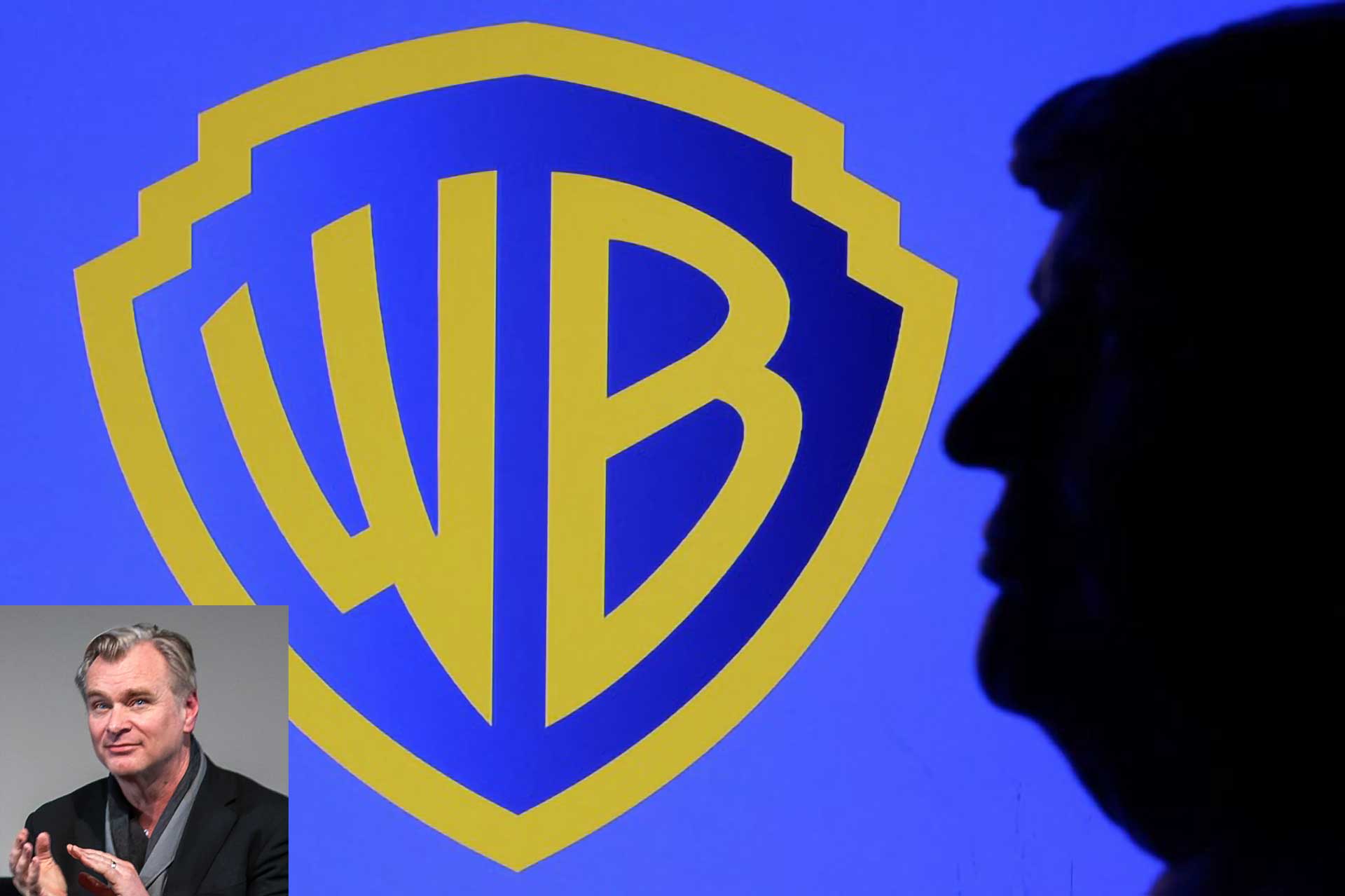
From a British perspective I can only look at America right now in total despair. It’s like watching the Soviet Union in the mid 1990s. The film industry is under a huge amount of pressure at the moment from all angles – now the last remaining great Hollywood studio is being offered for sale – Warner Bros. It’s the closest thing yet to putting the entirely of Hollywood up for sale. Cinema is not safe with Larry Ellison, if he gets his way.
The streaming tech giant Netflix is in the blue corner with a massive 82 billion dollar offer that was expected to be accepted by shareholders but Larry Ellison of Oracle is now circling Warner with a hostile takeover bid promising to “finish what we started” – make no mistake, this is the end for cinema as we know it.
Ellison has already hoovered up Paramount in August of this year, handing control to his son David in an act of pure nepotism.
Before we directly address the facts I want to get my opinion out there about the shocking state of affairs film finds itself in with the Warner Bros buyout. You can also read the official Netflix statement of intent here.
What follows is an opinion piece, nevertheless containing factual evidence…
It is one thing for Hollywood to be sold down the river to a tech giant like Netflix, the biggest single factor in movie theatre decline ever, but to have the US President interfere in favour of an oligarch friend Larry Ellison is plainly un-American, it isn’t capitalism, it’s straight out of the Russian playbook for a mafia state and totalitarian dictatorship. Some would even go so far as to call it straight up fascism, that Ellison may be in the position to create a monopolistic media so he can control the average American and dictate the public discourse. Where exactly Harry Potter and Barbie come into it is anyone’s guess but I recommend seeking out the 1980s book by Neil Postman: Amused to death, available at all good bookshops until it’s taken away and burnt.
According to reports in the reputable British media including the BBC, Trump is threatening to veto the proposed Netflix takeover of Warner Bros by bending the arm of the competitions and mergers authorities so they will only approve a sale to Ellison, and nobody else.
Of all the corruption hiding in plain sight that my friends in the US have witnessed this year I think this is the most audacious, there is no attempt to hide it at all.
And we’re all sitting around with the popcorn out as if it’s some sort of reality TV show. The public discourse on this has been as usual – pathetic. As if it’s a sport.
Ellison is in my opinion nothing but a wannabe oligarch. He must have buttered up Trump something wild with all that AI claptrap because the two geriatrics seem to be closer than Stalin and Mussolini, presumably there’s more to this in terms of just a bromance, what sort of payback there is for Trump… one can only speculate.
Larry Ellison is also now the owner of Paramount studios. The competitions authority under Trump doesn’t seem to be bothered by that. Funny! Paramount are pretty much second only to Warner as far as massive US media giants go. It’s laughable that any sane competition regulator would allow Paramount/Skydance/Oracle to buy Warner.
It’s a “family business” in so much as like all good oligarchs there’s his son in charge of Paramount as if it’s a fucking Soviet Union oil conglomerate or something from the Murdoch / FOX NEWS empire.
And this matters for filmmaking more than you think, for Ellison is a key proponent of AI and will want as much AI slop as possible to be made if he gets his way.
As the most important of all the remaining Hollywood studios, what an unedifying spectacle to have this tug of war between big tech and big mafia. But that’s what happens when you have shareholders with no principals.
With all these nice people fighting over cinema and Hollywood like vultures, there’s one loser in all of this and that’s film, for this is the death knell of traditional theatre. The human way – movie theatres, cinema in general, nights out of the house, literature for their ordinary man… they are are going to become niche legacy activities consigned to history because one suitor Netflix wants you all to stay in, eat shit and get cancer, and the other one wants you all to be in a daze of fascist propaganda because that’s the only way a billionaire gets to become a trillionaire. To these soulless human calculators, that’s the only thing life is about… that and human sex trafficking because they can’t find any satisfaction in their private lives either.
The bidding war – if you can even call it that – is not even a battle for Hollywood’s film industry future, because it doesn’t have one – this is for the IP, franchises and brands that underpin much of modern Western culture. There’s incredible amounts of money at stake.
In ‘normal’ capitalism shareholders get to decide which bidder will fatten their pockets the most and offer the biggest opportunity for future growth so they can get fat now and even fatter in the future. But with fat bastard Trump acting shadow puppet to the government regulators because of the collapse of American democracy, he is the singular entity who has the final say on who wins this bid… And they can’t let a “woke” company like Netflix get the crown jewels can they? Harry Potter, Marvel Universe, the lot…
I hope these shareholders go and do the right…… Nah. It’s not even worth suggesting is it? Culture before profit? Cinema first, making a cheap buck second? Fucking come off it… They’re Americans.
But there is one thing that artists can do about it, and that is for all of Warner’s top talent to finally put their long ostrich like necks on the chopping board of virtue.
James Gunn, all those woke producers, director Joseph Kosinski of F1 movie fame, Gal Gadot, Ezra Miller, Henry Cavill comic book hero slop extraordinaire, they should all put career second for the first time in their lives and put cinema first.
The answer is for them to do what Christopher Nolan did 3 years ago. Leave.
Nolan, saw the writing on the wall. Warner and the stream giants like Netflix were getting closer and closer, their shit values more and more aligned over bringing cinema to the smartphone screen first, movie screen second. So he said to them – I’m leaving, and he took the Oppenheimer script with him.
Oppenheimer was a 950 million dollar hit, and it could have been a Warner Bros picture.
Nothing hurts an executive shiteater more.
Nothing gets to a shareholder like a good old exodus of employees at a high level – after all, they matter.
So it is time for you all to do the right thing and state clearly your objection sir, to the Ellison buyout, and air your objections sir and madam to the sweeping destruction that AI filmmaking will bring to film crews and jobs. I am not saying there should be another damaging Hollywood strike, all that’s needed is for a few top names to take a stand – and hurry up about it.
If the Netflix deal is approved, and it’s looking very unlikely now – it has to also be on the terms of the top talent at Warner. Protect jobs, especially in CGI, restrict the use of AI, and preserve the movie theatre experience for the next generation.
Perhaps then democracy still has a fighting chance, and the film industry a future.
The post Warner Bros risk talent exodus over Trump-Ellison deal. Who will follow Christopher Nolan and jump ship next? appeared first on EOSHD.com - Filmmaking Gear and Camera Reviews.
Como duas empresas australianas desconhecidas estão atropelando passos importantes em processos de licenciamento ambiental para lucrar bilhões com a mineração de terras raras no sul de Minas Gerais.
Caldas e Poços de Caldas, duas cidades do sul de Minas, se tornaram centrais numa das maiores disputas geopolíticas da atualidade. Isso se deve à alta concentração de minerais de terras raras ali. Especialistas chamam a reserva de “unicórnio da mineração”. Ela é tão grande que poderia suprir 20% da demanda mundial.
Os minerais de terras raras hoje estão entre os recursos mais valiosos do mundo por serem essenciais na produção de imãs, componentes básicos de dois itens de extrema importância no mundo atual: motores elétricos – vitais na tentativa global de diminuir o uso de combustíveis fósseis – e armas de guerra.
O Brasil tem a segunda maior reserva de terras raras do mundo, ficando trás só da China, que está numa guerra tarifária com os EUA. Nesse episódio nós fomos a Minas Gerais para acompanhar as movimentações de um grupo de moradores que resolveu se opor aos projetos de mineração nas cidades onde eles vivem.
Mergulhe mais fundo
Episódios relacionados
#108: Salve o planeta, pergunte-me como
#147: Um data center incomoda muita gente
Entrevistados do episódio
Mestre em física, ex-vereador e candidato a prefeito de Caldas pelo Partido dos Trabalhadores (PT).
Arquiteta e urbanista. Pesquisadora do Núcleo de Pós Graduação em Arquitetura e Urbanismo da Universidade Federal de Minas Gerais (UFMG).
Chefe da Divisão de Minerais Críticos e Estratégicos da Agencia Nacional de Mineração (ANM).
Wagner Fanin
Eletricista e técnico ambiental. Ex-representante do Conselho Gestor da APA Pedra Branca (CONGEAPA) no Conselho Municipal de Desenvolvimento Ambiental (CODEMA) de Caldas.
Ademilson Kariri e Cariusa Kiriri
Lideranças do povo Kiriri em Caldas.
Professor e deputado federal de Minas Gerais pelo Partido dos Trabalhadores (PT-MG).
Ficha técnica
Edição: Matheus Marcolino.
Mixagem de som: Vitor Coroa.
Trilha sonora tema: Paulo Gama
Design das capas dos aplicativos e do site: Cláudia Furnari
Direção, roteiro e apresentação: Tomás Chiaverini
(Photo credit: John Mak)
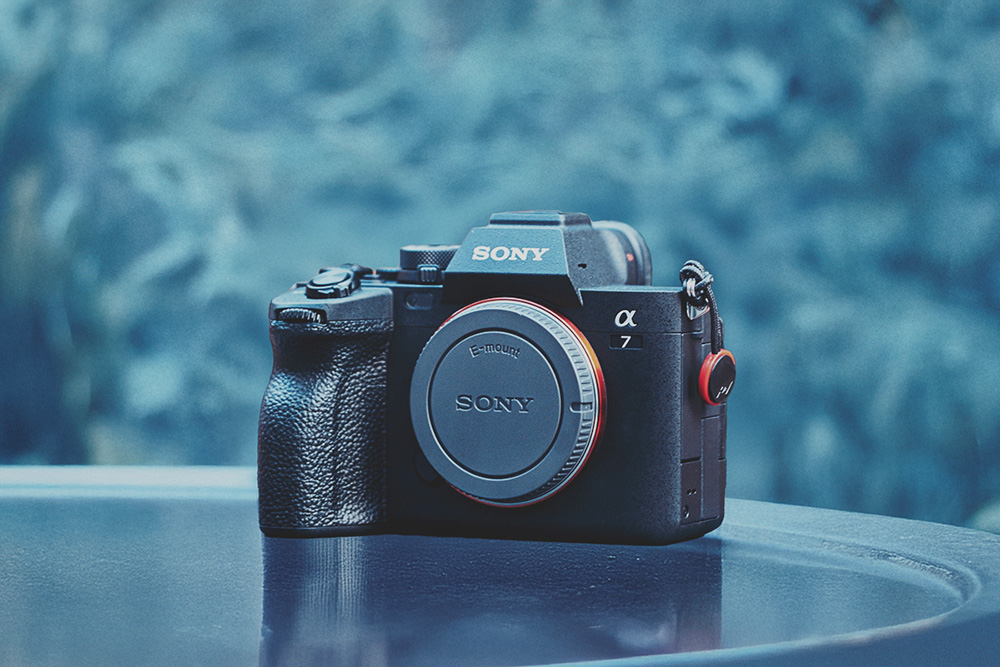
The release of the Sony a7v has been met with a wave of negativity, especially now that the supposed ‘standard model’ mid-range camera price has been bumped to nearly $3000 + tax and a lot more in some regions, like in the UK where the USD-converted price works out at an insane $3600 inc. VAT, despite the Japanese yen being at historically low levels versus the British Pound.
The Sony a7v specs are equivalent to the Nikon Z6 Mark III which is over $1000 less expensive and a mint condition used Z8 a little cheaper also, with far better specs in every area – especially in the cinematic-video department.
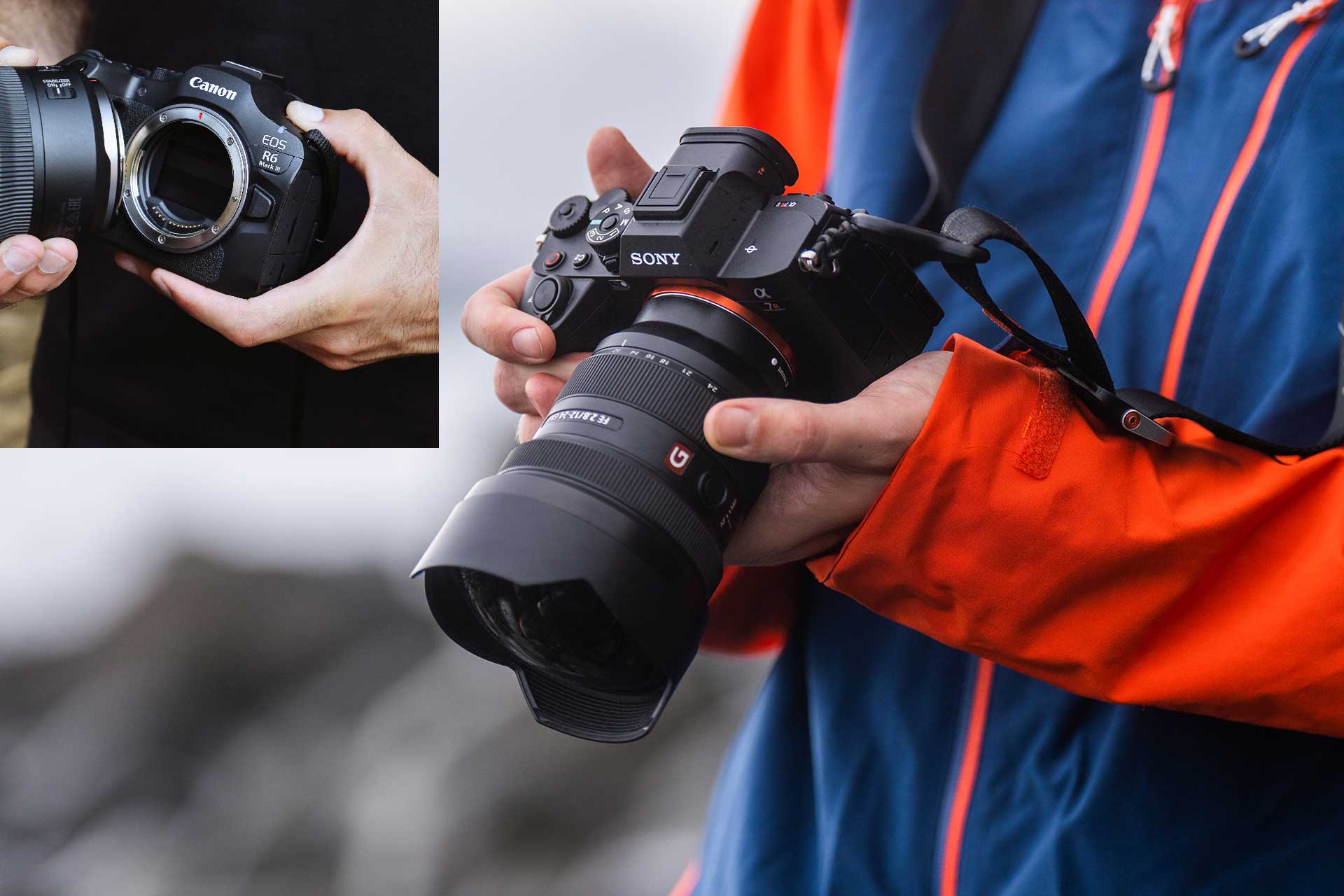
The Sony-badge premium appears to be a real thing – and it is putting Sony at a disadvantage vs Canon and Nikon. The Canon EOS R6 Mark III is a better spec and also less expensive, for video it is almost a different league of spec altogether with 7K RAW and Open Gate. The price of the a7v also gets close to a used Sony a1 flagship professional body, the full fat stacked sensor of which there is nothing ‘partial’ about, and the Canon Cinema EOS C50 full frame Nikon Zr competitor, which is just £400 more than the a7v!
But as usual online, people tend to want to believe that only one opinion can be true at once.
In fact the Sony a7v is a prime example of quantum physics.
A superposition of two different opinions, where both can be true at once applies to this camera.
All the negativity has it’s basis in the truth.
And all the positivity and people putting down pre-orders for it are right as well.
And it all depends on the observer.
It is true that the Sony name now demands a premium, more so than ever before – because E-mount is the best mount. Pure and simple. It has been around the longest out of all the full frame mirrorless cameras, benefits from Sigma’s range and the best cheapest full spectrum of Chinese lenses, and it has the best selection of glass all-round, native or otherwise. For those who are ‘locked-in’ to a mount, it doesn’t matter how much Nikon Z undercut Sony on price with a Z8 or Zr if you have to spend $6000 on lenses and go through the pain of using shitty eBay to sell your Sony glass.
At the same time, it is true the spec is closer to the Nikon Z6 Mark III end of the market than $3000, and somewhat a safe release with nothing that special to jump up and down about – but at the same time, it is closer to the flagship a1 series than a standard a7 has ever been, and corporate price gouging is only part of the picture – the Trump tariffs have pumped up prices even in the UK, where the USD price seems to dictate to other countries what they can charge for cameras. Thanks very much America.
And yes, Sony are now the new Canon. They have a captive, locked-in loyal user-base in the millions, who are happy with what’s being offered and don’t see the appeal of switching systems just to get some niche video feature or whatever.
This is what Panasonic is finding out with the S1R II and S1 II which are fantastic cameras with the broadest range of features ever but nobody but a small number of Lumix loyalists cares.
This is the hard truth of the camera industry in 2025, sadly.
The negative chatter about Sony recently, is not just regarding the a7v though. The firmware bootloop problem is a topic that really deserves a negative discourse and yet as usual, the mainstream camera advertorial media is not talking about it.
This is a situation worthy of a class-action lawsuit, where it appears Sony, knowing there was a software issue with recent firmware updates across all their top models – rather than come clean and do a recall programme, chose to charge people out of warranty to swap out perfectly fine hardware like sensors and mainboards at the cost of thousands of dollars claiming it was the fix.
Thousands of Sony cameras are mysteriously failing, but Sony isn’t telling
But as my adventure with the bootloopy a7 IV shows, the mere act of updating the firmware again (for example from 5.0 to 5.1) completely cured the issue, and that it was likely due to some corrupt software settings, because of bad programming by Sony’s firmware engineers in Japan.
For this, Sony definitely deserves the negativity.
For the Sony a7v, not so much. It’s a perfectly fine camera, even if it doesn’t set the Earth on fire.
The post Sony a7V “negative online discourse” – why Sony are the new Canon appeared first on EOSHD.com - Filmmaking Gear and Camera Reviews.

Today we return to our series about epoch-making trials with the case of the book they tried and failed to ban. In 1960 Penguin Books was prosecuted at the Old Bailey under the new Obscene Publications Act (1959) over its plans to produce a cheap, unexpurgated edition of D. H. Lawrence’s Lady Chatterley’s Lover. How did the prosecution try to persuade the jury that the book was a menace to public morals? Who were the expert witnesses called in its defence? What were the decisive arguments? And why was the judge’s summing-up such a mistake?
Out tomorrow on PPF+: David discusses the book at the heart of the case. Was Lady Chatterley’s Lover really all about sex? Or was it all about class? Or was it in fact about something else entirely? To get this and all our bonus episodes plus ad-free listening sign up to PPF+ now https://www.ppfideas.com/join-ppf-plus
If you are looking for Christmas presents we have 6- and 12-month gift subscriptions to PPF+ giving access to all our bonus episodes, ad-free listening and automatic sign-up to our fortnightly newsletter – which can be delivered to the recipient of your choice on Christmas Day! https://ppf.supportingcast.fm/gifts
Plus we have gorgeous PPF canvas tote bags and bone china PPF mugs, all available now https://www.ppfideas.com/merch
Next time in Politics on Trial: Eichmann in Jerusalem
Learn more about your ad choices. Visit podcastchoices.com/adchoices
Que caminhos os livros abrem? Neste episódio, a poeta Nina Rizzi conversa com a colunista do 451 MHz Bruna Beber sobre como a leitura entrou em sua vida de menina da zona rural de São Paulo e se transformou numa via para a emancipação. Rizzi também fala da sua nova coletânea de poemas Diáspora Não é Lar (Pallas), que mistura trajetória pessoal e história coletiva usando diferentes línguas, como o "pretuguês" e o inglês falado pela comunidade negra dos Estados Unidos. Também tradutora, professora, pesquisadora e autora de livros para as infâncias, ela conta como sua escrita nasceu na era dos blogs na internet, se tornou uma maneira de dialogar com o presente e, hoje, se inspira muito na tradução, uma de suas grandes paixões.
Apoio: Lei Rouanet - Incentivo a Projetos Culturais.
Assine a Quatro Cinco Um por R$ 10/mês: https://bit.ly/Assine451
Seja um Ouvinte Entusiasta e apoie o 451 MHz: https://bit.ly/Assine451
The Canon EOS R6 Mark III is the first mid-range Canon EOS R camera that’s a true contender for top-specs in the $2800 price region. What’s even more impressive is that Canon are achieving full frame 4K/120p with no crop and 12bit 7K 60P RAW video without a stacked sensor – not even a partially stacked sensor. Funnily enough, neither is it even a backside illuminated (BSI) sensor.
So what magic sauce is Canon using to out-spec the partially stacked sensor cameras from Sony, Panasonic and Nikon?
Canon are still with their proprietary CMOS sensor technology, introduced as far back as 2002 with the Canon 1D Mark II. Humorously, the first Canon 1D used a Panasonic CCD. Their CMOS technology wasn’t quite ready for it. Since then, Canon have pioneered the way in CMOS sensors, the technology that swept aside CCD for speed and resolution, as well as introducing the world to DSLR video.
By the late 2010s however, it looked like Sony had overtaken them. Backside illuminated sensors, stacked sensors with the RX100 VI and Sony a9, the first to 60 megapixel and if you count the Fujifilm GFX 100 the first to 100.
But then something unexpected happened. In 2020 Canon struck back with the Canon EOS R5, shackles were well and truly taken off with much faster sensors and image processing, yet still no stacked sensor or even BSI design in sight, which Sony introduced as a way to improve the low light performance of very small chips in phones.
The truth is that BSI isn’t really needed for large full frame sensors, and there are other ways to improve the readout speed of a CMOS sensor, other than solder-bumping a buffer memory chip onto the back of the mainboard.
Although Canon does have stacked sensor designs, like in the EOS R3 – I can confidently say the EOS R6 Mark III has a cutting 33MP edge sensor in every way – despite not using Sony’s technology.
They have built on the latest Canon architecture of the EOS R5. Canon are back to their best in a mid-range body for the first time in MANY years… No more cropping, no more rolling shutter issues and plenty of frame rates in the region of 60p and 120p.
The only Sony sensor technology Canon still lacks is a global shutter design for full frame mirrorless cameras, although they are now working on one.
I’ll start by prefacing this comparison, with a little bias. I am a big fan of Sony’s E-mount ecosystem, with the full range of Sigma ART lenses, the full gamut of Tamron, and the fact that miraculous adapters from Techart exist to autofocus all my vintage glass on a full frame camera. This is a BIG DEAL.
It is something Canon RF mount simply doesn’t offer, and the longer flange distance prevents the adaptation of other mirrorless lenses to the system as well. For example on Nikon Z mount you can use E-mount lenses with native-level autofocus performance.
I also not a big fan of Canon’s native RF lenses. The best ones are too big, extremely expensive and can of course only be used on one system, whereas the good old EF range goes on anything (Even the Fujifilm GFX 100).
That said if you’re fully invested in RF lenses and don’t use vintage glass, the point is moot.
Not only will we be looking at the R6 Mark III and how it compares to the Sony a7 V, but I think it’s worth also comparing to the best value for money USED Canon bodies in 2025, in particular the original EOS R5 which is now just $2000 / £1800 used, and the EOS R3 which has come down to around $3200 used, or £2800, the same as a brand new R6 Mark III.
Buying used is a no-brainer for me as most outlets now offer a long warranty with used gear – as long as 5 years in the case of CEX in the UK, although WEX and MPB only offer 6 months.
7K DCI 60p RAW is the stand out feature of the Canon EOS R6 Mark III compared to the Sony a7 V.
For all the talk of stacked sensors or partially stacked sensors, the EOS R5C back in 2021 proves that to achieve the readout speeds necessary for 8K at 60fps, or full width 4K 120fps – a plain old FSI CMOS can do the job just fine. The “stacked sensor” architecture is a bit misleading anyway – the buffer memory is not stacked onto the sensor but onto the back of the image processor, on the mainboard. I know this because I have disassembled stacked sensor Sony cameras, such as the RX100 V.
Compared to that 7K RAW, the a7 V tops out at Ultra HD – not even DCI 4K – and there is absolutely no raw or uncompressed video not even via HDMI. It used to be that Canon got the cripple hammer out to protect the Cinema EOS line – now it seems the hammer has a Sony badge! The FX series is what Sony want you to buy for their top video feature set. That said, the a7 V builds on the already very capable image quality of the Sony FX2 and Sony a7 IV – a 7K readout downsampled to UHD – and cures one of the biggest weaknesses – the high rolling shutter, and lack of full width 4K 60p.
The a7 V is like the Nikon Z6 III in 4K/120p mode though – it crops to 1.5x S35mm (APS-C). Whereas the R6 III is like the original EOS R5… full width 4K 120p, albeit pixel binned and not a full pixel readout.
There will be some moire therefore, but nowhere near as much as in the days of plain old line-skipped 1080p.
It’s worth mentioning at this point the Nikon partially stacked sensors – the Zr and Z6 Mark III both do 6K/60p RAW recording – so the Sony is behind these too. The Panasonic S1 II offers 6K open gate raw, 5.7K 60p and 4K/120p is just a 1.17x crop of the full width of the sensor, rather than 1.5x.
The EOS R6 III has open gate recording too – only at up to 30p but that’s new for Canon. For the first time you can put an anamorphic lens on a Canon stills camera without regrets.
So…
It’s clear win for the Canon, Nikon and Panasonic competition over the Sony a7 V if you want higher resolution video than 4K or internal RAW recording.
In the earlier days Dual Pixel AF had a clear lead over the competition in video autofocus, but switching to video mode now sees Sony take a clear lead on their latest cameras. Canon’s autofocus is by no means back of the pack – but it’s behind Sony and Nikon in terms of reliability, subject tracking and the occurrence of hunting with tricky subjects in video mode.
Canon reserves the best AF for stills on the EOS R3 and R1.
The characteristic distortion of fast horizontal movement takes the form of rolling shutter, as the sensor is read from top to bottom. Above 30ms is considered slow, and unsuitable for whip pans, fast action, sports, boxing, or trains arriving – you get the idea. 20ms is considered the middle-of-the-road value today, whereas sub 15ms is in the safe region, under 10ms even better, 5ms the current state of the art (although often you’ll have to shoot at 120fps to take advantage of it). Take a look at the figures below:
Canon EOS R6 Mark III – 18ms to 7ms
18ms is the R6 III in 7K open gate, the slowest 30p mode with the highest resolution. This is actually quite reasonable. In 7K DCI for Canon RAW, and in the oversampled 4K/60/24p modes, this comes down to a very respectable 14ms. Disabling the full pixel readout but maintaining the full width of the sensor, the R6 Mark III picks up the pace in all the pixel-binned modes such as “standard” 4K as opposed to the oversampled-from-7K “fine” mode, and in 120fps. The value in these modes is an impressive 7ms.
Sony a7 V – 15ms to 7ms
The Sony has the same readout speed, with the absence of an open gate mode. In 4K/24p and 60p we have 15ms, in the 4K/120p Super 35mm crop mode it is 7ms. So, exactly as the EOS R6 III in this department and with very little to worry about. This new Sony sensor has half the rolling shutter of its predecessor.
The R6 Mark III has wave form, false colour and custom LUTs. The Sony a7 V only has custom LUTs. Neither camera allows you to bake-in the colour science of a LUT into recorded footage – the output is always 10bit LOG and the LUT has to be applied in post. This is one area where the Panasonic S1R II and S1 II have the advantage. Don’t like Sony’s colour science for Rec.709 video or for JPEGs? Well, you’re stuck with it. On the Canon side, the default colour is quite good – but it has none of the film simulations or more characterful filters that we enjoy from other brands.
The latest Panasonic cameras are leading the pack when it comes to video assists and monitoring. Vectorscope, anamorphic desqueeze, shutter angle and Real-time LUTs put Canon and Sony in the shade.
Sony have a winning formula for the rear-screen. It has the best tilt and swivel mechanism (same as the a1 II and a7r V), but at same time remains as slim and as lightweight as possible. When this kind of mechanism was first pioneered by the Panasonic S1H, it was rather clunky. The Sony system is a big improvement. The Canon EOS R6 Mark III makes do with a consumer-friendly standard swivel screen hinge, the likes have graced consumer cameras since the days of CCD compacts. The Canon R6 Mark III screen design wouldn’t be out of place on a Powershot G1 from 2002.
The Sony screen is also larger – at 3.2″ vs 3.0″ and believe me you do get to tell the difference even if small.
So the original R5 is basically very similar in spec to the R6 Mark III, and although it lacks the newer autofocus and some of the newer video features like custom LUTs, you still get that very high resolution RAW, at 8K on the R5, and full width 4K/120p without a crop. The sensor readout speed is very similar, with the same low rolling shutter figures. The price is a full $1000 lower, depending on where you shop for your used cameras. Having said all that, I think the R6 Mark III finally surpasses it though. It has taken 5 years but it’s there – maybe not in terms of outright resolution (7K vs 8K) but in terms of frame rates and features. There’s no 60p in 8K RAW on the EOS R5 OG… You’ll have to stump up for the R5C for that and lose IBIS. A used EOS R5 Mark II meanwhile, is of course much more expensive.
Compared to the EOS R3 is where things get interesting, but the R3 is a bit of a chonk – in the now old fashioned vertical grip style of a typical pro DSLR. However, the R3 is better in low light, thanks to a lower megapixel count. It has 6K RAW up to 60fps… Or 6K DCI 24p at some quite low-bitrates in Canon RAW Lite, approximately 600Mbit/s – which comes in handy for saving space. The minimum RAW bitrate in 7K on the R6 III is 960Mbit, and it can get as high as 2600Mbit which for many people is simply impractical.
That said the R6 III has both C-LOG 2 and 3, the R3 only C-LOG 3 – so you might find a smidgeon more dynamic range on the cheaper camera in video mode – whether those shadows will be less noisy however, is another matter.
The R3 also has the advantage of higher build quality, a better EVF and better rear screen resolution. Casting around the internet it was easy to find one for R6 Mark III prices… Around £2800, or as low as £2300 if you import a mint one from Japan.
The Sony a7 V uses a 14bit sensor readout for high-speed continuous burst shooting and in e-shutter mode for stills, the EOS R6 III drops to 12bit. The numbers might seem dramatic but the real-world difference is very small, less than half a stop of useable dynamic range in the RAW files.
Sony regularly advertises 15 or 16-stops dynamic range for their stills cameras and with the a7 V they did so again, unfortunately the 16 stops was not in the room when they said it, and the paranormal investigator couldn’t find it either. The truth is that if you try to push 10bit video or even 14bit RAW stills in post to show 16 stops it WILL look like garbage, you’ll lose the contrast in the scene, the tonality and quality of colour, and your HDR display will have to be set so bright it will add a digital sheen to everything and break your eyeballs. The only digital format with this kind of latitude that looks any good at all is the Alexa 35, and even that is nowhere near 16 stops after grading, and you need to use an IMAX projector to show it to people.
As in burst mode for stills, the R6 III offers 12bit in video mode – where most people shoot 10bit anyway – and it’s a dual gain sensor, with the second circuit coming in relatively early at just ISO 800. Worth a side note that the classic cinema frame rate of 24p is only available in DCI format mode (1.90:1 ratio, 4096 x 2160). This is because strictly speaking, 24p is not a video-centric frame rate for 16:9 HD or Ultra HD (3840 x 2160). Thus these are only 25p / 30p / 50p / 60p depending on whether you set the camera to PAL or NTSC… The NTSC video standard is 30p, not 24p. If you need 24p in 16:9 you’ll have to crop the 4096 x 2160 recordings in post.
For me the Canon EOS R6 III outscores the Sony a7 V in some significant video and cinema related areas, but out of the two I personally would pick the Sony – oddly enough!
So the reasoning goes as follows…
Although the Canon EOS R6 III beats the a7 V is in outright image quality in video mode – here they’re both very good. I will hand it to Canon for colour science and their insanely high data rate RAW codec in 7K. This is another level versus your standard Ultra HD 4K from Sony. That said, H.265 is actually VERY good and S-LOG 3 offers enough grading headroom for everyone. On the Canon side there’s an element of overkill to it. The image from the a7 V, like the a7 IV before it is good enough for almost every purpose, even Hollywood cinema and professional projections in a theatre. If it’s good enough for that and close to an FX3 which was used to shoot The Creator, it’s good enough for us, right?
The data rates and file sizes are very difficult to manage on the Canon – these RAW masters have to be deleted – you can’t really keep the precious material for long without incurring huge expenses on archival storage mediums. If you’re simply handing material over to a client and it’s gone – easy enough – but if you’re an individual artist or filmmaker who wants to keep years and years original 7K RAW 60p recordings… good luck with that.
The R6 III beats the a7 V for slow-motion. The 4K/120p = full frame, not an APS-C 1.5x crop only.
The R6 III has the edge on colour – with a foundation in colour film, and early pro DSLRs, Canon has built on the best colour science in the business. It’s just a shame that all the Photo Styles are essentially the same thing with subtle differences in contrast. The Sony has a more filmic range of filters, which attempt to ape what Fuji does so well with their film simulations. Out of the box it comes up short, but you can tailor it to perfection. Also, S-Cinetone, S-LOG 2 and S-LOG 3 all have extensive tuning parameters.
So although the a7 V lacks the eye-catching headline video specs of the R6 Mark III, it wins in a much more important area…
Sony E-mount is simply head and shoulders above RF. The native glass is better, there’s more of it, the third party situation is fantastic, as opposed to AWFUL on the Canon side, the adapters are better, it’s been around longer, and the IBIS works properly with adapted glass too. On the Canon RF cameras, IBIS performance is cripple hammered with adapters and reduces to such an extent you’ll question whether it’s even switched on. So for Leica M lenses, Minolta MD, and so forth you’re MUCH better off using them on the Sony, and use them I do, as there’s no way that modern glass gets close to the cinematic analogue look of the best vintage lenses.
The a7 V – and I’d never thought I’d say it – is arguably now the more sexy high-tech shooting experience too. The R6 Mark III, indeed all the Canon EOS R cameras have all the charm of a photocopier. Canon’s deft ergonomic touch has also deserted them. The materials and finish are awful, although Canon’s menus remain top notch and overall it’s a ‘smooth’ experience – the whole thing is just lacking in any sort of charm – a bit like Sony used to be. It is a work tool and the expensive RF lenses collect so much dirt in the fine pattern grain finish of the barrel, it’s horrible.
The Sony a7 V not only looks more enticing, more exciting, more futuristic – it is more advanced and better built too. Sony has banished all the ergonomic disasters of their past. The best feeling buttons, dials and screen mechanism, all in a very compact body with a very chunky grip, huge EVF and mega battery life. The Sony a7 V is not a mid-range body – it has more in common with the a7r V or even a1 II than ever before. Whereas between the EOS R6 Mark III and their flagship, the R1, there’s a big difference in quality and materials.
So even though Canon has after 5 years finally offered us an EOS R5 spec camera for mid-range prices (if you consider $3k mid-range that is!), there are things that temper my excitement somewhat
Quite a lot of the a7 V and EOS R6 Mark III are similar… With equal performances in terms of rolling shutter, full frame, 4K 60fps without a crop, the same price and overall market position – but for me at least, the significant advantages of Sony’s mount win the contest for me versus the better overall Canon video specification.
On the other hand if you’re truly happy with EOS RF mount, the R6 Mark III will be an exceptional tool (for you).
What do you think? Have your say on the EOSHD Forum post for this comparison here.
The post Are Canon back on top in specs race? Sony a7 V and Canon EOS R6 Mark III comparison appeared first on EOSHD.com - Filmmaking Gear and Camera Reviews.
This week, Camille Ralphs confides the highs and lows of travelling by Greyhound bus; and Alev Adil boards a train to join current night owls and bygone tourists.
'Greyhound', by Joanna Pocock
'Moonlight Express: Around the World by Night Train', by Monisha Rajesh
'To the Sea by Train: The Golden Age of Railway Travel', by Andrew Martin
Produced by Charlotte Pardy
Hosted on Acast. See acast.com/privacy for more information.