❌

Normal view

🔴 SEM CENSURA RECEBE MARIA CRISTINA CABRAL, ADRIANO CARNEIRO DE MENDONÇA E RUAN JULIET

💾

O #SemCensura desta quarta-feira (17/12), recebe a arquiteta Maria Cristina Cabral e ela vai nos contar sobre revitalização urbana, explicando como a arte e a cultura podem transformar bairros e cidades ao se revitalizar espaços, antes negligenciados. Um bom exemplo, é a Rua do Senado, no centro do Rio de Janeiro, que foi reconhecida recentemente como a rua mais cool do mundo a partir de intervenções culturais, como a do urbanista Adriano Carneiro de Mendonça, que abriu no local o restaurante Solar dos Abacaxis, dando nova vida a esta parte do bairro. Cissa também vai bater um papo bem descontraído com o criador de conteúdo Ruan Juliet. Cria da Rocinha – uma das favelas mais populosas do país – ele acaba de conquistar o Prêmio Inspira Rio 2025 ao abordar nas redes arquitetura popular, gírias locais e soluções criativas na rotina dos moradores. Fechando a bancada, a jornalista da TV Brasil, Marilia Arrigoni, participa como debatedora do dia.

O programa vai ao ar de segunda a sexta, das 16h às 18h, na TV Brasil e também pode ser acompanhado pelo Youtube e pelo app TVBrasil Play.

#SemCensura40anos #semcensura

Conheça a programação da sua TV Brasil: http://tvbrasil.ebc.com.br

Siga a TV Brasil nas redes sociais:
Instagram - / tvbrasil
TikTok - / tvbrasil
Kwai - https://www.kwai.com/@tvbrasil
BlueSky - https://bsky.app/profile/tvbrasil.ebc...
Facebook - / tvbrasil
Threads - https://www.threads.net/@tvbrasil
X - https://x.com/TVBrasil

10 Vintage Hangouts We Wish Were Still Around

💾

Original newsreels used in this compilation:

1. 1955 Coffee House (1955) (00:00 - 02:43)
https://www.britishpathe.com/asset/44251/
Film ID 25.21

2. Skiffle Barber Shop (1957) (02:43 - 04:44)
https://www.britishpathe.com/asset/36062/
Film ID 63.17

3. French Nightclub in Soho (1954) (04:44 - 06:01)
https://www.britishpathe.com/asset/189013
Film ID 1603.27

4. Art Studio Restaurant (1959) (06:01 - 07:37)
https://www.britishpathe.com/asset/36211/
Film ID 91.03

5. Two Tempo Restaurant (1965) (07:37 - 10:40)
https://www.britishpathe.com/asset/37896/
Film ID 333.03

6. Jazz Club (1955) (10:40 - 14:18)
https://www.britishpathe.com/asset/78932/
Film ID 1279.08

7. Curiosity Pub (1959) (14:18 - 16:00)
https://www.britishpathe.com/asset/36178
Film ID 89.12

8. Pub on Stilts (1938) (16:00 - 16:20)
https://www.britishpathe.com/asset/80264/
Film ID 1262.16

9. Victorian-Themed Fish Bar (1962) (16:20 - 18:25)
https://www.britishpathe.com/asset/37198/
Film ID 191.03

10. Medieval Restaurant (1970) (18:25- 20:09)
https://www.britishpathe.com/asset/89931/
Film ID 2241.31

Join this channel to get access to perks:
https://www.youtube.com/channel/UCGp4u0WHLsK8OAxnvwiTyhA/join

Geheime Reichssache - Die Hitler-Attentäter des 20. Juli 1944 vor dem Volksgericht (1/2)

💾

Hier Teil 2 ansehen: https://youtu.be/ZT5ktI4D7RU

Die Prozesse gegen die Beteiligten und Mitwisser des Attentates auf Adolf Hitler am 20. Juli 1944 fanden vom 7. August 1944 bis in den März 1945 statt. An 9 Verhandlungstagen, zwischen dem 7. August und dem 20. Oktober 1944, wurde der Verlauf der Prozesse gefilmt. Ursprünglich für die Deutsche Wochenschau und Dokumentarfilme zusammengestellt, wurden die Aufnahmen von Reichspropagandaminister Goebbels zur "Geheimen Reichssache" erklärt. Goebbels erschienen das Auftreten und die Antworten der Verschwörer vor dem Volksgerichtshof für eine Veröffentlichung nicht geeignet, auch nicht die Verhandlungsführung und die entwürdigenden Äußerungen des Vorsitzenden des Volksgerichtshofes Dr. Roland Freisler, der die Angeklagten kaum zu Worte kommen ließ.
Es werden Ausschnitte des Films "Verräter vor dem Volksgericht" gezeigt, den Goebbels über den Prozess gegen die Beteiligten des Aufstands vom 20. Juli 1944 mit versteckten Kameras drehen ließ: Der Film sollte die Widerständler verächtlich machen, was aber nicht gelang, da alle tapfer zu ihren Taten standen. Daher wurde er im Dritten Reich auch nicht gezeigt, sondern als "Geheime Reichssache" behandelt.

Abonniere chronoshistory: http://goo.gl/IVGjVB

#berlin #geschichte #hitler #nationalsozialismus

I built an agent that automatically replies to my emails.

💾

Here is the source code: https://github.com/svpino/gmail-draft-loop

To create an MCP server using Zapier: https://bit.ly/4alplzh

I teach a live, interactive program that'll help you build production-ready Machine Learning systems from the ground up. Check it out here:

https://www.ml.school

To keep up with my content:
• Twitter/X: https://www.twitter.com/svpino
• LinkedIn: https://www.linkedin.com/in/svpino

🔔 Subscribe for more stories: https://www.youtube.com/@underfitted?sub_confirmation=1

CURSO DE FORMAÇÃO HISTÓRICA E SOCIAL | Cinema e marxismo (Mauricio Parisi)

💾

O Curso de Formação Histórica e Social será realizado entre setembro e dezembro de 2025, no formato híbrido, com encontros presenciais no Departamento de História da FFLCH-USP (Av. Lineu Prestes, 338 – Cidade Universitária, Sala de Vídeo – 2º andar) e transmissões online. A inscrição e a participação são gratuitas.

Films of Ideas: Rope w/Nicci Gerrard & Sean French

Today it’s the first in our series of live episodes recorded at the Regent Street Cinema in London: David talks to the crime writers Nicci Gerrard and Sean French (aka Nicci French) about Alfred Hitchcock’s Rope (1948), based on Patrick Hamilton’s play of the same name, itself based on the real-life case of Leopold and Loeb. What is the true subject of this film: murder, sex, morality or something else? Why is James Stewart so hopelessly miscast? And how does all this connect to Nietzsche?

If you are still looking for Christmas presents we have 6- and 12-month gift subscriptions to PPF+ giving access to all our bonus episodes, ad-free listening and automatic sign-up to our fortnightly newsletter – which can be delivered to the recipient of your choice on Christmas Day! ⁠https://ppf.supportingcast.fm/gifts⁠

Next time: My Dinner with Andre w/Lee Hall

Learn more about your ad choices. Visit podcastchoices.com/adchoices

💾

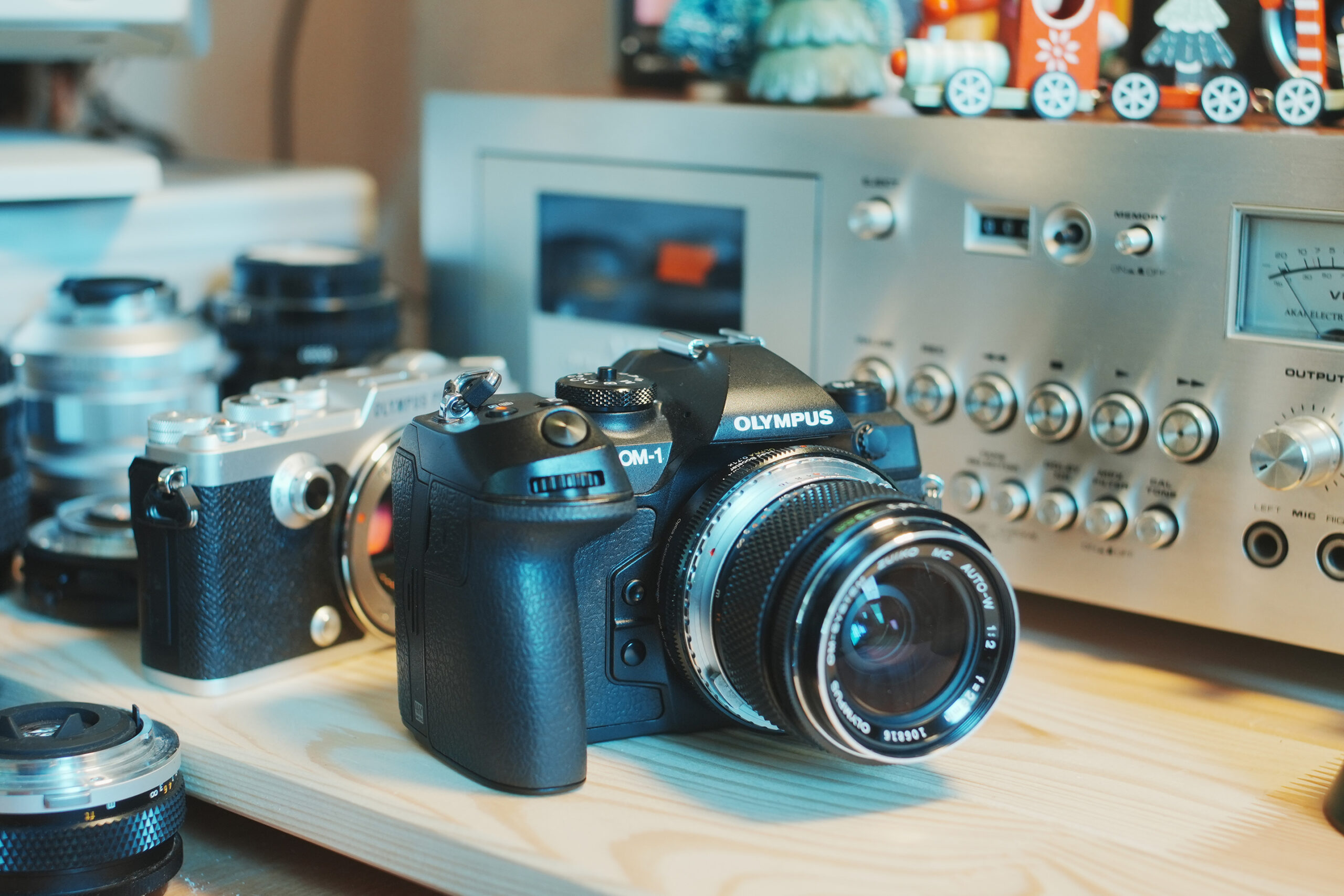
The Olympus OM-1 goes full frame OM

Olympus OM-1 speed booster OM SLR lenses, OM-System Zuiko MC Auto-w 28mm

Olympus never gave us a digital full frame camera. It’s one of the biggest regrets of the camera industry. However they did leave us with this… the final Olympus Micro Four Thirds camera.

I have just fitted a Metabones Speed Booster with Olympus OM SLR lenses to my OM-1, be it video or stills, this camera is not just underrated but a powerhouse of good design and good images.

Here is my tribute to the final camera to bear the Olympus badge.

I have two Metabones Speed Boosters with Canon EF mount.

Turns out EF is a good choice. All of Olympus OM SLR lenses, M42, Nikon F and Contax Yashica adapt to EOS although I do miss my Minolta MD and Canon FD lenses on this adapter, the look of the OM lenses on this is fantastic. Caldwell Optics + some of the best vintage Japanese glass ever made.

The Metabones adapters are a tight fit on the OM-1. Be sure to apply protective tape below the EVF on the lens mount side as the thick barrel of the adapter scrapes flush with the camera housing when attaching. Once it’s on though, you get to keep it there – and have your pick of a range of vintage lenses that knock the sterile modern stuff for six.

The OM-1 appears to automatically detect the focal length of adapted manual focus vintage lenses. It doesn’t have the usual entry in the menus to add a focal length for a non-CPU lens like on Panasonic, Sony or Nikon cameras. At least I haven’t found it.

Either way, it works extremely well.

Let me make this clear… the OM-1 still in 2025 has the best IBIS on the market.

It has a much better EVF than the previous Olympus flagship, the E-M1X – although the latter handles like a mini pro DSLR or Canon 1D, which in itself is rather nice. You’ll also notice a design nod to the first Pentax full frame prototype DSLR of 2000, which was never released – just like the Olympus digital full frame camera.

The ergonomics of the OM-1 are truly exceptional. Although it’s an incredibly small camera it doesn’t handle like one somehow.

Do you know that feeling when using a camera, of a workspace? The camera is your office. You sit at the work desk of the Canon EOS R5 for example and it is smooth, slick and professional, it feels optimised and refined, but lacks that extra bit of interest or charm. The workspace of the OM-1 is tactile, smooth, deeply immersive, responsive and actually rather charming too.

This compares better than any other Micro Four Thirds camera ever made. The Olympus PEN-F digital for example although it looks pretty, has a workspace which is stiffer, slower, cheaper and more consumer. The E-M1 II and E-M1X feel more dated, especially the menus. The Panasonic GH6 has a workspace that is direct, utilitarian, but too computer-like and not really quite ‘camera’ enough whereas the OM-1 nails every aspect of what it’s like to shoot with.

The OM lenses are a perfect match for it too.

In the analogue OM days, the Zuiko OM System glass was all very well regarded for small size and superb optics. Maybe not the last word in sharpness but all had character and a nice look wide open, with very good colour and contrast. The mounting system is excellent and the OM to EOS adapters feel better made than, say, Contax Yashica mount to EOS. The locking pins are on the side of the OM lens barrel so the thin adapter doesn’t need to do much. No fiddly latch or locking lever required.

There is however a rather nice little lever on the back of the OM-1 can be configured to switch instantly between stills and video mode.

The 10bit footage in OM-LOG is a bit sharper than the 8bit material, but you can only use the Olympus colour styles in 8bit H.264. For 10bit H.265 the options are only OM-LOG and Hybrid LOG Gamma. DCI 4K up to 60fps with no crop from a stacked sensor rounds out a very capable filmmaking spec.

For stills the Olympus colour is superb and really satisfying to shoot with, it nails white balance every time as well.

So to the 0.71x Speed Booster, and my OM 28mm F2.0 becomes a 20mm F1.4, and the sensor is a 2x crop – so you end up with a 40mm field of view 35mm equivalent. This is pretty versatile and you have less distortion and sharper corners than with this same lens on full frame. My OM 24mm F2.0 becomes a 35mm equivalent wide angle (math is 24*0.71 = 17mm * 2 = 34 mm).

You can also get an 0.64x Speed Booster from Metabones but I don’t recommend using it with the OM-1. It fits my Panasonic GH5S but the optics go very far into the lens mount, the risk of hitting the shutter casing is pretty much 100% with the OM-1, so the 0.71x adapter is the sweet spot.

Speaking of the GH5S…

This has a larger than Micro Four Thirds sensor, it’s wider. The crop factor is 1.86x. So combined with the even wider 0.64x Speed Booster XL adapter, you’re getting very close to full frame on this, and the low light performance is just incredible with it.

24mm * 0.64 = 15.36 mm

Multiply that by the 1.86x crop factor and you get a 28mm equivalent. Therefore the GH5S can be made to perform like an APS-H 1.3x crop sensor camera!

The gain in aperture is significant too, an F1.2 lens turns into an F0.76.

If this doesn’t give you a sign that there’s still a future for the Micro Four Thirds format, I don’t know what will. There are times when I do find myself shooting more creatively with a camera like the OM-1 or GH5S than something like the usual Sony a7 series, or Canon EOS R mount camera.

And there is definitely a size and weight difference, with Micro Four Thirds telephoto lenses that difference is even more.

So hats off to Olympus. It’s a beautiful camera. Your engineers didn’t deserve the P45 you so cruelly handed out to cut a few 0.1% costs off your annual expenses.

This is what happens when an accountant turns gatekeeper of the arts and of engineering.

Sad isn’t it?

The post The Olympus OM-1 goes full frame OM appeared first on EOSHD.com - Filmmaking Gear and Camera Reviews.

🔴 SEM CENSURA RECEBE CARMEN ALVES, TOM CARDOSO E RAFAEL SARAIVA

💾

O #SemCensura desta segunda-feira (15/12), recebe Tom Cardoso biógrafo e autor de "Eu Queria Ser Cássia Eller - Uma Biografia", livro lançado em novembro de 2025, que narra a vida da cantora através de entrevistas, relatos inéditos e memórias de pessoas próximas. A obra detalha a trajetória da artista desde a infância no subúrbio carioca, os bastidores de sua carreira no rock brasileiro, sua personalidade autêntica e complexa, e sua intimidade, como a relação com a companheira Eugênia. Cissa Guimarães ainda recebe Carmen Alves, a escritora vem ao programa falar sobre o seu livro “Lágrimas do Sol”, que foi lançado no Brasil, na Suíça e na Alemanha. Na obra, a autora conta em detalhes toda a jornada de vida para sobreviver ao diagnóstico de câncer. Fechando o elenco de convidados o ator Rafael Saraiva nos conta sobre a reestreia do seu primeiro monólogo, “O dinossauro de plástico”, e sobre o projeto autoral feito para o Porta dos Fundos.
O ator é conhecido por desenvolver vídeos para internet, que já ultrapassaram a marca de cem milhões de visualizações, e por criar personagens como o “Cria do Leblon” e “O homem mais bonito do Brasil”, que fazem muito sucesso nas redes sociais. Na bancada como debatedor do dia o também ator e humorista, Fernando Caruso.

O programa vai ao ar de segunda a sexta, das 16h às 18h, na TV Brasil e também pode ser acompanhado pelo Youtube e pelo app TVBrasil Play.

#SemCensura40anos #semcensura

Conheça a programação da sua TV Brasil: http://tvbrasil.ebc.com.br

Siga a TV Brasil nas redes sociais:
Instagram - / tvbrasil
TikTok - / tvbrasil
Kwai - https://www.kwai.com/@tvbrasil
BlueSky - https://bsky.app/profile/tvbrasil.ebc...
Facebook - / tvbrasil
Threads - https://www.threads.net/@tvbrasil
X - https://x.com/TVBrasil

Building Orca - Episode 20: Lofting Pt. 1 - Grid Lines

💾

In this episode of Tips From A Shipwright, Lou prepares the lofting floor by laying out a precise grid—an essential first step in accurate boatbuilding. He demonstrates clear, straightforward techniques for striking true straight lines, shows how to establish perfect right angles using the Pythagorean theorem, and shares practical shop tips along the way, including how to properly sharpen a contractor’s pencil for clean, accurate marks. Whether you’re new to lofting or refining your fundamentals, this video covers the core skills that make everything that follows more accurate.

Check out our new merchandise, including our limited run of ORCA Plaques, at our webstore:
https://tipsfromashipwright.com/store-2/

Thanks for watching, and stay tuned for more hands-on boatbuilding!

We want to thank all our supporters and followers for helping us get this far! Keep following us on this journey and check out our website and social feeds for additional content.

https://tipsfromashipwright.com/
http://www.facebook.com/tipsfromashipwright
https://www.instagram.com/tipsfromashipwright/
https://www.patreon.com/tipsfromashipwright/

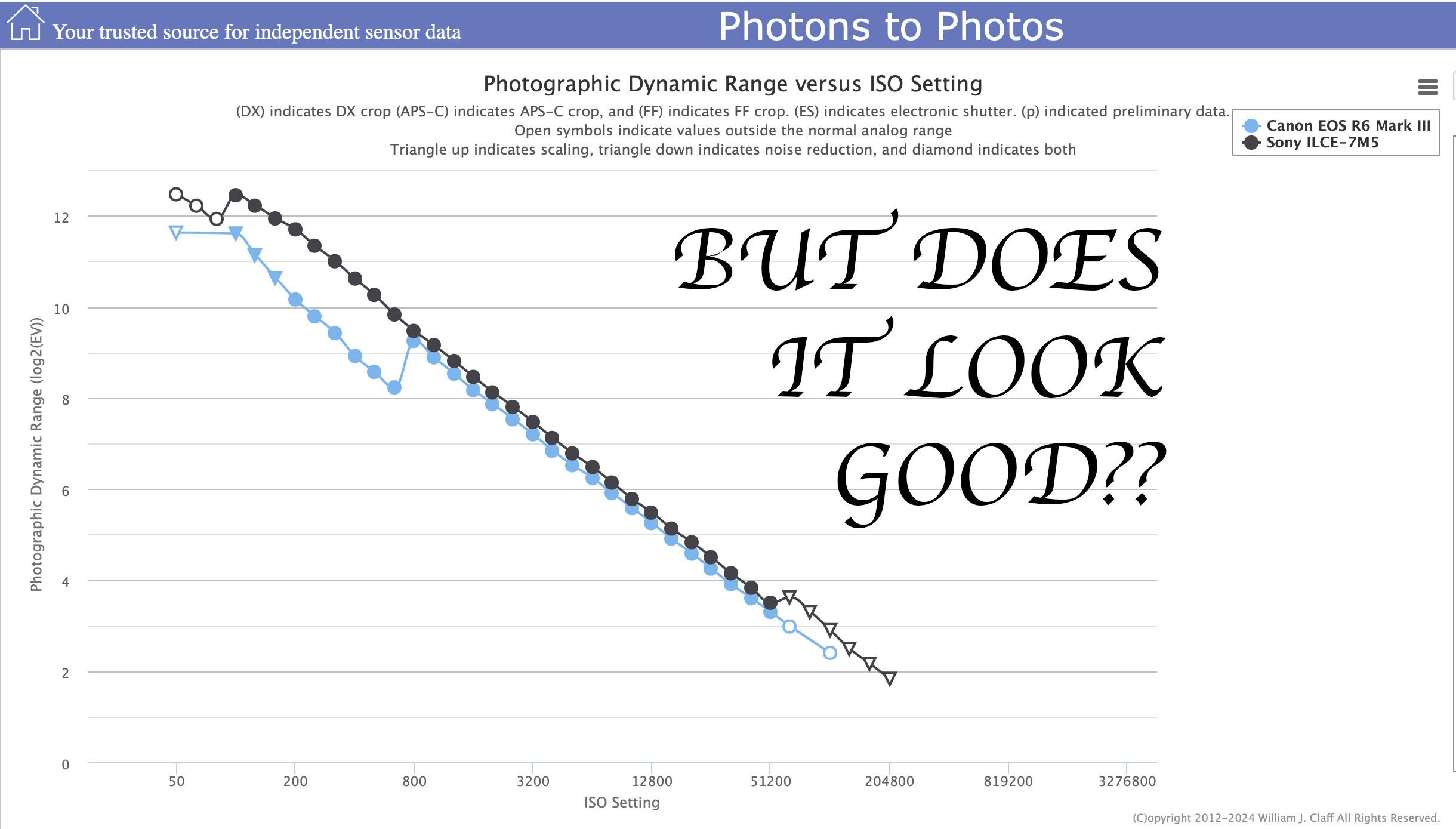
The Canon EOS R6 Mark III trails the Sony a7 V dynamic range by 2 stops but nobody can find the images

Sony a7v vs EOS R6 Mark III dynamic range

Aren’t you sick and tired of nerds? They have done so much damage to life on earth. Men and women used to make love, they used to raise families and build amazing industries, now all people can do is bicker about how many stops dynamic range a Canon and Sony has.

Sony say it is 15 stops. Is the 15 stops in the room with us right now? Is the shadow realm noisy?

If you’re also a nerd, you may have seen the Sony a7v vs EOS R6 III dynamic range charts at PhotonstoPhotos.

These charts are excellent at photons, but we never seem to see the photos.

I want to issue a challenge to the camera community and that bloke who posts AI slop…

I want YOU to SHOW me, with IMAGES, moving or still, what 15 stops dynamic range looks like on the Sony a7 V, and then compare the same maximum HDR grading on the Canon EOS R6 Mark III, because apparently this 15 stops is very important.

Film (if you remember that) was measured at 13 stops.

I want to see a comparison at 13 stops too, digital to film.

With film, despite quite an impressive number of stops in-between the black and white parts in the same frame, colours come out rather well. The result also has something known as contrast, and a strange x-factor called tonality which means you can see the difference between colours of the same hue.

So come on camera reviewers and the equally as stupid audience… Let’s get the shadows slider and put it all the way to 11, and get the highlight slider and bring it all the way down the other way. Don’t forget to under-expose 6 stops to protect a pointless little light bulb, and have some dodgy looking human subject lurking in the shadows with noise all over his face.

Let’s see what these MAXIMUM dynamic range shots look like and then we can judge whether we actually like it or not… Then we can finally but the debate to bed – is Sony’s 15 stops of dynamic range A) real and B) a beautiful photographic tool?

For until now, all the shots I’ve seen that uses the maximum dynamic range of a sensor have been those weird over-processed HDR-sick photos you used to get all over Flickr.

I await however to be impressed. Get those images, count the stops and send them in for me to see on the EOSHD Forum.

Because the debate and clamour out there on the dweebweb is reaching a fever pitch and I can’t stand it any more. All those headlines must mean that the ultimate last couple of stops must be REALLY important, right?

12? loser territory, 13 is all the difference. Boom you have an ARRI ALEXA 35.

Alas, like Gerald Undone’s shots, the evidence is still missing after all these years!

Comment on the EOSHD Forum

The post The Canon EOS R6 Mark III trails the Sony a7 V dynamic range by 2 stops but nobody can find the images appeared first on EOSHD.com - Filmmaking Gear and Camera Reviews.

Como deixar a RX 9070 mais rápida que a RX 9070 XT – Passo a passo com testes e resultados!

Depois de uma geração 'morna' com as RX 7000, em 2025, a AMD lançou as novas RX 9000 com arquitetura RDNA4, diminuindo o gap tecnológico em relação a NVIDIA, na arquitetura e principalmente nos recursos de software como o upscaler. Tudo isso parece muito bom, mas e para os overclockers, será que tem alguma novidade? É o que vamos ver nesse artigo!

O post Como deixar a RX 9070 mais rápida que a RX 9070 XT – Passo a passo com testes e resultados! apareceu primeiro em The Overclock Page.

25 11 06 Sharpen Pencil Tip Vertical

💾

Precision starts with the basics. In this reel, Lou walks through his method for sharpening a pencil using a hand plane—an old-school shop trick that delivers a perfectly consistent marking point for layout and lofting. Small details like this make a real difference in fine woodworking and boatbuilding. Follow along and add this technique to your toolkit.

We want to thank all our supporters and followers for helping us get this far! Keep following us on this journey and check out our website and social feeds for additional content.

https://tipsfromashipwright.com/
http://www.facebook.com/tipsfromashipwright
https://www.instagram.com/tipsfromashipwright/
https://www.patreon.com/tipsfromashipwright/

Users are complaining OpenAI wreaked Sora 2. EOSHD takes a look at what happened…

When Sora 2 was released (invite only), results were impressive. Investors were happy, users excited. Then, a strange thing happened.

Sora began to buckle under load despite being invite only. In order to roll out Sora to all users, the technology looks to have been massively scaled back. Not only are users alleging OpenAI did this, the criticism is that they did so silently behind closed doors without elaborating. The results were clear. Overnight the quality of material generated by Sora 2 fell into the gutter like slop from a sausage machine.

EOSHD takes a look at what has been going on…

Sora 1 and the new model 2 are some of the most hyped AI tools of all time, driving enormous investor interest and at their best are capable of amazing visuals with very few imperfections.

Prompts could be incredibly complex in Sora 2 at launch, involving several sections to inform the look. In OpenAI’s own example of the otherworldly dragon, you had a “First Read” Primary Target & Visuals to lay out the general scene, followed by a Format & Look using cinematography terms like 180 degrees shutter, large format sensor, crisp micro contrast and no gate weave.

You could then go as far as to specify lenses, filters, grading and lighting. Sound is generated too. To round out the shot, the prompt can provide camera notes, location details and framing, as well as an optimised shot list to sequence it all.

The result was a few seconds, admittedly spectacular, of a dragon flying above a coastline with thunder and lighting in the background. Big whoop.

Now the thunder is very much in the foreground, for OpenAI is getting a roasting. Sora 2 at this kind of level needs a vast amounts of NVidia compute to work.

On Reddit discussions in the OpenAI sub, you can hear directly from disgruntled OpenAI paying customers about the dramatic shifts in quality they’ve been experiencing.

The launch version has effectively been shelved and now isn’t even available in most countries.

In one topic “It’s insane how badly they’ve ruined Sora 2 already“, the consensus is that OpenAI does not even have a sustainable business model to support it long term and that the “real Sora 2” can’t be rolled out for mainstream demand.

Sora 2 simply doesn’t scale.

Users even allege the technology was launched in loss-making form to show its full potential to investors and at the crucial moment when everyone was watching. As the losses came rolling in during subsequent weeks, the system was dialled back to use a fraction of the compute power it did at first.

Given the option to sign up to OpenAI Plus today for 23 euros per month where I am (Europe), the option for Sora 2 isn’t even available – only a limited use of Sora 1 is allowed.

So what has happened to Sora 2 and does it have a future?

Is this kind of technology simply too expensive to roll out at scale to paid users, at least for the ChatGPT Plus tier of $20 per month?

Could it be that in future, only professional creative studios will be able to use the best generative AI video tools – likely paying upwards of tens of thousands of dollars per month?

Could it be a bit like the DSLR revolution one day? Imagine the first affordable high-end Sora models reach the mainstream for a one off purchase with hardware controller enabling a virtual film studio on your desktop? That would be nice.

Might the compute to run it all fit on a single, professional GPU card on your desk?

The truth is, we have no clue.

Right now that future looks incredibly uncertain.

And yet the investors are piling on like OpenAI have discovered an alien technology.

We don’t know how the business model of generative AI will play out at all, especially not for the most advanced models. Video generation, world simulation, and video game development are all potential targets for AI – but they’re hard, and if it all DOES work as promised, the factors outside the industry’s control might topple them anyway, more on that in a moment…

Nvidia’s stock price today reflects the massive demand for AI data-centre GPUs.

But there’s a problem.

There’s simply not enough NVidia chips to scale demand according to AI investor expectations.

Production capacity at TSMC is not enough.

And what’s more, consumer expectations have to keep increasing with the wow factor going up with every release too – which means more and more demand for hardware (not just NVidia chips but everything else too like DDR5 memory and PSUs, rare earths, auxiliary components, and so on) a demand that simply isn’t realistic.

For not only can this level of compute be manufactured fast enough, it is not available at an economical enough price and has a shelf life of only a couple of years before it all needs to be replaced again.

Even the latest Blackwell NVidia chips are using too much energy, too much water for cooling and generate too much heat. Add to that, the needs of gamers and cryptocurrency on top – with just ONE company able to supply the required hardware, monopolising 90% of the market. And the chips are fabricated by just ONE supplier, in Taiwan.

Sounds bad? It gets worse…

  1. Geopolitically, just one man – Ji Xingping, can end the whole industry over night with an invasion of Taiwan and disruption of TSMC’s chipmaking facilities. One Chinese squadron outside just one factory door and it’s all over. Nvidia would prefer not to even think about it.
  2. Socio-politically, no first world country can afford a universal basic income in the event that AI succeeds. Success for AI means unemployment figures in the region of 70 to 80% and the breakdown of law and order. This alone is enough to make the AI industry unsustainable and the investors have simply buried their heads in the sand about it because as usual with bankers and CEOs they don’t care about society at all. It isn’t even a blip on the radar. If AI succeeds in replacing most workers, the tech employees who still have jobs will most likely work for AI companies but none of them will be safe to go to work due to rioting, with they and their leaders with the biggest target on their back. These crucial employees won’t even be able to access basic public services or supermarket food because society would have broken down. Investors simply refuse to contemplate this as a possible outcome!
  3. No profit… The AI companies are unprofitable and always have been. Billions of dollars is simply being circulated between a few key players for an ever greater share of equity and the resulting deals are hyping up the share prices of those involved. The most recent example of this was Disney’s investment of $1bn in OpenAI in return for some equity and some tools, under the guise of an IP licensing deal for 3 years. As soon as the first share price wobble or bad news happens, this kind of equity will be worthless and the entire investment scheme come toppling down, and that’s the only thing which is enabling such massive loss making at the moment.
  4. Because AI companies themselves lack any of their own profit to reinvest in their businesses for the purpose of scaling for demand, it is all being propped up by creditors. The creditors could all take fright at any moment.
  5. The energy cost of the compute is immense and pushing up the cost of fuel for normal businesses and ordinary residential households on top of a cost of living crisis, with climate change spiralling out of control. This isn’t an ethical business.
  6. Artificial General Intelligence (AGI) is purely hypothetical. Anywhere an employee requires the use of their hands or their physical presence, an AGI is caught lacking and a robot is too problematic. Too easily damaged, it can too easily become a target for violence or theft, it isn’t reliable enough long term and not even dextrous enough to learn how to use a photocopier, let alone do more advanced office work, it’s also incredibly expensive to “hire” compared to a human being and it does not even have a consciousness or true awareness, therefore lacks the kind of true understanding and human emotion necessary to inform opinion and action. Would you want to hire a brain in a jar?
  7. The “intelligence” aspect of AI as we know it today is only computational but human intelligence is not. What ChatGPT does is a parallel computing task on a large database of pre-existing data. It can only synthesise text and images, and not always correctly. To call this intelligence is misleading as it’s really just a clever data processor and a python script. If the name was accurate it would be TG – Text Generator. For images and videos it is again just an advanced synthesiser with fancy outputs, or at best a simulator-on-chip capable of visually representing aspects of our world for a few seconds, but it does not have a true understanding of it or true creativity or a true memory.
  8. In the creative industries and social media, people want to engage with content that’s made by real people. Be it normal folk, or a famous name film director, the person behind the art is as important as the work itself. When it is a faceless simulation machine behind the work, the work automatically devalues. This may work for a Cola advert, I’m not sure it will for the next Oppenheimer.
  9. What is being created at the moment are short 5s-10s vignettes of imaginary worlds and subjects, eye-candy in other words, and in most cases outright slop that has no practical use in the real world and therefore very little real world value. The technology has been out for a while and there are still no mainstream recognised and respected AI artists, which has to tell you something.
  10. The AI bubble is absolutely real and is on course to create the kind of economic problems that would make the 1920s blush. Although the fundamental neural network concept and world-simulation technology that is being created may have future potential and is akin to a kind of magic when it works, the hype and misconstrued optimism from investors is a foolish use of funds and soon they will find out what that means.

I am certainly not a total pessimist when it comes to AI though – I really do think it can be a big future industry, I think it can benefit science and even creative work. The problem is, it has not been shown to benefit any of these things as much as it has benefited the pockets of tech industry oligarchs.

When is it going to show its real value to this world, a Magnum opus or an improvement in life and work quality for normal people? So far, ChatGPT is a useful data processor and a way to cheat at homework. The image and video generators, they feel like fancy toys at the moment.

But if I were an investor I’d be selling all my shares in January 2026 and getting out of the bubble.

Comment on the EOSHD Forum

The post Users are complaining OpenAI wreaked Sora 2. EOSHD takes a look at what happened… appeared first on EOSHD.com - Filmmaking Gear and Camera Reviews.

Politics on Trial: Nelson Mandela vs Apartheid

Today’s episode explores the trials of Nelson Mandela, variously charged by South Africa’s apartheid state with treason, incitement, illegal foreign travel, sabotage and conspiracy across a decade that saw him more often in court than out. How did Mandela defend himself? What changed from his first trial to his last? Could any justice be found in a system of blatant oppression? And what happens when the line between lawyer, defendant and prisoner becomes impossibly blurred?

The final film in our season at the Regent Street Cinema in London is coming up on Friday 19th December: a screening of David Cronenberg’s A Dangerous Method followed by a live recording of PPF with writer, psychoanalyst and feminist Susie Orbach. Do join us – tickets are still available https://bit.ly/3KHBp3g

Next time we start our season of Films of Ideas: Hitchcock’s Rope w/Nicci Gerrard and Sean French

Learn more about your ad choices. Visit podcastchoices.com/adchoices

💾

Why Sony is falling behind in video

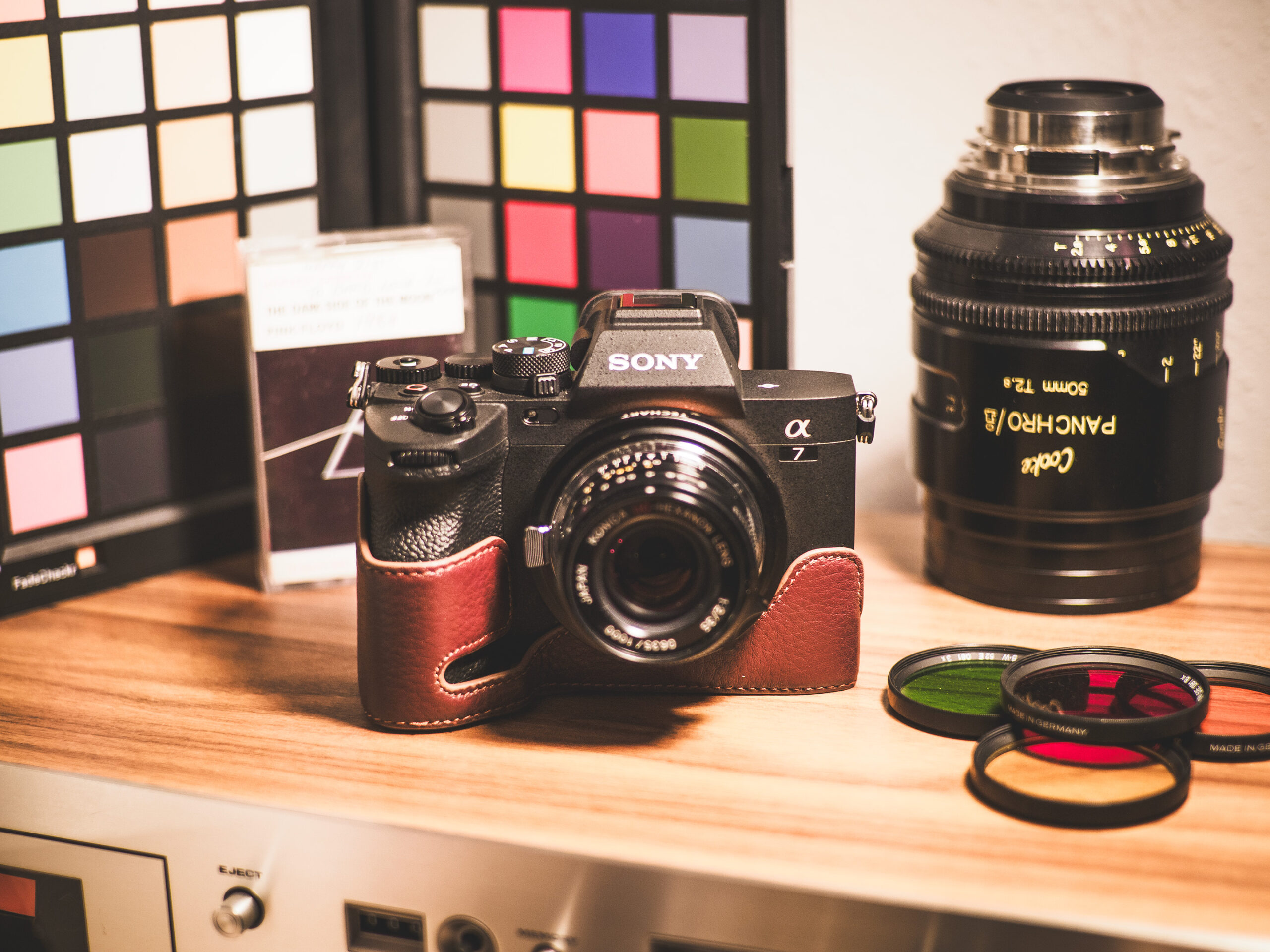
Sony a7v

With the Sony a7s IV nowhere to be seen, and a Sony FX2 with disappointing specs and an old sensor, Sony’s failure to go fully-in on video features have left users in the lurch. Now, with rival cameras like the Nikon Zr and Canon EOS R6 III offering so much more than an a7 V, for less money, Sony is building the perception that hybrid users and video shooters shouldn’t choose a Sony mirrorless camera.

From my personal point of view the Sony a7v is a very capable camera, but it in recent days the new model has become somewhat infamous and the target for a lot of disappointment from video users.

The competition has not just overtaken, it’s undercut on price.

Sony will hate this, the hybrid video/stills market is very important and Sony pioneered it, overtaking the previous leaders Canon (in the DSLR era) and Panasonic. Now the others (especially Nikon) are fighting back.

Now I’m not suggesting Sony is afraid of Panasonic grabbing all their video users, but they should be worried about what Canon and Nikon are doing.

Canon lost the crown back in the DSLR days and then decided to get those users back, starting with the EOS R5 which blew other cameras away for video specs only to prove itself to be completely defective in the field. Canon decided to un-cripple it with subsequent firmware updates for longer operation times. Ever since then Canon have been full-on chasing hybrid shooters, at all price ranges starting with the cheap EOS R50V, all the way to the Cinema EOS C50. Inbetween there is the R6 Mark III which shoots 7K Canon RAW internally with an Open Gate mode, for $2799. An aggressive move, that Sony didn’t seem to see coming.

Then there’s the Nikon Z6 Mark III for $2096 and the Nikon Zr, just $2196. These are the current best-bang-for-buck cameras, taking the limelight away from Panasonic. Sony is trying to get $2899 for something which is comprehensively worse for video than these cameras. The a7v counts on people being photography-first, and locked into the mount. Both of Nikon’s cameras shoot 6K RAW, and the Zr benefits from the purchase of RED being the first mirrorless camera to shoot REDcode raw.

And it is not just the headline resolution and raw capabilities lacking at Sony, the other missing video features are really starting to add up.

  1. The Canon EOS R6 III for example doesn’t need to crop in 4K/120p.
  2. The Nikon Zr has a larger than 3.2″ display, at 4 inches, and it makes a significant difference.
  3. Taking a leaf out of Panasonic’s book with the GH7, the Nikon Zf has 32bit float audio support.
  4. Both the R6 III and Zr have open gate modes.
  5. The Panasonic S1R II and S1 II have anamorphic de-squeeze and multiple recording aspect ratios like 3:2 and 4:3.
  6. The Panasonic cameras also have the best LUT support, and Realtime LUTs allow custom 10bit colour science to be baked into both video recordings and photos.
  7. Cine EI is available on the Nikon Zr in REDcode raw.
  8. 60fps is available without a crop in 6K and in 7K on the Nikon and Canon cameras, whereas most of the Sony cameras even the flagship a1 are only able to max out at 4K in 60fps and on many models this is less detailed pixel-binning mode rather than a full pixel readout.
  9. There’s more shooting aids on the Canon, Nikon and Panasonic side too, like waveform monitoring.

So Sony find themselves in a bit of an odd place and that’s before I mention the Sony FX2 sales disaster.

This is a camera that has already put back some of the missing features from the list above. It has the extra shooting aids, the best LUT support of the Sony cameras, many of the features found in the FX3, including anamorphic de-squeeze, Cine EI, and a form factor closer to the Nikon Zr.

The Sony FX2 however has not sold very well, to say the least and that’s because Sony put the old sensor from the a7 IV in it. It can’t even do full frame 4K/60p without a crop and yet is marketed as a modern hybrid camera. It has no anamorphic aspect ratio mode like 3:2 or 4:3, despite having a 2x anamorphic de-squeeze mode for monitoring! It has no Open Gate mode and the maximum resolution is 4K. It has the same middle-of-the-road rolling shutter performance as the 3 year old a7 IV and there is still no internal RAW codec, not even on the Sony a9 III with the global shutter sensor, or the $7000 Sony a1 II – only uncompressed raw via HDMI. To top it off the FX2 has no 120fps in 4K at all, not even a crop – only 1080p (what year is it, 2018?)

The FX2 then, is one of those rare failures from Sony in terms of sales despite the fact I personally actually really like it for my own needs. It’s laudable for being the only mirrorless camera with a cine body that features both a mechanical shutter and articulated EVF (does it think it’s a Panasonic GX9?) whereas the Zr has neither.

So there’s trouble brewing for Sony.

Their direct Nikon Zr competitor the FX2 is in many ways already outdated, more expensive and basically dead on arrival. The lack of sales back that up.

Their Cinema EOS C50 competitor the FX3 has a 6 year old 12 megapixel sensor, no raw codec, no open gate, no 6K, no 7K, no 8K and owes most of its popularity to a feature film.

Their high resolution a7r V is a stills camera with a video mode that has so many asterisk points not even Richard Butler can remember what crop goes where and the rolling shutter in 8K causes even cat videos to wobble.

The eyewateringly expensive a9 III and a1 II have two of the best sensors in the world but neither can be bothered with anything more than 4K, let alone open gate!

And the a7v has disappointed all of Sony’s loyal userbase who wanted better video specs, many of whom will be tempted to get a Nikon Zr or Canon EOS R6 Mark III instead.

There is still no a7s III successor. Much like the Panasonic S1H line, it seems to have vanished off the planet.

Meanwhile they have allowed Nikon to get their hands on the RED raw recording patents, which might explain why there is STILL no Sony internal raw codec to call their own. Sony face paying hefty royalties or doing something like BRAW which is partially debayered in-camera… that is, if they don’t also end up falling foul of Blackmagic’s patent on that!

Then there is Fuji who is making inroads into cinema with the medium format GFX 100 II (my dream camera) and the Eterna cinema camera. With their much less expensive APS-C X-mount bodies, video specs have been a priority for a long time – they have ticked nearly all the boxes including 6K, open gate and currently have the best LOG editing codec – with all flavours of ProRes in the X-H2 and X-H2s even LT for smaller file sizes. Indeed the X-H2 is the best value for money 8K mirrorless camera currently on the market.

So if I were Sony now I’d be a bit worried, despite the fact the a7v still appeals to me, for a few reasons. I set them out here but the summary is that I think Sony E-mount has the best range of third party lenses and adapters, the Leica M autofocus adapter by Techart fulfils my wildest dreams when it comes to vintage lenses, although it’s available for Nikon Z mount as well. I also think that aside from 6K, 7K or 8K, some of the extended video features Sony are missing do appeal to only a niche audience. Does everyone need open gate, more than 4K, internal RAW codecs and a vectorscope? For shooting social media content? Really?

And yet at the same time the perception won’t go away…

That for the first time in many years, Sony are now BEHIND on video.

The post Why Sony is falling behind in video appeared first on EOSHD.com - Filmmaking Gear and Camera Reviews.

ESPACIAMIENTO de VIGAS o TRABES según el tipo de LOSA de entrepiso

💾

En este video vemos cuánto deben ser las ongitudes máximas de separación de acuerdo a los diferentes tipos de losa de entrepiso, entre ellas tenemos.

- Placa Maciza
- Placa en metaldeck
- Placa fácil
- Placa alveolar
- Placa aligerada (con viguetas o nervaduras)


VISITANOS EN LA WEB (cursos con +PRÁCTICA y -Teoría): https://teyconstruccion.com
Escribenos al correo: info@teyconstruccion.com
WhatsApp: +57 3192581177 (Botón en la web)


CURSO DISEÑO estructuras METALICAS: https://youtu.be/Oa2znspVG0o

CURSO ETABS: https://youtu.be/fFpOAP5QhxA

CURSO MAMPOSTERIA: https://youtu.be/SKKeA5YJdTo

CURSO DESPIECES DE ELEMENTOS DE CONCRETO: https://teyconstruccion.com/cursos/dccad-para-automatizacion-de-despieces-en-elementos-de-concreto/

CURSO DISEÑO CIMENTACIONES SUPERFICIALES: https://youtu.be/Gl_FN9-FB-o


OTROS QUE PODRIAN INTERESARTE:

ALTURA DE VIGA EN VOLADIZOS: https://youtu.be/-IsFymZczE8

SEM CENSURA ESPECIAL MORAES MOREIRA

💾

O #SemCensura Especial desta sexta (12/12) celebra o artista que aproximou o trio elétrico do coração da MPB, juntou o samba com o baião e o frevo com o rock conquistando uma diversidade de fãs por onde passava. E para celebrar todo esse talento, Cissa Guimarães recebe pessoas capazes de contar e cantar essa história, como a filha do artista, Cecília Moraes, que cuida do acervo do pai. Na bancada teremos também o caçula do artista, Davi Moraes – guitarrista e outro guardião do legado de Moraes Moreira. Além deles, o músico Moreno Veloso participa contando histórias que viveu com esta família e como mantém viva a obra do artista pelos carnavais do Brasil. Cissa Guimarães também vai bater um papo com um dos maiores baixistas do país, Dadi Carvalho, que fez parte do grupo Novos Baianosl. Fechando a bancada, a jornalista, que entende tudo de música brasileira, Fabiane Pereira, participa como debatedora do dia.

O programa vai ao ar de segunda a sexta, das 16h às 18h, na TV Brasil e também pode ser acompanhado pelo YouTube e pelo app TV Brasil Play.


Conheça a programação da sua TV Brasil: http://tvbrasil.ebc.com.br

Siga a TV Brasil nas redes sociais:
Instagram - / tvbrasil
TikTok - / tvbrasil
Kwai - https://www.kwai.com/@tvbrasil
BlueSky - https://bsky.app/profile/tvbrasil.ebc...
Facebook - / tvbrasil
Threads - https://www.threads.net/@tvbrasil
X - https://x.com/TVBrasil
❌