Looking for the best travel tripod? The Freewell Real Travel Tripod, also known as the FWT One, is a $250 carbon fiber wonder that could revolutionize your creative workflow. With real-world testing, this tripod has proven to be a reliable companion for photographers and videographers alike.
Here’s what’s new and why it stands out:
- Lightweight yet durable carbon fiber build designed for portability.
- Versatile ball head for seamless transitions between vertical and horizontal shooting.
- Unique triangular center column ensures stability and eliminates slipping.
- Quick twist-release legs for rapid setup and adjustments.
- Dual quarter-inch connections for mounting microphones, lights, or monitors.
- Convertible monopod feature for added flexibility in your photography gear arsenal.
Whether you're capturing stunning landscapes or shooting on the go, this tripod offers features tailored to creative professionals. From weather sealing to innovative design elements, Freewell’s FWT One delivers exceptional performance at an unbeatable price.
Curious how it compares to other models? Or want to know more about DIY options for maximizing its functionality? Drop your questions in the comments below! For a deeper dive into photography gear, read our in-depth report over on Imaging Resource.
Take your imaging game to the next level and give it your best shot!
Recommended books on Japanese woodworking, sharpening stones and measuring tools:
https://www.amazon.com/shop/dylaniwakuni
*As an Amazon Associate I earn from qualifying purchases
Free Sketch Up 3D models:
https://buymeacoffee.com/dylaniwakuni/extras
In today’s episode David explores the trial that gripped China at the end of 1980: the case against the three men and one woman accused of being responsible for the worst excesses of the Cultural Revolution (1966-76). How did the court try to hold Mao’s followers responsible for the catastrophe while exculpating Mao himself? How did Mao’s widow Jiang Qing fight back? Who were the others in the dock and what were they doing there? And what made the trial emblematic of the new direction China was taking?
Next time in Politics on Trial: O. J. Simpson vs the Evidence
Acá les dejo la explicación del informe oficial emitido por miembros del ACI indicando los posibles errores que llevaron al colapso del puente chirajara, este video no representa una opinión personal, es simplemente explicando este informe que no es nada fácil de entender.
VISITANOS EN LA WEB (cursos con +PRÁCTICA y -Teoría): https://teyconstruccion.com
Escribenos al correo: info@teyconstruccion.com
WhatsApp: +57 3192581177 (Botón en la web)
Vem aí a nova temporada do Pauta Pública! Episódios inéditos todas as sextas.
Siga o podcast e deixe sua opinião nos comentários.
Saiba que você pode ser aliado da Agência Pública e colaborar com esse trabalho. Saiba mais em apoie.apublica.orgou faça um pix de qualquer valor para contato@apublica.org. Contamos com seu apoio!
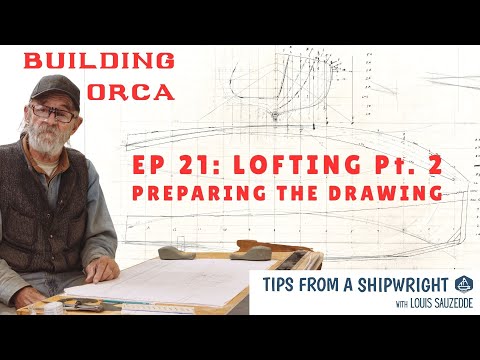
Part 2 of the Tips From A Shipwright lofting series for Project ORCA is out now. Lou reviews the working drawings for Orca, explaining the Profile, Half-Breadth, and Body Plan, the classic Novi lobster boat hull shape, and practical techniques for transferring lines and using French curves to fair the hull.
Subscribe to our channel to stay up to date on our Project Orca build!
In this episode of Tips From A Shipwright, Lou walks viewers through the working drawings for the boat Orca, explaining how these plans guide the entire build process. This video is Part 2 in a multi-part lofting series focused on developing the final hull shape of Orca.
Lou breaks down the primary drawing views—Profile, Half-Breadth, and Body Plan—and explains what the various dimensions, reference lines, and notations mean in a real-world boat shop. He also discusses the defining characteristics and overall hull form of classic Novi lobster boats, providing context for the shape and proportions seen in the drawings.
The episode continues with practical, shop-tested techniques for transferring drawings to full size, maintaining accuracy, and laying out fair curves. Lou demonstrates how and when to use French curves to refine lines and ensure smooth, fair shapes before cutting wood.
This video is ideal for boatbuilders, restorers, and anyone interested in understanding how traditional working drawings translate into a finished hull and set the foundation for accurate lofting.
Check out our new merchandise, including our limited run of ORCA Plaques, at our webstore:
https://tipsfromashipwright.com/store-2/
Thanks for watching, and stay tuned for more hands-on boatbuilding!
We want to thank all our supporters and followers for helping us get this far! Keep following us on this journey and check out our website and social feeds for additional content.
There's much easier ways to make a box than this, but I wanted to know if I could form one entirely from a single piece of steel. Along the way I learned a lot about how the material actually wants to move, and why some approaches don’t work so well. The video is about figuring out a method, not making a perfect object.
As always I'm happy to answer any questions.
If you would like to support this channel you can do so here
https://www.patreon.com/PaskMakes
You can also help me out by purchasing one of my shirts, you can find them here https://paskmakes.threadless.com
Check out my new website
http://paskmakes.com/
Check out my Instagram to see more of my work https://www.instagram.com/paskmakes/
Also you can check out my photography at my website (nothing to do with making but you may be interested in what I do) http://www.neilpaskinphotography.com
My email can be found in the about section of this channel.
For real mail,
Pask Makes
P.O BOX 768
Yandina
Queensland
4561
Australia
Today’s episode is about the epic battle between Muhammad Ali and the US government over its attempt to draft him during the Vietnam war and what happened when that fight reached the US Supreme Court. What were Ali’s grounds for claiming to be a conscientious objector? How did that argument cut across wider questions of race, religion and power? Why did the Supreme Court change its original decision against Ali to find unanimously in his favour? And who won and who lost as a result?
Out now on PPF+: Part two of David’s conversation with Robert Saunders about the fight over Irish Home Rule: how close did Britain get to an actual civil war in 1914 before another war intervened? To hear this and all our bonus episodes plus ad-free listening sign up to PPF+ now https://www.ppfideas.com/join-ppf-plus
“Levanta-se a hipótese de que ele seja burro” (idem, sobre o general Augusto Heleno)
:: EDITORIAL ::
Nada como escutar um podcast para impedir o córtex pré-frontal medial de cavar valas macabras no cerne da consciência humana enquanto o corpo físico se ocupa em limpar o sifão da pia. É realmente uma ocupação antidepressiva exemplar, um verdadeiro escudo acústico contra a ruminação. Uma ótima ideia para começar o ano.
Muitas de nossas associações musicais são verbais, e às vezes absurdas. Esta semana do Natal, quando comi salmão defumado (que adoro), ouvi na mente o verso “O come, let us adore Him”. E agora, para mim, o hino ficou associado ao salmão.
:: PAGO POR SUBSTANTIVO :: Michael Hobbes e Peter Shamshiri If Books Could Kill
Ele é pago por substantivo? [Is he paid by the noun?] (Michael, sobre um livro que eu não lembro qual era)
É, realmente parece que ele está só sentando e digitando sem ler nada. [Yeah it really feels that he’s just sitting down and typing and not reading it.]
Vou só ficar aqui lendo um outro livro enquanto você fala. [I’ll just be sitting here reading a different book while you talk.]
Um tá preso de fato e o outro tá preso na própria loucura.
(Sobre Daniel Silveira e Marcos do Val)
:: MERITOCRACIA DA SAÚDE :: Michael Hobbes e Aubrey Gordon Maintenance Phase
Ele acha que mudanças no estilo de vida podem curar toda e qualquer doença. [He thinks that lifestyle can cure every single illness] (Michael)
É isso que você pensa quando tem uma saúde relativamente boa, quando sempre teve acesso a cuidados médicos e quando lhe ensinaram que saúde é uma meritocracia. E que você colhe o que planta, o que não é verdade para quase nada nesta vida. [Which is what you think when you have relatively good health, when your healthcare has always been provided to you, and when you’ve been taught that health is a meritocracy. And you get out of it what you put into it, which is not true of almost anything in this life.] (Aubrey)
[…] Confundir a percepção que as pessoas têm da sua saúde com o seu caráter, moralidade e valor enquanto seres humanos. [Muddling up people’s perceived health with their carachter and morality and worth as people.]
:: MERITOCRACIA DA SAÚDE – PT. 2 :: Michael Hobbes e Aubrey Gordon Maintenance Phase
É claro que nossos estilos de vida afetam nossa saúde, há uma certa dose de verdade nisso. Mas acredito que a adoção dessa ideia, especialmente pela indústria, acaba introduzindo o que os pesquisadores chamam de ‘paradigma do risco associado ao estilo de vida’. O fato de o estilo de vida influenciar o risco de doenças é bastante inquestionável, mas, com o tempo, a ideia passou a ser vista como a única coisa que afeta esse risco. Chegamos, então, à conclusão oposta: que todos que adoecem devem ter feito algo para merecê-lo.
[Of course our lifestyles affect our health, there is truth at the heart of this. But I think the adoption of this and specially the takeup of this by industry ends up smuggling in what the researchers call “the lifestyle-risk paradigm”. The fact that your lifestyle affects your risk for disease is pretty unobjectionable but eventually it became that your lifestyle is the only thing that affects your risk for disease. We then get the reverse understanding that well, then, everybody who is sick must have done something to deserve it.] (Michael)
Tudo isso parte da premissa — e ao mesmo tempo reforça — a ideia de que, mais uma vez, pessoas magras e sem deficiência estão fazendo as coisas “certas”, e que quaisquer custos assumidos por um empregador são culpa das pessoas gordas e das pessoas com deficiência.
[All of this is both predicated on and reinforcing the idea that, again, thin people and non-disabled people are doing right things and that any costs that an employer shoulders are the fault of fat people and disabled people.]
W. Penfield impressionou-se com a frequência dos ataques musicais e deixou muitos exemplos fascinantes e quase sempre engraçados, uma incidência de 3% nos mais de 500 pacientes com epilepsia do lobo temporal que ele estudou. […]
Em cada caso, a música era fixa e estereotipada. A mesma melodia era ouvida repetidamente, fosse no decorrer de ataques espontâneos, fosse mediante estimulação elétrica do córtex propenso a ataques. Portanto, essas melodias não eram populares só no rádio, mas igualmente populares como ataques alucinatórios; elas eram, por assim dizer, “As dez mais do córtex”.
:: RESPONSABILIZAÇÃO :: Michael Hobbes e Peter Shamshiri If Books Could Kill
Isso refletia uma espécie de responsabilização de baixo para cima, que eles se sentiam impotentes para disciplinar.
[It reflected a sort of bottom-up accountability that they felt powerless to discipline] (Peter, sobre a “cultura do cancelamento”)
Esse medo entre os membros da maioria — pessoas que surtam com a escolha das palavras, “nem dá mais para dizer isso” —, em vez de pensarem em como a aceitação afetaria os membros da minoria, pensam em como a aceitação afetaria os membros da maioria.
[This fear among members of the majority – people who freak out about word choice, “you can’t even say this anymore” – instead of thinking about how acceptance would affect members of the minority, they think about how acceptance would affect members of the majority.]
:: ENTROPIA :: Sarah Marshall You’re Wrong About, “The Auralyn”
[…] viver com depressão crônica ou algo parecido. Significa que você não pode simplesmente se deitar e deixar acontecer, porque o que está acontecendo, e cada pequena coisa que você faz, cada gato que você desenha… Na verdade, você está lutando bravamente contra essa entropia em que está vivendo.
[[…] living with long-term depression or something like that. It just contains you can’t lie back and let it happen to you because it’s what’s happening and that every little thing you do and every cat that you draw is… actually, you’re very bravely fighting against this entropy that you’re living in.]
[…] um pequeno tocador de áudio que colocaríamos no quarto dele e que reproduziria um loop infinito do zumbido de um mosquito. Mas o aparelho só se ativaria no escuro, então, toda vez que ele apagava as luzes, o zumbido começava. Aí ele acendia as luzes para procurar o mosquito e ele não estava lá. E assim por diante, até que camisas de força fossem necessárias.
[… a little audio player that we’d stick in his bedroom and that would play an endless loop of a mosquito whining. But it would only activate in darkness, so every time he turned off the lights the whining would start. Then he’d turn on the lights to hunt for it and the mosquito wouldn’t be there. And so on and so on, until straitjackets were required.’]
“E de súbito”, Llinás conclui, “ouvimos uma música na cabeça ou, aparentemente vindo do nada, surge-nos uma forte vontade de jogar tênis. Isso às vezes simplesmente nos acontece.”
:: MOLHO PARA TACOS :: Kelly and Zack Weinersmith, A City on Mars
Aparentemente, o ambiente espacial também faz com que a comida tenha um sabor menos intenso. Isso pode ser resultado da mudança de fluidos corporais, que cria uma pressão nos seios nasais semelhante à de um resfriado, ou pode ser que, na ausência de gravidade, os cheiros não cheguem ao nariz, ou ainda pode ser algo relacionado à atmosfera artificial. Seja qual for o motivo, os astronautas frequentemente cobiçam os condimentos picantes, como sal, pimenta, Tabasco e maionese. E, claro, molho para tacos.
O molho para tacos, salgado e saboroso, é tão apreciado pelos astronautas que, por cerca de uma semana em 1991, tornou-se a primeira moeda específica do espaço sideral. No voo do ônibus espacial STS-40, o molho para tacos era usado em tudo. O piloto Sid Gutierrez lembrou: “Embora eu mesmo não tenha feito isso, observei meus colegas de tripulação colocando molho para tacos em cereais Rice Krispies pela manhã”.
Por volta do oitavo dia, o comandante da STS-40, Bryan O’Connor, percebeu que o consumo de molho para tacos pela tripulação logo ultrapassaria o estoque disponível. Segundo Gutierrez, o comandante “confiscou todo o molho para tacos restante e o dividiu igualmente entre os membros da tripulação. A partir daí, o molho para tacos tornou-se a moeda de troca. Por exemplo, se fosse a sua vez de limpar a latrina, você podia pagar a alguém com um ou dois molhos para tacos para fazer isso por você.”
[The environment of space also reportedly makes food taste less flavorful. This may be a result of the fluid shift creating sinus pressure similar to a cold, or it may be that in zero gravity smells don’t waft up into your nose, or it may be something about the artificial atmosphere. Whatever the reason, astronauts often lust for piquant condiments, such as salt, pepper, Tabasco, and mayonnaise. And, of course, taco sauce. Salty, zesty taco sauce is so beloved by astronauts that for about a week in 1991 it became the first form of currency specific to outer space. On shuttle flight STS-40, taco sauce went on everything. Pilot Sid Gutierrez recalled, “Although I didn’t do it myself, I observed crewmates putting taco sauce on Rice Krispies in the morning.” Around day 8, STS-40’s Commander Bryan O’Connor realized the crew’s rate of taco sauce consumption would soon outstrip the taco sauce supply. According to Gutierrez, the commander “secured all the remaining taco sauce and divided it equally among the crew members. Thereafter taco sauce became the medium of exchange. For example, if it was your turn to clean the latrine, you could pay someone a taco sauce or two to do it for you.]
Meu peso em gelinho
>>>> Agradecimentos: Esta edição foi possível graças a 26 aguerridos assinantes e uma dúzia de doadores esporádicos.
Os links dos livros são afiliados da Amazon e nos ajudam a recarregar o Bilhete Único.
“Para ser lido na maldita hora da noite em que tudo é engraçado – logo após a hora em que nada faz sentido e antes daquela em que tudo faz sentido” (Stephanie A.)
Pequeno aviso legal: A Hortaliça será distribuída gratuitamente através desta plataforma. Não iremos produzir conteúdo fechado para assinantes por acreditar no livre acesso à informação, arte e cultura. A tarifa zero será bancada pelos leitores e leitoras e leitões que tiverem condições financeiras (e vontade) de colaborar. A estes, pedimos que nos apoiem escolhendo um plano de assinatura ou depositando moedas de ouro aleatórias para a chave pix: vmbarbara@yahoo.com. Vamos apoiar o jornalismo independente, a literatura de guerrilha e a bobice semiprofissional.
INFORMAÇÕES SOBRE A ATUAL ESCALADA ENTRE EUA E VEZUELA: Confira no nosso site reportagens e análises especiais sobre o tema, que abordam os impactos desse conflito na geopolítica mundial e os riscos que ele representa para a América Latina.
Este é o quarto e último episódio de férias do Pauta Pública, que durante quatro semanas trouxe os momentos mais marcantes da temporada de 2025. Neste episódio, você ouve o relato de quem perdeu mais de cinquenta familiares em Gaza. Também há relatos sobre a guerra na República Democrática do Congo, que apesar do número assustador de vítimas, tem pouca ou nenhuma repercussão na imprensa brasileira e internacional. E por fim, uma análise de como a morte de Jina Mahsa Amini, após ser presa pela Polícia da Moralidade iraniana, iniciou uma onda de resistência feminista.
Para isso, o episódio reúne trechos das entrevistas realizadas com o jornalista Ramzy Baroud, durante o episódio O genocídio em Gaza nas palavras de um palestino; com o jornalista Pedro Borges e com o coordenador do coletivo A Voz do Congo, Prosper Dinganga, no episódio Guerra no Congo: milhões de mortos e pouca atenção; e também com a professora e escritora iraniana Firoozeh Farvadin, durante o episódio A Revolução Feminista no Irã.
Ouça agora e lembre-se que na próxima semana começa a nova temporada do Pauta Pública, com episódios novos todas as sextas. Não deixe de compartilhar com a gente sua opinião nos comentários
Saiba que você pode ser aliado da Agência Pública e colaborar com esse trabalho. Saiba mais em apoie.apublica.orgou faça um pix de qualquer valor para contato@apublica.org. Contamos com seu apoio!
Ogatsu-suzuri originated around the 14th century. Suzuri (an inkstone) is an implement made from a claylike stone and used in calligraphy. An ink stick is rubbed on the inkstone with a small amount of water. The surface of the inkstone, though it appears smooth to the naked eye, works just like a file. This is due to the elements, such as quartz, copper, and iron, contained in the stone.
Até que ponto a literatura aproxima as pessoas? No episódio que abre a temporada 2026 do 451 MHz, os poetas e prosadores Eliane Marques e Henrique Marques Samyn conversam com a também poeta e colunista do podcast Bruna Beber sobre como a poesia os transformou em primos. Partindo do poder da palavra de criar laços, os convidados encontram pontos em comum desde o primeiro contato com histórias na infância até a descoberta da literatura negra. Na conversa, gravada no fim de 2025, eles ainda falam sobre como isso se reflete em seus livros mais recentes: Sílex (Círculo de Poemas), de Eliane Marques, e Anastácia e a Máscara (Malê), de Henrique Marques Samyn.
Apoio: Lei Rouanet - Incentivo a Projetos Culturais.

 Login
Login