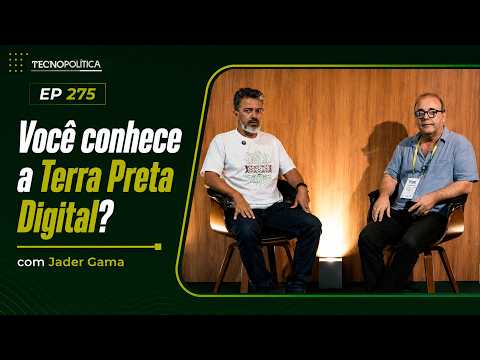
Neste episódio do Tecnopolítica, gravado durante o Fórum da Internet no Brasil (FIB 2026), em Belém do Pará, Sérgio Amadeu entrevista Jader Gama, pesquisador dedicado às relações entre tecnologias digitais, Amazônia, conhecimentos tradicionais e justiça socioambiental. Sua atuação reúne temas como soberania tecnológica, territórios digitais, cultura, inovação e os impactos da digitalização sobre as comunidades amazônicas.
Durante a conversa, eles discutem o conceito de Terra Preta Digital, suas inspirações nos saberes ancestrais da Amazônia, a construção de infraestruturas tecnológicas voltadas ao bem comum, a valorização dos conhecimentos tradicionais e os caminhos para pensar um desenvolvimento tecnológico comprometido com a diversidade cultural, a sustentabilidade e a autonomia dos povos.
#darktable #tutorial #newfeatures
In this episode, we look at some of the new features in darktable 5.6.
00:00 start
00:27 intro
00:58 new AI tools
02:24 tweak to the crop module
02:44 the second darkroom window
03:17 tweak to the colour picker
03:33 moving/copying images from one collection to another
04:25 openCL
04:33 blurs module
04:58 composite module
05:20 superfluous pixel-pipe runs
05:30 mask distortions
05:51 new apertures in presets dialogue box
06:03 canon automatic lighting optimiser for cr3 files
06:11 png support for raster masks
08:14 changes to the black list
08:45 balkans holiday
As always, thanks to William Justice for his youtube chapter generator!
https://billjustice.com/youtube-chapter-generator
Also, thanks to my tier 1 Patreon supporters:
William Atkinson
Totoroot
Peter Frohberg
travellingjournalist
SaturdayScience
Rainer H
Bas van de Kerkhof
Marcus Ahlberg
Dave Shepherd
Pascal
John Bell
mike s
Alexander Haak
Kevin McKibben
chris8142
Rudolfs
Gitte
David Staves
Erik Oksanen
Rob van Esseveld
Ferg
Fernando Pérez
Steve Ansell
Emil Ohlsson
Robert Stites
Daniel
Bart Bartels
Ulrich Gesing
Andy McGarty
Michael Rasmussen
Matthias Liebich
Martin Vines
Rohn Shearer
Alun Spencer
Jon Hoskins
SteMuBo
Henry St. Clair
peterschlaufer
Larry
Dan Putler
If you'd like to support my work, get access to these videos before everyone else, AND get access to additional content (tiers 3 and 4), please head over to patreon.com/understandingdarktable and pick a tier that is comfortable for you.
The hosts of This Wreckage (A.M. Gittlitz & Sean KB) visit our offices in New York City to make their way through the Verso Archive, sharing memories of the Verso Loft and discussing some of the titles that have inspired episodes of their podcast and influenced the writing of Gittlitz's new book, Metropolitans: New York Baseball, Class Struggle, and the People's Team.
This Wreckage is a communist podcast exploring political economy, history and the class struggle. Co-host A.M. Gittlitz also has a new book out called Metropolitans: New York Baseball, Class Struggle, and the People's Team, published by Astra House.
Visit http://www.patreon.com/thiswreckage
View the accompanying reading list here:
https://www.versobooks.com/blogs/news/the-verso-archive-featuring-this-wreckage?utm_source=youtube&utm_medium=video&utm_campaign=archive_this_wreckage
Verso Books is the largest independent, radical publishing house in the English-speaking world, publishing over one hundred books a year.
Junta-te à comunidade de mecenas! Ganhas acesso a conteúdo exclusivo, eventos, debates de Discord, grupo Whatsapp, sessões privadas com o Tomás e muito mais: https://www.donorbox.org/despolariza
Grátis e de alto impacto: Like, Subscrever, Activar Notificações, Comentar, e Partilhar
Escritor e cronista, licenciado em História e em Ciência Política e antigo investigador em Relações Internacionais, o Henrique acaba de vencer o Prémio Literário Camilo Castelo Branco. Cresceu num bairro clandestino nos arredores de Lisboa, filho de uma família de alentejanos operários que trocaram o campo pela grande Lisboa nos anos sessenta. É autor de "O Mundo sem Europeus", da "História Politicamente Incorreta de Portugal Contemporâneo", de "Alentejo Prometido" e do romance "As Três Mortes de Lucas Andrade".
Pode uma feminista ir à casita do Bad Bunny? A esquerda ainda é de esquerda depois do meio-dia? Faz falta o PCP? É o silêncio sobre certas culturas que faz nascer o Chega? Devemos impedir alguém de se matar? Abandonar um velho no hospital não é como abandonar uma criança? Foi uma conversa que recusou os lugares-comuns, do bairro operário ao cante alentejano. Passem um olho na cronologia.
⏰ CRONOLOGIA ⏰
00:00:00 - Introdução (Torna-te Mecenas!)
00:02:46 - Lotaria genética e social: "a palavra genética deixa-me desconfiado"
00:06:28 - A lotaria social: crescer num bairro clandestino de alentejanos operários
00:08:07 - "O que é que vai ser deste moço?" — o rapaz que lia e a masculinidade do bairro
00:12:43 - Pais operários desiludidos com a esquerda; o Alentejo e o cante
00:16:33 - "As Três Mortes de Lucas Andrade" e a masculinidade tóxica
00:21:09 - Tocqueville e os corpos intermédios da sociedade
00:23:18 - O PCP era a igreja do povo do Sul; no seu vazio nasce o Chega
00:29:32 - O feminismo só até ao meio-dia: cisão genital feminina em Portugal
00:33:12 - Respeitar a cultura ou combater a violação dos direitos humanos
00:38:52 - Meninos muçulmanos e a escola: onde é que está a linha?
00:45:35 - A esquerda devia ser anti-imigração? Aculturar não é racismo
00:59:01 - A blasfémia: a economia cresceu no Estado Novo
01:03:31 - Hannah Arendt: compreender o mal não é desculpá-lo
01:10:08 - Bad Bunny e a casita: o feminismo posto ao espelho
01:22:47 - O suicídio: a primeira questão filosófica
01:33:01 - Tirar miúdos pobres do ciclo da pobreza: é sorte ou mérito?
01:42:12 - Pop alentejano vs o cante alentejano a sério
📚 REFERÊNCIAS 📚
PESSOA: Édouard Louis
https://pt.wikipedia.org/wiki/Édouard_Louis
CONCEITO: Cante Alentejano
https://pt.wikipedia.org/wiki/Cante_alentejano
LIVRO: As Três Mortes de Lucas Andrade
https://www.wook.pt/pesquisa?keyword=As+Três+Mortes+de+Lucas+Andrade&a_aid=644ebe7982823
LIVRO: O Mundo sem Europeus
https://www.wook.pt/pesquisa?keyword=O+Mundo+sem+Europeus&a_aid=644ebe7982823
PESSOA: Alexis de Tocqueville
https://pt.wikipedia.org/wiki/Alexis_de_Tocqueville
LIVRO: A Democracia na América
https://www.wook.pt/pesquisa?keyword=A+Democracia+na+América&a_aid=644ebe7982823
ORGANIZAÇÃO: Partido Comunista Português (PCP)
https://pt.wikipedia.org/wiki/Partido_Comunista_Português
PARTIDO: Chega
https://pt.wikipedia.org/wiki/Chega_(partido_político)
PESSOA: Edmund Burke
https://pt.wikipedia.org/wiki/Edmund_Burke
PESSOA: André Ventura
https://pt.wikipedia.org/wiki/André_Ventura
LIVRO: História Politicamente Incorreta de Portugal Contemporâneo
https://www.wook.pt/pesquisa?keyword=História+Politicamente+Incorreta+de+Portugal+Contemporâneo&a_aid=644ebe7982823
CONCEITO: Estado Novo
https://pt.wikipedia.org/wiki/Estado_Novo_(Portugal)
ORGANIZAÇÃO: EFTA
https://pt.wikipedia.org/wiki/Associação_Europeia_de_Comércio_Livre
PESSOA: António de Oliveira Salazar
https://pt.wikipedia.org/wiki/António_de_Oliveira_Salazar
PESSOA: Hannah Arendt
https://pt.wikipedia.org/wiki/Hannah_Arendt
PESSOA: Adolf Eichmann
https://pt.wikipedia.org/wiki/Adolf_Eichmann
LOCAL: Auschwitz
https://pt.wikipedia.org/wiki/Campo_de_concentração_de_Auschwitz
PESSOA: Bad Bunny
https://pt.wikipedia.org/wiki/Bad_Bunny
CONCEITO: Manosfera
https://pt.wikipedia.org/wiki/Manosfera
PESSOA: J.K. Rowling
https://pt.wikipedia.org/wiki/J._K._Rowling
PESSOA: Eça de Queirós
https://pt.wikipedia.org/wiki/Eça_de_Queirós
🔗 MAIS LINKS 🔗
Ja leste o Blog ou viste o Instagram?
👉🏼 https://linktr.ee/despolariza
Estúdio e Produção Multimedia:
👉🏼https://linktr.ee/mindframe.media
With ever-changing models, new and better ones coming out every few months, it’s great if we don’t have to rely on them too heavily. The better your tooling, the less dependent you become on any single model. That’s also why the deterministic harness matters: a correctness layer that lets you reproduce outputs and trace lineage regardless of which model you’re running underneath. This is especially true during maintenance or extending the project, where verification is the real job.
The danger isn’t only a crash or an error message, but a wrong number that didn’t break. It might be a clean query, but it introduces duplicated rows.
In this article, we go through the three levels of AI agents in data engineering, how to structure projects so the AI delivers its best outcomes, and how dedicated agents with a deterministic core help us build higher-quality pipelines — ones we can actually trust. And we look at a practical example of how it works with a blast radius analysis.
The Three Levels of AI Agents in Data Engineering
Why should we use agents for data engineering? And at what levels can agents help us productively? As LLMs will always have some error tolerance, as humans do too, we need a way to be more confident in producing the code.
Chat-phase, Autonomous and Dedicated Tooling
There are different levels of confidence and levels on which the agents can help us.
The initial chat-phase: the development where we prompt Claude or ChatGPT. The model tries to understand the context based on what it has access to. It takes a decent amount of tokens, as it needs to scan everything from scratch.
The autonomous approach, where Claude Code or Codex also have access to the tools humans have, mostly the CLI on the terminal, making it possible to query Postgres with psql or read from S3 or Parquet with DuckDB to verify queries and data. A much higher quality outcome.
Dedicated agents for the task at hand. E.g., for data, the tools know dbt or know how to transpile SQL code deterministically, meaning not from training data only, but with an actual tool that does it much faster and more reliably. Built-in checks and features a “general” agent can’t provide.
Showcasing the three levels of AI agents in data engineering
Ideally, we’d want to always use the dedicated tools, but there isn’t always one.
Where in the DE Lifecycle Each Level Actually Helps
BI Dashboards vs. Plumbing the Data Pipelines, or Creating Source Ingestions, or Maintaining? For data engineering, the question is not only if there is dedicated agent tooling, but also on what part of the data engineering lifecycle AI agents can help data engineers and analysts the most, and potentially even domain experts?
The lifecycle contains the ingestion part, ETL, or understanding the business in great detail, or is it just to visualize the result? Or should it cover maintenance in case of overnight ETL errors, or the full data lifecycle?
In general, before we go into more details later, agents can help us on the full cycle, but it always depends on who you are and what role you play. Building from scratch with no knowledge or seniority is dangerous. Why? Because they can’t verify if the produced code is correct. Okay for a side project or a proof of concept, but not for actual production.
What’s the Engineering Discipline for Working with AI?
There’s also a part that is less technical, a way of guiding the agents in the right direction. Especially if we want to safely use it in large projects or organizations, we can’t just let it run without guidance.
For that we need:
clear project structure in which the agents can flourish. The more is given, the fewer tokens are used for this work, and it will be more aligned across the project. (Another reason a deterministic workflow such as uv init is best, because it will always be the same).
build with clear instructions (agentic skills, superpowers, etc.) on how the tools are used (basically providing CLIs and API documentation). This is the bulk of the work anyway. That’s the data architecture, the brainstorming with fellow humans before you build something, instead of missing a key insight in the beginning and then letting the agent run down the wrong path. Also, be realistic: prompting “be correct” or “use state-of-the-art” won’t make it more correct or more state-of-the-art than the model was trained on. So if it’s a rather new architecture, it’s a must that you provide these links and hints.
set up the project in a modular fashion, so the agents cannot break the whole project if they make a small change, so you don’t end up in a scenario like dependency hell with everything dependent on each other.
use a declarative approach, with descriptive configuration that says the what and not the how, so that you can collaborate on these configs with the agents, version them, and easily revert or change something, as well as decouple the implementation logic from the actual business logic.
With these steps, you can get the best out of the agents of today. I’d say the model matters less, but the structure does, and as Mario says, so does the workflow approach. For example, extensively plan (the process before writing a single line) and correct the model before any implementation that could lead down the wrong path is written.
Also, don’t overthink it. But this is only the workflow and learning the soft skills and discipline of working with agents. How does that look in a real-world project?
[!note] The key is to get use out of AI, not to get more work.
E.g., most developers used to think about the problem. Today, most drown in PRs. When the AI tooling gets better, AI can provide more quality code that is correct, that needs less review or fewer iterations, which means fewer PRs and less work for the developers to go through.
The Correctness Layer for Data Engineers
A key insight is that AI agents should support the “human in the loop” for correctness, or a correctness layer. And rather than making more work to verify more code, we should be confident in the process and know that the code it produces is verified and ultimately correct.
But how do we get more “correct” work and a layer in which we can verify it? The biggest argument is a deterministic-validation architecture in full. E.g., Altimate Code splits the agent into a probabilistic layer on top and a deterministic Rust/TS layer underneath that does the actual SQL ops such as parsing, validating, and equivalence checks, so that the agent itself never has to be trusted on those questions.
Altimate Code, for example, is built on a probabilistic agent, deterministic harness, and deterministic core. The probabilistic agent with the LLM does the creative work of reading intent, picking a strategy, drafting SQL, summarizing results, and recovering when something goes wrong.
Below the boundary sits the deterministic harness, a TypeScript layer that intercepts every tool call: a dispatcher checks hasNativeHandler before the call runs, and routes it either to a native, deterministic handler or back to the model. Those handlers don’t reimplement logic themselves, they call into the deterministic core, a Rust engine (altimate-core) that exposes SQL operations as pure functions over ASTs and schemas, wired in via napi-rs bindings. Parsing, validating, transpiling, checking query equivalence, diffing schemas, extracting column lineage, diffing rows across warehouses — all of it runs sub-millisecond, and all of it returns the same answer on the same input, every time.
Like a compiler, the agent never decides whether two queries are equivalent or a column exists upstream. Instead, it calls a function that proves it against the parsed AST and the schema, the same way a type-checker proves a program compiles rather than guessing.
How the correctness layer adds additional verification
That’s the distinction that makes the output easier to review, as factual checks have been run and the output is either correct, or there’s a bug that it can fix directly. The rest a human can re-verify. On the dilemma of having stopped to hand-write code and approving it faster than humanly possible to check, you can also read more at You Are the Trust Layer.
[!note] There’s another factor, being wrong
Bare agent use might be cheap, but only until they’re wrong, and then the cost is unbounded.
Improvements for Better Usage of Tokens
Altimate, or data engineering agents that have deterministic functions and integrated understanding of how to work, can help you save tokens and be token lean (the opposite of [[tokenmaxxing]], which is popular on Twitter/X, using as many tokens as possible and having an agent running at all times). Because in large enterprises, token costs are a real budget point.
To slow down the tokens, an easy trick is to instruct the model to use fewer tokens and words itself - caveman is a good example of that, but you can also add a singular prompt to your CLAUDE.md, Codex, or model of choice in combination with Altimate Code.
An example of Altimate Code showing a trace of data lineage and a web UI for it.
There’s a second, less obvious cost: the token itself isn’t a stable unit. When Anthropic shipped Opus 4.7, the same prompt that cost X tokens on 4.6 started costing roughly 1.4X (same input, same answer, more tokens, same price per token).
Altimate on The Great Token Heist of ‘26 makes the case that “cost-per-token is the wrong number to optimize”, since the meter itself can move with a vendor’s next model update, and what we should track instead is cost-per-task. I fully agree, and this is where deterministic function calls work around that volatility by not using a model/tokens for every task, making it less expensive.
Typical Use Cases
In this chapter we go through typical AI agent use cases for data engineering.
There are many of them. You can use them to educate yourself or your team, build production data pipelines, build data apps, and visualize your data in new innovative ways (usually HTML web pages with React and other JavaScript frameworks). But in general, the use cases fit into these approaches:
Start a new project from scratch example: Building a data landscape with more open source.
Extending an existing project or data warehouse: Adding new data pipelines.
Maintaining current setup: Update and verify it still works when changes come in.
Migration: Migrate from one database or tooling to the next.
Finding the Blind Spots: Two similar-sounding IDs might be wrongly used for a join, or missing data in a column that got missed in a nightly load, or anything in between. If agents can do these checks, that would be super beneficial. With more access to CLI, Model Context Layer, and deterministic tooling, these things are truly possible.
Below we go through extending and changing an existing warehouse with a change of column, and using Altimate Code to give us a Blast-radius assessment.
Showcases: Blast-Radius Example
A Blast-radius refers to the potential extent of damage. For example, before you knock down a wall in your house, you want to know if there’s plumbing behind it, electrical wiring within it, or if it’s holding up the floor above.
The same is true for a data warehouse or a data project with lots of ETL. For example, if a data engineer cleans up the table fct_orders by joining orders to order_items and summing order_total. It compiles, the dbt tests pass, nothing errors. But the join changes the grain, so any order with several line items now gets counted once per item, and revenue quietly inflates.
It’s best to know, before you rename a column or add a new join, the downstream (data that comes after the current task) dependencies to the dashboard — that’s what the blast-radius report does.
With Altimate Code we can achieve this. Before any change goes through, it maps out the full impact automatically and produces a detailed blast-radius report with what will break, what’s safe, what needs someone to sign off, and also performs the changes. Here is what this looks like:
Rename and Change Columns and Logic
As an example, in this prepared ecommerce repo with different DWH layers such as staging -> intermediate -> marts, I prompted this request to change unit from cent to dollars:
It recognized the dbt name and invoked dbt-analyze automatically:
It gave me a full Blast-radius report and the impact my changes would have on the project:
Including semantics only, to point out what’s safe and what’s not:
With a fixed order to address breaking changes, semantics and docs, and intentionally untouched:
Notice, I hadn’t said anything about blast analysis or using dbt-analyze — it did it on its own, ran dbt, and analyzed it deterministically.
This shows how Altimate Code looks behind the walls of data engineering, just like blast radius analysis.
[!example] Connect a model to Altimate
Make sure to connect to a model with /connect and choose an existing subscription with API credits, or any other subscription. I used opencode zen for my example, which includes e.g. Opus 4.8.
Correctness Over Confidence
I hope you got a better understanding of why AI agents can be genuinely useful, especially when provided with the right tools and applied with the right discipline.
You’ve also seen how deterministic tooling, purpose-built for data engineering and analytics problems, gets you both better correctness and better token economics than general-purpose agents alone.
Coming back to where we started: not every task needs a level-three agent. A quick chat-phase agent is fine for exploring a dataset or drafting a query you’ll review yourself. But the moment that output touches production or serious work, a dashboard, a nightly job, a number someone makes a decision on, you want the deterministic core underneath it, not just a model that sounds confident.
That’s the gap Altimate Code is built to close. It runs on deterministic functions purpose-built for DE workloads, it’s open-source via the OpenCode TUI, and for teams wanting more, there’s Altimate Studio — a paid, multi-agent platform with extras like warehouse cost optimization, dbt development acceleration, and migration tooling.
Check out Altimate Code, it’s free and open-source. Give them a star if you like them, and find more information on their docs and new website.
A dificuldade crescente de acesso à casa própria e o aumento do custo da moradia têm levado pesquisadores e gestores públicos a olhar com mais atenção para o aluguel social como parte da solução para a crise habitacional. De acordo com o Censo do IBGE, cerca de 22% das famílias brasileiras viviam em domicílios alugados em 2022. Ao mesmo tempo, a Pesquisa de Informações Básicas Municipais (MUNIC 2024) mostrou que 67,7% dos municípios afirmam possuir alguma política de aluguel social.
Com projetos e políticas públicas em implementação, cidades como São Paulo, Campo Grande, Belo Horizonte e Recife buscam ampliar o acesso à moradia por meio de iniciativas municipais ou federais que adotam esse instrumento. No modelo, as unidades residenciais são oferecidas pelo poder público, que pode intermediar a oferta ou ser proprietário dos imóveis, enquanto o morador paga um aluguel que não compromete excessivamente sua renda.
Em São Paulo, uma pesquisa conduzida pelo LabCidade, da Faculdade de Arquitetura e Urbanismo da Universidade de São Paulo (FAU-USP), em parceria com a Secretaria Municipal de Habitação da Prefeitura de São Paulo (Sehab-SP), investiga como esse modelo poderia ajudar a enfrentar a crise habitacional da capital. O estudo, que conta com financiamento da FAPESP e é coordenado pela pesquisadora Paula Freire Santoro e pela gestora pública Daniela Perre, busca soluções para ampliar e diversificar a política de locação social já existente.
O déficit habitacional envolve diferentes formas de precariedade, como moradias inadequadas e o chamado ônus excessivo do aluguel — situação em que famílias com renda de até três salários mínimos comprometem mais de 30% do orçamento com o pagamento da moradia. Em São Paulo, esse problema é especialmente expressivo: em 2022, 65% desse público ultrapassava esse limite, segundo dados da Fundação João Pinheiro, instituição de pesquisa, ensino e produção de estatísticas sobre políticas públicas vinculada ao Governo do Estado de Minas Gerais.
Segundo Santoro, mesmo no cenário mais otimista – de 30 mil unidades produzidas em uma única gestão municipal, o maior volume já registrado em São Paulo – seriam necessárias mais de 13 administrações para atender à demanda habitacional calculada em 2016.
“Os desafios são enormes e muito diversos. A política habitacional não pode apostar em apenas um modelo centrado na produção de novas moradias pelo mercado para a casa própria”, afirma Santoro.
Até agora, a pesquisa mapeou diferentes modelos de aluguel social adotados no Brasil e no exterior, desde programas de auxílio e vouchers até parques públicos de locação e parcerias entre governos, sociedade civil e iniciativa privada. O objetivo, segundo as pesquisadoras, não é defender qualquer política baseada no aluguel, mas identificar formatos capazes de ampliar o acesso à moradia sem reproduzir a lógica especulativa do mercado imobiliário, aproveitando melhor o estoque de imóveis já existente.
Além do levantamento comparativo, o estudo já contribuiu para aprimorar normas do Programa de Locação Social de São Paulo e para discussões sobre regulação do mercado de aluguel e plataformas de locação temporária. As pesquisadoras também participaram da elaboração de propostas para uma política nacional de locação social no âmbito do PlanHab 2040.
O aluguel social como aposta
Diferentemente dos programas voltados à compra da casa própria, o aluguel social prevê acesso a moradias oferecidas pelo poder público, que podem ser de propriedade pública ou privada, com a cobrança de um aluguel a preços acessíveis.
O modelo atende grupos que costumam ficar à margem das políticas tradicionais de financiamento habitacional, como jovens, pessoas em situação de rua e famílias de baixa renda. “Há pessoas para quem a casa própria não é a melhor solução”, afirma Claudia Acosta, professora da Fundação Getúlio Vargas e pesquisadora do FGV Cidades, Centro de Ciências para o Desenvolvimento (CCD) apoiado pela Fapesp. “Se uma pessoa com 60 anos entra no programa Minha Casa, Minha Vida, com 75 anos ainda estará no financiamento. Isso não tem sentido”, diz.
Para Acosta, a casa própria pode ainda ser uma espécie de “âncora”, limitando a mobilidade urbana quando está localizada em áreas distantes dos empregos e serviços. “O aluguel pode ser uma ferramenta de inclusão social também por manter as pessoas mais próximas das oportunidades”, diz.
A possibilidade de manter populações de baixa renda em regiões centrais aparece como um dos principais argumentos em defesa do aluguel social. Segundo Francisco Comaru, professor da Universidade Federal do ABC e coordenador do Laboratório de Justiça Territorial (LabJuta), muitos moradores de cortiços pagam um valor alto para morar no centro da cidade, ainda que em condições precárias.
“São funcionários de lojas, de bares e de restaurantes, empregadas domésticas, trabalhadores da construção civil e ambulantes. Quando empurrados para a periferia, têm a sua qualidade de vida prejudicada, além de gerar impacto no meio ambiente, no trânsito e na própria saúde”, explica.
Para o pesquisador, políticas permanentes de aluguel social também ajudam a conter processos de expulsão da população de baixa renda das áreas valorizadas da cidade. “É uma maneira de retirar essas moradias do mercado privado e da precificação que ele impõe, mantendo as pessoas de baixa renda em áreas bem servidas por infraestrutura, emprego e serviços”, aponta Comaru.
Modelos de aluguel social são utilizados em diferentes países desde o pós-guerra, especialmente na Europa, em lugares como Reino Unido, França, Itália e Suíça. Na América Latina, Uruguai, Argentina, Chile e México também praticam o modelo de habitação pública para locação. Em vários desses países, a locação social integra permanentemente as políticas habitacionais e convive com programas de acesso à casa própria.
Uma política antiga que nunca ganhou escala
Apesar de vigente desde 2002, o Programa de Locação Social de São Paulo nunca ganhou escala, ainda que apresente bons índices de acesso e permanência, segundo a pesquisa. Entre os fatores apontados estão a descontinuidade do programa entre diferentes gestões e a preferência histórica por políticas voltadas à casa própria. Nos últimos anos, essa tendência foi reforçada por programas de financiamento habitacional, como o Minha Casa, Minha Vida, criado em 2009 no âmbito do Governo Federal, e por modelos baseados em parcerias com a iniciativa privada, como o programa Pode Entrar, criado pela Prefeitura de São Paulo em 2021.
Hoje, a cidade de São Paulo conta com apenas 937 unidades no formato de locação social. No modelo paulistano, os imóveis pertencem ao poder público e são alugados para pessoas em situação de vulnerabilidade por valores que não podem ultrapassar um percentual de sua renda – entre 10% e 15%, a depender da categoria de beneficiário e do total da renda familiar.
Débora Sanches é professora de Arquitetura e Urbanismo na Universidade Presbiteriana Mackenzie e participou da conceituação e implementação da política. “O programa deu origem a habitações como o Residencial Olarias, no Canindé, e a Vila dos Idosos, no Pari. A partir do momento em que tiveram moradia digna, muitas pessoas voltaram a estudar e tiveram acesso a melhores empregos. Ter um endereço impacta na autoestima das pessoas e nas suas condições de vida”, afirma Sanches.
Parte dessas unidades, porém, pode deixar de integrar o programa nos próximos anos. De acordo com Perre, servidora da Sehab-SP e arquiteta responsável pela parceria com o LabCidade no projeto, dois dos sete empreendimentos do modelo serão desvinculados do programa e a propriedade das unidades será transferida aos beneficiários. Juntos, eles representam cerca da metade das habitações no programa de aluguel social do município.
“No caso do Parque do Gato, no Bom Retiro, e do Residencial Olarias, a desvinculação foi aprovada por uma resolução do Conselho Municipal de Habitação, e a propriedade será transferida sem custo para os moradores”, explica. Segundo a arquiteta, o órgão perdeu o domínio sobre as unidades, sobretudo por conta do tráfico de drogas na região, e não conseguia mais fazer a manutenção das unidades.
Auxílio-aluguel e precarização
Em paralelo ao programa de locação social, São Paulo mantém uma política de auxílio-aluguel voltada a famílias removidas de áreas de risco ou atingidas por obras públicas. Em março deste ano, 29 mil famílias recebiam o benefício.
De acordo com a pesquisadora Isadora Guerreiro, que integra o LabCidade, o maior volume de famílias removidas e atendidas pelo auxílio em São Paulo atualmente está concentrado na zona sul da cidade, com um número expressivo de casos vindos do Programa Mananciais. O projeto da Sehab-SP teve início nos anos 90 na região da bacia hidrográfica de Guarapiranga, promovendo ações para a regularização fundiária de favelas e núcleos na região. Hoje, o programa também atua na bacia Billings, na mesma zona da cidade.
Guerreiro, no entanto, alerta sobre os problemas do modelo. “Ele não atende à necessidade de moradia das famílias: a Prefeitura não sabe onde elas vão morar, e vemos que a maioria acaba em imóveis precários alugados de maneira informal, sob ameaça de despejo”, conta.
Segundo a pesquisadora, as famílias muitas vezes saem de casas em que investiram dinheiro e vão para lugares piores, pagando aluguel. “Isso não pode ser considerado uma política habitacional”, afirma. A crítica ilustra uma das questões centrais do debate habitacional: oferecer um benefício temporário não necessariamente garante acesso estável à moradia.
Based on a chapter from Disasters By Design: How Engineering Failures Shaped the Modern World by Grady Hillhouse, coming March 2, 2027, and available for preorder now.
US: https://www.penguinrandomhouse.com/books/786143/disasters-by-design-by-grady-hillhouse/
UK: https://www.penguin.co.uk/books/476190/disasters-by-design-by-hillhouse-grady/9780241798508
More About the Book: https://practical.engineering/books
What happened in New Orleans in August 2005 wasn’t a natural disaster. A number of engineering errors made the hurricane far more deadly than it would have been otherwise. And I built a model to show you why.
Watch this video ad-free on Nebula: https://nebula.tv/videos/practical-engineering-why-the-levees-failed-in-new-orleans
Signed copies of my first book (plus other cool stuff) are available here: https://store.practical.engineering/
Practical Engineering is a YouTube channel about infrastructure and the human-made world around us. It is hosted, written, and produced by Grady Hillhouse. We have new videos posted regularly, so please subscribe for updates. If you enjoyed the video, hit that ‘like’ button, give us a comment, or watch another of our videos!
CONNECT WITH ME
____________________________________
Website: http://practical.engineering
Twitter: https://twitter.com/HillhouseGrady
Instagram: https://www.instagram.com/practicalengineering
Reddit: https://www.reddit.com/r/PracticalEngineering
Facebook: https://www.facebook.com/PracticalEngineerGrady
Patreon: http://patreon.com/PracticalEngineering
SPONSORSHIP INQUIRIES
____________________________________
Please email my agent at practicalengineering@standard.tv
DISCLAIMER
____________________________________
This is not engineering advice. Everything here is for informational and entertainment purposes only. Contact an engineer licensed to practice in your area if you need professional advice or services. All non-licensed clips used for fair use commentary, criticism, and educational purposes.
SPECIAL THANKS
____________________________________
Stock video and imagery provided by Getty Images, Shutterstock, Pond5, and Videoblocks.
Video by Grady Hillhouse
Edited by Wesley Crump
Produced by Ralph Crewe
Graphics by Nebula Studios
MUSIC CREDITS
____________________________________
Aural Imprints from Epidemic Sound
Rhubarb from Epidemic Sound
Woodland Expedition composed by Caleb Winters (https://beacons.ai/calebwinters)
Magnified XY from Epidemic Sound
All Parts Equal from Epidemic Sound
Tonic and Energy by Elexive is licensed under a Creative Commons Attribution License
Source: https://www.youtube.com/watch?v=U6fBPdu8w9U
Discover one of the world's most famous medieval objects and uncover the dramatic events that lead to the Battle of Hastings in 1066.
Stretching nearly 70 metres, the Bayeux Tapestry is far more than a remarkable piece of embroidery. It tells a story of ambition, rivalry and conquest that changes England forever.
In this film you'll discover:
🏹 What the Bayeux Tapestry is and why it is so extraordinary
🏹 The dramatic events shown across its remarkable length
🏹 The rival claimants to the English throne
Designed for learners aged 11+, this short animation is equally suitable for families, teachers, students and anyone with an interest in history.
Discover the Bayeux Tapestry:
https://www.britishmuseum.org/learn/schools/bayeux-tapestry-schools
How to use creative LUTs in darktable. Here are some example sites with LUTs (not affiliate links - I just searched for them):
- https://www.on1.com/free/luts/all-luts/
https://www.shutterstock.com/blog/129-free-cinematic-luts (some of these don't require a login - The Pond5 ones seem decent)
NOTE: some LUTs may not work quite right with DT. Some of them are a little strong (there's a technical explanation here), so they might still be okay if you use them with REDUCED opacity.
⭐ Our Darktable Course for Beginners: https://www.udemy.com/course/darktable-essentials/?referralCode=82ECED1844601E7119DC - Using this affiliate link helps support my channel.
A town that honors the unnamed dead. A girl torn from her mother. A concert a group of musicians never imagined they would have to perform. This week we’re heading to Colombia with three unexpected stories.
Find the English transcript of “Colombian Anthology” here. Or check out the Spanish transcript here.
One version of “War Instruments”, one of the stories featured in this anthology, originally aired in English on the Snap Judgment podcast. You can listen to it here.
This podcast is the property of Radio Ambulante Studios. Any copy, distribution, or adaptation is expressly prohibited without prior authorization.
►Subscribe to our newsletter. It’s our favorite place to stay in touch with our community. Get an email every Tuesday with the newest Radio Ambulante episode and one every Friday with 5 recommendations from our team.
► We have good news: our partners at Jiveworld have launched a new app to learn and practice English by listening to real stories from fantastic podcasts that have inspired us, such as This American Life and Radiolab. Plus, Radio Ambulante listeners get a 50% discount on their subscription! Just go here.
We are an independent, nonprofit media outlet. If you value our work, join Deambulantes hereand help us keep telling the stories of Latin America.
The hosts of This Wreckage (A.M. Gittlitz & Sean KB) visit our offices in New York City to make their way through the Verso Archive, sharing memories of the Verso Loft and discussing some of the titles that have inspired episodes of their podcast and influenced the writing of Gittlitz's new book, Metropolitans: New York Baseball, Class Struggle, and the People's Team.
This Wreckage is a communist podcast exploring political economy, history and the class struggle. Co-host A.M. Gittlitz also has a new book out called Metropolitans: New York Baseball, Class Struggle, and the People's Team, published by Astra House.
http://www.patreon.com/thiswreckage
View the accompanying reading list here:
https://www.versobooks.com/blogs/news/the-verso-archive-featuring-this-wreckage?utm_source=youtube&utm_medium=video&utm_campaign=archive_this_wreckage
Verso Books is the largest independent, radical publishing house in the English-speaking world, publishing over one hundred books a year.
00:00 Introduction
01:22 The Future of Revolution by Jasper Bernes
02:34 Adventures in Marxism by Marshall Berman
04:31 Captives by Jarrod Shanahan
07:49 The Long Twentieth Century by Giovanni Arrighi
08:45 The Boom and the Bubble by Robert Brenner
09:50 Prisoners of the American Dream by Mike Davis
11:15 City of Quartz by Mike Davis
12:56 The Commune Form by Kristin Ross
14:42 Outro
Até que ponto os evangélicos vivem separados do restante do mundo? Como essa separação afeta o posicionamento político dessas pessoas? Por que as lideranças pentecostais estão cada vez mais próximas do espectro politico de direita? Como essa guinada conservadora se reflete nos fieis? E como os frequentadores dessas igrejas que não se identificam com este caminho ideológico enfrentam esse movimento?
Ouça a resposta para essas e outras perguntas no nosso episódio 164: A redoma de Cristo.
Cientista social, mestra em Gestão e Políticas Públicas pela Fundação Getúlio Vargas (FGV-SP) e pesquisadora do Instituto de Estudos da Religião (ISER).
Ficha técnica
Design das capas dos aplicativos e do site: Cláudia Furnari.
Trilha sonora tema: Paulo Gama.
Mixagem de som: Vitor Coroa.
Produção, reportagem e edição de áudio: Matheus Marcolino.
Direção, roteiro e apresentação: Tomás Chiaverini.

 Login
Login