Viaje com a Karina para a China: https://docs.google.com/forms/d/e/1FAIpQLSfHHLNPjdB8hprirFQ4-JJ7dfwuAqex9VTkMASNcs-v6Xs0nw/viewform?usp=header
Curso de mandarim completo: https://mestresdomandarim.com.br
Se inscreva no canal: https://www.youtube.com/channel/UCprD...
Quem sou eu?
Karina Cunha é tradutora profissional e professora de mandarim. Com 15 anos de vivência na China, adquiriu nível máximo (6) no teste HSK. Voltou para o Brasil em 2012 após se formar em administração e desde então trabalha diariamente em contato com a língua chinesa.
Cumplir años les sienta bien. Tanto a Carlos Cuevas como a Adriana Ugarte, los últimos invitados de la temporada. ambos actores vienen a presentar sus últimos trabajos y a hablar de la vida, como siempre.
Carlos Cuevas tiene 30 años y no solo no ha tenido crisis, sino que cada vez se encuentra mejor, más seguro y confiado en la profesión. El 24 de julio estrena 'El anfitrión', una coproducción internacional protagonizada por Willem Dafoe: “Es un compañero increíble, todo concentración y entrega. En el set, jamás le verás con un móvil en la mano”. Del teatro, del aprendizaje perpetuo y de las lecciones del dramaturgo argentino, Claudio Tolcachir, que le enseñó a entrar a un rodaje como el que va a un museo a buscar cosas nuevas y dejarse sorprender.
Adriana Ugarte vuelve al trabajo después de un año y medio de pausa: “Lo necesitaba, llevaba trabajando desde muy jovencita. Había una cosa de no saber pensarme a mí misma con independencia de mi profesión. Me di cuenta de que todas las personas de mi entorno no me desligaban de la Adriana-actriz, y me pregunté: '¿Si un día no puedo desarrollar esta profesión dónde queda mi identidad?'. Me quiero asomar un poco a mí misma”. Nos visita para presentar 'Tal vez', la ópera prima de la directora canaria Arima León, en la que interpreta a la mítica trapecista Pinito del Oro.
✅ María recomienda ‘Margo tiene problemas de dinero’, serie de AppleTV, que acaba de conseguir cuatro nominaciones a los Emmy, sobre una joven estudiante que tiene un bebé con su profesor universitario y acaba entrando en OnlyFans para financiar su nueva vida como madre
🎙 “En ‘Margo tiene problemas de dinero’ no esperéis un mensaje provida o antivida, porque, como le pasa al cine americano, no quiere tener contenido político”
▶️ En el programa de hoy de La Script, María Guerra entrevista a Carlos Cuevas y Adriana Ugarte
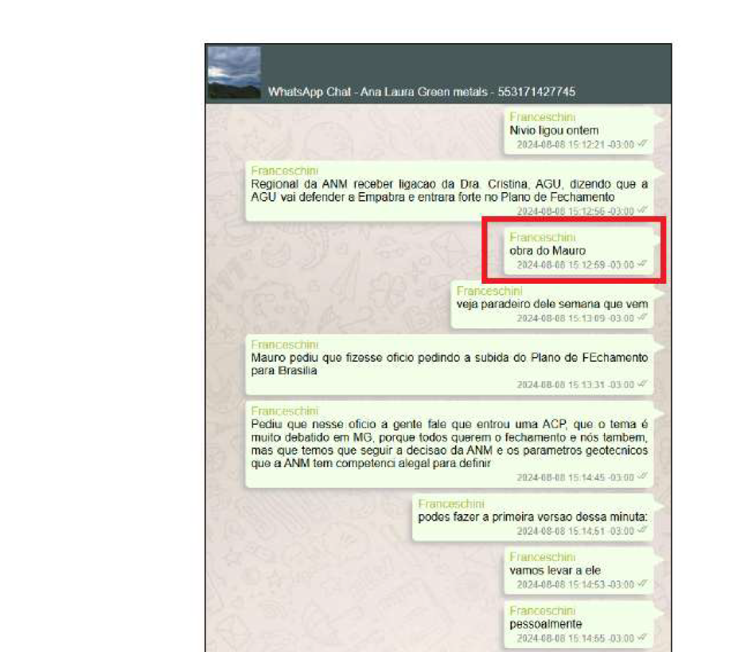
As investigações da Polícia Federal (PF) na Operação Parcours revelam indícios de ações de órgãos federais favoráveis à mineradora Empabra, a principal empresa do grupo de mineradoras investigadas por lavra ilegal na Serra do Curral em Belo Horizonte. Uma delas, citada no relatório mais recente da investigação, foi classificada como a “obra do Mauro”.
O termo foi usado pelo empresário Luis Fernando Franceschini, um dos principais alvos da Parcours, ao sugerir que a atuação da Advocacia-Geral da União (AGU) em defesa da mineradora teria sido articulada diretamente por Mauro Henrique Moreira Sousa, diretor-geral da Agência Nacional de Mineração (ANM), que também foi indiciado pela PF, que permanece no cargo.
Segundo o relatório, o grupo percebia o dirigente da agência reguladora como um patrocinador de seus interesses, uma vez que ele “teria influenciado atuação institucional favorável à Empabra, inclusive junto à Advocacia-Geral da União”, órgão federal onde Sousa começou a atuar a partir de 2005, passando pela consultoria jurídica do Ministério de Minas e Energia (MME), como ele destacou na sua mensagem aos senadores antes de assumir o posto na ANM.
“A IPJ destaca que Mauro é servidor de carreira da AGU. Ainda que o trecho deva ser tratado como indiciário, ele revela a percepção interna do grupo de que Mauro poderia influenciar ou articular atuação institucional favorável à Empabra em disputas administrativas ou judiciais”, diz a PF.
Esse ponto das conversas, informa o relatório, “é especialmente sensível porque a atuação estatal deveria ser guiada pelo interesse público e pela defesa da legalidade, e não pela estratégia privada de empresa regulada investigada por lavra irregular, dano ambiental, fraude documental e usurpação de bens minerais da União”.
Reprodução relatório da PF
A Polícia Federal identifica uma “relação próxima, frequente e informal” entre Mauro Sousa e o controlador da mineradora, Franceschini. Durante o período monitorado pela PF, foram registradas “diversas mensagens e 61 ligações entre ambos”, tratando de temas sensíveis como o Plano de Fechamento de Mina (PFM) da Mina Corumi.
Para os investigadores, o teor das conversas revela uma dinâmica “incompatível com a impessoalidade esperada entre o dirigente máximo de agência reguladora e empresário do setor regulado”.
Além do contato direto com o proprietário, Mauro Sousa mantinha comunicações em tom de intimidade com a coordenadora jurídica da mineradora, Ana Laura Braga de Carvalho. Em mensagens interceptadas, o Diretor-Geral chamava a advogada de “queridinha” e combinava encontros e jantares em Brasília. Esse canal privilegiado permitia que o dirigente adiantasse informações sobre a tramitação de processos, informando, por exemplo, que a equipe técnica da agência se manifestaria em data específica sobre um processo.
A captura institucional da ANM, segundo a PF, incluía também a submissão informal de documentos oficiais à autoridade máxima antes mesmo de sua entrada formal no sistema. O empresário Franceschini chegou a admitir a advogados do grupo ter enviado minutas de ofícios para que o diretor-geral apresentasse eventuais “considerações” prévias. A PF sustenta que essa conduta permitia à empresa ajustar suas petições com base na avaliação da autoridade, violando a “isonomia, impessoalidade e regularidade procedimental”.
PF indiciou Mauro Henrique Sousa por advocacia administrativa e associação criminosa
O relatório final da Operação Parcours conclui que Mauro Sousa atuou de forma decisiva para a “superação de entraves administrativos relacionados a empreendimento sob investigação por lavra irregular”.
Diante das provas de que ele teria utilizado o prestígio do cargo para favorecer interesses particulares, a PF o indiciou por condutas que reúnem “elementos de advocacia administrativa e tráfico de influência”. A investigação aponta que essa proteção interna na agência reguladora era um dos pilares para assegurar a “continuidade da exploração mineral” clandestina na Serra do Curral.
As conversas do diretor-geral da ANM com o controlador da Empabra também citam outros três servidores da agência: Fábio Perlatti, Ronaldo de Azevedo Coimbra e Roger Romão Cabral. Perlatti é gerente de Sustentabilidade e Fechamento de Mina da Superintendência de Fiscalização da ANM e Romão era diretor e deixou o cargo em dezembro de 2025. Coimbra ainda faz parte da ANM.
“Em novembro e dezembro de 2024, Franceschini tratou diretamente com Mauro sobre a equipe da ANM responsável pela análise do PFM, ocasião em que o Diretor-Geral mencionou o Diretor Roger Romão Cabral, integrante da Diretoria Colegiada, e informou movimentações internas relacionadas ao tema”, afirma o relatório.
Reprodução relatório da PF
O inquérito cita ainda que em fevereiro de 2025, ao ser questionado por Franceschini sobre pareceres de servidores da ANM, como Perlatti e Ronaldo Coimbra, Mauro respondeu que encaminharia a demanda à Romão, responsável pela coordenação do assunto.
“A gravidade do contato não está apenas na existência de diálogo entre regulador e regulado, mas no conteúdo e na forma da interlocução. Mauro adiantou a Franceschini informações sobre a tramitação interna do PFM, inclusive que Roger já havia conversado com Marco Túlio Naves De Carvalho e que a equipe deveria se manifestar até determinada data. Tal conduta, em tese, ultrapassa o dever de transparência institucional e sugere tratamento privilegiado, pois Franceschini passava a acompanhar, por canal pessoal e informal, atos internos de análise técnica da ANM relativos a procedimento administrativo de interesse direto de sua empresa”, diz a PF.
Associado ao nome de Coimbra e de Leandro Cesar de Carvalho, servidor indiciado por lavagem de dinheiro, está uma anotação em um quadro no inquérito da PF sobre como o Plano de Lavra de 2016 foi considerado satisfatório, “embora utilizasse a recuperação ambiental/PRAD para justificar a extração máxima de produtos”.
O relatório informa ainda que após denúncia de extração ilegal, relatório de fiscalização de novembro de 2017 afirmou não haver lavra ou extração mineral na poligonal da mineradora. “Informação potencialmente falsa ou enganosa, pois o acervo técnico indicou extração ilegal no período da vistoria. Indício de sonegação de dados em fiscalização e facilitação da continuidade da lavra irregular”, destaca o inquérito.
Reprodução relatório da PF
ANM não comenta e AGU informou que abriu processo interno para apurar os fatos
Procurada pela reportagem, a ANM respondeu que “em relação aos nomes mencionados, a agência não comenta o conteúdo de investigações em andamento nem faz manifestações sobre citações constantes de inquéritos policiais”.
E que a posição institucional da agência sobre o caso permanece a mesma do que foi publicado em uma nota no dia 28 de junho. No texto, a ANM informa que Mauro Sousa participou dessas tratativas “exclusivamente como representante institucional da Agência perante o Poder Judiciário e os demais órgãos envolvidos, no exercício das atribuições inerentes ao cargo”.
“Esclarecemos apenas que pareceres e manifestações técnicas produzidos por servidores da ANM são elaborados no exercício regular de suas atribuições legais, com fundamento em critérios técnicos e administrativos”, diz também a ANM em resposta aos pedidos de contrapontos sobre os servidores citados.
Os outros servidores da ANM citados no relatório da Polícia Federal, Fábio Perlatti, Ronaldo de Azevedo Coimbra e Roger Romão Cabral não estão entre os indiciados pela PF. Mauro Henrique Moreira Sousa foi indiciado por advocacia administrativa e associação criminosa.
Após ser procurada pela reportagem no dia 3 de julho, a AGU informou que abriu um processo interno para apurar os fatos neste mesmo dia. “Diante da referida operação da Polícia Federal, a Corregedoria-Geral da AGU abriu, de ofício, análise prévia sobre a existência de potenciais infrações disciplinares cometidas por membros da instituição. Este procedimento é sigiloso”, diz a nota enviada pela AGU.
O relatório da Polícia Federal aponta que Marco Túlio foi o principal articulador técnico da organização investigada. O geólogo ocupava cargos de alta gestão no conglomerado minerário investigado e atuava como diretor de operações técnicas da Empabra e, simultaneamente, apresentava-se profissionalmente como diretor executivo da Fides Mining, mineradora controlada pelo empresário Luis Fernando Franceschini.
A reportagem não conseguiu retorno das tentativas de contato com Marco Túlio Naves de Carvalho por meio dos canais de comunicação da empresa em que atua com Francischini, a Fides Mining. A defesa de Luis Fernando Franceschini disse que não dará declarações nesta fase do processo.
A reportagem não conseguiu contato com Ana Laura Braga de Carvalho ou seus advogados no processo. Ela foi indiciada por associação criminosa, falsidade ideológica ambiental e participação em estratégias para manter a lavra sob aparência de recuperação ambiental.
O espaço para Ana Laura e os demais citados que não conseguiram contrapontos até o fechamento desta edição continua aberto para suas manifestações e alegações.
👉 Grab your free seat to the 2-Day AI Claude-athon:
https://links.outskill.com/CASJUL2
🔐 100% Discount for the first 1000 people
💥 Dive deep into Claude, its models and Learn Automations, Build AI Agents, Make videos & images – all for free!
The Gulf states are investing billions in pipelines, railways, and trade corridors to reduce their dependence on the Strait of Hormuz, but geography stands in the way.
If you want to support CaspianReport, the best way is simple: watch, like, and share the videos. For direct support, you can join as a member or contribute; every bit helps keep the channel independent and improves the quality of the work.
Call center nurses at the health giant said workplace surveillance tools and AI prioritize speed and cost savings over quality and safety.
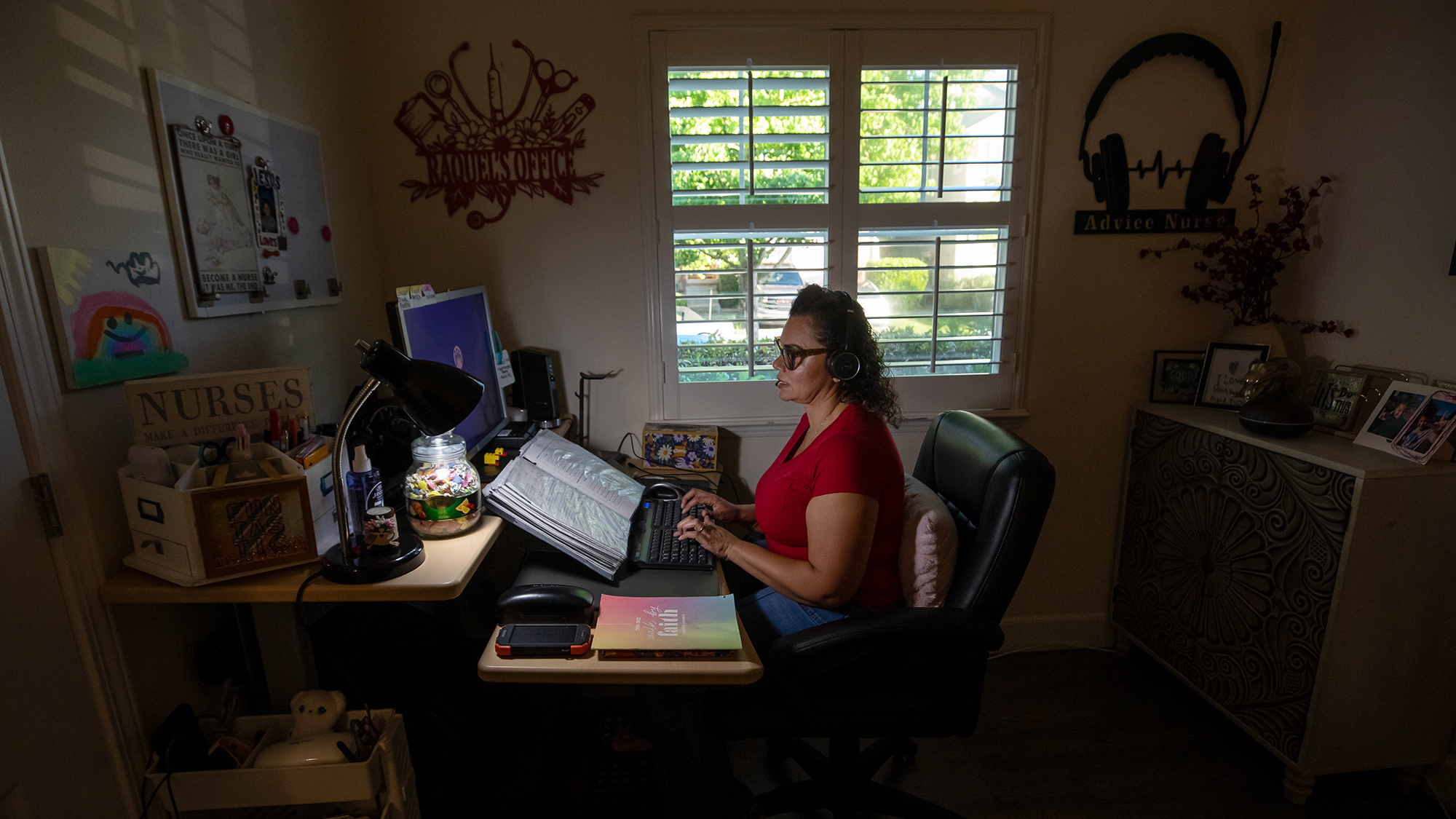
Kaiser Permanente advice nurse Raquel Alvarez Sanchez works from her home office in Santa Rosa on April 6, 2026. Kaiser Permanente nurses have raised concerns about the growing use of AI to monitor their work ahead of upcoming contract negotiations.
Photo by Chad Surmick for CalMatters
Kaiser Permanente nurses who answer advice and triage calls say their duty of care for patients is being increasingly threatened by workplace surveillance.
Seven current and former nurses told The Markup that those who spend more than 15 minutes on a call with a patient routinely face criticism from Kaiser management or get called into performance evaluation meetings. Call time, they said, factors into monthly performance scores they receive.
In addition to tracking call length, they said Kaiser uses software that tries to predict on a daily basis whether they’re being unproductive or failing to answer calls quickly. Artificial intelligence systems have also been used to rate their empathy and tone of voice.
Their comments come as the California Nurses Association begins negotiating a new contract with Kaiser this month with AI a likely issue. Kaiser nurses went on strike against AI for one day in March and picketed against AI last fall. The CNA is bargaining for 25,000 nurses, including 1,000 in call centers.
At the same time, California lawmakers are considering several bills regulating AI in the workplace, including one that would protect from retaliation doctors and nurses who override automated care recommendations.
Kaiser defended its use of AI, saying it deploys the technology with human oversight and with patient safety in mind. It said it does not use “average handle time” to assess performance.
Kaiser Permanente is the largest private employer in California, providing healthcare services to more than 9 million people in the state and to 3 million other Americans. That means the company’s use of artificial intelligence could set important precedents for managing workers with AI. It could also have a big impact on patient care, providing an early example of how the healthcare sector balances cost-cutting automation with human presence or touch.
Raquel Alvarez Sanchez, a Kaiser Permanente advice nurse in Vallejo since 2010, said she was on a call with a patient who was suicidal last year that took more than an hour because she had to wait for police to arrive before hanging up. She tried to make the man feel cared for, even though she was cognizant that staying on the call that long would throw off her average call time for weeks and could lead to questions from management. Sanchez, a union steward, said she’s accompanied colleagues to performance evaluation meetings, where they were found to have done everything right on a call — except staying on the line for more than 15 minutes. She said she hasn’t seen nurses get fired for doing that, but she fears that continued pressure can lead nurses to quit or retire early.
“I think at some point all of the nurses have been talked to about their average handle time,” she said. “The only thing I can think of is they’re doing it for profit.”
Another nurse who spoke with The Markup on condition of anonymity due to fear of retribution described how that surveillance affected a call with a patient last year. Initially she thought her patient, an elderly woman who just received a terminal cancer diagnosis, was suicidal, but quickly came to understand that she was in shock and really needed somebody to talk to.
The nurse wanted to take time to show compassion or comfort to the woman, who acts as a caretaker for her daughter, but she stopped herself out of fear it would hurt her monthly performance score and lead to a reprimand from her manager. She became a nurse to provide people with compassionate care, but “I had to ask myself: Am I going to get disciplined for going off script or saying more than what is necessary?”
Kaiser Permanente advice nurse Raquel Alvarez Sanchez works from her home office in Santa Rosa on April 6, 2026. Kaiser Permanente nurses have raised concerns about the growing use of AI to monitor their work ahead of upcoming contract negotiations.
Photo by Chad Surmick for CalMatters
Kaiser Permanente says its performance evaluations help improve patient outcomes. A company spokesperson said, “Kaiser Permanente does not use Average Handle Time to assess agent performance or enforce call time metrics. Any tools used in contact center settings support our quality assurance efforts and have human review and oversight.” In a statement provided to The Markup and CalMatters, spokesperson Vincent Staupe added that Kaiser uses AI responsibly, with human oversight, and by “prioritizing patient safety, privacy, and equity,” but he said, “As a large organization, we do not share specific information about internal technology systems for security and operational reasons.”
Is technology putting patients at risk?
It’s not clear how patient care is affected by algorithmic management, nor is the impact of limiting the length of triage and advice calls on patients. Kaiser call center nurses can’t say for certain whether the pressures they face results in adverse outcomes for patients because their contact with patients ends after they hang up the phone. A 2024 public records request by CalMatters to the California Department of Managed Health Care found no complaints by patients against Kaiser related to call times. But nurses insist the risk to patient safety and quality of care is real.
Consumer Watchdog patient advocate Michele Ramos said many Kaiser patients begin their care on the advice line. They later complain to her, mostly about things that happen in Kaiser facilities, but “I can see now where a lot of the problems” start, given the call constraints nurses are under.
Ramos said the time pressures may fit a broader pattern at Kaiser of putting costs over quality. The health giant was hit with a record fine, $50 million, as part of a settlement over findings from the California Department of Managed Health Care that it delayed behavioral health appointments beyond statutory limits and too often moved patients into group rather than individual therapy. Kaiser also settled with the U.S. Department of Labor after investigations into its substance use and mental health services. Kaiser faced criticism in 2002 for paying bonuses to call center workers who aren’t nurses for keeping calls short, though call center nurses who spoke with The Markup and CalMatters said they encountered no such practices today.
“Kaiser’s been known through the years to manage dollars over managing care, and I think this would be a contributor to that, which is only going to fail patients,” Ramos added.
Nurses said they are pressured to stay under 15 minutes even for the sorts of calls that often take more time, like diagnosing a patient with multiple symptoms, chronic illnesses, new parents in need of advice and assurance, people who desire extended health education, or people who are overwhelmed after receiving life-altering news who could use some compassion. Nurses say calls that involve interpreters often take 30 minutes or more. About four in 10 Californians speak a language other than English and half of them do not speak English well, according to a state environmental health agency.
“The amount of time that Kaiser is giving us to complete a call is sometimes not safe,” said one nurse, who asked to remain anonymous due to fear of retaliation.
“People can get hurt,” said Charlotte Capulong, who has worked in nurse call centers for 22 years and helped organize Kaiser nurses against the AI tone-of-voice tool. Capulong said nurses felt harassed by managers in meetings she attended as a union rep, even if they successfully carried out all other duties of their jobs except completing calls within 15 minutes.
“You aren’t calling Comcast. We’re dealing with life here,” she said.
Kaiser Permanente Sacramento Medical Center in Calif. on Monday, Aug. 15, 2022. More than 2,000 mental health physicians striked throughout Northern California over staffing issues leading to patients waiting longer to access help. Photo by Rahul Lal, CalMatters
Nurses are instructed to stick to a script on phone calls and give no more than two to three pieces of advice, Capulong and other nurses said, which means they may sometimes need to decide whether to withhold advice or face a performance evaluation hearing.
The nurses say artificial intelligence could make the surveillance nurses encounter on the job worse.
In summer 2024, Kaiser began testing an AI tool that attempts to assess empathy and tone in the voices of nurses and patients, according to nurses who spoke with The Markup and CalMatters. In response, nurses circulated and signed a petition in favor of the right to patient privacy, more transparency, and the right to exercise their professional judgement and encouraged management to involve nurse’s input and feedback. The signature campaign used the same tag line that nurses used at protests outside San Francisco hospitals earlier that year: “Trust nurses, not AI. The AI tests ended in November 2024, but union representatives were told that managers may bring the program back in the future.
Nurses reported feeling harassed by existing surveillance, “and that was intensified when they said we’re going to use AI to evaluate our calls and grade us,” said Sanchez.
Another nurse speaking on condition of anonymity said “AI did not understand our job and would grade us wrong all the time.”
A Kaiser spokesperson declined to respond to questions about the AI tool or answer questions about the use of AI and other automated systems in the company’s call centers and healthcare facilities, including for evaluating nurse performance or whether patients were informed about the use of AI to evaluate their empathy and tone.
Nurses also said they get little time between calls even if that call involves speaking with a patient who is suicidal, experiencing a mental health episode, or near death. In years past, nurses got around 10 minutes to finish writing notes in a patient’s chart or collect themselves after a particularly tough call. Today they say they typically get 30 seconds or less when lines are busy, although more at slow times, like late at night, or if they get a manager’s permission after a particularly challenging call. The overall pace they say, can lead to mistakes like missing important cues into a patient’s wellbeing.
CNA reps declined to talk about specific provisions they intend to seek related to AI ahead of their talks with Kaiser this summer.
How surveillance and AI shape nursing
Critics say excessive workplace monitoring can lead to lower morale as employees feel less trusted and autonomous, relegated to being no more than algorithm monitors. UC Berkeley Labor Center Technology and Work Program director Annette Bernhardt has warned that algorithmic management can turn people into fleshy robots, echoing complaints from an Amazon factory worker who The Markup and CalMatters interviewed last year. A 2023 academic survey of call centers in four developed countries found that using AI for management or monitoring left workers with less time between calls and more likely to feel emotionally drained by their work. Nearly half of respondents said that AI tools made their jobs more stressful. A prior study by the same researchers, Virginia Dolleghast of Cornell University and Sean O’Brady of McMaster University found that performance monitoring leads to higher rates of emotional exhaustion.
Dolleghast, who has studied the impact of surveillance technology on call center workers for more than a decade, said what Kaiser call center nurses are experiencing is part of a broader trend: Across different industries, persistent surveillance is increasing stress levels for workers who are resolving complex, emotionally-charged issues.
“Stress and burnout can lead to more mistakes across a range of areas, and in the healthcare setting that is much higher risk because you’re dealing with people’s lives and their health,” she said.
The converse can be true: Workers who are given more discretion to decide the pace and timing of their work experience higher levels of job satisfaction and less absenteeism.
The 9-1-1 call center at the San Francisco Department of Emergency Management in San Francisco, on Aug. 2, 2019.
Photo by Eric Risberg, AP Photo
Nurses nationwide are more frequently encountering artificial intelligence and similar software systems in the workplace. Half of more than 2,000 nurses who responded to a 2024 survey by the National Nurses United union said their employer uses algorithmic systems to analyze health records. Such systems can do things like determine how fragile a patient is or predict how many hours of care they will need. Two-thirds of the surveyed nurses said their own assessments had at some point disagreed with a computer-generated prediction. Six out of 10 respondents said they don’t trust their employer to prioritize patient safety when using AI.
Pa Vue has worked as a nurse in call centers for the better part of the past decade. She said she and other Kaiser nurses routinely have conversations with managers about call efficiency and receive evaluation scores once a month. She recalls having a score reduced for repeating advice to a patient that she worried had unusual symptoms and possible heart issues.
As a union representative in some performance meetings, Vue has seen managers raise efficiency questions about calls they deem too long. She’s also seen nurses receive lower performance scores if they go against software recommendations based on their professional opinion or make an appointment for a patient without consulting a doctor.
She believes that efficiency aims accelerated by technology can hinder a nurse’s ability to focus and reduce the quality of care that patients pay for.
“I’m not against the use of AI as long as it’s beneficial to the patient but in this particular use [empathy and tone monitoring] it’s to increase productivity and improve efficiency and cut costs. Kaiser is forgetting we aren’t just a call center for customer support, we’re nurses, and we’re there to take care of patients,” she said.
National Nurses United and CNA President Cathy Kennedy sees the use of AI to detect nurse empathy as part of a long series of steps by Kaiser to limit their autonomy and make them more efficient. She believes AI threatens to automate and fragment the work that nurses do, and companies developing and deploying AI systems should establish that those systems are effective and equitable before deploying them.
Kaiser Permanente in Oakland on Aug. 2, 2022.
Photo by Martin do Nascimento, CalMatters
Notification of new tech deployments is part of the nurse union’s contract with Kaiser but sometimes nurses don’t receive notification, CNA says. So union leaders are attempting to track the number of AI models in use at Kaiser Permanente, advising its members to inform them when they encounter new tech. This paves the way for CNA to push back as it did with the empathy and tone AI last summer or as it did when it stopped a pilot program that would have replaced nurses that sit at the bedside of confused patients with cameras.
Debru Carthan, a Kaiser radiologist, is on the front line of worker-management fights over AI at the company. A member of Service Employees International Union, she is also part of the Coalition of Kaiser Permanente Unions, where she sits on a committee to discuss use of AI and emerging technology at Kaiser. The coalition also has a “see something, say something,” campaign for frontline workers to report when they notice AI deployments; the coalition says that too often management quietly implements AI into workflows without notice or worker input. She worries that the AI tone detector used on advice nurses could discriminate against nurses from different cultures and has come to believe that the use of AI in healthcare generally has more to do with money and corporate greed than patient care.
California lawmakers have responded to worker AI concerns both inside and outside the healthcare sector. They tried and failed last year to address how AI impacts workers like call center nurses. Assembly Bill 1018 and Senate Bill 7, two bills endorsed by the CNA, would have required employers to inform workers before using automated systems on the job to do things like promote or discipline workers or evaluate job performance, but Gov. Gavin Newsom vetoed SB 7, and, facing strong opposition from companies including Kaiser Permanente, AB 1018 failed to pass for the third consecutive year.
Earlier this year, lawmakers reintroduced a new version of Senate Bill 7, now called Senate Bill 947. Another bill would prohibit employers using AI to predict the emotional state of their employees. Yet another bill would protect doctors and nurses from retaliation if they override recommendations generated by an automated system and require healthcare providers to supply employees with an inventory of automated systems once a year. Kaiser declined to share a list of AI systems in use when asked by The Markup and CalMatters.
Altogether CNA and the affiliated California Labor Federation support roughly half a dozen bills to regulate use of AI in the workplace. Calling AI a central issue in the next presidential election, members of the California Labor Federation and labor leaders from Democratic primary states held a press conference in Sacramento earlier this year to say that if Newsom wants to become president then he needs to pass laws protecting workers from AI. “It’s an ongoing fight, and it’s a fight well worth having,” Kennedy said. “Whenever there are other unions in discussion about artificial intelligence we are in solidarity with them.”
The nurse that withheld compassion to a terminal cancer patient she thought was suicidal said she believes monitoring and scoring systems turn nurses into automatons that check boxes.
“I used to use humor as a way to help patients heal, and I don’t feel comfortable doing that here because I know the calls are being recorded. You can always tell when a patient appreciates the humor or your personal compassion, but I don’t feel like call centers have tolerance for that because that’s not part of the script,” she said. “That really takes away from the whole point of being a nurse and what patients come to know from nurses.”
This story was reported with contributions from Lam Thuy Vo and Ana Ibarra.
From a tongue-in-cheek letter of recommendation to a truly disturbing Agony Aunt column submission, if you’re in need of a chuckle, this episode is for you.
Featuring Helen McCrory, Louise Brealey, Tony Robinson, Sara Pascoe, Olivia Colman, Michael Palin and Chiwetel Ejiofor.
This week, Scarlett Baron puzzles over an attempt to cut Joyce down to size; and Ian Sansom on the sobering realities of balancing the books if you want to be an artist.
'A Shorter Ulysses', by James Joyce and Anthony Burgess
'Making Art and Making a Living: Adventures in funding a creative life', by Mason Currey
'How to Enter the Art World: After a late start, a first career, illness, raising children, a crisis of confidence/leaving it in disgust ...', by Hettie Judah
Las eSIM están transformando la conectividad en los viajes internacionales al evitar tarjetas físicas, recargos inesperados y búsquedas de redes públicas. Yesim ofrece cobertura en más de 200 países con planes adaptados a cada destino
Hoy cualquier viaje empieza en el smartphone: tarjetas de embarque, mapas, apps bancarias y reservas. Pero todo eso solo funciona con conexión estable desde que aterrizas.
Para quien vive en España, el problema aparece fuera de la zona de roaming de la UE: dentro de la Unión, gracias al principio de roam like at home, la conexión se percibe casi como en casa, pero al cruzar las fronteras europeas —a Estados Unidos, Turquía, Marruecos o Japón— el roaming sigue siendo caro, la SIM local es pesada y el Wi-Fi público apenas existe fuera de los hoteles.
Por eso surge una nueva oleada de servicios digitales que eliminan la dependencia del operador. El viajero descarga una app, elige un plan según su ruta, instala la eSIM desde casa y la activa al aterrizar. Un ejemplo es la empresa suiza Yesim, pionera en eSIM para viajeros, con más de 3,5 millones de usuarios en todo el mundo.
Conectarse a Internet desde el extranjero
Cada uno de los métodos habituales para mantenerse conectado en el extranjero tiene inconvenientes ocultos de los que la publicidad no suele hablar.
El roaming fuera de la UE funciona por zonas con recargos y límites estrictos: en Estados Unidos, 500 MB por €6,05 al día pueden esfumarse en horas, y al superarlos la velocidad cae o vuelve la facturación por megabyte —hasta €12,10 por MB en la zona Resto del Mundo—, con cargo diario aunque no toques el móvil.
La SIM local parece lógica, pero implica colas, pasaporte, un plan en otro idioma y registros locales que en destinos como Egipto o Japón pueden exigir documentos que no lleves; y al viajar por varios países, toca repetirlo en cada uno. Además, el número de teléfono español deja de servir para llamadas, y pierdes las primeras horas buscando una tienda en vez de llegar al hotel.
El Wi‑Fi de hoteles o cafeterías es cómodo, hasta que sales a la calle: en el transporte o lejos del centro casi nunca hay cobertura, justo cuando necesitas un mapa o un taxi. Y está la seguridad: las redes abiertas no cifran el tráfico, y cualquiera en la misma red puede interceptar lo que transmites al pagar o usar apps bancarias.
Una viajera utiliza su teléfono en el aeropuerto.
Travel eSIM: comodidad, flexibilidad y previsibilidad
La eSIM es un microchip integrado en el dispositivo que permite descargar y activar perfiles de operadores de forma remota, compatible ya con la mayoría de smartphones. La Travel eSIM construye sobre esa base un ecosistema completo: una app para elegir planes y gestionar gastos, soporte 24/7 y control de datos para viajeros.
Su principal ventaja son los precios competitivos y la previsibilidad: país de cobertura, validez, datos y precio final se conocen de antemano, sin tiendas ni Wi-Fi ocasional. La conexión pasa a ser parte del presupuesto del viaje, como un billete o un seguro; y tu número español sigue activo, así que al volver cambias a tu tarifa habitual sin acudir al operador.
Yesim: el estándar suizo de conectividad en viaje
Pocos actores ofrecen a la vez flexibilidad de tarifas, cobertura global y selección automática de la mejor red. La empresa suiza Yesim opera desde 2019 en más de 200 destinos, y su puntuación de 4,8 en Google Play es una de las más altas entre los operadores eSIM.
Sus tarifas se adaptan a cada viaje: el planGlobal Packagecubre más de 80 países y el Global Plus Package más de 140, ideales para presupuestos definidos. El Pay & Fly funciona con pago por uso —una única eSIM para más de 170 países— y pagas solo por los datos consumidos.
Su ventaja técnica clave es el cambio automático a la mejor red entre más de 800 operadores asociados, muy útil en regiones de cobertura irregular como el norte de África, Oriente Medio o el Sudeste Asiático.
Para viajes en familia o en grupo, destaca la función Multiple eSIMs: permite gestionar varios perfiles desde una sola cuenta y compartirlos con otros usuarios, incluso sin que tengan la app instalada.
Todo el proceso comienza en la app de Yesim: descargarla, registrarse, elegir el plan e instalar el perfil, todo desde casa — en Madrid o Barcelona — para activar la conexión al aterrizar en Bangkok o Dubái. Para probar antes, hay un paquete de 500 MB por €0,50, y los nuevos usuarios reciben un 15% de descuento con el código promocional GETYESIM15.
El roaming queda atrás
Los métodos tradicionales están quedando obsoletos por una razón clara: fueron diseñados para otra realidad. El roaming depende demasiado del operador, la SIM local exige tiempo y trámites, y el Wi‑Fi no ofrece estabilidad en movimiento. Servicios modernos como Yesim marcan el nuevo rumbo: menos colas, menos letra pequeña y más control sobre el gasto.
Detrás de este enfoque hay una posición clara: “Para Yesim, la libertad de conexión es un derecho humano fundamental que ayuda a las personas a mantenerse cerca, comunicarse y compartir momentos importantes a pesar de las distancias”, afirma Dmitri Verbovski, fundador y director ejecutivo de la compañía.

 Login
Login