Reading view

My Favorite Movies of 2025

Versão em português aqui

The other day I was talking with a friend and she said something like “there is no bad years, just you picking the wrong movies” and while I’m not sure I’d exactly agree with her, I do think it gets into a certain truth about year end reports: they are all maps through what the critic/cinephile curated for themselves.

Mine has its fair share of personal tastes and idiosyncrasies: more action or crime movies than most, Brazilian movies that are not The Secret Agent (and The Secret Agent), far more Asian movies than most lists include, many of it don’t exactly play in big western festivals. I like to use favorites for these lists instead of the usual best because it seems like a more fair to owning to my biases and because I think best is boring, and I’d rather settle for list of movies that engaged my imagination in way or another. So, call it 100 movies, I find interesting enough to ponder and share.

Every year around the time of the São Paulo Film Festival in late October I question myself about doing another list and every year I do it, part because I love sharing movies, part because it is useful for me to both think through the year and do some eclectic prospection through the year in movies.  

At this time of the year two simultaneous impulses always take place: those who complain that these lists are too boring and homogeneous and those who seem annoyed  that they are not even more so. I have sympathy for the first position, the centrality of film festivals and the weight of money for movie marketing (they are the same thing when you stop to think about it) play a large role in this and today film community seem to most exchange opinion in such narrow spaces they ended up often samey. There are certainly far less differences between tastes at Film Comment and Cahiers du Cinema than there used to be. Some of the reasons for this can be positive, the growing internationalization of most larger film magazines has many pluses, but it certainly result in often blander and less exciting results, or at least the more exciting parts of it have being talked about for so long that by the time they hit those lists they look like more of the same.

I don’t think the following list is any sort of prescription for this state of affairs, it is definitely not organized as any counter narrative. 4 out of 10 movies in my top 10 were in Sight and Sound top 50 (full disclosure: I’m a voter there, so I share the blame if you think that list is too dull) and this year’s big budget movies that critics happen to like (One Battle After Another and Sinners) are both in there somewhere, as are the Cannes and Venice winners. I do hope it is a bit less festival centric than most and that it remains populist in spirit if not necessary in the international mass market way.

Some big movies of the year are not there because they give me nothing, and a few because I just prefer obscure Japanese time travelling remarriage movies to them, and of course there are others are still had not get around to see. I wouldn’t call 2025 a bad year for movies, they never are if you look hard enough, but I don’t think it quite have that objective great movie like Close Your Eyes or The Shrouds. My first two places, which have been 1a and 1b since I saw them in October, are close to the movies that topped my list during the pandemic affected years, but then that is still a high achievement and I know I’m taken them with me for years.  I do get the sense that there have been more big highly discussed auteur movies in 2025 than recent, but that they also were ultimately a little more safe and less idyossincratic than ever, a troubling trade to observe. Lists like this are among many things a useful place to think about developments like this.

As usual, my criteria are movies I’ve watch for the first time this year, longer than 45 minutes public screened for the first time between 2023 and 2025. The order doesn’t matter that much, I know I like 21o. more than 41o., but I’m not sure that I really like it better than 25o.
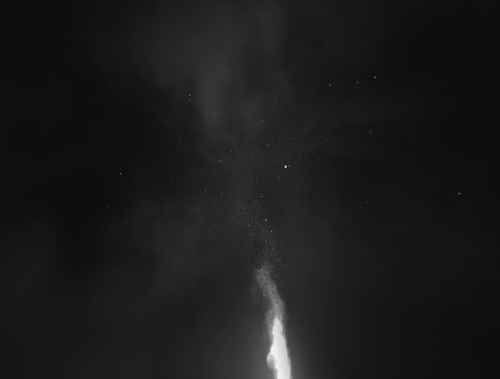
My favorite new shorts seen this year are Scott Barley’s A Ladder and Jean-Luc Godard’s beyond the grave Scenários, both fascinating miniature exercises in storytelling, read to pull you in the wonder of what comes next.

Some favorite film books first time readings because why not: Scene (Abel Ferrara), Sick and Dirty (Michael Koresky), Everything is Now (J. Hoberman), Derivative Media (Andrew DeWaard), the Francis Vogner article in Critica e Curadoria de Cinema (org Laécio Ricardo de Aquino Rodrigues) and a couple of oldies I get around recently The Silent Clowns (Walter Kerr) and Chaplin Last of the Clowns (Parker Tyler).

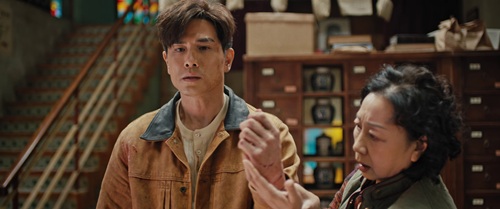
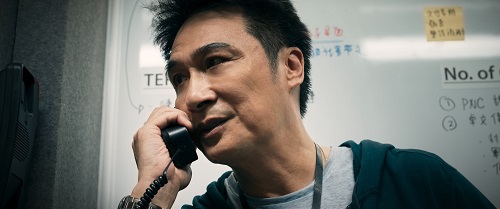
100) The Movie Emperor (Ning Hao)

One of the many films that reflect on filmmaking itself on this year’s list, if not one of the most serious. Movie star Andy Lau plays a movie star who decides to make a social art film to reinforce his relevance and ends up alienating everyone. The satire isn’t the most biting, but there is a very expressive bitterness, and it’s always a pleasure to see Andy Lau being a movie star as we don’t have that many anymore.

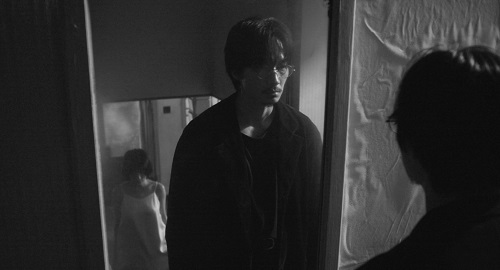
99) Missing Child Videotape (Ryota Kondo)
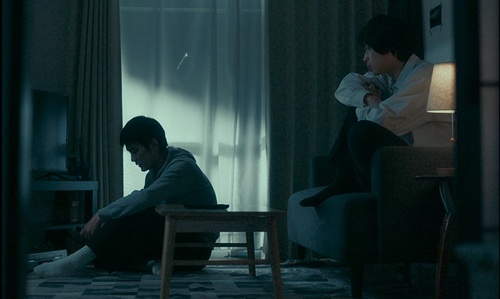
An exercise in playing into the early 2000s Japanese horror sandbox. Formally precise, it does know how to conjure an unsettling and horrible image. Academic cinema with some meat is certainly preferable to some of the more curator-approved versions of the same.

98) 1st Kiss (Ayuko Tsukahara)
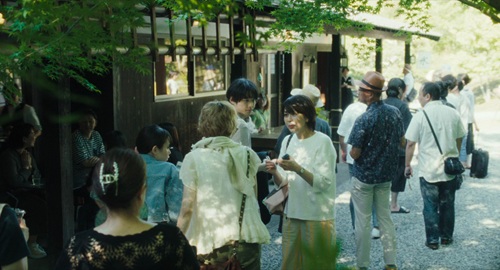
The beginning and end of a relationship through the dramatic framework that popular fiction makes possible. One of those things that Japanese cinema keeps very much alive with its taste for melodrama and fantasy, and the certainty that it can take the emotions it conveys seriously.

97) Zero (Jean Luc Herbulot)
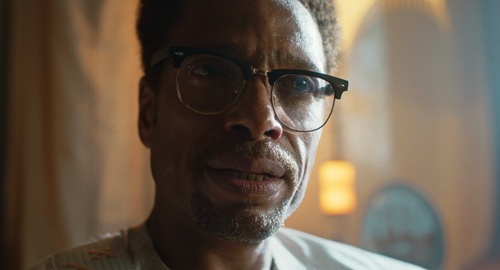
Congolese filmmaker Herbulot got some attention with his very good horror action hybrid Saloum a few years ago; this follow-up barely got any, but it isn’t that different as a thriller with horror elements and large colonial tension in the background. Clever premise and forceful and immediate, if a little too punishing death trip.

96) One Minute Is an Eternity for Those Who Are Suffering/Um Minuto é uma Eternidade para Quem Está Sofrendo (Fábio Rogério, Wesley Pereira de Castro)

When two gazes meet in the presence and in the editing. A diary film of day-to-day life and impressions of director Pereira de Castro, who is always torn between an intoxicating first-person dive and the effort to exist beyond it.

95) Satranic Panic (Alice Maio Mackay)
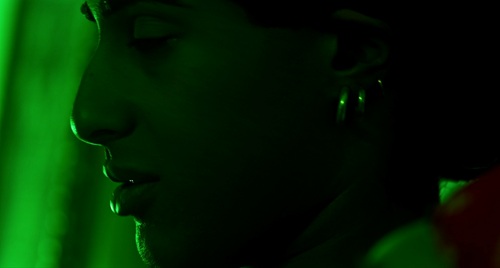
The world’s most productive 21-year-old horror filmmaker keeps doing fine spins on known horror concepts as a way to deal with different aspects of current trans life. As usual, lively cast, fairly grounded in its characters lives, and lots of energy, plus it is one of the two queer horror movies in this list that climax in a cool musical number, and I have a weakness for that.

94) Filmlovers!/Spectateurs ! (Arnaud Desplechin)
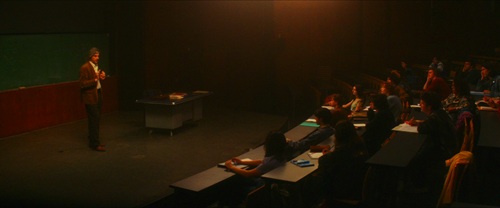
As time goes by, Desplechin increasingly replaces Bergman for Truffaut and becomes less relevant in the contemporary film scene. This essay on cinephilia is more eccentric than insightful, but it becomes more fascinating the more it embraces the perversity of such passion.

93) The Falling Sky/A Queda do Céu (Eryk Rocha, Gabriela Carneiro da Cunha) 

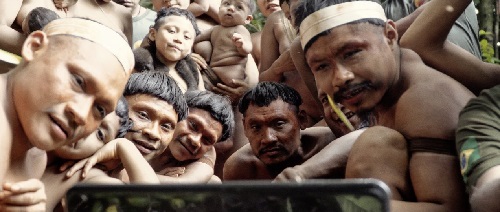
Eryk Rocha co-directed this documentary about the Yanomami and their fight against the external forces with actress Gabriela Carneiro da Cunha, and in some ways it allows for a strong social concern to balance his more aestheticized interests. Like most of Rocha’s documentaries, the main subjects are invited into a carefully crafted pictorial image that fits the Yanomami’s connection to their land.

92) Squad 36/Bastion 36 (Olivier Marchal)
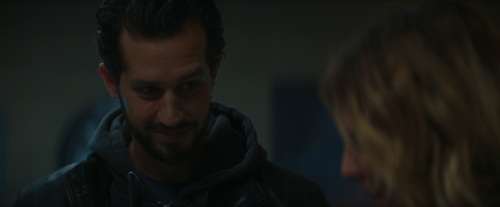
A Netflix original film that barely exist, but as always, I enjoy former cop Marchal’s films about the excesses of French law enforcement officers. He knows the milieu intimately and how to describe it in detail while remaining very closely connected to it. This one feels like a more conservative version of a 1970s thriller by Yves Boisset.

90) Amelia’s Children/A Semente do Mal (Gabriel Abrantes) and The Strangers: Chapter 2 (Renny Harlin)
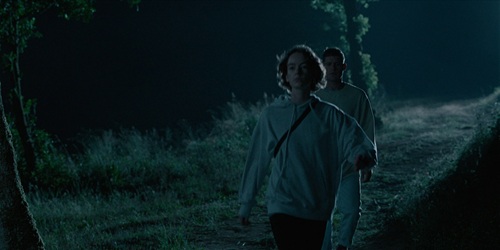
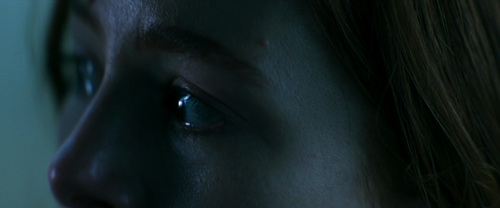
Two very solid horror thrillers from barebones and very recognizable scenarios. Abrantes (from festival darling Diamantino) has a lot of fun with his power family games and old gothic intimations, while the resourceful, if very shallow, Harlin gets to fill time between what was a bad movie and what I assume is going to be another one by staging a 90-minute slasher chase that is as minimal as it is exciting. Neither movie is for anyone who cares about plot or psychology, but if you like playful form operating in a mostly vacuum, those movies deliver.

89) L’Aventura (Sophie Letourneur)
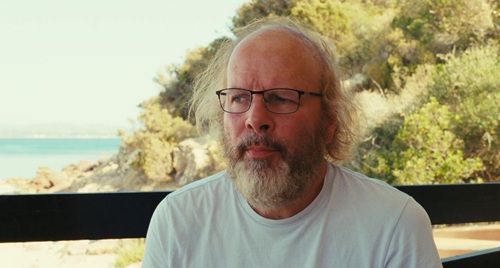
Letourneur’s previous film was called Voyage to Italy, this one L’Aventura, and both elaborate on the same project of setting their characters in motion across this foreign land. As always, she is a great director of actors.

88) Gil, Let’s Explode São Paulo/Explode São Paulo, Gil (Maria Clara Escobar)
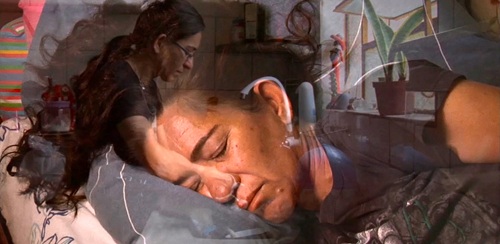
This is one of Brazilian movies on the list filmmaker I’ve personally known for years, and given that it is a first-person film about a lesbian singer who worked for her, this seems worth mentioning. It is a power tug in which Escobar allows Gil to star in the fiction she deserves while making sure she is also a character in the movie the filmmaker wants. A complex relationship between multiple desires and power that was made through a decade and does offer a fascinating look in a sort of low-budget film portrait that was popular in the Dilma years, becoming its own mirror.

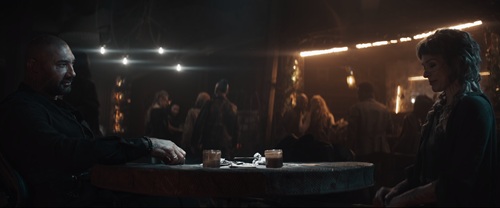
86) Dead Souls (Alex Cox) and In the Lost Lands (Paul W. S. Anderson)
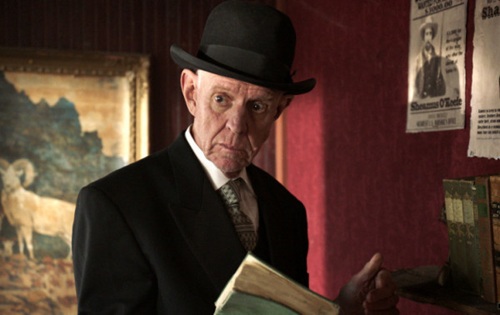
Two neo-westerns by filmmakers with strong and eccentric personalities. Cox’s film was made on a shoestring budget, while Anderson’s had plenty of money behind it, but both exert a great fascination with how to push a cinematic image with recognizable iconography and a rugged surface onto its own, almost experimental paths.

85) Second Life (Chris Huo)

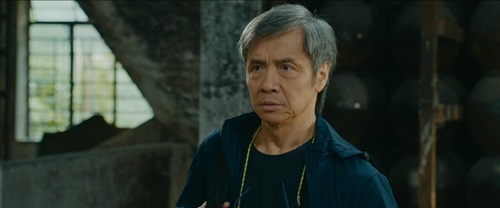
Director Huo is one of the more prolific filmmakers on the Chinese DTV scene and has been on my lists before as a throwback to 1980s Hong Kong action. This one is his most eccentric, combining comedy, family drama, and some great choreography (the climax is especially inspired).  And it is a great vehicle for veteran Hong Kong character actress Yuen Qiu, a former classmate of Jackie Chan and Sammo Hung, who has worked with everyone from Lau Kar Leung to Stephen Chow and rarely gets a main role this good.

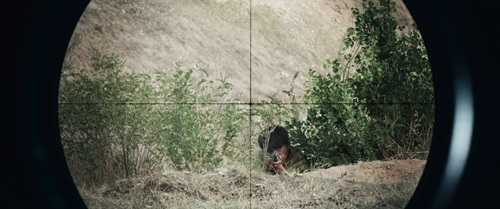
84) The Volunteers: The Battle of Life and Death (Chen Kaige)

Part two of Chen Kaige’s patriotic epic about the efforts of Chinese soldiers in the Korean War. It is big official cinema on a scale rarely seen today, that makes very good use of the filmmaker’s decorative talents. Every image is carefully staged.

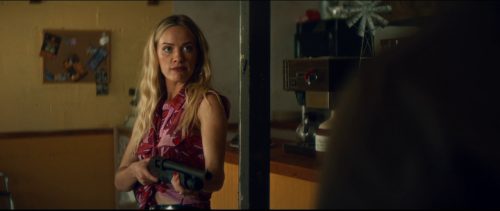
83) Thieves Highway (Jesse V. Johnson)

Another neo-western, this one by the always resourceful Jesse V. Johnson. It is not one of his most ambitious films but keeps finding good current analogues to old forms. It is a low-key movie about cattle robbers and the “cow cop” on their trail, with everyone a little more beat down and desperate than in similar movies. Thieves Highway could pass for a minor 50s Randolph Scott western, and that is an art form worth preserving.

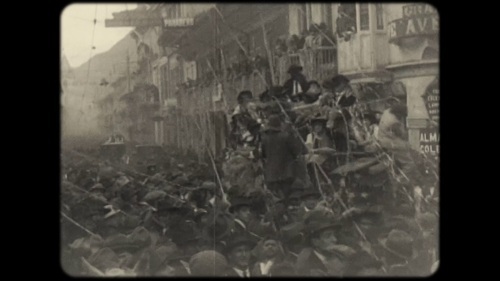
82) Silent Witnesses/Mudos testigos (Luis Ospina, Jerónimo Atehortúa Arteaga)

The great Colombian filmmaker Luis Ospina passed away in 2019 while working on this film, which Jerónimo Atehortúa Arteaga completed. It is itself a revival of images from local silent cinema, reimagined in all their power in a newly woven narrative.

81) Hunt the Wicked (Chris Huo)

Another blast from Chris Huo. The opening and closing sections are as excitingly designed as this kind of low-budget action gets.

80) Wake Up Dead Man (Rian Johnson)

Rian Johnson always makes the same movie, exploiting his skill for staging scenes to the hilt while distracting us with his latest tall tale. At his worst, he comes across as a little too clever; at his best, he is a storyteller of unusual fluidity in contemporary American cinema. This is the best of the detective movies he made with Daniel Craig, probably because the actual star is Josh O’Connor as the priest who wished for the crime he did not commit, and the focus on faith gives the film something to counterbalance all the theatrics.

79) Back Home (Tsai Ming Liang)

Another one of the miniature observational movies Tsai has been making since his “retirement.” The dog scene earlier is a wonder, and everything else is fine too.

78) If I Had Legs I’d Kick You (Mary Bronstein)

Bronstein’s debut, Yeast (2008), made a lot of good use of mumblecore aesthetics to move it away from its usual very male-dominated milieu towards the more toxic elements of female friendships; this second feature starts from the Safdies’ intense semi-realism (her husband Ronald is their longtime co-writer and editor) for an arty, almost thriller about how motherhood can be terrible. I’m sure this is going to be even better when all the tics in it are a signpost of a long past arthouse period. It helps that Rose Byrne is great in it.

77) More Beautiful (Karoline Herfurth)

Another film about female anxieties, despite the fact that it takes the form of a populist comedy. The scenes with the young cast are especially good.

76) Super Happy Forever (Kohei Igarashi)

A Japanese Hong Sang-soo movie about finding and losing people. Some very good casual filmmaking set against a more rigid writing structure.

75) Operation Hadal (Dante Lam)

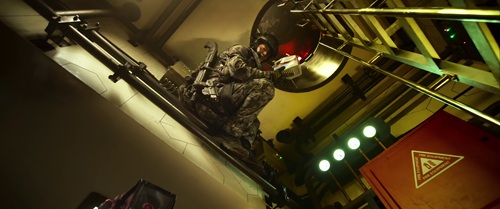
Exquisite recruiting poster for the Chinese military with action and melodrama taken to the extreme. A Jerry Bruckheimer 90s movie without the dull parts. I left it ready to serve Xi. One must admire the shamelessness of the Chinese film industry.

74) Kontinental ‘25 (Radu Jude)

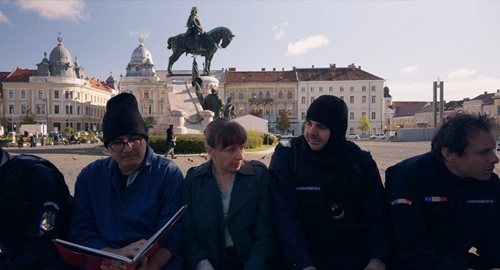
I’m not always convinced by Radu Jude’s high concepts: I had no use for his Dracula, but this “remake” of Europa 51 about the end of the European social democracy pact has the right amount of intimacy and observation to actually give the idea some force.

73) Evidence (Lee Anne Schimitt)

A thoughtful film essay on the impact of conservative American think tanks, but above all, one that is ready to convey its arguments through a series of material and spatial strategies.

72) Dream Team (Lev Kalman, Whitney Horn)

A very good pastiche that gets a lot out of the idea that softcore movies suggest normal without committing to them, which makes them ideal surfaces for this sort of no-budget experiment. Great hangout vibes; everyone involved is probably having a better time than anyone watching it, which is paradoxically part of what is so likable about it.

71) Honey Don’t (Ethan Coen, Tricia Cooke)

Another good pastiche by a creative couple. Honey, No! is more serious and sad than the genre exercise it was sold as, and has considerable difficulty flowing narratively, but as a collection of stray observations about an oppressive urban space organized around Margaret Qualley’s presence, this film is cooler and more interesting than anything the Coens have done together in the last decade of their partnership.

70) A Gilded Game (Herman Yau)

A Herman Yau-directed financial thriller that is fairly slick and mostly pleasurable. A gangster movie without any shootouts but plenty of bad people shouting at their computers. Every scene with Andy Lau (who is there to tell us not every capitalist is pure evil, because only China cares about that) is a joy, even more so if we are just hanging out with him with no plot.

69) The Smashing Machine (Benny Safdie)

An unfairly maligned movie, probably because it is rather clumsy as a drama, but as an experiment in playing with the Safdies’ taste for documentary detail as a way of representing sports masochism and the multiple images and desires related to it, this is a much richer movie than it has been given credit for.

67) Megadoc (Mike Figgs) and Stuntman (Albert Leung, Herbert Leung)

Two movies all about representing the limits of outmoded personal forms of filmmaking and how they clash with current cinema. Figgis’ all-access documentary about Coppola’s Megalopolis is a fascinating peek behind the power games involved in such a project, even if its focus on the shooting carefully sidesteps any of the polemics around it. The Leungs debut is a melodrama about a Hong Kong veteran choreographer who refuses to adapt to current safety concerns, is a very heartfelt look at what remains of the city’s film industry, a subject that, as everyone knows, is very meaningful for me.

66) Dangerous Animals (Sean Byrne)

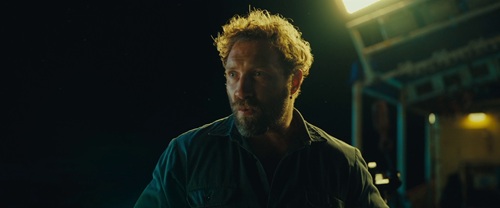
Beggining now a series of shameless potboilers. This one is likely the best shark movie since 2016’s The Shallows, just a good idea (reimagining Peeping Tom with a psychopath whose kink is filming women being eaten by sharks) very well executed. The image of Jai Courtney relishing the videos he recorded is one of the most disturbing scenes of the year, and the heroine castrating him by throwing his camera into the water is one of the funniest.

65) Roofman (Derek Cianfrance)

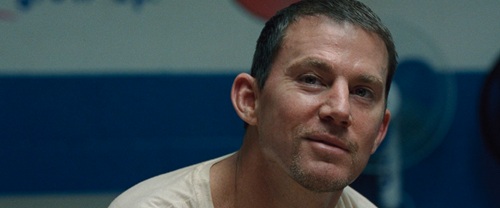
Like The Smashing Machine, Roofman is an experiment around how to use a true story. In this case, how charming a movie star (Channing Tatum) must be to let a depressing comedy of errors about a fuckup who keeps making the wrong decision go down smoothly. Audiences stayed away, but it is a credit to filmmaker Cianfrance, Tatum, and co-star Kirsten Dunst how well this plays.

64) Relay (David Mackenzie)

An empty calories formalist doing his best to make a good 1996 videostore hit.

63) Sinners (Ryan Coogler)

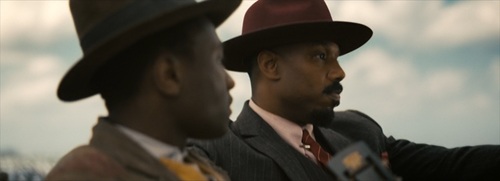
Huge, disjointed and incoherent, but a pleasure to watch for its over two hours. The great populist film of the year, a candidate to be underrated/overrated according to individual preferences, allow me to be centrist and place it in the middle section of mine. Better in how it uses horror than how it stages it, but the performances and music are great, and I find the epilogue very moving.

62) Friendship (Andrew DeYoung)

Very good cringe male anxiety comedy. Everyone does wonders reacting to star Robinson’s very committed turn.

61) Behind the Shadows (Jonathan Li, Chou Man-Yu)

Another voyeuristic thriller, this one from Hong Kong and focused on marriage, and updating some of the more melodramatic parts of Hitchcock’s movies.

60) After the Hunt (Luca Guadagnino)

I know this has been a punching bag since its Venice debut, because everyone likes to act superior to past its sell date prestige items, but I had a great time, and most of the topicality is dressing up for a delightful comedy of manners about some awful people very dedicated to their own forms of social phoniness. I don’t know if it’s a smart dumb movie or a dumb smart one, and I suspect neither does Guadagnino.

59) Father Mother Sister Brother (Jim Jamursch)

Jamursch’s best movie in 15 years, a collection of short stories that echo each other whose biggest merit is how cohesively it feels.

58) The World of the Dead/O Mundo dos Mortos (Pedro Tavares)

This is something so unusual for Brazilian cinema, taking place in the realm of myth with a spare theatricality that suggests artists like Oliveira. The World of the Dead looks back to a tradition of movies, but its distance from them is part of what is moving about it. Some great close-ups.

57) Life (Zeki Demirkubuz)

Demirkubuz remains a master at carefully shaped drama.

56) Alappuzha Gymkhana (Khalid Rahman)

A male bonding sports movie about Indian college students boxing. It does a great job of setting an environment and allowing the characters’ feelings to resonate within it.

55) Prisoner of War (Louis Mandylor)

As others have pointed out, an American DTV version of Oshima’s Merry Christmas, Mr. Lawrence, so Scott Adkins is kicking people every few minutes. One of his better recent vehicles, and it works well as an action and pow movie.

54) The Three of Knowledge/A Arvore do Conhecimento (Eugene Green)

An encounter between the wonder of Green’s images and the humor of Portuguese production company O Som e a Fúria.

53) Ick (Joseph Kahn)

A monster movie about paternity, generational tension, and, I guess, the pandemic that remains always engaging thanks to director Kahn’s tasteless energy and a wonderful lead performance by Brandon Routh.

52) Queens of the Dead (Tina Romero)

Tina Romero is George’s daughter, something the movie is keen to constantly remind us of, and Queens of the Dead is a queer version of the apocalyptic zombie films he used to make. Great characters and cast, very likeable atmosphere, a delight that goes completely against the grain of current horror cinema.

51) She Rides Shotgun (Nick Rowland)

Father/daughter on the run crime movie that remains propulsive and had pretty good lead performances. There used to be so many more good movies like this.

50) The Little Sister/La petite dernière (Hefsia Herzi)

A very well-observed drama about negotiating your sexuality when you come from a conservative background. I especially like how it always exists on the edge of personal anxiety, while the character’s surroundings remain relaxed and inviting, the drama remains internal in her trembling and desires.

49) The Secret Agent/O Agente Secreto (Kleber Mendonça Filho)

A paradox: a movie that effectively reimagines the anxieties of the Bolsonaro years while hanging up in the late 70s Recife. An emotional trap that is often affectionate and generous. It is an achievement in setting an environment, physical and emotional, that the movie can just disappear in. Cinema as a form of time travel.

48) Little Boy (James Benning)

Urgent if a little dated in its discourse, but filtered with Benning’s conceptual and material precision.

47) Peter Hujar’s Day (Ira Sachs)

Another exercise in time travel. Back in the 70s, photographer Peter Hujar gave an interview describing his previous day, which survives only in transcription, and this movie reproduces the talk with the words faithful to the letter while filmmaker Sachs and his actors Ben Winshaw and Rebecca Hall try to imagine what is physically going on while those two people talk.

46) Flat Girls (Jirassaya Wongsutin)

The melancholy of growing up. Very attentive to the bonds between its two teenagers and what they intimately share and how to position it in the face of a social environment that insists on meddling.

45) One Battle After the Other (Paul Thomas Anderson)

A great chase picture and enjoyable comic panorama. Anderson is making the best of the toys DiCaprio got Warner to give him; like most of his movies, it is an uneven mess, and it has honestly been overdiscussed politically, but any movie with those landscapes, that Del Toro performance, and DiCaprio wishing he knew how to do his daughter’s hair is doing things right.

44) Flashes of Critiques Metaphysical Murmurs/Relâmpagos de Críticas Murmúrios de Metafísicas (Julio Bressane, Rodrigo Lima)

Bressane revisits the origins of his cinema and what editing still allows it to flow.

43) Batguano Returns – Roben na Estrada (Tavinho Teixeira, Frederico Benevides)

Teixeira returns to his great anthropophagic Batman and Robin as tropicalist Beavis and Butthead early film for a diaristic road movie about his current anxieties, so bitter, melancholic, yet still inventive.  

42) Let’s Go Karaoke! (Nobuhiro Yamashita)

It’s always a pleasure to see Yamashita in good form, one of the most enjoyable filmmakers around, and who else could make such delightful cinema out of the friendship between a boy who sings in a choir, fearing the effects of puberty on his voice, and a yakuza who needs to win a karaoke competition.

41) Room Temperature (Zac Farley, Dennis Cooper)

A very good movie about what horror fiction can contain and represent. It is co-directed by the wonderful queer novelist Dennis Cooper, but it is something that can only exist as film and offers some great commentary on the current state of horror movies, even if it is not exactly one.

40) Metro.. in Dino (Anurag Basu)

Romance and alienation in the big city. About moving various characters around an emotional chessboard and connecting them through music. One of the most enjoyable films of the year.

39) Life and Death Madalena/Morte e Vida Madalena (Guto Parente)

To make independent cinema in Brazil is a pain and a joy.

38) Meeting with Pol Pot (Rithy Panh)

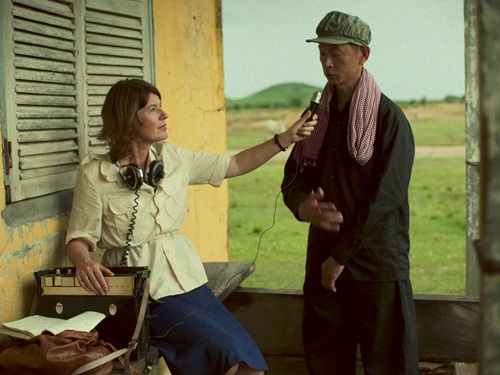
Rithy Panh remains true to himself and his efforts to excavate Cambodia’s history. This time, through a fictional film about a trip by French journalists to interview Pol Pot. One of his best films.

37) The Shadow’s Edge (Larry Yang)

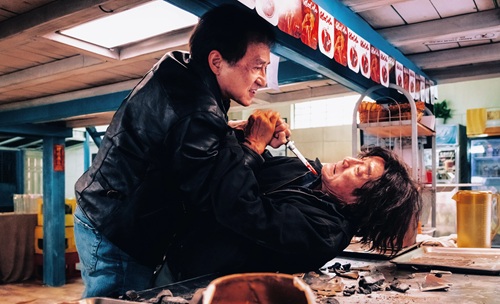
I’m probably overrating this because I’m still shocked there is a movie this good starring Jackie Chan in the year 2025. Accidental commentary about the arrested state of Hong Kong-affiliated cinema: this is a remake of a very good 2007 movie called Eye in the Sky, and Tony Leung Ka Fai played the master criminal in it, and of course he is still playing the same role at 67.

36) Jenseits des Rechts (Dominik Graf)

I love German TV crime shows and how they allow their auteurs to play around with B movies, which is especially welcome when Graf turns his hand at them, as he is one of the best storytellers in the world.

35) Swimming in a Sand Pool (Nobuhiro Yamashita)

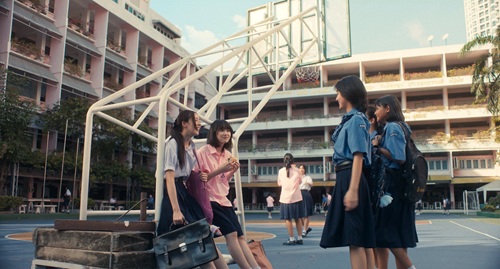
Another recent Yamashita movie, this one taken from a play about a group of schoolgirls talking about their problems while cleaning a pool full of sand, gets its very symbolic scenario and central image and makes something so graceful out of it.

34) With Hasan in Gaza (Kamal Aljafari)

Of the gesture of locating the weight, political and personal, of the casual images stored away.

33) Retro (Karthik Subbaraj)

This year’s best Indian action movie. Only they could marry Chaplin and John Wick. A beautiful flow of intense and deeply felt images.

32) Youth (Homecoming) (Wang Bing)

The first part of Wang Bing’s trilogy dedicated to the daily lives of young workers in Chinese industry was on my list two years ago. It is essentially one big project lasting around nine hours. This final installment is like an epilogue, following its characters at home and at leisure, away from work but still affected by it.

31) Only Good Things/ Apenas Coisas Boas (Daniel Nolasco)

A queer western melodrama about shifting your desires and feelings to the landscapes of Brazil’s countryside. As good as that Almodóvar western from a few years ago was foolish.

30) The Phoenician Scheme (Wes Anderson)

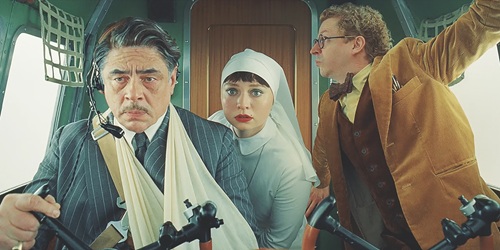
Wes Anderson reimagines Mr. Arkadin as a contemporary political farce. Of all the big-budget Hollywood movies released this year, this is certainly the most incisive.

29) The Sixth Robber (Chris Huo)

The best of Huo crime thrillers, the first to match the excellence of its action scenes with the intensity of the drama.

28) Blue Heron (Sophy Romvari)

I’ve known Romvari online for years, and I enjoy her short film work, which has occasionally covered the same personal territory, so given the very emotional and autobiographical nature of Blue Heron, I’m not necessarily objective about it, but movies like this aren’t very objective anyway. People keep comparing Blue Heron to Aftersun, as they are similar movies about troubled family drama observed by a young girl who only half understands it, but it strikes me as more ambitious and successful, and there is a scene near the end when Romvari breaks the fourth wall for good that still makes me misty.

27) The Colors Within (Naoko Yamada)

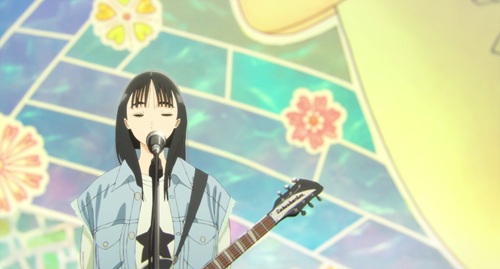
Music and animation that are ready to find good ways to give its young characters emotions a strong opening. The central idea is a good way to represent the things only animation can do, and as usual, Yamada is one of the warmer filmmakers around.

26) It was Only an Accident (Jafar Panahi)

Polanski’s Death and the Maiden as a great farce. My favorite Panahi movie is Crimson Gold, and this is probably his closest movie to it since. It’s mechanical and didactic, but its bitter and desperate humor works, and the drama remains engrossing throughout.

25) The Ice Tower/La tour de glace (Lucile Hadžihalilović)

I remember The Ice Tower got very mixed reviews when it played in Berlin earlier this year, so it is nice to see it showing up in a lot of year-end lists. It’s always a plus when good movies go through the whole reclamation work that fast. Our attention economy can be cruel, and Hadžihalilović is an artist whose idiosyncrasies can be further from it, as beautiful as her images can be. This one uses a fable to catalogue all the ways filmmaking will seduce and crush you.

24) Fire Supply (Lucia Seles)

Speaking of idiosyncrasies, there are few films as distinctive as those by Sales. So deliberately constructed in their fictions with their own rhythms, the editing of Fire Supply is exquisite, as is each location in which its characters take refuge. An artificial cinema that is at the same time very inviting and intimate, almost homemade.

23) Air (Aleksei German Jr)

A Russian war epic about women fighters on the Leningrad front. This is a sweeping, old-fashioned spectacle done on a large scale. Terrific actresses and great plane action. It is very exciting while never letting lose how death hangs over everything. War is a tough negotiation with death that states win and people lose.

22) Kickflip (Lucca Filippin)

Young skateboarders from upstate São Paulo. Images that are disposable and could be on any social media platform, but which Fillipin’s movie infuses with possibility. A movie with no distance between the cinematic apparatus and its characters, very compelling because it recognizes the full power of their gestures and dramatic charge of their actions without distancing the images from the skateboarders daily lives.

21) Youth (Hard Times) (Wang Bing)

The mid part of Wang Bing’s large project. The most pointed and angry.  If Youth seems as ambitious as his earlier masterpiece West of the Tracks, and I won’t be surprised if in a couple of decades it will be talked about as a key 2020s Chinese film as that one is from the 2000s, this chapter will be why. It is didactic but so full of life, and the use of offscreen remains exquisite.

20) White House/Kasa Branca (Luciano Vidigal)

The best and most beautiful Brazilian film I’ve seen this year. So connected to the daily lives of its Rio youngsters, so well observed and lively. The naturalism of Brazilian independent cinema is sometimes a limiting crutch, but Kasa Branca breathes life into it and brings it into contact with the great chronicle cinema of Rio de Janeiro, by Nelson Pereira and David Neves, and it’s so good to see something like this again here.

19) Mirrors No. 3 (Christian Petzold)

One for auteurism: Petzold making a careful variation on many of his pet themes and formal tics with his usual skill. It is familiar but precise. Petzold’s handling of actors remains great. I might’ve listened to the Four Seasons’ The Night some 50 times in the past two months.

18) Evil Puddle (Charles Roxburgh)

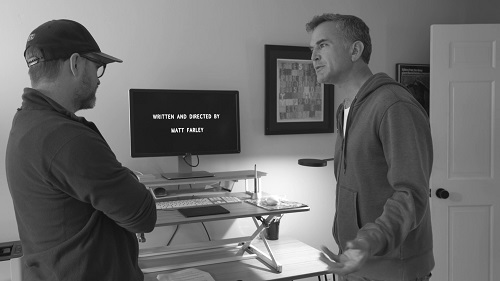
There is something about the possibilities of amateur cinema that Roxburgh and his longtime partner, Matt Farley, achieve: it is a film with an absurd concept, a city attacked by haunted puddles, which ends up being one of the few useful portraits of post-pandemic communities and how they negotiate their individualistic desires. The fact that everything is so affectionate makes the sharp parts work better.  It’s part Stephen King, part Shyamalan, and offers Farley one of the best variations on his persona.

17) Highest 2 Lowest (Spike Lee)

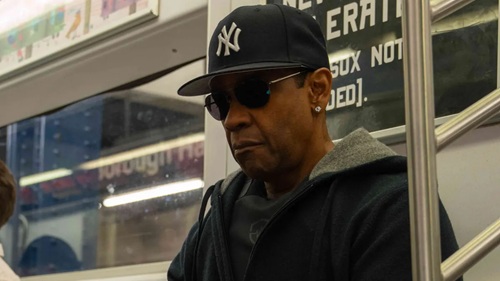
Spike Lee’s remake of Kurosawa’s masterpiece High and Low is one of the year’s most divisive, mostly because of the question about a known auteur remaking another, which quite honestly bores me. What I do care about is what Lee does with the scenario, a highly personal read that turns it into a very conservative paranoid fantasy about two very successful Black film artists, Lee and star Denzel Washington, and their fears about their own relevance and how a world they are not that at home in sees them. The big drop scene midway is wonderful and lively; everything else is oppressive but increasingly strange and torturous. Lee remains very relevant because he seems so lost in his bubble.

16) Ariel (Lois Patiño)

Originally, Patiño was going to make this movie with Matias Piñeiro, and he remains very close to Piñeiro’s work with its contemporary use of Shakespeare’s text, in this case, The Tempest. In Ariel, the find is to set the action in Portugal, this land always ready to convey a haunted historical weight, with the Azores beautifully filmed, which adds a new layer to both Patiño’s and Piñeiro’s cinema.

15) Escape (Masao Adachi)

Adachi is the only major filmmaker who sacrificed years of his life to radical clandestine political action. Since his comeback to filmmaking with 2007’s Prisoner/Terrorist, he has been making no-budget spare representations of Japan’s radical resistance. This time he comes up with a tribute to Kirishima Satoshi, a man who stayed most of his life as a fugitive on the Japanese government’s most wanted list until he showed up at a hospital dying and told the world who he was. Adachi couldn’t care less about what current cinema looks like, but he cares about Saroshi and what lives like his mean. He is 86 years old and perhaps our freest filmmaker.

14) 7 Walks with Mark Brown/Sept promenades avec Mark Brown (Pierre Creton, Vincent Barré)

Speaking of free movies, this one could borrow Hong’s title, What Nature Says to You. Just a vibrant movie about our relationship to the natural world around us.

13) Fuck the Polis (Rita Azevedo Gomes)

Another movie that radically engages with the world. This one follows a trip by Gomes to Greece, multiple times and historical echoes, the whole weight of a world that carries so much with it, filtered here by the ease with which Azevedo Gomes films the most casual moments. There is a lot of beauty, but also a lot of violence in how this cinematic gaze mediates all these relationships.

11) Broken Rage (Takeshi Kitano) and Where to Land (Hal Hartley)

There are a lot of movies by aging filmmakers in this list, as usual. Aging artists often bring with them a lot of history and connections that engage me, and they frankly care so little about current fashions in a way that is always a plus. I hate when people use terms like “late style” to try to explain them, because doing so isn’t very productive. I’d rather own up that I can be faithful and sentimental and that there is something radical about a lot of those end-of-career artistic gestures. Here are two good test cases, both cinematic wills of sorts: Kitano, 78, is a throwaway Amazon production, and Hartley, 66, was made with very little money through internet funding. The Japanese master is a huge celebrity who keeps getting away with eccentric movies, while the American might be unique among his generation for not seriously trying to engage with the mainstream. These are very funny and generous movies; they also make absolutely no sense if you don’t know the artists’ work. Kitano offers a series of variations on his screen persona, an hour-long movie that replays its basic scenario twice with tonal variations, as oppressive in its connotations as joyful in its execution. Hartley’s film, which is literally about the making of a filmmaker’s will (although his on-screen avatar is a celebrated romantic comedy auteur, which is funny and perceptive), is so taken by what it can pass along, what comes before, and the possibilities of a future. Do I find it Hartley’s best movie in over 30 years because it seems so final? Probably, at least to a point, the sense of a world ending, the urgency, but also the pleasure that comes with it is a lot of the appeal. There is a lot of finality in both of those movies, but also an opening that is equally upfront.

10) Bad Girl (Varsha Bharath)

At the opposite end of the spectrum, a debut feature so full of possibility and energy, so dedicated to representing the life and desires of a young Indian woman. I like the freshness of the movie, I like that it remains so nimble and so uninterested in any kind of austerity, while at the same time, just by being so blunt and direct, it comes across as a radical and assertive gesture.

9) The Bewilderment of Chile (Lucia Seles)

Some of the most fun and cozy filmmaking around. Just packing things that matter for its makers while remaining so connected to the city and its public spaces, how to love and live in them. This is very funny and, like Seles’ other work, so inviting and warm, and the editing is an impressive act of keeping so many situations, characters, and ideas in a coherent balance.

8) Castration Movie Anthology i. Traps (Louise Weard)

Ward’s movie is the first part of an ambitious project, currently filming the third, attempting to account for the most disparate forms of trans experiences. It is four and a half hours with very little modulation, keeping its eye on more situations, characters, and contradictory feelings. It is a lot of movie, made with complete carefreeness and at the same time always intoxicated by the experiences on screen, always very affecting in its own way, never half-hearted.

7) Desert of Namibia (Yoko Yamanaka)

A young bipolar Japanese woman and the two men she oscillates around. Those are easy signposts that matter and don’t, as are any of the ways one could describe the main character’s actions: selfish, violent, out of control. The words and the value judgments that come with them don’t seem fair to director Yamanaka desire to only let her exist. So generous as a gesture, and so uncompromising. And in actress Yuumi Kawai, she finds her right accomplice, really one of the most astonishing performances of the last few years, almost peak Gena Rowlands good.

6) What Nature Say to You (Hong Sang-soo)

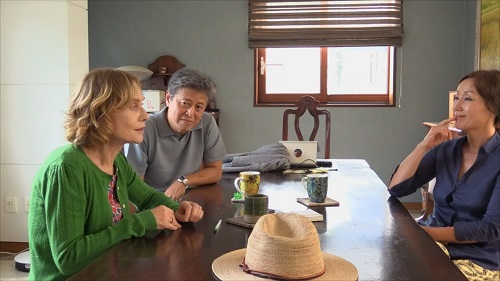
The oppressive nature of the family house, the general distance between the boyfriend and her parents, everything observed with such caustic care. And then that wonderful drunk scene when the comedy of manners just falls apart.

5) Last Night I Conquered the City of Thebes/Anoche conquisté Tebas (Gabriel Azorín)

Young men in steam baths, lost in a mythical image. An entire historical past, the uncertainties of the future, and the presence of the present. Battles that have been and battles that will be, suspended in time. A very beautiful film that creates an entire world from those half-naked guys taking a bath and talking.

4) The Mastermind (Kelly Reichardt)

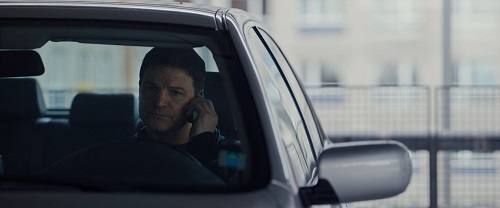
Two movements, the heist and the flight. Multiple meanings that are clear and obscure. A film that is very adept at playing its parts off against each other and exploiting Josh O’Connor’s screen presence. The title is and isn’t a joke; the robbery is the predictable disaster beneath its supposed cleverness, but O’Connor clearly considers himself above his criminal milieu, a guy who wants to be the boss without the hassle and monotony of the office job that his father’s connections could probably get him. The film lingers on the late scene with his college friend who offers him salvation with a place in a Canadian commune that he has to refuse because “it’s not his scene.” Even in the face of literal marginalization, there is still the need to embrace an imaginary self-image. A mirage that the film strips bare until the incredible final shot.

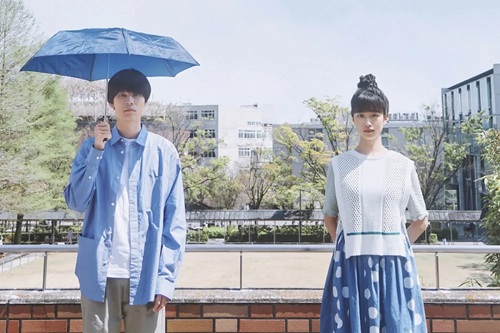
3) She Taught Me Serendipity (Akiko Ohku)

There is probably not a better moment in a movie this year than the love confession that just arrives midmovie, so raw and exposed, and that goes on and on. Such a beautiful movie about how we perceive the world and how we allow, or not, for the people around us to be a part of it. So hopeful and upbeat, yet so painful and hardly earned. A true education in the form of a simple slippery youth romantic comedy.

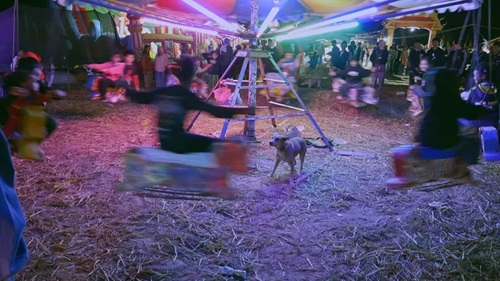
2) Dry Leaf (Alexandre Koberidze)

The pleasures of make-believe. A man drives across the roads of Georgia in search of his missing daughter, in the company of his imaginary friend, on a tour of the amateur football fields she visited. Cinema always returning to The Searchers, here blessed by Brazilian football. Koberidze loves football because it is a mythical field where anything is possible. He makes a movie in the same vein, cataloging new encounters, a blur (the images were shot in very low resolution) full of green fields, children, animals, and old faces that pass by on screen.

1) Blue Moon (Richard Linklater)

Dry Leaf looks forward the most, but if I’m being honest with myself, this chamber piece is all about looking back at a world at twilight near the end is my favorite. A movie with impressive finality about all the things the pre-World War II days could be hopeful about approaching the end. It takes place in near real time and a single set, and it is so tightly controlled by Linklater in a mix of contradictory emotions. A drunk funeral and a beautiful one.

Meus Filmes Favoritos de 2025

English version here

Outro dia, eu estava conversando com uma amiga e ela disse algo como “não existem anos ruins, só você escolhendo os filmes errados” e, embora eu não tenha certeza se concordo totalmente com ela, acho que isso reflete uma certa verdade sobre os balanços de fim de ano: todos eles são mapas traçados a partir do que o crítico/cinéfilo selecionou para si mesmo.

O meu tem sua parcela de gostos pessoais e idiossincrasias: mais filmes de ação ou policiais do que a maioria, filmes brasileiros que não são O Agente Secreto (e O Agente Secreto), muito mais filmes asiáticos do que a maioria das listas inclui, vários deles que não são exibidos em grandes festivais ocidentais. Gosto de usar favoritos para essas listas em vez do habitual “melhores”, porque me parece mais justo em relação aos meus viéses e porque acho que “melhores” é maçante, e prefiro me contentar com uma lista de filmes que despertaram minha imaginação de uma forma ou de outra. Então, chamemos de 100 filmes que considero interessante o suficiente para ponderar e compartilhar.

Todos os anos, por volta da época do Mostra de São Paulo, no final de outubro, eu me questiono sobre fazer outra lista e todos os anos eu a faço, em parte porque adoro compartilhar filmes, em parte porque é útil para mim tanto refletir sobre o ano quanto fazer uma prospecção eclética do ano em filmes.

Nesta época do ano, sempre ocorrem dois impulsos simultâneos: os que reclamam que essas listas são muito aborrecidas e homogêneas e os que parecem irritados por elas não serem ainda mais assim. Tenho simpatia pela primeira posição, a centralidade dos festivais de cinema e o peso do dinheiro no marketing cinematográfico (eles são a mesma coisa quando você para para pensar) desempenham um papel importante nisso e, hoje, a comunidade cinematográfica parece trocar opiniões em espaços tão restritos que acabam sendo muitas vezes repetitivas. Certamente há muito menos diferenças entre os gostos da Film Comment e da Cahiers du Cinema do que costumava haver. Algumas das razões para isso podem ser positivas, a crescente internacionalização da maioria das grandes revistas de cinema tem muitas vantagens, mas certamente leva a resultados muitas vezes mais insossos e menos excitantes, ou pelo menos as partes mais empolgantes já foram discutidas por tanto tempo que, quando chegam a essas listas, parecem mais do mesmo.

Não acho que a lista a seguir seja uma solução para essa situação, e definitivamente não foi organizada como uma contra-narrativa. Quatro dos dez filmes da minha lista dos dez melhores estavam na lista dos 50 melhores da revista Sight and Sound (confissão: sou um dos votantes, por isso partilho da culpa se acharem aquela lista demasiado enfadonha) e os dois filmes de grande orçamento do ano que os críticos gostam (Uma Batalha Após a Outra e Pecadores) estão ambos em algum lugar da lista, tal como os vencedores de Cannes e Veneza. Espero que seja um pouco menos centrada em festivais do que a maioria e que continue a ser populista no espírito, se não necessariamente no sentido do grande mercado internacional.

Alguns dos filmes importantes do ano não estão aqui porque não me dizem grande coisa, e outros porque prefiro um filme obscuro sobre viagem no tempo e recasamento japones a eles . É claro que há outros que ainda não tive oportunidade de ver. Não diria que 2025 foi um mau ano para o cinema, pois nunca o são se procurarmos bem, mas acho que não teve nenhum filme objetivamente excelente como Feche os Olhos ou The Shrouds. Meus dois primeiros lugares, que são 1a e 1b desde que os vi em outubro, estão próximos dos filmes que lideraram minha lista durante os anos afetados pela pandemia, mas ainda assim é uma façanha e sei que vou levá-los comigo por anos.  Tenho a sensação de que houve mais filmes de autores importantes e muito discutidos em 2025 do que nos últimos anos, mas que eles também foram, em uma análise justa, um pouco mais seguros e menos idiossincráticos do que nunca, uma troca preocupante de se observar. Listas como esta são, entre muitas outras coisas, um lugar útil para refletir sobre desenvolvimentos como este.

Como sempre, meus critérios são filmes que assisti pela primeira vez este ano, com mais de 45 minutos de duração e exibidos publicamente pela primeira vez entre 2023 e 2025. A ordem não importa tanto, gosto certamente do 21o mais que do 41o, mas não sei se eu o prefiro mesmo ao 25o.

Meus curtas favoritos vistos este ano são A Ladder, de Scott Barley, e Scenários, de Jean-Luc Godard, ambos exercícios fascinantes de miniatura na arte de contar histórias, prontos para te encantar com o que vem a seguir.

Alguns dos meus livros favoritos sobre cinema que li pela primeira vez, porque não: Scene (Abel Ferrara), Sick and Dirty (Michael Koresky), Everything is Now (J. Hoberman), Derivative Media (Andrew DeWaard), o artigo do Francis Vogner para Critica e Curadoria de Cinema (org Laécio Ricardo de Aquino Rodrigues) um par de livros antigos que li recentemente The Silent Clowns (Walter Kerr) e Chaplin Last of the Clowns (Parker Tyler).

100) The Movie Emperor (Ning Hao)

Um dos muitos filmes que olham para o próprio fazer cinematográfico na lista deste ano, se não um dos mais sérios. O astro Andy Lau faz um astro que resolve fazer um filme de arte social para reforçar sua relevância e termina alienando tudo e todos. A sátira não é a mais ácida, mas existe uma amargura muito expressiva e sempre é um prazer ver Andy Lau ser uma estrela de cinema, não temos tantas assim.

99) Missing Child Videotape (Ryota Kondo)

Um exercício inspirado no terror japonês do início dos anos 2000. Formalmente preciso, e sabe como evocar uma imagem inquietante e horrível. Cinema acadêmico com algum peso e consistência é certamente preferível a algumas das versões mais aprovadas pelos curadores do mesmo tipo.

98) 1st Kiss (Ayuko Tsukahara)

O começo e o fim de uma relação através do arcabouço dramático que a ficção popular permite. Uma dessas coisas que o cinema japonês mantém muito vivo com seu gosto pelo melodrama e fantasia, e a certeza de que pode levar as emoções proporcionadas por ele a sério.

97) Zero (Jean Luc Herbulot)

O cineasta congolês Herbulot chamou a atenção há alguns anos com seu muito bom híbrido de terror e ação, Saloum; seu filme seguinte quase passou despercebido, mas não é tão diferente, como um thriller com elementos de horror e uma grande tensão colonial como pano de fundo. Premissa engenhosa de viagem de morte, filmado de forma vigorosa e direta, se talvez um pouco punitiva demais.

96) Um Minuto é uma Eternidade para Quem Está Sofrendo (Fábio Rogério, Wesley Pereira de Castro)

Quando dois olhares se encontram na presença e na montagem. Filme diário do cotidiano e impressões do diretor Pereira de Castro, que está sempre entre um mergulho embriagado na primeira pessoa e o esforço de existir para além dele.

95) Satranic Panic (Alice Maio Mackay)

A cineasta de horror de 21 anos mais produtiva do mundo continua a fazer boas variações sobre conceitos conhecidos do gênero como forma de lidar com diferentes aspectos da vida trans atual. Como de costume, o elenco é vivaz, segue bem fundamentado no dia a dia das suas personagens, e muita energia, além de ser um dos dois filmes de horror queer desta lista que culminam em um número musical muito legal, e eu tenho uma queda por isso.

94) Loucos Por Cinema!/Spectateurs ! (Arnaud Desplechin)

Quando mais o tempo passa, mais Desplechin troca Bergman por Truffaut e fica menos relevante no meio do cinema contemporâneo. Este ensaio sobre cinefilia é mais excêntrico do que profundo, mas fascinante quanto mais abraça a perversidade dessa paixão.

93) A Queda do Céu (Eryk Rocha, Gabriela Carneiro da Cunha)

Eryk Rocha co-dirigiu este documentário sobre os Yanomami e sua luta contra as forças externas com a atriz Gabriela Carneiro da Cunha, e, de certa forma, isso permite que uma forte preocupação social equilibre seus interesses mais estéticos. Como a maioria dos documentários de Rocha, os personagens centrais são convidados a tomar parte de um quadro visual cuidadosamente elaborado que no caso se encaixa bem na conexão dos Yanomami com sua terra.

92) Bastion 36 (Olivier Marchal)

Um filme original da Netflix que quase não existiu, mas como sempre gosto dos filmes do ex-policial Marchal sobre os excessos dos agentes de lei e ordem franceses. Ele conhece o meio com intimidade e sabe como detalhá-lo ao mesmo tempo que permanece muito próximo dele. Este parece uma versão mais conservadora de um thriller setentista do Yves Boisset.

90) A Semente do Mal (Gabriel Abrantes) e Os Estranhos: Capitulo 2/The Strangers: Chapter 2 (Renny Harlin)

Dois thrillers de horror muito sólidos, com tramas básicos e muito reconhecíveis. Abrantes (do queridinho dos festivais Diamantino) diverte-se muito com seus jogos de poder familiar e referências góticas antigas, enquanto o habilidoso, e sempre superficial, Harlin preenche o tempo entre o que foi um filme ruim e o que eu presumo que será outro, encenando uma perseguição slasher de 90 minutos que é tão minimalista quanto empolgante. Nenhum dos filmes é para quem se preocupa com o enredo ou a psicologia, mas se você gosta de lúdismo delicioso operando num vácuo quase total, esses filmes tem bastante a oferecer.

89) L’Aventura (Sophie Letourneur)

O filme anterior de Letourneur se chamava Viagem à Itália, este L’Aventura, e ambos elaboram o mesmo projeto de colocar seus personagens em movimento dentro desta terra estrangeira. Como sempre, ela é uma ótima diretora de atores.

88) Explode São Paulo, Gil (Maria Clara Escobar)

Este é um dos filmes brasileiros da lista cuja cineasta conheço pessoalmente há anos, e, dado que se trata de um filme em primeira pessoa sobre uma cantora lésbica que trabalhou para ela, parece-me digno de menção. É um cabo de força de poder em que Escobar permite que Gil protagonize a ficção que ela merece, ao mesmo tempo que garante que ela também seja uma personagem no filme que a realizadora deseja. Uma relação complexa entre múltiplos desejos e poder que foi filmada ao longo de uma década e oferece um olhar fascinante em uma espécie de retrato cinematográfico de baixo orçamento que foi popular nos anos Dilma, tornando-se seu próprio reflexo.

86) Almas Mortas/Dead Souls (Alex Cox) e Nas Terras Perdidas/In the Lost Lands (Paul W. S. Anderson)
Dois neowesterns de cineastas de personalidade forte e excêntrica. O filme de Cox, feito sem nenhuma grana, e o de Anderson, com bastante, mas ambos de grande fascínio sobre como levar uma imagem cinematográfica de iconografia reconhecível e superfície grosseira para caminhos próprios e quase experimentais.

85) Second Life (Chris Huo)

O diretor Huo é um dos cineastas mais prolíficos da cena DTV chinesa e já apareceu nas minhas listas anteriormente com seus esforços de remeter aos filmes de ação de Hong Kong dos anos 80. Este é o seu trabalho mais excêntrico, combinando comédia, drama familiar e excelente coreografia (o clímax é especialmente inspirado).  E é um ótimo veículo para a veterana atriz de Hong Kong Yuen Qiu, ex-colega de classe de Jackie Chan e Sammo Hung, que já trabalhou com meio mundo, de Lau Kar Leung a Stephen Chow, e raramente recebe um papel principal tão bom assim.

84) The Volunteers: The Battle of Life and Death (Chen Kaige)
Parte dois do épico patriótico de Chen Kaige sobre os esforços dos soldados chineses na Guerra da Coreia.  É cinemão oficial numa escala rara de se ver hoje, que faz muito bom uso dos dotes decorativos do cineasta. Cada imagem cuidadosamente encenada.

83) Thieves Highway (Jesse V. Johnson)
Outro neo-western, este do sempre cuidadoso Jesse V. Johnson. Não é um dos seus filmes mais ambiciosos, mas segue encontrando boas analogias atuais para formas antigas. É um filme modesto sobre ladrões de gado e o “policial de vacas” em seu encalço, com todos um pouco mais exaustos e desesperados do que em filmes semelhantes. Thieves Highway poderia passar por um western menor de Randolph Scott dos anos 50, e essa é uma forma de arte que vale a pena preservar.

82) Mudos testigos (Luis Ospina, Jerónimo Atehortúa Arteaga)
O grande cineasta colombiano Luis Ospina faleceu em 2019 quando trabalhava nesse filme que Jerónimo Atehortúa Arteaga finalizou e é ele próprio uma retomada das imagens do cinema silencioso local redimensionadas em toda sua força numa nova costura narrativa.

81) Hunt the Wicked (Chris Huo)

Outra diversão de Chris Huo. As cenas de abertura e encerramento são tão empolgantes e bem concebidas quanto esse tipo de filme de ação de baixo orçamento consegue ser.

80) Wake Up Dead Man (Rian Johnson)

Rian Johnson faz sempre o mesmo filme, explorando ao máximo sua habilidade de colocar as coisas em cena enquanto nos distrai com sua última lorota. No seu pior soar um pouco esperto demais, no seu melhor é um contador de causos de fluidez incomum no cinema americano atual. Este é o melhor dos filmes de detetive que fez com Daniel Craig, provavelmente porque a estrela é Josh O’Connor como o padre que desejava o crime que não cometeu e todo o foco em fé oferece ao filme algo para contrapor todos os jogos de cena.

79) De Volta Para Casa (Tsai Ming Liang)

Mais um dos pequenos filmes observacionais que Tsai vem realizando desde sua “aposentadoria”. A cena com o cachorro no início é maravilhosa, e todo o resto também é legal.

78) Se Eu Tivesse Pernas, Eu Te Chutaria/If I Had Legs I’d Kick You (Mary Bronstein)
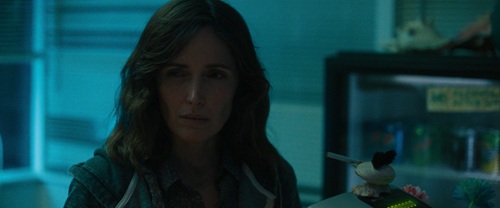
A estreia de Bronstein, Yeast (2008), fazia bom uso da estética mumblecore para mover seu ambiente habitual, bem masculino, e aproximar-se dos elementos mais tóxicos das amizades femininas; este seu segundo longa parte do intenso semirrealismo dos Safdies (o seu marido Ronald é coroterista e montador deles de longa data) para criar um thriller de arte sobre como a maternidade pode ser terrível. Tenho certeza de que será ainda melhor quando todos os seus tiques forem um vestígio de uma época passada de cinema independente americano. Ajuda o que Rose Byrne esteja ótima no filme.

77) More Beautiful (Karoline Herfurth)

Outro filme sobre ansiedades femininas, apesar de a forma aqui ser de uma comédia populista. As cenas com o elenco jovem são especialmente boas.

76) Super Happy Forever (Kohei Igarashi)
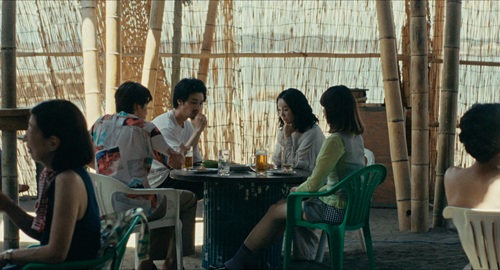
Um filme japonês do Hong Sang-soo sobre encontrar e perder pessoas. Imagens casuais, contrastando com uma estrutura narrativa mais rígida.

75) Operation Hadal (Dante Lam)

Excelente propaganda de recrutamento do exército chinês com excessos de ação e melodrama elevados ao máximo. Um filme de Jerry Bruckheimer dos anos 90 sem as partes ruins. Sai dele pronto para servir o Xi. É preciso admirar a sem vergonhice da indústria chinesa.

74) Kontinental ‘25 (Radu Jude)

Os filmes de conceito do Radu Jude nem sempre me convencem: o seu Drácula me diz nada, por exemplo, mas este “remake” de Europa 51 sobre o fim do pacto da social-democracia europeia tem a dose certa de intimidade e observação para realmente dar força à ideia.

73) Evidence (Lee Anne Schimitt)

Filme ensaio sobre o impacto de think tanks conservadores americanos bem argumentado, mas sobretudo pronto para encontrar como escoar seus argumentos por meio de uma série de processos materiais e cênicos.

72) Dream Team (Lev Kalman, Whitney Horn)

Um pastiche muito bom que tira ótimo proveito da ideia de que os filmes softcore sugerem um filme convencional sem se comprometerem com ela, o que os torna superficies ideais para este tipo de experimento sem orçamento. Ótima atmosfera de descontração; todos os envolvidos provavelmente estão se divertindo mais do que quem está assistindo, o que, paradoxalmente, é parte do que torna o filme tão agradável.

71) Honey, Não!/Honey Don’t (Ethan Coen, Tricia Cooke)

Outro bom pastiche de casais criativos. Honey, Não! é mais sério e triste do que o exercício de gênero que foi vendido e tem bastante dificuldades de fluir narrativamente, mas como uma coleção de observações sobre um espaço urbano opressivo organizados a partir da presença de cena de Margaret Qualley, este filme é mais legal e interessante do que qualquer coisa que os Coen fizeram juntos na última década da parceria.

70) A Gilded Game (Herman Yau)

Um thriller financeiro dirigido por Herman Yau, bastante eficiente e, na maior parte do tempo, agradável. Um filme de gangsters sem tiroteios, mas com muitas pessoas más gritando em frente aos seus computadores. Todas as cenas com Andy Lau (que está lá para nos mostrar que nem todos os capitalistas são totalmente maus, porque só a China se preocupa com isso) são uma delícia, ainda mais se estivermos apenas acompanhando-o, sem enredo.

69) Coração de Lutador/The Smashing Machine (Benny Safdie)

Um filme injustiçado, provavelmente porque é bem desengonçado como drama, mas como um experimento em jogar com o gosto dos Safdies para detalhes documentais como forma de representar o masoquismo esportivo e as múltiplas imagens e desejos relacionados a eles, este é um filme bem mais rico do que recebeu crédito.

67) Megadoc (Mike Figgs) e Stuntman (Albert Leung, Herbert Leung)
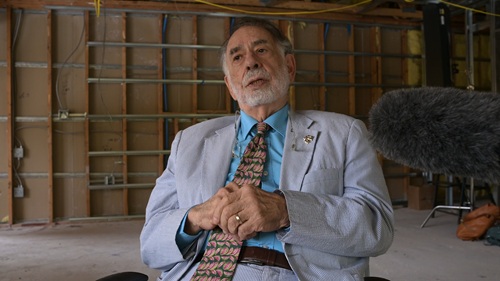
Dois filmes que retratam os limites das formas pessoais ultrapassadas de filmar e como elas entram em conflito com o cinema contemporâneo. O documentário de Figgis sobre o Megalopolis, de Coppola, com seu acesso bem abragente, é um olhar fascinante sobre os jogos de poder envolvidos em um projeto desse tipo, mesmo que seu foco nas filmagens evite cuidadosamente qualquer polêmica em torno dele. A estreia dos Leungs é um melodrama sobre um coreógrafo veterano de Hong Kong que se recusa a se adaptar às atuais preocupações com segurança, é um olhar muito sincero sobre o que resta da indústria cinematográfica da cidade, um tema que, como todos sabem, é muito significativo para mim.

66) Animais Perigosos/Dangerous Animals (Sean Byrne)

Começar agora uma série de filmes de gênero bem desavergonhados. Este deve ser o melhor filme de tubarão desde o Águas Perigosas de 2016, apenas uma boa ideia (reimaginar o clássico Peeping Tom com um psicopata cujo tesão é filmar mulheres comidas por tubarões) muito bem executada. A imagem de Jai Courtney se deliciando ao ver os vídeos que gravou é uma das grandes cenas perturbadoras do ano e a heroína castrando-o ao jogar a câmera na água é uma das mais engraçadas.

65) O Bom Bandido/Roofman (Derek Cianfrance)

Assim como Coração de Lutador, O Bom Bandido é um experimento sobre como usar uma história real. Neste caso, o quão charmoso um astro de cinema (Channing Tatum) precisa ser para fazer com que uma comédia de erros deprimente sobre um fudido que segue tomando decisões erradas seja bem aceita. O público não compareceu, mas é um crédito ao cineasta Cianfrance, a Tatum e à coestrela Kirsten Dunst o quão bem o filme funciona.

64) Relay (David Mackenzie)

Um formalista vazio, fazendo o possível para recriar um sucesso de videolocadora de 1996.

63) Pecadores/Sinners (Ryan Coogler)

Grande desconjuntado e incoerente, mas um prazer de acompanhar pelas suas mais de duas horas. O grande filme populista do ano, candidato a ser subestimado/superestimado de acordo com as preferências de cada um, permita-me ser centrista e colocá-lo no miolo da minha. Melhor em como usa do que como encena horror, mas as presenças de cena e música são ótimas e acho o epílogo bem tocante.

62) Friendship (Andrew DeYoung)

Comédia constrangedora muito boa sobre a ansiedade masculina. Todos fazem maravilhas ao reagir à atuação excessiva e bastante segura do astro Robinson.

61) Behind the Shadows (Jonathan Li, Chou Man-Yu)
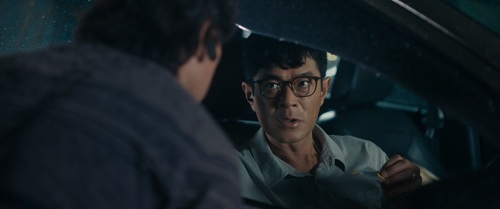
Outro thriller voyeurístico, este vindo de Hong Kong e focado em casamento, e como atualizar algumas das partes mais melodramáticas dos filmes de Hitchcock.

60) Depois da Caçada/After the Hunt (Luca Guadagnino)

Sei que este filme é um saco de pancadas desde a sua estreia em Veneza, porque todos gostam de se sentir superiores em relação a filmes de prestígio que nasceram vencidos, mas eu me diverti horrores, e a maior parte da suposta relevancia é jogo de cena para uma deliciosa comédia de costumes sobre pessoas horríveis muito dedicadas às suas próprias formas de dissimulação social. Não sei se é um filme inteligente idiota ou um filme idiota inteligente, e suspeito que Guadagnino também não.

59) Pai Mãe Irmã Irmão/Father Mother Sister Brother (Jim Jamursch)
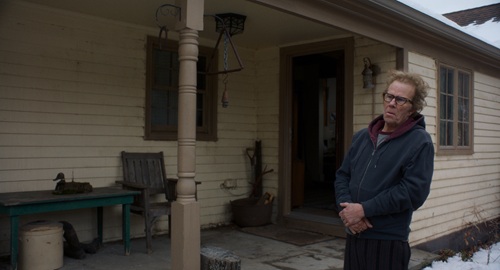
O melhor filme de Jamursch em 15 anos, uma coleção de contos que se ecoam, cujo maior mérito é como ele termina coeso.

58) O Mundo dos Mortos (Pedro Tavares)

Este filme é algo tão incomum no cinema brasileiro, com uma ambientação mítica e uma teatralidade sóbria que lembra artistas como Oliveira. O Mundo dos Mortos remete a uma tradição cinematográfica, mas sua distância em relação a ela é parte do que o torna cativante. Excelentes close-ups.

57) Life (Zeki Demirkubuz)

Demirkubuz continua sendo um mestre em dramas meticulosamente arquitetados.

56) Alappuzha Gymkhana (Khalid Rahman)

Filme esportivo fraterno sobre universitários indianos lutando boxe. Muito bom em delinear um ambiente e permitir que os sentimentos dos personagens ressoem nele.

55) Prisoner of War (Louis Mandylor)

Como outros já apontaram, uma versão DTV americana  do Merry Christmas, Mr. Lawrence, de Oshima, então Scott Adkins está batendo em alguém a cada poucos minutos. Um de seus melhores veículos recentes, e funciona bem como um filme de ação e prisioneiro de guerra.

54) A Arvore do Conhecimento (Eugene Green)
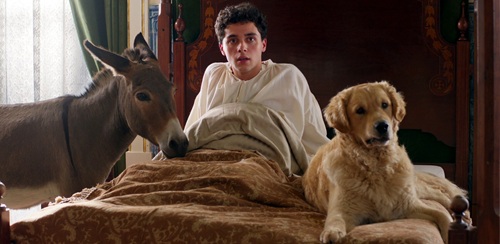
Um encontro entre o encantamento das imagens de Green e o humor da produtora portuguesa O Som e a Fúria.

53) Ick (Joseph Kahn)
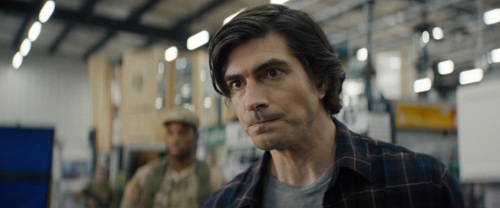
Um filme de monstros sobre paternidade, tensão geracional e, suponho, a pandemia, que se mantém sempre envolvente graças à energia de mau gosto do diretor Kahn e à ótima atuação principal de Brandon Routh.

52) Queens of the Dead (Tina Romero)
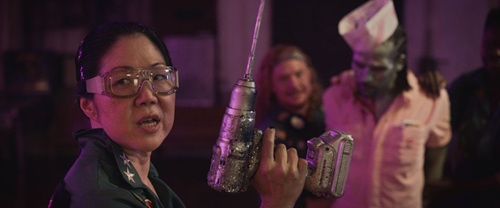
Tina Romero é filha de George, algo que o filme está pronto a constantemente lembrar, e Queens of the Dead é uma versão queer do filme de zumbis apocalípticos que ele fazia. Ótimas personagens e elenco, clima muito agradável, uma delícia que existe bem na contramão do atual cinema de horror.

51) Fuga Fatal/She Rides Shotgun (Nick Rowland)

Filme policial sobre pai e filha em fuga que mantém o ritmo propulsivo e conta com ótimas atuações dos protagonistas. Costumavamos ter muito mais filmes bons como este.

50) A Irmã Mais Nova/La petite dernière (Hefsia Herzi)

Drama muito bem observado sobre negociar a sua sexualidade quando se vem de um ambiente conservador. Gosto sobretudo de como ele existe sempre no limite de ansiedade pessoal, enquanto o entorno da personagem mantém algo relaxado e convidativo, o drama segue interior nos seus temores e desejos.

49) O Agente Secreto (Kleber Mendonça Filho)
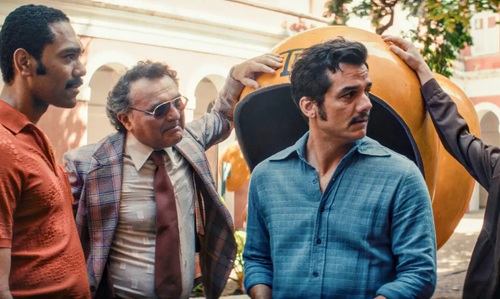
Um paradoxo: um filme que reimagina com precisão as ansiedades dos anos Bolsonaro enquanto nos transporta para o Recife do final dos anos 70. Uma armadilha emocional que muitas vezes é afetuosa e generosa. É um feito em criar um ambiente, físico e emocional, no qual o filme simplesmente desaparece. O cinema como uma forma de viagem no tempo.

48) Little Boy (James Benning)

Urgente se um pouco datado no discurso, mas filtrado com precisão conceitual e meterial de Benning.

47) O Dia de Peter Hujar/Peter Hujar’s Day (Ira Sachs)

Outro exercício de viagem no tempo. Nos anos 70, o fotógrafo Peter Hujar concedeu uma entrevista descrevendo seu dia anterior, que sobrevive apenas em transcrição, e este filme reproduz a conversa com palavras fiéis ao texto, enquanto o cineasta Sachs e seus atores Ben Winshaw e Rebecca Hall tentam imaginar o que está acontecendo fisicamente enquanto essas duas pessoas conversam.

46) Flat Girls (Jirassaya Wongsutin)

A melancolia de crescer. Muito atento aos laços entre as duas adolescentes no que elas compartilham na intimidade e como posicioná-las diante do ambiente social que teima em se intrometer.

45) Uma Batalha Após a Outra/One Battle After the Other (Paul Thomas Anderson)
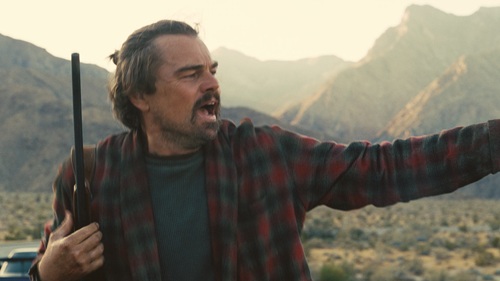
Um ótimo filme de perseguição e um panorama cômico divertidíssimo. Anderson está aproveitando ao máximo os recursos que DiCaprio conseguiu que a Warner lhe oferecesse; como a maioria de seus filmes, é uma bagunça desigual e, sinceramente, foi excessivamente discutido politicamente, mas qualquer filme com essas paisagens, a atuação de Del Toro e DiCaprio desejando saber como pentear o cabelo de sua filha está fazendo as coisas certas.

44) Relâmpagos de Críticas Murmúrios de Metafísicas (Julio Bressane, Rodrigo Lima)
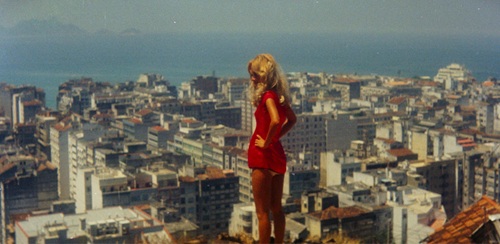
Bressane revisita as origens do seu cinema e o que a montagem ainda permite que ele flua.

43) Batguano Returns – Roben na Estrada (Tavinho Teixeira, Frederico Benevides)
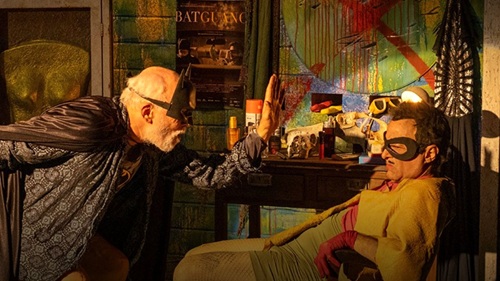
Teixeira retorna ao seu ótimo filme anterior sobre Batman e Robin antropofágicos como Beavis e Butthead tropicalistas para fazer um road movie diarístico sobre suas ansiedades atuais, tão amargo, melancólico, mas ainda assim criativo.

42) Let’s Go Karaoke! (Nobuhiro Yamashita)
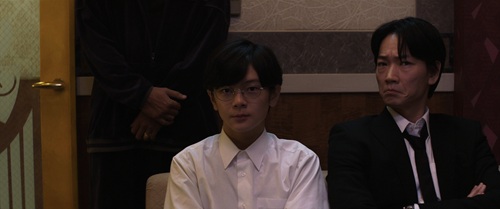
Sempre um prazer ver Yamashita em forma, um dos cineastas mais gostosos de se acompanhar, e quem mais faria uma delícia sobre a amizade de um garoto que canta em coro temendo os efeitos da puberdade sobre a sua voz e um yakuza que precisa vencer uma competição de karaokê.

41) Room Temperature (Zac Farley, Dennis Cooper)
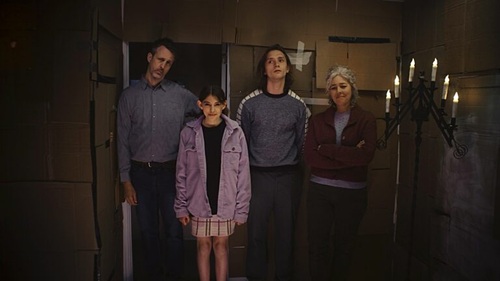
Um filme muito bom sobre o que a ficção de horror pode conter e representar. É co-dirigido pelo ótimo romancista queer Dennis Cooper, mas é algo que só pode existir como cinema e oferece um ótimo comentários sobre o estado atual dos filmes de horror, mesmo que não seja exatamente um.

40) Metro.. in Dino (Anurag Basu)

Romance e alienação na grande cidade. Sobre mover as várias personagens num tabuleiro de sentimentos e conectá-las por meio da música. Um dos filmes mais prazerosos de se assistir do ano.

39) Morte e Vida Madalena (Guto Parente)

Fazer cinema independente no Brasil é uma dor e uma alegria.

38) Encontro com o Ditador (Rithy Panh)

Rithy Panh segue fiel a si mesmo e aos seus esforços de escavação da história do Camboja. Dessa vez, através de um filme de ficção sobre uma viagem de jornalistas franceses para entrevistar Pol Pot. Um dos seus melhores filmes.

37) The Shadow’s Edge (Larry Yang)

Provavelmente estou superestimando esse aqui porque ainda estou chocado por existir um filme tão bom estrelado por Jackie Chan no ano de 2025. Comentário acidental sobre o estado estagnado do cinema afiliado a Hong Kong: este é um remake de um filme muito bom de 2007 chamado Eye in the Sky, e Tony Leung Ka Fai interpretou o criminoso brilhante nele, e é claro que ele ainda está interpretando o mesmo papel aos 67 anos.

36) Jenseits des Rechts (Dominik Graf)
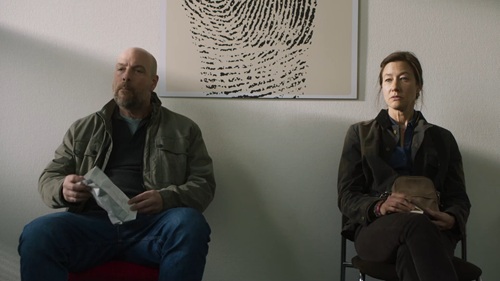
Eu amo os programas policiais da TV alemã e como eles permitem aos seus realizadores brincar de filme B, o que é especialmente feliz quando Graf se dedica a eles, já que é um dos melhores contadores de história do mundo.

35) Swimming in a Sand Pool (Nobuhiro Yamashita)
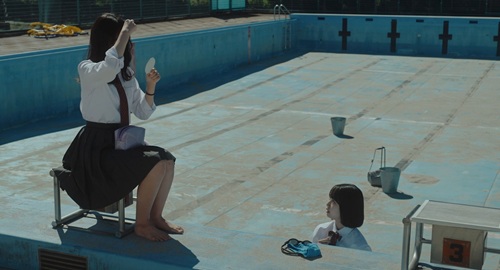
Outro filme recente de Yamashita, este baseado em uma peça teatral sobre um grupo de colegiais que conversam sobre os problemas delas enquanto limpam uma piscina cheia de areia, e pega sua situação e imagem central altamente simbólicos e cria algo muito gracioso a partir disso.

34) Com Hasan em Gaza (Kamal Aljafari)

Do gesto de localizar o peso, político e pessoal, das imagens casuais guardadas.

33) Retro (Karthik Subbaraj)

O melhor filme de ação indiano deste ano. Só eles poderiam unir Chaplin e John Wick. Um belo fluxo de imagens intensas e muito sentidas.

32) Youth (Homecoming) (Wang Bing)

A primeira parte da trilogia que Wang Bing dedicou ao cotidiano de jovens trabalhadores da indústria chinesa estava na minha lista de dois anos atrás, é no fundo um grande projeto só de cerca de nove horas. Esta parte final é como um epílogo, seguindo suas personagens em casa e no lazer, longe do trampo, mas ainda afetado por ele.

31) Apenas Coisas Boas (Daniel Nolasco)

Melodrama de faroeste queer sobre como deslocar seus desejos e sentimentos para as paisagens de Goiás. Tão bom quanto aquele faroeste do Almodóvar de uns anos atrás era tolo.

30) O Esquema Fenicio/The Phoenician Scheme (Wes Anderson)

Wes Anderson reimaginando o Mr Arkadin como uma farsa política contemporânea. Dos filmes caros vindos de Hollywood este ano é certamente o mais incisivo.

29) The Sixth Robber (Chris Huo)

O melhor dos thrillers policiais de Huo, o primeiro a combinar a excelência das suas cenas de ação com a intensidade do drama.

28) Garça Azul/Blue Heron (Sophy Romvari)

Conheço Romvari online há anos e gosto dos seus curtas-metragens, que ocasionalmente abordam o mesmo território pessoal. Dada a natureza muito emocional e autobiográfica de Garça Azul, não sou necessariamente objetivo em relação ao filme, mas filmes como este não são muito objetivos de qualquer forma. As pessoas comparam Garça Azul a Aftersun, pois são filmes semelhantes sobre dramas familiares conturbados observados por uma menina que só compreende parcialmente a situação, mas este me parece mais ambicioso e bem-sucedido, e há uma cena perto do final em que Romvari quebra a quarta parede de vez, que ainda me deixa emocionado.

27) The Colors Within (Naoko Yamada)

Música e animação que estão prontas para encontrar boas maneiras de dar aos sentimentos de seus jovens personagens um espaço ressonante. A ideia central é uma boa maneira de representar o que somente a animação pode dar conta e, como sempre, Yamada é um dos cineastas mais calorosas que temos.

26) Foi Apenas um Acidente (Jafar Panahi)

A Morte e a Donzela do Polanski como uma grande farsa. Meu filme favorito do Panahi é Ouro Carmim e este é provavelmente o filme dele que mais se aproxima desde então. É mecânico e didático, mas seu humor amargo e desesperado funciona e o drama permanece sempre envolvente.

25) La tour de glace (Lucile Hadžihalilović)
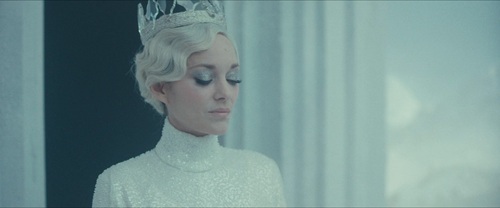
Lembro-me que La tour de glace recebeu críticas bem mornas quando foi exibido em Berlim no início deste ano, por isso é bom vê-lo aparecer em muitas listas de fim de ano. É sempre uma coisa boa quando um filme legal passa por todo o processo de reabilitação tão rápido. Nossa economia da atenção pode ser cruel, e Hadžihalilović é uma artista cujas idiossincrasias podem estar longe dela, por mais belas que sejam suas imagens. Este filme usa uma fábula para catalogar todas as maneiras pelas quais o cinema pode seduzir e massacrar você.

24) Fire Supply (Lucia Seles)

Falando em idiossincrasias, há poucos cinemas tão peculiares quanto esses filmes de Sales. Tão deliberadamente construídos nas suas ficções de ritmos próprios, a montagem de Fire Supply é um primor, assim como cada locação na qual suas personagens se refugiam. Um cinema artificial e ao mesmo tempo muito convidativo e íntimo, quase caseiro.

23) Air (Aleksei German Jr)

Um épico de guerra russo sobre pilotos mulheres no fronte de Leningrado. Trata-se de um espetáculo arrebatador, à moda antiga, realizado em grande escala. Atrizes fantásticas e ótimas cenas de ação com aviões. É muito empolgante, sem nunca deixar de lado morte que paira sobre toda a ação. A guerra é uma dura negociação com a morte, em que os Estados ganham e as pessoas perdem.

22) Kickflip (Lucca Filippin)

Jovens skatistas do interior de São Paulo. Imagens que são descartáveis e poderiam estar em qualquer mídia social, mas às quais o filme de Fillipin preenche de possibilidade. Um filme sem nenhuma distância entre o aparato cinematográfico e as suas personagens, muito vital porque reconhece ali toda uma potência de gesto e carga dramática sem distanciar as imagens da rotina deles.

21) Youth (Hard Times) (Wang Bing)

A parte intermediária do grande projeto de Wang Bing. A mais incisiva e indignada. Se Youth parece tão ambicioso quanto sua obra-prima anterior, West of the Tracks, e não me surpreenderia se, daqui a algumas décadas, fosse considerado um filme chinês fundamental da década de 2020, assim como aquele foi para a de 2000, este capítulo será o motivo. É didático, mas cheio de vida, e o uso do fora de cena continua sendo primoroso.

20) Kasa Branca (Luciano Vidigal)

O melhor e mais bonito filme brasileiro que vi este ano. Tão ligado no cotidiano dos seus jovens cariocas, tão bem observado e vivaz. O naturalismo do cinema independente brasileiro é, por vezes, uma muleta limitadora, mas Kasa Branca o areja e coloca-o em contato com o grande cinema de crônica do Rio de Janeiro, de Nelson Pereira e David Neves, e é tão bom ver algo assim novamente por aqui.

19) Mirrors No. 3 (Christian Petzold)
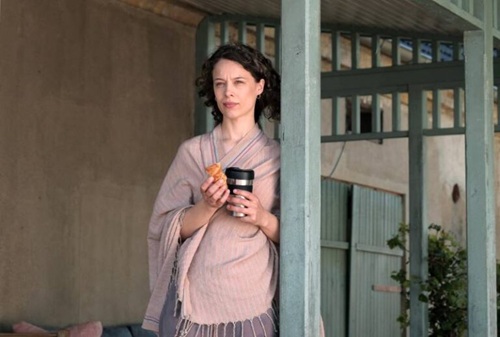
Um para o autorismo: Petzold faz uma variação cuidadosa de muitos de seus temas e tiques formais prediletos com sua habilidade costumeira. É familiar, mas preciso. O trabalho de Petzold com os atores continua excelente. Acho que ouvi The Night, do Four Seasons, umas 50 vezes nos últimos dois meses.

18) Evil Puddle (Charles Roxburgh)

Há algo nas possibilidades do cinema caseiro que Roxburgh e seu parceiro de sempre, Matt Farley, realizam: é um filme com o conceito absurdo, a cidade atacada por poças de água assombradas, que termina sendo um dos poucos retratos úteis de comunidades pós-pandemia e como elas negociam suas ânsias individualistas. Que seja tudo tão afetuoso faz as partes ácidas funcionarem melhor.  É parte Stephen King, parte Shyamalan, e oferece a Farley uma das melhores variantes para sua persona.

17) Luta de Classes/Highest 2 Lowest (Spike Lee)

O remake de Spike Lee da obra-prima de Kurosawa, Céu e Inferno, é um dos mais divisivos do ano, em grande parte devido à questão de um autor conhecido refilmar outro, o que, sinceramente, me deixa entediado. O que me interessa é o que Lee faz com a premissa, uma interpretação altamente pessoal que o transforma em uma fantasia paranóica muito conservadora sobre dois artistas negros de cinema muito bem-sucedidos, Lee e o astro Denzel Washington, e seus medos sobre sua própria relevância e como um mundo em que não se sentem tão à vontade os vê. A grande cena da entrega do dinheiro no meio do filme é maravilhosa e cheia de vida; todo o resto é opressivo, mas cada vez mais estranho e torturante. Lee continua muito relevante porque parece tão perdido em sua bolha.

16) Ariel (Lois Patiño)

Originalmente, Patiño ia realizar este filme com Matias Piñeiro e ele permanece bem próximo dos filmes deste com seu uso contemporâneo do texto de Shakespeare, no caso, A Tempestade. Em Ariel, o achado é posicionar a ação em Portugal, esta terra sempre pronta para transmitir todo um peso histórico assombrado, com os Açores filmados muitíssimo bem, que acrescenta ainda uma nova camada tanto para o cinema de Patiño quanto para o de Piñeiro.

15) Escape (Masao Adachi)

Adachi é o único cineasta importante que sacrificou anos de sua vida para se dedicar a ações políticas clandestinas e radicais. Desde seu retorno ao cinema com Prisoner/Terrorist, em 2007, ele vem produzindo representações minimalistas e desprovidas de orçamento da resistência radical japonesa. Desta vez, ele apresenta uma homenagem a Kirishima Satoshi, um homem que passou a maior parte de sua vida como fugitivo na lista dos mais procurados pelo governo japonês, até aparecer em um hospital prestes a morrer e revelar ao mundo quem ele era. Adachi pouco se importa com o panorama atual do cinema, mas preocupa-se com pessoas como Saroshi e o que vidas como a dele significam. Ele tem 86 anos e é talvez o nosso cineasta mais livre.

14) Sete Caminhadas com Mark Brown/Sept promenades avec Mark Brown (Pierre Creton, Vincent Barré)
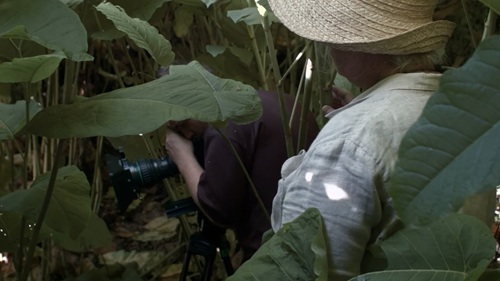
Por falar em filmes livres, este poderia usar o título do filme de Hong, O Que a Natureza Te Conta. É um filme vibrante sobre a nossa relação com o ambiente em que nos rodeia.

13) Fuck the Polis (Rita Azevedo Gomes)
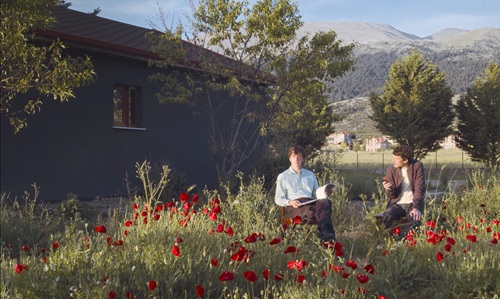
Outro filme de contato radical com o mundo. Este registra uma viagem de Gomes à Grécia, múltiplos tempos e ressonâncias históricas, todo um peso de um mundo que traz tanta coisa consigo, filtrada aqui pela simplicidade com que Azevedo Gomes filma os mais casuais momentos. Há muita beleza, mas também muita violência em como este olhar de cinema faz uma mediação de todas essas relações.

11) Broken Rage (Takeshi Kitano) e Where to Land (Hal Hartley)

Como de costume, há muitos filmes de cineastas veteranos nesta lista. Os artistas mais velhos costumam trazer consigo muita história e conexões que me interessam, e eles francamente se importam muito pouco com os modismos atuais, o que é sempre uma vantagem. Detesto quando as pessoas usam termos como “estilo tardio” para tentar explicá-los, porque isso não é muito produtivo. Prefiro admitir que posso ser fiel e sentimental e que há algo de radical em muitos desses gestos artísticos de fim de carreira. Aqui estão dois bons estudos de caso, ambos espécie de testamentos cinematográficos: Kitano, 78, é uma produção quase invisivel da Amazon, e Hartley, 66, foi feito com muito pouco dinheiro, através de financiamento pela internet. O mestre japonês é uma grande celebridade local que continua se safando com filmes excêntricos, enquanto o americano pode ser único entre sua geração por não ter tentado seriamente se envolver com o mainstream. São filmes muito engraçados e generosos; eles também não fazem absolutamente nenhum sentido se você não conhece o trabalho dos artistas. Kitano oferece uma série de variações sobre sua persona na tela, um filme de uma hora que repete seu enredo básico duas vezes com variações tonais, tão opressivo em suas conotações quanto alegre em sua execução. O filme de Hartley, que é literalmente sobre a confecção do testamento de um cineasta (embora seu avatar na tela seja um célebre autor de comédias românticas, o que é engraçado e perspicaz), é tão tomado pelo que pode transmitir, pelo que vem antes e pelas possibilidades de um futuro. Será que considero este o melhor filme de Hartley em mais de 30 anos porque parece tão final? Provavelmente, pelo menos até certo ponto, a sensação de um mundo a acabar, a urgência, mas também o prazer que isso traz, são grande parte do seu encanto. Há muita finitude em ambos os filmes, mas também uma abertura que é igualmente confrontadora.

10) Bad Girl (Varsha Bharath)

No extremo oposto, um longa de estreia tão tomado de possibilidade e energia, tão dedicado a representar a vida e os anseios de uma jovem indiana. Gosto do frescor do filme, gosto de que ele permanece tão ágil e tão pouco interessado em alguma austeridade, ao mesmo tempo que só por estar ali tão franco e direto, ele soe com um gesto radical e assertivo.

9) The Bewilderment of Chile (Lucia Seles)
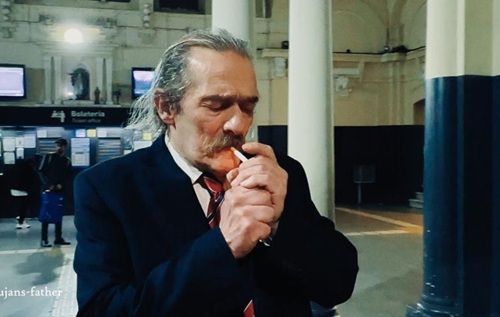
Um dos cinemas mais divertidos e aconchegantes que existem. Limita-se a reunir coisas que são importantes para seus realizadores, mantendo-se ao mesmo tempo tão ligado à cidade e aos seus espaços públicos, às formas de os amar e de neles viver. É muito engraçado e, tal como os outros trabalhos de Seles, tão convidativo e caloroso, e a edição é um ato impressionante de manter tantas situações, personagens e ideias num equilíbrio coerente.

8) Castration Movie Anthology i. Traps (Louise Weard)
O filme de Weard é a primeira parte de um projeto ambicioso, filmando atualmente a terceira, de tentar dar conta das formas mais diversas de vivências trans. São quatro horas e meia de pouquíssima modulação, capturando mais situações, personagens e sentimentos contraditórios. É muito muito filme, feito com completa despreocupação e ao mesmo tempo sempre intoxicado pelas experiências na tela, sempre muito tocante à sua maneira, sem meios tons.  

7) Deserto da Namibia (Yoko Yamanaka)

Uma jovem japonesa bipolar e os dois homens entre os quais ela oscila. Esses são pontos de referência fáceis que importam e não importam, assim como qualquer uma das maneiras pelas quais se poderia descrever as ações da personagem principal: egoísta, violenta, fora de controle. As palavras e os julgamentos de valor que as acompanham não fazem jus ao desejo da diretora Yamanaka de apenas deixá-la existir. Um gesto tão generoso e tão intransigente. E na atriz Yuumi Kawai, ela encontra sua cúmplice ideal, realmente uma das performances mais impressionantes dos últimos anos, quase tão boa quanto Gena Rowlands no auge.

6) O Que A Natureza Te Conta (Hong Sang-soo)

A natureza opressiva da casa da família, a distância generalizada entre o namorado e os pais dela, tudo observado com um cuidado tão cáustico. E depois aquela maravilhosa cena da embriaguez, em que a comédia de costumes entra em colapso.

5) Ontem a Noite Conquistei Tebas/Anoche conquisté Tebas (Gabriel Azorín)
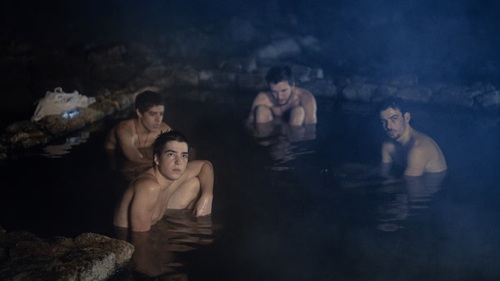
Jovens na sauna, perdidos numa imagem mítica. Todo um passado histórico, as incertezas do futuro e a presença do presente. As batalhas que se foram e virão num momento suspenso. Filme muito bonito, que cria todo um mundo a partir daqueles rapazes seminus tomando um banho e falando.

4) The Mastermind (Kelly Reichardt)

Dois movimentos, o roubo e a fuga. Múltiplos significados que são claros e obscuros. Um filme muito hábil em jogar as suas partes uma contra a outra e em explorar a presença de cena de Josh O’Connor. O título é e não é uma piada, o assalto é o desastre previsível sob sua suposta esperteza, mas O’Connor se considera claramente acima de seu meio criminoso, um cara que quer ser o chefe sem o incômodo e a monotonia do cargo de escritório que as conexões de seu pai provavelmente poderiam lhe proporcionar. O filme paira na cena tardia com o amigo da faculdade que lhe oferece uma salvação com um lugar em uma comuna canadense que ele tem que recusar porque “não é o meio dele”. Mesmo diante da marginalização literal, ainda há a necessidade de abraçar uma autoimagem imaginária. Uma miragem que o filme desnuda até o incrível plano final.

3) She Taught Me Serendipity (Akiko Ohku)
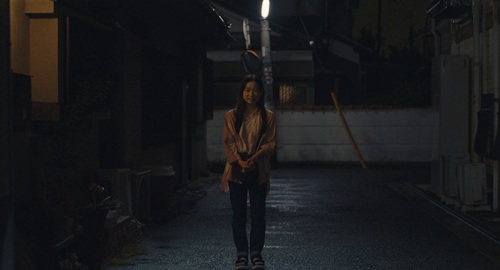
Provavelmente não há melhor momento em um filme este ano do que a confissão de amor que surge ali no meio, tão crua e vulnerável, e que se prolonga sem fim. Um filme tão bonito sobre como percebemos o mundo e como permitimos, ou não, que as pessoas ao nosso redor façam parte dele. Tão esperançoso e otimista, mas ao mesmo tempo tão doloroso e dificilmente conquistado. Uma educação  na forma de uma simples e escorregadia comédia romântica jovem.

2) Folha Seca (Alexandre Koberidze)

Dos prazeres da fabulação. Um homem sai pelas estradas da Geórgia à procura da filha desaparecida, em companhia do amigo imaginário, por um tour pelos campos de futebol amador que ela visitou. O cinema sempre voltando a Rastros de Ódio, aqui abençoado pelo futebol brasileiro. Koberidze ama futebol porque é um palco mítico no qual pode-se tudo.  Faz um filme idem, onde seguem-se catalogando novos encontros, um borrão (as imagens foram rodadas em baixíssima resolução) cheio de verdes dos campos, das crianças, animais, os rostos velhos que passam pela tela.

1) Blue Moon (Richard Linklater)

Folha Seca é o que mais olha adiante, mas, se eu for sincero comigo mesmo, essa peça de câmara toda sobre olhar para trás, para um mundo no crepúsculo, perto do fim é o meu favorito. Um filme com uma finalidade impressionante sobre todas as coisas que os dias pré-Segunda Guerra Mundial traziam de esperança perto do fim. Se passa quase em tempo real e em um único cenário, e é tão bem controlado por Linklater no seu balanço de emoções contraditórias. Um funeral bêbado e bonito.

My Favorite Movies of 2024

Versão em Português

I’m not going to go through all the same arguments from the long essay that opened last year’s list, but its general observations are still up to date, I’m afraid that especially the more negative ones. The film business is still doing great in 2024 (and with it the feeling that cinema is becoming more and more distant from the world) and being a film critic, or simply a more active cinephile, means that this constant questioning is inevitable. To what extent your gaze is only captured and serving it is a constant question/crisis. And exercises like this list are both a personal playful effort and something that you’ll never be able to completely separate from it. In a way, dealing with cinema today is this constant effort to remember that your cinephilia isn’t your social media, that film history isn’t the Criterion Collection, that so-called auteur cinema isn’t there to serve the Fremauxs and MUBIs. All these things are mediations that are difficult to avoid, but relating to cinema always goes beyond that. I like lists partly because I enjoy the process of putting them together and also because sharing movies is always a pleasure.

The criteria for this one are the same as always: movies I’ve seen in 2024, longer than 45 minutes and that were shown for the first time in the last three years. As I always like to reiterate, the order is quite random, especially when the movies are at the bottom of it. I know I liked the 21st more than the 45th and this one more than the 80th, but I don’t know if even today I prefer them to the movies that are just before or after them. I’d also like to mention Socialist Realism, which Raul Ruiz filmed in 1973 and Valeria Sarmiento finished last year. I never know how to include these films suspended in time, especially this one that was originally interrupted by Pinochet’s coup.

My favorite new movies under 45 minutes seen in 2024 were Bouquets 31-40 (Rose Lowder) and Trailer of a Film That Will Never Exist: Phony Wars (Jean-Luc Godard); I was also very fond of Trabalho de Amor Perdido (Vinicius Romero), Où sont tous mes amants? (Jean Claude-Rousseau), I Thought the World of You (Kurt Walker), Duna Atacama (Romero) and Last Screening (Darezhan Omirbayev).

99) Suspended Time/Hors du Temps (Olivier Assayas) and The Volunteers: To the War (Chen Kaige)

I’m starting with a tie, and maybe I should put something like Black Dog (Guan Hu) at this place instead. I’m not even sure Suspended Time qualifies as a good movie; that it is kind of a non-movie is part of why it is even here. What I do know is I liked watching them, and I might’ve liked thinking about them even more. They are the work of filmmakers who were once celebrated, but almost nobody likes Suspended Time and I suspect only people very into mainstream Chinese cinema even knows To The War exists (by the way it is the first of a trilogy). I suspect what they have to say would mostly annoy people, Suspended Time is pure navel-gazing from a very successful man who sometimes seems more and sometimes less at peace with his own position. Does French cinema gentility about how the big family home means something become better by some meta movements? To The War is patriotic kitsch, pure flag waving about sacrificing yourself for China, it is called To the War and doesn’t do a thing to question that. It is also very impressive when its in the trenches with the soldiers. I like Suspended Time because Assayas looks in a mirror sees that he become cinema du papa and gives a half troubled, half defeated shrug. I like To The War because Chen Kaige was always a decorative filmmaker who was good at coming up with an image and the ones in it aren’t much worse than Farewell My Concubine; they are just  outside the tastes of programmers and critics who liked him three decades ago. Those are auteurist cinema near the end movies and because I have some relationship with not only the artists, but their surroundings I find those last rites of some genuine interest.

97) Cidade; Campo (Juliana Rojas) and Power Alley (Lillah Halla)

Two features by Brazilian female filmmakers, one more established (Rojas) and the other just starting out (Halla), both about women moving through spaces and situations where violence is always close. These are movies that are a little more formatted than I would prefer, but they have a lot of strength when they look at their protagonists and are better when they approach the supernatural that hangs over them rather than when they indulge in naturalism.

96) One Second Ahead, One Second Behind (Nobuhiro Yamashita)

Nobuhiro Yamashita is a personal favorite of mine, this one is him working very much as hired gun from the Japanese film industry and remaking a Taiwanese high concept romance. Young people going through their lives while ab artificial movie-like construction affects them is very much the Yamashita touch. The main concept of time did make me think of my own relationship to Yamashita movies as given that people in the west do not care enough about him to program or release his movies, I’m always depending on those big heroes of current cinephilia (amateur subtitlers) and so I’m always late to him (he has at least two movies since this one).

95) Bursting Point (Dante Lam, Tong Wai-Hon)

Dante Lam goes back to Hong Kong after many years making big movies in China (the biggest one co-directed by Chen Kaige) and it is a self-conscious return to the kind of movie that he started with some of the muscle from his Chinese work. In a weak year for Hong Kong movies, it is good to see an old master in a familiar territory.

94) Terminal Young (Lucía Seles)

Argentine filmmaker Lucia Seles has found a very specific place for herself. This new movie is a natural extension of the 3 2022 movies I included last year. We like our artists to move forward without changing too much, Seles seems to prefer to ignore that. What counts is the pleasure and precision of her movie’s construction and they have a grace apart from most of the ones around them.

93) Abiding Nowhere (Tsai Ming-liang)

Speaking of trusting what you do, Tsai Ming-liang and Lee Kang-sheng will keep making movies about a monk who moves very slowly and I will keep finding easy to get into their rhythms.

92) Carnage for Christmas (Alice Maio Mackay)

Despite the title this Christmas slasher is less bloody than aimed at giving teenage trans girls a good horror movie to watch with their friends and it is a great time. Mackay is very good at marrying a larger concept into its genre pleasures and rougher low budget style.

91) Black Storm (Qin Pengfei)

Fast, cheap and completely dedicated to what Chinese choreographers and stuntmen are capable of extracting from a masochistic exercise in non-stop action.

90) Joker: Folie à Deux (Todd Phillips)

More of a conceptual triumph whose big gestures outstrips its execution, but every bit as fascinated a failed big budget strange object as Megalopolis. And as a depiction of moving around in depressive numbness while fictionally disassociating, it can be surprisingly moving.

89) Ricky Stanicky (Peter Farrelly)

While people were watching Christopher Nolan win 100 Oscars, I was watching Peter Farrelly doing a Peter Farrelly movie for the first time in ages, and happy for that choice. It would be worth it for John Cena’s very funny performance, but this has a balance between humor and pathos out of guys who are very afraid they will come out embarrassed by not being quite who they want to project that the Farrellys at their best have always been good at.

87) Horizon: An American Saga – Chapter 1 (Kevin Costner) and In the Land of Saints and Sinners (Robert Lorenz)

Two westerns about how their respective countries (US and Ireland) are trapped in their cycles of violence. Both combine a classicist temper with a very current surface, for better or worse. Costner’s movie is too grandiloquent, but it has wonderful moments in which it just installs itself in the lives of its settlers and a collection of striking faces. Lorenz, who was Clint Eastwood’s right-hand man for a long time, doesn’t deny the influence and draws some beautiful moments from it and makes great use of his cast of great Irish actors.

86) Paixão Sinistra (João Pedro Faro)

Rio’s lost youth dream musically of a past in Brazilian cinema that they can’t quite get back.

85) The Animal Kingdom/Le Règne animal (Thomas Cailley)

I prefer Cailley’s first movie Love at First Fight (which has essentially the same principle of maturing and opening up to the world through an attraction) because in general I prefer a good actor (in that case, Adele Haenel) to a metaphor, but this one uses technology and the woods that serve as its main location extremely well.

83) Life After Fighting (Bren Foster) and One More Shot (James Nunn)

The two best English language DTV action movies of the year. Like Nunn and Adkins’ previous One Shot, One More Shot is a long take gimmick movie that makes a lot of creative choices inside its high concept and single location because it’s more about finding ways of moving around a continuous space than selling the take. If I’m honest, every dramatic scene of Life After Fighting, a vehicle for its impressive star/director Bren Foster is not good at all, but thankfully they become rarer as the movie is get taking over of his very impressive fighting skills. As a form of narcissism through punishment and expression of repressed rage the second half is very impressive. They would make for a curious double bill of current right-wing paranoid fantasies, but they are mostly tribute for intelligent low budget staging.

82) Orlando, My Political Biography/Orlando, ma biographie politique (Paul B. Preciado)

Preciado is a public intellectual experimenting with movies, in this case with an essay film that brings Virginia Wolff’s novel closer to contemporary trans experience, and what strikes me as remarkable here is how he understands that his articulation can only find strength in the power of the various faces he invites to collaborate and mix their lives with his film.

81) Dahomey (Mati Diop)

Whatever one do, getting untangled from the colonial weight remains hard to negotiate. Clear and often very expressive. Speaking of ways current cinema status quo has a distant and overconceptual relationship to the world, I saw Diop’s film, a powerful anti-colonial essay that won this year’s Berlin, in a double bill with Miguel Gomes overrated Grand Tour, a colonial phantasmagoria with ironic detachment, in an event promoted by its mutual distributor Mubi and that is what movies often become now: different flavors to be filled under easy to sell umbrellas. It doesn’t diminish Diop’s achievment, her movie seriousness and focus becomes more clear next to Gomes.

80) Megalopolis (Francis Ford Coppola)

Is Megalopolis good or just endlessly fascinating? It is a movie impossible to separate from its context, pro and con. A large artistic happening. As a movie of ideas, it is pretty bad, but as an expression of how Coppola can keep distracting us from that with multiple fireworks, it shows he is still having a lot of his Hollywood skills even under a lateral move like this. Coppola was always a Hollywood guy who dreamed of being his own Irving Thalberg, and he gets to play with that very expensively. It is a tribute to artistic expression in a technocratic world drained of it, but to what end? I was talking with a friend last week, and he mentioned to me that he never saw a film so devoid of tension in its making, which I found a good way to describe the experience. What can we do with an artist who can purchase everything?

79) Obscure Night – Goodbye Here, Anywhere/Nuit Obscure – Au Revoir Ici, N’Importe Où (Sylvain George)

Resilient existences at the margins of the ruins of the European colonial project.

78) The Goldman Case/Le Procès Goldman (Cédric Kahn)

Film process and court room procedural tied in a liturgy of identity, politics and how they are performed, perceived and consumed.

77) Death Will Come/La Mort viendra (Christoph Hochhäusler)

A successful late capitalism thriller similar to something like Assayas’ Boarding Gate only with better gunplay.

76) This Life of Mine/Ma vie ma gueule (Sophie Fillières)

A touching if uneven movie that is impossible to swet apart from knowing that Fillieres passed away days after completing its shooting. The openness and display of emotional fragility end up being haunting.

75) The Feeling That the Time for Doing Something Has Passed (Joanna Arnow)

I’m not against this annual presence of an American indie influenced by Hong Sang-soo on this list, among other things because it’s a fictional tension that takes their naturalism to a much more interesting place.

74) So Long/Ce n’est qu’un au revoir (Guillaume Brac)

Brac finding the fiction and a world, which is to say cinema, into the everyday lives and hopes of some real French teenagers.

73) The Invention of the Other/A Invenção do Outro (Bruno Jorge)

A movie of an encounter, but above all a movie in which the weight of the camera, of the place of cinema in these relationships, is revealed with great force.

72) The Order (Justin Kurzel)

A macho contest between a cop and a neo-Nazi, whose strong and different ideological relationships to the idea of order are there to justify their self-images. A movie very dedicated to a lot of older ideas of film craft and personal expression, but Kurzel, whose taste for realism I’ve never cared for, does find an ideal venue in the work of Jude Law and Nicholas Hault. Two remarkable performances that make the movie.

70) El juicio (Ulises de la Orden) and Mário (Billy Woodberry)

Two political documentaries based on archive footage. One about affirming Argentine democracy through images of the trial of the military junta, the other a crisis about the limitations and concessions of the global South’s anti-colonial project through the trajectory of Angolan Marxist intellectual Mario de Andrade. Both are movies of today, powerful essays on the echoes of the 20th century that reach us.

69) Pavements (Alex Ross Perry)

What does this essay about how any art, however intentionally dissonant, ends up being packaged by capital, especially in the ways in which this dissonance is celebrated, tell us? There’s a wonderful scene of the opening of an exhibition about the band and all these artists offering versions of their songs and at some point it gets obvious that someone has decided to invite only women and it becomes impossible to separate the curatorial cynicism from the fact that I genuinely enjoy listening to Soccer Mommy covering them? And we’re back in the eternal loop. Perry makes a movie about Pavement, someone else could make a movie about. let’s say, John Waters just as well, except of course Pavements know it’s a souvenir that only interests those like me who have a relationship with them.

68) Anyone But You (Will Gluck)

A very good pop confection made by people who understand that the main thing something like this is just setting the right positive mood for performers and audience alike. I watch a lot of current romantic comedy, most of it is not good and almost all of it has late genre anxiety desperate trying to justify why the filmmakers are still returning to the old well, this one does that too by overplaying its Much Ado About Nothing echoes, but it gets that the main justification is adding  a lot of actual jokes around good looking stars.  

67) Malaikottai Vaaliban (Lijo Jose Pellissery)

Expert myth-making, so sensuous and gripping. Another example of populist cinema done right. Why waste time with some late, bloated mess by Ridley Scott when a movie like Malaikottai Vaaliban is right there?

66) Caixa Preta (Bernardo Oliveira, Saskia)

A radical musical in the movement from sound to concrete written in the film form in the most abrasive way possible.

65) Good One (India Donaldson)

A movie of place, of observing how three bodies transform as they cut through it, how the awareness of relating to the world is gradually changed. It’s reminds me of Kelly Reichardt, sometimes a little reiterative, but well, River of Grass also had its limitations and this is a very talented debut, especially in terms of environment and performances. Director India Donaldson is Roger Donaldson’s daughter, and it’s easy to think of this movie as a kind of dialogue with his best film Smash Palace, both of which are movies about daughters who go into the woods in the company of their divorced and resentful dad with an emphasis on how the locations reflect the moods of the characters who dominate their gaze, that one was an expression of male rage, this one about having to deal with it.

64) Raayan (Dhanush)

A delirious narcisist exercise from Indian star Dhanush.

63) Look Back (Kiyotaka Oshiyama)

About creating and sharing it with those who matter, but also a beautiful look at its own process and all the force of the images that Oshiyama manages to pull out of the original work.

62) The Room Next Door/La habitación de al lado (Pedro Almodóvar)

Like all late Almodovar, it’s very conscious of its position as brand cinema, but it’s a movie that finds in its displacement the strength to interrupt the stodginess. It’s about how Julianne Moore is one of the best actresses in the world and how to find the ideal space to allow melodrama to resonate.

61) El auge del humano 3 (Eduardo Williams)

A constant presence of the world that the digital image is always on the verge of dissolving. What does cinema, as an art that is constantly engaged in this presence, achieve in the face of this being in the world of uncertain concreteness.

60) Fire of Wind/Fogo do Vento (Marta Mateus)

A very studied Straubian-Hiulletian movie, one might say academic, but the best possible version of a certain current formalism. What stayed with me was the greens and brown of its natural locations.

59) Adagio (Stefano Sollima)

Like The Order, this is a return to an old masculine local cinema, harsh cop procedural there, male weepies about tragical and violent bonds here. It is meaty, portentous, and so very serious, but every emotion is treated head on and allowed to expand and take over Rome itself. Call it silly or passé, but it is too skillfully made by Sollima to not register strongly.

58) The Bodyguard (Qin Pengfei)

Qin Pengfei is a very busy man, 4 movies this year (the three I saw quite good), as Chinese streamers always needs fast-paced action movies and he does them very well. This is the best of the ones I’ve seen probably because it’s less punishing, but concerned with finding solutions to keep moving and stopping just long enough to allow the stuntmen some impactful scenes. There are few current movies as unelevated as Qin Pengfei’s, what you get out of them is just the pleasure of their making.

57) Serpent’s Path (Kiyoshi Kurosawa)

A variation on a variation. Kurosawa’s very busy year was often taking with looking back. This French remake of one his duo of low budget hostage thrillers from 1998, an international co-production expansion of a small movie aimed at the local video market has a lot of small pleasures, but is also very much about the distance its filmmaker career has covered while remaining himself since then.

56) A Fidai Film (Kamal Aljafari)

An archival movie made from material recovered from a Palestinian image center in Lebanon that had been taken by the Israeli army in 1982. A rescue, but above all an investigation into the materiality of the film image and how to intervene in it to highlight its political weight.

55) Kottukkaali (P. S. Vinothraj)

A movie of constant movement and a lot of muted violence that is negotiated silently but accumulates in an inevitable manner. Very well controlled by Vinothraj.

54) She Is Conann/Conann (Bertrand Mandico)

A carnival of queer images about an identity that multiplies in a violent landscape, a world of barbaric fiction that can nevertheless be constantly adapted by Mandico’s gaze.

53) The Practice/La práctica (Martín Rejtman)

Harsh frustrating everyday slowly taken by the wonder of filmmaking fiction. Give it to Rejtman to repeat a gag of a guy suddenly falling into a hole and make it funnier.

52) Last Things (Deborah Stratman)

Time moves, geology stays. Film material meets a cosmic dimension.

51) The People’s Joker (Vera Drew)

It’s a pleasure to watch someone take all the debris of superhero movie fanyasies of the past few years and appropriate them into something handmade and very personal, always quite inventive as it negotiates the artificial surfaces and very real wounds. It would make for a nice double bill with Tavinho Teixeira’s Batguano.

50) Visiting Hours/La prisonnière de Bordeaux (Patricia Mazuy)

It’s great to see that the very talented Mazuy has been getting financing more regularly the last few years; in this one she reunites with Isabelle Huppert, so hopefully more people will notice. It is a social almost thriller (more than one friend pointed out that Mazuy seems to be deliberately echoing Chabrol’s La Cerimonie), but what stands out is how careful it plays around Huppert’s self-delusions. Huppert and Hafsia Herzi also starred this year in Techine political movie built around their unlikely friendship, and that one was as mediocre as this one is lively. It reminds us that taking the care to get details right matters as much as having good intentions.

49) Dear Kaita Ablaze (Hisayasu Satô)

Western moviegoers who are familiar with Hisayasu Satô’s movies associate him with unpleasant depictions of various forms of sexual obsession and violence, with a strong emphasis on the place of cinema and its audience. Satô makes dirty movies in a very literal way. The characters in Dear Kaita Ablaze are not overwhelmed by desire, but with the impact of the work of a Taisho period painter called Keita Murayama, but the violent images, the rough and uncomfortable surface, this constant duel between a physical dimension and the image that captures it remain very recognizable.

48) The Adventures of Gigi the Law/Gigi la legge (Alessandro Comodin)

A Kiarostami-lite work about moving around performing the law and the fictions movies can locate in it. Powerful because of how it manages to allow meaning to arrive without trying to frame the character and actions into it.

47) No Other Land (Yuval Abraham, Basel Adra, Hamdan Ballal, Rachel Szor)

The land, how one connects with it and the violence done because of it. Images of power, how it is abused. A first-person cinema whose closeness to the account of violence never offers any distance. In which the only information is the weight of this experience of living on occupied land.

46) Incompatible with Life/Incompatível com a Vida (Eliza Capai)

Another political movie based on a first-person account. In the filmmaker’s case, she was forced by Brazilian law to carry out a pregnancy with a fetus that had no chance of survival. Capai shoots her own experience and talks to couples who have been through the same situation. There is something very strong there in how each one presents themselves in front of the camera and in Capai’s own images, about power and the lack of it, about women’s bodies and the ways in which they are denied by society.

45) Heard She Got Murdered (Charles Roxburgh)

I like these movies that Roxburgh and Matt Farley make at their production company Mottern Media very much because of the freedom they often suggest and because they are both celebrations of this collaborative filmmaking and aware of the various processes of power around them. This is one of two sequels they’ve made recently that return to the crime scene in a very scathing way. Art can’t escape violence, almost its opposite, a murder musical.

44) All You Need Is Death (Paul Duane)

In the rush for meaningful horror, the genre lost contact with the images this Irish movie can generate, nasty and taken by something evil, a general malaise that is rendered in painful but very clear moments.

43) Malu (Pedro Freire)

Pedro Freire made this movie inspired by his mother, actress Malu Rocha. It’s a beautiful but very harsh movie, a return to a certain hysterical fiction that Brazilian cinema has always done well, exacerbated feelings painted by everyday but excessive images, and which has almost disappeared in recent decades in which realism and restraint have been highly valued. Malu is more concerned with getting to the heart of this relationship between three generations than with sounding tasteful, fortunately. And the three actresses, Juliana Carneiro da Cunha as the grandmother, Carol Castro as the daughter and, above all, Yara de Novaes as the mother, are superb.   

42) Wild Seas/La Passagère (Héloïse Pelloquet)

A dance of seduction about power, a romance very aware that every decision has weight and consequences and that they are not the same for each of the three parties involved. A very carefully observed and modulated movie.

41) Vaazhai (Mari Selvaraj)

A childhood memory made overwhelming by being rendered as large film spectacle. About class, labor, the pleasures of moving outside the power structures and the constant reminder that there is always a limited to that. Selvaraj is very good at combining his young stand-in perspective with constant dread just around the frame.

40) Stress Positions (Theda Hammel)

A screwball roundabout of queer desire made funnier and more desperate because every character in it has been rendered hornier and neurotic by being stuck in quarantine. It is very nicely anchored in its setting, so funny and rooted in character. Among the few good pandemic movies, this one has the smallest human scale while multiplying the perspectives, which makes it easier to relate.

39) Here (Robert Zemeckis)

Half sentimental, half bitter account of how American official ideology can only be acceptable under a lot of self-delusions. It is power comes from how it acknowledges and remains inseparable from it as Zemeckis himself is unable to find any distance. It is a movie packed with big concepts (the single set single frame, the casting of his Forest Gump leads, the ugly plastic images under heavy CGI makeup) that over determine it, but its failure and sadness are hard to shake. That what happens inside the frame always remains a digital sketched concept of lived-in experience, a literal imitation of life pitched as a historic panorama, is consistent compelling.

38) And the Party Goes On/Et la fête continue! (Robert Guédiguian)

Robert Guédiguian has been a resistant artist for over 40 years, filming the same things that matter to him: his city of Marseille, his wife Ariane Ascaride, his friends and a politics based on generosity towards the community. And the Party Goes On combines a series of observations about the passage of time and generations with an episode from local politics. It’s not an urgent film or one based on its moment, but it’s very honest about how Guédiguian feels about it. That’s why it never loses its luster.

37) Eephus (Carson Lund)

Trying to keep the lights going in a world that disappears. Funny melancholia about an American life its local indie movies have to dream of.

36) Kubi (Takeshi Kitano)

One of the noteworthy things about Takeshi Kitano is that he is a popular artist and one of the world’s most peculiar filmmakers. Enter this samurai epic, his big return to the genre since Zatoichi, perhaps his last film to travel well around the world, which turns out to be a bitter comedy about a bunch of guys desperate to conquer each other, preferably by decapitation. To like Kubi you have to agree with Kitano that men losing their heads is a very funny thing.

35) Junkyard Dog/Chien de la casse (Jean-Baptiste Durand)

Another desperate comedy based in a lot of well-placed detail and some good observation of male behavior. Director Durand was great as the victim in Alain Guiraudie’s Misericordia and Junkyard Dog plays very close to his cinema,

34) I Saw the TV Glow (Jane Schoenbrun)

There’s something that gets lost when Schoenbrun moves from the almost handmade bedroom movie to this larger structure with very slick images, multiple Lynchian references and Phoebe Bridgers’ cameo, but at the same time it seems to me that there’s a very strong feeeling that they are cartographing here. As it’s a movie very much given to long think pieces and social media texts, I sometimes notices the need to treat it as something to be read or intentionally obscure, when it seems to me the opposite – a very direct and heartfelt movie. It’s not one of those art-horror movies, but a film that relies on a constant malaise and not exactly an allegory about finding yourself trans, because the way the movie deals with dysphoria and dissociation, someone who replaces their non-living life with this constant escape into pop culture, is pure text and drama (although it’s a scenario that’s also recognizable for some forms of depression in cis people). It seems to me above all to be a deeply felt movie, of enormous sadness, but it also finds in it something very vigorous that allows it not to end there.

33) Greice (Leonardo Mouramateus)

Leonardo Mouramateus has lived in Portugal for years, which gives him his own perspective on the anguish of Brazilian auteur cinema, lost between here and its dreams of Europe. All his feature films are farces based on dualities and dislocations. He has been working towards Greice for some time and, together with Amandyra as the title character, here he makes a beautiful tribute to the power of fiction and of inventing something new. A cinema of adventure, in which Greice’s mischief always finds a way of twisting situations and finding a new freshness in them.

31) Kyrie (Shunji Iwai) and Caught by the Tides (Jia Zhangke)

Iwai and Jia have been two of the best Asian filmmakers for most of the last 30 years and they seem to have set out to rethink a lot of strands from their early work. Caught by the Tides does this very directly by reframing footage from some of his earlier movies towards a new story while Kyrie revisits many familiar motifs from Iwai’s work. Neither feels like a tired retreaf, but the opposite large gestures toward today and moving ones. Movies of a curiosity and at the same time a very strong emotion, Caught by the Tides is a beautiful find of a title that describes both well in this constant movement between the private and the world.

30) All We Imagine as Light (Payal Kapadia)

A film so precise in its depiction of the structures surrounding its two main characters, both those that limit them and the multiple fractures in the various spaces they inhabit that allow them to escape, and above all a movie that makes this dance between the individual and the world progressively impassioned. I think that this first fiction feature by Kapadia (who made a good epistolary essay called A Night of Knowing Nothing a few years ago) must be the closest thing to unanimity in movie circles this year, and I’m pleased that it’s such a good film.

29) T Blockers (Alice Maio Mackay)

So ingenuously conceptually and good at making its horror plot, desire for filming and observations on trans youth lives go together. Very old school. The cast chemistry is so good, I’m almost disappointed when the movie has to deal with its zombie bigots. That Alice Maio Mackay was 19 when she released this does makes a lot of its good eye and ear make sense and I hope she does keep getting better budgets and enough freedom, being a horror fan has been a bit of a bummer this past few years and the genre can use more filmmakers like her.

28) Blackout (Larry Fessenden)

Speaking of which, Fessenden is probably the closest thing to a heir that a certain section of American horror cinema of the 1970s, that of Romero and Hooper, has today, as this tale of lycanthropy as an entry point for a caustic look at a general impotence of American liberalism, rightly points out, especially because he knows how to move between the symbolic and the visceral.

27) Crisis Negotiators (Herman Yau)

Yau has been shifting between the occasional small project and big action movies for years now, this one is a remake of an American movie (F Gary Gray’s The Negotiator) that most sticks to its plot, but it feels apart from most of the recent crop of Hong Kong action movies much because of Yau one large change it, making the other negotiator a former cop who turned his back to that world, gives it a different perspective. The thing that sets Yau’s action movies apart from pretty much everyone else is that he actually cares for the collateral damage in them, so this plays as a movie about Herman Yau philosophy of action cinema. Of course, it has its share of well executed action, Yau prefers chase scenes and it is fun to watch him find ways to include a couple in this, and it works great as a vehicle for Lau Ching-wan and Francis Ng.

26) A Spoiling Rain (Haruhiko Arai)

The starting point is reminiscent of a Hong Sang-soo film from about twenty years ago: two guys who work in the Japanese erotic film industry drink and mourn the death of an ex they met there (of course, it takes forever for them to realize they’re talking about the same woman). Arai is a filmmaker and critic who worked as a screenwriter in the 1970s for the best filmmakers to come out of the pinkus (Wakamatsu, Kumashiro) and there is a specificity here that films of this kind rarely find. It’s a lament about the last gasps of the milieu, with no big nostalgia beyond beyond an observation of a dissolution.

25) Chime (Kiyoshi Kurosawa)

A 45 minute concentrated display of most of the formally accomplished things Kurosawa’s work is all about. One of the most unnerving feel bad movies from the past few years. It is pure auteurist affirmation, but the unease is never just for show.

24) Hit Man (Richard Linklater)

One of the dangers of falling into alluring fiction is that trusting into it too much can turn you into a sociopath. Hit Man is a great variation into one fictions oldest hits “you are who you pretend you are”, it is both aware of some of its more complicated implications and too charmed by itself to care which paradoxically does give it a more chilling core. It offers Linklater and Glen Powell ample opportunity to play along playful scenarios, it is one of the easiest movies to like to come out this year, which makes its shortcomings (the too generic New Orleans setting, its refusal to even nod towards the troubling aspects of the real-life sting operation that inspired it) more disappointing. When it does get to make its multiple fictions work it does function of reminder that when mainstream American cinema is great it can be this simultaneous wonderful and evil thing.

23) The Boy and the Heron (Hayao Miyazaki)

Images of death and life.

22) Local Legends: Bloodbath! (Matt Farley)

Farley  did the first Local Legends around a decade ago and it is more earnest than the other Mottern movies, a celebration of the pleasure in art work with enough digs on himself to undercut the narcissism. Since then, he has developed enough of a following to become something of a cult artist and this very funny sequel is a very perceptive movie about the economy of art today and the hell of the term “content”.

21) Favoriten (Ruth Beckermann)

The politics of school. Beckermann followed a school class for three years, one for whom German was not the first language, and she gets so much out of the interplay between the children’s natural behavior, the very genuine efforts of their teacher and the stiffer aspects of school itself. A moving film about how some very young people go through negotiating an ideological space than don’t fully understand.

20) What We Wanted to Be/Lo que quisimos ser (Alejandro Agresti)

A middle-aged couple meet outside a movie theater and for years maintain the same ritual of seeing each other without revealing who they are, creating personas that they gradually adapt. Agresti suspends the world around them and slowly lets some of the edges slip in. A very beautiful movie about fiction and cinema made up of two actors meeting in a couple of restaurants.

19) Soundtrack to a Coup d’État (Johan Grimonprez)

Grimonprez bases his movie on the fact that American foreign policy sent some of its best black musicians to Africa as cultural ambassadors while working to sabotage any progressive element in local independence movements. Using jazz and the trajectory of Patrice Lumumba as organizing principles for a very strong essay on the colonial principles behind much of American policy towards the global south during the Cold War.

18) Three Friends/Trois amies (Emmanuel Mouret)

Mouret continues to apply his very careful formalist eye to a series of romantic encounters. Cinema as a way of mediating desires. There isn’t a shot that isn’t thought out with precision and the cast is wonderful.

17) REFORM! (Jon Bois)

Bois applies his interest in losers not for sports as usual, but politics. In this case, the rise and fall of the American Reform Party through the 90s. A very funny and horrifying look at the limitations of US addiction to politics as spectacle and its two-party system and itt has such a wonderful cast of characters.

16) Meiyazhagan (C. Prem Kumar)

A sentimental bridge to the past. It gets so much out of this idea of rebuilding a connection with a place and personal bonds and the work of the two central actors is beautiful. It was the best of the Indian films I’ve seen this year, even though it exists well outside what Western cinephilia has come to value in them.

15) Cloud (Kiyoshi Kurosawa)

Online economy is hell. The world proposed by Cloud is so flat, so lacking in emotion or perspective, a post-apocalyptic movie about today. Of course, we could’ve said the same about Pulse in 2001, this just add a few new online horrors.

14) Same Old West/Oeste Outra Vez (Erico Rassi)

A Brazilian neowestern about some sadsack dudes running and shooting each other while crying about women they absolute do not understand.That it is a western makes sense as it is pretty much about imagine yourself as part of mythic tradirion to make up for how your life is all used up. Very very funny and very very sad. Brazilian movie of the year.  

13) Scorched Earth (Thomas Arslan)

Crime as just another form of labor. Even more so than In the Shadows, which Arslan made more than a decade ago, a heist movie stripped of any romantic notion associated with the genre, even the celebration of the protagonist’s professionalism is hollowed out. The city, the relationships, the multiple twists all point towards this same steady alienation. That Arslan makes this package so exciting is his greatest achievement.

12) A Traveler’s Needs (Hong Sang-soo)

There’s a recent Isabelle Huppert interview in which she mentions that Hong came out with this movie on the spot when they talked about working together again. A lot of what is lovely about A Traveler’s Needs, and Hong recent work in general, comes from this, the simplicity and spontaneity, the joy of putting something together, the relationship between filmmakers and his actors. This is very much a movie about Huppert in Korea, there is so little to it, but it also feels like so much.

11) The Plough/Le Grand Chariot (Philippe Garrel)

Garrel is 76, his father Maurice passed away in 2011, and all his films since then have been shaped by the idea of fatherhood, about being the father and not the son, and the responsibility involved. And Garrel, unlike most veteran filmmakers, is obsessed with youth. Like his previous film The Salt of Tears, it’s a movie about what does or doesn’t get passed on to later generations, about the son who takes on his father’s responsibilities and the better and worse ways they absorbed that wisdom. The images in scope are a reminder that Renato Berta is one of the greatest cinematographers.

10) Don’t You Let Me Go/Agarrame fuerte (Leticia Jorge, Ana Guevara)

The complicities that a group of women form in death and life. A movie based on modulating its drama and the way it allows its actresses, who are all excellent, to establish themselves in that place that belongs to them alone.

9) Trap (M. Night Shyamalan)

Shyamalan doing his De Palma movie. He gets to twist around some of the things he always put trust on when it comes to stories and families and maybe the fascinating thing about Trap is that by going very negative on what he usually holds dear, Shyamalan got to make his most purely enjoyable movie. It is great to watch Hartnett moving around all this oppressive film apparatus,  a movie is very much contained in its title, and a lot of it involves how it equates the police work with the filmmakers, two apparatuses of control that tighten their grip on its psychotic killer, whose gifts for projecting an affable image of normalcy can only allow him to go so far. Some great cinematography by Sayombhu Mukdeeprom as well.

8) Twilight of the Warriors: Walled In (Soi Cheang)

Kowloon Walled City was the most densely populated area in the world in the 80s. Twilight of the Warriors: Walled In reconstructs it in the most impressive film set of the year. A place that transports you to a past, of the city and also of its cinema, a disputed space that has been lost, which the film celebrates and mourns. The most exciting of requiems. Hong Kong cinema is something that has always meant a lot to me and today it is a dying zombie, a bit like the city’s own increasingly tenuous independence. Cheang’s exciting camera moving through that space, the vitality of his actors, veterans and young ones, all its careful craftsmanship suspends that for two hours.

7) Henry Fonda for President (Alexander Horwath)

The ways Hollywood and American ideology intersect mostly during the Hays Code days in a thoughtful film essay that uses Fonda’s image as a guide. A remarkable work of film criticism smart and very careful assembled by Horwath, himself a terrific critic/historian/programmer. By coincidence, I kept getting commissioned writing on Fonda movies this year (Young Mr Lincoln, The Wrong Man, Madigan), so I also did got to think of him a lot, which makes me even more impressed by Horwath work. We don’t get this kind of serious inquiry not only on film history but our past itself that often.  

6) Last summer/L’été dernier (Catherine Breillat)

Morality and the ways it is twisted for its own ends. Desire as this element that often doesn’t fit into it. Breillat films everything in such a frank and frontal way, no subterfuge or justification, all the observations are up to the spectator. Curiously, this is a remake of a Danish film that I haven’t seen, which according to friends is much worse without Breillat’s version changing too much. Producer Said Ben Said, saw it and decided that it would make a good Breillat film and offered it to her, considering the calcified state of much contemporary auteur cinema, perhaps more of them should take on a commission like this.

5) The Other Way Around/Volveréis (Jonás Trueba)

Much like The Girls Are All Right which Trueba’s partner Itsaso Arana, who stars and co-writes here, made last year, this is a delightful fiction of discovery. A play on remarriage comedies (philosopher Stanley Clavell’s book on the genre even features in it) with multiple options that develop from the initial scenario, various possible ways of extending affection when intimacy becomes greater than passion. I think what makes these films by Los Ilusos Film especially captivating is that they suggest an adventure for both filmmakers and audience.

4) Misericordia/Miséricorde (Alain Guiraudie)

Guiraudie best known film Stranger by the Lake was a Hitchcokian riff on a erotic thriller, this Misericordia is a Hitchcockian comedy on guilty. It has a wonderful bucolic setting, a small village where everyone knows so much the police has the keys to every house and it seems like they all pass the days drinking and thinking of sleep with each other. It manages to be very funny while increasingly tying the knot around its main character actions. Plus, the priest in love is the best character in any movie this year.

3) Juror #2 (Clint Eastwood)

Eastwood’s movie would plat well with both Guiraudie and Breilat’s ones; it is predicted in guilty and morality, but it does so in a very American self-image, about the desire of claiming you are good. What is justice when everything is a matter to uphold an image and, that good life that you have the right to, can be used to wash their decisions. This keeps getting described as a throwback because Eastwood is supposed to be a classicist, and it is the rare mainstream movie that is aimed at adults, but most courtroom dramas do very little of what it does so well. Juror #2 is not concerned about what happens in it as much as in the larger implications those actions set in motion. Everyone in the cast does amazing work (particular Nicholas Hoult and Toni Collete in the leads and Cedric Yarbrough), and the movie last 45 minutes or so do mounts a rare power as it increases its inquire. If this ends up really being Eastwood’s last movie, he is 94 after all, that final scene is a great curtain call.

2) The Shrouds (David Cronenberg)

On the relationship between our bodies and the virtual. About a widower who unhealthily clings to the reproduction of his dead wife’s bones while desperately searching for a new intimacy. It’s a movie informed by the filmmaker’s grief, but one that seems to me to have a lot to say about our world today, perhaps more than any other released in recent years. The film is filled with anguish at this disconnection from the world that the constant mediation of the web produces. It made me think a lot about a less violent and more melancholic Videodrome. I know there are few things that have touched me more this year than Cassel trying to put on the shroud of the original title to feel what his dead bodies feel or his first meeting with Sandrine Holt. A lament about the emotional and moral consequences of the end of physicality when you don’t perceive the other, what’s left?

1) By the Stream (Hong Sang-soo)

As I mentioned earlier Hong’s movies of the past few years have been informed by intimate hastiness, not so much By the Stream which seems far more deliberated and careful mapped out without losing this spontaneous closeness. Everyone in it is exactly what they seem and impossible to pin down. It is a movie very pleased in just following the many encounters it set in motion. Except for the womanizing fired director whose actions set the plot in motion the movie holds everyone so dearly (that character doers gets to star in two of Hong’s greatest comedy of embarrassment scenes). The post performance dinner is ine of the more magical scenes in one of his movies, so funny and so tender. And isn’t that key to Hong’s whole cinema? Getting frunk while being haunted by all the great and messy things one have done. That and of course, Kim Min-hee smile in the last scene.

Meus Filmes Favoritos de 2024

English Version

Não vou repetir o longo ensaio com que eu abri a lista do ano passado, mas as observações gerais dele ainda valem, temo que sobretudo as mais negativas. O comercio do cinema segue a todo o vapor em 2024 (e com ele esta sensação de uma distancia cada vez maior do cinema para com o mundo) e ser critico de cinema ou por sinal simplesmente um cinéfilo mais ativo meio que torna inevitável esta interrogação constante. Até que ponto o seu olhar esta só capturado e servindo a ele, trata-se de uma indagação/crise constante. E exercícios como esta lista são ao mesmo tempo um esforço lúdico pessoal e algo que nunca vai se separar por completo dela. De certa lidar com o cinema hoje é este esforço constante de se lembrar que a sua cinefilia não são as suas redes sociais, que a história do cinema não é a Criterion Collection, que o dito cinema de autor não esta lá para servir os Fremauxs e as MUBIs. Todas essas coisas são mediações difíceis de evitar dela, mas se relacionar com o cinema vai sempre além disso. Gosto de listas em parte porque gosto do processo de elabora-las e porque compartilhar filmes sempre me é um prazer.

Os critérios dessa são os mesmos de sempre, filmes que vi ao longo de 2024, com mais de 45 minutos e que foram exibidos pela primeira vez nos últimos três anos. Como sempre gosto de reforçar a ordem é bastante aleatória sobretudo quando mais bo fundo dela os filmes se encontram, sei que gostei do 21º mais do quedo 45º e este mais que 80º, mas não sei se mesmo hoje prefiro eles aos filmes que estão logo antes ou depois. Queria aproveitar também para mencionar Realismo Socialista que Raul Ruiz filmou em 1973 e Valeria Sarmiento finalizou ano passado. Nunca sei como incluir estes filmes suspensos no tempo ainda mais este que foi originalmente interrompido pelo golpe do Pinochet.

Meus filmes de menos de 45 minutos vistos em 2024 favoritos foram Bouquets 31-40 (Rose Lowder) e Film annonce du film qui n’existera jamais: Drôles de guerres (Jean-Luc Godard); Também gostei bastante de Trabalgo de Amor Perdido (Vinicius Romero), Où sont tous mes amants? (Jean Claude-Rousseau), I Thought the World of You (Kurt Walker), Duna Atacama (Romero) e Songy Seans (Darezhan Omirbayev).

100) Tempo Suspenso/Hors du Temps (Olivier Assayas) e The Volunteers: To the War (Chen Kaige)

Estou começando com um empate, e talvez eu devesse colocar algo como Black Dog (Guan Hu) nesse lugar. Nem sei se Tempo Suspenso se qualifica como um bom filme; o fato de ser uma espécie de não-filme é parte do motivo pelo qual ele está aqui. O que eu sei é que gostei de assisti-los e talvez tenha gostado ainda mais de pensar sobre eles. São trabalhos de cineastas que já foram celebrados, mas quase ninguém gosta de Tempo Suspenso e suspeito que apenas pessoas muito interessadas no cinema chinês mainstream saibam que To The War existe (a propósito, é o primeiro de uma trilogia). Desconfio que o que eles têm a dizer só irritaria as pessoas, pois Tempo Suspenso é puro olhar para o umbigo de um homem muito bem-sucedido que às vezes parece mais e às vezes menos em paz com sua própria posição. Será que a a gentilidade do cinema francês sobre como a grande casa da família significa algo se torna algo melhor com alguns acenos metalinguistiscos? To The War é um kitsch nacionalista, pura patriotada sobre se sacrificar pela China, chama-se “Para a Guerra” e não faz nada para questionar isso. Também é muito expressivo quando está nas trincheiras com os soldados. Gosto de Tempo Suspenso porque Assayas se olha no espelho, vê que se tornou o cinema du papa e dá de ombros, meio perturbado, meio derrotado. Gosto de To The War porque Chen Kaige sempre foi um cineasta decorativo capaz de encontrar uma imagem, e as que estão nesse filme não são muito piores do que em Adeus, Minha Concubina; elas estão apenas fora do gosto dos programadores e críticos que gostavam dele há três décadas. Esses são filmes de cinema de autor perto do fim e, como tenho alguma relação não apenas com os artistas, mas com o seu entorno, considero esses últimos ritos de algum interesse genuíno.

97) Cidade; Campo (Juliana Rojas) e Levante (Lillah Halla)

Dois longas de cineastas brasileiras, uma mais estabelecida (Rojas) e a outra começando (Halla) , ambos sobre mulheres se movendo por espaços e situações onde a violência esta sempre próxima. São filmes um pouco mais formatados do que eu preferiria, mas tem bastante força quando olham para as protagonistas e são melhores quando se aproximam do sobrenatural que paira sobre eles mais do que quando se entregam ao naturalismo.

96) One Second Ahead, One Second Behind (Nobuhiro Yamashita)

Nobuhiro Yamashita é um favorito meu, e nesse filme ele está trabalhando como um contratado da indústria cinematográfica japonesa e refilmando um romance taiwanês desses comuma sacada chamativa. Jovens vivendo suas vidas enquanto uma construção artificial similar a de um filme os afeta é bem o toque de Yamashita. O conceito principal de tempo me fez pensar em minha própria relação com os filmes de Yamashita, pois como no ocidente não se importam o suficiente com ele para programar ou lançar seus filmes, estou sempre dependendo dos grandes heróis da cinefilia atual (legendadores amadores) e, portanto, estou sempre atrasado em relação a ele (tem pelo menos dois filmes depois deste).

95) Bursting Point (Dante Lam, Tong Wai-Hon)

Dante Lam voltou a Hong Kong depois de muitos anos na China fazendo filmes grandiloquentes (um dos quais co-dirigido por Chen Kaige) e é um retorno consciente ao tipo de filme que ele começou com um pouco do peso dos seus filmes chinês. Num ano fraco para filme de Hong Kong é um bom ver um belho mestre no território familiar.

94) Terminal Young (Lucía Seles)

A cineasta argentina Lucia Seles encontrou um lugar bem particular para ela. Este novo filme é uma extensão natural dos 3 filmes de 2022 que eu inclui ano passado. Gostamos dos nossos artistas avançando sem mudar muita coisa, Seles parece preferir ignorar isso. O que conta é o prazer e precisão da sua construção e eles tem uma graça a parte da maioria dos filmes no seu entorno.

93) Abiding Nowhere (Tsai Ming-liang)

Por falar em confiar no que você faz, Tsai Ming-liang e Lee Kang-sheng continuarão fazendo filmes sobre um monge que se move muito lentamente e eu continuarei achando fácil entrar no ritmo deles.

92) Carnage for Christmas (Alice Maio Mackay)

Apesar do título, esse slasher de Natal é menos sangrento do que tem como objetivo proporcionar às adolescentes trans um bom filme de terror para assistirem em turma e é muito divertido. Mackay é muito boa em combinar um conceito maior com os prazeres do gênero e o estilo mais bruto de baixo orçamento.

91) Black Storm (Qin Pengfei)

Rápido, barato e completamente dedicado ao que coreógrafos e dublês chineses são capazes de extrair de um exercício masoquista de ação continua.

90) Coringa: Delírio a Dois/ Joker: Folie à Deux (Todd Phillips)

É mais um triunfo conceitual cujos grandes movimentos superam sua execução, mas um objeto estranho de grande orçamento fracassado tão fascinante quanto Megalopolis. E como uma representação de se mover em um torpor depressivo enquanto se dissocia ficcionalmente, pode ser surpreendentemente tocante.

89) Ricky Stanicky (Peter Farrelly)

Enquanto as pessoas assistiam a Christopher Nolan ganhar 100 Oscars, eu assistia a Peter Farrelly fazendo um filme de Peter Farrelly pela primeira vez em muito tempo, e fiquei feliz por essa escolha. Valeria a pena pela atuação engraçadíssima de John Cena, mas esse filme tem um equilíbrio entre o humor e o sentimento patético de caras que têm muito medo de passar vergonha por não serem exatamente quem eles querem projetar, algo que os Farrelly sempre fizeram muito bem.

87) Horizon: Uma Saga Americana – Capítulo 1/Horizon: An American Saga – Chapter 1 (Kevin Costner) e Na Terra de Santos e Pecadores/In the Land of Saints and Sinners (Robert Lorenz)

Dois westerns sobre como seus respectivos países (EUA e Irlanda) são presos a seus ciclos de violência. Ambos combinando um temperamento classicista com uma superfície para bem e para o mal bastante contemporânea. O filme de Costner é grandiloquente demais, mas tem momentos maravilhosos no qual só se instala na vida de colonos e uma coleção de rostos marcantes. Lorenz, que durante muito tempo foi braço direito de Clint Eastwood não nega a influência e tira dela alguns belos momentos e faz ótimo uso do seu elenco de ótimos atores irlandeses.

86) Paixão Sinistra (João Pedro Faro)

A juventude perdida do Rio sonha musicalmente com um passado de cinema brasileiro que ela não tem como voltar.

85) O Reino Animal/Le Règne animal (Thomas Cailley)

Eu prefiro o primeiro filme do Cailley Amor a Primeira Briga (que tem essencialmente o mesmo principio de maturação e abertura para o mundo através de uma atração) porque no geral prefiro um bom ator (naquele caso, Adele Haenel) a uma metáfora, mas este filme usa tecnologia e a mata que lhe serve de locação muitíssimo bem.

83) Life After Fighting (Bren Foster) e One More Shot (James Nunn)

Os dois melhores filmes de ação em DTV em inglês do ano. Como o anterior One Shot, de Nunn e Adkins, One More Shot é um filme de um falso plano unico que faz muitas escolhas criativas dentro de seu conceito e de sua locação única, porque se trata mais de encontrar maneiras de se movimentar em um espaço contínuo do que de vender o truque. Para ser sincero, todas as cenas dramáticas de Life After Fighting, um veículo para seu impressionante astro/diretor Bren Foster, não são nada boas, mas, felizmente, elas se tornam mais raras à medida que o filme vai se apossando de suas impressionantes habilidades de luta. Como uma forma de narcisismo por meio de punição e expressão de raiva reprimida, a segunda metade é muito expressiva. Os dois filmes formariam uma curiosa dupla de fantasias paranóicas da direita atual, mas são, sobretudo, um tributo à inteligente encenação de baixo orçamento.

82) Orlando, minha biografia politica/Orlando, ma biographie politique (Paul B. Preciado)

Preciado é um intelectual publico se aventurando no cinema, neste caso com um filme ensaio que aproxima o livro de Virginia Wolff de vivencia trans contemporânea, e o que me parece notável aqui é como ele compreende que sua articulação só tem como encontrar força na potência dos vários rostos que ele convida para colaborar e misturar suas vidas com o filme.

81) Dahomey (Mati Diop)

Independentemente do que se faça, continua sendo difícil se desvencilhar do peso colonial. Perspicaz e muitas vezes muito expressivo. Falando sobre como o status quo do cinema atual tem uma relação distante e excessivamente conceitual com o mundo, vi o filme de Diop, um vigoroso ensaio anticolonial que venceu o Festival de Berlim deste ano, em uma sessão dupla com o superestimado Grand Tour de Miguel Gomes, uma fantasmagoria colonial com distanciamento irônico, em um evento promovido por sua distribuidora mútua Mubi, e é isso que os filmes muitas vezes se tornam agora: sabores diferentes a serem preenchidos sob uma capa de fácil venda. Isso não diminui a realização de Diop, a seriedade e o foco de seu filme ficam mais claros ao lado de Gomes.

80) Megalopolis (Francis Ford Coppola)

Megalópolis é bom ou apenas extremamente fascinante? É um filme impossível de separar de seu contexto, seja ele a favor ou contra. Um grande acontecimento artístico. Como um filme de ideias, é bem ruim, mas como uma expressão de como Coppola pode continuar nos distraindo disso com vários fogos de artifício, mostra que ele ainda tem muitas de suas habilidades hollywoodianas, mesmo em um movimento lateral como esse. Coppola sempre foi um hollywoodiano que sonhava em ser seu próprio Irving Thalberg, e ele pode brincar com isso aqui por um alto custo. É um tributo à expressão artística em um mundo esgotado e tecnocarata, mas com qual finalidade? Eu estava conversando com um amigo na semana passada e ele me disse que nunca tinha visto um filme tão desprovido de tensão em sua realização, o que achei uma boa maneira de descrever a experiência. O que podemos fazer com um artista que pode comprar tudo?

79) Nuit Obscure – Au Revoir Ici, N’Importe Où (Sylvain George)

Existências resilientes as margens da ruina do projeto colonial europeu.

78) O Caso Goldman/Le Procès Goldman (Cédric Kahn)

O processo cinematográfico e o judicial estão atrelados em uma liturgia de identidade, política e como estes são performados, percebidos e consumidos.

77) A Morte Virá/La Mort viendra (Christoph Hochhäusler)

Um bom thriller de capitalismo tardio, algo como Boarding Gate, de Assayas, só que com melhores cenas de ação.

76) Esta Minha Vida/Ma vie ma gueule (Sophie Fillières)

Um filme tocante se irregular inseparável de que Fillieres faleceu dias após completar as filmagens. A abertura e exposição das fragilidades emocionais acabam assombrados.

75) Aquela Sensação que o Tempo de Fazer Algo Passou/The Feeling That the Time for Doing Something Has Passed (Joanna Arnow)

Não sou contra esta presença anual de um indie americano influenciado por Hong Sang-soo nessa lista entre outras coisas porque é uma tensão ficcional que leva o naturalismo deles para um lugar muito mais interessante.

74) É Apenas um Adeus/Ce n’est qu’un au revoir (Guillaume Brac)

Brac encontrando a ficção e um mundo, ou seja, o cinema, na vida cotidiana e nas aspirações de alguns adolescentes franceses reais.

73) A Invenção do Outro (Bruno Jorge)

Um filme de encontro, mas sobretudo um filme em que o peso da câmera, do lugar do cinema nessas relações é revelado com muita força.

72) The Order (Justin Kurzel)

Um duelo de machões entre um policial e um neonazista, cujas fortes e diferentes relações ideológicas com a idéia de ordem estão lá para justificar suas auto-imagens. Um filme que se dedica a muitas ideias antigas de artesanato cinematográfico e de expressão pessoal, mas Kurzel, cujo gosto pelo realismo nunca me impressionou, encontra no trabalho de Jude Law e Nicholas Hault uma expressão ideal. Duas atuações notáveis que fazem o filme.

70) El juicio (Ulises de la Orden) e Mário (Billy Woodberry)

Dois documentários políticos de imagens de arquivo. Um de afirmação da democracia argentina pelas imagens do julgamento da junta militar, outro de crise sobre as limitações e concessões do projeto anticolonial do sul global pela trajetória do intelectual marxista angolano Mario de Andrade. Ambos são filmes de hoje, ensaios potentes sobre os ecos do século XX que chegam até nós.  

69) Pavements (Alex Ross Perry)

O que nos diz que este ensaio sobre como qualquer arte por mais que intencionalmente dissonante termina sendo embalada pelo capital, sobretudo nas formas em que esta dissonância é celebrada? Tem uma cena maravilhosa da abertura de uma exposição sobre a banda e todas essas artistas oferecendo versões de musivas deles e em algum momento fica óbvio que alguém decidiu convidar somente mulheres e fica impossível separar o cinismo curatorial de que eu genuinamente aprecio ouvir uma cover deles da Soccer Mommy? E voltamos para o loop eterno. Perry faz um filme sobre Pavement, outra pessoa poderia fazer um filme sobre, digamos, John Waters igual, tirando claro que Pavements sabe que é um souvenir que só interessa quem como eu tem uma relação com eles.

68) Todos Menos Você/Anyone But You (Will Gluck)

Um confeito pop muito bom, feito por pessoas que entendem que o principal nesse tipo de filme é criar uma atmosfera agradável e positiva tanto para os atores quanto para o público se instalar. Assisto a muitas comédias românticas atuais, a maioria delas não é nada boa e quase todas têm uma ansiedade de gênero tardio, tentando desesperadamente justificar por que os cineastas ainda estão voltando à velha fonte. Essa também faz isso ao exagerar nos ecos de Muito Barulho por Nada, mas percebe que a principal justificativa é colocar um grande número de piadas de fato em torno das estrelas atraentes.

67) Malaikottai Vaaliban (Lijo Jose Pellissery)

Formação de mitos excelente, tão sensual e envolvente. Outro exemplo de cinema populista muito bem sucedido. Por que perder tempo com uma bobagem tardia e prolixa de Ridley Scott quando um filme como Malaikottai Vaaliban está logo ali?

66) Caixa Preta (Bernardo Oliveira, Saskia)

Um musical radical no movimento do som ao concreto escrito na forma do filme da maneira mais abrasiva possível.

65) Boa Menina/Good One (India Donaldson)

Um filme de lugar, de observação de como três corpos se transformam enquanto cortam ele, como a consciência de uma relação com o mundo vai se transmutando aos poucos. Lembra algo da Kelly Reichardt, as vezes um pouco reiterativo, mas bem o River of Grass também tinha as suas limitações e esta é uma estreia muito talentosa sobretudo no ambiente e atuações. A diretora India Donaldson é filha do Roger Donaldson, e é fácil pensar este filme como uma espécie de dialogo com o melhor filme dele Smash Palace, ambos são filmes sobre filhas que vão para o mato em companhia do pai divorciado e ressentido com ênfase em como as locações refletem os estados de espirito das personagens que dominam o seu olhar, aquele era uma expressão de fúria masculina, este sobre ter que lidar com ela.

64) Raayan (Dhanush)

Exercício narcisista delirante do astro indiano Dhanush.

63) Look Back (Kiyotaka Oshiyama)

Sobre criar e dividir isso com que importa, mas também um belíssimo sobresseu próprio processo e todaa força de imagens que Oshiyama consegue extrair da obra original.

62) O Quarto do Lado/La habitación de al lado (Pedro Almodóvar)

Como todo o Almodovar tardio ele é muito consciente da sua posição como cinema de grife, mas é um filme que emcontra no seu deslocamento forças para interromper o estipor. É sobre como Julianne Moore é uma das melhores atrizes do mundo e sobre encontra o espaço ideal para permitir o melodrama ressoar.

61) El auge del humano 3 (Eduardo Williams)

Uma presença constante de mundo que a imagem digital esta sempre prestes a dissolver. O que o cinema como arte que esta constantemente engajada nesta presença consegue diante desse estar no mundo de concretude incerta.

60) Fogo do Vento (Marta Mateus)

Um filme straubiano-huilletiano muito estudado, alguns diriam que algo acadêmico, mas a melhor versão possível de certo formalismo contemporâneo. O que ficou comigo foi sobretudo o verde e marrom das suas locações naturais.

59) Roma em Chamas/Adagio (Stefano Sollima)

Assim como The Order, este é um retorno a um antigo cinema local masculino, um policial duro lá, um melodrama de homens sobre laços trágicos e violentos aqui. É pesado, portentoso e muito muito sério, mas todas as emoções são tratadas de maneira frontal e permitidas a se expandir e assumir o controle da própria Roma. Chame-o de tolo ou ultrapassado, mas é feito com muita habilidade por Sollima para não ser registrado com força.

58) The Bodyguard (Qin Pengfei)

Qin Pengfei é um homem muito ocupado, 4 filmes este ano (os três que eu vi bem bons), já que os streaming chineses sempre precisam muito de filmes de ação ligeiros e elefazeles muito bem. Este é o melhor dos que eu vi provavelmente porque menos masoquista, mas preocupado em encontrar soluções par continuar se movendo e parando só o suficiente para permitir aos dubles algumas cenas de impacto. Há poucos filmes atuais tão pouco elevados quanto os de Qin Pengfei, o que você retira deles é só o prazer da sua realização.

57) Le chemin du serpent (Kiyoshi Kurosawa)

Uma variação de uma variação. O ano muito ocupado de Kurosawa foi muitas vezes marcado por olhar para trás. Esse remake francês de uma do seu duo de thrillers de rapto de baixo orçamento de 1998, uma expansão de coprodução internacional de um pequeno filme voltado para o mercado de vídeo local, tem muitos pequenos prazeres, mas também é muito sobre a distância que a carreira de seu cineasta percorreu enquanto permaneceu ele mesmo desde então.

56) A Fidai Film (Kamal Aljafari)

Filme de arquivo feito a partir de material recuperado de um centro de imagens palestinas do Libano que havia sido levado pelo exercio israelense em 1982. Um resgate, mas sobretudo uma investigação sobre a materialidade da imagem do cinema e como intervir nela para ressaltar seu peso politico.

55) A Garota Adamante/Kottukkaali (P. S. Vinothraj)

Um filme de movimento constante e de muitas violências matizadas que se negocia silenciosamente, mas que se acumulam de forma inevitável. Muitissimo bem controlado por Vinothraj.

54) Conann (Bertrand Mandico)

Um carnaval de imagens queer sobre uma identidade que se multiplica numa paisagem violenta, um mundo de ficção barbara que ainda assim pode ser constantemente adaptado pelo olhar de Mandico.

53) A Prática/La práctica (Martín Rejtman)

Um cotidiano áspero e frustrante lentamente tomado pelo encanto da ficção cinematográfica. É preciso admirar como Rejtman repete a piada de um cara que cai em um buraco de repente e a torna mais engraçada.

52) Last Things (Deborah Stratman)

O tempo se move, a geologia permanece. A materialidade do cinema encontra uma dimensão cósmica.

51) The People’s Joker (Vera Drew)

É um prazer observar alguém pegar todo o entulho de imaginário de filmes de super herói dos últimos anos e tirar dali algo artesanal e muito pessoal, sempre bastante inventivo enquanto negocia as suas superfícies artificiais e dores muito verdadeiras. Faria um velasessão dupla com Batguano do Tavinho Teixeira.

50) A Prisioneira de Bordeaux/La prisonnière de Bordeaux (Patricia Mazuy)

É ótimo ver que a talentosa Mazuy vem obtendo financiamentos com mais regularidade nos últimos anos; nesse filme, ela volta a trabalhar com Isabelle Huppert, então espero que mais pessoas o notem. É um quase thriller social (mais de um amigo apontou que Mazuy parece estar deliberadamente ecoando Mulheres Diabolicas, de Chabrol), mas o que se destaca é o cuidado com que ela aborda as autoilusões de Huppert. Huppert e Hafsia Herzi também estrelaram este ano um filme político da Techine, construído em torno de sua improvável amizade, e aquele foi tão medíocre quanto este é vibrante. Isso nos lembra que ter o cuidado de fazer os detalhes contarem é tão importante quanto ter boas intenções.

49) Dear Kaita Ablaze (Hisayasu Satô)

O espectador ocidental que conhece os filmes do Hisayasu Satô o associa a uma descrição muito desagradável das mais variadas formas de obsessão e violência sexual com ênfase grande no lugar do cinema e seus espectadores nele. Satô faz filmes sujos de uma maneira muito literal. Os personagens de Dear Kaita Ablaze não tomados pelo desejo, mas com o impacto da obra de um pintor do período Taisho chamado Keita Murayama, mas as imagens violentas, a superfície grosseira e incomoda, este duelo constante entre uma dimensão física e a imagem que  a capta seguem muito reconhecíveis.

48) Gigi la legge (Alessandro Comodin)

Uma obra a Kiarostami sobre mover-se enquanto se desempenha o papel de homem da lei e das ficções que o cinema pode localizar nisso. A força do filme reside na forma como consegue permitir que o significado chegue sem tentar moldar a personagem e as suas ações.

47) No Other Land (Yuval Abraham, Basel Adra, Hamdan Ballal, Rachel Szor)

A terra, como se conecta com ela e as violências que se faz por ela. Imagens de poder, sobre como se abusa dele. Um cinema em primeira pessoa cuja proximidade do relato de violência nunca oferece distância. No qual a única informação é o peso dessa experiencia de se viver numa terra ocupada.

46) Incompatível com a Vida (Eliza Capai)

Outro filme politico calcado na experiência em primeira pessoa. No caso da diretora com uma gravidez de um feto sem chances de sobreviver que ela foi forçada pela lei brasileira a levar a cabo. Capai filme a própria experiencia e conversa com casais que passaram pela mesma situação. Tem algo muito forte ali em como cada um se apresenta diante da câmera e das próprias imagens que Capai, sobre o poder e a ausência dele, sobre o corpo da mulher e as formas como ele é negado pela sociedade.

45) Heard She Got Murdered (Charles Roxburgh)

Gosto muito desses filmes que Roxburgh e Matt Farley fazem em sua produtora Mottern Media pela liberdade que eles frequentemente sugerem e por serem ao mesmo celebrações dessa criação conjunta e conscientes dos diversos processos de poder entorno deles. Esta é uma das duas sequencias que eles fizeram recentemente que retornam a cena de crime de forma muito mordaz. A arte não consegue escapar da violência, quase o seu contrario, um musical de assassinato.

44) All You Need Is Death (Paul Duane)

Na corrida por um horror relevante, o gênero perdeu contato com as imagens que esse filme irlandês pode gerar, sórdidas e tomadas por algo maligno, um mal-estar geral que é apresentado em momentos penosos, mas muito claros.

43) Malu (Pedro Freire)

Pedro Freire fez este filme inspirado na sua mãe a atriz Malu Rocha, é um filme bonito mas bem duro, um retorno a uma certa ficção histérica que o cinema brasileiro sempre fez bem, sentimentos exacerbados pintado por imagens cotidianas mas excessivas, e quase desapareceu nas últimas décadas no qual realismo e contenção foram muito valorizados. Malu está mais preocupado de chegar no cerne daquela a relação de três gerações do que com soar de bom gosto, ainda bem. E as três atrizes, Juliana Carneiro da Cunha como a avó, Carol Castro como a filha e sobretudo Yara de Novaes como a mãe, são formidáveis.

42) La Passagère (Héloïse Pelloquet)

Uma dança de sedução sobre o poder, um romance muito consciente de cada decisão tem peso e consequências e que elas não são aas mesmas para cada uma das três partes envolvidas. Filme observado e modulado com muito cuidado.

41) Vaazhai (Mari Selvaraj)

Uma memória de infância que se torna devastadora ao ser apresentada como um grande espetáculo cinematográfico. Sobre classe, trabalho, os prazeres de sair das estruturas de poder e o lembrete constante de que sempre haverá um limite para isso. Selvaraj é muito bom em combinar a perspectiva de seu jovem representante com o temor constante que paira as margens do quadro.

40) Stress Positions (Theda Hammel)

Uma roda de desejo queer como comedia screwball, que se torna mais engraçada e desesperada porque todos os personagens ficaram mais excitados e neuróticos por estarem presos em quarentena. É muito bem ancorado em seu ambiente, tão engraçado e alicerçado em seus personagens. Entre os poucos bons filmes sobre pandemia, esse é o que tem a menor escala humana enquanto multiplica as perspectivas, o que facilita a identificação.

39) Aqui/Here (Robert Zemeckis)

Um relato meio sentimental, meio amargo, de como a ideologia oficial americana só pode ser aceitável sob uma série de autoilusões. Sua força vem do fato de reconhecer e permanecer inseparável dela, já que o próprio Zemeckis é incapaz de encontrar qualquer distância. É um filme repleto de grandes conceitos (o cenário/enquadramento único, o uso de seus protagonistas de Forest Gump, as imagens de plástico feias sob uma pesada maquiagem CGI) que o determinam demais, mas seu fracasso e sua tristeza são muito expressivos. A forma como o que acontece dentro do quadro permanecer sempre um conceito digital esboçado da experiência vivida, uma imitação da vida literal apresentada como um panorama histórico, permanece fascinante.

38) E a festa continua/Et la fête continue! (Robert Guédiguian)

Robert Guédiguian é um artista resistente a mais de 40 anos a filmar as mesmas coisas que lhe importam: sua cidade de Marselha, sua esposa Ariane Ascaride, seus amigos e uma política baseada numa generosidade para com a comunidade. E a festa continua combina uma serie de observações sobre a passagem do tempo e de gerações com um episódio da política local, não é um filme urgente ou calcado no seu momento, mas ele é muito honesto para como Guédiguian se sente a respeito dele. Por isso mesmo ele nunca perde o viço.  

37) Eephus (Carson Lund)

Tentando manter as luzes acesas em um mundo que desaparece. Melancolia engraçada sobre uma vida americana com a qual seus filmes independentes precisam sonhar.

36) Kubi (Takeshi Kitano)

Uma das coisas notáveis sobre Takeshi Kitano é que ele é um artista popular e um dos cineastas mais peculiares do mundo. Entra este épico de samurai, o grande retorno dele ao gênero desde Zatoichi, talvez seu último filme a viajar bem pelo mundo, que se revela uma comedia amarga sobre um bando de homens desesperados para conquistar uns aos outros de preferencia via decapitação. Para gostar de Kubi você precisa concordar com Kitano que homens perdendo sua cabeça é algo muito engraçado.

35) Chien de la casse (Jean-Baptiste Durand)

Outra comédia desesperada baseada em uma série de elementosde cena muito bem colocados e uma boa observação do comportamento masculino. O diretor Durand esteve ótimo como a vítima em Misericordia, de Alain Guiraudie, e Chien de la casse se aproxima muito do cinema dele,

34) I Saw the TV Glow (Jane Schoenbrun)

Tem algo que se perde quando Schoenbrun se move do filme de quarto quase artesanal do seu longo anterior para toda esta estrutura maior com imagens muito bem cuidadas, referencias diversas a Lynch e ponta da Phoebe Bridgers, mas ao mesmo tempo me parece ter uma experiencia muito forte que elu cartografa aqui. Como é um filme muito dado a artigos e textões, sinto uma certa necessidade de tratar ele como algo a ser lido ou intencionalmente obscuro quando me parece o contrário um filme muito direto e muito sentido. Não é um desses filmes de horror de arte, mas o filme que aposta num mal-estar constante e não exatamente uma alegoria sobre se descobrri trans porque a forma como o filme lida com disforia e dissociação, alguém que substitui a própria vida não-vivida por esta fuga constante para a cultura pop é puro texto e drama (apesar de ser um cenário também reconhecível para algumas formas de depressão de pessoas cis). Me parece sobretudo um filme muito sentido, de uma tristeza enorme, mas também encontra nela algo muito vigoroso que o permite não se encerrar nisso.

33) Greice (Leonardo Mouramateus)

O Leonardo Mouramateus mora a anos em Portugal e o que lhe da uma perspectiva muito própria sobre a angustia do jovem cinema de autor brasileiro perdido entre aqui e os sonhos de Europa. Todos os longas delesão farsas baseadas em dualidades e deslocamentos, ele vinha tateando Greice faz tempo e em parceria com a Amandyra como a personagem titulo faz aqui um belo elogio a força da ficção e de criar novas situações. Um cinema de aventuras, no qual a malandragem de Greice sempre da um jeito de entortar as situações e encontrar um frescor novo.

31) Kyrie (Shunji Iwai) e Levados Pelas Marés/Caught by the Tides (Jia Zhangke)

Iwai e Jia são dois dos melhores cineastas asiáticos durante a maior parte dos últimos 30 anos e parecem ter se proposto a repensar muitas vertentes de seus antigos trabalhos. Levados Pelas Marés faz isso de forma muito direta, reenquadrando imagens de alguns de seus filmes anteriores em uma nova história, enquanto Kyrie revisita muitos elementos familiares do trabalho de Iwai. Nenhum deles parece uma recauchutagem cansada, mas, ao contrário, são grandes gestos em direção ao presente e como tais bastante tocantes. Filmes de uma curiosidade e o mesmo tempo uma emoção muito forte, Levados pelas Marés não deixa de ser um belo achado de titulo que descreve ambos bem neste movimento constante que mantem entre o privado e o mundo.

30) Tudo Que Imaginamos Como Luz/All We Imagine as Light (Payal Kapadia)

Um filme tão preciso em como descreve as estruturas no entorno das suas protagonistas, tanto aquelas que limitam como as múltiplas fraturas nos vários espaços que elas frequentam que permitem escapes e sobretudo um filme que faz esta dança entre individuo e o mundo de uma maneira progressivamente apaixonante. Acho que este primeiro longa de ficção de Kapadia (que fizera um bom ensaio epistolar chamado A Night of Knowing Nothing uns anos atrás) deve ser o mais próxima de uma unanimidade no meio cinéfilo este ano, me agrada que seja um filme tão bom.

29) T Blockers (Alice Maio Mackay)

Tão engenhosamente concebido e hábil em fazer com que seu enredo de terror, o desejo de filmar e as observações sobre a vida de jovens trans combinem. Nisso é um filmede horror bastante à antiga. A química do elenco é tão boa que quase me decepciono quando o filme tem de lidar com seus zumbis intolerantes. O fato de Alice Maio Mackay ter 19 anos quando lançou esse filme faz com que muitos de seu bom olhar e ouvido façam sentido, e espero que ela continue recebendo orçamentos melhores e liberdade suficiente, pois ser fã de terror tem sido um pouco frustrante nos últimos anos e o gênero precisa de mais cineastas como ela.

28) Blackout (Larry Fessenden)

Falando nisso, Fessenden provavelmente o mais próximo de um herdeiro de que certa parcela do cinema de horror americano dos anos 70, aquela de Romero e Hooper, tem hoje como bem aponta este conto de licantropia como porta de entrada para um olhar caustico sobre uma impotência geral do liberalismo americano especialmente porque ele sabe como se mover entre o simbólico e o visceral.

27) Crisis Negotiators (Herman Yau)

Yau vem alternando entre pequenos projetos ocasionais e filmes de ação de grande porte há anos. Este é um remake de um filme americano (A Negociação, de F. Gary Gray) que se mantém fiel ao seu enredo, mas se distingue da maioria da recente safra de filmes de ação de Hong Kong muito por causa da única mudança significativa de Yau, fazendo com que o outro negociador seja um ex-policial que deu as costas para esse mundo, o que lhe dá uma perspectiva diferente. O que diferencia os filmes de ação de Yau de praticamente todos os outros é o fato de ele realmente se importar com os efeitos colaterais, de modo que esse é um filme sobre a filosofia de Herman Yau para o cinema de ação. É claro que ele tem sua parcela de ação bem executada, Yau prefere cenas de perseguição e é divertido vê-lo encontrar maneiras de incluir um par delas nesse filme, que funciona muito bem como um veículo para Lau Ching-wan e Francis Ng.

26) A Spoiling Rain (Haruhiko Arai)

O ponto de partida lembra um filme de Hong Sang-soo de uns vinte anos atras: dois caras que trabalham na indústria de filme erótico japonesa bebem e lamento a morte de uma ex que conheceram por lá (é claro demora uma eternidade para eles perceberem que falam da mesma mulher). Arai é um cineasta e crítico que trabalhou como roteirista nos anos 70 para os melhores cineastas que saíram do meio dos pinkus (Wakamatsu, Kumashiro) e existe uma especificidade aqui que filmes do tipo raramente encontram. È um lamento sobre os últimos suspiros do meio, sem grande nostalgias para além de uma observação de uma dissolução.

25) Chime (Kiyoshi Kurosawa)

Uma demonstração concentrada de 45 minutos da maioria dos aspectos formais excitantes do trabalho de Kurosawa. Um dos filmes mais angustiantes e de mal estar dos últimos anos. É pura afirmação autorista, mas o desconforto nunca é apenas jogo de cena.

24) Assassino por Acaso/Hit Man (Richard Linklater)

Um dos perigos de se deixar levar pela ficção sedutora é que confiar demais nela pode transformá-lo em um sociopata. Hit Man é uma ótima variação de um dos mais antigos clássicos da ficção, “você é quem você finge ser”. Ele está ciente de algumas de suas implicações mais complicadas e é encantado demais por si mesmo para se importar com isso, o que, paradoxalmente, lhe dá um caráter mais inquietante. Ele oferece a Linklater e Glen Powell amplas oportunidades de brincar com cenários lúdicos, é um dos filmes mais fáceis de se gostar lançados este ano, o que torna suas limitações (o uso genérico demais de Nova Orleans, sua recusa em sequer acenar para os aspectos negativos da operação de intimidação real que o inspirou) mais decepcionantes. Quando consegue fazer com que suas múltiplas ficções funcionem, ele serve como um lembrete de que, quando o cinema americano convencional é excelente, ele pode ser ao mesmo tempo maravilhoso e maligno.

23) O Menino e a Garça (Hayao Miyazaki)

Imagens de morte e vida.

22) Local Legends: Bloodbath! (Matt Farley)

Farley fez o primeiro Local Legends há cerca de uma década e é mais singelo do que os outros filmes da Mottern, uma celebração do prazer no trabalho artístico com piadas suficientes sobre si mesmo para diminuir o narcisismo. Desde então, ele desenvolveu um número suficiente de seguidores para se tornar uma espécie de artista cult e essa sequência muito engraçada é um filme muito perspicaz sobre a economia da arte atual e o inferno do termo “conteúdo”.

21) Favoriten (Ruth Beckermann)

A política da escola. Beckermann acompanhou uma classe escolar por três anos, uma para alunos a quem o alemão não era o primeiro idioma, e ela consegue extrair muito da interação entre o comportamento natural das crianças, os esforços genuínos da sua professora e os aspectos mais rígidos da própria escola. Um filme cativante sobre como algumas pessoas muito jovens passam pela negociação de um espaço ideológico que não compreendem totalmente.

20) O que Queríamos Ser/Lo que quisimos ser (Alejandro Agresti)

Um casal de meia idade se conhece na saída do cinema e por anos mantem o mesmo ritual de se encontrarem sem revelar quem são criando personas que eles adaptam aos poucos. Agresti suspende o mundo no entorno deles e vai deixando algumas arestas entrarem aos poucos. Um filme muito bonito sobre ficções e cinema composto por dois atoresa se encontrar numpar de restaurantes.

19) Soundtrack to a Coup d’État (Johan Grimonprez)

Grimonprez baseia seu filme no fato de que a politica externa americana enviou alguns dos seus melhores músicos negros a Africa como embaixadores culturais ao mesmo tempo que trabalhava para sabotar qualquer elemento progressista dos movimentos de independência locais. Usando jazz e a trajetória de Patrice Lumumba como princípios organizadores para um ensaio muito forte sobre os princípios coloniais por trás de boa parte da politica americana para o sul global durante a Guerra Fria.

18) Três Amigas/Trois amies (Emmanuel Mouret)

Mouret segue aplicando seu olhar formalista muito cuidadoso para uma série de encontros e desencontros românticos. O cinema como forma de mediar desejos. Não tem um plano que não seja pensando com precisão e o elenco é maravilhoso.  

17) REFORM! (Jon Bois)

Bois aplica seu interesse em perdedores não ao esporte, como de costume, mas à política. Nesse caso, a ascensão e a queda do Partido Reformista Americano durante os anos 90. Uma visão muito engraçada e aterrorizante das limitações do vício dos EUA na política como espetáculo e seu sistema bipartidário, além de um elenco de personagens incrível.

16) Meiyazhagan (C. Prem Kumar)

Uma ponte sentimental para o passado. Tira tanto dessa ideia de reconstruir uma ligação com um lugar e laços pessoais e o trabalho dos dois atores centrais é precioso. Foi o melhor dos filmes indianos que vi este ano apesar de existir bem fora do que a cinefilia ocidental vem valorizando neles.

15) Cloud (Kiyoshi Kurosawa)

Economia onlime é um inferno. O mundo proposto por Cloud é tão raso, tão desprovido de emoção ou perspectiva, um filme pós apocalíptico sobre hoje.  Claro que podíamos descrever Pulse desta maneira em 2001, este só acrescenta alguns novos horrores online.

14) Oeste Outra Vez (Erico Rassi)

Um neowestern brasileiro sobre uns perdedores tristonhos fugindo e atirando uns nos outros enquanto choram por mulheres que eles absolutamente não entendem. O fato de ser um western faz sentido, já que se trata de se imaginar como parte de uma tradição mítica para compensar o fato de sua vida não i a lugar algum. O equivalente cinematográfico de assistir um bando de maluco ficar bêbado cantando Roberto Carlos e digo isto de forma muito positiva. Muito, muito engraçado e muito, muito triste. Filme brasileiro do ano. 

13) A Arte do Caos/Verbrannte Erde (Thomas Arslan)

O crime como só mais uma forma de trabalho. Ainda mais do que Nas Sombras que Arslan fizera mais de uma década atras, um filme de assalto esvaziado de qualquer noção romântica associada com o gênero, até a celebração do profissionalismo do protagonista é esvaziada. A cidade, as relações, as múltiplas reviravoltas tudo ponta para esta mesma alienação constante. Que Arslan torne este pacote tão excitante é o seu maior mérito.  

12) As Aventuras de uma Francesa/A Traveler’s Needs (Hong Sang-soo)

Há uma entrevista recente de Isabelle Huppert em que ela menciona que Hong criou esse filme na hora, quando eles conversaram sobre trabalhar juntos novamente. Muito do que é adorável em As Aventuras de uma Francesa, e no trabalho recente de Hong em geral, vem disso: a simplicidade e a espontaneidade, a alegria de criar algo, o relacionamento entre os cineastas e seus atores. Esse é um filme sobre Huppert na Coreia, há tão pouco nele, mas também sugere tanto.

11) Le Grand Chariot (Philippe Garrel)

Garrel está com 76 anos, seu pai Maurice faleceu em 2011, e todos seus filmes desde então são marcados pela ideia da paternidade, sobre ser o pai e não o filho e a responsabilidade envolvida nisso. E Garrel ao contrario da maioria dos cineastas veteranos é obcecado pela juventude. Assim como o seu anterior O Sal das Lagrimas, é um filme sobre o que se passa ou não para as gerações posteriores, sobre o filho que assume as responsabilidades do pai e das maneiras melhores e piores que ele aplica essa sabedoria. As imagens em scope um lembrete de que Renato Berta é um dos melhores fotógrafos do mundo.

10) Agarra-Me Forte/Agarrame fuerte (Leticia Jorge, Ana Guevara)

As cumplicidades que um grupo de mulheres formam em morte e vida. Um filme calcado em modular seu drama e na forma que permiti as suas atrizes, todas ótimas, a se estabelecerem naquele lugar que pertence somente a elas.

9) Armadilha/Trap (M. Night Shyamalan)

Shyamalan fazendo seu filme de De Palma. Ele revira algumas das coisas em que sempre depositou fé nos seus filmes anteriores a respeito de contar histórias e a importancia da família, e talvez o mais fascinante em Armadilha seja o fato de que, ao fazer algo muito negativo em relação ao que ele costuma valorizar, Shyamalan conseguiu fazer seu filme mais puramente divertido. Tem algo muito forte no Hartnett se movendo por todo esse aparato cinematográfico opressivo, o filme está muito contido em seu título, e grande parte do que ele faz envolve a forma como equipara o trabalho da polícia com o dos cineastas, dois aparatos de controle que apertam o cerco sobre seu assassino psicótico, cujo talento para projetar uma imagem afável de normalidade só lhe permite ir até certo ponto. Créditos também para a fotografia do Sayombhu Mukdeeprom.

8) Twilight of the Warriors: Walled In (Soi Cheang)

Kowloon Walled City era a area de maior densidade populacional do mundo nos anos 80. Twilight of the Warriors: Walled In a reconstrói no cenário cenográfico mais impressionante do ano. Um lugar que transporta a um passado, da cidade e também do seu cinema, espaço em disputa que se perdeu, que o filme celebra e lamenta. O mais excitante dos réquiens. Cinema de Hong Kong é algo que sempre me disse muito e hje ele é um zumbi moribundo, um pouco como a própria independência cada vez mais tênue da cidade. A câmera excitante de Cheang se movendo por aquele espaço, a vitalidade dos seus atores, veteranos e jovens, todo o seu cuidadoso artesanato suspende isso por duas horas.   

7) Henry Fonda for President (Alexander Horwath)

As maneiras pelas quais Hollywood e a ideologia americana se cruzam, principalmente durante os dias do Código Hays, em um ensaio cinematográfico minucioso que usa a imagem de Fonda como guia. Um trabalho notável de crítica cinematográfica, inteligente e muito bem organizado por Horwath, ele próprio um excelente crítico/historiador/programador. Por coincidência, recebi várias encomendas para escrever sobre filmes de Fonda este ano (A Mocidade de Lincoln, O Homem Errado, Madigan), então também pensei muito nele, o que me deixa ainda mais impressionado com o trabalho de Horwath. Não temos esse tipo de investigação séria, não apenas sobre a história do cinema, mas também sobre nosso próprio passado, com muita frequência.

6) Culpa e Desejo/L’été dernier (Catherine Breillat)

A moralidade e as maneiras que ela é contorcida para fins próprios. Desejo como este elemento que com frequência não se encaixa nela. Breillat filma tudo de forma tão franca e frontal, nenhum subterfugio e justificativa, todas as observações cabem ao espectador. Curiosamente trata-se de um remake de um filme dinamarquês que eu não vi que segundo amigos é muito pior sem que a versão de Breillat altere muita coisa, o produtor Said Ben Said, o assistiu e decidiu que daria um bom filme de Breillat e ofereceu a ela, considerando o estado calcificado de muito do cinema de autor contemporâneo, talvez mais deles deviam embarcar numa encomenda como essa.

5) Ao Contrário/Volveréis (Jonás Trueba)

Assim como As Garotas Estão Bem que a parceira de Trueba Itsaso Arana fez ano passado, e que aqui protagoniza e co-escreve, esta é uma prazerosa ficção de descoberta. Um jogo a partir das comédias de recasamento (o livro do filosofo Stanley Clavell sobre o gênero até figura nele) com múltiplas opções que desenvolvem a partir do cenário inicial, vários possíveis formas de estender o afeto quando a intimidade se torna maior que a paixão. Acho que o que torna esses filmes da Los Ilusos Film especialmente cativantes é que eles sugerem uma aventura para realizadores e espectadores.

4) Misericordia/Miséricorde (Alain Guiraudie)

O filme mais conhecido de Guiraudie, Estranho no Lago, era uma versão hitchcokiana de um thriller erótico, esse Misericordia é uma comédia hitchcockiana sobre culpa. Tem um cenário bucólico maravilhoso, um pequeno vilarejo onde todos sabem tanto que a polícia tem as chaves de todas as casas e parece que as pessoas passam os dias bebendo e pensando em dormir uns com os outros. Ele consegue ser muito engraçado e, ao mesmo tempo, amarrar cada vez mais o nó das ações de seu personagem principal. Além disso, o padre apaixonado é o melhor personagem de qualquer filme deste ano.

3) Jurado #2/ Juror #2 (Clint Eastwood)

O filme de Eastwood se relaciona bem com os filmes de Guiraudie e Breilat; ele é previsto em termos de culpa e moralidade, mas o faz em uma autoimagem muito americana, sobre o desejo de afirmar que você é bom. O que é justiça quando tudo é uma questão para sustentar uma imagem e, esta boa vida que é seu dureito pode ser usada para justificar suas decisões. O filme continua sendo descrito como algo que vem do passado do cinema americano, porque Eastwood é supostamente um classicista, e é o raro cinemão de gênero voltado para adultos, mas a maioria dos antigos dramas de tribunal faz muito pouco do que esse filme faz tão bem. Jurado #2 não está tão preocupado com o que acontece no filme quanto com as implicações maiores que essas ações desencadeiam. Todos no elenco fazem um trabalho incrível (especialmente Nicholas Hoult e Toni Collete nos papéis principais e Cedric Yarbrough), e os aproximadamente 45 minutos finais do filme têm um poder raro à medida que aumentam sua indagação. Se esse acabar sendo realmente o último filme de Eastwood – afinal, ele tem 94 anos -, a cena final é uma ótima saída de cena.

2) O Senhor dos Mortos/The Shrouds (David Cronenberg)

Da relação entre os nossos corpos e o virtual. Sobre um viúvo que doentiamente se agarra a reprodução dos ossos da esposa morta enquanto busca desesperadamente uma nova intimidade. É um filme informado pela viuvez do cineasta, mas que me parece ter muito a dizer sobre o nosso mundo hoje, talvez mais do que qualquer outro lançado recentemente. Agoniado como ele é por essa desconexão com o mundo que a mediação constante da web produz. Me fez pensar muito em um Videodrome menos violento e mais melancólico. Sei que tem poucas coisas que me tocaram mais este ano do que Cassel tentando vestir a mortalha do titulo  original para sentir o que os seus defuntos sentem ou do seu primeiro encontro com Sandrine Holt. Um lamento sobre as consequências emocionais w morais do fim da fisicalidade quando não se percebe o outro, o que resta?

1) Através do Fluxo/By the Stream (Hong Sang-soo)

Como mencionei anteriormente, os filmes de Hong dos últimos anos foram marcados por uma agilidade íntima, mas não tanto em Através do Fluxo que parece muito mais deliberado e cuidadosamente mapeado sem perder essa espontânea proximidade. Todos os personagens são exatamente o que parecem ser e são impossíveis de serem definidos. É um filme muito satisfeito em apenas acompanhar os muitos encontros que desencadeia. Com exceção do diretor mulherengo demitido, cujas ações desencadeiam a trama, o filme tem um carinho muito especial por todos (ainda assim esse personagem protagoniza duas das melhores cenas de comédia de constrangimento de Hong). O jantar pós-espetáculo é uma das cenas mais mágicas em um de seus filmes, tão engraçada e tão terna. E não é esse o segredo de todo o cinema de Hong? Ficar bêbado enquanto se é assombrado por todas as coisas boas e atrapalhadas que se fez. Isso e, é claro, o sorriso de Kim Min-hee na última cena.

Clean Purge

Versão em Português

Rebel Ridge has its fair share of cheap thrills and provocative imagery, it is indeed predicted in the meeting at both, an exploitation movie for progressives who want to get some ACAB catharsis with Netflix sheen and not too disturbing politics. There’s a lot to like about it, but it’s a movie that brings out my inner Pauline Kael, which is not something I particularly enjoy, as I much rather trust movies than suspect them, but Saulnier’s film project, the fact that it sticks very closely to an abrasive genre cinema I like while mostly making sure it domesticates its rougher edges, that it keeps bringing political imagery to the fore while keeping it contained, make me very unsure of what I’m seeing. Rebel Ridge feels like a phony movie, even if its spare parts can often be good.


And they are, what is more annoying about Rebel Ridge is that unlike Saulnier’s early work it feels like half of a good movie, I was even willing to go along with some of its more questionable choices until around Anna Sophia Robb gets conveniently kidnapped to set the latter stages in motion. That so much of the back half of the movie hangs around Robb whose performance is alright but who functions as a mix of exposition delivery machine and damsel that serves to sentimentalize and sidestep the political grenades Saulnier toys with setting up, is indicative of the movie limitations.  The way it keeps setting up righteous political scenarios and they personalizing them away from politics is one of Rebel Ridge more insidious qualities.

It is very skillfully made, the civil forfeiture conspiracy is careful setup and detailed in a way that is satisfying (Saulnier’s script has that meaty best seller that wants to be sure its reader learned a few things about the territory it is covering quality to it). Andre Pierre as the veteran hero and Don Johnson as the corrupt sheriff are wonderful. Saulnier gets the value of their presences, whatever else he gets credit for understanding that a movie like this need people who just stand out and make you believe in the bigger than life logic of their confrontation. Pierre commands the screen so much he patches up a lot of the holes and Johnson is so loathsome as the face of power disregard for people suffering, he becomes a problem later on when Saulnier decides he can’t actually cash the chips he earned. Pierre’s character is a highly decorated martial arts instructor and the movie is packed with great hand-to-hand combat, fast, precise and brutal.

I should make clear that my problem is not that the ending is safe, of course it is, that’s the compromise that was made for a movie such as this to get support, yeah, there is no doubt that authorities will listen, that evidence of Johnson’s misdeeds will guarantee some punishment, that is true of this, or of Lee’s BlacKKKlansman or Bigelow’s Strange Days. Official ideology won’t allow one to make a movie about tearing down the police in the US any more than it does in China, but can’t it like let it burn a little?  Why can’t this conjure some of what Clint Eastwood’s does in The Gauntlet’s climax as his character drives over an entire corrupt police force? The images too clean, the cathartic violence sanitized. Rebel Ridge is one of the better Netflix movies of late, but it feels very much like one.
I’m often reminded of something Molly Haskell wrote about how she loved many classic American movies about women that dealt with its characters freedom and then in the final scenes sent them off to the family prison, making sure they can’t get away with it, those final scenes can be disappointing but they were made with the censors in mind, and who cares about them when the real meaning is in the liberated scenes that come before? Something like Rebel Ridge could operate like this, but its compromises are woven into the movie itself, which is why it limps so much.

The commissioner that will clean up the force in Strange Days feels divorced from everything else in the movie, he is a last second piece of fiction that allows the movie to stage the precipice of social revulsion and back off, the ending here is the opposite, just a natural extension of its careful setup political images. The weirdest thing about Rebel Ridge is how often it indulge in unnecessary both sideisms, does any movie like this one need to repeat multiple times that those guys are family men too? It made me think about how the current American political climate both helps promote a movie like Rebel Ridge as relevant as it makes it hard for it to actually be incisive. Corrupt cops used to be pretty standard villains for a movie like this (think something like the original Road House), but they are now so loaded that someone like Saulnier can canny exploit them while remaining very straitjacket about doing anything interesting with their image.   

The movie plays around with its cathartic violence, its meaning is tied up in scenes of Andre Pierre beating up bad cops, that its violence is limited to broken bones and black eyes, that its retribution must always clarify nothing too serious is happening slowly deflates any force it might have. One rarely gets to watch a violent movie so neurotic about its own violence. It is telling that Saulnier sets Pierre up as Rambo with no kills (the promotional materials try hard to draw the comparison) but doesn’t seem interested in even dwelling on what that might mean; if the non-lethal approach to violence is made into a character beat it might break the illusion of retribution. Pulp can’t really work as catharsis if pulp isn’t allowed to overflow with liberated desire. A movie whose libido is continuously cut short.
 
It makes sense that Rebel Ridge goes from suggesting the whole town is complicit in the damage done by its police force to scapegoat a very corrupt sheriff and this one racist deputy. The movie is predicted in a narrow down of possibilities, phony images of revolt.

Expurgo limpo

English Version

Rebel Ridge tem sua cota justa de momentos excitantes e imagens provocativas, é de fato previsto no encontro de ambos, um filme de exploitation para progressistas que querem ter alguma catarse anti-policia com o lustre da Netflix e uma política não muito perturbadora. Há muito o que gostar nele, mas é um filme que traz à tona minha Pauline Kael interior, o que não é algo de que eu goste particularmente, pois prefiro confiar nos filmes do que suspeitar deles, mas o projeto cinematográfico de Saulnier, o fato de que ele se mantém muito próximo de um estilo de cinema de gênero abrasivo do qual sou atraído por, ao mesmo tempo em que se assegura de domesticar suas bordas mais ásperas, que continua trazendo imagens políticas à tona, ao mesmo tempo em que as mantém contidas, me deixa com um pé atrás sobre tudo o que estou vendo. Rebel Ridge parece um filme falso, mesmo que suas partes muitas vezes sejam boas.

E elas são, o que é mais irritante em Rebel Ridge é que, ao contrário dos primeiros trabalhos de Saulnier, ele parece a metade de um bom filme. Eu estava até disposto a aceitar algumas de suas escolhas mais questionáveis até que, por volta de Anna Sophia Robb, é convenientemente sequestrada para dar início ao climax do filme. O fato de a maior parte da segunda metade do filme girar em torno de Robb, cuja atuação é correta, mas que funciona como um misto de máquina expositora e donzela indefesa que serve para o filme sentimentalizar e desviar das granadas políticas que Saulnier brinca com, é um indicativo das limitações do filme.  A maneira como ele continua criando cenários políticos pertinentes e os personaliza, afastando-os da própria política, é uma das qualidades mais insidiosas de Rebel Ridge. 

Ele é muito habilidoso. A conspiração sobre confisco civil é cuidadosamente montada e detalhada de uma forma muito satisfatória (o roteiro de Saulnier tem a cara de um desses best-seller gordos que quer ter certeza de que o leitor aprendeu algumas coisas sobre o território que está cobrindo). Andre Pierre, como o herói veterano militar, e Don Johnson, como o xerife corrupto, são excelentes. Saulnier valoriza a presença deles e merece crédito por entender que um filme como esse precisa de pessoas que simplesmente se sobressaem e fazem com que acreditemos na lógica grandiloquente de seu confronto. Pierre tem tanto carisma que preenche muitas das lacunas que o filme deixa para trás, e Johnson é tão repugnante como a face do poder que despreza o sofrimento das pessoas ao seu redor que se torna um problema mais tarde, quando Saulnier decide que precisar por limites ao cenário que tão bem preparou. O personagem de Pierre é um instrutor de artes marciais altamente condecorado e o filme é repleto de ótimas cenas de combates corpo a corpo, rápidos, precisos e brutais.

Preciso deixar claro que meu problema não é com o desfecho bastante seguro e sem sal, é claro que ele é, esse é a concessão que foi feita para que um filme como esse obtivesse respaldo para existir no tamanho que tem. Sim, não há dúvida de que as autoridades escutarão, que as evidências dos delitos de Johnson garantirão alguma punição, o que é verdade para esse filme, ou para Infiltrado no Klan, de Lee, ou Estranhos Prazeres, de Bigelow. A ideologia oficial não permite que se faça um filme sobre a extinção da polícia nos EUA, assim como não permite na China por exemplo, mas será que não se pode deixar ela ser depredada um pouco?  Por que esse filme não pode evocar um pouco do que Clint Eastwood faz no clímax de Rota Suicida, quando seu personagem atropela toda uma força policial corrupta? As imagens são limpas demais, a violência catártica é sanitizada. Rebel Ridge é um dos melhores filmes da Netflix recentes, mas nunca deixa de se assemelhar a um deles.

Sempre me lembro de algo que Molly Haskell escreveu sobre como ela adorava muitos filmes americanos clássicos sobre mulheres que lidavam com a liberdade de suas personagens e, nas cenas finais, as trancafiavam de volta na instituição familiar, assegurando que elas não pudessem se safar com seu comportamento. Essas cenas finais podem ser decepcionantes, mas foram feitas com os censores em mente, e quem se importa com elas quando o verdadeiro significado está nas cenas emancipadas que vêm antes? Algo como Rebel Ridge poderia funcionar dessa forma, mas suas concessões estão embutidas no próprio filme, e é por isso que ele claudica tanto.

O comissário que limpará a tropa em Estranhos Prazeres é divorciado de todo o resto do filme, ele é uma peça de ficção que surge no último suspiro e permite que o filme encene o precipício de revulsão social e recue, enquanto o final aqui é o oposto, apenas uma extensão natural de suas imagens políticas cuidadosamente controladas. O mais estranho em Rebel Ridge é a frequência com que ele se entrega a desnecessários dois ladismos. Será que um filme como esse precisa repetir várias vezes que esses caras também são homens de família? Isso me fez pensar em como o atual clima político americano tanto ajuda a promover um filme como Rebel Ridge como relevante quanto dificulta que ele seja realmente incisivo. Policiais corruptos costumavam ser vilões bastante comuns em um filme como esse (pense em algo como o Matador de Aluguel original), mas agora eles estão tão sobrecarregados de significado que alguém como Saulnier pode explorá-los enquanto permanece numa camisa de força para fazer algo minimamente interessante com a sua imagem.

O filme joga com esta sua violência catártica, todo o seu significado está atrelado a cenas de Andre Pierre espancando maus policiais, que sua violência se limita a ossos quebrados e olhos roxos, que sua retribuição deve sempre esclarecer que nada de muito grave está acontecendo, é o que lentamente esvazia qualquer força que possa ter. Raramente se assiste a um filme violento tão neurótico quanto à sua própria violência. É revelador o fato de Saulnier apresentar Pierre como um Rambo que não mata (os materiais promocionais se esforçam para fazer a comparação), mas não parece interessado nem mesmo em pensar no que isso pode significar; se a abordagem não letal da violência for transformada em uma característica do personagem, isso poderá quebrar a ilusão de retribuição. O pulp não pode realmente funcionar como catarse se não for permitido ao pulp extravasar o desejo liberado. Um filme cujo libido é constantemente interrompido.

Faz sentido que Rebel Ridge passe da sugestão de que toda a cidade é cúmplice dos danos causados por sua força policial para o bode expiatório de um xerife muito corrupto e de um policial racista. O filme é previsto em uma redução de possibilidades, falsas imagens de revolta.

Thinking about Clint Eastwood’s worst movie

Versão em português

A few weeks ago, there was a Clint Eastwood retrospective in Rio, and I ended up thinking not about the many highlights of his filmography, but what I think is the worst movie he signed as a director: 1990’s The Rookie. Why talk about a bad movie that barely anyone has thought about beyond late-night cable fodder for some 30 years? I’m not sure, but I think Clint Eastwood is a major artist, and so his missteps can be intriguing. People who like to caricature auteurism often act like it is about excusing lesser work, but it is mostly a way to think about movies and get something more out of them, so The Rookie is a bad movie, sometimes a very bad one, but it is also a Clint Eastwood movie and its connections to the movies around it make it more worthwhile to ponder about, if not necessarily to watch, than some other workman-like action movies from around 1990.

I’ve actually thought about The Rookie far too much throughout the years even though I don’t think I’ve seen it from start to finish in a couple decades prior to last week (although I’ve seen parts of it on TV from time to time). The main thing that I keep returning to is why he actually directed it. I know why it exists. Eastwood also directed and starred in White Hunter, Black Heart earlier that year, a roman à clef about the pre-production of The African Queen and John Huston’s obsession with hunting an elephant that is one of his most alienating and best movies, so The Rookie was clearly a trade-off. The same thing happened a couple of years before, when, in exchange for Warner financing his terrific Charlie Parker biopic Bird, he starred in a fifth Dirty Harry movie, The Dead Pool.

That movie was signed by his longtime stuntman Buddy Van Horn, and there has been a very consistent pattern since the 1970s of Eastwood farming his less ambitious efforts to his buddies like Van Horn or up and comers inside his production company Malpaso like screenwriter James Fargo. Eastwood’s name, for instance, is only in the most ambitious of the Dirty Harry sequels (Sudden Impact) and usually not on his occasional stabs at Burt Reynolds style of brash action comedy (save from 1977’s The Gauntlet). Yet, The Rookie is a film by Clint Eastwood; even though he barely bothers to find much of a connection to the material, he was actually far more engaged with the previous year’s Van Horn-directed Pink Cadillac. He bothered so little with The Rookie that he halted the shooting for almost a week so he could present White Hunter, Black Heart, at Cannes (it cost Warner a small fortune to indulge him, maybe he was being passively aggressive). Eastwood could be a master of the double take, delivering enough thrilling action while suggesting alienation and the cost behind it, but there’s barely a nod towards that on Rookie. The movie could pass easily for any of the many buddy cop movies that come off around the time.

It would be easy to compare The Rookie with a couple of sequels that come around the same time like Lethal Weapon 2 or Another 48 Hrs. The movie is more expensive than the average Eastwood Cop movie. As an old fashionable movie star, his movies tend to keep the focus on him, and only 1982 FX-heavy Firefox could be said to be similar and that movie was very self-conscious about it (its climax even kept the star’s face covered). Instead, The Rookie presents itself as an elaborate action movie heavy on stunt work (the press release at the time claimed it employed more stuntmen than any other Hollywood movie), with multiple car chases and plenty of violent mayhem. It delivers on that; the chases in particularly are very careful staged and the destruction has some punch to it. On this, it is not much different than Another 48hrs, only Walter Hill is a good action director, so even in a minor movie like that, the clean action does tend to stand out while remaining integrated to everything else, while on The Rookie there seems to be to separate movies going on.

Eastwood might be following current trends, but at this point, he is hardly comfortable in such a register. Violence is a main subject in his movies, but reckless abandon and blunt action aren’t their territory. He is a very sober and somber filmmaker, indeed at his worst he can be a bit ponderous, and he takes every The Rookie cliché situation, and this movie is all cliched situations, fairly straight (when Eastwood gets introduced with a Black partner, we know the guy will be dead by the end of the first action scene, for instance). He can’t be bothered with the kind of easy going back and forth between the leads that a movie like Lethal Weapon 2 coasts on or play up the comic annoyance between them like Another 48hrs, the script asks Eastwood pairing with Charlie Sheen to be treated as equal, but not only Eastwood never bothers to develop chemistry between them, and his frustration at him is allowed to overwhelm the movie. Under better conditions, Eastwood can give the blander parts of his scripts a very tossed feel, the scenes that are there by necessity so we can get to the good stuff, but he can’t quite do this here as he is not connected to anything. The awful script has lots about Sheen’s character’s daddy issues and the need for Eastwood as a replacement father figure and the filmmaker overelaborates and underlines it all, making the movie even clunkier. He most let Sheen to drown there as well, it is the worst main performance in any of his movies. Compared to the far more enjoyable The Dead Pool, it constantly weighs down without anything that really sustains it.

In one of Eastwood’s most typical touches, the terrifically executed car chases all take place at night, and they are done in his trademark dark-light cinematography, so the great stuntman work is often taking place in a dark blur. For all the talk of Eastwood as a classical filmmaker and ultimate Hollywood insider, he is not known for changing paces in between movies. There is a look and feel for a Clint Eastwood movie, one he elaborates on through the 70s and 80s, and even something lightweight like Space Cowboys has a heavy melancholic feel to it. His movies rarely serve the system but take away from its resources. An assignment like this actually makes this process clear. So, The Rookie has great action presented in a very perverse manner, and it seems like it puts its violence and destruction upfront without ever being fully comfortable with it, but also never offers any commentary on it—the worst of both worlds. It is very possible The Rookie would be a more rewatchable movie if all those resources had be given to someone more willing to play the game, as it stands it is lousier, but more intriguing in all its flaws.

If The Rookie is remembered at all over three decades later, it is for the very odd scene later on, in which a captured Eastwood is sexually tortured by Sonia Braga. The Rookie is arguably the biggest part Braga got during her post-The Kiss of Spider Woman Hollywood days, her name is even in the trailer. It is a very regressive part: she is playing the near silent second in command of Raul Julia’s criminal, whose gender, overt sexuality and non-whiteness are supposedly to add on to dangerous exoticism. She finally gets her big scene, playing around the tied-down Eastwood. It goes on for over 5 minutes, with every bit of Eastwood’s submission underlined along with the voyeuristic touch that it is being shot by a local camera and reproduced on screens implicating the audience.

Eastwood’s early work, both as a filmmaker and a star, is packed with scenes of sexual abuse with an emphasis on the kinky power dynamics involved, he is, of course, usually the abuser. He problematizes it in some rich ways in the mid-80s on Tightrope, a movie he didn’t sign but by all accounts ghost directed, in which he played a cop with a taste for sadomasochism who ends up dealing with a serial killer that feels far too close to his fantasies, with pretend and real sexual violence allowed to be put into conflict. Those scenes mostly disappear from his filmmaking in his mature period, although sexual crimes are used in the background of multiple of his 90s movies (Unforgiven, Absolute Power, Midnight in the Garden of Good and Evil), and the treat of violence against women remains a recurrent justification for action. Eastwood’s narcissism can show itself both in a certain unpleasantness, he as the otherworldly violent figure who hangs over the action, and paradoxically, in some masochism, often getting castigated by the violent world around him. The scene with Braga is rather uncomfortable and feels very disconnected from the movie around it, but it is the only time his imagination feels fully engaged. He offers his body as both an object of erotic contemplation and of narcissistic punishment. Curiously, he is never allowed much of payback, when Braga gets dispatched late, it is in a scene with Sheen.

It is fascinating that The Rookie was a payback for White Hunter, Black Heart, as those two movies couldn’t be more opposite, and not only because they suggest the budding ambitious auteur and the violent action hero. White Hunter is very much a movie about mid-20th century American machismo—let’s call it the Hemingway ideal—from which John Huston was arguably Hollywood’s most famous figure, its fantasies and its consequences. The ugly American is going to the third world for fun and more important fulfillment, letting destruction in his wake. In one of its better scenes, a drunk Eastwood (his Huston is by far his finest work as an actor) sees a white local mistreating a black waiter and decides to defend the latter, the noble cause suddenly a very good excuse for the thrill of some late-night violence. Eastwood doesn’t present any of this at a distance; it is clearly that cinema in general, and Hollywood specifically, is central to promoting such male fantasies, and Eastwood’s man with no name/Harry Callahan persona, far from divorced from it, is a late manifestation of the same. A very bitter pill presented with little distance, even less people saw White Hunter than Rookie, and it remains curiously lesser known compared to his early 90s celebrated movies despite being every bit as good.

Cut to The Rookie, which is pretty much that exactly male fantasy. A movie whose reckless violence has zero, personal or physical consequence, packed with scenarios when men get to prove themselves and predicted in the notion of its world as a playground so a little boy can learn through a positive violent figure to harness his own macho desires in a more productive way. There’s even an scene Sheen gets to destroy a biker’s bar just so to act out his frustrations. None of which is offered in much of the way of commentary. If the two movies offer any dialectic, it is for pure opposition. We often like to think of artists and people, in a way that is clear and easy to explain. After all, careers are supposed to progress instead of moving in often multiple directions, so Rookie shouldn’t come after White Hunter, Black Heart, but it does; indeed, that he can make a movie like The Rookie is probably why he can also make White Hunter. If distance can often be very important to observe some actions, so does proximity and the greatness of White Hunter, Black Heart, is tied to how well its filmmaker and star know so many of those impulses.

If one wants to complicate matters further, 1990 was also the year of one of Eastwood, the man, least defensible gestures, getting Warner to dump with little promotion his former long-term partner Sondra Locke second directed feature Impulse, a fine little thriller, in a clear “I giveth, I’m now taketh away” power move that wouldn’t be out of place inside either White Hunter or The Rookie. As an extra detail, Impulse two large male roles are played by Jeff Fahey and George Dzundza, the screenwriter/narrator and producer in White Hunter, which was shot just after it.

The Rookie was the last movie in which Eastwood played a Harry Callahan type, the one that mostly made his stardom in the previous two decades. He turned 60 during the filming, and he is obviously aging out of the action star phase, indeed his advanced age will be more often the focus from that point on (in 2002’s Blood Work, he stars as an FBI agent who has a heart attack in the opening scene and is forced into retirement). Never more will be the forceful with complicated hero who will act first and ask questions later, whatever he will show up as an authority figure is used as a failed and regretful father of some sort and after he started to direct only more often his movies will often cast younger actors like Kevin Bacon and Jeffrey Donovan as Eastwoodian cops with lots of his actorly tics but little or none of the positive effect he usually displayed.

The movie suggests an alternate history for Eastwood. One in which he got to age the way most male movie stars do. The script was ready to shoot until production was shutdown due to the 1988 Hollywood strike. It was supposed to be directed by stuntman turned director Craig R. Baxley, one of the many forgotten action filmmakers from the period who feels like someone who would handle this, and star Gene Hackman and Matthew Modine. It feels a lot like one of the many action movies Hackman did around this time in which his gravitas are used to prop an up-and-comer star. Lots of young actors, from Matt Dillon to Owen Wilson, got the Hackman push in the final two decades of his career. The Rookie often operates like this: Sheen is the title character, and while there’s a lot of focus on Eastwood’s usual antics, it is him who gets a developed background, psychological issues and careful thought arc. When Eastwood gets captured midway through the movie (again, the kind of thing that happens to the veteran lead in one of those), he disappears from the movie, save from a couple of quick check-in scenes, for some 20 minutes until the big Braga one, while the action is completely given to his young partner.

Sheen is the focus of the script, but Eastwood is the focus of the movie, because unlike Hackman, he has enough power to make sure no one, but Clint Eastwood is the star of a Clint Eastwood movie. It would be normal for Eastwood to age into more and more of those roles, that is how things are supposed to go, instead he crafted a new image as a respected filmmaker and use it to advanced his star persona into late age (two different Eastwood movies would go on to win the Oscars in the 15 years after The Rookie), indeed almost three decades later, in 2018, 14 years after Hackman retired due to lack of good roles, Eastwood made The Mule which is probably going to forever hold the distinction as the only sizeable hit headlined by an 88-year-old, He is current finishing a new directed movie Juror #2, he will be 94 next month.

In the alternate world proposed by The Rookie, things don’t go that way. In the final scene, Sheen arrives at the office to find out that Eastwood just got promoted to the new boss. Harry Callahan would never be a boss; the libertarian hero can’t stand bosses even if they work for the law and are well meaning, those are the people who care for rules and are always limiting them. Even in Eastwood’s later mature movies, this will still be true. But not in The Rookie, he and Sheen get to reenact their first meeting, with Sheen protesting his new female partner the way, Eastwood protested him early, so the transference can be complete. Eastwood can stay behind the desk, satisfied with his new semi-retired part. That is probably part of what makes The Rookie frustrating and interesting in equal measures, for once he is playing the game fairly straight with no attempt to find some balancing act, his skills might even function as a drawback, one can easily imagine the purposed Baxley/Hackman movie as significantly worse made and easier to like, but from these frustrations and the ugliness and dysfunction they often suggest can be instructive as well. Sometimes dealing with your favorite artists can be a matter of thinking about failure as much as success. Filmmaking isn’t a monolith, after all.

Pensando no pior filme de Clint Eastwood

English version

Há algumas semanas, o grupo Estação promoveu a primeira parte de uma retrospectiva ampla de Clint Eastwood no Rio, e acabei pensando não nos muitos destaques de sua filmografia, mas no que considero o pior filme que ele assinou como diretor: The Rookie-Um Profissional do Perigo, de 1990. Por que falar de um filme ruim sobre o qual quase ninguém pensou, além de ser exibições tarde da noite de TV a cabo, pelos últimos 30 anos? Não tenho certeza, mas acho que Clint Eastwood é um artista importante e, portanto, seus erros podem ser intrigantes. As pessoas que gostam de caricaturar o autorismo muitas vezes agem como se ele servisse para desculpar trabalhos inferiores, mas é principalmente uma maneira de pensar sobre os filmes e extrair algo mais deles. Assim, Rookie é um filme ruim, às vezes bem ruim, mas também é um filme de Clint Eastwood e suas conexões com os filmes ao redor fazem com que valha mais a pena refletir sobre ele, se não necessariamente assisti-lo, do que alguns outros filmes de ação competentes feitos por volta de 1990.

Na verdade, pensei muito em Rookie ao longo dos anos, apesar de não ter assistido a ele do início ao fim fazia algumas décadas antes da semana passada (embora tenha visto partes na TV de vez em quando). A principal questão que sempre me chama a atenção é porque ele realmente o dirigiu. Eu sei por que o filme existe. Eastwood também dirigiu e estrelou Coração de Caçador no início daquele ano, um roman à clef sobre a pré-produção de Uma Aventura na África e a obsessão do diretor John Huston em caçar um elefante, que é um de seus filmes mais alienantes e mais bonitos. O mesmo ocorreu alguns anos antes, quando, em troca do financiamento pela Warner da sua ótima biografia sobre Charlie Parker, Bird, ele estrelou um quinto filme de Harry Callahan, Dirty Harry na Lista Negra.

Aquele filme foi assinado por seu dublê de longa data, Buddy Van Horn, e há um padrão muito consistente desde a década de 1970 em que Eastwood confiava seus esforços menos ambiciosos a seus amigos, como Van Horn, ou a novatos de sua produtora Malpaso, como o roteirista James Fargo. O nome de Eastwood, por exemplo, só aparece na mais ambiciosa das continuações de Dirty Harry (Impacto Fulminante) e apenas uma das suas ocasionais tentativas de fazer uma comédia de ação grosseira mais ao estilo de Burt Reynolds  (Rota Suicida). No entanto, Rookie é um filme de Clint Eastwood; mesmo que ele mal se preocupe em encontrar uma ligação com o material, ele parecia muito mais envolvido com Pink Cadillac, dirigido por Van Horn no ano anterior. Ele se preocupou tão pouco com Rookie que interrompeu as filmagens por quase uma semana para poder apresentar Coração de Caçador, em Cannes (isso custou uma pequena fortuna à Warner para satisfazê-lo, talvez ele estivesse sendo passivamente agressivo). Eastwood pode ser um mestre do duplo significado, oferecendo ação empolgante suficiente ao mesmo tempo em que sugere a alienação e o custo por trás dela, mas não há nem um aceno nesse sentido em Rookie. O filme poderia se passar facilmente por qualquer um dos muitos filmes de dupla de policiais que foram lançados na época.

Seria fácil comparar Rookie com algumas continuações que vieram na mesma época, como Máquina Mortífera 2 ou 48 Horas Parte 2. O filme é mais caro do que a média dos filmes policiais de Eastwood. Como um astro de cinema da velha guarda, seus filmes tendem a manter o foco nele, e apenas Firefox, de 1982, com muitos efeitos especiais, poderia ser considerado semelhante, e esse filme era muito consciente disso (seu clímax até mantinha o rosto do ator coberto). Em vez disso, Rookie se apresenta como um filme de ação elaborado, com muito trabalho de dublês (o press release da época afirmava que ele empregava mais dublês do que qualquer outro filme de Hollywood até então), com várias perseguições de carro e muita destruição violenta. Ele cumpre o prometido; as perseguições, em particular, são encenadas com muito cuidado e a destruição tem um certo impacto. Nesse quesito, não é muito diferente de 48 Horas 2, só que Walter Hill é um bom diretor de ação, portanto, mesmo em um filme menor como aquele, a ação limpa tende a se destacar, mantendo-se integrada a todo o resto, enquanto em Rookie parecem existir dois filmes separados acontecendo ao mesmo tempo.

Eastwood pode estar seguindo as tendências da época, mas, a esta altura, ele não se sente confortável nesse tipo de registro. A violência é um dos principais temas de seus filmes, mas a ação imprudente e a grosseira não são seu território. Ele é um cineasta muito sóbrio e sombrio; na verdade, em seus piores momentos, ele pode ser um tanto excessivamente sisudo, e ele leva todas as situações clichês de Rookie, e esse filme é todo composto de situações clichês, de forma bastante objetiva (quando Eastwood é apresentado com um parceiro negro, sabemos que o cara estará morto ao final da primeira cena de ação, por exemplo). Ele não pode se incomodar com estabelecer um tom relaxado entre os protagonistas que um filme como Máquina Mortífera 2 utiliza, nem com a irritação cômica entre eles, como em 48 Horas 2, o roteiro pede que Eastwood trate seu par Charlie Sheen como um igual, mas Eastwood nunca se preocupa em desenvolver uma química entre eles, e sua frustração com o jovem acaba sobrecarregando o filme. Em condições melhores, Eastwood consegue passar fácil pelas partes mais superficiais de seus roteiros, elas terminam meio jogadas e desimportantes, as cenas que estão lá por necessidade para que possamos chegar às partes boas, mas ele não consegue fazer isso aqui, pois não está conectado a nada. O roteiro péssimo trata muito dos problemas com o pai do personagem de Sheen e da necessidade de Eastwood como uma figura paterna substituta, e o cineasta elabora demais e enfatiza tudo isso, tornando o filme ainda mais insosso. Ele também deixa Sheen na mão, é a pior atuação principal em qualquer um de seus filmes. Comparado com o muito mais prazeroso Dirty Harry na Lista Negra, o filme é pesadão, sem nada que realmente o sustente.

Em um dos gestos mais típicos de Eastwood, as muito bem executadas perseguições de carro executadas se passam todas à noite e são feitas com a fotografia de luz escura, que lhe é habitual, de modo que o excelente trabalho dos dublês geralmente ocorre em meio a um borrão escuro. Apesar de tudo que se escreveu sobre Eastwood como um cineasta clássico e grande insider de Hollywood, ele não é conhecido por mudar o tom entre os filmes. Há uma estética e uma pegada para um filme de Clint Eastwood, que ele desenvolve ao longo dos anos 70 e 80, e até mesmo um filme leve como Cowboys do Espaço tem uma carga melancólica acentuada. Seus filmes raramente servem ao sistema, mas tiram proveito de seus recursos. Um trabalho como esse realmente torna esse processo claro. Portanto, Rookie tem muita ação apresentada de uma maneira bastante perversa e parece que coloca sua violência e destruição em evidência sem nunca se sentir totalmente confortável com elas, mas também nunca oferece nenhum comentário sobre isso – o pior dos dois mundos. É bem possível que Rookie fosse um filme mais agradável de assistir se todos esses recursos tivessem sido dados a alguém mais disposto a jogar o jogo. Na forma atual, é ainda pior, mas também mais intrigante em todas as suas deficiências.

Se Rookie é ainda lembrado por alguém mais de três décadas depois, é pela cena muito desagradável em que Eastwood é capturado e torturado sexualmente por Sonia Braga. Rookie é, sem dúvida, o maior papel que Braga conseguiu durante seus dias de Hollywood após O Beijo da Mulher Aranha; seu nome está até no trailer. É um papel bem retrógrado: ela interpreta a quase silenciosa segunda no comando do criminoso de Raul Julia, cujo gênero, sexualidade explícita e latinidade supostamente se somam num exotismo perigoso. Ela finalmente tem sua grande cena, jogando com um Eastwood imobilizado. A cena se estende por mais de 5 minutos, com cada detalhe da submissão de Eastwood sublinhado, juntamente com um toque voyeurista de que está sendo filmado por uma câmera local e reproduzido em telas de TV que implicam o público.

Os primeiros trabalhos de Eastwood, tanto como cineasta quanto como astro, estão repletos de cenas de abuso sexual, com ênfase na dinâmica de poder perversa envolvida, com o próprio ator, claro, quase sempre como o abusador. Ele problematizou isso de forma interessante em meados dos anos 80 em Um Agente na Corda Bamba, um filme que ele não assinou, mas que, segundo todos os relatos, ele dirigido sem crédito, no qual ele interpretou um policial com gosto por sadomasoquismo que acaba lidando com um serial killer que permanece muito próximo de suas fantasias, com a violência sexual real e imaginada colocadas em conflito. Essas cenas desapareceram de sua filmografia mais madura, embora crimes de natureza sexual aparecem como pano de fundo em vários de seus filmes dos anos 90 (Os Imperdoáveis, Poder Absoluto, Meia-noite no jardim do bem e do mal), e a ameaça da violência contra a mulher continua sendo uma justificativa recorrente para a ação. O narcisismo de Eastwood pode se manifestar tanto em um tom, desagradável, ele como a figura violenta de outro mundo que paira sobre a ação, quanto, paradoxalmente, em um certo masoquismo, muitas vezes com seu corpo sendo castigado pelo mundo violento ao seu redor. A cena com Braga é bastante desconfortável e parece muito desconectada do filme ao seu redor, mas é o único momento em que sua imaginação parece totalmente engajada ao longo de todo o filme. Ele oferece seu corpo como um objeto de contemplação erótica e de punição narcisista. Curiosamente, Eastwood nunca tem direito a uma vingança como manda o clichê; quando Braga é eliminada tardiamente, é em uma cena com Sheen.

É muito interessante que Rookie seja um pagamento por Coração de Caçador, já que esses dois filmes não poderiam ser mais opostos, e não apenas porque sugerem o autor ambicioso em ascensão e o herói de ação violento. Coração de Caçador é um filme sobre o machismo americano de meados do século XX – vamos chamá-lo de ideal de Hemingway – do qual John Huston foi, sem dúvida, a figura mais famosa de Hollywood, suas fantasias e suas consequências. O americano grosseiro vai para o terceiro mundo em busca de diversão e, mais importante, de realização dos desejos, deixando um rastro de destruição. Em uma das melhores cenas, Eastwood, bêbado (seu Huston é, de longe, seu melhor trabalho como ator), vê um branco local maltratando um garçom negro e decide defendê-lo. A nobreza da causa, de repente, é uma desculpa muito boa para a adrenalina da violência noturna. Eastwood não apresenta nada disso à distância; é evidente que o cinema em geral, e Hollywood especificamente, é fundamental para promover essas fantasias masculinas, e o homem sem nome/Harry Callahan de Eastwood, longe de estar divorciado disso, é uma manifestação tardia do mesmo. Uma pílula muito amarga apresentada com pouco distanciamento, ainda menos pessoas assistiram a Coração de Caçador do que a Rookie, e esse filme continua curiosamente menos conhecido do que seus filmes celebrados do início dos anos 90, apesar de ser tão bom quanto.

Passemos para Rookie, que é exatamente essa fantasia masculina. Um filme cuja violência irresponsável não tem nenhuma consequência pessoal ou física, repleto de cenários em que os homens conseguem provar a si mesmos e previsto na noção de seu mundo como um playground para que um menino possa aprender, por meio de uma figura violenta positiva, a controlar seus próprios desejos de macho de uma forma mais produtiva. Há até mesmo uma cena em que Sheen destrói um bar de motoqueiros apenas para expressar suas frustrações. Nada disso é oferecido em forma de comentário. Se os dois filmes oferecem alguma dialética, é por pura oposição. Geralmente, gostamos de pensar em artistas e pessoas de uma forma clara e fácil de explicar. Afinal de contas, as carreiras devem progredir em vez de se moverem em várias direções, de modo que Rookie não deveria vir depois de Coração de Caçador mas vem; na verdade, o fato de ele poder fazer um filme como Rookie é provavelmente o motivo pelo qual ele também pode fazer Coração de Caçador. Se a distância pode ser muito importante para observar algumas ações, o mesmo acontece com a proximidade, e a grandeza de Coração de Caçador está ligada ao fato de seu cineasta e astro conhecer muito bem a maioria desses impulsos.

Se quisermos complicar ainda mais as coisas, 1990 também foi o ano de um dos gestos menos defensáveis de Eastwood, quando fez com que a Warner lançasse, com pouca promoção, o segundo longa dirigido por sua ex-parceira de longa data, Sondra Locke, Tentação Perigosa, um bom thriller, em uma clara jogada de poder do tipo “eu dei, agora tiro”, que não ficaria deslocada em Coração ou Rookie. Como um detalhe extra, os dois papéis masculinos principais de Tentação Perigosa são interpretados por Jeff Fahey e George Dzundza, o roteirista/narrador e o produtor de Coração de Caçador, que foi filmado logo depois.

Rookie foi o último filme em que Eastwood interpretou um personagem do tipo Harry Callahan, aquele que mais contribuiu para o seu estrelato nas duas décadas anteriores. Ele completou 60 anos durante as filmagens e, obviamente, está envelhecendo e saindo da fase de astro de ação; de fato, sua idade avançada será foco com mais frequência a partir de então (em Dívida de Sangue de 2002, ele interpreta um agente do FBI que sofre um ataque cardíaco na cena inicial e é forçado a se aposentar, por exemplo). Ele nunca mais será o herói vigoroso e complicado que age primeiro e faz perguntas depois, sempre que aparece como figura de autoridade é usado como um pai falho e arrependido de algum tipo e, depois que ele começou a dirigir sem atuar com mais frequência, seus filmes costumam ter atores mais jovens, como Kevin Bacon e Jeffrey Donovan, como policiais à Eastwood, com muitos de seus tiques de ator, mas pouco ou nenhum do efeito positivo que ele geralmente exibia.

O filme sugere uma história alternativa para Eastwood. Uma na qual ele envelheceu da mesma forma que a maioria dos astros homens de cinema. O roteiro estava pronto para ser filmado até que a produção foi interrompida devido à greve de 1988 em Hollywood. Deveria ter sido dirigido pelo ex-dublê tornado diretor Craig R. Baxley, um dos muitos cineastas de ação esquecidos da época e o típico diretor de um filme desses, e estrelado por Gene Hackman e Matthew Modine. E se parece mesmo muito com um dos vários filmes de ação que Hackman fez por volta dessa época, em que sua gravidade é usada para promover uma estrela em ascensão. Muitos jovens atores, de Matt Dillon a Owen Wilson, receberam o empurrão de Hackman nas duas últimas décadas de sua carreira. Rookie geralmente funciona dessa forma: Sheen é o personagem-título e, embora haja muito foco nas peripécias habituais de Eastwood, é ele quem recebe um passado desenvolvido, problemas psicológicos e um arco dramático pensado com cuidado. Quando Eastwood é capturado no meio do filme (mais uma vez, o tipo de coisa que acontece com o protagonista veterano em um desses), ele desaparece do filme, exceto por um par de cenas rápidas com os vilões, por cerca de 20 minutos até a grande cena de Braga, enquanto a ação é totalmente entregue ao seu jovem parceiro.

Sheen é o foco do roteiro, mas Eastwood é o foco do filme, porque, ao contrário de Hackman, ele tem poder suficiente para garantir que ninguém, a não ser Clint Eastwood, seja a estrela de um filme de Clint Eastwood. Seria normal que Eastwood envelhecesse e assumisse cada vez mais esses papéis, pois é assim que as coisas geralmente acontecem. Em vez disso, ele criou uma nova imagem como cineasta respeitável e a utilizou para avançar sua persona até uma idade avançada (dois filmes diferentes de Eastwood ganhariam o Oscar nos 15 anos seguintes a Rookie). De fato, quase três décadas depois, em 2018, 14 anos após Hackman ter se aposentado por falta de bons papéis, Eastwood fez A Mula, que provavelmente terá para sempre a distinção de ser o único grande sucesso encabeçado por uma pessoa de 88 anos. Ele está terminando um novo filme que dirigiu, Juror #2, e fará 94 anos no próximo mês.

No mundo alternativo proposto por Rookie, as coisas não acontecem dessa forma. Na cena final, Sheen chega ao escritório e descobre que Eastwood acabou de ser promovido a seu novo chefe. Harry Callahan jamais seria um chefe; o herói libertário não suporta chefes, mesmo que eles trabalhem para a lei e sejam bem-intencionados; essas são as pessoas que se preocupam com as regras e estão sempre os limitando. Mesmo nos últimos filmes maduros de Eastwood, isso ainda será verdade. Mas não em Rookie, em que ele e Sheen reencenam seu primeiro encontro, com Sheen protestando contra sua nova parceira, da mesma forma que Eastwood protestou contra ele no início, para que a transferência seja completa. Eastwood pode ficar atrás da mesa, satisfeito com seu novo papel de semi-aposentado. Isso provavelmente é parte do que torna Rookie frustrante e interessante em medidas iguais, pois já que ele está jogando o jogo de forma bastante direta, sem nenhuma tentativa de encontrar um ponto de equilíbrio, sua competência pode até funcionar como uma desvantagem. Pode-se facilmente imaginar o filme proposto de Baxley/Hackman como significativamente mais malfeito e mais fácil de gostar, mas essas frustrações, a grosseria e a disfunção que elas por vezes sugerem também podem ser instrutivas. Às vezes, lidar com os seus artistas favoritos pode ser uma questão de pensar tanto no fracasso quanto no sucesso. Afinal, o cinema não é um monólito.

Francis Ford Coppola – An Annotated Filmography

Coppola directing Apocalypse Now

Versão em português

Francis Ford Coppola turned 85 a week ago, and he has been all over the news with his comeback movie Megalopolis, a $100 million production he financed from his own pocket, due to premiere next month in Cannes and a constant target of hit pieces from the Hollywood press. There are few things Hollywood people dislike more than a crazy guy deciding to burn down his own money; this sort of artistic hubris goes against what the industry is all about. (Coppola also lost his wife and long-time creative partner Eleanor last week, and if you have never seen her film Paris Can Wait from a few years ago, it is very nice).

Coppola remains one of the better-known Hollywood filmmakers, his image gets mixed up with that of New Hollywood, but also one full of films that are underseen and even more underdiscussed, and there’s a lot worth pondering about them too. I love Coppola movies and often have a very eccentric taste in them because I love even more the ugly ducklings in his filmography. He is a popular artist who takes some very alienating risks, and he is often even more interesting to think about in the half-successes that come from that. So instead of writing a long article, I decided to go feature by feature covering everything from Apocalypse Now to Jack, 22 movies, his short entry for New York Stories and a few words on Wenders’ Hammett and Coppola’s short stint as a movie mogul.  

Dementia 13 (1963)
Coppola got his first chance with this trashy horror movie produced by Roger Corman. The great attraction is precisely the dissonance between what is a slight movie and what is quite elaborate about its images; this is a first draft by an apprentice who visibly wants to be taken seriously. The movie is only 75 minutes long, the plot is partly a dilution of Psycho, partly a gothic version of Agatha Christie, flavored with several shocks taken from Mario Bava (Black Sunday had just been a big hit for AIP). But Coppola doesn’t want to be denied, he has talent, you see, every shot is meticulously studied, this isn’t always a good thing, but there’s something charming and touching about the efforts. Around the same time, Monte Hellman shot two movies in the Philippines for Corman, Flight to Fury and Back Door to Hell, which remind me a lot of Dementia in this mix of pulp and care, Kent Jones once said that they were worse movies because of the talent of their director, I understand what he means, there is something a bit stiff if you are after the thrills of cheap exploitation, but these three movies are much more interesting to think about than a well-rounded drive-in movie. It’s a bit like when musicians let their pre-fame recordings reach fans decades later, half the fun is in recognizing traces and speculating based on them. One curiosity is that Patrick Magee is characterized almost like Brando in The Godfather. Around the same time, Corman put Coppola in charge of another movie, The Terror, even more slight, a movie to be made from already finished sets and a few days of shooting that Boris Karloff owed him (years later it would be the movie within the movie in Peter Bogdanovich’s Targets). Corman ended up firing Coppola after a few days, supposedly because he was slow and over budget, which in retrospect is very funny and informative. In the end, it was a movie co-directed by everyone who was in the AIP offices at the time, Corman himself, Hellman, Jack Hill (who co-wrote Dementia 13). It’s a bad movie, but a lot of fun to speculate about.

You’re a Big Boy Now (1966)
In Andrew Sarris’ The American Cinema, published in 1968, there is surprisingly an entry on Coppola. It’s all based on this movie, I imagine he didn’t even know about Dementia 13 at the time, and he makes two observations: that Coppola was the first talented filmmaker to come out of film school and that the movie wasn’t particularly worse than The Graduate, but that Mike Nichols only referenced good movies and Coppola also chose a lot of bad ones. There’s something there that’s quite useful when thinking about the movie, everyone always compares You’re a Big Man Now to Nichols’ movie, Coppola made his before, but the movie wasn’t released until after. Both movies are certainly quite similar and derivative of 1960s European cinema, and Sarris is right that Nichols’ reference points belong to a tasteful canon and Coppola’s are let’s say eclectic. There’s a much more noticeable B-movie spirit, a lot of Italian comedy influence, which gives it great specificity, and the energy seems to come from Richard Lester’s movies, both A Hard Day’s Night and The Knack. The Lester side is probably the biggest limitation, it’s 100 minutes long in a consistently hysterical vein and at some point, it becomes exhausting. It’s interesting to note that The Graduate gets worse in its later scenes because it becomes more conventional, and Coppola’s because he follows his inspiration to the very end. Coppola presented the movie as his college thesis, even though it was made independently, which brings it closer to the debuts of Brian De Palma (The Wedding Party) and Martin Scorsese (Who’s Knockin at the Door), all of which are excessive and melancholic portraits of the youth of the period with autobiographical undertones. The movie is dominated by the director’s anxieties, the desire to succeed in the industry without giving up his personality. Coppola will allegorize his position many times later on, but never by putting himself from such a low position. It doesn’t feel at all like an independent movie with limited resources, from the established actors (Geraldine Page, Rip Torn) to the filmmaker’s craftsmanship and steady gaze. Apart from one thing, Nichols had Dustin Hoffman and Coppola, a certain Peter Kastner who never becomes very expressive, if Coppola had found a better young actor, or one with whom he connected more (as Scorsese managed with Harvey Keitel), the flimsy parts of the movie would have been much more tolerable. That said, he also deserves credit for discovering Karen Black for it; in my personal take on the New Hollywood, this counts for more than directing The Godfather.

Finian’s Rainbow (1968)
This was Coppola’s first movie for a studio and I confess that it baffles me both how he ended up in charge of it and how it didn’t damage his career. It’s his only movie that just seems bad to me. It’s a good-budget musical that Coppola treats mostly seriously and in the overblown style of the late 60s. It’s Fred Astaire’s last musical movie, so basically the only people who watch it are completists of the actor or the director. Astaire is by far the best thing about it, but his fans complain that Coppola doesn’t have much of an idea of how to film him in action, which is true, it’s his presence more than his dancing skills that seem to matter in this movie. Coppola treats Astaire as an image, a reminder of a lost Hollywood that the movie wants to dream about. It’s the only way he can connect with the material. So we’re at once in a very conventional movie and one that is very conscious of its processes and artificial images. Much of what he would go on to do 14 years later in One From the Heart appears in embryonic form, poorly developed and executed here. It doesn’t help that these fantasies belong exclusively to Hollywood. Finian’s Rainbow was a success on Broadway in the post-war period, but it was considered unfilmable because it dealt with racism. In 1968, after the end of the Hays Code, Warner decided to give it a try. It’s one of the most extreme examples of the kind of logic that could only exist on Broadway because the movie’s racial tensions are essentially resolved by leprechaun magic, so we’re talking about a movie that exists suspended in time, impossible for 1947 and completely antiquated in 1968. The movie’s stabs to sound accessible to a young audience in 1968 are quite embarrassing, and there’s probably nothing worse in the filmmaker’s work than Tommy Steele’s performance as the leprechaun. Coppola seems to basically regard the assignment as something he can survive until the next movie and not get too embarrassed by. It’s not always a successful battle.

The Rain People (1969)
The Rain People is the first great movie Coppola was involved in. In later career interviews, he always positioned it in a special place, one of the few truly personal projects of his career. It is one of the most of Francis Ford Coppola nig mysteries, he is one of the most successful Hollywood filmmakers, he is an obsessed man who can go to great lengths to make a movie, he might grow mad with it, but he didn’t start most of them, and this is something that often informs them. The Godfathers were always assignments, he was supposed to produce George Lucas’ Apocalypse Now, even One from the Heart, the movie he destroyed his first attempt at being a studio mogul for was a little movie that just got bigger and bigger. And that’s Coppola’s big paradox: he is a man who grows into passions, the movie will eventually overtake him and become life and death. That’s not how we usually think of major artists, but that’s how Coppola’s work. The Rain People is very much a late 1960s go-looking for America road movie. The themes are as loud as in The Godfather, only it’s about a housewife who runs from home and ends up taking care of a former football player who seems to suffer from a brain injury instead of something splashy. Everything is very underlined—how she can’t escape being a mother, how he is an emasculated macho innocent in all its contradictions—but this really isn’t the movie as much as what Coppola does with it. The landscape work is wonderful, the way the country is allowed to resonate in Shirley Knight’s face. It is a much more assured and visually expressive movie than Easy Rider to get another neowestern covering similar territory. There is a lot of tension and constant danger on the road and the central relationship is never too simple, even with its symbolic origins. Coppola gets plenty out of the interplay between Knight and James Caan, they often make what could be too obvious on page flow and become much more presence based on screen. Caan’s performance is wonderful for a character that shouldn’t work. The same is true about Robert Duvall in a part that is design too much as a deux ex machina who is there just so the movie can end but who works hard to ground it and adds so much genuine danger. Coppola has a weakness for easy conceptualization, it is there all over his films, and certainly on this one, but it is fascinating to observe this small-character movie negotiate through it. The characters matter plenty for him and one of his most touching and intimate films.     

The Godfather (1972)
The big one. Whatever else, Coppola will always be known for the four movies he made in the 1970s and, above all, as “the director of The Godfather”. I like The Godfather, but not as much as others do; it is a little inflated for my taste, Coppola’s work do tend towards overblown and the Visconti-lite bits around the gangster movie often strike me as too much, but it is a very skilled put together movie. There are very few enduring popular Hollywood movies with as many very enjoyable big scenes, on this it is more Casablanca than The Leopard and that isn’t a bad thing. The usual take on The Godfather is that Coppola elevated a trashy best-seller novel, but it is worth pointing out that not only Puzo co-wrote the movie, but Coppola remained very faithful to him throughout the years. It is The Godfather fans that usually want to get rid of Puzo, not him and indeed, one thing that sets the first movie apart from the sequels is that it has a wonderful propulsive quality that comes from the novel. For a three-hour movie full of very long scenes, it decisively moves towards its violent destination. It is true that the more salacious details, like Sonny sexual potency, get downplayed, but Coppola keeps all the money shots, and the movie delivers on them as often as Jaws do. The body of the gangster movie remains there, and a lot of the thrills are cheap. The great thing Coppola and Puzo manage is perfectly structuring their adaptation so the movement from Brando to Pacino and the violence and more implacable post-war capital are raised together. What I don’t much care for is the whole “this is a movie about the damnation of a man’s soul”, as good as Pacino is, Michael functions better as a conduit than some tragic figure, and the need to turn the story into a grand tragedy plays to Coppola’s worst instincts. The movie’s loftier aspirations play better in the scenes with Robert Duvall, who very much acts like he is a business lawyer stuck in The Public Enemy, and his exasperated dealings get in the idea of the relationship between gangsterism and capitalism better than anything else in the movie. And of course, there’s that wonderful parade of character actors that help give the movie its rich textured world, people like Vigoda, Rocco or Lattieri are its unsung heroes. One of the main reasons the movie is so popular is how developed its world is, and all those guys are major reasons why that is true. And of course, the big fireworks ending when Coppola taste for the grandiose does pay off even if the really best bit there is the scene between Duvall and Vigoda that he allows to play straighter.
The Conversation (1974)
The major success of The Godfather did allow Coppola to make The Conversation, the one among his bigger movies that really came from his heart. Another of the great Coppola paradoxes: he is one of the kings of big Hollywood spectacle, but he gravitates towards isolation, alienation and paranoia. That’s the emotional meat of his best movies, even in The Godfather, the one big trick towards connecting its auteur with the material is always to try to isolate Michael in the big crowd. This is all front and center in The Conversation, a personal movie that is also very much a follow-up to the big hit movie, so those preoccupations are filtered through filmmaking, and one thing it makes clear is making movies is a very dirty business. It is hardly ever discussed like that but The Conversation is a spy movie and Harry Caul (Gene Hackman) is very much a character of the Graham Greene/John Le Carré school, a melancholic and tired spy, but this is the US so he works for private interests. Most of the movie deals with how much Harry is willing to relate to others, and Coppola has to find the exact distance between him and them. It is quite a fascinating dance to slowly craft. Coppola mostly made this movie in partnership with two of the big pros he worked with, actor Gene Hackman and sound designer Walter Murch. It is amazing the extent that Hackman filters all Coppola’s concepts through body language, if the movie is something of a solo, Hackman is never showy and let the action play through the execution of tasks while Mutch crafts an elaborate soundscape for Caul, Coppola and the audience to get lost in. The three manage among them to get a lot about the way film labor can affect the audience in ways that are very sinister. Among other things, this is Coppola’s most malevolent movie, closer to De Palma including in its taste for punishment and irony. Hackman’s very specific Catholic guilt over how his work is used and the way it is made to reflect around him betrays how the movie doubles as a self-portrait of a Catholic artist navigating an ideologically dominated wasp business.

The Godfather Part II (1974)
The Godfather Part II is very secretly the real prototype of the bigger louder sequel that would later become how Hollywood operates. It is a big operatic tragedy, but as I said about Part I, I’m not very invested in the rotten of Michael Corleone’s soul and while I very much appreciate the John Cazale spotlight this offers, I find the whole Michael/Fredo business a little too much crocodile tears. The final scene has always struck me as rather hollow. Part 2 has almost as many great scenes as Part I does, but it lacks that movie satisfying construction: the big debt setting end feels too much like a replay, the senate hearings never work as the structuring device and the movie inside the movie with De Niro as young Vito is very good while often getting in the way. One thing that I think really hurts it, is that Paramount is a bunch of cheapskates and decided not to pay Richard Castellano to comeback so Coppola and Puzo are left crafting a new character Pentangeli to replace Clemenza, actor Michael V. Gazzo is as good as Castellano was on the earlier film, but that he is playing not-Clemenza does kill some of the illusion that this is an extension of Michael’s moral downfall, it highlights that The Godfather II is well The Godfather II. A very skilled, terrifically acted, and often thoughtful piece of brand extension made by superior artists.

Apocalypse Now (1979)
Coppola other very big movie, it is more flawed than The Godfather, but I like it better, probably because, as I said earlier, I like when Coppola is overtaken by the need to make a movie, and there are few times this happened as much as in Apocalypse Now. The meaning really is tied to the filmmaking method, for good and bad. A movie about how Hollywood apparatus can’t really be used for war purposes without it getting completely mixed up with it. The flaws are obvious: as a drama, it completely derails by the time of the confrontation its building towards (barely a thing works after Dennis Hooper invites Martin Sheen to the camp), Brando’s performance is a mannered disaster, its structurally wonky in a way that is very frontloaded, and let’s face it, Coppola has no idea on how to relate to war beyond making a big movie around it is awesome and kind like the war itself. His movie showcases plenty about what is the worst of American psyche and very little about the Vietnam War itself, but a Hollywood superproduction is much more likely to tell some about the former anyway. He was so lost that he did hire someone with actual Vietnam experience, journalist Michael Herr, to write the off-screen narration after the movie was done, which is one of its most fascinating aspects—an exercise in criticism as the movie is ongoing. Herr helps the movie exist as a consistent inquiry into the war and what Coppola is doing. Again, what makes Apocalypse Now great is that it is a process movie. That is probably why the part everyone remembers the most is the Duvall section, whose scenes show the biggest influence of screenwriter John Milius. The distance between the Hollywood and War apparatus is the smallest during these passages, which makes for the more populist scenes, but also some of the more troubling ones when Coppola can’t fake distance himself from what he is filming. A confession: I prefer the Redux cut to the original release one. Yes, it is more bloated, but this is one film that can be bloated. I like it because I love all the guys in Sheen’s boat, and they get more small scenes through it. I also find the movie better when it uses the going down the river device, and it plays more like it in the cut. Also, and that is probably the polemical part, I’m one of the five fans of the French plantation scene, it is slow and rhetorical, and It completely kills the narrative momentum, but Apocalypse Now has never been good as storytelling anyway. It turns the movie into more of a ghost story, implicates the filmmakers more, and reinforces that this Joseph Conrad adaptation is a particularly ugly ripped from the headlines spin on the 19th-century European notion of getting lost in third-world barbarism. It is very revealing and dislikable, but Coppola gets plenty of credit for actually allowing it to resonate in every troubling aspect.
One from the Heart (1982)
At this point it should be clear that I really like Francis Ford Coppola movies and that my taste in Coppola movies isn’t quite the New Hollywoodish ones, so it probably should be of little surprise that my favorite Coppola movie happens to be One From the Heart, the little musical about small people that became a super production that killed his studio American Zoetrope. It is the oddest entry in Coppola’s oeuvre because it is almost ridiculously over-conceptualized even by his standards and yet the entire achievement is predicted by how heartfelt the movie is. The entire idea is to put as much Hollywood gloss as possible over the action and still make it feel sincere and it does and it is beautiful, at least if you happen to connect with it.  Of course, it is a musical, so Coppola goes all in on the artifice and he makes it very studio-bound with characters that often diminish next to the size of production. Vittorio Storaro and Dean Tavalouris do some of their finest work, every movie-like quality of this pops up from the screen. It is worth mentioning that the movie is patterned out of FW Murnau’s Sunrise, the key start of Hollywood expressionism. One From the Heart started the second leg of Coppola’s career, he had always been a mannerist, but the movies from this point on will take place almost always at the surface of a very self-aware image, and even the ones that seem slightly more naturalist will often betray themselves, like Coppola is increasingly lost in a film myth that belongs only to him. And it is not a period that ever truly ended. Tom Waits composed a beautiful score, among the best in a modern musical, but the movie has songs more than numbers; it operates through setting a mood that is inseparable from them. I often listen to the soundtrack album by Waits and Crystal Gayle, and while I love the songs, I usually just want to get lost in my memories of the movie. The movie’s aesthetics and drama remain tied. At the center there’s Federic Forrest, an actor Coppola loves and uses often during this period, he is a very good actor but isn’t much of a star, he certainly pales next to Raul Julia as the other guy. Julia and Nastassja Kinski, the two temptations, are foreign actors whose exoticism is intended to make them more attractive. When Teri Garr complains that Forrest doesn’t sing, that’s Coppola’s own aesthetic problem, to construct such a fantasy that, as absurd as it might be, Forrest becomes touching as leading man. He lost the gamble as far as the market is concerned, but my eyes get misty on the final scenes every time I see them, so I’d say he won.
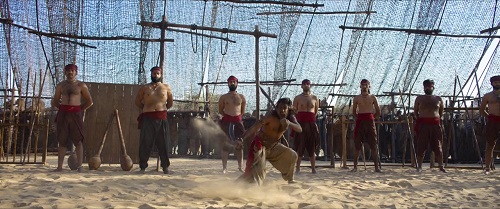
Before we go on, a small parenthesis. The Zoetrope bankruptcy is after The Godfather, the key chapter in Coppola’s image and it has been thoroughly romanticized through the last 40 years, but that isn’t quite how it played out at the time. Coppola’s attempt at becoming a movie mogul did felt like that more than a desire to setup some alternate movie industry; his sensibility is over everything, but it was not really quite set as some paradise for other artists, Coppola mostly wanted to be his own Harry Cohn. Godard made a beautiful short, An All Round Maid, while following the set of One From the Heart, but what he take from it was more suspicions about Hollywood machinery. Critics like Jonathan Rosenbaum complained about his handling of the restoration of Abel Gance’s Napoleon. And Wim Wenders, who directed Hammett for Coppola, the one movie made at Zoetrope other than One From the Heart people might’ve seen, regarded the experience in the same ways many foreign artists who go to Hollywood do—a rough awakening. When Zoetrope went down, the feelings were fairly mixed even beyond the mainstream mean-spiritedness. There is certainly some unfairness to this, but some demystification of Zoetrope might be useful. There is little to suggest it would regularly work like Coppola’s using the opportunity to use his power to become a patron to like-minded artists as much as multiply his own sensibility through many filmmakers willing to work in the Coppola way, the mode seems much closer to Tsui Hark’s later Film Workshop. One can observe this through Hammett, a fascinating mess, whose noir pastiche (starring Forrest as Dashiel Hammett getting involved in his own Maltese Falcon) sounds like something that might attract American culture crazy Wenders but plays a lot like one of Coppola’s 1980s experiments. The two men have a fascination with past images, but Wenders is the kind of allure foreigners often have, while Coppola concerns the more practical ways it can be expanded, modernized and made his own and Hammett emerges very much a Coppola movie executed by a talented proxy.    .   

The Outsiders (1983)
Coppola followed the One From the Heart’s disaster with a couple of SE Hilton adaptations. Young Adult novels set in the 1950s among juvenile delinquents. Nostalgia for the time period had become very popular in the 1980s, and a return to the past in often troubling ways will dominate Coppola’s work from the decade, he actually wouldn’t make another primary contemporary set feature until 1996 much maligned Jack. As a coming-of-age film set in a popular time period during a boom for teen movies, it feels like a very calculated commercial move, and indeed, it is known now mostly for its cast of future stars/almost stars. Coppola’s very anti-naturalist images most inquire over this past, more than let the nostalgia be celebrated. It equates the arrival of maturity with an embrace of death in a way that is very odd for a movie aimed at a young audience. It is a creepy and painful movie, haunted by a hard-to-identify failure, perhaps related to the mostly absent adults. The Outsiders is one of the couple of 1980s Coppola movies people did see back then, but it is far more slippery than its initial image suggests. It always felt to me a little cold and studied, but I must say I’ve never seen Coppola’s later cut, and in my experience, his revisits to his later movies are always improvements.

Rumble Fish (1983)

The Outsiders does feel like more of a rough draft for Rumble Fish. More 50s mystification, more haunted artificial images pushed to much larger extremes, Matt Dillon, who gets the meatier part in the early movie back only this time around looks in admiration at older brother Mickey Rourke. It is Coppola’s most mannered movie, and when I was a teenager I hated it; everything seemed too much, and from Rourke’s slow cadences to the elaborate black and white cinematography, it felt very phony. My young self was, of course, an idiot, although it is pretty much exactly like that only it is also the point. I particularly appreciate the use of Rourke, that most mythic of 1980s stars who finds here an ideal director/character combo, he seems unreal and marked to burn fast, as does the motorcycle boy (by the way, this movie is called The Savage of the Motorcycle in Brazil, sometimes distributors can be inspired) . Coppola blows up the Hinton drama much bigger than it can quite sustain. There are a lot of outsized male emotions in what feels like a sketched relationship, but the feelings like in One From the Heart do register, it is like a 70s Springsteen song. The movie fully works only when Rourke is around or after Dennis Hopper shows up as their much talked father, he comes with all his 1960s burnout associations, but with a humanity one doesn’t quite expect from the movie, the family drama suddenly feels like the real deal. Rumble Fish is maddening, maybe silly on spots, but it is quite beautiful and, as a way forward for the new Coppola, very successful.

Cotton Club (1984)
Coppola’s other 1980s box office disaster. Former Paramount head Robert Evans came to him about doing a new period gangster movie set in the jazz age, but the filmmaker’s artistic interests couldn’t be further from where they were a dozen years before so this is very far from The Godfather Redux. It is a big production that seems to have gone on forever (Nicolas Cage has talked about how taking a supporting part in his uncle movie actually slowed down his career because of how many parts he lost due the consistent delays) and ended up with mixed reviews (which complained it was no Godfather) and empty theatres. It is a very alluring movie in a similar way to One From the Heart, wonderful cinematography and production design, but it has very little narrative momentum; it has a setting (the club) and a series of social observations filtered through a sense of old school spectacle. If most Coppola 80s movies play like inquiries on Hollywood nostalgia, this doubles for The Cotton Club, in many ways a didactic movie about the ways entertainment and capital/gangsterism intersect. Coppola is too much of a showman to stop anything for a lecture, but the culture observations are a key part of it. There is also a lot on the ways the artists in the club are black and the audience is white (among the many reasons to love The Cotton Club is that it includes one of Woody Strode’s last performances), although that can feel more underlined than developed. There are two stories about struggling artists: Richard Gere who gets involved with gangsters before becoming a movie star, and Gregory Hines, a dancer who works in a club. The way to see the movie is through Coppola’s recent Encore cut, which, among other things restored a lot of Hynes cut footage. Although the movie remains hardly balanced between them, his exploits add a richness to the movie. It is pretty much a portrait of a place in a time, so more does means its world registers strongly and that is what this movie is going for. There is a wonderful deep cast that plays a major role in this as well. Cotton Club feels a lot like the movies Alan Rudolph was making at the time, like Choose Me and Trouble in Mind, a large phantasmagoria of images of Hollywood past. Only Rudolph’s romanticism is stated bluntly, while Coppola’s more complicated relationship with it comes with plenty of commentary baggage.

Peggy Sue Got Married (1986)
It is the safest movie Coppola was involved in the post Zoetrope days and arguably his only popular at the time movie made between Apocalypse Now and Dracula. It is more 80s nostalgia played with a good amount of ambivalence; only the very artificial elements have much less of an alienating effect than in his other movies from the time. The central mechanism is actually very close to Back to the Future, with the science fiction trappings replaced by fantasy ones. I’m sure this was in development before, but the similarities are loud and like the early movie this is about using the trip to the past to make the 80s better while also recognizing the trip as somewhat traumatic. Zemeckis is, of course, much funnier, but Coppola’s is far more intimate, and like a lot of his work from the time, he manages to include far more emotion in the cardboard scenarios than expected. There is a little of It’s a Wonderful Life to it as well, and Coppola’s is one of the few 80s filmmakers that get that what makes Capra interesting is the more troubling subtext. Peggy Sue is a very mannered movie played through its two central performances by Kathleen Turner and Nicolas Cage, a high school couple destined to be broken by adulthood realities. They are highly skilled, very non-naturalist performances who never really go together and the disconnect can limit the movie some. Turner, in her early 30s at the time, does wonders with the whole adult playing teen, and Cage’s work was one of his first high expressionist performances, one weird choice after another, starting with his voice. Turner tried to get him fired and the executives were all for it, but Coppola stood by him. I have no idea he understood what Cage was doing, but I’m sure he could appreciate the sight of very idiosyncratic artistic expression arriving in the middle of commercial considerations.

Gardens of Stone (1987)
This would be my pick for Coppola’s most underrated movie. It is hardly seen and often dismissed. It is Coppola’s John Ford movie, complete with James Earl Jones giving modern Hollywood’s greatest Ward Bond impression. If Cotton Club got punished for not being The Godfather, Gardens of Stone got murdered for not being Apocalypse Now. It is a war-at-home movie set during Vietnam in an army cemetery. I’m far from the first to mention that it feels very close to Ford’s The Long Gray Line, which was a biography of a professor at West Point. Ford’s movie was a celebration of a well-lived life through a strong marriage and a connection to his students; Coppola’s is a strange tale of the alienation of a man suspended between his loathing of the current war and his love for everything the army stands for. The movies gave a similar awe for military and wistful perspective while coming to far different meanings. Coppola just treats his main character’s worldview with empathy and respect, which was more than enough to get the movie dismissed as Reaganite cinema by quite a few progressive critics. There is a romantic plot between James Caan and Anjelica Huston as a left-leaning journalist that falls for him, which is my favorite romance in a Coppola movie. Their scenes have a lived-in grown-up quality that relationships in movies don’t achieve very often. Huston is as wonderful as Jones (and Caan is pretty good too). Their first date at a dinner with Jones and his wife is among my 10 favorite scenes in a Coppola movie. That said, I have to stop before saying Gardens of Stone is one of his best movies because the heart of the movie is Caan and Jones taking care of the son of an old army buddy, who the movie makes clear is doomed and comes out as a little too much of a symbol, and because of that, those scenes are nowhere as good as everything else. So, this is a movie where everything around the central plot is amazing, but that can get a little thin at its center. Still, I kinda love Gardens of Stone, it is not Apocalypse Now, but I wish more people gave it a chance.

Tucker: The Man and His Dream (1988)
Tucker leads itself very easily to allegorical autobiographical reading: the tale of the man who comes up with the perfect car and gets squashed by the automobile industry as Coppola’s own. The project actually predates Zoetrope, as Coppola already mentioned it in the 70s (his dad was a Preston Tucker investor), and the movie doesn’t feel like an auto portrait, but it is likely that his own experiences inform its urgency, and it is worth pointing out that Coppola finally agreed to Paramount pleas for a Godfather III after they picked up this. It is part celebration and part inquiry into the idea of American free enterprise. The word dream is certainly the big one in the title and it does double duty, presenting Jeff Bridges as the perfect pitchman for the idea while often pulling back. The images are as unreal as anything else in his 1980s filmography, and the production design and careful period detail less work towards make the movie cozy as something of a trap, past as an ideal that can only exist as movie images and the only place Tucker’s dream can fully exist. The editing and dialogue have a musical cadence without, of course, any numbers. The acting is pitched high and very enthusiastic, everyone seems taken by Tucker’s mania, and Coppola does a terrific job of bringing every cast member into it. At the heart of Tucker isn’t the trial or the struggles of his company, but the relationship between Bridges and Martin Landau as the businessman running the company, who should be the practical man taking care of things but is of course caught in Tucker fever too. The movie is this dance of seduction between an image of what could be and this audience who gets caught in it, their dynamic is where the real movie lies, the way an image that everything is possible can overtake others, a plea less to entrepreneurship as the passion a project can generate. Bridges is great, but Landau is even better—one of the finest turns in a Coppola movie. This is at the same time one of his most hysterical and eccentric works, with all the energy that comes from Tucker madman’s pitch and one of his most warm and affectionate, due to how Coppola’s generosity extends itself to a whole family, not only of kin, that gets behind him and how they are allowed to function together. The idea of the musical soon makes sense, it’s like a band playing together in harmony.

Life Without Zoe (episode of New York Stories (1989)
New York Stories was an anthology film with the easy pre-sold premise of putting together the three most respected mainstream American filmmakers around the time: Coppola, Martin Scorsese and Woody Allen. Coppola is sort of the odd man out, given that he is the one without a more pronounced New York connection and he answers that by delivering an episode centering on the private life of a privileged young girl. As the description suggests, this feels very close to Coppola’s daughter Sofia work and she, who was 17 at the time, co-wrote the script, and there has long been internet speculation that he mostly farmed the episode to her. A narrative that unites both Francis fans who want to blame the trifle on her and Sofia fans who want to expand her filmography further. She is certainly the intellectual auteur and it is easy to imagine Coppola is using the assignment as an opportunity to offer her some training ground, and as such, it was certainly successful. The images have a delirious quality close to his work from the time as well as an intense fable towards many of the individual moments, and the most Francis’ touch is how this seems set against the anthology proposal, from Sofia’s large presence to how it is all about escaping New York. It feels very much like a family affair, with Talia Shire playing the mother and dad Carmine doing the score. It is a movie of an affectionate curiosity. The Sofia movie it suggests the most is predictably Somewhere, the one that concerns Francis more directly, but there is a very warm quality to the father-daughter scenes, easily the ones that linger in the memory.

The Godfather – Part III (1990)
A while ago, Coppola released a new cut of Godfather III called “Coda: The Death of Michael Corleone” It is an improvement, much better balanced and paced, he claimed he wanted to call it that at the time, but Paramount didn’t allow him. It is also a better title because Coda makes it clear that this is less a sequel than an epilogue/commentary. I actually love The Godfather III, which I know is an utterly perverse thing to say considering I’m not crazy about the early ones, but the moment Pacino confesses his crimes to the Pope is by far my favorite moment in any of those and it is the only movie in the series where the idea of cost seems seriously considered and whose emotional stakes resonate to me probably because it is presented as thoughtful revisit of past mistakes. I can understand people who love those early movies who get annoyed by it. It is  not that Coppola made it against them, but there is a good deal of it that is negative towards the early ones: Michael is a very passive figure, there’s only one big action showstopper (the helicopter massacre), Connie, the one character who wants to be in a Godfather sequel, seems like a zombie, and most of what the movie has to say about them is a bummer. There is plenty about collateral damage, about how awful and stained criminality is, there’s even a scene where civilians get gunned down, something the original movies avoided like the plague, the Church presence is there to make clear Michael’s life work of amassing power is useless and can’t really buy him absolution. And the Corleones fail more or less the whole movie. It does have some genuine flaws, Paramount were again cheapskates and Robert Duvall not being in this feels very stupid, Diane Keaton is but she is the only person barely bothering, and yes, as everyone says Sofia is bad, although I find her touching.  One thing I love about the movie is that it feels far less removed from our world, not so much in time (it takes place around a decade prior to release instead of some 15/20 years), but in how the Corleones feel integrated into it and how Michael punishment left the realm of the metaphysical and gets rendered flesh. And it is very much a movie of its time full of echoes about the last days of the cold war plus one gets to love Coppola for making an expensive movie that suggests John Paul II’s papacy was the result of a political/criminal conspiracy. It is also fascinating to observe it come out at the same time as Texasville and The Two Jakes. Three very belated sequels to New Hollywood classics (The Last Picture Show and Chinatown in those cases) that are similar ambivalent works by artists who had reached a point to be far less certain about where they stand about much of what their early movies cover. A very expressive movie about moral reckoning.

Bram Stoker’s Dracula (1992)
The one big hit Coppola had after the 70s, I used to resent this one a lot because it is the prototype of a horror movie for people who do not like horror movies, and this is not something I enjoy. I don’t resent it anymore, but that is still pretty much true. It is a big doomed romance that happens to be about a guy called Vlad, but couldn’t Coppola put a bit more meat into the thrills? That said, the big operatic excess of the whole thing is incredible, one of the most sumptuous movies to come out of that Hollywood period. I often joke that it is like Coppola made the most expensive Werner Schroeter movie. Jonathan Rosenbaum made this comparison at the time as well, along with another one to Raul Ruiz. The point is that Coppola’s 1980s flirting with artificial excess do reach a new level that both moved him closer to some modern cinema greats and finally connected with audiences. A big grand guignol orgy. One of the horniest Hollywood movies, and in absolute panic about that. The Hammer’s Dracula was about Victorian prudishness, Peter Cushing’s Van Helsing’s whole job is about making sure women’s sexuality is kept safe under a lock; Coppola’s version takes place long after thar and its sense of confusion is palpable and powerful. I do like how Coppola approaches acting with every performer having one or two note they are asked to repeat nonstop which led poor Keanu Reeves to get shit on for decades for doing his job (if he is bad, so is Anthony Hopkins). As pure spectacle, it is the most satisfying Coppola movie along Apocalypse Now, those practical effects and the production design are a wonder. And much like the early movie, it a often repelled by itself but very decided to follow its creative instincts, whatever they led him to. A madman movie in the best sense.

Jack (1996)
I happen to like Jack. I know, I know—this is the one even hardcore Coppola fans are supposed to apologize for. It is corny, and it stars Robin Williams as a grown-up kid, and it is full of sentiment in that cloying way Williams 90s movies often have. An “embarrassment”, but I like how Coppola takes the premise and treats it straight. There are a few concessions to the Williams formula that come out as phony, but it gets the kid in the adult body premise and accepts and confronts it in every non-nice intimation that comes with it. The movie it mostly makes me think of is his pal Steven Spielberg’s AI, in which every superficial sentimental moment turns out to be rather creepy. We are more than 20 years removed from the last time Robin Williams starred in something like it, that cultural moment is long past, so there is no need to mistake it for Patch Adams. This is a movie in which Robin Williams plays a grown-up kid and it is weird and disturbing. There is a lot of good scenes in it and Williams and Diane Lane are very good. And it is one of Coppola’s most direct treatments of the isolation and failure to connect that often shows up on his movies. Sometimes, when it comes to making fiction, it is a matter of looking at something as silly and stupid as it might be and finding the emotional center behind it and Jack is scary and depressing the way the life of its character should be. Jack might be minor, but it is far from some stain in Coppola’s work.

The Rainmaker (1997)
Orson Welles made The Stranger in 1946 to prove he could play the game, do a reasonably conventional thriller on time and budget without too many obtrusive touches, and mostly pulled it off. The Rainmaker is Coppola’s version of The Stranger, but it turns out to be the last Hollywood movie he made. It is a John Grisham legal thriller, as fashionable as anything could be in 1997, starring a hot actor of the moment (Matt Damon), it doesn’t have any of the artifice and unusual tics of his post-Apocalypse Now work, and it is even set in a very recognizable here and now, something one can hardly claim about any of his post-60s work. It is a return to one of the key Coppola paradoxes: how he has the air of a maverick around him while often functioning as a hired gun, adapting big novels, and taking assignments—only there is little madness about it, save from a very genuine desire to bring old studio craft back in a time when everyone agreed things were feeling shaky. Cinephiles are often nostalgic for 90s studio movies, but it should be said this is not how things felt at the time, and while this sort of courtroom drama now gets people waxing about “movies for adults,” the words “John Grisham” mostly generated winces, only Coppola takes the assignment very seriously. It is a very handsomely made movie, the best talent 1990s studio money could assemble (Coppola ever get Michael Herr back to write a voice-over as he has done in Apocalypse Now) and the storytelling couldn’t be better, very nicely woven together, angry and serious-minded behind its “small lawyer after corporate malpractice” central tale, and packed with very good scenes. The supporting cast is full of good people doing great work (Mickey Rourke, Dean Stockwell, Mary Kay Place, Roy Scheider, Teresa Wright), plus Danny DeVito and Jon Voight doing wonders to make the courtroom scenes lively. One could complain about some of Grisham’s easy moralizing or a weak subplot about Damon getting involved with a victim of domestic abuse he helps, but put The Rainmaker next to Joel Schumacher Grisham movies or a more prestige version of it like A Civil Action, and it becomes clear how much Coppola’s choices are more thoughtful and successful. If one wants to show others how Coppola is a superior talent, this one is a great example because the material is more plain, and it is all about first-rate execution. Also, it is shocking now how ambivalent about the law it is. Most legal thrillers question the rule of the law by turning the courtroom into a major stage for performance, but The Rainmaker is very good at detailing the inner workings around the case and made clear the its success is not based on Damon’s charm or the righteous of his cause, but on things like a judge cozy with corporations dropping dead and the lottery awarding him a former civil rights lawyer taking his place, absolutely not the way society should function, and the movie is angry about that as much as the bad corporation plot doubles as one of his Hollywood tirades. Time was probably running out by then, and he just quietly went to deal with wine.
Youth Without Youth (2007)
Coppola went into retirement for a decade and then he came back and made three self-financed low budget movies, offbeat arty objects. Those movies have plenty of continuity with what comes before, but the Hollywood break does make them their own thing. They don’t have the resources, but they do show a miniature ingenuity that feels different from what has come before. Roughly, one can divide Coppola’s work into four periods that approximate decades: the independent up-and-comer of the 1960s, the superstar of the 1970s, the eccentric drifter of the 1980s and 1990s, and these self-made movies that are very much the work of a wealthy amateur. Youth Without Youth is the work of a very liberated man, this is Coppola unfiltered, uninterested in pleasing producers or fans. Most of his 80s experiments with non-realist images, unusual narratives and artificial sets are double-down. When Youth Without Youth come out in 2007, I kind of hate it, why was Coppola subjecting us to a movie that was all his worst affections in what felt like a stilted epic narrative about a guy who gets struck by lightning, deages and gets to experience love and the middle of the 20th century? 17 years later, it seems to me to be one of his very best movies. It is his most romantic work, very close to Dracula, only without the Hollywood apparatus to support him, it actually does play like something Werner Schroeter might’ve made. Coppola communicates through spectacle, but he more often than not functions less a great storyteller than someone who moves through autonomous blocks of feeling, no wonder he keeps flirting with musical form. The movie has a sweep that suggests his more famous films, but again, the fact that it is super cheap actually makes it more touching and likable. It has so many ideas and so many situations, it feels like a movie that is trying to pack as much as possible in its 2 hours and it is never ashamed of sounding ridiculous. Coppola’s sense of alienation and displacement has never been so fully expressed, and its romantic leanings are at their most grand. It is very much a movie about movies, a revisit from a post-film world on how popular fiction from the 20th century look like and the desire to freeze a romantic moment in time and the consequences of it, something movies his lifelong obsession actually are better equipped to achieve than most.
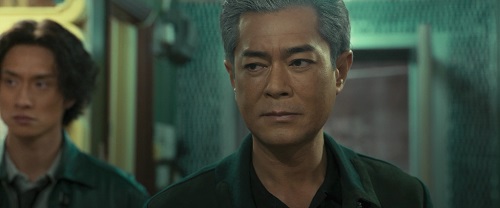
Tetro (2009)
Of Coppola’s three post-retirements movies, Tetro got the warmest reception, probably because it is the one that feels the most like a 1970s movie. Not a Coppola movie exactly; it is again too small and intimate, but it does seem to be in dialogue with the major Luchino Visconti influence that exists over him and many of his generational peers. A big melodrama of family shared pain and brotherly love, one of his most Italian movies. It takes place in Buenos Aires because I suspect Argentina feels like the kind of place that can serve as a stage for such large emotions. He certainly gets a lot of mileage out of the scenes between Vincent Gallo and Aiden Ehrenreich. The movies give Gallo, a very instinctive actor, plenty of room, he is not as good as he was in Skolismoski’s Essential Killing, made around the same time, but he does bring an intensity that feels very different from most late Coppola. I never fully warm to Tetro, it feels a little too conceptual for what it is going for, like there’s too much noise between the movie and its emotional content, like if for once Coppola’s very elaborate images got the worst of him, but it is a very respectable swing.

Twixt (2011)
A quick confession: the only time I ever got around to reviewing a Coppola movie during its release was when Twixt came out in Brazil, and I was respectably mixed towards it. I complained that its discussions about filmmaking were too didactic, that the lack of resources was endearing but limiting, and compared it negatively to Alain Resnais’ final films. That I linked it to Resnais and Manoel de Oliveira should probably have told me the movie wasn’t quite operating the way I was castigating it. Twixt indeed is a didactic parable about filmmaking, but it is a feature, not a bug, it is art povera about how alluring but ultimately painful coming up with images is. A movie about movies made by someone who can’t quite dream up movies the way he used to, so he must dissect them and try to conjure what he can. The liberation of Youth without Youth is still present, but there is a certain bitterness to it, probably because the vision of cinema is decidedly more mixed. Coppola is back making a cheap horror movie, as he had done almost five decades before in Dementia 13. There is a lot of self-depreciating humor, particularly in the performances by Val Kilmer and Bruce Dern. The amateurishness of those final films seems ever more pronounced this time, both in the digital images (which lack any texture) and sets and in the action between friends feel that takes over the whole movie. What does it say about Coppola that his most naked stand-in is a horror writer that gets described as a poor man’s Stephen King? The movie is a constant fight between its more likable surfaces and the sense that the images it conjures are haunted—that there is something truly terrible about the fascination and need for cinema. Then, near the end Edgar Allan Poe shows Kilmer’s writer a flashback to his daughter’s death that alludes very directly and with little distance to the boat accident that killed Coppola’s son Gian Carlo in the late 1980s and Twixt’s home movie cheapness, its painfully awkward discussions about struggling to create, the dark cloud over it, all make sense, as does this troubling relationship with movies and the obsession they generate. Coppola can’t make movies anymore, but he can conjure some magic around pain. Megalopolis feels like the opposite of Twixt, big and expensive (although similarly self-financed), Coppola’s back in his madman mode, hopefully with the same ingenuity and feeling that this movie shows.

Francis Ford Coppola – Uma Filmografia Comentada

Coppola dirigindo Apocalypse Now

English version
Francis Ford Coppola completou 85 anos há uma semana e tem estado em todos nas manchetes constantemente nos últimos meses com seu filme de retorno, Megalopolis, uma produção de 100 milhões de dólares que ele financiou do próprio bolso, com estreia prevista para o próximo mês em Cannes e alvo constante de ataques da imprensa de Hollywood. Há poucas coisas que desagradam mais o establishment hollywoodiano do que um cara maluco que decide queimar seu próprio dinheiro; esse tipo de arrogância artística vai contra a essência do negócio. (Coppola também perdeu sua esposa e parceira criativa de longa data, Eleanor, na semana passada, e se você nunca assistiu ao filme dela Paris Pode Esperar, de alguns anos atrás, é muito legal).

Coppola continua sendo um dos cineastas mais conhecidos de Hollywood, sua imagem se confunde com a da Nova Hollywood dos anos 70, mas também é um cineasta repleto de filmes pouco vistos e ainda menos discutidos, e vale a pena refletir sobre eles também. Adoro os filmes de Coppola e geralmente tenho um gosto muito excêntrico para com eles, porque gosto ainda mais dos patinhos feios de sua filmografia. Ele é um artista popular que assume alguns riscos muito alienantes e, muitas vezes, é ainda mais interessante pensar sobre os sucessos parciais que resultam disso. Portanto, em vez de escrever um longo artigo, decidi falar sobre tudo filme a filme, de Apocalypse Now a Jack, 22 filmes, seu episódio para Contos de Nova York e algumas palavras sobre Hammett, de Wenders, e o curto período de Coppola como magnata do cinema.

Demência 13/Dementia 13 (1963)
Coppola teve sua primeira oportunidade neste filme de terror vagabundo produzido por Roger Corman. O grande estranhamento é justamente a dissonância entre o que filme tem de ligeiro e um rebuscamento nas imagens, este é um primeiro rascunho de um aprendiz que visivelmente quer ser levado a sério. O filme tem só 75 minutos, a trama é uma diluição parte de Psicose, parte uma versão gótica de Agatha Christie, tudo temperado com vários choques extraídos de Mario Bava (A Máscara do Demônio acabara de ser um grande sucesso para AIP). Mas Coppola não está a fim de ser negado, ele tem talento, veja só, cada plano é minuciosamente estudado, nem sempre isto é uma coisa boa, mas há algo de charmoso e tocante nos esforços. Pela mesma época, Monte Hellman filmou dois filmes nas Filipinas para Corman, Flight to Fury e Back Door to Hell, que me lembram muito Demência neste misto de pulp e cuidado, Kent Jones certa vez disse que eram filmes piores por conta do talento do seu diretor, eu entendo o que ele quer dizer, existe algo um tanto duro se você está atrás da excitação do exploitation barato, mas estes três filmes são muito mais interessantes de se pensar sobre do que um filme de drive-in redondo. É um pouco como quando músicos deixam que gravações pré-fama deles cheguem aos fãs décadas depois, metade da graça é em reconhecer traços e especular a partir deles. Uma curiosidade é que Patrick Magee é caracterizado quase igual a Brando em O Poderoso Chefão.  Pela mesma época Corman colocou Coppola a frente de outro filme, O Terror, ainda mais ligeiro, um filme a ser realizado a partir de cenários prontos e de alguns dias que Boris Karloff lhe devia no set (anos mais tarde seria o filme dentro do filme em Na Mira da Morte do Peter Bogdanovich). Corman terminou removendo Coppola após alguns dias, aparentemente porque ele estava lento e acima do orçamento, o que em retrospecto não deixa de ser muito engraçado e informativo. No final das contas, acabou um filme co-dirigido por todo mundo que estava nos escritórios da AIP na época, o próprio Corman, Hellman, Jack Hill (que co-escreveu Demência 13). É um filme ruim, mas muito divertido de se especular sobre.      

Agora Você é um Homem/You’re a Big Boy Now (1966)
Andrew Sarris no seu clássico estudo sobre diretores americanos, The American Cinema, publicado em 1968, surpreendentemente tem um verbete sobre Coppola. É baseado todo neste filme, imagino que ele à época nem sabia da existência de Demência, e faz duas observações: de que Coppola era o primeiro cineasta de talento saído das faculdades de cinema e que o filme não era especialmente pior que The Graduate, mas que Mike Nichols referenciava só filmes bons e Coppola também escolhia muitos ruins. Há algo aí que é bem útil para se pensar o filme, todo mundo sempre compara Agora Você é um Homem ao filme de Nichols, Coppola fez o dele antes, mas o filme só foi lançado depois. Ambos os filmes são certamente bastante parecidos e diluidores de cinema europeu dos anos 60, e Sarris está certa que os pontos de referência de Nichols pertencem a um cânone de bom gosto e os de Coppola são digamos ecléticos. Há um espírito de filme B bem mais notável, muita influência de comédia italiana, que garante a ele uma especificidade grande, e a energia parece vir dos filmes de Richard Lester, tanto A Hard Day’s Night como The Knack. O lado Lester é provavelmente a maior limitação do filme, ele tem 100 minutos numa chave sempre bem histérica e em algum ponto ele se torna exaustivo. É interessante observar que The Graduate piora na última parte por se tornar mais careta e o de Coppola por ele seguir sua inspiração até o limite. Coppola apresentou o filme como seu trabalho de conclusão de faculdade apesar dele ser feito de forma independente, o que o aproxima das estreias de Brian De Palma (The Wedding Party) e Martin Scorsese (Who’s Knockin at the Door), são todos retratos excessivos e melancólicos da juventude do período com ecos autobiográficos. O filme é dominado pelas ansiedades do diretor, o desejo de fazer sucesso na indústria sem prescindir da sua personalidade. Coppola vai alegorizar sua posição muitas vezes mais tarde, mas nunca se colocando tão embaixo. Não parece de forma alguma um filme independente de recursos limitados, dos atores estabelecidos (Geraldine Page, Rip Torn) ao artesanato e olho firme do cineasta. Tirando uma coisa, Nichols tinha Dustin Hoffman e Coppola, um certo Peter Kastner que nunca consegue se tornar muito expressivo, se Coppola tivesse encontrado um jovem ator melhor, ou um com quem ele se conectava mais (como Scorsese conseguiu com Harvey Keitel), as partes frágeis do filme seriam bem mais toleráveis. Dito isso, ele também merece crédito por descobrir Karen Black para o filme, no meu olhar pessoal sobre a Nova Hollywood, isso conta mais que dirigir o Chefão.

O Caminho do Arco Iris/Finian’s Rainbow (1968)
Este foi o primeiro filme do Coppola para um estúdio e eu confesso que me confunde tanto como ele terminou a frente dele quanto como ele não prejudicou sua carreira. É o único filme dele que me parece só ruim. Trata-se de um musical de bom orçamento que Coppola trata majoritariamente a sério e no estilo do fim dos anos 60. É o último filme do gênero de Fred Astaire, então basicamente as únicas pessoas que assistem ele são completistas do ator ou do diretor. Astaire é de longe a melhor coisa do filme, mas fãs dele reclamam que Coppola não tem muita ideia de como o filmar em ação, o que é verdade, é a sua presença mais do que a destreza de dançarino que parecem importar o filme. Coppola trata Astaire como uma imagem, uma lembrança duma Hollywood perdida que o filme deseja sonhar. É a única maneira que ele encontra para se conectar com o material. Então, estamos, ao mesmo tempo, num filme bem convencional e muito consciente de seus processos e artifícios. Muito do que ele viria a fazer 14 anos depois em Do Fundo do Coração surge de forma embrionária, mal desenvolvida e executada aqui. Não ajuda que estas são fantasias que pertencem exclusivamente a Hollywood. O Caminho do Arco Íris foi um sucesso na Broadway no pós-guerra, mas era considerada infilmável porque lidava com racismo, em 1968 após o fim do Código Hays, a Warner resolveu tentar. Trata-se de um dos exemplos mais extremos do tipo de lógica que só pode existir na Broadway porque as tensões raciais do filme são essencialmente resolvidas por conta da magia de um duende, então estamos falando de um filme que existe suspenso no tempo impossível em 1947 e completamente antiquado em 1968. As tentativas do filme em soar acessível para a plateia jovem em 1968 são bastante constrangedoras e não deve ter nada pior num filme do diretor do que a atuação de Tommy Steele como o tal duende. Coppola basicamente parece encarar a encomenda como algo que ele possa sobreviver até o filme seguinte e não passar muita vergonha. Nem sempre é uma batalha de sucesso.


Caminhos Mal Traçados/The Rain People (1969)
Caminhos Mal Traçados é o primeiro grande filme com  o qual Coppola esteve envolvido. Em entrevistas posteriores, ele sempre o colocou em um lugar especial, um dos poucos projetos verdadeiramente pessoais de sua carreira. Esse é um dos mistérios mais fascinantes de Francis Ford Coppola: ele é um dos cineastas mais bem-sucedidos de Hollywood, é um homem obcecado que pode se esforçar muito para fazer um filme, pode ficar louco junto dele, mas não começou a maioria deles, e isso é algo que muitas vezes os informa. Os Poderosos Chefões sempre foram encomendas, ele deveria produzir Apocalypse Now para George Lucas, até mesmo Do Fundo do Coração, o filme pelo qual ele destruiu sua primeira tentativa de ser um magnata do estúdio, era um pequeno filme que foi ficando cada vez maior. E esse é o grande paradoxo de Coppola: ele é um homem que é tomado por paixões, o filme acabará por dominá-lo e se tornará vida e morte. Não é como pensamos grandes artistas geralmente, mas é como Coppola funciona. Caminhos Mal Traçados é um filme de estrada do tipo buscando os sentidos dos EUA bem típico do final da década de 1960. Os temas são tão explícitos quanto os de O Poderoso Chefão, só que se trata de uma dona de casa que foge de casa e acaba cuidando de um ex-jogador de futebol americano que parece sofrer de uma lesão cerebral, em vez de algo chamativo. Tudo é muito realçado – como ela não consegue escapar do papel de mãe, como ele é um macho inocente castrado em todas as suas contradições -, mas isso não é tanto o filme quanto o que Coppola faz com ele. O trabalho com a paisagem é excelente, a forma como o campo pode ressoar no rosto de Shirley Knight. É um filme muito mais seguro e visualmente expressivo do que Easy Rider, para citar outro neofaroeste que cobre território semelhante. Há muita tensão e perigo constante na estrada e o relacionamento central nunca é muito simples, mesmo com suas origens simbólicas. Coppola tira muito proveito da interação entre Knight e James Caan, que muitas vezes faz com que o que poderia ser óbvio demais na página flua e se torne muito mais baseado na presença na tela. O desempenho de Caan é fantástico para um personagem que não deveria funcionar. O mesmo acontece com Robert Duvall em um papel que é concebido demais como um deux ex machina que está lá apenas para que o filme possa terminar, mas que se esforça muito para ancorá-lo e acrescenta muito perigo genuíno. Coppola tem uma fraqueza por conceitualizações fáceis, isso está presente em todos os seus filmes e, certamente, neste, mas é fascinante observar esse filme de pequenos personagens lidar com isso. Os personagens são muito importantes para ele e um de seus filmes mais tocantes e íntimos. 

O Poderoso Chefão/The Godfather (1972)
O prato principal. Não importa o que mais, Coppola sempre será conhecido pelos quatro filmes que fez na década de 1970 e, acima de tudo, como “o diretor de O Poderoso Chefão”. Gosto de O Poderoso Chefão, mas não tanto quanto outros gostam; ele é um pouco inflado para o meu gosto, o trabalho de Coppola tende a ser grandiloquente e os Viscontismos em torno do filme de gângsteres muitas vezes me parecem exagerados, mas é um filme elaborado com maestria. Há pouquíssimos filmes populares e duradouros de Hollywood com tantas cenas principais tão marcantes. Nisso, é mais Casablanca do que O Leopardo, o que não é algo ruim. A opinião recorrente sobre O Poderoso Chefão é que Coppola elevou um best-seller de baixa qualidade, mas vale a pena ressaltar que não apenas Puzo co-escreveu o filme, mas Coppola permaneceu muito fiel a ele ao longo dos anos. São os fãs de O Poderoso Chefão que geralmente querem se livrar de Puzo, não ele, e, de fato, uma coisa que diferencia o primeiro filme das continuações é que ele tem uma qualidade propulsiva maravilhosa que vem do romance. Para um filme de três horas repleto de cenas muito longas, ele avança de forma decisiva em direção ao seu destino violento. É verdade que os detalhes mais picantes, como a potência sexual de Sonny, são minimizados, mas Coppola mantém todas as cenas espetaculares, e o filme as executa com a mesma eficiência de Tubarão. O corpo do filme de gângster continua presente, e muitas dos prazeres são bem baratos. A melhor coisa que Coppola e Puzo fizeram foi estruturar perfeitamente sua adaptação, de modo que a passagem de Brando para Pacino e a violência e ascensão do capital mais implacável do pós-guerra se elevem juntos. O que não me agrada muito é a ideia de que “este é um filme sobre a danação da alma de um homem”. Por melhor que Pacino seja, Michael funciona melhor como um guia do que como uma figura trágica, e a necessidade de transformar a história em uma grande tragédia é algo que vai de encontro aos piores instintos de Coppola. As aspirações mais ambiciosas do filme são mais bem aproveitadas nas cenas com Robert Duvall, que se comporta como um advogado de negócios preso em O Inimigo Público, e suas transações exasperadas passam a ideia da relação entre o gangsterismo e o capitalismo melhor do que qualquer outra coisa no filme. E, é claro, há aquele maravilhoso desfile de coadjuvantes profissionais que ajudam a dar ao filme seu mundo de textura rica, atores como Vigoda, Rocco ou Lattieri, que são seus heróis anônimos. Um dos principais motivos pelos quais o filme é tão popular é o desenvolvimento deste mundo, e todos esses atores são os principais responsáveis por isso. E, é claro, o grande clímax com todos os seus fogos de artificio, quando o gosto de Coppola pelo grandioso se justifica, mesmo que a melhor parte seja a cena entre Duvall e Vigoda, que ele permite que seja mais direta.

A Conversação/The Conversation (1974)
O grande sucesso de O Poderoso Chefão permitiu que Coppola realizasse A Conversação, o único de seus grandes filmes que realmente veio do fundo do coração. Outro dos grandes paradoxos de Coppola: ele é um dos reis do grande espetáculo de Hollywood, mas gravita em torno do isolamento, da alienação e da paranoia. Essa é a essência emocional de seus melhores filmes, mesmo em O Poderoso Chefão, o único grande recurso para conectar seu autor com o material é sempre tentar isolar Michael em meio aos demais personagens. Tudo isso está em primeiro plano em A Conversação, um filme pessoal que também é o filme seguinte a um grande sucesso, de modo que essas preocupações são filtradas por meio da ideia de realização cinematográfica, e uma coisa que fica clara é que fazer filmes é um negócio muito sujo. O filme quase nunca é discutido dessa forma, mas A Conversação é um filme de espionagem e Harry Caul (Gene Hackman) é um personagem da escola de Graham Greene/John Le Carré, um espião melancólico e cansado, mas como estamos nos EUA, ele trabalha para interesses privados. A maior parte do filme trata do quanto Harry está disposto a se relacionar com os outros, e Coppola precisa encontrar a distância exata entre as partes. É uma dança fascinante que se constrói lentamente. Coppola fez o filme principalmente em parceria com dois dos grandes profissionais com quem trabalhou, o ator Gene Hackman e o designer de som Walter Murch. É impressionante o quanto Hackman filtra todo os conceitos de Coppola por meio da linguagem corporal. Se o filme é uma espécie de solo, Hackman nunca é ostensivo e deixa a ação se desenrolar por meio da execução de tarefas, enquanto Murch cria uma elaborada paisagem sonora para Caul, Coppola e o público se perderem. Entre eles, os três conseguem abordar amplamente a forma como o trabalho cinematográfico pode afetar o público de maneiras muito sinistras. Entre outras coisas, esse é o filme mais malévolo de Coppola, mais próximo de De Palma, inclusive em seu gosto pelo castigo e pela ironia. A culpa católica muito específica de Hackman em relação à forma como seu trabalho é usado e à maneira como é refletido ao seu redor revela como o filme funciona como um autorretrato de um artista católico navegando em um negócio  dominado ideologicamente por um olhar protestante.

O Poderoso Chefão Parte II/The Godfather: Part II (1974)
O Poderoso Chefão Parte II é, secretamente, o verdadeiro protótipo da sequência maior e mais barulhenta que mais tarde se tornaria o modus operandi de Hollywood. É uma grande tragédia operística, mas, como eu disse sobre a Parte I, não tenho muito investimento no apodrecimento da alma de Michael Corleone e, embora eu aprecie muito o foco em John Cazale que esse filme oferece, acho que toda a história de Michael/Fredo é um pouco demasiada, lágrimas de crocodilo. A cena final sempre me pareceu um bocado vazia. A Parte 2 tem quase tantas cenas ótimas quanto a Parte I, mas falta a construção satisfatória do filme: o final da quitação das grandes dívidas soa muito como uma repetição, as sessões no Senado nunca funcionam como um dispositivo estruturador e o filme dentro do filme com De Niro como o jovem Vito é muito bom, mas muitas vezes atrapalhe a condução. Uma coisa que acredito que realmente prejudica o filme é o fato de a Paramount ser um bando de pão-duros que decidiram não pagar Richard Castellano para voltar, de modo que Coppola e Puzo tiveram que criar um novo personagem, Pentangeli, para substituir Clemenza. O ator Michael V. Gazzo é tão bom quanto Castellano no filme anterior, mas o fato de ele estar interpretando um personagem que é claramente o não-Clemenza acaba com um pouco da ilusão de que esse é um aprofundamento da queda moral de Michael, e destaca que O Poderoso Chefão II é bem O Poderoso Chefão II. Uma peça de extensão de marca muito habilidosa, com atuações fantásticas e, muitas vezes, bem pensada, feita por artistas superiores.

Apocalypse Now (1979)
O outro filme grande de Coppola, ele é mais imperfeito do que O Poderoso Chefão, mas eu gosto mais dele, provavelmente porque, como disse anteriormente, gosto quando Coppola é dominado pela necessidade de fazer um filme, e poucas vezes isso aconteceu tanto quanto em Apocalypse Now. O significado realmente está ligado ao método de realização do filme, para o bem e para o mal. Um filme sobre como o aparato de Hollywood não pode ser usado para fins de guerra sem que se confunda completamente com ela. As falhas são óbvias: como drama, o filme desanda completamente no momento do confronto para o qual ele apontava (quase nada funciona depois que Dennis Hooper convida Martin Sheen para o acampamento), a atuação de Brando é um desastre maneiroso, é estruturalmente todo torto de uma forma que desequilibrada na direção das cenas iniciais e, convenhamos, Coppola não tem ideia de como se relacionar com a guerra além de que fazer um grande filme em torno dela é sensacional e parecido com a própria guerra. Seu filme mostra muito sobre o que há de pior na psique americana e muito pouco sobre a Guerra do Vietnã em si, mas uma superprodução de Hollywood tem muito mais probabilidade de dizer algo sobre a primeira. Ele se sentiu tão perdido que contratou alguém com experiência real no Vietnã, o jornalista Michael Herr, para escrever a narração em off depois que o filme ficou pronto, o que é um de seus aspectos mais fascinantes – um exercício de crítica enquanto o filme está em andamento. Herr ajuda o filme a existir como uma investigação consistente sobre a guerra e o que Coppola está fazendo. De novo, o que torna Apocalypse Now ótimo é o fato de ser um filme-processo. É provavelmente por isso que a parte mais lembrada por todos é o bloco de ação com Duvall, cujas cenas mostram a maior influência do roteirista John Milius. A distância entre o aparato de Hollywood e o da guerra é a menor durante essas passagens, o que torna as cenas mais populistas, mas também algumas das mais perturbadoras, quando Coppola não pode fingir que se distancia do que está filmando. Uma confissão: prefiro o corte Redux ao do lançamento original. Sim, ele é mais inflado, mas esse é um filme que pode ser inflado. Gosto dele porque adoro todos os caras do barco do Sheen, e eles têm mais cenas pequenas nele. Também acho o filme melhor quando usa o dispositivo de descer o rio, e ele se parece mais com isso nesta versão. Além disso, e essa é provavelmente a parte polêmica, sou um dos cinco fãs das cenas com a família de colonos franceses, elas são lentas e retóricas e acabam com o ritmo da narrativa, mas Apocalypse Now nunca foi bom como narrativa de qualquer jeito. Elas transformam o filme numa grande história de fantasmas, implica mais os cineastas e reforça o fato de que essa adaptação de Joseph Conrad é uma versão particularmente grosseira da noção européia do século XIX de se perder na barbárie do terceiro mundo. É muito revelador e desagradável, mas Coppola merece muito crédito por realmente permitir que ele ressoe em todos os aspectos perturbadores.

Do Fundo do Coração/One from the Heart (1982)
A esta altura, deve estar claro que gosto muito dos filmes de Francis Ford Coppola e que meu gosto por filmes de Coppola não é exatamente o do cânone Nova Hollywood, portanto, não deve ser surpresa que meu filme favorito de Coppola seja Do Fundo do Coração, o pequeno musical sobre pessoas comuns que se tornou uma superprodução que matou seu estúdio American Zoetrope. É o filme mais estranho da obra de Coppola porque é quase ridiculamente super conceituado até mesmo para seus padrões e, ainda assim, toda a realização é prevista em função do quão sincero ele é. Todo o ideal é colocar o máximo de glamour hollywoodiano possível sobre a ação e ainda assim fazer com que ela pareça honesta, e isso acontece e é lindo, pelo menos se você se conectar com ele.  É claro que se trata de um musical, portanto, Coppola aposta tudo no artifício e o torna muito ligado ao seus sets de estúdio, com personagens que muitas vezes perdem diante ao tamanho da produção. Vittorio Storaro e Dean Tavalouris fazem alguns de seus melhores trabalhos, e toda a beleza auto conscientemente cinematográfica do filme surge na tela. Vale a pena mencionar que o filme é concebido a partir de Aurora, de FW Murnau, o marco inicial do expressionismo hollywoodiano. Do Fundo do Coração deu início à segunda etapa da carreira de Coppola, que sempre foi um maneirista, mas os filmes a partir desse ponto acontecerão quase sempre na superfície de uma imagem muito consciente de si mesma, e até aqueles que parecem um pouco mais naturalistas muitas vezes traem a si mesmos, como se Coppola estivesse cada vez mais perdido em um mito cinematográfico que pertence somente a ele. E esse não é um período que tenha realmente terminado. Tom Waits compôs uma bela trilha sonora, entre as melhores de um musical moderno, mas o filme tem mais músicas do que números; ele funciona por meio da construção de um ambiente que é inseparável delas. Ouço com frequência o álbum da trilha sonora de Waits e Crystal Gayle e, embora adore as músicas, geralmente só quero mesmo me perder nas lembranças do filme. A estética e o drama do filme permanecem ligados. No centro, há Federic Forrest, um ator que Coppola adora e usa com frequência durante esse período. Ele é um ator muito bom, mas não é bem um astro, e certamente empalidece ao lado de Raul Julia como o seu rival. Julia e Nastassja Kinski, as duas tentações, são atores estrangeiros cujo exotismo visa torná-los mais atraentes. Quando Teri Garr reclama que Forrest não canta, esse é o problema estético do próprio Coppola, construir uma fantasia tal que, por mais absurda que seja, Forrest se torna tocante como galã. Ele perdeu a aposta no que diz respeito ao mercado, mas meus olhos ficam embaçados nas cenas finais toda vez que as vejo, então eu diria que ele ganhou.

Antes de continuarmos, um pequeno parêntese. A falência da Zoetrope é, depois de O Poderoso Chefão, o capítulo mais importante da construção da imagem de Coppola e foi bastante romantizada nos últimos 40 anos, mas não foi bem assim que foi vista na época. A tentativa de Coppola de se tornar um magnata do cinema pareceu mais uma tentativa disso do que um desejo de criar uma indústria cinematográfica alternativa; sua sensibilidade está sobre tudo, mas não foi realmente definida como um paraíso para outros artistas, Coppola queria ser seu próprio Harry Cohn. Godard fez um belo curta-metragem, Une bonne à tout faire, enquanto seguia o set de Do Fundo do Coração, mas o que ele tirou da experiência foram mais suspeitas sobre o maquinário de Hollywood. Críticos como Jonathan Rosenbaum reclamaram da maneira como ele lidou com a restauração do Napoleão, de Abel Gance. E Wim Wenders, que dirigiu Hammett para Coppola, o único filme feito na Zoetrope além de Do Fundo do Coração que as pessoas podem ter visto, encarou a experiência da mesma forma que muitos artistas estrangeiros que vão para Hollywood – um duro despertar. Quando a Zoetrope foi destruída, os sentimentos foram bastante divergentes, mesmo para além da mesquinhez do jornalismo cultural mainstream. Certamente há alguma injustiça nisso, mas uma desmistificação da Zoetrope pode ser útil. Há pouco que sugira que ele funcionaria regularmente, como se Coppola usasse  a oportunidade de colocar seu poder a serviço de se tornar um mecenas para outros artistas ambiciosos, mas multiplicando sua própria sensibilidade por meio de muitos cineastas dispostos a trabalhar à maneira de Coppola, o modo parece muito mais próximo da Film Workshop que Tsui Hark criaria anos mais tarde. Isso pode ser observado em Hammett, um filme fascinante e muito irregular cujo pastiche noir (estrelado por Forrest como Dashiel Hammett se envolvendo em seu próprio Falcão Maltês) soa como algo que poderia atrair Wenders, um amante da cultura americana, mas se parece muito com um dos experimentos de Coppola nos anos 1980. Os dois homens têm um fascínio por imagens do passado, mas Wenders é o tipo de encanto que os estrangeiros costumam ter, enquanto Coppola se preocupa com as maneiras mais práticas de expandir, modernizar e tornar essas imagens suas, e Hammett acaba sendo um filme de Coppola executado por um representante talentoso.

Vidas Sem Rumo/The Outsiders (1983)
Coppola seguiu o desastre de Do Fundo do Coração com duas adaptações de SE Hilton. Romances infanto-juvenis ambientados na década de 1950 entre jovens delinquentes. A nostalgia desse período havia se tornado muito popular nos anos 1980, e o retorno ao passado, muitas vezes de forma perturbadora, dominará o trabalho de Coppola nessa década. Como um filme de formação que se passa em um período popular durante um boom de filmes para adolescentes, parece uma jogada comercial muito calculada e, de fato, é conhecido agora principalmente por seu elenco de futuras estrelas/quase estrelas. As imagens muito antinaturalistas de Coppola questionam mais esse passado do que permitem que a nostalgia seja celebrada. Ele equipara a chegada da maturidade a um abraço da morte de uma forma muito estranha para um filme voltado para um público adolescente. É um filme sinistro e doloroso, assombrado por um fracasso difícil de identificar, talvez relacionado aos adultos, em sua maioria ausentes. Vidas Sem Rumo é um dos dois filmes de Coppola da década de 1980 que as pessoas assistiram na época, mas é muito mais escorregadio do que sua imagem inicial sugere. Sempre me pareceu um pouco frio e estudado, mas devo dizer que nunca vi o corte posterior de Coppola e, em minha experiência, suas revisões de seus filmes são sempre melhorias.

O Selvagem da Motocicleta/Rumble Fish (1983)
Vidas sem Rumo parece mais um rascunho para O Selvagem da Motocicleta. Mais mistificação dos anos 50, mais imagens artificiais assombradas levadas a extremos muito maiores, Matt Dillon, que conseguiu o papel mais substancial no primeiro filme, está de volta, só que dessa vez olha com admiração para o irmão mais velho, Mickey Rourke. Esse é o filme mais maneirista de Coppola e, quando eu era adolescente, odiei-o; tudo parecia excessivo e, desde as cadências lentas de Rourke até a elaborada fotografia em preto e branco, soava muito falso. Meu jovem eu era, é claro, um idiota, embora o filme seja exatamente assim, só que esse também é o ponto. Aprecio particularmente o uso de Rourke, este mais mítico dos astros dos anos 80, que encontra aqui uma combinação ideal de diretor/personagem; ele parece irreal e marcado para se consumir rapidamente, assim como o garoto da motocicleta. Coppola engrandece o drama de Hinton muito mais do que ele pode suportar. Há muitas emoções masculinas desmedidas em um relacionamento que parece esboçado, mas os sentimentos como em Do Fundo do Coração ressoam, como uma música de Springsteen dos anos 70. O filme só funciona plenamente quando Rourke está em cena ou depois que Dennis Hopper aparece como o muito discutido pai. Ele vem com todas as suas associações de fracasso dos anos 60, mas com uma humanidade que não se espera do filme, o drama familiar de repente parece real. O Selvagem da Motocicleta é enlouquecedor, talvez bobo em alguns momentos, mas é muito bonito e, como um avanço para o novo Coppola, bastante bem-sucedido.

The Cotton Club (1984)
O outro desastre de bilheteria de Coppola na década de 1980. O ex-chefe da Paramount, Robert Evans, o procurou para fazer um novo filme de gângster de época ambientado na era do jazz, mas os interesses artísticos do cineasta não poderiam estar mais distantes do que estavam doze anos antes, de modo que esse filme está muito longe de ser um O Retorno do Poderoso Chefão. É uma grande produção que parece ter se arrastado para a eternidade (Nicolas Cage falou sobre como o fato de participar como coadjuvante no filme de seu tio na verdade atrapalhou sua carreira por causa da quantidade de papéis que ele perdeu devido aos atrasos constantes) e terminou com críticas meia boca (que reclamavam que não era nenhum Poderoso Chefão) e salas de cinema vazias. É um filme muito sedutor, de forma semelhante a Do Fundo do Coração, com uma fotografia e um design de produção maravilhosos, mas tem muito pouco vigor narrativo; é um ambiente (o clube) e uma série de observações sociais filtradas por um senso de espetáculo à moda antiga. Se a maioria dos filmes de Coppola dos anos 80 funcionam como uma investigação sobre a nostalgia de Hollywood, o mesmo acontece com Cotton Club, que é, em muitos sentidos, um filme didático sobre as formas como o entretenimento e o capital/gangsterismo se misturam. Coppola é por demais um showman para interromper a ação para uma palestra, mas as observações culturais são uma parte fundamental do filme. Há também muito sobre como os artistas do clube são negros e o público é branco (entre as muitas razões para amar Cotton Club está o fato de incluir uma das últimas atuações de Woody Strode), embora isso possa parecer mais salientado do que desenvolvido. Há duas histórias sobre artistas batalhando: Richard Gere, que se envolve com gângsteres antes de se tornar um astro de cinema, e Gregory Hines, um dançarino que trabalha no clube. A melhor maneira de ver o filme é por meio do recente Encore cut de Coppola, que, entre outras coisas, restaurou muitas cenas cortadas de Hynes. Embora o filme permaneça pouco equilibrado entre eles, suas aventuras acrescentam uma riqueza ao filme. Cotton Club é essencialmente um retrato de um lugar em uma época, portanto, mais cenas significam que seu mundo chega a nós com mais força e é isso que o filme busca. Há um elenco vasto e maravilhoso que também tem um papel importante nisso. Cotton Club se parece muito com os filmes que Alan Rudolph fazia na época, como Choose Me e Trouble in Mind, uma grande fantasmagoria de imagens do passado de Hollywood. Só que o romantismo de Rudolph é declarado sem rodeios, enquanto a relação mais complicada de Coppola com ele vem acompanhada de muito comentário.

Peggy Sue seu Passado a Espera/Peggy Sue Got Married (1986)
É o filme menos arriscado em que Coppola se envolveu nos dias pós Zoetrope e, sem dúvida, seu único filme popular à época, feito entre Apocalypse Now e Dracula. Lembro que vi pela primeira vez na Sessão da Tarde, o que certamente aconteceu com qualquer outro filme do diretor. É mais nostalgia dos anos 80 com uma boa dose de ambivalência; só que os elementos mais artificiais têm um efeito muito menos alienante do que em seus outros filmes da época. O mecanismo central é, na verdade, muito próximo de De Volta para o Futuro, com os elementos da ficção científica substituídos por outros mais próximos da fantasia. Tenho certeza de que o filme já estava sendo desenvolvido antes, mas as semelhanças são grandes e, assim como o primeiro filme, trata-se de usar a viagem ao passado para melhorar os anos 80 e, ao mesmo tempo, reconhecer a viagem como algo traumático. Zemeckis é, obviamente, muito mais engraçado, mas o de Coppola é mais intimista e, como muitos de seus trabalhos da época, ele consegue incluir muito mais emoção nos cenários clichês do que o esperado. Há também um pouco de A Felicidade Não se Compra, e Coppola é um dos poucos cineastas dos anos 80 que entende que o que torna Capra interessante é o subtexto inquietante. Peggy Sue é um filme muito maneirista, executado por meio de suas duas atuações centrais de Kathleen Turner e Nicolas Cage, um casal do ensino médio destinado a ser desfeito pela realidade da vida adulta. São atuações muito habilidosas e nada naturalistas que nunca combinam, e esse desencontro pode limitar um pouco o filme. Turner, que na época tinha pouco mais de 30, faz maravilhas com o papel de adulta se passando por adolescente, e o trabalho de Cage foi uma de suas primeiras atuações mais expressionistas, uma escolha estranha após a outra, a começar pela voz. Turner tentou demiti-lo e os executivos foram a favor, mas Coppola o apoiou. Não tenho ideia se ele entendia o que Cage estava fazendo, mas tenho certeza de que podia apreciar a visão de uma expressão artística muito idiossincrática que surgia em meio a considerações comerciais.

Jardins de Pedra/Gardens of Stone (1987)
Este seria a minha escolha para o filme mais subestimado de Coppola. Ele é pouco visto e frequentemente descartado. É o filme de John Ford de Coppola, completo com James Earl Jones fazendo a melhor versão de Ward Bond da Hollywood moderna. Se Cotton Club foi punido por não ser O Poderoso Chefão, Jardins de Pedra foi assassinado por não ser Apocalypse Now. É um filme de guerra do Vietnã passado em casa, em um cemitério do exército. Estou longe de ser o primeiro a mencionar que ele se parece muito com The Long Gray Line, de Ford, que era a biografia de um professor de West Point. O filme de Ford era uma celebração de uma vida bem vivida por meio de um casamento amoroso e uma conexão com seus alunos; o de Coppola é uma história estranha sobre a alienação de um homem suspenso entre sua aversão à guerra atual e seu amor por tudo o que o exército representa. Os filmes apresentam uma perspectiva semelhante de reverência aos militares e de saudosismo, mas com significados muito diferentes. Coppola simplesmente trata a visão de mundo de seu personagem principal com empatia e respeito, o que foi mais do que suficiente para que o filme fosse descartado como cinema reaganista por vários críticos progressistas à época. Há uma trama romântica entre James Caan e Anjelica Huston como uma jornalista de esquerda que se apaixona por ele, que é meu romance favorito em um filme de Coppola. Suas cenas têm uma qualidade vivida e adulta que os relacionamentos no cinema não alcançam com muita frequência. Huston é tão maravilhosa quanto Jones (e Caan também está muito bem). O primeiro encontro deles em um jantar com Jones e sua esposa está entre as minhas 10 cenas favoritas de um filme de Coppola. Dito isso, tenho que parar antes de dizer que Jardins de Pedra seja um de seus melhores filmes porque o centro do filme é Caan e Jones cuidando do filho de um antigo amigo do exército, que o filme deixa claro que está condenado que se mostra um pouco simbólico demais e, por isso, essas cenas não são tão boas quanto todo o resto. Portanto, esse é um filme em que tudo ao redor da trama principal é incrível, mas que pode se tornar um pouco frágil em seu centro. Ainda assim, eu adoro Gardens of Stone, não é Apocalypse Now, mas gostaria que mais pessoas dessem uma chance a ele.


Tucker, um Homem e seu Sonho/Tucker: The Man and His Dream (1988)
Tucker se presta muito facilmente a uma leitura autobiográfica alegórica: a história do homem que cria o carro perfeito e é esmagado pela indústria automobilística como a do próprio Coppola. Na verdade, o projeto é anterior à Zoetrope, e Coppola já o mencionava nos anos 70 (seu pai foi um investidor de Preston Tucker), e o filme não parece ser um autorretrato, mas é provável que suas próprias experiências tenham influenciado a sua urgência, e vale a pena ressaltar que Coppola finalmente concordou com os pedidos da Paramount para um Chefão III depois que eles toparam distribuir esse filme. É em parte uma celebração e em parte uma investigação sobre a ideia da livre iniciativa americana. A palavra “sonho” é certamente a mais importante no título e cumpre uma função dupla, apresentando Jeff Bridges como o porta-voz perfeito da ideia, ao mesmo tempo em que com frequência a observa a distância. As imagens são tão irreais quanto qualquer outra coisa em sua filmografia da década de 1980, e o design de produção e os cuidados com a reprodução de época trabalham menos para tornar o filme aconchegante que uma espécie de armadilha, o passado como um ideal que só pode existir como imagens de cinema que é o único lugar onde o sonho de Tucker pode existir plenamente. A montagem e os diálogos têm uma cadência musical sem, é claro, nenhum número. As atuações são num tom elevado e muito entusiástico, todos parecem estar envolvidos pela maluquice de Tucker, e Coppola faz um excelente trabalho em trazer todos os membros do elenco para dentro dela. O cerne de Tucker não é o julgamento ou as dificuldades de sua empresa, mas o relacionamento entre Bridges e Martin Landau, como o empresário que toca a empresa, que deveria ser o homem prático que cuida das coisas, mas que, é claro, também é tomado pela febre de Tucker. O filme é essa dança da sedução entre uma imagem do que o mundo poderia ser e o público que é pego por ela. A dinâmica deles é onde está o verdadeiro filme, a forma como uma imagem que tudo é possível pode dominar o outro, um elogio menos ao empreendedorismo do que à paixão que um projeto pode despertar. Bridges está ótimo, mas Landau está ainda melhor – uma das melhores atuações em um filme de Coppola. Esse é, ao mesmo tempo, um de seus trabalhos mais histéricos e excêntricos, com toda a energia que vem do ímpeto louco de Tucker, e um de seus trabalhos mais calorosos e afetuosos, graças à forma como a generosidade de Coppola se estende a toda uma família, não apenas sanguínea, que o apoia e como é permitido que funcionem juntos. A ideia do musical logo faz sentido, é como uma banda tocando junta em harmonia.

Life Without Zoe (episódio de Contos de Nova York) (1989)
New York Stories é um filme de antologia com a premissa pré-vendida fácil de reunir os três cineastas americanos mais respeitados da época: Coppola, Martin Scorsese e Woody Allen. Coppola é o corpo estranho, já que é o único que não tem uma conexão mais pronunciada com Nova York, e ele responde a isso apresentando um episódio centrado na vida privada de uma jovem privilegiada. Como a descrição sugere, isso parece muito próximo do trabalho da filha de Coppola, Sofia, que, na época com 17 anos, co-escreveu o roteiro, e há muito tempo se especula na Internet que ele tenha terceirizado o episódio para ela. Uma narrativa que une tanto os fãs de Francis, que querem culpar a filha pela trivialidade, quanto os fãs de Sofia, que querem expandir ainda mais sua filmografia. Ela é certamente a autora intelectual e é fácil imaginar que Coppola tenha usado o trabalho como uma oportunidade de oferecer a ela um campo de treinamento e, como tal, certamente foi bem-sucedido. As imagens têm uma qualidade delirante próxima de seu trabalho da época, bem como uma fábula intensa que surge em muitos dos momentos individuais, e o toque mais Francis é como o filme parece ir contra a proposta da antologia, da presença marcante de Sofia a tudo girar sobre um desejo de fuga de Nova York. É um filme muito feito em família, com Talia Shire interpretando a mãe e o pai Carmine fazendo a trilha sonora. É um filme de uma curiosidade afetuosa. O filme de Sofia que ele mais sugere é, previsivelmente, Somewhere, o que diz respeito a Francis mais diretamente, mas há uma qualidade muito calorosa nas cenas entre pai e filha, que são facilmente as que ficam na memória.

O Poderoso Chefão Parte 3/The Godfather – Part III (1990)
Há pouco tempo, Coppola lançou uma nova versão de O Poderoso Chefão III chamada “Coda: A Morte de Michael Corleone”. É um filme melhor, com um equilíbrio e ritmo muito mais redondos. Ele disse que queria chamá-lo assim na época, mas a Paramount não permitiu. Também é um título melhor porque Coda deixa claro que não se trata de uma sequência, mas de um epílogo/comentário. Eu adoro O Poderoso Chefão III, o que sei que é uma coisa totalmente perversa de se dizer, considerando que meus senões com os anteriores, mas a cena em que Pacino confessa seus crimes ao Papa é, de longe, meu momento favorito em qualquer um deles e é o único filme da série em que a ideia de custo parece ser seriamente considerada e cujos riscos emocionais ressoam para mim provavelmente por surgirem como uma reconsideração de erros do passado. Posso entender os fãs que adoram esses primeiros filmes e que se incomodam com ele. Não é que Coppola o tenha feito contra eles, mas há uma boa parte dele que é negativa em relação aos primeiros: Michael é uma figura muito passiva, há apenas uma cena espetacular de ação (o massacre do helicóptero), Connie, a única personagem que quer estar em uma sequência do Poderoso Chefão, parece um zumbi, e a maior parte do que o filme tem a dizer sobre eles é uma tristeza. Há muito sobre efeitos colaterais, sobre como a criminalidade é horrível e maculada, há até mesmo uma cena em que civis são assassinados, algo que os filmes originais evitavam como uma praga, a presença da Igreja está lá para deixar claro que o trabalho da vida de Michael de acumular poder é inútil e não pode realmente lhe dar absolvição. E os Corleones fracassam basicamente durante todo o filme. O filme tem alguns defeitos genuínos, a Paramount foi mais uma vez pão-dura e o fato de Robert Duvall não estar nele parece muito idiota. Diane Keaton está, mas é a única pessoa que mal se esforça e, sim, como todos dizem, Sofia é fraca, embora eu a ache comovente. Algo que adoro no filme é que ele parece muito menos distante do nosso mundo, não tanto no tempo (ele se passa cerca de uma década antes do lançamento, em vez de 15/20 anos), mas na forma como os Corleones se sentem integrados a ele e como a punição de Michael deixou o reino do metafísico e para ser sentida na carne. E é um filme de sua época, cheio de ecos sobre os últimos dias da Guerra Fria, além de que é preciso gostar de Coppola por fazer uma superprodução que sugere que o papado de João Paulo II foi o resultado de uma conspiração política/criminal. Também é fascinante observar que ele foi lançado ao mesmo tempo que Texasville e A Chave do Enigma. Três sequências muito tardias de clássicos da Nova Hollywood (A Última Sessão de Cinema e Chinatown, nesses casos), que são obras ambivalentes semelhantes de artistas que chegaram a um ponto em que não têm tanta certeza sobre sua posição em relação a muito do que seus primeiros filmes abordam. Um filme muito expressivo sobre responsabilidade moral.

Dracula de Bram Stoker(1992)
O único grande sucesso de Coppola depois dos anos 70, eu costumava me ressentir muito desse filme porque ele é o protótipo de um filme de horror para pessoas que não gostam de filmes de horror, e isso não é algo que eu curta. Não me ressinto mais, mas continua a ser verdade. É um grande romance condenado que, por acaso, é sobre um cara chamado Vlad, mas será que Coppola não poderia colocar um pouco mais de força nas cenas de horror? Dito isso, o grande excesso operístico de tudo é incrível, um dos filmes mais suntuosos daquele período de Hollywood. Costumo brincar dizendo que é como se Coppola tivesse feito o filme mais caro de Werner Schroeter. Jonathan Rosenbaum também fez essa comparação na época, juntamente com outra com Raul Ruiz. A questão é que o flerte de Coppola com o excesso artificial nos anos 1980 atingiu um novo nível que tanto o aproximou de alguns grandes nomes do cinema moderno quanto finalmente o conectou com o grande público. Uma grande orgia de grand guignol. Um dos filmes mais tesudos saídos de Hollywood, e em pânico absoluto por conta disso. O Drácula da Hammer era sobre o pudor vitoriano, o trabalho do Van Helsing de Peter Cushing era garantir que a sexualidade das mulheres fosse mantida em segurança sob um cadeado; a versão de Coppola se passa muito tempo para alem disso e seu senso de confusão é palpável e poderoso. Gosto da forma como Coppola aborda as atuações, com todos os atores tendo uma ou duas notas que devem repetir sem parar, o que levou o pobre Keanu Reeves a ser insultado durante décadas por fazer seu trabalho (se ele é ruim, Anthony Hopkins também é). Em termos de puro espetáculo, é o filme mais satisfatório de Coppola depois de Apocalypse Now; os efeitos práticos e o design de produção são uma maravilha. E, assim como o primeiro filme, ele é muitas vezes repelido por si mesmo, mas muito decidido a seguir seus instintos criativos, independentemente do que eles o levaram a fazer. Um filme de um louco no melhor sentido.

Jack (1996)
Eu calho de gostar de Jack. Eu sei, eu sei, esse é o filme pelo qual até mesmo os fãs mais dedicados de Coppola devem se desculpar. É cafona, tem Robin Williams no papel de uma criança adulta e é cheio de sentimentalismo barato, como os filmes dos anos 90 de Williams costumam ter. Um “mico”, mas gosto de como Coppola pega a premissa e a trata de forma direta. Há algumas concessões à fórmula de Williams que acabam soando falsas, mas ele pega a criança no corpo do adulto e a aceita e confronta em todas as insinuações menos agradáveis que a acompanham. O filme que mais me faz pensar é AI, de seu amigo Steven Spielberg, no qual todos os momentos sentimentais superficiais acabam sendo bastante perturbadores. Já se passaram mais de 20 anos desde a última vez em que Robin Williams estrelou algo parecido, esse momento cultural ficou no passado, portanto não há necessidade de confundi-lo com Patch Adams. Esse é um filme em que Robin Williams interpreta uma criança adulta e é estranho e desagradável. Há muitas cenas boas nele, e Williams e Diane Lane estão muito bem. E é um dos tratamentos mais diretos de Coppola sobre o isolamento e a incapacidade de se conectar que frequentemente aparecem em seus filmes. Às vezes, quando se trata de fazer ficção, é uma questão de olhar para algo tão bobo e estúpido quanto possa ser e encontrar o centro emocional por trás disso, e Jack é assustador e deprimente como a vida de seu personagem deveria ser. Pode ser um filme menor, mas está longe de ser uma mancha na obra de Coppola.

O Homem que Fazia Chover /The Rainmaker 1997
Orson Welles fez O Estranho em 1946 para provar que podia jogar o jogo, fazer um thriller razoavelmente convencional dentro do prazo e do orçamento, sem muitos toques intrusivos, e conseguiu. O Homem que Fazia Chover é a versão de Coppola de O Estranho, mas acabou sendo o último filme de Hollywood que ele fez. É um thriller jurídico de John Grisham, tão em voga quanto qualquer coisa poderia ser em 1997, estrelado por um ator jovem badalado do momento (Matt Damon), não tem nenhum dos artifícios e tiques incomuns de seu trabalho pós-Apocalypse Now, e é até mesmo ambientado em um aqui e agora bastante reconhecível, algo que dificilmente se pode afirmar sobre qualquer trabalho seu pós-60. É um retorno a um dos principais paradoxos de Coppola: o fato de ele ter o ar de um independente e, ao mesmo tempo, funcionar como um agente da indústria, adaptando grandes romances e aceitando encomendas – mas há pouca loucura nesse aspecto, exceto por um desejo genuíno de trazer de volta a tradição artesanal dos estúdios em uma época em que todos concordavam que as circunstâncias estavam cada vez piores. Cinéfilos costumam ser nostálgicos em relação a filmes de estúdios dos anos 90, mas é preciso dizer que não era assim que se pensava na época e, embora esse tipo de drama de tribunal agora faça com que as pessoas suspiram sobre “filmes para adultos”, as palavras “John Grisham” geravam, em sua maioria, caretas, mas Coppola leva a tarefa muito a sério. É um filme produzido com muito esmero, com os melhores talentos que o dinheiro dos estúdios da década de 1990 poderia reunir (Coppola até recrutou Michael Herr para escrever uma narração em off, como fez em Apocalypse Now) e como contador de histórias ele estava na melhor forma, tecendo as várias tramas com cuidado, e emprestando raiva e seriedade a sua história central de “um advogado humilde contra um caso de negligência corporativa”, e repleto de cenas excelentes. O elenco de apoio está repleto de gente boa fazendo um ótimo trabalho (Mickey Rourke, Dean Stockwell, Mary Kay Place, Roy Scheider, Teresa Wright), além de Danny DeVito e Jon Voight que fazem maravilhas para dar vida às cenas do tribunal. Pode-se reclamar do moralismo fácil de Grisham ou de uma subtrama fraca sobre Damon se envolver com uma vítima de violência doméstica que ele ajuda, mas coloque O Homem que Fazia Chover ao lado dos filmes de Grisham de Joel Schumacher ou de uma versão de maior prestígio, como A Qualquer Preço, e ficará claro o quanto as escolhas de Coppola são mais bem pensadas e eficazes. Se alguém quiser mostrar aos outros como Coppola é um talento superior, esse filme é um ótimo exemplo, porque o material é mais básico e o que importa é a excelência da execução. Além disso, é impressionante ver como ele é ambivalente em relação à lei. A maioria dos thrillers jurídicos questiona a regra da lei transformando o tribunal em um grande palco para performances, mas O Homem que Fazia Chover é muito hábil em detalhar o funcionamento interno do caso e deixa claro que o sucesso dele não se deve ao charme de Damon ou à justiça de sua causa, mas a coisas como um juiz que gosta de corporações morrer e a loteria premiá-lo com um ex-advogado de direitos civis que assume seu lugar, o que não é absolutamente o modo como a sociedade deveria funcionar, e o filme é tão puto quanto a isso como a trama da corporação corrupta funciona como uma de suas críticas a Hollywood. Provavelmente, a essa altura, o tempo já estava se esgotando e ele simplesmente foi lidar com o vinho.

Velha Juventude/Youth Without Youth (2007)
Coppola se aposentou por uma década e depois voltou e fez três filmes autofinanciados de baixo orçamento, objetos de arte excêntricos. Esses filmes têm bastante continuidade com os anteriores, mas a ruptura com Hollywood deixa marcas e faz com que eles se tornem algo muito próprio. Eles não têm os recursos, mas mostram uma ingenuidade em miniatura que parece diferente do que foi feito antes. A grosso modo, é possível dividir o trabalho de Coppola em quatro períodos que se aproximam de décadas: o promissor independente dos anos 1960, a superestrela dos anos 1970, o andarilho excêntrico dos anos 1980 e 1990 e esses filmes feitos por ele mesmo, que são muito semelhantes ao trabalho de um amador rico. Velha Juventude é o filme de um homem muito liberado, Coppola sem filtros, desinteressado em agradar produtores ou fãs. A maioria de seus experimentos dos anos 80 com imagens não realistas, narrativas incomuns e cenários artificiais são dobrados. Quando Velha Juventude foi lançado em 2007, eu meio que odiei. Por que Coppola estava nos submetendo a um filme que continha todas as suas piores afetações no que parecia ser uma narrativa épica e arrastada sobre um cara que é atingido por um raio, rejuvenesce e experimenta o amor e a metade do século XX? 17 anos depois, esse me parece ser um de seus melhores filmes. É seu trabalho mais romântico, muito próximo de Drácula, só que sem o aparato de Hollywood para apoiá-lo, o resultado realmente se parece com algo que Werner Schroeter poderia ter feito. Coppola se comunica por meio do espetáculo, mas, na maioria das vezes, ele não funciona como um grande contador de histórias, mas sim como alguém que se move por meio de blocos autônomos de sentimentos, não é de se admirar que ele continue flertando com a forma musical. O filme tem uma grandiosidade que sugere seus filmes mais famosos, mas, mais uma vez, o fato de ser super barato o torna mais tocante e simpático. Ele tem tantas ideias e tantas situações que até parece um filme que está tentando colocar o máximo possível em suas duas horas e nunca se envergonha de soar ridículo. O senso de alienação e deslocamento de Coppola nunca foi tão bem expresso, e suas tendências românticas estão em seu ponto mais delirante. Trata-se de um filme sobre filmes, uma revisão de um mundo pós-cinema sobre como era a ficção popular do século XX e o desejo de congelar um momento romântico no tempo e as consequências disso, algo que os filmes, que são a obsessão de toda a sua vida, estão mais bem equipados para realizar do que a maioria.

Tetro (2009)
Dos três filmes pós-aposentadoria de Coppola, Tetro foi o mais bem recebido, provavelmente porque é o que mais se parece com um filme dos anos 1970. Não exatamente com um filme de Coppola; ele é novamente muito pequeno e íntimo, mas parece dialogar com a grande influência de Luchino Visconti que paira sobre ele e muitos de seus colegas de geração. Um grande melodrama de dor compartilhada pela família e amor fraternal, um de seus filmes mais italianos. Ele se passa em Buenos Aires, pois suspeito que a Argentina seja o tipo de lugar que pode servir de palco para emoções tão grandes. Ele certamente aproveita muito bem as cenas entre Vincent Gallo e Aiden Ehrenreich. Os filmes dão a Gallo, um ator muito instintivo, bastante espaço. Ele não é tão bom quanto em Essential Killing, de Skolismoski, feito mais ou menos na mesma época, mas traz uma intensidade que parece muito diferente da maioria dos filmes tardios de Coppola. Eu nunca me encantei totalmente com Tetro, ele parece um pouco conceitual demais para o que pretende, há muito ruído entre o filme e seu conteúdo emocional, como se, pela primeira vez, as imagens muito elaboradas de Coppola tivessem jogado contra ele, mas é uma aventura arriscada muito respeitável.

Virginia/Twixt (2011)
Uma confissão rápida: a única vez que tive oportunidade de escrever sobre um filme de Coppola durante seu lançamento foi quando o Twixt saiu por aqui, e eu fui respeitosamente negativo sobre ele. Reclamei que as suas discussões sobre cinema eram demasiado didáticas, que a falta de recursos era cativante, mas limitante, e comparei-o negativamente com os últimos filmes de Alain Resnais. O fato de eu ter ligado o filme a Resnais e Manoel de Oliveira provavelmente deveria ter me alertado que ele não operava da maneira que eu o castigava. Twixt é de fato uma parábola didática sobre cinema, mas é um mérito, não e não um defeito, é uma arte povera sobre como é atraente, mas por fim doloroso, o ofício de criar imagens. Um filme sobre filmes feito por alguém que não consegue mais sonhar filmes como antes, então ele deve dissecá-los e tentar conjurar a partir dali o que puder. O sentimento de liberação de Velha Juventude ainda está presente, mas agora há nela uma certa amargura, provavelmente porque a visão do cinema é decididamente mais negativa. Coppola está de volta a fazer um filme de terror barato, como havia feito quase cinco décadas antes em Demência 13. Há muito humor autodepreciativo, principalmente nas atuações de Val Kilmer e Bruce Dern. O amadorismo desses filmes finais parece cada vez mais acentuado, tanto nas imagens digitais (que carecem de qualquer textura) e cenários, como na sensação de ação entre amigos que toma conta de todo o filme. O que diz sobre Coppola o fato de seu representante em cena mais explícito ser um escritor de horror descrito como um Stephen King de segunda? O filme é uma luta constante entre suas superfícies mais sedutoras e a sensação de que as imagens que ele invoca são assombradas – de que há algo realmente terrível nessa fascinação e necessidade por cinema. Então, perto do fim, Edgar Allan Poe mostra ao escritor de Kilmer um flashback da morte de sua filha que alude muito diretamente e com pouca distância ao acidente de lancha que matou o filho de Coppola, Gian Carlo, no final dos anos 80 e a cara de filme caseiro barato de Twixt, suas discussões dolorosamente desajeitadas sobre a luta para criar, a nuvem pesada que paira sobre ele, tudo faz sentido, assim como essa relação perturbada com os filmes e a obsessão que eles geram. Coppola não pode mais fazer filmes, mas pode conjurar um pouco de magia em torno da dor. Megalópolis parece o oposto de Twixt, grande e caro (embora igualmente autofinanciado), Coppola está de volta ao seu modo louco, espero que também com a mesma engenhosidade e sentimento que este filme mostra.

❌