❌

Reading view

Francis Ford Coppola – An Annotated Filmography
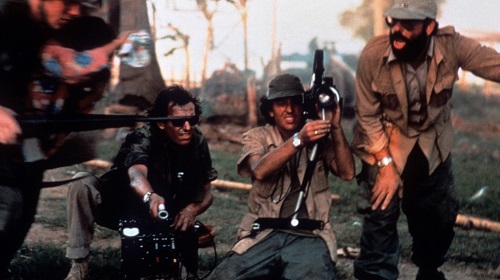
Coppola directing Apocalypse Now

Versão em português

Francis Ford Coppola turned 85 a week ago, and he has been all over the news with his comeback movie Megalopolis, a $100 million production he financed from his own pocket, due to premiere next month in Cannes and a constant target of hit pieces from the Hollywood press. There are few things Hollywood people dislike more than a crazy guy deciding to burn down his own money; this sort of artistic hubris goes against what the industry is all about. (Coppola also lost his wife and long-time creative partner Eleanor last week, and if you have never seen her film Paris Can Wait from a few years ago, it is very nice).

Coppola remains one of the better-known Hollywood filmmakers, his image gets mixed up with that of New Hollywood, but also one full of films that are underseen and even more underdiscussed, and there’s a lot worth pondering about them too. I love Coppola movies and often have a very eccentric taste in them because I love even more the ugly ducklings in his filmography. He is a popular artist who takes some very alienating risks, and he is often even more interesting to think about in the half-successes that come from that. So instead of writing a long article, I decided to go feature by feature covering everything from Apocalypse Now to Jack, 22 movies, his short entry for New York Stories and a few words on Wenders’ Hammett and Coppola’s short stint as a movie mogul.  

Dementia 13 (1963)
Coppola got his first chance with this trashy horror movie produced by Roger Corman. The great attraction is precisely the dissonance between what is a slight movie and what is quite elaborate about its images; this is a first draft by an apprentice who visibly wants to be taken seriously. The movie is only 75 minutes long, the plot is partly a dilution of Psycho, partly a gothic version of Agatha Christie, flavored with several shocks taken from Mario Bava (Black Sunday had just been a big hit for AIP). But Coppola doesn’t want to be denied, he has talent, you see, every shot is meticulously studied, this isn’t always a good thing, but there’s something charming and touching about the efforts. Around the same time, Monte Hellman shot two movies in the Philippines for Corman, Flight to Fury and Back Door to Hell, which remind me a lot of Dementia in this mix of pulp and care, Kent Jones once said that they were worse movies because of the talent of their director, I understand what he means, there is something a bit stiff if you are after the thrills of cheap exploitation, but these three movies are much more interesting to think about than a well-rounded drive-in movie. It’s a bit like when musicians let their pre-fame recordings reach fans decades later, half the fun is in recognizing traces and speculating based on them. One curiosity is that Patrick Magee is characterized almost like Brando in The Godfather. Around the same time, Corman put Coppola in charge of another movie, The Terror, even more slight, a movie to be made from already finished sets and a few days of shooting that Boris Karloff owed him (years later it would be the movie within the movie in Peter Bogdanovich’s Targets). Corman ended up firing Coppola after a few days, supposedly because he was slow and over budget, which in retrospect is very funny and informative. In the end, it was a movie co-directed by everyone who was in the AIP offices at the time, Corman himself, Hellman, Jack Hill (who co-wrote Dementia 13). It’s a bad movie, but a lot of fun to speculate about.

You’re a Big Boy Now (1966)
In Andrew Sarris’ The American Cinema, published in 1968, there is surprisingly an entry on Coppola. It’s all based on this movie, I imagine he didn’t even know about Dementia 13 at the time, and he makes two observations: that Coppola was the first talented filmmaker to come out of film school and that the movie wasn’t particularly worse than The Graduate, but that Mike Nichols only referenced good movies and Coppola also chose a lot of bad ones. There’s something there that’s quite useful when thinking about the movie, everyone always compares You’re a Big Man Now to Nichols’ movie, Coppola made his before, but the movie wasn’t released until after. Both movies are certainly quite similar and derivative of 1960s European cinema, and Sarris is right that Nichols’ reference points belong to a tasteful canon and Coppola’s are let’s say eclectic. There’s a much more noticeable B-movie spirit, a lot of Italian comedy influence, which gives it great specificity, and the energy seems to come from Richard Lester’s movies, both A Hard Day’s Night and The Knack. The Lester side is probably the biggest limitation, it’s 100 minutes long in a consistently hysterical vein and at some point, it becomes exhausting. It’s interesting to note that The Graduate gets worse in its later scenes because it becomes more conventional, and Coppola’s because he follows his inspiration to the very end. Coppola presented the movie as his college thesis, even though it was made independently, which brings it closer to the debuts of Brian De Palma (The Wedding Party) and Martin Scorsese (Who’s Knockin at the Door), all of which are excessive and melancholic portraits of the youth of the period with autobiographical undertones. The movie is dominated by the director’s anxieties, the desire to succeed in the industry without giving up his personality. Coppola will allegorize his position many times later on, but never by putting himself from such a low position. It doesn’t feel at all like an independent movie with limited resources, from the established actors (Geraldine Page, Rip Torn) to the filmmaker’s craftsmanship and steady gaze. Apart from one thing, Nichols had Dustin Hoffman and Coppola, a certain Peter Kastner who never becomes very expressive, if Coppola had found a better young actor, or one with whom he connected more (as Scorsese managed with Harvey Keitel), the flimsy parts of the movie would have been much more tolerable. That said, he also deserves credit for discovering Karen Black for it; in my personal take on the New Hollywood, this counts for more than directing The Godfather.

Finian’s Rainbow (1968)
This was Coppola’s first movie for a studio and I confess that it baffles me both how he ended up in charge of it and how it didn’t damage his career. It’s his only movie that just seems bad to me. It’s a good-budget musical that Coppola treats mostly seriously and in the overblown style of the late 60s. It’s Fred Astaire’s last musical movie, so basically the only people who watch it are completists of the actor or the director. Astaire is by far the best thing about it, but his fans complain that Coppola doesn’t have much of an idea of how to film him in action, which is true, it’s his presence more than his dancing skills that seem to matter in this movie. Coppola treats Astaire as an image, a reminder of a lost Hollywood that the movie wants to dream about. It’s the only way he can connect with the material. So we’re at once in a very conventional movie and one that is very conscious of its processes and artificial images. Much of what he would go on to do 14 years later in One From the Heart appears in embryonic form, poorly developed and executed here. It doesn’t help that these fantasies belong exclusively to Hollywood. Finian’s Rainbow was a success on Broadway in the post-war period, but it was considered unfilmable because it dealt with racism. In 1968, after the end of the Hays Code, Warner decided to give it a try. It’s one of the most extreme examples of the kind of logic that could only exist on Broadway because the movie’s racial tensions are essentially resolved by leprechaun magic, so we’re talking about a movie that exists suspended in time, impossible for 1947 and completely antiquated in 1968. The movie’s stabs to sound accessible to a young audience in 1968 are quite embarrassing, and there’s probably nothing worse in the filmmaker’s work than Tommy Steele’s performance as the leprechaun. Coppola seems to basically regard the assignment as something he can survive until the next movie and not get too embarrassed by. It’s not always a successful battle.
The Rain People (1969)
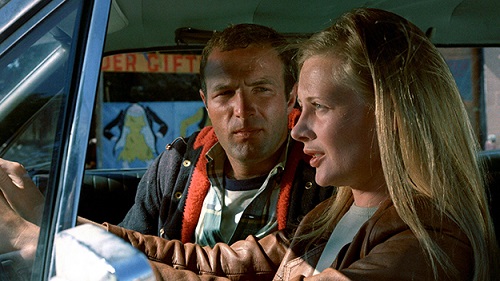
The Rain People is the first great movie Coppola was involved in. In later career interviews, he always positioned it in a special place, one of the few truly personal projects of his career. It is one of the most of Francis Ford Coppola nig mysteries, he is one of the most successful Hollywood filmmakers, he is an obsessed man who can go to great lengths to make a movie, he might grow mad with it, but he didn’t start most of them, and this is something that often informs them. The Godfathers were always assignments, he was supposed to produce George Lucas’ Apocalypse Now, even One from the Heart, the movie he destroyed his first attempt at being a studio mogul for was a little movie that just got bigger and bigger. And that’s Coppola’s big paradox: he is a man who grows into passions, the movie will eventually overtake him and become life and death. That’s not how we usually think of major artists, but that’s how Coppola’s work. The Rain People is very much a late 1960s go-looking for America road movie. The themes are as loud as in The Godfather, only it’s about a housewife who runs from home and ends up taking care of a former football player who seems to suffer from a brain injury instead of something splashy. Everything is very underlined—how she can’t escape being a mother, how he is an emasculated macho innocent in all its contradictions—but this really isn’t the movie as much as what Coppola does with it. The landscape work is wonderful, the way the country is allowed to resonate in Shirley Knight’s face. It is a much more assured and visually expressive movie than Easy Rider to get another neowestern covering similar territory. There is a lot of tension and constant danger on the road and the central relationship is never too simple, even with its symbolic origins. Coppola gets plenty out of the interplay between Knight and James Caan, they often make what could be too obvious on page flow and become much more presence based on screen. Caan’s performance is wonderful for a character that shouldn’t work. The same is true about Robert Duvall in a part that is design too much as a deux ex machina who is there just so the movie can end but who works hard to ground it and adds so much genuine danger. Coppola has a weakness for easy conceptualization, it is there all over his films, and certainly on this one, but it is fascinating to observe this small-character movie negotiate through it. The characters matter plenty for him and one of his most touching and intimate films.     

The Godfather (1972)
The big one. Whatever else, Coppola will always be known for the four movies he made in the 1970s and, above all, as “the director of The Godfather”. I like The Godfather, but not as much as others do; it is a little inflated for my taste, Coppola’s work do tend towards overblown and the Visconti-lite bits around the gangster movie often strike me as too much, but it is a very skilled put together movie. There are very few enduring popular Hollywood movies with as many very enjoyable big scenes, on this it is more Casablanca than The Leopard and that isn’t a bad thing. The usual take on The Godfather is that Coppola elevated a trashy best-seller novel, but it is worth pointing out that not only Puzo co-wrote the movie, but Coppola remained very faithful to him throughout the years. It is The Godfather fans that usually want to get rid of Puzo, not him and indeed, one thing that sets the first movie apart from the sequels is that it has a wonderful propulsive quality that comes from the novel. For a three-hour movie full of very long scenes, it decisively moves towards its violent destination. It is true that the more salacious details, like Sonny sexual potency, get downplayed, but Coppola keeps all the money shots, and the movie delivers on them as often as Jaws do. The body of the gangster movie remains there, and a lot of the thrills are cheap. The great thing Coppola and Puzo manage is perfectly structuring their adaptation so the movement from Brando to Pacino and the violence and more implacable post-war capital are raised together. What I don’t much care for is the whole “this is a movie about the damnation of a man’s soul”, as good as Pacino is, Michael functions better as a conduit than some tragic figure, and the need to turn the story into a grand tragedy plays to Coppola’s worst instincts. The movie’s loftier aspirations play better in the scenes with Robert Duvall, who very much acts like he is a business lawyer stuck in The Public Enemy, and his exasperated dealings get in the idea of the relationship between gangsterism and capitalism better than anything else in the movie. And of course, there’s that wonderful parade of character actors that help give the movie its rich textured world, people like Vigoda, Rocco or Lattieri are its unsung heroes. One of the main reasons the movie is so popular is how developed its world is, and all those guys are major reasons why that is true. And of course, the big fireworks ending when Coppola taste for the grandiose does pay off even if the really best bit there is the scene between Duvall and Vigoda that he allows to play straighter.

The Conversation (1974)
The major success of The Godfather did allow Coppola to make The Conversation, the one among his bigger movies that really came from his heart. Another of the great Coppola paradoxes: he is one of the kings of big Hollywood spectacle, but he gravitates towards isolation, alienation and paranoia. That’s the emotional meat of his best movies, even in The Godfather, the one big trick towards connecting its auteur with the material is always to try to isolate Michael in the big crowd. This is all front and center in The Conversation, a personal movie that is also very much a follow-up to the big hit movie, so those preoccupations are filtered through filmmaking, and one thing it makes clear is making movies is a very dirty business. It is hardly ever discussed like that but The Conversation is a spy movie and Harry Caul (Gene Hackman) is very much a character of the Graham Greene/John Le Carré school, a melancholic and tired spy, but this is the US so he works for private interests. Most of the movie deals with how much Harry is willing to relate to others, and Coppola has to find the exact distance between him and them. It is quite a fascinating dance to slowly craft. Coppola mostly made this movie in partnership with two of the big pros he worked with, actor Gene Hackman and sound designer Walter Murch. It is amazing the extent that Hackman filters all Coppola’s concepts through body language, if the movie is something of a solo, Hackman is never showy and let the action play through the execution of tasks while Mutch crafts an elaborate soundscape for Caul, Coppola and the audience to get lost in. The three manage among them to get a lot about the way film labor can affect the audience in ways that are very sinister. Among other things, this is Coppola’s most malevolent movie, closer to De Palma including in its taste for punishment and irony. Hackman’s very specific Catholic guilt over how his work is used and the way it is made to reflect around him betrays how the movie doubles as a self-portrait of a Catholic artist navigating an ideologically dominated wasp business.

The Godfather Part II (1974)
The Godfather Part II is very secretly the real prototype of the bigger louder sequel that would later become how Hollywood operates. It is a big operatic tragedy, but as I said about Part I, I’m not very invested in the rotten of Michael Corleone’s soul and while I very much appreciate the John Cazale spotlight this offers, I find the whole Michael/Fredo business a little too much crocodile tears. The final scene has always struck me as rather hollow. Part 2 has almost as many great scenes as Part I does, but it lacks that movie satisfying construction: the big debt setting end feels too much like a replay, the senate hearings never work as the structuring device and the movie inside the movie with De Niro as young Vito is very good while often getting in the way. One thing that I think really hurts it, is that Paramount is a bunch of cheapskates and decided not to pay Richard Castellano to comeback so Coppola and Puzo are left crafting a new character Pentangeli to replace Clemenza, actor Michael V. Gazzo is as good as Castellano was on the earlier film, but that he is playing not-Clemenza does kill some of the illusion that this is an extension of Michael’s moral downfall, it highlights that The Godfather II is well The Godfather II. A very skilled, terrifically acted, and often thoughtful piece of brand extension made by superior artists.

Apocalypse Now (1979)
Coppola other very big movie, it is more flawed than The Godfather, but I like it better, probably because, as I said earlier, I like when Coppola is overtaken by the need to make a movie, and there are few times this happened as much as in Apocalypse Now. The meaning really is tied to the filmmaking method, for good and bad. A movie about how Hollywood apparatus can’t really be used for war purposes without it getting completely mixed up with it. The flaws are obvious: as a drama, it completely derails by the time of the confrontation its building towards (barely a thing works after Dennis Hooper invites Martin Sheen to the camp), Brando’s performance is a mannered disaster, its structurally wonky in a way that is very frontloaded, and let’s face it, Coppola has no idea on how to relate to war beyond making a big movie around it is awesome and kind like the war itself. His movie showcases plenty about what is the worst of American psyche and very little about the Vietnam War itself, but a Hollywood superproduction is much more likely to tell some about the former anyway. He was so lost that he did hire someone with actual Vietnam experience, journalist Michael Herr, to write the off-screen narration after the movie was done, which is one of its most fascinating aspects—an exercise in criticism as the movie is ongoing. Herr helps the movie exist as a consistent inquiry into the war and what Coppola is doing. Again, what makes Apocalypse Now great is that it is a process movie. That is probably why the part everyone remembers the most is the Duvall section, whose scenes show the biggest influence of screenwriter John Milius. The distance between the Hollywood and War apparatus is the smallest during these passages, which makes for the more populist scenes, but also some of the more troubling ones when Coppola can’t fake distance himself from what he is filming. A confession: I prefer the Redux cut to the original release one. Yes, it is more bloated, but this is one film that can be bloated. I like it because I love all the guys in Sheen’s boat, and they get more small scenes through it. I also find the movie better when it uses the going down the river device, and it plays more like it in the cut. Also, and that is probably the polemical part, I’m one of the five fans of the French plantation scene, it is slow and rhetorical, and It completely kills the narrative momentum, but Apocalypse Now has never been good as storytelling anyway. It turns the movie into more of a ghost story, implicates the filmmakers more, and reinforces that this Joseph Conrad adaptation is a particularly ugly ripped from the headlines spin on the 19th-century European notion of getting lost in third-world barbarism. It is very revealing and dislikable, but Coppola gets plenty of credit for actually allowing it to resonate in every troubling aspect.

One from the Heart (1982)
At this point it should be clear that I really like Francis Ford Coppola movies and that my taste in Coppola movies isn’t quite the New Hollywoodish ones, so it probably should be of little surprise that my favorite Coppola movie happens to be One From the Heart, the little musical about small people that became a super production that killed his studio American Zoetrope. It is the oddest entry in Coppola’s oeuvre because it is almost ridiculously over-conceptualized even by his standards and yet the entire achievement is predicted by how heartfelt the movie is. The entire idea is to put as much Hollywood gloss as possible over the action and still make it feel sincere and it does and it is beautiful, at least if you happen to connect with it.  Of course, it is a musical, so Coppola goes all in on the artifice and he makes it very studio-bound with characters that often diminish next to the size of production. Vittorio Storaro and Dean Tavalouris do some of their finest work, every movie-like quality of this pops up from the screen. It is worth mentioning that the movie is patterned out of FW Murnau’s Sunrise, the key start of Hollywood expressionism. One From the Heart started the second leg of Coppola’s career, he had always been a mannerist, but the movies from this point on will take place almost always at the surface of a very self-aware image, and even the ones that seem slightly more naturalist will often betray themselves, like Coppola is increasingly lost in a film myth that belongs only to him. And it is not a period that ever truly ended. Tom Waits composed a beautiful score, among the best in a modern musical, but the movie has songs more than numbers; it operates through setting a mood that is inseparable from them. I often listen to the soundtrack album by Waits and Crystal Gayle, and while I love the songs, I usually just want to get lost in my memories of the movie. The movie’s aesthetics and drama remain tied. At the center there’s Federic Forrest, an actor Coppola loves and uses often during this period, he is a very good actor but isn’t much of a star, he certainly pales next to Raul Julia as the other guy. Julia and Nastassja Kinski, the two temptations, are foreign actors whose exoticism is intended to make them more attractive. When Teri Garr complains that Forrest doesn’t sing, that’s Coppola’s own aesthetic problem, to construct such a fantasy that, as absurd as it might be, Forrest becomes touching as leading man. He lost the gamble as far as the market is concerned, but my eyes get misty on the final scenes every time I see them, so I’d say he won.

Before we go on, a small parenthesis. The Zoetrope bankruptcy is after The Godfather, the key chapter in Coppola’s image and it has been thoroughly romanticized through the last 40 years, but that isn’t quite how it played out at the time. Coppola’s attempt at becoming a movie mogul did felt like that more than a desire to setup some alternate movie industry; his sensibility is over everything, but it was not really quite set as some paradise for other artists, Coppola mostly wanted to be his own Harry Cohn. Godard made a beautiful short, An All Round Maid, while following the set of One From the Heart, but what he take from it was more suspicions about Hollywood machinery. Critics like Jonathan Rosenbaum complained about his handling of the restoration of Abel Gance’s Napoleon. And Wim Wenders, who directed Hammett for Coppola, the one movie made at Zoetrope other than One From the Heart people might’ve seen, regarded the experience in the same ways many foreign artists who go to Hollywood do—a rough awakening. When Zoetrope went down, the feelings were fairly mixed even beyond the mainstream mean-spiritedness. There is certainly some unfairness to this, but some demystification of Zoetrope might be useful. There is little to suggest it would regularly work like Coppola’s using the opportunity to use his power to become a patron to like-minded artists as much as multiply his own sensibility through many filmmakers willing to work in the Coppola way, the mode seems much closer to Tsui Hark’s later Film Workshop. One can observe this through Hammett, a fascinating mess, whose noir pastiche (starring Forrest as Dashiel Hammett getting involved in his own Maltese Falcon) sounds like something that might attract American culture crazy Wenders but plays a lot like one of Coppola’s 1980s experiments. The two men have a fascination with past images, but Wenders is the kind of allure foreigners often have, while Coppola concerns the more practical ways it can be expanded, modernized and made his own and Hammett emerges very much a Coppola movie executed by a talented proxy.    .   

The Outsiders (1983)
Coppola followed the One From the Heart’s disaster with a couple of SE Hilton adaptations. Young Adult novels set in the 1950s among juvenile delinquents. Nostalgia for the time period had become very popular in the 1980s, and a return to the past in often troubling ways will dominate Coppola’s work from the decade, he actually wouldn’t make another primary contemporary set feature until 1996 much maligned Jack. As a coming-of-age film set in a popular time period during a boom for teen movies, it feels like a very calculated commercial move, and indeed, it is known now mostly for its cast of future stars/almost stars. Coppola’s very anti-naturalist images most inquire over this past, more than let the nostalgia be celebrated. It equates the arrival of maturity with an embrace of death in a way that is very odd for a movie aimed at a young audience. It is a creepy and painful movie, haunted by a hard-to-identify failure, perhaps related to the mostly absent adults. The Outsiders is one of the couple of 1980s Coppola movies people did see back then, but it is far more slippery than its initial image suggests. It always felt to me a little cold and studied, but I must say I’ve never seen Coppola’s later cut, and in my experience, his revisits to his later movies are always improvements.

Rumble Fish (1983)

The Outsiders does feel like more of a rough draft for Rumble Fish. More 50s mystification, more haunted artificial images pushed to much larger extremes, Matt Dillon, who gets the meatier part in the early movie back only this time around looks in admiration at older brother Mickey Rourke. It is Coppola’s most mannered movie, and when I was a teenager I hated it; everything seemed too much, and from Rourke’s slow cadences to the elaborate black and white cinematography, it felt very phony. My young self was, of course, an idiot, although it is pretty much exactly like that only it is also the point. I particularly appreciate the use of Rourke, that most mythic of 1980s stars who finds here an ideal director/character combo, he seems unreal and marked to burn fast, as does the motorcycle boy (by the way, this movie is called The Savage of the Motorcycle in Brazil, sometimes distributors can be inspired) . Coppola blows up the Hinton drama much bigger than it can quite sustain. There are a lot of outsized male emotions in what feels like a sketched relationship, but the feelings like in One From the Heart do register, it is like a 70s Springsteen song. The movie fully works only when Rourke is around or after Dennis Hopper shows up as their much talked father, he comes with all his 1960s burnout associations, but with a humanity one doesn’t quite expect from the movie, the family drama suddenly feels like the real deal. Rumble Fish is maddening, maybe silly on spots, but it is quite beautiful and, as a way forward for the new Coppola, very successful.

Cotton Club (1984)
Coppola’s other 1980s box office disaster. Former Paramount head Robert Evans came to him about doing a new period gangster movie set in the jazz age, but the filmmaker’s artistic interests couldn’t be further from where they were a dozen years before so this is very far from The Godfather Redux. It is a big production that seems to have gone on forever (Nicolas Cage has talked about how taking a supporting part in his uncle movie actually slowed down his career because of how many parts he lost due the consistent delays) and ended up with mixed reviews (which complained it was no Godfather) and empty theatres. It is a very alluring movie in a similar way to One From the Heart, wonderful cinematography and production design, but it has very little narrative momentum; it has a setting (the club) and a series of social observations filtered through a sense of old school spectacle. If most Coppola 80s movies play like inquiries on Hollywood nostalgia, this doubles for The Cotton Club, in many ways a didactic movie about the ways entertainment and capital/gangsterism intersect. Coppola is too much of a showman to stop anything for a lecture, but the culture observations are a key part of it. There is also a lot on the ways the artists in the club are black and the audience is white (among the many reasons to love The Cotton Club is that it includes one of Woody Strode’s last performances), although that can feel more underlined than developed. There are two stories about struggling artists: Richard Gere who gets involved with gangsters before becoming a movie star, and Gregory Hines, a dancer who works in a club. The way to see the movie is through Coppola’s recent Encore cut, which, among other things restored a lot of Hynes cut footage. Although the movie remains hardly balanced between them, his exploits add a richness to the movie. It is pretty much a portrait of a place in a time, so more does means its world registers strongly and that is what this movie is going for. There is a wonderful deep cast that plays a major role in this as well. Cotton Club feels a lot like the movies Alan Rudolph was making at the time, like Choose Me and Trouble in Mind, a large phantasmagoria of images of Hollywood past. Only Rudolph’s romanticism is stated bluntly, while Coppola’s more complicated relationship with it comes with plenty of commentary baggage.

Peggy Sue Got Married (1986)
It is the safest movie Coppola was involved in the post Zoetrope days and arguably his only popular at the time movie made between Apocalypse Now and Dracula. It is more 80s nostalgia played with a good amount of ambivalence; only the very artificial elements have much less of an alienating effect than in his other movies from the time. The central mechanism is actually very close to Back to the Future, with the science fiction trappings replaced by fantasy ones. I’m sure this was in development before, but the similarities are loud and like the early movie this is about using the trip to the past to make the 80s better while also recognizing the trip as somewhat traumatic. Zemeckis is, of course, much funnier, but Coppola’s is far more intimate, and like a lot of his work from the time, he manages to include far more emotion in the cardboard scenarios than expected. There is a little of It’s a Wonderful Life to it as well, and Coppola’s is one of the few 80s filmmakers that get that what makes Capra interesting is the more troubling subtext. Peggy Sue is a very mannered movie played through its two central performances by Kathleen Turner and Nicolas Cage, a high school couple destined to be broken by adulthood realities. They are highly skilled, very non-naturalist performances who never really go together and the disconnect can limit the movie some. Turner, in her early 30s at the time, does wonders with the whole adult playing teen, and Cage’s work was one of his first high expressionist performances, one weird choice after another, starting with his voice. Turner tried to get him fired and the executives were all for it, but Coppola stood by him. I have no idea he understood what Cage was doing, but I’m sure he could appreciate the sight of very idiosyncratic artistic expression arriving in the middle of commercial considerations.

Gardens of Stone (1987)
This would be my pick for Coppola’s most underrated movie. It is hardly seen and often dismissed. It is Coppola’s John Ford movie, complete with James Earl Jones giving modern Hollywood’s greatest Ward Bond impression. If Cotton Club got punished for not being The Godfather, Gardens of Stone got murdered for not being Apocalypse Now. It is a war-at-home movie set during Vietnam in an army cemetery. I’m far from the first to mention that it feels very close to Ford’s The Long Gray Line, which was a biography of a professor at West Point. Ford’s movie was a celebration of a well-lived life through a strong marriage and a connection to his students; Coppola’s is a strange tale of the alienation of a man suspended between his loathing of the current war and his love for everything the army stands for. The movies gave a similar awe for military and wistful perspective while coming to far different meanings. Coppola just treats his main character’s worldview with empathy and respect, which was more than enough to get the movie dismissed as Reaganite cinema by quite a few progressive critics. There is a romantic plot between James Caan and Anjelica Huston as a left-leaning journalist that falls for him, which is my favorite romance in a Coppola movie. Their scenes have a lived-in grown-up quality that relationships in movies don’t achieve very often. Huston is as wonderful as Jones (and Caan is pretty good too). Their first date at a dinner with Jones and his wife is among my 10 favorite scenes in a Coppola movie. That said, I have to stop before saying Gardens of Stone is one of his best movies because the heart of the movie is Caan and Jones taking care of the son of an old army buddy, who the movie makes clear is doomed and comes out as a little too much of a symbol, and because of that, those scenes are nowhere as good as everything else. So, this is a movie where everything around the central plot is amazing, but that can get a little thin at its center. Still, I kinda love Gardens of Stone, it is not Apocalypse Now, but I wish more people gave it a chance.

Tucker: The Man and His Dream (1988)
Tucker leads itself very easily to allegorical autobiographical reading: the tale of the man who comes up with the perfect car and gets squashed by the automobile industry as Coppola’s own. The project actually predates Zoetrope, as Coppola already mentioned it in the 70s (his dad was a Preston Tucker investor), and the movie doesn’t feel like an auto portrait, but it is likely that his own experiences inform its urgency, and it is worth pointing out that Coppola finally agreed to Paramount pleas for a Godfather III after they picked up this. It is part celebration and part inquiry into the idea of American free enterprise. The word dream is certainly the big one in the title and it does double duty, presenting Jeff Bridges as the perfect pitchman for the idea while often pulling back. The images are as unreal as anything else in his 1980s filmography, and the production design and careful period detail less work towards make the movie cozy as something of a trap, past as an ideal that can only exist as movie images and the only place Tucker’s dream can fully exist. The editing and dialogue have a musical cadence without, of course, any numbers. The acting is pitched high and very enthusiastic, everyone seems taken by Tucker’s mania, and Coppola does a terrific job of bringing every cast member into it. At the heart of Tucker isn’t the trial or the struggles of his company, but the relationship between Bridges and Martin Landau as the businessman running the company, who should be the practical man taking care of things but is of course caught in Tucker fever too. The movie is this dance of seduction between an image of what could be and this audience who gets caught in it, their dynamic is where the real movie lies, the way an image that everything is possible can overtake others, a plea less to entrepreneurship as the passion a project can generate. Bridges is great, but Landau is even better—one of the finest turns in a Coppola movie. This is at the same time one of his most hysterical and eccentric works, with all the energy that comes from Tucker madman’s pitch and one of his most warm and affectionate, due to how Coppola’s generosity extends itself to a whole family, not only of kin, that gets behind him and how they are allowed to function together. The idea of the musical soon makes sense, it’s like a band playing together in harmony.

Life Without Zoe (episode of New York Stories (1989)
New York Stories was an anthology film with the easy pre-sold premise of putting together the three most respected mainstream American filmmakers around the time: Coppola, Martin Scorsese and Woody Allen. Coppola is sort of the odd man out, given that he is the one without a more pronounced New York connection and he answers that by delivering an episode centering on the private life of a privileged young girl. As the description suggests, this feels very close to Coppola’s daughter Sofia work and she, who was 17 at the time, co-wrote the script, and there has long been internet speculation that he mostly farmed the episode to her. A narrative that unites both Francis fans who want to blame the trifle on her and Sofia fans who want to expand her filmography further. She is certainly the intellectual auteur and it is easy to imagine Coppola is using the assignment as an opportunity to offer her some training ground, and as such, it was certainly successful. The images have a delirious quality close to his work from the time as well as an intense fable towards many of the individual moments, and the most Francis’ touch is how this seems set against the anthology proposal, from Sofia’s large presence to how it is all about escaping New York. It feels very much like a family affair, with Talia Shire playing the mother and dad Carmine doing the score. It is a movie of an affectionate curiosity. The Sofia movie it suggests the most is predictably Somewhere, the one that concerns Francis more directly, but there is a very warm quality to the father-daughter scenes, easily the ones that linger in the memory.

The Godfather – Part III (1990)
A while ago, Coppola released a new cut of Godfather III called “Coda: The Death of Michael Corleone” It is an improvement, much better balanced and paced, he claimed he wanted to call it that at the time, but Paramount didn’t allow him. It is also a better title because Coda makes it clear that this is less a sequel than an epilogue/commentary. I actually love The Godfather III, which I know is an utterly perverse thing to say considering I’m not crazy about the early ones, but the moment Pacino confesses his crimes to the Pope is by far my favorite moment in any of those and it is the only movie in the series where the idea of cost seems seriously considered and whose emotional stakes resonate to me probably because it is presented as thoughtful revisit of past mistakes. I can understand people who love those early movies who get annoyed by it. It is  not that Coppola made it against them, but there is a good deal of it that is negative towards the early ones: Michael is a very passive figure, there’s only one big action showstopper (the helicopter massacre), Connie, the one character who wants to be in a Godfather sequel, seems like a zombie, and most of what the movie has to say about them is a bummer. There is plenty about collateral damage, about how awful and stained criminality is, there’s even a scene where civilians get gunned down, something the original movies avoided like the plague, the Church presence is there to make clear Michael’s life work of amassing power is useless and can’t really buy him absolution. And the Corleones fail more or less the whole movie. It does have some genuine flaws, Paramount were again cheapskates and Robert Duvall not being in this feels very stupid, Diane Keaton is but she is the only person barely bothering, and yes, as everyone says Sofia is bad, although I find her touching.  One thing I love about the movie is that it feels far less removed from our world, not so much in time (it takes place around a decade prior to release instead of some 15/20 years), but in how the Corleones feel integrated into it and how Michael punishment left the realm of the metaphysical and gets rendered flesh. And it is very much a movie of its time full of echoes about the last days of the cold war plus one gets to love Coppola for making an expensive movie that suggests John Paul II’s papacy was the result of a political/criminal conspiracy. It is also fascinating to observe it come out at the same time as Texasville and The Two Jakes. Three very belated sequels to New Hollywood classics (The Last Picture Show and Chinatown in those cases) that are similar ambivalent works by artists who had reached a point to be far less certain about where they stand about much of what their early movies cover. A very expressive movie about moral reckoning.

Bram Stoker’s Dracula (1992)
The one big hit Coppola had after the 70s, I used to resent this one a lot because it is the prototype of a horror movie for people who do not like horror movies, and this is not something I enjoy. I don’t resent it anymore, but that is still pretty much true. It is a big doomed romance that happens to be about a guy called Vlad, but couldn’t Coppola put a bit more meat into the thrills? That said, the big operatic excess of the whole thing is incredible, one of the most sumptuous movies to come out of that Hollywood period. I often joke that it is like Coppola made the most expensive Werner Schroeter movie. Jonathan Rosenbaum made this comparison at the time as well, along with another one to Raul Ruiz. The point is that Coppola’s 1980s flirting with artificial excess do reach a new level that both moved him closer to some modern cinema greats and finally connected with audiences. A big grand guignol orgy. One of the horniest Hollywood movies, and in absolute panic about that. The Hammer’s Dracula was about Victorian prudishness, Peter Cushing’s Van Helsing’s whole job is about making sure women’s sexuality is kept safe under a lock; Coppola’s version takes place long after thar and its sense of confusion is palpable and powerful. I do like how Coppola approaches acting with every performer having one or two note they are asked to repeat nonstop which led poor Keanu Reeves to get shit on for decades for doing his job (if he is bad, so is Anthony Hopkins). As pure spectacle, it is the most satisfying Coppola movie along Apocalypse Now, those practical effects and the production design are a wonder. And much like the early movie, it a often repelled by itself but very decided to follow its creative instincts, whatever they led him to. A madman movie in the best sense.

Jack (1996)
I happen to like Jack. I know, I know—this is the one even hardcore Coppola fans are supposed to apologize for. It is corny, and it stars Robin Williams as a grown-up kid, and it is full of sentiment in that cloying way Williams 90s movies often have. An “embarrassment”, but I like how Coppola takes the premise and treats it straight. There are a few concessions to the Williams formula that come out as phony, but it gets the kid in the adult body premise and accepts and confronts it in every non-nice intimation that comes with it. The movie it mostly makes me think of is his pal Steven Spielberg’s AI, in which every superficial sentimental moment turns out to be rather creepy. We are more than 20 years removed from the last time Robin Williams starred in something like it, that cultural moment is long past, so there is no need to mistake it for Patch Adams. This is a movie in which Robin Williams plays a grown-up kid and it is weird and disturbing. There is a lot of good scenes in it and Williams and Diane Lane are very good. And it is one of Coppola’s most direct treatments of the isolation and failure to connect that often shows up on his movies. Sometimes, when it comes to making fiction, it is a matter of looking at something as silly and stupid as it might be and finding the emotional center behind it and Jack is scary and depressing the way the life of its character should be. Jack might be minor, but it is far from some stain in Coppola’s work.

The Rainmaker (1997)
Orson Welles made The Stranger in 1946 to prove he could play the game, do a reasonably conventional thriller on time and budget without too many obtrusive touches, and mostly pulled it off. The Rainmaker is Coppola’s version of The Stranger, but it turns out to be the last Hollywood movie he made. It is a John Grisham legal thriller, as fashionable as anything could be in 1997, starring a hot actor of the moment (Matt Damon), it doesn’t have any of the artifice and unusual tics of his post-Apocalypse Now work, and it is even set in a very recognizable here and now, something one can hardly claim about any of his post-60s work. It is a return to one of the key Coppola paradoxes: how he has the air of a maverick around him while often functioning as a hired gun, adapting big novels, and taking assignments—only there is little madness about it, save from a very genuine desire to bring old studio craft back in a time when everyone agreed things were feeling shaky. Cinephiles are often nostalgic for 90s studio movies, but it should be said this is not how things felt at the time, and while this sort of courtroom drama now gets people waxing about “movies for adults,” the words “John Grisham” mostly generated winces, only Coppola takes the assignment very seriously. It is a very handsomely made movie, the best talent 1990s studio money could assemble (Coppola ever get Michael Herr back to write a voice-over as he has done in Apocalypse Now) and the storytelling couldn’t be better, very nicely woven together, angry and serious-minded behind its “small lawyer after corporate malpractice” central tale, and packed with very good scenes. The supporting cast is full of good people doing great work (Mickey Rourke, Dean Stockwell, Mary Kay Place, Roy Scheider, Teresa Wright), plus Danny DeVito and Jon Voight doing wonders to make the courtroom scenes lively. One could complain about some of Grisham’s easy moralizing or a weak subplot about Damon getting involved with a victim of domestic abuse he helps, but put The Rainmaker next to Joel Schumacher Grisham movies or a more prestige version of it like A Civil Action, and it becomes clear how much Coppola’s choices are more thoughtful and successful. If one wants to show others how Coppola is a superior talent, this one is a great example because the material is more plain, and it is all about first-rate execution. Also, it is shocking now how ambivalent about the law it is. Most legal thrillers question the rule of the law by turning the courtroom into a major stage for performance, but The Rainmaker is very good at detailing the inner workings around the case and made clear the its success is not based on Damon’s charm or the righteous of his cause, but on things like a judge cozy with corporations dropping dead and the lottery awarding him a former civil rights lawyer taking his place, absolutely not the way society should function, and the movie is angry about that as much as the bad corporation plot doubles as one of his Hollywood tirades. Time was probably running out by then, and he just quietly went to deal with wine.

Youth Without Youth (2007)
Coppola went into retirement for a decade and then he came back and made three self-financed low budget movies, offbeat arty objects. Those movies have plenty of continuity with what comes before, but the Hollywood break does make them their own thing. They don’t have the resources, but they do show a miniature ingenuity that feels different from what has come before. Roughly, one can divide Coppola’s work into four periods that approximate decades: the independent up-and-comer of the 1960s, the superstar of the 1970s, the eccentric drifter of the 1980s and 1990s, and these self-made movies that are very much the work of a wealthy amateur. Youth Without Youth is the work of a very liberated man, this is Coppola unfiltered, uninterested in pleasing producers or fans. Most of his 80s experiments with non-realist images, unusual narratives and artificial sets are double-down. When Youth Without Youth come out in 2007, I kind of hate it, why was Coppola subjecting us to a movie that was all his worst affections in what felt like a stilted epic narrative about a guy who gets struck by lightning, deages and gets to experience love and the middle of the 20th century? 17 years later, it seems to me to be one of his very best movies. It is his most romantic work, very close to Dracula, only without the Hollywood apparatus to support him, it actually does play like something Werner Schroeter might’ve made. Coppola communicates through spectacle, but he more often than not functions less a great storyteller than someone who moves through autonomous blocks of feeling, no wonder he keeps flirting with musical form. The movie has a sweep that suggests his more famous films, but again, the fact that it is super cheap actually makes it more touching and likable. It has so many ideas and so many situations, it feels like a movie that is trying to pack as much as possible in its 2 hours and it is never ashamed of sounding ridiculous. Coppola’s sense of alienation and displacement has never been so fully expressed, and its romantic leanings are at their most grand. It is very much a movie about movies, a revisit from a post-film world on how popular fiction from the 20th century look like and the desire to freeze a romantic moment in time and the consequences of it, something movies his lifelong obsession actually are better equipped to achieve than most.

Tetro (2009)
Of Coppola’s three post-retirements movies, Tetro got the warmest reception, probably because it is the one that feels the most like a 1970s movie. Not a Coppola movie exactly; it is again too small and intimate, but it does seem to be in dialogue with the major Luchino Visconti influence that exists over him and many of his generational peers. A big melodrama of family shared pain and brotherly love, one of his most Italian movies. It takes place in Buenos Aires because I suspect Argentina feels like the kind of place that can serve as a stage for such large emotions. He certainly gets a lot of mileage out of the scenes between Vincent Gallo and Aiden Ehrenreich. The movies give Gallo, a very instinctive actor, plenty of room, he is not as good as he was in Skolismoski’s Essential Killing, made around the same time, but he does bring an intensity that feels very different from most late Coppola. I never fully warm to Tetro, it feels a little too conceptual for what it is going for, like there’s too much noise between the movie and its emotional content, like if for once Coppola’s very elaborate images got the worst of him, but it is a very respectable swing.

Twixt (2011)
A quick confession: the only time I ever got around to reviewing a Coppola movie during its release was when Twixt came out in Brazil, and I was respectably mixed towards it. I complained that its discussions about filmmaking were too didactic, that the lack of resources was endearing but limiting, and compared it negatively to Alain Resnais’ final films. That I linked it to Resnais and Manoel de Oliveira should probably have told me the movie wasn’t quite operating the way I was castigating it. Twixt indeed is a didactic parable about filmmaking, but it is a feature, not a bug, it is art povera about how alluring but ultimately painful coming up with images is. A movie about movies made by someone who can’t quite dream up movies the way he used to, so he must dissect them and try to conjure what he can. The liberation of Youth without Youth is still present, but there is a certain bitterness to it, probably because the vision of cinema is decidedly more mixed. Coppola is back making a cheap horror movie, as he had done almost five decades before in Dementia 13. There is a lot of self-depreciating humor, particularly in the performances by Val Kilmer and Bruce Dern. The amateurishness of those final films seems ever more pronounced this time, both in the digital images (which lack any texture) and sets and in the action between friends feel that takes over the whole movie. What does it say about Coppola that his most naked stand-in is a horror writer that gets described as a poor man’s Stephen King? The movie is a constant fight between its more likable surfaces and the sense that the images it conjures are haunted—that there is something truly terrible about the fascination and need for cinema. Then, near the end Edgar Allan Poe shows Kilmer’s writer a flashback to his daughter’s death that alludes very directly and with little distance to the boat accident that killed Coppola’s son Gian Carlo in the late 1980s and Twixt’s home movie cheapness, its painfully awkward discussions about struggling to create, the dark cloud over it, all make sense, as does this troubling relationship with movies and the obsession they generate. Coppola can’t make movies anymore, but he can conjure some magic around pain. Megalopolis feels like the opposite of Twixt, big and expensive (although similarly self-financed), Coppola’s back in his madman mode, hopefully with the same ingenuity and feeling that this movie shows.

Francis Ford Coppola – Uma Filmografia Comentada

Coppola dirigindo Apocalypse Now

English version
Francis Ford Coppola completou 85 anos há uma semana e tem estado em todos nas manchetes constantemente nos últimos meses com seu filme de retorno, Megalopolis, uma produção de 100 milhões de dólares que ele financiou do próprio bolso, com estreia prevista para o próximo mês em Cannes e alvo constante de ataques da imprensa de Hollywood. Há poucas coisas que desagradam mais o establishment hollywoodiano do que um cara maluco que decide queimar seu próprio dinheiro; esse tipo de arrogância artística vai contra a essência do negócio. (Coppola também perdeu sua esposa e parceira criativa de longa data, Eleanor, na semana passada, e se você nunca assistiu ao filme dela Paris Pode Esperar, de alguns anos atrás, é muito legal).

Coppola continua sendo um dos cineastas mais conhecidos de Hollywood, sua imagem se confunde com a da Nova Hollywood dos anos 70, mas também é um cineasta repleto de filmes pouco vistos e ainda menos discutidos, e vale a pena refletir sobre eles também. Adoro os filmes de Coppola e geralmente tenho um gosto muito excêntrico para com eles, porque gosto ainda mais dos patinhos feios de sua filmografia. Ele é um artista popular que assume alguns riscos muito alienantes e, muitas vezes, é ainda mais interessante pensar sobre os sucessos parciais que resultam disso. Portanto, em vez de escrever um longo artigo, decidi falar sobre tudo filme a filme, de Apocalypse Now a Jack, 22 filmes, seu episódio para Contos de Nova York e algumas palavras sobre Hammett, de Wenders, e o curto período de Coppola como magnata do cinema.

Demência 13/Dementia 13 (1963)
Coppola teve sua primeira oportunidade neste filme de terror vagabundo produzido por Roger Corman. O grande estranhamento é justamente a dissonância entre o que filme tem de ligeiro e um rebuscamento nas imagens, este é um primeiro rascunho de um aprendiz que visivelmente quer ser levado a sério. O filme tem só 75 minutos, a trama é uma diluição parte de Psicose, parte uma versão gótica de Agatha Christie, tudo temperado com vários choques extraídos de Mario Bava (A Máscara do Demônio acabara de ser um grande sucesso para AIP). Mas Coppola não está a fim de ser negado, ele tem talento, veja só, cada plano é minuciosamente estudado, nem sempre isto é uma coisa boa, mas há algo de charmoso e tocante nos esforços. Pela mesma época, Monte Hellman filmou dois filmes nas Filipinas para Corman, Flight to Fury e Back Door to Hell, que me lembram muito Demência neste misto de pulp e cuidado, Kent Jones certa vez disse que eram filmes piores por conta do talento do seu diretor, eu entendo o que ele quer dizer, existe algo um tanto duro se você está atrás da excitação do exploitation barato, mas estes três filmes são muito mais interessantes de se pensar sobre do que um filme de drive-in redondo. É um pouco como quando músicos deixam que gravações pré-fama deles cheguem aos fãs décadas depois, metade da graça é em reconhecer traços e especular a partir deles. Uma curiosidade é que Patrick Magee é caracterizado quase igual a Brando em O Poderoso Chefão.  Pela mesma época Corman colocou Coppola a frente de outro filme, O Terror, ainda mais ligeiro, um filme a ser realizado a partir de cenários prontos e de alguns dias que Boris Karloff lhe devia no set (anos mais tarde seria o filme dentro do filme em Na Mira da Morte do Peter Bogdanovich). Corman terminou removendo Coppola após alguns dias, aparentemente porque ele estava lento e acima do orçamento, o que em retrospecto não deixa de ser muito engraçado e informativo. No final das contas, acabou um filme co-dirigido por todo mundo que estava nos escritórios da AIP na época, o próprio Corman, Hellman, Jack Hill (que co-escreveu Demência 13). É um filme ruim, mas muito divertido de se especular sobre.      

Agora Você é um Homem/You’re a Big Boy Now (1966)
Andrew Sarris no seu clássico estudo sobre diretores americanos, The American Cinema, publicado em 1968, surpreendentemente tem um verbete sobre Coppola. É baseado todo neste filme, imagino que ele à época nem sabia da existência de Demência, e faz duas observações: de que Coppola era o primeiro cineasta de talento saído das faculdades de cinema e que o filme não era especialmente pior que The Graduate, mas que Mike Nichols referenciava só filmes bons e Coppola também escolhia muitos ruins. Há algo aí que é bem útil para se pensar o filme, todo mundo sempre compara Agora Você é um Homem ao filme de Nichols, Coppola fez o dele antes, mas o filme só foi lançado depois. Ambos os filmes são certamente bastante parecidos e diluidores de cinema europeu dos anos 60, e Sarris está certa que os pontos de referência de Nichols pertencem a um cânone de bom gosto e os de Coppola são digamos ecléticos. Há um espírito de filme B bem mais notável, muita influência de comédia italiana, que garante a ele uma especificidade grande, e a energia parece vir dos filmes de Richard Lester, tanto A Hard Day’s Night como The Knack. O lado Lester é provavelmente a maior limitação do filme, ele tem 100 minutos numa chave sempre bem histérica e em algum ponto ele se torna exaustivo. É interessante observar que The Graduate piora na última parte por se tornar mais careta e o de Coppola por ele seguir sua inspiração até o limite. Coppola apresentou o filme como seu trabalho de conclusão de faculdade apesar dele ser feito de forma independente, o que o aproxima das estreias de Brian De Palma (The Wedding Party) e Martin Scorsese (Who’s Knockin at the Door), são todos retratos excessivos e melancólicos da juventude do período com ecos autobiográficos. O filme é dominado pelas ansiedades do diretor, o desejo de fazer sucesso na indústria sem prescindir da sua personalidade. Coppola vai alegorizar sua posição muitas vezes mais tarde, mas nunca se colocando tão embaixo. Não parece de forma alguma um filme independente de recursos limitados, dos atores estabelecidos (Geraldine Page, Rip Torn) ao artesanato e olho firme do cineasta. Tirando uma coisa, Nichols tinha Dustin Hoffman e Coppola, um certo Peter Kastner que nunca consegue se tornar muito expressivo, se Coppola tivesse encontrado um jovem ator melhor, ou um com quem ele se conectava mais (como Scorsese conseguiu com Harvey Keitel), as partes frágeis do filme seriam bem mais toleráveis. Dito isso, ele também merece crédito por descobrir Karen Black para o filme, no meu olhar pessoal sobre a Nova Hollywood, isso conta mais que dirigir o Chefão.

O Caminho do Arco Iris/Finian’s Rainbow (1968)
Este foi o primeiro filme do Coppola para um estúdio e eu confesso que me confunde tanto como ele terminou a frente dele quanto como ele não prejudicou sua carreira. É o único filme dele que me parece só ruim. Trata-se de um musical de bom orçamento que Coppola trata majoritariamente a sério e no estilo do fim dos anos 60. É o último filme do gênero de Fred Astaire, então basicamente as únicas pessoas que assistem ele são completistas do ator ou do diretor. Astaire é de longe a melhor coisa do filme, mas fãs dele reclamam que Coppola não tem muita ideia de como o filmar em ação, o que é verdade, é a sua presença mais do que a destreza de dançarino que parecem importar o filme. Coppola trata Astaire como uma imagem, uma lembrança duma Hollywood perdida que o filme deseja sonhar. É a única maneira que ele encontra para se conectar com o material. Então, estamos, ao mesmo tempo, num filme bem convencional e muito consciente de seus processos e artifícios. Muito do que ele viria a fazer 14 anos depois em Do Fundo do Coração surge de forma embrionária, mal desenvolvida e executada aqui. Não ajuda que estas são fantasias que pertencem exclusivamente a Hollywood. O Caminho do Arco Íris foi um sucesso na Broadway no pós-guerra, mas era considerada infilmável porque lidava com racismo, em 1968 após o fim do Código Hays, a Warner resolveu tentar. Trata-se de um dos exemplos mais extremos do tipo de lógica que só pode existir na Broadway porque as tensões raciais do filme são essencialmente resolvidas por conta da magia de um duende, então estamos falando de um filme que existe suspenso no tempo impossível em 1947 e completamente antiquado em 1968. As tentativas do filme em soar acessível para a plateia jovem em 1968 são bastante constrangedoras e não deve ter nada pior num filme do diretor do que a atuação de Tommy Steele como o tal duende. Coppola basicamente parece encarar a encomenda como algo que ele possa sobreviver até o filme seguinte e não passar muita vergonha. Nem sempre é uma batalha de sucesso.


Caminhos Mal Traçados/The Rain People (1969)
Caminhos Mal Traçados é o primeiro grande filme com  o qual Coppola esteve envolvido. Em entrevistas posteriores, ele sempre o colocou em um lugar especial, um dos poucos projetos verdadeiramente pessoais de sua carreira. Esse é um dos mistérios mais fascinantes de Francis Ford Coppola: ele é um dos cineastas mais bem-sucedidos de Hollywood, é um homem obcecado que pode se esforçar muito para fazer um filme, pode ficar louco junto dele, mas não começou a maioria deles, e isso é algo que muitas vezes os informa. Os Poderosos Chefões sempre foram encomendas, ele deveria produzir Apocalypse Now para George Lucas, até mesmo Do Fundo do Coração, o filme pelo qual ele destruiu sua primeira tentativa de ser um magnata do estúdio, era um pequeno filme que foi ficando cada vez maior. E esse é o grande paradoxo de Coppola: ele é um homem que é tomado por paixões, o filme acabará por dominá-lo e se tornará vida e morte. Não é como pensamos grandes artistas geralmente, mas é como Coppola funciona. Caminhos Mal Traçados é um filme de estrada do tipo buscando os sentidos dos EUA bem típico do final da década de 1960. Os temas são tão explícitos quanto os de O Poderoso Chefão, só que se trata de uma dona de casa que foge de casa e acaba cuidando de um ex-jogador de futebol americano que parece sofrer de uma lesão cerebral, em vez de algo chamativo. Tudo é muito realçado – como ela não consegue escapar do papel de mãe, como ele é um macho inocente castrado em todas as suas contradições -, mas isso não é tanto o filme quanto o que Coppola faz com ele. O trabalho com a paisagem é excelente, a forma como o campo pode ressoar no rosto de Shirley Knight. É um filme muito mais seguro e visualmente expressivo do que Easy Rider, para citar outro neofaroeste que cobre território semelhante. Há muita tensão e perigo constante na estrada e o relacionamento central nunca é muito simples, mesmo com suas origens simbólicas. Coppola tira muito proveito da interação entre Knight e James Caan, que muitas vezes faz com que o que poderia ser óbvio demais na página flua e se torne muito mais baseado na presença na tela. O desempenho de Caan é fantástico para um personagem que não deveria funcionar. O mesmo acontece com Robert Duvall em um papel que é concebido demais como um deux ex machina que está lá apenas para que o filme possa terminar, mas que se esforça muito para ancorá-lo e acrescenta muito perigo genuíno. Coppola tem uma fraqueza por conceitualizações fáceis, isso está presente em todos os seus filmes e, certamente, neste, mas é fascinante observar esse filme de pequenos personagens lidar com isso. Os personagens são muito importantes para ele e um de seus filmes mais tocantes e íntimos. 

O Poderoso Chefão/The Godfather (1972)
O prato principal. Não importa o que mais, Coppola sempre será conhecido pelos quatro filmes que fez na década de 1970 e, acima de tudo, como “o diretor de O Poderoso Chefão”. Gosto de O Poderoso Chefão, mas não tanto quanto outros gostam; ele é um pouco inflado para o meu gosto, o trabalho de Coppola tende a ser grandiloquente e os Viscontismos em torno do filme de gângsteres muitas vezes me parecem exagerados, mas é um filme elaborado com maestria. Há pouquíssimos filmes populares e duradouros de Hollywood com tantas cenas principais tão marcantes. Nisso, é mais Casablanca do que O Leopardo, o que não é algo ruim. A opinião recorrente sobre O Poderoso Chefão é que Coppola elevou um best-seller de baixa qualidade, mas vale a pena ressaltar que não apenas Puzo co-escreveu o filme, mas Coppola permaneceu muito fiel a ele ao longo dos anos. São os fãs de O Poderoso Chefão que geralmente querem se livrar de Puzo, não ele, e, de fato, uma coisa que diferencia o primeiro filme das continuações é que ele tem uma qualidade propulsiva maravilhosa que vem do romance. Para um filme de três horas repleto de cenas muito longas, ele avança de forma decisiva em direção ao seu destino violento. É verdade que os detalhes mais picantes, como a potência sexual de Sonny, são minimizados, mas Coppola mantém todas as cenas espetaculares, e o filme as executa com a mesma eficiência de Tubarão. O corpo do filme de gângster continua presente, e muitas dos prazeres são bem baratos. A melhor coisa que Coppola e Puzo fizeram foi estruturar perfeitamente sua adaptação, de modo que a passagem de Brando para Pacino e a violência e ascensão do capital mais implacável do pós-guerra se elevem juntos. O que não me agrada muito é a ideia de que “este é um filme sobre a danação da alma de um homem”. Por melhor que Pacino seja, Michael funciona melhor como um guia do que como uma figura trágica, e a necessidade de transformar a história em uma grande tragédia é algo que vai de encontro aos piores instintos de Coppola. As aspirações mais ambiciosas do filme são mais bem aproveitadas nas cenas com Robert Duvall, que se comporta como um advogado de negócios preso em O Inimigo Público, e suas transações exasperadas passam a ideia da relação entre o gangsterismo e o capitalismo melhor do que qualquer outra coisa no filme. E, é claro, há aquele maravilhoso desfile de coadjuvantes profissionais que ajudam a dar ao filme seu mundo de textura rica, atores como Vigoda, Rocco ou Lattieri, que são seus heróis anônimos. Um dos principais motivos pelos quais o filme é tão popular é o desenvolvimento deste mundo, e todos esses atores são os principais responsáveis por isso. E, é claro, o grande clímax com todos os seus fogos de artificio, quando o gosto de Coppola pelo grandioso se justifica, mesmo que a melhor parte seja a cena entre Duvall e Vigoda, que ele permite que seja mais direta.

A Conversação/The Conversation (1974)
O grande sucesso de O Poderoso Chefão permitiu que Coppola realizasse A Conversação, o único de seus grandes filmes que realmente veio do fundo do coração. Outro dos grandes paradoxos de Coppola: ele é um dos reis do grande espetáculo de Hollywood, mas gravita em torno do isolamento, da alienação e da paranoia. Essa é a essência emocional de seus melhores filmes, mesmo em O Poderoso Chefão, o único grande recurso para conectar seu autor com o material é sempre tentar isolar Michael em meio aos demais personagens. Tudo isso está em primeiro plano em A Conversação, um filme pessoal que também é o filme seguinte a um grande sucesso, de modo que essas preocupações são filtradas por meio da ideia de realização cinematográfica, e uma coisa que fica clara é que fazer filmes é um negócio muito sujo. O filme quase nunca é discutido dessa forma, mas A Conversação é um filme de espionagem e Harry Caul (Gene Hackman) é um personagem da escola de Graham Greene/John Le Carré, um espião melancólico e cansado, mas como estamos nos EUA, ele trabalha para interesses privados. A maior parte do filme trata do quanto Harry está disposto a se relacionar com os outros, e Coppola precisa encontrar a distância exata entre as partes. É uma dança fascinante que se constrói lentamente. Coppola fez o filme principalmente em parceria com dois dos grandes profissionais com quem trabalhou, o ator Gene Hackman e o designer de som Walter Murch. É impressionante o quanto Hackman filtra todo os conceitos de Coppola por meio da linguagem corporal. Se o filme é uma espécie de solo, Hackman nunca é ostensivo e deixa a ação se desenrolar por meio da execução de tarefas, enquanto Murch cria uma elaborada paisagem sonora para Caul, Coppola e o público se perderem. Entre eles, os três conseguem abordar amplamente a forma como o trabalho cinematográfico pode afetar o público de maneiras muito sinistras. Entre outras coisas, esse é o filme mais malévolo de Coppola, mais próximo de De Palma, inclusive em seu gosto pelo castigo e pela ironia. A culpa católica muito específica de Hackman em relação à forma como seu trabalho é usado e à maneira como é refletido ao seu redor revela como o filme funciona como um autorretrato de um artista católico navegando em um negócio  dominado ideologicamente por um olhar protestante.

O Poderoso Chefão Parte II/The Godfather: Part II (1974)
O Poderoso Chefão Parte II é, secretamente, o verdadeiro protótipo da sequência maior e mais barulhenta que mais tarde se tornaria o modus operandi de Hollywood. É uma grande tragédia operística, mas, como eu disse sobre a Parte I, não tenho muito investimento no apodrecimento da alma de Michael Corleone e, embora eu aprecie muito o foco em John Cazale que esse filme oferece, acho que toda a história de Michael/Fredo é um pouco demasiada, lágrimas de crocodilo. A cena final sempre me pareceu um bocado vazia. A Parte 2 tem quase tantas cenas ótimas quanto a Parte I, mas falta a construção satisfatória do filme: o final da quitação das grandes dívidas soa muito como uma repetição, as sessões no Senado nunca funcionam como um dispositivo estruturador e o filme dentro do filme com De Niro como o jovem Vito é muito bom, mas muitas vezes atrapalhe a condução. Uma coisa que acredito que realmente prejudica o filme é o fato de a Paramount ser um bando de pão-duros que decidiram não pagar Richard Castellano para voltar, de modo que Coppola e Puzo tiveram que criar um novo personagem, Pentangeli, para substituir Clemenza. O ator Michael V. Gazzo é tão bom quanto Castellano no filme anterior, mas o fato de ele estar interpretando um personagem que é claramente o não-Clemenza acaba com um pouco da ilusão de que esse é um aprofundamento da queda moral de Michael, e destaca que O Poderoso Chefão II é bem O Poderoso Chefão II. Uma peça de extensão de marca muito habilidosa, com atuações fantásticas e, muitas vezes, bem pensada, feita por artistas superiores.

Apocalypse Now (1979)
O outro filme grande de Coppola, ele é mais imperfeito do que O Poderoso Chefão, mas eu gosto mais dele, provavelmente porque, como disse anteriormente, gosto quando Coppola é dominado pela necessidade de fazer um filme, e poucas vezes isso aconteceu tanto quanto em Apocalypse Now. O significado realmente está ligado ao método de realização do filme, para o bem e para o mal. Um filme sobre como o aparato de Hollywood não pode ser usado para fins de guerra sem que se confunda completamente com ela. As falhas são óbvias: como drama, o filme desanda completamente no momento do confronto para o qual ele apontava (quase nada funciona depois que Dennis Hooper convida Martin Sheen para o acampamento), a atuação de Brando é um desastre maneiroso, é estruturalmente todo torto de uma forma que desequilibrada na direção das cenas iniciais e, convenhamos, Coppola não tem ideia de como se relacionar com a guerra além de que fazer um grande filme em torno dela é sensacional e parecido com a própria guerra. Seu filme mostra muito sobre o que há de pior na psique americana e muito pouco sobre a Guerra do Vietnã em si, mas uma superprodução de Hollywood tem muito mais probabilidade de dizer algo sobre a primeira. Ele se sentiu tão perdido que contratou alguém com experiência real no Vietnã, o jornalista Michael Herr, para escrever a narração em off depois que o filme ficou pronto, o que é um de seus aspectos mais fascinantes – um exercício de crítica enquanto o filme está em andamento. Herr ajuda o filme a existir como uma investigação consistente sobre a guerra e o que Coppola está fazendo. De novo, o que torna Apocalypse Now ótimo é o fato de ser um filme-processo. É provavelmente por isso que a parte mais lembrada por todos é o bloco de ação com Duvall, cujas cenas mostram a maior influência do roteirista John Milius. A distância entre o aparato de Hollywood e o da guerra é a menor durante essas passagens, o que torna as cenas mais populistas, mas também algumas das mais perturbadoras, quando Coppola não pode fingir que se distancia do que está filmando. Uma confissão: prefiro o corte Redux ao do lançamento original. Sim, ele é mais inflado, mas esse é um filme que pode ser inflado. Gosto dele porque adoro todos os caras do barco do Sheen, e eles têm mais cenas pequenas nele. Também acho o filme melhor quando usa o dispositivo de descer o rio, e ele se parece mais com isso nesta versão. Além disso, e essa é provavelmente a parte polêmica, sou um dos cinco fãs das cenas com a família de colonos franceses, elas são lentas e retóricas e acabam com o ritmo da narrativa, mas Apocalypse Now nunca foi bom como narrativa de qualquer jeito. Elas transformam o filme numa grande história de fantasmas, implica mais os cineastas e reforça o fato de que essa adaptação de Joseph Conrad é uma versão particularmente grosseira da noção européia do século XIX de se perder na barbárie do terceiro mundo. É muito revelador e desagradável, mas Coppola merece muito crédito por realmente permitir que ele ressoe em todos os aspectos perturbadores.

Do Fundo do Coração/One from the Heart (1982)
A esta altura, deve estar claro que gosto muito dos filmes de Francis Ford Coppola e que meu gosto por filmes de Coppola não é exatamente o do cânone Nova Hollywood, portanto, não deve ser surpresa que meu filme favorito de Coppola seja Do Fundo do Coração, o pequeno musical sobre pessoas comuns que se tornou uma superprodução que matou seu estúdio American Zoetrope. É o filme mais estranho da obra de Coppola porque é quase ridiculamente super conceituado até mesmo para seus padrões e, ainda assim, toda a realização é prevista em função do quão sincero ele é. Todo o ideal é colocar o máximo de glamour hollywoodiano possível sobre a ação e ainda assim fazer com que ela pareça honesta, e isso acontece e é lindo, pelo menos se você se conectar com ele.  É claro que se trata de um musical, portanto, Coppola aposta tudo no artifício e o torna muito ligado ao seus sets de estúdio, com personagens que muitas vezes perdem diante ao tamanho da produção. Vittorio Storaro e Dean Tavalouris fazem alguns de seus melhores trabalhos, e toda a beleza auto conscientemente cinematográfica do filme surge na tela. Vale a pena mencionar que o filme é concebido a partir de Aurora, de FW Murnau, o marco inicial do expressionismo hollywoodiano. Do Fundo do Coração deu início à segunda etapa da carreira de Coppola, que sempre foi um maneirista, mas os filmes a partir desse ponto acontecerão quase sempre na superfície de uma imagem muito consciente de si mesma, e até aqueles que parecem um pouco mais naturalistas muitas vezes traem a si mesmos, como se Coppola estivesse cada vez mais perdido em um mito cinematográfico que pertence somente a ele. E esse não é um período que tenha realmente terminado. Tom Waits compôs uma bela trilha sonora, entre as melhores de um musical moderno, mas o filme tem mais músicas do que números; ele funciona por meio da construção de um ambiente que é inseparável delas. Ouço com frequência o álbum da trilha sonora de Waits e Crystal Gayle e, embora adore as músicas, geralmente só quero mesmo me perder nas lembranças do filme. A estética e o drama do filme permanecem ligados. No centro, há Federic Forrest, um ator que Coppola adora e usa com frequência durante esse período. Ele é um ator muito bom, mas não é bem um astro, e certamente empalidece ao lado de Raul Julia como o seu rival. Julia e Nastassja Kinski, as duas tentações, são atores estrangeiros cujo exotismo visa torná-los mais atraentes. Quando Teri Garr reclama que Forrest não canta, esse é o problema estético do próprio Coppola, construir uma fantasia tal que, por mais absurda que seja, Forrest se torna tocante como galã. Ele perdeu a aposta no que diz respeito ao mercado, mas meus olhos ficam embaçados nas cenas finais toda vez que as vejo, então eu diria que ele ganhou.

Antes de continuarmos, um pequeno parêntese. A falência da Zoetrope é, depois de O Poderoso Chefão, o capítulo mais importante da construção da imagem de Coppola e foi bastante romantizada nos últimos 40 anos, mas não foi bem assim que foi vista na época. A tentativa de Coppola de se tornar um magnata do cinema pareceu mais uma tentativa disso do que um desejo de criar uma indústria cinematográfica alternativa; sua sensibilidade está sobre tudo, mas não foi realmente definida como um paraíso para outros artistas, Coppola queria ser seu próprio Harry Cohn. Godard fez um belo curta-metragem, Une bonne à tout faire, enquanto seguia o set de Do Fundo do Coração, mas o que ele tirou da experiência foram mais suspeitas sobre o maquinário de Hollywood. Críticos como Jonathan Rosenbaum reclamaram da maneira como ele lidou com a restauração do Napoleão, de Abel Gance. E Wim Wenders, que dirigiu Hammett para Coppola, o único filme feito na Zoetrope além de Do Fundo do Coração que as pessoas podem ter visto, encarou a experiência da mesma forma que muitos artistas estrangeiros que vão para Hollywood – um duro despertar. Quando a Zoetrope foi destruída, os sentimentos foram bastante divergentes, mesmo para além da mesquinhez do jornalismo cultural mainstream. Certamente há alguma injustiça nisso, mas uma desmistificação da Zoetrope pode ser útil. Há pouco que sugira que ele funcionaria regularmente, como se Coppola usasse  a oportunidade de colocar seu poder a serviço de se tornar um mecenas para outros artistas ambiciosos, mas multiplicando sua própria sensibilidade por meio de muitos cineastas dispostos a trabalhar à maneira de Coppola, o modo parece muito mais próximo da Film Workshop que Tsui Hark criaria anos mais tarde. Isso pode ser observado em Hammett, um filme fascinante e muito irregular cujo pastiche noir (estrelado por Forrest como Dashiel Hammett se envolvendo em seu próprio Falcão Maltês) soa como algo que poderia atrair Wenders, um amante da cultura americana, mas se parece muito com um dos experimentos de Coppola nos anos 1980. Os dois homens têm um fascínio por imagens do passado, mas Wenders é o tipo de encanto que os estrangeiros costumam ter, enquanto Coppola se preocupa com as maneiras mais práticas de expandir, modernizar e tornar essas imagens suas, e Hammett acaba sendo um filme de Coppola executado por um representante talentoso.

Vidas Sem Rumo/The Outsiders (1983)
Coppola seguiu o desastre de Do Fundo do Coração com duas adaptações de SE Hilton. Romances infanto-juvenis ambientados na década de 1950 entre jovens delinquentes. A nostalgia desse período havia se tornado muito popular nos anos 1980, e o retorno ao passado, muitas vezes de forma perturbadora, dominará o trabalho de Coppola nessa década. Como um filme de formação que se passa em um período popular durante um boom de filmes para adolescentes, parece uma jogada comercial muito calculada e, de fato, é conhecido agora principalmente por seu elenco de futuras estrelas/quase estrelas. As imagens muito antinaturalistas de Coppola questionam mais esse passado do que permitem que a nostalgia seja celebrada. Ele equipara a chegada da maturidade a um abraço da morte de uma forma muito estranha para um filme voltado para um público adolescente. É um filme sinistro e doloroso, assombrado por um fracasso difícil de identificar, talvez relacionado aos adultos, em sua maioria ausentes. Vidas Sem Rumo é um dos dois filmes de Coppola da década de 1980 que as pessoas assistiram na época, mas é muito mais escorregadio do que sua imagem inicial sugere. Sempre me pareceu um pouco frio e estudado, mas devo dizer que nunca vi o corte posterior de Coppola e, em minha experiência, suas revisões de seus filmes são sempre melhorias.

O Selvagem da Motocicleta/Rumble Fish (1983)
Vidas sem Rumo parece mais um rascunho para O Selvagem da Motocicleta. Mais mistificação dos anos 50, mais imagens artificiais assombradas levadas a extremos muito maiores, Matt Dillon, que conseguiu o papel mais substancial no primeiro filme, está de volta, só que dessa vez olha com admiração para o irmão mais velho, Mickey Rourke. Esse é o filme mais maneirista de Coppola e, quando eu era adolescente, odiei-o; tudo parecia excessivo e, desde as cadências lentas de Rourke até a elaborada fotografia em preto e branco, soava muito falso. Meu jovem eu era, é claro, um idiota, embora o filme seja exatamente assim, só que esse também é o ponto. Aprecio particularmente o uso de Rourke, este mais mítico dos astros dos anos 80, que encontra aqui uma combinação ideal de diretor/personagem; ele parece irreal e marcado para se consumir rapidamente, assim como o garoto da motocicleta. Coppola engrandece o drama de Hinton muito mais do que ele pode suportar. Há muitas emoções masculinas desmedidas em um relacionamento que parece esboçado, mas os sentimentos como em Do Fundo do Coração ressoam, como uma música de Springsteen dos anos 70. O filme só funciona plenamente quando Rourke está em cena ou depois que Dennis Hopper aparece como o muito discutido pai. Ele vem com todas as suas associações de fracasso dos anos 60, mas com uma humanidade que não se espera do filme, o drama familiar de repente parece real. O Selvagem da Motocicleta é enlouquecedor, talvez bobo em alguns momentos, mas é muito bonito e, como um avanço para o novo Coppola, bastante bem-sucedido.

The Cotton Club (1984)
O outro desastre de bilheteria de Coppola na década de 1980. O ex-chefe da Paramount, Robert Evans, o procurou para fazer um novo filme de gângster de época ambientado na era do jazz, mas os interesses artísticos do cineasta não poderiam estar mais distantes do que estavam doze anos antes, de modo que esse filme está muito longe de ser um O Retorno do Poderoso Chefão. É uma grande produção que parece ter se arrastado para a eternidade (Nicolas Cage falou sobre como o fato de participar como coadjuvante no filme de seu tio na verdade atrapalhou sua carreira por causa da quantidade de papéis que ele perdeu devido aos atrasos constantes) e terminou com críticas meia boca (que reclamavam que não era nenhum Poderoso Chefão) e salas de cinema vazias. É um filme muito sedutor, de forma semelhante a Do Fundo do Coração, com uma fotografia e um design de produção maravilhosos, mas tem muito pouco vigor narrativo; é um ambiente (o clube) e uma série de observações sociais filtradas por um senso de espetáculo à moda antiga. Se a maioria dos filmes de Coppola dos anos 80 funcionam como uma investigação sobre a nostalgia de Hollywood, o mesmo acontece com Cotton Club, que é, em muitos sentidos, um filme didático sobre as formas como o entretenimento e o capital/gangsterismo se misturam. Coppola é por demais um showman para interromper a ação para uma palestra, mas as observações culturais são uma parte fundamental do filme. Há também muito sobre como os artistas do clube são negros e o público é branco (entre as muitas razões para amar Cotton Club está o fato de incluir uma das últimas atuações de Woody Strode), embora isso possa parecer mais salientado do que desenvolvido. Há duas histórias sobre artistas batalhando: Richard Gere, que se envolve com gângsteres antes de se tornar um astro de cinema, e Gregory Hines, um dançarino que trabalha no clube. A melhor maneira de ver o filme é por meio do recente Encore cut de Coppola, que, entre outras coisas, restaurou muitas cenas cortadas de Hynes. Embora o filme permaneça pouco equilibrado entre eles, suas aventuras acrescentam uma riqueza ao filme. Cotton Club é essencialmente um retrato de um lugar em uma época, portanto, mais cenas significam que seu mundo chega a nós com mais força e é isso que o filme busca. Há um elenco vasto e maravilhoso que também tem um papel importante nisso. Cotton Club se parece muito com os filmes que Alan Rudolph fazia na época, como Choose Me e Trouble in Mind, uma grande fantasmagoria de imagens do passado de Hollywood. Só que o romantismo de Rudolph é declarado sem rodeios, enquanto a relação mais complicada de Coppola com ele vem acompanhada de muito comentário.

Peggy Sue seu Passado a Espera/Peggy Sue Got Married (1986)
É o filme menos arriscado em que Coppola se envolveu nos dias pós Zoetrope e, sem dúvida, seu único filme popular à época, feito entre Apocalypse Now e Dracula. Lembro que vi pela primeira vez na Sessão da Tarde, o que certamente aconteceu com qualquer outro filme do diretor. É mais nostalgia dos anos 80 com uma boa dose de ambivalência; só que os elementos mais artificiais têm um efeito muito menos alienante do que em seus outros filmes da época. O mecanismo central é, na verdade, muito próximo de De Volta para o Futuro, com os elementos da ficção científica substituídos por outros mais próximos da fantasia. Tenho certeza de que o filme já estava sendo desenvolvido antes, mas as semelhanças são grandes e, assim como o primeiro filme, trata-se de usar a viagem ao passado para melhorar os anos 80 e, ao mesmo tempo, reconhecer a viagem como algo traumático. Zemeckis é, obviamente, muito mais engraçado, mas o de Coppola é mais intimista e, como muitos de seus trabalhos da época, ele consegue incluir muito mais emoção nos cenários clichês do que o esperado. Há também um pouco de A Felicidade Não se Compra, e Coppola é um dos poucos cineastas dos anos 80 que entende que o que torna Capra interessante é o subtexto inquietante. Peggy Sue é um filme muito maneirista, executado por meio de suas duas atuações centrais de Kathleen Turner e Nicolas Cage, um casal do ensino médio destinado a ser desfeito pela realidade da vida adulta. São atuações muito habilidosas e nada naturalistas que nunca combinam, e esse desencontro pode limitar um pouco o filme. Turner, que na época tinha pouco mais de 30, faz maravilhas com o papel de adulta se passando por adolescente, e o trabalho de Cage foi uma de suas primeiras atuações mais expressionistas, uma escolha estranha após a outra, a começar pela voz. Turner tentou demiti-lo e os executivos foram a favor, mas Coppola o apoiou. Não tenho ideia se ele entendia o que Cage estava fazendo, mas tenho certeza de que podia apreciar a visão de uma expressão artística muito idiossincrática que surgia em meio a considerações comerciais.

Jardins de Pedra/Gardens of Stone (1987)
Este seria a minha escolha para o filme mais subestimado de Coppola. Ele é pouco visto e frequentemente descartado. É o filme de John Ford de Coppola, completo com James Earl Jones fazendo a melhor versão de Ward Bond da Hollywood moderna. Se Cotton Club foi punido por não ser O Poderoso Chefão, Jardins de Pedra foi assassinado por não ser Apocalypse Now. É um filme de guerra do Vietnã passado em casa, em um cemitério do exército. Estou longe de ser o primeiro a mencionar que ele se parece muito com The Long Gray Line, de Ford, que era a biografia de um professor de West Point. O filme de Ford era uma celebração de uma vida bem vivida por meio de um casamento amoroso e uma conexão com seus alunos; o de Coppola é uma história estranha sobre a alienação de um homem suspenso entre sua aversão à guerra atual e seu amor por tudo o que o exército representa. Os filmes apresentam uma perspectiva semelhante de reverência aos militares e de saudosismo, mas com significados muito diferentes. Coppola simplesmente trata a visão de mundo de seu personagem principal com empatia e respeito, o que foi mais do que suficiente para que o filme fosse descartado como cinema reaganista por vários críticos progressistas à época. Há uma trama romântica entre James Caan e Anjelica Huston como uma jornalista de esquerda que se apaixona por ele, que é meu romance favorito em um filme de Coppola. Suas cenas têm uma qualidade vivida e adulta que os relacionamentos no cinema não alcançam com muita frequência. Huston é tão maravilhosa quanto Jones (e Caan também está muito bem). O primeiro encontro deles em um jantar com Jones e sua esposa está entre as minhas 10 cenas favoritas de um filme de Coppola. Dito isso, tenho que parar antes de dizer que Jardins de Pedra seja um de seus melhores filmes porque o centro do filme é Caan e Jones cuidando do filho de um antigo amigo do exército, que o filme deixa claro que está condenado que se mostra um pouco simbólico demais e, por isso, essas cenas não são tão boas quanto todo o resto. Portanto, esse é um filme em que tudo ao redor da trama principal é incrível, mas que pode se tornar um pouco frágil em seu centro. Ainda assim, eu adoro Gardens of Stone, não é Apocalypse Now, mas gostaria que mais pessoas dessem uma chance a ele.


Tucker, um Homem e seu Sonho/Tucker: The Man and His Dream (1988)
Tucker se presta muito facilmente a uma leitura autobiográfica alegórica: a história do homem que cria o carro perfeito e é esmagado pela indústria automobilística como a do próprio Coppola. Na verdade, o projeto é anterior à Zoetrope, e Coppola já o mencionava nos anos 70 (seu pai foi um investidor de Preston Tucker), e o filme não parece ser um autorretrato, mas é provável que suas próprias experiências tenham influenciado a sua urgência, e vale a pena ressaltar que Coppola finalmente concordou com os pedidos da Paramount para um Chefão III depois que eles toparam distribuir esse filme. É em parte uma celebração e em parte uma investigação sobre a ideia da livre iniciativa americana. A palavra “sonho” é certamente a mais importante no título e cumpre uma função dupla, apresentando Jeff Bridges como o porta-voz perfeito da ideia, ao mesmo tempo em que com frequência a observa a distância. As imagens são tão irreais quanto qualquer outra coisa em sua filmografia da década de 1980, e o design de produção e os cuidados com a reprodução de época trabalham menos para tornar o filme aconchegante que uma espécie de armadilha, o passado como um ideal que só pode existir como imagens de cinema que é o único lugar onde o sonho de Tucker pode existir plenamente. A montagem e os diálogos têm uma cadência musical sem, é claro, nenhum número. As atuações são num tom elevado e muito entusiástico, todos parecem estar envolvidos pela maluquice de Tucker, e Coppola faz um excelente trabalho em trazer todos os membros do elenco para dentro dela. O cerne de Tucker não é o julgamento ou as dificuldades de sua empresa, mas o relacionamento entre Bridges e Martin Landau, como o empresário que toca a empresa, que deveria ser o homem prático que cuida das coisas, mas que, é claro, também é tomado pela febre de Tucker. O filme é essa dança da sedução entre uma imagem do que o mundo poderia ser e o público que é pego por ela. A dinâmica deles é onde está o verdadeiro filme, a forma como uma imagem que tudo é possível pode dominar o outro, um elogio menos ao empreendedorismo do que à paixão que um projeto pode despertar. Bridges está ótimo, mas Landau está ainda melhor – uma das melhores atuações em um filme de Coppola. Esse é, ao mesmo tempo, um de seus trabalhos mais histéricos e excêntricos, com toda a energia que vem do ímpeto louco de Tucker, e um de seus trabalhos mais calorosos e afetuosos, graças à forma como a generosidade de Coppola se estende a toda uma família, não apenas sanguínea, que o apoia e como é permitido que funcionem juntos. A ideia do musical logo faz sentido, é como uma banda tocando junta em harmonia.

Life Without Zoe (episódio de Contos de Nova York) (1989)
New York Stories é um filme de antologia com a premissa pré-vendida fácil de reunir os três cineastas americanos mais respeitados da época: Coppola, Martin Scorsese e Woody Allen. Coppola é o corpo estranho, já que é o único que não tem uma conexão mais pronunciada com Nova York, e ele responde a isso apresentando um episódio centrado na vida privada de uma jovem privilegiada. Como a descrição sugere, isso parece muito próximo do trabalho da filha de Coppola, Sofia, que, na época com 17 anos, co-escreveu o roteiro, e há muito tempo se especula na Internet que ele tenha terceirizado o episódio para ela. Uma narrativa que une tanto os fãs de Francis, que querem culpar a filha pela trivialidade, quanto os fãs de Sofia, que querem expandir ainda mais sua filmografia. Ela é certamente a autora intelectual e é fácil imaginar que Coppola tenha usado o trabalho como uma oportunidade de oferecer a ela um campo de treinamento e, como tal, certamente foi bem-sucedido. As imagens têm uma qualidade delirante próxima de seu trabalho da época, bem como uma fábula intensa que surge em muitos dos momentos individuais, e o toque mais Francis é como o filme parece ir contra a proposta da antologia, da presença marcante de Sofia a tudo girar sobre um desejo de fuga de Nova York. É um filme muito feito em família, com Talia Shire interpretando a mãe e o pai Carmine fazendo a trilha sonora. É um filme de uma curiosidade afetuosa. O filme de Sofia que ele mais sugere é, previsivelmente, Somewhere, o que diz respeito a Francis mais diretamente, mas há uma qualidade muito calorosa nas cenas entre pai e filha, que são facilmente as que ficam na memória.

O Poderoso Chefão Parte 3/The Godfather – Part III (1990)
Há pouco tempo, Coppola lançou uma nova versão de O Poderoso Chefão III chamada “Coda: A Morte de Michael Corleone”. É um filme melhor, com um equilíbrio e ritmo muito mais redondos. Ele disse que queria chamá-lo assim na época, mas a Paramount não permitiu. Também é um título melhor porque Coda deixa claro que não se trata de uma sequência, mas de um epílogo/comentário. Eu adoro O Poderoso Chefão III, o que sei que é uma coisa totalmente perversa de se dizer, considerando que meus senões com os anteriores, mas a cena em que Pacino confessa seus crimes ao Papa é, de longe, meu momento favorito em qualquer um deles e é o único filme da série em que a ideia de custo parece ser seriamente considerada e cujos riscos emocionais ressoam para mim provavelmente por surgirem como uma reconsideração de erros do passado. Posso entender os fãs que adoram esses primeiros filmes e que se incomodam com ele. Não é que Coppola o tenha feito contra eles, mas há uma boa parte dele que é negativa em relação aos primeiros: Michael é uma figura muito passiva, há apenas uma cena espetacular de ação (o massacre do helicóptero), Connie, a única personagem que quer estar em uma sequência do Poderoso Chefão, parece um zumbi, e a maior parte do que o filme tem a dizer sobre eles é uma tristeza. Há muito sobre efeitos colaterais, sobre como a criminalidade é horrível e maculada, há até mesmo uma cena em que civis são assassinados, algo que os filmes originais evitavam como uma praga, a presença da Igreja está lá para deixar claro que o trabalho da vida de Michael de acumular poder é inútil e não pode realmente lhe dar absolvição. E os Corleones fracassam basicamente durante todo o filme. O filme tem alguns defeitos genuínos, a Paramount foi mais uma vez pão-dura e o fato de Robert Duvall não estar nele parece muito idiota. Diane Keaton está, mas é a única pessoa que mal se esforça e, sim, como todos dizem, Sofia é fraca, embora eu a ache comovente. Algo que adoro no filme é que ele parece muito menos distante do nosso mundo, não tanto no tempo (ele se passa cerca de uma década antes do lançamento, em vez de 15/20 anos), mas na forma como os Corleones se sentem integrados a ele e como a punição de Michael deixou o reino do metafísico e para ser sentida na carne. E é um filme de sua época, cheio de ecos sobre os últimos dias da Guerra Fria, além de que é preciso gostar de Coppola por fazer uma superprodução que sugere que o papado de João Paulo II foi o resultado de uma conspiração política/criminal. Também é fascinante observar que ele foi lançado ao mesmo tempo que Texasville e A Chave do Enigma. Três sequências muito tardias de clássicos da Nova Hollywood (A Última Sessão de Cinema e Chinatown, nesses casos), que são obras ambivalentes semelhantes de artistas que chegaram a um ponto em que não têm tanta certeza sobre sua posição em relação a muito do que seus primeiros filmes abordam. Um filme muito expressivo sobre responsabilidade moral.

Dracula de Bram Stoker(1992)
O único grande sucesso de Coppola depois dos anos 70, eu costumava me ressentir muito desse filme porque ele é o protótipo de um filme de horror para pessoas que não gostam de filmes de horror, e isso não é algo que eu curta. Não me ressinto mais, mas continua a ser verdade. É um grande romance condenado que, por acaso, é sobre um cara chamado Vlad, mas será que Coppola não poderia colocar um pouco mais de força nas cenas de horror? Dito isso, o grande excesso operístico de tudo é incrível, um dos filmes mais suntuosos daquele período de Hollywood. Costumo brincar dizendo que é como se Coppola tivesse feito o filme mais caro de Werner Schroeter. Jonathan Rosenbaum também fez essa comparação na época, juntamente com outra com Raul Ruiz. A questão é que o flerte de Coppola com o excesso artificial nos anos 1980 atingiu um novo nível que tanto o aproximou de alguns grandes nomes do cinema moderno quanto finalmente o conectou com o grande público. Uma grande orgia de grand guignol. Um dos filmes mais tesudos saídos de Hollywood, e em pânico absoluto por conta disso. O Drácula da Hammer era sobre o pudor vitoriano, o trabalho do Van Helsing de Peter Cushing era garantir que a sexualidade das mulheres fosse mantida em segurança sob um cadeado; a versão de Coppola se passa muito tempo para alem disso e seu senso de confusão é palpável e poderoso. Gosto da forma como Coppola aborda as atuações, com todos os atores tendo uma ou duas notas que devem repetir sem parar, o que levou o pobre Keanu Reeves a ser insultado durante décadas por fazer seu trabalho (se ele é ruim, Anthony Hopkins também é). Em termos de puro espetáculo, é o filme mais satisfatório de Coppola depois de Apocalypse Now; os efeitos práticos e o design de produção são uma maravilha. E, assim como o primeiro filme, ele é muitas vezes repelido por si mesmo, mas muito decidido a seguir seus instintos criativos, independentemente do que eles o levaram a fazer. Um filme de um louco no melhor sentido.

Jack (1996)
Eu calho de gostar de Jack. Eu sei, eu sei, esse é o filme pelo qual até mesmo os fãs mais dedicados de Coppola devem se desculpar. É cafona, tem Robin Williams no papel de uma criança adulta e é cheio de sentimentalismo barato, como os filmes dos anos 90 de Williams costumam ter. Um “mico”, mas gosto de como Coppola pega a premissa e a trata de forma direta. Há algumas concessões à fórmula de Williams que acabam soando falsas, mas ele pega a criança no corpo do adulto e a aceita e confronta em todas as insinuações menos agradáveis que a acompanham. O filme que mais me faz pensar é AI, de seu amigo Steven Spielberg, no qual todos os momentos sentimentais superficiais acabam sendo bastante perturbadores. Já se passaram mais de 20 anos desde a última vez em que Robin Williams estrelou algo parecido, esse momento cultural ficou no passado, portanto não há necessidade de confundi-lo com Patch Adams. Esse é um filme em que Robin Williams interpreta uma criança adulta e é estranho e desagradável. Há muitas cenas boas nele, e Williams e Diane Lane estão muito bem. E é um dos tratamentos mais diretos de Coppola sobre o isolamento e a incapacidade de se conectar que frequentemente aparecem em seus filmes. Às vezes, quando se trata de fazer ficção, é uma questão de olhar para algo tão bobo e estúpido quanto possa ser e encontrar o centro emocional por trás disso, e Jack é assustador e deprimente como a vida de seu personagem deveria ser. Pode ser um filme menor, mas está longe de ser uma mancha na obra de Coppola.

O Homem que Fazia Chover /The Rainmaker 1997
Orson Welles fez O Estranho em 1946 para provar que podia jogar o jogo, fazer um thriller razoavelmente convencional dentro do prazo e do orçamento, sem muitos toques intrusivos, e conseguiu. O Homem que Fazia Chover é a versão de Coppola de O Estranho, mas acabou sendo o último filme de Hollywood que ele fez. É um thriller jurídico de John Grisham, tão em voga quanto qualquer coisa poderia ser em 1997, estrelado por um ator jovem badalado do momento (Matt Damon), não tem nenhum dos artifícios e tiques incomuns de seu trabalho pós-Apocalypse Now, e é até mesmo ambientado em um aqui e agora bastante reconhecível, algo que dificilmente se pode afirmar sobre qualquer trabalho seu pós-60. É um retorno a um dos principais paradoxos de Coppola: o fato de ele ter o ar de um independente e, ao mesmo tempo, funcionar como um agente da indústria, adaptando grandes romances e aceitando encomendas – mas há pouca loucura nesse aspecto, exceto por um desejo genuíno de trazer de volta a tradição artesanal dos estúdios em uma época em que todos concordavam que as circunstâncias estavam cada vez piores. Cinéfilos costumam ser nostálgicos em relação a filmes de estúdios dos anos 90, mas é preciso dizer que não era assim que se pensava na época e, embora esse tipo de drama de tribunal agora faça com que as pessoas suspiram sobre “filmes para adultos”, as palavras “John Grisham” geravam, em sua maioria, caretas, mas Coppola leva a tarefa muito a sério. É um filme produzido com muito esmero, com os melhores talentos que o dinheiro dos estúdios da década de 1990 poderia reunir (Coppola até recrutou Michael Herr para escrever uma narração em off, como fez em Apocalypse Now) e como contador de histórias ele estava na melhor forma, tecendo as várias tramas com cuidado, e emprestando raiva e seriedade a sua história central de “um advogado humilde contra um caso de negligência corporativa”, e repleto de cenas excelentes. O elenco de apoio está repleto de gente boa fazendo um ótimo trabalho (Mickey Rourke, Dean Stockwell, Mary Kay Place, Roy Scheider, Teresa Wright), além de Danny DeVito e Jon Voight que fazem maravilhas para dar vida às cenas do tribunal. Pode-se reclamar do moralismo fácil de Grisham ou de uma subtrama fraca sobre Damon se envolver com uma vítima de violência doméstica que ele ajuda, mas coloque O Homem que Fazia Chover ao lado dos filmes de Grisham de Joel Schumacher ou de uma versão de maior prestígio, como A Qualquer Preço, e ficará claro o quanto as escolhas de Coppola são mais bem pensadas e eficazes. Se alguém quiser mostrar aos outros como Coppola é um talento superior, esse filme é um ótimo exemplo, porque o material é mais básico e o que importa é a excelência da execução. Além disso, é impressionante ver como ele é ambivalente em relação à lei. A maioria dos thrillers jurídicos questiona a regra da lei transformando o tribunal em um grande palco para performances, mas O Homem que Fazia Chover é muito hábil em detalhar o funcionamento interno do caso e deixa claro que o sucesso dele não se deve ao charme de Damon ou à justiça de sua causa, mas a coisas como um juiz que gosta de corporações morrer e a loteria premiá-lo com um ex-advogado de direitos civis que assume seu lugar, o que não é absolutamente o modo como a sociedade deveria funcionar, e o filme é tão puto quanto a isso como a trama da corporação corrupta funciona como uma de suas críticas a Hollywood. Provavelmente, a essa altura, o tempo já estava se esgotando e ele simplesmente foi lidar com o vinho.

Velha Juventude/Youth Without Youth (2007)
Coppola se aposentou por uma década e depois voltou e fez três filmes autofinanciados de baixo orçamento, objetos de arte excêntricos. Esses filmes têm bastante continuidade com os anteriores, mas a ruptura com Hollywood deixa marcas e faz com que eles se tornem algo muito próprio. Eles não têm os recursos, mas mostram uma ingenuidade em miniatura que parece diferente do que foi feito antes. A grosso modo, é possível dividir o trabalho de Coppola em quatro períodos que se aproximam de décadas: o promissor independente dos anos 1960, a superestrela dos anos 1970, o andarilho excêntrico dos anos 1980 e 1990 e esses filmes feitos por ele mesmo, que são muito semelhantes ao trabalho de um amador rico. Velha Juventude é o filme de um homem muito liberado, Coppola sem filtros, desinteressado em agradar produtores ou fãs. A maioria de seus experimentos dos anos 80 com imagens não realistas, narrativas incomuns e cenários artificiais são dobrados. Quando Velha Juventude foi lançado em 2007, eu meio que odiei. Por que Coppola estava nos submetendo a um filme que continha todas as suas piores afetações no que parecia ser uma narrativa épica e arrastada sobre um cara que é atingido por um raio, rejuvenesce e experimenta o amor e a metade do século XX? 17 anos depois, esse me parece ser um de seus melhores filmes. É seu trabalho mais romântico, muito próximo de Drácula, só que sem o aparato de Hollywood para apoiá-lo, o resultado realmente se parece com algo que Werner Schroeter poderia ter feito. Coppola se comunica por meio do espetáculo, mas, na maioria das vezes, ele não funciona como um grande contador de histórias, mas sim como alguém que se move por meio de blocos autônomos de sentimentos, não é de se admirar que ele continue flertando com a forma musical. O filme tem uma grandiosidade que sugere seus filmes mais famosos, mas, mais uma vez, o fato de ser super barato o torna mais tocante e simpático. Ele tem tantas ideias e tantas situações que até parece um filme que está tentando colocar o máximo possível em suas duas horas e nunca se envergonha de soar ridículo. O senso de alienação e deslocamento de Coppola nunca foi tão bem expresso, e suas tendências românticas estão em seu ponto mais delirante. Trata-se de um filme sobre filmes, uma revisão de um mundo pós-cinema sobre como era a ficção popular do século XX e o desejo de congelar um momento romântico no tempo e as consequências disso, algo que os filmes, que são a obsessão de toda a sua vida, estão mais bem equipados para realizar do que a maioria.

Tetro (2009)
Dos três filmes pós-aposentadoria de Coppola, Tetro foi o mais bem recebido, provavelmente porque é o que mais se parece com um filme dos anos 1970. Não exatamente com um filme de Coppola; ele é novamente muito pequeno e íntimo, mas parece dialogar com a grande influência de Luchino Visconti que paira sobre ele e muitos de seus colegas de geração. Um grande melodrama de dor compartilhada pela família e amor fraternal, um de seus filmes mais italianos. Ele se passa em Buenos Aires, pois suspeito que a Argentina seja o tipo de lugar que pode servir de palco para emoções tão grandes. Ele certamente aproveita muito bem as cenas entre Vincent Gallo e Aiden Ehrenreich. Os filmes dão a Gallo, um ator muito instintivo, bastante espaço. Ele não é tão bom quanto em Essential Killing, de Skolismoski, feito mais ou menos na mesma época, mas traz uma intensidade que parece muito diferente da maioria dos filmes tardios de Coppola. Eu nunca me encantei totalmente com Tetro, ele parece um pouco conceitual demais para o que pretende, há muito ruído entre o filme e seu conteúdo emocional, como se, pela primeira vez, as imagens muito elaboradas de Coppola tivessem jogado contra ele, mas é uma aventura arriscada muito respeitável.

Virginia/Twixt (2011)
Uma confissão rápida: a única vez que tive oportunidade de escrever sobre um filme de Coppola durante seu lançamento foi quando o Twixt saiu por aqui, e eu fui respeitosamente negativo sobre ele. Reclamei que as suas discussões sobre cinema eram demasiado didáticas, que a falta de recursos era cativante, mas limitante, e comparei-o negativamente com os últimos filmes de Alain Resnais. O fato de eu ter ligado o filme a Resnais e Manoel de Oliveira provavelmente deveria ter me alertado que ele não operava da maneira que eu o castigava. Twixt é de fato uma parábola didática sobre cinema, mas é um mérito, não e não um defeito, é uma arte povera sobre como é atraente, mas por fim doloroso, o ofício de criar imagens. Um filme sobre filmes feito por alguém que não consegue mais sonhar filmes como antes, então ele deve dissecá-los e tentar conjurar a partir dali o que puder. O sentimento de liberação de Velha Juventude ainda está presente, mas agora há nela uma certa amargura, provavelmente porque a visão do cinema é decididamente mais negativa. Coppola está de volta a fazer um filme de terror barato, como havia feito quase cinco décadas antes em Demência 13. Há muito humor autodepreciativo, principalmente nas atuações de Val Kilmer e Bruce Dern. O amadorismo desses filmes finais parece cada vez mais acentuado, tanto nas imagens digitais (que carecem de qualquer textura) e cenários, como na sensação de ação entre amigos que toma conta de todo o filme. O que diz sobre Coppola o fato de seu representante em cena mais explícito ser um escritor de horror descrito como um Stephen King de segunda? O filme é uma luta constante entre suas superfícies mais sedutoras e a sensação de que as imagens que ele invoca são assombradas – de que há algo realmente terrível nessa fascinação e necessidade por cinema. Então, perto do fim, Edgar Allan Poe mostra ao escritor de Kilmer um flashback da morte de sua filha que alude muito diretamente e com pouca distância ao acidente de lancha que matou o filho de Coppola, Gian Carlo, no final dos anos 80 e a cara de filme caseiro barato de Twixt, suas discussões dolorosamente desajeitadas sobre a luta para criar, a nuvem pesada que paira sobre ele, tudo faz sentido, assim como essa relação perturbada com os filmes e a obsessão que eles geram. Coppola não pode mais fazer filmes, mas pode conjurar um pouco de magia em torno da dor. Megalópolis parece o oposto de Twixt, grande e caro (embora igualmente autofinanciado), Coppola está de volta ao seu modo louco, espero que também com a mesma engenhosidade e sentimento que este filme mostra.

A IA generativa precisa ser tratada como um problema público

O chamado hype da Inteligência Artificial (IA) generativa tem limitado nossa compreensão sobre os usos e consequências dessa tecnologia. Em boa parte do tempo, assistimos a uma frenética competição das empresas por versões cada vez mais “eficientes”  e “poderosas”, que vão “resolver” problemas da sociedade ou tornar menos dolorosa muitas das nossas atividades. No maravilhoso mundo da inovação, no qual a cobertura jornalística tem pecado ao não estimular abordagens mais críticas, o que temos é um excesso de entusiasmo, inflacionado pela perspectiva puramente comercial das big techs.

Acontece que a revolução promovida por essa tecnologia precisa urgentemente ser tratada como um problema público, como bem observou recentemente o professor da Universidade do Sul da Califórnia, Mike Ananny. Problemas públicos são aqueles que trazem danos que nem sempre são sentidos individualmente, mas que moldam a nossa vida coletiva. Eles nos afetam indiretamente, mas nem por isso são menos importantes.

A poluição do ar, a contaminação da água ou aquecimento global são exemplos de problemas públicos mais facilmente observáveis quando pensamos no futuro da humanidade ou na qualidade de vida que queremos. No caso da IA, o debate tem sido liderado por engenheiros e empresas interessadas nessa tecnologia, sugerindo que o domínio é puramente técnico. A IA não se restringe a uma questão de natureza técnica. A IA é um problema público porque ela tem reconfigurado nossas relações com o mundo à nossa volta.

É verdade que há avanços quando atentamos para a questão do viés dos algoritmos, a opacidade dos códigos, o risco para a privacidade dos dados, entre outras questões. Tudo isso é necessário, mas ainda tímido. A tecnologia da IA generativa, ou se preferirmos a algoritmização de quase todas as dimensões das nossas atividades, tem assumido o lugar de uma linguagem, uma forma que usamos para estruturar, definir e contar histórias coletivas ou de nos ensinar uns sobre os outros. Não é pouca coisa.  

Para ser mais preciso, delegamos a modelos probabilísticos de aprendizado de máquina a produção de textos, vídeos ou áudios para explicar, ilustrar ou representar histórias sobre os mais variados assuntos. O uso desse modelo traz efeitos profundos porque estamos promovendo um tipo de linguagem estatisticamente aceitável que define e interfere na representação e compreensão da nossa vida social, política e cultural. Em outras palavras, a linguagem da IA privilegia aquilo que é significativo do ponto de vista matemático, excluindo ou omitindo uma série de nuances politicamente ou socialmente relevantes para a nossa realidade partilhada.

É nesse sentido que precisamos tratar a IA como um problema público. A sociedade civil organizada, o poder público e demais agentes precisam assumir o debate, reconfigurando a discussão. O efeito disruptivo da IA na nossa mediação com o mundo é relevante demais para ser tratado como um problema em uma linha de código.

Nove diretrizes para o uso de IA no Jornalismo

Foto por Matheus Bertelli em Pexels.com

Há muitos campos que serão ou já estão sendo afetados pelo uso da Inteligência Artificial generativa, ou seja, a IA que é capaz de gerar textos, imagens e outros formatos de conteúdos. A rapidez com que essa tecnologia se dissemina pelo mundo e os possíveis efeitos negativos da sua aplicação, como a proliferação de desinformação, perda de postos de emprego ou mesmo a questão dos direitos autorais têm estimulado pesquisadores e entusiastas a refletirem um pouco mais sobre regras ou acordos mínimos para o uso da IA.

No Jornalismo, área que enfrenta dilemas reais de como aplicar ou não aplicar a IA, começam a surgir algumas diretrizes para o uso dessa tecnologia. Essa discussão é fundamental porque o Jornalismo, a despeito de muitas outras instituições, produz conteúdo com impacto direto sobre a esfera pública, orientando a opinião pública, políticas de governo e comportamentos do cidadão. Apesar de suas limitações e imperfeições, o Jornalismo continua sendo fundamental, em especial em um contexto de hiperfragmentação da informação e da comunicação plataformizada.

Nesse contexto, os pesquisadores Hannes Cools (University of Amsterdam) e Nick Diakopoulos (Northwestern University) publicaram esta semana um resumo das diretrizes que 21 organizações jornalísticas na Suécia, Noruega, Canadá, Brasil, EUA, Reino Unidos, entre outros países, passaram a adotar desde que a IA se disseminou pelo mundo.

Coloquei o link para o texto original (Towards Guidelines for Guidelines on the Use of Generative AI in Newsrooms) no fim deste post, mas resumi em nove tópicos as linhas gerais das diretrizes que Cools e Diakopoulos mapearam.

  1. Supervisão: As diretrizes identificadas pelos pesquisadores mencionam a supervisão e a vinculam deliberadamente à importância do envolvimento humano significativo e da supervisão no uso da IA, inclusive por meio de edição adicional e verificação dos resultados antes da publicação. As organizações de notícias também rejeitam a ideia de substituir jornalistas por máquinas e destacam a importância do papel de tomada de decisão dos humanos ao usar ferramentas generativas de IA.
  2. Transparência: As menções à transparência estão muitas vezes interligadas com o requisito de que o conteúdo deve ser rotulado de forma compreensível para o público. No entanto, muitas vezes não está claro nas diretrizes, segundo os autores do levantamento, como essas menções à transparência se concretizarão na prática.
  3. Usos proibidos x permitidos: Usos proibidos e permitidos de IA generativa são frequentemente listados nas diretrizes como formas de orientar as práticas, embora às vezes também sejam acompanhados de exceções. Para essas exceções, as condições de transparência, responsabilidade e prestação de contas são explicitadas nas diretrizes. Também é dada muita atenção ao caso de uso da geração de imagens.
  4. Prestação de contas e responsabilidade: A prestação de contas e a responsabilidade são frequentemente mencionadas nas diretrizes em relação ao conteúdo publicado, bem como valores como precisão, justiça, originalidade e transparência. Segundo os pesquisadores, a implementação de medidas de responsabilização pelo uso de dados e produtos de IA também é destacada, assim como o uso de sistemas de IA tecnicamente robustos e seguros para minimizar riscos.
  5. Privacidade e confidencialidade: Privacidade e confidencialidade são frequentemente mencionadas em termos de proteção de fonte e cuidado ao fornecer informações confidenciais para plataformas externas. Além disso, as diretrizes destacam que eles devem ter cuidado ao usar conteúdo confidencial ou não publicado como entrada para ferramentas generativas de IA.
  6. Experimentação cautelosa: As menções de experimentação cautelosa nas diretrizes geralmente estão associadas a curiosidade e crítica, ao mesmo tempo em que destacam o potencial de inovação. Também há ênfase na verificação da veracidade dos resultados gerados pela IA, pois há um foco em reconhecer os riscos de desinformação e a “corrupção da verdade”, segundo o levantamento dos pesquisadores.
  7. Uso estratégico: Em vários casos, os documentos de diretrizes também expressam os objetivos estratégicos da organização na implantação de IA generativa. As motivações mencionadas incluíam o desejo de aumentar a originalidade, a qualidade e até a velocidade, ao mesmo tempo que, às vezes, refletiam o desejo de não substituir os jornalistas e defender valores fundamentais como independência/imparcialidade.
  8. Treinamento: O treinamento raramente é mencionado nas diretrizes, no entanto, quando é mencionado, o treinamento e as aulas estão principalmente vinculados à mitigação dos riscos da IA ​​generativa e à responsabilidade e transparência com o público.
  9. Adaptabilidade das diretrizes: Segundo os pesquisadores, várias das diretrizes refletiram humildade diante de mudanças rápidas e chamaram a atenção para a importância de adaptar essas regras à medida que a compreensão dos riscos evolui.

Após listarem as diretrizes, Cools e Diakopoulos acrescentam alguns comentários sobre itens que poderiam ter sido explorados ou que os veículos poderiam focar maior atenção, como, por exemplo, a revisão das diretrizes segundo códigos de ética profissional.

Para mais detalhes do artigo “Towards Guidelines for Guidelines on the Use of Generative AI in Newsrooms” acesse aqui.

Noam Chomsky on Language, Left Libertarianism, and Progress (Ep. 182)

Noam Chomsky on Language, Left Libertarianism, and Progress (Ep. 182)

Noam Chomsky Interviewed on Conversations with Tyler

 June 14, 2023. Conversations with Tyler. 

Noam Chomsky joins Tyler to discuss why Noam and Wilhelm von Humboldt have similar views on language and liberty, good and bad evolutionary approaches to language, what he thinks Stephen Wolfram gets wrong about LLMs, whether he’s optimistic about the future, what he thinks of Thomas Schelling, the legacy of the 1960s-era left libertarians, the development trajectories of Nicaragua and Cuba, why he still answers every email, what he’s been most wrong about, and more.

You can also watch a video of the conversation here.

Read the full transcript

TYLER COWEN: Hello, everyone, and welcome back to Conversations with Tyler. Today I’m chatting with Noam Chomsky, who needs no introduction. Noam, welcome.

NOAM CHOMSKY: Good to be with you.

COWEN: If I think of your thought, and I compare it to the thought of Wilhelm von Humboldt, what’s the common ontological element in both of your thoughts that leads you to more or less agree on both language and liberty?

CHOMSKY: Von Humboldt was, first of all, a great linguist who recognized some fundamental principles of language which were rare at the time and are only beginning to be understood. But in the social and political domain, he was not only the founder of the modern research university, but also one of the founders of classical liberalism.

His fundamental principle — as he said, it’s actually an epigram for John Stuart Mill’s On Liberty — is that the fundamental right of every person is to be free from external illegitimate constraints, free to inquire, to create, to pursue their own interests and concerns without arbitrary authority of any sort restricting or limiting them.

COWEN: Now, you’ve argued that Humboldt was a Platonist of some kind, that he viewed learning as some notion of reminiscence. Are you, in the same regard, also a Platonist?

CHOMSKY: Leibniz pointed out that Plato’s theory of reminiscence was basically correct, but it had to be purged of the error of reminiscence — in other words, not an earlier life, but rather something intrinsic to our nature. Leibniz couldn’t have proceeded as we can today, but now we would say something that has evolved and has become intrinsic to our nature. For people like Humboldt, what was crucial to our nature was what is sometimes called the instinct for freedom. Basic, fundamental human property should lie at the basis of our social and economic reasoning.

It’s also the critical property of human language and thought, as was recognized in the early Scientific Revolution — Galileo, Leibniz — a little later, people like Humboldt in the Romantic era. The fundamental property of human language is this unique capacity to create, unboundedly, many new thoughts in our minds, and even to be able to convey to others who have no access to our minds their innermost workings. Galileo himself thought the alphabet was the most spectacular of human inventions because it provided a means to carry out this miracle.

Humboldt’s formulation was that language enables language and thought, which were always pretty much identified. Language enables what he called infinite use of finite means. We have a finite system. We make unbounded use of it. Those conceptions weren’t very well understood until the mid-20th century with the development of the theory of computation by Kurt Gödel, Alan Turing, and other great mathematicians, 1930s and ’40s. But now the concept of finite means that provide infinite scope is quite well understood. In fact, everyone has it in their laptop by now.

COWEN: Was it the distinction between natural and artificial language that led Rousseau astray on politics?

CHOMSKY: That led . . . ?

COWEN: Rousseau. You’re a left libertarian. Rousseau is in some ways almost a totalitarian, right?

CHOMSKY: Rousseau is a very mixed character. He’s not a systematic thinker. You can find all sorts of things in Rousseau. If you look at the Second Discourse on Inequality, it’s highly libertarian, deriving from basically Cartesian principles about the uniqueness and creativity of human thought and language onto a fairly libertarian conception of social organization. That’s one Rousseau. You can also find a very different one.

On evolutionary approaches to language

COWEN: Why are you skeptical of evolutionary approaches to language?

CHOMSKY: I’m not. I’m skeptical of mistaken misunderstandings of evolution, which lead to all sorts of errors in thinking about how language evolved. In the modern period, 20th century, mainly under the impact of behaviorism, some other modern tendencies, a misunderstood version of Darwinism, it generally came to be believed — and still is believed in many quarters — that human language, and first of all that language was — the tradition from classical Greece up through the 19th century was that language is fundamentally an instrument of thought. Thought is what is generated by language. Language generates thought. They’re intimately related, if not indistinguishable. Language was described as audible thought. It need not be audible, we know now.

The 20th century changed that. Under behaviorist influences, it came to be thinking of language as basically an instrument of communication, which evolved from animal systems. Every animal down to bacteria has some kind of communication system. Even trees communicate. The assumption is human language is a more developed form of communication.

It’s controversial, but my own view is that recent work shows that the tradition was quite right, that that’s not the way human language and thought evolved at all. They evolved in quite a different way, which is completely consistent with the actual theory of evolution, not the naive version that’s often believed. It may be, for example, that natural selection played very little or almost no role in the evolution of language and thought, but that’s quite consistent with the theory of evolution.

Many other things happen in evolution beyond natural selection, and, in fact, there’s pretty good evidence for that. We have only fragmentary evidence from the archeological record, but it’s pretty clear by now that humans appeared on Earth very recently — modern humans 200,000 to 300,000 years ago. It’s nothing in evolutionary time.

And we now have genomic analysis — pretty sound — that shows that the small modern homo sapiens groups that emerged very quickly began to separate quickly again in evolutionary time, maybe 50,000 years. We know that they all share the faculty of language and thought. There seems to be no distinction among living humans in this regard, including the descendants of those who separated maybe 150,000 years ago. That indicates that these capacities were already in place before the separation.

If you look in the archeological record prior to the appearance of modern humans, there’s almost no evidence of any more than very superficial symbolic activity, notches on a bone or something like that. Not long after the appearance of humans, you start getting extremely rich records of advanced creative activity — the cave paintings, for example, which are pretty remarkable.

I was lucky enough to be able to get into Lascaux before it was sealed, and it’s astonishing. You can understand why Picasso, when he saw it, said, “We haven’t learned anything in tens of thousands of years.” Well, Lascaux is fairly recent, maybe 30,000 years ago, but no, goes back to maybe 80,000 years. These seem like long numbers, but in evolutionary time, these are the flick of an eye.

Well, what does all this suggest? Suggests that something happened along with the appearance of modern humans, namely the emergence of these capacities that we’re talking about, that amazed Galileo, Humboldt, and others. And nothing’s changed since. There’s been no change that we can detect in the nature of these cognitive capacities, which seem to be species properties of humans in the technical sense, meaning common to all humans (apart from extreme pathology) and completely unique — nothing like them anywhere in the animal world.

Will misunderstandings of Darwinian evolution lead you to think that this is inconsistent with it? It’s actually quite consistent with the modern theory of evolution. Darwin did have a famous statement saying that all evolutionary changes have to be very small. He even said, “If this turns out not to be true, my total theory collapses.”

Well, it’s now known that that’s just not true. There are major changes that take place. Suddenly, a lot is known about this. One of them may well have been, seems to have been whatever happened pretty much along with the appearance of modern humans which provided these capacities, which again have no analog in the animal world and are common to the species.

On large language models

COWEN: Now, you’ve been very critical of large language models. There’s a recent essay by Stephen Wolfram, where he argues the success of those models is actually evidence for your theory of language — that they must, in some way, be picking up or detecting an underlying structure to language because their means are otherwise too limited to be successful. What’s your response to that view?

CHOMSKY: He’s a brilliant scientist. I’ve talked to him sometimes. I think this is partly true but partly misleading. The large language models have a fundamental property which demonstrates that they cannot tell you anything about language and thought. Very simple property: its built-in principle can’t be modified, namely, they work just as well for impossible languages as for possible languages. It’s as if somebody came along with a new periodic table of the elements which included all the elements and all impossible elements and couldn’t make any distinction on them. It would tell us nothing about chemistry.

That’s what large language models are. You give them a data set that violates all the principles of language, it will do fine, doesn’t make any distinction. What the systems do, basically, is scan an astronomical amount of data, find statistical regularities, string things together. And using these regularities, they can make a pretty good prediction about what word is likely to come next after a sequence of words.

A lot of very clever programming, a lot of massive computer power, and of course, unbelievable amounts of data, but as I say, it does exactly as well with impossible systems as with languages. Therefore, in principle, it’s telling you nothing about language.

Like all organisms, we have innate capacities. There’s something about our genetic endowment that determines that the embryo grows arms not wings, and there’s something about the genetic endowment that says that a newborn infant can instantly pick out parts of the noise that surrounds it and say to itself, “Those parts are language. I’m going to” — not consciously, of course; it’s all totally reflexive — “These parts are language. I’m going to pursue a course of maturation, a well-determined course of maturation, which means that by about two or three years old, I’ve basically absorbed the fundamentals of language.”

Now, you can take the smartest chimpanzee or the dogs under my desk — they can listen to this noise forever. They have no idea there’s anything there but noise. Well, that’s a fundamental property of humans built in. It’s the reason why you and I can be having this discussion now, but a troop of chimpanzees can’t be.

COWEN: Do you think your critiques of media and the idea of manufacturing consent in any way spring from your underlying views on language?

CHOMSKY: More from my views on social and political structure. In fact, the phrase manufacturing consent was not mine. I borrowed it from Walter Lippmann, as you know, the leading public intellectual of the 20th century. Good liberal, the Wilson-Roosevelt-Kennedy liberal. He was a member of Woodrow Wilson’s propaganda machine.

I don’t want to tell you this — you know it as well as I do — but for the record, Wilson was elected in 1916 on a pacifist program. “I’m going to keep you out of war.” The US population didn’t want to get into the European war. Very quickly, he decided that the United States should enter the war on the Allied side, and he had a problem. How do you turn a pacifist population into raving anti-German maniacs?

He succeeded brilliantly. Part of the device was a commission that Wilson set up called the Committee on Public Information, which, of course, means disinformation. Creel commissioners, it was called. Walter Lippmann was a member of it. Another member of it was Edward Bernays, who went on to be one of the main founders of the public relations industry.

Both Wilson and Bernays were very impressed with what Lippmann called “manufacture of consent” and Bernays called “engineering of consent” — how these techniques could control the public, shape opinion, completely turn them into, in this case, fanatic anti-German people who wanted to kill everything German. Can’t say frankfurter; you have to say hotdog. You have to change your name if you’re German to something else.

Also, a huge attack on labor came out of it. It was very effective for the corporate sector. They meant to smash the labor unions with all kinds of claims of anti-patriotism and so on. Well, Lippmann, in particular, was very persuaded by this, as Bernays was. Lippmann called it a new art in the practice of democracy. It’s important to understand that both Lippmann and Bernays adopted the standard liberal position, that the population is, as the terms were, stupid and ignorant. They don’t know what’s good for them. We, the responsible men, have to do their planning for their benefit, of course.

Meanwhile, we have to, as Lippmann put it, protect ourselves from the roar and the trampling of the bewildered herd. A very Leninist doctrine, if you think of it. Very similar rhetoric. That goes right up to the present distinction that was made in the Kennedy years between what were called the technocratic and policy-oriented intellectuals, the good guys who worked on policy and so on, and the value-oriented intellectuals, the bad guys — what McGeorge Bundy called “the wild men in the wings” — who talk about ridiculous things like justice and rights and so on.

This is a very consistent property of the intellectual classes from way back, pretty much independent of political commitment. In any event, manufacture of consent was, just to quote some more Lippmann — he said the public can be spectators but not participants in action. They are not supposed to take part in any public affairs. We do that. As Reinhold Niebuhr put it, they have to be fed necessary illusions and emotionally potent oversimplifications while we take care of things for the common good.

One aspect of this was separating the economy from public affairs. Economists played a major role in this, including liberal economists. Mainly liberal economists separate the economy, which is just pure science. We take care of the science. The public should have nothing to do with it.

All of these are major strains in modern thought. They have much earlier origins. In the book that Edward Herman and I wrote about manufacturing consent, we selected these conceptions, looked at the structure of the media, and tried to show that, in fact, the institutional structure of the media — these conceptions of the nature of the intellectual were combined to yield a very effective propaganda system.

On the prospect of progress

COWEN: You seem to be relatively optimistic about the future. If human beings are so susceptible to propaganda, why be so optimistic? Shouldn’t you just think we’re stuck in a continual illusory equilibrium where people feed us BS and we just keep on believing it?

CHOMSKY: First of all, I wish I could say that I were relatively optimistic. If you look at the way the world is going today, it’s extremely hard to be optimistic. We are facing two enormous crises. There’s a reason why the Doomsday Clock of the Bulletin of the Atomic Scientists was recently moved to 90 seconds to midnight. One is the growing threat of nuclear war, which will be terminal war. Another is the failure to take the necessary and feasible steps to deal with an existential crisis of environmental destruction.

We are moving in the opposite direction on both, and there’s not a lot of time. The leadership elements across the board and around the world — very few exceptions — are dedicated to racing to the precipice as quickly as possible. That’s not much grounds for optimism.

Nevertheless, there are grounds. If you look over history, people have organized, resisted, stood up, overthrown repressive autocratic structures, created a broader reign of freedom and justice. Plenty of awful things remain, but if you look back at what used to be perfectly acceptable, you can see we’ve come a long way, even just in the last couple of decades.

Go back to the 1960s, for example. In the 1960s, the United States had anti-miscegenation laws which were so extreme that the Nazis refused to accept them. We had federally mandated housing segregation that meant that Afro-Americans, Black Americans — maybe in the growth period of the 1950s and ’60s, that a Black man could get a decent job at an auto plant, but he couldn’t buy one of the homes in Levittown. He couldn’t.

Of course, wealth in the United States, for most people, is property owning. The Black population was cut out from this opportunity in the ’50s and ’60s to enter, at some level at least, into mainstream American society by federal laws which mandated segregation, less in the late ‘60s.

Women’s rights. Women were still, in the 1960s, under federal law, not regarded as peers, basically regarded as property. Wasn’t until 1975 that the Supreme Court finally ruled that women have the right to serve on a federal jury, for example, would be peers.

All sorts of changes have taken place. Country’s much more civilized than it was just 50 or 60 years ago. Didn’t happen by magic. It happened by lots of popular struggle. You go back in history — there’re more and more examples of that. You can see it right now. I mentioned that the leadership class is racing to disaster, but there’s a lot of activism among the public, mainly young people saying, “We insist on a better future.” You see it at the COP meetings, the regular meetings, COP26, 27.

Now there are actually two meetings going on, like in Glasgow — last time was Sharm El Sheikh. That’s so far away nobody could come. But in Glasgow, there was a meeting going on inside the halls, where the elegant ladies and gentlemen were doing nothing, and outside in the streets, there were tens of thousands of young people demonstrating, saying, “We have to take steps to prevent a disaster that you all know is coming from heating the environment, and we demand it and insist on it.” One of those meetings is a reason for pessimism; the other’s a reason for optimism.

COWEN: On nuclear war, what has been your opinion of the doctrines of Thomas Schelling?

CHOMSKY: It’s okay. At an abstract level, yes, you can talk about these things. Fact of the matter is that even contemplating the possibility of nuclear war is insane, literally insane. There cannot be a nuclear war between major powers. The country that launches a first strike will be destroyed, even if there’s no retaliatory strike, just from the effects of nuclear winter. There’s a lot of casual talk about these things, and Schelling can carry out his game theoretical analyses and so on. But the basic point is, every step has to be taken to ensure that there is no possibility of this happening.

There are people who understand that, people like former Defense Secretary William Perry, for example. He spent his whole life in the nuclear establishment in the state system. He says he’s terrified, doubly terrified. Terrified once because we’re racing toward disaster day by day. Doubly terrified because there’s no attention being given to it.

Sometimes it’s just astonishing. The Pew polling agency, a couple of weeks ago, came out with . . . They give regular studies of public attitudes on all sorts of things, very valuable. The latest one, they gave people a couple of dozen choices of issues and asked them to rank them in terms of urgency. Nuclear war was not even on the list. Climate change was on the list. It was ranked at the bottom of the 21 choices. That’s manufacture of consent in a form which is going to destroy us all.

On the left libertarian legacy

COWEN: Why does the whole left libertarian tradition, at least to me, seem to be so weak today? If I mention Rudolf Rocker to someone, the chance they have heard of him is extremely small. I’m sure you experience the same. Maybe they’ve heard of him because they’ve read your writings, but to have heard of him separately? That hardly ever happens. The New Left of the 1960s mostly has vanished. How and why did that happen?

CHOMSKY: I don’t think it’s true. I think the New Left of the 1960s, which incidentally was a very brief period — it scattered, splintered, but it left a major imprint. What I’ve just described was largely an effect of the New Left of the ’60s. It civilized the society in many ways. Things were just taken for granted in the ’60s. You couldn’t possibly even say no. Well, that’s the effect of the activism of mostly young people, what was called the New Left.

It’s not a movement, but it’s all over the place. It’s changed the way we see and think of things, almost everybody. It’s libertarian, socialism, anarchism. Of course, they’re not going to be popular. We have a class-based society, rigid class-based society. The business classes, the ultra-rich are dedicated to class war. They’re basically vulgar Marxists, fight values inverted, constantly fighting a harsh class war. They control the resources, control the institutions, control the economy. So yes, ideas that they don’t like, you don’t hear. Nothing novel about that.

Go back to George Orwell. In one of his essays, he wrote about how in England . . . It was set in free England. Unpopular ideas can be suppressed without the use of force just because of the class nature of the society and the subordination of intellectuals to power. Incidentally, his essay was suppressed, just to make it a little more dramatic. Found later in his unpublished essays.

COWEN: If I think of some of the New Left critics of say, the Cold War, the revisionists — you have Seymour Melman, Pentagon Capitalism, Sidney Lens, D.F. Fleming. I’m sure you knew many or all of these people. To me, they sound, if anything, more like the Trumpian right than, say, the Democratic Party. There’s been this odd inversion where foreign policy ideas, fears of a deep state manipulating the system — those have shifted to the Trumpists. What do you make of that? How do you feel?

CHOMSKY: The revisionists didn’t talk about a deep state. They talked about the existing public institutions; the corporate sector, which has an overwhelming role in determining state policy; the military-industrial system, which is a large part of the economy. You read people like the main writers at the time — Gabriel Kolko, others — they were talking about how this determines the nature of policy.

The new right has some of that rhetoric, but it’s a joke. The right wing of the Republican Party are just servile worshipers of the very rich in the corporate sector. Just take a look at their legislative programs. During the Trump years, there was one major legislation — what Joseph Stiglitz called the Donor Relief Act of 2017 — a tax cut that was a gift to the super-rich in the corporate sector at the expense of everyone else.

Take a look at their programs right now. Main programs are, first of all, guarantee that it’s a red line. You cannot touch the huge Trump tax cut. Now, what you have to do is defund the Internal Revenue Service. Why? Because they go after tax cheats, who are the wealthy and the privileged. Can’t do that. We have to protect them, save them.

Meanwhile, what Trump managed to do pretty effectively, as a good demagogue, is stand up with a banner in one hand that tells working people, “I love you,” while with the other hand, you stab them in the back. That’s basically the policy. When you look at foreign policy — Tucker Carlson and the rest, who say, “We don’t want to waste money in Europe,” but there’s a bottom line to that. “We want to save our resources for a war against China.” It’s insane.

You’re right about the Democrats. Their foreign policy group is in the hands of, basically, old neoconservatives. That’s true, the group around Biden, but the GOP is even more dangerous.

COWEN: If I look back on someone like Susan Sontag — she becomes, it seems to be, a Maoist. Why is it that left libertarianism touches her and many others so little? What’s the appeal of Maoism? Isn’t that the opposite of left libertarianism and what you stand for?

CHOMSKY: There was a tendency in what’s called, among left intellectuals, late ’60s, early ’70s, to flirt with Maoism. They had no idea what it was. It was a very mixed story. Had very brutal, harsh elements, destructive elements. There are also aspects of Maoism which aren’t discussed much here.

The scholarship is aware of them. One of the things that the Maoist policies did was save a hundred million people. A hundred million people were saved from death and starvation, as compared with democratic, capitalist India in the same years. You look from 1949 liberation to 1979, compare the demographics of the two countries. There’s a gap of a hundred million people killed in India as compared with China, simply because of the lack of carrying out rural development and healthcare programs.

There’s no big secret about this. It’s discussed by some of the leading scholars like Amartya Sen, for example, a Nobel Laureate in Indian economics. This is one of his main specialties, hardly obscure, but you don’t hear about it. That’s manufacture of consent again. But this is not why people on the left flirted with Maoism. They had all sorts of confused ideas about Maoism.

In fact, if you want the most enthusiastic Maoist in the country, his name happens to be Henry Kissinger. He adored Mao, he worshiped him. If you want a picture of this, I urge that you take a look at a very important scholarly work that just appeared, Carolyn Eisenberg’s extensive, detailed study of the Nixon-Kissinger years, using extensive archival material. One of the things that comes out is Kissinger’s starry-eyed adoration for Mao. He himself was a terrible sycophant for Mao in particular.

On the development trajectories of Nicaragua and Cuba

COWEN: Which do you feel has seen a better trajectory if you compare the two countries: Nicaragua, which has experimented partially with socialism, and Panama, which has been more capitalistic? Hasn’t Panama just done much, much better than Nicaragua? And I’ve been to both countries in the last 10 years. To me, it doesn’t seem close. What am I missing?

CHOMSKY: You’re missing what actually happened. Nicaragua in the 1980s was the second-poorest country in Latin America after Haiti. The Sandinista Revolution in the early ’80s began to change that. It began to institute programs which were very much praised by the World Bank, international financial institutions, organizations like Oxfam, which were finally doing something. Nicaragua had been in the hands of the United States since late 19th century, and it was a catastrophe like just about every country in US hands. It began to escape from this in the early ’80s. Very successful.

Well, Ronald Reagan launched a war against Nicaragua. The United States was actually brought to the World Court and condemned for international terrorism, technically unlawful use of force in its war against Nicaragua, ordered to pay substantial reparations. The Reagan administration and Congress responded by stepping up the war.

Well, the war had an effect. It destroyed the programs of development, destroyed the hope, restored Nicaragua back to pretty much US control. It hasn’t completely succumbed. It’s now dictatorial. It maintains some social programs, but it’s never been able to carry out the programs that were begun in the early 1980s.

Now, Panama’s a totally different story. It’s a place for US investment, capital investment. Panama Canal is a huge income resource. There’s just no comparison between the two.

COWEN: Wouldn’t Cuba be better off today — much better off — if it had gone the path of, say, Dominican Republic? Invite in a lot of multinational corporations, have free trade zones, special enterprise zones. Dominican Republic is now one of the wealthiest countries in Latin America.

CHOMSKY: So, let’s take Cuba. Cuba is the oldest issue in US foreign policy. Goes back to the 1820s, when the US intended to try to take Cuba from Spain and turn it into another slave state. John Quincy Adams, secretary of state, realized that you can’t do that now. The British are too powerful. They won’t let us do it. We’ll wait until, as he put it, Cuba falls into our hands by the laws of political gravitation. We’ll get stronger. Britain will get weaker. Then we can take it over.

1898 — it happened. Cuba was liberating itself from Spain. US invaded on the pretext of liberating Cuba. In fact, it was for preventing Cuba’s liberation from Spain. US turned Cuba into a virtual US colony. Stayed that way. It was a massive corruption mafia. Brutal conditions, horrible conditions for most of the population.

1959 — Cuba freed itself. Within a few months, US planes from Florida were bombing Cuba. March 1960, year later, Eisenhower administration formally determined to overthrow the government of Cuba. Kennedy came in, launched an invasion, failed, initiated a major terrorist war against Cuba.

COWEN: That was a long time ago, right? Cuba’s had plenty of time to grow and recover, and it’s done terribly.

CHOMSKY: Cuba has been under savage attack for 60 years. It’s astonishing that it’s even survived. Well, it’s survived, barely. It has better health statistics than the United States. It’s developed a biomedical system which is one of the wonders of the world despite US sanctions, which are so strict that if Cuba wants something to use for vaccines from Sweden, they can’t get it.

The United States is a very violent and brutal country. When the United States imposes sanctions, they are third-party sanctions. Every country in the world has to accept them. The world is overwhelmingly opposed. Look at the United Nations. The votes are 184 to 2, United States and Israel. Total opposition. Everybody obeys the US sanctions out of fear of the most violent country in the world.

The fact that Cuba has even survived is an astonishing thing, and if you look at things like health statistics, quality of life, and so on, it’s one of the best in the hemisphere. Even better than ours.

COWEN: The European Union can trade with Cuba, right?

CHOMSKY: No, it cannot.

COWEN: And a lot of the health statistics have been revealed to be fraudulent. Latin America can trade with Cuba. You can fly from Mexico to Cuba.

CHOMSKY: If the European Union tries to trade with Cuba, the US threatens it with throwing it out of the international financial system. The European Union obeys the US sanctions.

COWEN: Who’s the thinker on the left, say in the last 20 years, whom you admire the most?

CHOMSKY: The people I admire most are the young people in the streets who are on the front line of trying to save the world from disaster. There are a lot of very good people, but not up to me to rank them.

COWEN: But as a writer, who is it you learn from, you look forward to their next book, you try to meet with?

CHOMSKY: I found recently that in this day and age, the easiest way to write and reach people is through the internet because a lot of people don’t read books much anymore. I’ve been doing regular books of interviews and discussions. Several have come out in the last year and others are in the works, will be out soon.

COWEN: Who’s the thinker on the right whom you’ve admired the most over, say, the last 20 years?

CHOMSKY: That’s the same point. I read plenty of good work from what’s called right to left, but it’s the quality of the work that counts, not the person. I don’t rank people.

COWEN: A few questions about the Noam Chomsky production function. How have you stayed so mentally vital so late in life?

CHOMSKY: Just the incentive of so much to do of such enormous significance. I don’t see any way to stop in both of the areas that we’ve been talking about. I try to maintain a lively commitment to intellectual work. A lot of new work there, but the issues of human concern are just overwhelming. We have to face the fact that we are in a unique moment of human history. Nothing like this has ever happened in the couple hundred thousand years that humans have been on earth.

We now have to decide within a couple of decades whether the human experiment is going to continue or whether it’ll go down in glorious disaster. That’s what we’re facing. We know answers, at least possible answers to all of the problems that face us. We’re not pursuing them. The leadership is going in the opposite direction. How can anybody relax under these circumstances?

COWEN: Do you think it’s genetic that you’re still going, or just essentially voluntarist?

CHOMSKY: Nobody knows a thing about it.

COWEN: It’s you and Henry Kissinger, right? Who would’ve thought there would be the two of you?

CHOMSKY: It’s a mystery, sir, a mystery.

COWEN: Why do you answer every email?

CHOMSKY: Because I take people seriously. I think people deserve respect.

COWEN: Two final questions. First, what’s the biggest misperception people have about you?

CHOMSKY: Depends what they read. [laughs] People reading Newsweek, for example — they’ll have the assumption that I think we should hand Ukraine over to the Russians. Sure, that’s the way manufacture of consent works in the ideological journals. If people read what I say, they’ll have a different opinion.

COWEN: Final question: What is it that you will do next?

CHOMSKY: Well, the thing I’ll do next, in 10 minutes, is have a long discussion at a major conference — happens to be in Texas — on social and political issues. An annual conference that takes place there. After that, go back to the regular work of the two sides of my brain, social and political issues, and intellectual contributions.

COWEN: In your career, where do you feel it is that you’ve been most wrong?

CHOMSKY: There are a lot of things that I have been wrong. For example, take the Vietnam War. I was very much involved in it. In fact, it was my whole life for a couple of years, but I got involved much too late. I got seriously involved in the early ’60s, when Kennedy sharply escalated the war. There was almost nobody concerned with it at that time, but the time to have gotten involved was 10 years earlier. I didn’t know it at the time.

We know now when the government made the basic decisions — early ’50s. That set the stage for what became the most hideous crime of the 20th century. That was the time to be getting involved, not when I did. Many other things like that. There’s so much that should be done that I haven’t managed to do. Right now, you can say the same thing.

COWEN: The Holocaust isn’t the most hideous crime of the 20th century?

CHOMSKY: The late 20th century.

COWEN: Oh, late 20th century. Noam Chomsky, thank you very much.

CHOMSKY: Thank you.

Chomsky and Pollin: Just Transition Can Stop Earth From Becoming Uninhabitable

Chomsky and Pollin: Just Transition Can Stop Earth From Becoming Uninhabitable

Noam Chomsky Interviewed by C.J. Polychroniou

June 7, 2023. Truthout. 

Climate change is “making our planet uninhabitable,” said UN Secretary-General António Guterres in late March. Indeed, the threats of the impending climate crisis have become very tangible, and the world’s top scientists are warning that the Earth is likely to pass a dangerous temperature threshold very soon unless we act now. Nonetheless, the gap between what is happening to the planet and what is needed in terms of climate action is growing rather than decreasing because, as Noam Chomsky points out in the joint interview with Robert Pollin that follows, “this is how the system works,” unless collective action forces those in power to change course. Moreover, it is becoming increasingly evident that a just transition is pivotal to transformative climate action for workers, communities, and all regions of the world. Pollin shows what a just transition entails and why it is so important.

Noam Chomsky is institute professor emeritus in the Department of Linguistics and Philosophy at MIT and laureate professor of linguistics and Agnese Nelms Haury Chair in the Program in Environment and Social Justice at the University of Arizona. One of the world’s most cited scholars and a public intellectual regarded by millions of people as a national and international treasure, Chomsky has published more than 150 books in linguistics, political and social thought, political economy, media studies, U.S. foreign policy, and world affairs. His latest books are Illegitimate Authority: Facing the Challenges of Our Time (with C. J. Polychroniou; Haymarket Books, 2023); The Secrets of Words (with Andrew Moro; MIT Press, 2022); The Withdrawal: Iraq, Libya, Afghanistan, and the Fragility of U.S. Power (with Vijay Prashad; The New Press, 2022); and The Precipice: Neoliberalism, the Pandemic, and the Urgent Need for Social Change (with C. J. Polychroniou; Haymarket Books, 2021). Robert Pollin is distinguished professor of economics and co-director of the Political Economy Research Institute at the University of Massachusetts Amherst. One of the world’s leading progressive economists, Pollin has published scores of books and academic articles on jobs and macroeconomics, labor markets, wages and poverty, and environmental and energy economics. He was selected by Foreign Policy Magazine as one of the 100 “Leading Global Thinkers for 2013.” Chomsky and Pollin are coauthors of Climate Crisis and the Global Green New Deal: The Political Economy of Saving the Planet (with C. J. Polychroniou: Verso 2020) and are now working together on a new book on the climate emergency.

C. J. Polychroniou: Noam, it has been clear for decades that human activities are having a huge impact on the physical environment in many critical ways, and that we are the cause of global warming, with the burning of fossil fuels accounting for nearly 90 percent of all carbon dioxide (CO2) emissions. It is true, of course, that some concrete actions have been taken over the past three decades or so to stop environmental degradation and reduce carbon emissions, but the gap between what is happening to the planet, which includes a sharp decline in biodiversity, and what is needed in terms of environmental and climate action seems to be growing rather than decreasing. Indeed, one could even argue that our handling of the climate crisis is flawed as evidenced by the growing emphasis on carbon capture technologies rather than doing away with fossil fuels. Another revealing example of governments constantly advancing highly incomplete courses of action with regard to climate change is the adoption of a historic new law from governments across the European Union today toward deforestation. European governments have agreed to ban the import of goods linked to deforestation, but the new deforestation law does not oblige European banks or investors to stop funding deforestation. So, if it is the link between policy making and economic interests that prevents us from implementing fully comprehensive strategies to stop environmental destruction and prevent global warming from becoming worse, what ways are there out of this conundrum?

Noam Chomsky: Two years ago, John Kerry, Biden’s special envoy on climate, reported that he’d been “told by scientists that 50% of the reductions we have to make (to get to near zero emissions) by 2050 or 2045 are going to come from technologies we don’t yet have.”

While intended to strike a note of optimism, this forecast was perhaps a little less than reassuring.

A few months later, as U.S. representative at the COP27 Glasgow international conference on climate, Kerry was still more optimistic. He reported exuberantly that now the market is on our side, as asset managers pledge tens of trillions of dollars to overcoming the impending catastrophe.

A qualification was noted by political economist Adam Tooze: The pledge holds as long as the investments are profitable and “de-risked” by guarantees from the World Bank and International Monetary Fund.

The “technologies we don’t yet have” remain technologies we don’t yet have or can realistically envision. Some progress has been reported, but it is very far from what would be required to deal with the impending crisis.

The present danger is that what must be done to eliminate fossil fuel use is being set aside on the pretext that some remote technological breakthrough will ride to the rescue. Meanwhile we can continue to burn up the Earth and pour even more cash into the bulging profits of the fossil fuel industry, now so overflowing that they don’t know what to do with their incredible riches.

The industry of course welcomes the pretext. It might even spare some cash for carbon capture — maybe as much as a rounding error for their accountants — as long as the usual qualification holds: funded by the friendly taxpayer and de-risked. Meanwhile more federal lands are opened up for fossil fuel production, more gifts are provided to them like the 300-mile long Mountain Valley Pipeline – Manchin’s condition for not tanking the global economy — and other such amenities.

In the background of the euphoria about asset managers and technological miracles lies the Stimson Doctrine, enunciated by Secretary of War Henry Stimson 80 years ago as he was overseeing the huge mobilization for war: “If you are going to try to go to war, or to prepare for war, in a capitalist country, you have got to let business make money out of the process or business won’t work.”

That’s how the system works — as long as we let it.

In the early stages of the war, business was reluctant to accept the bargain. Most hated the reformist New Deal and did not want to cooperate with a government not entirely devoted to their interests. But when the spigot was opened, such reservations disappeared. The government poured huge resources into war production. Keeping to the Stimson Doctrine, policies were structured to ensure great profits for business contractors. That laid the basis for what was much later criticized as the military-industrial complex but might more accurately be described as the not-so-hidden system of U.S. industrial policy, the device by which the public funds the emerging high-tech economy: A highly inefficient system, as elaborated by Seymour Melman and others, but an easy way to gain congressional approval for what approved rhetoric calls a marvelous system of free enterprise that helps the munificent “job creators” labor day and night for the benefit of all.

Eisenhower apparently at first wanted to use the term “military-industrial-congressional complex.” That would have been appropriate. Why does Congress go along? One major reason is provided by political economist Thomas Ferguson’s well-confirmed “investment theory of politics.” In a current updating, once again corroborating the theory, he summarizes the crucial conclusion simply:

The dominating fact about American politics is its money-driven character. In our world, both major political parties are first of all bank accounts, which have to be filled for anything to happen. Voters can drive politics, but not easily. Unless they are prepared to invest very substantial time and effort into making the system work or organizations that they control will – such as unions or genuine grassroots political organizations – only political appeals that can be financed go live in the system, unless (of course) as helpful diversions.

That insight into “our world” also offers advice as to ways out of the conundrum. And also, ways to confront the reigning Stimson Doctrine, which is a virtual epitaph for the human species in the context of the awesome and imminent threat of heating the earth beyond the level of recovery.

It is suicidal to look away from the gap between what is happening to the planet, which includes a sharp decline in biodiversity, and what is needed in terms of environmental and climate action seems to be growing rather than decreasing. When we do look, we find a mixed picture.

One critical case is the Amazon Forest. Its central role in global ecology is well understood. It is self-sustaining, but if damaged can shift rapidly to irreversible decline, with catastrophic effects for the region, and the entire world.

During Bolsonaro’s term in Brazil, agribusiness, mining and logging enterprises were unleashed in an assault on the forest and the Indigenous societies that have long lived there in harmony with nature. To take just one measure, “Deforestation across Brazil soared between 2019 and 2022 under the then president, Jair Bolsonaro, with cattle ranching being the number one cause.” More than 800 million trees were destroyed for beef export. The main researchers, the Indigenous peoples expert Bruno Pereira and his journalist collaborator Dom Phillips, were murdered while conducting their work in the Amazon.

Brazilian scientists report that some sectors of the forest have already passed the tipping point, transitioning to savannah, permanent destruction.

Lula’s election in 2022 offered hope to limit, perhaps end, the destruction. As minister of the environment, he appointed Marina Silva, a courageous and dedicated environmentalist, with a truly impressive record. But “the masters of mankind” who own the economy (in Adam Smith’s phrase) never rest. Their congressional supporters are chipping away at Silva’s jurisdiction.

Those who hope to save the world are not resting either. Brazilian ecologists are seeking ways to support Indigenous communities that have been the guardians of the forest, and to extend their reach.

The struggle continues.

It continues on other fronts as well. Some good news from China is summarized in the Washington Post. Reviewing many studies, the Post reports that China is far in the lead globally in “churn[ing] out batteries, solar panels and other key ingredients of the energy transition” as China has “moved aggressively on renewables,” leaving the U.S. far behind — very far behind in per capita terms, the relevant figure. China is “likely on track to meet its goals of peaking its emissions before 2030 and achieving net-zero emissions by 2060. It installed a record amount of solar power capacity last year — and this year alone is set to install more than the entire existing solar capacity of the United States.”

I’ve been mispresenting the article, however. The Post does not come to praise China, but to condemn it. Its praise is for the U.S., which, from its lofty perch on transitioning to renewable energy is seeking ways “to pressure China to help avert climate catastrophe” — the headline of the article. The article warns ominously that China is responsible for more than double U.S. emissions; or to translate from Newspeak, China is far behind the U.S. in per capita emissions, again the relevant figure.

The article discusses the means under consideration to induce China to join us in our noble pursuit of saving the climate, omitting, however, the most important of these: “Commerce Secretary Gina Raimondo said Tuesday that the U.S. will rally allies in order to mount pressure on the world’s second-largest economy. ‘If we really want to slow down China’s rate of innovation, we need to work with Europe,’ Raimondo said.”

We have to make sure to contain China’s innovations in producing the advanced technology that might save the world. The prime method, openly announced and highly praised, is to deny China access to the computer chips that are necessary for advanced technology.

At the same time, Raimondo warned China that the U.S. “‘won’t tolerate’ China’s effective ban on purchases of [Idaho corporation] Micron Technology memory chips and is working closely with allies to address such ‘economic coercion’.”

More insight into the famed “rules-based international order” and its subtle design, as the world burns.

Polychroniou: India has overtaken China as the world’s most populous country, and its population is certain to continue to grow in the decades ahead. Do we have to reduce global population to save the planet?

Chomsky: The global population should be reduced, perhaps considerably. Fortunately, there is a method to achieve this result, one that is furthermore humane and should be undertaken irrespective of the goal of saving the planet: education of women. That’s been shown to lead to sharp population reduction in both rich countries and poor.

Education of women should be supplemented by other humane methods, such as those prescribed in the 1948 Universal Declaration of Human Rights: “Motherhood and childhood are entitled to special care and assistance. All children, whether born in or out of wedlock, shall enjoy the same social protection.”

The Universal Declaration of Human Rights was initiated by the U.S., but that was in a different era, when New Deal social democracy still had not been undermined by the bitter business assault that finally reached its goals with Reagan. By then, the socioeconomic provisions of the declaration, including the ones just quoted, were ridiculed as “a letter to Santa Claus” (Reagan’s UN Ambassador Jeane Kirkpatrick). Kirkpatrick was echoed by Paula Dobriansky, the official in charge of human rights and humanitarian affairs in the Reagan and Bush administrations. Dobriansky sought to dispel “the myth [that] ‘economic and social rights’ [of the declaration] constitute human rights.” These myths are “little more than an empty vessel into which vague hopes and inchoate expectations can be poured.” They are “preposterous” and even a “dangerous incitement,” in the words of Bush ambassador Morris Abram when he was casting the sole vote against the UN Right to Development, which closely paraphrased the socioeconomic provisions of the Universal Declaration of Human Rights.

By then dismissal of the letter to Santa Claus had become largely bipartisan, though the GOP has maintained the lead in savagery, as we can see right now in the farcical doings in Congress.

There is a lot more to say about this, but for another time.

Polychroniou: Bob, a “just transition” is seen as essential for advancing ambitious climate change policies. Why is a “just transition” so crucial for effective climate action, and how exactly does it affect average citizens?

Robert Pollin: The term “just transition” has been used in various ways. I will first use it to refer to measures to support workers and communities that are presently dependent on the fossil fuel industry for their incomes and well-being. I will then consider below a second use of the term, considering the ways in which high-income economies need to support the Green New Deal programs advanced by low-income economies.

With respect to the first issue of supporting workers and communities that are now dependent on the fossil fuel industry, the broader context is very important. As we have discussed many times before, investments in energy efficiency and renewable energy to build a global zero-emissions energy infrastructure will be a major engine of overall job creation. That is, overall, saving the planet is very good for jobs. This is, of course, the opposite of the fulminations we hear from likes of Donald Trump, but also much more widely across the political spectrum. The vaguely respectable version of this position is that phasing out fossil fuel consumption might well be beneficial on environmental grounds, but it still going to be a job killer. And everyone other than rich coastal elites care more about jobs than the environment.

Here is how this position can actually resonate. While the clean energy transition is indeed a major engine of job creation overall, it is still also true that phasing out the fossil fuel industry will inevitably mean losses for workers and communities that now depend on the fossil fuel industry. In the absence of generous just transition policies, these workers and communities will indeed be facing layoffs, falling incomes and declining public sector budgets to support schools, health clinics and public safety. Should we be surprised that, without hard commitments to generous just transition policies, a good share of these workers and communities will vehemently oppose the fossil fuel industry phase out?

A viable just transition program for these workers and communities needs to build from the framework first advanced by Tony Mazzocchi, the late great labor movement and environmental leader. Mazzocchi was the person who came up with the term “just transition” in the first place. In considering the phasing out of nuclear plants and related facilities, Mazzocchi wrote in 1993: “Paying people to make the transition from one kind of economy to another is not welfare. Those who work with toxic materials on a daily basis … in order to provide the world with the energy and the materials it needs deserve a helping hand to make a new start in life.”

Starting from this Mazzocchi perspective, we still need to establish what specifically would constitute a generous set of just transition policies. For the workers, I would argue that, as a first principle, the aim of such policies should be simply, to truly protect them against major losses in their living standards. To accomplish this, the critical components of a just transition policy should include three types of guarantees for the workers: 1) a guaranteed new job; 2) a guaranteed level of pay with their new job that is at least comparable to their previous fossil fuel industry job; and 3) a guarantee that their pensions will remain intact regardless of whether their employers’ business operations are phased out. Just transition policies should also support displaced workers in the areas of job search, retraining and relocation. These forms of support are important but should be understood as supplementary. This is because, in themselves, they are not capable of protecting workers against major losses in their living standards resulting from the fossil fuel industry phase out.

Among major high-income economies, just transition policies for workers have recently been enacted within the European Union, Germany and, to a lesser extent, the United Kingdom. Such initiatives are still mainly at the proposal stages in the U.S., Japan, Canada. But even in the cases of Germany, the U.K. and the European Union, these policies remain mostly limited to the areas of job search, retraining and relocation support. In other words, in none of these cases have policies been enacted that provide workers with the guarantees they need.

The most substantive commitments to just transition policies have been advanced by the European Union, within the framework of the European Green Deal. Thus, Frans Timmermans, executive vice president of the European Commission, has stated that that “We must show solidarity with the most affected regions in Europe, such as coal mining regions, and others, to make sure the Green Deal gets everyone’s full support and has a chance to become a reality.”

In that spirit, the European Commission established a Just Transition Fund in January 2020 to advance beyond broad principles into meaningful concrete policy commitments. Nevertheless, to date, the scope of these programs and the level of funding provided are not close to adequate to achieve the goals set out by Vice President Timmerman, of “making sure the Green Deal gets everyone’s full support.” In particular, the categories of support for displaced workers under the Just Transition Fund are limited to skill development, retraining and job search assistance. The fund does not include any provision for the most critical areas of support for workers who will be facing displacement — that is, the guarantees with respect to reemployment, wage levels and pensions.

To obtain a sense of what a much more robust just transition program would look like, I have developed, with coworkers, illustrative programs for eight different U.S. states, for the U.S. economy overall, and, most recently, for South Korea. For now, it might be useful to focus on the case of West Virginia, since it is one of the most fossil fuel dependent state economies in the U.S. As such, West Virginia provides a highly challenging environment in which to mount a generous just transition program.

It is critical that the just transition policies for West Virginia would be one component of an overall Green New Deal program for the state. Under the overall program, fossil fuel production will fall by 50 percent as of 2030 and clean energy investments will make up the difference in the state’s overall energy supply. We estimate that the clean energy investments in West Virginia will generate an average of about 25,000 jobs throughout the state through 2030.

What about the job losses from the state’s fossil fuel industry phase out? There are presently roughly 40,000 people employed in West Virginia’s fossil fuel industry and ancillary sectors, comprising about 5 percent of the overall West Virginia labor force. But it is critical to recognize that all 40,000 workers are not going to lose their jobs right away. Rather, about 20,000 jobs will be phased out by 2030 as fossil fuel production is cut by 50 percent. This averages to a bit more than 2,000 job losses per year. However, we also estimate that about 600 of the workers holding these jobs will voluntarily retire every year. This means that the number of workers who will face job displacement every year is in the range of 1,400, or 0.2 percent of the state’s labor force. This is while the state is also generating about 25,000 new jobs through its clean energy transformation.

In short, there will be an abundance of new job opportunities for the 1,400 workers facing displacement every year. We estimate that to guarantee these workers comparable pay levels and intact pensions, along with retraining, job search and relocation support, as needed, will cost about $42,000 per worker per year. This totals to an average of about $143 million per year. This is equal to about 0.2 percent of West Virginia’s overall level of economic activity (GDP). In short, generous just transition policies for all displaced fossil fuel workers will definitely not create major cost burdens, even in such a heavily fossil fuel dependent state as West Virginia.

For the other seven U.S. states that we have examined, the costs of comparable just transition programs range between 0.001 and 0.02 percent of the state’s GDP. For the U.S. economy overall, the just transition program’s costs would total to about 0.015 percent of GDP — i.e. one-tenth to one-twentieth of what the West Virginia program would cost relative to the overall economy’s size. In short, providing workers with robust just transition support amounts to barely a blip within the U.S. economy. It is almost certainly the case that similarly robust just transition programs in other high-income economies would generate comparable results.

Now let’s consider communities’ transitions. In fact, communities that are now dependent on the fossil fuel industry will face formidable challenges adjusting to the decline of the industry. At the same time, it is critical that, as I described for the case of West Virginia, the decline of the fossil fuel industry will be occurring in conjunction with the rapid expansion of the clean energy economy. This will provide a basic supportive foundation for advancing effective community transition policies.

One important example has been the integration of clean renewable energy sources — primarily wind and solar power — into Alaska’s long-standing and extensive energy microgrid infrastructure. A microgrid is a localized power grid. Since the 1960s, these grids have been heavily reliant on diesel generators. But since 2005, renewable energy has become an increasingly significant alternative to diesel fuel. As of 2015, the Alaska Center for Energy and Power described this development as follows:

Over the past decade, investment in renewable energy generation has increased dramatically to meet a desire for energy independence and reduce the cost of delivered power. Today, more than 70 of Alaska’s microgrids, which represent approximately 12 percent of renewably powered microgrids in the world, incorporate grid-scale renewable generation, including small hydro, wind, geothermal, solar and biomass.

Another important development, primarily thus far in Australia, Germany and the U.S. is with creating pumped storage hydropower sites in now defunct coal mines. A Wall Street Journal article from late 2022 reports as follows:

Mining operations that contributed to greenhouse-gas emissions could soon help to cut them. Around the world, companies are seeking to repurpose old mines as renewable-energy generators using a century-old technology known as pumped-storage hydropower. The technology, already part of the energy mix in many countries, works like a giant battery, with water and gravity as the energy source. Water is pumped uphill to a reservoir when energy supply is plentiful. It is released and flows downhill through turbines generating hydroelectric power when electricity demand is high or there are shortages of other types of power. Finally, the water is captured to be pumped uphill again in a repeated cycle. Surface and underground mines hold potential as reservoirs for the water, and could be developed with a lower environmental impact and upfront costs than building such plants from scratch, experts say.

More broadly, there is no shortage of opportunities for revitalizing fossil fuel dependent communities through developing innovative clean energy projects in these very communities. To its credit, the Biden administration’s Inflation Reduction Act — which is primarily about financing clean energy investment projects in the U.S. — is providing large-scale funding for such projects. Naturally, the congressional Republicans tried to kill such funding through the farcical and now mercifully concluded debt ceiling debate. Fortunately, they failed.

Polychroniou: If moving away from fossil fuels and toward clean energy is the only way forward for the survival of the planet, climate action must be ultimately coordinated on a global level. What does global just transition entail, and what sort of new relationships of power need to be created since the world remains divided by huge differences between rich countries and poor countries?

Pollin: Let’s first be clear that there is no such thing as a viable climate stabilization program that applies only to rich countries. All countries, at all levels of development, need to drive their emissions to zero by 2050. It is true that, at present, China, the U.S. and the European Union together account for 52 percent of all global CO2 emissions. But that also means that if, miraculously, emissions in China, the U.S. and the European Union were all to fall to zero tomorrow, we would still be only a bit more than halfway to driving global emissions to zero. Moreover, if large, fast-growing developing economies like India and Indonesia continue to power their growth through a fossil fuel-dominant energy infrastructure, we will not cut global emissions at all by 2050 relative to today, even if emissions in China, the U.S. and the European Union were to indeed fall to zero. The point is that every place does matter if we really are going to hit the target of zero emissions by no later than 2050.

Thus, recognizing that a Green New Deal program has to be global in scope, the worker-and-community just transitions that I have described above for high-income economies applies equally, if not more so, for low-income economies. For starters, the clean energy investment transition programs will be a major engine of job creation in low-income economies just as it is for high-income economies. For example, research that I have done with coworkers finds that creating a clean energy economy in places like India, Indonesia and South Africa will generate between two-to-three times more jobs for a given spending level than maintaining these economies’ existing fossil fuel-dominant energy infrastructure. At the same time, phasing out fossil fuels in these economies will still also entail losses for fossil fuel industry dependent workers and communities. These workers and communities will require just transition support comparable to what we have described above for the U.S. and other high-income economies.

We still need to ask the question: who pays for the Green New Deal in low-income countries? As a baseline matter of planetary survival, we can start by recognizing that somebody has to pay. How then should we establish fair and workable standards as to who should pay, how much they should pay and via what financing channels?

Two initial points are critical. First, starting with the early phases of industrial development under capitalism, what are now the globe’s high-income countries, including the U.S., western Europe, Japan, Canada and Australia, are primarily responsible for loading up the atmosphere with greenhouse gas emissions and causing climate change. They therefore should be primarily responsible for financing the global Green New Deal. And second, moving from this historical perspective to the present, high-income people in all countries and regions have massively larger carbon footprints today than everyone else. As documented in a 2020 Oxfam study, the average carbon footprint of people in the richest 1 percent of the global population, for example, is 35 times greater than the average emissions level for the overall global population.

Thus, by any minimal standard of fairness, high-income countries and high-income people, no matter where they live, need to cover most of the upfront costs of a global clean energy transformation. At the same time, let’s also remember that these upfront costs are investments. They will pay for themselves over time, and then some, by delivering high efficiency and abundant renewable energy at average prices that are already lower today than fossil fuels and nuclear, and falling.

But it is still necessary to mobilize investment funds into low-income economies right now at both a speed and scale that are unprecedented. We are already seeing that, despite various pronouncements and pledges, private capitalists are not about to accomplish this on their own. As Noam described above, private capitalists are rather waiting for their clean energy investment prospects in developing economies to become “de-risked” by public entities. That means, to summarize Noam, that the private investors get big subsidies from public entities to undertake investments, but then pocket all the profits when the investments pay off. The public entities handing out the subsidies can include their own rich country governments, the governments of the low-income countries where they might invest, or international public investment institutions like the World Bank or International Monetary Fund.

It is also the case that the rich country governments have not been fulfilling the pledges they made initially in 2009 to provide $100 billion in annual climate-related support for poor countries. Between 2015-2020, 35 high-income countries reported providing an overall average of $36 billion per year, only one-third of the $100 billion annual pledge. Moreover, even this low-end figure overstates the actual level of climate finance rich countries are providing, given that countries can claim virtually anything as constituting “climate finance.” Thus, according to a Reuters story from June 1, 2023:

Italy helped a retailer open chocolate and gelato stores across Asia. The United States offered a loan for a coastal hotel expansion in Haiti. Belgium backed the film La Tierra Roja, a love story set in the Argentine rainforest. And Japan is financing a new coal plant in Bangladesh and an airport expansion in Egypt….

Although a coal plant, a hotel, chocolate stores, a movie and an airport expansion don’t seem like efforts to combat global warming, nothing prevented the governments that funded them from reporting them as such to the United Nations and counting them toward their giving total.

It’s obvious that a serious system of monitoring is one necessary step toward moving significant financial resources into legitimate climate projects in developing economies. But in addition, it will also be critical that public investment banks in low-income countries serve as primary conduits in moving specific investment projects forward in their economies. The public investment banks should be managing the financing of clean energy projects in both the public and private sectors, along with mixed public/private projects. We cannot know what the best mix should be between public and private ownership with any specific project in any given low-income country (or for that matter, any high-income country). There is no point in being dogmatic and pretending otherwise. But, in all situations, we need to operate under the recognition that it is not reasonable to allow private firms to profit at rates that they have gotten away with under 40 years of neoliberalism. If private firms are happy to accept large public subsidies to support their clean energy investments, they then also need to be willing to accept limits on their profitability. Such regulatory principles are, for example, routine in the private U.S. electric utility sector. Similar standards can be easily established in all regions of the globe.

Current US policies toward China are outrageous: Noam Chomsky

Current US policies toward China are outrageous: Noam Chomsky

Noam Chomsky Interviewed by Global Times

June 6, 2023. Global Times.

Editor’s Note:

At 94 years old, Noam Chomsky (Chomsky) is as vocal as ever. As a renowned American linguist and public intellectual, he constantly appears on the media talking about US foreign policy with his strong objection to war. In a recent interview with Global Times (GT) reporter Wang Wenwen, Chomsky shed light on US problems, China-US relations and the war in Ukraine.

GT: You are a linguist, but you have been involved in politics since youth. From Vietnam War to the current crisis in Russia and Ukraine, you are constantly making comments on the political situation and criticizing US foreign policy and the legitimacy of political authority in the US. This makes you a controversial figure in the US. What makes you so vocal?

Chomsky: It goes back to childhood. I wrote the first article in 1939, it was about the fall of Spain to Francisco Franco, and the spread of fascism over Europe. So why would I be critical of crimes? It’s our responsibility, and is an elementary moral principle. We honor and respect people who criticize and condemn the crimes of their own state, not people who join in criticizing somebody else where it doesn’t make any difference. It’s an elementary principle that we focus our attention on what can make a difference. 

GT: What are American strengths now?

Chomsky: There are many strengths. The US for one thing has been an unusually free society. That’s one of the things that makes it easier to analyze and sometimes criticize American foreign policy than other countries.

The US once had the indigenous population who was slaughtered and expelled. It has empty territory, rich resources, a homogeneous population. The advantages are based on horrendous crimes. One is virtual extermination of the rich, indigenous cultures and societies. The other is the most hideous system of slavery that ever existed in human history, which is the basis for a lot of the country’s wealth. 

In 1945, the US took over the mantle of world dominance from Britain. Britain likewise had centuries of horrifying, horrendous crimes as it built the empire. As the US took over, it was going to do the same thing. That’s what it means to be a hegemonic power. In 1947, the war department, which had existed since colonial times, was changed to the defense department. You didn’t have to read Orwell to know that means from now on, or it isn’t going to be any defense, just aggression. That’s what it means to adopt the mantle of world leadership. 

GT: And what problems does the US encounter now?

Chomsky
: The security the US has is astonishing. It controls the hemisphere and both oceans. But there are internal problems, the country is tearing itself to shreds and social order is collapsing. The statistics are shocking. Just take the last 40 years which have been devastating for the society ever since Reagan. There’s one major study from the Rand Corporation, a quasi governmental resource corporation that mostly works for the Pentagon. They did a study on what they call the transfer of wealth from the lower 90 percent of income level to the top 1 percent over the 40 years since Reagan, roughly $50 trillion, it’s not small change.

It went along with destruction of the social order, collapsing of the limited benefit and welfare systems. Even if you look at things like incarceration rates, you go back to the 1970s, the United States was pretty much Europe. Now, it’s 5 to 10 times. 

That’s the effect of the last 40 years of what’s called neoliberalism. But it doesn’t have much to do with what’s the definition of neoliberalism. When you look up neoliberalism in the dictionary or an economics book, they’ll say it’s a commitment to free markets and small government. Policy is nothing like that. Government radically intervenes in markets, constant bailout of financial crashes, subsidies to major industries. Government continues to grow. Neoliberalism is just plain class war, has almost nothing to do with its dictionary definition.

The effects of that are severe, not just in the US. It’s all over Europe and much of the world which had somewhat similar policies, a lot of anger, resentment, distrust of institutions. For good reasons, they don’t do anything for it. And it has led to very dangerous consequences. It’s a hurdle terrain for demagogues of the Donald Trump variety who can come in and say, I’ll be your savior while he stabs you in the back. It’s not a new phenomenon and takes me back to childhood in fact, unfortunately.

GT: What went wrong in the US’ understanding of China?

Chomsky
: Nothing. They understand it very well. There was actually an article recently in Australia, by Paul Keating, former prime minister and well-known international relations specialist. The article was about Australia. He says, why does Australia find China a threat? And he went through the various reasons. He finally ended up by saying the threat of China is that it exists. For the US, that’s even more of a threat. It exists, doesn’t follow orders and goes in its own path. There are plenty of crimes that you can mention, but that’s not what bothers anyone. The US tolerates and supports much greater crimes.

You can bring up the crimes for doctoral reasons, but that’s not the reason. The reason is, as Paul Keating said, it’s there, follows its own path. It’s not like Europe. The US imposes sanctions on some countries. Europe doesn’t like them, but they obey. China doesn’t obey, and that’s not tolerable. If you’re running the world, everybody has to obey.

The current policies towards China are outrageous. Secretary of Commerce, one of the sort of doves in the administration, Gina Raimondo once said that we have to enlist Europe in our campaign to make sure that China doesn’t innovate. What kind of idiocy is that? We know China is way ahead of the rest of the world in renewable energy. So do we want to stop its innovation that creates the kinds of advanced technology which might save the world? It’s beyond shocking, and there’s no secret about it. This is publicly declared that it’s committed to prevent China from economically developing. That’s the opposite of what has to be done if we want to survive. China and the US have to cooperate, otherwise both will be destroyed.

GT: In an article on The Australian last year titled “A war with China or Russia means nice knowing you, goodbye civilisation,” you wrote that a war against both Russia and China was “beyond insanity.” Why did you say so? Why is the US engaged in such an insane move?

Chomsky
: As I said, insanity. You can’t have a war with either of them and expect to survive. You can’t have wars between major powers. Even the country that carried out a first strike would itself be destroyed, even there was no retaliation, just by nuclear winter it’s unthinkable. They must work together. This is the 2018 strategic policy, which was expanded under Biden. It’s beyond insanity. However, if you look at history, states have not been interested in security, you can show that over and over. They’re interested in power and the power of the dominant sectors within them. This goes back, as far as you look. They constantly sacrifice security. If you mean security of the population, that’s not a high priority. It’s unfortunately all too easy to demonstrate this.

So right now, their policy is aimed at maintaining US primacy and global order, the primacy of US-based multinationals. In fact, there is an interesting case right now, where usually the US government follows the policies advocated by the major corporate centers who have an overwhelming role in the government. But there are exceptions. And this is one of them. The US economic powers are not in favor of the confrontation. And in fact, some very interesting studies have come out in the Asian press about what’s happening. Asia Times recently had a detailed economic analysis of trade flows between China, Vietnam, Mexico, and the US. It turns out that trade between the US and China has declined, but exports from China to the countries I mentioned have sharply increased and exports from them to the US have increased, which strongly suggests that US corporations have just found a way to make an end run around the trade sanctions, which they don’t like. They don’t want to lose the lucrative Chinese market.

It’s not the only case. There are a number of interesting cases where state power and corporate power conflict. State is looking at longer-range interests. Corporations are looking at short-term profit. They sometimes conflict. There are others. They tell you a lot about how policy is actually carried out. They’re not studied very much. It’s not the kind of topic that specialists like to look at, but it’s important ones. 

If you look at what’s happening in the world, the China-based investment and development and diplomacy programs are expanding. It’s causing a lot of concern in high US diplomatic circles. Most recently in the Middle East, Saudi Arabia has been in the pocket of the US ever since the country was founded. It’s now become a dialogue partner of the Shanghai Cooperation Organization. The United Arab Emirates, the second largest producer, too. The Iran-Saudi agreement was brokered by China as a major tag on US policy. These developments are part of a changing world order.

GT: As you predict, how will the Russia-Ukraine crisis end? Will it end in a way that the US and NATO desire?

Chomsky: Let’s just look at the options and predict. Either there will be a diplomatic settlement, or there won’t be. If there’s no diplomatic settlement, two possibilities. Either they’ll be a stalemate in which they grind each other down, one side or the other will capitulate. Which side is going to capitulate? It’s not going to be Russia. Russia has ultimate weapons if it’s ever under threat, it can always escalate without limit. Is Ukraine going to capitulate? No, as long as the US carries out the war. The US also has ultimate weapons. So the only answer that is not horrific is a diplomatic settlement. 

The US at the moment doesn’t want that. It claims that we have to continue the war to weaken Russia as they put Ukraine in a better negotiating position. But why should Ukraine be in a better negotiating position as the war goes on? Even if it were, does it make any difference? If Russia were to face defeat, it can escalate without limits.

The only one hope, I think, is the Chinese program that was proposed a couple of weeks ago and was dismissed by the US, but it shouldn’t have been. That doesn’t answer everything by any means, but it’s based on the principle, the integrity of every territory must be preserved, including Ukraine, as Chinese officials emphasized. That’s a strong principle. It seems to me a starting point, not the end. 

Diplomacy is going to be very difficult. The longer the war goes on, the harder it gets. There were diplomatic possibilities in February 2022, right before the invasion, something on the order of the Minsk agreements, which are not just local agreements, they were supported by the UN Security Council unanimously. So that’s a high level international support. Basic outline was Ukraine would not join NATO, but have a neutral status like Austria during the Cold War. It would have some sort of federal structure may be like Switzerland or Belgium in which the eastern Russia-oriented regions with a degree of autonomy. 

That was a possible solution up until the outbreak of the war. Actually, the one statesman in the world who was pressing for it was Emmanuel Macron. Of course he’s vilified for it, but he was doing the right thing.

GT: What do you think of the concept of the China-proposed human community with a shared future?

Chomsky
: That’s exactly what we must do. When the Soviet Union collapsed, Mikhail Gorbachev proposed what he called a common European home from Lisbon to Vladivostok with no military alliances, no victors and defeated, common efforts to create a kind of social democratic future that would lead this Eurasian common home to be in close relations with China to its east.

There are repeated points in history where there are ways to move towards what you just described there. Our interests block them. Populations should be pressing for them and can make progress in that direction. Furthermore, they have to do it, or we’re all going to be destroyed. There are no boundaries to environmental destruction. There are no boundaries to likely pandemics, no boundaries to nuclear war. So there must be accommodation.

Chomsky: Europe May Face Decline, Deindustrialization by Staying in ‘US-Dominated System’

Chomsky: Europe May Face Decline, Deindustrialization by Staying in ‘US-Dominated System’

Noam Chomsky Interviewed by Sputnik 

May 31, 2023. Sputnik. 

Europe will experience a likely decline and deindustrialization if it chooses to stay within the system dominated by the United States, renowned US academic and philosopher Noam Chomsky told Sputnik.

“Europe has a major decision to make: Will it stay within the US-dominated system, facing likely decline and even, some predict, deindustrialization?” Chomsky said. “Or will it accommodate in some fashion to its natural economic partner to the East, rich in mineral resources that Europe needs and a gateway to the lucrative China market?”

Chomsky noted that these questions have arisen in one form or another since World War II.

When asked whether he thinks we are on the threshold of a new world order and if the Ukrainian conflict can be a catalyst for major changes, Chomsky said: “There is much controversy about the shape of the emerging world system.”

Chomsky explained the basic alternatives are a multipolar United Nations-based system or a unipolar “rules-based” system, where the United States sets the rules and as the record reveals, disregards them when it chooses to.

“There are many uncertainties as to how these tensions will be resolved,” he said.

Earlier in May, US investor Jim Rogers told Sputnik that political unions like the European Union have never survived in history and this bloc is already experiencing problems.

The renowned US academic and philosopher further told Sputnik that he is hopeful Europe will be inclined toward the vision of former Soviet leader Mikhail Gorbachev ‘From Lisbon to Vladivostok’ before it gets worse.

“I also think there is considerable merit in Gorbachev’s proposal for a ‘common European home’ from Lisbon to Vladivostok with no military alliances and common efforts to move toward a social democratic future,” Chomsky said.

The United States chose to pursue the Atlanticist option, based on NATO, which has recently been expanded to the Indo-Pacific region in a Washington-led effort to enlist Europe in its confrontation with China, Chomsky said.

None of the actions taken by the successors of former US President George H.W. Bush in violation of the agreements between him and then-Soviet leader Mikhail Gorbachev on NATO should have taken place, Chomsky said.

Chomsky noted that Bush and Gorbachev agreed that Germany should be unified and join NATO, but the military alliance should not extend “one inch to the East” of Germany.

However, Chomsky said Bush’s successor, Bill Clinton, violated the agreement, overriding the strong objections of high-level US diplomats and a wide range of political analysts, who warned that actions to expand NATO were reckless and provocative.

“His successors went further, also abrogating major arms control agreements that had significantly reduced the threat of war. None of these actions should have taken place, in my opinion,” Chomsky said.

Noam Chomsky on Why This Is the Most Dangerous Point in Human History

Noam Chomsky on Why This Is the Most Dangerous Point in Human History

Noam Chomsky Interviewed by C. J. Polychroniou

May 27, 2023. Common Dreams. 

We live in a world facing existential threats while extreme inequality is tearing our societies apart and democracy is in sharp decline. The U.S., meanwhile, is bent on maintaining global hegemony when international collaboration is urgently needed to address the planet’s numerous challenges.

In the interview that follows, Noam Chomsky, our greatest public intellectual alive, examines and analyses the state of the world with his usual brilliant insights, while explaining in the process why we are at the most dangerous point in human history and why nationalism, racism, and extremism are rearing their ugly heads all over the world today.

C. J. Polychroniou: Noam, you have said on numerous occasions that the world is at the most dangerous point in human history. Why do you think so? Are nuclear weapons more dangerous today than they were in the past? Is the surge in right-wing authoritarianism in recent years more dangerous than the rise and subsequent spread of fascism in the 1920s and 1930s? Or is it because of the climate crisis, which you have indeed said represents the biggest threat the world has ever faced. Can you explain in comparative terms why you think that the world is today significantly more dangerous than it used to be?

Noam Chomsky: The climate crisis is unique in human history and is getting more severe year by year. If major steps are not taken within the next few decades, the world is likely to reach a point of no return, facing decline to indescribable catastrophe. Nothing is certain, but this seems a far too plausible assessment.

Weapons systems steadily become more dangerous and more ominous. We have been surviving under a sword of Damocles since the bombing of Hiroshima. A few years later, 70 years ago, the U.S., then Russia, tested thermonuclear weapons, revealing that human intelligence had “advanced” to the capacity to destroy everything.

Operative questions have to do with the sociopolitical and cultural conditions that constrain their use. These came ominously close to breaking down in the 1962 missile crisis, described by Arthur Schlesinger as the most dangerous moment in world history, with reason, though we may soon reach that unspeakable moment again in Europe and Asia. The MAD system (mutually assured destruction) enabled a form of security, lunatic but perhaps the best short of the kind of social and cultural transformation that is still unfortunately only an aspiration.

After the collapse of the Soviet Union, the MAD system of security was undermined by President Bill Clinton’s aggressive triumphalism and the Bush II-Trump project of dismantling the laboriously constructed arms control regime. There’s an important recent study of these topics by Benjamin Schwarz and Christopher Layne, as part of the background to Russia’s invasion of Ukraine. They review how Clinton initiated a new era of international affairs in which the “United States became a revolutionary force in world politics” by abandoning the “old diplomacy” and instituting its preferred revolutionary concept of global order.

The “old diplomacy” sought to maintain global order by “an understanding of an adversary’s interests and motives and an ability to make judicious compromises.” The new triumphant unilateralism sets as “a legitimate goal [for the U.S.] the alteration or eradication of those arrangements [internal to other countries] if they were not in accord with its professed ideals and values.”

The word “professed” is crucial. It is commonly expunged from consciousness here, not elsewhere.

In the background lies the Clinton doctrine that the U.S. must be prepared to resort to force, multilaterally if we can, unilaterally if we must, to ensure vital interests and “uninhibited access to key markets, energy supplies, and strategic resources.”

The accompanying military doctrine has led to creation of a far more advanced nuclear weapons system that can only be understood as “a preemptive counterforce capability against Russia and China” (Rand Corporation)—a first-strike capacity, enhanced by Bush’s dismantling of the treaty that barred emplacement of anti-ballistic missile systems near an adversary’s borders. These systems are portrayed as defensive, but they are understood on all sides to be first-strike weapons.

These steps have significantly weakened the old system of mutual deterrence, leaving in its place greatly enhanced dangers.

How new these developments were, one might debate, but Schwarz and Layne make a strong case that this triumphant unilateralism and open contempt for the defeated enemy has been a significant factor in bringing major war to Europe with the Russian invasion of Ukraine, with the potential to escalate to terminal war.

No less ominous are developments in Asia. With strong bipartisan and media support, Washington is confronting China on both military and economic fronts. With Europe safely in its pocket thanks to Russia’s invasion of Ukraine, the U.S. has been able to expand NATO to the Indo-Pacific region, thus enlisting Europe in its campaign to prevent China from developing—a program considered not just legitimate but highly praiseworthy. One of the administration doves, Commerce Secretary Gina Raimondo, expressed the consensus lucidly: “If we really want to slow down China’s rate of innovation, we need to work with Europe.” It’s particularly important to keep China from developing sustainable energy, where it is far in the lead and should reach energy self-sufficiency by 2060 according to Goldman Sachs analysts. China is even threatening to make new breakthroughs in batteries that might help save the world from climate catastrophe.

Plainly a threat that must be contained, along with China’s insistence on the One-China policy for Taiwan that the U.S. also adopted 50 years ago and that has kept the peace for 50 years, but that Washington is now rescinding.There’s much more to add that reinforces this picture, matters we have discussed elsewhere.

It’s hard to say the words in this increasingly odd culture, but it’s close to truism that unless the U.S. and China find ways to accommodate, as great powers with conflicting interests often did in the past, we are all lost.

Historical analogies have their limits of course, but there are two pertinent ones that have repeatedly been adduced in this connection: The Concert of Europe established in 1815 and the Versailles treaty of 1919. The former is a prime example of the “Old Diplomacy.” The defeated aggressor (France) was incorporated into the new system of international order as an equal partner. That led to a century of relative peace. The Versailles treaty is a paradigm example of the “revolutionary” concept of global order instituted by the triumphalism of the ‘90s and its aftermath. Defeated Germany was not incorporated into the postwar international order but was severely punished and humiliated. We know where that led.

Currently, two concepts of world order are counterposed: the U.N. system and the “rules-based” system, correlating closely with multipolarity and unipolarity, the latter meaning U.S. dominance.

The U.S. and its allies (or “vassals” or “subimperial states” as they are sometimes called) reject the U.N. system and demand adherence to the rules-based system.The rest of the world generally supports the U.N. system and multipolarity.

The U.N. system is based on the U.N. Charter, the foundation of modern international law and the “supreme law of the land” in the U.S. under the U.S. Constitution, which elected officials are bound to obey. It has a serious defect: It rules out U.S. foreign policy. Its core principle bans “the threat or use of force” in international affairs, except in narrow circumstances unrelated to U.S. actions. It would be hard to find a U.S. postwar president who has not violated the U.S. Constitution, a topic of little interest, the record shows.

What is the preferred rules-based system? The answer depends on who sets the rules and determines when they should be obeyed. The answer is not obscure: the hegemonic power, which took the mantle of global dominance from Britain after World War II, greatly extending its scope.

One core foundation stone of the U.S.-dominated rules-based system is the World Trade Organization (WTO). We can ask, then, how the U.S. honors it.

As global hegemon, the U.S. is alone in capacity to impose sanctions. These are third-party sanctions that others must obey, or else. And they do obey, even when they strongly oppose the sanctions. One example is the U.S. sanctions designed to strangle Cuba. These are opposed by the whole world as we see from regular U.N. votes. But they are obeyed.

When Clinton instituted sanctions that were even more savage than before, the European Union called on the WTO to determine their legality. The U.S. angrily withdrew from the proceedings, rendering them null and void. There was a reason, explained by Clinton’s Commerce Secretary Stuart Eizenstat: “Mr. Eizenstat argued that Europe is challenging ‘three decades of American Cuba policy that goes back to the Kennedy Administration,’ and is aimed entirely at forcing a change of government in Havana.”

In short, Europe and the WTO have no competence to influence the long-standing U.S. campaign of terror and economic strangulation aimed at forcefully overthrowing the government of Cuba, so they should get lost. The sanctions prevail, and Europe must obey them—and does. A clear illustration of the nature of the rules-based order.

There are many others. Thus, the World Court ruled that U.S. freezing of Iranian assets is illegal. It scarcely caused a ripple.

That is understandable. Under the rules-based system, the global enforcer has no more reason to accede to International Court of Justice (ICJ) judgments than to decisions of the WTO. That much was established years ago. In 1986, the U.S. withdrew from ICJ jurisdiction when it condemned the U.S. for its terrorist war against Nicaragua and ordered it to pay reparations. The U.S. responded by escalating the war.

To mention another illustration of the rules-based system, the U.S. alone withdrew from the proceedings of the Tribunal considering Yugoslavia’s charges against NATO. It argued correctly that Yugoslavia had mentioned genocide, and the U.S. is self-exempted from the international treaty banning genocide.

It’s easy to continue. It’s also easy to understand why the U.S. rejects the U.N.-based system, which bans its foreign policy, and prefers a system in which it sets the rules and is free to rescind them when it wishes. There’s no need to discuss why the U.S. prefers a unipolar rather than multipolar order.

All of these considerations arise critically in consideration of global conflicts and threats to survival.

CJP: All societies have seen dramatic economic transformations over the past 50 years, with China leading the pack as it emerged in the course of just a few decades from an agrarian society into an industrial powerhouse, lifting in the process hundreds of millions out of poverty. But this is not to say that life is necessarily an improvement over the past. In the U.S., for instance, the quality of life has declined over the past decade and so has life satisfaction in the European Union. Are we at a stage where we are witnessing the decline of the West and the rise of the East? In either case, while many people seem to think that the rise of the far-right in Europe and the United States is related to perceptions about the decline of the West, the rise of the far-right is a global phenomenon, ranging from India and Brazil to Israel, Pakistan, and the Philippines. In fact, the alt-right has even found a comfortable home on China’s internet. So, what’s going on? Why are nationalism, racism, and extremism making such a huge comeback on the world stage at large?

NC: There is an interplay of many factors, some specific to particular societies, for example, the dismantling of secular democracy in India as Prime Minister Narendra Modi pursues his project of establishing a harsh racist Hindu ethnocracy. That’s specific to India, though not without analogues elsewhere.

There are some factors that have fairly broad scope, and common consequences. One is the radical increase in inequality in much of the world as a consequence of the neoliberal policies emanating from the U.S. and U.K. and spreading beyond in various ways.

The facts are clear enough, particularly well-studied for the U.S. The Rand Corporation study we’ve discussed before estimated almost $50 trillion in wealth transferred from workers and the middle class—the lower 90% of income—to the top 1% during the neoliberal years. More information is provided in the work of Thomas Piketty and Emmanuel Saez, summarized lucidly by political economist Robert Brenner.

The basic conclusion is that through “the postwar boom, we actually had decreasing inequality and very limited income going to the top income brackets. For the whole period from the 1940s to the end of the 1970s, the top 1% of earners received 9-10% of total income, no more. But in the short period since 1980, their share, that is the share of the top 1%, has gone up to 25%, while the bottom 80% have made virtually no gains.”

That has many consequences. One is reduction of productive investment and shift to a rentier economy, in some ways a reversion from capitalist investment for production to feudal-style production of wealth, not capital—“fictitious capital,” as Marx called it.

Another consequence is breakdown of the social order. In their incisive work The Spirit Level, Richard Wilkinson and Kate Pickett show a close correlation between inequality and a range of social disorders. One country is off the chart: very high inequality but even greater social disorder than expected by the correlation. That’s the country that led the way in the neoliberal assault—formally defined as commitment to small government and the market, in practice radically different, more accurately described as dedicated class war making use of whatever mechanisms are available.

Wilkinson-Pickett’s revealing work has been carried forward since, recently in an important study by Steven Bezruchka. It seems well confirmed that inequality is a prime factor in breakdown of social order.

There have been similar effects in the U.K. under harsh austerity policies, extending elsewhere in many ways. Commonly, the hardest hit are the weak. Latin America suffered two lost decades under destructive structural adjustment policies. In Yugoslavia and Rwanda such policies in the ‘80s sharply exacerbated social tensions, contributing to the horrors that followed.

It’s sometimes argued the neoliberal policies were a grand success, pointing to the fastest reduction in global poverty in history—but failing to add that these remarkable achievements were in China and other countries that firmly rejected the prescribed neoliberal principles.

Furthermore, it wasn’t the “Washington consensus” that induced U.S. investors to shift production to countries with much cheaper labor and limited labor rights or environmental constraints, thereby deindustrializing America with well-known consequences for working people.

It is not that these were the only options. Studies by the labor movement and by Congress’s own research bureau (OTA, since disbanded) offered feasible alternatives that could have benefited working people globally. But they were dismissed.

All of this forms part of the background for the ominous phenomena you describe. The neoliberal assault is a prominent factor in the breakdown of the social order that leaves great numbers of people angry, disillusioned, frightened, and contemptuous of institutions that they see are not working in their interests.

One crucial element of the neoliberal assault has been to deprive the targets of means of defense. President Ronald Reagan and Prime Minister Margaret Thatcher opened the neoliberal era with attacks on unions, the main line of defense of working people against class war. They also opened the door to corporate attacks on labor, often illegal, but that doesn’t matter when the state they largely control looks the other way.

A primary defense against class war is an educated, informed public. Public education has come under harsh attack during the neoliberal years: sharp defunding, business models that favor cheap and easily disposable labor (adjuncts, graduate students) instead of faculty, teaching-to-test models that undermine critical thinking and inquiry, and much else. Best to have a population that is passive, obedient, and atomized, even if they are angry and resentful, and thus easy prey for demagogues skilled in tapping ugly currents that run not too far below the surface in every society.

CJP: We have heard on countless occasions from both political pundits and influential academics that democracy is in decline. Indeed, the Economist Intelligence Unit (EIU) claimed in early 2022 that just only 6.4% of the world’s population enjoys “full democracy,” though it is anything but clear how the sister company of the conservative weekly magazine The Economist understands the actual meaning and context of the term “full democracy.” Be that as it may, I think we can all agree that there are several key indicators pointing to a dysfunction of democracy in the 21st century. But isn’t it also the case that a perception of a crisis of democracy has existed almost as long as modern democracy itself? Moreover, isn’t it also the case that general talk about a crisis of democracy applies exclusively to the concept of liberal democracy, which is anything but authentic democracy? I am interested in your thoughts on these topics.

NC: What exactly is a crisis of democracy? The term is familiar. It was, for example, the title of the first publication of the Trilateral Commission, liberal internationalist scholars from Europe, Japan, and the U.S. It stands alongside the Powell Memorandum as one of the harbingers of the neoliberal assault that was gathering steam in the Carter administration (mostly trilateralists) and took off with Reagan and Thatcher. The Powell memorandum, addressing the business world, was the tough side; the Trilateral Commission report was the soft liberal side.

The Powell memorandum, authored by Justice Lewis Powell, pulled no punches. It called on the business world to use its power to beat back what it perceived as a major attack on the business world—meaning that instead of the corporate sector freely running almost everything, there were some limited efforts to restrict its power. The streak of paranoia and wild exaggerations are not without interest, but the message was clear: Launch harsh class war and put an end to the “time of troubles,” a standard term for the activism of the 1960s, which greatly civilized society.

Like Powell, the Trilateralists were concerned by the “time of troubles.” The crisis of democracy was that ‘60s activism was bringing about too much democracy. All sorts of groups were calling for greater rights: the young, the old, women, workers, farmers, sometimes called “special interests.” A particular concern was the failure of the institutions responsible “for the indoctrination of the young:” schools and universities. That’s why we see young people carrying out their disruptive activities. These popular efforts imposed an impossible burden on the state, which could not respond to these special interests: a crisis of democracy.

The solution was evident: “more moderation in democracy.” In other words, a return to passivity and obedience so that democracy can flourish. That concept of democracy has deep roots, going back to the Founding Fathers and Britain before them, revived in major works on democratic theory by 20th century thinkers, among them Walter Lippmann, the most prominent public intellectual; Edward Bernays, a guru of the huge public relations industry; Harold Lasswell, one of the founders of modern political science; and Reinhold Niebuhr, known as the theologian of the liberal establishment.

All were good Wilson-FDR-JFK liberals. All agreed with the Founders that democracy was a danger to be avoided. The people of the country have a role in a properly functioning democracy: to push a lever every few years to select someone offered to them by the “responsible men.” They are to be “spectators, not participants,” kept in line with “necessary illusions” and “emotionally potent oversimplifications,” what Lippmann called the “manufacture of consent,” a primary art of democracy.

Satisfying these conditions would constitute “full democracy,” as the concept is understood within liberal democratic theory. Others may have different views, but they are part of the problem, not the solution, to paraphrase Reagan.

Returning to the concerns about decline of democracy, even full democracy in this sense is in decline in its traditional centers. In Europe, Prime Minister Viktor Orban’s racist “illiberal democracy” in Hungary troubles the European Union, along with Poland’s ruling Law and Justice party and others that share its deeply authoritarian tendencies.

Recently Orban hosted a conference of far-right movements in Europe, some with neo-fascist origins. The U.S. National Conservative Political Action Committee (NCPAC), a core element of today’s GOP, was a star participant. Donald Trump gave a major address. Tucker Carlson contributed an adoring documentary.

Shortly after, the NCPAC had a conference in Dallas, Texas, where the keynote speaker was Orban, lauded as a leading spokesman of authoritarian white Christian nationalism.

These are no laughing matters. At both the state and the national level, today’s Republican party in the U.S., which has abandoned its past role as an authentic parliamentary party, is seeking ways to gain permanent political control as a minority organization, committed to Orban-style illiberal democracy. Its leader, Trump, has made no secret of his plans to replace the nonpartisan civil service that is a foundation of any modern democracy with appointed loyalists, to prevent teaching of American history in any minimally serious fashion, and in general to end vestiges of more than limited formal democracy.

In the most powerful state of human history, with a long, mixed, sometimes progressive democratic tradition, these are not minor matters.

CJP: Countries in the periphery of the global system seem to be trying to break away from Washington’s influence and are increasingly calling for a new world order. For instance, even Saudi Arabia is following Iran to join China and Russia’s security bloc. What are the implications of this realignment in global relations, and how likely is it that Washington will use tactics to halt this process from going much further?

NC: In March, Saudi Arabia joined the Shanghai Cooperation Organization. It was followed shortly after by the second Middle East petroleum heavyweight, the United Arab Emirates, which had already become a hub for China’s Maritime Silk Road, running from Kolkata in Eastern India through the Red Sea and on to Europe. These developments followed China’s brokering a deal between Iran and Saudi Arabia, previously bitter enemies, and thus impeding U.S. efforts to isolate and overthrow the regime. Washington professes not to be concerned, but that is hard to credit.

Since the discovery of oil in Saudi Arabia in 1938, and the recognition soon of its extraordinary scale, controlling Saudi Arabia has been a high priority for the U.S. Its drift towards independence—and even worse, towards the expanding China-based economic sphere—must be eliciting deep concern in policy-making circles. It’s another long step towards a multipolar order that is anathema to the U.S.

So far, the U.S. had not devised effective tactics to counter these strong tendencies in world affairs, which have many sources—including the self-destruction of U.S. society and political life.

CJP: Organized business interests have had decisive influence on U.S. foreign policy over the last two centuries. However, there are arguments made today that there is a loosening of business hegemony over U.S. foreign policy, and China is offered as the evidence that Washington is not listening to business anymore. But isn’t it the case that the capitalist state, while always working on behalf of the general interests of the business establishment, also possesses a certain degree of independence and that other factors enter into the equation when it comes to the implementation of foreign policy and the management of foreign affairs? It seems to me that U.S. foreign policy towards Cuba, for example, is evidence of the relative autonomy of the state from the economic interests of the capitalist classes.

NC: It may be a caricature to describe the capitalist state as the executive committee of the ruling class, but it’s a caricature of something that exists, and has existed for a long time. We may recall again Adam Smith’s description of the early days of capitalist imperialism, when the “masters of mankind” who owned the economy of England were the “principal architects” of state policy and ensured that their own interests were properly served no matter how grievous the effects on others. Others included the people of England, but much more so the victims of the “savage injustice” of the masters, particularly in India in the early days of England’s destruction of what was then along with China the richest society on earth, while stealing its more advanced technology.

Some principles of global order have a long life.

There should be no need to review again how closely U.S. foreign policy has conformed to Smith’s maxim, to the present. One guiding doctrine is that the U.S. will not tolerate what State Department officials called “the philosophy of the new nationalism,” which embraces “policies designed to bring about a broader distribution of wealth and to raise the standard of living of the masses” along with the pernicious idea “that the first beneficiaries of the development of a country’s resources should be the people of that country.” They are not. The first beneficiaries are the investor class, primarily from the U.S.

This stern lesson was taught to backward Latin Americans at a hemispheric conference called by the U.S. in 1945, which established an Economic Charter for the Americas that stamped out these heresies. They were not confined to Latin America. Eighty years ago, it seemed that at last the world would finally emerge from the misery of the Great Depression and fascist horrors. A wave of radical democracy spread throughout much of the world, with hopes for a more just and humane global order. The earliest imperatives for the U.S. and its British junior partner were to block these aspirations and to restore the traditional order, including fascist collaborators, first in Greece (with enormous violence) and Italy, then throughout western Europe, extending as well to Asia. Russia played a similar role in its own lesser domains. These are among the first chapters of postwar history.

While Smith’s masters of mankind quite generally ensure that state policy serves their immediate interests, there are exceptions, which give a good deal of insight into policy formation. We’ve just discussed one: Cuba. It’s not just the world that objects strenuously to the sanctions policy to which it must conform. The same is true of powerful sectors among the masters, including energy, agribusiness, and particularly pharmaceuticals, eager to link up with Cuba’s advanced industry. But the executive committee prohibits it. Their parochial interests are overridden by the long-term interest of preventing “successful defiance” of U.S. policies tracing back to the Monroe Doctrine, as the State Department explained 60 years ago.

Any Mafia Don would understand.

The very same individual might make different choices as CEO of a corporation and in the State Department, with the same interests in mind but a different perspective on how to further them.

Another case is Iran, in this case going back to 1953, when the parliamentary government sought to gain control of its immense petroleum resources, making the mistake of believing “that the first beneficiaries of the development of a country’s resources should be the people of that country.” Britain, the longtime overlord of Iran, no longer had the capacity to reverse this deviation from good order, so called on the real muscle overseas. The U.S. overthrew the government, installing the Shah’s dictatorship, the first steps in U.S. torture of the people of Iran that has continued without a break to the present, carrying forward Britain’s legacy.

But there was a problem. As part of the deal, Washington demanded that U.S. corporations take over 40% of the British concession, but they were unwilling, for short-term parochial reasons. To do so would prejudice their relations with Saudi Arabia, where exploitation of the country’s resources was cheaper and more profitable. The Eisenhower administration threatened the companies with anti-trust suits, and they complied. Not a great burden to be sure, but one the companies didn’t want.

The conflict between Washington and U.S. corporations persists to the present. As in the case of Cuba, both Europe and U.S. corporations strongly oppose the harsh U.S. sanctions on Iran, but are forced to comply, cutting them out of the lucrative Iranian market. Again, the state interest in punishing Iran for successful defiance overrides the parochial interests of short-term profit.

Contemporary China is a much larger case. Neither European nor U.S. corporations are happy about Washington’s commitment “to slow down China’s rate of innovation” while they lose access to the rich China market. It seems that U.S. corporations may have found a way around the restrictions on trade. An analysis by the Asian business press found “a strong predictive relationship between these countries’ [Vietnam, Mexico, India] imports from China and their exports to the United States,” suggesting that trade with China has simply been re-directed.

The same study reports that “China’s share of international trade is rising steadily. Its export volume… rose 25% since 2018 while the industrial nations’ export volume stagnated.”

It remains to be seen how European, Japanese, and South Korean industries will react to the directive to abandon a primary market in order to satisfy the U.S. goal of preventing China’s development. It would be a bitter blow, far worse than losing access to Iran or of course Cuba.

CJP: More than a couple of centuries ago, Immanuel Kant presented his theory of perpetual peace as the only rational way for states to co-exist with one another. Yet, perpetual peace remains a mirage, an unattainable ideal. Could it be that a world political order away from the nation-state as the primary unit is a necessary prerequisite for perpetual peace to be realized?

NC: Kant argued that reason would bring about perpetual peace in a benign global political order. Another great philosopher, Bertrand Russell, saw things rather differently when asked about the prospects for world peace:

“After ages during which the earth produced harmless trilobites and butterflies, evolution progressed to the point at which it has generated Neros, Genghis Khans, and Hitlers. This, however, I believe is a passing nightmare; in time the earth will become again incapable of supporting life, and peace will return.”

I don’t presume to enter those ranks. I’d like to think that humans have the capacity to do much better than what Russell forecast, even if not to achieve Kant’s ideal.

Interview with Noam Chomsky on the State of the World

Interview with Noam Chomsky on the State of the World

Noam Chomsky Interviewed by C. J. Polychroniou

May 26, 2023. Global Policy.

We live in a world facing existential threats while extreme inequality is tearing our societies apart and democracy is in sharp decline. The U.S., meanwhile, is bent on maintaining global hegemony when international collaboration is urgently needed to address the planet’s numerous challenges. In the interview that follows, Noam Chomsky explains why we are at the most dangerous point in human history and why nationalism, racism, and extremism are rearing their ugly heads all over the world today.

Chomsky is institute professor emeritus in the Department of Linguistics and Philosophy at MIT and laureate professor of linguistics and Agnese Nelms Haury Chair in the Program in Environment and Social Justice at the University of Arizona. One of the world’s most-cited scholars and a public intellectual regarded by millions of people as a national and international treasure, Chomsky has published more than 150 books in linguistics, political and social thought, political economy, media studies, U.S. foreign policy, and world affairs.  His latest books are Illegitimate Authority: Facing the Challenges of Our Time (with C. J. Polychroniou; Haymarket Books); The Secrets of Words (with Andrew Moro; MIT Press, 2020); The Withdrawal: Iraq, Libya, Afghanistan, and the Fragility of U.S. Power (with Vijay Prashad; The New Press, 2022); and The Precipice: Neoliberalism, the Pandemic, and the Urgent Need for Social Change (with C. J. Polychroniou; Haymarket Books, 2021).

C. J. Polychroniou: Noam, you have said on numerous occasions that the world is at the most dangerous point in human history. Why do you think so? Are nuclear weapons more dangerous today than they were in the past? Is the surge in right-wing authoritarianism in recent years more dangerous than the rise and subsequent spread of fascism in the 1920s and 1930s? Or is it because of the climate crisis, which you have indeed said that it represents the biggest threat the world has ever faced. Can you explain in comparative terms why you think that the world is today significantly more dangerous than it used to be?

Noam Chomsky: The climate crisis is unique in human history and is getting more severe year by year.  If major steps are not taken within the next few decades, the world is likely to reach a point of no return, facing decline to indescribable catastrophe.  Nothing is certain, but this seems a far too plausible assessment.

Weapons systems steadily become more dangerous and more ominous. We have been surviving under a sword of Damocles since the bombing of Hiroshima.  A few years later, 70 years ago, the U.S., then Russia, tested thermonuclear weapons, revealing that human intelligence had “advanced” to the capacity to destroy everything.

Operative questions have to do with the sociopolitical and cultural conditions that constrain their use.  These came ominously close to breaking down in the 1962 missile crisis, described by Arthur Schlesinger as the most dangerous moment in world history, with reason, though we may soon reach that unspeakable moment again in Europe and Asia.  The MAD system (mutually assured destruction) enabled a form of security, lunatic but perhaps the best short of the kind of social and cultural transformation that is still unfortunately only an aspiration.

After the collapse of the Soviet Union, the MAD system of security was undermined by Clinton’s aggressive triumphalism and the Bush II-Trump project of dismantling the laboriously constructed arms control regime.  There’s an important recent study of these topics by Benjamin Schwartz and Christopher Layne, as part of the background to Russia’s invasion of Ukraine. They review how Clinton initiated a new era of international affairs in which the “United States became a revolutionary force in world politics” by abandoning the “old diplomacy” and instituting its preferred revolutionary concept of global order.

The “old diplomacy” sought to maintain global order by “an understanding of an adversary’s interests and motives and an ability to make judicious compromises.” The new triumphant unilateralism sets as “a legitimate goal [for the US] the alteration or eradication of those arrangements [internal to other countries] if they were not in accord with its professed ideals and values.”

The word “professed” is crucial.  It is commonly expunged from consciousness here, not elsewhere.

In the background lies the Clinton doctrine that the U.S. must be prepared to resort to force, multilaterally if we can, unilaterally if we must, to ensure vital interests and “uninhibited access to key markets, energy supplies and strategic resources.”

The accompanying military doctrine has led to creation of a far more advanced nuclear weapons system that can only be understood as “a preemptive counterforce capability against Russia and China” (Rand Corporation) – a first-strike capacity, enhanced by Bush’s dismantling of the treaty that barred emplacement of ABM systems near an adversary’s borders.  These systems are portrayed as defensive, but they are understood on all sides to be first-strike weapons.

These steps have significantly weakened the old system of mutual deterrence, leaving in its place greatly enhanced dangers.

How new these developments were, one might debate, but Schwartz and Layne make a strong case that this triumphant unilateralism and open contempt for the defeated enemy has been a significant factor in bringing major war to Europe with the Russian invasion of Ukraine, with the potential to escalate to terminal war.

No less ominous are developments in Asia.  With strong bipartisan and media support, Washington is confronting China on both military and economic fronts.  With Europe safely in its pocket thanks to Russia’s invasion of Ukraine, the U.S. has been able to expand NATO to the Indo-Pacific region, thus enlisting Europe in its campaign to prevent China from developing – a program considered not just legitimate but highly praiseworthy.  One of the administration doves, Commerce Secretary Gina Raimondo, expressed the consensus lucidly: “If we really want to slow down China’s rate of innovation, we need to work with Europe.”

It’s particularly important to keep China from developing sustainable energy, where it is far in the lead and should reach energy self-sufficiency by 2060 according to Goldman Sachs analysts.  China is even threatening to make new breakthroughs in batteries that might help save the world from climate catastrophe.

Plainly a threat that must be contained, along with China’s insistence on the One-China policy for Taiwan that the U.S. also adopted 50 years ago and that has kept the peace for 50 years, but that Washington is now rescinding.  There’s much more to add that reinforces this picture, matters we have discussed elsewhere.

It’s hard to say the words in this increasingly odd culture, but it’s close to truism that unless the U.S. and China find ways to accommodate, as great powers with conflicting interests often did in the past, we are all lost.

Historical analogies have their limits of course, but there are two pertinent ones that have repeatedly been adduced in this connection: The Concert of Europe established in 1815 and the Versailles treaty of 1919.  The former is a prime example of the “Old Diplomacy.” The defeated aggressor (France) was incorporated into the new system of international order as an equal partner.  That led to a century of relative peace.  The Versailles treaty is a paradigm example of the “revolutionary” concept of global order instituted by the triumphalism of the ‘90s and its aftermath.  Defeated Germany was not incorporated into the postwar international order but was severely punished and humiliated.  We know where that led.

Currently, two concepts of world order are counterposed: the UN system and the “rules-based” system, correlating closely with multipolarity and unipolarity, the latter meaning U.S. dominance.

The U.S. and its allies (or “vassals” or “subimperial states” as they are sometimes called) reject the UN system and demand adherence to the rules-based system.  The rest of the world generally supports the UN system and multipolarity.

The UN system is based on the UN Charter, the foundation of modern international law and the “supreme law of the land” in the U.S. under the U.S. Constitution, which elected officials are bound to obey.  It has a serious defect: it rules out U.S. foreign policy.  Its core principle bans “the threat or use of force” in international affairs, except in narrow circumstances unrelated to U.S. actions.  It would be hard to find a U.S. postwar president who has not violated the U.S. Constitution, a topic of little interest, the record shows.

What is the preferred rules-based system?  The answer depends on who sets the rules and determines when they should be obeyed.  The answer is not obscure: the hegemonic power, which took the mantle of global dominance from Britain after World War II, greatly extending its scope.

One core foundation stone of the U.S.-dominated rules-based system is the World Trade Organization.  We can ask, then, how the U.S. honors it.

As global hegemon, the U.S. is alone in capacity to impose sanctions.  These are third-party sanctions that others must obey, or else.  And they do obey, even when they strongly oppose the sanctions.  One example is the U.S. sanctions designed to strangle Cuba.  These are opposed by the whole world as we see from regular UN votes.  But they are obeyed.

When Clinton instituted sanctions that were even more savage than before, the European Union called on the WTO to determine their legality.  The U.S. angrily withdrew from the proceedings, rendering them null and void.  There was a reason, explained by Clinton’s Commerce Secretary Stuart Eizenstat: “Mr. Eizenstat argued that Europe is challenging ‘three decades of American Cuba policy that goes back to the Kennedy Administration,’ and is aimed entirely at forcing a change of government in Havana.”

In short, Europe and the WTO have no competence to influence the long-standing U.S. campaign of terror and economic strangulation aimed at forcefully overthrowing the government of Cuba, so they should get lost.  The sanctions prevail, and Europe must obey them – and does.  A clear illustration of the nature of the rules-based order.

There are many others.  Thus, the World Court ruled that U.S. freezing of Iranian assets is illegal. It scarcely caused a ripple.

That is understandable.  Under the rules-based system, the global enforcer has no more reason to accede to ICJ judgments than to decisions of the WTO.  That much was established years ago.  In 1986, the U.S. withdrew from ICJ jurisdiction when it condemned the U.S. for its terrorist war against Nicaragua and ordered it to pay reparations.  The U.S. responded by escalating the war.

To mention another illustration of the rules-based system, the U.S. alone withdrew from the proceedings of the Tribunal considering Yugoslavia’s charges against NATO.  It argued correctly that Yugoslavia had mentioned genocide, and the U.S. is self-exempted from the international treaty banning genocide.

It’s easy to continue.  It’s also easy to understand why the U.S. rejects the UN-based system, which bans its foreign policy, and prefers a system in which it sets the rules and is free to rescind them when it wishes.  There’s no need to discuss why the U.S. prefers a unipolar rather than multipolar order.

All of these considerations arise critically in consideration of global conflicts and threats to survival.

CJP: All societies have seen dramatic economic transformations over the past 50 years, with China leading the pack as it emerged in just the course of just a few decades from an agrarian society into an industrial powerhouse, lifting in the process hundreds of millions out of poverty. But this is not to say that life is necessarily an improvement over the past. In the U.S., for instance, the quality of life has declined over the past decade and so has life satisfaction in the European Union. Are we at a stage where we are witnessing the decline of the West and the rise of the East? In either case, while many people seem to think that the rise of the far-right in Europe and the United States is related to perceptions about the decline of the West, the rise of the far-right is a global phenomenon, ranging from India and Brazil to Israel, Pakistan and the Philippines. In fact, the alt-right has even found a comfortable home on China’s internet. So, what’s going on? Why are nationalism, racism and extremism making such a huge comeback on the world stage at large?

NC: There is an interplay of many factors, some specific to particular societies, for example, the dismantling of secular democracy in India as Prime Minister Modi pursues his project of establishing a harsh racist Hindu ethnocracy.  That’s specific to India, though not without analogues elsewhere.

There are some factors that have fairly broad scope, and common consequences.  One is the radical increase in inequality in much of the world as a consequence of the neoliberal policies emanating from the U.S. and UK and spreading beyond in various ways.

The facts are clear enough, particularly well-studied for the U.S.  The Rand corporation study we’ve discussed before estimated almost $50 trillion in wealth transferred from workers and the middle class – the lower 90% of income – to the top 1% during the neoliberal years.  More information is provided in the work of Thomas Piketty and Emanuel Saez, summarized lucidly by political economist Robert Brenner.

The basic conclusion is that through “the postwar boom, we actually had decreasing inequality and very limited income going to the top income brackets. For the whole period from the 1940s to the end of the 1970s, the top 1% of earners received 9-10% of total income, no more. But in the short period since 1980, their share, that is the share of the top 1%, has gone up to 25%, while the bottom 80% have made virtually no gains.”

That has many consequences.  One is reduction of productive investment and shift to a rentier economy, in some ways a reversion from capitalist investment for production to feudal-style production of wealth, not capital – “fictitious capital,” as Marx called it.

Another consequence is breakdown of the social order.  In their incisive work The Spirit Level,   Richard Wilkinson and Kate Pickett show a close correlation between inequality and a range of social disorders.  One country is off the chart: very high inequality but even greater social disorder than expected by the correlation.  That’s the country that led the way in the neoliberal assault – formally defined as commitment to small government and the market, in practice radically different, more accurately described as dedicated class war making use of whatever mechanisms are available.

Wilkinson-Pickett’s revealing work has been carried forward since, recently in an important study by Steven Bezruchka. It seems well confirmed that inequality is a prime factor in breakdown of social order.

There have been similar effects in the UK under harsh austerity policies, extending elsewhere in many ways.  Commonly, the hardest hit are the weak.  Latin America suffered two lost decades under destructive structural adjustment policies.  In Yugoslavia and Rwanda such policies in the ‘80s sharply exacerbated social tensions, contributing to the horrors that followed.

It’s sometimes argued the neoliberal policies were a grand success, pointing to the fastest reduction in global poverty in history — but failing to add that these remarkable achievements were in China and other countries that firmly rejected the prescribed neoliberal principles.

Furthermore, it wasn’t the “Washington consensus” that induced U.S. investors to shift production to countries with much cheaper labor and limited labor rights or environmental constraints, thereby deindustrializing America with well-known consequences for working people.

It is not that these were the only options.  Studies by the labor movement and by Congress’s own research bureau (OTA, since disbanded) offered feasible alternatives that could have benefited working people globally.  But they were dismissed.

All of this forms part of the background for the ominous phenomena you describe.  The neoliberal assault is a prominent factor in the breakdown of the social order that leaves great numbers of people angry, disillusioned, frightened, contemptuous of institutions that they see are not working in their interests.

One crucial element of the neoliberal assault has been to deprive the targets of means of defense.  Reagan and Thatcher opened the neoliberal era with attacks on unions, the main line of defense of working people against class war.  They also opened the door to corporate attacks on labor, often illegal, but that doesn’t matter when the state they largely control looks the other way.

A primary defense against class war is an educated, informed public.  Public education has come under harsh attack during the neoliberal years: sharp defunding, business models that favor cheap and easily disposable labor (adjuncts, graduate students) instead of faculty, teaching-to-test models that undermine critical thinking and inquiry, and much else.  Best to have a population that is passive, obedient and atomized, even if they are angry and resentful, and thus easy prey for demagogues skilled in tapping ugly currents that run not too far below the surface in every society.

CJP: We have heard on countless occasions from both political pundits and influential academics that democracy is in decline. Indeed, the Economist Intelligence Unit (EIU) claimed in early 2022 that just only 6.4% of the world’s population enjoys “full democracy,” though it is anything but clear how the sister company of the conservative weekly magazine The Economist understands the actual meaning and context of the term “full democracy.” Be that as it may, I think we can all agree that there are several key indicators pointing to a dysfunction of democracy in the 21st century. But isn’t it also the case that a perception of a crisis of democracy has existed almost as long as modern democracy itself? Moreover, isn’t it also the case that general talk about a crisis of democracy applies exclusively to the concept of liberal democracy, which is anything but authentic democracy? I am interested in your thoughts on these topics.

NC: What exactly is a crisis of democracy?  The term is familiar.  It was, for example, the title of the first publication of the Trilateral Commission, liberal internationalist scholars from Europe, Japan, and the U.S.  It stands alongside the Powell Memorandum as one of the harbingers of the neoliberal assault that was gathering steam in the Carter administration (mostly trilateralists) and took off with Reagan and Thatcher.  The Powell memorandum, addressing the business world, was the tough side; the Trilateral Commission report was the soft liberal side.

The Powell memorandum, authored by Justice Lewis Powell, pulled no punches. It called on the business world to use its power to beat back what it perceived as a major attack on the business world – meaning that instead of the corporate sector freely running almost everything, there were some limited efforts to restrict its power.  The streak of paranoia and wild exaggerations are not without interest, but the message was clear: Launch harsh class war and put an end to the “time of troubles,” a standard term for the activism of the 1960s, which greatly civilized society.

Like Powell, the Trilateralists were concerned by the “time of troubles.” The crisis of democracy was that ‘60s activism was bringing about too much democracy.  All sorts of groups were calling for greater rights: the young, the old, women, workers, farmers,…, sometimes called “special interests.” A particular concern was the failure of the institutions responsible “for the indoctrination of the young”: schools and universities.  That’s why we see young people carrying out their disruptive activities.  These popular efforts imposed an impossible burden on the state, which could not respond to these special interests: a crisis of democracy.

The solution was evident: “more moderation in democracy.” In other words, a return to passivity and obedience so that democracy can flourish.  That concept of democracy has deep roots, going back to the Founding Fathers and Britain before them, revived in major work on democratic theory by 20th century thinkers, among them Walter Lippmann, the most prominent public intellectual; Edward Bernays, a guru of the huge public relations industry; Harold Lasswell, one of the founders of modern political science; Reinhold Niebuhr, known as the theologian of the liberal establishment.

All were good Wilson-FDR-JFK liberals.  All agreed with the Founders that democracy was a danger to be avoided.  The people of the country have a role in a properly functioning democracy: to push a lever every few years to select someone offered to them by the “responsible men.” They are to be “spectators, not participants,” kept in line with “necessary illusions” and “emotionally potent oversimplifications,” what Lippmann called “manufacture of consent,” a primary art of democracy.

Satisfying these conditions would constitute “full democracy,” as the concept is understood within liberal democratic theory.  Others may have different views, but they are part of the problem, not the solution, to paraphrase Reagan.

Returning the concerns about decline of democracy, even full democracy in this sense is in decline in its traditional centers.  In Europe, Orban’s racist “illiberal democracy” in Hungary troubles the European Union, along with Poland’s ruling Law and Justice party and others that share its deeply authoritarian tendencies.

Recently Orban hosted a conference of far-right movements in Europe, some with neo-fascist origins.  The U.S. National Conservative Political Action Caucus, a core element of today’s GOP, was a star participant.  Donald Trump gave a major address.  Tucker Carlson contributed an adoring documentary.

Shortly after, the NCPAC had a conference in Dallas Texas, where the keynote speaker was Victor Orban, lauded as a leading spokesman of authoritarian white Christian nationalism.

These are no laughing matters.  At both the state and the national level, today’s Republican party in the U.S., which has abandoned its past role as an authentic parliamentary party, is seeking ways to gain permanent political control as a minority organization, committed to Orban-style illiberal democracy.  Its leader, Donald Trump, has made no secret of his plans to replace the nonpartisan civil service that is a foundation of any modern democracy with appointed loyalists, to prevent teaching of American history in any minimally serious fashion, and in general to end vestiges of more than limited formal democracy.

In the most powerful state of human history, with a long, mixed, sometimes progressive democratic tradition, these are not minor matters.

CJP: Countries in the periphery of the global system seem to be trying to break away from Washington’s influence and are increasingly calling for a new world order. For instance, even Saudi Arabia is following Iran to join China and Russia’s security bloc. What are the implications of this realignment in global relations, and how likely is it that Washington will use tactics to halt this process from going much further?

NC: In March, Saudi Arabia joined the Shanghai Cooperation Organization.  It was followed shortly after by the second Middle East petroleum heavyweight, the United Arab Emirates, which had already become a hub for China’s Maritime Silk Road, running from Kolkata in Eastern India through the Red Sea and on to Europe.  These developments followed China’s brokering a deal between Iran and Saudi Arabia, previously bitter enemies, and thus impeding U.S. efforts to isolate and overthrow the regime.  Washington professes not to be concerned, but that is hard to credit.

Since the discovery of oil in Saudi Arabia in 1938, and the recognition soon of its extraordinary scale, controlling Saudi Arabia has been a high priority for the U.S.  Its drift towards independence — and even worse, towards the expanding China-based economic sphere — must be eliciting deep concern in policy-making circles.  It’s another long step towards a multipolar order that that is anathema to the U.S.

So far, the U.S. had not devised effective tactics to counter these strong tendencies in world affairs, which have many sources – including the self-destruction of U.S. society and political life.

CJP: Organized business interests have had decisive influence on U.S. foreign policy over the last two centuries. However, there are arguments made today that there is a loosening of business hegemony over U.S. foreign policy, and China is offered as the evidence that Washington is not listening to business anymore. But isn’t it the case that the capitalist state, while always working on behalf of the general interests of the business establishment, also possesses a certain degree of independence and that other factors enter into the equation when it comes to the implementation of foreign policy and the management of foreign affairs? It seems to me that U.S. foreign policy towards Cuba, for example, is evidence of the relative autonomy of the state from the economic interests of the capitalist classes.

NC: It may be a caricature to describe the capitalist state as the executive committee of the ruling class, but it’s a caricature of something that exists, and has existed for a long time.  We may recall again Adam Smith’s description of the early days of capitalist imperialism, when the “masters of mankind” who owned the economy of England were the “principal architects” of state policy and ensured that their own interests were properly served no matter how grievous the effects on others.  Others included the people of England, but much more so the victims of the “savage injustice” of the masters, particularly in India in the early days of England’s destruction of what was then along with China the richest society on earth, while stealing its more advanced technology.

Some principles of global order have a long life.

There should be no need to review again how closely U.S. foreign policy has conformed to Smith’s maxim, to the present.  One guiding doctrine is that the U.S. will not tolerate what State Department officials called “the philosophy of the new nationalism,” which embraces “policies designed to bring about a broader distribution of wealth and to raise the standard of living of the masses” along with the pernicious idea “that the first beneficiaries of the development of a country’s resources should be the people of that country.” They are not.  The first beneficiaries are the investor class, primarily from the U.S.

This stern lesson was taught to backward Latin Americans at a hemispheric conference called by the U.S. in 1945, which established an Economic Charter for the Americas that stamped out these heresies.  They were not confined to Latin America. 80 years ago, it seemed that at last the world would finally emerge from the misery of the Great Depression and fascist horrors.   A wave of radical democracy spread throughout much of the world, with hopes for a more just and humane global order.  The earliest imperatives for the U.S. and its British junior partner were to block these aspirations and to restore the traditional order, including fascist collaborators, first in Greece (with enormous violence) and Italy, then throughout western Europe, extending as well to Asia.  Russia played as similar role in its own lesser domains.  These are among the first chapters of postwar history.

While Smith’s masters of mankind quite generally ensure that state policy serves their immediate interests, there are exceptions, which give a good deal of insight into policy formation.  We’ve just discussed one: Cuba.  It’s not just the world that objects strenuously to the sanctions policy to which it must conform.  The same is true of powerful sectors among the masters, including energy, agribusiness, and particularly pharmaceuticals, eager to link up with Cuba’s advanced industry.  But the executive committee prohibits it.  Their parochial interests are overridden by the long-term interest of preventing “successful defiance” of U.S. policies tracing back to the Monroe doctrine, as the State Department explained 60 years ago.

Any Mafia Don would understand.

The very same individual might make different choices as CEO of a corporation and in the State Department, with the same interests in mind but a different perspective on how to further them.

Another case is Iran, in this case going back to 1953, when the parliamentary government sought to gain control of its immense petroleum resources, making the mistake of believing “that the first beneficiaries of the development of a country’s resources should be the people of that country.” Britain, the longtime overlord of Iran, no longer had the capacity to reverse this deviation from good order, so called on the real muscle overseas.  The U.S. overthrew the government, installing the Shah’s dictatorship, the first steps in U.S. torture of the people of Iran that has continued without a break to the present, carrying forward Britain’s legacy.

But there was a problem.  As part of the deal, Washington demanded that U.S. corporations take over 40% of the British concession, but they were unwilling, for short-term parochial reasons.  To do so would prejudice their relations with Saudi Arabia, where exploitation of the country’s resources was cheaper and more profitable.  The Eisenhower administration threatened the companies with anti-trust suits, and they complied.  Not a great burden to be sure, but one the companies didn’t want.

The conflict between Washington and U.S. corporations persists to the present.  As in the case of Cuba, both Europe and U.S. corporations strongly oppose the harsh U.S. sanctions on Iran, but are forced to comply, cutting them out of the lucrative Iranian market.  Again, the state interest in punishing Iran for successful defiance overrides the parochial interests of short-term profit.

Contemporary China is a much larger case.  Neither European nor U.S. corporations are happy about Washington’s commitment “to slow down China’s rate of innovation” while they lose access to the rich China market.  It seems that U.S. corporations may have found a way around the restrictions on trade.  An analysis by the Asian business press found “a strong predictive relationship between these countries’ [Vietnam, Mexico, India] imports from China and their exports to the United States,” suggesting that trade with China has simply been re-directed.

The same study reports that “China’s share of international trade is rising steadily. Its export volume…rose 25% since 2018 while the industrial nations’ export volume stagnated.”

It remains to be seen how European, Japanese, and South Korean industries will react to the directive to abandon a primary market in order to satisfy the U.S. goal of preventing China’s development.  It would be a bitter blow, far worse than losing access to Iran or of course Cuba.

CJP: More than a couple of centuries ago, Immanuel Kant presented his theory of perpetual peace as the only rational way for states to co-exist with one another. Yet, perpetual peace remains a mirage, an unattainable ideal. Could it be that a world political order away from the nation-state as the primary unit is a necessary prerequisite for perpetual peace to be realized?

NC: Kant argued that reason would bring about perpetual peace in a benign global political order.  Another great philosopher, Bertrand Russell, saw things rather differently when asked about the prospects for world peace:

“After ages during which the earth produced harmless trilobites and butterflies, evolution progressed to the point at which it has generated Neros, Genghis Khans, and Hitlers.  This, however, I believe is a passing nightmare; in time the earth will become again incapable of supporting life, and peace will return.”

I don’t presume to enter those ranks. I’d like to think that humans have the capacity to do much better than what Russell forecast, even if not to achieve Kant’s ideal.

A capitalist interviews Noam Chomsky

A capitalist interviews Noam Chomsky

Noam Chomsky Interviewed by Richard McDaniel

May 26, 2023. The Sentinel.

Usually as a high school journalist, one expects to write their fair share of articles regarding anything from local events to national political issues, which may interest a decent number of students within the school. Rarely does a high school journalist like myself have an opportunity to interview a figure who has shaped both their own thinking and the worldwide academic landscape for generations.

Noam Chomsky is a man who needs no introduction. An activist, philosopher, professor, linguist, and one of the most cited authors in the humanities, Chomsky is an intellectual hero of mine. Although I disagree with him on certain issues – COVID-19 and many domestic political issues – it is impossible to describe his influence on my intellectual development in words. His vociferous critiques of American foreign policy and his unrelenting defense of free speech have been an inspiration and constant reminder to always be on the watch for acts of state violence.

It is on these grounds of reverence that I am pleased to post a recent interview I had with Chomsky. While this interview is short, it nevertheless retains key wisdom from Chomsky. Enjoy!

McDaniel: In recent years, attacks on public school curriculum are becoming more prevalent, especially in Florida, with Ron DeSantis railing against AP African American Studies and any form of Critical Theory. How do you think the future of public education in the United States looks?

Chomsky: The answer is up to people like you. DeSantis is at the forefront of a broad effort to refashion education on a Stalinist model. Whether they succeed or not depends on whether an engaged public will resist and try to preserve, and enhance, the system of mass public education that was one of America’s great contributions to democracy, now under severe threat.

McDaniel: You have been a famous critic of capitalism for most of your life. Do you believe Marx’s idea that capitalism will eventually kill itself by its own contradictions has any truth or relevance today?

Chomsky: Something of the sort is happening, though not exactly as Marx predicted. Marx was an enthusiastic admirer of capitalism for having overthrown the feudal economy, which produced wealth for the few but not capital that would be used for production of goods and services. During the past 40+ years the economy has been regressing to something like a feudal structure, where wealth is being produced for a few by financial manipulations that contribute virtually nothing to a productive economy.

McDaniel: Many students at my school have been immensely influenced by both your political and linguistic work. As you reflect back on your life and how you have influenced generations of thought, how does that make you feel?

Chomsky: I hope that the influence stimulates independent thought and inquiry. How well that’s achieved is for others to determine.

McDaniel: In “Manufacturing Consent,” you and Edward S. Herman famously proposed the concept of the propaganda model to explain the role of the mass media. While this outlook on the media may seem quite negative, do you have any advice for high schoolers who possess an interest in journalism as a career?

Chomsky: It’s not often noticed, but a large part of that book was [a] defense of the courage and integrity of journalists against deceitful and slanderous attacks by Freedom House. Journalism can be, and sometimes is, a noble calling.

McDaniel: Since many students in my school district engage or want to engage in some sort of political activism, what political texts would you recommend to a high schooler?

Chomsky: Lots of choices. Some of the most inspiring [are] the volumes “Voices of a People’s History,” Zinn-Arnove-Pessin, recently updated.

Thank you so much, Noam Chomsky, for taking the time to share some insights.

The Worst Crime of the 21st Century

The Worst Crime of the 21st Century

Chomsky and Robinson in Current Affairs

May 12, 2023. Current Affairs.

Content warning: Descriptions of graphic violence

First, a story from the years of the American occupation of Iraq , one of thousands that could be recounted. This one appears in Dexter Filkins’ The Forever War:

“The most basic barrier was language itself. Very few of the Americans in Iraq, whether soldiers or diplomats or newspaper reporters, could speak more than a few words of Arabic. A remarkable number of them didn’t even have translators. That meant that for many Iraqis, the typical nineteen-year-old army corporal from South Dakota was not a youthful innocent carrying America’s goodwill; he was a terrifying combination of firepower and ignorance. In Diyala, east of Baghdad, in the early days of the war, I came upon a group of American marines standing next to a shot-up bus and a line of six Iraqi corpses. Omar, a fifteen-year-old boy, sat on the roadside weeping, drenched in the blood of his father, who had been shot dead by American marines when he ran a roadblock.”
“What could we have done?” one of the marines muttered.
It had been dark, there were suicide bombers about and that same night the marines had found a cache of weapons stowed on a truck. They were under orders to stop every car. The minibus, they said, kept coming anyway. They fired four warning shots, tracer rounds, just to make sure there was no misunderstanding.
Omar’s family, ten in all, were driving together to get out of the fighting in Baghdad. They claimed they had stopped in time, just as the marines had asked them to. In the confusion, the truth was elusive, but it seemed possible that Omar’s family had not understood.
“We yelled at them to stop,” Corporal Eric Jewell told me. “Everybody knows the word ‘stop.’ It’s universal.”
In all, six members of Omar’s family were dead, covered by blankets on the roadside. Among them were Omar’s father, mother, brother and sister. A two-year-old boy, Ali, had been shot in the face.
“My whole family is dead,” muttered Aleya, one of the survivors, careening between hysteria and grief. “How can I grieve for so many people?”1

Filkins tells us that among the marines at the scene, reactions to the killings were mixed. “Better them than us,” muttered one. Another broke down in tears as he loaded one of the corpses onto a vehicle. Filkins quotes a colonel insisting that “most of the Iraqis are glad we are here, and they are cooperating with us.” This was plainly false, though Filkins attributes the impression partly to Iraqis telling Americans what they thought the occupiers wanted to hear. Nevertheless, he writes:

“The Iraqis lied to the Americans, no question. But the worst lies were the ones the Americans told themselves. They believed them because it was convenient—and because not to believe them was too horrifying to think about.“

The United States’ war on Iraq remains the deadliest act of aggressive warfare in our century, and a strong candidate for the worst crime committed in the last 30 years. It was, as George W. Bush said in an unintentional slip of the tongue, “wholly unjustified and brutal.” At least 500,000 Iraqis died as a result of the U.S. war. At least 200,000 of those were violent deaths—people who were blown to pieces by coalition airstrikes, or shot at checkpoints, or killed by suicide bombers from the insurgency unleashed by the U.S. invasion and occupation. Others died as a result of the collapse of the medical system—doctors fled the country in droves, since their colleagues were being killed or abducted. Childhood mortality and infant mortality in the country rose, and so did malnutrition and starvation. Millions of people were displaced, and a “generation of orphans” was created, hundreds of thousands of children having lost parents with many being left to wander the streets homeless. The country’s infrastructure collapsed, its libraries and museums were looted, and its university system was decimated, with professors being assassinated. For years, residents of Baghdad had to deal with suicide bombings as a daily feature of life, and of course, for every violent death, scores more people were left injured or traumatized for life. In 2007 the Red Cross said that there were “mothers appealing for someone to pick up the bodies on the street so their children will be spared the horror of looking at them on their way to school.” Acute malnutrition doubled within 20 months of the occupation of Iraq, to the level of Burundi, well above Haiti or Uganda, a figure that “translates to roughly 400,000 Iraqi children suffering from ‘wasting,’ a condition characterized by chronic diarrhea and dangerous deficiencies of protein.” The amount of death, misery, suffering, and trauma is almost inconceivable. In many places, the war created an almost literal hell on earth.

Some of the war’s early proponents have gone quiet. Some have simply lied about the record. (“We were able to bring the war to a reasonably successful conclusion in 2008,” wrote neoconservative William Kristol in 2015.)

Others have made public displays of their regret, but cast the war as a noble and idealistic mistake. It is hard, for instance, to find more extreme pro-war statements from 2002 and 2003 than those of Andrew Sullivan, who wrote that “we would fail in any conception of Christian duty if we failed to act after all this time, if we let evil succeed, if we lost confidence in our capacity to do what is morally right.” Sullivan was unequivocal: “This war is a just one. We didn’t start it. Saddam did—over twelve years ago.” (The United States, in this view, only ever takes defensive measures, thus Hussein is framed as having “started” the war, despite never having attacked the U.S.) Nor was there any time to lose: “To say that we are in a rush to war is an obscene fabrication, a statement of wilful amnesia, a simple denial of history.” In response to those who pointed out the criminality of the invasion, Sullivan insisted that “we have to abandon the U.N. as an instrument in world affairs.” In fact, he claimed, the lack of international approval only showed that the U.S. was one of the few morally serious countries in the world:

“[B]y going in, we also stand a chance of seizing our own destiny and changing the equation in the Middle East toward values we actually believe in: the rule of law, the absence of wanton cruelty, the dignity of women, the right to self-determination for Arabs and Jews. We also have a chance to end an evil in its own right: the barbarous regime in Baghdad. We choose Iraq not just because it is uniquely dangerous but because the world has already decided that its weapons must be destroyed. We go in to defend ourselves and our freedoms but also the integrity of the countless U.N. resolutions that mandate Saddam’s disarmament. Our unilateralism, if that is what is eventually needed, will therefore not be a result of our impetuous flouting of global norms. It will be because only the U.S. and the U.K. and a few others are prepared to risk lives and limb to enforce global norms.”

By 2007, however, with the war having entirely destroyed the country it was supposed to “liberate,” Sullivan was professing to have been a duped innocent whose hatred of evil was so strong that it inhibited his rationality:

“I was far too naive, and caught up in the desire to fight back against Islamist evil to recognize the callower, casual evil I was enabling in the Bush administration. When I hear of the thousands of innocents who have been killed, tortured and maimed in the Rumsfeld-created vortex, my rage at what this president did is overwhelmed by my shame at having done whatever I did to enable and even cheerlead it, before the blinders were ripped from my eyes. This war has destroyed the political integrity of Iraq. But it has also done profound damage to the moral integrity of America.”

Sullivan’s newfound concern for the killed, tortured, and maimed may be commendable (although massive human casualties were an entirely predictable consequence of the war which officials were warned about repeatedly). But Sullivan, like many others who realized the war was indefensible, retreated to the position that the war was another of the United States’ endless Well-Intentioned Blunders. He ultimately came to see that the “imprudent” war “was noble and defensible but that this administration was simply too incompetent and arrogant to carry it out effectively.”

As in the case of Vietnam, many ostensible critics of the Iraq war were actually critics of its execution, not its intent. David Ignatius of the Washington Post, writing about Deputy Secretary of Defense Paul Wolfowitz, lamented that Wolfowitz’s admirable principled idealism was unfortunately a mismatch for human imperfection:

“I find it impossible to fault on moral grounds the case for toppling Saddam Hussein last March, and for staying the course now. America did a good deed in liberating Iraqis from a tyrannical regime. But Hussein never posed the sort of imminent danger to America that administration rhetoric implied, and Wolfowitz must share the blame for exaggerating that threat… One lesson of this painful year is that too much moralizing is dangerous in statecraft. The idealism of a Wolfowitz must be tempered by some very hard-headed judgments about how to protect U.S. interests…His commitment to principle is admirable, but sound policy can’t be premised on the dream of human perfectibility, in Iraq or anywhere else. America’s problems in Iraq stem in large part from wishful thinking…”

The Iraq War, Ignatius wrote, was “the most idealistic war fought in modern times,” fought solely to bring  democracy to Iraq and the region, and its very idealism doomed it to failure.

Likewise, while Barack Obama felt the war was “ill-conceived” and a “strategic blunder,” he did not dispute the good intentions of those who began it. (The Obamas maintain warm relations with George W. Bush, with Michelle Obama telling the Today show, “I love him to death. He’s a wonderful man,” and “he is my partner in crime.”) Very few mainstream criticisms of the war call it what it was: a criminal act of aggression by a state seeking to exert regional control through the use of violence. A great deal of this criticism has focused on the costs of the war to the United States, with barely any attention paid to the cost to Iraq and the surrounding countries.

Those who critique the execution are not actually opposing the crime of the war itself. When we apply to ourselves the standards that we apply to others, we see just how little principled opposition to the Iraq War there has actually been, and how little acknowledgement that the war was fundamentally wrong and immoral from the outset.

If there is ever going to be accountability for this crime, we would first do well to understand what was done and why.

The United States’ attitude toward Saddam Hussein had been consistent since his ascent to power in the 1970s, and was the same as its attitude toward other despots. Hussein’s brutal rule was tolerable to the extent that he aided U.S. goals in the Middle East, and intolerable to the extent that he challenged those goals. The U.S. position varied over time, but it did not vary based on the threat Hussein posed to the safety of the people of the United States (which was nonexistent from the beginning of his rule to the end of it), nor based on the atrocities Hussein perpetrated (the U.S. happily armed and assisted Hussein during the worst of his crimes). Instead, in keeping with “Godfather” logic, the U.S. accepted Hussein when he followed our rules, and turned on him when he disobeyed. Hussein was ultimately deposed for the same reason as many other “regime change” operations have been carried out: his continued rule posed an obstacle to American power in the region, and his defiance needed to be ended, as a warning to others.

After Saddam Hussein assumed full control of Iraq in 1979, he soon proved useful to the United States. In 1980, he launched a war on Iran that would ultimately kill 500,000 people. The United States, eager for the punishment of post-revolutionary Iran, fully supported Hussein’s war of aggression. In 1982, the Reagan administration, realizing that Iraq was “the only thing standing between revolutionary Iran and the Persian Gulf oil fields,” removed Iraq from the list of state sponsors of terror. The U.S. provided logistical support, intelligence support, and over $500 million worth of equipment for Hussein’s blatantly illegal war. The CDC sent Hussein samples of the germs that cause anthrax, West Nile virus disease, and botulism, which he proceeded to use for biological weapons development, and in 1988 the Dow chemical company “sold $1.5m-worth…of pesticides to Iraq despite suspicions they would be used for chemical warfare.” The U.S. even directly participated in the war, blowing up Iranian oil platforms and boats to (in Ronald Reagan’s words) “make certain the Iranians have no illusions about the cost of irresponsible behavior.” (The International Court of Justice ultimately found that the acts “cannot be justified as measures necessary to protect the essential security interests of the United States of America.”) The U.S. also attacked an Iranian civilian airliner, killing all 290 people aboard, including 66 infants and children. When given the opportunity to express contrition for the calamity, George H.W. Bush said instead: “I will never apologize for the United States. I don’t care what the facts are… I’m not an apologize-for-America kind of guy.”2

Iraq’s warfare methods shocked the world. Hussein’s army used chemical weapons to inflict horrific suffering on their Iranian opponents. Iraq began, according to its own official history, using chemical weapons in 1981, and, as Robert Fisk wrote, “not since the gas attacks of the 1914–18 war had chemical weapons been used on such a scale.” In 1984, with the facts of Iraq’s brutality already well-known, the U.S. formally restored diplomatic relations with Iraq (sending future defense secretary Donald Rumsfeld as a negotiator). The Guardian’s Julian Borger notes that in 1983, “the secretary of state, George Shultz, was passed intelligence reports of ‘almost daily use of CW [chemical weapons]’ by Iraq,” but just weeks later, “Ronald Reagan signed a secret order instructing the administration to do ‘whatever was necessary and legal’ to prevent Iraq losing the war.” When the U.N. Security Council tried to condemn Iraq’s use of mustard gas, the U.S. blocked the measure. Even in cases where it knew Iraq would use chemical weapons, the U.S. Defense Intelligence Agency (DIA) was “secretly providing detailed information on Iranian deployments, tactical planning for battles, plans for airstrikes and bomb-damage assessments for Iraq.” Foreign Policy confirmed in 2013 that in 1988, “the United States learned through satellite imagery that Iran was about to gain a major strategic advantage by exploiting a hole in Iraqi defenses,” and “U.S. intelligence officials conveyed the location of the Iranian troops to Iraq, fully aware that Hussein’s military would attack with chemical weapons, including sarin, a lethal nerve agent.” In fact, the CIA concealed evidence that Iraq was using chemical weapons, hoping Iran would not be able to produce such evidence itself. Foreign Policy notes that “senior U.S. officials were being regularly informed about the scale of the nerve gas attacks,” and internal documents reveal what is “tantamount to an official American admission of complicity in some of the most gruesome chemical weapons attacks ever launched.”

A senior DIA official confirmed that “the use of gas on the battlefield by the Iraqis was not a matter of deep strategic concern” (strategic concerns being the only admissible concerns, moral and legal concerns irrelevant). In fact, these weapons’ “use against military objectives was seen as inevitable in the Iraqi struggle for survival” and chemical weapons “were integrated into their fire plan for any large operation.” One veteran involved with the program shrugged that “it was just another way of killing people—whether with a bullet or phosgene, it didn’t make any difference.” In 2003, Iraq’s use of gas in the Iran-Iraq war would be “repeatedly cited by President Bush…as justification for ‘regime change’ in Iraq,” with Bush noting on the anniversary of the Halabja massacre that it proved that Saddam Hussein, having “killed thousands of men and women and children, without mercy or shame, was “capable of any crime.” Bush did not discuss U.S. complicity in these crimes, nor did he show any interest in holding to account the officials in his father’s administration who had aided and covered up those crimes.

Saddam Hussein destroyed his country, building a nightmarish totalitarian state. Stories from those who fell victim are of the most disturbing kind imaginable. He did it, however, with U.S. protection and support. The U.S. continued to make friendly overtures to Hussein until just before the invasion of Kuwait. In 1990, the Bush I administration resisted strongly when the U.S. Congress “cut off $700 million in United States loan guarantees that the Baghdad Government uses to purchase American wheat, rice, lumber and cattle as well as commercial goods like tires and machinery.” One Republican senator commented: “I can’t believe any farmer in this nation would want to send his products, under subsidized sales, to a country that has used chemical weapons and a country that has tortured and executed its children.” Perhaps no farmer would. But the Bush administration said that ending the loan guarantees  would not help “in achieving the goals we want to achieve in our relationship with Iraq.” After a Voice of America editorial condemned Hussein’s human rights abuses, the Bush administration expressed “regret” for the criticism and still viewed him as a “force for moderation in the region.”

But shortly afterward, Hussein made a critical error. Having acted with impunity thus far, Hussein crossed a U.S. red line by invading Kuwait. (It is not clear whether Hussein knew the U.S. would object to the invasion, as he was told by the U.S. ambassador that “we have no opinion on the Arab-Arab conflicts, like your border disagreement with Kuwait,” and “the issue is not associated with America…All that we hope is that these issues are solved quickly.”) CIA intelligence analyst Kenneth Pollack claimed the invasion “represented a serious threat to America’s principal objectives in the Persian Gulf region, to ensure the free flow of oil and prevent an inimical power from establishing hegemony over the region.”

Critics pointed out at the time that the Bush administration appeared set on responding with threats of war, and ignoring diplomatic options. As the U.S. prepared to use force, the New York Times reported that Hussein was considering options to “pull out of all but a fraction of Kuwaiti territory, or to pull out much later than the deadline specified by the Security Council.” For the Bush administration, the Times said, such concessions by Hussein would be a “nightmare scenario” (the words of an administration official) because it would put the U.S. “into a position where the stakes seem too petty to fight over.” Bush I, the paper said, wanted to convince Hussein that a partial withdrawal was “not worth trying.” The U.S. was worried that some European and Arab coalition partners would “remain reluctant about fighting…and concessions by Mr. Hussein would look appealing to them.” Diplomacy was a nightmare not just because it might leave Hussein with ill-gotten gains, but because it would make “the United States look like a paper tiger that roars and roars but never bites.” If we do not “bite” (here being used as a euphemism for killing), we lack credibility.

Bush I repeatedly compared Hussein to Hitler, and justified the lack of interest in diplomacy with the usual “Munich” comparisons. Hussein made multiple proposals that would involve withdrawal from Kuwait (all while pointing out that the U.S. itself had recently invaded Panama). All were ignored by the U.S., including one proposing that “all cases of occupation” in the region “be resolved simultaneously,” meaning that Israel should be held to the same standard as Iraq. Although the Arab League had passed a resolution warning against outside intervention in the conflict while condemning the invasion of Kuwait, Bush I was set on teaching Hussein a lesson through the use of force, to show that, in Bush’s words, “what we say goes.” An Italian Catholic weekly, Il Sabato, concluded that Bush deserved the “Nobel War Prize” for his insistence on force over negotiation. In February of 1990, the Times of India described Bush’s dismissals of Iraq’s withdrawal proposals as a “horrible mistake” that showed the West sought a world order “where the powerful nations agree among themselves to a share of Arab spoils”:

“[The West’s] conduct throughout this one month has revealed the seamiest sides of Western civilisation: its unrestricted appetite for dominance, its morbid fascination for hi-tech military might, its insensitivity to ‘alien’ cultures, its appalling jingoism…” 

The Bush I administration also used propaganda to drum up public support. A PR firm pushed a false story that Iraqi soldiers had ripped babies out of incubators in a Kuwait hospital and thrown them on the floor to die. (Atrocity tales are a core component of establishing an enemy as the New Hitler.) The Bush I administration turned on a dime and condemned Hussein as a butcher and madman for the very kinds of atrocities that we had long been supporting.3

“At this moment, America, the finest, most loving nation on Earth, is at war, at war against the oldest enemy of the human spirit: evil that threatens world peace…the triumph of the moral order is the vision that compels us…We pray for God’s protection in all we undertake, for God’s love to fill all hearts, and for God’s peace to be the moral North Star that guides us.” —George H.W. Bush, Radio Address to the Nation on the National Day of Prayer, Feb. 2, 1991

The Gulf War itself was a horror. Bush I, having promised that Hussein would “get his ass kicked” in any conflict with the U.S., unleashed massive firepower against Iraq. Middle East Watch’s investigation found that “the reassuring words of allied military briefers and Bush Administration spokesmen about successful pinpoint strikes did not match the often-bloody results of allied bombing in populated areas.” The U.S. was responsible for several major atrocities. First, it killed 400 civilians in an attack on a Baghdad air raid shelter, with women and children being burned beyond recognition. Then, it trapped and ferociously bombed retreating Iraqi soldiers on the so-called “Highway of Death,” named because of the endless charred vehicles and corpses that were left along the roadside after the U.S. attack. Soldiers were told to kill “anything that moved,”4 even attacking turnip trucks, because General Norman Schwarzkopf reasoned that the Iraqi Army was full of “thugs and rapists” rather than “innocent people.” The Bush administration committed numerous acts of terrorism in Iraq by intentionally targeting civilian infrastructure. Here is a Washington Post report from 1991:

“Some targets, especially late in the war, were bombed primarily to create postwar leverage over Iraq, not to influence the course of the conflict itself. Planners now say their intent was to destroy or damage valuable facilities that Baghdad could not repair without foreign assistance. … Because of these goals, damage to civilian structures and interests, invariably described by briefers during the war as ‘collateral’ and unintended, was sometimes neither.”

Attacking immobilized retreating soldiers, air raid shelters, and electricity-generating and water-treatment facilities, and doing so in a war waged under false pretenses, might be thought wrong, even criminal. But the Gulf War was painted in the U.S. press as a moral triumph. Bush I was thrilled with the outcome because it meant that “by God, we’ve kicked the Vietnam syndrome once and for all.” (The Vietnam syndrome being the reluctance to use violent force that had emerged after the war on Vietnam.) The U.S., he said, “has a new credibility.”

Once the U.S. had accomplished its objectives in the Gulf, Bush encouraged the Iraqi people to go further, telling them they should rise up and overthrow Hussein altogether. “The Iraqi people should put [Hussein] aside,” he said, to “facilitate the acceptance of Iraq back into the family of peace-loving nations.” (It is implicit that the United States, a country almost continuously at war since its founding, is the patriarch of said family.) This began to happen, as civilian uprisings took place in Basra, Karbala, and Najaf. Delegates from “two dozen Iraqi opposition groups appealed to the United States for help.” They received none, because the Bush administration had in fact quietly decided that it actually preferred a weakened Hussein to an unknown alternative. Not that the Bush administration wanted Hussein specifically. As New York Times chief diplomatic correspondent Thomas Friedman put it, the “best of all worlds” for Washington was “an iron-fisted Iraqi junta without Saddam Hussein,” who would rule the country the same “iron fist” as Hussein had. The uprising, however, might have left the country in the hands of the wrong people. Rachel Bronson, director of Middle East Studies at the Council on Foreign Relations, says that “the administration got nervous because we didn’t know who would take over.” Thus, while knowing that Iraqi rebels had assumed they could count on U.S. support5, the administration stood by as Hussein “used napalm, cluster bombs and Scud missiles to defeat the rebels, and Shiite mosques, cemeteries and religious schools were targeted for destruction.” As Colin Powell explained, “our practical intention was to leave Baghdad enough power to survive as a threat to an Iran that remained bitterly hostile to the United States.” Washington and its allies held the “strikingly unanimous view [that] whatever the sins of the Iraqi leader, he offered the West and the region a better hope for his country’s stability than did those who have suffered his repression,” reported Alan Cowell in the New York Times.6 Retaining Hussein was preferable to “instability,” aka the risk of democracy producing unfavorable outcomes.

Hussein’s suppression of the revolt caused tens of thousands of deaths. Thus: not only were Saddam’s worst crimes committed when he was a favored U.S. ally and trading partner, but immediately after he was driven from Kuwait, the U.S. watched quietly while he turned to the slaughter of rebelling Iraqis, even refusing to allow the anti-Saddam rebels access to captured Iraqi arms. Idealism in action.

 “Such a tragedy shocked me to such an extent I lost my tears. I am crying without tears. I wish I could show my eyes and express my severe and painful suffering to every American and British [citizen]. I wish I could tell my story to those sitting in the American Administration, the UN, and at Number 10 Downing Street…Please convey my story to all those whom you think can still see the truth in their eyes and can hear this this tragic story with their ears.” — Dr. Mohammed Al-Obaidi, who lost his mother, his sister-in-law, and her three children in Clinton’s 1998 bombing of Iraq. Al-Obaidi had already seen his father and brother killed by Saddam Hussein. Quoted in Howard Zinn, “One Iraqi’s Story,” in Iraq Under Siege. 

Throughout the remainder of the 1990s, Iraq was kept in check through a mixture of sanctions and bombing. The deadly sanctions destroyed the society. By the mid-’90s, the devastation of the sanctions led the United Nations to institute an “Oil for Food” program to alleviate their effects, magnanimously allowing Iraq to use some oil revenue for social purposes. Denis Halliday, the distinguished diplomat who directed the program, resigned in protest after two years, charging that the sanctions were genocidal and a “form of state terrorism.” Hans von Sponeck, who replaced him, also retired on the grounds that the sanctions violated the genocide convention, protesting “the continuation of a sanction regime in Iraq despite overwhelming evidence that the fabric of Iraqi society is swiftly eroding and an international awareness that the approach chosen so clearly punishes the wrong party.”7

Stanford political scientist Lisa Blaydes, in State of Repression: Iraq Under Saddam Hussein, notes that they were “among the most stringent financial and trade restrictions ever inflicted on a developing country” and, combined with the effects of the Gulf War, created a “humanitarian disaster for the Iraqi people.” Iraq was reduced to “pre-industrial” levels of development. Joy Gordon, in Invisible War: The United States and the Iraq Sanctions, says the sanctions caused the “systematic impoverishment of the entire nation,” with a result “far greater than the physical damage that could have been done by simply bombing,” and ultimately created an effect similar to that of an ongoing “war or natural disaster that continued nonstop for fifteen years.”

Gordon elaborates on the U.S. role and the impact:

The role of the United States in this process was sometimes criticized, particularly with regard to incidents such as its refusal in 2001 to allow Iraq to import child vaccines. But in general, the U.S. role in the sanctions is not widely known…While there was from the beginning a process to allow for humanitarian exemptions, the politics of the process were such that humanitarian imports were badly compromised throughout the thirteen years of the sanctions regime. The United States held a central role in this: lobbying aggressively for procedural rules that gave the United States the power to unilaterally block Iraq from importing humanitarian goods; maneuvering to discredit the reports on the humanitarian situation submitted by UN agencies, maneuvering to exclude external legal opinions that might influence the committee to grant access to humanitarian goods; delaying urgent goods, sometimes for years at a time; and changing the criteria for approval or flatly refusing to state what criteria the United States used in granting or denying approval. As the humanitarian situation worsened and public pressure increased, there were demands for reform. The United States, often accompanied by Britain and occasionally by other nations, found ways to ensure that each of those reforms was compromised in turn.

Throughout the sanctions regime, reports poured in from UN agencies and international organizations documenting the dramatic increase in child mortality, water-borne diseases, and malnutrition. Both within and outside the UN there were accusations that the sanctions were themselves human rights violations, and arguably genocidal…[The UN Commission on Human Rights] passed a resolution condemning the economic situation in Iraq as a human rights violation…Despite all of this, it was the consistent policy of all three U.S. administrations, from 1990 to 2003, to inflict the most extreme economic damage possible on Iraq. This was true even though each administration insisted that it was committed to the well-being of the Iraqi population…[The] truth was that in implementing the policy on sanctions, the human damage was never a factor in U.S. policy, except insofar as it presented a political liability for U.S. administrations.

Nevertheless, as Blaydes notes, the sanctions in some ways strengthened Hussein’s power. Since “Hussein was able to implement a system of food rationing and associated political patronage that became a lifeline for ordinary Iraqis, his citizenry came to simultaneously depend upon and fear him.”

“Now all Iraqis can taste liberty in their native land.” — John Ashcroft, U.S. Attorney General

“They don’t want us here, and we don’t want to be here.” — U.S. soldier, 2005

In March of 2003, the most awesome military force in human history attacked a much weaker country—one that turned out not only to lack weapons of mass destruction, but to lack a military capable of sustaining any defense. The Iraqi forces crumbled within weeks, and U.S. media gleefully mocked the increasingly implausible assurances of Iraq’s press spokesman that the invaders were being held at bay. The U.S. succeeded in part through the aggressive use of extreme violence. The invasion and occupation were brutal and clumsy. Human Rights Watch condemned the “widespread use of cluster munitions, especially by U.S. and U.K. ground forces,” and noted that refusing to use the weapons “could have prevented hundreds of civilian injuries or deaths during the war.”  HRW reported that “American and British ground forces fired almost 13,000 cluster munitions, which spread nearly two million smaller bombs,” leaving unexploded munitions “littering the landscape, waiting for people to trip over them.” (Cluster munitions cause extensive collateral casualties by releasing many different “bomblets,” some of which do not explode immediately and kill innocents who happen upon them later on. Because they are inherently inhumane, they are banned by the international Convention on Cluster Munitions, to which the U.S. is not a signatory.8 “The crueler it is, the sooner it’s over,” one colonel told the New York Times. “It’s over for us when the last guy who wants to fight for Saddam has flies crawling across his eyeballs.”

Having shattered the Iraqi state with ease, thereby exposing the story of Iraq’s “threat” to the U.S. as entirely hollow, the U.S. proceeded to establish a neocolonial regime that immediately squandered whatever goodwill some Iraqis might have had after the removal of the dictator. Bush appointed J. Paul Bremer, a Harvard MBA with no knowledge whatsoever of the country, to rule over the country like an imperial viceroy. Bremer immediately moved to eliminate “Saddamism” by disbanding the country’s armed forces and police, plunging the country into anarchy, and barring Ba’ath party members from government service, thereby ensuring that every competent official was unable to continue performing their job.

The Bush administration staffed its “Coalition Provisional Authority” with Republican party loyalists with little knowledge of the country. (Most had never even been outside the U.S., having “gotten their first passport in order to travel to Iraq.”) U.S. forces were not trained to deal with Iraqis as human beings. They solved problems with violence, and had little understanding of the culture. Houses were ransacked or destroyed in searches, people were shot for making sudden movements. Testimonies from Iraq Veterans Against The War’s “Winter Soldier” interviews offer a disturbing look at how casual the dehumanization and violence toward Iraqis was:

  • “I remember one woman walking by. She was carrying a huge bag, and she looked like she was heading toward us, so we lit her up with the Mark 19, which is an automatic grenade launcher, and when the dust settled, we realized that the bag was full of groceries. She had been trying to bring us food, and we blew her to pieces.” — Jason Washburn, a corporal in the U.S. Marines who served three tours in Iraq. 
  • “By the time we got to Baghdad… I was explicitly told by my chain of command that I could shoot anyone who came closer to me than I felt comfortable with, if that person did not immediately move when I ordered them to do so, keeping in mind I don’t speak Arabic. My chain of command’s general attitude was ‘better them than us,’ and we were given guidance that reinforced that attitude across the ranks. I watched that attitude intensify throughout my three tours… [At one point our commander] ordered that everyone on the streets was an enemy combatant. I can remember one instance that afternoon when we came around a corner and an unarmed Iraqi man stepped out of a doorway. I remember the marine directly in front of me raising his rifle and aiming at the unarmed man. Then I think, due to some psychological reason, my brain blocked out the actual shots, because the next thing I remember is stepping over the dead man’s body to clear the room that he came out of. It was a storage room and it was full of some Arabic version of Cheetos. There weren’t any weapons in the area except ours. The commander told us a couple of weeks later that over a hundred enemy “had been killed,” and to the best of my knowledge that number includes the people who were shot for simply walking down the street in their own city.  — Jason Wayne Lemieux, sergeant, U.S. Marine Corps
  • “One time they said to fire on all taxi cabs because the enemy was using them for transportation. In Iraq, any car can be a taxi cab; you just paint it white and orange. One of the snipers replied back, “Excuse me? Did I hear that right? Fire on all taxi cabs?” The lieutenant colonel responded, “You heard me, trooper, fire on all taxi cabs.” After that, the town lit up, with all the units firing on cars. This was my first experience with war, and that kind of set the tone for the rest of the deployment.” — Hart Viges, U.S. Army Infantry specialist, 82nd Airborne

Crimes against the people of Iraq were widespread. The U.S. took over Hussein’s infamous Abu Ghraib prison, where U.S. soldiers physically and sexually abused, tortured, and even murdered prisoners (“detainees”). The Bush administration initially buried the evidence of torture,9 then tried to blame low-level soldiers for the abuses, although it eventually emerged that authorization for “enhanced interrogation techniques” had come straight from the Secretary of Defense, Donald Rumsfeld.

As in Vietnam, many atrocities occurred because U.S. soldiers were young, heavily armed, terrified, knew nothing about the country they were in, and could not tell civilians from insurgents (and didn’t put in much effort to try). Dexter Filkins reports encountering two young soldiers returning from a firefight and confessing “We were just mowing people down. We were just whacking people.” When the insurgents mixed in with civilians, “we just shot the civilians too.” The soldier recounted shooting a woman after an insurgent stepped behind her, commenting, “the chick got in the way.” “He wasn’t especially troubled by it,” Filkins recounted.

NPR reporter Anne Garrels recalls how U.S. treatment of Iraqis contributed to generating the insurgency:

“[In the early months Iraqis were] feeling increasingly that Americans didn’t care about their lives—[in neighborhood after neighborhood] American patrols would go in to do a search, and the searches would go wrong, and the next thing, there would be huge gunfights…You saw this again and again: raids that went awry unnecessarily, a complete lack of cultural understanding by the troops…the electricity poles blow [out] from the heat every now and then, and it sounds like a gunshot when it explodes, and [in one incident] the troops turned around and thought they were under attack, and they started shooting. An innocent car was driving by at the same time with a couple and three children, and they were massacred…[T]here was just incident after incident like this, and you saw Iraqis who were fence-sitters at best just turning against the Americans…There was no attempt to try to tell the Iraqis why the Americans were there, what they were there for…[You] didn’t know how far or close you could get to an American convoy—the only way you learned was when you got shot…It was so mismanaged on the ground, it was staggering.”

Jason Burke, in The 9/11 Wars, gives a similar account of the “counterproductive behavior” of the occupiers: “Anyone accompanying [American] troops on raids could see the impact their tactics had on local populations.” When searching for insurgents they “blasted the doors of the suspects’ homes off their hinges with explosives, ransacked rooms, and forced scores of men to squat with bags over their heads for hours in the sun waiting to be ‘processed.’”

2004’s assault on Fallujah was particularly heinous. Afterwards, Iraqi doctor Ali Fadhil said he found the city “completely devastated,” looking like a “city of ghosts.” Fadhil saw few dead bodies of Iraqi fighters in the streets; they had been ordered to abandon the city before the assault began. Doctors reported that the entire medical staff had been locked into the main hospital when the U.S. attack began, “tied up” under U.S. orders: “Nobody could get to the main hospital…and people were bleeding to death in the city.” The attitudes of the invaders were summarized by a message written in lipstick on the mirror of a ruined home: “Fuck Iraq and every Iraqi in it.” (To quite literally add insult to injury, 20 years after the atrocity, the U.S. named a naval ship the “USS Fallujah.”)

Half a year later came perhaps the first visit by an international observer, Joe Carr of the Christian Peacemakers Team in Baghdad, whose previous experience had been in the Israeli-occupied Palestinian territories. Arriving on May 28, he found painful similarities: many hours of waiting at the few entry points, more for harassment than for security; regular destruction of produce in the devastated remains of the city where “food prices have dramatically increased because of the checkpoints”; blocking of ambulances transporting people for medical treatment; and other forms of random brutality. The ruins of Fallujah, he wrote, are even worse than Rafah in the Gaza Strip, which had been virtually destroyed by U.S.-backed Israeli terror. The United States “has leveled entire neighborhoods, and about every third building is destroyed or damaged.”

There has never been, and will likely never be, a full meaningful accounting of what was done to Iraq. Such information as we do have has often come from illegal leaks, such as Chelsea Manning’s heroic disclosure of 2007 footage showing U.S. helicopter pilots laughing while firing at (and killing) civilians including two Reuters correspondents. Some of the tragedies were accidents, albeit accidents of the kind that are inevitable when heavy firepower is used by those with little regard for civilian losses.10 Some were deliberate. But the war itself was the ultimate crime.

“Imagine what the region would look like without Saddam and with a regime that’s aligned with U.S. interests. It would change everything in the region and beyond. It would demonstrate what U.S. policy is all about.” —Donald Rumsfeld

 “In his speeches, in his national security strategy, and in the doctrine named after him, President Bush not only demands that the United States dissuade potential adversaries from seeking to compete with the military might of the United States. The president also speaks bluntly of exporting the American creed ‘in keeping with our heritage and principles,’ which will in turn ‘create a balance of power that favors human freedom.’ By enshrining in official policy the tactic of military preemption, the objective of regime change and a vision of American power that is fully engaged and never apologetic, the Bush administration hopes to accomplish this happy end. We think it can. In the aftermath of September 11, we think it must…The mission begins in Baghdad, but it does not end there. Were the United States to retreat after victory into complacency and self-absorption, as it did the last time it went to war in Iraq, new dangers would soon arise. Preventing this outcome will be a burden, of which war in Iraq represents but the first installment. But America cannot escape its responsibility for maintaining a decent world order. The answer to this challenge is the American idea itself, and behind it the unparalleled military and economic strength of its custodian. Duly armed, the United States can act to secure its safety and to advance the cause of liberty—in Baghdad and beyond.” — Lawrence F. Kaplan and William Kristol, The War Over Iraq: Saddam’s Tyranny and America’s Mission

The Bush administration’s stated justifications for the war were based on falsehoods, repeated endlessly by both officials and the press. The administration terrified the American public into thinking that if Iraq was not immediately invaded, there would soon be a “mushroom cloud” in New York City. Outrageous lies were told over and over, such as Dick Cheney’s claim that there was “no doubt that Saddam Hussein now has weapons of mass destruction” and “no doubt he is amassing them to use against our friends, against our allies, and against us.” In fact, as Cheney well knew, there was not only doubt, but there was no good reason to believe the claim. Some with firsthand knowledge of the intelligence were aghast at this egregious misstatement of the facts. General Anthony Zinni recalled: “It was a total shock. I couldn’t believe the vice president was saying this, you know? In doing work with the CIA on Iraq WMD, through all the briefings I heard at Langley, I never saw one piece of credible evidence that there was an ongoing program.” The “facts were being fixed around the policy,” as the head of Britain’s MI6 observed in an infamous memo. Richard Clarke, the Bush administration’s counter-terrorism coordinator, said that “all along it seemed inevitable that we would invade…It was an idée fixe, a rigid belief, received wisdom, a decision already made and one that no fact or event could derail.”

There were multiple misrepresentations of the known facts about Hussein’s possession of weapons of mass destruction.11 For instance, Bush publicly asserted that “a report came out of the…IAEA [International Atomic Energy Agency], that they [Iraqis] were six months away from developing a weapon. I don’t know what more evidence we need.” There was no such report, as the IAEA itself confirmed.12 Colin Powell had said just the year  before that Hussein had “not developed any significant capability with respect to weapons of mass destruction” and was “unable to project conventional power against his neighbors,” and National Security Adviser Condoleezza Rice said in July of 2001 that “we are able to keep his arms from him. His military forces have not been rebuilt.” A CIA report from 2000 concluded: “We do not have any direct evidence that Iraq has used the period since Desert Fox to reconstitute its WMD programs…”13

Hundreds of false statements were made by Bush, Cheney, Powell, Rice and others as they attempted to sell the public on the necessity of the war. One Congressional report counts 237 “misleading” statements that departed from facts known at the time. To preclude careful assessment of the facts, they insisted that the threat was of such “unique urgency” that there could be no time for deliberation. The country posed a “grave threat” to the United States, in fact a “threat to any American.” All of this was calculated to create fear and panic among the American public, and to cast anyone who questioned the administration’s push to war as dangerous and unpatriotic. Any pause to investigate the administration’s claim would mean gambling irresponsibly with human lives. Rumsfeld talked of a possible “September 11th with weapons of mass destruction.” In November of 2002, he warned:

“Transport yourself forward a year, two years, or a week, or a month, and if Saddam Hussein were to take his weapons of mass destruction and transfer them, either use them himself, or transfer them to the Al-Qaeda, and somehow the Al-Qaeda were to engage in an attack on the United States, or an attack on U.S. forces overseas, with a weapon of mass destruction you’re not talking about 300, or 3,000 people potentially being killed, but 30,000, or 100,000 . . . human beings.”

Knowing full well that Iraq was not involved in the 9/11 attacks, Bush and others nevertheless tried to convince the American public to believe in an Al-Qaeda-Hussein nexus, in the hopes that this would increase support for a war that lacked a credible justification. Administration officials were constantly putting the names “Al Qaeda” and “Saddam Hussein” together in speech, although taking care never to directly claim that Hussein had actually planned the 9/11 attacks (since this was known for a fact to be untrue). The Department of Defense even manufactured “alternative intelligence assessment[s]” to contradict the consensus of the intelligence community that there was no Hussein-Al Qaeda link. Vice President Cheney insisted: “there’s overwhelming evidence that there was a connection between al-Qaeda and the Iraqi government.” In fact, there was overwhelming evidence of the opposite.14

Bush later objected when it was pointed out that he had tried to make Americans channel their anger at the 9/11 attacks toward Saddam Hussein: “I didn’t say that there was a direct connection between September the 11th and Saddam Hussein.” Indeed, Bush only heavily implied it, over and over again. In requesting authorization for the use of force against Iraq, Bush told Congress that “the use of armed force against Iraq is consistent with the United States and other countries continuing to take the necessary actions against international terrorists and terrorist organizations, including those nations, organizations, or persons who planned, authorized, committed, or aided the terrorist attacks that occurred on September 11, 2001.”  Bush also said in declaring victory in Iraq—the “Mission Accomplished” speech—that he had “removed an ally of Al Qaeda” as part of a “war on terror that began on Sept. 11, 2001.”

The more honest hawks admitted outright that this was pure deceit. Kenneth Pollack, in his 2002 pro-war manifesto The Threatening Storm: The Case for Invading Iraq, discouraged readers from thinking the case for invasion should was related to stopping Al-Qaeda:

“As best we can tell, Iraq was not involved in the terrorist attacks of September 11, 2001. American intelligence officials have repeatedly affirmed that they can’t connect Baghdad to the attacks despite Herculean labors to do so. ‘There’s not a drop of evidence’ linking Iraq to the attacks, one senior intelligence official told the Los Angeles Times…Saddam generally saw bin Laden as a wild card he could not control and so mostly shied away from al-Qa’eda for fear that a relationship could drag him into a war with the United States that was not of his making.”

Again, this is from before the war, and was known to anyone who cared to check. The “ties to Al-Qaeda” justification is further called into question by the fact that Bush II began planning for war against Iraq before the Sept. 11 attacks, during the time when his administration could not have cared less about Al-Qaeda (a negligence that facilitated the 9/11 attacks). Paul O’Neill, who served as Treasury Secretary, confirmed that in early 2001 cabinet meetings, the administration was discussing invading Iraq and deposing Hussein: “It was all about finding a way to do it. That was the tone of it. The president saying ‘Go find me a way to do this.’” O’Neill revealed documents from before 9/11 like a “Plan for Post-Saddam Iraq” and a Pentagon document titled “Foreign Suitors for Iraqi Oilfield Contracts.” Indeed, in 1998 many future members of Bush’s administration had declared their belief that the U.S. should “[implement] a strategy for removing Saddam’s regime from power.”

Once the invasion began, the idea of Saddam Hussein as a threat to the United States quickly came to seem ridiculous.15 His army having melted away, a fleeing Hussein soon resorted to hiding in a tiny “spider hole” on a farm. The idea of Iraq as having been a threat to the U.S. was as comical as when Ronald Reagan described Nicaragua as a threat to U.S. national security. In fact, it was an impoverished country falling apart at the seams. But history teaches that there is no situation so bad that U.S. intervention cannot make it worse.

With the pretext at the core of the argument for war having been exposed as ludicrous, the justification was switched. Suddenly, the administration discovered that their reason for invading had not been to find weapons of mass destruction (even though Hussein’s disarmament had been called the “single question” at issue) but rather our fervent wish to bring the blessings of democracy to Iraq.16 As Middle East scholar Augustus Richard Norton wrote, “As fantasies about Iraq’s weapons of mass destruction were unmasked, the Bush administration increasingly stressed the democratic transformation of Iraq, and scholars jumped on the democratization bandwagon.”

Iraqis themselves were not buying it. A Gallup poll found that only 5 percent thought the goal of the invasion was “to assist the Iraqi people,” with most assuming the goal was to take control of Iraq’s resources and reorder the Middle East to serve U.S. and Israeli interests. By 2004, huge majorities saw U.S. forces as “occupiers” rather than “liberators.” Iraqis of all sects and backgrounds made it clear from early on that they did not want to be occupied—public opinion polling consistently showed that the majority wanted the U.S. to leave. (In a sign of how much the U.S. respects Iraqi democracy, when the Iraqi parliament voted to expel U.S. troops in 2020, Donald Trump responded by threatening the country with sanctions.)

There were good reasons to be suspicious of this sudden discovery of an altruistic purpose. First, and most obviously, the United States has never cared about liberating people from tyrannies, and in fact strongly supports tyrannies when they are friendly to the U.S., as it had with Hussein. The U.S. record is of supporting rather than opposing dictatorial governments, with the relevant question being whether they serve our “interests in the region” rather than whether they are internally repressive. Iraq’s crimes against Kurds and Iranians were committed during the period of U.S. support. There was no explanation offered as to why, after enabling these atrocities, the U.S. had developed a sudden concern for punishing Iraq, nor any talk of holding to account the U.S. officials who had helped Hussein commit mass murder. If Hussein had remained compliant, his brutality would have been treated the same way as the brutality of others, like the Saudi royal family, Suharto, Pinochet, the Shah, Israel—meaning that occasionally the U.S. might have mentioned official disapproval of the country’s human rights abuses, all while continuing to extend support that would enable  the continuation of those abuses.

In fact, we can resolve the question of whether the Bush administration had any humanitarian motives by looking at its attitude toward dictators who were compliant. Take the case of Uzbekistan. The New York Times reported in 2005 that while Uzbekistan was ruled by an appalling Hussein-like dictator, he was warmly embraced:

“Seven months before Sept. 11, 2001, the State Department issued a human rights report on Uzbekistan. It was a litany of horrors. The police repeatedly tortured prisoners, State Department officials wrote, noting that the most common techniques were ‘beating, often with blunt weapons, and asphyxiation with a gas mask.’ Separately, international human rights groups had reported that torture in Uzbek jails included boiling of body parts, using electroshock on genitals and plucking off fingernails and toenails with pliers. Two prisoners were boiled to death, the groups reported. The February 2001 State Department report stated bluntly, ‘Uzbekistan is an authoritarian state with limited civil rights.’ Immediately after the Sept. 11 attacks, however, the Bush administration turned to Uzbekistan as a partner in fighting global terrorism. The nation, a former Soviet republic in Central Asia, granted the United States the use of a military base for fighting the Taliban across the border in Afghanistan. President Bush welcomed President Islam Karimov of Uzbekistan to the White House, and the United States has given Uzbekistan more than $500 million for border control and other security measures. Now there is growing evidence that the United States has sent terror suspects to Uzbekistan for detention and interrogation, even as Uzbekistan’s treatment of its own prisoners continues to earn it admonishments from around the world, including from the State Department.”

No thought was given to invading Uzbekistan, despite the comparable human rights record. 

If the interests of Iraqis had been foremost (or anywhere) in the minds of U.S. war planners, more attention would also have been given to the dire warnings that were being issued before the war. With the Iraqi people at the edge of survival after a decade of destructive sanctions, international aid and medical agencies warned that a war might lead to a serious humanitarian catastrophe. In 2003, just before the war, the Swiss government hosted a meeting of thirty countries to prepare for what might lie ahead. The U.S. alone refused to attend. Participants, including the other four permanent Security Council members, “warned of devastating humanitarian consequences of a war.” Former Assistant Secretary of Defense Kenneth Bacon, head of the Washington-based Refugees International, predicted that “a war will generate huge flows of refugees and a public health crisis.” Meanwhile, U.S. plans for humanitarian relief in a postwar Iraq were criticized by international aid agencies as “short on detail, woefully lacking in money, and overly controlled by the military.” U.N. officials complained, “There is a studied lack of interest [in Washington] in a warning call we are trying to deliver to the people planning for war, about what its consequences might be.”

A final indication that the U.S. did not seriously care about bringing democracy to Iraq is that it consistently attempted to keep democracy from coming to Iraq. The U.S. in fact resisted transferring sovereignty of Iraq to Iraqis. Powell, in rejecting the idea of U.N. governance for Iraq, said: “We didn’t take on this huge burden with our coalition partners not to be able to have a significant dominating control over how it unfolds in the future…” (Bush himself said that when Iraq was eventually allowed to elect its own leaders, he wanted “someone who’s willing to stand up and thank the American people for their sacrifice in liberating Iraq.”) The New York Times reported in June 2003 that Bremer had canceled the first municipal election in Iraq, on the grounds that “rejectionists” and “extremists” were likely to win, i.e., those who opposed the ongoing occupation of their country. Marines then “stormed the offices of an obscure local political party here, arrested four members and jailed them for four days,” due to the party members’ “violation of a new edict by Mr. Bremer that makes it illegal to incite violence against forces occupying Iraq.” Democracy is not for those who advocate violent resistance to an occupying army. The Times reported that hundreds of Iraqis came out to protest the cancellation of the election, and quoted the man who was “expected to win the election” saying that without elections, the Americans could expect more violent resistance. (“If they don’t give us freedom, what will we do?”)

If all of the official justifications were obvious propaganda, transparently false even at the time of invasion (there was no evidence of WMD, no serious analyst thought Iraq was connected to Al-Qaeda, and benevolent efforts to liberate people from dictators have never been U.S. policy), one might ask what the “real” motivations for the war were.

Many Iraqis certainly thought that the war was about oil, and it is hardly a conspiratorial notion. Oil is a leading cause of war around the world, and U.S. policymakers make no secret of their strong interest in avoiding ceding control of the world’s oil supply to rival powers. The State Department, in 1945, described Middle East oil as a “stupendous source of strategic power, and one of the greatest material prizes in world history.” Control of energy sources fuels U.S. economic and military might, and “strategic power” translates to a lever of world control. This was the rationale behind Jimmy Carter’s “Carter Doctrine”:“An attempt by any outside force to gain control of the Persian Gulf region will be regarded as an assault on the vital interests of the United States of America, and such an assault will be repelled by any means necessary, including military force.”17

In explaining the first Gulf War, George H.W. Bush did not shy away from invoking oil as a justification: “Our jobs, our way of life, our own freedom, and the freedom of friendly countries around the world would all suffer if control of the world’s great oil reserves fell into the hands of Saddam Hussein.” Bush I vowed: “We cannot permit a resource so vital to be dominated by one so ruthless. And we won’t.”18 Former CENTCOM commander John Abizaid, discussing U.S. involvement in the Middle East generally, said: “Of course it’s about oil. It’s very much about oil, and we can’t really deny that.” Indeed, if Iraq’s main exports had been tomatoes and asparagus, Saddam Hussein’s power within the region would have been of much less concern to the U.S. Richard Haass, Director of Policy Planning in the State Department under Bush II, wrote that “the principal reason the region matters as much as it does stems from its [oil and gas] resources and their relevance to the world economy… absent oil and oil’s importance the region would count for much less.”

Pollack, in his case for invading Iraq, is also remarkably open about the role of oil in U.S. Middle East policy. After World War II, “the world needed Persian Gulf oil, and because of its power and its interest in seeing a stable, prosperous world, the United States had to take a hand in ensuring that the oil continued to flow freely.” But the U.S. “could not keep large forces in the Gulf” and thus had to use “other methods to secure the region” such as helping the Shah “overthrow his socialist prime minister…whom Washington and London feared would nationalize the Iranian oil industry and cast Iran’s lot in with Moscow.” (Remember, this is the characterization of a CIA official and leading war proponent.)

Some Bush II officials have denied that they shared Bush I’s stated concern with securing control over energy supplies. Rumsfeld said the war had “literally nothing to do with oil” and Bush speechwriter David Frum was emphatic that “the United States is not fighting for oil in Iraq.” (However, Frum also recounted seeing Ahmed Chalabi and Dick Cheney spend “long hours together, contemplating the possibilities of a Western-oriented Iraq: an additional source of oil, an alternative to U.S. dependency on an unstable-looking Saudi Arabia.”) But Pollack explained that one of the crucial reasons why Hussein couldn’t be permitted to wield weapons of mass destruction was that he would:

“…use this power to advance Iraq’s political interests, even to the detriment of its economic interests and the world’s… If Saddam Hussein were ever to control the Persian Gulf oil resources, his past record suggests that he would be willing to cut or even halt oil exports altogether whenever it suited him to force concessions from his fellow Arabs, Europe, the United States, or the world as a whole. And even if he failed, he could still wreak considerable havoc on the region and world oil supplies.”

As Rumsfeld, Wolfowitz, and a number of other neoconservatives wrote in their 1998 letter to president Clinton demanding regime change in Iraq: “if Saddam does acquire the capability to deliver weapons of mass destruction…the safety of American troops in the region, of our friends and allies like Israel and the moderate Arab states, and a significant portion of the world’s supply of oil will all be put at hazard.” Republican senator Chuck Hagel, who became Secretary of Defense under Obama, said of the Iraq War in 2007: “People say we’re not fighting for oil. Of course we are. They talk about America’s national interest. What the hell do you think they’re talking about? We’re not there for figs.” Former Federal Reserve Chairman Alan Greenspan said similarly “I am saddened that it is politically inconvenient to acknowledge what everyone knows: the Iraq war is largely about oil.” Richard Clarke said that having observed the administration from the inside, while he believed multiple motivations were at work, among them were “to improve Israel’s strategic position by eliminating a large, hostile military” and “to create another friendly source of oil for the U.S. market and reduce dependency upon oil from Saudi Arabia…” Yet, as Glenn Greenwald noted in a 2013 column, at the time the war started, those who dared to raise the possibility that material interests might be as important as principles were widely denounced as unserious conspiracy theorists.

The idea that the invasion of Iraq was just “for oil” is nevertheless simplistic. For Bush, there were many attractive reasons to depose Hussein, including his antagonistic stance toward Israel. Personal motivations can also always be bound up with geopolitical ones (see, e.g., Lyndon Johnson’s fear of emasculation if he went soft in Vietnam). Bush II said before the invasion that:

“One of the keys to being seen as a great leader is to be seen as a commander-in-chief. My father had all this political capital built up when he drove the Iraqis out of [Kuwait] and he wasted it. If I have a chance to invade Iraq, if I had that much capital, I’m not going to waste it. I’m going to get everything passed I want to get passed and I’m going to have a successful presidency.”

Bush II may well have thought that the key to a successful presidency is a successful war. His former press secretary wrote that he had heard Bush say that “only a wartime president is likely to achieve greatness.”

There were multiple perfectly rational reasons Bush II had for invading Iraq, none of which had anything to do with the stated justifications. Wars distract from the domestic agenda, and the Republican Party’s domestic policy platform has usually been deeply unpopular. Even the lack of U.N. support for the war was an asset rather than a drawback, because by violating international law without consequence, the Bush administration could diminish the authority of the only institution theoretically entrusted with constraining U.S. use of force. As Richard Perle wrote in the Guardian, a positive side effect of the downfall of Hussein is that he “will take the UN down with him” and “what will die is the fantasy of the UN as the foundation of a new world order.” The invasion would put an end to the “liberal conceit of safety through international law administered by international institutions.” Those institutions would be shown to be powerless to stop the United States. What is needed is a war with an “exemplary quality,” Harvard Middle East historian Roger Owen pointed out, discussing the reasons for the attack on Iraq. The exemplary action teaches a lesson that others must heed, or else.

General Anthony Zinni, former chief of CENTCOM, in his personal opinion on the motives of the neoconservatives in pushing for war, gives an explanation consistent with the facts:

“[T]he neocons didn’t really give a shit what happened in Iraq and the aftermath…I don’t think they thought it would be this bad. But they said… ‘Look, if it works out, let’s say we get [Ahmed] Chalabi in, he’s our boy, great. [But if] we don’t and maybe there’s some half-ass government in there, maybe some strongman emerges, [Iraq] fractures, and there’s basically a loose federation and there’s really a Kurdish state. Who cares? There’s some bloodshed, and it’s messy. Who cares? I mean, we’ve taken out Saddam. We’ve asserted our strength in the Middle East. We’re changing the dynamic. We’re now off the peace process as the centerpiece and we’re not putting any pressure on Israel.”

Not too much “idealism” here. Just pure mafioso thinking. The lives of Iraqis are meaningless (“who cares?”) The question is whether we have successfully asserted American power. As Richard Haass describes the motivation, “[Bush] and others wanted to send a message to the world that the United States was not, to borrow Richard Nixon’s phrase, a pitiful helpless giant.”

In fact, the invasion of Iraq makes complete sense on the assumption that Godfather-logic tends to prevail. Saddam Hussein had ambitions of being a regional power player. He thumbed his nose at the United States and would not play ball. He posed no threat to U.S. safety, but the existence of successful defiance poses a significant threat to U.S. hegemony. It is helpful to consider a mobster incensed by the insubordinate defiance of an upstart rival. The mobster may be obsessed with not tolerating a slight, and so fearful of the erosion of his capacity to strike fear into rivals (his “credibility”), that he does not consider the violent territorial dispute that will erupt in the power vacuum.

Those who consider the mafioso model will have no difficulty understanding U.S. behavior across a wide range of cases. Without such a model, one may continue to be puzzled by the disjunction between stated U.S. values and the behavior of the U.S. state, particularly as bloody well-intentioned “mistakes” continue to pile up. These “mistakes” present no such difficulty for those who understand a simple truth: even the Godfather thinks of himself as a good man, and continues to do so even when the consequence of his behavior is to strike terror into the neighborhood, sow suspicion, and fuel mutually destructive violence that is in the interest of nobody. The Godfather may consider himself a benefactor whose unquestioned power, backed by violent force, creates stability and order. The worst of history’s criminals have sincerely believed themselves to be among humankind’s greatest heroes. This sobering fact should remain in mind every time we read a pious pronouncement about the moral necessity of U.S. global power.

“The American and European news stations don’t show the dying Iraqis … they don’t show the women and children bandaged and bleeding—the mother looking for some sign of her son in the middle of a puddle of blood and dismembered arms and legs … they don’t show you the hospitals overflowing with the dead and dying because they don’t want to hurt American feelings … but people should see it. You should see the price of your war and occupation—it’s unfair that the Americans are fighting a war thousands of kilometers from home. They get their dead in neat, tidy caskets draped with a flag and we have to gather and scrape our dead off of the floors and hope the American shrapnel and bullets left enough to make a definite identification …” —anonymous Iraqi blogger (April 9, 2004)

“I look back on Bush with a degree of nostalgia, with some affection, which I never thought I would do.” —Sen. Harry Reid (D-NV)

Iraq was devastated by the U.S. invasion, which incited ethnic conflict that tore apart both the country and the region. Out of the wreckage emerged the nightmarish Islamic State, which almost succeeded in taking over the country. The war, though pitched as part of a “global war on terrorism,” in fact made Western countries more vulnerable than ever to terrorism. The cost was staggering, in both human lives and resources.

But those responsible for the worst crime of the century have never been indicted or prosecuted. The idea is never even mentioned in U.S. discourse. In fact, a 2021 Washington Post Style profile said that Bush “presents as harmless and affable,” and is seen in public “sharing hard candies with Michelle Obama or hanging out at a Cowboys game with Ellen DeGeneres.” Bush also took up painting in his retirement, and his portraits of soldiers have been collected into a coffee-table book (Portraits of Courage: A Commander in Chief’s Tribute to America’s Warriors) that attracted favorable notice in the New Yorker, which described his work as “surprisingly likable,” “honestly observed,”  and of “astonishingly high quality.”

It says something disturbing about our media that a man can cause well over 500,000 deaths and then have his paintings flatteringly profiled, with the deaths unmentioned. George W. Bush intentionally offered false justifications for a war, destroyed an entire country, and committed an international crime. He tortured people, sometimes to death. Yet his public image is now that of a goofy grandpa, for whom even Democrats are nostalgic.

Bush’s victims, of course, feel somewhat differently. Cindy Sheehan, whose son Casey was killed in the war, and who waged an admirable campaign against the war, told the Post “I don’t think he deserves people like Ellen DeGeneres sitting next to him and giving him legitimacy like he’s just some nice guy. I don’t think he deserves the rehabilitation or softening of his image. I think he belongs in prison.”19 Muntadhar al-Zaidi, the Iraqi journalist who threw his shoes at President Bush, said he did so “to express my rejection of his lies, his occupation of my country, my rejection of his killing my people.”

The chief architects of the war have lived prosperous and comfortable lives. Donald Rumsfeld, after leaving government service in 2007, “created the Rumsfeld Foundation to encourage public service with study fellowships and grants to support the growth of free political and economic systems abroad.” Colin Powell “served as the chairman of the board of visitors of the School for Civic and Global Leadership.” Paul Bremer became a skiing instructor in Vermont. Dick Cheney received a warm welcome from Democrats when he visited the Capitol on the anniversary of the Jan. 6 uprising. And George W. Bush, of course, paints pictures of foreign leaders, soldiers, and puppies.

No mainstream effort has been made to enforce international law against those who violated it. While the practice of torturing detainees at Abu Ghraib prison and CIA black sites was eventually exposed to the public, Barack Obama made it clear when he came into office that there would be complete impunity for misconduct. As Karen Greenberg of the NYU Center on Law and Security noted, Obama “refused to clamp down on [torture] in a way that would make it hard for people in the future to do it.” Obama said that he wanted to “look forward, not backward” (a bizarre phrase that would sound laughable applied to any other serious crime). The victims, of course, trapped in the past by the trauma of losing family and friends, may keep sourly “looking backward,” but the United States has moved on.

This essay is adapted from Chomsky and Robinson’s forthcoming book The Myth of American Idealism: How U.S. Foreign Policy Endangers The World. 

  1. Iraqi civilians were commonly killed after failing to stop their cars and being mistaken for suicide bombers. A similar account, from the earliest weeks of the war, was reported in the New York Times in April of 2003: “The plan was for marine snipers along the road to fire warning shots several hundred yards up the road at any approaching vehicles. As the half-dozen vehicles approached, some shots were fired at the ground in front of the cars; others were fired, with great precision, at their tires or their engine blocks…But some of the vehicles weren’t fully disabled by the snipers, and they continued to move forward. When that happened, the marines riddled the vehicles with bullets until they ground to a halt. There would be no car bombs taking out members of the Third Battalion. The vehicles, it only later became clear, were full of Iraqi civilians. These Iraqis were apparently trying to escape the American bombs that were landing behind them, farther down the road, and to escape Baghdad itself; the road they were on is a key route out of the city. The civilians probably couldn’t see the marines, who were wearing camouflage fatigues and had taken up ground and rooftop positions that were intended to be difficult for approaching fighters to spot. What the civilians probably saw in front of them was an open road…One by one, civilians were killed. Several hundred yards from the forward marine positions, a blue minivan was fired on; three people were killed. An old man, walking with a cane on the side of the road, was shot and killed…Several other vehicles were fired on; over a stretch of about 600 yards nearly a half dozen vehicles were stopped by gunfire. When the firing stopped, there were nearly a dozen corpses, all but two of which had no apparent military clothing or weapons… [Two] journalists said that a squad leader, after the shooting stopped, shouted: ”My men showed no mercy. Outstanding.” ↩
  2. Though virtually forgotten in the U.S., the shootdown “remains one of the moments the Iranian government points to in its decades-long distrust of America.” Further inflaming Iranian anger, the U.S. gave the captain who shot down the airliner a “Legion of Merit” award. An Iranian professor told NBC news in 2020 (after two U.S. fighter jets had a near-miss encounter with another Iranian passenger jet) that the 1988 shootdown has contributed to a widespread impression among Iranians that “the United States does not care for the lives of innocent people.” ↩
  3. As a 1990 op-ed in the Orlando Sentinel put it: “For a decade, the United States has watched Saddam Hussein’s aggression and atrocities – and, by deliberate policy, fed him, lent him money, ignored his attacks on U.S. ships and protected his cash flow. It is hard, therefore, to swallow President Bush’s explanation that we have gone to war in the Persian Gulf because we suddenly object, as a matter of principle, to Iraq’s aggression, or because we are suddenly horrified by his atrocities, or because we want ‘to serve the cause of justice and freedom.’” ↩
  4. The phrase, familiar to us from the Vietnam context and Kissinger’s infamous remark, should be understood as a genocidal call to ignore ordinary rules of engagement. ↩
  5. Carole O’Leary of American University, who studies Iraqi opposition groups, claims Bush effectively told the rebels: “you do it and we’re going to help you.” ↩
  6. Note that atrocities become mere “sins” when they are being discussed as the drawback to our support for a dictator, because to say however numerous his atrocities, he was the best hope for stability would make the U.S. position sound reprehensible. Once the term “stability” is also translated into English—in this case, it means “subordination to U.S. interests,” the correct interpretation of the sentence is: No amount of horror and repression could persuade Washington to consider the human rights of Iraqis over the self-interest of Washington. ↩
  7. Reports of the sanctions’ effects on child mortality specifically were later disputed as having been based on manipulated statistics. However, at the time, without contesting the claim that 500,000 Iraqi children may have died as a result, Secretary of State Madeleine Albright said such a “price” was “worth it.” One’s relief that the deaths of children were overestimated should not diminish one’s horror that a high U.S. official rationalized policies that she had full reason to believe were causing the widespread deaths of children. ↩
  8. HRW points out that “the US has a terrible history of using cluster munitions around [the] world.” The Institute for Policy Studies notes that as a global consensus against the use of cluster bombs has developed, the U.S.—the largest manufacturer and user of them—has defended them as a valid tool of warfare. U.S. Defense Secretary Robert Gates called them “legitimate weapons with clear military utility” while Richard Kidd, the director of the Office of Weapons Removal and Abatement in the U.S. State Department, said “cluster munitions are available for use by every combat aircraft in the U.S. inventory; they are integral to every Army or Marine maneuver element and in some cases constitute up to 50 percent of tactical indirect fire support.’” ↩
  9. While the Bush administration tried to deny or downplay the abuse, some on the American right forthrightly defended the practices, with Rush Limbaugh saying that soldiers who were “being fired at every day” deserved to “have a good time” for “emotional release,” and Michael Savage saying that he wished the abuse had been worse: “I would have liked to have seen dynamite put in their orifices…We need more of the humiliation tactics, not less. ↩
  10. In 2003, for instance, a U.S. tank opened fire on the Baghdad hotel where all of the international press were staying, killing two journalists. ↩
  11. Importantly, while it is often said that no weapons of mass destruction were found in Iraq, this is not strictly true. A number of abandoned stockpiles of chemical weapons from before 1991 were uncovered. The Bush administration actually worked to conceal the discovery, because these “filthy, rusty, or corroded” weapons were clearly “long-abandoned.” However, they did cause serious injuries to U.S. soldiers and Iraqi police, and the U.S. “lost track of chemical weapons that its troops found, left large caches unsecured, and did not warn people—Iraqis and foreign troops alike—as it hastily exploded chemical ordnance in the open air.” Secrecy about the discoveries “prevented troops in some of the war’s most dangerous jobs from receiving proper medical care and official recognition of their wounds.” One reason the Bush administration did not wish to publicize the discoveries was that in “five of six incidents in which troops were wounded by chemical agents, the munitions appeared to have been designed in the United States, manufactured in Europe and filled in chemical agent production lines built in Iraq by Western companies.” ↩
  12. The only report making such an allegation had been released in the early 1990s, and concerned a nuclear weapons program that was known to have been subsequently destroyed. In fact, the IAEA’s conclusion at the time was that there was “no indication of resumed nuclear activities…nor any indication of nuclear-related prohibited activities. The IAEA spokesman said in 2002: “There’s never been a report like that issued from this agency…If anybody tells you they know the nuclear situation in Iraq right now, in the absence of four years of inspections, I would say that they’re misleading you because there isn’t solid evidence out there.” ↩
  13. There was little discussion of why, even if a dictatorial ruler did possess weapons of mass destruction, this justified inflicting misery on the citizenry through war. There was certainly no public debate on the question of why Hussein had no right to possess WMDs, but the United States (a country that has used them repeatedly against civilian populations, including chemical weapons in Vietnam and nuclear weapons in Japan) does. Interestingly, in 2003,  Bush said the following: “Year after year, Saddam Hussein had gone to elaborate lengths, spent enormous sums, taken great risks to build and keep weapons of mass destruction. But why? The only possible explanation, the only possible use he could have for those weapons, is to dominate, intimidate, or attack.” If the only possible explanation for the possession of such weapons is domination, intimidation, and attack, one might wonder why the United States possesses them in vastly greater quantities than Hussein ever did. Not a question that will ever get an airing in the U.S. press. ↩
  14. A classified President’s Daily Brief on Sept. 21, 2001, told Bush “there was scant credible evidence that Iraq had any significant collaborative ties with Al Qaeda.” Nevertheless, he proceeded to spend the next year and a half repeating the exact opposite, knowing that the public would not see the content of his intelligence reports. ↩
  15. Despite the failure to find weapons of mass destruction, Bush simply lied and insisted the opposite had happened: “We found the weapons of mass destruction. We found biological laboratories.” Nevertheless, Bush would later participate in a skit at the White House Correspondents’ Dinner in which he joked about the failure to find WMDs. The skit featured Bush wandering around the White House and making comments like “Those weapons of mass destruction have got to be here somewhere” or “Maybe under here.” Given the number of people who died horrific violent deaths as a result of the deception, the skit was deemed by some to be “tasteless and ill-judged.” ↩
  16. Once the justifications were switched from preventing a threat to performing a service for Iraqis, Ken Roth of Human Rights Watch gave a detailed explanation of why the war did not, even assuming this was not a dishonest pretext, meet the standards necessary for a military action to be considered “humanitarian.” ↩
  17. A balanced discussion of the role of oil in the U.S. decision to go to war can be found in John S. Duffield, “Oil and the Decision to Invade Iraq” ↩
  18. Bush said that in addition to matters of principle, “Vital economic interests are at risk as well. Iraq itself controls some 10 percent of the world’s proven oil reserves. Iraq plus Kuwait controls twice that. An Iraq permitted to swallow Kuwait would have the economic and military power, as well as the arrogance, to intimidate and coerce its neighbors—neighbors who control the lion’s share of the world’s remaining oil reserves.” ↩
  19. Sheehan, a principled opponent of war, was equally critical of Barack Obama, whom she called “that war criminal in the White House.” ↩

A história das eleições presidenciais em mapas

Os mapas desde 2002 mostram como as votações nos candidatos do PT e da oposição se modificaram ao longo do tempo e como temos agora uma grande incógnita do que vai acontecer.

A disputa de 2002 é um ponto e inflexão importante para o PT, que venceu em quase todos os estados enfrentando um governo que tinha baixa avaliação. No RJ, estado decisivo em 2022, Lula teve 57 pontos percentuais acima de Serra. Em MG, vantagem de 32pp e em SP, 10pp.

Em 2006, com o governo já tendo enfrentado a crise do Mensalão, Lula perdeu em estados do Sul e parte do Centro-Oeste, mas venceu com vantagem expressiva em MG (30pp) e RJ (39pp), além de todo o Nordeste. Lula quase empatou em SP com Alckmin, que levou com uma diferença de 4,5pp.

Em 2010, o mapa é parecido com 2006, mas desta vez com Dilma na disputa com Serra (PSDB). O PT voltou a ganhar em MG, mas com vantagem menor 16pp. No RJ, a vantagem também se reduziu (20pp) comparado com 2006. O PT volta a ganhar no Nordeste e a perder em SP por 8pp de diferença.

Considera uma das eleições mais acirradas desde então, 2014 tem um mapa parecido com 2010, porém, com uma vantagem cada vez menor do PT. Em MG foi de 4pp, no RJ (9pp) e em SP derrota de 28pp. Já em 2014 havia algo no ar apontando para a perda da força eleitoral do PT.

Finalmente, 2018 a força eleitoral do PT fica praticamente restrita aos estados do Nordeste. Haddad perde por 35pp para Bolsonaro em SP; 16pp em MG e 35pp no RJ. A maior diferença a favor de Haddad foi no PI (54pp). Como ficará o mapa de 2022? Apostas?

Com informação, eleitores de menor renda tendem a ampliar votação em Lula

A eleição presidencial de 2022 tem uma característica que nunca tivemos oportunidade de testar. Esta é a primeira disputa desde 1989 em que teremos o ocupante do cargo de presidente concorrendo à reeleição juntamente com um ex-presidente da República. Por serem amplamente conhecidos pelos eleitores, Lula e Bolsonaro largam na frente dos demais candidatos. Os eleitores conhecem bem os atributos, os pontos positivos e negativos e a forma de governar de cada um. Quanto mais conhecem, mais os eleitores têm certeza da decisão eleitoral, logo, menores são as chances de a campanha promover inflexões significativas nas curvas de intenção de voto.

Apesar do alto grau de conhecimento (96% conhecem Bolsonaro, e 98%, Lula, segundo o DataFolha 22 a 23/6), as pesquisas de intenção de voto, neste momento, carregam um grau de imprecisão, fruto da desatenção dos eleitores sobre o processo eleitoral já em curso. Muitos só prestarão mais atenção a partir de agosto, quando começa a campanha na TV e no rádio. Para entender um pouco o valor da informação na disputa deste ano, produzi três gráficos, a partir dos dados do DataFolha da semana passada.

No primeiro deles, plotei os dados da pesquisa espontânea, aquela em que os eleitor é perguntado em que deverá votar, sem que os nomes dos candidatos sejam apresentados. Em tese, a resposta espontânea tende a captar melhor os votos já cristalizados ou eleitores mais atentos ao processo eleitoral. Para trazer mais informação sobre a pergunta, fiz o gráfico considerando a faixa de renda dos eleitores.

Repare no gráfico abaixo que aqueles que respondem “não sei” em que vão votar variam de 17% a 31%. O menor percentual ocorre entre os eleitores de maior renda, enquanto os que declaram renda de 2 salários mínimos registram maior percentual de “indecisos”.

Outro dado que merece ser destacado. Até a faixa de 5 a 10 salários, Bolsonaro e Lula apresentam tendências apostas. O petista vai bem entre aqueles de menor renda e mais indecisos, enquanto Bolsonaro vai melhor entre os de maior renda e com menores percentuais de indecisos. Na faixa “acima de 10 salários”, os dois candidatos apresentam percentuais mais próximos, indicando que há um embate mais acirrado dentro desse grupo, também com menor índice de indecisos.

Agora compare o gráfico acima com a pesquisa estimulada, ou seja, quando o entrevistador apresenta quem são os candidatos, método que implica na transferência de uma informação importante para os eleitores. Na estimulada, como podemos ver no segundo gráfico, o percentual de indecisos cai fortemente, variando de 0% a 5%. Lula é quem mais ganha novos eleitores, com um aumento de 13 pontos percentuais na faixa dos eleitores de menor renda.

Na segunda faixa de renda (2 a 5 SM), o petista ganha mais 7 pontos percentuais, contra 4 pontos para Bolsonaro. O presidente Bolsonaro, contudo, ganha 6 pontos percentuais entre os eleitores de maior renda (acima de 10 SM) e que, em tese, já apresentam menores taxas de indecisos.

Esses dados sinalizam alguns pontos. O primeiro deles. Os eleitores conhecem os candidatos mas, boa parte, ainda não é capaz de lembrar do nome do seu candidato preferido. Esse fenômeno ocorre principalmente entre aqueles de menor renda, base eleitoral com forte presença do voto a favor de Lula. Bolsonaro consegue melhor desempenho no grupo acima dos 10 salários, entre a espontânea e a estimulada.

O segundo ponto é que o início da campanha no rádio e na TV deverá promover uma aproximação dos dados da espontânea com a estimulada, com destaque para os percentuais da favor de Lula e, em menor grau, a favor de Bolsonaro. Isso ocorre pela perfil dos eleitores dos dois candidatos. O petista tem mais eleitores que acompanham pouco o processo eleitoral neste momento do que o presidente Bolsonaro. Por outro lado, não podemos deixar de mencionar que eleitores menos atentos hoje ao processo eleitoral são também eleitores que, de algum modo, ainda podem ser mobilizados por novas informações ao longo do processo. A dúvida é: será que eles ainda mudam de posição? Hoje as pesquisas indicam que até 70% afirmam que já estão certos da sua “decisão”. Restam os outros 30%.

Mapa da edição — Rádio

Mapa da edição — Rádio

A Zumbido voltou com uma nova edição temática! A frequência desta edição está sintonizada no rádio. Como objeto guardado com muito afeto ou como tecnologia que alcança lugares distantes dos grandes centros, os textos nos trazem o que há de histórico e contemporâneo neste canal de comunicação.

Aqui você confere quem fez o quê nesta edição da publicação digital do Selo Sesc. Da primeira transmissão oficial cem anos atrás à efervescência dos podcasts, o rádio é o protagonista nas histórias em cada uma das seções da Zumbido. E, por falar em seções, estreamos duas novas nesta edição: Fonte primária e ZumZumZum. Na primeira delas, um texto em primeira pessoa que narra as vivências de quem "estava lá pra ver". Já a ZumZumZum é uma coleção de referências sobre o tema que a equipe do Selo Sesc quer passar adiante para outros interessados.

Sintonize seu dial e vem com a gente!

Textão

No seu radinho

Nina Rocha é jornalista freelancer e escritora em Belo Horizonte, Minas Gerais. Nesta edição da Zumbido, ela é responsável pelo Textão que faz um passeio através das frequências radiofônicas do Brasil. Em No seu radinho, a gente conhece entende por que o rádio ainda é um meio de comunicação importantíssimo — mesmo com sempre ter sido considerado a próxima vítima das mudanças tecnológicas.

Especiais

A complexa existência (e resistência) das rádios comunitárias

No Especial A complexa existência (e resistência) das rádios comunitárias, Dora Guerra apresenta a natureza das rádio comunitárias, livres, locais, não-oficiais e, às vezes, ilegais. A autora é redatora publicitária por um lado e pesquisadora musical por outro. Nessa segunda ocupação, é criadora e editora da newsletter Semibreve e colunista nos portais Popload e Tangerina (UOL).

A Jamaica brasileira nas ondas do rádio

Graduada em Comunicação Social (Jornalismo) pela Universidade Federal do Maranhão, Karla Freire assina o Especial A Jamaica brasileira nas ondas do rádio. Na reportagem, ela investiga a relação entre radiolas de reggae de São Luís e as rádios da região. Sobre o reggae no Maranhão, ela escreveu o livro Onde o reggae é a lei (Edufma, 2012), fruto da sua dissertação de mestrado.

Perfis

A irreverência tem seu lugar no dial

Marcos Lauro é jornalista, podcaster, produtor de conteúdo e comunicador multimídia. No Perfil A irreverência tem seu lugar no dial, o personagem é Alexandre Hovoruvski, o diretor artístico que imprimiu seu estilo (muitas vezes "zoeiro") em diferentes rádios do Brasil. Sempre convicto, porém, de que a rádio é uma mídia local.

A Maldita que entrou para a história

Em A Maldita que entrou para a história, o Perfil não é de uma pessoa. Mas de uma rádio que mudou — ou moldou — o rock brasileiro dos anos 1980. O texto que investiga o legado da Fluminense FM foi escrito por Fabiane Pereira, jornalista e radialista. Apresentadora e idealizadora do canal Papo de Música no YouTube, e dos programas Faro e Rádio Retrato transmitidos pela Nova Brasil FM.

Ruído interno

Rebobinando

Jean Paz é Editor de Conteúdo Web no Centro de Pesquisa e Formação (CPF) do Sesc São Paulo. No Ruído Interno — o espaço da Zumbido para inquietações sonoras dos funcionários do Sesc — , esse gaúcho gremista que apresenta o programa Baixaria Sonora na Internova Rádio Web conta a história do seu primeiro walkman e como ele mudou a sua vida.

Fonte Primária

O velho (rádio) e eu

Matias Pinto, formado em História pela Universidade de São Paulo (USP), atua como apresentador, editor e produtor de podcasts desde 2013 sempre pela Central3. E é um pouco dessa história que ele conta no texto de estreia da seção Fonte Primária. Em O velho (rádio) e eu, Matias revela como a locução e os esportes se encontraram na sua vida até chegar a uma das principais produtoras de podcast do país.

ZumZumZum

ZumZumZum — Rádio

Na primeira edição da ZumZumZum, a equipe do Selo Sesc compartilha o que ouviu, leu, assistiu e acessou e tem a ver com as ondas do rádio.

Ilustrações

Os textos dessa edição foram ilustrados por Bruna Kater e Xiloceasa.

Bruna Kater é formada em Comunicação Social pela ECA-USP e atualmente trabalha como designer gráfica e ilustradora em São Paulo. Seu trabalho tem cores vibrantes, uma essência artesanal e percorre temas como a brasilidade e representação da mulher nas artes visuais.

Xiloceasa, do Instituto Acaia, é um grupo formado em 2005 por adolescentes da oficina de xilogravura que na sua maioria residiam nas redondezas da Companhia de Entrepostos e Armazéns Gerais de São Paulo (CEAGESP). Nesta edição da Zumbido, Fernando Mariano, Denis Araújo e João Amorim colaboraram com suas xilogravuras.


Mapa da edição — Rádio was originally published in Zumbido on Medium, where people are continuing the conversation by highlighting and responding to this story.

Rebobinando

Divagações sobre um certo aparelho que ajudou a escrever uma história de amor entre um adolescente e a rádio. Por Jean Paz

Colagem revela um homem caminhando em perfil no sentido esquerda para a direita. A sua cabeça é um walkman antigo amarelo e acima dela há vários corações vermelhos. O fundo da imagem traz riscos e padrões abstratos. A ilustração é de Alexandre do Amaral.
(Para ler ao som de “Radinho” música de Pipo Pegoraro)

Era década de 90.

A internet ainda era acessível a poucos e smartphones eram objetos imagináveis apenas como artigo de luxo em algum filme futurista distópico.

Recém-chegado do interior, eu estudava em uma escola pública que ficava a uns 2km da minha casa. Além de gostar de estudar, também gostava de ficar na escola depois da aula, para ver pessoas e para fazer o dinheiro da condução valer a pena.

Num desses dias, enquanto me preparava para ir embora já com a sala vazia, reparei algo embaixo de uma das carteiras da classe.

Era um Walkman amarelo, com detalhes azuis, uma antena de alumínio e botões pretos emborrachados, que também tocava fitas K7 e era alimentado por um par de pilhas AA.

Fiquei surpreso e empolgado com o achado, pois voltaria para casa ouvindo música, no único lado do fone que funcionava.

O aparelho era acompanhado por um par de fones intra auriculares nada confortáveis, que possuíam uma capa de espuma e um fio extremamente fino, que era capaz de romper com o mínimo movimento.

Na manhã seguinte, ao chegar na escola perguntei para minha colega que sentava naquele lugar se ela havia esquecido algo no dia anterior, pois como eu me considerava muito honesto, pretendia concluir o Ensino Médio sem nenhum delito no meu currículo.

Senti um certo alívio quando ela disse que não havia esquecido nada, e após questionar outras pessoas que se sentavam ao seu redor, sorri aliviado, pensando no que ouviria no retorno para casa.

No meio do caminho as pilhas acabaram, e minha distração nos minutos seguintes foi explorar todos os detalhes daquele aparelho que cruzou meu destino por acaso.

Em pouco tempo ficamos íntimos.

E ele me ensinou, sem pudores, que uma das relações mais sinceras que existem é a de uma fita K7 com uma caneta esferográfica.

E a curtir o efeito pitch shifter, que surgia ao natural quando as pilhas ficavam fracas no meio da audição de uma fita.

Dali em diante, aquele radinho de pilha, que já havia viajado o mundo e agora havia encontrado um lar, se tornou meu companheiro noturno, visto que a única tv da casa era disputada por 3 pessoas, e eu estava em larga desvantagem por ser o mais jovem.

(Era comum as pilhas me deixarem na mão. Nessas horas era preciso recorrer à tradicional técnica familiar de ferver as pilhas para aumentar suas vidas úteis).

Durante o dia, quando as pilhas permitiam, ele me acompanhava no retorno para casa e nos afazeres domésticos.

E uma simples lavagem de louça ou de banheiro se tornava uma deliciosa viagem pela Tropicália, por garagens de Seattle e pela Jovem Guarda.

Logo nas primeiras noites em sua companhia descobri um programa chamado “Pijama Show”, que me tocou de um jeito diferente.

Transmitido por uma das maiores rádios do estado, o programa misturava música, misticismo e filosofia e era apresentado por um radialista de voz grave, de senso de humor sagaz e capaz de sinapses geniais chamado Everton Cunha ou simplesmente Mr. Pi.

Suas histórias me levavam a lugares inimagináveis para um jovem estudante que morava na periferia de uma grande cidade do sul do país e que até bem pouco tempo atrás passava o dia jogando futebol de botão e colando figurinhas em álbuns nunca completados.

Suas reflexões nada convencionais, acompanhadas por uma trilha sonora impecável, me faziam viajar por cidades europeias, praias desertas e montanhas pouco exploradas, e que a grande maioria, provavelmente eu nunca vá conhecer.

E me faziam querer estar do outro lado, naquele ambiente que criei em minha cabeça, com luzes em tons de roxo, com incensos espalhados pelos cantos e garrafas térmicas com chá ao meu dispor.

Não foram poucas as vezes em que desejei, durante a transição do estado de vigília para o sono leve, estar no comando de um programa radialístico, fazendo minhas próprias seleções musicais, recebendo convidados famosos e contando histórias relacionadas àquelas canções.

Esse dispositivo que me fazia viajar sem sair da cama também me acompanhou em jornadas futebolísticas heróicas e em outras nem tanto, marcando presença em conquistas históricas e derrotas vexatórias, porque nem tudo são flores.

E como diz o ditado, “O futebol é uma caixinha de surpresas”.

E foi responsável pela trilha sonora de diversas histórias de amor que só existiram na minha cabeça e que encheram folhas de cadernos que se perderam com o tempo.

Meses mais tarde, quando enfim a tal da obsolescência programada decidiu agir, meu velho companheiro precisou ser substituído em grande estilo por um aparelho mais moderno, com fones mais anatômicos e que me acompanhou em inúmeras aventuras.

Mas isso já é outra história.

Esta é uma obra de autoficção e qualquer semelhança entre pessoas ou situações não é mera coincidência.

Jean Paz é um gaúcho gremista que queria ser um Novo Baiano. Baixista autodidata, é formado em Publicidade e Propaganda e possui especialização em Assessoria de Comunicação e Mídias Sociais. É autor do livro “Manual Prático para Pais de Primeira Viagem”, que reúne crônicas e causos sobre a sua experiência com a paternidade e apresenta o programa Baixaria Sonora, que vai ao ar todas às sextas, às 21h, através das ondas da Internova Rádio Web. Desde 2016 atua como Editor de Conteúdo Web no Centro de Pesquisa e Formação do Sesc São Paulo.

Ilustrações por Ale Amaral . Ale é paulistano e pai da Laura. Trabalha no Sesc São Paulo desde 2004, atualmente como designer gráfico no Selo Sesc. Toca bateria no barulhento duo Bugio e colabora musicalmente com diversos artistas nacionais da cena experimental e de improvisação livre.


Rebobinando was originally published in Zumbido on Medium, where people are continuing the conversation by highlighting and responding to this story.

A irreverência tem seu lugar no dial

Os 37 anos de carreira de Alexandre Hovoruski têm como marcas o rádio feito com bom humor e os ótimos resultados de audiência. Por Marcos Lauro

Ilustração por Bruna Kater
Ilustração: Bruna Kater

Se puxar pela memória, assim, de bate-e-pronto, seu ano de 2003 teve um dia marcante? Um acontecimento especial? Para o ouvinte de rádio, especialmente o que curte rock and roll, essa resposta é das mais fáceis, com um dia desse ano gravado na mente: 1º de abril.

O dia amanheceu e tudo ia bem até às 6h da manhã na 89 FM, tradicional emissora de rádio de São Paulo, voltada para o público do rock. Música tocando, locutores dando informes do trânsito, sol surgindo… até que começam a desfilar pela programação nomes como Earth, Wind & Fire, KC & The Sunshine Band, As Frenéticas e Abba. Artistas totalmente desalinhados com a programação habitual da emissora. Pronto, foi o momento de desespero. Os fãs roqueiros, sem entender absolutamente nada e revoltados, começaram a ligar para a rádio. Os locutores que iam entrando no ar demonstraram extremo profissionalismo. Nem todos sabiam o que estava acontecendo e estavam tão no escuro quanto os ouvintes, mas apresentavam as músicas como se nada estivesse acontecendo. Em vez de um Rancid, Gloria Gaynor. Em vez de Titãs, Sylvester. A disco music, o funk e a soul music dominaram a programação roqueira e o desespero dos ouvintes foi aumentando, ao ponto de uma viatura adesivada da 89 ser fechada em plena Avenida 23 de Maio, uma das mais movimentadas de São Paulo, por um ouvinte que queria satisfações. Caos. E ninguém se atentou à data: 1º de abril, o famoso Dia da Mentira.

"Você não tem noção. Tinha funcionário desesperado, gente chorando. Cliente do comercial que não tinha sido avisado ligando na rádio. Um absurdo!"

O radialista Alexandre Henrique Hovoruski foi o responsável por essa travessura. Anos antes, numa conversa com amigos também radialistas dos Estados Unidos, surgiu o assunto: uma rádio de Miami havia mudado sua programação num 1º de abril e fez barulho. Hovoruski ficou com aquilo na cabeça. Em 2003, ele levou a ideia à emissora, para pouquíssimas pessoas, e, mesmo cheio de dúvidas, colou. Apenas a alta direção e a diretoria comercial— que, por sua vez, avisou apenas aos principais e maiores clientes, pedindo sigilo — sabiam da pegadinha. “No dia anterior, tiramos o site do ar e colocamos um 'em breve, novo site', cheio de coloridos, aquele globo espelhado de discoteca”, conta Hovoruski. O diretor artístico acordou às 5h30 e quase teve um ataque de pânico, pensou em desistir. Mesmo assim — e com uma baita dor de pescoço causada pela tensão — foi para a rádio e fez a virada de programação às 6h em ponto. “Você não tem noção. Tinha funcionário desesperado, gente chorando. Cliente do comercial que não tinha sido avisado ligando na rádio. Um absurdo!”.

Alguns poucos ouvintes também foram cúmplices. Pela manhã, foi ao ar o programa Dobalacobaco, que dependia (e ainda depende, pois está no ar) muito da participação dos ouvintes por telefone. Então, conseguiram combinar com poucos deles pra que entrassem no ar sem nem tocar no assunto. E funcionou! Em vez de ouvintes raivosos reclamando da “nova” programação, gente de bem com a vida falando de amenidades.

12 horas depois, às 18h, Hovoruski voltou à emissora e desfez o “mal-entendido”: a locutora Luka Salomão, que após idas e vindas ainda ocupa os microfones da 89, leu um texto explicando a molecagem e soltou Smells Like Teen Spirit, do Nirvana. “Cara, foi um alívio! A música é pesada, mas caiu leve, deu um descarrego”, brinca Hovoruski. A medição de audiência de rádio não tem essa precisão de registrar o aumento de relevância de uma emissora em um dia e as mídias sociais não eram fortes ainda, mas a repercussão entre o público e o mercado foi gigantesca, o que reforçou a imagem da 89 FM como uma rádio jovem e dada ao bom humor — mesmo que ele assuste a audiência por algumas horas.

Mas essa não foi a primeira molecagem de Hovoruski no ar — e nem a primeira vez em que o grupo Earth, Wind & Fire se mostrou presente em sua trajetória. Por volta de 1981, 1982, com 15 anos, Hovoruski ouviu a música Let’s Groove no rádio e se apaixonou — por música e pelo veículo. Com o pai, ouvia Herb Alpert e outros instrumentais aos domingos e com a mãe comprou um gravador, onde registrava a programação das rádios (e ficava impaciente com os locutores que falavam em cima das músicas). “Eu ouvia tanto rádio que eu sabia a programação, o que tocava, o que não tocava. E numa época eu montava em casa programação de rádio. Eu mesmo fazia, como se eu tivesse uma rádio imaginária na cabeça. Eu era um locutor, meu irmão era outro, aí misturava com locutores que eu gostava”, lembra Hovoruski.

Ilustração por Bruna Kater
Ilustração: Bruna Kater

Estamos falando sobre o início da popularização do FM, entre o fim dos anos 1970 e início dos 1980. Como ainda era um campo desconhecido, as rádios eram muito parecidas entre si. Elas exploravam apenas a então nova possibilidade de transmitir em som estéreo e tocavam música, ainda tateando o éter e sem saber exatamente que público atingir. “Até que veio a Band FM com um som mais black, tocando break. Tinha um locutor na hora do almoço, o Pablo Pablo, uma voz mais fina, gritada… não tinha isso antes. Eles quebraram algumas barreiras”, conta Hovoruski sobre o início do que pode ser chamado de “rádio jovem” em São Paulo, com emissoras que fugiam dos vozeirões clássicos aproximando ainda mais a figura do locutor do público e dialogavam com pessoas mais jovens que focavam em novidades musicais. Nessa época, a Band FM foi a responsável, por exemplo, pela estreia no Brasil do hit We Are The World, composição de Lionel Richie e Michael Jackson, com produção de Quincy Jones e Michael, que reuniu um elenco milionário nos vocais, com Stevie Wonder, Tina Turner, Cyndi Lauper e Bob Dylan, entre muitos outros.

A primeira ida de Hovoruski a um estúdio profissional de rádio foi em 1985, nessa mesma Band FM. Ele montou com o irmão uma dupla de DJs, a Hovoruski Brothers, e participou de um concurso na emissora, o que dava direito a gravar um programa. “Chegamos muito cedo lá e eu estava saboreando tudo aquilo. O locutor Binho Palli estava no ar e eu perguntava tudo pra ele, cada equipamento. A ideia era: se eu aprender tudo aqui, eu melhoro a minha rádio fictícia”, brinca o radialista. Dias depois, em contato com Carlos Racy, o coordenador da rádio na época, Hovoruski recebeu uma proposta de trabalho: discotecário. “Era quase que um office-boy interno, eu pegava os discos que seriam usados, guardava os que já tinham sido tocados, catalogava os novos que chegavam etc.” Isso durou dez dias, porque uma programadora musical da madrugava faltava e ele assumia o posto, acumulando as funções — e deixando alguns discos pelo caminho. “Eu morava na Zona Norte e a Band é no Morumbi, muito longe. Eu dormia na rádio. Compensava mais, até, mas eu adorava também… fiquei amigo do cara que cuidava dos estúdios à noite. Eu ficava ali, cheguei a dormir duas noites seguidas”, relembra.

Quando houve uma mudança na programação da rádio e ela se voltou para o rock adulto, Hovoruski não se adaptou — ele, que entendia tudo de black music e era fã de Michael Jackson, tinha de adaptar a uma nova programação que incluía rock progressivo e afins. Não colou: “Eu fiquei triste e o trabalho parou de render. Fui mandado embora. Hoje, com 37 anos de carreira, eu fiquei só duas vezes sem trabalho. Essa foi a primeira”.

Depois de fazer de tudo um pouco na Band, Hovoruski conheceu um amigo de Campinas e, com ele, fez uma proposta para trabalhar na Educadora FM, que não ia bem. Em 1987, como programador, ele adotou uma linha popular, parecida com a que a Jovem Pan e a Cidade praticavam em São Paulo. “Eu considero que aqui virei radialista, porque começou aquela coisa de ter de dar resultado, ser cobrado e tal. E essa programação musical popular estourou!”, conta Hovoruski. No começo de 1989, a rádio estava estabelecida na primeira colocação e Hovoruski deu sua missão como cumprida. Era hora de respirar novos ares. Band e Educadora foram a iniciação, a base.

"A rádio se empolgou com esses ‘ao vivo’ e quis implementar uma rede, juntar todas as emissoras que já existiam. Não dá! O rádio é local!"

Hovoruski fez teste a passou na Transamérica. Aos 20 anos, foi o momento de aprender técnica: “Ali a gente recebia um livro, um manual de instruções da rádio. Aprendi marketing, pesquisa de mercado, RH e técnicas do dia a dia, como e por que a rádio dá hora certa, por que não pode colar duas músicas com vozes femininas na sequência… tudo!”. Muita coisa que se ouve no rádio hoje vem dessa época, como as vinhetas de identificação da rádio entre músicas e a hora certa a cada duas músicas. São padrões que foram estabelecidos e pegaram: “Existe hoje uma geração de coordenadores e diretores artístico de rádio, na qual eu me incluo, que eu chamo de Filhotes da Transamérica”.

O radialista assumiu a Transamérica Curitiba. E aí veio a primeira das molecagens no ar. “Tinha uma rádio lá chamada Caiobá, considerada brega, mas que pegava um público jovem muito grande. Eu comecei a fazer vinhetas brincando com essa e outras rádios, inventava apelido, ‘Caiobrega’. Mexi com o mercado. As rádios começaram a responder, mudar a programação. A Caiobá chegou a tocar José Augusto e The Clash. Aí brinquei mais, falava que a ‘Caiobrega’ tava perdida”, relembra, comemorando a segunda colocação no IBOPE.

Com a mesma irreverência, que já tinha se tornado um traço da carreira, Hovoruski foi chamado para assumir a Transamérica Rio de Janeiro. E lá também havia uma rádio popular a ser batida: a 98 FM, do grupo Globo, que fazia promoções valendo dinheiro — com divulgação no intervalo da novela das oito, na TV, o que fazia a audiência explodir. Contra um grupo desse tamanho e com esse poder, só indo para a brincadeira: “A 98 fez uma promoção que dava 500 mil cruzeiros. Nós tínhamos um dinheiro em caixa, que vinha dos shows que a gente fazia com os locutores e tal. Tinha um milhão de cruzeiros. Aí a gente criou um personagem, um locutor chamado Jota Jota Breguentaeoito e tinha uma vinheta assim:

Você tem que ouvir aquela rádio brega para ganhar 500 mil cruzeiros? Agora você não precisa mais, porque a Transamérica vai te dar um milhão de cruzeiros e você não vai ter que ouvir aquelas músicas pavorosas.

E aí o Breguentaeoito aparecia no meio da programação dando dicas, as pessoas acertavam e participavam do sorteio”, relembra Hovoruski.

No Rio, existiam os famosos Estúdios Transamérica, que serviam à rádio e também à indústria musical. Muitos artistas, dos mais diversos, como Azymuth, Milton Nascimento, Guilherme Arantes e Leci Brandão, gravaram seus discos por lá. Em 1991, na segunda edição do Rock in Rio, no Maracanã, a Transamérica anunciou a primeira transmissão ao vivo por satélite com uma atração internacional do festival, a cantora Lisa Stansfield. Por um problema de horário causado por uma escala em aeroporto, a rádio teve de trocar de atração: em vez de Lisa, parte do grupo RPM. “Nunca vi tanto equipamento naquele estúdio, era muita coisa. Paulo Ricardo foi o primeiro ao vivo da rádio, Lisa acabou sendo a segunda”, conta Hovoruski, que explica o por que não concorda com esse conceito de rede de rádio por satélite: “Aí que veio o erro. A rádio se empolgou com esses ‘ao vivo’ e quis implementar uma rede, juntar todas as emissoras que já existiam. Não dá! O rádio é local!”. Isso provocou sua ida da Transamérica para a Rádio Cidade do Rio de Janeiro, uma rádio, na época, pop.

O rádio é local!

“Uma coisa é você ter uma rádio no interior, cidade pequena, sem estrutura… aí você retransmite parte da programação de uma emissora maior. Mas não tem cabimento você retransmitir a Transamérica de São Paulo no Rio de Janeiro, que é uma praça forte, com milhões de ouvintes! A audiência da rede caiu no Brasil todo… praticamente só a de São Paulo que ia bem”, explica Hovoruski sobre o meio rádio ser, por definição, local e conversar com aquele público específico — que não vai ser igual ao público de outra cidade. A época da Rádio Nacional e dessa busca por uma identidade única brasileira já havia passado tinha muito tempo.

Depois de uma rápida passagem pela Cidade, chegou a vez de encarar a Jovem Pan como programador musical em 1993 — e, logo depois, como diretor artístico: “Ali eu era diretor de uma rádio muito grande, aprendi a lidar com negociações, com dinheiro mesmo. Em dezembro de 1994, passamos a Transamérica já com a programação de eurodance”. Depois de uma instabilidade, em maio de 1995 a Jovem Pan passou novamente a Transamérica e, desde então, nunca mais foi ultrapassada de novo, segundo os números do IBOPE.

Ilustração por Bruna Kater
Ilustração: Bruna Kater

E aí surge o karma de Hovoruski: a rádio quer se tornar uma rede, assim como a Transamérica. Já com o conceito de “rádio é local!” impregnado na mente, o radialista convence a emissora a montar a rede da forma como ele acredita que funciona: você tem dois estúdios funcionando simultaneamente, um transmitindo pra frequência local, São Paulo, e outro transmitindo em horários determinados para as outras emissoras da rede. Dessa forma, você não toca na rádio que está consolidada e, ao mesmo tempo, gera conteúdo para as retransmissoras locais de outras cidades. Hovoruski já havia tentado implementar essa ideia na Cidade do Rio de Janeiro, mas não conseguiu, a empresa não topou. Na Jovem Pan, deu certo: “Se você pega a retransmissora de Catanduva, por exemplo, o cara precisa de quatro minutos de intervalo comercial pra pagar as contas, enquanto aqui em São Paulo a rádio precisa de um minuto. Separando as transmissões, você atende as duas demandas. Diferente da Transamérica, na época, que operava em rede total durante o dia. Então, enquanto a Transamérica precisava de quatro minutos para atender a rede, nós, na Jovem Pan São Paulo, fazíamos nosso intervalo de um minuto e botávamos música. Todo mundo vinha pra gente enquanto eles estavam ainda no intervalo”. E assim, nesse exemplo, a emissora fictícia de Catanduva continuava com seus quatro minutos de break comercial, como é chamado o intervalo no rádio, sem prejuízo à operação.

“O programador musical tem uma sensibilidade e passei a usar isso pra fazer música pra tocar na rádio, uma rádio MPB pop, com músicas que tivessem um apelo um pouco mais popular. (…) E eu sou chato com isso, mando música de volta, peço pra abaixar voz, subir não sei o quê…”

Hovoruski viveu o auge da Jovem Pan, além do nascimento do programa Pânico e da febre dos CDs de coletânea que a rádio lançava — além da revista Jovem Pan, que chegou a bater 500 mil exemplares vendidos por edição. Hovoruski era o responsável por negociar e licenciar as músicas junto às gravadoras. Ele era o responsável, também, pela série de CDs Ritmo da Noite, que era o nome de um programa da rádio e tinha os sucessos do momento nas pistas — a noite de São Paulo ganhou novos ares e um público muito jovem com a chamada eurodance. Depois de sete anos de convivência com a Pan, chegou a vez de um novo momento na virada dos anos 2000: um convite para dirigir a rádio JB do Rio de Janeiro. O radialista sairia de uma rádio jovem, pop e irreverente para uma das mais tradicionais de Rio de Janeiro, com uma programação adulta e que não permitia brincadeiras no ar.

Nessa época, as rádios cariocas estavam investindo em programações mais alternativas, com artistas menos conhecidos ou ainda em ascensão. Quando perguntado sobre qual ideia tinha para a JB, Hovoruski respondeu: “Vou tocar o óbvio!”. A rádio estava estacionada. E à base de Phil Collins, Elton John, Madonna e Michael Jackson, a JB cresceu 25% de audiência em poucos meses. Nesse momento, por conta de acordos com os grupos proprietários das emissoras, Hovoruski trabalhava ao mesmo tempo na JB, na Cidade do Rio e na 89 FM. “Eu só não dormia na rádio como antigamente porque minha esposa me matava”, brinca Hovoruski. Assim, se tornou comum o trabalho de direção em mais de uma emissora simultaneamente. Da JB, por exemplo, Hovoruski saiu apenas em 2015 para encarar o desafio da Nova Brasil FM. Da 89, ele saiu antes: ficou até 2006.

Durante a permanência na Nova Brasil, Hovoruski descobriu um novo caminho: o da produção musical. “O programador musical tem uma sensibilidade e passei a usar isso pra fazer música pra tocar na rádio, uma rádio MPB pop, com músicas que tivessem um apelo um pouco mais popular. Foram várias versões — e algumas delas foram lançadas pelos próprios artistas depois. Teve Titãs, Rubel… várias. E eu sou chato com isso, mando música de volta, peço pra abaixar voz, subir não sei o quê…”, conta Hovoruski. Com essa expertise, o radialista também produz hoje as chamadas “trilhas brancas” — fundos musicais para serem utilizados em transmissões ao vivo no streaming sem risco de ter a transmissão encerrada por conta de direitos autorais.

Depois de uma passagem importante pela rádio A Tarde, onde também conseguiu um bom resultado de IBOPE, o radialista se divide entre a Alvorada FM, de Belo Horizonte, e a SulAmérica Paradiso, do Rio de Janeiro, rádio que faz parte do Grupo Dial Brasil, empresa que administra emissoras — além da Paradiso, a Dial Brasil é responsável pela MixRio.

“O rádio musical tem um tripé: é local, tem o companheirismo e repete conteúdo. É o único veículo de massa que repete conteúdo e não tem problemas. Se você gosta de uma música, você ouve. Se tocar ‘Billie Jean’ agora, você ouve. Diferente de uma notícia, que envelhece em seis horas, em média”, explica o radialista, que enxerga um bom momento para o rádio, mesmo com as instabilidades causadas pela pandemia. Enquanto grandes veículos tiveram quedas expressivas de faturamento e relevância, o rádio, segundo ele, ficou estável, mantendo o público. “Seria bom se os mídias se conscientizassem disso”, aponta o radialista sobre os profissionais de agências de publicidade que praticamente escolhem onde o dinheiro das campanhas será aplicado. “O cara gasta R$ 50 mil num tiro só para alcançar 150 mil pessoas numa rede social. Com esse dinheiro, no rádio, eu alcanço muito mais gente e mais de uma vez”, finaliza Hovoruski.

Marcos Lauro é jornalista, podcaster, produtor de conteúdo e comunicador multimídia. Fundador da Orfeu Digital, cujo objetivo é unir a experiência em redação à experiência no ambiente digital. Atualmente é responsável pelas redes sociais do cantor e compositor Chico César (desde 2019), além de já ter criado conteúdo online para bandas e artistas independentes como Versa Libertália, Oito Mãos, Hyldon e 509-E.

Ilustrações por Bruna Kater — Formada em Comunicação Social pela ECA-USP, atualmente trabalha como designer gráfica e ilustradora em São Paulo. Seu trabalho tem cores vibrantes, uma essência artesanal e percorre temas como a brasilidade e representação da mulher nas artes visuais.


A irreverência tem seu lugar no dial was originally published in Zumbido on Medium, where people are continuing the conversation by highlighting and responding to this story.

O velho (rádio) e eu

De ouvinte fanático de rádio a apresentador de podcast, Matias Pinto conta sua trajetória entre as ondas e a internet

Ilustração por Bruna Kater
Ilustração: Bruna Kater

Desde que eu me entendo por gente, o rádio está presente na minha vida. Hábito que eu herdei indiretamente do meu pai. Nascido e criado na fronteira entre Brasil e Uruguai, no começo dos anos 50, ele utilizava as ondas curtas para saber o que acontecia no Rio de Janeiro ou no Rio da Prata. Ao se mudar para São Paulo no final da década de 1970, o que era diversão virou profissão, tendo trabalhado nos bastidores de diversos veículos de comunicação sediados na capital paulista ou em sucursais locais. Como vendedor de espaço publicitário, passava horas do seu tempo livre escutando rádio, seja em casa ou no carro, para checar se os reclames haviam ido ao ar no horário combinado com os clientes.

Lembro da primeira vez que eu o acompanhei à “cidade”, mais precisamente no então escritório da Rádio Transcontinental FM, emissora de Mogi das Cruzes que se tornou a principal referência do pagode — variante mais comercial do samba. Aos meus 7 anos, próximo da aurora da minha vida, foi lançado o LP Raio-X do Brasil dos Racionais MC’s, em 1993, e eu fiquei bastante impressionado com a segunda faixa Fim de Semana no Parque, que contava com a participação de Netinho de Paula, do Negritude Junior. A música chegou a tocar algumas vezes na Trans por conta deste “feat”. Meu velho me confidenciou, quando eu já tinha mais idade para compreender estas questões, que por conta da duração e da temática abordada por Edi Rock e Mano Brown, o hit foi motivo de debate interno e subsequentemente cortado da programação por ordens de cima.

Dois anos depois, o seu Zeca estava trampando em uma nova estação: a Jovem Pan. Como o próprio nome indica, este era o braço mais jovial do grupo adquirido por Paulo Machado de Carvalho e comandado pelo seu neto, mais conhecido como Tutinha — hoje um dos principais aliados midiáticos do governo federal. O carro-chefe da programação regada à dance music era o humorístico Pânico, que segue no ar desde então, e curiosamente foi a primeira vez que eu visitei um estúdio, um pouco assustado com adultos gritando impropérios, que certamente seriam repreendidos pela minha mãe em casa.

Mas o que marcou definitivamente minha relação com o rádio eram as jornadas esportivas, sempre acompanhando o narrador José Silvério, o “pai do gol”, em qualquer emissora em que ele estivesse. Em uma era em que a internet e a TV a cabo estavam engantinhando, o dial do AM era o principal aliado de um pequeno torcedor que não possuía os meios de ir frequentemente aos estádios. Passava horas no banco traseiro do Opala 73 da família acompanhando a transmissão antes, durante e depois dos jogos do meu clube e dos rivais. Foi essa conexão que despertou meu interesse pelo jornalismo esportivo, que depois seria complementado pela imprensa escrita.

Quando concluí o Ensino Médio, ainda tinha dúvidas sobre qual carreira escolher no vestibular. Por orientação materna me inscrevi em um curso de locução oferecido gratuitamente pela Oficina Cultural Oswald de Andrade, localizada no Bom Retiro. Eu era um dos mais novos da turma, formada majoritariamente por atrizes e atores em formação, o que me ensinou a perder um pouco o medo de falar em público.

Desde que eu me entendo por gente, o rádio está presente na minha vida. Hábito que eu herdei indiretamente do meu pai.

Em uma das tantas quartas-feiras à noite, em que eu voltava pela Linha Azul do Metrô, estava ouvindo em um radinho de pilha a partida entre São Paulo x São Caetano, válida pelo Brasileirão, quando os repórteres direto do Morumbi tiveram a dura de missão de relatar os últimos minutos de vida do zagueiro Serginho, que defendia a equipe do ABC Paulista. O atleta teve um mal súbito durante o 2º tempo e morreria cerca de uma hora depois no Hospital São Luiz. Este talvez seja o principal exemplo que eu vivenciei do dinamismo da informação através do rádio em comparação as demais mídias até então.

Aconselhado por alguns amigos dos meus pais que trabalhavam com comunicação, acabei optando pelo curso de História, pois a maioria deles era taxativo de que uma formação na área de humanidades seria um diferencial para o mercado de trabalho. Como pano de fundo havia um debate sobre a obrigatoriedade do diploma de jornalista para atuar no meio, situação que chegou ao ponto final com a resolução do STF em 2009.

Nesta época eu estava no 7º semestre da graduação e participava desde o ano anterior do programa Futebol & Resistência veiculado pela Rádio Livre Várzea do Rio Pinheiros, que operava em uma sala do Espaço Aquário, centro de convivência estudantil do prédio de História & Geografia da Universidade de São Paulo. A Várzea, como era mais conhecida, questionava o oligopólio midiático e ocupava o dial das FMs sempre procurando frequências improdutivas na região da Cidade Universitária. O alcance não era tão grande, dada à precariedade dos equipamentos que eram constantemente apreendidos pelas autoridades de dentro e fora do campus do Butantã.

Além da pauta macro sobre o questionamento do acesso aos meios de comunicação, restrito a uma pequena casta social, no plano micro estava a própria extensão universitária. No caso uspiano e na maioria das universidades públicas, esse costuma ser o pilar menos desenvolvido do tripé universitário, composto ainda por ensino e pesquisa. Sendo assim, as dezenas de estudantes que colaboravam direta ou indiretamente com a Rádio Várzea organizavam diversos eventos e oficinas para além do feudo que se transformou a USP.

Em meio ao ciclo de megaeventos esportivos que teve início com os Jogos Panamericanos sediados no Rio de Janeiro, em 2007, o Futebol & Resistência se focava mais nas movimentações do COI e FIFA do que dos atletas nos campos, quadras, pistas etc. O tom do programa era bastante informal, mas tinha um acúmulo de dados e pesquisa que não era nada desprezíveis. E por mais que travássemos uma batalha praticamente perdida em todas as frentes que lutávamos, foi uma grande escola de comunicação para mim e meus colegas, que pela própria natureza do curso seguiram em sua maioria para o ensino.

Ironicamente, minha experiência “profissional” no rádio — as aspas são por conta da falta de pagamento — foi em uma emissora sazonal criada por um dos patrocinadores masters dos Jogos Olímpicos de 2016, que durou praticamente entre o ciclo de Londres ao Rio de Janeiro. Nesta breve experiência, comentei meu primeiro jogo ao vivo, no segundo semestre de 2012, mas, como não tinha o credenciamento da Associação de Cronistas Esportivos do Estado de São Paulo, tive que fazê-lo do estúdio, enquanto narrador e repórteres estavam no Pacaembu. Por conta do delay entre a transmissão da televisão em que eu acompanhava a partida e dos meus colegas na cabine do Estádio Municipal, tive que comentar um lance duvidoso da arbitragem quase concomitante ao ocorrido.

O alcance não era tão grande, dada à precariedade dos equipamentos que eram constantemente apreendidos pelas autoridades de dentro e fora do campus do Butantã.

Depois de mais três partidas comentadas — em uma delas tendo encontrado meu ídolo José Silvério nos corredores do estúdio — e algumas entradas ao vivo — a última delas em pleno Natal — perguntei sobre um eventual cachê, que havia ficado no ar, e não obtive mais resposta.

Algumas semanas depois, a Várzea me botou pra jogo novamente! Mas não a rádio uspiana e sim um companheiro de zaga do Autônomos FC, equipe varzeana de São Paulo formada por punks e anarquistas em 2006. Eu fazia parte dos quadros do Auto desde 2010 e o Leandro Iamin, que jogava à minha esquerda, estava dando o pontapé inicial da Central3, uma web rádio de olho no crescimento dos podcasts mundo afora. “Pod o quê?” foi minha primeira reação.

Ilustração por Bruna Kater
Ilustração: Bruna Kater

Nesta época, meu aparelho de celular mal fazia ligação e eu não tinha quase nenhuma afinidade com as novas mídias. Mas o Iamin não estava me chamando pelos meus conhecimentos tecnológicos, mas sim para ajudar na pesquisa do Som das Torcidas (SDT), programa autoral que seria o abre-alas da nova empreitada, mesclando música e futebol em um formato original no Brasil.

No estúdio Sócrates Brasileiro, eu encontrei o melhor das minhas duas experiências anteriores na radiodifusão: o espírito anárquico da rádio livre e a estrutura profissional de uma produtora de conteúdo.

A Central3 surgiu da iniciativa do Francisco Pati, que tocava o SDT comigo e o Leandro, e que pagou o meu primeiro cachê como jornalista. Nas duas primeiras temporadas da firma, eu atuava como freelancer e também ajudei na concepção do Conexão Sudaca, podcast bilíngue que tratava do noticiário sul-americano a partir do futebol, somado aos jornalistas Felipe Bigliazzi Dominguez e Gabriel Brito — este também jogador do Auto — e que trazia todas as sextas-feiras convidados de diversas partes do nosso subcontinente.

No terceiro ano, eu pedi demissão do meu emprego anterior e passei a fazer parte da equipe fixa da Central3, que já contava com o cineasta Paulo Junior nos seus quadros, outro companheiro de Autônomos.

Foi neste momento que eu fiz um convite para o Filipe Nobre Figueiredo, meu amigo e colega de gestão da Associação Atlética Acadêmica Oswald de Andrade, que tocava desde o fatídico junho de 2013 o blog sobre política Xadrez Verbal. O Filipe sempre deixou o espaço aberto para eu escrever, mas com a minha rotina de então eu não tinha tempo suficiente para produzir algo da qualidade que ele já havia imprimido no site e que começava a se arriscar em seu canal de YouTube.

Matias Pinto e Filipe Figueiredo, os apresentadores do podcast Xadrez Verbal
Matias Pinto e Filipe Figueiredo, os apresentadores do podcast Xadrez Verbal | Fonte: Xadrez Verbal

Depois de mapear a incipiente podosfera em meados da década passada, constatamos que não havia nenhum produto dedicado exclusivamente à política internacional. Sendo assim, sugeri que transformássemos o Xadrez Verbal em podcast e ocupássemos este vazio, além de uma crítica conjunta à cobertura dos grandes veículos ao noticiário fora do eixo EUA-Europa Ocidental.

O programa começou de forma bastante despretensiosa, pois não achávamos que haveria uma resposta imediata dos ouvintes. Ledo engano, já na primeira temporada do XV ele se tornou um dos podcasts mais ouvidos do Brasil — forçando inclusive uma troca de servidor por parte da Central3 — e logo virou uma referência do debate político na internet, sendo compartilhado por diplomatas, divulgadores científicos e jornalistas, que muitas vezes serviam de fonte para nós dois.

O sucesso de audiência quase que instantâneo serviu de catalisador para criamos um novo programa ainda em 2015: o Fronteiras Invisíveis do Futebol, podcast que surgiu a partir da série de textos Fronteiras Invisíveis da Europa — sobre os movimentos separatistas europeus — publicada pelo Filipe no blog do Xadrez Verbal, e tendo o esporte bretão como fio condutor neste novo formato.

Apesar da resposta positiva do público e crítica, tanto a Central3 quanto o Xadrez Verbal não eram procurados por anunciantes como outras produtoras e podcasts, que tratavam de temas mais amenos, em sua maioria sobre cultura pop e correlatos. A forma de subsistência encontrada foi a do financiamento coletivo recorrente, ferramenta imprescindível para criadores independentes de conteúdo neste novo momento da comunicação, na qual inclusive os grandes veículos lançaram mão de assinaturas digitais. Contudo, o nosso material segue disponibilizado integralmente de forma gratuita.

Hoje o podcast já é uma realidade no Brasil, saindo dos nichos e alcançando milhões de ouvintes, sendo o nosso país um dos maiores mercados mundiais. Os grandes players entraram em cena também, o que não significou uma dispersão da audiência, acostumada a um modelo mais intimista, sendo bastante fidelizada e crescendo de forma orgânica, principalmente durante a pandemia do Coronavírus, que continua um período bastante desafiador para todos nós.

Matias Pinto, formado em História pela Universidade de São Paulo (USP), atua como apresentador, editor e produtor de podcasts desde 2013 sempre pela Central3.

Ilustrações por Bruna Kater. Formada em Comunicação Social pela ECA-USP, atualmente trabalha como designer gráfica e ilustradora em São Paulo. Seu trabalho tem cores vibrantes, uma essência artesanal e percorre temas como a brasilidade e representação da mulher nas artes visuais.


O velho (rádio) e eu was originally published in Zumbido on Medium, where people are continuing the conversation by highlighting and responding to this story.

❌