Nesse episódio do Tecnopolítica, Sergio Amadeu conversa com Felipe Rocha da Silva, pesquisador do LAPIN, Laboratório de Políticas Públicas e Internet, sobre o projeto REDATA, que visa dar incentivos tributários e fiscais para a instalação de Data Centers no Brasil.
O projeto acaba privilegiando os fundos de capital estrangeiro, sem o indispensável controle ambiental. Felipe mostra os graves perigos de votação do REDATA sem ouvir a sociedade civil e as comunidades que serão impactadas diretamente pela construção desses gigantescos armazéns de dados. O gasto de energia, de água, a poluição sonora foram explicados nessa conversa imperdível. Se vc quiser ajudar na mobilização contra a votação açodada do Redata, vá no site do Lapin e assine o Manifesto: www.lapin.org.br
Link do documento para a assinatura
https://docs.google.com/document/d/1KRtTqgawxwCfvHw-6I_I_G2J7aZqI3xkS4WvTv04xSg/edit?tab=t.0#heading=h.58g2oet9daxv
Divulgue esse episódio. Se inscreva no Tecnopolítica e acompanhe como os projetos tecnológicos portam decisões que impactam toda a sociedade.
Thanks Wispr Flow for sponsoring this video! Check them out at https://ref.wisprflow.ai/ltt and use code LTT for a free month of Wispr Flow Pro!
How do you pick the perfect screen size for your new home theater? What’s the best place to put that screen? And the speakers? We took a pile of cardboard to the Tech House to lock in our layout.
Discuss on the forum: https://linustechtips.com/topic/1642273-building-a-fake-home-theater/
Check out EcoFlow DELTA 3 Ultra: https://bit.ly/3QQIpOC (Use code 26EFOUTLT for 5% off eligible orders until Sep 30)
Check out our Channel Partners:
Secretlab - Grab a TITAN Evo ergonomic gaming chair: https://lmg.gg/secretlabltt
PIA - Get the VPN of our choice: https://www.piavpn.com/ltt
dbrand - Buy a "Circuit" series skin for your device: https://dbrand.com/pcb
► SHOP LTT PRODUCTS: https://lttstore.com
► GET EXCLUSIVE CONTENT ON FLOATPLANE: https://lmg.gg/lttfloatplane
► DIVE DEEPER ON THE LTT LABS WEBSITE: https://lmg.gg/labs
► SPONSORS, AFFILIATES, AND PARTNERS: https://lmg.gg/partners
Purchases made through some store links may provide some compensation to Linus Media Group. Affiliate links powered in part by https://affilimate.com/?aid=ghz1izbpb
Linus Sebastian is an investor in Framework Computer, Inc and HexOS by Eshtek.
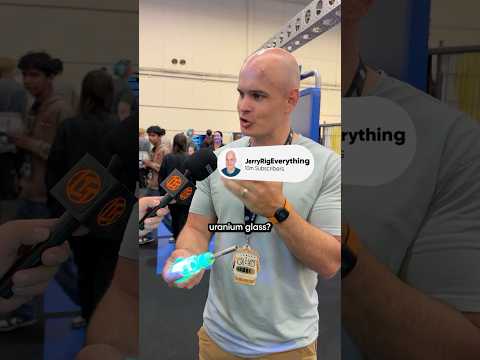
We're at opensause and we asked JerryRigEverything, atarabyte, the game theorist, Electroboom and Stellachu their thoughts on our new nuclear screwdriver!
Play War Thunder for FREE on PC, PlayStation, Xbox, and mobile using the links below! New to the game, or returning after six months? You'll get a massive bonus pack on PC and consoles packed with vehicles, boosters, and more. Claim your bonus and start playing today!
Yvonne needs a new phone after Apple screwed her over with an iCloud mistake... So Linus takes her shopping at Best Buy where they both look through and identify which phone will be best for her and which phone will solve her problems
Discuss on the forum: https://linustechtips.com/topic/1642261-my-wife-needs-a-phone-and-i%E2%80%99m-not-gonna-mess-it-up-this-time/
Check out our Channel Partners:
Secretlab - Grab a TITAN Evo ergonomic gaming chair: https://lmg.gg/secretlabltt
PIA - Get the VPN of our choice: https://www.piavpn.com/ltt
dbrand - Buy a "Circuit" series skin for your device: https://dbrand.com/pcb
► SHOP LTT PRODUCTS: https://lttstore.com
► GET EXCLUSIVE CONTENT ON FLOATPLANE: https://lmg.gg/lttfloatplane
► DIVE DEEPER ON THE LTT LABS WEBSITE: https://lmg.gg/labs
► SPONSORS, AFFILIATES, AND PARTNERS: https://lmg.gg/partners
Purchases made through some store links may provide some compensation to Linus Media Group. Affiliate links powered in part by https://affilimate.com/?aid=ghz1izbpb
Linus Sebastian is an investor in Framework Computer, Inc and HexOS by Eshtek.
CHAPTERS
---------------------------------------------------
0:00 Intro
1:43 Let's Go Shopping!
2:35 What Does Yvonne Want?
4:10 Phone Hunter Linus
5:11 What Did Hunter Linus Find
8:15 Yvonne's Turn to Look
12:45 And The Winner Is...
15:48 The Three Week Review
21:33 Outro
[[Writing]] has become my passion over time; I have built a whole company based on technical writing services (even though most say that’s impossible). After doing it for 11 years publicly (much longer privately), I still enjoy it every day. If I could have one dream, I’d probably imagine the book-author lifestyle, where I go to a faraway place or island and just write in my journal, articles from my vast notes system (~3 million words, or 2-3 books.
But also, I wanted to have a medium to express [[My Terminal Workflow with MacOS and Linux|my workflow]], discuss how others write, and learn even more. It’s truly an art form and a craft to write, at least it is to me. It’s not something you just sit down and do for 5 hours (as my upcoming guest liked to say). It’s essentially your life. You observe, you find things to write about, you get angry, you find a cool hack, you create a story. It’s all of it! And you can’t plan it.
Some days you write 2-3 articles/notes in parallel; other weeks you write none at all. And then the imposter syndrome. Everything you write is public. My writing process is usually:
Ohh this is so great, this is so interesting, I’m looking forward to sharing
Next day: oh what’s that, this is crap, why should I publish this?
Then the loss of motivation: the hard part. When you need to make it work, you change, but it’s not right. You change again, you get feedback, you change. And eventually you see the light and can say, OK, yes, this is good!
Writing really is an emotional rollercoaster, and it’s been that way with all the articles I have written. Less so with the notes on my second brain, there I’m less “storytelling”, but more like “curating facts”.
So long story short, yes, this is what my new show is all about: «Show Your Workflow». I hope you like it. Subscribe if you haven’t already to get the next one, if that is something that interests you.
Above written is the writer flow at a high level, and how I experience it most of the time. Here I share writing process over time as I have documented that over time. Each part is similar in a way, but also holds some different key pieces and determined how I wrote at that time. These are rather raw [[journaling|journals]], but maybe interesting to see.
My writing process as of 2025-10-23
I start thinking, I write, outline, and, very importantly, I stop. I sleep, I go into [[nature]], I just let it sit.
After coming back, I write some more. Then again, I talk to people and anyone about the topic, and I brainstorm with AI. And I write some more.
All happens in markdown ([[Obsidian]] for me), and I’m constantly changing titles, adding new ones, and reorganizing.
The flow does feel off. I start restructuring again. The key point for me is that when I begin merging related topics, sometimes similar, and putting the essential message further up.
Sometimes I write an intro, add some context, and include some relevant info. I’m adding more insights. And the most important one that I wanted to talk about is very far down.
Now that I’m at the point where the main content will be naturally moved up, I’m deleting or removing content. This is when it will start to feel cohesive. The reading flow starts to make sense. And from there, I just keep putting it together, making the reading flow perfectly.
Each chapter already has tons of notes, links, and insights, so finishing a first draft from here is usually easy and exciting.
Once I have a draft, I fix grammar with Claude Code and get feedback now, requesting very high-level feedback. Before I do another major rework, bring a great first draft. Go over 3-5 more times. I will notice how my changes are getting smaller and smaller until I know deep in my [[Gut Feeling|gut]] it’s ready.
A trick I learned—about deleting writing
It was always hard for me to cut out my hard-earned content. So I discovered a trick.
By just adding a # Take Out chapter at the end of each article, it tricks my brain into thinking: “it’s not deleted”, “I can get it back”, and this way it’s much easier to take out writing than to delete hard-earned hours on a paragraph.
My Writing from as of 2025-09-17
My process of writing is in two phases and the [[My Distraction-Free Typewriter (Micro Journal)|distraction-free typewriter]] helps me with the writing phase a lot in the first writing phase:
1. Outlining
this is just exploring, listing (!! this is key)
and write anything that comes to mind, no matter how good, or the other it fits in
then I have my [[Second Brain]] with ExcaliBrain and Graph view with backlinks that give me interesting insight which notes might link or are related. I like Graph Analysis (Today [[Obsidian Smart Connections]]). This will give me many related ideas that the plugin finds via embedding, locally, without AI. Gives me ideas through the connections that I otherwise wouldn’t have.
All of this usually happens on my laptop with [[Obsidian]].
2. Writing phase
Nowadays, as I have the [[My Distraction-Free Typewriter (Micro Journal)]] device, I will commit that state to the private GitHub repo, and pull it on my micro journal. After that, I’m offline, only with these ideas and my backlinks, and I’m trying to figure it out.
The Micro Journal has allowed me to think more, take a break, and focus for hours on writing, instead of constant distraction writing at the computer
A key here is also the [[Markdown]] format: I can simply move stuff around without losing formatting or anything else.
sometimes I copy existing paragraphs from my [[Second Brain]] that I have written before.
Finalizing
After a while, I sit back and review.
Write more…
Get a mental breakdown as I think all I have written is so bad.
Next day, change the flow, use AI to help me with the reading structure, maybe heading names.
Finalize, edit, grammar check.
Publish.
That’s my workflow for writing an article. There are other [[Type of Notes]] that can be written and other [[Type of Notetakers]]. Which might help to organize your knowledge.
I think it’s important to have a place where you store your knowledge (notes from books, insights you read online, ideas, etc.) that can help you when you write too.
My Writing Process as of 2022-08-19
Write at least two crappy pages a day. The writing is in fact re-writing. A process of reviewing:
first-round review for yourself, what you like
the second one do it for your fans
third for your critics, what they might come up with (bad) and improve
Then questions / proof-reading:
look for confusing stuff, that should not be in there (if unsure or in doubt: take it out!)
What are 10% that you would cut if you had to? Or what are 10% that you will keep for sure
And again, the [[Writing is Thinking]]!
I also like to write about things I don’t know, like Morgan Housel discussed in his interview with David Perell. It’s following my curiosity. First, I will learn something ([[Learn for Life]]), I will get [[Clarity]], and it’s interesting. This kind of flow or fun to write, will translate to the reader too.
according to David: laughter is the sound of comprehension. It’s when you get an idea, when it clicks or you make a connection. Happens to me when I find new insight while writing the second brain, I’ll smile.
My writing process initially documented
I always need to remind myself:
[[Writing is hard]]. It’s easy to start, hard to finish. You get stuck, you have a blockage, your creativity is low, you get interrupted, and you lose confidence in your writing. Reminding myself that the first 10 minutes are the hardest and envisioning the end product keeps me motivated.
Writing Phase
This is what brought me to writing. To release my thoughts ([[Brain Dump]]), make my brain accessible for more, and be creative. I like to brainstorm, change, delete, add, research, and do the thinking while writing. When writing on a computer, I can do it almost at the speed of my thinking; I do not lose thoughts as I would when writing on paper ([[Digital vs Paper]]). I can stop at any given time and come back, as all the thinking is written down. As well, I love the editing part. Making it better, finding correlations, and things I wouldn’t have expected before.
But before getting into the editing phase, during the initial phase, when drafting or coming up with the content itself, I try to get into distraction-free [[Deep Work|Flow]]. Long chunks of uninterrupted time, Cal Newport talks about [[Deep Work]] in his book.
Editing Phase
Usually, editing is when I learn the most, but at the same time, it’s also the most challenging step. I will get into a [[Writers Block]] and want to start a new thing instead. But by switching between [[Creativity vs Productivity]] or just going into nature with my thoughts and nothing else, usually one of them helps. Or if not, I leave it for a couple of days, weeks, or months and come back another time. Keeping the [[Ultradian Rhythm]] in mind also helps overcome the initial hardest ten minutes.
When I let the writing stay for a while, that typically leads to better quality because when I come back, I have new insight and might delete or change existing thoughts. The longer the wait, the more insightful that note will get. Therefore, I prefer to keep it slow. In the end, the reader will not mind if you spend one day or three months on an article; he appreciates it if the reader flow is good and he can learn. At least that is my goal as a writer: to give readers some learning.
Writing doesn’t always need to be about an article. You can just put some thought, [[Journaling]], or something you learned or find interesting, into a note. Save it for later. You mostly don’t need the thing you just knew at that moment. Something you find interesting today is doubtful to be of value right now. But maybe, in two years from now.
[!quote] David Perell
Writing is so painful when you write about something you do not care about and so blissful when you write with your [[Principles]] aligned. Writing from a blank page reveals the true things you deeply care about. YouTube with Paul Millerd
This last initial process was is shared as part of On Writing note.
📌 Pagamentos e Assinaturas no seu SaaS com a Appmax - https://codigofonte.click/appmax
Abrimos o jogo sobre a nossa trajetória e revelamos uma experiência de empreendedorismo que poderia ter nos tornado milionários antes dos 22 anos. Poucos sabem, mas tudo começou em 1998, com cursos utilizando mIRC e ICQ, em uma época onde ter negócios na internet no Brasil ainda era "terra de ninguém".
Contamos como uma entrevista gerou uma enxurrada de matrículas e o desafio técnico de criar um sistema de boletos do zero, além do erro crucial que nos impediu de escalar. Aprenda com as pedras que encontramos no caminho e entenda como nossa paixão pela tecnologia nos trouxe até o Código Fonte TV.
Click this link https://boot.dev/?promo=LTT and use my code LTT to get 25% off your first payment for boot.dev!
Is your smart TV watching you right back? With the massive amount of encrypted traffic flying off modern displays, hiding telemetry is child’s play, and simply ‘opting-out’ feels pretty naive. So what can you do if you don’t want to be watched?
Discuss on the forum: https://linustechtips.com/topic/1642180-i-stopped-my-smart-tv-from-spying/
Check out our Channel Partners:
Secretlab - Grab a TITAN Evo ergonomic gaming chair: https://lmg.gg/secretlabltt
PIA - Get the VPN of our choice: https://www.piavpn.com/ltt
dbrand - Buy a "Circuit" series skin for your device: https://dbrand.com/pcb
► SHOP LTT PRODUCTS: https://lttstore.com
► GET EXCLUSIVE CONTENT ON FLOATPLANE: https://lmg.gg/lttfloatplane
► DIVE DEEPER ON THE LTT LABS WEBSITE: https://lmg.gg/labs
► SPONSORS, AFFILIATES, AND PARTNERS: https://lmg.gg/partners
Purchases made through some store links may provide some compensation to Linus Media Group. Affiliate links powered in part by https://affilimate.com/?aid=ghz1izbpb
Linus Sebastian is an investor in Framework Computer, Inc and HexOS by Eshtek.
CHAPTERS
---------------------------------------------------
0:00 Intro
1:50 What is all this?
2:50 ACR
4:20 A whole lot of problems
5:51 And it only gets worse
8:00 But what about...?
9:44 The surefire solution...for now...
11:10 Credits
Lula tem intensificado o discurso sobre soberania mineral: nos bastidores da corrida eleitoral e da tensão comercial com os EUA, o presidente afirma que o Brasil não vai apenas extrair terras-raras e minerais críticos, mas processá-los internamente — "o que nós queremos é colocar nossas meninas e meninos para estudar como nós vamos explorar esse minério, como vamos produzir celulares, chips, baterias elétricas e tudo o que for produzido pelos minerais críticos e terras raras".
Neste episódio de CONJUNTURA, analisamos o que está por trás dessa retórica: a disputa geopolítica por tecnologia e defesa, o histórico brasileiro de exportar riqueza mineral sem agregar valor, e o que isso significa para o debate de tecnopolítica no país.
👥 Apresentadores
Sérgio Amadeu é sociólogo, professor da UFABC e pesquisador do CNPq, com atuação destacada na defesa da democratização da comunicação e da soberania tecnológica. Autor de livros e artigos, é referência em debates sobre privacidade, software livre e cultura digital.
Gabriel de Moraes é mestrando e pesquisador do Laboratório de Tecnologias Livres da UFABC (LabLivre), integra a equipe do Podcast Tecnopolítica e coordena o Grupo Avançado de Tecnologias para Movimentos Sociais (GATMOB-UFABC).
📌 Equipe
Coordenação e autoria dos podcasts: Sérgio Amadeu da Silveira
Criação de arte e edição: Tutti Marketing
Conteúdos e divulgação: Tutti Marketing e Gabriel Boscardim de Moraes
🔗 ACESSE OS CURSOS NO PORTAL DO TECNOPOLÍTICA: https://tecnopolitica.blog.br/
Instagram: https://www.instagram.com/podtecnopolitica/
Thanks to AMD for being a great partner and sponsoring this series! Check out their latest offerings at https://lmg.gg/f6PMg
Go to https://bit.ly/4gx31UP to enter the sweepstakes to win an AMD RYZEN™ 7 9800X3D CPU and a GIGABYTE Gaming OC RADEON™ RX 9070 XT GPU!
It's that time again for another $5000 ULTIMATE AMD Upgrade! This time for our writer Jordan. What do you buy for the man that D.I.Y.s everything? More to D.I.Y.? Furniture for a proper dining room instead of a workshop? Nah to the last one, he chose a new Linux PC instead... That we have to put together so strap in!
Discuss on the forum: https://linustechtips.com/topic/1642137-how-do-you-upgrade-a-lifelong-tech-amd-5000-ultimate-tech-upgrade/
Canon EOS R50 V Mirrorless Camera: https://geni.us/LxmwOWH
Canon Stereo Microphone DME1D: https://geni.us/1Dzszq
Smallrig R50V Camera Cage: https://geni.us/AS8E9
Busy Bee Tools 8" Bench Top Jointer Planer Combo BBJP8: https://geni.us/JiFo
Jackery Solar Generator 1000 v2: https://prsm2.com/y_b17fqn_
Check out our Channel Partners:
Secretlab - Grab a TITAN Evo ergonomic gaming chair: https://lmg.gg/secretlabltt
PIA - Get the VPN of our choice: https://www.piavpn.com/ltt
dbrand - Buy a "Circuit" series skin for your device: https://dbrand.com/pcb
► SHOP LTT PRODUCTS: https://lttstore.com
► GET EXCLUSIVE CONTENT ON FLOATPLANE: https://lmg.gg/lttfloatplane
► DIVE DEEPER ON THE LTT LABS WEBSITE: https://lmg.gg/labs
► SPONSORS, AFFILIATES, AND PARTNERS: https://lmg.gg/partners
Purchases made through some store links may provide some compensation to Linus Media Group. Affiliate links powered in part by https://affilimate.com/?aid=ghz1izbpb
Linus Sebastian is an investor in Framework Computer, Inc and HexOS by Eshtek.
CHAPTERS
---------------------------------------------------
0:00 Intro
1:17 Sweepstakes
1:57 An LTT Writer's habitat
4:25 Let's checkout the upgrade
6:18 Planer / Jointer
9:29 I wanna start PC Building
11:04 Our parts selection
12:14 What about airflow?
14:45 Reece Update
16:11 Back to PC Building!
17:58 Way to go Linus
20:33 A cromulent PSU install
22:05 ??? More on Floatplane
22:45 Wrapping up the build
25:38 Cyberpunk 2077
26:11 Jordan's JDM whip
28:03 Star Trek vs. Star Wars
28:58 Conclusion
29:47 Outro
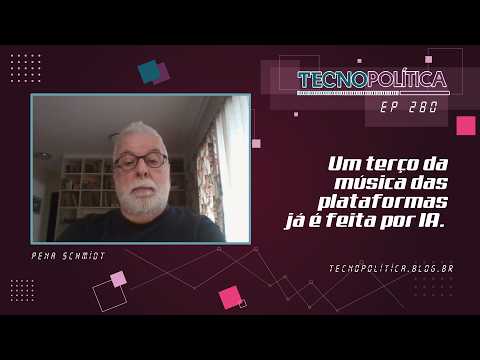
Nesse episódio do Tecnopolítica, Sergio Amadeu conversou com Pena Schmidt, produtor musical de artistas e bandas como Titãs, Ira! e Os Mulheres Negras, sobre o futuro da música diante da |Inteligência Artificial. Pena, que também foi superintendente do Auditório Ibirapuera e Diretor do Centro Cultural São Paulo, considera que só há uma solução para não perdermos uma ou duas gerações de músicos que não conseguirão viver de música. Pena Schmidt considera que Big Techs e a indústria cultural querem reduzir custos para aumentar seus lucros sem se importar com a nossa cultura. Ela alerta que dispositivos de IA estão permitindo a monetização de músicas de baixa qualidade, feitas por sistemas automatizados com custo de uma assinatura mensal de menos de 100 dólares. Pena propõe dar um basta nisso. Episódio imperdível!
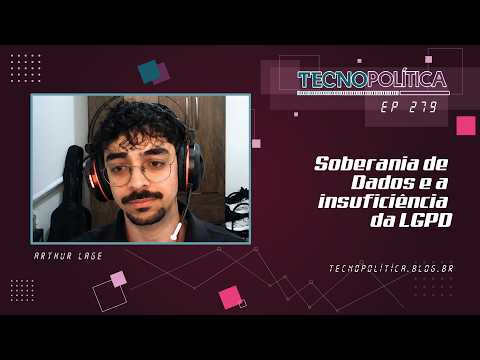
Nesse episódio do podcast Tecnopolítica, Sérgio Amadeu conversou com Arthur Lage Garcia Carvalho, recém formado em Direito pela Universidade Federal de Ouro Preto, MG, sobre a insuficiência da Lei Geral de Proteção de Dados (LGPD) diante das necessidades da soberania digital no Brasil. Arthur Carvalho realizou uma pesquisa mostrando que a LGPD é necessária, mas insuficiente. Apesar de
representar um avanço normativo relevante, a LGPD não conseguiu, por si só, conter nem reduzir as práticas extrativistas das grandes plataformas digitais. Além disso, a lei legitima os fluxos transfronteiriços de dados que comprometem a soberania nacional. Na conversa Arthur afirmou que a LGPD precisa ser melhorada e que a ANPD teria que ser mais revigorada para fazer valer nossos interesses diante de corporações tão poderosas. Por fim, Arthur defendeu que o consentimento, princípio fundamental da LGPD, é uma ilusão regulatória. Ele nos explica que diante de contratos de adesão e opacidade algorítmica, os titulares, ou seja, o cidadão comum não têm real capacidade de compreender ou controlar o uso de seus dados. Episódio imperdível.
A era do prompt simples já ficou para trás e agora entramos em uma fase mais técnica da IA com Graph Engineering, Loop Engineering e sistemas de memória complexos. Exploramos como o SDD (Spec Driven Development) e os novos protocolos estão transformando o papel do desenvolvedor, exigindo muito mais do que apenas saber 'conversar' com uma LLM. Descubra por que entender a arquitetura por trás dos agentes é o que vai separar os profissionais dos amadores em 2026.
📌 VPS HOSTINGER QUE USAMOS → https://codigofonte.click/vpshostinger
O cupom CODIGOFONTE te garante um desconto maior
Nesse episódio, Sergio Amadeu conversou com Mauro Salles, diretor do Sindicato dos Bancários de Porto Alegre e integrante da CONTRAF-CUT. Mauro apresentou o histórico projeto IANDE, primeiro nó de uma rede federada soberana de data centers de baixo impacto ambiental, sem uso de água, para treinamento e inferência de IA. Esse projeto pioneiro no Brasil mostrará que existem outros modos de implementar sistemas automatizados, com software livre, código aberto, sem necessidade de estruturas de hiperescala. Acompanhe essa conversa e se você quer integrar essa rede federada soberana entre em contato com o Sindicato dos Bancários de Porto Alegre. Divulgue e compartilhe esse episódio. Histórico!

 Login
Login