Recently unsealed court documents in the New York Times' case against OpenAI and Microsoft are pretty damning. The companies' own documentation warned that it was starting a "doom loop" that would damage the web, characterized its scraping of data to train its models as the "largest theft of labor in human history," and that it made a "complete mockery of the idea of fair use."
Many of the most eye-catching quotes from the document come from Microsoft's Director of Applied Science, Brent Hecht. Though, the company has tried to distance itself from Hecht's assertions. Microsoft spokesperson Alex Haurek told The Verge that "These comments ref …
The US narrowly avoided boarding a Chinese ship based on an "entirely false" US intelligence report generated with the help of AI tools, according to a CNN report.
That erroneous intelligence, submitted by a US Special Operations Command analyst, suggested the Chinese ship was transporting nuclear arms program components through the Middle East, according to "four sources familiar with the episode" cited by CNN. The US military was preparing to intercept and board the ship, with air support, before officials discovered a chatbot used in generating the report had "inaccurately identified the material the ship was carrying."
One source told CNN the AI-powered fiasco "almost started a war."
An AI tool is set to start advising air traffic controllers on managing air traffic in the congested airspace above the Washington, DC, area. The expected launch would be the first step toward a planned nationwide rollout covering the 29 million square miles of US national airspace overseen by the Federal Aviation Administration.
The FAA describes the SMART system as using AI models to predict air traffic flows and identify potential conflicts based on operational factors like airline schedules, weather, airport capacity, and airspace conditions. US government and industry officials told The Wall Street Journal that SMART could debut for the three major airports in the Washington, DC, area as soon as Monday, September 21.
The decision to launch SMART in a limited scope before going nationwide is the “right call,” said Philip Mann, principal consultant at Vector Strategic Consulting LLC, where he advises on aviation safety and AI governance. Mann previously worked at the FAA in multiple roles for 17 years.
Virginia Gov. Abigail Spanberger ordered the state government to take steps that could empower local communities to have a larger say in data center development and slow down approvals in a state that is already home to the data center capital of the world.
Executive Order 22 bans executive branch officials from signing nondisclosure agreements for data center projects, requires expedited noise regulations, and requires a review of backup-generation operations used by data centers, among other requirements. The order also establishes an AI task force responsible for evaluating how the state government can address risks to Virginians like wo …
The Federal Communications Commission yesterday approved Paramount Skydance's plan to sell large equity stakes to the sovereign wealth funds of Saudi Arabia, the United Arab Emirates, and Qatar.
Under US law, companies with licenses to run broadcast stations need FCC approval to have direct or indirect foreign ownership exceeding 25 percent of the company's stock. Paramount says its indirect foreign ownership will reach 49.5 percent after it receives investments from the sovereign wealth funds and filed a petition asking the FCC to waive the foreign ownership limit.
Paramount, the owner of CBS, holds FCC licenses for the 28 local CBS stations that it owns and operates. Paramount is buying Warner Bros. Discovery in a $111 billion deal that is being partially financed with foreign investment but hasn't completed the acquisition because US states filed a lawsuit that aims to block the merger. Trump's Department of Justice approved the merger.
For a long time, sleep research has treated the cerebral cortex as a passive follower reacting to signals from the deep brain. “Usually, sleep is associated with being controlled by subcortical regions,” said Geoffrey Terral, a neuroscientist at the Albert Einstein College of Medicine in New York.
The cortex is where the slow rhythms of deep sleep can be seen, but researchers assumed the signals that triggered them originated elsewhere. In a recent Nature study, Terral and Renata Batista-Brito, who runs the lab, report a population of cortical cells that challenges that assumption.
These cortical cells make up only around one percent of the cortex's inhibitory neurons, and switching them on in a mouse puts the animal to sleep. “What our work shows is that the cortex can not only see this rhythm but also initiate it by itself, and this is sufficient to promote sleep,” Terral said.
On Wednesday, US government officials removed a Chinese AI search tool that was briefly deployed on the Federal Register website, Reuters reported.
The change came after social media users noticed an apparent contradiction: The National Archives was using one of Alibaba’s Qwen AI models, even as top US law enforcement claimed that such models illegally copy US frontier models. Earlier this month, the Federal Bureau of Investigation (FBI) named Alibaba among six leading Chinese firms allegedly conducting “industrial-scale distillation” that the agency says is helping America’s biggest competitor cut costs and development time in the race for global AI leadership.
It’s unclear when exactly the National Archives, which runs the Federal Register website, began offering visitors the option to use a Qwen model to search public comments on proposed regulations. So far, the independent agency tasked with increasing public access to federal government documents has not commented on the removal and did not respond to Ars’ request for comment. The White House and the FBI have also not commented.
In this collaboration with our friends at The Intercept, 404 Media's Jason Koebler and the Intercept's Sam Biddle and Akela Lacy discuss the ways AI is already used to empower private surveillance companies that filter data to the government, how AI is used in war, and the prospect of an AI apocalypse. This podcast was recorded live in Los Angeles at The Loved One on September 12.
This is Behind the Blog, where we share our behind-the-scenes thoughts about how a few of our top stories of the week came together. This week, we discuss just doing it, machines that eat the internet, and an eavesdropping watch.
EMANUEL: It is a foundational, defining feature of 404 Media, but I sometimes forget that when I’m having trouble with a story, I need to just do it.
This is most of all true when it comes to reporting. I spent a couple of weeks looking into AI generated music on Spotify appearing under the names of real artists. It’s an issue I and many other publications have reported on in the past, but whenever I look into it I am shocked by how prevalent the issue is. If you talk to any musician or spend some time clicking around music platforms yourself, you’re going to quickly find hundreds of examples of this abuse of the digital music distribution system.
Abnormal beating of airway cilia from a child with Primary Ciliary Dyskinesia, a genetic disorder affecting respiratory function. Credit: Ning Xu, Tsinghua University
A Chinese optical engineer is the winner of this year's Small World in Motion competition, sponsored by Nikon. Ning Xu of Tsinghua University in Beijing beat out 346 other video entries from 40 different countries with his super-resolution video (above) of the abnormal beating of cilia in the airways of a child with a rare genetic respiratory disorder.
Founded in 2011, the Nikon Small World in Motion competition is a spinoff of the company's Small World Photomicrography Competition, which has been around since 1974. Both are meant "to showcase the beauty and complexity of things seen through the light microscope"—one through still photographs, the other through photovideography, taking advantage of all the technological advances that now allow users to make movies or time-lapse images through the microscope.
Primary ciliary dyskinesia (PCD) is a genetic disorder that adversely affects the tiny hairlike structures that line the lungs, among other areas. Their wavelike motion helps move around germs, mucus, dust, and other irritants so the body can dispel them via coughing or sneezing. In people born with PCD, there is something wrong with those cilia, so those irritants build up, causing respiratory infections, among other complications. The cilia might be the wrong size, the wrong shape, or missing altogether. They might move abnormally or not move at all.
Cyber researchers broke into OpenAI using its key rival Anthropic’s software, highlighting vulnerabilities in the ChatGPT maker’s security as leading AI companies face mounting scrutiny over safety.
A small cyber security group gained access to an OpenAI employee’s ChatGPT account, which permitted them to read private software information and suggest changes.
The researchers had been given access to an Anthropic tool specifically designed for security professionals, and were paid for the work as part of a program to find vulnerabilities before they could be exploited by bad actors.
Welcome to Edition 9.11 of the Rocket Report! The most interesting story of the week, in our view, is a deep dive by Stephen Clark, linked below, into the dwindling fortunes of United Launch Alliance. As recently as a decade ago, the launch company, co-owned by Boeing and Lockheed Martin, could claim dominance over the US industry. But those glory days are fading fast. So what's next for a company that is tied to an expendable rocket?
As always, we welcome reader submissions, and if you don't want to miss an issue, please subscribe using the box below (the form will not appear on AMP-enabled versions of the site). Each report will include information on small-, medium-, and heavy-lift rockets as well as a quick look ahead at the next three launches on the calendar.
Avio seeks to cash in on Falcon 9 retreat. Italian launch services provider Avio has seen an influx of customers who were unable to secure launch opportunities with SpaceX, European Spaceflight reports. “I can tell you SpaceX has already gone captive because we have a whole bunch of customers coming to us and saying, 'Oh my God, can you fly us?'” Avio CEO Giulio Ranzo said during the company’s September 10 earnings call. In recent months, SpaceX told multiple prospective customers that it was no longer accepting new orders for commercial Falcon 9 launches.
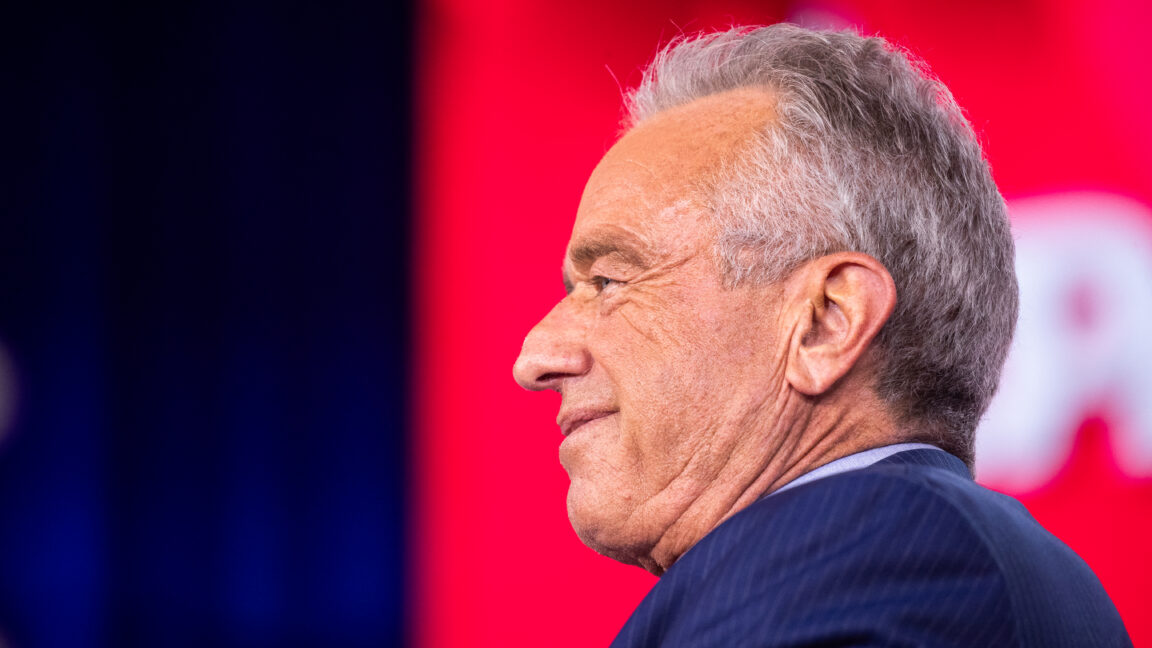
Anti-vaccine Health Secretary Robert F. Kennedy Jr. announced the names of eight new members of a 16-person federal task force intended to make scientifically independent, evidence-based recommendations on an array of preventive medicine services for Americans—from depression screening to statin use, colonoscopies, and mammograms.
Recommendations from the panel—the US Preventive Services Task Force (USPSTF)—don't simply provide guidance for Americans; they also determine access. The USPSTF is supposed to use a rigorous, transparent framework for evaluating evidence and sets graded recommendations on an A to D scale. Health insurance providers are required to cover, at no cost, all preventive services that are given recommendations of an A or B grade.
Kennedy has sidelined the USPSTF for more than a year, canceling its meetings and refusing to appoint new members as terms expired and members left. In May, Kennedy also fired two leaders, sparking outcry and exacerbating fears that he would corrupt the nonpartisan independent panel by stacking it with unqualified ideological allies—which he did with an influence vaccine advisory committee at the Centers for Disease Control and Prevention.
As European militaries adapt to the use of AI and drones in modern warfare, a NATO-backed startup is helping to deploy AI-driven target detection and selection that can run on small drones for surveillance and attack missions.
The company, Scaleout Systems, was originally founded by researchers from Uppsala University in Sweden in 2018, and initially focused on training and deploying machine learning models directly on the hardware available in commercial trucks and other vehicles. But once Russia launched its full-scale invasion of Ukraine in 2022, the company pivoted toward defense applications.
“With the war in Ukraine and a shifting world, we realized that this technology can be very important to operationalize edge data and sensor data for machine learning to make sure that NATO allies have found that strategic advantage,” Andreas Hellander, cofounder and CEO of Scaleout Systems, told Ars.
Você sabe como será a TV 3.0? O que ela tem a ver com a soberania digital? Nesse episódio do podcast Tecnopolítica, Sergio Amadeu conversou com Rodrigo Savazoni, pesquisador e ativista da Cultura Digital. Savazoni descreveu como está ocorrendo a implantação da chamada TV 3.0, alertou sobre os riscos de uma maior concentração do poder midiático na Rede Globo e dos graves perigos da ausência de uma política de localização de dados da população brasileira. A conversa gerou em torno da carência de uma política pública que garanta efetivamente a democratização e a diversidade cultural, étnica e política. Também foi discutido a relação atual da Globo com as Big Techs e com a Palantir, empresa fundada por Peter Thiel e dirigida hoje por Alex Karp, integrante do complexo militar-industrial norte-americano. Mais uma vez o Brasil vai implementando uma tecnologia sem discutir a questão da soberania digital, indispensável para nossa democracia. Imperdível.

 Login