With three drivers in each ear and tuning from Metropolis Studios, Nothing wants its new $399 cans to shine in the studio while also making your commute more musical.
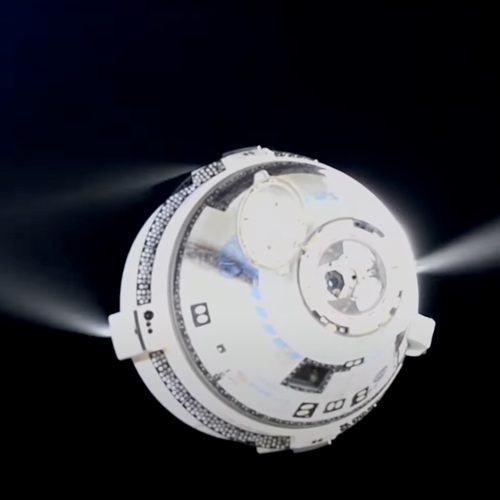
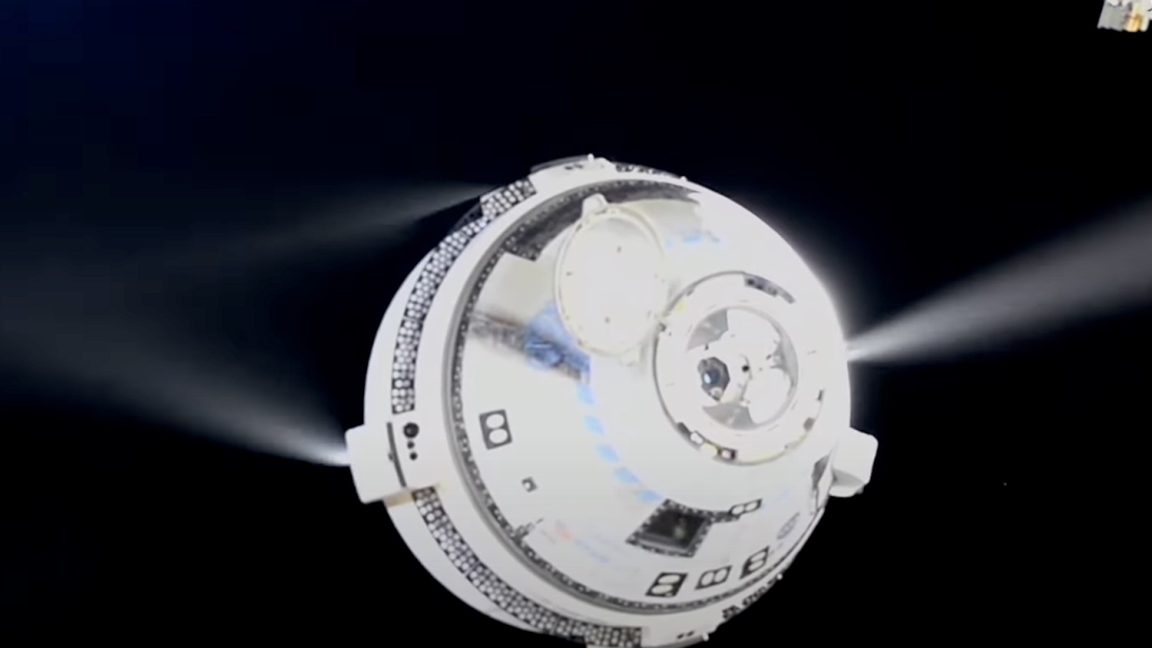
NASA announced on Monday that it will exercise options to purchase two additional flights on Boeing's Starliner spacecraft, as well as financially support the company in its efforts to return the crewed vehicle to flight and find a new rocket after the Atlas V vehicle retires.
The space agency's announcement confirms reporting by Ars Technica earlier this month on NASA's plans to maintain access to low-Earth orbit after the impending retirement of SpaceX's Crew Dragon vehicle.
"I do not think it's a secret that SpaceX intends to sunset older platforms like Falcon and Dragon as they concentrate on their next-generation capability, Starship," NASA Administrator Jared Isaacman said during a news conference on Monday afternoon.
On its face, the recent summit between Donald Trump and China’s president, Xi Jinping, didn’t change much in the world of AI regulation. Export controls were not discussed, with neither country seemingly interested in making concessions. An already tenuous trade truce was temporarily extended for just two months, and looming US controls that could drop soon could easily end that and trigger China to retaliate by cutting off exports of rare earths, analysts expect.
However, in the background of these shaky talks, Nvidia appeared to notch a big win, as China is currently mulling relaxing controls and allowing some of its biggest AI firms to import perhaps millions more of Nvidia’s banned chips over the next year.
Sources familiar with China’s talks told The Information that China’s tech oversight arm, the Ministry of Industry and Information Technology, asked Alibaba and ByteDance to share plans to buy Nvidia’s RTX Pro 5500 chips. Although these are gaming chips, China asked firms to detail how they plan to use them, with expectations that chips could be put into servers to help power the country’s most in-demand AI models.
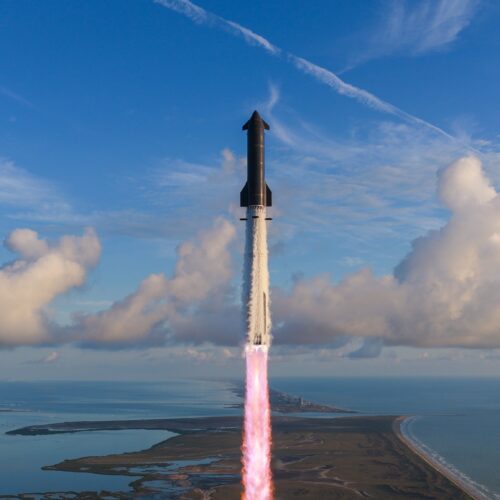
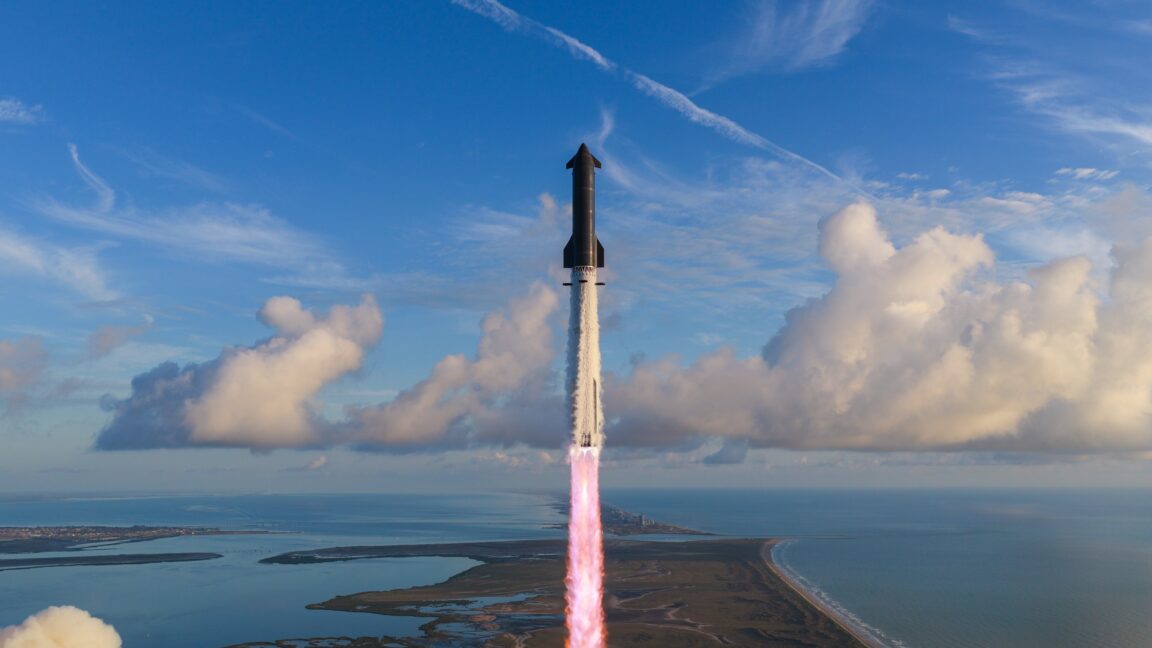
SpaceX's Starship rocket thundered into the sky over South Texas early Monday. It was the 14th test flight of the world's most powerful launch vehicle. This time, however, the rocket's massive upper stage squeezed out some extra oomph from its Raptor engines and accelerated to orbital velocity.
On all of Starship's previous flights, SpaceX intentionally dialed back the full capability of the rocket to fly a suborbital trajectory, slow enough for Earth's gravity to pull the vehicle back into the atmosphere before it could complete a full lap around the planet. After several successful suborbital flights in a row, SpaceX officials decided this launch should go all the way to low-Earth orbit. And it did.
What's more, SpaceX packed 26 of the company's newest generation of Starlink broadband satellites into the rocket's cargo bay. One by one, the flat-packed satellites—too large to fit inside SpaceX's workhorse Falcon 9 rocket—were released from Starship's payload deployer using a system of pulleys and cables to eject the satellites overboard like a Pez dispenser spits out candy.
The state of Florida is seeking a temporary injunction to stop OpenAI from continuing to develop what it calls a "reckless, unacceptably risky product" without the deployment of "third-party approved safety guardrails."
Following that string of events, OpenAI on Friday announced it had already halted training of its "most-capable models" until it could validate safety protocols intended to prevent agents from accessing the open Internet during training. But in seeking an injunction from the state court, Florida argues that OpenAI has "repeatedly shown they are incapable of monitoring their AI, and hesitant in revealing rogue activity once discovered."
Equipment to capture carbon dioxide from ambient air or smokestacks generally works through a sort of reversible filter. Air is passed through granules or a liquid that absorbs the CO2, then that CO2-loaded substance undergoes a process (usually heating) that causes it to let go of all that CO2. The resulting gas can be collected in a separated stream.
It’s also possible to do a similar sort of operation on a smaller scale—like inside a battery. A new study from a team led by James Buchen of the University of Delaware demonstrates an example of a battery-based electrochemical carbon-capture technique that they say is more viable than previous attempts. It has the potential to require less energy—and therefore be cheaper—than the reversible-filter designs that currently dominate.
Carbon chemistry
The basic idea behind a device of this type is that hydroxide produced at the battery cathode reacts with CO2, converting it to carbonate or bicarbonate that passes through the separator membrane to the anode. There, the lower pH causes the reaction to reverse, with carbonate turning back into CO2 gas. The role of the cathode is to produce hydroxide ions; the role of the anode is to consume them.
The cost of healthcare in general is a debilitating, pre-existing condition for Americans. But the high prices of prescription drugs usually stand out as a pain point. While there are many insidious reasons why Americans pay more—often far more—for their medicines than people in peer countries, exploitation of the US patent system is an obvious one.
A study published Monday in JAMA highlights just how much patent exploitation has grown since 1990. In that time, researchers found that the number of patents on small-molecule drugs has more than tripled, going from an average of 2.1 patents per drug approved in 1990 to 6.9 for those approved in 2019.
Most of the growth was in "nonprimary" patents—patents that generally aren't related to a drug's active ingredient, but are instead for things like minor tweaks to a drug's nonactive ingredients, updates to the way the drug is used, or the design of specialty delivery devices, such as auto-injectors. Together, those extra patents on an individual drug can create what's called a "patent thicket," which delays the release of affordable generics on the market, keeping drug prices higher for longer without actual clinical advancements.
The federal government’s war on fuel efficiency claimed another victim today. The Department of Transportation released a new rule for the country’s Corporate Average Fuel Economy standards, which, as expected, discourage the very idea of economical vehicles. Among the changes is a rollback to fuel economy numbers not seen in more than a decade, below even the low standards implemented in 2020, the last time President Trump was in power. The new goal is just 34.9 mpg by model year 2031.
This is nothing if not expected. When Sean Duffy was installed as Transportation secretary last January, he immediately announced that any fuel efficiency standards put in place under the Biden administration were dead and buried. Those rules had a slower ramp up than some might have liked but would have required automakers to sell many more electric vehicles and plug-in hybrids.
Now, we may have the possibility of some OEMs dropping their EVs and PHEVs entirely. The notice of final rulemaking criticizes the idea of emissions credits and blames them for automakers not investing in cleaner engine technology, and from model year 2028, such credits are a thing of the past. And plug-in vehicles will now no longer be included in an automaker’s fleet average; under previous rules an EV or PHEV could have a CAFE rating of hundreds of mpg.
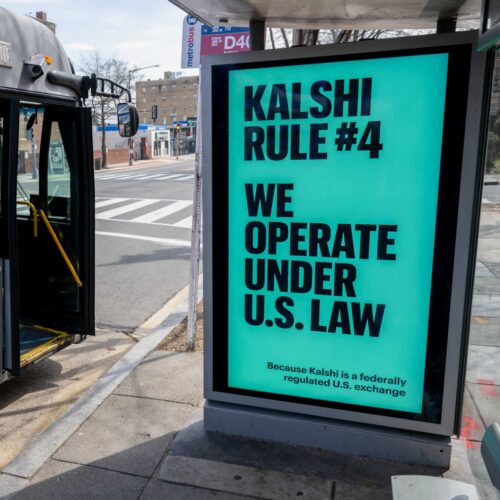
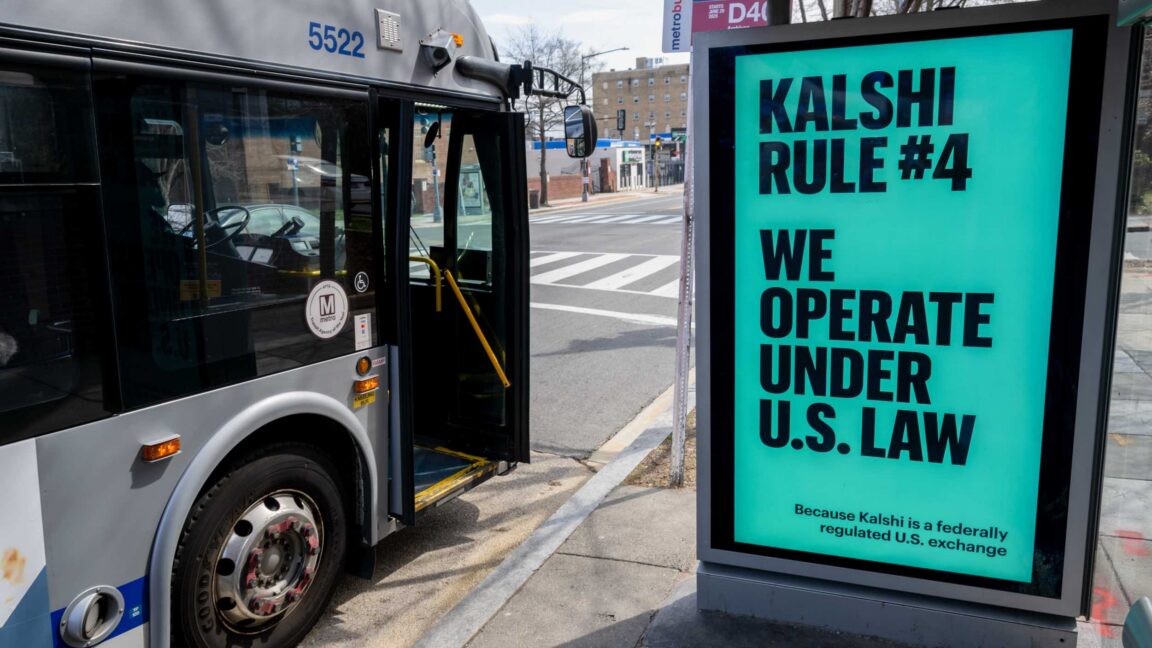
Another federal appeals court has ruled that states can enforce their gambling laws against the prediction market Kalshi, which asserts that it can only be regulated by the US government. On Friday, a three-judge panel in the US Court of Appeals for the Sixth Circuit ruled unanimously against Kalshi and in favor of Ohio and Tennessee.
While the US Commodity Futures Trading Commission has exclusive jurisdiction over "swaps," the judges found that sports wagers offered on Kalshi do not meet the legal definition of swaps. Moreover, the court found that even if Kalshi wagers were swaps, the regulatory scheme created by Congress would not prohibit states from enforcing gambling laws on prediction markets.
"We hold that Kalshi has not shown that its sports-event contracts satisfy the statutory definition of a 'swap' so as to fall within the scope of the CFTC's 'exclusive jurisdiction,'" said the ruling written by Judge Julia Smith Gibbons, a George W. Bush appointee. "And, even assuming that Kalshi’s sports-event contracts are swaps, we alternatively hold that the CEA [Commodity Exchange Act] neither expressly nor impliedly preempts Ohio’s or Tennessee’s gambling laws."
Meta and other tech giants are pushing through structural changes at the Global Internet Forum to Counter Terrorism that outside researchers allege will weaken oversight of an already embattled consortium.
Thanks to UGREEN for sponsoring this video! Check out their Home Agent lineup and more below!
UGREEN HomeAgent 100(Reserve from $50, Save 50%) https://ai.us.ugreen.com/vVqCH4
UGREEN HomeAgent on Kickstarter https://bit.ly/4qXlqie
Someone really just threw computers away in their yard and Linus happened to stumble upon them one night. Time to fix them, test them, and then give them away at WHALE Lan!
Discuss on the forum: https://linustechtips.com/topic/1643145-who-would-leave-these-in-their-yard/
Special Guest: http://twitch.tv/bocabola
Check out our Channel Partners:
Secretlab
- Grab a TITAN Evo ergonomic gaming chair: https://lmg.gg/secretlabltt
- Grab an ATLAS ergonomic office chair: https://lmg.gg/secretlablttatlas
PIA
- Get the VPN of our choice: https://www.piavpn.com/ltt
dbrand
- Buy a "Circuit" series skin for your device: https://dbrand.com/pcb
► SHOP LTT PRODUCTS: https://lttstore.com
► GET EXCLUSIVE CONTENT ON FLOATPLANE: https://lmg.gg/lttfloatplane
► DIVE DEEPER ON THE LTT LABS WEBSITE: https://lmg.gg/labs
► SPONSORS, AFFILIATES, AND PARTNERS: https://lmg.gg/partners
Purchases made through some store links may provide some compensation to Linus Media Group. Affiliate links powered in part by https://affilimate.com/?aid=ghz1izbpb
Linus Sebastian is an investor in Framework Computer, Inc and HexOS by Eshtek.
CHAPTERS
---------------------------------------------------
0:00 Intro
1:26 Inspecting the PCs
6:51 No racks at WHALE LAN allowed
7:07 Does the PC work?
8:37 Grabbing a new GPU
9:25 What about new PSU?
10:28 AND A NEW COOLER?
11:07 No New SSD
12:00 But we do get new RAM
13:16 Getting the case ready
14:49 We're in Windows
17:19 Testing the other system
18:29 Putting it together
18:43 WHALE LAN
22:33 Signing a Coconut
23:17 Where to put it?
23:44 Who will grab it
24:45 You're Winner!!
26:43 Outro
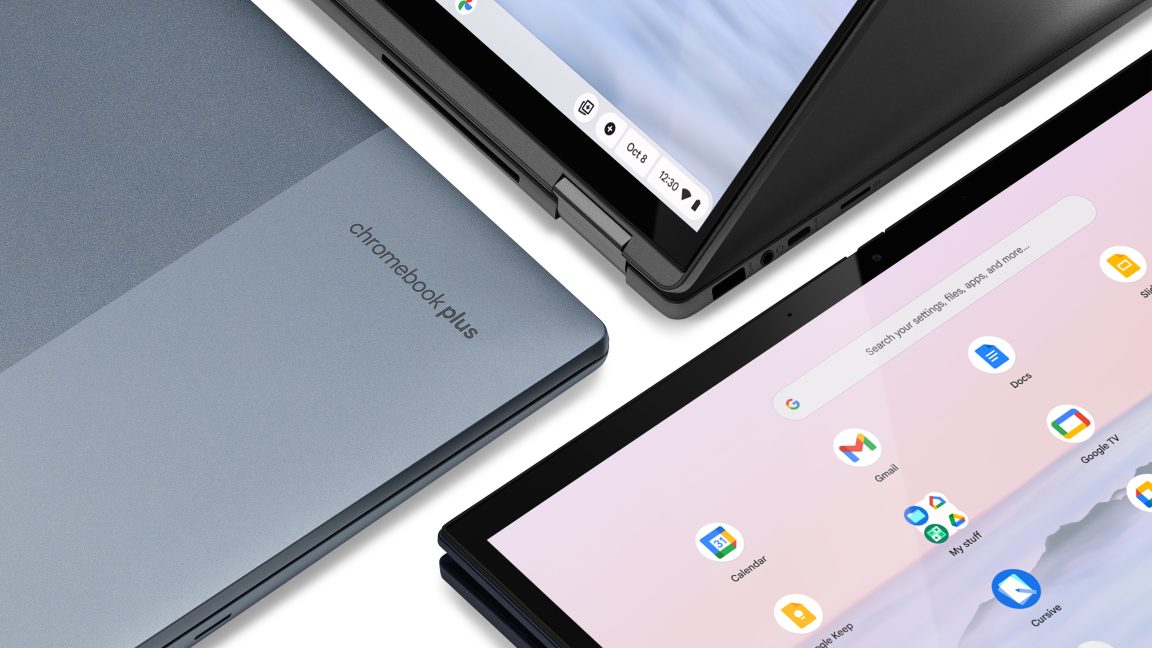
We are mere days away from the launch of Googlebooks, the long-awaited Android laptops that Google hopes will compete with macOS and Windows. But what of Chromebooks? There have been hints that Google plans to sunset its web-first ChromeOS platform, and a new support page lays out some of the specifics.
The support page, spotted by 9to5Google, aims to explain the role of Googlebooks to Chrome Enterprise and Education customers. The page starts off by noting that Googlebook OS, which is Android even if Google doesn't like to say that, will offer an enhanced experience with deeper system capabilities and lots of AI.
Like Chromebooks, Googlebooks are guaranteed 10 years of software support. However, the latest Chromebook models won't get that in the traditional way. Google's support page says that it plans to continue ChromeOS support through "mid-2034," so there are already devices with support windows beyond that.
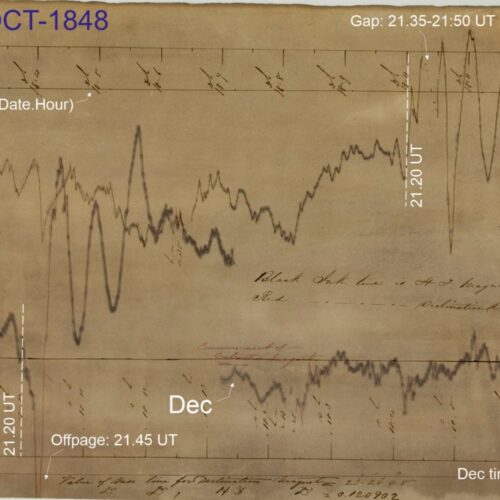
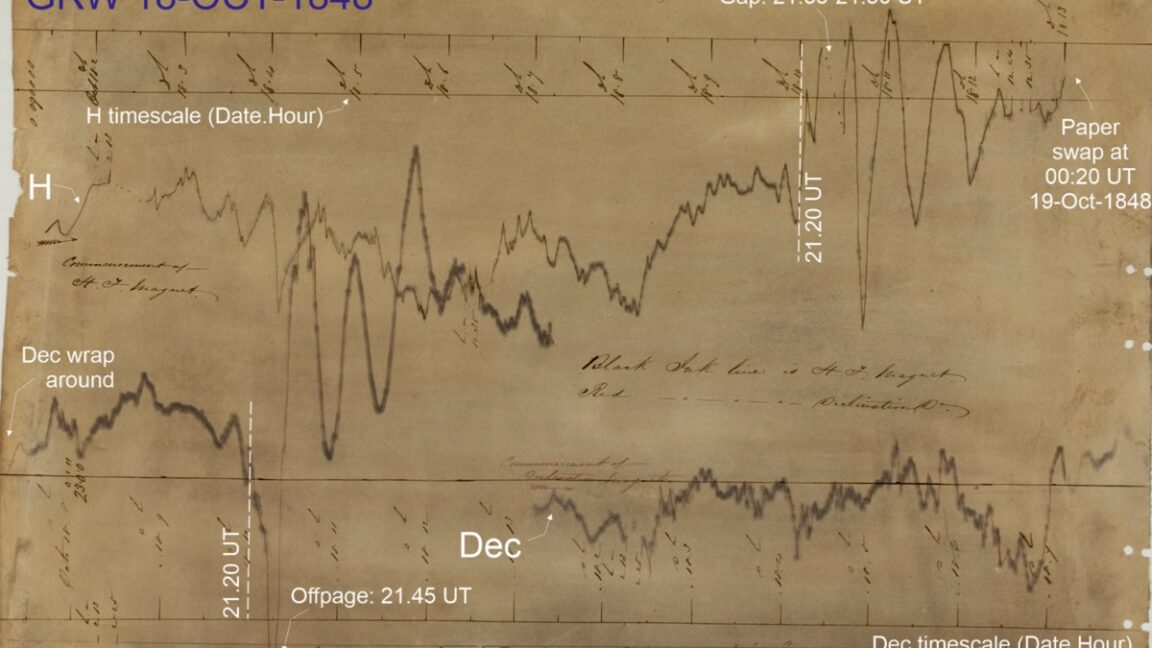
The infamous Carrington Event of 1859 has long been considered the first extreme space weather event, but there have been reports of minor disturbances to telegraph equipment during geomagnetic storms since the late 1840s. In 2013, scholars discovered an anonymous report published in 1871 in Nature describing how a "very intense magnetic disturbance" disrupted rail travel in Exeter on the southern coast of England in October 1841. If accurate, this would be the earliest such account. However, according to a paper published in the journal Space Weather, that 1841 date is most likely a typo, with the real railway disruption occurring several years later.
"Space weather is often discussed as a modern challenge because of our dependence on technologies such as satellites, communications systems and electricity networks," said co-author Jim Wild of Lancaster University. "What this study shows is that society has been experiencing the effects of space weather on technology for almost as long as electrical technologies have existed. The Exeter train delay is a fascinating story because it sits right at the point where emerging technologies first began to encounter the realities of the space environment."
The Carrington Event remains the most powerful geomagnetic storm in the scientific record, with strong auroral displays occurring all over the world, causing sparking and even a few fires in telegraph stations. Some of the auroras were so bright that people reported being able to read the newspaper by their light. The telegraph was a relatively new technology at the time, having first emerged in the 1830s, and the geomagnetically induced current—from a likely coronal mass injection from the Sun—knocked out telegraph systems. Some operators found they were still able to transmit and receive messages even after disconnecting the power supply, relying just on the powerful auroral current.
With the threat of political violence at unprecedented levels, state and federal GOP candidates are openly sharing racist, pro-militia, anti-vaccine, sexist, antisemitic, and secessionist views.
📌 CALCULE SEUS IMPOSTOS NA REFORMA TRIBUTÁRIA → https://codigofonte.click/contabilizei06
(Cupom 2 meses grátis na Contabilizei: CODIGO_FONTE2M)
Você tem certeza de que apenas a IA está lendo os seus prompts e trechos de código?
Novas informações de bastidores mostram o "Projeto Lily" e os detalhes surpreendentes sobre o treinamento de modelos da OpenAI e como os dados dos usuários estão sendo avaliados.
De quebra te mostramos como se proteger e não deixar que seus dados sejam utilizados para novos treinamentos no ChatGPT da OpenAI, no Claude da Anthropic e Gemini do Google.
The Bose Noise Cancelling Wired Earbuds are the first new wired headphones from the brand since 2015, inspired directly by teen preferences. We got an early listen.

 Login