❌

Reading view

NASA updates lander plans for Moon landings, finally solves long-festering Orion issue

During a lengthy news conference on Friday, NASA provided a detailed overview of how it plans to return astronauts to the lunar surface as soon as 2028 as part of its Artemis Program.

Although much of the information behind these plans has been previously reported at Ars Technica and elsewhere, this marked the first time NASA has laid them out in detail and acknowledged some substantial changes in the architecture.

Most notably, for SpaceX's Starship vehicle, the revised plan calls for the Orion spacecraft to dock with the Starship lunar lander in high-Earth orbit before transiting to the Moon. And for Blue Origin, the mission architecture includes four launches of the New Glenn rocket, but no spacecraft-to-spacecraft refuelings. Additionally, the Blue Origin plan allows for the possibility of its Blue Moon lander rendezvousing with Orion in low-lunar orbit.


Read full article

Comments

© NASA

Hegseth warns prediction market bets warp military judgment, endanger troops

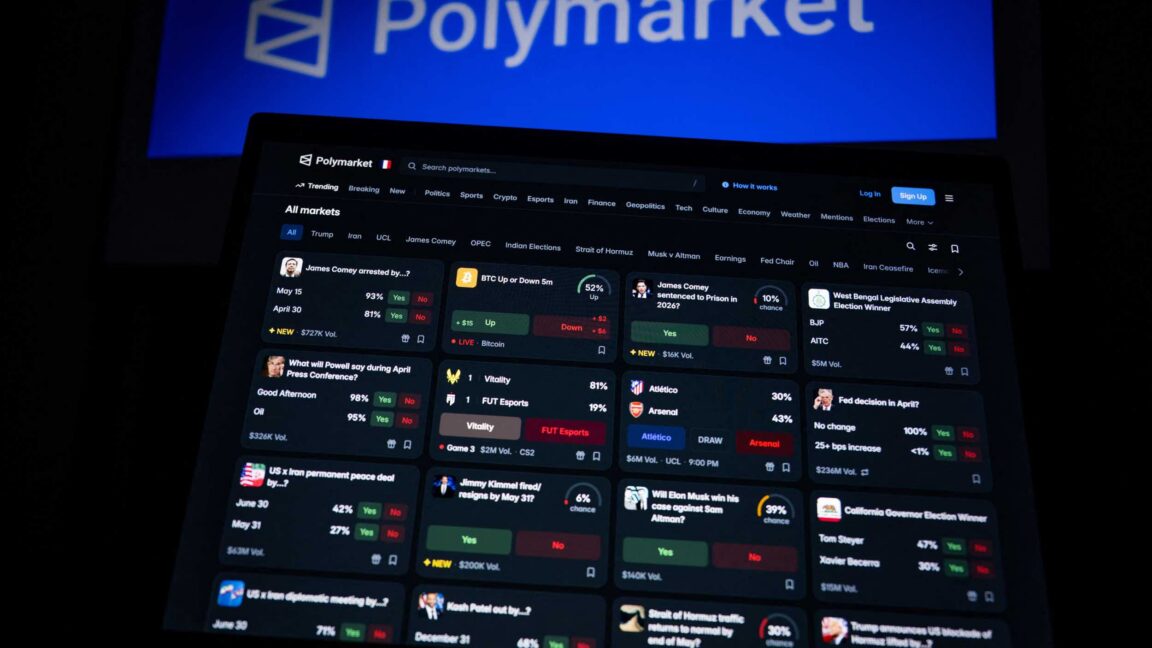
Defense Secretary Pete Hegseth issued a memo warning military personnel against using nonpublic information to make bets on prediction markets, saying the wagers could give important clues to enemy countries.

"Do Not Compromise Military Operations for Personal Financial Gain," said the subject line of an October 20 memo published yesterday by CBS News. Hegseth's memo was sent to senior Pentagon leadership, Combatant Command leaders, and Defense Department field activity directors.

Hegseth wrote:

Read full article

Comments

© Getty Images | AFP/Martin Lelievre

Updated Google privacy policy says your Gmail might be used for advertising

Using Google's products and services has always been fundamentally precarious—doing so gives the world's largest advertising company a lot of juicy personal data. Google has long said it won't use the sensitive data from products like Gmail, Drive, and Photos for ad personalization, but a change to the company's privacy policy appears to dismantle that firewall.

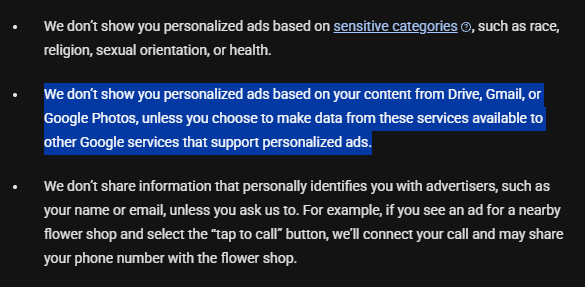
On October 16, Google issued an update to its privacy policy, spotted by Android Authority. The ad personalization section used to include a clear limit on data from certain apps. "We don’t show you personalized ads based on your content from Drive, Gmail, or Photos," the document said. Now, Google has updated it with the following language.

Updated language on when your sensitive data might inform ads. Credit: Google

This equivocation opens the door to using data from apps like Gmail and Photos in ads when it's shared with other Google services, and it just so happens Google has a mechanism for doing that, with Personal Intelligence. The company released Personal Intelligence in early 2026, allowing users to hand data from multiple apps to Google AI products. The idea is that the added context from your existing data will lead to better AI answers, but it's also proving to be a privacy minefield.

Read full article

Comments

© Aurich Lawson

Inside the Pentagon, the pressure is on to find a home for a new spaceport

Leaders in the US Space Force would like to have a new spaceport up and running in four years, adding a third heavy-lift launch site to relieve pressure from bases in Florida and California that have shot rockets into orbit for nearly 70 years.

The obvious problem with that ambition is 2030 is four years away, and Pentagon officials have not determined where the new spaceport should go or how to acquire land for it.

Air Force Secretary Troy Meink first mentioned the service's search for a third launch base in May. A congressionally mandated study of the Space Force's launch infrastructure identified the need for "another site that's capable of heavy and super heavy launch capability," Meink said in a House Armed Services Committee hearing.

Read full article

Comments

© Blue Origin

Spotify ramps up policy enforcement on family plans

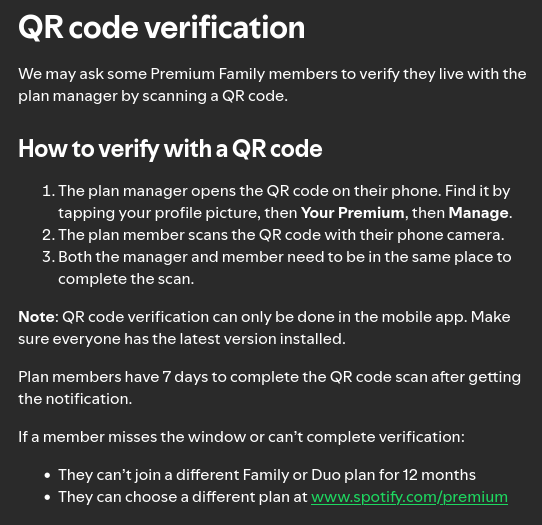
As reported by Music Business Worldwide, Spotify appears to be stepping up enforcement of existing policies regarding Family and Duo subscription plans by requiring users to scan a QR code in person on the plan manager's device in order to maintain access to it. Those who fail to scan the address verification QR code within seven days will see their account demoted to the free tier and be barred from joining any other Duo or Family plan for 12 months.

A Spotify policy on family sharing plans is outlined. Spotify's QR code plan enforcement. Credit: Spotify

Spotify's support documentation verifies the policy after users on Reddit began posting reports of receiving the QR prompt. The enforcement stems from Spotify's requirement that family plan members reside at the same address—a seemingly reasonable policy in concept. But what if you have a child away in college, a spouse who works on the road, or any number of other circumstances that might see families separated by physical distance? The policy could extend beyond friend groups looking to save a buck, affecting actual families who thought they were using the program as intended.

Goldman Sachs analysts, in their October 15 Music in the Air: 10 Years On report, made available by HITS Daily Double, estimate that "a meaningful share of family plan users are not actual household members, but rather friends sharing a plan to reduce costs." The report goes on to add, "We see additional monetization upside from tightening household verification on multi-user plans. Most family plans require members to reside at the same address, but enforcement has been minimal in practice."

Read full article

Comments

© Spotify

Elon Musk’s dangerous grip on outer space

Elon Musk looking up with stock tickers and Space X rockets.

Last week, Starshield - the version of SpaceX's Starlink used by the Ukrainian military - was throttled to block terminals traveling above certain speeds from accessing the service. The Ukrainian army's interceptors, which counter Russian drones carrying bombs, suddenly stopped working at high speeds, making it easier for Russia to attack the country's energy infrastructure and leading to a reported two deaths and at least 17 injuries.

The Ukrainian military reported receiving no advance warning about the Starshield speed restriction. But Ukrainian President Volodymyr Zelenskyy said it was a direct message from the US amid rising tensions b …

Read the full story at The Verge.

Crows can evaluate visual info twice as fast as mammals

Much of what we know about how a brain makes decisions comes from studying monkeys watching dots. In a task known as a random-dot-motion task, a cloud of flickering specks drifts weakly in one direction while the subject tries to determine whether—and in which direction— it’s moving. The task has shown that in the primate neocortex, neurons gather visual evidence over time, with their firing rates climbing until they cross a threshold, when the animal commits to a decision.

But avian brains don’t have a neocortex, so it wasn’t obvious how they made similar decisions.

“This was the big question,” said Andreas Nieder, a neurobiologist at the University of Tübingen. “How [would] a differently organized avian brain encode decisions?”

Read full article

Comments

© Santiago Urquijo

Intel gets waiver after worries fuzzy US ban on foreign-made robots may hit fabs

US chip champion Intel was so confused by the US government ban on foreign-made robots that it requested and received a waiver “out of an abundance of caution.” The tech company wanted to make sure that it could continue using certain robotic vehicles in its US chip fabs.

The uncertainty surrounding the Federal Communications Commission ban on certain foreign-made robots was revealed in the agency’s decision to grant Intel’s waiver request. On October 22, the FCC published its order allowing Intel to continue using the foreign-made robots in US semiconductor manufacturing facilities for a period of one year.

The robots in question are automated guided vehicles operating on “tracks or predefined paths” while often requiring operator oversight, according to Intel’s website. They help to move materials and items around within warehouses and factory floors.

Read full article

Comments

© Intel

The iPhone Duo should have been an iPad

Vergecast hosts David Pierce and Nilay Patel are pictured with an iPhone Duo.

We gave the iPhone Duo a 7 /10. But that wasn't always the score we planned, and it might not be the right score forever. Such are the challenges of reviewing - and assessing - a big, new idea about the most popular smartphone in history.

On this episode of The Vergecast, David and Nilay debate whether the Duo deserved the score it got, and try to work through how this device might change over time. Is the outer screen, as Daring Fireball's John Gruber suggested, the worst iPhone ever? Would it be a better product if it started as an iPad rather than an iPhone? Would we feel differently about this thing if it were simply called the iPad Du …

Read the full story at The Verge.

RFK Jr.’s vaccine injury clinic could damage NIH hospital, board warns

At a recent meeting of the board that oversees the National Institutes of Health's Clinical Center Research Hospital, chair Jack Leslie opened with cheerful introductions and gregarious chatter—then diverted from the agenda of the regularly scheduled meeting. He spent the next six minutes delivering a pointed rebuke of Health Secretary Robert F. Kennedy, warning that his anti-vaccine activities could tarnish the venerable hospital, often called the "house of hope" for patients with rare conditions or those who have exhausted all other options.

Leslie took issue with a recent stunt Kennedy had pulled at the hospital, which involved making a surprise appearance for a ribbon-cutting ceremony to open his signature vaccine injury clinic. The ceremony included a panel with people claiming to have been injured by vaccines. They sat behind placards reading "vaccine injured" and spoke with Kennedy and other high-ranking Trump administration officials.

Leslie prefaced his comments by noting that some might prefer he not speak out against Kennedy's efforts. "But I think that that would be a failing as an advisory board if we were silent," he said. Leslie also noted that he has no concerns about studying potential injuries from vaccines. "Serious reactions are rare, but real," he said, and people who believe they've been injured should "be taken seriously."

Read full article

Comments

© Getty | Finn Gomez

❌