❌

Reading view

Security update for WooPayments

A security update now is available for WooPayments. If you manage a store using WooPayments, check its installed version against the fixed versions below and update any affected site.

The update addresses a security issue in the subscriptions functionality bundled with WooPayments (extending a fix announced in August).

Check that your store has the update

  1. In WP Admin, in the left hand navigation, go to Plugins → Installed Plugins.
  2. Find WooPayments and note the current installed version.
  3. Compare it with the fixed version for your release line in the table below.
  4. If your store needs the update and one is available, select Update now.
  5. When the update finishes, check the installed version again to confirm it matches a fixed release.

Check the installed version even if automatic updates are enabled or your host manages updates for you. If your store is already running a fixed version, you do not need to repeat the update.

Fixed versions

If your store runsUpdate to
11.2.011.2.1
11.1.011.1.1
11.0.0 – 11.0.111.0.2
10.9.010.9.1
10.8.010.8.1
10.7.0 – 10.7.110.7.2
10.6.010.6.1
10.5.0 – 10.5.110.5.2
10.4.010.4.1
10.3.0 – 10.3.110.3.2
10.2.010.2.1
10.1.0 – 10.1.110.1.2
10.0.010.0.1
9.9.09.9.1
9.8.09.8.1
9.7.09.7.1
9.6.09.6.1
9.5.09.5.1
9.4.09.4.1
9.3.09.3.1
9.2.0 – 9.2.19.2.2
9.1.09.1.1
9.0.09.0.1
Older than 9.0.011.2.1

Developers and agencies: Check each site

Verify the installed WooPayments version on every affected site you manage, including publicly accessible staging and development sites. A completed update on one site does not confirm the status of another.

Keep a record of the versions you have checked so you can follow up on sites that still need attention. For stores managed by a hosting provider or another developer, confirm the installed version with that person or team.

Get help with the update

If the update is unavailable or fails to complete, contact WooCommerce Support. Include your installed WooPayments version and any error shown during the update so the team can help you find the appropriate next step.

The post Security update for WooPayments appeared first on The WooCommerce Developer Blog.

Automated PHP stubs for Woo extensions

WooCommerce uses PHPStan along with a number of other tools for testing, linting, and static analysis. However code that interacts with other extensions can be skipped or baselined when their classes and methods aren’t available to the analyzer.

To ensure that any integration between Woo plugins is proper and doesn’t break with future changes, PHPStan needs to know the shape of classes and methods. Otherwise, you end up with class.notFound errors and no way to verify it works as it should. Enter PHP stubs.

We’re introducing woocommerce/php-stubs, a new package that auto-generates PHP stubs for Woo extensions, both from the WooCommerce Marketplace and WordPress.org, so PHPStan can check calls into other extensions instead of skipping them. The stubs are public on GitHub and Packagist.

If you develop a plugin or theme that integrates with Woo extensions, you can use the same stubs to check those integrations without installing every extension in your analysis environment.

Why we built it

Even though we’re making this widely available to developers building on Woo, the truth is, we needed it for ourselves.

  • Integration code had no checks. PHPStan can’t check a call to a class it doesn’t know, so the code was skipped or baselined.
  • Hand-written stubs go stale. A number of extensions each had their own, but they were stale against the latest versions.
  • Version matters. Checks need to be against the minimum version requirement, not the latest release, otherwise it can call a method that older sites don’t have.

What’s included

The public package includes the first release of each of the newest 10 minor versions (x.y.0) and the newest release. A patch release stays only while it’s the newest.

  • Woo-owned paid plugins from the WooCommerce Marketplace.
  • Free Woo-owned WordPress.org plugins.
  • Third-party Marketplace extensions whose developers opt in to public stubs.
  • A supplement for WooCommerce internals that php-stubs/woocommerce-stubs skips. It picks the supplement matching your installed WooCommerce stubs automatically.

The stubs are generated from each extension’s release using php-stubs/generator: functions, classes, interfaces, traits, enums, and constants. New releases are published automatically – paid plugins within an hour, free plugins daily.

How to use it in your repo

Require the public package next to the WooCommerce stubs:

composer require --dev woocommerce/php-stubs:dev-trunk php-stubs/woocommerce-stubs

Include the plugins you integrate with in phpstan.neon.dist. Pin the minimum version you support, always an x.y.0 release. Use latest.neon when you don’t declare a minimum.

includes:
    # Minimum supported version: move the pin together with the minimum.
    - vendor/woocommerce/php-stubs/stubs/woocommerce-bookings/3.10.0.neon
    # No minimum declared: newest release.
    - vendor/woocommerce/php-stubs/stubs/woocommerce-subscriptions/latest.neon
    # WooCommerce internals: matches your installed stubs automatically.
    - vendor/woocommerce/php-stubs/supplements/woocommerce-internal.php

If your code checks plugin versions, add each plugin’s version constant to PHPStan’s dynamicConstantNames. A stub defines it with one release’s value, which would otherwise make version_compare() guards look constant.

The stubs are plain PHP, so Phan, Psalm, and IDEs can read them too. The package README explains which files to load.

Add stubs for your extension

Marketplace extension developers can opt in by adding this line to the main plugin file header in their next release:

 * Woo Stubs: public

That release’s stubs will then be generated and published. If you need stubs for another WordPress.org plugin, open an issue in the repository with information about the plugin and integration you want to check.

I’d like to see this used across more repos, as this can catch cross-plugin integration bugs that might otherwise go unnoticed. If you need help setting this up, open an issue.

The post Automated PHP stubs for Woo extensions appeared first on The WooCommerce Developer Blog.

#239 – Remkus de Vries on How Scanfully 2.0 Is Making WordPress Security and Performance Monitoring Simpler

Transcript

[00:00:19] Nathan Wrigley: Welcome to the Jukebox podcast from WP Tavern. My name is Nathan Wrigley.

Jukebox is a podcast which is dedicated to all things WordPress. The people, the events, the plugins, the blocks, the themes, and in this case how Scanfully 2.0 is making WordPress security and performance monitoring simpler.

If you’d like to subscribe to the podcast, you can do that by searching for WP Tavern in your podcast player of choice, or by going to wptavern.com/feed/podcast, and you can copy that URL into most podcast players.

If you have a topic that you’d like us to feature on the podcast, I’m keen to hear from you and hopefully get you, or your idea, featured on the show. Head to wptavern.com/contact/jukebox, and use the form there.

So on the podcast today we have Remkus de Vries. Remkus has been active in the WordPress space for over 20 years, starting out with his own agency focused on high performance, scalable WordPress websites. Over time he has diversified into education and community building with projects like WithinWP, and a new initiative, The Guild, which is a paid community aimed at helping people build smarter, more performance, sites through a first principles approach.

Our conversation centres on Scanfully, a site health and monitoring SaaS Remkus co-founded, which recently hit version 2.0. Scanfully’s focus is giving users meaningful, actionable, insights into WordPress site, health, security performance, email, deliverability, DNS, and more. Packing all this data into an easy to understand dashboard.

We talk about Remkus’ motivation for diving deep into the complexities of WordPress monitoring, and why many users struggle to keep on top of the technical side of their websites. Remkus argues that too many site owners are stuck in a reactive mode, only investigating issues once something breaks. And Scanfully aims to change that mindset by making ongoing health checks accessible and easy to parse, even for the spreadsheet averse.

Remkus walks us through the products evolution, including the 2.0 update that aimed to reimagine their dashboard experience, added public APIs, and introduced tools like MCP AI integration, empowering users to query their sites health conversationally.

We also get into recent and upcoming features such as WooCommerce checkout monitoring, activity logs, and future add-ons designed to cover forms and other business critical flows.

If you manage multiple WordPress sites, run an agency or are simply interested in building more robust futureproof WordPress projects, this episode is for you.

If you’re interested in finding out more, you can find all of the links in the show notes by heading to wptavern.com/podcast, where you can find all the other episodes as well.

And so without further delay, I bring you Remkus de Vries.

I’m joined on the podcast by Remkus de Vries. Hello, Remkus.

[00:03:29] Remkus: Hello, Nathan.

[00:03:30] Nathan Wrigley: It’s been a while. Remkus and I have been on many calls in the last few days and weeks. We’re going to have today about a project that Remkus has been actively involved in for a number of years. It’s called Scanfully. We’ve reached version, I’m going to say 2.0, let’s go with that.

[00:03:46] Remkus: Yeah. Yeah. Yeah.

[00:03:47] Nathan Wrigley: But over the last few days it’s actually advanced a little beyond that. So that’s going to be the main focus.

I would probably urge listeners to this podcast. If you want to understand what the product is and how it works, maybe press pause. Go to Scanfully.com, so scanfully.com, and then come back and you’ll understand fully what the product is.

Before we get stuck into updates and product and what it all does. Very briefly, Remkus, do you want to just tell us a little bit about you, your backstory, WordPress space, that kind of thing?

[00:04:17] Remkus: Yeah, sure. Been in the WordPress space, active, 20 plus years now. Started with an agency, very quickly moved into complex performance scaling, more complicated type of sites.

Ran a niche agency like that for a very long time. In the last couple of years I’ve been doing some diversification. I have withinwp, which is a WordPress, how do I explain this? Because this is also in transit, but it’s a podcast, it’s a newsletter. One that’s being cited by This Week in WordPress a lot, I should say.

And part of it is the educational side, which is the part that I’m building out currently. And what I mean with educational side, that I’m preparing a community, a paid community, that has the sole goal to help you better understand WordPress and build better sites, smarter sites, more performance sites, that sort of stuff. Basic first principles type approach.

And that is roughly how I look at WordPress. And Scanfully is something I started with my co-founder Barry, let’s call it three years ago. And from a similar angle, we want to solve, essentially site health and performance monitoring tool of your WordPress site in the broadest sense of the word. Meaning the word Scanfully is literal. We scan fully and what we’re not scanning fully currently, we will be.

[00:05:32] Nathan Wrigley: Okay. Thank you. Can I ask a question? May touch on your personality, I guess. All those years ago, 20 plus years when you came into WordPress. How can you explain why you delved into this bit? Because there were so many ways that you could have gone, but you’ve really made scanning, and site health, and monitoring and performance, that is your thing. Is there a bit of that which, speaks to you on some level? Do you find yourself drawn in that direction, no matter where you look on the internet?

[00:05:58] Remkus: Yeah.

[00:05:59] Nathan Wrigley: Do you enjoy data analytics, spreadsheets, numbers, all of that?

[00:06:03] Remkus: I wouldn’t call it enjoy, but, I’ve always been good at it. I always found it fun to some degree. But in general, I get bored quite easily. If I’m to stick with a topic, it needs to be the complicated version of a topic. To me, in web development, that quickly revolves around all the things that make a WordPress site more tricky to scale, or more tricky to make fast, or more tricky to fill in the blank. There’s tonnes of different subtopics to that.

[00:06:25] Nathan Wrigley: Yeah.

[00:06:26] Remkus: And that then gives you a different view of what is important. And Scanfully is one of the answers to that. we. See that there’s, I think the whole industry is levelling up in a way. I don’t think it’s happening fast enough, but part of it forces you to start thinking about things in a more professional way, like more preemptively understanding what is something that’s going on. What is a trend on your site? What do you see happening? And I think we’re still too much on the reactive side of things. So if my side is down, or if somebody complains it’s slow, then I’ll have a look. And we want to change that awareness and make it one of your first thoughts instead of an afterthought.

[00:07:02] Nathan Wrigley: It’s a curious thing then that the complexity which you enjoy, in a sense, you require other people to not enjoy it as much as you, in order for you to have a product. And I am one of those people. If you present me with a, I don’t know, a Google Analytics dashboard, or a spreadsheet which goes beyond about four rows, then I quickly lose interest. I genuinely can’t maintain my effort over there. I glaze over and don’t enjoy it.

And so part of the problem with dealing with WordPress is getting over that hump. Maintaining the interest in an area that I feel ill-equipped, not just ill-equipped, completely out of my depth.

And so having tooling, the likes of which you’ve built with Scanfully enables people like me to actually stand back and go, okay, that complicated thing is made more easy. I can actually start to understand it in real terms, with data and charts that are less overwhelming. And I guess that’s the point.

[00:07:53] Remkus: That is the point, and that is essentially also the driver, why we went from dashboard version 1.x to now, 2.x. Because it’s very easy when you’re on the more technical side of things and you kind of understand what the signal is and what it’s implying to forget what the person who doesn’t understand the extra layers and the assumptions that go underneath. Like what does that actually mean?

The 2.0 rebrand. Because it’s not a rebrand in terms of what we do, but it’s a rebrand and how we interpret every single version of the monitoring metrics that we collect, how we present it, and what we allow you to do with it. Everything has been rethought. It’s been a, I think in total, we’ve had about four or five months of just working with a redesign. And we call it a redesign because it is, because it visually looks different.

We’ve got all this feedback of how people are using it. And a common theme was, we’re missing this, we’re missing that. Could you make that easier? So we were like, okay, that’s a lot of stuff pointing in the same direction. Why don’t we start rethinking how we’re going about helping you figure this out?

And I’ll give you a very concrete example. So if a site goes down, because we have an uptime monitoring, you get a notification. But if it’s the server that goes down and you have 25 sites on that server, it doesn’t make a lot of sense for you to receive 25 emails.

[00:09:05] Nathan Wrigley: No.

[00:09:06] Remkus: So gathering information per monitoring alert is something we’re doing now. And, the same goes for if there’s, I don’t know, if the latest plugin you’re using on all of your sites has something that needs to be fixed, or something that is already fixed. So let’s assume there’s a security release for it. You don’t need to know that 25 emails. You need to know there’s one email, and these are the sites that are affected. But you also want to know, is this a high risk? Is this a medium risk? Is this a low risk?

Because there’s plenty of security stuff that is so close to impossible to replicate that, do I need to act right now? Maybe, but we give you the insight that you can act upon it. Like it’s not, we’re not forcing you to pay all the attention all the time.

And it’s things like that. So we had the data already, but the question then becomes, how do we make this digestible? How does this become a signal, versus the noise that it’s also is? So that’s a lot of rethinking. That’s a lot of rethinking in what is valuable to share, and how is it valuable to share and what are the things you would like to do with certain things?

So, an example, related to that is what if there is an update available for a plugin that you’re using in a few places? But there’s no fix yet. Do we need to send you every single day that there is a security update? Or there’s a security issue? Probably not. So why don’t we allow you to snooze a particular alert? It’s simple things like that. And I say simple. It’s not simple to implement, but.

[00:10:27] Nathan Wrigley: Simple on the front end.

[00:10:28] Remkus: Yeah. Simple for you as an end user. So that was a lot of thinking and figuring out how do we make this more pleasurable, for as pleasurable as the topic itself is.

[00:10:39] Nathan Wrigley: I’m going to circle back to the product in a moment, but I’m going to ask you a curious question.

[00:10:43] Remkus: Yep.

[00:10:43] Nathan Wrigley: You may balk at this question and think, okay, that’s unusual and a bit weird. Is the WordPress space for you quite an exasperating thing. And what I mean by that is, you are obviously steeped in this knowledge, about how things can go wrong, and how a poor implementation of something over here can have catastrophic effects over there. Given enough time, and the stars aligning in a certain way.

I don’t know how to describe this. Does that mean that everywhere you look, you just see catastrophe and problems. And you open up a WordPress website, you’ve got a new client or somebody’s onboarded you with the plugin. You look inside and you sort of face plant, head slap. Okay. All the stuff that I know, which is second nature to me. Why don’t they all know this? There’s no question there, but can you see what I’m trying to.

[00:11:27] Remkus: Yeah. Yeah, I can. You’re not recording the video. The people listening didn’t see me nod along the way of what you were saying, but yes. If you understand things. So there’s a principle called first principles. Which means everything we approach, we should approach from the first principles. Like what is the base layer of where to solve problems. And, this is not even just WordPress, this is life, I guess.

But there’s a big tendency for people to look at a problem and then have the idea of how they want to fix the problem, but they don’t actually look at the layer, it should be fixed. They just want to fix the outing. That’s not really a fix, right. You fix things at the bottom layer. You can identify where the problem lives.

And when that is your view on life slash work. Yeah, there’s moments where you go, how do you, not look into this? This is your work, this is your job, this is your, competency. Why do you not dive into this? But I also understand that’s not for everybody to be in that layer of how I look at things. And it’s not me wanting to force other people, my model of the world, but it is something where I go, you don’t need to do my model of the world, but there’s some stuff that you actually should be quite skilled on because it’s part of your job. Because it touches your job. It touches the clients you serve and all of that sort of stuff. Long-winded answer, but yes, I have those moments.

[00:12:39] Nathan Wrigley: Yeah, I guess it must be the same no matter which bit of WordPress you’re in. So for example, I don’t know if you’re a front end designer and you see catastrophic use of fonts and spacing and typography, and it would make the head plant moment occur. But also accessibility. And there’s these tendrils isn’t there? And we can’t become expert at all of them, but many of the things are inconveniences. Where if something goes wrong, it’s annoying, but that’s probably where it ends.

Whereas the stuff that you are dealing with, there’s a potential for catastrophe to occur. The website gets defaced or taken down, or the server gets compromised and is used in some crazy way that we can’t imagine. That makes your part I suppose a little bit more essential. But then, as as you said, we can’t all be experts, and relying on the expertise that you have and the tools that you’ve built. I suppose that’s why you occupy the space that you do.

[00:13:33] Remkus: Yeah.

[00:13:33] Nathan Wrigley: Because not everybody can spend the time becoming as knowledgeable as, as you have become.

[00:13:37] Remkus: And I, for the record, I don’t acclaim to have all the knowledge. I just happen to specialise on a few things I find highly interesting.

[00:13:44] Nathan Wrigley: Yeah.

[00:13:44] Remkus: My goal for the Within WordPress community that I want to build, which is called The Guild, is exactly to behave like a guild. We’re all there to elevate each other up. That is what a guild is supposed to do. And, back in the day, you had guilds that were that you went there, you were part of it, and all that had as a goal was to help you elevate your craft.

And we need to start thinking about what we do as a craft. And how do you do your craft? Well there’s tonnes of different ways to do the craft that’s putting bread on the table. But if you’re not actively developing yourself to become better at your craft, then what are you doing? You’re, essentially behind in the first week you start working. And you’re only playing catch up. And most people have forgotten that they’re just in the game of playing catch up. Which I think is a shame.

[00:14:26] Nathan Wrigley: You’ve alluded from various bits and pieces that you said. You’ve suggested what Scanfully does. So we have an idea that there’s charts, and graphs, and information about things that could be going wrong with your website in the background. But we haven’t really explained what the tool does at its core.

So putting the update to one side, if we just examine why you built the tool in the first place, what does it broadly do? And then we can get into what it most recently does and how it’s been adapted for the 2.x version.

[00:14:55] Remkus: So Scanfully is about giving you the information so you know what broke on your site, and what changed and what things you need to pay attention to. Anywhere from critical stuff. So vulnerabilities, downtime, to also adjacent critically, are my emails being sent from the site? Does that still work? So we do email monitoring. We do DNS checking.

We do all kinds of site health, like actual site health menu inside of WordPress. We pull in that data so you can see and you can filter for which of my sites are in PHP seven point, whatever still? You can figure that out.

If you need to do all kinds of filtering on data that is living in all of your WordPress sites. That’s a pain in the ass to have to click through every single site to figure out what’s what. And maybe your control panel on your server tells you something, but Scanfully will tell you everything.

We will tell you how large the uploads folder is. We will tell you, is your certificate about to be renewed, yes or no? Did anything go wrong when that happened? Things like that.

So anything and everything that goes into the bucket of what is site health, what is a healthy site mean? We are monitoring, or we will be monitoring. We still have a very long list of stuff we’re going to add. But yeah, the goal for Scanfully is to have you be in control of what’s going on with your site.

[00:16:19] Nathan Wrigley: Ok thank you. I have some follow up questions just to that, so the first one is. Who has been, or who potentially is your ideal customer? So I’m going to broadly bucket that as, I don’t know the person who’s got just one WordPress, or a handful of WordPress websites and they manage that themselves. Are they the kind of people that you are trying to get? And then I’m going to go into different buckets of enterprise perhaps. Agency level customers. I’m imagining there’s some perfect fit there.

[00:16:42] Remkus: Yep.

[00:16:43] Nathan Wrigley: And then also I’m wondering if hosting companies also might be a customer of yours in terms of adding this in, to a deployed website on their platform.

[00:16:53] Remkus: They are now. One of the features we added, we kind of already had it, but we added publicly now, with Scanfully 2.0 is a public API. Which means if there’s a public API, anybody can hook into whatever data we have, and display that in their dashboard or website, or wherever they would choose to do so.

So yes, we cast a broad net, But the goal is for any client that needs to be in control of what’s going on with their site. But the reality is this is from freelancers to agencies and indeed, hosting type of adjacent companies. Yeah.

[00:17:25] Nathan Wrigley: Right. So there’s a fit across all of those three things that I just mentioned?

[00:17:29] Remkus: Yeah.

[00:17:29] Nathan Wrigley: And do you have pricing that reflects that? So in other words, can you buy a single licence, and a multiple licence and a, I don’t know, an unlimited licence?

[00:17:37] Remkus: It’s a flat structure. It’s 299 a month per site. Simple.

[00:17:41] Nathan Wrigley: And, in terms of the level of depth of technical understanding that you have to have in order to get the tool working, is this more a case of upload the plugin, activate the plugin, and then there are some sensible defaults? Or do we have to do a tonne of background research to understand what’s going on? And maybe that’ll lead us into the 2.0 stuff in a minute.

[00:17:59] Remkus: There’s nothing more than installing and activating.

[00:18:03] Nathan Wrigley: Okay.

[00:18:03] Remkus: And even the activating we have made as frictionless as possible. The only thing you need to do is once the plugin is activated, you click that button that says connect to your Scanfully dashboard, and assuming you’re already logged in there, clicking that button is all you need to do. There’s no copying pasting of keys and other weird stuff.

[00:18:18] Nathan Wrigley: So I presume from what you said earlier, the 2.x, the article that I’m going to link to in the show notes on the WP Tavern website is about 2.0, but I understand time has passed and probably by the time this episode will be on two point something.

[00:18:32] Remkus: 2.3.

[00:18:33] Nathan Wrigley: It would appear that you obviously took a stab at what you thought people would like to see in their dashboards. That’s one of the things that’s been updated. How did you adapt that over time then? Because, like we said earlier, getting complicated data to be easy to understand, that is a proper art form. I don’t think you’ll probably ever end this journey.

[00:18:52] Remkus: No. No.

[00:18:54] Nathan Wrigley: You’ll just be iterating forever.

[00:18:54] Remkus: Yeah.

[00:18:54] Nathan Wrigley: But is that one of the things that you got feedback on? Okay, it’s good, but we’re still confused. Make it simpler to understand. Just describe that side of things.

[00:19:02] Remkus: Yeah. So that’s the part where you go, how do I go from showing noise? Because there’s a tonne of data that you actually need to be in control of. But how do I make that, easy, digestible?

So one of the solutions we came up with, and that seems to have gone down really well, people like it, is essentially every view on top has the most important things. So we’ll tell you if there’s stuff that you need to be updating. We’ll tell you if email is not being delivered. We’ll tell you if the percentage of up and down times you’re having is odd, or requires more investigation. Essentially we’re helping you figure out the important things per monitor, per view. And then from there, you can deep dive into the data that we collect and figure out things.

[00:19:46] Nathan Wrigley: You’re moving away from graphs and data first, into more of a human readable summation in a couple of sentences?

[00:19:53] Remkus: Yep.

[00:19:53] Nathan Wrigley: Okay. So you can finally parse what’s going on. Okay. That’s good to know. And you said that’s been well received?

[00:19:59] Remkus: Yeah, people like it.

[00:20:00] Nathan Wrigley: Okay.

[00:20:00] Remkus: It’s more straightforward in terms of quickly understanding what’s going on. That was a big part, and we also wanted to make that information available more easily as well. And what I mean with that is that inside the API you can query this now.

But more conveniently, we have an MCP server available as well. So you can connect us to your favourite LLM, your favourite AI and just ask the questions. Like let’s say you have a bunch of sites for different clients in there, but one client has a specific question. You’ve labelled them accordingly inside of Scanfully. You can do that now. And then your LLM, you can ask, either ask it to label it, you say these are the domains, labelled them with this client. And then tell me do I have any vulnerabilities? Is email being sent out correctly? Are there any weird DNS changes? What does my uptime look like? And we’ll tell you.

[00:20:46] Nathan Wrigley: So the API enables you to, I don’t know, if you’re an agency owner, you could build a dashboard, for example, for your clients or something like that. So you could put charts and information in a place where your client can go and see it in a way that makes sense for them.

[00:20:58] Remkus: Correct.

[00:20:59] Nathan Wrigley: But the MCP enables you to kind of have a conversation with the security and the current state of your WordPress website. That’s so intriguing.

[00:21:07] Remkus: Yep.

[00:21:08] Nathan Wrigley: Have you discovered some interesting, quirky things in there? You know, you you ask it a particular thing and a surprising thing came back?

[00:21:13] Remkus: I got for one of the sites that I have in my account, I got some intermittent email is not being delivered. And I go, why does it turn on and off all the time? What’s going on here? So I ask it to investigate, look at any commonalities. Look at anything that stands out. And it sure enough came up with something that goes along the lines of there’s conflicting DNS records. So if there’s multiple validation records, I was using a transactional email service for that. But their validation system allows you to have old validation DNS records in there as well. And apparently their system picked up both intermittently. How do you figure that out?

[00:21:48] Nathan Wrigley: With an MCP, it turns out. Yeah. That’s really interesting.

[00:21:50] Remkus: Yeah. So it told me, double check the DNS records here, because it looks like, and then I go, okay, let me check that. And I go in, I dive deeper into the dashboard for my transactional email provider. And I go, hold on. This is, okay. I get it now. So let me delete those. I deleted them, and the problem solved.

[00:22:07] Nathan Wrigley: Does your MCP enable bi-directional things to happen? Or is it basically read only?

[00:22:12] Remkus: It is read only on the data. It’s write on, like I said, if you want to create labels and other things like that.

[00:22:18] Nathan Wrigley: Unharmful stuff is right.

[00:22:20] Remkus: Correct.

[00:22:21] Nathan Wrigley: Because you are dealing with quite a lot of powerful stuff here, and writing in the wrong direction in a silly way, which let’s be honest, MCPs enable us to be very silly very quickly.

[00:22:30] Remkus: Yeah. Yeah. Yeah.

[00:22:31] Nathan Wrigley: Okay, that’s good to know. It’s basically read only.

Okay. We’ve got the dashboard updates with more human readable data. We’ve got the API. We’ve got the MCP. Anything else in Scanfully 2.x?

[00:22:43] Remkus: If we include 2.x, the release we did yesterday is 2.3. And in that we have much smarter user activity tracking. Content changes. Not only who did the change, but what is the change, that sort of stuff.

We pull everything out of WordPress into our dashboard. So for instance, we have a full WordPress activity log and in that log, we collect all the things. Whatever happens on your WordPress site, so that’s a plugin installed, updated, all those things. So now user activity is in there as well.

And it’s also the things happening to your user. So elevated admin rights given to a user. Was that supposed to happen? An email address change to a administrator is something you would want to know. On a multi-site, if a user gets to have super admin, you’ll want to have that logged. So things like that.

So the 2.0 essentially, which is a week and a half ago, it allowed us to have a whole bunch of other refinements we had essentially lined up. We have a much better foundation to build these things on top of what we now have. So we can move forward much faster.

[00:23:42] Nathan Wrigley: We’ve already agreed pre hitting the record button that there’s a whole load of stuff which you know is going to occur, but we are not quite ready for public disclosure at the moment.

One thing that we didn’t touch on, which I suspect people will be listening to this thinking, okay, hang on a minute. How does it all work in terms of, is there a scanfully.com/whatever login? In other words, do you have a SaaS sort of admin section?

[00:24:06] Remkus: Yes.

[00:24:06] Nathan Wrigley: So the plugin kind of binds to that, because I miss that at the beginning.

[00:24:11] Remkus: Yeah, correct.

[00:24:11] Nathan Wrigley: We probably should have explained that. So the plugin binds to the SaaS. The SaaS holds the data. And in that way, for example, an agency could have an overview of all the sites that they’re managing and that kind of thing?

[00:24:23] Remkus: And everything that happens on that site that is worthy of tracking and monitoring for. So again, the activity log is a good example. A WordPress activity log should not live inside the WordPress site, period. From a performance standpoint, it makes no sense. Most databases for most hosting companies have issues when you track and sort a, let’s call it a busy website.

So what we do is we asynchronously pull all of that into our dashboard. So if your site goes down for whatever reason, we have a track record of what the last things that were happening on your site.

[00:24:53] Nathan Wrigley: Oh yeah, of course.

[00:24:55] Remkus: There’s just an easier way of being in check.

[00:24:58] Nathan Wrigley: So you’d log into the SaaS, everything’s there. So if your site does have some catastrophic failure, then at least you can begin to understand what’s going on.

[00:25:06] Remkus: Yep.

[00:25:07] Nathan Wrigley: And work backwards from there?

[00:25:08] Remkus: Yep.

[00:25:08] Nathan Wrigley: I think that’s probably all the questions that I’ve got. Is there anything that we didn’t touch on that you wanted to mention?

[00:25:14] Remkus: I think what’s fun to mention is that this whole rewrite allowed us to start building add-ons as well.

So the base monitor service as we have it currently is what Scanfully is. So that’s Scanfully monitor. But we’re, and probably by the time this podcast is being aired, I think we will have, the beta available for WooCommerce checkout monitoring.

This is essentially an add-on to the base service. And what it does, we fully check everything that goes into, from is the product available in your WooCommerce, website? Can I add it to cart? Can I then go to cart? Can I then start the checkout? Can I fill out the checkout? Can I start the processing of the actual payment. So we don’t go into the payment itself? So they’re test orders, so to say.

[00:25:59] Nathan Wrigley: But the moment right before?

[00:26:01] Remkus: Yep to the moment, right before. So we’ll tell you if we can’t reach the payments provider. We’ll tell you that, but we can’t, at this moment in time, do the step beyond that.

[00:26:09] Nathan Wrigley: So how does that work then? Does it literally do that as if it’s a human being, you know?

[00:26:13] Remkus: It does.

[00:26:14] Nathan Wrigley: Is some part of your SaaS kind of opening up a browser somewhere in effect and doing that journey. Finding a product, putting it in the cart, checking the cart, and so on.

[00:26:21] Remkus: And the fun thing is you get to define what that journey looks like. So if you have a custom WooCommerce checkout, or any of the other solutions. We account for that. And you can tell us if it’s any different from what their default is, or the WooCommerce default.

And from there you get to essentially define the journey. And then the journey is stored as the thing we’re checking. And we’re doing this from the external, obviously. So it doesn’t touch any monetary things. Nothing gets charged, nothing gets booked. And the plugin that is providing the connection to our dashboard, that plugin cleans up whatever test orders were made in that process.

[00:26:56] Nathan Wrigley: Right, okay. So it’s not 3000 carts.

[00:26:58] Remkus: Yeah, we don’t, want to do that.

[00:27:00] Nathan Wrigley: Do you enable that in other ways as well? for example, I’m thinking maybe a contact form is incredibly important to somebody’s business.

[00:27:07] Remkus: Yep, that’ll be next.

[00:27:08] Nathan Wrigley: Is it possible to, outside of WordPress, visit a contact page, fill out the form fields, and then even, I don’t know, maybe even check on the other side to see if an email landed or something like that?

[00:27:17] Remkus: A part of it we’ve already solved with the email monitoring, or I should say email deliverability monitoring.

[00:27:23] Nathan Wrigley: Of course you’re on the inside there, so you can see whether that got sent.

[00:27:27] Remkus: Yes. But once we’re fully done with releasing the WooCommerce checkout monitoring, we are going to move to forms next. Because you’re right, if you have a landing pages, or a critical contact form or whatever, you need to know that that still is working as intended.

[00:27:41] Nathan Wrigley: So that’s a roadmap item. To be able to build these custom journeys, starting with WooCommerce, but more or less anything at some point. We want to see if people are going from A to B to C as we’d hoped.

[00:27:52] Remkus: Yeah, it’ll be a separate thing in the sense that WooCommerce will do a lot more than just checking the validity of the form, because that’s essentially on the WooCommerce side of things, that’s the checkout form. You fill out the form. And that’s the most similar to a general form. But yeah, we will build a separate feature inside of Scanfully that allows you to do all the types of monitoring you could possibly imagine you would need to make sure your forms are working the way you design them.

[00:28:16] Nathan Wrigley: Random question just before we end. How exciting do you find this? When you embark on the journey of building a product like this, you know, oh we’re going to do this thing, me and my friend. We’re going to do this thing, it’s going to be brilliant. And then the reality sets in, you know, it’s difficult, you’ve got to manage customers and all that kind of stuff. Do you still wake up excited by this?

[00:28:32] Remkus: Oh yeah.

[00:28:33] Nathan Wrigley: Obviously you’re not going to say the opposite. I’m just wondering if that curiosity still remains and whether or not.

[00:28:38] Remkus: It does, because there’s just so much more we can still do. And the feedback that we’re getting is very positive. And especially with this new imagination of how this should be solved with the 2.x reboot I guess is probably the best word. It just excites me on the potentials that we have.

The WooCommerce checkout monitoring is a good example, but there’s tonnes of other add-ons we have in mind where it just makes sense for you to have the Scanfully monitor as base. But there’s stuff that we can do more. We’re already gathering it in one way or another, and just to be super complete with what we’re presenting. Yeah, that excites me, yeah.

[00:29:11] Nathan Wrigley: Okay, thank you for chatting to me today. Scanfully.com. Go and check it out. Remkus, where are you apart from there? If people want to contact you, are you available on a particular platform, I don’t know, social media or email or what?

[00:29:26] Remkus: remk.us

[00:29:28] Nathan Wrigley: Nice. Of course you have that domain. Yeah. That’s lovely. In which case Remkus I will speak to you soon and thank you for chatting to us about Scanfully.

[00:29:38] Remkus: Thank you for having me.

On the podcast today we have Remkus de Vries.

Remkus has been active in the WordPress space for over twenty years, starting out with his own agency focused on high-performance, scalable WordPress websites. Over time, he has diversified into education and community-building with projects like WithinWP and a new initiative, The Guild, which is a paid community aimed at helping people build smarter, more performant sites through a first principles approach.

Our conversation centers on Scanfully, a site health and monitoring SaaS Remkus co-founded, which recently hit version 2.0. Scanfully’s focus is giving users meaningful, actionable insights into WordPress site health, security, performance, email deliverability, DNS, and more, packing all this data into an easy to understand dashboard.

We talk about Remkus’ motivation for diving deep into the complexities of WordPress monitoring, and why many users struggle to keep on top of the technical side of their websites. Remkus argues that too many site owners are stuck in reactive mode, only investigating issues once something breaks, and Scanfully aims to change that mindset by making ongoing health checks accessible and easy to parse, even for the spreadsheet-averse.

Remkus walks us through the product’s evolution, including the 2.0 update that aimed to reimagine their dashboard experience, added public APIs, and introduced tools like MCP AI integration, empowering users to query their site’s health conversationally.

We also get into recent and upcoming features such as WooCommerce checkout monitoring, activity logs, and future add-ons designed to cover forms and other business-critical flows.

If you manage multiple WordPress sites, run an agency, or are simply interested in building more robust, future-proof WordPress projects, this episode is for you.

Useful links

Scanfully

Scanfully 2.0 release post

Within WordPress

The Guild

Remkus’ personal website

Remkus on X

💾

Declaring parent-child cart item relationships in WooCommerce 11.3

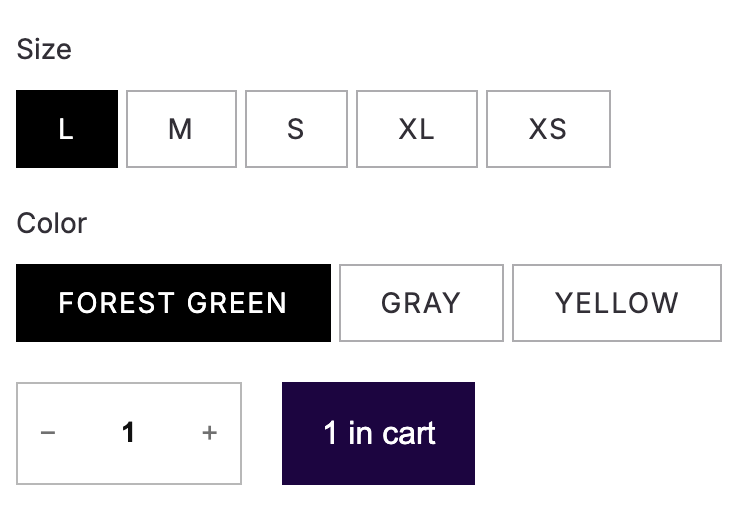
In WooCommerce 11.3, the “N in cart” count of the Product Button block (including the button inside Add to Cart with Options) will leave out cart items that an extension declares as children of another cart item.

Until now, a product that was in the cart only as part of another item, like a product inside a bundle, made its button say “1 in cart”, even though the shopper never added it on its own. Core can’t tell those items apart from the ones added separately, so the extension that adds them needs to say which item they belong to.

To do that, there’s a new filter, woocommerce_store_api_cart_item_parent_item_key, and a new read-only field in Store API cart items, parent_item_key (a string, or null by default).

A few details:

  • WooCommerce never marks an item as a child by itself. Only your extension does.
  • The parent key is returned only while the parent item is in the cart. If the shopper removes the parent, or it’s dropped from the cart, the child’s parent_item_key becomes null and it counts as a standalone item again.
  • If the filter returns a key that doesn’t match an item in the cart, or the item’s own key, WooCommerce returns null.
  • If a product appears in several cart lines, the count now adds them all up (before, the hydrated button showed only the first line’s quantity).

For now, the Product Button count is the only place that uses parent_item_key, but the idea is that blocks can rely on it whenever they need to know that an item belongs to another one. For example, in the future the Cart and Mini-Cart blocks could show child items indented under their parent item. So even if the “N in cart” count isn’t a problem for your extension, we think it’s worth declaring the parent of the items your extension adds.

How can developers tell if they are affected?

You’re affected if your extension adds cart items on behalf of another cart item. For example bundles, composite products, mix and match, force sells, chained products or “frequently bought together”.

An easy way to check is to add the parent product to the cart and look at the Product Button of one of the products it added. If it says “1 in cart”, your extension should use the new filter.

Free gift or upsell plugins that add a real product tied to another item can decide either way, because “1 in cart” may be correct for them.

Nothing breaks if you don’t adopt the filter. Those items just keep counting as they do today.

What action do developers need to take if affected?

Store the parent’s cart item key (the one WC()->cart->add_to_cart() returns, not a product ID) in the child’s cart item data, and return it from the filter:

add_filter(
	'woocommerce_store_api_cart_item_parent_item_key',
	function ( $parent_item_key, $cart_item ) {
		return $cart_item['_my_extension_parent_item_key'] ?? $parent_item_key;
	},
	10,
	2
);

For any other item, return $parent_item_key unchanged so you don’t erase a parent declared by another extension. You don’t need to clear the stored key when the parent leaves the cart, WooCommerce handles that.

The Store API documentation has a full example, including how to add the parent and the child.

The post Declaring parent-child cart item relationships in WooCommerce 11.3 appeared first on The WooCommerce Developer Blog.

I Tested the New WordPress Grid Editor (It's Powerful)

💾

A first look at drag-and-drop grid building in the WordPress editor, running inside my Create Not Learn prototype.

Try it in WordPress Playground!

https://playground.wordpress.net/?blueprint-url=https://raw.githubusercontent.com/getdave/create-not-learn-editor/refs/playground/getdave/gutenberg-pr-84894-grid/blueprint.json

Andrei Draganescu has been building a free-form grid for Gutenberg. You can drag, resize, snap and rotate blocks on a manual grid in a way that's never been possible in WordPress before.

Create Not Learn is built on WordPress packages, so anything that lands in Gutenberg I can pull straight in. I wanted to see how Andrei's work feels in a real page-building flow.

It's still a work in progress. I'd love the grid to be more visible while you drag and resize, so you can tell when a block is about to snap. Kudos to Andrei for the work so far.

Want to try it? Open the Playground demo below and follow Grid layouts in the site's menu. Switch to Edit, pick a section, then choose Edit design and More control. The grid controls only work on the Grid layouts page.

🔗 Links

- Try it in WordPress Playground: https://playground.wordpress.net/?blueprint-url=https://raw.githubusercontent.com/getdave/create-not-learn-editor/refs/playground/getdave/gutenberg-pr-84894-grid/blueprint.json

- Create Not Learn on GitHub: https://github.com/getdave/create-not-learn-editor

- The grid demo PR on Create Not Learn: https://github.com/getdave/create-not-learn-editor/pull/161

- Try it in WordPress Playground: https://playground.wordpress.net/?blueprint-url=https://raw.githubusercontent.com/getdave/create-not-learn-editor/refs/playground/getdave/gutenberg-pr-84894-grid/blueprint.json

- Andrei's grid canvas issue: https://github.com/WordPress/gutenberg/issues/85505

- The Gutenberg PR this demo pulls in: https://github.com/WordPress/gutenberg/pull/85210


⏰ Chapters
00:00 Intro
00:31 The Create Not Learn editor
01:13 Opening the Grid layouts page
01:42 Edit design
02:01 More control
02:17 Moving and resizing blocks on the grid
03:17 Rotating blocks
03:22 How to try it yourself

Is this THE END of the WORDPRESS block toolbar?

💾

Try it in Playground: https://playground.wordpress.net/?blueprint-url=https://raw.githubusercontent.com/getdave/create-not-learn-editor/trunk/demos/blueprint.json

Github repo: https://github.com/getdave/create-not-learn-editor

-----

The WordPress block toolbar is becoming too cluttered. I am demonstrating a new approach to consolidate these tools for a better editing experience.

Jay Costa has identified that the current block toolbar is no longer fit for purpose, often feeling unwieldy for everyday tasks. This video explores how consolidating these interface elements can improve consistency and speed up your workflow within the editor.

By streamlining the layout, we can reduce friction and create a more intuitive environment for managing content. I walk through the specific formatting adjustments that help simplify the block toolbar while keeping the power of the system intact.

Subscribe for weekly WordPress editor breakdowns, and share your thoughts on whether these interface changes would improve your daily workflow.

WooCommerce 11.3: What’s coming for developers

Beta

WooCommerce 11.3 is coming soon

This release is now available for testing. Review the highlights below, test the beta, and share feedback before the final release.

Highlights

  • Customize more blocks with new styling controls
  • Display savings in the On-Sale Badge block
  • Analytics Orders now supports payment method filters.
  • Beta available now
  • Release week: Nov 9, 2026
  • Feedback requested

WooCommerce 11.3 is scheduled for the week of November 9, 2026 and the first beta release is ready for testing. This is a big one, with 1,310 commits and 117 contributors so far. Highlights include more styling controls, flexible On-Sale Badges, and smoother mobile swiping in Product Galleries to improve the experience of using Purple, our block theme. You’ll also see improvements Analytics, product queries, and numerous REST API and MCP updates for developers.

More styling options come to WooCommerce blocks

PRs: #69398, #69607, #69016, #69440, #69600, #69603, #69606, #69066

We’ve expanded styling options for many blocks: Product, Featured Product, Featured Category, and Product Categories List blocks and more. New controls include colors, spacing, and borders, with options curated for each block.

In addition, Featured Category block can now be used in Terms Query block, allowing users to display a collection of product categories in unified way and nice custom designs.

We’ve also introduced more customizable Product Result Count and Catalog Sorting:

Based on user feedback we’ve also improved the mobile gesture support in Product Gallery block. It’s smoother and more intuitive. Images now follow user’s finger and respond to quick flicks with natural momentum, thanks to native scrolling and scroll snap.

New options for the On-Sale Badge block

PRs: #69180, #69596

In WooCommerce 11.3, the On-Sale Badge block will support showing the discount amount or percentage, along with custom text. This lets you show how much customers save directly on the badge.

Select the On-Sale Badge block in the Product Catalog or Single Product template. Under Badge content → Show, you can now choose between:

  • Text: show “Sale” or your own text, like “Special offer”.
  • Amount: show the amount saved, like “$5.00”.
  • Percentage: show the discount percentage, like “25%”.

For Amount and Percentage, you can add a prefix and suffix. For example, “Save ” and “ off” will display “Save 25% off”. The default remains “Sale”, so you don’t need to change existing blocks.

For variable products, the badge shows the maximum discount with “Up to”, like “Up to 50%”. On single-product views using Add to Cart + Options, it updates to show the selected variation’s discount. If the selected variation isn’t on sale, the badge is hidden. Clearing the selection restores the “Up to” badge.

Set refund and returns policy pages

PR: #69002

Merchants can select their refund and returns policy page under Settings → Advanced → Page setup. The selected page is also labeled visually in the Pages list.

For discoverability, WooCommerce adds structured data linking to the selected policy page and expose its link to search engines without requiring custom markup.

WooCommerce MCP updates

PRs: #69787, #69678, #69681, #69683, #69684, #69692

WooCommerce 11.3 removes its deprecated /wp-json/woocommerce/mcp endpoint and its REST API key connection path, and stops bundling the MCP Adapter and Abilities API packages. Core product and order abilities are enabled by default. To access them through MCP, clients use the WordPress MCP Adapter plugin with a WordPress application password. Developers using the old endpoint can follow the migration steps in WooCommerce 11.3 MCP Adaptor updates.

The experimental Extensible abilities API is off by default. When enabled, extensions can add their fields to product and order ability reads, support fields in product writes, and register query filters and validators. The API is still changing, and the team is asking extension developers to test it outside production. See Call for testing: Extensible abilities for extension fields for examples, known gaps, and the feedback discussion.

Purple, the official block theme, is broadly available

PR: #69820

Woo’s official block theme, Purple, is now available in the WordPress theme directory, Woo marketplace, and WordPress.com theme directory. For contributors, the theme’s development has moved to the WooCommerce monorepo, so any issues and PRs can be tracked alongside WooCommerce.

WooCommerce Beta Tester 4.00 has been released

WooCommerce Beta Tester 4.0.0 is available for testing upcoming WooCommerce releases. Update the plugin before trying the 11.3 prerelease. This version improves switching away from Live Branch builds and adds a template-loading tool to WCA Test Helper. Use it on a non-production site running WordPress 6.8 or newer. Get WooCommerce Beta Tester.

Developer advisories

Products API endpoints have updated on_sale, include, and exclude behavior

PR: #69432

Several endpoints related to products have been updated so the include and exclude parameters work in a more predictable way when used in combination with the on_sale parameter.

Expand for more details on the affected endpoints

The updated endpoints are:

  • Products Rest API: /wc/v2/products, /wc/v3/products
  • Product Variations Rest API: /wc/v2/products/<id>/variations, /wc/v3/products/<id>/variations, /wc/v3/variations.
  • Products Store API: /wc/store/v1/products

Using on_sale, include or exclude alone is unchanged. The only change is when the parameters are used in combination.

This table shows how these parameters behaved before 11.3, and how they behave in 11.3:

RequestBefore 11.311.3
on_sale=true + includeEvery included product, including ones not on sale, plus some other on-sale products when the on-sale list was longer than includeProducts that are both included and on sale
on_sale=false + includeThe include list. on_sale was ignoredIncluded products that are not on sale
on_sale=true + excludeexclude was ignoredOn-sale products, minus exclude
on_sale=false + excludeSome on-sale products could still be returnedProducts that are not on sale, minus exclude

For example, in a store with product 10 not on sale and products 13-18 on sale, on_sale=true&include=10,13 previously returned 10, 13, 15, 16, 17, 18. In WC 11.3 it will only return 13.

The new behavior matches what developers would expect and makes on_sale aligned with other parameters such as featured or type.

If your implementation is making a request to the endpoints listed above using on_sale in combination with include or exclude, we recommend re-testing it to make sure it matches your expectations.

Additional validation for refunds made via REST API

PR: #69302

Starting with WooCommerce 11.3, POST /wp-json/wc/v3/orders/{order_id}/refunds validates explicitly supplied line-item refund amounts before creating a refund. This change prevents the REST API from creating refunds whose line-item amounts contradict the overall refund amount or exceed what remains refundable. Previously, those requests could leave order records and Analytics reporting inconsistent.

Expand for more details and testing instructions

Integrations supplying line_items should check that:

  • Each nonzero allocation refers to a product, fee, or shipping line on the same order.
  • Each line’s refund_total plus its refund_tax values does not exceed that line’s original or remaining refundable amount.
  • The sum of the line allocations, including tax, does not exceed the refund’s top-level amount. If amount is omitted, supply numeric line amounts from which it can be calculated.
  • Refund amounts have the appropriate sign for their order line. Negative refunds remain supported for negative lines, such as discount fees.

Invalid requests can now return HTTP 400 or 422, with a woocommerce_rest_* error code, rather than creating a refund. For example, amount: “3” with a line-item refund_total: 4 returns 400 woocommerce_rest_invalid_refund_amount; an allocation above a line’s original or remaining balance returns a 422 error. Check the response before treating a refund as created, and correct the allocation rather than retrying the same payload.

Developers are affected if their integration creates refunds through POST /wp-json/wc/v3/orders/{order_id}/refunds with explicit line_items amounts that exceed the refund’s amount or a line’s remaining refundable balance. After updating to WooCommerce 11.3, those requests return HTTP 400 or 422 instead of creating a refund; check for woocommerce_rest_* error codes in the response.

Ensure refunds are within the bounds of the remaining refundable balance, and ensure the combined line amounts do not exceed the refund’s top-level amount. Handle HTTP 400 and 422 responses as validation failures: show or log the error, correct the request, and don’t assume a refund was created.

Changes to Product Collections and Product Filters

PRs: #68935, #69195, #69630

Product Collection now uses the same filtering engine as the Product Filters blocks for URL filters. This applies to collections with filtering enabled that don’t inherit the template query.

Extensions modifying generated filter clauses through query_loop_block_query_vars. For price, stock, attribute and taxonomy filters, modify query arguments such as max_price instead of the generated meta_query/tax_query clauses. Custom conditions and rating filters are unchanged.

The newly added woocommerce_product_filter_params hook lets developers localize URL filter parameters or rename them to avoid conflicts. It receives the full parameter map, but only taxonomy changes are supported in 11.3.

As an example, you can replace existing parameter names with Spanish parameter names (categorias, etiquetas, and marcas) by registering the filter before the parameter map is first read:

add_filter( 'woocommerce_product_filter_params', function ( $params ) {
    $params['taxonomy']['product_cat']   = 'categorias';
    $params['taxonomy']['product_tag']   = 'etiquetas';
    $params['taxonomy']['product_brand'] = 'marcas';
    return $params;
} );

Context helpers in product blocks

PR: #68533

WooCommerce 11.3 changes how the Single Product block passes product context to nested blocks. The previous implementation tracked descendant block names and could leak context into nested Product Collection, Query, or Single Product blocks. #68533 now uses WordPress block context, fixing #45374 and #45342.

This cleanup removes the protected extract_single_product_inner_block_names() method and the $product_id and $single_product_inner_blocks_names properties. Normal use of the block is unchanged.

Search extension or theme code for extract_single_product_inner_block_names. Only custom PHP subclasses that use them are affected. Before upgrading to WooCommerce 11.3, remove dependencies on the removed method and use WordPress block context instead.

Shop pages now associate directly with the Product Catalog template

PR: #68506

WooCommerce now associates the Shop page with the Product Catalog template when a block theme is active, allowing the page editor to preview that template.

This changes the value returned when reading the Shop page’s _wp_page_template metadata. Reads specifying this key return archive-product, including when the page has a custom template assignment saved in the database.

Expand for more details

For example, if the saved value is my-custom-template:

$shop_id = wc_get_page_id( 'shop' );
get_post_meta( $shop_id, '_wp_page_template', true );
// Before this change: 'my-custom-template'
// After this change:  'archive-product'

The saved metadata remains unchanged. However, the override applies wherever the WooCommerce filter is registered, including frontend, admin and REST requests. This metadata override does not affect other pages or stores using classic themes.

Developers should review extensions, themes, and integrations that use the Shop page’s template assignment. Look for:

  • Reads of _wp_page_template using get_post_meta().
  • Logic that reads or synchronizes the Shop page’s REST API template field.

You are affected if this code expects a previously saved custom template value while a block theme is active. To verify, activate a block theme, assign a page as the WooCommerce Shop page, and compare the values returned before and after the update. If your integration needs a different effective template value, use the get_post_metadata filter to override the logic.

VAT exemption and calculated shipping now survive customer logins

PR: #69615

In WooCommerce 11.3, a logged-in customer’s VAT exemption (is_vat_exempt) and calculated shipping (calculated_shipping) are kept in the session when the customer account is saved. Previously, any save to the account (including checkout saving the billing address) made the session out of date, so WooCommerce threw it away and both values reset to false. If a VAT-exempt customer had their payment declined, tax would be calculated after retrying payment. Addresses and other saved fields still reload from the account as before.

You’re affected if your code calls WC()->customer->set_is_vat_exempt( true ) and relies on an account save to clear it again. For example, exempting a customer with a valid VAT number and expecting that to drop when they change country. The flag now stays set until your code clears it, whether the account was saved by checkout, My Account, or an admin. Set the flag both ways, based on the customer’s current details, rather than only ever setting true:

function myplugin_update_vat_exempt() {
	WC()->customer->set_is_vat_exempt( myplugin_customer_is_exempt() );
}
add_action( 'woocommerce_store_api_cart_update_customer_from_request', 'myplugin_update_vat_exempt' ); // Checkout block.
add_action( 'woocommerce_checkout_update_order_review', 'myplugin_update_vat_exempt' ); // Classic checkout.

Payment methods now appear in Analytics Orders report

PRs: #68970, #69651

WooCommerce 11.3 adds the payment method to the Analytics Orders report. It shows as a table column, a CSV export column and a new advanced filter. To make this work, the update changes the wc_order_stats table.

Expand for a deeper dive into what changed:
  • wc_order_stats has a new nullable payment_method column. It holds the gateway ID, the same value as WC_Order::get_payment_method(). A refund takes the gateway of the order it refunds. Orders with no gateway stay NULL.
  • wc_order_stats has a new index, idx_payment_method_date_paid_status on (payment_method, date_paid, status).
  • The database update wc_update_1130_backfill_order_stats_payment_method() fills the column for existing orders. It runs in the background through Action Scheduler, 500 orders per batch.
  • Items from reports/orders have a new payment_method property.
  • reports/orders and reports/orders/stats accept two new optional arguments, payment_method_is and payment_method_is_not. Both take a list of gateway IDs.

No existing hook, field or query argument changes.

Custom SQL that joins wc_orders

Before 11.3, only wc_orders had a payment_method column, so custom Analytics SQL could use it without a table name. Now both tables have it.

If your code joins wc_orders into an Analytics query through the woocommerce_analytics_clauses_* filters and uses the bare payment_method, the query fails with: Column 'payment_method' in field list is ambiguous

On the Orders report, this shows an empty table. Search your woocommerce_analytics_clauses_* callbacks for payment_method. Code that reads _payment_method from post meta is not affected.

Large stores

WooCommerce adds the column and the index to wc_order_stats during the update. On MySQL 8.0 and later with InnoDB, adding the column is instant. The index builds without blocking writes, but MySQL still reads every row of the table to build it. On a large store, this takes time and disk I/O. The index needs about 47 MB per 1M orders.

On older database servers, for example MySQL 5.7, adding the column also rebuilds the whole table.

  • Add the table name to the column. For example, change payment_method = 'stripe' to {$wpdb->prefix}wc_orders.payment_method = 'stripe', or use the alias from your join. This works on earlier versions too.
  • If you join wc_orders only to get the payment method, on 11.3 you can drop the join and use wc_order_stats.payment_method or the new payment_method_is argument. Existing rows are empty until the background update fills them.
  • On large stores, plan the update for a quiet time.

Legacy Reports menu hidden on new stores

PRs: #69247, #69367

Analytics replaced the legacy WooCommerce > Reports screen years ago, but every new store still lists Reports in its menu. From 11.3, stores first installed on WooCommerce 11.3.0 or later no longer show it.

Expand to see more details for stores using legacy reports

What changed:

  • On a new store, WooCommerce hides the WooCommerce > Reports menu item. It also hides the top-level Sales reports item that users with view_woocommerce_reports see when they can’t access the WooCommerce menu.
  • Stores installed before 11.3.0 see no change. WooCommerce decides by the woocommerce_initial_installed_version option. A missing or malformed value counts as an existing store.
  • The page stays registered. admin.php?page=wc-reports, its tabs, the screen IDs (woocommerce_page_wc-reports, toplevel_page_wc-reports) and the view_woocommerce_reports capability all work as before.
  • WooCommerce hides the item with the hide-if-js class. The entry stays in the global $menu and $submenu arrays, so code that reads, reorders or removes it keeps working.
  • New filter: woocommerce_show_legacy_reports_menu. It takes one boolean, $show, and lets a plugin force the item on or off.

The menu stays visible on a new store when:

  • Analytics is disabled, or
  • an extension adds legacy reports: it hooks wc_reports_tabs or wc_admin_reports_path, or its woocommerce_admin_reports callback adds a report group or report that core doesn’t define, or replaces a core report’s callback.

Analytics-only entries added through woocommerce_admin_reports don’t count, so extensions that use that filter only for Analytics don’t bring the menu back.

You may be affected if your extension:

  • Adds a legacy report and registers its filters late. WooCommerce makes the decision at the end of admin_menu (priority PHP_INT_MAX). Report filters added after that, for example on admin_init or current_screen, aren’t seen, so the menu stays hidden on new stores even though your report exists. Your report still loads at admin.php?page=wc-reports; merchants just can’t find it in the menu.
  • Adds a legacy report only on certain screens. If your woocommerce_admin_reports callback checks the current screen before adding its report, it adds nothing when the menu is built, and the menu stays hidden.
  • Links merchants to WooCommerce > Reports by menu position, or tells them in docs or onboarding to “go to WooCommerce > Reports”. On a new store, that item isn’t there.
  • Checks for the Reports item in the menu, for example in end-to-end tests that click WooCommerce > Reports on a fresh install.

To check, install WooCommerce 11.3 on a fresh site, activate your extension and open the WordPress dashboard. To test against an existing store, run:

wp option update woocommerce_initial_installed_version 11.2.0

  • Register your woocommerce_admin_reports, wc_reports_tabs or wc_admin_reports_path callbacks on plugins_loaded or init, before admin_menu. Add the report on every request, not only on the Reports screen.
  • If you need the menu regardless, return true from the filter, and add the callback before admin_menu:

add_filter( 'woocommerce_show_legacy_reports_menu', '__return_true' );

  • Link straight to admin.php?page=wc-reports&tab=your-tab rather than describing the menu path.
  • Better still, move your reports to Analytics. WooCommerce is retiring the legacy Reports screen, and this change is one step.

Customer results on order edit screens are now keyed by user ID

PR: #36437

The woocommerce_json_search_found_customers filter runs both during AJAX customer searches and when WooCommerce renders the selected customer on an order edit screen. The purpose of this change is to bring these two filter call sites into parity, so extensions receive the same array shape whether filtering search results or the customer already selected on an order.

// Before WooCommerce 11.3, the order edit screen passed the selected registered customer with numeric key 0:

array(
	0 => 'Customer Name (#123 – customer@example.com)',
);
	
// Starting in 11.3, it uses the customer’s user ID as the key, matching the AJAX payload:
array(
	123 => 'Customer Name (#123 – customer@example.com)',
)

Guest orders continue to pass array( '' ). The displayed customer label and the filter’s return value are otherwise unchanged.

Search extension, theme, and custom code for callbacks attached to woocommerce_json_search_found_customers. Code is affected if the callback runs while rendering an order edit screen and directly accesses numeric key 0, such as $found_customers[0]. Callbacks using current(), reset(), or value iteration continue to work.

If the callback only needs the selected label, retrieve it without assuming a key: $label = current( $found_customers );. If it needs the customer ID, use the array key while accounting for the unchanged guest value.

Variation-price hashing enabled for new stores

PR: #68910

We are graduating the optimized hashing algorithm announced in WooCommerce 10.5 and enabling it by default for new stores to align with the original graduation timeline. Read the developer advisory for more information.

Parent-child cart items in the Store API

PR: #69204

A new filter, woocommerce_store_api_cart_item_parent_item_key, and a new read-only field in Store API cart items, parent_item_key (a string, or null by default), now allows extensions to mark cart items as children of another cart item, leading to more accurate “N in cart” strings for customers. Read the full developer advisory for more information.

Test WooCommerce 11.3

Install the WooCommerce Beta Tester plugin, switch to the Beta channel, and update to 11.3.0-beta.1. Please read our Beta Testing documentation for more info.

The post WooCommerce 11.3: What’s coming for developers appeared first on The WooCommerce Developer Blog.

❌