This week, Claire Harman explores the self-possession and vigour of the youngest of the Brontë clan; and Lily Herd on musical brothers at war in a new play.
'This Dark Night: The life of Emily Brontë', by Deborah Lutz
'Hit Machine', by Jonathan Caren, Soho Theatre, London, until August 15
Today’s bad idea is a pervasive political myth: the notion that what really matters at election time is political leadership. David talks to political scientist Jane Green about why leaders are less important than they – and we – tend to think. What does shape how people choose to vote? Why do we consistently overstate what leaders can do? Did Blair or Johnson or Starmer really ‘win’ their elections? Can Andy Burnham buck the trend?
You can find out everything you need to know about this podcast – who we are, what we do, plus merch, events and full lists of all episodes including PPF+ bonus episodes on our website https://www.ppfideas.com
Next Time in The History of Bad Ideas: Utilitarianism
Unusual inheritances, improbable journeys, surprising inventions, and ways of finding your way home. This week we bring you three Peruvian stories. We’ll be back in a couple of months with our season 16. See you then!
Find the English transcript of “The City of Memory and Other Stories from Peru” here. Or check out the Spanish transcript here.
Here is a video of Renato Alarcón narrating an imaginary soccer game.
This podcast is the property of Radio Ambulante Studios. Any copy, distribution, or adaptation is expressly prohibited without prior authorization.
►Subscribe to our newsletter. It’s our favorite place to stay in touch with our community. Get an email every Tuesday with the newest Radio Ambulante episode and one every Friday with 5 recommendations from our team.
► We have good news: our partners at Jiveworld have launched a new app to learn and practice English by listening to real stories from fantastic podcasts that have inspired us, such as This American Life and Radiolab. Plus, Radio Ambulante listeners get a 50% discount on their subscription! Just go here.
We are an independent, nonprofit media outlet. If you value our work,join Deambulantes, our membership program.
Como a ideia de perfeição evoluiu até os dias de hoje? Por que pesquisadores acreditam que vivemos uma epidemia de perfeccionismo? Como as redes sociais entram nessa equação? E quais as relações entre perfeccionismo e transtornos mentais como ansiedade e depressão?
Mergulhe mais fundo
A armadilha da perfeição: O poder de ser bom o suficiente em um mundo que sempre quer mais (link para compra)
Psicóloga, professora e pesquisadora no Departamento de Psicologia da Universidade Federal de Minas Gerais (UFMG). Também é coordenadora do Laboratório de Avaliação e Intervenção na Saúde (Lavis-UFMG).
Jornalista, escritor, cientista social, professor da Faculdade Cásper Líbero, Fapcom e Fecap, e autor dos livros “Sem tempo para nada” (Editora Vozes, 2022) e “Ninguém é perfeito” (Editora BestSeller, 2025).
Ficha técnica
Design das capas dos aplicativos e do site: Cláudia Furnari.
Trilha sonora tema: Paulo Gama.
Mixagem de som: Vitor Coroa.
Locução adicional: Priscila Pastre.
Edição de áudio: Matheus Marcolino.
Direção, roteiro e apresentação: Tomás Chiaverini.
David talks to historian and broadcaster Greg Jenner about the surprising history of the idea of celebrity, from Roman generals to 18th-century child stars to contemporary pop culture icons. How is celebrity different from fame or renown? What makes celebrity so seductive, so pervasive and, sometimes, so dangerous? Why are celebrity culture and commercial culture inextricably linked? And what are the lessons from the celebrity of Michael Jackson?
You can find out everything you need to know about this podcast – who we are, what we do, plus merch, events and full lists of all episodes including PPF+ bonus episodes on our website https://www.ppfideas.com
Next Time in The History of Bad Ideas: Political Leadership is What Counts
Neste domingo chega ao fim mais uma Copa do Mundo masculina. Para além do espetáculo esportivo, o torneio também revela estruturas de violência e misoginia. Um levantamento publicado pelo Globo Esporte em 29 de junho, mostrou que ao menos cinco jogadores que participaram desta edição da Copa são ou foram investigados por estupro. Ainda assim, a FIFA não possui regras que impeçam a convocação de atletas que respondem a esse tipo de acusação.
Para falar sobre a cultura da violência e da misoginia dentro do futebol, e também sobre o peso político de termos uma Copa do Mundo sediada em um país responsável por um genocídio em curso, o Pauta Pública recebe a jornalista e escritora Milly Lacombe, colunista do UOL e integrante do comitê curatorial do Museu do Futebol, em São Paulo. Na conversa com Andrea Dip, ela analisa como a eliminação do Brasil evidenciou uma masculinidade marcada pela agressividade dentro e fora de campo. Lacombe também comenta as perspectivas para a Copa do Mundo Feminina de 2027, que será realizada no Brasil.
Ouça agora e não deixe de curtir e compartilhar o Pauta Pública para que este debate chegue a mais pessoas.
Saiba que você pode ser aliado da Agência Pública e colaborar com esse trabalho. Saiba mais em apoie.apublica.orgou faça um pix de qualquer valor para contato@apublica.org. Contamos com seu apoio!
A escritora portuguesa Lídia Jorge, que acaba de vencer o Prêmio Camões, o mais importante da nossa língua, fala neste episódio sobre seus romances Misericórdia e Diante da Manta do Soldado, publicados pela Autêntica Contemporânea. A autora conta como transformou Misericórdia, que define como um triunfo sobre a morte, em uma celebração da memória da mãe, morta durante a pandemia de covid-19. Ela ainda dá conselhos a jovens escritores. A conversa aconteceu durante A Feira do Livro 2025, com mediação da escritora e professora Luana Chnaiderman.
Novo quadro do 451 MHz, o Livro Marcador dessa semana traz um livro que marcou a vida de Natalia Timerman.
Recado da Companhia das Letras: durante a Flip 2026, a Casa Companhia das Letras fica aberta de quinta (23) a sábado (25) na rua da Matriz, 107, em Paraty. Para saber mais, acompanhe as redes da editora.
Apoio: Lei Rouanet Assine a Quatro Cinco Um por R$ 12/mês: https://bit.ly/Assine451 Seja um Ouvinte Entusiasta e apoie o 451 MHz: https://bit.ly/Assine451
This week, Carrie Cracknell joins us to talk about the delights and challenges of directing Tom Stoppard's Arcadia; and Hirsh Sawhney on the empathetic brilliance of Sigrid Nunez.
'Arcadia', by Tom Stoppard, Duke of York's Theatre, London, until September 12 2026
Today’s episode is about a bad idea with a very recent history: David talks to political historian David Klemperer about the dangers of deliverism. When did the view that delivering for the voters is a good idea become so controversial? What does it get right and what does it get wrong about how elections are decided? Has politics become more about telling the right story than about delivering the right benefits? And is Andy Burnham a deliverist, a post-deliverist or something else?
Out now on PPF+ a bonus episode to accompany this series: David talks about what’s wrong with the idea of ‘the news’ and how it corrupts us all. To get this and all our bonus episodes plus ad-free listening sign up to PPF+ now https://www.ppfideas.com/join-ppf-plus
You can find out everything you need to know about this podcast – who we are, what we do, plus merch, events and full lists of all episodes including PPF+ bonus episodes on our website https://www.ppfideas.com
Today we go to Honduras and Guatemala, to tell you about a man who makes his living guiding people along one of the most dangerous routes on the planet, a president’s exile, and one of the most tragic deaths in Latin American music.
Find the English transcript of “Centroamerican Anthology” here. Or check out the Spanish transcript here.
This podcast is the property of Radio Ambulante Studios. Any copy, distribution, or adaptation is expressly prohibited without prior authorization.
►Subscribe to our newsletter. It’s our favorite place to stay in touch with our community. Get an email every Tuesday with the newest Radio Ambulante episode and one every Friday with 5 recommendations from our team.
► We have good news: our partners at Jiveworld have launched a new app to learn and practice English by listening to real stories from fantastic podcasts that have inspired us, such as This American Life and Radiolab. Plus, Radio Ambulante listeners get a 50% discount on their subscription! Just go here.
Today’s bad idea is a way of doing history: David talks to historian Alec Ryrie about the seductions and pitfalls of narrative history. Why do we need more Herodotus and less Thucydides? What makes so many historians believe that the meaning of a story is determined by its end? How does narrative history distort our understanding of contemporary events? And how can podcasts do it better?
Out tomorrow on PPF+ a bonus episode to accompany this series: David talks about what’s wrong with the idea of ‘the news’ and how it corrupts us all. To get this and all our bonus episodes plus ad-free listening sign up to PPF+ now https://www.ppfideas.com/join-ppf-plus
You can find out everything you need to know about this podcast – who we are, what we do, plus merch, events and full lists of all episodes including PPF+ bonus episodes on our website https://www.ppfideas.com
Em 2026 a Agência Pública completou 15 anos de existência, e marcou a data com o evento “Contando o Brasil: uma celebração do jornalismo que informa e mobiliza”, realizado em março, em parceria com o Sesc. Foram três mesas com grandes nomes para refletir sobre os desafios do jornalismo e reforçar seu papel essencial na defesa da democracia.
Aqui no Pauta Pública, preparamos episódios especiais com uma versão editada de cada conversa. Neste episódio, o último da série, o debate foi mediado pelo chefe de redação da Pública, Bruno Fonseca. Na mesa, Carol Pires, jornalista, roteirista e apresentadora do podcast Duas e Tanto; Elaine Silva, sócia-diretora do portal Alma Preta; e Eugênio Bucci, conselheiro da Agência Pública e professor da ECA-USP. Em pauta, o presente e o futuro do jornalismo.
Ouça o episódio e deixe seus comentários. Na semana que vem o Pauta volta à programação normal.
Saiba que você pode ser aliado da Agência Pública e colaborar com esse trabalho. Saiba mais em apoie.apublica.orgou faça um pix de qualquer valor para contato@apublica.org. Contamos com seu apoio!
This week, Scarlett Baron puzzles over an attempt to cut Joyce down to size; and Ian Sansom on the sobering realities of balancing the books if you want to be an artist.
'A Shorter Ulysses', by James Joyce and Anthony Burgess
'Making Art and Making a Living: Adventures in funding a creative life', by Mason Currey
'How to Enter the Art World: After a late start, a first career, illness, raising children, a crisis of confidence/leaving it in disgust ...', by Hettie Judah
Nesta semana, o 451 MHz completa 7 anos! Para comemorar, este episódio traz o rapper Emicida e o pesquisador da cultura hip-hop Arthur Dantas em uma conversa sobre literatura, rap, espiritualidade e o álbum Emicida Racional Volume 2 (2025). Emicida, que define o disco como zen, fala sobre sua relação com o budismo e com os livros e a potência da arte para transformar o Brasil. O programa ainda estreia um novo quadro, o Livro Marcador, em que grandes autores e personalidades falam sobre livros que marcaram suas vidas. Apoio: Lei Rouanet Assine a Quatro Cinco Um por R$ 12/mês: https://bit.ly/Assine451 Seja um Ouvinte Entusiasta e apoie o 451 MHz: https://bit.ly/Assine451
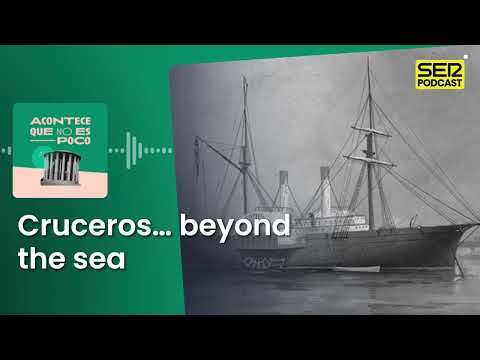
Nieves Concostrina relata la historia de los inicios del turismo marítimo y detalla el viaje que Mark Twain realizó en 1867, considerado el primer crucero de la historia. A pesar de anunciarse como una exótica y lujosa travesía, la realidad estuvo marcada por constantes cuarentenas en varios puertos de Italia y España que impidieron a los viajeros desembarcar, provocando que regresaran a casa saturados y con nostalgia.
Descarga nuestra app para móviles y tablets:
Apple Store (iOS): https://apps.apple.com/es/app/cadena-ser-radio/id401987596
Play Store (Android): https://play.google.com/store/apps/details?id=com.prisaradio.replicapp.cadenaser
Suscríbete a nuestro canal de Youtube y dale a la campanita → https://www.youtube.com/channel/UCvIuCDYS_YoxCZvMXOg_GAQ
For the first in a new set of episodes about bad ideas with interesting histories David talks to the writer and broadcaster Helen Lewis about hysteria, an ancient idea that became a very modern diagnosis. Why was hysteria associated with both madness and saintliness? How did Charcot and then Freud use hysteria to rationalise otherwise baffling female behaviour? What happens when group hysteria takes hold? And why do we still find it so hard to do without these kinds of labels?
You can find out everything you need to know about this podcast – who we are, what we do, plus merch, events and full lists of all episodes including PPF+ bonus episodes on our website https://www.ppfideas.com
Next time in The History of Bad Ideas: Narrative History
A town that honors the unnamed dead. A girl torn from her mother. A concert a group of musicians never imagined they would have to perform. This week we’re heading to Colombia with three unexpected stories.
Find the English transcript of “Colombian Anthology” here. Or check out the Spanish transcript here.
One version of “War Instruments”, one of the stories featured in this anthology, originally aired in English on the Snap Judgment podcast. You can listen to it here.
This podcast is the property of Radio Ambulante Studios. Any copy, distribution, or adaptation is expressly prohibited without prior authorization.
►Subscribe to our newsletter. It’s our favorite place to stay in touch with our community. Get an email every Tuesday with the newest Radio Ambulante episode and one every Friday with 5 recommendations from our team.
► We have good news: our partners at Jiveworld have launched a new app to learn and practice English by listening to real stories from fantastic podcasts that have inspired us, such as This American Life and Radiolab. Plus, Radio Ambulante listeners get a 50% discount on their subscription! Just go here.
We are an independent, nonprofit media outlet. If you value our work, join Deambulantes hereand help us keep telling the stories of Latin America.
Até que ponto os evangélicos vivem separados do restante do mundo? Como essa separação afeta o posicionamento político dessas pessoas? Por que as lideranças pentecostais estão cada vez mais próximas do espectro politico de direita? Como essa guinada conservadora se reflete nos fieis? E como os frequentadores dessas igrejas que não se identificam com este caminho ideológico enfrentam esse movimento?
Ouça a resposta para essas e outras perguntas no nosso episódio 164: A redoma de Cristo.
Cientista social, mestra em Gestão e Políticas Públicas pela Fundação Getúlio Vargas (FGV-SP) e pesquisadora do Instituto de Estudos da Religião (ISER).
Ficha técnica
Design das capas dos aplicativos e do site: Cláudia Furnari.
Trilha sonora tema: Paulo Gama.
Mixagem de som: Vitor Coroa.
Produção, reportagem e edição de áudio: Matheus Marcolino.
Direção, roteiro e apresentação: Tomás Chiaverini.
¿Qué tiene que ver la maduración del queso Parmigiano-Reggiano con ganar una Champions League? Ancelotti encarna la imagen del liderazgo tranquilo, pero en su forma de gestionar el vestuario y las relaciones humanas la cocina va más allá de la metáfora.
Bibliografía : Preferisco la Coppa, Carlo Ancelotti Unico grande amore, Toni Padilla Parmesano: el queso con propiedad intelectual, que dinamizó monasterios y es uno de los más falsificados del mundo (artículo publicado en El País)
Música original: Maxi Martínez
Música libre de derechos: Chris Haugen, Density & Time, Dan Lebowitz, Dyalla, Dark Marimba Fragmentos de audio: Spot de Brahma Spot de Nike Episodio del podcast Duas e tanto, de Marina Dias y Carol Pires Cuestionario Vogue a Nicole Kidman
Este episodio llega a ustedes gracias a Vermut Flores. **Aviso: Vermut Flores llegó a España y está disponible en el sitio vermutflores.com. Ingresando el código GASTROPOLITICA tienen un 20% de descuento en todas las variedades**
Gastropolítica es un podcast escrito, narrado y editado por Maxi Guerra. Diseño de portada: Pablo Corrado. Montevideo, Uruguay, 2026.

 Login
Login