Login
Why Israel fears Trump’s deal with Iran

We used DeltaSweep throughout this episode to track the Strait of Hormuz, ships, military activity, and key infrastructure in real time. You can try the same dashboard yourself at https://www.deltasweep.com



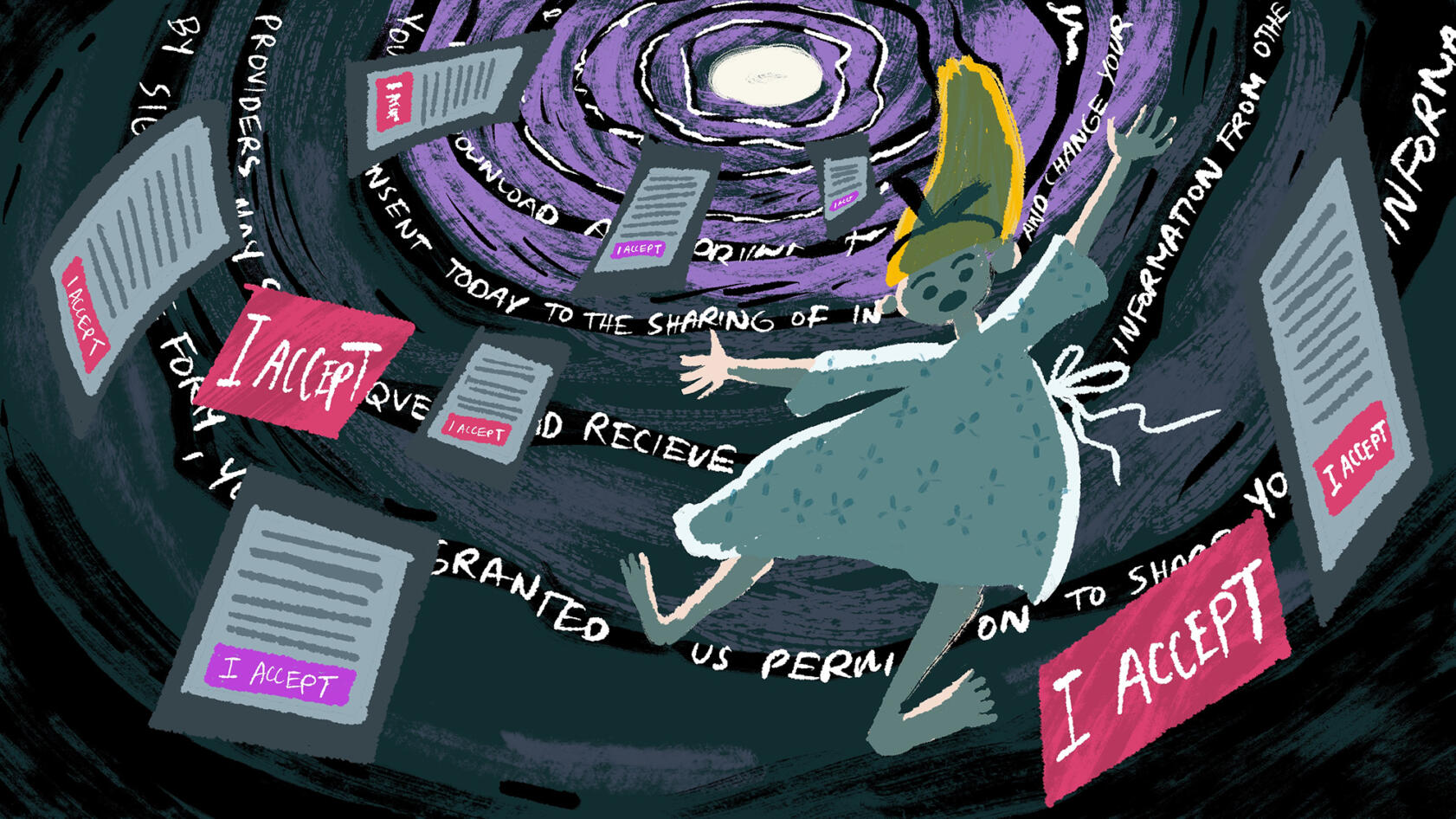
When Paula Stannard, one of the federal government’s top healthcare privacy officials, visited her eye doctor this year, she was asked to sign a form, acknowledging she’d received a privacy notice about how the office would use her health data.
“Had I received the notice of privacy practices? No,” she told an audience at one of the nation’s largest health industry conferences in March.
“I did not want to tell them who I was and why they should not be doing that,” said Stannard, who is director of the Office for Civil Rights at the U.S. Department of Health and Human Services. “But I did write a note that says, ‘I have not received this. I am not acknowledging receipt.’”
Stannard’s story is all too common.
Over the last year, I’ve interviewed more than 20 patients, healthcare providers, experts and advocates about the privacy forms they must sign to get care at their providers’ offices.
Time and again I was told the same thing: Across the country, from large hospital systems to small, private clinics, patients are being asked to sign waivers blindly without knowing exactly what they’re signing.
When patients ask to see more, staff usually don’t have an easy way to show them. When patients do get the forms, it tells them all the ways their medical data will be shared and reused, and some of the ways patients can refuse. But electronic systems make it impossible to opt out on the spot, requiring follow up emails.
Records sharing between unaffiliated providers through these networks can benefit patients by making their scattered records more visible to the provider who is treating them.
But it can also harm patients.
Patients seeking an abortion may not want records to travel with them from a state where that treatment is legal to one where it is criminalized.
In other cases, companies, such as GuardDog, have admitted to accessing patient records “under the guise of treatment” and funneling them to personal injury law firms.
Researchers have also found healthcare workers snooping through electronic health records. Other dangers include data breaches and serious potential for misuse, such as domestic abusers stalking their partners though the pediatric records of their children.
There’s not much patients can do to limit the risks of their data being available across networks, except by aggressively pursuing opt-outs when providers offer them. Turns out, that can be pretty hard to do.
Gale Oleson is a retired dermatologist in Missouri who recalled visiting the emergency room after a hand injury.
“They hand me the signature pad,” he said. “They said, you have to sign this so we can do the procedure. And I said, well, I don’t know what the heck I’m signing. Is it like you get my house today? You know, you could be taking my car, you know, signing over my life insurance. And they just laugh, you know?
“… In those situations, I’ve had them either turn the screen to me or I request that they print out a copy for me to review and they’ve always done it, but it’s always a ‘I forgot how a printer works’ kind of thing.”
Experts have a name for this practice: “Dark patterns,” which are manipulative design choices that steer people into doing things or making decisions they otherwise would not make. It’s easier to check the box to say that you’ve received the privacy notice, even if you haven’t. It’s easier to sign the digital signature box, even if you can’t see what you’re signing.
The alternative — saying you didn’t get the privacy notice, or asking repeatedly to see what you’re signing — sounds like a simple request, but can be scary for patients. Many of the patients I’ve interviewed, including a lawyer who works as a privacy advocate, told me they’re afraid that speaking up or pushing back against terms they don’t agree to will make health providers categorize them as inconvenient patients and make it harder to get the care they need.
As a privacy researcher, I’ve experienced this hesitation myself. Last year, I wrote about the epic lengths I went through to get a copy of the consent forms I signed when my toddler needed surgery. When my child was strapped to a movable bed, the surgeon standing there at the ready, I was asked to verify my signature on a consent form. When I asked if I could have a copy of it, a nurse said she wasn’t allowed to give it to me — and sent me to a ghost office at another hospital to search for it. In the moment, I let it go, so I wouldn’t hold up the surgery. Later, after asking multiple people for help, I was finally able to get a copy.
To experience more of what patients have to deal with and test whether they’re able to successfully get the information they need, say no, or opt-out of having their data shared, I checked out over a dozen health care systems myself by registering and going to appointments in Iowa, New Jersey, New York, Ohio, Oregon, South Carolina and Virginia.
One telehealth appointment with a provider showed me how easily dark patterns force patients to share their data with big healthcare networks, even when the privacy form they’re signing explicitly says they can opt-out.
In October 2025, I booked a telehealth appointment with a women’s health clinic in Virginia, after a source was frustrated with the clinic’s check-in process. During registration, I was asked to sign their notice of privacy practices. It’s the same type of form that Stannard never got, but was asked to say she did.
The notice told me that I was giving them permission to let my physician share my health data with a health information exchange, a network that allows providers to search my medical records, like lab results or medical history, from other health organizations when they treat me. These networks can be regional, state-wide or national in reach. The privacy notice says that by signing the form, “you agree to have your medical information shared.”
It also says I have two other choices:
But when I got to the end of the privacy notice, I wasn’t allowed to say no. I had only one choice: “I accept.” After that, there’s a spot to type my name “to accept the policy,” check a box that I understand that I’m electronically signing, and a big button to “Continue.”
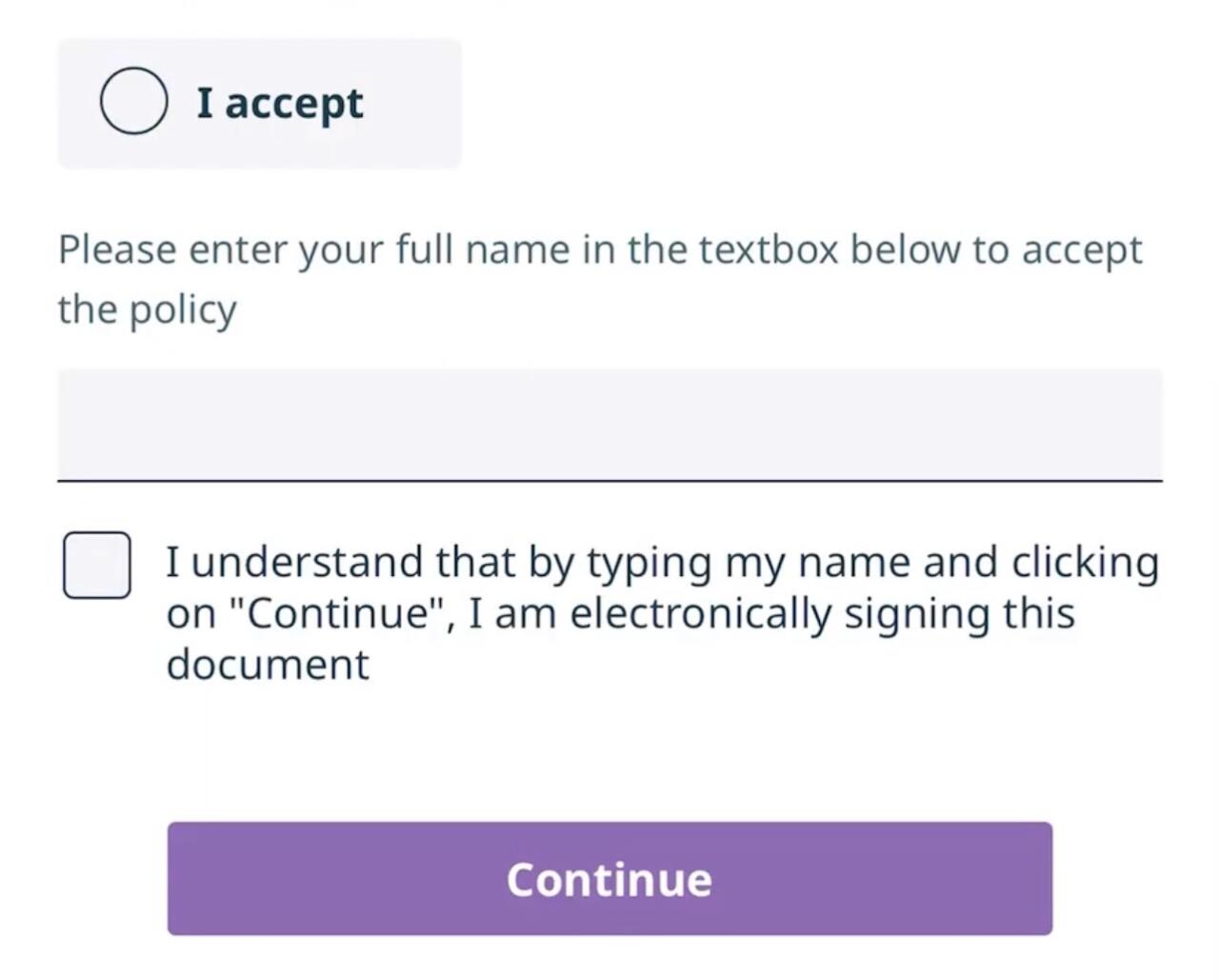
I ignored the accept button and tried clicking “Continue.” An error message told me I couldn’t move forward unless I hit “I accept.”
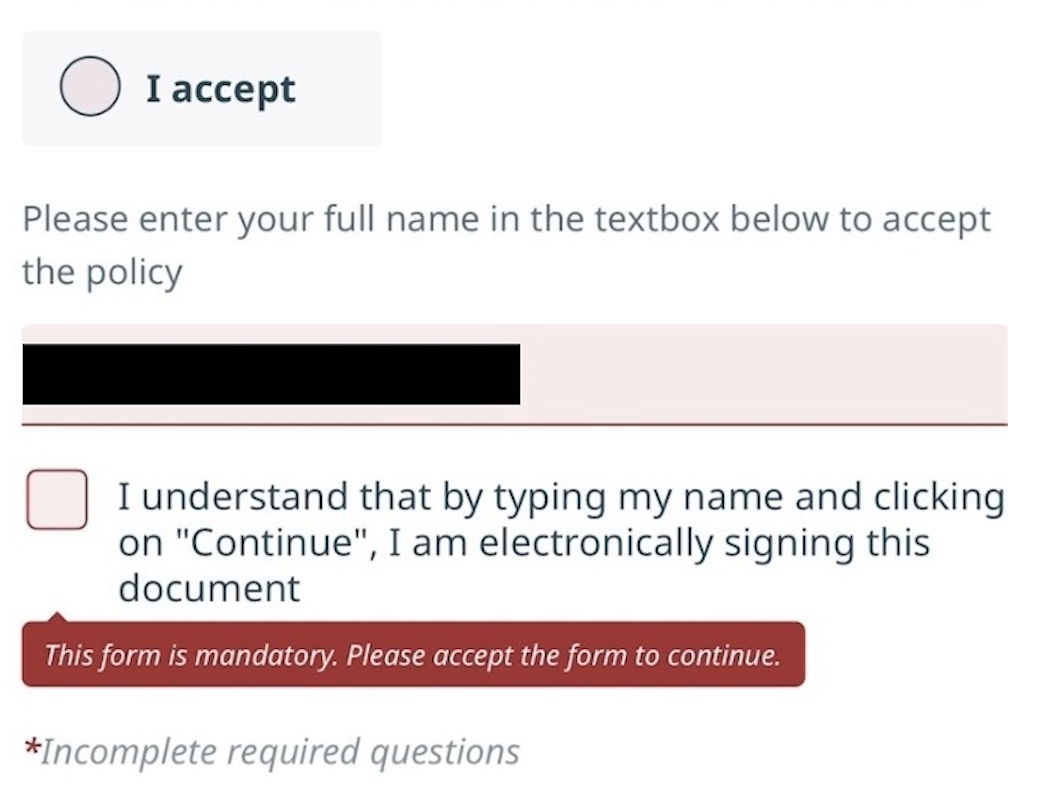
I was at a crossroads. The privacy notice literally describes “Say No Thanks” as a choice, but doesn’t let me pick it.
At this point, most of the patients I’ve interviewed would probably click “I accept” and move on, even if they wanted to keep their information private. But I was researching what patients have to do for healthcare systems to honor their wishes around consent and privacy, so I stopped filling out the form.
Instead, I emailed the address on the privacy notice. I was surprised that an employee got back to me that day, shared the opt-out request form, and confirmed that “registration is required to opt-in.” She also told me her company, which manages this consent process for the information exchange, will process my opt-out after I sign it and they’re able to process it. The risk is that they might not do it before my appointment. I emailed her back and asked what we should do about this, since the original privacy notice says, “Please note, your opt-out does not affect health information that was disclosed through HIE [health information exchanges] prior to the time that you opted out.” How could we make sure none of my information is shared?
The next day, she replied that her company would proactively opt me out of the information exchange, that I should still complete the opt-out form she sent me, and that “You should now be able to complete your check-in, and the setting will remain unchanged.”
When I went back to check in for my appointment, I clicked “I accept,” because the health services company assured me nothing will change. Just to be safe, I wrote “I opt out of HIE” and my initials, “AR” into the box where I’m supposed to write my name.
When I wrote to a manager of the women’s clinic about this, they stood by Privia’s process and said that Privia makes themselves available for patients who want to opt-out.
“This is a dark pattern,” said Lior Strahilevitz, a legal scholar at the University of Chicago who has published papers on privacy and dark patterns and teaches health law. In fact, Strahilevitz sees multiple dark patterns in the patient registration process I went through.
One is called an “obstruction dark pattern,” which means the design makes it harder for patients to make any choice except the one healthcare providers want.
Another dark pattern was “visual interference” where the interface makes it hard on the patient. “The patient’s going to have to face inordinate burdens in order to make an autonomous choice,” he said, because they will need to go “outside the user interface, outside the screens, in order to exercise your opt-out rights.”
Lucia Savage, former chief privacy officer at the federal health IT office, called the Office of the National Coordinator for Health IT, said that problems like this can happen when people carelessly put physical forms online. “This isn’t really a design at all,” she said. “This is just a bunch of paper pasted onto a web page. Could you even really call it design?”
Legal experts point out that only one element of the check-in process violates the spirit of health privacy law, and it’s not the part I expected.
In Virginia, where I had my appointment, it’s legal for providers to opt patients in at registration and give them a way to opt-out later.
Some states, like Florida and New York, require providers to get a patient’s explicit consent before they can share or access a patient’s data from information exchanges. Other states, like Arizona and Maryland have laws that allow data-sharing through health information exchanges by default, as long as providers tell patients and give them a way to opt-out. Some states have not passed any additional regulations, which means they follow the federal baseline. Federally, under the Health Insurance Portability and Accountability Act (HIPAA), sharing a patients’ data in a health exchange is legal.
According to Sarah Jaromin, a health policy specialist at the National Conference of State Legislatures, in Virginia, there is no current state policy with explicit opt-in or opt-out requirements.
Craig Konnoth, a law professor at the University of Virginia who specializes in health and civil rights looked at the privacy notice I was asked to accept. “You have the choice as to whether your data is going to be used. In this particular situation, ‘we are going to use your data until you file in the opt-out paperwork’ — then that’s actually kosher,” he said.
What experts say violates the spirit of the law, however, is requiring that patients sign the privacy notice itself.
When I was checking in, the privacy notice forced me to add my signature and click “I accept” before I could click “Continue.”
“What becomes problematic for me is that you can’t actually proceed. The design forces you to do something that the HIPAA privacy rule does not require you to do,” said Stacey Tovino, a professor who teaches HIPAA privacy law at the University of Oklahoma College of Law. (Full disclosure: As a part of my role as Director of Sociotechnical Research at The Markup and CalMatters, I am combining a broader journalistic investigation with a small ethnographic research studying on digital patient intake procedures, The Markup paid Tovino to consult on the HIPAA implications of my findings, but she did not participate in data-collection or editorial decision-making.)
“Nothing in HIPAA requires them to make you sign the notice,” said Tovino. “If they don’t obtain the signature they simply have to document why they didn’t get it.”
There’s an important nuance here. At a doctor’s office, patients usually have to sign and give consent to treatment and financial responsibility policies before they can actually get medical care. But when it comes to privacy notices, HIPAA only requires healthcare providers to ask that patients acknowledge receiving it. Patients should be able to ignore it.
Many of the privacy-focused patients I interviewed, including those who also work as doctors and nurses, deliberately decline to sign a notice of privacy practices if it contains terms they disagree with. But when modern check-in technology refuses to let a patient move forward without agreeing to the notice of privacy practices, is that legal?
Emily Hilliard, press secretary at the U.S. Department of Health and Human Services (HHS), confirmed that the HIPAA privacy rule does not require providers to get a patient’s consent to their privacy notice, but it also does not “prohibit covered entities from requiring individuals to acknowledge, or agree to the terms of, an NPP.”
In other words, requiring patients to agree to a privacy notice before getting treatment is legal.
“Likely because HHS never envisioned this happening, HIPAA does not explicitly prohibit a covered entity from requiring an acknowledgement of receipt of the notice of privacy practices as a condition of treatment,” said Adam Greene, a partner at the law firm Davis Wright Tremaine who focuses on health information, privacy and security.
“HHS has heard about widespread problems with the acknowledgment of receipt of the notice of privacy practices becoming an obstacle to patient care and a cause of confusion,” he said. “In 2021, they issued a proposed rule that, amongst other things, proposed deleting the requirement for an acknowledgment of receipt of the notice of privacy practices.” The rule was never finalized, but it is back on the agenda this year.
Stannard confirmed that at HHS, “we are in the process of finalizing the rule which includes some additional requirements for the notice of privacy practices.”
The current proposed rule includes, “Eliminating the requirement to obtain an individual’s written acknowledgment of receipt of a direct treatment provider’s Notice of Privacy Practices.”
Legal experts say that regulators can fix this problem with one fell swoop: make it a rule that companies must let patients opt-out right away, at the same moment they’re notified that they can.
“Amend these [federal] regulations to say covered entities shall not impose an undue burden on people trying to opt out. Covered entities shall not make it functionally problematic. Covered entities shall not, in registration documents, force people to proceed, thus waiving their right to opt out at the earliest possible time,” Tovino said.
She suggested that when a company notifies someone of their right to opt out, the next sentence should include a link to do so.
Savage agreed that this change would “absolutely” be a substantial intervention. “I believe that’s something OCR [Office of Civil Rights at HHS] could do in regulations.”
At the same event where Stannard shared that her eye doctor asked her to acknowledge a privacy notice she never got, I asked her, “Would updating the privacy rule to require a live link when patients make a choice to opt out or into sharing their information be empowering to Americans as individual patients?” She’d just spoken about U.S. Health Secretary Robert F. Kennedy Jr.’ s agenda “to empower individuals with their own health information.”
“That’s an interesting idea,” Stannard responded. “I don’t remember if we’ve considered it before. It’s certainly something that we could consider going forward.”
Navigating the dark patterns in the check-in process was difficult. What I’ve learned however, is that it’s hard to know who picked that interface to use with patients. Did it come from the clinic or the sprawl of vendors that health facilities have come to rely on?
Private clinics often partner with multiple outside companies (vendors covered by HIPAA) to get technology and administrative support. My appointment involved three different companies:
“Unless you’re a really giant system,” said Savage, “you don’t have internal expertise on how to do this. So you buy it. You buy what’s plug-and-play and what’s affordable.”
The Markup and CalMatters asked all three companies who was responsible for the design of the patient registration interface, and no company gave us a clear answer.
Privia: “Privia is committed to the privacy and security rights of our patients’ information and to ensuring we comply with all regulatory requirements regarding our use of that information,” said Robert Borchert, senior vice president of investor and corporate communications at Privia Health.
athenahealth: “athenahealth provides technology that healthcare providers use to manage patient registration and clinical workflows … configured according to each provider’s requirements and applicable law,” read a statement from athenahealth, provided by Nikki D’Addario, senior public relations manager.
Phreesia: “It is the provider’s form and they determine the content and interface options,” said Dori Zweig Young, Phreesia spokesperson.
None of the companies responded to detailed written questions about how much control clinics have over the interface.
Outside of healthcare, regulators, like the Federal Trade Commission (FTC), the Consumer Financial Protection Bureau (CFPB) and multiple state attorneys general and agencies, have called dark patterns manipulative or abusive tactics that confuse consumers about their privacy choices or lock consumers into paying for services (like the famous Amazon Prime case). Researchers consistently find that people want more control over the context of how their data is shared, and that patients are least comfortable handing over blanket access with broad, open consents, even if they are largely willing to share it for specific uses.
Strahilevitz explained, however, that agencies like the FTC and CFPB, which have been the most active on regulating dark patterns, regulate privacy within their zones, and only occasionally take on boundary cases.
“Health privacy, for the most part, is going to be primarily addressed by HIPAA and Health and Human Services rather than the FTC Act and the Federal Trade Commission,” he said. “There are limits on [the Commission’s] ability to protect patient privacy because that’s basically another entity’s job.”
Greene and Savage both agreed that the Federal Trade Commission has jurisdiction to enforce against dark patterns as unfair or deceptive practices in for-profit healthcare entities. The clinic I went to, like hundreds of thousands across the country, is for-profit.
But HHS has a broader mandate to regulate healthcare organizations, including non-profit hospitals.
For example, Strahilevitz said, in consumer finance, regulators at the Consumer Financial Protection Bureau treat a practice as unfair or deceptive when a consumer cannot reasonably avoid the resulting injury. Just as hard-to-cancel online subscriptions force people to pay more, maze-like opt-out structures force patients to pay with their data by default.
Strahilevitz said this provides a framework for thinking about privacy injuries in healthcare. An information exchange could serve as a clearing house for information about a patient’s abortion, which has a clear potential for injury if that information becomes known in a state where abortion treatments are criminalized.
“In other privacy contexts, the courts have said where it’s literally possible to opt out of something but, practically quite difficult, unduly onerous, then we’re not going to treat that as creating an opt-out right,” he said.
Savage sees more opportunities in carrots than sticks to get to best practices. She argued that the government could invest in good interface design that’s open source and available for anyone to use, and the federal health IT office, where she used to work, could create competitions focused on improving the technical tools that providers buy and use.
If the big technology vendors that independent clinics are already using make these changes, it could affect millions of patients.
State regulation is another possible solution. Strahilevitz said that scrutiny of dark patterns is spreading as states, like California, and regulatory agencies, like the FTC, seek to reign in unfair or deceptive practices through the simple intervention that it should be as easy to cancel as it is to subscribe, with one click.
“I hope that at some point, we’ll get to a point where symmetry of choice is the law of the land, not only with respect to consumer privacy in some states, but to these kinds of medical privacy or financial privacy or other contexts,” he said.
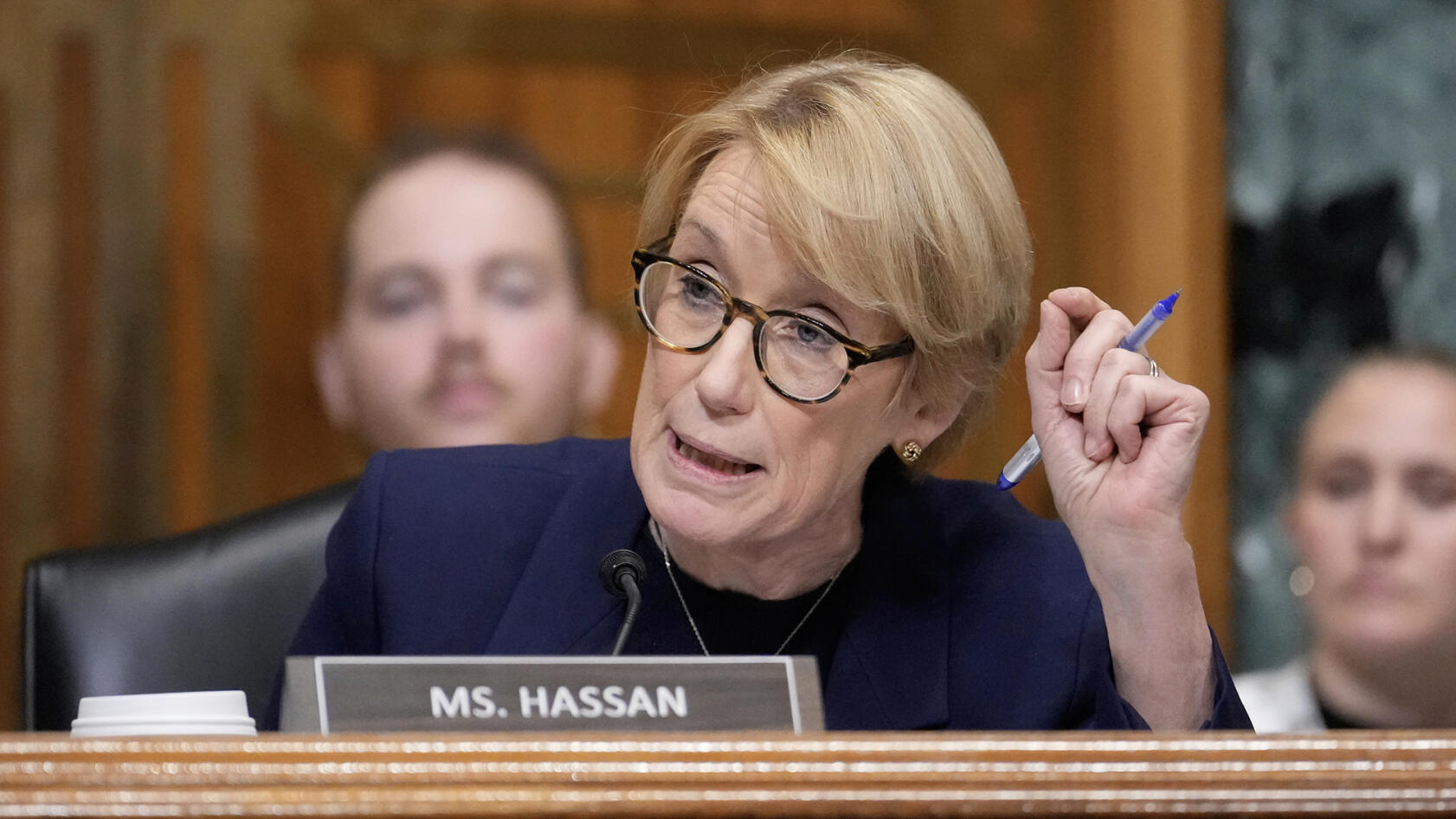
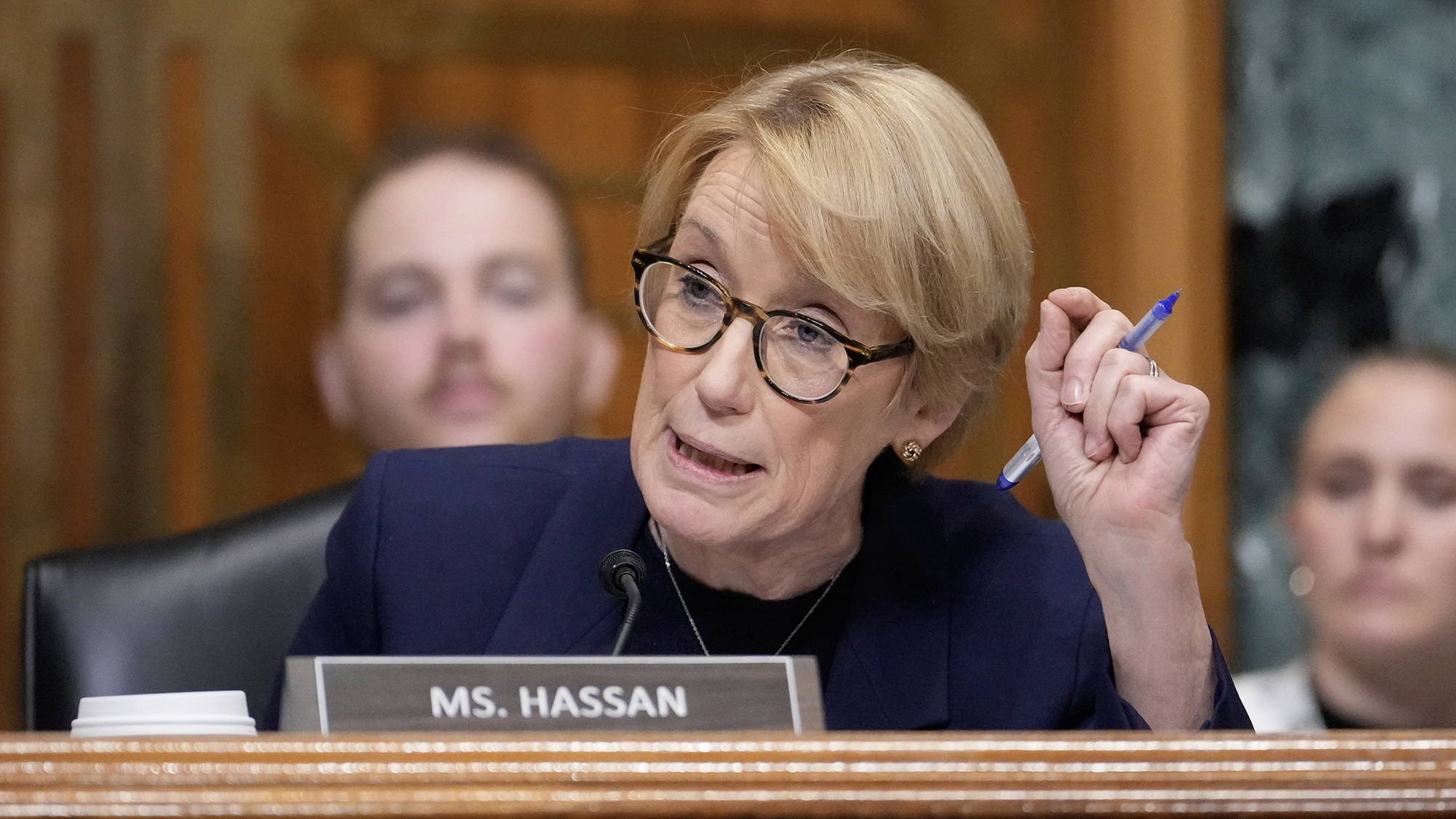
Sen. Maggie Hassan pressed data brokers to make it easier to opt out of their systems, citing an investigation by The Markup and CalMatters, published in partnership with WIRED. U.S. Sen. Maggie Hassan speaks during a Senate Finance Committee on Capitol Hill in Washington, D.C. on March 14, 2025. Photo by Ben Curtis, AP Photo
More data brokers have changed their practices in response to reporting from The Markup and CalMatters as well as a subsequent Senate investigation.
Data brokers — companies that collect and sell access to often-sensitive information on consumers — are required to register in the state of California and provide a way for consumers to request their data be deleted.
Last year, an investigation by The Markup and CalMatters, published in collaboration with WIRED, showed that many of those companies placed code on the web pages for making those requests that prevented them from appearing in search results. The “no-index” code tells search engines like Google not to catalog those pages, making it less likely that anyone would see them. Experts said that’s a hurdle for Californians looking to exercise their legal rights.
Last year’s investigation found 35 data brokers were using the code, 12 of whom soon removed it and allowed their pages to appear in search results.
Today, only eight of those 35 brokers are still hiding their deletion pages, according to another review done by The Markup and CalMatters this week. That includes five major data brokers who came under Senate investigation.
After The Markup and CalMatters published their report, the top Democrat on the Senate Joint Economic Committee minority, New Hampshire Democratic Sen. Maggie Hassan, sent letters to five data brokers questioning them about their practices.
Four of the companies — IQVIA Digital, Comscore, Telesign Corporation and 6sense Insights — engaged with the Senate committee about their practices and agreed to make their pages visible in search, according to a report the committee later released. The report also estimated that consumers have lost more than $20 billion from fraud and identity theft related to broker data breaches.
In an addendum to their initial findings released last week, the committee said that the fifth company facing questioning, Findem, also belatedly removed its “no-index” code, making its deletion pages visible in search engines.
One of the data brokers no longer hiding its opt-out page, BrightCheck, has a broken opt-out page and no longer appears on California’s broker registry.
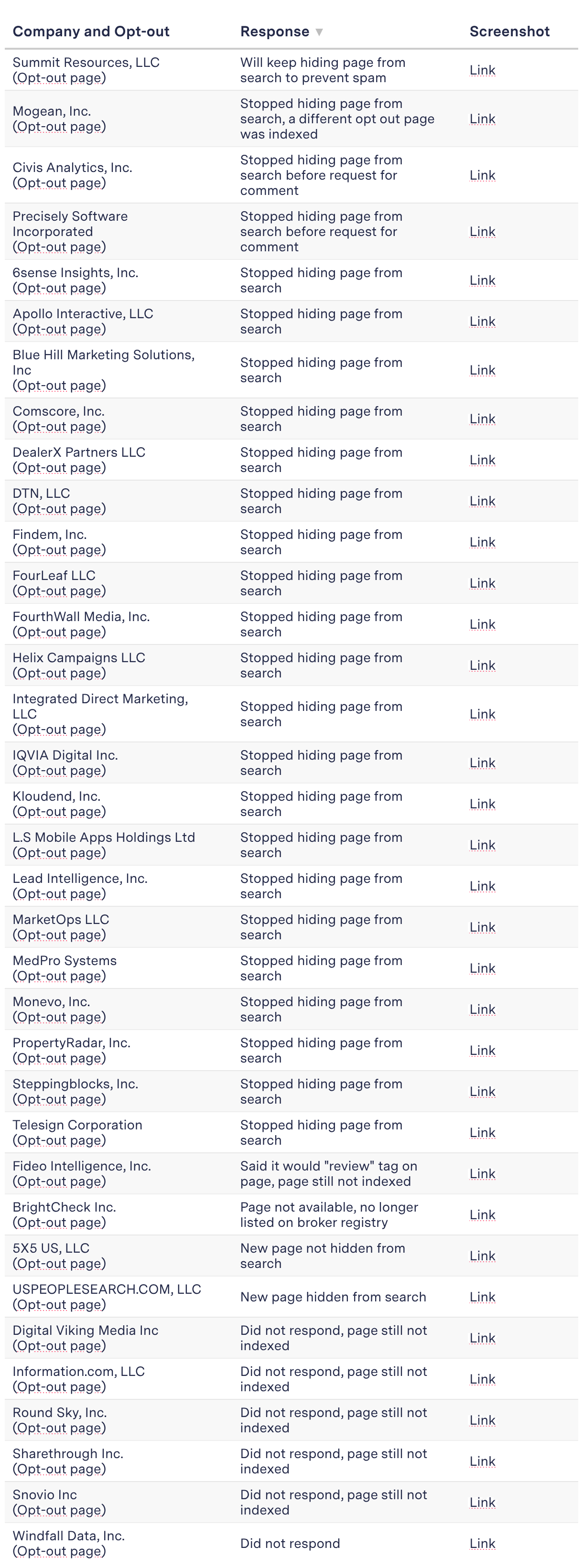
Of the eight brokers still hiding their deletion pages, only one, a company called Fideo, responded to a request for comment about whether they would continue using the code on their pages.
Jason Soni, a spokesperson for Fideo, which uses data for crime and fraud prevention purposes, said the company intentionally “chose not to display the application page itself in Google search results for technical and consumer experience reasons.” Consumers, he said, can make requests starting “from our homepage and public privacy resources, which provide the right context, routing, and instructions for privacy requests,” instead of starting at the application page.
“Americans deserve a choice over whether their personal data is collected, used, and sold for profit or not,” Hassan said in a statement released alongside the amended report. “Data brokers like Findem have a responsibility to provide that choice with clear, user-friendly opt-out functions and straightforward privacy policies.



Escucha el segundo episodio de 'La memoria en ruinas', un podcast sobre el patrimonio español que se resiste a desaparecer
El capítulo 2 de La memoria en ruinas profundiza en la sorprendente realidad que José María Sadia y Andrea Morán acaban de descubrir: que España fue una especie de casa de subastas a principios del siglo XX. La profesora María José Martínez Ruiz, una de las mayores expertas en el comercio del arte, explica cómo anticuarios y agentes internacionales se llevaron de nuestro país todo tipo de joyas artísticas para vendérselas a magnates americanos como William Randolph Hearst, o a museos de prestigio, como el Metropolitan de Nueva York.
En esta segunda entrega, los periodistas se preguntan si todos estos tesoros nos fueron robados o si, por el contrario, fuimos nosotros quienes los vendimos.

En busca de pistas certeras, visitarán un enclave que vivió uno de los fenómenos de expolio (o autoexpolio) más dolorosos de la Historia del arte. Se trata de la sustracción de una obra maestra, las pinturas murales de la ermita de San Baudelio de Berlanga. Un viaje final tratará de dar respuesta a una cuestión de lo más enigmática: ¿Dónde están actualmente las pinturas románicas de la iglesia soriana?
**
Puedes escuchar los 10 episodios de ‘La memoria en ruinas’ en nuestra web y en tu plataforma de audio favorita:
También lo puedes escuchar en Youtube:
La memoria es ruinas es una producción de elDiario.es. Si te gusta lo que hacemos, necesitamos tu apoyo. Hazte socia, hazte socio, en elDiario.es/socio
Financiado por la Unión Europea – Next Generation EU

La proposición de ley de Sumar para que los nacidos en el Sáhara Occidental antes de 1976 y sus descendientes puedan tener la nacionalidad española aviva la esperanza en los saharauis
Entrevista - Bucharaya Hamudi: “El socialismo español del ‘No a la guerra’ se contradice con la posición de Pedro Sánchez sobre el Sáhara Occidental”
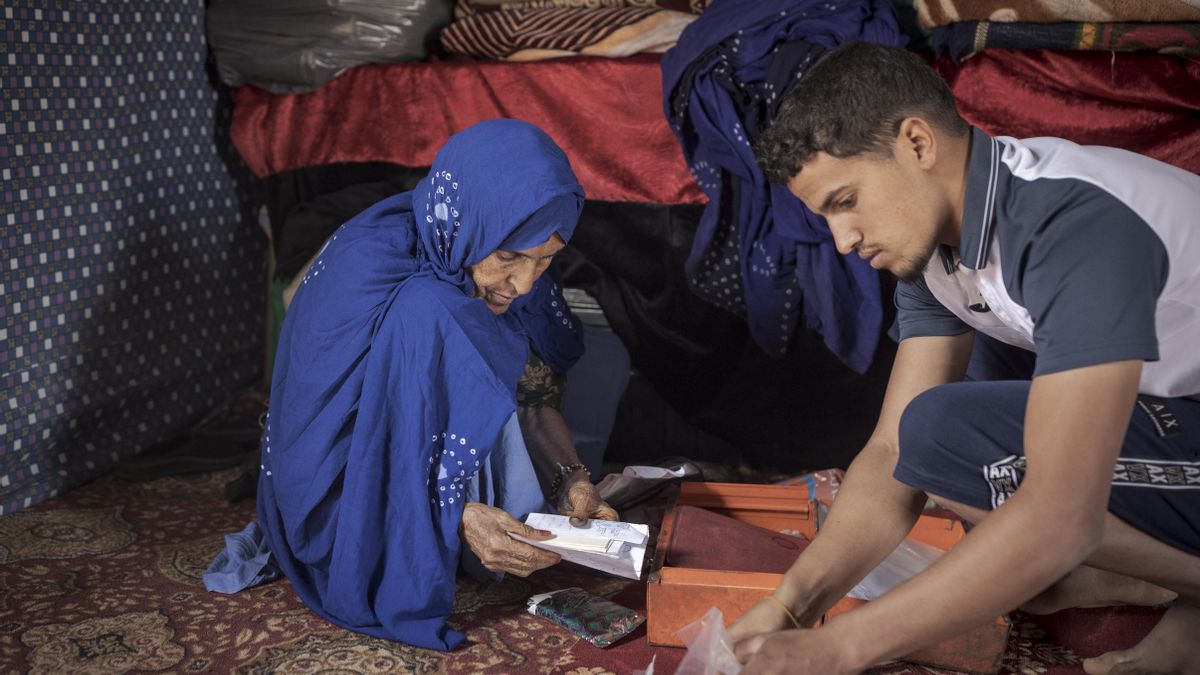
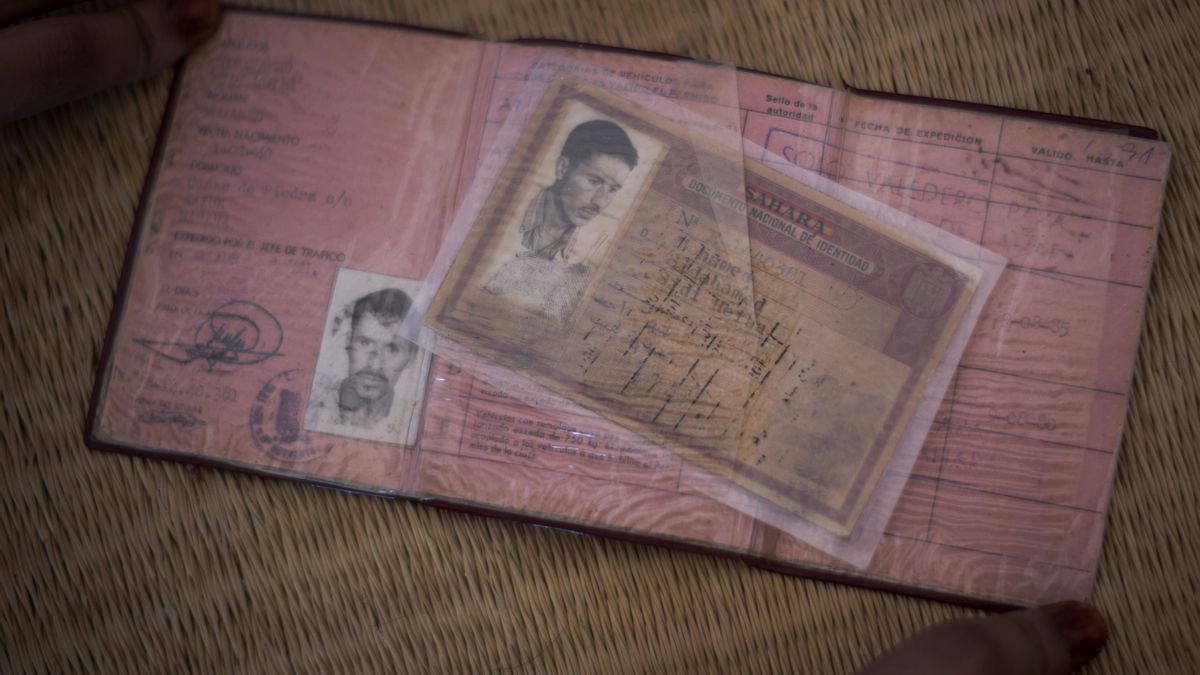
Revuelve en una caja para encontrar los recuerdos de sus días en el Sáhara español. Del cofre metalizado salen algunos papeles escritos en castellano, una hoja de un cuaderno Rubio de la escuela donde llevaba entonces a su hijo. El maletín naranja acumula lo poco material que conserva de los años en que su vida no se limitaba a esperar para regresar, pero Um El Fadli no encuentra su tarjeta de identidad española, la que le acreditaba como ciudadana de la que fuera la provincia número 53. No pensó que, tras décadas del abandono de España, la podría llegar a utilizar para solicitar la nacionalidad española.
Ahora, una proposición de ley impulsada por Sumar en el Congreso Español, ha avivado sus esperanzas. La mujer septuagenaria no había oído nada del proyecto legislativo que plantea el reconocimiento de la nacionalidad a los ciudadanos nacidos en el Sáhara Occidental durante la época colonial, pero su nieto asiente con entusiasmo al oír hablar de la iniciativa.
La abuela, al conocer los detalles durante los días en que se celebra en su campamento el Festival del Cine del Sáhara Occidental (Fisáhara), asiente para confirmar que, en caso de salir adelante la medida, pediría la nacionalidad española; pero estira su dedo índice, lo coloca delante de su rostro y lo mueve de un lado a otro para enfatizar su respuesta negativa a la pregunta que acaba de escuchar.
– Si obtuviera la nacionalidad, ¿querría vivir en España?
– No. No me iría. Me quedaría aquí. Quiero regresar a mi tierra, no quiero ir a ninguna otra parte. Y si no llega la independencia a tiempo, estaré aquí.
Ese “aquí” es el campamento de refugiados saharauis de Auserd, uno de los cinco asentamientos levantados por los propios saharauis en el desierto de Tinduf (Argelia), tras su huida de la ocupación marroquí del Sáhara Occidental y el posterior abandono español. Es la tierra árida, cedida por Argelia al Frente Polisario, donde sobreviven en condiciones climáticas extremas, bajo la dependencia total de la ayuda humanitaria. Es aquel lugar nacido para desaparecer, cuyas jaimas y casas de adobe fueron construidas bajo la promesa de provisionalidad, pero permanecen 50 años después, como también continúa la vida convertida en causa de Um El Fadli. Es aquí donde decide quedarse si pudiese marcharse, pero mira a su nieto y entiende que en su caso puede ser diferente.

Si Um El Fadli y otras personas nacidas en el Sáhara Occidental antes de 1975 querrían acogerse a su derecho de obtener la nacionalidad española, no es con el objetivo de dejar el campamento de refugiados donde viven y trasladarse a España, pese a sus complicadas condiciones de vida. Una decena de saharauis mayores responden negativamente cuando elDiario.es les pregunta por la posibilidad de migrar, pero todos ellos confirman su deseo de pedir igualmente la nacionalidad en caso de salir adelante la normativa que estudia el Congreso.
Más allá de los beneficios intrínsecos ligados a contar con un pasaporte europeo, los saharauis expulsados de la antigua colonia española hablan del reconocimiento de un derecho que consideran suyo, pero les fue arrebatado. “Es nuestro derecho. Yo tenía DNI español, convivía con los españoles, mi marido trabajaba para una empresa española y, de la noche a la mañana, desaparecieron, tuvimos que escapar y aquí estamos”, dice la señora de 70 años, sentada en una colorida jaima junto a su nieto, que tiene la edad que ella tenía cuando Marruecos inició la llamada “Marcha Verde”, que ellos bautizaron como “Marcha Negra”, y otras mujeres a su alrededor. Ya que España abandonó la antigua colonia al inicio de la ocupación marroquí, dice, ese pasaporte puede darles un respiro ante algunas de las necesidades que enfrentan en los campamentos. Con unos servicios sanitarios sin apenas recursos y una ayuda humanitaria recortada, las razones médicas son las más mencionadas entre quienes pedirían la nacionalidad española si saliese adelante la normativa planteada.
Algunas también mencionan las puertas que un pasaporte español les abriría a sus hijos o nietos para poder formarse, trabajar en España y , así, ayudar a la economía familiar. O, simplemente, contar con la mera posibilidad de viajar en determinadas ocasiones para visitar a seres queridos o alejarse por temporadas de la vida en el desierto. “Me gustaría tener la nacionalidad por si necesitase ir al hospital si enfermo, o para hacer más fácil que mi nieto pueda ir, porque allí es más fácil estudiar y encontrar un trabajo”, dice la señora, mientras el joven la mira y asiente.
Algunos de sus amigos, cansados de esperar para hacerlo por la vía legal, se subieron a bordo de una patera desde Argelia. “Yo quiero irme para ayudar a mi abuela y a mi familia, pero le he prometido que solo iría si consigo un visado”, dice el joven poco después, ya sin Um cerca.

Después de más de un año con el texto en un cajón, la proposición de ley de Sumar para que los nacidos en el Sáhara Occidental antes de 1976 y sus descendientes –cumpliendo una serie de requisitos– puedan tener la nacionalidad española ha dado esta semana un paso más en el Congreso con la constitución de la ponencia de la iniciativa. También la posibilidad de que los hijos de quienes nacieron en el Sáhara español tengan más facilidades para obtener la nacionalidad: en un plazo de 5 años desde la inscripción en el Registro Civil de sus progenitores, ellos también podrían solicitar la ciudadanía. En caso de vivir en España, solo se les exigiría haber residido dos años en el país, el mismo plazo reducido que se les pide a los nacionales de otras excolonias españolas o países con fuertes lazos culturales.
En febrero de 2025, el Parlamento aprobó la toma en consideración de la medida con el respaldo de todas las fuerzas políticas excepto del PSOE. La diputada de Sumar Tesh Sidi, de origen saharaui, celebró el desbloqueo de la medida y aseguró que su partido tratará de acercarse al resto de formaciones con el objetivo de presionar al PSOE. “Con el Partido Socialista, en materia del Sáhara, hay que seguir presionándoles porque sabemos que no les es cómodo aprobar esta norma, por lo que sea, pero vamos a seguir ahí”, dijo la parlamentaria.
En el mismo campamento de refugiados donde nació y pasó sus primeros años Tesh Sidi, la wilaya de Auserd, algunos jóvenes saharauis o adultos de mediana edad asienten con cierta ilusión cuando se les pregunta por la iniciativa parlamentaria. “Ojalá salga adelante. Tengo todas mis esperanzas en esa ley y lo estoy siguiendo desde que salió”, dice una mujer, que prefiere no dar su nombre. Es madre de dos hijos que viven actualmente en España en un limbo legal a la espera de su petición de apatridia. “Mis hijos ahora no pueden trabajar. Si saliese eso, les ayudaría mucho”, dice la mujer, mientras el fuerte viento de un conato de siroco golpea la jaima donde se refugia.
También desde el desierto, a través de su móvil, conoció los cambios de la ley de regularización extraordinaria española, que, en la práctica, supuso otro golpe para los saharauis. “Me pareció muy injusto. Ellos pensaban que iban a conseguir los papeles. Llevan mucho tiempo esperando la respuesta [de la petición de apatridia] y ahora no pueden hacer nada”, explica la mujer.
La estabilidad de los saharauis que viven en el exterior impacta directamente en las condiciones de vida de sus familias en los campamentos y en muchos proyectos desarrollados por quienes pasan unas temporadas en España y otras en Tindouf. Pese a que todas las casas de adobe parecen similares unas de otra, su interior da pistas de quienes cuentan con seres queridos en otros países, la mayoría en España, y quienes no. Los baños, las telas que cubren las paredes de cada espacio, las cortinas, hablan de quienes tienen algún miembro de su familia en el exterior.
El nuevo paso de la iniciativa parlamentaria llega después de que el Gobierno decidiese en el último momento la exclusión de los solicitantes de apatridia –saharauis en su mayoría en España– de la regularización extraordinaria, por lo que la aprobación de esta ley podría suponer un contrapeso al que ha sido considerado como el último varapalo del Gobierno de Pedro Sánchez a la población procedente de la excolonia española.
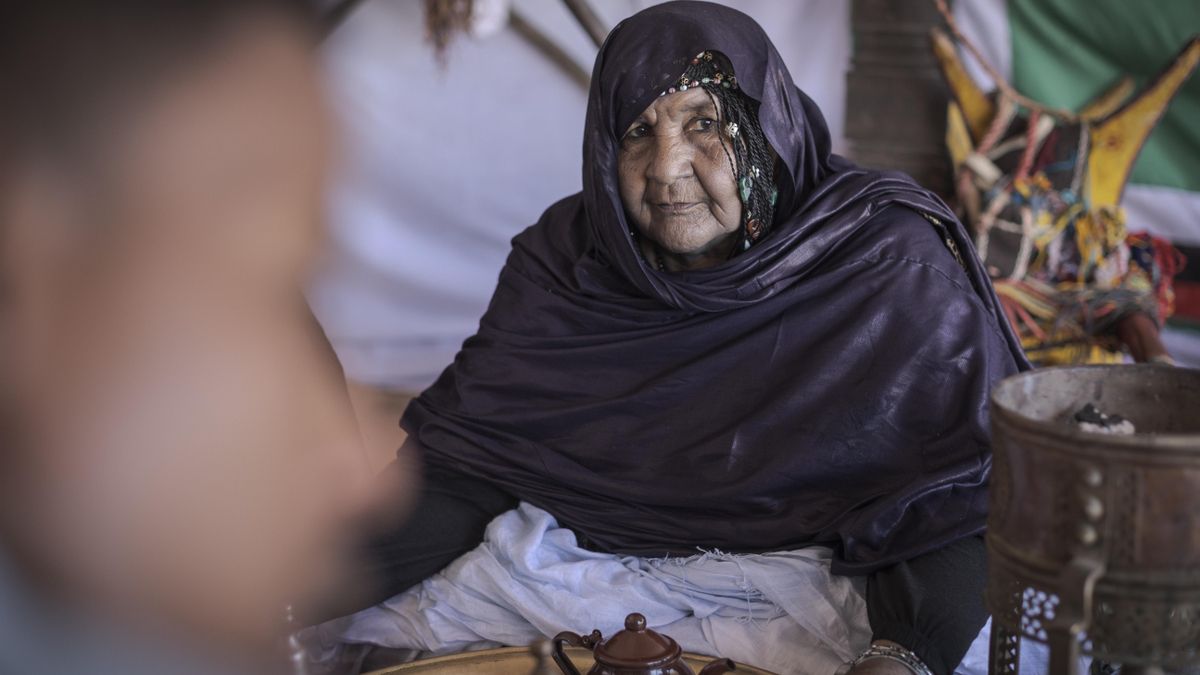
Dahda Mohamed Mahmud transmite la presencia y tranquilidad habitual en las mujeres saharauis. La mujer, nacida en el Sáhara Occidental en época colonial. Frente a una bandeja, la señora intercambia los pequeños vasos del ritual del té y concentra las miradas de sus compañeras de jaima. Su caso ejemplifica la manera en la que afrontan las generaciones mayores la posibilidad de tener la nacionalidad española. La mujer, de 70 años, nacida en el Sáhara Occidental durante la época colonial, cuenta actualmente con la nacionalidad española, pero ese reconocimiento no ha cambiado su día a día. “He ido un par de veces a España. Tenía que estar presencialmente para arreglar los papeles. También fui para ver a mi hijo y hacer alguna revisión médica”, detalla. “Pero no me quedo mucho tiempo y siempre vuelvo, prefiero estar aquí con mi marido y mis hijas”, añade la saharaui.
Para los saharauis, tampoco es sencillo pedir la nacionalidad si ya viven en suelo español. Mientras los ciudadanos procedentes de otras excolonias o países con fuertes lazos culturales con España, como Guinea Ecuatorial o América Latina, tienen plazos reducidos debido a esas conexiones históricas, esta ventaja no se cumple con quienes proceden del Sáhara Occidental. En el asiento trasero de un todoterreno aparcado en la árida explanada donde estos días se levanta la infraestructura del Fisáhara, Brahim Chagaf explica a elDiario.es parte de su odisea para tratar de conseguir su derecho a la ciudadanía. El saharaui vive desde hace más de una década entre Navarra y los campamentos de refugiados saharauis. Hace poco más de un mes, cuenta, solicitó la nacionalidad española y se encuentra a la espera de la resolución.
A su llegada a España, presentó a varios abogados el DNI español de su madre para acreditar que sus progenitores nacieron en el Sáhara español. “Yo llevé la documentación de mi madre, pero no me ha servido de nada. De hecho les hacía un poco de gracia a los abogados con los que hablaba, diciendo que eso no valía”, explica el saharaui, quien fue director de la escuela de cine. “Creo que no es justo, siendo yo hijo de españoles. Mi madre tiene el DNI español. Si España lo haya hecho tan mal, debería repararse. No acepto que sean tan justos para unas cosas, con Irán y Palestina, y tan injustos para otra. La causa saharaui es un asunto por resolver, como lo son los crímenes del franquismo”, añade en referencia a la posición del Gobierno de Pedro Sánchez con el Sáhara Occidental.
“Yo no quiero ni la apatridia y no querría la nacionalidad. Las considero como herramientas. Yo quiero vivir libre y tener el derecho internacional de la libre circulación para cada persona humana, y eso no lo puedo tener sin tener primero la apatridia que me puede permitir estar 10 años en España para que pueda solicitar la nacionalidad española”, explica el saharaui en perfecto castellano. “Estamos hablando de un país que ha ocupado un territorio durante años. ¿No puedo ir cuando me da la gana? Entonces, España obligó a los saharauis a tener el DNI y estar bajo su control y ¿ahora no puedo vivir yo allí? Va más allá de si la nacionalidad nos sirve de algo o no”.
Hay quienes piensan que, si la ley de nacionalidad para los saharauis saliese adelante, la causa correría el riesgo de desinflarse, ante la posibilidad de que muchos jóvenes pudiesen abandonar los campamentos de refugiados de Tindouf. Fuentes del Frente Polisario rechazan esa idea, pues consideran que muchos decidirán permanecer, y creen que es una idea que trata de trasladar el PSOE para justificar su rechazo a la medida. “Son muchos los saharauis que irían y volverían. Pueden pasar temporadas allí, ir al médico o estudiar, pero no se desligarían de los campamentos ni de la causa”, dice Abdula Arabi, representante del Polisario en España, que considera que incluso puede dar más fuerza a sus denuncias.
“Nuestra lucha va a seguir. No necesitamos seguir en un desierto inhóspito, cuando la lucha pacífica aquí es insostenible. Creo que somos más cómodos calladitos aquí en el desierto. Podemos estar en cualquier sitio resistiendo y vamos a seguir reivindicando nuestro derecho al retorno a nuestra tierra. Quiero la independencia del Sáhara Occidental, quizá otros no, pero queremos votar en el maldito referéndum y decidir”, clama el saharaui. Y qué mejor manera para reivindicarlo que reconocer nuestros derechos. Y eso es simplemente lo que haría esa ley que estudia el Congreso, reconocer nuestros derechos“, concluye.

A new audit has found that websites across the internet may be failing to abide by California privacy law, ignoring a requirement to not track visitors who set a privacy control.
The report, from researchers at webXray, a firm headed by a former Google privacy engineer, said the findings suggest major companies may be simply ignoring the law, and could point to “industrial-scale noncompliance with California requirements.”
The stakes are potentially high. WebXray estimates that if the California Privacy Protection Agency fined all of the websites it found failing to comply with the law, it could result in billions of dollars in penalties.
“While we don’t have comment on the finding of this specific report,” Tom Kemp, executive director of the privacy protection agency, said in a statement, “we do appreciate that the report brings visibility to the importance of opt out rights.”
Under California law, businesses are required to respect a signal called the Global Privacy Control. If users navigate the web with the control turned on — either through a setting in the browser or a third-party tool — it tells websites not to sell or share their personal information.
The California Consumer Privacy Act requires businesses to acknowledge the control and to not track people who use it. The state privacy agency has fined companies millions for failing to honor the control, among other violations.
To understand whether the law is truly being respected, the researchers visited more than 7,000 popular websites from a California internet address. According to the report, major tech companies continued to track users, even with the signal turned on.
Google continued to track users in 86% of cases despite receiving the signal, according to the report. When visitors traveled to the websites while using the signal, the sites still frequently set a cookie from Google to follow those visitors.
Similarly, according to the report, Microsoft failed to honor the signal in 50% of instances.
The report found that trackers from Facebook parent company Meta don’t just ignore the signal — they fail to check for it at all, leading to tracking 69% of the time despite the signal.
All of those failures could be remedied with slight changes to the tracking code to respect the signal, the engineers said in the report.
“They don’t make any substantive effort to comply,” said Tim Libert, founder and chief executive of webXray.
The report also found that third-party tools that purport to help businesses place advertisements that comply with the law still frequently failed to honor the anti-tracking signal. In one case, a product did not honor those requests more than 90% of the time, the report found.
The tech companies dispute the idea that they are failing to abide by the law.
“As outlined in our Privacy Statement, when we receive a GPC signal, we opt the user out of sharing personal data with third parties for personalized advertising, and our advertising systems are designed to reflect that choice,” Courtney Ramirez, a Microsoft spokesperson, said in a statement. “Certain Microsoft cookies are necessary for operational purposes, and may therefore be placed and read even when a GPC signal is detected.”
Jackie Berté, a spokesperson for Google, said the company complies with the law and that the audit was “based on a fundamental misunderstanding of how our products work.”
A spokesperson for Meta didn’t immediately respond to a request for comment.
“The idea that I misunderstand anything is a demonstrable falsehood,” Libert said, pointing out his work on cookie policy at Google.
“I would assert that, when I was there, I knew more about it than anybody else,” he added.


A California bill to protect people on online dating apps from violence has critics arguing that the measure would put a “scarlet letter” on certain users.
But that’s a feature, not a bug in the proposal.
The state Senate’s public safety committee this week passed a bill that would require online dating services to run criminal background checks on California users. If the user is a registered sex offender or has been convicted of a violent felony, domestic violence, an assault or a hate crime, the dating service must “place a flag” on the user’s profile to let others know.
Bill author, state Sen. Caroline Menjivar, said that “dating apps have not provided an adequate level of safety for their users.” At the hearing she cited a 2019 Columbia Journalism Investigations survey that found that more than a third of women polled said they were sexually assaulted or raped by someone they met on a dating app.
The Markup last year published an investigation that showed people accused of sexual violence managed to stay on the apps even after victims reported them.
Menjivar, a Van Nuys Democrat, added: “If women, mostly women, continue to be raped or murdered — like another woman (who) was murdered and her body was set on fire last year after a man met her on a dating app — those are the incidents we’re looking to prevent.”
But besides labeling users with a “scarlet letter,” implementing the policy would require dating platforms to collect a significant amount of personal data to avoid misidentifying users, argued Jose Torres, a deputy executive director for the industry group TechNet.
In a rare break with his Democratic colleagues, Sen. Scott Wiener of San Francisco voted against the bill, saying it might have “significant unintended consequences in terms of people’s privacy.” But Wiener’s opposition, along with Republican Sen. Kelly Seyarto of Murrieta, was not enough to stop the bill from advancing out of the six-member committee, according to the Digital Democracy database from CalMatters, of which The Markup is a part.
With four Democratic lawmakers giving the green light, Menjivar said she plans to amend the measure in response to criticism related to the categories of crime and operational challenges — and that legislators are “going to see a dramatically different bill” when it’s presented to the privacy committee on April 20.



The Markup’s collaborative investigation “Dating App Cover-Up: How Tinder, Hinge, and Their Corporate Owner Keep Rape Under Wraps” has won in the Society for Advancing Business Editing and Writing’s 2025 Best in Business Awards. The story was produced in partnership with the Pulitzer Center’s AI Accountability Network and was copublished with The Guardian and The 19th.
The 18-month-long investigation about how Tinder, Hinge, and their corporate owner kept rape under wraps won in the technology category. The award recognizes excellence in digital journalism covering all aspects of technology, including culture, policy, and economic impact.
Judges said that the collaborative investigation “draws readers into the dark hole of dating apps’ safety practices, along with how the industry’s dominant player turned a blind eye to the predators roaming its products. With urgency and moral clarity, reporters Emily Elena Dugdale and Hanisha Harjani shine a light on how an investor-pressured Match Group concealed accusations of sexual violence on its dating platforms.”
The Markup previously won four SABEW awards in the 2022 Best in Business Awards.
The most recent investigation is based on a review of hundreds of pages of internal company documents, thousands of pages of court records and securities filings, and dozens of interviews with company insiders and sexual violence survivors. In it, reporters Emily Elena Dugdale and Hanisha Harjani reveal that the Match Group, the world’s largest dating app company, had known about violence on its apps for years and failed to disclose that information with the public.
The investigation centers on a Denver cardiologist, who was sentenced to 158 years in prison after being convicted of drugging and/or sexually assaulting 11 women. We found Match Group was aware of his behavior for years — and yet he remained on its apps, swiping and assaulting.
Innovative product testing, led by statistical journalist Natasha Uzcátegui-Liggett, found banned Tinder users, including those reported for sexual assault, can easily rejoin or move to another Match Group dating app, all while keeping most key personal information the same.
Ten months after the investigation, Uzcátegui-Liggett checked if the accounts created by The Markup in February, which had the same name, birthday, and profile photos of banned accounts, had been eventually banned by Match Group or its moderation systems. Every account checked was still in good standing.
The reporting team overcame many obstacles. Survivors were reluctant to speak, potential whistleblowers cited NDAs. In Colorado, a district court judge sought to prevent us from accessing critical records—including testimony from police officers and Tinder and Hinge messages read in open court.
In December, six women who were attacked by the cardiologist filed a lawsuit, accusing Match Group of “accommodating rapists across its products” through “negligence” and a “defective” product. The 54-page complaint extensively cites our investigation.
In California, state lawmakers said they are preparing legislation to reform the industry. On Feb. 20, 2026, Democratic state senator Caroline Menjivar introduced a bill that would require dating apps to conduct criminal background checks for California users.
Congratulations to all of this year’s SABEW Awards honorees.


A conservative organization with decades of influence in California has quietly turned attention, and millions of dollars, to a national initiative of right-leaning news operations, records show.
The Lincoln Club was established in the early 1960s by a group of California business leaders. Since then, it’s been a quiet but formidable force in state and local politics, pushing right-leaning causes and candidates.
But in the past few years, an affiliated organization, the Lincoln Media Foundation, has massively increased its incoming revenue as it pushes online content with a conservative slant under the guise of local news in markets around the country.
According to Internal Revenue Service disclosures, the foundation had a little more than $400,000 in net revenue for the fiscal year ending in 2021, all of it from contributions.
By the fiscal year ending in 2024, the most recent disclosure available, that revenue had ballooned almost 10 times, to nearly $4 million.

In the same period, the Lincoln Club itself grew more modestly, not quite doubling its revenue to just over $3 million, according to records.
According to independent research and promotional material produced by the club’s media foundation, its money has gone toward creating a network of websites across the country, with the hopes of influencing the public and swaying voters in key states.
Many of the sites, first flagged by the researcher Max Read of the Institute for Strategic Dialogue, say they are locally organized, with names like The Angeleno and The Keystone Courier. CalMatters and The Markup recently explored another site linked to the organization, called the California Courier, using the same name as an unrelated Armenian newspaper. The Courier produces a steady stream of often unattributed articles about political controversies throughout the state and pays Facebook to promote those posts and videos on similar topics.
Critics say the group is attempting to influence the public with the veneer of local news that fails to offer clear disclosures about the messenger.
Kevin DeLuca, an assistant professor of political science at Yale University who has studied similar news sites, sometimes called “pink slime” news, told The Markup and CalMatters earlier this year that such sites may not be outright lying. Still, the sites often fall short of traditional journalistic standards, failing to properly attribute stories and funding, or heavily pulling and slanting press releases.
Jim Miller, a labor activist and co-author of a progressive history of San Diego, called the tactic “a menacing example of the use of stealth.”
“If you don’t think you can win an argument in a transparent debate publicly,” he said, “you try to disguise the messenger as much as you can.”
Neither the club nor the foundation responded to requests for comment or interviews with executives about its work.
The Lincoln Club of Orange County was established in the 1960s by wealthy local businessmen eager to spread pro-business Republican ideas locally and nationally. Those businessmen donated handsomely to sympathetic candidates and causes.
The club became a power player in Southern California politics when Republicans had more leverage in the Golden State. The group still boasts online of having counted among its ranks famous California political figures like Richard Nixon and John Wayne.
A 1972 article in The New York Times described it as a group “made up largely of millionaires” who “boast that, without their efforts and generosity, [Nixon] would not be occupying the White House today.” The Times article described the group as an organization with “many secrets” that shunned publicity but successfully influenced the political scene.
“I think they were very influential back in the ‘60s and ‘70s,” said Steve Earie, professor emeritus of political science at the University of California, San Diego.
By 1996, as the Los Angeles Times reported at the time, the group’s financial power had waned in the face of internal battles, but the club continued to wield influence.
The group, according to legal documents, partly funded the 2008 anti-Hillary Clinton documentary that became the subject of the landmark Citizens United Supreme Court decision that opened the door to unlimited spending by corporations and unions on elections.
In 2012, the group was described as the key architect of Proposition 32, a ballot measure that would have severely curtailed the power of unions in the state by limiting their ability to collect and spend funds for political purposes. The ballot measure ultimately failed.
Although its light may have dimmed from 50 years ago, the Lincoln Club still exerts influence in California politics.
“If you look on their website, they don’t start it talking about helping businesses, the quality of life,” Earie pointed out. “They talk about ‘preserving the American way of life.’ And that’s as much cultural as it is economic.”
Despite its old Republican roots, the group appears to have moved into a 21st-century online influence strategy with the Lincoln Media Foundation.
According to a promotional video, the foundation uses targeted web ads to broadcast its message where it can reach key voters in battleground states.
In one recent LinkedIn post accompanying a video explanation of its work, the group says it acts as a corrective to “material omissions, alternative sets of facts, and outright lies” by the media.
“Our country can’t stay free if we’re not informed with the truth,” the video reads, describing the group as a “megaphone” for “unbiased truth.” The video says it delivers that information through 27 publications in seven states, reaching millions through online advertising.
In reality, even the video is far from unbiased — a stream of germ-like images of “DEI” and “Russiagate” float by in front of the voiceover.
The launch of the foundation, and the disclosures showing it’s well-funded, suggest a new turn for the decades-old group, from one trying to influence politics through candidates to one willing to broadcast its message directly through online influence.
“Unfortunately, it’s a pretty good strategy,” Miller said.
Recently, headlines published by websites linked to the group have slammed everyone from Democratic school board officials in Orange County to Pennsylvania Gov. Josh Shapiro, while approving of President Trump’s foreign policy.
The accompanying stories are then pushed on social media platforms to what the video describes as the most influential two percent of voters in the country and as a key part of the group’s strategy.
Meta, Facebook’s parent company, has rules against “inauthentic activity” on its platforms, although a spokesperson for the company told The Markup and CalMatters that sites linked to the organization weren’t breaking those rules.
Lincoln Media Foundation isn’t alone in using the strategy to spread its views. Most famously, a right-leaning group called Metric Media has produced sites across the country pushing a right-wing message. As sites with murky attribution and sourcing practices proliferate, experts worry that artificial intelligence tools like ChatGPT could supercharge their tactics.
“It’s going to make these pink slime sites even harder for people to know that what they’re reading is not from a human source and not really local investigative journalism,” DeLuca says.
Even with its rapid growth, the Lincoln Media Foundation is only a slice of the hundreds of millions of dollars spent yearly on similar causes, according to a tally by some observers. Not all of those groups use the language of local news to spread their message.
The strategy works, the foundation’s video promises.
“It’s ad-delivered truth, inoculating lies, and preserving freedom from the inside out,” the video says.

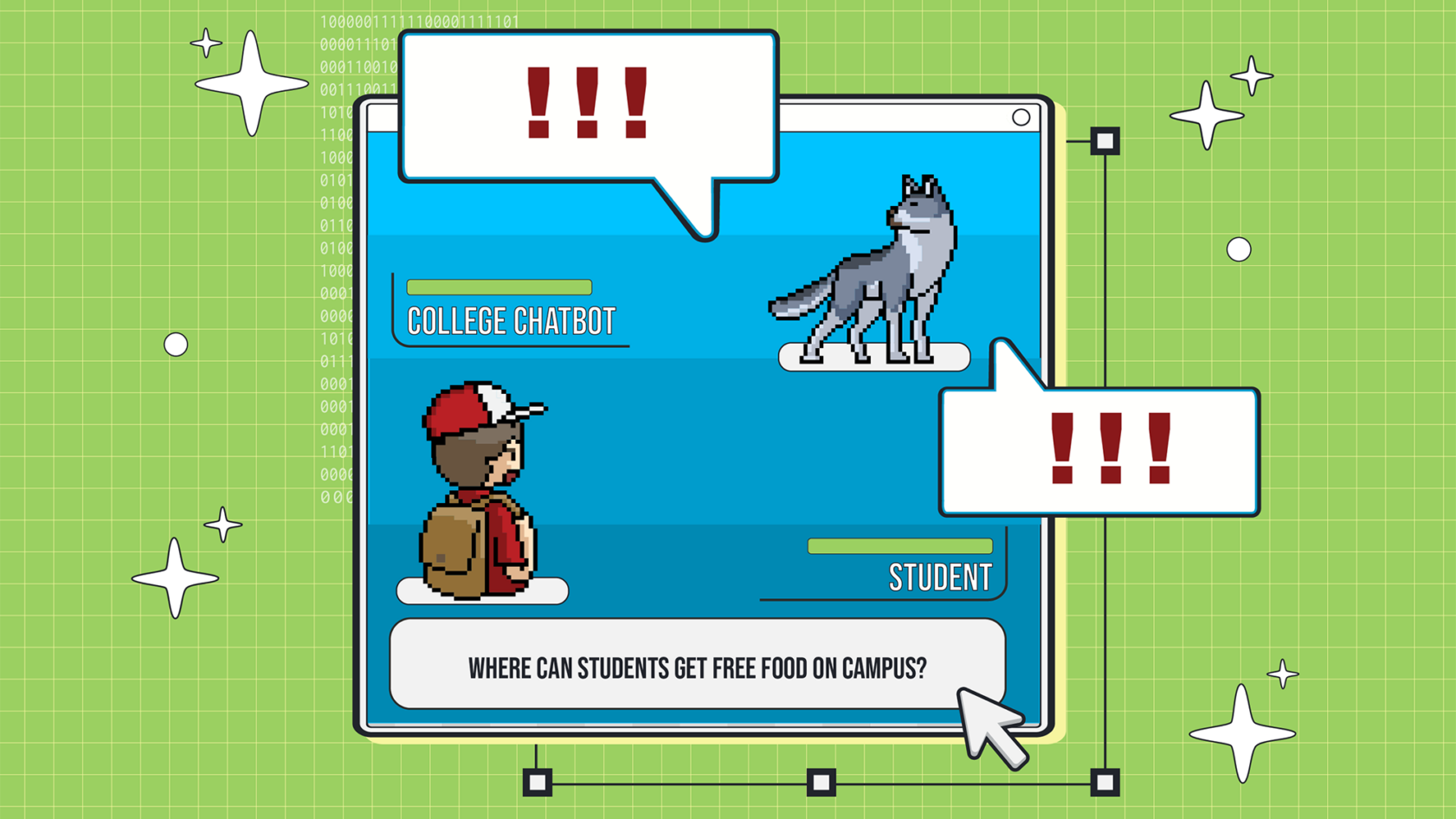
California community college districts are spending millions of dollars on artificial intelligence-powered chatbots intended to help students navigate admissions, financial aid and campus services.
However, they struggle to consistently provide clear and accurate answers, leaving students frustrated and seeking help from others on unofficial social media channels.
In testing by The Markup and CalMatters, they often answered general questions correctly but struggled with more specific ones. East Los Angeles College’s bot couldn’t even correctly name its own president.
Contracts for these chatbots can be pricey and last for years. Three community college districts that responded to a Markup and CalMatters survey reported annual costs ranging from about $151,000 to nearly half a million dollars. At the Los Angeles Community College District, the state’s largest community college system, contracts and amendments approved since 2021 total about $3.8 million through 2029, according to district board documents.
Community college districts that responded to The Markup and CalMatters have contracted with chatbot platforms such as Gravyty and Gecko, which district officials say handle thousands of conversations each month, many outside regular office hours, helping to reduce calls and save students unnecessary trips to campus.
Some of these chatbot platforms rely on manually maintained libraries of frequently asked questions and campus websites to answer questions, which can lead to errors when information is outdated or questions fall outside the system’s database.
However, officials are working to improve them. Districts like the Santa Monica Community College District have moved to ChatGPT-integrated AI systems that scrape the college’s website to generate answers, which officials say seem more reliable. In the Los Angeles district, officials say they plan to transition to a new AI chatbot platform as early as late spring.
Improvements to the chatbot couldn’t come soon enough for students like Pablo Aguirre, a computer science major at East Los Angeles College and an information technology intern at the Los Angeles college district office.
Aguirre mostly avoids the chatbot himself because, he said, it might provide unreliable or outdated information. He recalled using the bot to find financial aid information, but said he gave up after it kept asking him questions instead of giving him a clear answer.
“I just didn’t find it as useful,” Aguirre said. He usually turns to Google, social media platforms like Reddit and the college’s website when looking for answers.
“Online, some pages don’t work,” Aguirre said, recalling a 404 error message on the college’s website. Even when pages load, he said, it can be difficult to find the right one, such as when he was trying to figure out where to sign up for Extended Opportunity Programs and Services, a state-funded program that supports disadvantaged students. “That’s where I just jump on Reddit,” he said.

Aguirre’s experience isn’t unique. Reanna Carlson, a commercial music major at Fresno City College and student government vice president, said her college’s chatbot, dubbed Sam the Ram after its mascot, repeatedly gave her unclear or incorrect answers to basic questions about campus services. Her district, the State Center Community College District, has a nearly $870,000, three-year contract for Gravyty, formerly Ocelot, through June 20, 2026, according to district board documents. Officials pointed out that the contract comes with other services, including tools that let staff engage in live chats or send text messages to students.
“I think the chatbot is outdated and can’t navigate the services we provide on campus effectively,” Carlson said. “I don’t think it’s the most beneficial option when it comes to asking questions.”
Oddly, Carlson got accurate information on the availability of free food at her campus’ Ram Pantry only when accidentally adding a typo to her query. Repeated Markup and CalMatters testing confirmed the same outcome, though the bot sometimes lists links that include the food pantry after clicking an adjacent “sources” button.
“If it weren’t for the amazing staff on campus that constantly remind students of our services, I’d be lost,” Carlson said.
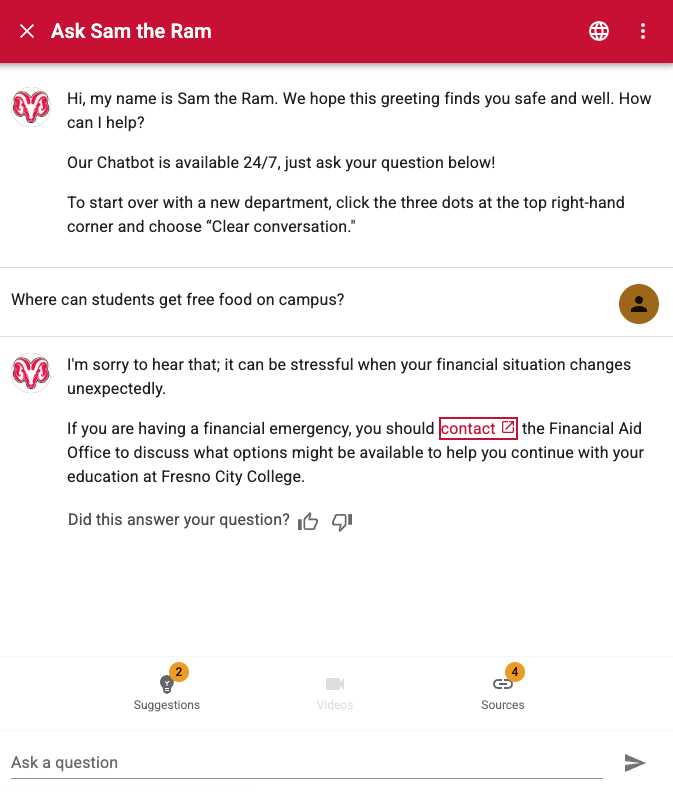
When The Markup and CalMatters tested community college chatbots, they generally returned quick, accurate responses to common questions but were less consistent with more specific ones.
For example, when asked, “Who is the current president of ELAC?” East Los Angeles College’s chatbot incorrectly named Alberto Román, who left the position last year to become the district’s chancellor. In another test, when asked, “What is the financial aid office’s current schedule?” the bot provided incorrect hours and dates.
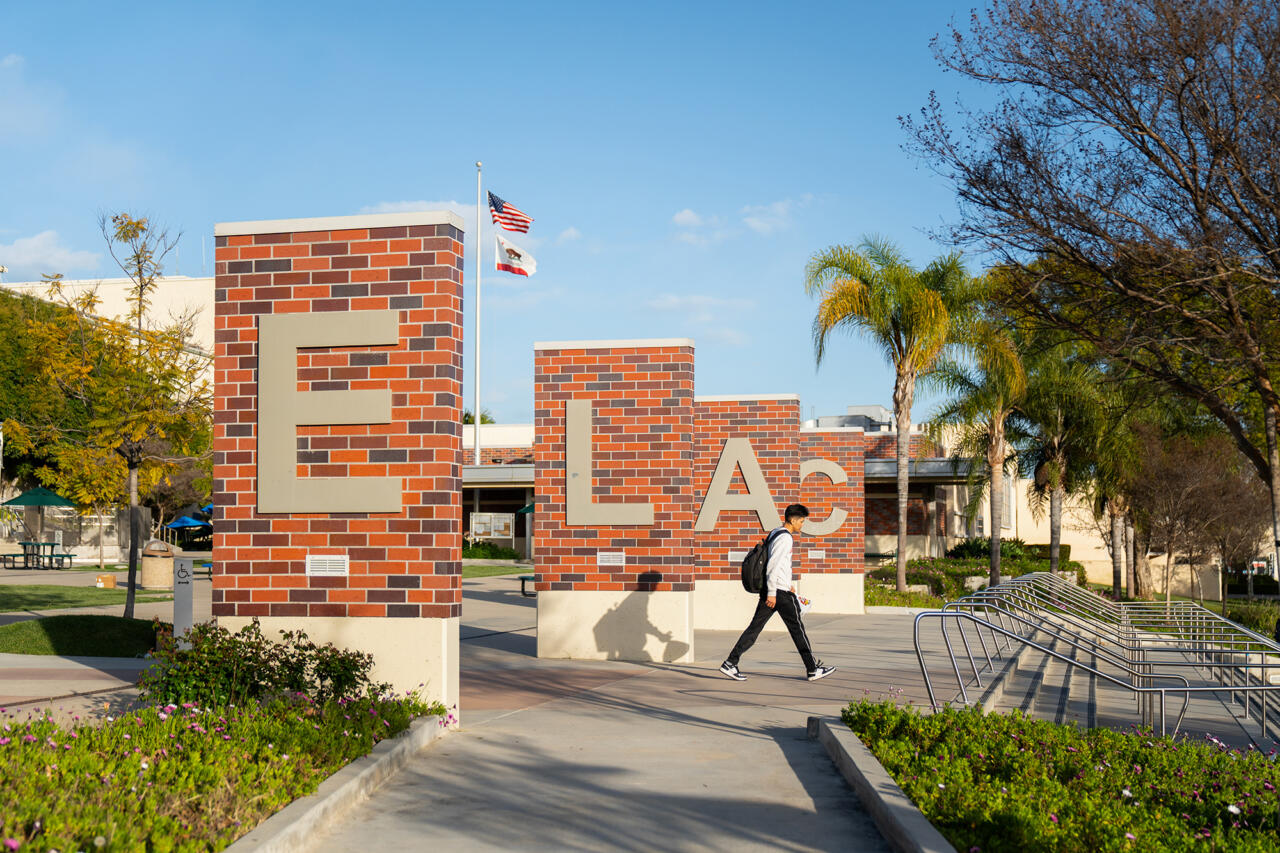
East Los Angeles College’s chatbot claims to support several languages, including English, Spanish, Chinese and Vietnamese. But The Markup and CalMatters found inconsistencies when asking it in Spanish, “Do I need a Social Security number to enroll?” Instead of answering the question, the system directed users to visit the registrar’s office to update their Social Security number. When asked the same question in English, the bot pivoted to discussing financial aid.
Fresno City College’s chatbot, powered by the same AI provider as East Los Angeles College’s system, Gravyty, showed similar problems when asked whether a Social Security number is required to enroll. It also often failed to direct students to the correct offices and, in some cases, listed incorrect locations and hours.
Concerns with chatbots have surfaced elsewhere. In New York City, reporting by The Markup and THE CITY found that a city-run AI chatbot provided guidance that could lead to illegal behavior, prompting Mayor Zohran Mamdani to terminate it in February.
Santa Monica College’s chatbot, powered by Gecko, was more successful in answering most questions. The single-college district uses a ChatGPT-integrated chatbot that scans the college’s website, which staff regularly update and monitor. The district has contracted with Gecko since 2019 and renewed its annual contract for the tool late last year for $57,000, according to district board documents. It initially showed a major hiccup: when asked about mental health counseling, the bot did not mention the campus’ Center for Wellness and Wellbeing. It does now.
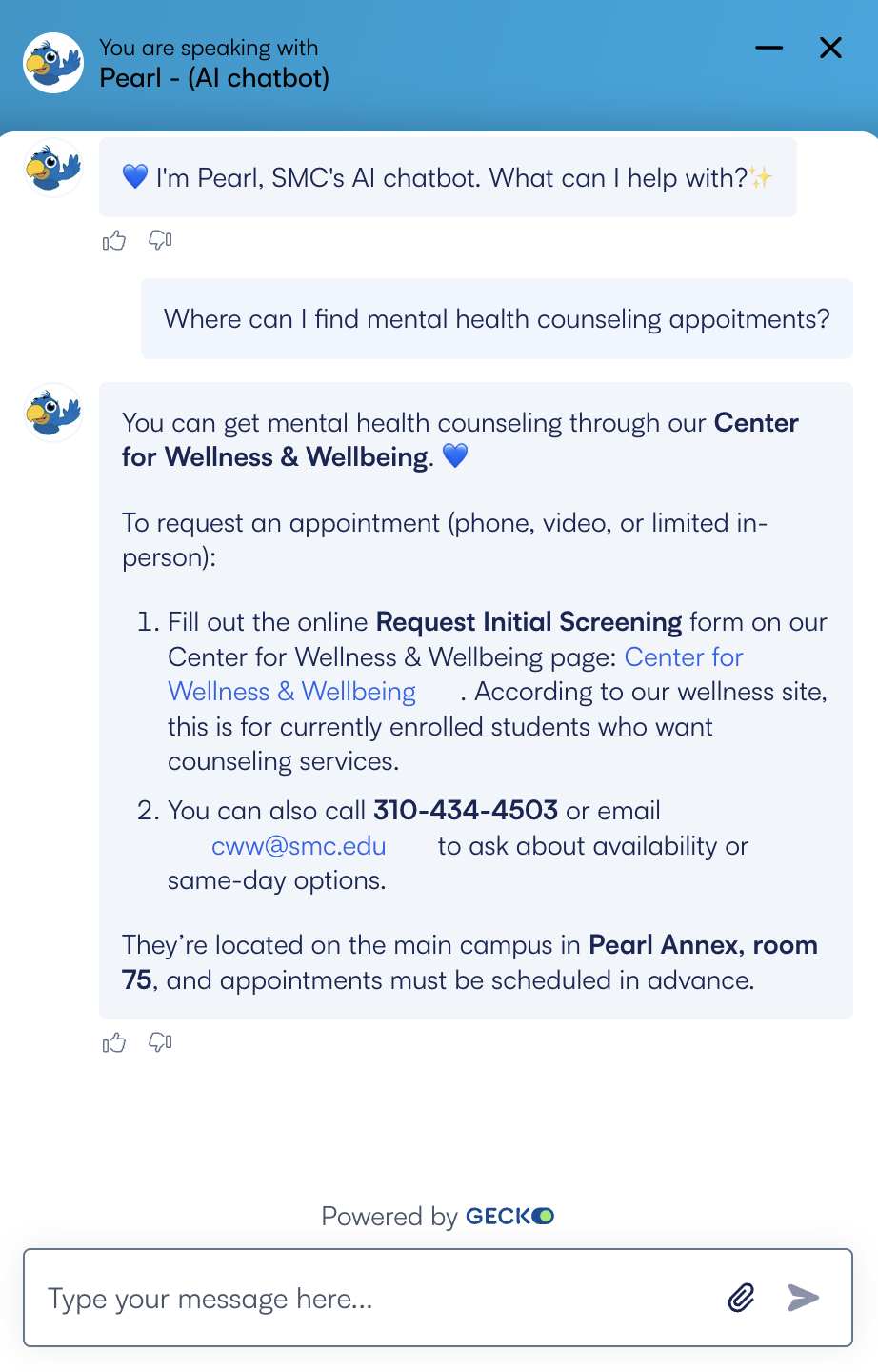
District officials say chatbots’ problems stem from how the tools are configured and the information they draw from, rather than the technology itself.
The Los Angeles district originally adopted its chatbot through Ocelot, which later merged with Gravyty The same chatbot platform is also used on the California Student Aid Commission website.
Betsy Regalado, one of the district’s associate vice chancellors, said the current system relies on a manually maintained library of frequently asked questions that staff at each of the district’s nine colleges help maintain and review at least once or twice a year for accuracy. She added that chatbots are primarily geared for the public rather than enrolled students, who can access more detailed personal information through their campus portal.
“The current chatbot that we have uses a library of questions. If you don’t have that question in that library, then those poor people don’t get an answer or they won’t get an accurate answer,” Regalado said.
She said the district plans to transition all nine colleges to Gravyty’s platform as early as late spring at no additional cost under its existing contract, which runs through 2029. The new system will use AI to scrape college and external websites to generate responses.
“We’re ready for the modernization of (the chatbot) and the change to generative AI. That is the new world out there,” Regalado said.

Santa Monica College’s chatbot similarly initially relied on a manually loaded library of common questions and answers before transitioning to its fully AI system, according to Esau Tovar, the college’s dean of enrollment services. In an email, he said the bot “was never designed to address all aspects of the student journey,” but to answer general questions from students.
Tovar said the bot draws responses from the college’s website, meaning accuracy depends on how current and complete that information is. As a result, the college prioritizes keeping its website up to date so the bot provides “good answers with fewer errors” rather than “great answers with potentially more errors.”
Acknowledging limitations, community college districts justify the costs by pointing to heavy student use, which would cost significantly more if performed by call center staff around the clock.
Regalado said the Los Angeles district colleges average 5,000 to 7,000 interactions per month. Other districts reported similar monthly use, including 5,000 interactions at the State Center Community College District, which includes campuses in Fresno and nearby counties, and 4,000 conversations at Santa Monica College. Regalado said that as long as the chatbot remains heavily used, her district would continue to support it.
Tovar said the chatbot provides 24-hour support regardless of time zone or location, which he said is helpful for international students when they are out of the country. He said that answering the tens of thousands of questions the chatbots receive around the clock would cost significantly more if handled by staff.
“Every technology has a cost. We would simply not be able to assist all students if they could only reach us using traditional methods,” Tovar said.
But high usage and expanded access do not always translate into trust, especially when students need precise answers to delicate topics.
Bryan Hartanto, a civil engineering major at Santa Monica College from Indonesia, said the college’s newer chatbot system is smoother and can be a useful starting point, especially for students more comfortable communicating in languages other than English. But as an international student he worries that following inaccurate guidance could jeopardize his visa status.
“Maintaining status as an international student right now is very, very sensitive,” Hartanto said. “I would still rely on human or email communication.”
Martin Romero is a contributor with the College Journalism Network, a collaboration between CalMatters and student journalists from across California. CalMatters higher education coverage is supported by a grant from the College Futures Foundation.

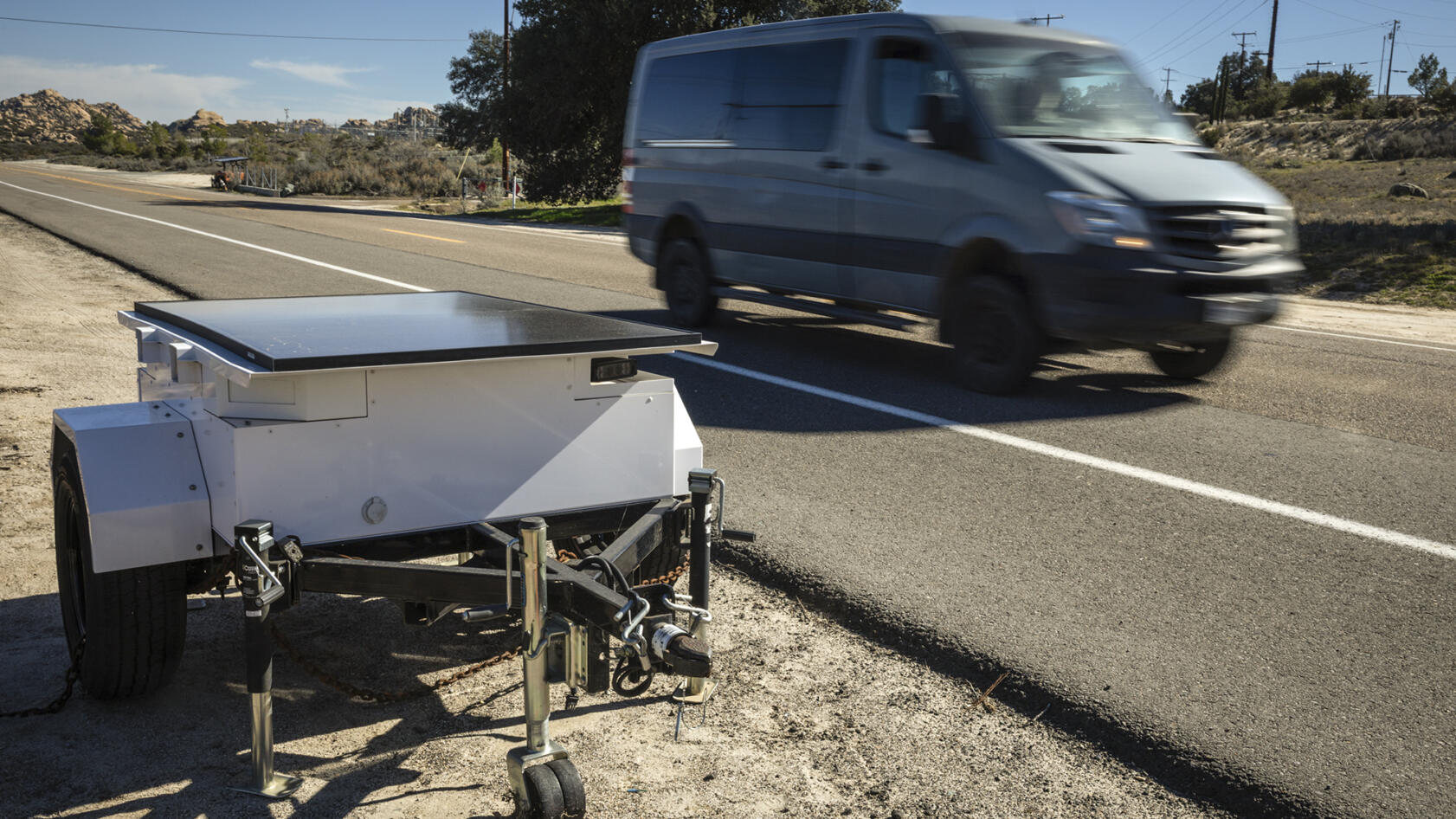
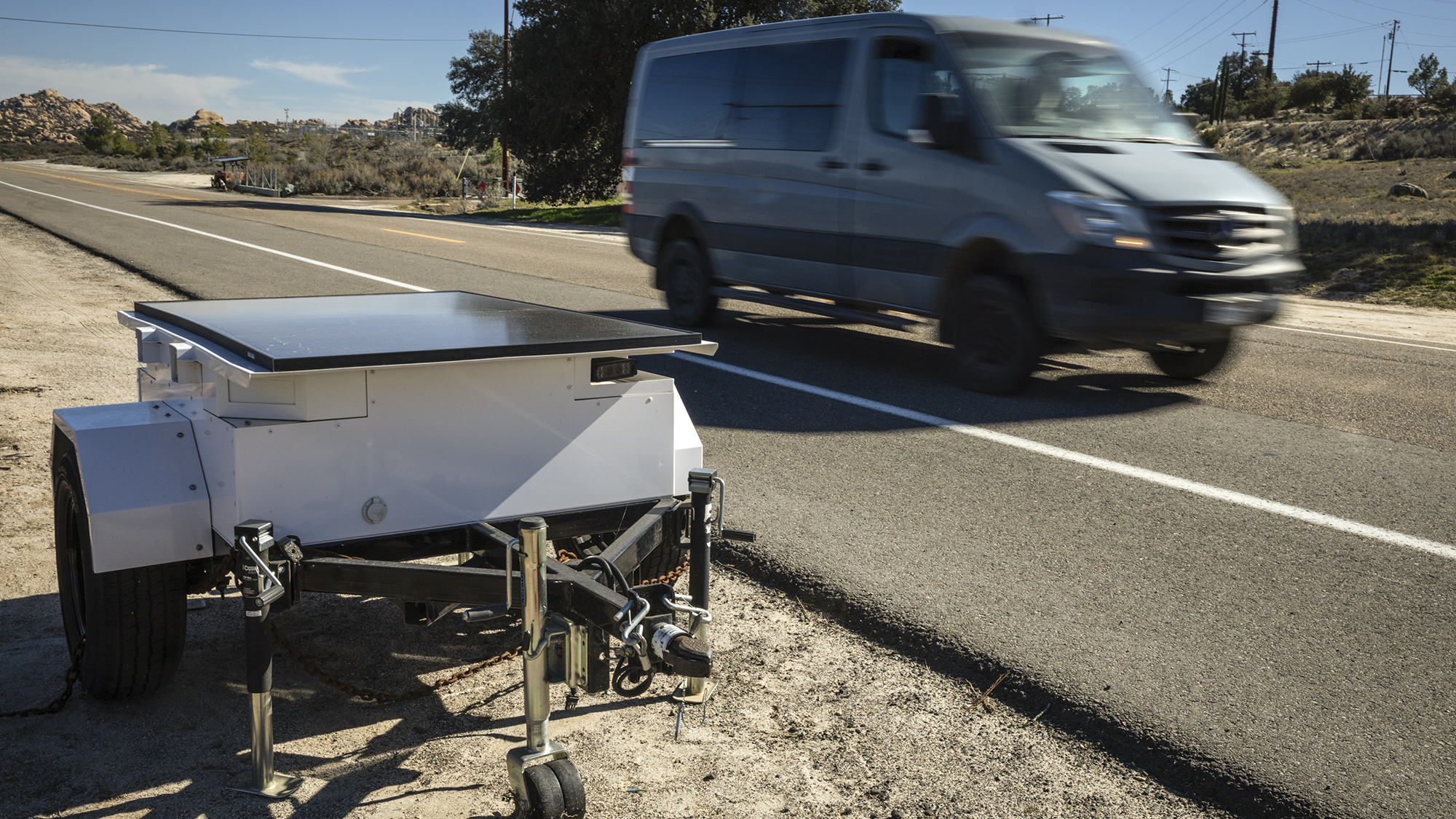
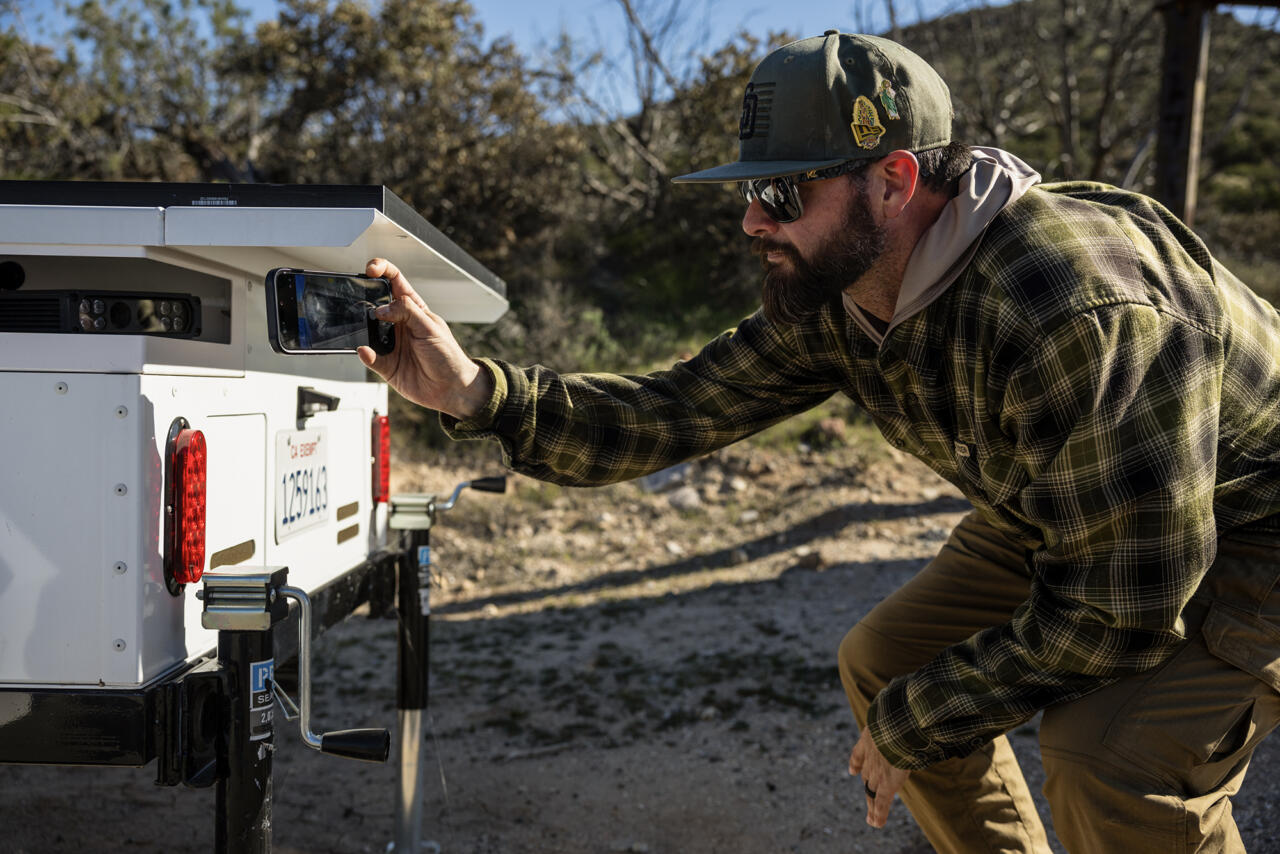
On a cracked two-lane road on the eastern edge of San Diego County, James Cordero eased his Jeep onto the shoulder after something caught his eye. It looked like an abandoned trailer. Inside he found a hidden camera feeding a vast surveillance network that logs the license plate of every driver passing through this stretch of remote backcountry between San Diego and the Arizona state line.
Cordero, 44, has found dozens of these cameras hidden in trailers and construction barrels on border roads around San Diego and Imperial counties: one on Old Highway 80 near Jacumba Hot Springs; another outside the Golden Acorn Casino in Campo; another along Interstate 8 toward In-Ko-Pah Gorge.
They started showing up after California granted permits to the Border Patrol and other federal agencies to place license plate readers on state highways in the last months of the Biden administration. Now as many as 40 are feeding information into Trump administration databases as the Democratic-led state chafes over the federal government’s massive deportation program.
The cameras are raising concerns with privacy experts, civil liberties advocates and humanitarian aid workers who say California should not be supporting the surveillance and data-collection program, which they view as an unwarranted government intrusion into the lives of Americans who’ve committed no crime. Moreover, they say the program conflicts with state law.
Supporters say the devices allow law enforcement to quickly identify and locate people they suspect of serious crimes. They also argue the cameras help agencies spot patterns in drug and human trafficking, and could be used to help locate missing persons, such as children or other vulnerable people.
“If you’re not doing anything illegal, why worry about it?” said long-time Jacumba resident Allen Stanks, 70.
“Everyone is talking about privacy, OK. Stop putting everything on Facebook. ‘Here’s a picture of my food.’ Who cares?” said Stanks.
Some locals, however, suspect the cameras are behind some unusual encounters they’ve had in recent months with officers from Border Patrol and its parent agency, Customs and Border Protection. In one case agents questioned a grandmother – a lawful permanent resident – about why she went to a casino, according to her grandson.
Cordero has a different concern. On his days off, he leads volunteers into the far reaches of the county, leaving water, food and clothing for migrants. He fears his colleagues could be detained by agents.
“I’m not so much worried about myself, but I’m worried about a lot of our volunteers that come out,” said Cordero. “I don’t want them to have to deal with any of the nonsense of being tracked or being pulled over and questioned.”
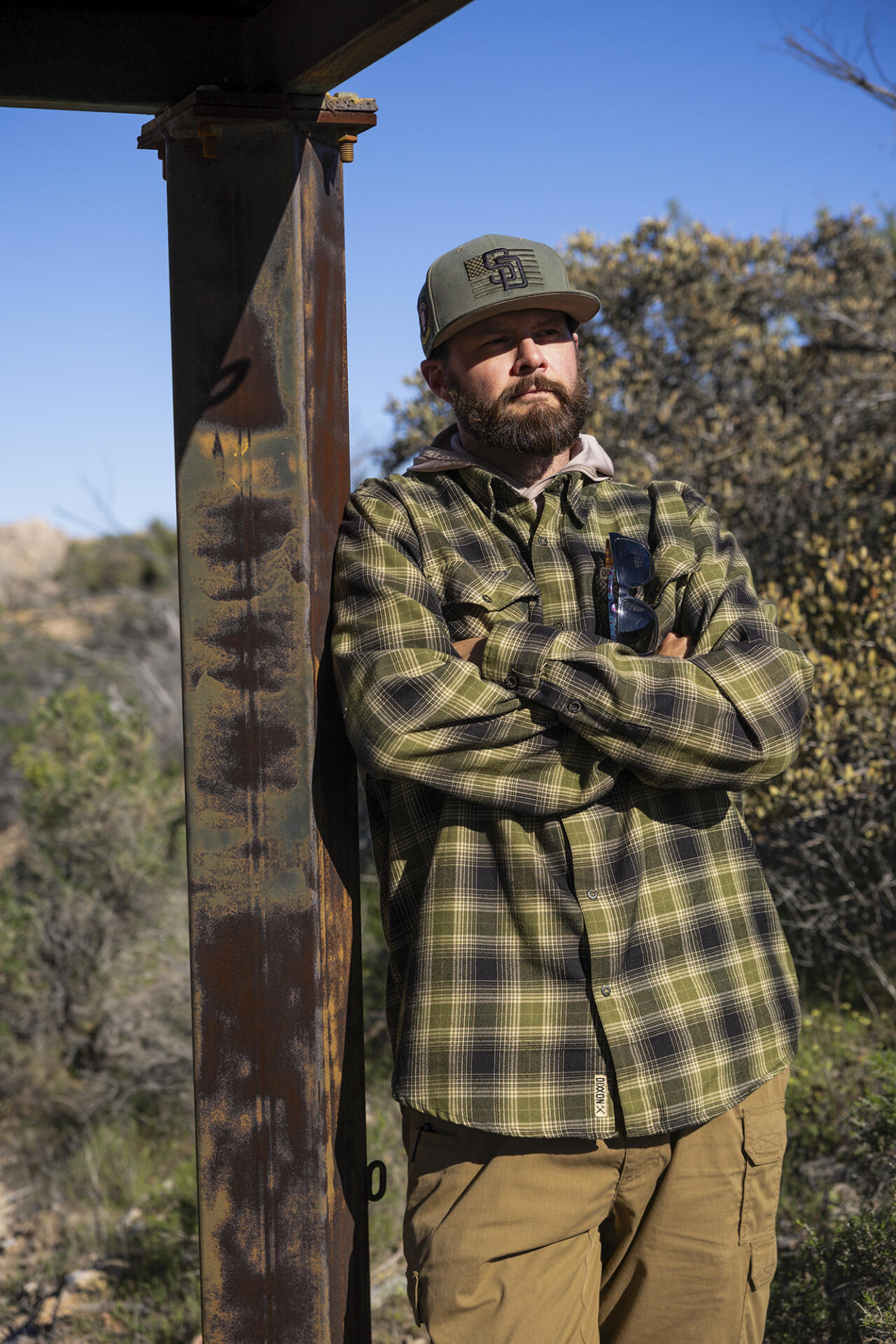
He has good reason to be nervous. During the first Trump administration, federal officials prosecuted volunteers from the humanitarian group “No More Deaths” for leaving water and supplies for migrants in the Arizona desert. The volunteers faced charges, including “abandonment of property” and felony harboring, though the convictions for some were later overturned.
Border Patrol provides little information about its use of license plate readers on its website. In 2020, the Department of Homeland Security issued a report that describes the technology in general, but doesn’t specify where it’s being used. The Markup and CalMatters reached out to Border Patrol and Homeland Security officials for comment, but did not receive a response.
“There’s no transparency, that’s the worst part,” Cordero said.
The Homeland Security report says some readers are capturing license plate numbers, as well as the make and model of the vehicle, the state the vehicle is registered in, the camera owner and type, the GPS coordinates for where the image was taken, and the date and time of the capture.
The “technology may also capture (within the image) the environment surrounding a vehicle, which may include drivers and passengers,” the report states. It also says feds can access license plate readers operated by commercial vendors.
Earlier this month, the Electronic Frontier Foundation and a coalition of 30 organizations sent a letter to Gov. Gavin Newsom and the California Department of Transportation urging them to revoke state permits and remove the covert readers operated by federal agencies like Customs and Border Protection and the Drug Enforcement Agency along California border highways.
The San Francisco-based privacy and civil rights advocacy organization, also known as EFF, mapped out more than 40 hidden license plate readers in Southern California, most of them along border roadways. It contends the devices bypass a 2016 state law that spells out how law enforcement agencies can use automated license plate readers, which are often referred to as ALPRs.
“By allowing Border Patrol and the DEA to put license plate readers along the border, they’re essentially bypassing the protections under (California law),” said Dave Maass, the director of investigations for EFF. “That is a backdoor around it.”
Maass said he believes Cordero’s concerns about the agency surveilling humanitarian volunteers may be valid.
“They claim they might be looking for smugglers or they might be looking for cartel members, but that’s not who they’re collecting data on,” said Maass. “(The program) is primarily collecting data on people who live in the region.
Maass said there’s no way to be certain which agency is installing each camera, but his organization checked with all other agencies operating in the area, such as the San Diego and Imperial sheriff’s departments, the California Highway Patrol, and Cal Fire, among others.



The camera models currently installed on state highways in the border region are the same as ones the Border Patrol purchased in large amounts, according to Maass. Records obtained from Caltrans by EFF from 2016 appear to show Drug and Enforcement Administration and Border Patrol requesting permits to install the same devices in other parts of San Diego County, according to Maass.
Customs and Border Protection did not respond to a request for comment. The governor’s office did not comment. The Drug Enforcement Agency also did not respond to a request for comment.
By day, Cordero works in water-damage restoration, the crews residents call after floods and burst pipes. Comfortable with emergencies, he’s the type of guy you’d hope to run into if your car broke down in the middle of nowhere.
“People are literally dying out here,” Cordero says of his volunteer work, done through the nonprofit Al Otro Lado, a legal services organization that also provides humanitarian support to refugees, migrants and deportees on both sides of the U.S.-Mexico border. “All we’re trying to do is prevent people from dying.”
In response to questions from The Markup and CalMatters, a spokesperson for Caltrans provided a written statement that the state agency has approved eight permits for license plate readers from federal agencies, like Customs and Border Protection and the Drug Enforcement Administration, to be stationed in state highway rights-of-way.
“Caltrans does not operate, manage, or determine the specific use of technology or equipment installed by permit holders, nor does it have access to any of the collected data,” the statement read in part.
Caltrans said federal immigration agencies haven’t requested permits for the cameras since June 2024. They did not say how long a permit lasts. Between 2015 and 2024, their records indicate Customs and Border Protection and the Drug Enforcement Administration requested 14 permit applications for “law enforcement surveillance devices.” Of the 14, eight were approved, four were cancelled by the applicants and two did not result in projects in state right-of-way, the agency said.
In California, license plates are tracked not only by the federal government and law enforcement, but also by schools and businesses, including some Home Depots and malls. While schools and businesses may not agree to pass that information on to the federal government, local police with access to those cameras may do so.
California law prevents state and local agencies from sharing license plate data with out-of-state entities, including federal agencies involved in immigration enforcement. A Markup and CalMatters investigation in June 2025 revealed that southern California law enforcement agencies, including sheriff’s departments in San Diego and Orange counties, haveshared automated license plate reader data with federal agencies in violation of state law.
Newsom vetoed a bill to strengthen California license plate reader law last fall. Two days later, Attorney General Rob Bonta filed a lawsuit against the city of El Cajon for multiple violations ofthe license plate sharing prohibition. Since 2024, the attorney general’s office has sent letters to 18 law enforcement agencies, including the Imperial County Sheriff’s Office, the San Diego Police Department, and the El Centro Police Department.
Local agencies continue to share license plate data with federal immigration authorities, and not just along the border. The San Pablo Police Department in Northern California, one of the law enforcement agencies that received letters from the attorney general’s office, shared license plate data with the Border Patrol as recently as last month, according to records obtained by Oakland Privacy head of research Mike Katz-Lacabe. Some cameras are easy to spot, but Katz-Lacabe said that local police have concealed cameras that scan license plates for more than a decade, sometimes behind the grill of police cruisers or inside speed limit trailers or in a fake saguaro cactus.
“This has been the practice for years,” he said.
On a recent Saturday, Cordero was dressed for the remote border terrain – flannel, hiking boots, a San Diego Padres cap pulled low against the sun. His dirt-caked Jeep is built for places roads don’t go. On this particular weekend, supplies at one of the drop sites had already been used, indicating people may be crossing in the area.
Cordero has gotten good at finding stuff out here. In the remote Ocotillo washes, where the scrubs claw at people’s shins, he recently found what he believes to be the remains of a human finger.
A year earlier, Cordero found a phone contact list next to human remains. He and his wife, Jacqueline Arellano, were able to use the phone list to notify the person’s family in Arizona about where their missing loved one fell.
That’s why when, months ago, he first saw the abandoned trailer along the side of the road on Old Highway 80, he had to stop to take a closer look.
“It took me passing by a few times before I realized what it was,” said Cordero.
An Associated Press investigation published in November revealed that Border Patrol had hidden license plate readers in ordinary traffic safety equipment. The data collected by the agency’s plate readers was fed into a predictive intelligence program monitoring millions of American drivers nationwide to identify and detain people whose travel patterns the algorithm deemed suspicious, according to the AP’s investigation.
Sergio Ojeda, a community organizer with the mutual aid group Imperial Valley Equity and Justice said CBP apparently believed his grandmother’s driving patterns were suspicious because they interrogated her about the amount of time she spends at local casinos in the area.
“She was outraged about it,” said Ojeda. His grandmother, a resident of Imperial Valley with legal status, was crossing the border when agents asked her about her trips to casinos.
“She asked them back, ‘Is something wrong with that? Am I not supposed to be doing that or why are you questioning me about this?’ and they were like “Oh, no, it just seems suspicious,” Ojeda recounted.
Ojeda said he was equally concerned, and he doesn’t enjoy the feeling of being watched just because he lives near the border. “It’s how I feel every day,” he said. “Driving around, I joke with my co-workers: ‘Which chapter of 1984 is this?’”