Explorando mais profundamente a potencialidade das fusões com o rap, essa balada rock indie dos anos 2000 aposta em uma estética sonora de dream pop para trazer uma doce mas também pulsante mensagem sobre términos e o desejo de encontrar o amor verdadeiro sorrindo "Quem Será?" é o novo single da Colibri, projeto do cantor Zé Neto, que conta com a participação especial de Vandal, rapper baiano. Gravada em 2020, num isolamento criativo, é a primeira parceria entre os dois artistas do Cremenow Studio.
Leia mais (08/04/2023 - 16h10)
O funk de São Paulo sempre esteve ligado à moda. Os versos da música "Bonde da Juju" da dupla Backdi e Bio-G3, de 2010, por exemplo, apresentam os itens indispensáveis para os frequentadores dos bailes, como "tá de Juliet, Romeu 2 e Double Shox, 18K no pescoço de Eckö e Nike Shox".
Leia mais (07/28/2023 - 13h33)
A trajetória musical de Magnu Sousá e Maurílio de Oliveira, a dupla Prettos, completa uma década de sucesso e talento. Com mais de 25 anos de carreira e canções imortalizadas na voz de artistas renomados como Beth Carvalho, Alcione e Jair Rodrigues, os irmãos têm muito a comemorar.
Leia mais (07/18/2023 - 09h53)
Após rumores do fim da parceria entre Kondzilla e GR6, a Grzilla -fusão comercial que envolve os direitos do artista MC Kauan-, a produtora liderada pelo empresário Konrad Dantas anunciou uma nova colaboração com a Beats, marca de drinques prontos da Ambev acostumada a investir no funk. Marca que já teve Anitta como diretora criativa e Pedro Sampaio como embaixador, agora inclui em seu quadro os funkeiros Mc Kekel e Mc Danny.
Leia mais (07/12/2023 - 09h00)
O Governo do estado de São Paulo, por meio da Secretaria da Cultura, Economia e Indústria Criativas, anunciou o lançamento de duas chamadas públicas com o objetivo de fomentar, valorizar e difundir atividades e ações artístico-culturais. Com um investimento total de R$ 21 milhões, as iniciativas serão geridas pela organização social Amigos da Arte que inclui entre as modalidades beneficiadas o breakdance, DJs, slams, batalhas de rima, sound systems.
Leia mais (07/03/2023 - 19h32)
A terceira edição da Feira da Música, realizada pela produtora GR6, na região norte de São Paulo, foi marcada por uma intensa celebração da diversidade musical e pela promoção de oportunidades para artistas e produtores. A abertura do evento contou com a presença de cantores expoentes de gêneros como funk e pagode, incluindo artistas como Hariel, Don Juan, Netinho de Paula e Nelson Triunfo. A Secretária de Cultura da capital, Aline Torres, e o rapper Ice Blue, conselheiro da produtora GR6, também estiveram presentes.
Leia mais (06/20/2023 - 15h57)
O Toda Terça Festival, projeto de shows itinerantes do grupo teatral Zózima Trupe, encerra sua oitava edição nesta terça-feira (30), às 19h, com um show gratuito de Davi Sabbag, ex-integrante da Banda Uó. A apresentação acontece no interior de um onibus apelidado de "omnibus para todes", que passeia pela região central de São Paulo. Trajeto que começa na plataforma 0 (zero) do Terminal Urbano Parque Dom Pedro Segundo.
Leia mais (05/30/2023 - 12h43)
No clima de carinho, sensualidade e romantismo, "Xona", o primeiro single de Rincon Sapiência em seu terceiro álbum, "Um Corpo Preto", é a trilha sonora perfeita para momentos em que dois corpos se encontram para dançar e, com seus corações batendo em sintonia, transformam a vida em uma festa doce e afetuosa. Com uma clara influência dos afrobeats, um gênero musical que Rincon pesquisou e produziu ao longo de sua carreira, a faixa será lançada nas plataformas de streaming sexta-feira (26). O novo álbum está previsto para este ano.
Leia mais (05/26/2023 - 11h09)
Após a estreia marcante em 2022 o Batekoo Festival está de volta e com data marcada para o dia 7 de outubro, na Neo Química Arena, conhecida como Estádio do Itaquerão na região leste de São Paulo. A segunda edição já tem a primeira atração anunciada: Shevchenko e Elloco.
Leia mais (05/22/2023 - 19h31)
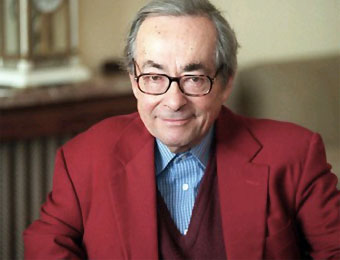
No início do mês, faleceu o famoso crítico literário, filósofo, ensaísta, romancista e educador franco-americano George Steiner (1929-2020).
Vez ou outra, Steiner privilegiava também a nós, musicófilos, expressando a sua paixão pela música. Em 2010, à ocasião das NEXUS Conferences, no Concertgebouw de Amsterdã (sede da famosa orquestra holandesa), Steiner palestrava sobre o tema: “What’s Next for the West?” (“O Que Vem a Seguir para o Ocidente?”), e encerrou a sua apresentação com um belo discurso sobre o mistério da música. Que um dos maiores críticos literários da atualidade tenha dito que a música lhe parece superior à literatura como “força de uma possibilidade transcendente” não é coisa que Euterpe poderia ignorar e, há algum tempo, postamos uma bela montagem deste vídeo (infelizmente não mais disponível) em nossa página no Facebook.
Compartilhamos agora o vídeo original, portanto, como homenagem ao mestre, com uma tradução logo abaixo por nossa cortesia.
Música, o mistério da música. O que Nietzsche chamou tão corretamente de o mysterium tremendum. O mysterium tremendum do último ato de Tristão [e Isolda], e tantos outros casos: pode ser uma Étude de Chopin, uma frase ou mais em Mozart, que nos fala que há algo além, que paradoxalmente pertence a nós profundamente, mas que de algum modo toca em um significado universal de impossibilidade. Que não somos apenas um conjunto fisiológico eletro-químico e neural, que há mais na consciência do que fiação eletrônica. A música para mim parece, mais do que a literatura, a grande força, a esperança de uma possibilidade transcendente.
Essa é a razão pela qual é vitalmente importante que nossas crianças tenham acesso, desde a mais tenra idade, a boa música. Eu soo como um velho chato reacionário, e não me desculpo por isso, mas nada me aterroriza mais do que a exclusão de música séria das vidas de milhões de crianças pequenas: a substituição de muitas formas de música pelo horror de barulho ordenado, pelo barbarismo de barulho ordenado, a derrocada ensurdecedora de não deixar uma criança encontrar boa música, de não lhe ensinar um instrumento, se possível, de não lhe ensinar a cantar, se possível.
Houve um tempo na vida diária, no século XIX e começo do século XX na Europa, em que apresentações amadoras eram uma realização natural de pessoas educadas. Não precisava ser muito bom, não precisava ser muito grande, mas era parte de se reunir e estar em contato com aquele mysterium tremendum do transcendental. Se levarem isso embora de nós, estaremos realmente em apuros. Não acho que conseguirão. Durante os piores períodos de despotismo e tirania, pessoas podiam aprender partituras de cor. Mesmo quando a música era proibida, ela ainda podia ser confiada à memória. A música é algo muito difícil de se censurar – sim, ela pode ser interrompida, ela pode ser suprimida, músicos podem ser caçados, e perseguidos, e torturados. Mas, ainda, ela está lá, e sempre o seu estranho mistério permanece.
O Concertgebouw é um lugar para se lembrar dos últimos concertos daquele gênio muito ambíguo, [Wilhelm] Furtwängler. A luz caía regularmente e temos gravações em que você ouve o tiroteio da artilharia russa se aproximando de Berlim. Em uma gravação de Beethoven e uma de Haydn daquele tempo, tocados no escuro, as pessoas na plateia, sabendo que estavam condenadas a um destino horrível…, e não há gravações ou interpretações, que eu conheça, maiores daquela música. Há algo na música que é muito mais forte mesmo nas nossas maiores apresentações, a música em certo sentido nos toca, somos tocados por ela. Isso não significa que haverá consenso sobre os seus significados, não significa que não continuaremos debatendo ferozmente sobre a escolha de um andamento lento de uma sinfonia de Bruckner para marcar a morte do Führer. Temos uma gravação e ela também é fantástica, assim como outras gravações excelentes.
Por muitos e muitos anos, eu tentava entender por que a música não diz “não” em certas ocasiões. Dachau, como vocês sabem, fica nos arredores de Munique, muito próxima, e os trens com as pessoas morrendo dentro deles de sede e de fome a caminho para Dachau costumavam passar não muito longe da sua grande sala de concerto. Nessa sala, [Walter] Gieseking apresentava o seu ciclo de Debussy, e bons críticos dizem que nunca houve uma interpretação superior de Debussy. E a minha pergunta era, para estudantes alemães – e comecei a perguntá-la imediatamente após a Guerra –, para crianças de escolas alemãs, por que a música não disse “não”? – o que é uma pergunta sem sentido. Mas é uma pergunta sem sentido? Ainda não sei a resposta. Poderia a música ter se recusado a ser tocada? É claro que poderia. Poderia ser tocada de modo errado pelo menos? Poderia Gieseking tocar notas erradas pelo menos? Não tocou.
Então o mistério permanece, mas também permanece a forte e urgente esperança de que não deixaremos que nos levem embora essa experiência sobrepujante, esse privilégio de existir, que é a grande música.
Scotland is internationally known for its traditional music. Scottish music is a significant aspect of the nation's culture. A famous traditional Scottish instrument is the Great Highland bagpipe. The clàrsach (harp), fiddle and accordion are also traditional Scottish instruments.
Traditional Music Channel is for everyone who has a passion for music.
Music is an expression of human creativity. UNESCO reports that among all the performing arts, music is the most universal and is found in every society, most often as an integral part of other performing art forms and other domains of intangible cultural heritage.
Traditional forms of music are considered carriers of cultural heritage because they represent expressions and traditions transferred through generations of a community.
With recordings from more than hundred nations our collection of traditional music offers a staggering diversity of our humanity.
Romani music or Gipsy music is the music of the Romani people, who have their origins in northern India, but today live mostly in Europe. Historically nomadic, though now largely settled, the Romani people have long acted as entertainers and tradesmen. In many of the places Romanies live they have become known as musicians. The wide distances travelled have introduced a multitude of influences of Byzantine, Greek, Arabic, Indian, Persian, Turkish, Slavic, Romanian, German, Dutch, French, Spanish and even Jewish musical forms. It is difficult to define the parameters of a unified Romani musical style, as there are many differences in melodic, harmonic, rhythmic and formal structures from region to region. Lyrics to Romani songs are often sung in one or more dialects of the Romani language, and dance frequently accompanies Romani music performance.
The quintessentially Spanish flamenco is to a very large extent the music (and dance, or indeed the culture) of the Romani people of Andalusia. Apart from Romani music for local use, in Eastern Europe a separate Romani music originated for entertainment at parties and celebrations. This music drew its themes from Hungarian, Romanian, Russian and other sources. Later on it gained popularity in Western Europe, where many Romani orchestras were active, playing sophisticated melodies of East European origin. Most Romani music is based on the folk music of the countries where the Romani went through or settled. Local music is adopted and performed – usually instrumental – and, slowly, it is transformed into Romani styles, which are usually more complex than the original styles. In its turn, Romani music has greatly influenced the local music.
Traditional Music Channel is for everyone who has a passion for music.
Music is an expression of human creativity. UNESCO reports that among all the performing arts, music is the most universal and is found in every society, most often as an integral part of other performing art forms and other domains of intangible cultural heritage.
Traditional forms of music are considered carriers of cultural heritage because they represent expressions and traditions transferred through generations of a community.
With recordings from more than hundred nations our collection of traditional music offers a staggering diversity of our humanity.
The Carpathian Mountains or Carpathians are a mountain range system across Central and Eastern Europe. They are the third-longest mountain range in Europe after the Ural Mountains and Scandinavian Mountains. The Carpathians consist of a chain of mountain ranges that stretch in an arc from the Czech Republic in the northwest through Slovakia, Poland, Hungary and Ukraine, Serbia and Romania in the southeast. The highest range within the Carpathians is the Tatras, on the border of Slovakia and Poland. The second-highest range is the Southern Carpathians in Romania.
The largest range is the Tatras in Poland and Slovakia. A major part of the western and northeastern Outer Eastern Carpathians in Poland, Ukraine, and Slovakia is traditionally called the Eastern Beskids. Section of the Carpathians within borders of Ukraine is commonly known as the Ukrainian Carpathians. Classification of eastern sections of the Carpathians is particularly complex, since it was influenced by several overlapping traditions. Terms like Wooded Carpathians, Poloniny Mountains or Eastern Beskids are often used in varying scopes by authors belonging to different traditions.
Traditional Music Channel is for everyone who has a passion for music.
Music is an expression of human creativity. UNESCO reports that among all the performing arts, music is the most universal and is found in every society, most often as an integral part of other performing art forms and other domains of intangible cultural heritage.
Traditional forms of music are considered carriers of cultural heritage because they represent expressions and traditions transferred through generations of a community.
With recordings from more than hundred nations our collection of traditional music offers a staggering diversity of our humanity.
Sufi music is the devotional music of the Sufis, inspired by the works of Sufi poets. Qawwali is the most well known form of Sufi music, and is most commonly found in the Sufi culture in South Asia. However, music is also central to the Sema ceremony of the whirling dervishes, which is set to a form of music called Ayin, a vocal and instrumental piece featuring Turkish classical instruments such as the ney (a reed flute). The West African gnawa is another form, and Sufis from Indonesia to Afghanistan to Morocco have made music central to their practices. Sufi love songs are often performed as ghazals and Kafi, a solo genre accompanied by percussion and harmonium, using a repertoire of songs by Sufi poets.
Traditional Music Channel is for everyone who has a passion for music.
Music is an expression of human creativity. UNESCO reports that among all the performing arts, music is the most universal and is found in every society, most often as an integral part of other performing art forms and other domains of intangible cultural heritage.
Traditional forms of music are considered carriers of cultural heritage because they represent expressions and traditions transferred through generations of a community.
With recordings from more than hundred nations our collection of traditional music offers a staggering diversity of our humanity.
Geisha are Japanese women who entertain through performing the ancient traditions of art, dance and singing, and are distinctively characterized by their wearing of kimono and oshiroi makeup. Geisha begin their study of music and dance when they are very young and continue it throughout their lives. The dance of the geisha has evolved from the dance performed on the noh and kabuki stages. The "wild and outrageous" dances transformed into a more subtle, stylized, and controlled form of dance. It is extremely disciplined, similar to t'ai chi. Every dance uses gestures to tell a story and only a connoisseur can understand the subdued symbolism.
The dances are accompanied by traditional Japanese music. The primary instrument is the shamisen. This shamisen, originating in Okinawa, is a banjo-like three-stringed instrument that is played with a plectrum. It has a very distinct, melancholy sound that is often accompanied by flute. All geisha must learn shamisen-playing, though it takes years to master. Along with the shamisen and the flute, geisha also learned to play a ko-tsuzumi, a small, hourglass-shaped shoulder drum, and a large floor taiko (drum). Some geisha would not only dance and play music, but would write beautiful, melancholy poems. Others painted pictures or composed music.
Traditional Music Channel is for everyone who has a passion for music.
Music is an expression of human creativity. UNESCO reports that among all the performing arts, music is the most universal and is found in every society, most often as an integral part of other performing art forms and other domains of intangible cultural heritage.
Traditional forms of music are considered carriers of cultural heritage because they represent expressions and traditions transferred through generations of a community.
With recordings from more than hundred nations our collection of traditional music offers a staggering diversity of our humanity.
The Balkans, also known as the Balkan Peninsula, is a geographic area in southeastern Europe with various definitions and meanings, including geopolitical and historical. The region takes its name from the Balkan Mountains that stretch throughout the whole of Bulgaria from the Serbian-Bulgarian border to the Black Sea coast. Balkan music is a type of music found in the Balkan region of southeastern Europe. The music is characterised by complex rhythm. The term "the Balkans" is used more generally for the region; it includes states in the region, which may extend beyond the peninsula, and is not defined by the geography of the peninsula itself. The Balkans are usually said to comprise Albania, Bosnia and Herzegovina, Bulgaria, Croatia, Kosovo, Montenegro, North Macedonia, Romania, Serbia, Greece, and Slovenia.
Traditional Music Channel is for everyone who has a passion for music.
Music is an expression of human creativity. UNESCO reports that among all the performing arts, music is the most universal and is found in every society, most often as an integral part of other performing art forms and other domains of intangible cultural heritage.
Traditional forms of music are considered carriers of cultural heritage because they represent expressions and traditions transferred through generations of a community.
With recordings from more than hundred nations our collection of traditional music offers a staggering diversity of our humanity.
Polynesia is a subregion of Oceania, made up of more than a thousand islands scattered over the central and southern Pacific Ocean. The indigenous people who inhabit the islands of Polynesia are termed Polynesians, and share many similar traits including language family, culture, and beliefs. Historically, they had a strong tradition of sailing and using stars to navigate at night.
Internationally, Polynesian music is mostly associated with twinkling guitars, grass skirts and beautiful relaxing sounds, Hawaiian hula and other tourist-friendly forms of music. While these elements are justifiably a part of Polynesian history and Polynesian culture, there is actually a wide variety of music made in the far-flung reaches of Polynesia.
Traditional Music Channel is for everyone who has a passion for music.
Music is an expression of human creativity. UNESCO reports that among all the performing arts, music is the most universal and is found in every society, most often as an integral part of other performing art forms and other domains of intangible cultural heritage.
Traditional forms of music are considered carriers of cultural heritage because they represent expressions and traditions transferred through generations of a community.
With recordings from more than hundred nations our productions of traditional music offers a staggering diversity of our humanity.
Romani music or Gipsy music is the music of the Romani people, who have their origins in northern India, but today live mostly in Europe. Historically nomadic, though now largely settled, the Romani people have long acted as entertainers and tradesmen. In many of the places Romanies live they have become known as musicians. The wide distances travelled have introduced a multitude of influences of Byzantine, Greek, Arabic, Indian, Persian, Turkish, Slavic, Romanian, German, Dutch, French, Spanish and even Jewish musical forms. It is difficult to define the parameters of a unified Romani musical style, as there are many differences in melodic, harmonic, rhythmic and formal structures from region to region. Lyrics to Romani songs are often sung in one or more dialects of the Romani language, and dance frequently accompanies Romani music performance.
The quintessentially Spanish flamenco is to a very large extent the music (and dance, or indeed the culture) of the Romani people of Andalusia. Apart from Romani music for local use, in Eastern Europe a separate Romani music originated for entertainment at parties and celebrations. This music drew its themes from Hungarian, Romanian, Russian and other sources. Later on it gained popularity in Western Europe, where many Romani orchestras were active, playing sophisticated melodies of East European origin. Most Romani music is based on the folk music of the countries where the Romani went through or settled. Local music is adopted and performed – usually instrumental – and, slowly, it is transformed into Romani styles, which are usually more complex than the original styles. In its turn, Romani music has greatly influenced the local music.
Traditional Music Channel is for everyone who has a passion for music.
Music is an expression of human creativity. UNESCO reports that among all the performing arts, music is the most universal and is found in every society, most often as an integral part of other performing art forms and other domains of intangible cultural heritage.
Traditional forms of music are considered carriers of cultural heritage because they represent expressions and traditions transferred through generations of a community.
With recordings from more than hundred nations our collection of traditional music offers a staggering diversity of our humanity.
The music of Greece is as diverse and celebrated as its history. Greek music separates into two parts: Greek traditional music and Byzantine music, with more eastern sounds. These compositions have existed for millennia: they originated in the Byzantine period and Greek antiquity; there is a continuous development which appears in the language, the rhythm, the structure and the melody. Music is a significant aspect of Hellenic culture, both within Greece and in the diaspora. Greek musical history extends far back into ancient Greece, since music was a major part of ancient Greek theater. Later influences from the Roman Empire, Eastern Europe and the Byzantine Empire changed the form and style of Greek music. Greek folk traditions are said to derive from the music played by ancient Greeks. There are said to be two musical movements in Greek folk music: Acritic songs and Klephtic songs. Akritic music comes from the 9th century akrites, or border guards of the Byzantine Empire. Following the end of the Byzantine period, klephtic music arose before the Greek Revolution, developed among the kleftes, warriors who fought against the Ottoman Empire. Klephtic music is monophonic and uses no harmonic accompaniment.
Dhimotika tragoudhia are accompanied by clarinets, guitars, tambourines and violins, and include dance music forms like syrtó, kalamatianó, tsámiko and hasaposérviko, as well as vocal music like kléftiko. Greek folk music is found all throughout Greece, Cyprus and several regions of Turkey. The island of Cyprus and several regions of Turkey are home to long-standing communities of Greeks in Turkey with their own unique styles of music. Nisiotika is a general term denoting folk songs from the Greek islands, especially the Aegean Islands. Ikariótikos is a traditional type of dance, and also the name of its accompanying type of singing, originating in the Aegean island of Ikaria. The Cretan lyra is the dominant folk instrument on the island of Creta; it is a three-stringed bowed instrument similar to the Byzantine Lyra. It is often accompanied with laouto (laoúto), which is similar to both an oud and a lute. The violin is used also in Cretan music.
Traditional Music Channel is for everyone who has a passion for music.
Music is an expression of human creativity. UNESCO reports that among all the performing arts, music is the most universal and is found in every society, most often as an integral part of other performing art forms and other domains of intangible cultural heritage.
Traditional forms of music are considered carriers of cultural heritage because they represent expressions and traditions transferred through generations of a community.
With recordings from more than hundred nations our collection of traditional music offers a staggering diversity of our humanity.

 Login
Login