Officials say sighting a sign species – driven to extinction in state before reintroduction in 2011 – expanding its range
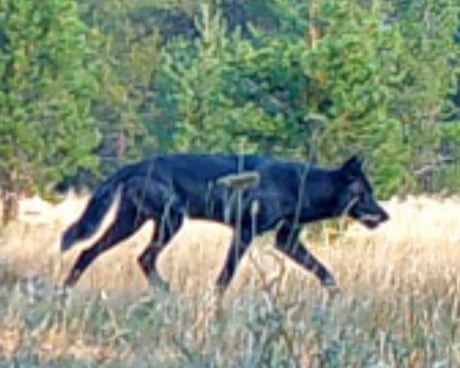
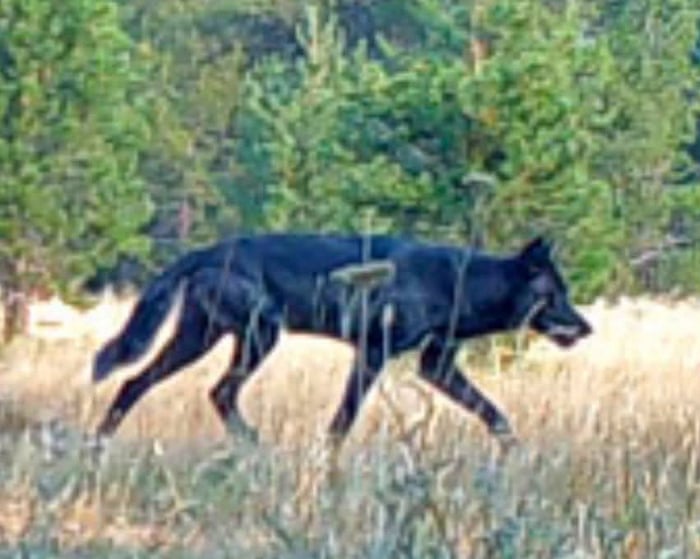
A gray wolf has recently been seen in California’s Mendocino national forest for the first time since the species returned to the state 15 years ago, state wildlife officials confirmed.
Officials in Lake county, which is about two hours north of San Francisco, said last week the California department of fish and wildlife (CDFW) had received reports of sightings in the forest in late August. The agency verified the presence of a wolf in the far north end of the county, county supervisor Brad Rasmussen said in a statement on social media.
When Phoebe Bridgers appeared at Venice international film festival with unshaven legs this weekend, it shouldn’t have made headlines – but did. What do young women make of the current expectations around depilation?
In 2026, female body hair feels as if it should be the least of anyone’s concerns. But although we may think we’ve come a long way since Julia Roberts’ unshaven underarm caused a furore at the 1999 London premiere of Notting Hill, depilation remains a staple of many women’s grooming routines – and when singer turned actor Phoebe Bridgers made her Venice film festival debut last weekend, her unshaven legs still made headlines.
Even so, her au naturel look may signal that attitudes are changing – particularly among younger generations. Vogue decreed that “rather than undermining the femininity of the look, unapologetic hair sharpened it”, and pictures of the 32-year-old’s hair-covered calves were generally praised by fans. But what do other gen Z and millennial women make of the decision to ditch the razor?
Alex Gibney’s marathon documentary delivers numerous eye-raising insights into the broligarch’s business deals, early idealism and apocalyptic appetite for fathering children
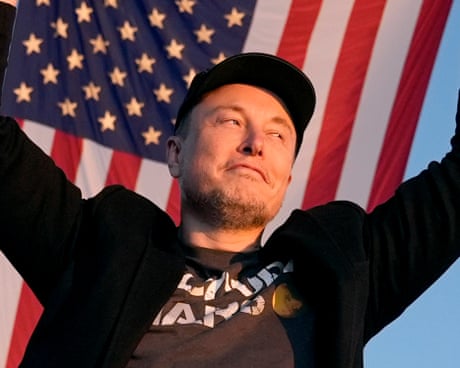
Veteran documentarian Alex Gibney’s film about the richest broligarch on the planet has been one of the most eagerly anticipated films at the Venice film festival this year. The Oscar-winning 72-year-old, who has in previous films taken on the US military, the Catholic church, Vladimir Putin and Scientology, has been investigating the tech tycoon’s ascent and speaking to people in his orbit since late 2022, before his Maga turn and Trump 2.0.
The result clocks in at just under four hours and presents a comprehensive answer to how on earth one man managed to amass so much money and political influence. It is shocking less for any individual new pieces of information Gibney has unearthed than for its totality. Here are six things the film tells us:
It all depends on the variety of tomato and the dish you’re making, says our panel of experts
Why do recipes often say to deseed tomatoes? Isn’t that where the flavour is, especially since the seeds don’t make much difference to a sauce’s texture? Catriona, by email “It all depends on the variety of tomato,” says the Guardian’s Rachel Roddy, “because some are much seedier than others. Sicilian varieties that require little watering, for example, have loads of little bitter seeds, which do need flicking or sieving out.” If, however, Catriona had some vesuvio tomatoes destined for a salad, Jay Patel, co-founder of Italian restaurant Legare in London, wouldn’t bother: “Those are generally pretty meaty and don’t have many seeds, so I’d just slice and dress them generously with olive oil and salt, and you’ll have something pretty special.” And that’s the crux of the matter: as well as the type of tomato, the answer hinges on what you’re planning to do with them, too. “If you’re making a salad with watery winter tomatoes, say, there’s a purpose for those seeds,” Patel adds, “because they provide a lovely pop as well as acidity.”
The most common deseeding scenario is for pasta sauces, but even that comes with a caveat, Patel says: “If I’m going for a slow-cooked sauce, it’s tinned chopped tomatoes, seeds and all. But if I’m after a lighter, fresher tomato sauce, I’ll quickly blanch, peel and deseed fresh tomatoes myself.” Nick Molyviatis of Zylia in London, meanwhile, scoops out the seeds with a teaspoon or he grates his tomatoes instead – “the skin acts as a protector, a glove” – while Roddy’s “best defence against seeds” is a food mill: “Seeds don’t contain flavour as such, but the fleshy gel around them does, which is why a food mill is great,” she explains. “It presses the flavour from that and the skin, while at the same time separating them from the sauce base.”
The masterful Harrow MC behind the year’s funniest, most inventive UK rap debut explains how his parents sparked his ravenous outlook – and why he’s wrestling his peers
A few Guinnesses into an interview in his local Irish boozer, and 26-year-old Harrow rapper Kibo is cooking. We’re talking football. As a kid, he preferred playing Fifa Street – where ordinary players backflip off walls to score incomprehensible bicycle kicks – to regular realistic Fifa. “If I’m gonna play a video game, I want to do some shit I can’t do in real life,” he says. He’s drawn to similarly miraculous footballers: Balotelli, Drogba in his Chelsea days, Ronaldinho and his dad’s favourite, Eric Cantona: “Oh God, with his collar popped, looking like Kanye West?” Kibo then recites Cantona’s 2019 Uefa president’s award speech – a mash-up of King Lear and philosophical musings on war and science – to near perfection.
Magic is at the heart of Kwengletarianism, “the idea of being in a place that’s very grey, and trying to find a prismatic iridescence in it”, that underpins Kibo’s sensational album Kwengletaria: Ragamyff. (Cantona? “He’s a Kwengletarian to the nth degree.”) During his long rise through London’s rap scene, canonised by co-signs from Skepta, JME and Dave, Kibo has become a rare MC from Harrow, the town that produced Kate Nash and Jai Paul but no rappers of note. “It’s awesome,” he says of its lack of rap tradition, “a complete blank slate” to be as imaginative as he wants. Kwengletaria finds the myth in the mundane: on the track Bakerloo Dragon, a normal tube journey becomes a cruising broken-beat roller aboard a fire-spitting Bakerloo line train. I tell him my train to Harrow was one of these flame-graffitied dragons. “But did you get any sparks?” he asks enthusiastically. “You get sparks after Stonebridge Park!”
Experts helped guide weather scenes in Pressure – a film depicting dramatic buildup to 1944’s D-day landings
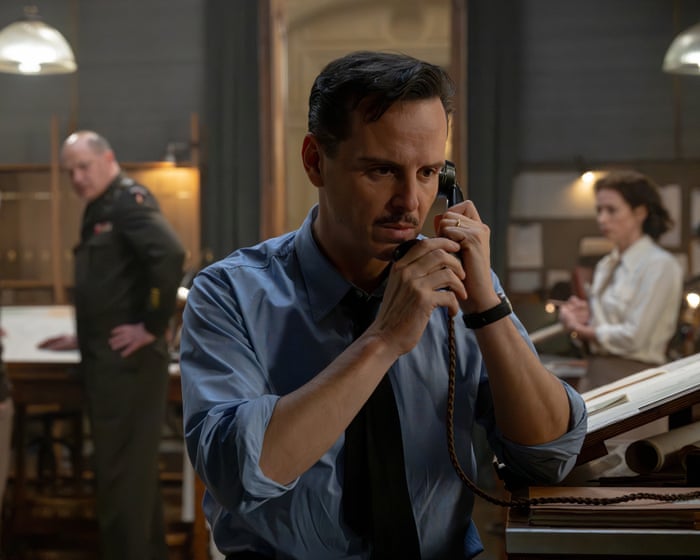
Dressed in a Royal Air Force uniform and sporting a trim moustache, Andrew Scott looks slightly queasy – as well he might. Behind him is a huge map of the Channel, and in front of him is Brendan Fraser, looming with a request: “I need a forecast,” he says.
Starring in the film Pressure, based on a true story, Scott plays the meteorologist Gp Capt James Stagg – the man who must tell Gen Eisenhower – played by Fraser – whether conditions will be suitable for the D-day landings scheduled to take place on 5 June 1944. But a large storm is approaching the Normandy coast.
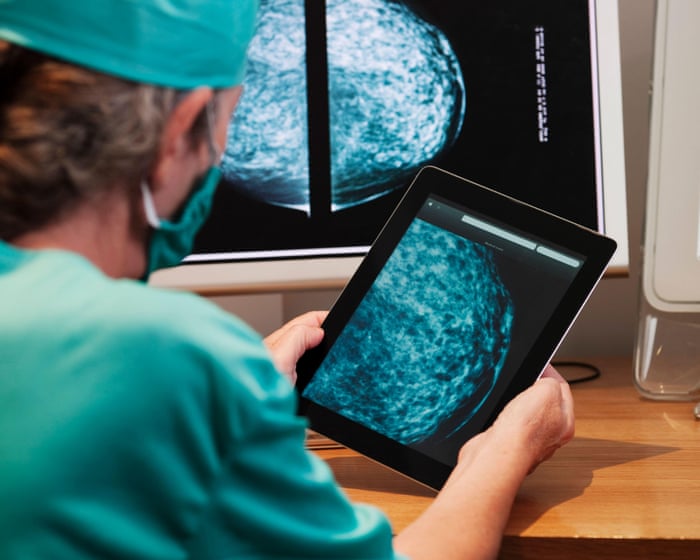
The boss of one of the UK’s biggest chip companies has claimed AI will be able to find a cure for cancer “in our lifetime”.
Rene Haas, chief executive of the chip designer Arm Holdings, said that, while modelling how a DNA marker is affected by cancer was currently “too complex” a problem for either humans or technology, computers were “going to solve it” in the future.
A journalist embarks on a wild goose chase that might – or might not – be informative about the male condition
Recovering from surgery at home in upstate New York in 2023, Jon Ronson awoke to a string of texts from his adult son about a weird evening he just had at a stranger’s castle in Connecticut. Having gone along with a friend who’d been invited to a party there, he arrived to find a few lost-looking young women with the sixtysomething host, Chris Mark, a steel heir filming a reality show about “101 princesses” whose first rule was “Never say no to King Chris”.
As a parent, Ronson is worried; as a reporter of more than 30 years on the cranks-and-crooks beat, he’s already on the clock. After trawling online whispers of sinister goings-on at the castle, he decides to pay a visit to Mark, who proudly shows off the stalactites and waterfall in his “cave-themed” bedroom before explaining how he picks up women on dating apps to “adapt” them to life as “princesses”. “The only girls that really work are drug addicts ... they don’t know what’s going on,” he says. Almost touchingly, Mark asks Ronson to sign an NDA, and the book describes Mark flooding his phone with threats when he declines.
The third in a loose American trilogy follows the epic journey of a formerly enslaved man in the aftermath of the civil war
But is not the story as good as the truth?” asks Tennyson Bouguereau, the narrator of Sebastian Barry’s The Newer World. Tennyson, a formerly enslaved man in post-civil war America, recounts his life story in ways that call to mind the age-old debate about whether it’s better to get our history from novelists or historians. While historians might argue that there is no contest, the question hints knowingly at the novelist’s counter-argument. It sent me searching for a line from Barry’s 2008 Costa-award winning novel, The Secret Scripture, in which the narrator describes history as “a fabulous arrangement of surmises and guesses held up as a banner against the assault of withering truth”.
In her Reith Lectures, Hilary Mantel suggested that history is “what’s left in the sieve when the centuries have run through it”, but I tend to think of it as more of a butterfly net. Historians chase after and capture the things they deem significant. They leave things out, often deliberately. Barry’s entire body of work is a prime example of fiction’s ability to fill history’s gaps, merging personal tragedies with national ones in ways that (dare I say) demonstrate the supremacy of the form – especially for those of us descended from people for whom history never cared one whit. I was therefore intrigued to learn that he had set out to write the story of a man like Tennyson. Barry’s earlier novels refracted Irish history through the lens of two fictional Irish families, the Dunnes and the McNultys. His first foray into this period of American history in Days Without End, for which he won his second Costa award, also followed one of the McNultys – Thomas McNulty flees the Irish famine for America, where he finds himself drawn into the genocidal work of clearing Native Americans off their land, and then, together with his lover and fellow soldier, John Cole, adopts a Lakota girl, Winona, whose family they have helped slaughter. Barry picked up Winona’s story in A Thousand Moons, published in 2020, which follows her fortunes as she, Thomas and John settle on the same farm outside Paris, Tennessee that is occupied by Tennyson and his twin sister Rosalee among others.
Back on Armstrong, we’re still level but at 4-4, Potapova playing with confidence and poise. She holds to 30, and Andreeva must now serve to stay in set one.
Zheng and Swiatek are out on court; Zheng, the Olympic champion, had to come through qualifying after missing time with an elbow injury, but two weeks of competition have brought her into the main event nicely loose. I’d be surprised if she finds a way to win here, but she did at those Olympics, so knows she can.
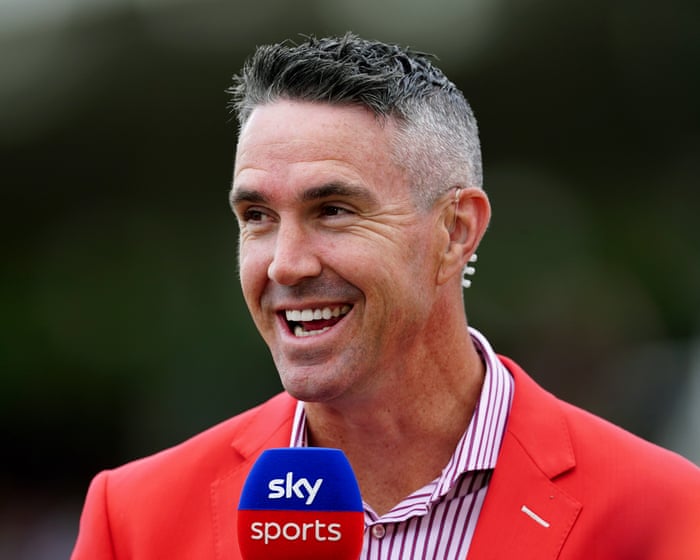
The former player’s credentials speak for themselves but the ECB has also taken a risk in employing him until the end of next year
For most of the time since his retirement as a player Kevin Pietersen has worked as a pundit and commentator, encouraged to be outspoken, hold strong opinions and state them powerfully. After his surprise appointment as a specialist mentor to the England men’s white-ball teams he will have to tread a bit more carefully.
He will bring positivity, as all great players initially do because of their stature within the game, but the fact that he was a great player lasts only so long, and then it’s about the words he uses and his ability to tailor his messaging.
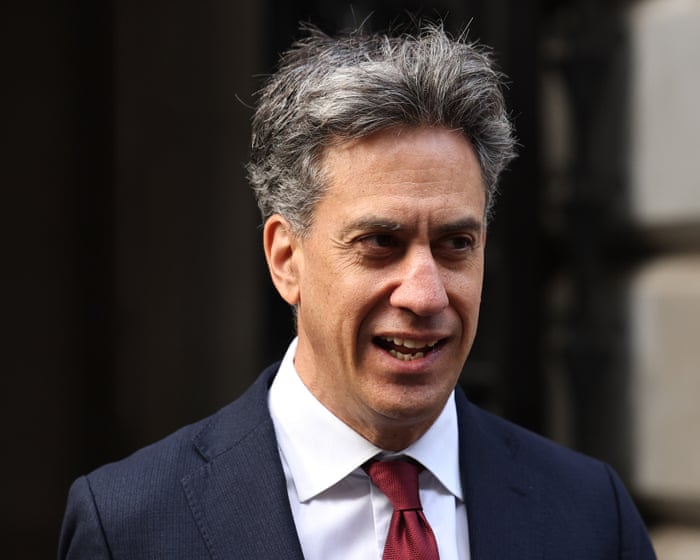
Ed Miliband to reassert support for Palestinian rights and a two-state solution in move likely to draw fierce criticism from US and Israel
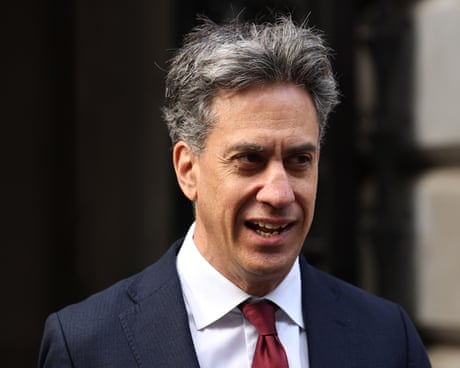
Ed Miliband will announce what he has described as a broad reset of the UK’s relations with Israel on Tuesday, promising the government will take a more active approach in supporting the Palestinian cause.
In an intervention that is expected to draw fierce criticism from the US and Israel, the foreign secretary will impose a UK ban on the trade in goods and some services from illegal Israeli settlements.
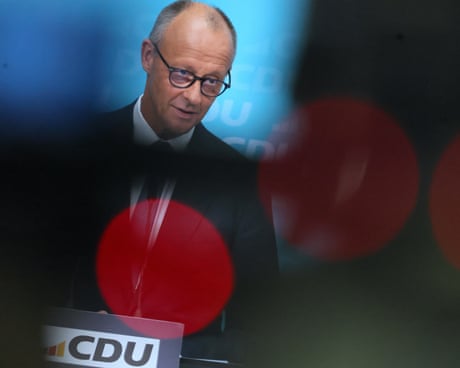
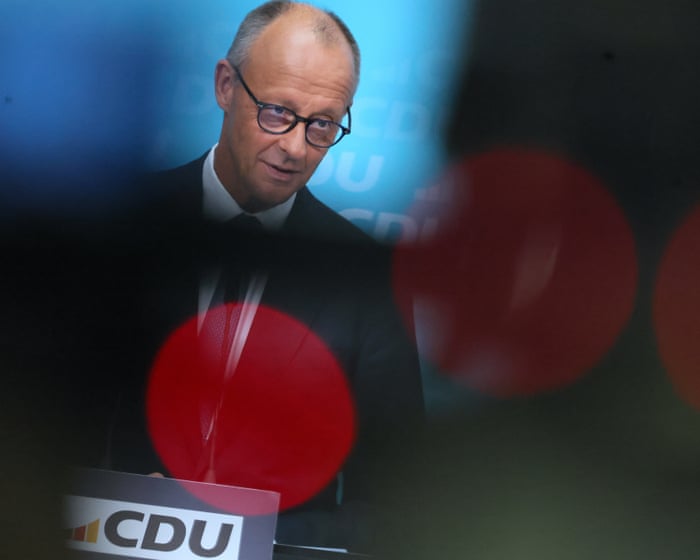
Friedrich Merz said his conservative CDU was shaken ‘to its very foundations’ after far-right victory in Saxony-Anhalt
A “shocked” and chastened Friedrich Merz has vowed to stay in office despite the far right’s triumph in a state election that has brought anti-immigrant, pro-Kremlin politicians within striking distance of power.
The German chancellor, appearing ashen-faced in front of reporters in Berlin, said on Monday that the landslide victory by the Alternative für Deutschland (AfD) in Saxony-Anhalt had shaken his conservative Christian Democratic Union (CDU) “to its very foundations”.
From Dover to Saxony-Anhalt, extremists thrive when voters believe established parties can no longer deliver security, prosperity or meaningful change
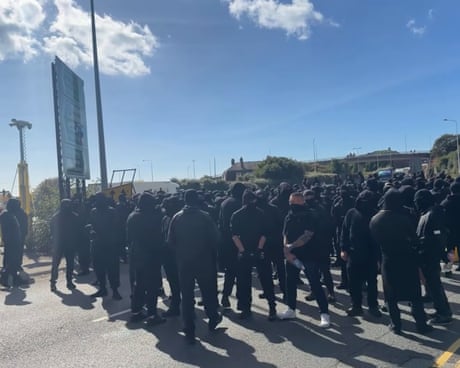
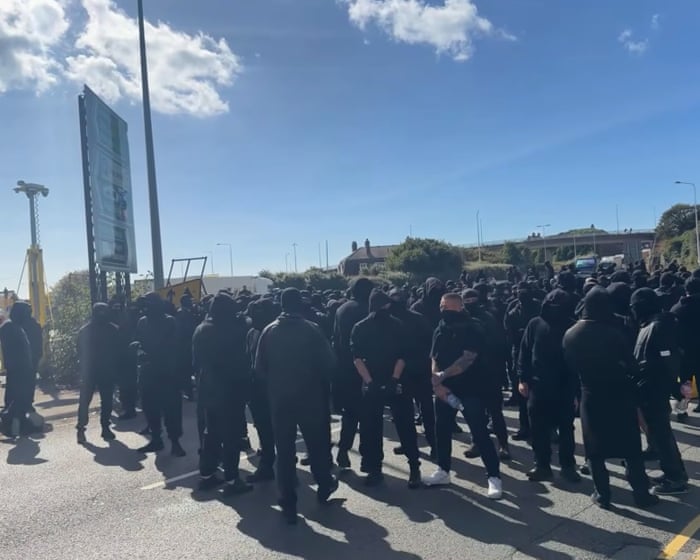
What links the thuggish masked agitation in southern England this weekend and the far-right Alternative für Deutschland’s (AfD) best-ever result in a German state – where it more than doubled the 21% vote it received five years ago? Several hundred men in balaclavas blocking an A road are not the same as a party winning a landslide election. But both events draw on the idea that the political system has lost control. The extremists in Dover and Portsmouth dramatise this claim; the electoral result in Germany threatens to institutionalise it.
The prospect of Germany’s first far-right-led state government since the second world war carries real consequences. In Saxony-Anhalt it could see power handed to a party hostile to migrants, Islam, LGBTQ+ rights and climate policy. Alarmingly, it has senior figures linked to former neo-Nazi groups. About 170,000 foreign nationals live among 2 million people in Saxony-Anhalt – and roughly a fifth of the state’s doctors were born abroad. The grim paradox is that an AfD government could oversee the very state intelligence service that has classified the party as “rightwing extremist”.
Do you have an opinion on the issues raised in this article? If you would like to submit a response of up to 300 words by email to be considered for publication in our letters section, please click here.
As he prepares for the upcoming international window, the US head coach spoke about Folarin Balogun, the LA Olympics and dual national players
It’s been two months since the US men’s national team crashed out of the World Cup in disappointing fashion, and their head coach, Mauricio Pochettino, is back at work.
The former Tottenham and PSG manager was largely viewed as a short-term hire when he joined the US in 2024, brought on to help the team capitalize on their first home World Cup in more than three decades. Along the way, Pochettino and US Soccer warmed to the idea of a contract extension, one they finalized in August.
The US will play four friendlies in late September and early October against Peru, Chile, Mexico and Canada, but that stretch of games pales in comparison to the larger task at hand. Pochettino must guide the US to qualification for the 2030 World Cup, of course, but the Argentinian – and the federation – have more ambitious goals that involve reshaping the structure of soccer in the United States.
Venice film festival: Tedeschi gives a career best performance as the mysterious stranger who visits a wealthy Italian family to prey on their pampered weaknesses
Everyone in the movie business has earnestly learned to call film-makers “storytellers”, despite the fact that film-makers don’t necessarily have to deliver conventional narrative and that so many of them are in any case no good at the old-fashioned business of storytelling.
But this last point certainly doesn’t apply to Italian director Paolo Strippoli who has brought to Venice an uproarious edge-of-the-seat gripper in which Valeria Bruni Tedeschi gives us the funniest performance of the festival and the best of her career.
It’s a satirical nightmare about a wealthy woman’s Faustian bargain, like one of Roald Dahl’s Tales of the Unexpected – as elegantly designed and beautifully shot as anything by Paolo Sorrentino and with smart, subversive things to say about body image and body fascism and about a cosseted, self-involved Italian matriarch who eternally congratulates herself on sacrificing herself – or wanting to sacrifice herself – for her children.
At the centre of this bizarre drama is Anna (superbly played by Jasmine Trinca) who is complacently marred to wealthy alpha-male Bari businessman Walter (Adriano Giannini): they have two children: Alice (Romana Maggiora Vergone) and Tobia (Andrea Genovese). Each family member gets a chapter.
At a spectacular party at their gorgeous home, whose clear purpose is to make friends and neighbours jealous, a terrible accident happens, just after the children discover an ominous spiral of ants in the grass.
While praying desperately for a miracle, Anna is visited by “L’estranea” of the film’s Italian title, the mysterious stranger hilariously played by Tedeschi, who appears to know all about this rich, picture-perfect family and offers to solve their problems. But she wants something in return, a sadistic deal that cuts to the heart of both parents’ selfishness.
Anna had always wanted to act in her youth but her father forbade it – now she has been obsessively pushing Alice into acting and is morbidly upset at any physical problem that Alice has which damages this proxy ambition. As for macho Walter, he is thrilled at Tobia’s skills at football, and sponsors his son’s youth team; he is disgusted (rather than compassionate) at a weight issue that Tobia has which gets him dropped from the side.
And all the time Anna sombrely considers the sacrifices she has secretly brokered for other people to make with this smirking, skittish Mephistopheles in order to keep her family safe. But has she done wrong? Is she guilty of some obvious sin which is being punished? No. It is just a deadpan tale of supernatural cruelty meted out to someone whose only crime is smugness, vanity and being rude to her domestic staff. It all climaxes in an apocalyptic finale: an enjoyable and macabre family affair.
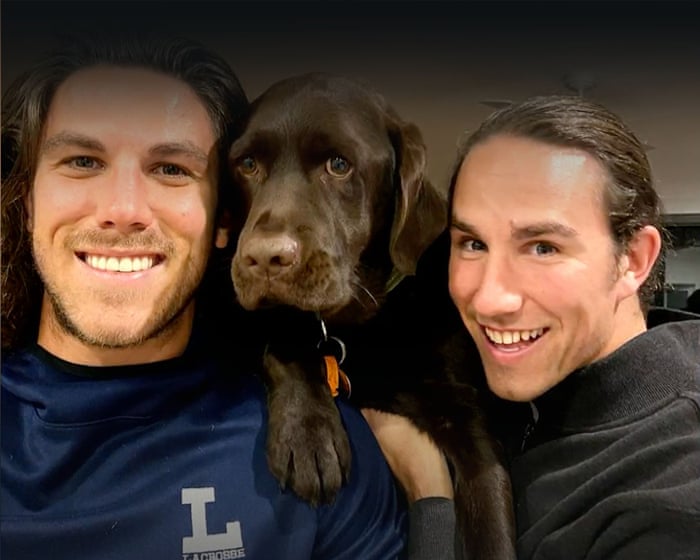
Three men on trial for killing Jake and Callum Robinson and Jack Carter Rhoad in Baja California in 2024
The alleged killers of two Australian surfers and an American at a Mexican surfing hotspot in 2024 have gone on trial in the border resort where the three were murdered.
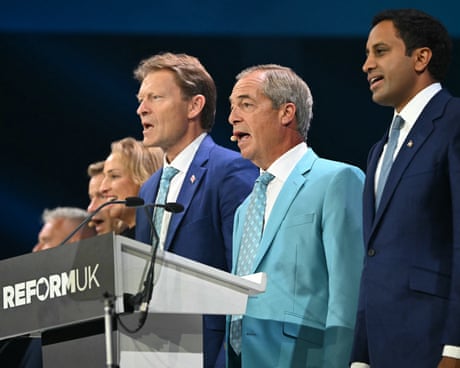
The scandals are building, his touch perhaps not quite what it was. And, most of all, his party rivals are beginning to sense an opportunity
Nigel Farage didn’t know. He wasn’t told.
Sure, he was right there at the table when the undercover reporter he believed to be a rich American’s sonspelled out very clearly how he hoped to channel his father’s money to Reform, in ways that certainly don’t sound too lawful.
Gaby Hinsliff is a Guardian columnist
Do you have an opinion on the issues raised in this article? If you would like to submit a response of up to 300 words by email to be considered for publication in our letters section, please click here.
Far-right activists gathered in two disruptive demonstrations in Dover and Portsmouth over the weekend, attempting to obstruct asylum seekers arriving on small boats from France. Many wore all black and balaclavas. The action was seemingly organised by Daniel Thomas, an agitator better known as Danny Tommo, who has close ties with the far-right extremist Tommy Robinson. Thomas was recorded on the ground saying Portsmouth was now ‘ground zero’ for small boat crossings, and has threatened further action. Lucy Hough speaks to political correspondent Ben Quinn

 Login
Login