Russian strikes in Kyiv, a female militia march in Tehran, protests in Pristina and Alfie Hewett at the US Open – the past seven days as captured by the world’s leading photojournalists
Looking for a new reading recommendation? Here are some great new paperbacks, from an epic multigenerational saga by a Booker winner to a biography of an iconic Victorian poet
Politicians who threaten filmmakers rather than investigate alleged military crimes expose not strength but a leadership frightened of the evidence
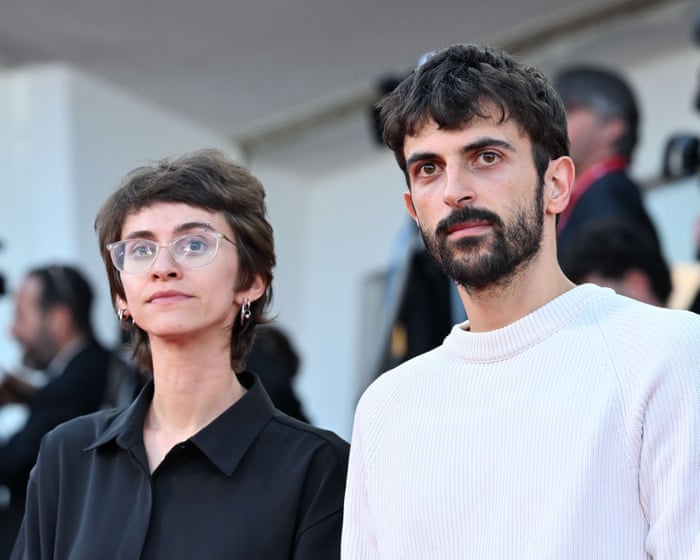
Across Israel, politicians, military leaders and much of the media are trying to discredit a documentary that almost none of them have seen. Produced by the Guardian, NAZA examines the AI-powered targeting systems used by the Israel Defense Forces to bombard Gaza after Hamas’s brutal 7 October 2023 attacks. Named after the Israeli military acronym euphemistically usedfor “collateral damage”, NAZA features interviews with 24 anonymous insiders who reflect on their role in the death-dealing. Israeli leaders have branded the film a “blood libel” and “fiction”. Its Oscar-winning directors, Rachel Szor and Yuval Abraham, face being stripped of their citizenship for treason.
This is absurd. NAZA shows how bureaucratic distance and routine can turn extreme violence into ordinary work. More than 73,000 Palestinians, including more than 20,000 children, have been killed in the campaign by Israel’s military. A democracy that values life would at least investigate the film’s claims. Instead Israel’s government, which says it is committed to democratic accountability, is attacking journalists.
Do you have an opinion on the issues raised in this article? If you would like to submit a response of up to 300 words by email to be considered for publication in our letters section, please click here.
A government scheme is giving citizens cash for spending time with a good book. We ask behavioural scientists, along with The Anxious Generation author and psychologist Jonathan Haidt, whether it’ll help make the habit stick
Could the solution to the reading crisis lie in paying people to put down their phones and pick up a book? That’s what one government, at least, is resorting to: this month, Singapore launched a scheme promising actual cash to citizens as a reward for logging reading time on a government website.
It’s unlikely to make you megabucks – you have to rack up 50 reading sessions of at least 15 minutes to earn one Singapore dollar (£0.59), with only one logged session allowed per day. But behavioural scientists and psychologists told the Guardian such a scheme could still help boost a habit in precipitous decline.
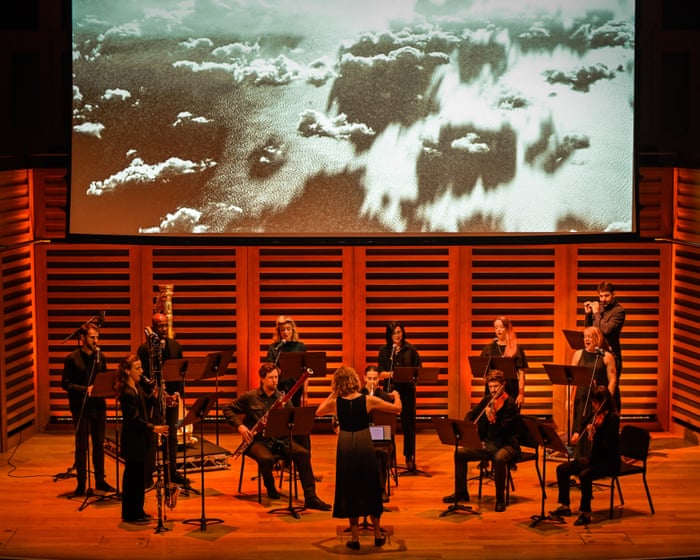
Kings Place, London Works by the not-quite-minimalist composer’s included her Realm Variations and quartet Stringsongs in a compelling concert
There’s no one quite like Meredith Monk. So often grouped with her lionised contemporaries Philip Glass, Steve Reich, Terry Riley and La Monte Young, she is 83 to their 90-odd years and sports long plaited hair as reliably as Reich wears a baseball cap. Yet she refuses the label “minimalism” for her music, and composition is just one element of a creative life that also takes in singing, choreography, film-making and drawing.
Monk was not present at this performance marking the launch of Phaedra Ensemble’s new album of her music, though she did loom briefly over the audience on video, professing “it’s a dream of mine for this music to be recorded and played”. (Compare that to the fortunes of Glass’s works.) But she had been closely involved, having invited the group to record some of her music after hearing them play.
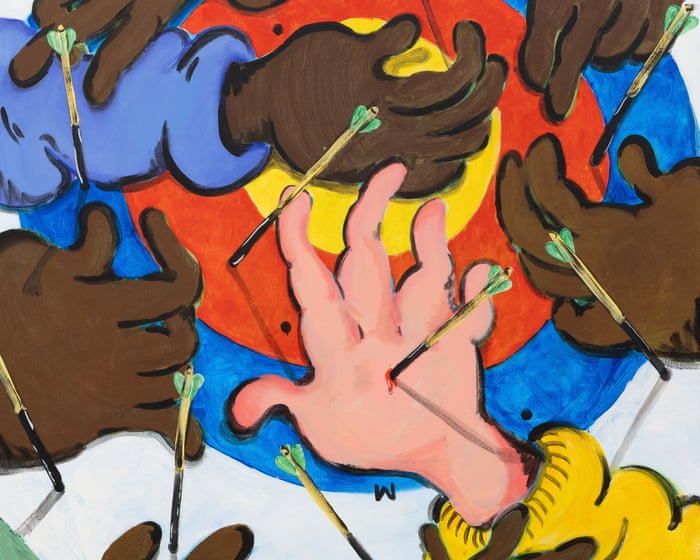
Charleston, Lewes Bell’s strange and charming ceramics celebrate a life dedicated to creativity, while next door Sterling’s bawdier, weirder paintings form a critique of race and power
Quentin Bell was not a great artist, but that didn’t stop him. He saw the world as a magical place. The ceramicist (son of the Bloomsbury group’s Vanessa Bell; biographer of his aunt Virginia Woolf) spent his life lost in a world of magic, myth, newts in ponds, levitating women and knights on horseback. He died in 1996, leaving behind decades of pots, plates, figurines and drawings filled with wonder and amazement.
It all started when Bell was nine years old. Taken to a magic show by some relatives, he saw a jaw-dropping spectacle: a beautiful woman seeming to float in the air. It stayed with him throughout his life.
Are you someone who thinks they have all the answers? Is your experience relevant here? Experts on the questions to ask yourself before giving advice
“Often, when people approach you for advice, they just want to talk about how they feel,” says Annalisa Barbieri, advice columnist for the Guardian for almost 20 years. For example, you might vent to a friend about your awful boss, and if they’re shocked it could confirm you’re being treated badly. “I also think people can have a lot of shame when things aren’t working out, and we like to share shame because it’s a hot potato of a feeling.” In other words, not every situation warrants advice. Sometimes, the person just wants to gauge a reaction or to share.
Number of private jets has surged in recent years, but they do not pay commensurate portion of fees to FAA operations
A new report has put a spotlight on the rapid expansion of private jet travel in the US, revealing that owners are not paying their fair share of aviation tax despite the average owner’s wealth being $190m and private jets being up to 14 times more polluting than commercial flights.
The Institute for Policy Studies’ new report, High Flyers 2026, examines the growing use of private aircraft, the public infrastructure supporting them and the tax policies benefiting private jet owners.
Punch isn’t just for summer parties, and this Caribbean-inflected one, featuring rum, brandy, stout, lemon and nutmeg, will warm the cockles of a crowd on any autumn evening. It’s named after Prince Buster, the Jamaican ska legend and inspiration for our bar’s name.
(March Hare Music) This fusion of western folk and the traditional music of the Baka people creates an uneven patchwork of sound – but it astonishes when their vocals are placed front and centre
Over the past 30 years, British folk musicians Su Hart and Martin Cradick have been developing a distinct fusion of traditional Cameroonian vocal music with western instrumentation. Their 1993 debut record Spirits of the Forest, released on Joe Boyd’s Hannibal Records, focused on the female singers of the Baka people, who use a polyphonic style of yodelling to evoke dawn spirits. Hart and Cradick have maintained the relationship over the decades, splitting royalties equally and supporting the community through their Global Music Exchange charity. Sing the World Awake, their first album in 12 years, centres field recordings made with a new Baka generation and deepens their exploration into an ancient oral tradition.
Cradick’s instrumental arrangements are expansive and wide-ranging. Topé Malangui Kpode features sprightly, Ghanaian highlife-inspired guitar melodies and percussive polyrhythms. Fair Molly (Mál Bhán Ní Chuilleanáin) features Gaelic vocals from guest singer Irene O’Meara, and The Swift harnesses the intricate folk sound of Ben Moneypenny’s violin playing. Each song alights on snatches of Baka vocals, although the overall effect of splicing these unique melodies into different genres creates an uneven patchwork of sound.
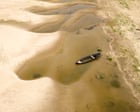
The nicknames of the world’s biggest rivers give a sense of how we feel about them: “the great river”, “the river that swallows all rivers”, “Mother Ganga” and “Old father Thames”. They feed and water us, and many other animal species. They carry our trade but also give us cool relief on a hot day. They’re nerve endings, elders and sources of comfort, but also of awe and respect.
And yet many of the world’s rivers are suffering, hit by multiple environmental challenges. A new report out today from the World Meteorological Organization finds that rivers across the world experienced one of the driest years in more than three decades during 2025.
The Palestinian Columbia student snatched by ICE writes about his Kafkaesque ordeal with a quiet fury
Mahmoud Khalil was completing a master’s degree at Columbia University when, in March 2025, plain-clothed officers from the Department of Homeland Security snatched him from his home in New York and took him to an immigration detention centre; he was then transferred to another facility in Louisiana, more than 1,000 miles away. As a green card holder, Khalil has permanent US residency, but secretary of state Marco Rubio had determined that his continued presence in the country would have “adverse foreign policy consequences for the United States”, and sought his deportation under a legal provision dating back to the McCarthy era. Khalil was released on bail in June 2024 after a federal judge ruled his detention unconstitutional, but the Trump administration is still trying to have him removed.
Khalil – who was born to Palestinian parents in a refugee camp in Syria – had been targeted because of his advocacy on behalf of pro-Palestinian protesters during campus protests over Columbia University’s links to Israel. They were calling for Columbia to cut its ties with Israeli academic institutions and companies profiting from Israel’s onslaught on Gaza; in response, the university called in the NYPD. There was no suggestion that Khalil had done anything unlawful, and no criminal charges were brought against him; the government had simply identified him as an influential pro-Palestinian voice on campus, and for that reason alone they wanted him gone. He spent a total of 104 days in detention, missing the birth of his son.
Steven Kolb tried to stop activists demonstrating against the use of wool – but he can’t curb consumers’ growing concern about where their clothes come from
On Sunday afternoon, Mason Melito took a front row seat at the Cos show at New York fashion week. A campaigner at Peta (People for the Ethical Treatment of Animals), Melito wasn’t on the guest list – instead, he and four other activists had planned to briefly disrupt the catwalk show with the aim of drawing attention to the use of wool by the Swedish brand.
Protests on the catwalk have a long, rich history. Since the 90s, Peta have regularly stormed shows in an attempt to draw attention to the industry’s use of fur and leather. It’s a typically peaceful practice that happens regularly – during some shows, the catwalk is so long and security so swift that show-goers don’t even notice. (Sometimes, Peta take a different approach: in 1996, during a lunch, a protester famously dropped a dead raccoon on to Anna Wintour’s plate.)
Everyone loves an iced finger bun, but these light and moist bakes with a blackcurrant fondant topping might be your new favourite afternoon treat
Soft, feather-light and topped with a thick strip of icing: few things are as irresistible to me as an iced finger bun. Here, I’ve flavoured the fondant with blackcurrant jam, which lends a gentle tartness to balance the sweetness, though almost any good-quality jam will work. A simple tanzhong (a cooked flour-and-milk paste) gives the buns their wonderfully fluffy crumb and keeps them soft for longer. For a more indulgent version, split the buns along the top and fill with whipped cream and a spoonful of jam instead. They’re best assembled just before serving, and make a particularly lovely afternoon treat.
I was at the mercy of the mountain, heading towards a 20-metre drop, about to discover what it felt like to die
Growing up in Sweden, I was as comfortable on skis as I was walking on my feet. As a teenager, I became a professional free skier, a style that features jumps and tricks. In my 20s, I moved into content creation. Now, at 38, I spend the winter months filming extreme ski videos with my photographer wife, Sofia.
In March this year, we’d been staying at the base of the Lyngen Alps, northern Norway. Nonstop rain had prevented us from filming but, finally, we had fresh powder and clear skies. The plan was for me to go up the mountain with a friend, Lovisa, and make our way down as the sun was setting. Sofia would film us from the bottom using a drone.

 Login
Login