❌

Reading view

Jess Cartner-Morley on fashion: don’t want to get your Big Winter Coat out just yet? Try ‘onion dressing’

It’s time to learn the art of layering – and we’re talking a crew neck with a ballet wrap and blazer, not full-on outdoor explorer

Is layering an art? Probably not in the traditional sense. We are not talking the Bayeux tapestry here. No one is going to queue round the block to admire the subtle interplay between your Uniqlo Heattech and your cashmere crewneck. Still, I think it’s nice to romanticise this stuff. The deeply unpoetic truth is that it is going to get cold and wearing one item of clothing at a time simply isn’t going to cut it. So let’s pretend that the sliver of white T-shirt beneath a jumper, the shirt collar poking out above a cardigan, or the ballet wrap over a snug top are not acts of basic thermal self-preservation, but composition. A creative statement about proportion, texture, colour and self-expression. If you have to wear half your wardrobe at once, you may as well make a masterpiece out of it.

The avant-garde layering term to drop in order to sound like a connoisseur this season is onion dressing. Not the most romantic name, but a clear visual for the most refined form of layering, which is fine layers rather than hefty ones. And instead of the top layer covering all beneath it, each piece should be visible. As if we were slicing through the onion and looking at a cross-section if you will excuse me labouring the allium thing. This is layering with finesse rather than brute force. Hems and collars and cuffs give an outfit depth and texture without adding too much bulk. You want to look intriguing and multi-dimensional, not like Joey in Friends wearing all of Chandler’s clothes.

Continue reading...

© Photograph: David Newby/The Guardian

© Photograph: David Newby/The Guardian

© Photograph: David Newby/The Guardian


‘The audience gets to be in on it’: How narrative-led gameplay is Call of Duty’s greatest weapon

As video games chase spectacle, Modern Warfare 4 makes a case for putting character and consequence at the heart of its biggest battles

• Don’t get Pushing Buttons delivered to your inbox? Sign up here

In these strange, subdued weeks before the much-anticipated release of Grand Theft Auto VI, there have still been some welcome surprises. Onimusha: Way of the Sword revived a half-forgotten samurai action series with much aplomb, while Silent Hill: Townfall transported all of the franchise’s bloody, dread-filled psychological horror to … the picturesque Scottish coast. Even more shocking to games writers, though, is the fact that the forthcoming Modern Warfare 4 has one of the best Call of Duty campaign modes for at least six years – and might even be up there with the original Modern Warfare trilogy.

The setting is an invasion of South Korea by its northern neighbour – a setup that could have fuelled a hundred instantly forgettable Netflix films, but has proved controversial in a video game. The authoritarian regime has a new (fictitious) ruler and a powerful experimental weapon, which it’s not afraid to use as the opening gambit in an explosive attack. You take on the role of Park Hyun Jun, a conscripted South Korean soldier who, along with his small unit of similarly inexperienced grunts, gets caught in the firestorm as cities burn and enemy paratroopers fill the skies.

Continue reading...

© Photograph: Activision

© Photograph: Activision

© Photograph: Activision

How to turn brown bananas into the best vegan bread of the bunch – recipe | Waste not

Use over-ripe fruit to flesh out this loaf with chocolate, spelt and miso – truly top banana

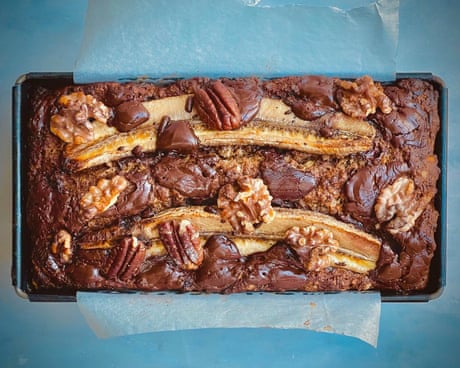
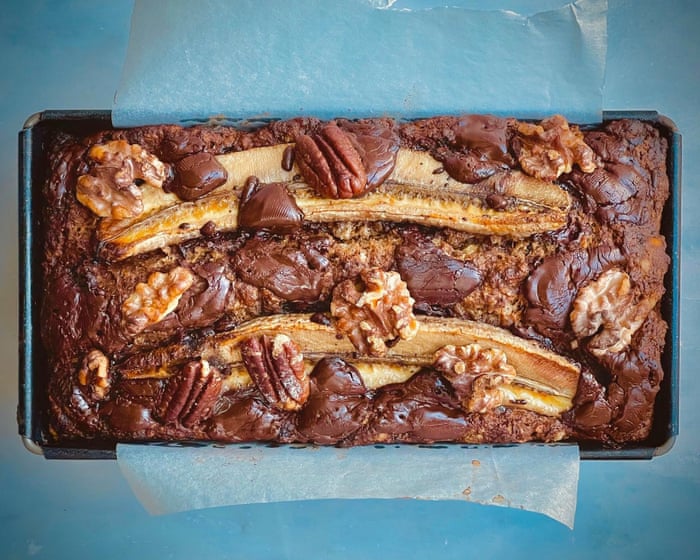
After nine years, I can’t believe I’ve never written a recipe for banana bread for this column, so it had better be a good one, especially after I picked up a huge bunch of brown bananas at the corner shop for next to nothing the other day. This is a vegan bread made with olive oil instead of butter and with the mashed bananas acting as a binder in place of eggs; I’ve also added some miso to boost the umami and overall satiety – the salt enhances the sugar, boosting the sweetness while rounding it off nicely. In the interest of biodiversity and flavour, I’ve used wholemeal spelt flour, but any will do.

Continue reading...

© Photograph: Tom Hunt/The Guardian

© Photograph: Tom Hunt/The Guardian

© Photograph: Tom Hunt/The Guardian

❌