Our sound and lighting courses can be found at https://school.learnlightandsound.com!
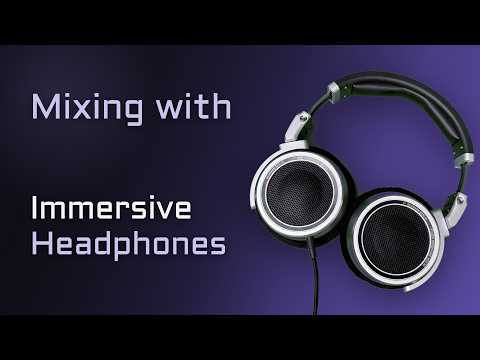
In this week’s episode we have a look at the Neumann NDH 30 reference headphones. These premium headphones inspire confidence when it comes to mixing sound for video on open-back headphones. But the unique value is in the add-on plugin/app called RIME which turns these headphones into immersive headphones, allowing you to playback up to 7.1.4 Dolby Atmos immersive sound. Let’s have a look and a listen!
If you’d like to learn how to make great dialogue audio for your film and video projects, please have a look at my courses including processing dialogue audio in Adobe Audition and DaVinci Resolve/Fairlight, recording sound, how to use the Zoom F4, F6, F8, and F8n, and how to get the most from the Sound Devices MixPre series of recorders. Our latest courses cover Sound for Live Streaming with the ATEM Mini and an Intro to Izotope RX. See https://school.learnlightandsound.com for more info!
Support my work creating videos by donating at Ko-Fi.com: http://ko-fi.com/curtisjudd
Gear used or mentioned in this episode (the links below are Amazon.com, B&H Photo, Sweetwater, or other affiliate links. As an affiliate, I earn from qualifying purchases):
- Neumann NDH 30 open back reference headphones — https://guitarcentercreator.pxf.io/vDmnae
- Neumann NDH 20 closed back reference headphones — https://guitarcentercreator.pxf.io/JkZrPa
- Neumann U87 Ai microphone — https://geni.us/phYZH
- Neumann RIME plugin — https://www.neumann.com/en-us/products/software/rime
- Sound Devices MixPre audio recorder — https://geni.us/O8e0
- Impact Turtle-Base C-Stands — https://geni.us/8a8tt
- Aputure Light Dome III Softbox — https://geni.us/AVHU1p
- Rosco Prismatic Glass Gobo in Cool Lavender — https://geni.us/GWKt
- Canon C70 Cinema Camera — https://geni.us/ABYB
- Canon RF 24-70 f/2.8 lens — https://geni.us/qwsEs
- Panasonic GH5 camera — https://geni.us/InspOl
- Panasonic 12-35mm f/2.8 II lens — https://geni.us/gr47
Copyright 2026, Curtis Judd
#Neumann
#NDH30
#ATMOS
Index
00:00 Introduction
00:46 What is special about the NDH 30?
01:12 What I appreciate about the NDH 30
05:20 RIME plugin/app for immersive monitoring
07:20 Are they "flat"? Harman and diffuse field curves
09:25 Other notes — cable, open vs closed back
10:30 Price — what's the value?
12:33 Please buy my courses
Our sound and lighting courses can be found at https://school.learnlightandsound.com!
In this week’s episode we review the Austrian Audio OC18 large diaphragm condenser microphone. My main use case for microphones like this is for recording voice over, so we’ll evaluate it from that perspective. Now, the OC18 is NOT a budget microphone. It is the type of microphone upon which you could build a voice acting career! Let’s have a closer look and a listen compared to the AKG C414 XLR and the Neumann U87 Ai.
If you’d like to learn how to make great dialogue audio for your film and video projects, please have a look at my courses including processing dialogue audio in Adobe Audition and DaVinci Resolve/Fairlight, recording sound, how to use the Zoom F4, F6, F8, and F8n, and how to get the most from the Sound Devices MixPre series of recorders. Our latest courses cover Sound for Live Streaming with the ATEM Mini and an Intro to Izotope RX. See https://school.learnlightandsound.com for more info!
Support my work creating videos by donating at Ko-Fi.com: http://ko-fi.com/curtisjudd
Gear used or mentioned in this episode (the links below are Amazon.com, B&H Photo, Sweetwater, or other affiliate links. As an affiliate, I earn from qualifying purchases):
- Austrian Audio OC18 — https://geni.us/QPKUBM
- Austrian Audio OC818 (the bigger sibling) — https://geni.us/FBk6H
- Austrian Audio OC16 (the little sibling) — https://geni.us/gR0dRw
- Sound Devices MixPre audio field recorder — https://geni.us/O8e0
- Rupert Neve Designs Shelford channel — https://geni.us/9ZfE77
- Universal Audio x6 audio interface — https://geni.us/9ZfE77
- Impact Turtle-Base C-Stands — https://geni.us/8a8tt
- Aputure Light Dome III Softbox — https://geni.us/AVHU1p
- Rosco Prismatic Glass Gobo in Cool Lavender — https://geni.us/GWKt
- Canon C70 Cinema Camera — https://geni.us/ABYB
- Canon RF 24-70 f/2.8 lens — https://geni.us/qwsEs
- Panasonic GH5 camera — https://geni.us/InspOl
- Panasonic 12-35mm f/2.8 II lens — https://geni.us/gr47
Copyright 2026, Curtis Judd
#AustrianAudio
#OC18
#VoiceOver
Index
00:00 - Introduction
00:52 - Samples compared to C414 XLS and Neumann U87 Ai
01:30 - Specs, High-Pass Filter, and Noise Floor
03:25 - Plosives Test
04:16 - Sibilance Sample
04:42 - RF Interference Sample
05:08 - Off-Axis Coloration Sample
06:28 - Austrian Audio History & Capsule Design
08:53 - How the OC-18 Compares to the OC-818 and OC-16
11:01 - Final Thoughts: Is it Good for Voiceover?
Our sound and lighting courses can be found at https://school.learnlightandsound.com!
Check out our thoughts on upgrading from the MixPre in 2026 here: https://youtu.be/k4RZMo7Xz-M?si=rNuOHfGTBOV1vESa
In this week’s episode we discuss what features we’d like to see in the next generation of MixPre recorders from SoundDevices. That’s not necessarily something that’s confirmed to be on the horizon, but it is fun to think about. Let’s have a closer look! Let us know what you want to see in the next MixPre’s in the comments below!
If you’d like to learn how to make great dialogue audio for your film and video projects, please have a look at my courses including processing dialogue audio in Adobe Audition and DaVinci Resolve/Fairlight, recording sound, how to use the Zoom F4, F6, F8, and F8n, and how to get the most from the Sound Devices MixPre series of recorders. Our latest courses cover Sound for Live Streaming with the ATEM Mini and an Intro to Izotope RX. See https://school.learnlightandsound.com for more info!
Support my work creating videos by donating at Ko-Fi.com: http://ko-fi.com/curtisjudd
Gear used or mentioned in this episode (the links below are Amazon.com, B&H Photo, Sweetwater, or other affiliate links. As an affiliate, I earn from qualifying purchases):
- Sound Devices MixPre-3 II 32-bit float audio recorder — https://geni.us/O8e0
- Impact Turtle-Base C-Stands — https://geni.us/8a8tt
- Aputure Light Dome III Softbox — https://geni.us/AVHU1p
- Rosco Prismatic Glass Gobo in Cool Lavender — https://geni.us/GWKt
- Canon C70 Cinema Camera — https://geni.us/ABYB
- Canon RF 24-70 f/2.8 lens — https://geni.us/qwsEs
- Panasonic GH5 camera — https://geni.us/InspOl
- Panasonic 12-35mm f/2.8 II lens — https://geni.us/gr47
Copyright 2026, Curtis Judd
#SoundDevices #MixPre #Upgrade
Index
00:00 Intro
00:24 Talking with Paul Isaacs in 2025
00:51 Taller form factor
01:10 Bigger screen
01:29 Touchscreen concerns
01:53 Move menu/vol. encoder to front!
02:25 Hirose input for power versatility
03:10 Backup SD card slot… not behind battery
03:35 More control surface support
03:54 Requests unlikely to be fulfilled…
04:07 Oh wait, balanced outputs!
04:23 Back to unlikely requests
05:59 Beyond this, is the MixPre still worth it?
06:51 Please buy my courses!
Our sound and lighting courses can be found at https://school.learnlightandsound.com!
In this week’s episode we confront a hard question: should you upgrade from your Sound Devices MixPre to another recorder in 2026? We’ll examine some good and bad reasons to upgrade as well as review some things other than your recorder that can have a huge impact on your audio quality. Let’s have a closer look and listen!
If you’d like to learn how to make great dialogue audio for your film and video projects, please have a look at my courses including processing dialogue audio in Adobe Audition and DaVinci Resolve/Fairlight, recording sound, how to use the Zoom F4, F6, F8, and F8n, and how to get the most from the Sound Devices MixPre series of recorders. Our latest courses cover Sound for Live Streaming with the ATEM Mini and an Intro to Izotope RX. See https://school.learnlightandsound.com for more info!
Support my work creating videos by donating at Ko-Fi.com: http://ko-fi.com/curtisjudd
Gear used or mentioned in this episode (the links below are Amazon.com, B&H Photo, Sweetwater, or other affiliate links. As an affiliate, I earn from qualifying purchases):
- Sound Devices MixPre-3 II 32-bit float audio recorder — https://geni.us/O8e0
- Impact Turtle-Base C-Stands — https://geni.us/8a8tt
- Aputure Light Dome III Softbox — https://geni.us/AVHU1p
- Rosco Prismatic Glass Gobo in Cool Lavender — https://geni.us/GWKt
- Canon C70 Cinema Camera — https://geni.us/ABYB
- Canon RF 24-70 f/2.8 lens — https://geni.us/qwsEs
- Panasonic GH5 camera — https://geni.us/InspOl
- Panasonic 12-35mm f/2.8 II lens — https://geni.us/gr47
Copyright 2026, Curtis Judd
#SoundDevices #MixPre #Upgrade
Index
00:00 Introduction
00:07 The traps of upgrade excuses
02:30 If you do upgrade from a MixPre? It will cost you a lot
03:03 The legitimate reasons to upgrade
03:52 The great things about the MixPre II series recorders
04:50 My wish list for the next gen MixPre
05:04 Please buy my courses!
Our sound and lighting courses can be found at https://school.learnlightandsound.com!
In this week’s episode, we have a look at and listen to Point Source Audio’s Embrace lav mic system- specifically the Embrace EO-8WLh. This ear-worn lav system is super easy to use and specified for high-sensitivity use cases, like interviews, demonstrations, and other dialogue-based recording scenarios. Let’s take a closer look and find out if the Embrace would be a good lav solution for your workflow!
If you’d like to learn how to make great dialogue audio for your film and video projects, please have a look at my courses including processing dialogue audio in Adobe Audition and DaVinci Resolve/Fairlight, recording sound, how to use the Zoom F4, F6, F8, and F8n, and how to get the most from the Sound Devices MixPre series of recorders. Our latest courses cover Sound for Live Streaming with the ATEM Mini and an Intro to Izotope RX. See https://school.learnlightandsound.com for more info!
Support my work creating videos by donating at Ko-Fi.com: http://ko-fi.com/curtisjudd
Gear used or mentioned in this episode (the links below are Amazon.com, B&H Photo, Sweetwater, or other affiliate links. As an affiliate, I earn from qualifying purchases):
- Point Source Audio Embrace EO-8WLh Ear-Mount Lavalier Mic Kit — https://geni.us/k1xkwyc
- Shure SLXD Wireless System — https://geni.us/Skc87
- Sound Devices MixPre-3 II 32-bit float audio recorder — https://geni.us/O8e0
- Impact Turtle-Base C-Stands — https://geni.us/8a8tt
- Aputure Light Dome III Softbox — https://geni.us/AVHU1p
- Rosco Prismatic Glass Gobo in Cool Lavender — https://geni.us/GWKt
- Canon C70 Cinema Camera — https://geni.us/ABYB
- Canon RF 24-70 f/2.8 lens — https://geni.us/qwsEs
- Panasonic GH5 camera — https://geni.us/InspOl
- Panasonic 12-35mm f/2.8 II lens — https://geni.us/gr47
Copyright 2026, Curtis Judd
#pointsourceaudio #lavalier #microphone
Index
00:00 Why choose the Embrace system mics?
00:27 A word from our sponsor
00:38 This episode’s signal chain
01:23 Audio samples
02:05 What makes the Embrace mics unique?
02:55 Common use cases
03:26 Unique features con’t
04:29 X Connectors!
04:50 Kit contents
05:03 Practical noise sample
05:42 My take/Quick demo
06:25 Spec options
06:42 X Connector options
07:28 Please buy my courses!
Our sound and lighting courses can be found at https://school.learnlightandsound.com!
In this week’s episode, we do *gasp!* a camera review! That’s right, even audio nerds sometimes need a camera. In this case, we’re looking at the YoloCam S7 from YoloLiv with the . It’s an interesting blend of USB webcam and micro-4/3rds camera (yes, that means interchangeable lenses!) and we’ve had a great experience using it as an overhead cam on our weekly livestream. Let’s take a closer look and check out what special features make this such a compelling streaming camera!
If you’d like to learn how to make great dialogue audio for your film and video projects, please have a look at my courses including processing dialogue audio in Adobe Audition and DaVinci Resolve/Fairlight, recording sound, how to use the Zoom F4, F6, F8, and F8n, and how to get the most from the Sound Devices MixPre series of recorders. Our latest courses cover Sound for Live Streaming with the ATEM Mini and an Intro to Izotope RX. See https://school.learnlightandsound.com for more info!
Support my work creating videos by donating at Ko-Fi.com: http://ko-fi.com/curtisjudd
Gear used or mentioned in this episode (the links below are Amazon.com, B&H Photo, Sweetwater, or other affiliate links. As an affiliate, I earn from qualifying purchases):
- YoloLiv YoloCam S7 Streaming Camera with 18mm f/1.4 lens — https://geni.us/xC8imC9
- Matthews baby pin to 1/4-20 adapter to mount the camera on a c-stand — https://geni.us/PMjD
- JZ Mics V11 (the ‘deodorant mic’) — https://usashop.jzmic.com/collections... (not an affiliate link)
- Earthworks Ethos XLR Broadcasting Microphone — https://geni.us/8G8UdBB
- Sound Devices MixPre-3 II 32-bit float audio recorder — https://geni.us/O8e0
- Impact Turtle-Base C-Stands — https://geni.us/8a8tt
- Aputure Light Dome III Softbox — https://geni.us/AVHU1p
- Rosco Prismatic Glass Gobo in Cool Lavender — https://geni.us/GWKt
- Canon C70 Cinema Camera — https://geni.us/ABYB
- Canon RF 24-70 f/2.8 lens — https://geni.us/qwsEs
- Panasonic GH5 camera — https://geni.us/InspOl
- Panasonic 12-35mm f/2.8 II lens — https://geni.us/gr47
Copyright 2026, Curtis Judd
#yololiv #yolocam #streaming #livestream
Index
00:00 Why would audio folks need cameras?!
00:07 Our current live cam setup
00:48 About the YoloCam S7
02:51 How we’ve integrated the S7 into our setup
03:30 Vertical to horizontal orientation
03:59 YoloLive Compose app
04:13 Video Settings
04:46 Imaging Settings
06:11 Focus Settings
07:55 Zoom Settings
08:16 AI Parameter
08:25 Exposure Settings
08:45 White Balance Settings
09:33 Audio Settings
10:17 Misc Settings
10:36 My take
11:12 Please buy my courses!
Our sound and lighting courses can be found at https://school.learnlightandsound.com!
In this week’s episode we try out the new version of iZotope RX’s Breath Control plugin. It’s been fully rebuilt for RX 12 with new and improved neural nets. That means more accurate breath reduction for your video and podcast audio recordings. In our experience, previous versions of Breath Control haven’t been the most reliable tool in the suite; how does this new version measure up? Let’s take a closer look and listen!
You can dive deeper into how Breath Control works and what each set of controls do on this documentation page: https://docs.izotope.com/rx12/en/breath-control.html You can find in-depth pages for each of the other individual processing modules there as well.
If you’d like to learn how to make great dialogue audio for your film and video projects, please have a look at my courses including processing dialogue audio in Adobe Audition and DaVinci Resolve/Fairlight, recording sound, how to use the Zoom F4, F6, F8, and F8n, and how to get the most from the Sound Devices MixPre series of recorders. Our latest courses cover Sound for Live Streaming with the ATEM Mini and an Intro to Izotope RX. See https://school.learnlightandsound.com for more info!
Support my work creating videos by donating at Ko-Fi.com: http://ko-fi.com/curtisjudd
Gear used or mentioned in this episode (the links below are Amazon.com, B&H Photo, Sweetwater, or other affiliate links. As an affiliate, I earn from qualifying purchases):
Index
00:00 RX 11 Breath Control issues
01:17 Old algorithm demo
02:25 New algorithms
02:56 New algorithm demo
03:16 Level & Target/Gain settings
04:10 Natural/Gated setting
04:39 Sensitivity setting
05:01 Which algorithm should I use?
05:27 Final processed audio sample
06:10 Please buy my courses!
Our sound and lighting courses can be found at https://school.learnlightandsound.com!
In this week’s episode we take a look at the new TASCAM DR-40XP 32-bit float audio handheld field recorder. And the big question most people are asking is, “Are the preamps on this new version cleaner than the last version?” And the answer is…YES!
If you’d like to learn how to make great dialogue audio for your film and video projects, please have a look at my courses including processing dialogue audio in Adobe Audition and DaVinci Resolve/Fairlight, recording sound, how to use the Zoom F4, F6, F8, and F8n, and how to get the most from the Sound Devices MixPre series of recorders. Our latest courses cover Sound for Live Streaming with the ATEM Mini and an Intro to Izotope RX. See https://school.learnlightandsound.com for more info!
Support my work creating videos by donating at Ko-Fi.com: http://ko-fi.com/curtisjudd
Gear used or mentioned in this episode (the links below are Amazon.com, B&H Photo, Sweetwater, or other affiliate links. As an affiliate, I earn from qualifying purchases):
- TASCAM DR-40XP 32-bit float Field Recorder — https://geni.us/lTJjnoZ
- SHURE SM7B Cardioid Dynamic Studio Microphone — https://geni.us/GYU7dHy
- JZ Mics V11 (the ‘deodorant mic’) — https://usashop.jzmic.com/collections/vintage-series/products/vintage-11 (not an affiliate link)
- Sound Devices MixPre-3 II 32-bit float audio recorder — https://geni.us/O8e0
- Impact Turtle-Base C-Stands — https://geni.us/8a8tt
- Aputure Light Dome III Softbox — https://geni.us/AVHU1p
- Rosco Prismatic Glass Gobo in Cool Lavender — https://geni.us/GWKt
- Canon C70 Cinema Camera — https://geni.us/ABYB
- Canon RF 24-70 f/2.8 lens — https://geni.us/qwsEs
- Panasonic GH5 camera — https://geni.us/InspOl
- Panasonic 12-35mm f/2.8 II lens — https://geni.us/gr47
Copyright 2026, Curtis Judd
#tascam #DR40XP #recorder
Index
00:00 Are the XP version’s preamps cleaner?
00:10 A word from our sponsors
00:36 Audio samples
00:54 This episode’s signal chain
01:06 The big question
02:55 Does it work with high-gain mics?
03:40 State of the modern 32-bit float recorder market
04:05 The importance of mic quality
04:42 (Un?)solicited advice
05:11 Inbuilt mics
05:27 Just ONE A/D converter?!
06:47 Don’t be a (total) spec-hound!
08:43 Please buy my courses!
In this week’s episode we compare several microphones from the Sennheiser evolution lineup. These mics aren’t new releases, but they are new to us and we want to see how they perform in dialogue recording and podcasting/livestreaming setups. We’ll listen to samples from the e835, e935, e945, and e965 before discussing the similarities and differences we found between them. Let’s take a closer look and listen!
If you’d like to learn how to make great dialogue audio for your film and video projects, please have a look at my courses including processing dialogue audio in Adobe Audition and DaVinci Resolve/Fairlight, recording sound, how to use the Zoom F4, F6, F8, and F8n, and how to get the most from the Sound Devices MixPre series of recorders. Our latest courses cover Sound for Live Streaming with the ATEM Mini and an Intro to Izotope RX. See https://school.learnlightandsound.com for more info!
Support my work creating videos by donating at Ko-Fi.com: http://ko-fi.com/curtisjudd
Gear used or mentioned in this episode (the links below are Amazon.com, B&H Photo, Sweetwater, or other affiliate links. As an affiliate, I earn from qualifying purchases):
Index
00:00 What are the e-Series mics?
00:10 A word from our sponsors
00:32 Our approach to the e-Series mics
01:08 Audio samples
01:42 e835
02:47 e935
03:28 e945
04:33 e965
06:39 Compare to each other
07:09 Please buy my courses!
Our sound and lighting courses can be found at https://school.learnlightandsound.com!
In this week’s episode we have a look at PicoGear’s new PicoRecorder kit, an all-in-one receiver that pairs with the PicoMic 3 Pro. The PicoRecorder is a nifty receiver/mixer/recorder interface that records 32-bit float audio right to a full-size SD card. It also has built-in timecode capability, two extra inputs for wired mics, and space for up to 6 PicoMic transmitters in the kit case. Very clever, PicoGear! Let’s take a closer look and listen!
If you’d like to learn how to make great dialogue audio for your film and video projects, please have a look at my courses including processing dialogue audio in Adobe Audition and DaVinci Resolve/Fairlight, recording sound, how to use the Zoom F4, F6, F8, and F8n, and how to get the most from the Sound Devices MixPre series of recorders. Our latest courses cover Sound for Live Streaming with the ATEM Mini and an Intro to Izotope RX. See https://school.learnlightandsound.com for more info!
Support my work creating videos by donating at Ko-Fi.com: http://ko-fi.com/curtisjudd
Gear used or mentioned in this episode (the links below are Amazon.com, B&H Photo, Sweetwater, or other affiliate links. As an affiliate, I earn from qualifying purchases):
- PicoGear Pico Recorder Kits — https://www.picogear.com/?ae=5
- Impact Turtle-Base C-Stands — https://geni.us/8a8tt
- Aputure Light Dome III Softbox — https://geni.us/AVHU1p
- Rosco Prismatic Glass Gobo in Cool Lavender — https://geni.us/GWKt
- Canon C70 Cinema Camera — https://geni.us/ABYB
- Canon RF 24-70 f/2.8 lens — https://geni.us/qwsEs
- Panasonic GH5 camera — https://geni.us/InspOl
- Panasonic 12-35mm f/2.8 II lens — https://geni.us/gr47
Copyright 2026, Curtis Judd
#PicoGear #PicoRecorder #PicoMic
Index
00:00 What is the PicoRecorder?
00:43 A word from our sponsors
01:04 The PicoGear approach
02:07 How does it transmit 32-bit audio?
02:42 User guide & documentation
02:51 Compare PicoMic 3 Pro vs RODE Wireless Pro
03:18 Recorded with the PicoMic 3 ad PicoRecorder
03:46 Pros
06:20 Transmission distance tests
07:52 Battery powering time
08:44 External lavalier microphones
09:28 Non-user replaceable batteries, but PicoGear will service
09:55 Timecode is meant for ONE use-case only
10:48 32-bit float won't clip with dialogue, but could with super loud sound sources
11:22 USB interfacing with Mac didn't work (maybe firmware can fix it?)
11:48 Pricing
11:21 Summary — for creators
13:15 Please buy my online sound courses
In this week’s episode we quickly review the new budget lights from amaran, specifically the Hallo 300x. This bi-color light delivers over 275 W of output of quality color, especially when tuned to the tungsten end of the spectrum. The Halo 300x is also incredibly well built for its price so its bowens mount can support almost any light modifier and the light includes some very useful features like NFC pairing to the mobile control app, and even the ability to include in a studio setup with an optional DMX adapter. Let’s have a quick look!
Listen to an uncompressed and unprocessed audio sample of the DIFB used for a camera hop between a Sound Devices MixPre-3 II and a Canon C70. https://drive.google.com/file/d/10bzphdLss8zJexusobuRaS9v18uo0eum/view?usp=share_link
If you’d like to learn how to make great dialogue audio for your film and video projects, please have a look at my courses including processing dialogue audio in Adobe Audition and DaVinci Resolve/Fairlight, recording sound, how to use the Zoom F4, F6, F8, and F8n, and how to get the most from the Sound Devices MixPre series of recorders. Our latest courses cover Sound for Live Streaming with the ATEM Mini and an Intro to Izotope RX. See https://school.learnlightandsound.com for more info!
Support my work creating videos by donating at Ko-Fi.com: http://ko-fi.com/curtisjudd
Gear used or mentioned in this episode (the links below are Amazon.com, B&H Photo, Sweetwater, or other affiliate links. As an affiliate, I earn from qualifying purchases):
- amaran Halo LED Bowens mount lights — https://geni.us/XTHKYji
- Sound Devices MixPre-3 II 32-bit float audio recorder — https://geni.us/O8e0
- Sennheiser MKH50 microphone — https://geni.us/iYb065
- Impact Turtle-Base C-Stands — https://geni.us/8a8tt
- Aputure Light Dome III Softbox — https://geni.us/AVHU1p
- Rosco Prismatic Glass Gobo in Cool Lavender — https://geni.us/GWKt
- Canon C70 Cinema Camera — https://geni.us/ABYB
- Canon RF 24-70 f/2.8 lens — https://geni.us/qwsEs
- Panasonic GH5 camera — https://geni.us/InspOl
- Panasonic 12-35mm f/2.8 II lens — https://geni.us/gr47
Copyright 2026, Curtis Judd
#amarancreator #Halo #light
Index
00:00 Introduction to the amaran Halo lights
00:36 Halo 300x for keylight
00:55 bi-color white light
01:18 Color quality SSI
01:26 Intensity dims in 1% increments
01:31 Fan modes
01:41 Effects
01:46 Control modes and app and DMX
02:11 Power via AC
02:20 Bowens mount for light modifiers
02:33 Umbrella slot
02:40 Build quality
02:54 Photometrics, output, color quality
03:10 Flicker test when dimmed to 10%
03:29 Quiet fan
03:34 Beam angle 85 degrees
03:39 Con: No included modifiers
03:54 Con: No power options aside from AC power
04:01 Price
04:20 My take
04:29 Please buy my online courses
Our sound and lighting courses can be found at https://school.learnlightandsound.com!
In this week’s episode we have a look at and listen to DEITY’s new IFB system, the HUSH Wireless (for North America) or THEOS DIFB (for other markets). The DIFB system is easily integrated with other DEITY ecosystem products, and also holds its own as an isolated IFB ecosystem for North American users. In this episode we explore what an IFB is, what they’re most useful for, and how it might be used to create a camera hop audio feed. Let’s take a closer look and listen!
Listen to an uncompressed and unprocessed audio sample of the DIFB used for a camera hop between a Sound Devices MixPre-3 II and a Canon C70. https://drive.google.com/file/d/10bzphdLss8zJexusobuRaS9v18uo0eum/view?usp=share_link
If you’d like to learn how to make great dialogue audio for your film and video projects, please have a look at my courses including processing dialogue audio in Adobe Audition and DaVinci Resolve/Fairlight, recording sound, how to use the Zoom F4, F6, F8, and F8n, and how to get the most from the Sound Devices MixPre series of recorders. Our latest courses cover Sound for Live Streaming with the ATEM Mini and an Intro to Izotope RX. See https://school.learnlightandsound.com for more info!
Support my work creating videos by donating at Ko-Fi.com: http://ko-fi.com/curtisjudd
Gear used or mentioned in this episode (the links below are Amazon.com, B&H Photo, Sweetwater, or other affiliate links. As an affiliate, I earn from qualifying purchases):
Index
00:00 What is an IFB?
01:44 Please buy my courses
01:51 About the DEITY HUSH DIFB Wireless
02:35 International vs North America version
03:05 North American version features & limitations
04:57 Shared features
06:36 Camera hop recording sample
Our sound and lighting courses can be found at https://school.learnlightandsound.com!
In this week’s episode we experiment with a new VST plugin from Beyerdynamic: Headphone Lab! Headphone Lab is a great way to optimize your headphone response for mixing work, especially if you don’t have access to an acoustically treated room with monitors. Adding it into your workflow can help your mixes translate better to other playback systems. Let’s take a closer look and listen!
You can read more about and download the Headphone Lab plugin here: https://global.beyerdynamic.com/headphone-lab
If you’d like to learn how to make great dialogue audio for your film and video projects, please have a look at my courses including processing dialogue audio in Adobe Audition and DaVinci Resolve/Fairlight, recording sound, how to use the Zoom F4, F6, F8, and F8n, and how to get the most from the Sound Devices MixPre series of recorders. Our latest courses cover Sound for Live Streaming with the ATEM Mini and an Intro to Izotope RX. See https://school.learnlightandsound.com for more info!
Support my work creating videos by donating at Ko-Fi.com: http://ko-fi.com/curtisjudd
Gear used or mentioned in this episode (the links below are Amazon.com, B&H Photo, Sweetwater, or other affiliate links. As an affiliate, I earn from qualifying purchases):
- Beyerdynamic DT 700 Pro X Closed-Back Headphones — https://geni.us/XaZBvwb
- Beyerdynamic DT 900 Pro X Open-Back Headphones — https://geni.us/Fic6
- Sound Devices MixPre-3 II 32-bit float audio recorder — https://geni.us/O8e0
- Sennheiser MKH50 microphone — https://geni.us/iYb065
- Impact Turtle-Base C-Stands — https://geni.us/8a8tt
- Aputure Light Dome III Softbox — https://geni.us/AVHU1p
- Rosco Prismatic Glass Gobo in Cool Lavender — https://geni.us/GWKt
- Canon C70 Cinema Camera — https://geni.us/ABYB
- Canon RF 24-70 f/2.8 lens — https://geni.us/qwsEs
- Panasonic GH5 camera — https://geni.us/InspOl
- Panasonic 12-35mm f/2.8 II lens — https://geni.us/gr47
Copyright 2026, Curtis Judd
#Beyerdynamic #Headphones #HeadphoneLab
Index
00:00 What is Headphone Lab?
00:18 Please buy my courses on lighting and sound!
00:25 What does Headphone Lab fix?
01:52 How does Headphone Lab work?
04:25 Hardware compatibility
04:56 What Headphone Lab can’t/won’t do
05:43 How to use Headphone Lab
06:09 A note on plugins & latency
06:42 Software specs & details
06:52 My take
07:22 Check out our lighting & sound courses!
 Login
Login