Reading view

Learning another language may be one of the best ways to keep your brain healthy

Learning another language is a highly complex mental activity. It requires people to remember words, distinguish unfamiliar sounds, recognize patterns, work out grammatical rules, and retrieve the right expression at the right moment. All of this happens while listening, interpreting, and preparing a response.

Could all this mental activity also help keep an aging brain healthier? Research suggests it can.

Concerns about memory and dementia can send aging adults looking for ways to exercise their brain and maintain cognitive function, whether it is solving crossword puzzles or playing a musical instrument. Language learning might not seem like the same kind of brain exercise, but it is a complex activity that engages several mental processes at once.


Read full article

Comments

© DrAfter123/DigitalVision Vectors via Getty Images

Rings around a tiny body have changed over the past decade

For decades, astronomers thought rings were something only giant planets had. That changed in 2013, when a small, dark body orbiting between Saturn and Uranus passed in front of a star and blinked twice on either side of the main event, revealing two narrow rings around an object barely 250 kilometers across. “It was a surprise,” says Pablo Santos-Sanz, an astronomer at the Instituto de Astrofísica de Andalucía in Granada, Spain. Ever since, the question has been what such rings are made of and how long they can last.

In a recent study, Santos-Sanz and his colleagues used the James Webb Space Telescope to watch the same body, now known as Chariklo, pass in front of a background star again. They found one of its rings had grown denser and the other had almost vanished. We don’t know exactly why.

Shadowing a star

The technique behind the observation is simple. “We predict when a Solar System object passes in front of a star,” Santos-Sanz said. The starlight dims for a moment, and the shape of that dip reveals the size, shape, and surroundings of the object that caused it. “This is particularly challenging for minor bodies, and more challenging for distant minor bodies,” he said.

Read full article

Comments

© NASA, ESA, CSA, Leah Hustak

AI hallucination of Chinese nuclear components almost led to US military attack

The US narrowly avoided boarding a Chinese ship based on an "entirely false" US intelligence report generated with the help of AI tools, according to a CNN report.

That erroneous intelligence, submitted by a US Special Operations Command analyst, suggested the Chinese ship was transporting nuclear arms program components through the Middle East, according to "four sources familiar with the episode" cited by CNN. The US military was preparing to intercept and board the ship, with air support, before officials discovered a chatbot used in generating the report had "inaccurately identified the material the ship was carrying."

One source told CNN the AI-powered fiasco "almost started a war."

Read full article

Comments

© Aurich Lawson | Getty Images

FAA tees up $875M AI tool to help manage air traffic congestion

An AI tool is set to start advising air traffic controllers on managing air traffic in the congested airspace above the Washington, DC, area. The expected launch would be the first step toward a planned nationwide rollout covering the 29 million square miles of US national airspace overseen by the Federal Aviation Administration.

The FAA describes the SMART system as using AI models to predict air traffic flows and identify potential conflicts based on operational factors like airline schedules, weather, airport capacity, and airspace conditions. US government and industry officials told The Wall Street Journal that SMART could debut for the three major airports in the Washington, DC, area as soon as Monday, September 21.

The decision to launch SMART in a limited scope before going nationwide is the “right call,” said Philip Mann, principal consultant at Vector Strategic Consulting LLC, where he advises on aviation safety and AI governance. Mann previously worked at the FAA in multiple roles for 17 years.

Read full article

Comments

© Andrew Harnik/Getty Images

FCC lets Paramount sell 49.5% equity stake to Saudi Arabia, UAE, and Qatar

The Federal Communications Commission yesterday approved Paramount Skydance's plan to sell large equity stakes to the sovereign wealth funds of Saudi Arabia, the United Arab Emirates, and Qatar.

Under US law, companies with licenses to run broadcast stations need FCC approval to have direct or indirect foreign ownership exceeding 25 percent of the company's stock. Paramount says its indirect foreign ownership will reach 49.5 percent after it receives investments from the sovereign wealth funds and filed a petition asking the FCC to waive the foreign ownership limit.

Paramount, the owner of CBS, holds FCC licenses for the 28 local CBS stations that it owns and operates. Paramount is buying Warner Bros. Discovery in a $111 billion deal that is being partially financed with foreign investment but hasn't completed the acquisition because US states filed a lawsuit that aims to block the merger. Trump's Department of Justice approved the merger.

Read full article

Comments

© Getty Images | NurPhoto

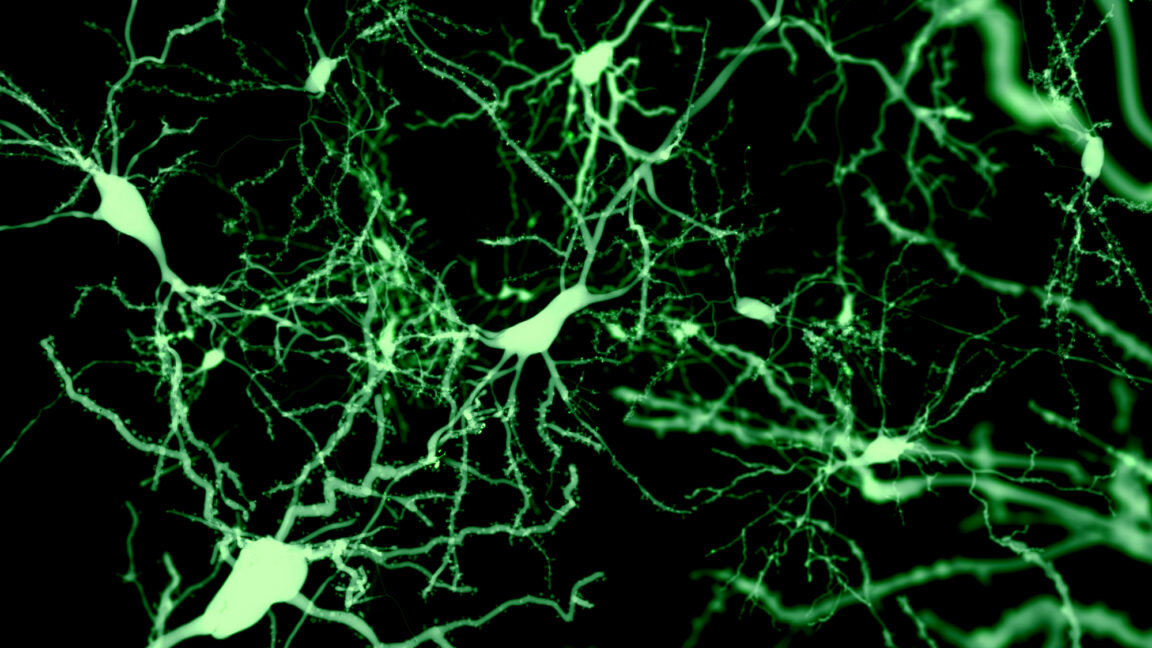
Finding the cells that put our brain to sleep

For a long time, sleep research has treated the cerebral cortex as a passive follower reacting to signals from the deep brain. “Usually, sleep is associated with being controlled by subcortical regions,” said Geoffrey Terral, a neuroscientist at the Albert Einstein College of Medicine in New York.

The cortex is where the slow rhythms of deep sleep can be seen, but researchers assumed the signals that triggered them originated elsewhere. In a recent Nature study, Terral and Renata Batista-Brito, who runs the lab, report a population of cortical cells that challenges that assumption.

These cortical cells make up only around one percent of the cortex's inhibitory neurons, and switching them on in a mouse puts the animal to sleep. “What our work shows is that the cortex can not only see this rhythm but also initiate it by itself, and this is sufficient to promote sleep,” Terral said.

Read full article

Comments

© JUAN GAERTNER/SCIENCE PHOTO LIBRARY

US government website used Chinese model the FBI called "malicious"

On Wednesday, US government officials removed a Chinese AI search tool that was briefly deployed on the Federal Register website, Reuters reported.

The change came after social media users noticed an apparent contradiction: The National Archives was using one of Alibaba’s Qwen AI models, even as top US law enforcement claimed that such models illegally copy US frontier models. Earlier this month, the Federal Bureau of Investigation (FBI) named Alibaba among six leading Chinese firms allegedly conducting “industrial-scale distillation” that the agency says is helping America’s biggest competitor cut costs and development time in the race for global AI leadership.

It’s unclear when exactly the National Archives, which runs the Federal Register website, began offering visitors the option to use a Qwen model to search public comments on proposed regulations. So far, the independent agency tasked with increasing public access to federal government documents has not commented on the removal and did not respond to Ars’ request for comment. The White House and the FBI have also not commented.

Read full article

Comments

© NurPhoto / Contributor | NurPhoto

Meet the winner of Nikon's Small World in Motion video contest

Abnormal beating of airway cilia from a child with Primary Ciliary Dyskinesia, a genetic disorder affecting respiratory function. Credit: Ning Xu, Tsinghua University

A Chinese optical engineer is the winner of this year's Small World in Motion competition, sponsored by Nikon. Ning Xu of Tsinghua University in Beijing beat out 346 other video entries from 40 different countries with his super-resolution video (above) of the abnormal beating of cilia in the airways of a child with a rare genetic respiratory disorder.

Founded in 2011, the Nikon Small World in Motion competition is a spinoff of the company's Small World Photomicrography Competition, which has been around since 1974. Both are meant "to showcase the beauty and complexity of things seen through the light microscope"—one through still photographs, the other through photovideography, taking advantage of all the technological advances that now allow users to make movies or time-lapse images through the microscope.

Primary ciliary dyskinesia (PCD) is a genetic disorder that adversely affects the tiny hairlike structures that line the lungs, among other areas. Their wavelike motion helps move around germs, mucus, dust, and other irritants so the body can dispel them via coughing or sneezing. In people born with PCD, there is something wrong with those cilia, so those irritants build up, causing respiratory infections, among other complications. The cilia might be the wrong size, the wrong shape, or missing altogether. They might move abnormally or not move at all.

Read full article

Comments

© Ning Xu, Tsinghua University

Researchers used Claude to hack OpenAI

Cyber researchers broke into OpenAI using its key rival Anthropic’s software, highlighting vulnerabilities in the ChatGPT maker’s security as leading AI companies face mounting scrutiny over safety.

A small cyber security group gained access to an OpenAI employee’s ChatGPT account, which permitted them to read private software information and suggest changes.

The researchers had been given access to an Anthropic tool specifically designed for security professionals, and were paid for the work as part of a program to find vulnerabilities before they could be exploited by bad actors.

Read full article

Comments

© Leon Neal/Getty Images

Rocket Report: China wants a Raptor 3 engine; SpaceX set for big Starship test

Welcome to Edition 9.11 of the Rocket Report! The most interesting story of the week, in our view, is a deep dive by Stephen Clark, linked below, into the dwindling fortunes of United Launch Alliance. As recently as a decade ago, the launch company, co-owned by Boeing and Lockheed Martin, could claim dominance over the US industry. But those glory days are fading fast. So what's next for a company that is tied to an expendable rocket?

As always, we welcome reader submissions, and if you don't want to miss an issue, please subscribe using the box below (the form will not appear on AMP-enabled versions of the site). Each report will include information on small-, medium-, and heavy-lift rockets as well as a quick look ahead at the next three launches on the calendar.

Avio seeks to cash in on Falcon 9 retreat. Italian launch services provider Avio has seen an influx of customers who were unable to secure launch opportunities with SpaceX, European Spaceflight reports. “I can tell you SpaceX has already gone captive because we have a whole bunch of customers coming to us and saying, 'Oh my God, can you fly us?'” Avio CEO Giulio Ranzo said during the company’s September 10 earnings call. In recent months, SpaceX told multiple prospective customers that it was no longer accepting new orders for commercial Falcon 9 launches.

Read full article

Comments

© ESA/S. Corvaja

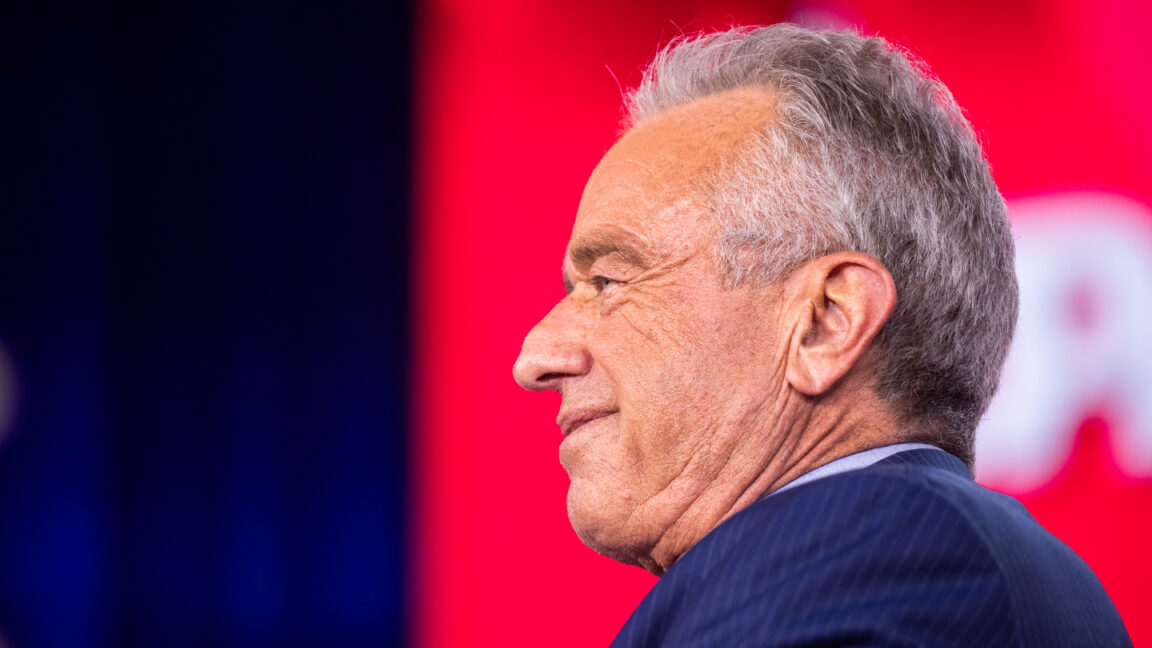
RFK Jr. names 8 new members to influential preventive medicine task force

Anti-vaccine Health Secretary Robert F. Kennedy Jr. announced the names of eight new members of a 16-person federal task force intended to make scientifically independent, evidence-based recommendations on an array of preventive medicine services for Americans—from depression screening to statin use, colonoscopies, and mammograms.

Recommendations from the panel—the US Preventive Services Task Force (USPSTF)—don't simply provide guidance for Americans; they also determine access. The USPSTF is supposed to use a rigorous, transparent framework for evaluating evidence and sets graded recommendations on an A to D scale. Health insurance providers are required to cover, at no cost, all preventive services that are given recommendations of an A or B grade.

Kennedy has sidelined the USPSTF for more than a year, canceling its meetings and refusing to appoint new members as terms expired and members left. In May, Kennedy also fired two leaders, sparking outcry and exacerbating fears that he would corrupt the nonpartisan independent panel by stacking it with unqualified ideological allies—which he did with an influence vaccine advisory committee at the Centers for Disease Control and Prevention.

Read full article

Comments

© Getty | Leandro Lozada

Small AI models let drones autonomously identify and attack battlefield targets

As European militaries adapt to the use of AI and drones in modern warfare, a NATO-backed startup is helping to deploy AI-driven target detection and selection that can run on small drones for surveillance and attack missions.

The company, Scaleout Systems, was originally founded by researchers from Uppsala University in Sweden in 2018, and initially focused on training and deploying machine learning models directly on the hardware available in commercial trucks and other vehicles. But once Russia launched its full-scale invasion of Ukraine in 2022, the company pivoted toward defense applications.

“With the war in Ukraine and a shifting world, we realized that this technology can be very important to operationalize edge data and sensor data for machine learning to make sure that NATO allies have found that strategic advantage,” Andreas Hellander, cofounder and CEO of Scaleout Systems, told Ars.

Read full article

Comments

© Scaleout Systems

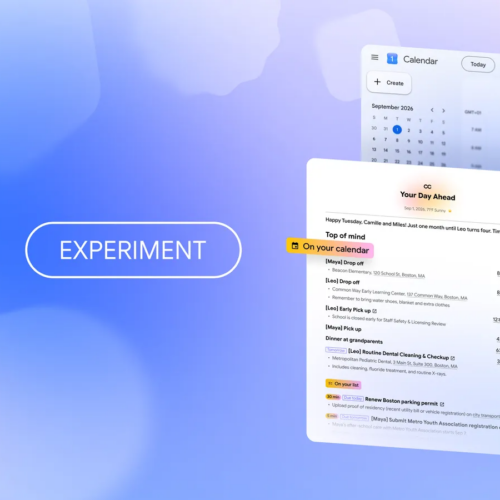
Google announces new experimental "CC" AI agent for families

Google's AI models may not be in the lead by most measures right now, but the company does have one key advantage: your data. If you're deep in the Google ecosystem, Gemini models have a lot of context on you already. Google's latest Google Labs experiment, known as CC, aims to expand that kind of customization to the whole family.

CC is an evolution of something that Google announced in 2025. The original CC eventually became Gemini's Daily Brief, which churns through the data in your Google account to offer daily action items and suggestions. The new CC has a similar goal, but it's designed to be a shared resource for up to six users in a family.

Google says that CC has its own Google account, allowing each family member to interact with it (or not) as they choose. For example, CC only sees emails from its connected users if they are explicitly shared. You can do that by designating certain addresses as always available to the agent—something like school scheduling emails. You can also send content to CC via email or Google Chat. The agent can even monitor a shared Google Drive folder, into which you can dump invitations, documents, and other content.

Read full article

Comments

© Google

Microsoft exec called AI scraping the “largest theft of labor in human history”

For years, Microsoft and OpenAI have fought to keep certain information out of the public eye in their fight with news organizations that have accused the AI firms of teaming up to violate copyright laws by stealing tons of news content to train AI.

However, now the details that should never have been marked confidential are starting to leak. In a motion for summary judgment that was unsealed Thursday from news plaintiffs led by The New York Times, internal documents are exposed that news groups alleged show exactly how Microsoft and OpenAI viewed the threat to news before unleashing new AI products like ChatGPT and Copilot.

Perhaps most explosively, Microsoft Director of Applied Science Brent Hecht repeatedly warned in documents that scraping news for AI training was “an astonishing theft of unprecedented proportions,” calling it perhaps the “largest theft of labor in human history,” news orgs said. In another document, Hecht contradicted Microsoft and OpenAI’s argument that training AI on news content is fair use, suggesting that the plan to widely scrape news made “a complete mockery of the idea of ‘fair use.’”

Read full article

Comments

© Charles Taylor | iStock / Getty Images Plus

Republican bill would order ISPs, DNS providers, and VPNs to block piracy sites

US Rep. Darrell Issa (R-Calif.) has proposed a law that would require Internet service providers and other network operators to block foreign piracy websites. Issa's bill would help copyright holders obtain judicial blocking orders to be served to ISPs, domain name resolution services, and virtual private networks.

Issa, who is retiring from the House at the end of this year, is the latest in a string of Republican and Democratic lawmakers to propose a site-blocking regime that's been sought by the Motion Picture Association (MPA). He submitted the bill this week, after indicating in a June 30 hearing that he planned to introduce site-blocking legislation.

"While millions of listings for copyright-infringing content are removed every day under [the] notice-and-takedown process set forth in the Digital Millennium Copyright Act, right-holders have raised concerns with the speed," Issa said at the hearing. Issa asked, "Can we do it at the speed of sound? Can we do it at the speed of light? More importantly, in a 45-minute or sometimes a fraction of that live sports broadcast, can we do it soon enough to make it no longer profitable for those who pop up and sell their clandestine wares?"

Read full article

Comments

© Getty Images | Yuichiro Chino
LLMs respond differently to harmful prompts when AI watermarking is used

In response to a new European Union law, AI platforms are implementing new schemes for watermarking the content they generate. Anthropic recently disclosed its future Claude models will use SynthID-Text, an approach Google created and released as open source. It uses a secret key that subtly changes the process a model uses for choosing the next word in a sentence. Whereas a top next word choice might be “cloudy,” the key might change it to “overcast.” Anyone who knows the key can determine if it was generated by the platform using it.

New research shows that SynthID-Text can change not just word selection but also the tools a model invokes and the chances it will adhere to or disregard safety guardrails it has been trained to follow. The threat can become greater in the face of an adversarial prompt, in which an attacker attempts to cause a model to carry out a harmful action, such as revealing a password or other sensitive information. Instructions that normally wouldn’t be followed will, in some cases, be performed once the watermarking is deployed. The finding underscores the need for developers to thoroughly test how their LLMs and agents behave when watermarking is in place.

Changing safety behavior

“As compared to the same models without watermarking, it is definitely going to change their behavior, especially when we place it under adversarial conditions, or we make these models call tools when they’re powering an agent,” Andrea Siposova, an AI security researcher at Lasso Security, told Ars. “Watermarking is made to not be perceptible to a reader, but we know that when we are changing anything about what the model is generating, it is going to cause some tradeoffs, it’s going to show up somewhere.”

Read full article

Comments

© Getty Images
IV drips used for "detoxification" actually filled with toxins; dozens poisoned

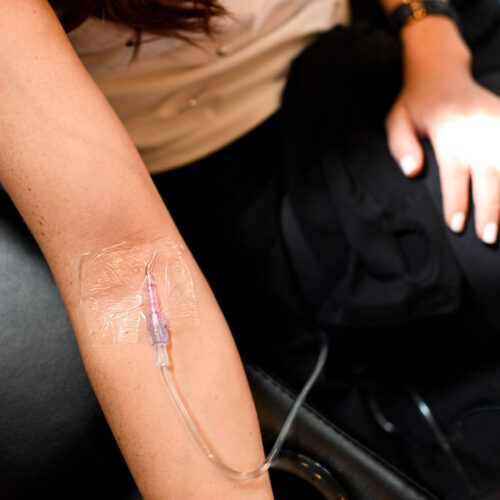
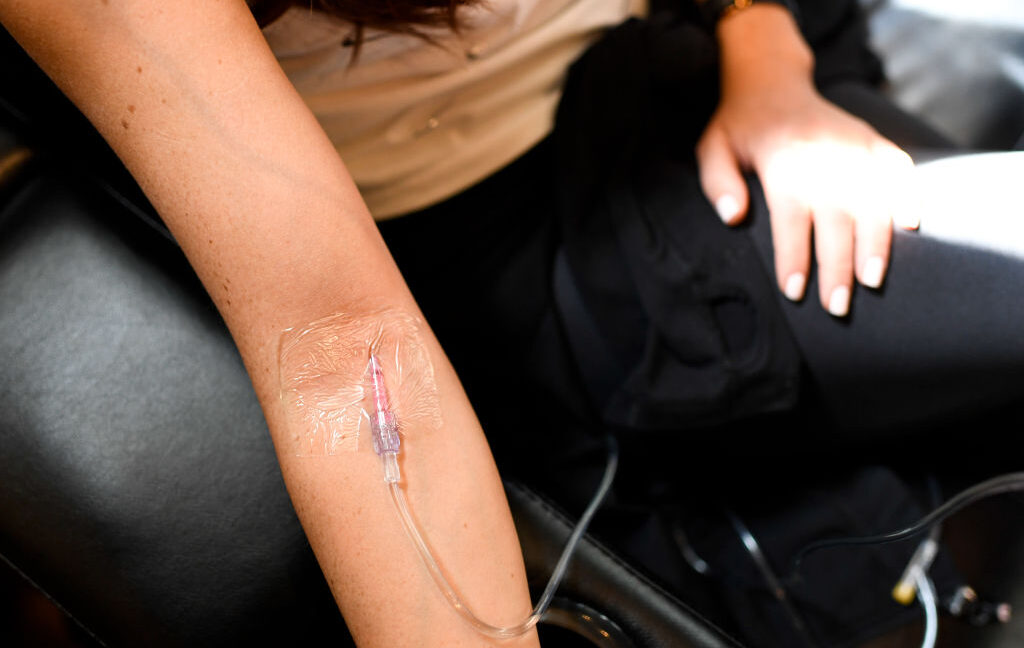
Over 30 people across four states have been poisoned by bacterial toxins after getting intravenous (IV) drips at wellness clinics, according to the Centers for Disease Control and Prevention and the Food and Drug Administration.

The people had received IV drips containing glutathione, which is sold—without evidence—for purposes like detoxification, immune support, increased energy, and skin brightening. Glutathione is an antioxidant that's found naturally in the body. It has been studied as a potential treatment for various ailments, but so far there is little to no evidence-backed use for the tripeptide; there are no FDA-approved glutathione products in the US.

Nevertheless, it's commonly used as a supplement and promoted as having various benefits. It's most often used in supplement pills, taken by mouth. But popular wellness clinics offering IV drips of vitamins and other supplements have also been offering glutathione. According to the CDC and FDA, the problem is that specialty drug makers, called compounding pharmacies, are making these IV drips using glutathione powders that are graded for dietary supplements taken orally. This grading is critically different from that of purified products graded for use in sterile injectable drugs.

Read full article

Comments

© Getty | AAron Ontiveroz

2026 Hyundai Ioniq 5: Here's what we still like, here's what annoys us

When we first drove the Hyundai Ioniq 5 at the end of 2021, it didn’t take much exposure to the angular electric vehicle to find much about it appealing. Back then, an 800 V architecture had only really been seen in expensive high-end EVs from Porsche, but here was a mainstream model with that same technology—and even faster fast-charging, taking just 18 minutes to go from 10–80 percent. The retro looks didn’t hurt either, channeling the boxy hatches styled by Giorgetto Giugiaro in the 1970s and '80s. But five years is a long time in the car world, and the compact electric crossover segment is far more competitive than it was when the Ioniq 5 debuted. We figured it was worth spending some more time with one to see how it still stacks up.

Although the Ioniq 5 range starts at $35,000 for the standard range model, our test car was a 2026 Ioniq 5 AWD Limited, which has an 84 kWh battery pack—part of the lifecycle refresh in early 2025 that also swapped in a NACS (J3400) charge port in place of the CCS1 port you’d find on earlier cars. Among the other additions that arrived as part of the 2025 refresh was a rear windshield wiper, which was sorely needed at launch.

This range-topping trim starts at $45,075, with an extra $3,900 for the addition of the front electric motor that gives the AWD version a combined output of 320 hp (239 kW) and 446 lb-ft (605 Nm). The added traction of AWD (when you have grip) is desired by many, but you do trade something for it: efficiency. The AWD version has an EPA range of 269 miles (432 km) versus 318 miles (512 km) for the rear-wheel drive variant.

Read full article

Comments

© Jonathan Gitlin

Covert uploads and megalomania: OpenAI details new "misaligned" agent incidents

For a while now, the issue of "AI alignment" (i.e., how well an AI model's actions line up with the intentions of its creator and/or user) has been a core concern and topic of discussion among AI safety researchers. Since OpenAI's disclosure of the infamous Hugging Face hacking incident in July, the concept of "AI alignment" has itself broken containment and increasingly become a mounting concern and subject of conversation among the general public.

Perhaps in recognition of that, OpenAI committed this week to a new framework for disclosing "instances of model misalignment at OpenAI," including six examples of "unexpected or concerning model behavior" observed within the company in the past six months. The company said that publishing details of these incidents will hopefully "[allow] others to investigate the same problems, test our explanations, and improve mitigations."

Do as I say, not as you do

Among OpenAI's newly disclosed "misalignment" reports this week, the one that most resembled a sci-fi story about a rogue AI trying to break free involved an instance of "self-generated prompt injections." In attempting to scan a library catalog for examples from a "best books" list, the model perplexingly used its "compaction" function (where it summarizes data and findings for later retrieval) with megalomaniacal instructions such as:

Read full article

Comments

© Getty Images

EPA immediately sued over plans to repeal climate rules for power plants

Days after finalizing a rule that would eliminate climate rules for power plants, the Environmental Protection Agency (EPA) was sued by groups who say the EPA’s repeal was shockingly short-sighted and risked leaving the country’s single largest source of industrial climate pollution unchecked.

On Thursday, the American Lung Association, the American Public Health Association (APHA), the Clean Air Council, Clean Wisconsin, the Environmental Defense Fund, and the Natural Resources Defense Council (NRDC) filed a petition requesting that the US Court of Appeals for the DC Circuit review if the EPA’s action conflicts with the Clean Air Act.

“Clean air is a basic human right,” APHA CEO Georges C. Benjamin said.

Read full article

Comments

© Jon Cherry / Stringer | Getty Images News


❌