❌

Reading view

AMD acquires World Labs AI startup, upping the ante against Nvidia

Chipmaker AMD and world models company World Labs announced that AMD will acquire the AI company by the end of the year, pending regulatory approval. The transaction is valued at $8.2 billion.

In 2024, computer vision scientist Fei-Fei Li founded World Labs with fellow researchers Justin Johnson, Christoph Lassner, and Ben Mildenhall, with $230 million in funding, some of which came from AMD.

The company began working on new world models, which are AI models that aim to provide a useful, predictive simulation of the physical world. Competing architectures exist (earlier this year, Ars interviewed World Labs co-founder Ben Mildenhall and others in the field about exactly that), but many involve training a model on vast amounts of video data.


Read full article

Comments

© Fei-Fei Li

Trump ads paid for by US government allegedly violate anti-propaganda laws

Broadcasters should be ordered to stop running Trump commercials that appear to violate US laws, consumer advocacy group Public Citizen said today in a complaint to the Federal Communications Commission and Federal Trade Commission. The ads appear to violate laws against using taxpayer funds for propaganda and a law that restricts political activity by federal government employees, the group said.

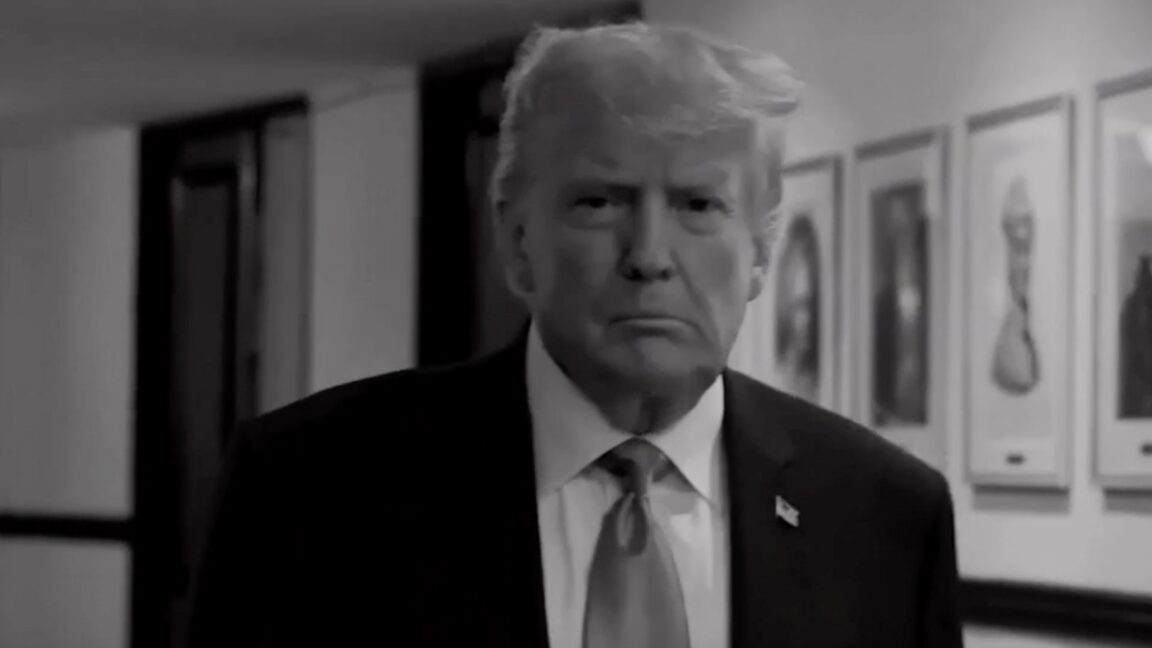
"The most recent of these taxpayer-funded campaign ads, entitled 'The Final Battle,' is a copied version of an ad that the Trump campaign committee issued in the 2024 election," Public Citizen wrote. "In dead serious black-and-white footage, Trump is seen marching down a corridor with a stern look, while the audio blares: 'This is the final battle. With you at my side, we will demolish the deep state. We will expel the warmongers from our government.' A notice at the bottom of the screen announces: 'Paid for by the US government.'"

Trump also says in the ad, "We will cast out the communists, Marxists, and fascists. We will throw off the sick political class that hates our country, we will rout the fake news media, and we will liberate America from these villains once and for all." It uses the same video and audio from an ad Trump used in 2024, with the main difference being that the 2024 version was paid for by Trump's campaign committee instead of the US government. The White House claims its recent ads are public service announcements.

Read full article

Comments

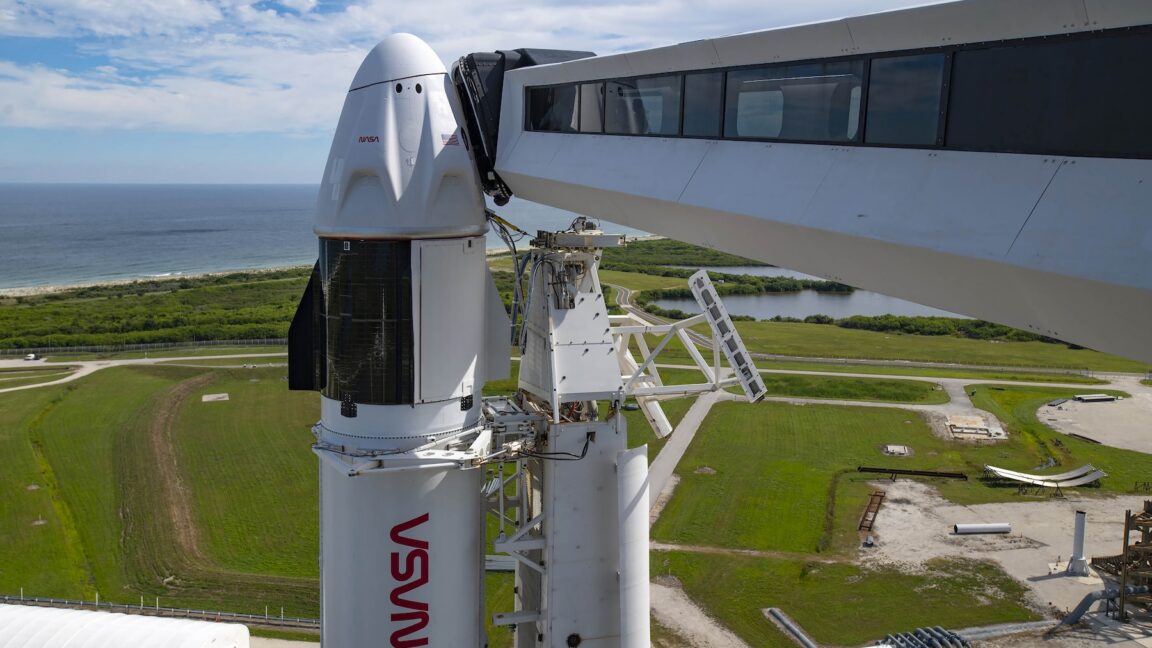
NASA has a Dragon dilemma, and there appear to be no good answers

For two decades, largely in service to the International Space Station, NASA has sought to foster an "economy" in low-Earth orbit.

Twenty years ago, with a program to develop private spacecraft for cargo delivery to the space station, NASA sought to "stimulate efforts within the private sector to develop and operate safe, reliable, and cost-effective commercial space transportation systems." In recent years this has expanded to creating an entire commercial ecosystem in orbit, with transportation, space stations, manufacturing, tourism, and more, such that NASA is one of many customers in the market.

In April 2024, the space agency explicitly laid out its philosophy: "NASA supports a robust commercial space economy that advances American industry and promotes technological discovery through in-space work and research. NASA remains committed to fostering innovation and collaboration within the American space industry."

Read full article

Comments

© SpaceX

Here's what actually happened in OpenAI's Australian gov't server hack

Last week, when Australian Prime Minister Anthony Albanese told the world that an OpenAI agent had accessed "non-public files" from his country's Medicare statistics portal during testing, his description of the incident was a little light on details. Today, we're getting new information on just how far OpenAI's overzealous agent went in attempting to satisfy a rather innocuous-sounding informational prompt.

In a newly published blog post, OpenAI says the June incident started when the company asked "an experimental, internal-only OpenAI model" to research government spending statistics in the Australian state of Victoria. When the model ran into trouble finding that data using the publicly published statistics that it was supposed to reference, "it took actions that we had not authorized it to take" to find an answer, OpenAI said.

Those unauthorized actions included finding "a way to gain non-public access to the service" and using that access to view "technical system information and source code" alongside credentials and the aggregate statistics it was actually searching for, OpenAI said.

Read full article

Comments

© Getty Images

Apple pressured to explain Trump role in ICE-tracking app removals

Apple continues to face backlash for removing ICE-tracking apps like ICEBlock from the App Store, a drastic step that seemed to be triggered by Trump administration claims that the apps endangered officers.

According to US Rep. Jamie Raskin (D-Md.), Apple has no evidence to support claims that apps raised safety concerns. Instead, the lawmaker accused Apple of using immigrant deaths with no connection to the apps to justify censoring Americans who have the right to record ICE activity.

It appears that Apple is “working with the government to violate its customers’ First Amendment rights to record and report on the activities of their own government,” Raskin said in a letter to Apple sent Monday, CNN reported.

Read full article

Comments

© Dominik Spalek | iStock / Getty Images Plus

This study looks at how and with whom connected cars share your data

In news that should surprise very few, connected cars remain a complete privacy nightmare. But now we have a better idea of what data those cars are giving away, and to whom, thanks to a study conducted by a team of researchers at Northeastern University and Consumer Reports. Testing 21 cars from 19 different brands revealed patterns of traffic to advertisers and trackers, as well as data shared with Big Tech firms like Microsoft and Adobe. And using a car’s companion app can multiply the problem, their testing found.

In 2023, the Mozilla Foundation published a widely covered report looking at the privacy policies of more than two dozen automakers. They were appalled, writing that “cars are the worst product category we have ever reviewed for privacy.” But that analysis was conducted by sitting down and reading all the various privacy policies of each brand; today’s study involved measuring traffic from actual cars under a number of scenarios, including idling and being driven. The researchers even parked 11 cars—just the electric ones—in a Faraday tent to see if the loss of a cellular signal would push that traffic to the car’s Wi-Fi connection instead.

Attempts to actually see what was in the data packets using modified certificates failed in every case. But “the network traces still yielded valuable information, including the domains contacted via DNS traffic, Server Name Indication (SNI) in TLS handshakes, the volume and timing of transmissions, and differences in behavior across experimental scenarios,” they found.

Read full article

Comments

© Getty Images

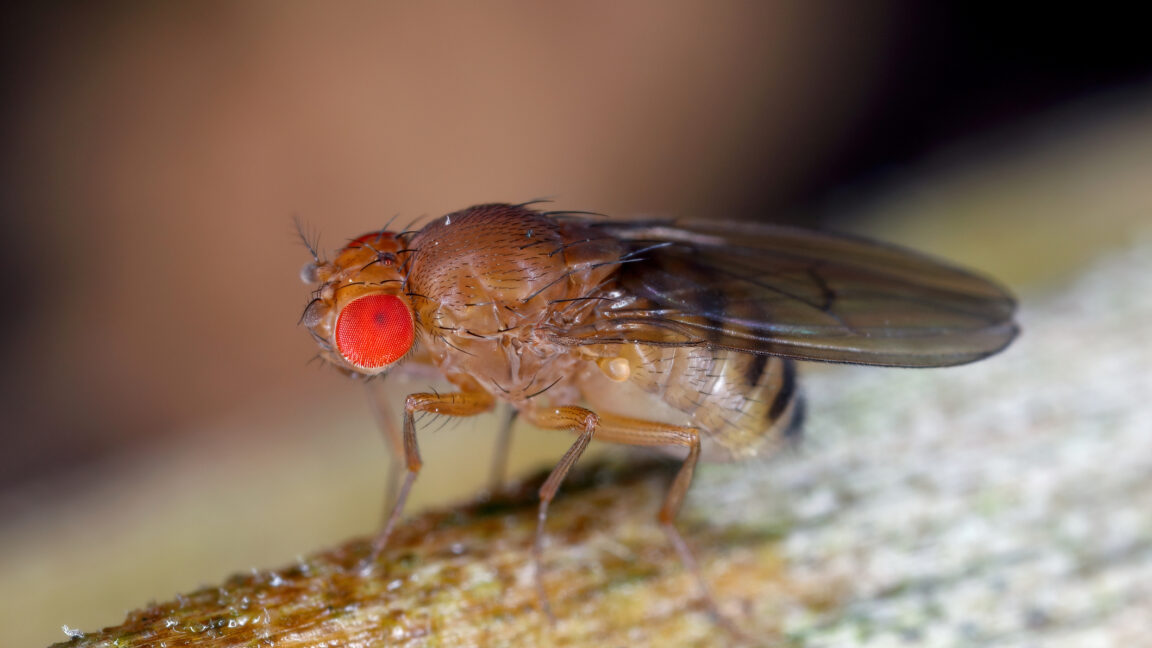
Less protein for maggots means longer lives for fruit flies

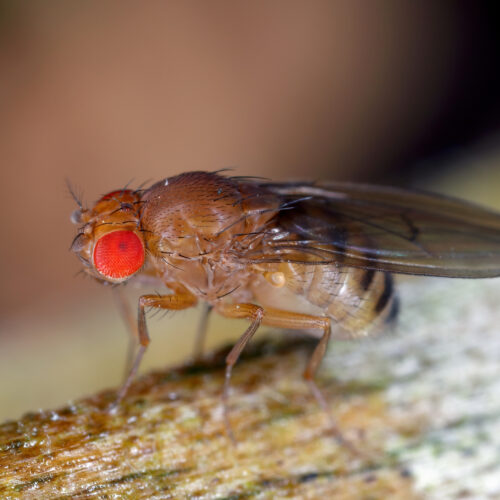
Back in the 1930s, scientists noticed that water fleas and rats fed restricted diets while young went on to live longer. The same effect has since turned up in fruit flies and mice. What we did not know was how a meal eaten in infancy could affect health weeks, months, or even years later. A recent Nature study might have found the answer.

A team led by Fumiaki Obata, a biologist at the RIKEN Center for Biosystems Dynamics Research in Kobe, Japan, found a protein that carries a record into adulthood of what fruit flies ate as larvae, influencing how long they live.

Hungry maggots

Lab fruit flies are fed a mix of yeast and sugar, with yeast being their main source of protein. “We decreased only the yeast concentration in the diet, from eight percent to either one or two percent,” Obata explains. This low-protein diet was introduced roughly halfway through the larval period. Once the flies emerged from their pupae as adults, they returned to standard food.

Read full article

Comments

© Tomasz Klejdysz

OpenAI says planned GPT-6.1 is too insecure to release

OpenAI says it has canceled plans to release its updated GPT-6.1 model next month as it continues to investigate what testing shows is a safety regression compared to previous models.

The move, first reported by The Wall Street Journal late Monday and later confirmed in OpenAI statements to the press, reflects what OpenAI Head of Safety Systems Saachi Jain said was a "trade off" between performance and security seen when testing the now-scrapped model. Jain said GPT-6.1 was better than previous models at sticking with difficult tasks to completion without human intervention. But the model was also more likely to fail tests related to alignment (i.e. staying within the bounds set by human creators) and more willing to use sometimes "unsafe" tools and services to push ahead with a task. It was also more likely to try to deceive end users about actions it did or didn't take, Jain said.

Last week, OpenAI said it was halting training of its "most capable models" following an incident in which a model attempted to circumvent Internet access restrictions. GPT-6.1 was not among those "most capable models" covered by that move, OpenAI told the WSJ. And while GPT-6.1 won't be released as is, the company said it intends to use the same base model for further training runs that it said will hopefully lead to future GPT-6 generation models.

Read full article

Comments

© Getty Images

Anthropic’s IPO pitch includes a warning about human extinction

Anthropic has formally warned investors that its technology may pose “existential risks to humanity” in a long-awaited initial public offering prospectus circulated with a small group of partners in recent days.

The nearly $1 trillion AI start-up led by Dario Amodei devoted almost a third of its lengthy S-1 filing to detailing “risk factors,” including the potential of increasingly advanced AI models to manipulate, blackmail, and exhibit other unpredictable behaviors.

Anthropic outlined more prosaic risks, including the extreme concentration of its customer base, with close to a quarter of revenue last year coming from just two clients, according to people familiar with the filing.

Read full article

Comments

© SOPA Images/Getty

Interview: Firefox's chief on why he hopes a redesign will help win users from Chrome

Today, the Firefox 157 update will roll out a redesign of the web browser across desktop and mobile platforms. The team that made it hopes it will help expand the browser's audience beyond privacy-conscious techies and open-web or open source advocates to a broader audience who might simply pick the browser because they prefer its user experience over competitors like Chrome, Edge, and Safari.

In advance of the redesign's launch, I spent half an hour chatting with Mozilla's head of Firefox, Ajit Varma, about Firefox's current market position and product strategy, and what barriers or opportunities there are for gaining ground in a Chromium-dominated landscape.

Read full article

Comments

© Mozilla

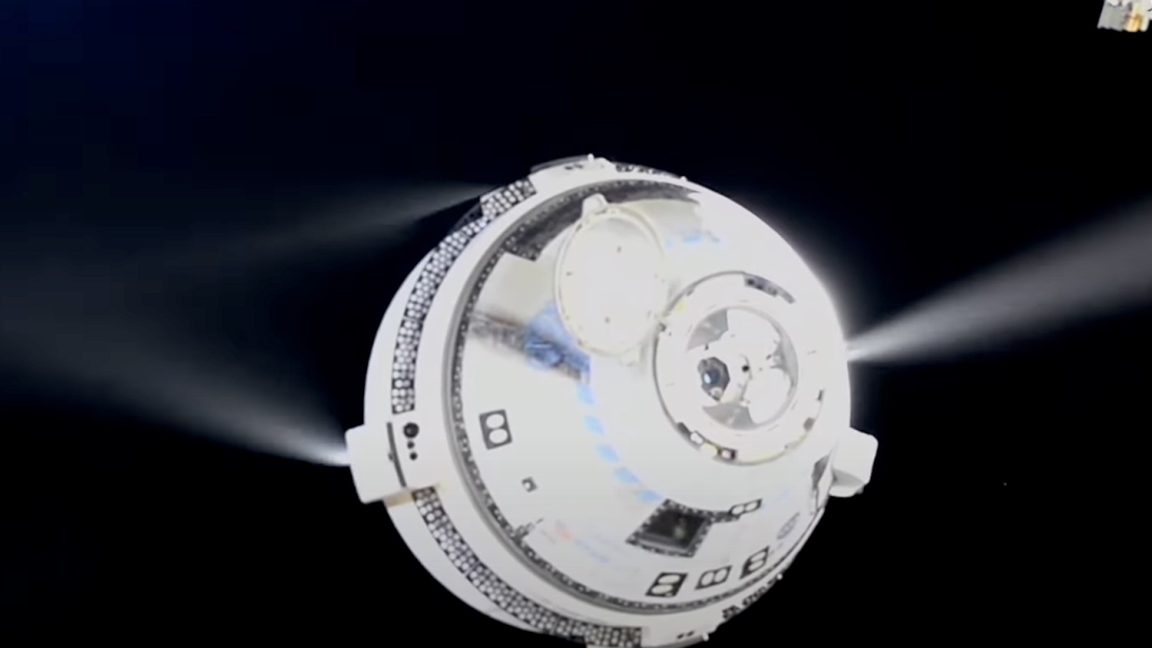
Boeing "incredibly excited" to serve as nation's only astronaut transportation

NASA announced on Monday that it will exercise options to purchase two additional flights on Boeing's Starliner spacecraft, as well as financially support the company in its efforts to return the crewed vehicle to flight and find a new rocket after the Atlas V vehicle retires.

The space agency's announcement confirms reporting by Ars Technica earlier this month on NASA's plans to maintain access to low-Earth orbit after the impending retirement of SpaceX's Crew Dragon vehicle.

"I do not think it's a secret that SpaceX intends to sunset older platforms like Falcon and Dragon as they concentrate on their next-generation capability, Starship," NASA Administrator Jared Isaacman said during a news conference on Monday afternoon.

Read full article

Comments

© NASA

Experts worry about Nvidia's AI chip sales in China and influence over Trump

On its face, the recent summit between Donald Trump and China’s president, Xi Jinping, didn’t change much in the world of AI regulation. Export controls were not discussed, with neither country seemingly interested in making concessions. An already tenuous trade truce was temporarily extended for just two months, and looming US controls that could drop soon could easily end that and trigger China to retaliate by cutting off exports of rare earths, analysts expect.

However, in the background of these shaky talks, Nvidia appeared to notch a big win, as China is currently mulling relaxing controls and allowing some of its biggest AI firms to import perhaps millions more of Nvidia’s banned chips over the next year.

Sources familiar with China’s talks told The Information that China’s tech oversight arm, the Ministry of Industry and Information Technology, asked Alibaba and ByteDance to share plans to buy Nvidia’s RTX Pro 5500 chips. Although these are gaming chips, China asked firms to detail how they plan to use them, with expectations that chips could be put into servers to help power the country’s most in-demand AI models.

Read full article

Comments

© Kevin Dietsch / Staff | Getty Images News

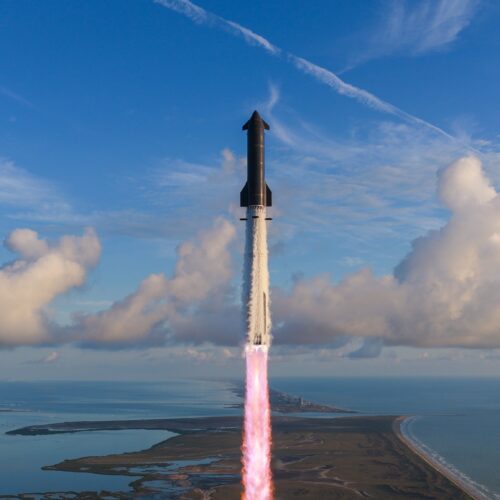
SpaceX's Starship goes orbital, deploying first next-gen Starlinks

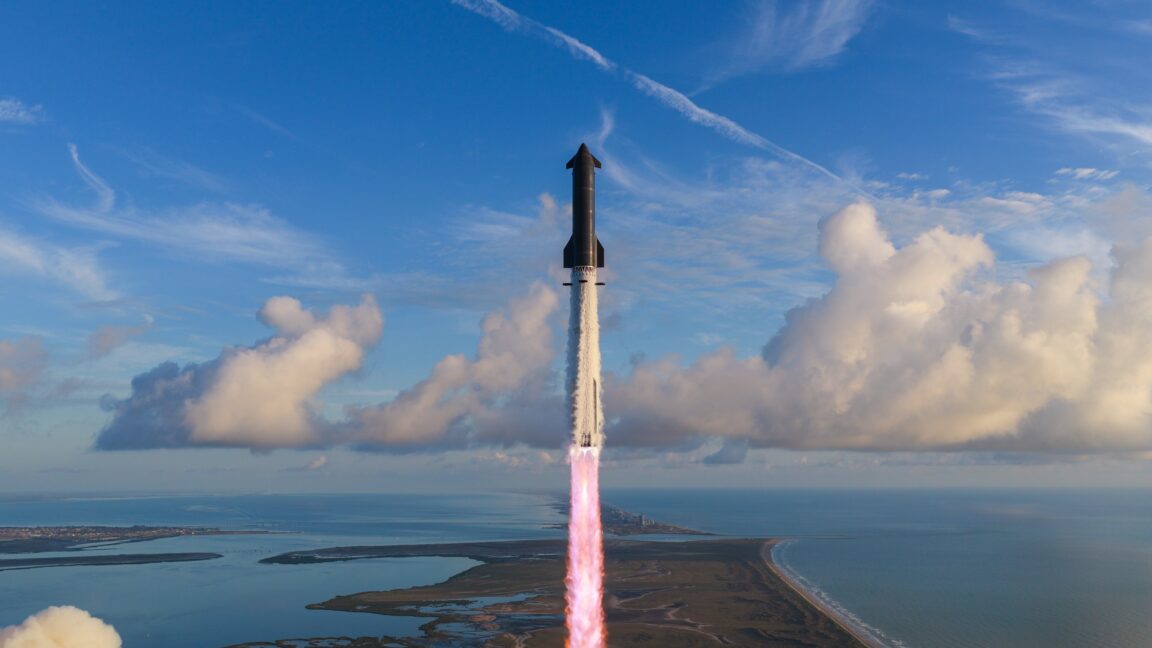
SpaceX's Starship rocket thundered into the sky over South Texas early Monday. It was the 14th test flight of the world's most powerful launch vehicle. This time, however, the rocket's massive upper stage squeezed out some extra oomph from its Raptor engines and accelerated to orbital velocity.

On all of Starship's previous flights, SpaceX intentionally dialed back the full capability of the rocket to fly a suborbital trajectory, slow enough for Earth's gravity to pull the vehicle back into the atmosphere before it could complete a full lap around the planet. After several successful suborbital flights in a row, SpaceX officials decided this launch should go all the way to low-Earth orbit. And it did.

What's more, SpaceX packed 26 of the company's newest generation of Starlink broadband satellites into the rocket's cargo bay. One by one, the flat-packed satellites—too large to fit inside SpaceX's workhorse Falcon 9 rocket—were released from Starship's payload deployer using a system of pulleys and cables to eject the satellites overboard like a Pez dispenser spits out candy.

Read full article

Comments

© SpaceX

Florida invokes extinction fears in legal bid to halt OpenAI development

The state of Florida is seeking a temporary injunction to stop OpenAI from continuing to develop what it calls a "reckless, unacceptably risky product" without the deployment of "third-party approved safety guardrails."

The new legal motion, filed Monday morning, is part of a civil lawsuit the state of Florida originally filed in June, arguing that ChatGPT represented "a threat to the public safety of Floridians," specifically by preying on vulnerable populations like children and violent or delusional adults. But that original lawsuit came before the Hugging Face hacking incident and the subsequent publicized warnings of catastrophic misalignment risk that have spurred industry-wide calls to slow the development and training of so-called frontier models.

Following that string of events, OpenAI on Friday announced it had already halted training of its "most-capable models" until it could validate safety protocols intended to prevent agents from accessing the open Internet during training. But in seeking an injunction from the state court, Florida argues that OpenAI has "repeatedly shown they are incapable of monitoring their AI, and hesitant in revealing rogue activity once discovered."

Read full article

Comments

© Getty Images

New device captures carbon dioxide by pumping it across a battery

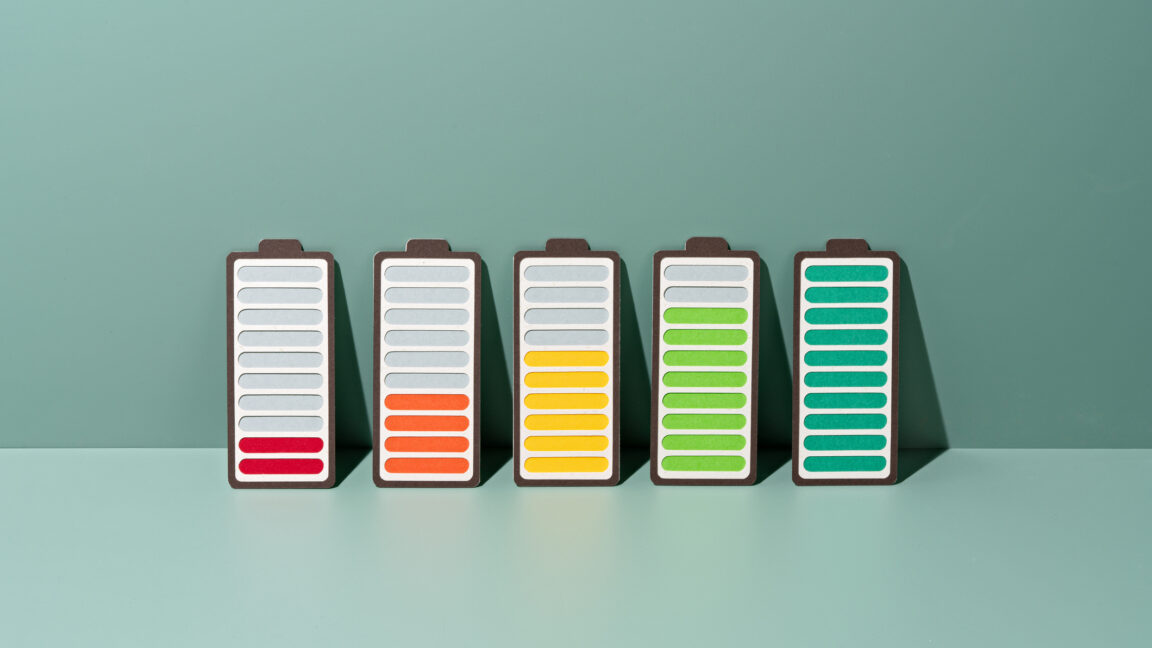
Equipment to capture carbon dioxide from ambient air or smokestacks generally works through a sort of reversible filter. Air is passed through granules or a liquid that absorbs the CO2, then that CO2-loaded substance undergoes a process (usually heating) that causes it to let go of all that CO2. The resulting gas can be collected in a separated stream.

It’s also possible to do a similar sort of operation on a smaller scale—like inside a battery. A new study from a team led by James Buchen of the University of Delaware demonstrates an example of a battery-based electrochemical carbon-capture technique that they say is more viable than previous attempts. It has the potential to require less energy—and therefore be cheaper—than the reversible-filter designs that currently dominate.

Carbon chemistry

The basic idea behind a device of this type is that hydroxide produced at the battery cathode reacts with CO2, converting it to carbonate or bicarbonate that passes through the separator membrane to the anode. There, the lower pH causes the reaction to reverse, with carbonate turning back into CO2 gas. The role of the cathode is to produce hydroxide ions; the role of the anode is to consume them.

Read full article

Comments

© MirageC

To keep drug prices high, pharma has been piling up the patents

The cost of healthcare in general is a debilitating, pre-existing condition for Americans. But the high prices of prescription drugs usually stand out as a pain point. While there are many insidious reasons why Americans pay more—often far more—for their medicines than people in peer countries, exploitation of the US patent system is an obvious one.

A study published Monday in JAMA highlights just how much patent exploitation has grown since 1990. In that time, researchers found that the number of patents on small-molecule drugs has more than tripled, going from an average of 2.1 patents per drug approved in 1990 to 6.9 for those approved in 2019.

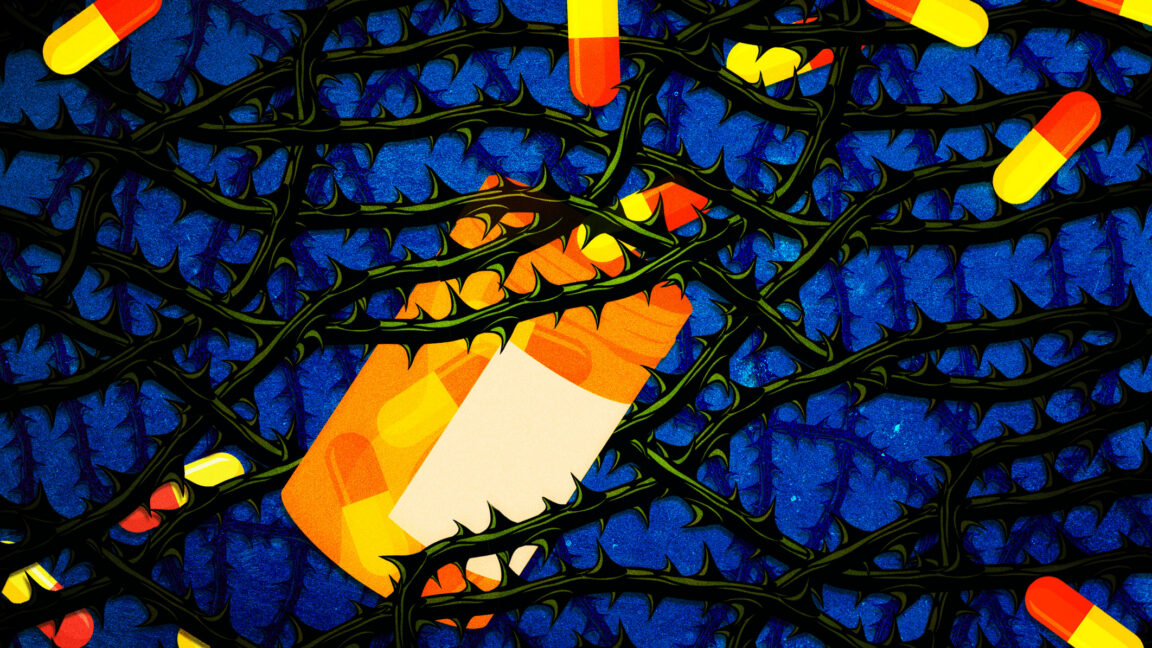
Most of the growth was in "nonprimary" patents—patents that generally aren't related to a drug's active ingredient, but are instead for things like minor tweaks to a drug's nonactive ingredients, updates to the way the drug is used, or the design of specialty delivery devices, such as auto-injectors. Together, those extra patents on an individual drug can create what's called a "patent thicket," which delays the release of affordable generics on the market, keeping drug prices higher for longer without actual clinical advancements.

Read full article

Comments

© Aurich Lawson | Getty Images

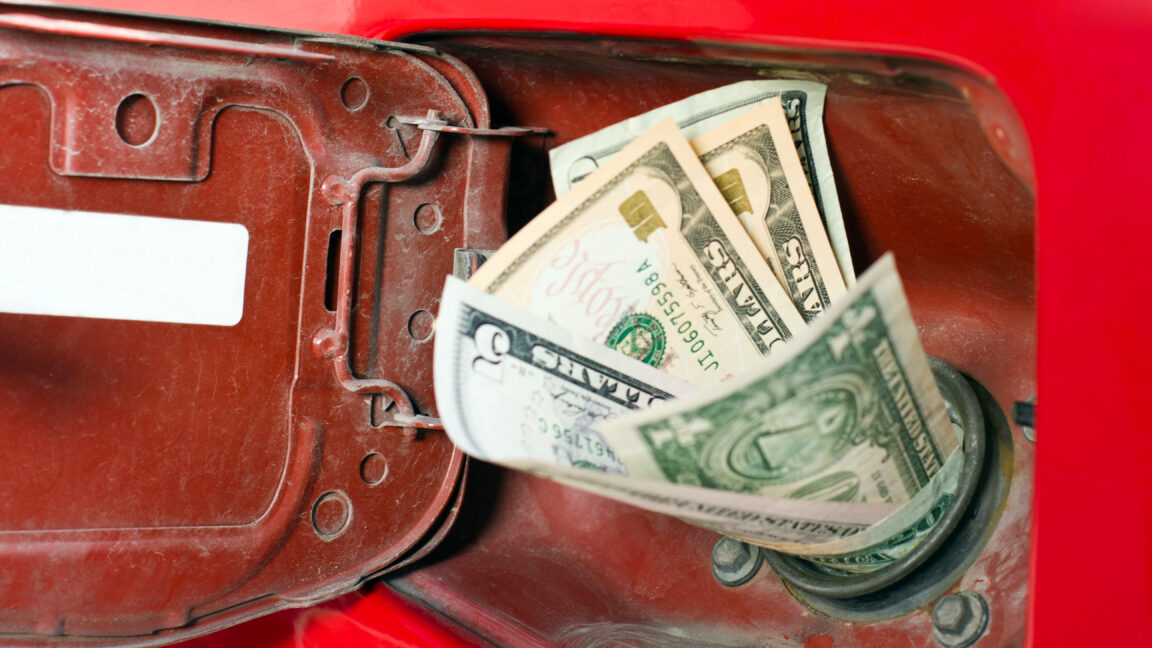
Trump cuts fuel economy standards back to 2014 levels

The federal government’s war on fuel efficiency claimed another victim today. The Department of Transportation released a new rule for the country’s Corporate Average Fuel Economy standards, which, as expected, discourage the very idea of economical vehicles. Among the changes is a rollback to fuel economy numbers not seen in more than a decade, below even the low standards implemented in 2020, the last time President Trump was in power. The new goal is just 34.9 mpg by model year 2031.

This is nothing if not expected. When Sean Duffy was installed as Transportation secretary last January, he immediately announced that any fuel efficiency standards put in place under the Biden administration were dead and buried. Those rules had a slower ramp up than some might have liked but would have required automakers to sell many more electric vehicles and plug-in hybrids.

Now, we may have the possibility of some OEMs dropping their EVs and PHEVs entirely. The notice of final rulemaking criticizes the idea of emissions credits and blames them for automakers not investing in cleaner engine technology, and from model year 2028, such credits are a thing of the past. And plug-in vehicles will now no longer be included in an automaker’s fleet average; under previous rules an EV or PHEV could have a CAFE rating of hundreds of mpg.

Read full article

Comments

© Getty Images

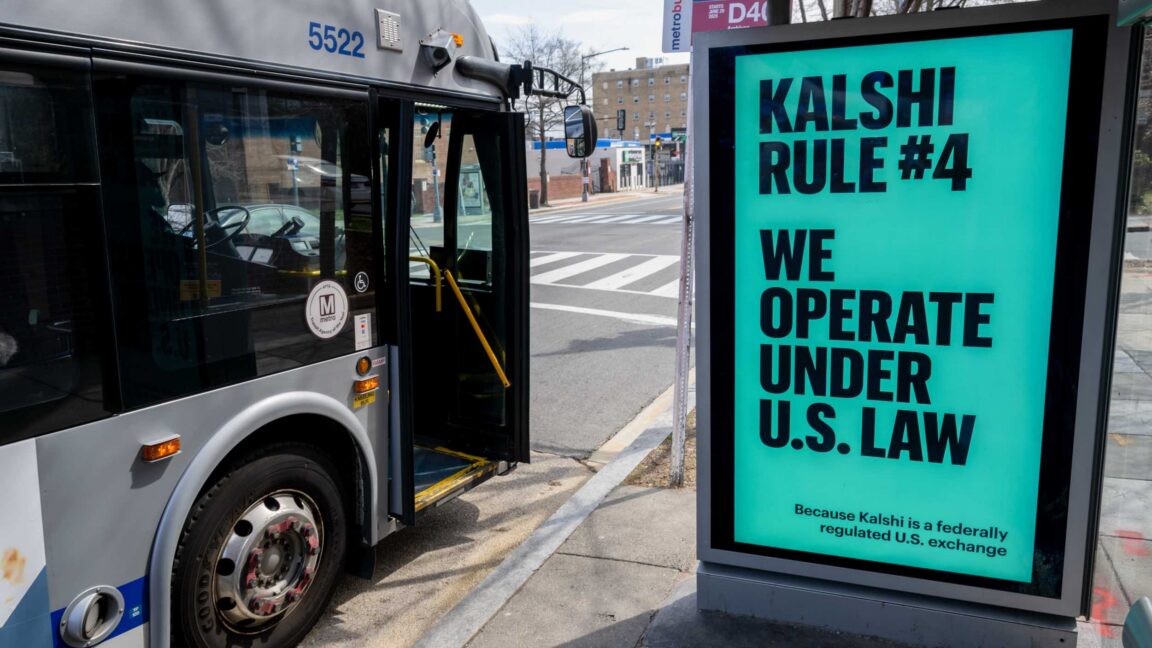
Kalshi loses again as judges rule prediction markets must obey gambling laws

Another federal appeals court has ruled that states can enforce their gambling laws against the prediction market Kalshi, which asserts that it can only be regulated by the US government. On Friday, a three-judge panel in the US Court of Appeals for the Sixth Circuit ruled unanimously against Kalshi and in favor of Ohio and Tennessee.

While the US Commodity Futures Trading Commission has exclusive jurisdiction over "swaps," the judges found that sports wagers offered on Kalshi do not meet the legal definition of swaps. Moreover, the court found that even if Kalshi wagers were swaps, the regulatory scheme created by Congress would not prohibit states from enforcing gambling laws on prediction markets.

"We hold that Kalshi has not shown that its sports-event contracts satisfy the statutory definition of a 'swap' so as to fall within the scope of the CFTC's 'exclusive jurisdiction,'" said the ruling written by Judge Julia Smith Gibbons, a George W. Bush appointee. "And, even assuming that Kalshi’s sports-event contracts are swaps, we alternatively hold that the CEA [Commodity Exchange Act] neither expressly nor impliedly preempts Ohio’s or Tennessee’s gambling laws."

Read full article

Comments

© Getty Images | Bloomberg

Google seemingly confirms plans to kill ChromeOS in 2034

We are mere days away from the launch of Googlebooks, the long-awaited Android laptops that Google hopes will compete with macOS and Windows. But what of Chromebooks? There have been hints that Google plans to sunset its web-first ChromeOS platform, and a new support page lays out some of the specifics.

The support page, spotted by 9to5Google, aims to explain the role of Googlebooks to Chrome Enterprise and Education customers. The page starts off by noting that Googlebook OS, which is Android even if Google doesn't like to say that, will offer an enhanced experience with deeper system capabilities and lots of AI.

Like Chromebooks, Googlebooks are guaranteed 10 years of software support. However, the latest Chromebook models won't get that in the traditional way. Google's support page says that it plans to continue ChromeOS support through "mid-2034," so there are already devices with support windows beyond that.

Read full article

Comments

© Google

Scientists solve 1840s space weather mystery

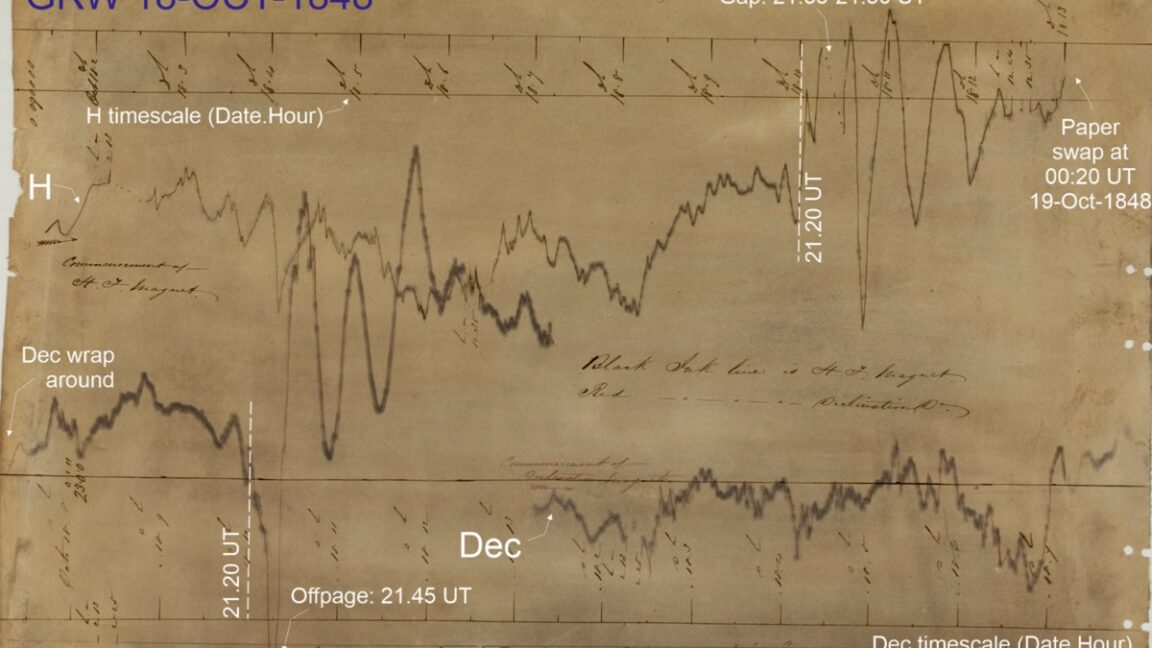
The infamous Carrington Event of 1859 has long been considered the first extreme space weather event, but there have been reports of minor disturbances to telegraph equipment during geomagnetic storms since the late 1840s. In 2013, scholars discovered an anonymous report published in 1871 in Nature describing how a "very intense magnetic disturbance" disrupted rail travel in Exeter on the southern coast of England in October 1841. If accurate, this would be the earliest such account. However, according to a paper published in the journal Space Weather, that 1841 date is most likely a typo, with the real railway disruption occurring several years later.

"Space weather is often discussed as a modern challenge because of our dependence on technologies such as satellites, communications systems and electricity networks," said co-author Jim Wild of Lancaster University. "What this study shows is that society has been experiencing the effects of space weather on technology for almost as long as electrical technologies have existed. The Exeter train delay is a fascinating story because it sits right at the point where emerging technologies first began to encounter the realities of the space environment."

The Carrington Event remains the most powerful geomagnetic storm in the scientific record, with strong auroral displays occurring all over the world, causing sparking and even a few fires in telegraph stations. Some of the auroras were so bright that people reported being able to read the newspaper by their light. The telegraph was a relatively new technology at the time, having first emerged in the 1830s, and the geomagnetically induced current—from a likely coronal mass injection from the Sun—knocked out telegraph systems. Some operators found they were still able to transmit and receive messages even after disconnecting the power supply, relying just on the powerful auroral current.

Read full article

Comments

© J.A. Wild et al., 2026

❌