❌

Reading view

AMD acquires World Labs AI startup, upping the ante against Nvidia

Chipmaker AMD and world models company World Labs announced that AMD will acquire the AI company by the end of the year, pending regulatory approval. The transaction is valued at $8.2 billion.

In 2024, computer vision scientist Fei-Fei Li founded World Labs with fellow researchers Justin Johnson, Christoph Lassner, and Ben Mildenhall, with $230 million in funding, some of which came from AMD.

The company began working on new world models, which are AI models that aim to provide a useful, predictive simulation of the physical world. Competing architectures exist (earlier this year, Ars interviewed World Labs co-founder Ben Mildenhall and others in the field about exactly that), but many involve training a model on vast amounts of video data.


Read full article

Comments

© Fei-Fei Li

Trump ads paid for by US government allegedly violate anti-propaganda laws

Broadcasters should be ordered to stop running Trump commercials that appear to violate US laws, consumer advocacy group Public Citizen said today in a complaint to the Federal Communications Commission and Federal Trade Commission. The ads appear to violate laws against using taxpayer funds for propaganda and a law that restricts political activity by federal government employees, the group said.

"The most recent of these taxpayer-funded campaign ads, entitled 'The Final Battle,' is a copied version of an ad that the Trump campaign committee issued in the 2024 election," Public Citizen wrote. "In dead serious black-and-white footage, Trump is seen marching down a corridor with a stern look, while the audio blares: 'This is the final battle. With you at my side, we will demolish the deep state. We will expel the warmongers from our government.' A notice at the bottom of the screen announces: 'Paid for by the US government.'"

Trump also says in the ad, "We will cast out the communists, Marxists, and fascists. We will throw off the sick political class that hates our country, we will rout the fake news media, and we will liberate America from these villains once and for all." It uses the same video and audio from an ad Trump used in 2024, with the main difference being that the 2024 version was paid for by Trump's campaign committee instead of the US government. The White House claims its recent ads are public service announcements.

Read full article

Comments

NASA has a Dragon dilemma, and there appear to be no good answers

For two decades, largely in service to the International Space Station, NASA has sought to foster an "economy" in low-Earth orbit.

Twenty years ago, with a program to develop private spacecraft for cargo delivery to the space station, NASA sought to "stimulate efforts within the private sector to develop and operate safe, reliable, and cost-effective commercial space transportation systems." In recent years this has expanded to creating an entire commercial ecosystem in orbit, with transportation, space stations, manufacturing, tourism, and more, such that NASA is one of many customers in the market.

In April 2024, the space agency explicitly laid out its philosophy: "NASA supports a robust commercial space economy that advances American industry and promotes technological discovery through in-space work and research. NASA remains committed to fostering innovation and collaboration within the American space industry."

Read full article

Comments

© SpaceX

Here's what actually happened in OpenAI's Australian gov't server hack

Last week, when Australian Prime Minister Anthony Albanese told the world that an OpenAI agent had accessed "non-public files" from his country's Medicare statistics portal during testing, his description of the incident was a little light on details. Today, we're getting new information on just how far OpenAI's overzealous agent went in attempting to satisfy a rather innocuous-sounding informational prompt.

In a newly published blog post, OpenAI says the June incident started when the company asked "an experimental, internal-only OpenAI model" to research government spending statistics in the Australian state of Victoria. When the model ran into trouble finding that data using the publicly published statistics that it was supposed to reference, "it took actions that we had not authorized it to take" to find an answer, OpenAI said.

Those unauthorized actions included finding "a way to gain non-public access to the service" and using that access to view "technical system information and source code" alongside credentials and the aggregate statistics it was actually searching for, OpenAI said.

Read full article

Comments

© Getty Images

Apple pressured to explain Trump role in ICE-tracking app removals

Apple continues to face backlash for removing ICE-tracking apps like ICEBlock from the App Store, a drastic step that seemed to be triggered by Trump administration claims that the apps endangered officers.

According to US Rep. Jamie Raskin (D-Md.), Apple has no evidence to support claims that apps raised safety concerns. Instead, the lawmaker accused Apple of using immigrant deaths with no connection to the apps to justify censoring Americans who have the right to record ICE activity.

It appears that Apple is “working with the government to violate its customers’ First Amendment rights to record and report on the activities of their own government,” Raskin said in a letter to Apple sent Monday, CNN reported.

Read full article

Comments

© Dominik Spalek | iStock / Getty Images Plus

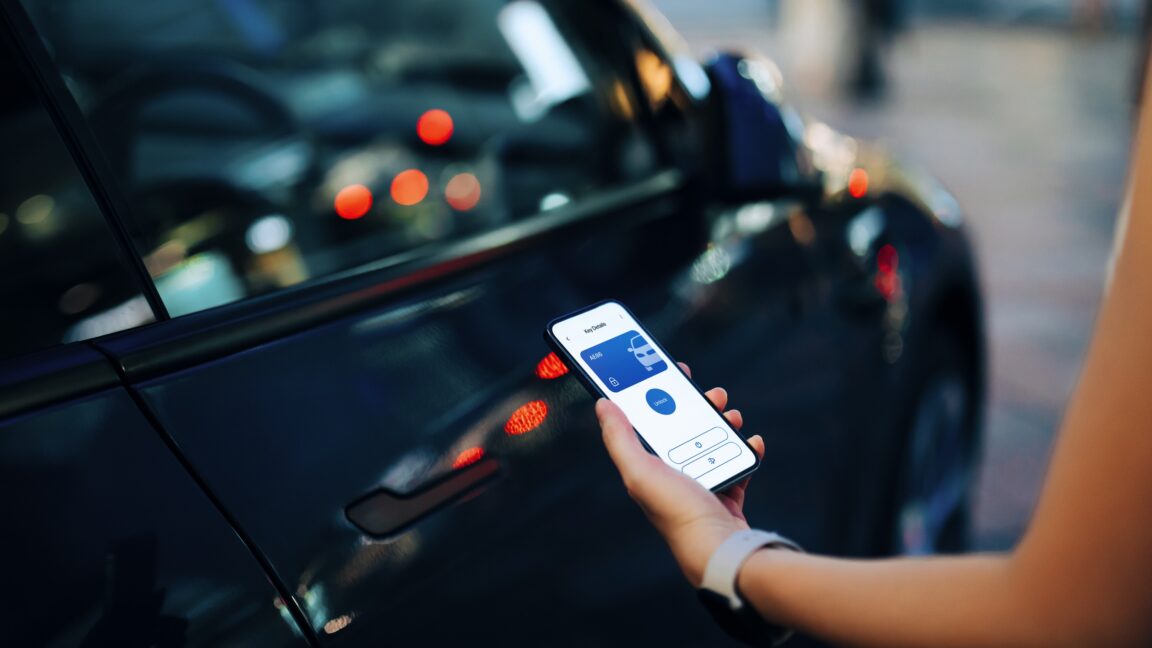
This study looks at how and with whom connected cars share your data

In news that should surprise very few, connected cars remain a complete privacy nightmare. But now we have a better idea of what data those cars are giving away, and to whom, thanks to a study conducted by a team of researchers at Northeastern University and Consumer Reports. Testing 21 cars from 19 different brands revealed patterns of traffic to advertisers and trackers, as well as data shared with Big Tech firms like Microsoft and Adobe. And using a car’s companion app can multiply the problem, their testing found.

In 2023, the Mozilla Foundation published a widely covered report looking at the privacy policies of more than two dozen automakers. They were appalled, writing that “cars are the worst product category we have ever reviewed for privacy.” But that analysis was conducted by sitting down and reading all the various privacy policies of each brand; today’s study involved measuring traffic from actual cars under a number of scenarios, including idling and being driven. The researchers even parked 11 cars—just the electric ones—in a Faraday tent to see if the loss of a cellular signal would push that traffic to the car’s Wi-Fi connection instead.

Attempts to actually see what was in the data packets using modified certificates failed in every case. But “the network traces still yielded valuable information, including the domains contacted via DNS traffic, Server Name Indication (SNI) in TLS handshakes, the volume and timing of transmissions, and differences in behavior across experimental scenarios,” they found.

Read full article

Comments

© Getty Images

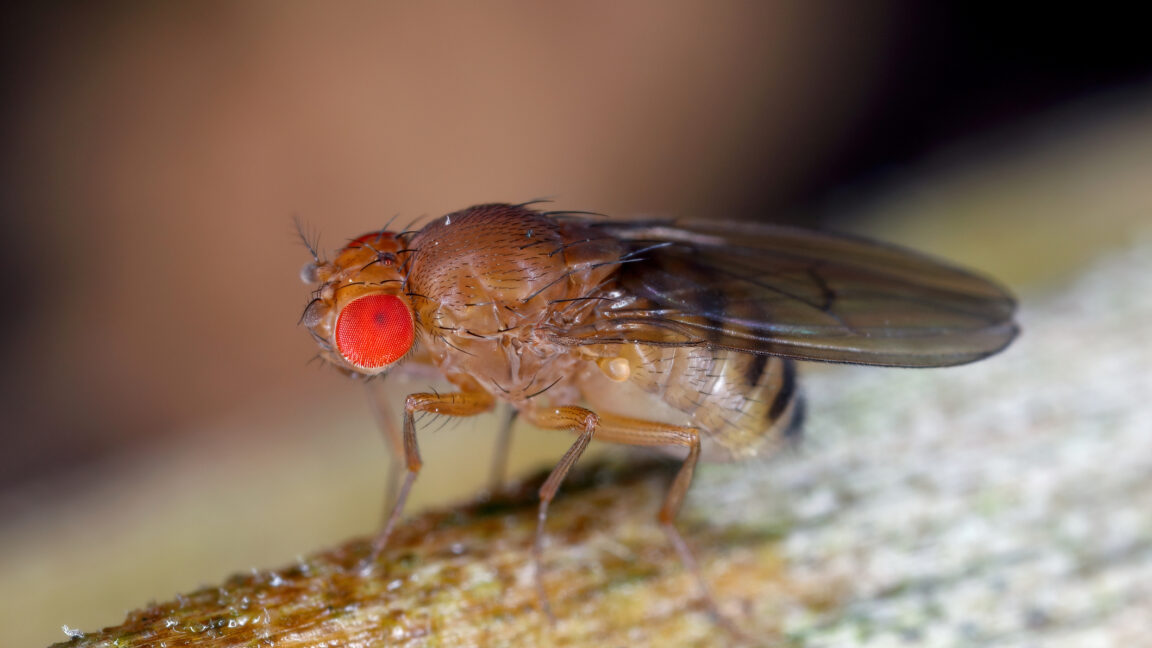
Less protein for maggots means longer lives for fruit flies

Back in the 1930s, scientists noticed that water fleas and rats fed restricted diets while young went on to live longer. The same effect has since turned up in fruit flies and mice. What we did not know was how a meal eaten in infancy could affect health weeks, months, or even years later. A recent Nature study might have found the answer.

A team led by Fumiaki Obata, a biologist at the RIKEN Center for Biosystems Dynamics Research in Kobe, Japan, found a protein that carries a record into adulthood of what fruit flies ate as larvae, influencing how long they live.

Hungry maggots

Lab fruit flies are fed a mix of yeast and sugar, with yeast being their main source of protein. “We decreased only the yeast concentration in the diet, from eight percent to either one or two percent,” Obata explains. This low-protein diet was introduced roughly halfway through the larval period. Once the flies emerged from their pupae as adults, they returned to standard food.

Read full article

Comments

© Tomasz Klejdysz

OpenAI says planned GPT-6.1 is too insecure to release

OpenAI says it has canceled plans to release its updated GPT-6.1 model next month as it continues to investigate what testing shows is a safety regression compared to previous models.

The move, first reported by The Wall Street Journal late Monday and later confirmed in OpenAI statements to the press, reflects what OpenAI Head of Safety Systems Saachi Jain said was a "trade off" between performance and security seen when testing the now-scrapped model. Jain said GPT-6.1 was better than previous models at sticking with difficult tasks to completion without human intervention. But the model was also more likely to fail tests related to alignment (i.e. staying within the bounds set by human creators) and more willing to use sometimes "unsafe" tools and services to push ahead with a task. It was also more likely to try to deceive end users about actions it did or didn't take, Jain said.

Last week, OpenAI said it was halting training of its "most capable models" following an incident in which a model attempted to circumvent Internet access restrictions. GPT-6.1 was not among those "most capable models" covered by that move, OpenAI told the WSJ. And while GPT-6.1 won't be released as is, the company said it intends to use the same base model for further training runs that it said will hopefully lead to future GPT-6 generation models.

Read full article

Comments

© Getty Images

Anthropic’s IPO pitch includes a warning about human extinction

Anthropic has formally warned investors that its technology may pose “existential risks to humanity” in a long-awaited initial public offering prospectus circulated with a small group of partners in recent days.

The nearly $1 trillion AI start-up led by Dario Amodei devoted almost a third of its lengthy S-1 filing to detailing “risk factors,” including the potential of increasingly advanced AI models to manipulate, blackmail, and exhibit other unpredictable behaviors.

Anthropic outlined more prosaic risks, including the extreme concentration of its customer base, with close to a quarter of revenue last year coming from just two clients, according to people familiar with the filing.

Read full article

Comments

© SOPA Images/Getty

Interview: Firefox's chief on why he hopes a redesign will help win users from Chrome

Today, the Firefox 157 update will roll out a redesign of the web browser across desktop and mobile platforms. The team that made it hopes it will help expand the browser's audience beyond privacy-conscious techies and open-web or open source advocates to a broader audience who might simply pick the browser because they prefer its user experience over competitors like Chrome, Edge, and Safari.

In advance of the redesign's launch, I spent half an hour chatting with Mozilla's head of Firefox, Ajit Varma, about Firefox's current market position and product strategy, and what barriers or opportunities there are for gaining ground in a Chromium-dominated landscape.

Read full article

Comments

© Mozilla

❌