❌

Reading view

'It Ain't Right:' Texas Said It Would Halt Data Center Permits. The State is Pushing Ahead Anyway

'It Ain't Right:' Texas Said It Would Halt Data Center Permits. The State is Pushing Ahead Anyway

A group of Texans believe they’ve discovered evidence that the state’s environmental regulatory agency has continued to issue permits to data centers despite Governor Greg Abbott’s call for it to stop. 

The nonprofits Public Citizen and FracTracker Alliance, working with local activists in Texas, looked through the public database of the Texas Commission on Environmental Quality (TCEQ) and discovered that the organization has worked on multiple permits for data center projects since Abbott called for a pause in the process on September 21. Abbott’s office denied approving any new permits in a statement to 404 Media. 

According to Public Citizen and the FracTracker Alliance, which cite documents publicly available on the TCEQ’s website, the agency has reviewed documents and assigned engineers related to more than a dozen permits related to data center projects in the state. Public Citizen listed more than 15 and the Fractracker Alliance found 35. The same day the nonprofits announced their findings, The Texas Tribune published a report that Abbott had received $9 million in donations from developers and owners of data centers.

According to the documents reviewed by 404 Media, TCEQ issued air-emission limit certificates to a large data center in Houston; approved the construction of stormwater coverage for data centers in Abilene, Barstow, and Royse City; and fast tracked gas power plants for more than a dozen data center projects.

“The TCEQ’s own data indicates that it’s business as usual for data centers and affected communities were promised a freeze. And instead what they’re getting is another reason to distrust the TCEQ and ultimately ineffective attempts to govern by press release,” Kathryn Guerra of Public Citizen said during a press conference on Monday about the findings. “Absent any comprehensive guardrails imposed by the Texas legislature, the industry will continue to move forward as fast as it can, and the TCEQ may let it.”

"They're still putting in that power plant, and there ain't nothing me and my people can do about it. We're just going to have to keep that boot on our neck. It ain’t right.”

Texas is poised to be the data center capital of the world. Three hundred already operate in the state, 100 are under construction, and 200 more are being planned. The projects include Big Tech companies like Meta — which is constructing a $14 billion data center in El Paso — smaller scale local projects like one in Taylor that would be built on land meant for a public park, and massive startups like the nuclear-powered Fermi data center in Amarillo.

In general, people hate data centers and it’s become a major political issue for voters in Texas. On September 21, Abbott directed the TCEQ to “halt all permits sought by data centers.”  Abbott said he’d told the state’s water and electric utility agencies to audit all the projects and directed “the TCEQ to pause the issuance of all permits related to data center projects until [the Electric Reliability Council of Texas] completes its review.”

Abbott’s order is broad and data centers are large and complicated construction projects with a lot of moving parts that require dozens of permits and plans. It’s possible that some of the permits uncovered by the nonprofits were filed before Abbott’s September 21 pause.

Many, however, were clearly issued afterward. Twelve of the 14 applications for gas plants and generators were filed in October. TCEQ used an expedited review process for eight of them. One was an air permit for engines and turbines that would power a data center in the Dallas suburb of Irving, Texas. The builder submitted the permit for expedited review on October 6 and a TCEQ engineer completed the initial review two days later, according to publicly available documents reviewed by 404 Media.

“No permits have been approved,” Governor Abbot’s press secretary Andrew Mahaleris told 404 Media. “In line with the Governor’s directive, TCEQ has not taken and will not take any proactive actions related to the approval of data center permits. Likewise, no other state agency will approve data center-related permits until the Public Utility Commission, ERCOT, and the Water Development Board have the information they need to make informed decisions. Texans must come first.”

404 Media asked Abbott’s office why there are multiple data center related stormwater construction projects listed as “approved” and was told to talk to TCEQ. "The Commission has not issued any permits related to data centers and is complying with Governor Abbott’s directive," TCEQ told 404 Media.

💡
Do you know anything else about this story? I would love to hear from you. Using a non-work device, you can message me securely on Signal at +1 347 762-9212 or send me an email at matthew@404media.co.

Sam Law, a researcher and manager of communications at FracTracker Alliance, told 404 Media that TCEQ gave him “a more exacting interpretation of their own situation,” he said. “Which is that they are accepting applications, but not moving forward with reviewing them. That was shown to not be true.”

Law also noted that the stormwater construction permits that read as “approved” in the TCEQ system are the result of a regulatory loophole. “The state has just approved a generic construction stormwater permit, and then to get onto that permit, people file a notice of intent and then they add them to a pre-existing permit,” Law said.

The stormwater construction permit is required to raise and level ground. “It’s often the final approval needed to move forward to prepare the site to actually build the physical structure," he added. In areas where there’s no zoning restrictions or the city is unincorporated, then that permit is all a company needs to start building.

“The Caldwell Technology Park [...] the Stargate facility, and a bunch of other very large hyperscale facilities have gotten regulatory approvals in the form of this notice of intent, so it's not like a real pause,” he said.

Law said he believes Abbott is trying to project opposition to data centers without doing the real regulatory work. “If the point of the pause is to stop the sort of approvals of data centers, that's not what's been happening,” he said.

Multiple data center projects are underway in Abilene, Texas — including OpenAI’s Stargate project. According to TCEQ’s records, it issued a water quality permit for the Abilene data center on September 23. “We are, in fact, going to get a massive gas turbine plant right to people’s houses,” Abilene resident and Democratic state senate candidate Riley Rodriquez said during Public Citizen’s press conference.

Rodriquez said that residents had gotten letters from TCEQ about the incoming gas plant and how it might affect air quality in the region. The people of Abilene have fought and won the right to testify at upcoming public hearings. 

“At the end of the day they’re going to flip that switch. Doesn't matter what we have to say at that public hearing, and I know that is a doom and gloom way to look at this. But that's the fact,” Rodriquez said. “The fact of the matter is, we can go to that. We can have the best comments. We can have the best information [...] and I could have 500,000 people behind me, and it doesn't matter because they're going to flip that switch because they put the money on it anyways. And we got to live with that  — with those consequences.” 

Rodriquez said the people of the region found out about Stargate too late to do anything about it. “We're in a unique situation for us because we didn't have a chance to do any of the things that these great people are doing. We didn't have a chance to do any of that. ‘It was built, concrete's poured, generators are going in, boys. Sorry,’” he said.

“So Abbott made his announcement. That's really great, that's really awesome,” Rodriquez said. “Guess what? They're still putting in that power plant, and there ain't nothing me and my people can do about it. We're just going to have to keep that boot on our neck. It ain’t right.”

In his September 21 letter, Abbott said he’d ordered the pause because “the goal is to put Texans first.”

Update 10/19/26 at 8:20PM: This story has been updated to include a response from TCEQ.

Police Say Scammers Used AI to Clone a Sheriff’s Voice

Police Say Scammers Used AI to Clone a Sheriff’s Voice

A Florida police department claims that scammers used AI to clone a sheriff’s voice, with scammers increasingly using voice clones that trick people into thinking they’ve missed jury duty or have a warrant out for their arrest are increasing.

According to Florida news outlet News6, scammers cloned Osceola County Sheriff Steve Moser’s voice and left a voicemail with a resident.    

“They cloned his voice and was using Steve’s picture as well to say it was him making the phone call, and it was not,” Sheriff Chris Blackmon told News6.

💡
Have you been the target of deepfake video or AI voice cloning scams? I would love to hear from you. Using a non-work device, you can message me securely on Signal at sam.404. Otherwise, send me an email at sam@404media.co.

Impersonating a police officer is a third-degree felony in Florida. The Osceola County sheriff’s office did not immediately respond to a request for comment.

This particular scam cloning cops is spreading across several states, with reports of jury duty and arrest warrant scams targeting people in Georgia and Pennsylvania in the last week. These other reports don’t mention AI voice cloning explicitly, but note that the scammers sometimes have similar voices and tones as local police officers.  

Voice cloning scams have been around for years, with scammers using commercially available AI voice impersonation tools to target the elderly, families, and businesses. Last year, 404 Media investigated real-time deepfake scams that incorporated voice and video to defraud people. In 2024, we reported on the ways scammers cloned celebrity voices and use AI videos in YouTube ads to scam people.

Scammers often impersonate company executives or leadership to trick employees into sending money, and voice cloning appears to be an increasing part of that. In February, scammers cloned a managing partner of a law firm with AI. Ultimately, a private bank ended up transferring $108 million.

How a Massive Chinese Crime Ring Hacked Staples to Steal Millions

How a Massive Chinese Crime Ring Hacked Staples to Steal Millions

A Chinese organized crime group hacked into retail giant Staples, used that access to fraudulently issue millions of dollars worth of gift cards for stores like Target and Sephora, then went on a nationwide shopping spree, shipping many of the stolen electronics and other products back to China as part of a massive retail theft operation, 404 Media has learned.

The finding, based on a review of court records, reveals the scale at which some organized crime groups are fleecing U.S. retailers, with entire warehouses dedicated to housing the merchandise. The hack of Staples, which has not been previously reported, signals just how sophisticated some of these operations have become.

💡
Do you know anything else about this case? I would love to hear from you. Using a non-work device, you can message me securely on Signal at joseph.404 or send me an email at joseph@404media.co.

This Might Be the Earliest Known Spear Murder In Earth’s History

This Might Be the Earliest Known Spear Murder In Earth’s History

Welcome back to the Abstract! Here are the studies this week that lived and died by the spear, drew unequal lots, paged Fox Mulder, and peered at an alien moon.

First, scientists discover a mortal spear wound in a Neanderthal who lived 75,000 years ago, possibly opening a window into the origins of hominid violence. Then: disparities from beyond the grave, an unexplained population of near-Earth objects, and the word from Jupiter’s moon Ganymede.

As always, for more of my work, check out my book First Contact: The Story of Our Obsession with Aliens, or subscribe to my personal newsletter The BeX Files. 

Lethal Weapon meets Ice Age 

Pomeroy, Emma et al.  “Evidence for funerary behaviour and lethal trauma in a new Neanderthal individual from Shanidar Cave.” Scientific Reports.

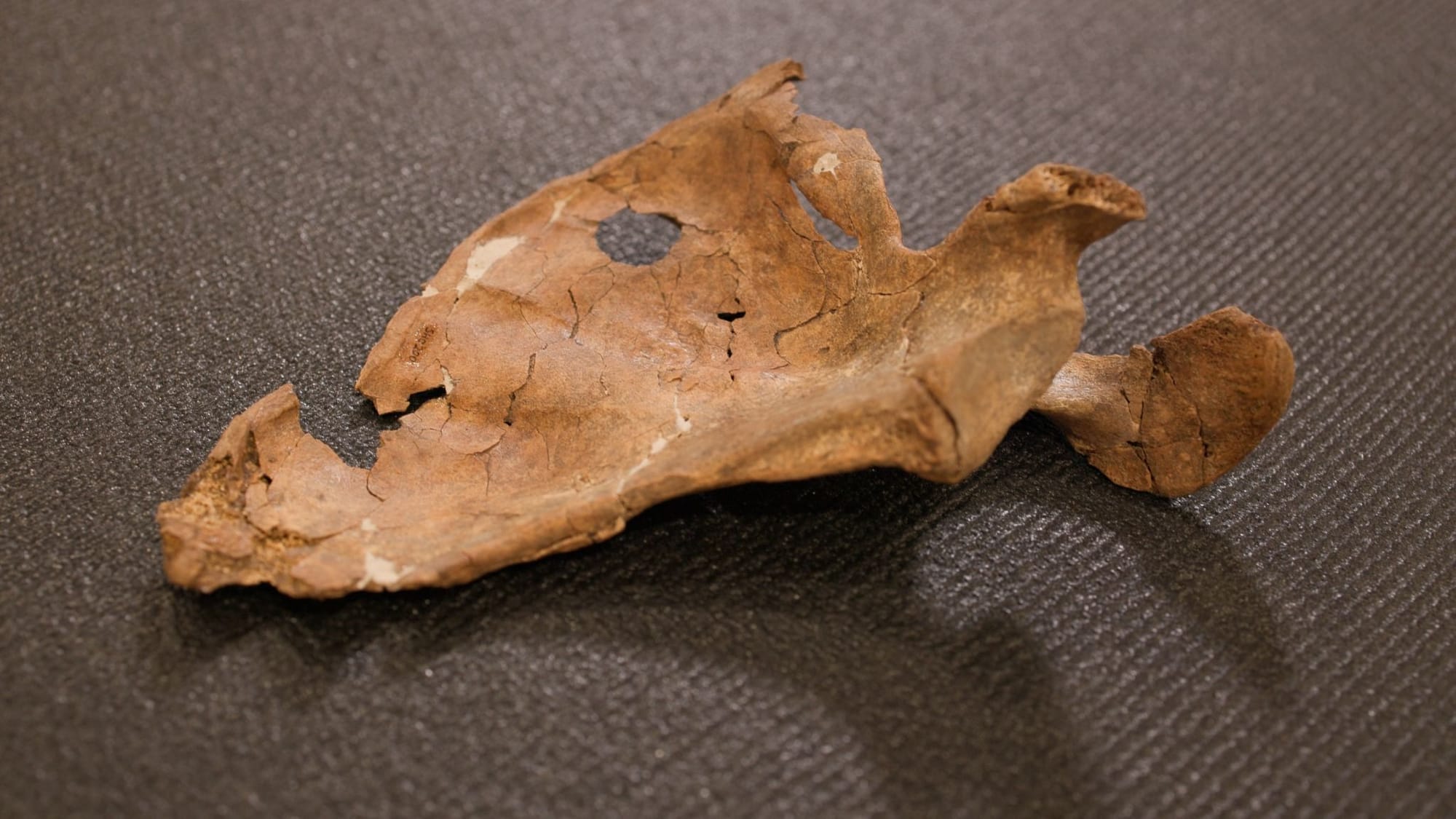
Some 75,000 years ago, an adult Neanderthal died from a brutal strike to the chest by a sharpened wooden spear, and was subsequently laid to rest by their kin. 

Eons later, in 2020, the remains of this individual were unearthed from deep in the floor of Shanidar Cave, an ancient Neanderthal hangout in what is now Iraqi Kurdistan. The bones of the deceased, named Shanidar A, preserve the spear puncture in the shoulder blade, suggesting that they were impaled with the weapon through the heart to their back. 

Shanidar A—whose sex is unknown—also sustained a brutal face injury that had partially healed at their time of death, suggesting that this individual had been cared for while they recovered from this non-fatal wound. The body appears to have been carefully interred in a small area of the cave that contained other Neanderthal remains, implying it was an intentional burial ground.

This Might Be the Earliest Known Spear Murder In Earth’s History
The entrance to Shanidar Cave. Image: Osama Shukir Muhammed Amin FRCP(Glasg) 

“Shanidar A’s shoulder injury appears to have been fatal, but the apparent placement of the body in a location that subsequently became part of a tight cluster of Neanderthal individuals, who were likely intentionally deposited within living memory of each other, strongly suggests a level of care during and immediately after death,” said researchers led by Emma Pomeroy of the University of Cambridge. 

Taken together, the discovery of Shanidar A adds to the evidence that Neanderthals nurtured each other in life and performed symbolic funerary rituals after death. These bones may also represent one of the earliest direct examples of interpersonal violence in any hominin, the term for humans and their close relatives, assuming that the Shanidar A was intentionally slain. 

However, it’s hard to distinguish whether the death blow was an attack from another Neanderthal—or perhaps a member of our own species Homo sapiens—or if it was an accidental injury sustained while hunting.

Shanidar Cave was occupied by Neanderthals for at least 50,000 years leading up to their mysterious extinction. While we will never know the complexity of their stories, our human cousins were clearly capable of compassion, care, and respect for the dead.

In other news… 

The truth is out there 

Bruehl, Stephen et al. “Use of machine learning to enhance detection of transient astronomical phenomena in historical observatory images.” Scientific Reports.

For the past several years, researchers led by astronomer Beatriz Villarroel have discovered strange “transients”—unexplained objects or phenomena in space—in historical photographic plates from before the launch of the first spacecraft, Sputnik, in 1957. The nature of these transients has become hotly debated among astronomers, with theories ranging from instrumentation defects to lurking alien spaceships.

In a recent study, the team re-analyzed the transients with machine learning, an effort reinforced previous findings that “transient numbers diminish significantly in Earth’s shadow”—hinting they are real objects that reflect less sunlight in our planet’s shade—and that they are more likely within one day of atmospheric nuclear tests during the mid-20th century.  

This Might Be the Earliest Known Spear Murder In Earth’s History
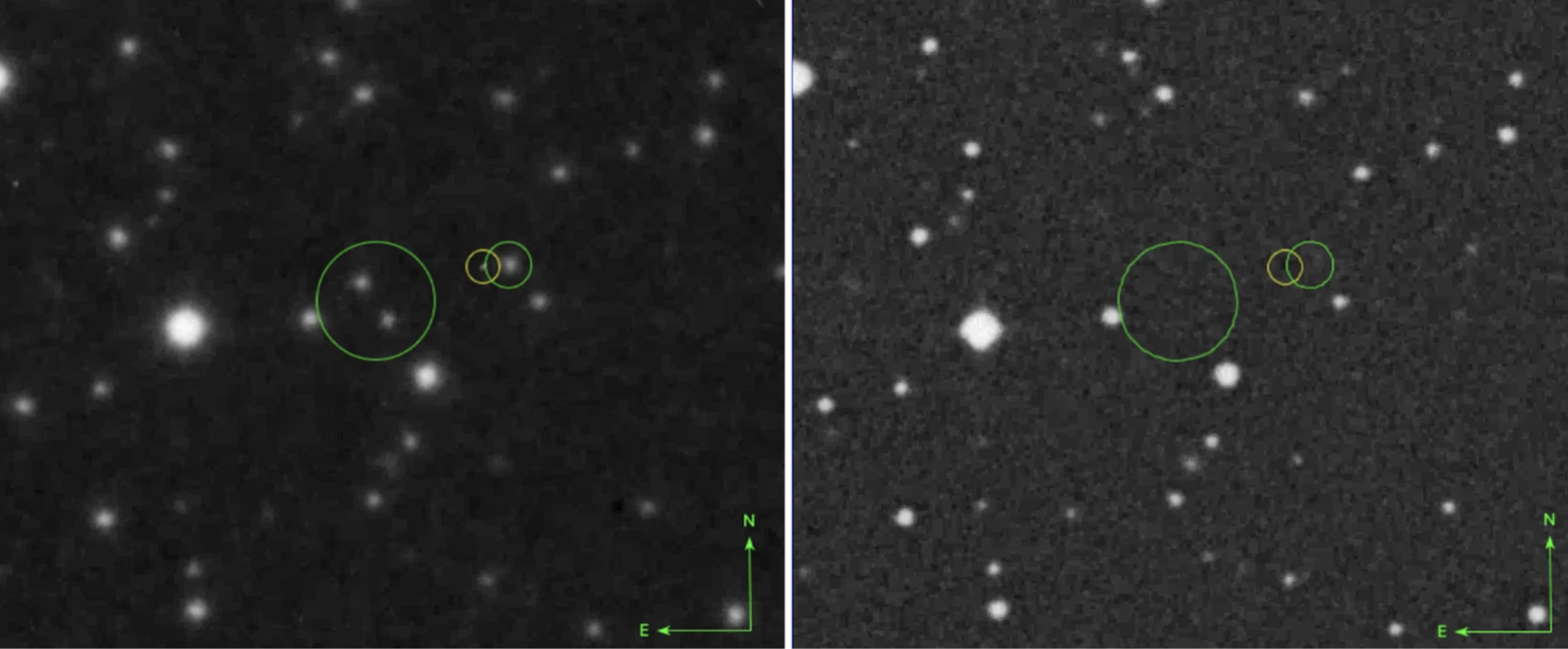
The left image presents examples of three transients (green circles) identified on the POSS-I red plate taken on August 11, 1953. The image at right is the same region in a POSS-II red image taken on September 3, 1989. The yellow circle indicates a plate defect on the left image. Bruehl, Stephen et al. 

“If one accepts that both key findings in this study represent real phenomena…we are left with a very small set of provocative hypotheses that would be considered highly implausible by most,” said researchers led by Stephen Bruehl of Vanderbilt University and co-authored by Villarroel. 

“For example, is it possible that unknown to the public there were multiple launches of artificial satellites long before Sputnik with some launches timed to coincide with U.S. nuclear tests? Or rather, do the current findings represent detection of a non-human technosignature? Finally, might our results represent detection of an entirely new yet unknown physical phenomenon?” 

“Additional research on this topic is clearly warranted,” the team concluded. 

Hard agree. When a mystery’s leading explanations include 1) secret satellites that upend spaceflight history, 2) ALIENS (!!!), and 3) exotic novel phenomena, it’s fair to keep digging for answers. My own preference is that it turns out to be some unholy combination of all three, but for now, we will have to just keep literally watching this space.

Inequality is in our bones

Li, Dongdong et al. “How inequality became durable before states: Evidence from 6000 years in the Central Plain of China.” Science Advances.

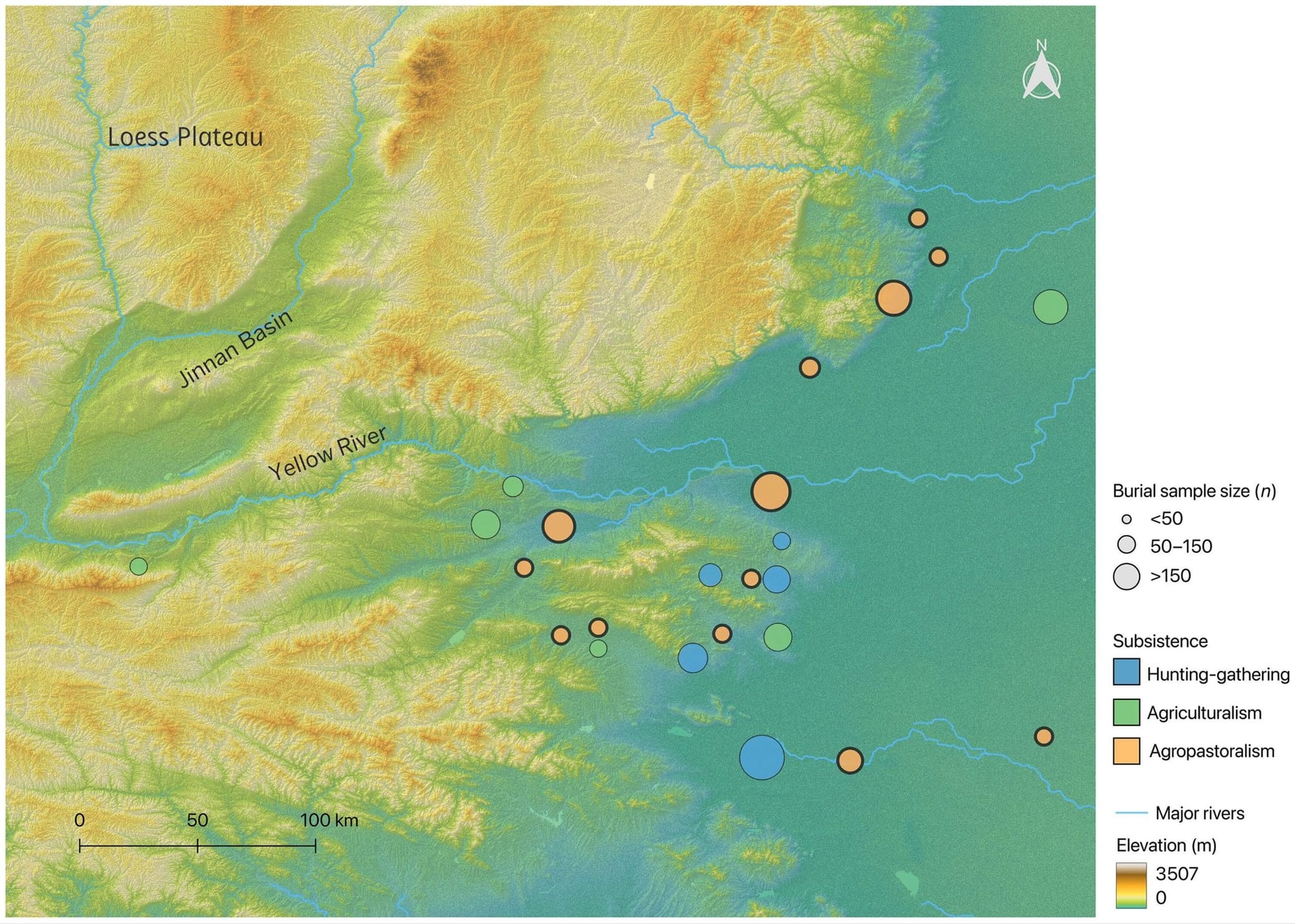
Let’s keep playing in haunted graveyards—it's spooky season, after all. This time, we’ll take a long walk through about 2,300 ancient burials in the Central Plain of China. In a new study, scientists probed the emergence of wealth inequalities in these ancient communities by studying this huge sample dating from 9,000 to 3,500 years ago. 

The team assessed the relative wealth of the deceased individuals with a number of proxies, including the value of grave goods buried with them, their physical health, and chemical clues about the quality of their diets, which can be preserved in bones. 

The results suggest that inequality was present in many of these communities long before the rise of an official state hierarchy, and that “no single pathway led to persistent inequality across early centers of social complexity,” according to the study. However, one clear correlation that emerged in the analysis was the association between violence and inequality, with the former exacerbating the latter.

This Might Be the Earliest Known Spear Murder In Earth’s History
Geographic setting and archaeological sites in the Central Plain. Archaeological site locations were compiled and mapped by the authors based on published excavation reports. Image: Li, Dongdong et al

“In the Central Plain…the emergence of violence signals a structural transformation” that suggests that “violence contributes to the amplification and structuring of inequality, although reverse or reciprocal dynamics cannot be excluded,” said researchers led by Dongdong Li of the Chinese Academy of Social Sciences.

While the rise of organized states and kingdoms can accelerate wealth stratification, this study proves that humans are capable of pioneering local homegrown inequalities in myriad ways.

The view from Ganymede

Royer, Clement et al. “Ganymede’s surface composition from 0.5 to 5.3 µm using combined VLT and JWST datasets and the resulting lessons learned.” Astronomy & Astrophysics.

We’ll close with an update from Ganymede, the largest moon in the solar system, which orbits Jupiter. As the only moon with its own magnetic field and a candidate in the search for alien life due to its subsurface ocean, Ganymede has long fascinated scientists.  

Now, a team has compiled comprehensive observations of Ganymede’s surface terrain using observations from a range of advanced telescopes, including the Very Large Telescope in Chile and the James Webb Space Telescope. The aim of the study, in part, is to prepare for two spacecraft currently en route to Jupiter—the European JUICE mission, and NASA’s Europa Clipper—which will arrive in the early 2030s. 

This Might Be the Earliest Known Spear Murder In Earth’s History
Ganymede being Ganymede. Image: Juno Mission – NASA/JPL-Caltech/SwRI/MSSS/Kevin M. Gill

Ganymede “remains a cornerstone object of planetary science due to its geological complexity, internal magnetic field, and potential astrobiological interest based on the presence of a subsurface conducting ocean,” said researchers led by Clement Royer of Paris-Saclay University. “Its surface morphology…argues for a history of significant endogenic activity, possibly including plate-like tectonics and cryovolcanism.”

Indeed, one of Ganymede’s most interesting surface features is a mysterious “darkening agent" that extends over much of the moon’s equatorial regions. The composition of the darkening agent “remains unresolved,” according to the study, though likely guesses include carbon-rich graphite or iron-rich magnetite.

The team anticipates that the Jupiter-bound spacecraft “will provide an unprecedented view of the surfaces of the Jovian moons” that will reveal many of their secrets. At least that’s one thing we can look forward to from the 2030s.

Thanks for reading! See you next week.

Behind the Blog: Doing Whatever

Behind the Blog: Doing Whatever

This is Behind the Blog, where we share our behind-the-scenes thoughts about how a few of our top stories of the week came together. This week, we discuss a new pod setup, video games, and Elon's spending habits.

JASON: Exciting news: I am building a podcast studio / riso printing room / place to film videos in. I believe all of my colleagues and many people in my life have been laughing at me about this, but this also may just be the narrative I’ve created for myself to inspire me to prove the haters wrong. Since the beginning of 404 Media, I’ve worked out of my garage, but feel like I’ve been going a bit crazy sitting mostly in the same room since essentially the start of the pandemic. And so I found not a coworking space but a very affordable windowless box that I shall turn into a content palace. 

I’m just going to try it for a few months to see if it makes sense or if I should return to working from the couch, but I’m quite excited about building it out. I only got it a few days ago and so at the moment it’s largely a bunch of boxes and random furniture I no longer had space at my apartment for. It’s got a drop ceiling with fluorescent lighting and landlord special laminate floors, but I also can do whatever I want to it, so I will likely do some sort of design on the walls, throw a rug down, whatever. 

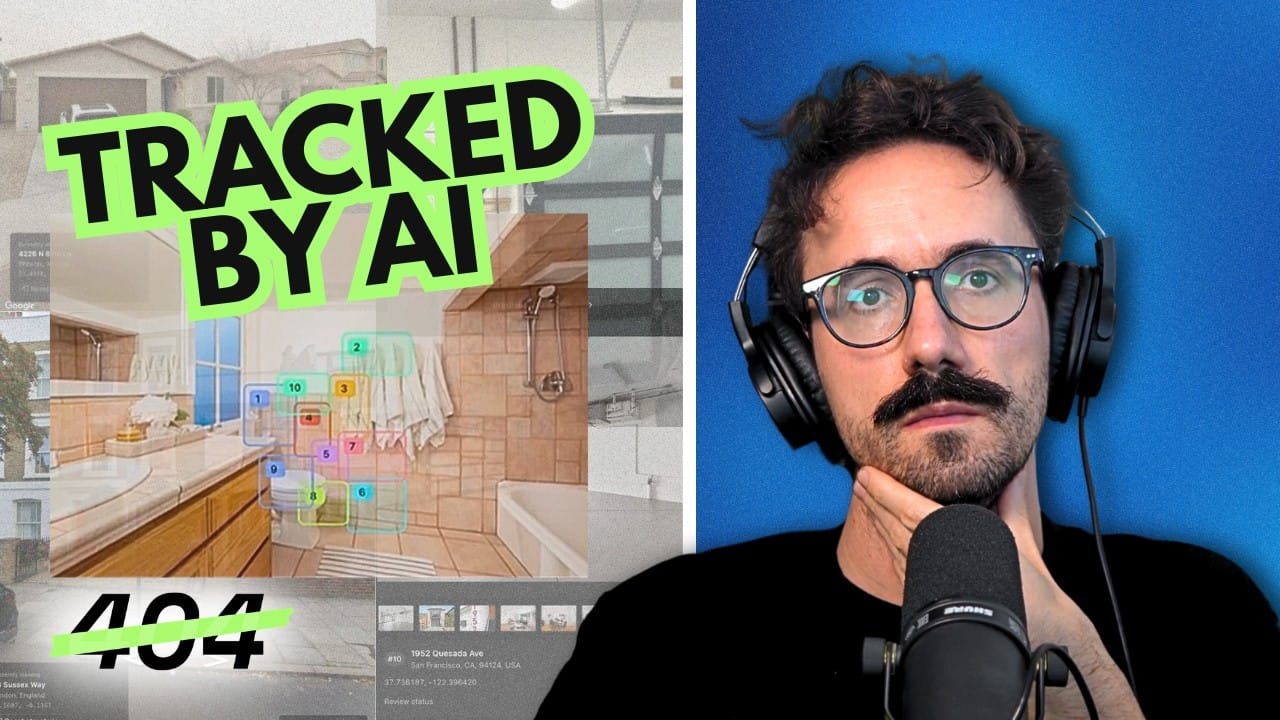
Podcast: Cops Can Use AI to Pinpoint Your Home with Just One Photo

Podcast: Cops Can Use AI to Pinpoint Your Home with Just One Photo

We start this week with Joseph’s article about Raven, previously known as Geospy. This is an AI tool that can geolocate photos, and now says it can pinpoint a specific house based just on one photo taken inside. After the break, Jason explains why a judge ruled a particular Flock search as unconstitutional. In the subscribers-only section, we talk about the wild AI video that has derailed a manslaughter case.

Listen to the weekly podcast on Apple Podcasts, Spotify, or YouTube. Become a paid subscriber for access to this episode's bonus content and to power our journalism. If you become a paid subscriber, check your inbox for an email from our podcast host Transistor for a link to the subscribers-only version! You can also add that subscribers feed to your podcast app of choice and never miss an episode that way. The email should also contain the subscribers-only link for the extended video version too. It will also be in the show notes in your podcast player.

Cops Used AI Generated Photos of a Child to Lure Out a Suspected Predator

Cops Used AI Generated Photos of a Child to Lure Out a Suspected Predator

This article was produced in collaboration with Court Watch, an independent outlet that unearths overlooked court records. Subscribe to them here.

Police arrested a Chicago area high school maintenance worker who attempted to meet a child for sex after investigators posed as a 15-year-old boy using AI generated images.

Christopher Thomas Mertens started talking to who he thought was a child through a dating app in September. According to an affidavit written by the department’s FBI Task Force Officer McKailey Scott, the investigation was done by the Livonia Undercover Resistance to Exploitation Unit (LURE), which identifies and prosecutes child sex offenders. Scott set up an account on the queer-focused dating app Taimi with “an AI generated image of a teenage-appearing male with the name ‘Caleb,’ and no age listed on the profile.  

Scott wrote that an unknown user messaged “Caleb,” and they moved to Whatsapp. After a few minutes of talking, the man asked Caleb for their age, and when Scott — posing as Caleb — said he was 15, the man said “Im interested” and “Im hard now.” 

The investigator used a combination of tools, including checking the man’s phone number using Thomson Reuters CLEAR and running images of his face through Clearview AI to identify him as Mertens. For days, Caleb and Mertens exchanged sexually explicit text messages and Mertens made plans to drive to meet Caleb on his day off, believing Caleb’s (non-existent) parents weren’t home. Cops used Flock to look up and track Mertens’ car and see that he was driving to the meetup spot, but Mertens was also texting Caleb the entire time to let him know he was on the way and when he arrived. When he got out of the car, Livonia police took him into custody.

Two hours after being booked, Mertens told jail attendants that he wanted to speak to Scott. When Scott got to the jail, Mertens admitted everything, including that he works at a high school in Illinois. The complaint doesn’t mention which high school.

Investigators have been generating images of children for years. One of the earliest examples of these is Sweetie, a computer generated child developed by Dutch children’s rights organization Terre des Hommes in 2013 that the organization used to talk to men online. Today, police departments at the U.S. border use AI-generated online personas designed to interact with and monitor protestors and activists, according to documents obtained by 404 Media.

This ‘College Protester’ Isn’t Real. It’s an AI-Powered Undercover Bot for Cops
Massive Blue is helping cops deploy AI-powered social media bots to talk to people they suspect are anything from violent sex criminals all the way to vaguely defined “protesters.”

In August, a 24-year-old Connecticut man was arrested after soliciting an undercover police officer who used what was reported as “age regression technology” to appear as a 14 year old in videos. He was charged with enticing a minor and criminal attempt to commit risk of injury to a child. 

In 2025, a 45-year-old man was arrested after investigators used AI generated images of children to catch him distributing child sexual abuse material. He was recently sentenced to 12 years in federal prison.

And in 2024, the state of New Mexico sued Snapchat after investigators set up a fake account, including AI generated images of children, that the platform allegedly recommended to “dangerous accounts, including ones named ‘child.rape’ and ‘pedo_lover10,’ in addition to others that are even more explicit,” according to the New Mexico Department of Justice.

AI generated child sexual abuse material is a rapidly growing problem for law enforcement. The National Center for Missing and Exploited Children has reported a massive rise in generative AI child abuse material, with criminals using it to extort and entice children, and children using it to bully and harrass other children.

Livonia police did not respond to a request for comment.

Computers Made of Human Brain Tissue Identify Braille Letters In Breakthrough

Computers Made of Human Brain Tissue Identify Braille Letters In Breakthrough

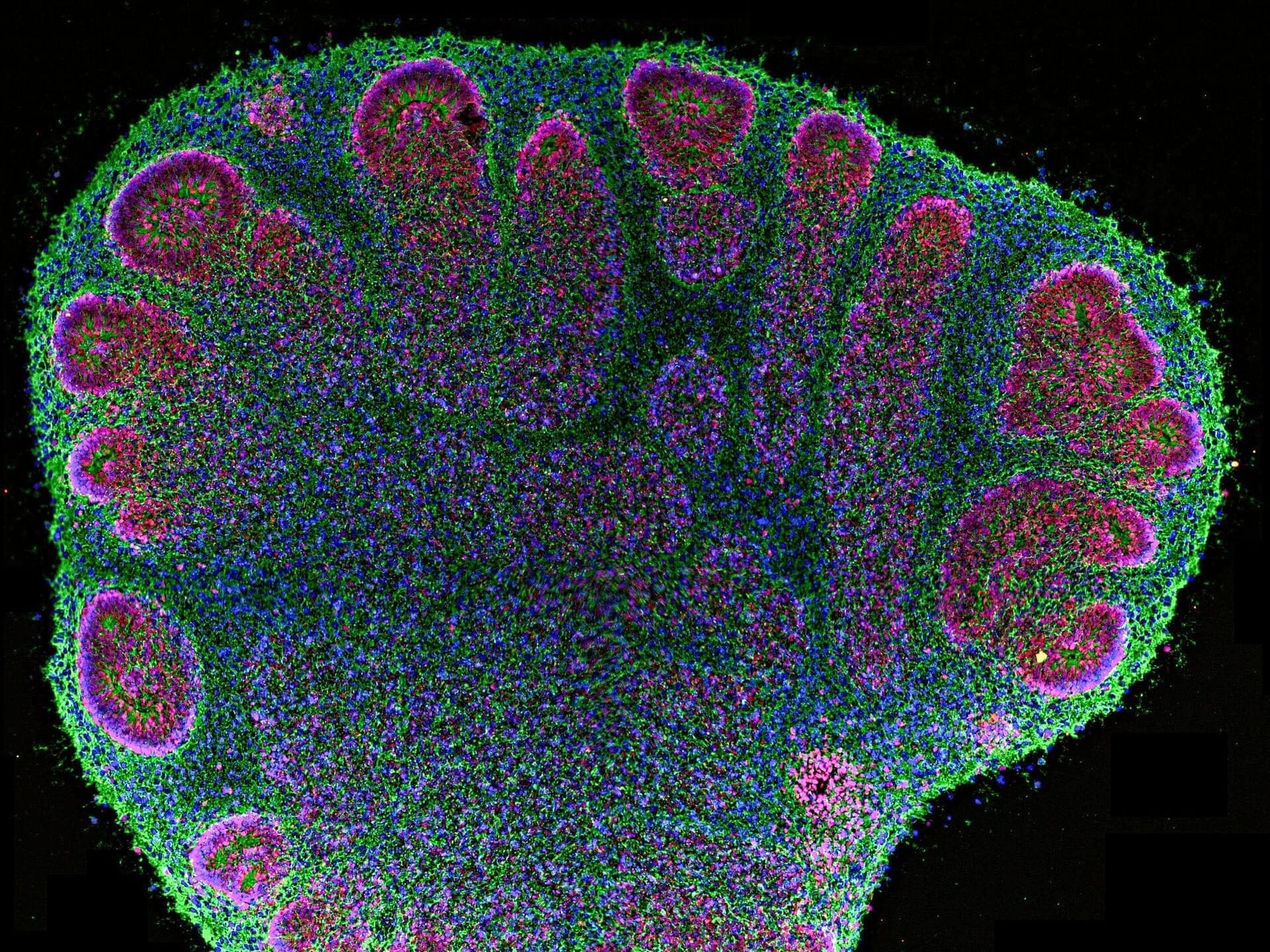
Scientists have made a breakthrough toward the mind-bending goal of creating computers made of brains by demonstrating that human neural tissue can classify letters of the Braille alphabet, according to a study published on Friday in Frontiers in Artificial Intelligence.  

A team transmitted electrical signals corresponding to Braille letters to human brain organoids, which are living neural tissues derived from stem cells. The results revealed that a single organoid, consisting of about 10,000 neurons, could classify the letters with about 61 percent accuracy, while teams of three organoids reached 83 percent accuracy.  

“The human brain can perform incredibly complex information processing while consuming relatively little energy, and artificial neural networks were originally inspired by biological nervous systems,” said Tianyi Liu, a PhD candidate at Bristol University who led the new study, in an email to 404 Media.

“If we've been trying to imitate biological neural networks all along, why not try using real biological neural networks directly?” she continued. “What kind of information processing capabilities might these tiny neural organoids have? Could they show some form of learning or adaptation? These are all questions we're very interested in.”

The new study falls under the emerging field of organoid intelligence, which aims to use organoids as biological “wetware” for computing applications. Previous studies have established that organoids are capable of recognizing speech Japanese vowels or even playing the classic game Pong. 

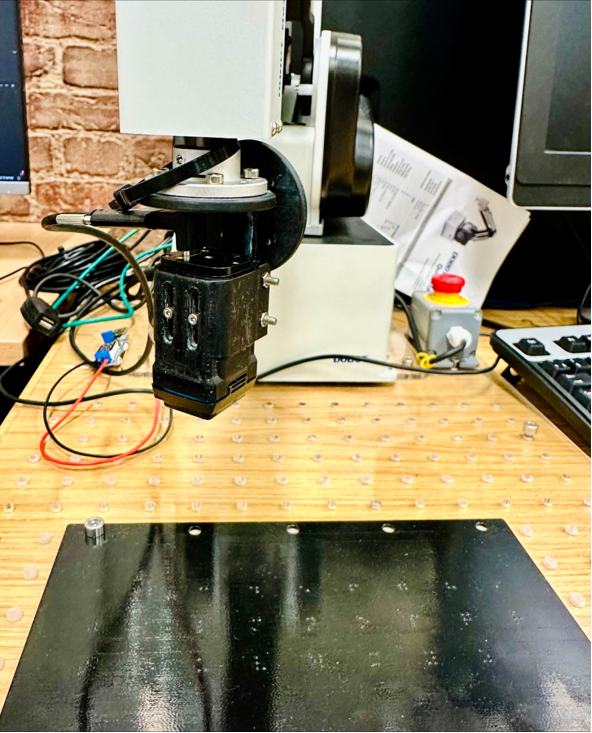
Since Liu and her team specialize in how robots sense and respond to touch, they homed in on Braille as a way to convert tactile information into electrical stimuli that an organoid could receive, process, and classify. 

In their experimental setup, the researchers used a tactile sensor to scan data from the 26 letters of the Braille alphabet, which is built from arrangements of raised dots. This data was converted into electrical stimulation patterns that were fed to the organoids, which are smaller than a millimeter in scale and positioned on arrays that keep them alive.  

“Our original goal wasn't to prove that organoids could read Braille like humans, or that they were already ‘intelligent’ enough to understand Braille,” she added. “Rather, we wanted to use this task to explore whether real biological neural networks could participate in processing information from robotic tactile sensors.”

Computers Made of Human Brain Tissue Identify Braille Letters In Breakthrough
The tactile sensor used to scan Braille letters. Image: Dr Benjamin Ward-Cherrier.

In other words, the researchers aimed to discover if these stimulated inputs could be decoded by the organoids and returned back in discernable responses corresponding to the Braille letters. The results revealed that a single organoid could accurately classify the letters nearly two thirds of the time, while an "ensemble" of three organoids performed even better, with an accuracy of 83 percent. 

“We still don't know the exact mechanism behind this improvement,” Liu said. “Our hypothesis is that different organoids respond to the same stimulation in similar, but not identical, ways.” 

She added that “you can think of it as three people looking at the same object. Although they're all looking at the same thing, each person might notice different details. Some features might not be obvious to one person but could be quite easy for another to spot. By combining their observations, you might be able to make a more accurate and reliable judgement.”

🌘
Subscribe to 404 Media to get The Abstract, our newsletter about the most exciting and mind-boggling science news and studies of the week.

The results are undeniably trippy, conjuring up the classic scifi trope of a hyperintelligent brain-in-a-vat. But Liu emphasized that this was an open-loop experiment, meaning that the organoids only received initial inputs without getting new feedback about their performance on the tasks. For this reason, the study does not prove that the organoids actually learned Braille, or were altered in any permanent way, just that they could classify Braille letters after receiving the electrical inputs. 

“In the future, if we can build closed-loop systems where neural activity from the organoids actually participates in a robot's perception, decision making, and control, while the results of the robot's interactions with its environment are fed back to the organoids, we could begin to investigate whether these biological neural networks can adapt to new tasks through ongoing interaction,” she said.

Liu also noted that while there are many potential advantages to organoid intelligence, there are plenty of limitations to biological computing systems. For example, organoids cannot be standardized, leading to natural variations that can complicate results, plus they have to be kept alive in cultures that are more difficult to maintain than electronic devices. 

“Compared with established computing chips, organoid systems still have a long way to go in terms of reliability, reproducibility, and scalability,” Liu said.

Even so, organoid intelligence “gives us the opportunity to explore a way of computing that's very different from traditional computers,” she concluded.

Nidal Hasan’s Public Execution Is Off, But Propagandists Are Still Using Him as a Martyr

Nidal Hasan’s Public Execution Is Off, But Propagandists Are Still Using Him as a Martyr

Last week, Secretary of War Pete Hegseth announced the Pentagon would livestream the execution of convicted killer Nidal Hasan. Today, Trump said the execution would move forward but that it wouldn’t be livestreamed. But the propaganda damage is already done. Experts who watch terrorist spaces online told 404 Media that Hasan is already turning up in memes, videos, and recruitment material for groups like Al Qaeda.

Hasan—a former US Army Major who had once attempted to contact Al Qaeda—killed 13 people and injured 32 others at Fort Hood in 2009. He was shot and captured at the scene and later sentenced to death. Hegseth’s plan to livestream Hasan’s execution and the furor around it brought Hasan and his crimes back into the spotlight 17 years later. Hasan has mostly been a forgotten figure in Islamist and extremist circles, but is now once again a fixture of their propaganda.

“It's already started,” Moustafa Ayad, research chair in global Islamism and counter-terrorism at the Institute for Strategic Dialogue, told 404 Media. “We're already seeing edited videos in support of Nidal Hasan, and they're specifically based around how he's a martyr and that his legacy lives on.”

In one image Ayad shared with 404 Media, Al-Qaeda in the Arabian Peninsula (AQAP) referred to Hasan as a “heroic mujahid brother” then quoted Osama Bin Laden. “The day America makes this decision, it will have made a decision to execute whoever among you falls captive.” 

According to Ayad, an Al Qaeda affiliated propaganda group made Hasan the feature of its newsletter last Friday. “So it's being viewed in that sense already in these ecosystems as he is a hero, and it's going to be used for recruitment and potentially galvanizing inspiration,” Ayad said. “We're talking about a guy who hasn't really been referenced since 2017 really or that much at all. So it has reignited conversations around his attack, how quote unquote glorious it was, and is being used as a means to to recruit people in some shape or form, and will continue to do so.

Ayad also described "rampage" edits of Hasan that are floating around extremists circles online that show footage of Hasan dancing over a number that represents how many people he killed. “You have fed the wolves,” he said. “They now have a thing they can latch on to.” In one TikTok edit viewed by 404 Media, a picture of Hasan with laser eyes throbbed to the beat of electronic music.

He added that he thinks the memes and videos are being made by younger people. “I don't think an established guy who remembers the Nadal Hassan attack is going to then go: ‘You know what makes sense? Putting out a dancing Nidal Hasan over his kill count.’ I don't think some 35-year-old dude is doing that,” he said. “You have a younger generation that is now attuned to what he did.”

Livestreaming the public execution would have given propagandists more to work with. Online nihilists, gore groups, and Islamists often use footage of death and violence to lure in young people. “Dead ideologues are continually being revered, lionized in ecosystems in support of  groups like Al Qaeda, the Islamic State, or any terrorist group,” Ayad said. “If you look at the saint ecosystems around accelerationism, it's a similar thing in which these individuals are the vanguard of jihad.”

Mass shooters and ideological killers that receive widespread media attention become objects of fascination online. They enter a cannon of sainted killers, totems that inspire others to commit the same acts. Some researchers have suggested news agencies should report a shooter’s crimes but refrain from naming and showing them, thus depriving them of notoriety and stemming the social contagion.

Hasan killed people almost twenty years ago and he was destined to fall out of memory until Hegseth attempted to make a spectacle of his death. “We’re already seeing it being incorporated into talking points, we’re past that,” Ayad said.

“He is still going to be labeled a martyr," Ayad added. “Will it be a public spectacle? Not anymore [...] but terror groups and their supporters took advantage of the news to highlight just how much of a contribution Nidal Hasan made to their respective movements.”

‘Jonathan’ Is the Oldest Land Animal on Earth. He Could Hold the Secrets to Defying Death

‘Jonathan’ Is the Oldest Land Animal on Earth. He Could Hold the Secrets to Defying Death

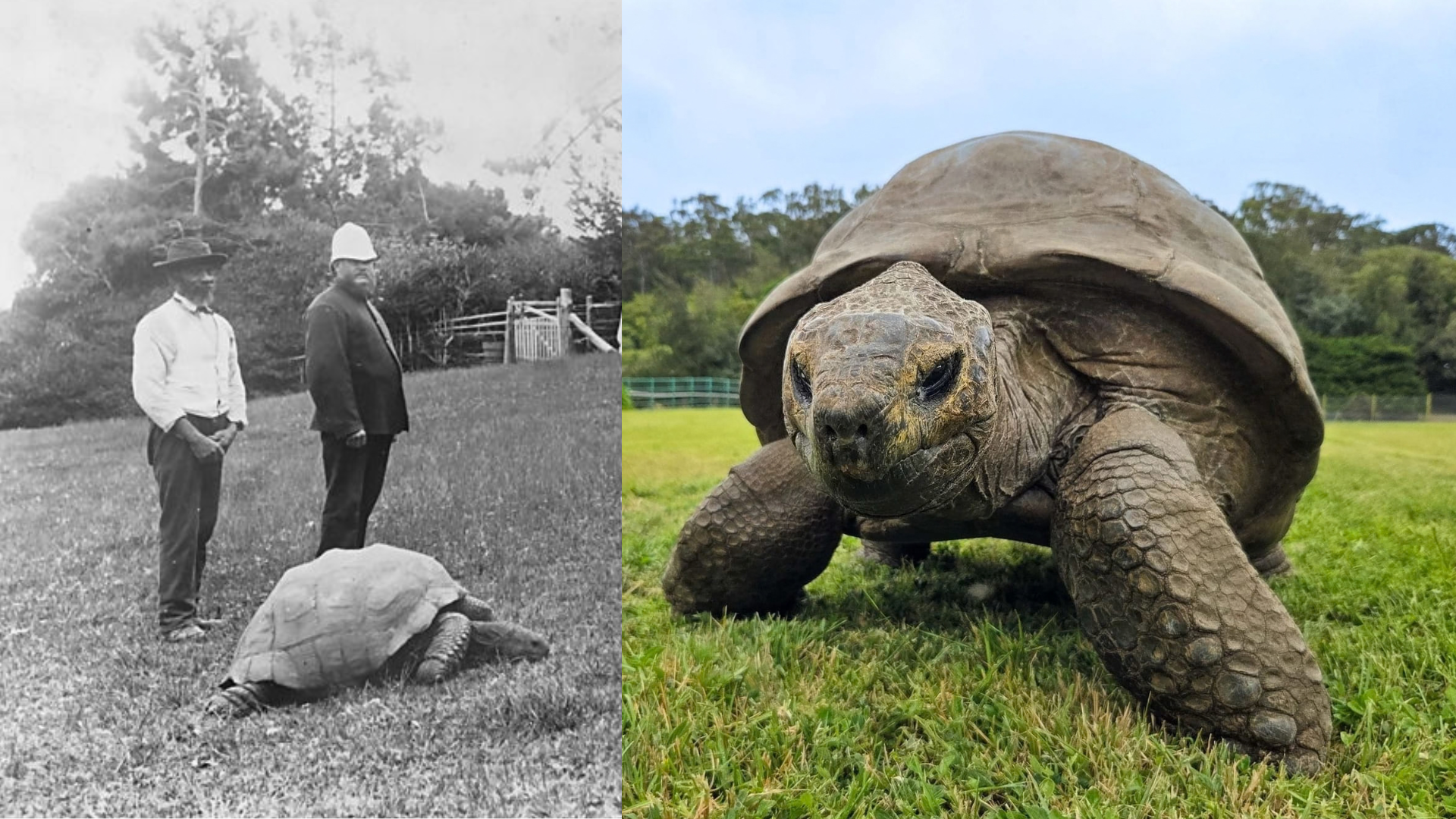
Jonathan the tortoise, the world’s oldest living land animal, is still chugging along at the ripe age of roughly 194. Now, scientists have discovered some of the secrets to Jonathan’s longevity by sequencing his genome for the first time, according to a study published Wednesday in Science Advances.

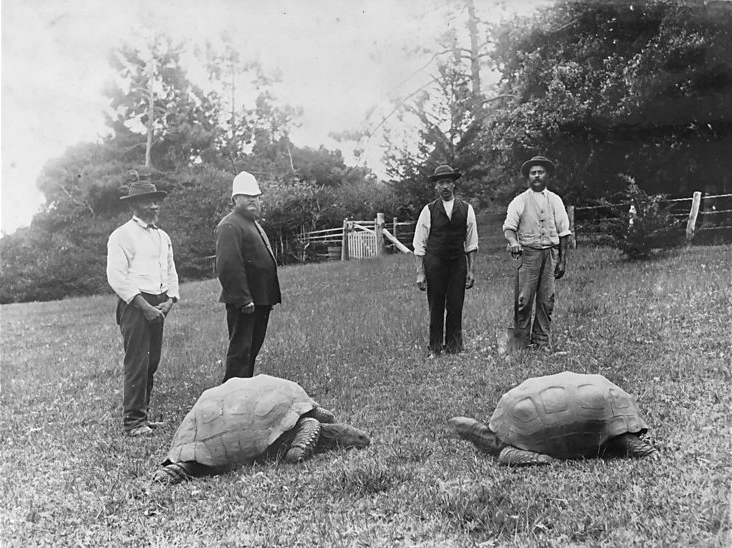
Jonathan, a Aldabra giant tortoise (Aldabrachelys gigantea), hatched around 1832 in the Seychelles archipelago, and he was already in his twenties when Charles Darwin published On the Origin of Species. In his fifties, Jonathan was brought to the remote island of Saint Helena, along with three other tortoises, as a gift to the British colonial governor in the 1880s. He has lived there ever since. 

‘Jonathan’ Is the Oldest Land Animal on Earth. He Could Hold the Secrets to Defying Death
Jonathan (left) in the 1880s. Image: Wikipedia

Aldabra giant tortoises often become centenarians, but Jonathan is a major outlier even for his species as he approaches nearly 200 years on this planet. To better understand his extreme lifespan, researchers evaluated Jonathan’s genome based on swabs of his cheeks and compared it with the genomes of several other tortoises, including a 36-year-old named Tank.  

The results revealed that Jonathan has “unique gene variants in most aging pathways” including DNA repair, insulin regulation, mitochondrial function, and “low entropy” methylation, reports the study. 

“Aging is very complicated, and there's all these different hallmarks,” said Stephen Clark, an aging researcher at the non-profit Kallel Foundation and an author of the study, in a call with 404 Media. “That's why this Jonathan study is so interesting. We're still just at the very beginning of trying to understand aging.”

The study was not an easy lift. Clark first reached out to Jonathan’s caretakers in 2017, but it took some negotiating to figure out the best way to obtain the tortoise’s genetic information. A blood draw was deemed too risky, so Jonathan was coaxed into opening his mouth for a swab. The results were delayed by incomplete early samples, the Covid pandemic, and new regulations governing access to Jonathan. 

🌘
Subscribe to 404 Media to get The Abstract, our newsletter about the most exciting and mind-boggling science news and studies of the week.

After years of back and forth, the samples were delivered from Saint Helena to Florida by the U.S. Space Force. The results showed that Jonathan had many gene variants the team expected to see, based on studies of other long-lived individuals and populations. These included variants associated with DNA repair, maintenance of aging-related sequences called telomeres, and the process of cellular recycling known as autophagy.

But the researchers found a surprise in Jonathan’s “methylome,” which is a set of methyl-based modifications involved in gene expression. The subset of Jonathan’s methylome related to mitochondrial processes was unusually pristine, or “low entropy.”  

‘Jonathan’ Is the Oldest Land Animal on Earth. He Could Hold the Secrets to Defying Death
Photo: St. Helene Government, Communication Hub

“Jonathan's really the first of his kind to have this analysis, and we were also able to do the methylome for the younger tortoises,” Clark said. “We actually compared him to a five-year-old tortoise, so we had 189 years of difference between the methylomes. No one's ever done that, even in humans, because no humans live that long. That was one of the main things we were excited about: how does this methylome change with age?”

Whereas most of Jonathan’s genome showed signs of entropy commensurate with his age, his mitochondrial methylome seemed on par with that of the five-year-old tortoise, signaling that these pathways may play a special role in his advanced age. However, Clark said it would take more research to follow up on that lead, and to untangle the complicated web of genetic components that influence aging and lifespan. 

“We're interested in long-lived species like Jonathan because we can hopefully find other targets,” Clark said of his team’s work at Kallel Labs. “The ultimate goal of the company is to affect human healthspan and lifespan.”

As for Jonathan, he continues to live out his voluminous days at the governor’s residence, Plantation House, where he and his fellow tortoises have become one of the island’s tourist attractions. Saint Helena is also known for the exile of Napoleon Bonaparte, who died there a mere decade before Jonathan is thought to have been hatched. It’s amazing to think about just how much the world has changed in Jonathan’s lifetime. Long may he graze.  

'Undue emotional weight'

'Undue emotional weight'

Howdy, it's hump day and we're rolling along. Today we've got an update on a very strange case involving a man whose image was resurrected from the dead via AI and made to appear in front of a judge to announced "forgiveness" of his murderer. 404 Media contributor Matthew Gault had a long conversation with the man's sister, who wrote the words and generated the video, and she said that swaying the judge was the entire point.

'Undue emotional weight'

THE BIG STORY

Her AI-Generated Video Swayed the Judge. The Court Said it Carried 'Undue Emotional Weight'

A man convicted of manslaughter in Arizona will be resentenced because an AI-generated video of his victim speaking from beyond the grave was ruled to have carried “undue emotional weight” as an impact statement. An appellate court in Arizona ruled that the manslaughter charge will remain, but the judge must reconsider the length of the man’s prison term because of AI.

In 2021, Gabriel Horcasitas shot and killed Christopher Pelkey during a road rage incident. A jury found him guilty of manslaughter. During Horcasitas’ sentencing hearing, Pelkey’s sister Stacey Wales played an AI-generated video of her brother as part of her victim’s impact statement. In the video, which she scripted with her own words that she made an AI generated likeness of Pelkey say, the AI avatar of Pelkey forgives his killer and said they “could have been friends” in another life. 

“I loved that video,” the judge said while handing down the maximum sentence of 10 and a half years.

Wales told 404 Media that her intent with the video was to sway the judge. “Isn’t that what you want human connection to be?” she said. “Do you ever come out of a movie and say: ‘Well, that was too emotional. That was too powerful. Human connection is powerful, and trying to convey that to somebody that's never known another person, this person on the earth, to convey their lifetime of 37 years down to a two-hour sentencing event is hard to do, and I think that victims and victims' families should be afforded every opportunity.”

Read the rest of this story here.

MORE FROM 404 MEDIA

A flock of new laws incoming. Several recently introduced pieces of legislation would, if passed, dramatically curb federal agencies’ access to Flock cameras, with the lawmakers referencing reporting by 404 Media in their explanations for why the legislation is needed. “At a time of growing concern about the unchecked power of artificial intelligence, Flock is eviscerating the very notion of privacy by installing tens of thousands of cameras in communities across America without their consent,” Bernie Sanders said.

Her AI-Generated Video Swayed the Judge. The Court Said it Carried 'Undue Emotional Weight'

Her AI-Generated Video Swayed the Judge. The Court Said it Carried 'Undue Emotional Weight'

A man convicted of manslaughter in Arizona will be resentenced because an AI-generated video of his victim speaking from beyond the grave was ruled to have carried “undue emotional weight” as an impact statement. An appellate court in Arizona ruled that the manslaughter charge will remain, but the judge must reconsider the length of the man’s prison term because of AI.

In 2021, Gabriel Horcasitas shot and killed Christopher Pelkey during a road rage incident. A jury found him guilty of manslaughter. During Horcasitas’ sentencing hearing, Pelkey’s sister Stacey Wales played an AI-generated video of her brother as part of her victim’s impact statement. In the video, which she scripted with her own words that she made an AI generated likeness of Pelkey say, the AI avatar of Pelkey forgives his killer and said they “could have been friends” in another life. 

“I loved that video,” the judge said while handing down the maximum sentence of 10 and a half years.

Wales told 404 Media that her intent with the video was to sway the judge. “Isn’t that what you want human connection to be?” she said. “Do you ever come out of a movie and say: ‘Well, that was too emotional. That was too powerful. Human connection is powerful, and trying to convey that to somebody that's never known another person, this person on the earth, to convey their lifetime of 37 years down to a two-hour sentencing event is hard to do, and I think that victims and victims' families should be afforded every opportunity.”

After sentencing, Horcasitas appealed. He argued that the AI Pelkey video was inadmissible because it carried “undue emotional weight” and that the “lifelike AI recreation of the victim conveyed an authority and authenticity” had a “psychological impact” on the judge, according to court documents reviewed by 404 Media.

The appellate court agreed and cited State v. Rose, a 2007 murder case where a man was sentenced to death for the murder of a police officer. During the victim impact portion of the sentencing in that case, the judge saw photos of the police officer’s children at his graveside. The court said those photos almost crossed the line into prejudicing the judge.

“The AI video crossed that line. Unlike the photographs in Rose, which captured a particularly poignant moment for the young surviving victims, the AI video here [...] does not reflect actual events,” court documents said.

“It clearly impacted the sentencing judge, who said he ‘loved the video’ and felt it ‘was genuine,’ pointing to the AI victim’s ‘obvious forgiveness’ of Horcacistas,” the court documents said. “On this record, the judge’s consideration of the AI video so prejudiced Horcasitas as to render the sentencing procedure fundamentally unfair.”

Wales and the rest of Pelkey’s family have spent the last five years in and out of various court rooms related to his death. If the current ruling holds, then she'll travel to Arizona from New York and give the same statement she did the first time through her brother’s AI-generated mouth, minus the AI-generated video. The same judge who originally said “I loved that video” will do the sentencing.

“Likely, the same people will go back down and make their speeches, and I will be making my victims' impact statement that I wrote for myself the first time around again, and I will be delivering Chris's AI script sentiment again,” she said. “If I need to stand there and read it myself, which would be legally lawful, I am prepared to do that. Chris's sentiment does not change. The delivery method will.”

Wales said she wrote the words that came out of the AI version of her brother, they weren’t AI-generated. She also noted that only the judge, her family, and the Horcacistas family were the only people who saw it during the trial. “This was not offered as evidence. Juries never saw this,” she said. “This was only created after a verdict was solidified, a guilty verdict.”

She also noted that the AI video was only one of a larger piece of testimony given that day. “I think that [the judge] is unfairly represented with a soundbite,” she said. According to Wales, the judge spoke for around half an hour and only mentioned the AI video once. Wales herself uploaded the soundbite from the judge saying he loved the AI-generated impact statement to YouTube, where it went viral.

But she also said she understood that AI is a new technology and when she played the AI-generated video of her brother that she was doing something no one else had done yet. She compared it to the way courts thought of photography in the late 19th century. 

“It took about 15 years [...] and about five landmark cases in the United States that went all the way up to the Supreme Court before photography was an accepted standard to be used in the courtroom for evidence, identification, and testimony, et cetera,” she said. “I believe that's what we're seeing now with AI. It is a brand new medium.”

Wales said she understood she was setting a precedent, for good and for bad, and that she was OK with that. “There is always that first case, and so that mantle weighs on me that I need to be careful with how I defend this and how I explain the impetus, the goals, the motivations, and the veracity of what was created, because there are victims that depend on freedom of speech for the future, and I do believe that victims and their families should have every opportunity available to them to make their their points,” she said.

There’s no firm date for the new sentencing. “We do respect the court's opinion, and if we need to operate in those guardrails, I am prepared to read the same script that the AI version of Chris read the first time around,” she said. “His sentiment has not changed. Our opinion of what we believed he would think about this whole thing has not changed. The words I penned as Chris's imagined opinion still have not changed and will not change.”

404 @ 3

And 404's Flock coverage cited in proposed legislation.

Lawmakers Introduce Multiple Laws to Curb Flock After 404 Media Coverage

Lawmakers Introduce Multiple Laws to Curb Flock After 404 Media Coverage

Multiple Democrat, Republican, and Independent lawmakers have introduced new pieces of legislation that, if passed, would dramatically curb federal agencies’ access to Flock cameras, with the lawmakers referencing reporting by 404 Media in their explanations for why the legislation is needed.

On Friday Senator Bernie Sanders (I-Vt.), Representative Alexandria Ocasio-Cortez (D-N.Y.), and Senator Jeff Merkley (D-Ore.) announced the Ban Flock Act, which would prohibit federal agencies from using automatic license plate readers (ALPRs) and block federal funding from state and local governments that use the cameras. It would also let Americans sue the federal government for violation of their rights through ALPRs.

“At a time of growing concern about the unchecked power of artificial intelligence, Flock is eviscerating the very notion of privacy by installing tens of thousands of cameras in communities across America without their consent,” Sanders said in the announcement posted to his website. “Going to the doctor? Flock knows. Dropping your kid off at school? Flock is tracking you. Flock is always watching. We cannot allow America to become a surveillance state where a handful of AI oligarchs profit by giving the government the power to track our every movement.”

💡
Do you know anything else about Flock? I would love to hear from you. Using a non-work device, you can message me securely on Signal at joseph.404 or send me an email at joseph@404media.co.

Ocasio-Cortez said, “AI-powered cameras are keeping track of our every move and weaponizing this data against working people to make record profits. The widespread integration of this technology into American society is unconscionable.” Merkley added, “No one should have this unchecked surveillance power at their fingertips, which is why I’m teaming up with Senator Sanders to rein in this dangerous technology.”

Sanders’ announcement says that one reason for the legislation is Flock has shared state information with federal immigration officials. In May 2025, 404 Media revealed local cops were doing lookups in Flock for Immigration and Customs Enforcement (ICE). After that report, Flock made dramatic changes to its product, including stopping other agencies searching cameras in Illinois, California, and Virginia. Flock said it also introduced a new tool that blocks impermissible searches in real time. 

The announcement also said law enforcement have used Flock data to investigate protests against ICE raids and ‘No Kings’ demonstrations. 404 Media revealed both of these, reporting that California cops investigated an “immigration protest” using Flock lookups, and, using data from the Electronic Frontier Foundation, that cops used Flock to monitor No Kings protests around the country. 404 Media also recently reported Flock itself taught cops how to surveil No Kings protesters in a company webinar.

Hajar Hammado, senior policy advisor at activist and progressive policy group Demand Progress, said in a press release “The Ban Flock Act is the gold standard for any legislation working to fight invasive Flock cameras on the federal level. Flock and other ALPR companies have wormed their way into communities across the nation and drastic, all-encompassing action is needed to root them out.”

Senator Josh Hawley (R-Mo.) announced his own piece of proposed legislation late last month. The Stop Flock Abuse Act would require a written approval process for each search; force agencies to delete driver data after ten days, with exceptions for active investigations; and ban ALPR networks from incorporating facial recognition technology. During a recent senate hearing, Hawley pointed to 404 Media’s reporting specifically.

Separately, Representatives Greg Casar and Shontel Brown recently wrote to FBI Director Kash Patel asking how the agency plans to acquire nationwide access to ALPR data, Semafor reported. 404 Media first revealed this plan in May. The letter also referenced 404 Media’s reporting which revealed a cop in Texas used Flock to search ALPRs nationwide for a woman who self-administered an abortion.

Muse escapes containment

“Indiscriminate mass surveillance," a Meta Muse scoop, and more in today's daily newsletter.

arXiv Is Rate Limiting Submissions Because It Can’t Keep up With AI Slop

arXiv Is Rate Limiting Submissions Because It Can’t Keep up With AI Slop

arXiv, an open-access repository where researchers publish preprint academic research, has announced it will rate limit submissions because it has been inundated with AI-written papers. A researcher can now only send in two pieces per calendar month and have a total of three active submissions at any given time. In a blog post about the change, arXiv said AI has made it too easy to spam the publisher’s inbox and its volunteer moderation team is overwhelmed.

“The heart of arXiv’s process for detecting and rejecting low-quality papers is our many volunteer moderators,” Thomas Dietterich, an Oregon State University professor emeritus and the chair of arXiv’s editorial advisory council said in a statement. “We are so grateful that they donate their time and expertise every day. However, a relatively small proportion of authors are submitting a large number of low-quality papers and consuming a disproportionate fraction of the moderators’ time. This is unfair to authors who continue to submit quality papers — their papers can be delayed for days or weeks as a result.”

According to arXiv, it received 9,869 submissions in September 2016, 20,569 submissions in September 2024, and 40,363 submissions in September 2026. Submissions on the site have doubled in the last two years and have sextupled in the computer science category.

AI is driving this surge in multiple ways. Researchers are using LLM to parse massive data sets, write code, and design portions of experiments; some are also using AI to write the papers. “arXiv policy permits authors to employ AI as a tool in support of their research as long as it is disclosed and the research meets arXiv’s standards of scholarly interest and advances the field of research,” arXiv said in its rate limiting blog. “However, many of the submissions that arXiv is now receiving do not satisfy these requirements.”

arXiv said it’s seen an increase in “thin papers of narrow scope” as well as salami papers — where researchers write multiple articles based on one study. “There is also a marked increase in dense, AI-written papers. AI tools are making it easy for authors to flood arXiv and other repositories with these low-value papers,” it said.

Rate limiting was already part of arXiv’s policy, but it was originally left to each individual moderator’s discretion. “This policy update strives to fairly distribute the incredibly valuable work of our volunteer moderators who check that submissions meet these standards,” the publisher said.

This new policy is another part of a long battle the publication is having with AI-powered slop and spam. A little less than a year ago, the archive stopped accepting review articles and position papers in the computer science category and cited low effort LLM-written articles as the reason. In January it started requiring new authors to receive an endorsement from an existing author in the system. Previously the publisher accepted an academic email address as the sole qualifier. In May, arXiv took things a step farther and said it would ban researchers who submitted AI slop from the site for a year.

Meta Rushed to Fix Muse ‘VM Escape' Vulnerability Soon Before Launch

Meta Rushed to Fix Muse ‘VM Escape' Vulnerability Soon Before Launch

In the immediate weeks before Muse’s launch, Meta engineers found several security vulnerabilities in the company’s viral AI agent product, at least one of which could have allowed malicious users to break outside of Muse’s intended environment and access Meta’s own sensitive databases and services, 404 Media has learned. The issues were so severe that they reached Mark Zuckerberg and staff worked overtime to fix them.

These specific vulnerabilities were discovered before the launch of the product but required a multi-team “mad dash” to fix “a sudden spike in reported KVM escapes,” according to an internal post by Meta executives to its core infrastructure team seen by 404 Media. In order for Muse to work, a user gives the AI agent access to various important services and accounts that they own. On Meta’s end, each individual Muse instance runs on a kernel-based virtual machine, which connects to, but is supposed to be isolated from, Meta’s own critical infrastructure. A “KVM escape,” then, is when, through a security vulnerability, a Muse instance is able to escape from that virtual machine and interact with the system that runs it, or with other users’ virtual machines. 

💡
Do you know anything else about Muse's security? I would love to hear from you. Using a non-work device, you can message me securely on Signal at jason.404. Otherwise, send me an email at jason@404media.co.

According to a Meta source, as well as internal security documentation and internal posts viewed by 404 Media, at least one of the vulnerabilities could have allowed an outside attacker — that is, a normal Muse user — to access data in sensitive internal Meta databases. . At least one of the vulnerabilities was related to an exploit found in Linux kernel-based virtual machine code in July. 404 Media granted the Meta source anonymity to speak about sensitive security matters.

Several of the vulnerabilities were in the underlying Linux virtualization software that Meta uses for Muse. The security issue was considered serious enough that it was raised to Mark Zuckerberg, and several different security teams worked nights and weekends in the leadup to launch to fix the issues. This type of security push is not necessarily unusual prior to the launch of a major product, but is notable considering outside researchers have found several other security issues since Muse’s launch, and in the broader context of agentic AIs from OpenAI and other companies going on major hacking sprees. 

The Meta source said they felt security teams were asked to push hot fixes to these bugs as quickly as possible and in a way that wouldn’t delay Muse’s launch, leading to what they described as “half-baked protections being rushed out to enable the launch. Many senior engineers believe it’s inevitable we’re going to have a massive data breach as a result of Hatch.” Muse is called “Hatch” internally and in Meta’s codebase.

This security push was acknowledged in an internal post made by Meta’s vice president of core infrastructure Surupa Biswas, vice president of engineering Francois Richard, and senior director of engineering Josh Barry to the company’s core infrastructure team on September 18, 10 days following Muse’s launch. 

“With Muse, we are directly hosting and running agents on behalf of end users, a fundamentally different paradigm,” the post said. “A sudden spike in reported KVM escapes, plus heightened awareness of agentic safety issues made us rally on a service hardening push.” 

The post noted this push started on August 27 and lasted a “handful of weeks and weekends,” though Muse was released just 11 days later. The post says that the work involved taking steps to “reduce the surface area accessible to Hatch agents.” The teams also took steps to “constrain port/IP destinations Hatch and VMVM hosts can reach.”  

 A virtual machine escape of Muse is a potentially very serious security issue, and is classified as such in Meta’s bug bounty program. The company says it is willing to pay $300,000 to any security researcher who finds a bug that would allow for a VM escape, the highest payout it lists on its bug bounty website.

“Muse, an AI product from Meta, lets people create their own personalized AI agent — their Muse. Each Muse agent runs in a dedicated per-user virtual machine and connects to that user's own services: email, calendar, messaging, browsing, and third-party accounts. Because a Muse agent holds a user’s most sensitive data and can act on their behalf, we treat compromise of that boundary as a first-class security risk,” the company explains on the bug bounty page. The highest level of risk is “Compromise of Meta production and users beyond Muse” with a VM escape, which it describes as “reaching Meta production services or internal networks from Muse.” This is what at least one of the vulnerabilities could have been capable of, according to the Meta source.

In a statement to 404 Media, a Meta spokesperson said, “Muse is the first personal AI agent built for everyone and we’re proud of the work we’ve done to make it safe, secure and private, with built-in protections and user controls that put people in charge of how they use it. We’ve strengthened Muse through extensive dogfooding, agentic red teaming and our bug bounty program — and that work continues." 

Muse’s rollout has been uneven thus far. The agent has proven popular, or at least buzzy, for being able to do things like cancel subscriptions, make restaurant reservations, and book travel. But security researcher Patrick Wardle found a zero-day in Muse — a vulnerability that, to his knowledge, the company was not aware of at the time — that allowed apps and terminal commands to control a user’s Muse. Another Muse user was able to get Muse to export his Instagram followers, as well as his followers’ followers, something that shouldn’t be possible and which Meta’s security teams investigated, according to the Meta source.

“This issue is that Hatch makes the virtualization boundary a production security boundary,” Wardle told 404 Media of a potential Muse KVM escape. “We have users with root privileges inside a VM that is itself placed within Meta's production environment and given (by design) limited access to internal services. A single failure in KVM (or even a vulnerability or misconfiguration in an internally reachable service) can therefore turn arbitrary user code into production access. I feel like this design is inherently risky, particularly risky as AI lowers the cost of finding, analyzing, and exploiting exactly these kinds of complex virtualization vulnerabilities.”

“I know everything is always a tradeoff between usability and security, but this is why in top security environments, systems are air-gapped, as its always assumed that connected systems can be exploited,” he added. “Of course, there's no expectation to Meta to go that far, but having access to production environment literally one KVM escape away, is plain irresponsible.”

Our Solar System Is Terminally Unstable and Will Be Completely Destroyed, Study Finds

Our Solar System Is Terminally Unstable and Will Be Completely Destroyed, Study Finds

Welcome back to the Abstract! These are the studies this week that searched for the ur-animals, wandered the poles, rained on Mars, and destroyed the solar system.

First, scientists present new evidence that the first animals appeared more than 800 million years ago, a truly ancient origin that suggests our metazoan ancestors survived a period known as Snowball Earth, when our planet is thought to have been nearly completely frozen. Then: Earth’s poles won’t sit still, the sepulchral stuff of life, and a dramatically shortened lifespan for our solar neighborhood.

As always, for more of my work, check out my book First Contact: The Story of Our Obsession with Aliens, or subscribe to my personal newsletter The BeX Files. 

I trace my ancestry to Snowball Earth

Durbin, Orin Lole et al. “Re-evaluating molecular clock maximum age calibrations revives pre-Ediacaran divergence estimates for animals.” Science Advances.

When did the first animals emerge on Earth? It’s a question that has provoked centuries of scholarly debate, and also inspired some wonderful answers in myth and legend (I’m partial to the Bible’s tidy solution: day six checklist).

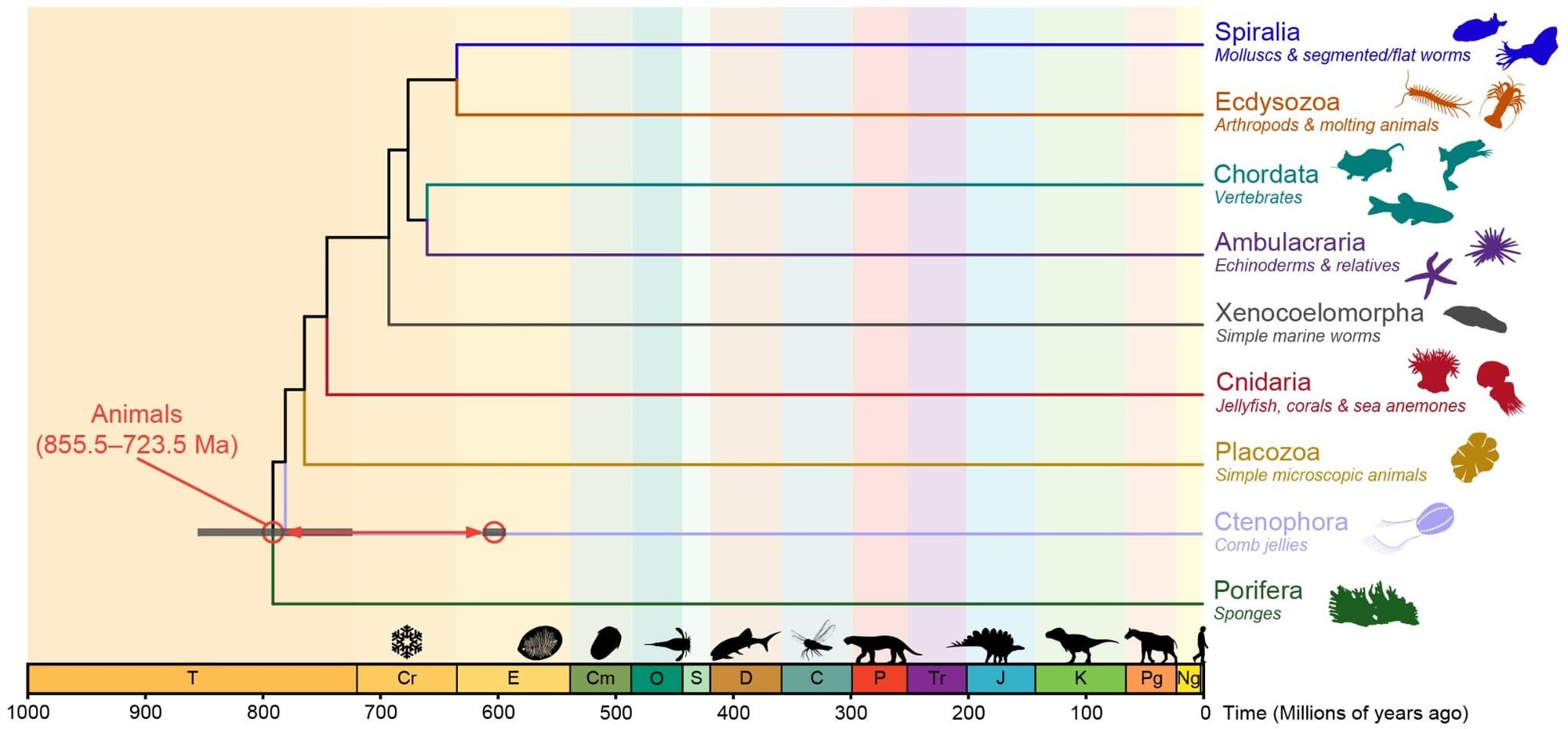
The earliest animals that are clearly preserved in the fossil record lived during the Ediacara period some 574 million years ago, but the origins of our diverse metazoan family are likely much older. Now, scientists suggest that animals may have appeared on Earth a whopping 800 million years ago, during the ancient Tonian era, according to a new estimate of the dawn of animals.

“The timing of the origin of animals on Earth has puzzled scientists for centuries,” said researchers led by Orin Lole Durbin who was at the University of Oxford during this research and is now at Virginia Tech. “Unambiguous animal body fossils within the Ediacara Macrobiota provide a hard minimum calibration of 574 [million years] for crown Metazoa. Animals must have evolved before this date. Determining a maximum calibration for animals (a date at which they had not yet evolved) is a more complex task.”

Our Solar System Is Terminally Unstable and Will Be Completely Destroyed, Study Finds

Estimated timeline for the origin of animals based on molecular clock analyses. The grey bar on the right of the image is the origin of animals based on an Ediacaran upper calibration. The grey bar to the left is the origin based on older deposits in the Tonian period, as suggested by the new study. Image: Orin Lole Durbin.

The team turned to molecular clock analysis, a technique that uses the rate of genetic mutations in lineages as a rough way to reconstruct evolutionary timelines. The researchers focused on two fossil deposits—China’s Weng'an Biota and Mongolia’s Kheseen Biota, which date back 590 and 550 million years respectively—to extend the possible timeline of animals back more than 200 million years earlier. 

If animals really did appear in the Tonian era, it means that our earliest metazoan ancestors survived episodes of so-called “Snowball Earth,” when our planet was almost fully covered in ice. These early critters were likely simple marine sponges and comb jellies that lived for hundreds of millions of years until their descendents exploded into the kaleidoscopic variety of animals that persist to this day.

“The possibility of a pre-Ediacaran origin and diversification of animals means we cannot discount hypotheses that link the timing of animal diversification to Cryogenian Snowball Earth glaciations,” according to the study. “The causes and trajectory of animal evolution will remain uncertain until paleontological and geochemical data provide sufficient confidence in maximum calibrations to ensure a reliable timescale.”

In short: Respect your sponge elders.  

In other news…

A pole-ing error

Domeier, Mathew et al. “Quadrupolar sea level fluctuations reveal episodes of rapid polar wander.” Science.

Earth is a roiling mess of shifting continents and squishy innards, a situation that constantly throws its spin axis off balance and prompts the geographic poles to drift. This phenomenon, known as true polar wander (TPW), is distinct from Earth’s wandering magnetic poles, which are shaped by interior core-mantle processes. 

Right now, TPW is clocked at a slow rate of 10 centimeters per year, but scientists have found evidence of “fast” episodes of TPW that pushed the poles off by thousands of miles over millions of years, which has knock-on effects for ocean and land distribution across the globe. 

A team has now pinpointed several of these fast episodes over the past 320 million years, “confirming that protracted rapid TPW has occurred on Earth and that couplings among Earth’s rotational dynamics, mantle processes, and surface environments can be strongly episodic,” according to their study.

“These findings refute the view of TPW as negligible or persistently slow and highlight the need to consider TPW as an episodic control on sea level change and likely other global environmental and biological dynamics,” said researchers led by Mathew Domeier of the University of Oslo. 

In addition to these long-term natural changes, recent human activity has slightly impacted TPW, especially the construction of dams and the glacial melt of anthropogenic climate change. So the next time you address a letter to Santa at the North Pole for your kid—or yourself, no judgement—make sure you have the most up-to-date coordinates.

It’s raining formaldehyde—formalallelujah! 

Koyama, Shungo et al “Global Distribution of Atmospheric Formaldehyde Deposition Correlated with Water Vapor on a Warm Early Mars.” The Planetary Science Journal.

Formaldehyde, the toxic chemical, has a bit of a morbid reputation—exposure to it can be fatal and it’s a common ingredient used to embalm corpses. But, paradoxically, formaldehyde (H2CO) also helped pave the way for the emergence of life on Earth as a precursor of bioessential elements such as sugars, amino acids, and nucleobases.

If life ever flourished on Mars, formaldehyde would likely also have been part of the story. To map out the possible distribution of the chemical on ancient Mars, scientists ran models of its atmosphere between 3.6 and 3.8 billion years ago, when the red planet was warmer and wetter. The results showed that formaldehyde was strongly associated with water vapor, suggesting that the chemical rained down from the ancient skies into Martian waterways.

“Significant atmospheric deposition of H2CO is observed over water bodies, including the northern ocean,” said researchers led by Shungo Koyama of Tohoku University. “We suggest that basins adjacent to persistently humid regions, which likely experienced H2CO accumulation and subsequent organic synthesis, could be potential landing sites for future missions to investigate ancient chemical evolution and whether it led to the origin of life.”

Hopefully, future missions to Mars will leave any signs of life with no place left to formalde-hide. 

Update the cosmic actuary tables

Batygin, Konstantin et al. “Terminal Instability of the Solar System Triggered by Stochastic Solar Mass Loss.” The Astrophysical Journal Letters.

I hate to be the bearer of bad news, but the solar system has been diagnosed with terminal instability and has been given a mere six billion years to live.  

That’s the upshot of a new study that modelled the solar system’s future as the Sun becomes a red giant star and, ultimately, collapses into a stellar husk called a white dwarf. 

Though the dying Sun will consume Mercury, Venus, and perhaps even Earth, scientists have previously assumed that the giant outer planets might be relatively unscathed by its death—perhaps surviving for up to 100 billion years after the main-sequence lights go out. But updated simulations suggest that these distant objects may be thrown into fatal chaos as early as the red giant phase, and that they are unlikely to survive more than a billion years after the Sun’s transition to a white dwarf.

Our Solar System Is Terminally Unstable and Will Be Completely Destroyed, Study Finds
The future of Earth is bright, literally. Image: Celestia

“[Isaac] Newton, contemplating the drifting orbits of Jupiter and Saturn, suspected that the planetary order was mortal, and three centuries of celestial mechanics…have progressively deferred that verdict, most recently to timescales far beyond the age of the Universe,” said researchers led by Konstantin Batygin of the California Institute of Technology. “Our results return the solar system’s dissolution to astrophysically familiar territory, and relocate its cause: not the slow seep of chaos, nor the chance encounter with a passing star, but the Sun itself, which in dying does not merely enlarge the planetary system it built—it shakes it, and more often than not, spills it.”

“Newton’s envisioned instability is real after all,” the team. “He was mistaken only about the perpetrator.”

What a great story to kick off this spooky season! Planetary order is mortal, but cosmic horror is eternal. 

Thanks for reading! See you next week.

❌