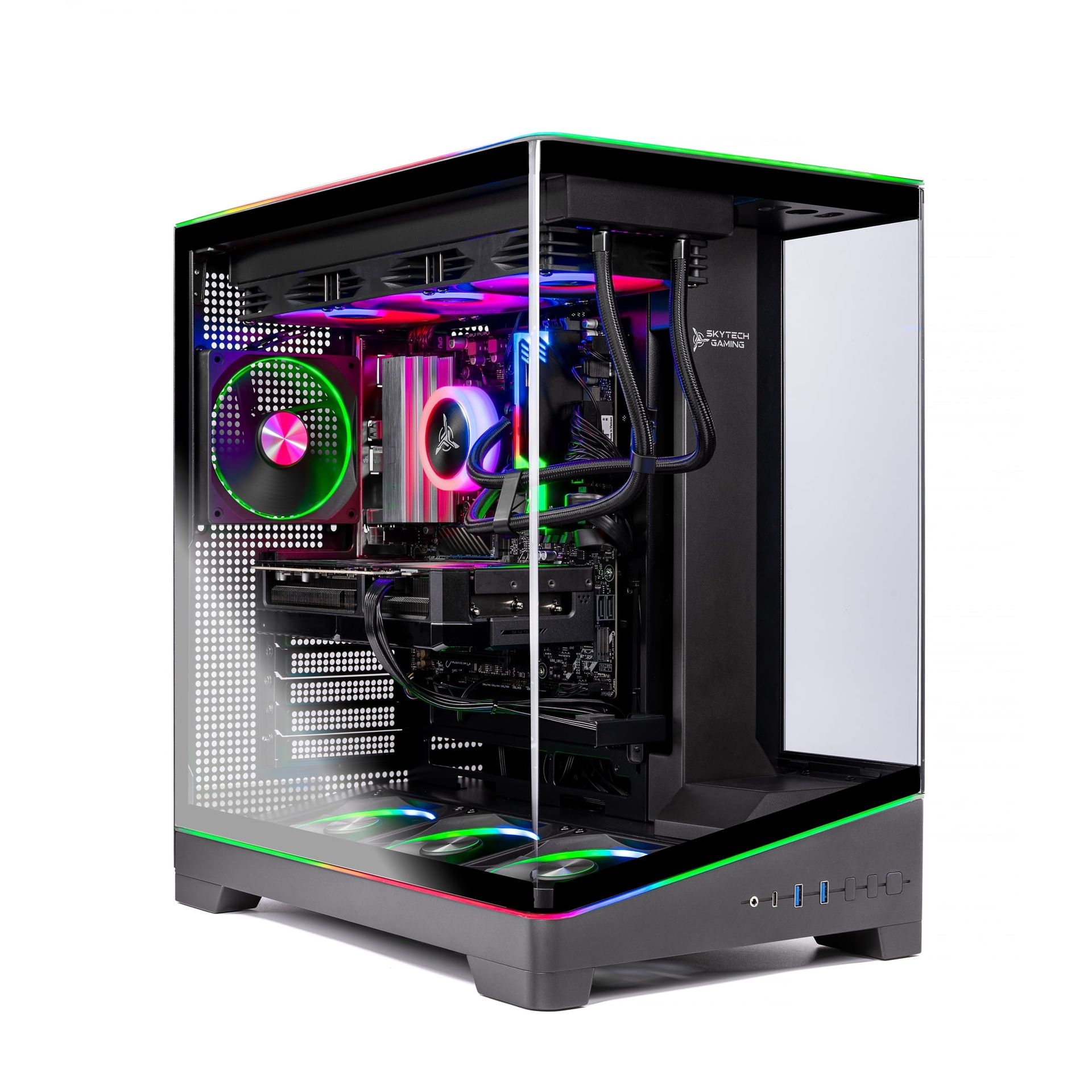
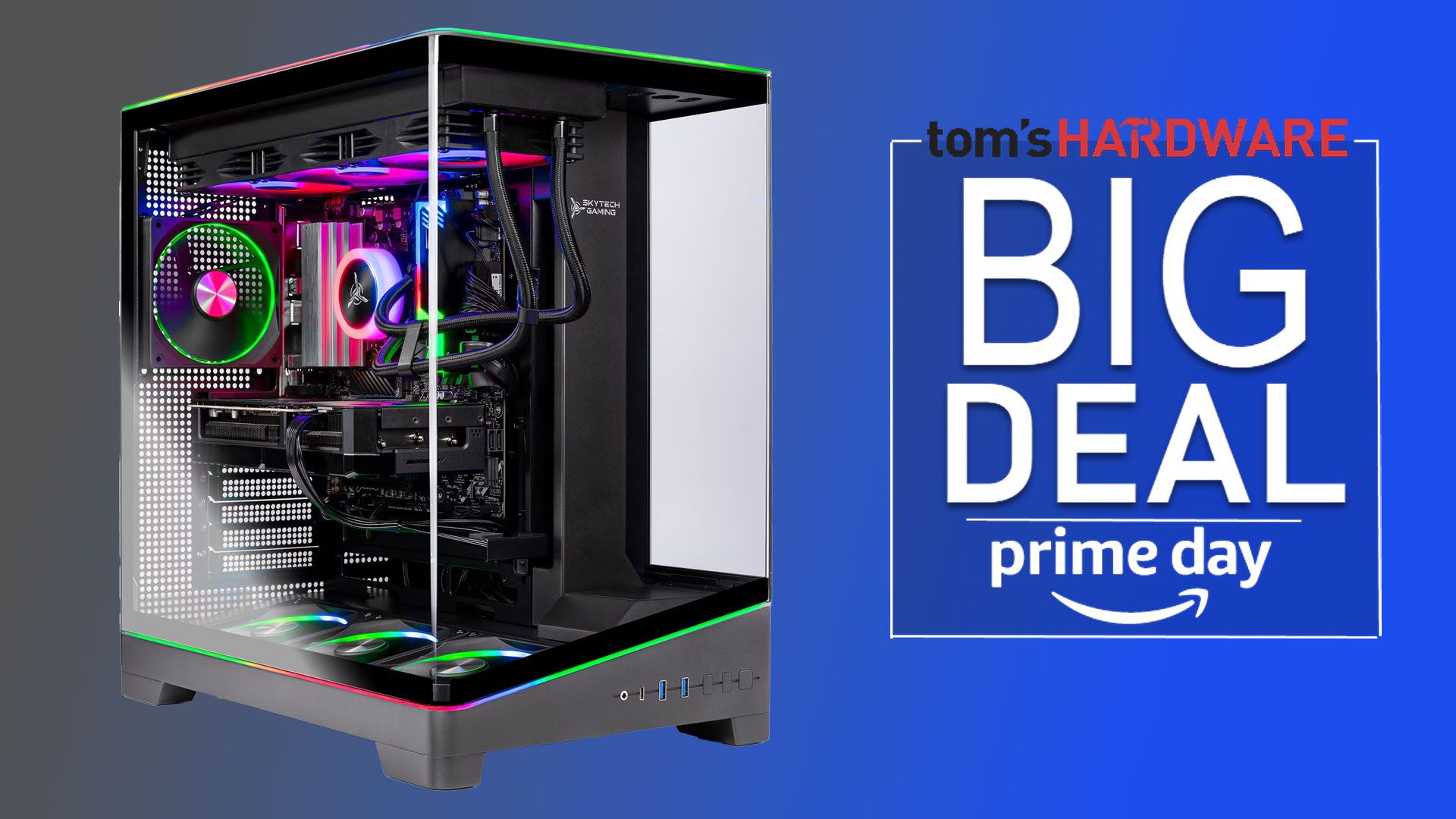
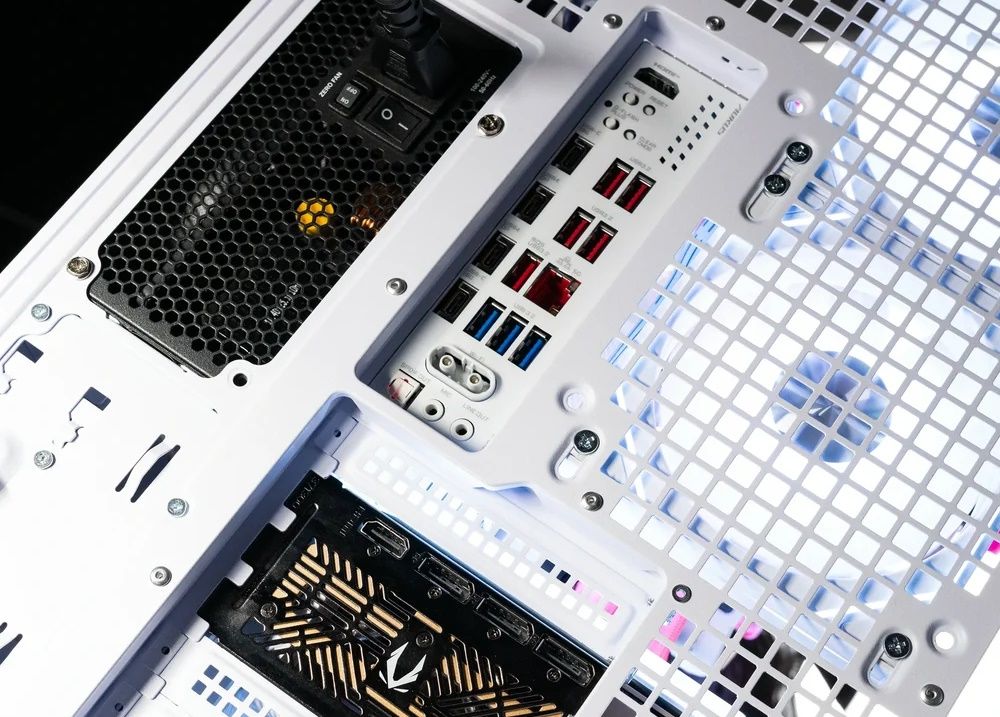
We've seen some sweet deals on entry-level and high-end prebuilts during this Prime Day event, but a great midrange system has been a little harder to find. We've uncovered some treasure, though, in the form of Skytech Gaming's Harpy prebuilt. This PC pairs a Ryzen 7 7800X3D CPU with a powerful GeForce RTX 5070 graphics card and 32GB of DDR5-6000 memory, all for just $1799 right now.
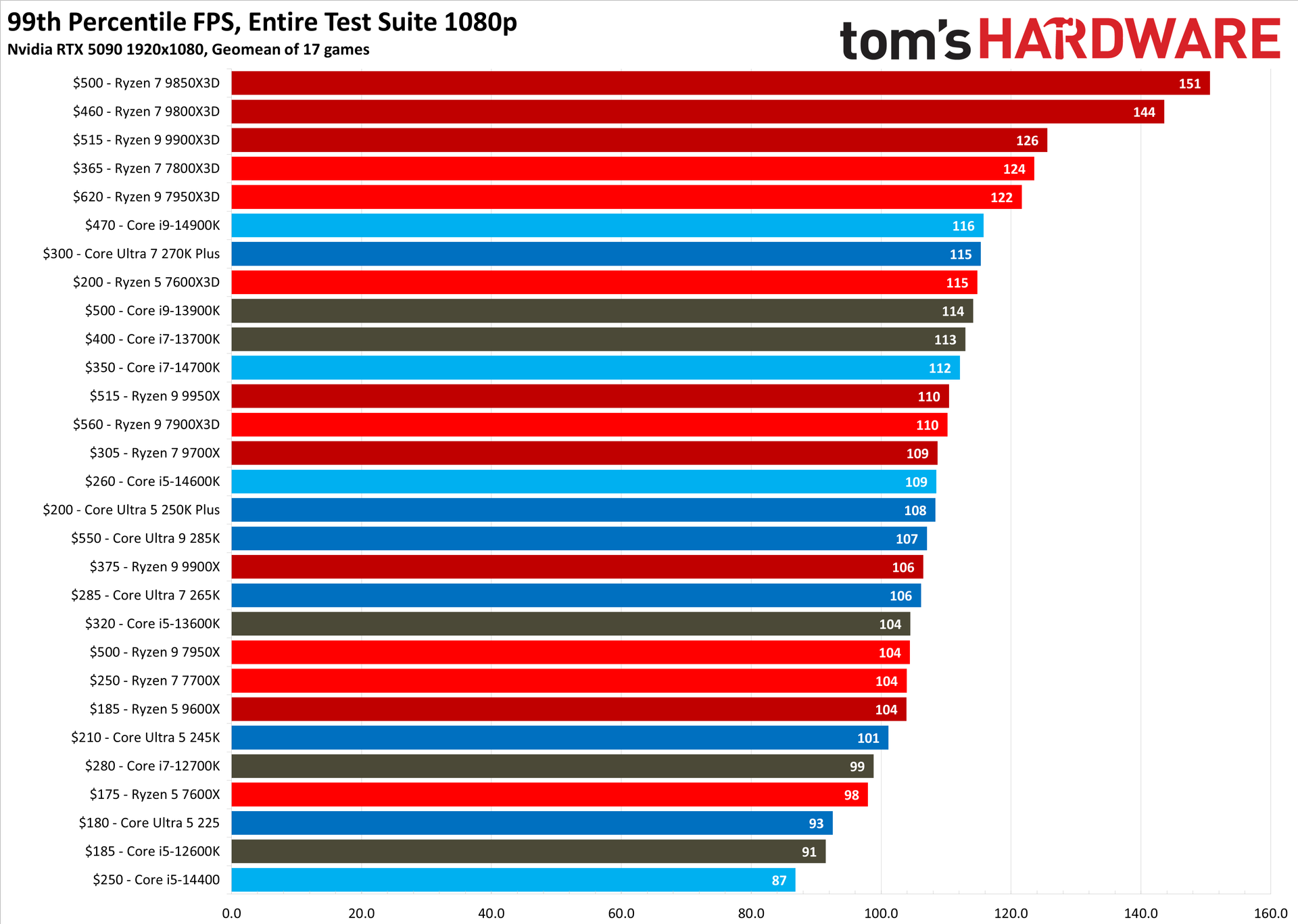
The Ryzen 7 7800X3D isn't AMD's latest and greatest gaming champ any longer, but its 3D V-Cache still lets it land in fifth place in our demanding CPU hierarchy game testing.
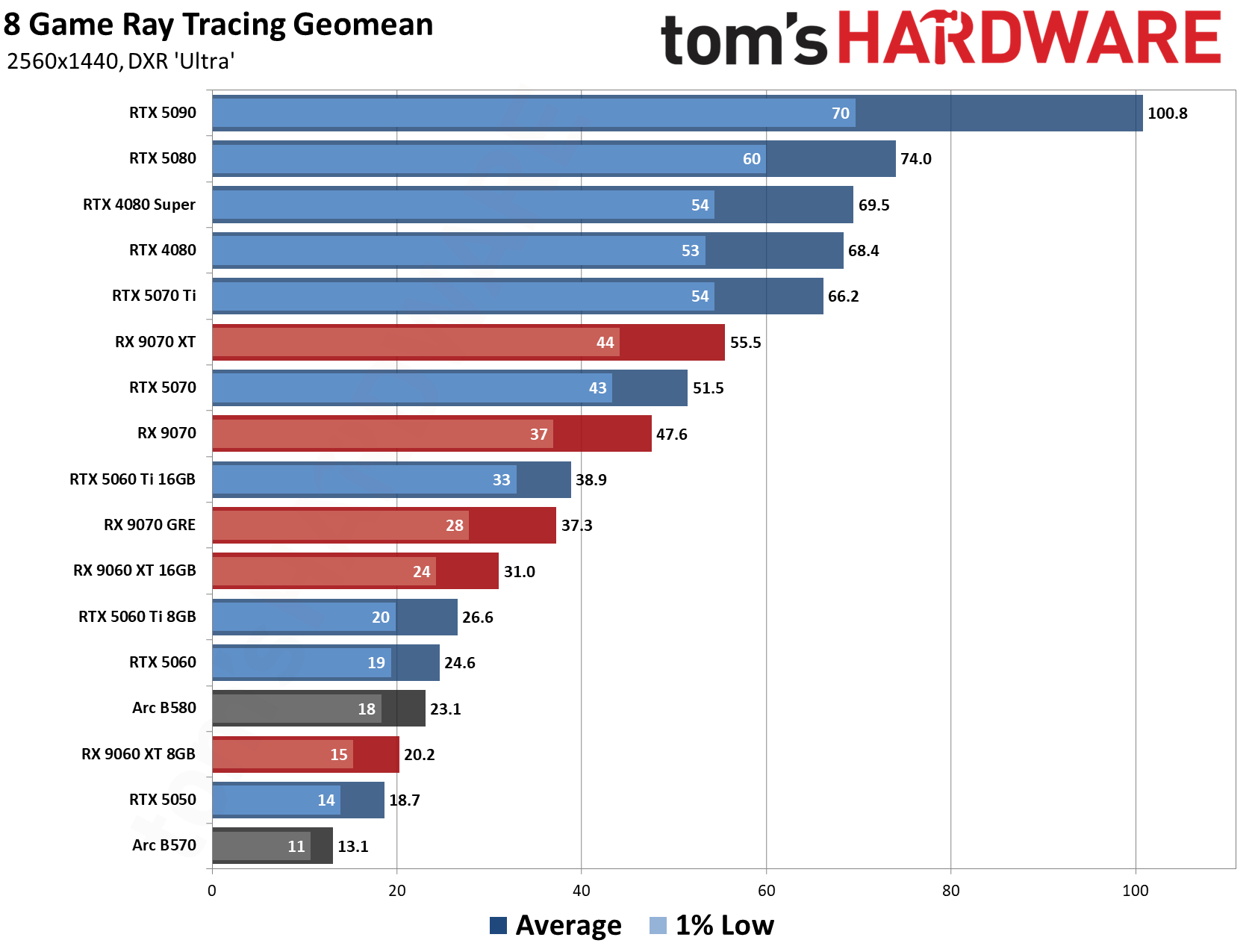
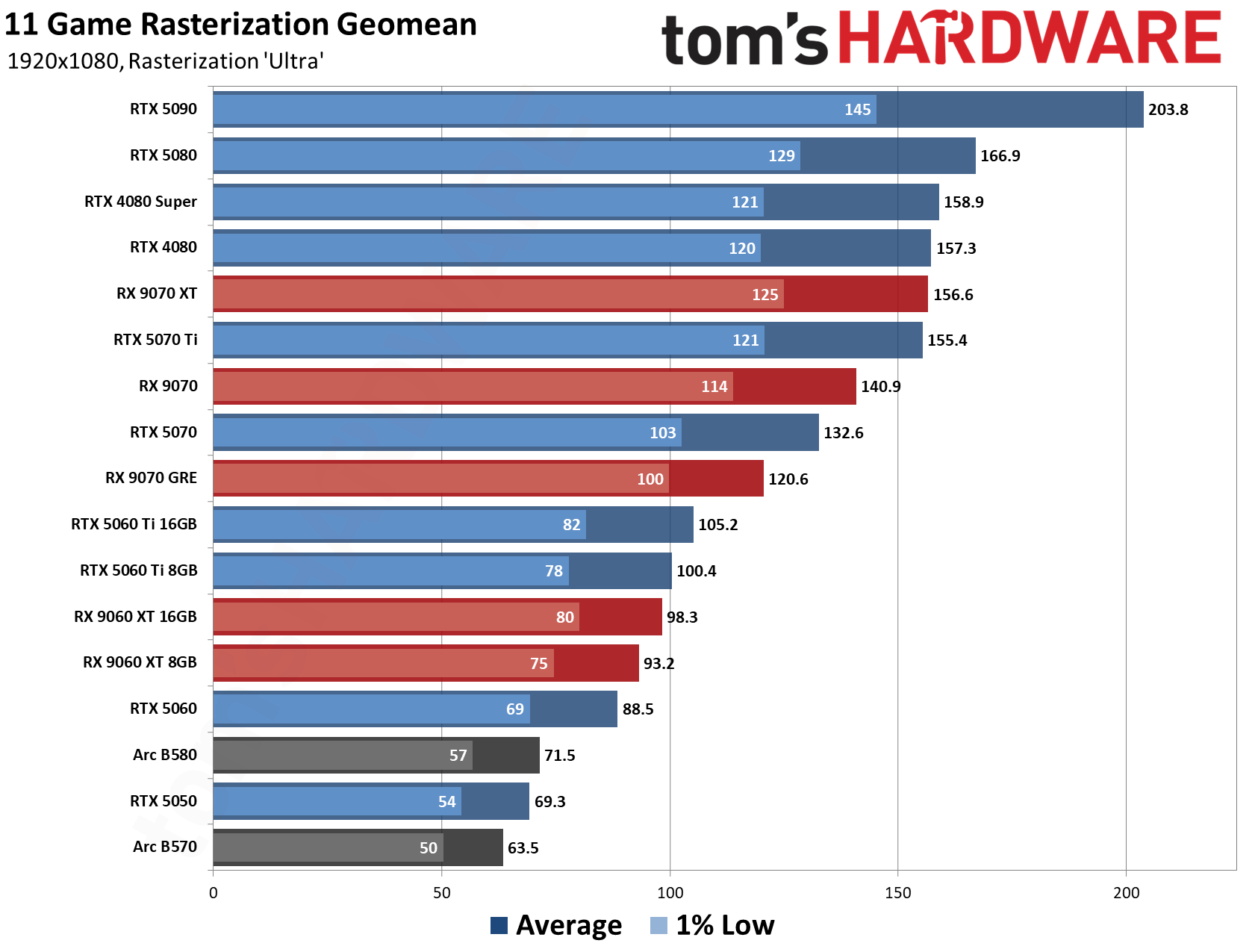
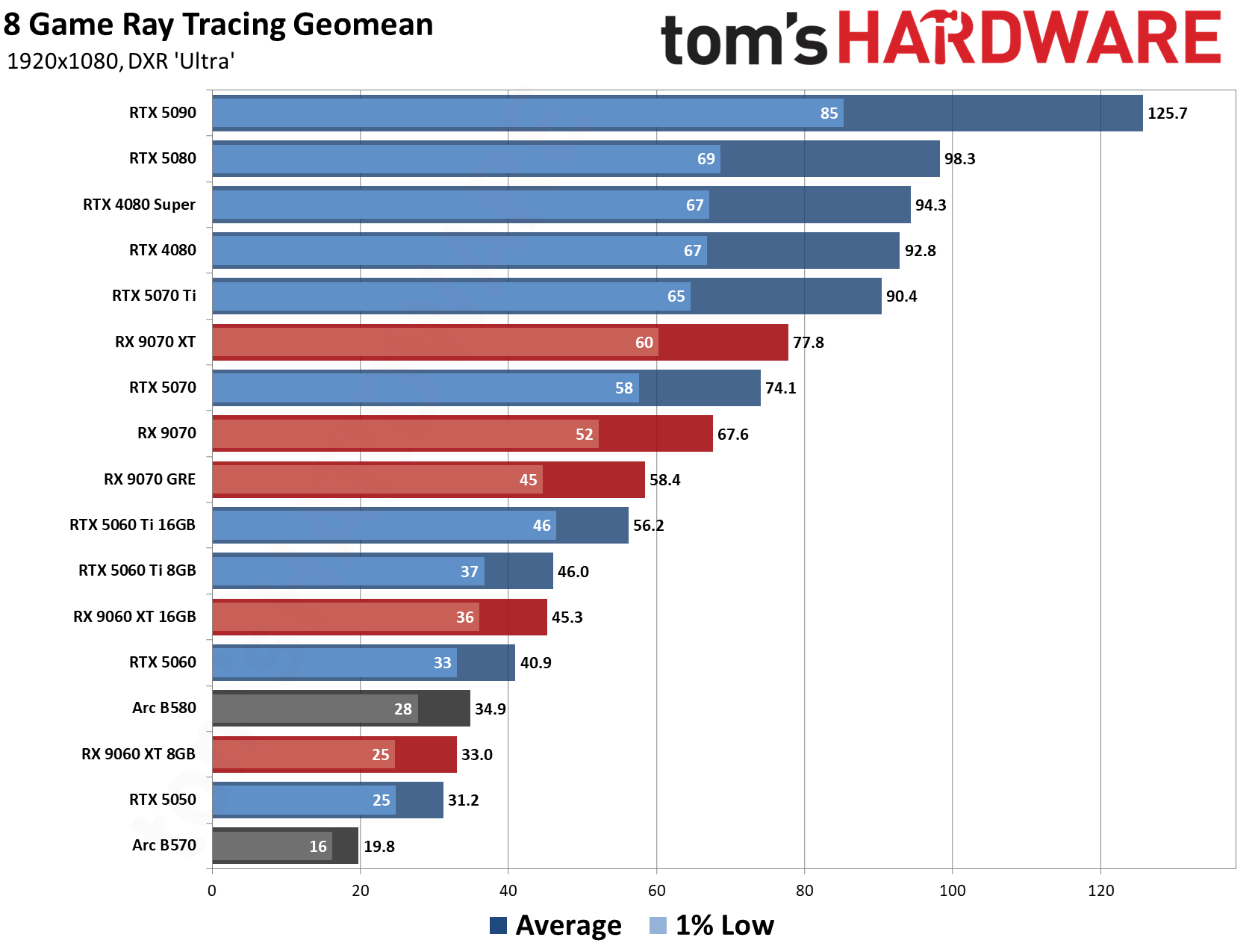
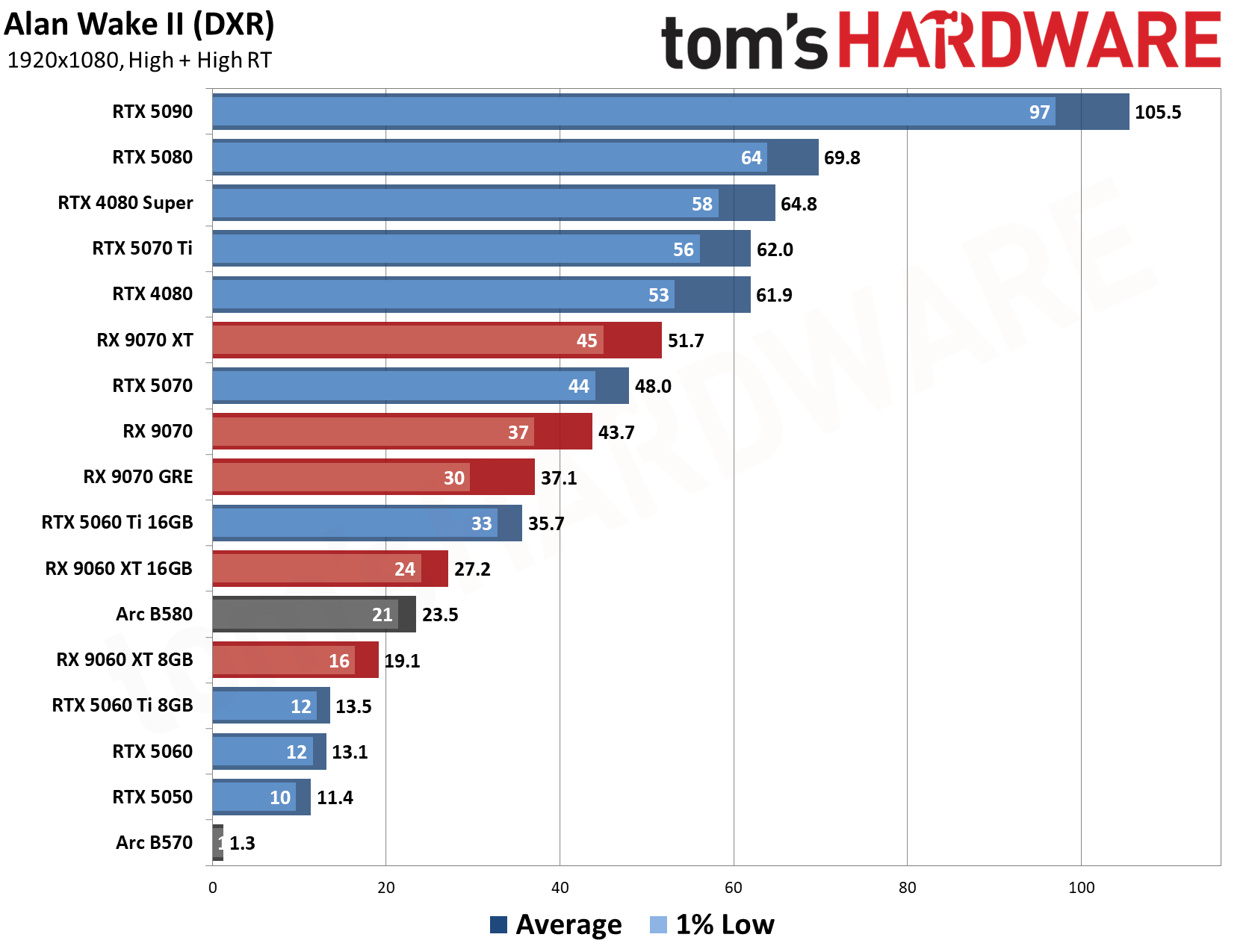
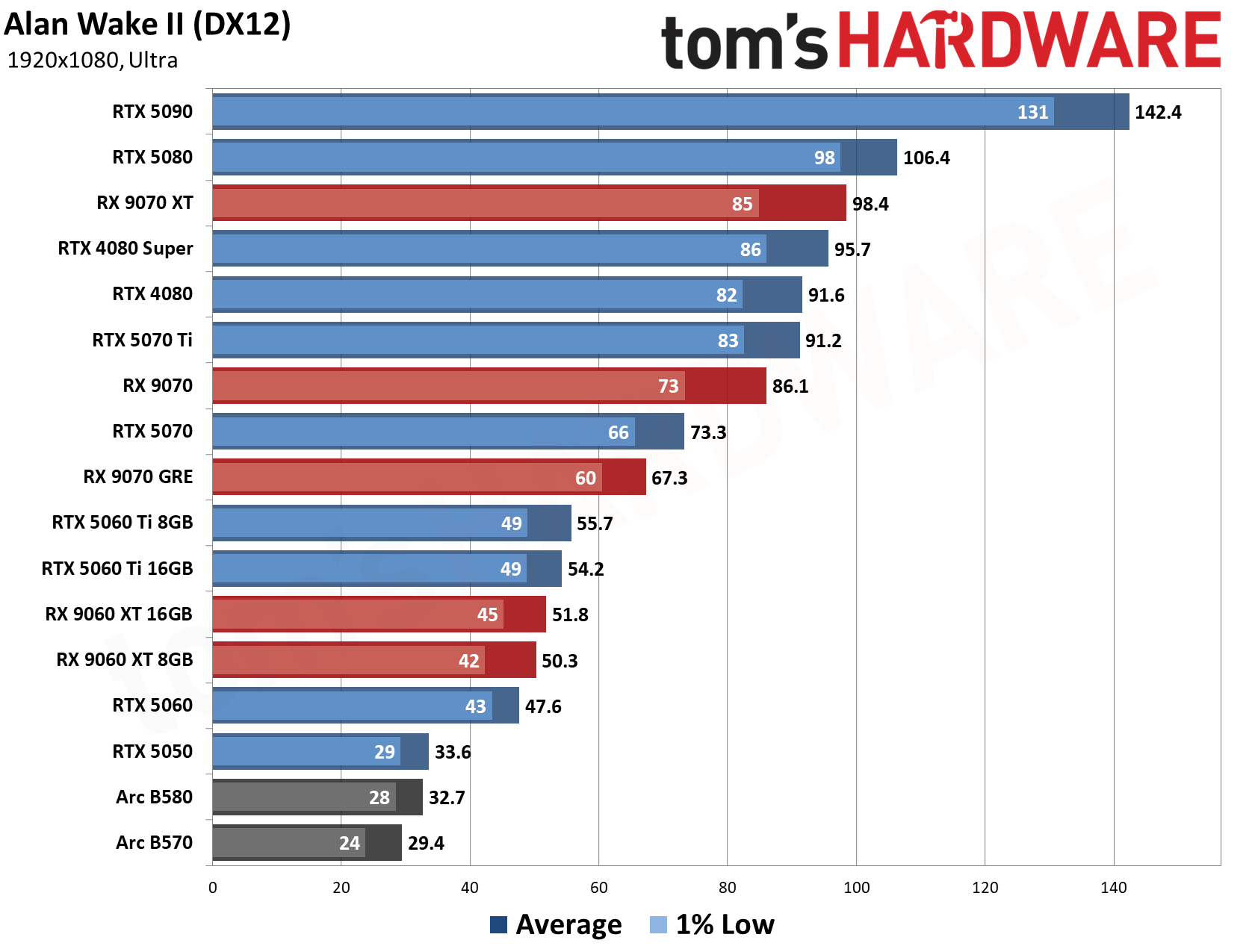
You'll want that cutting-edge tech at hand because the RTX 5070 has enough juice to power enviable high-refresh-rate gaming experiences at 1080p and 1440p even before you start dialing in DLSS 4.5 upscaling and Multi Frame Generation. It's ready to deliver great performance in demanding RT and path-traced titles like Gears of War: E-Dayand Control Resonant.
This system only includes a 1TB SSD, but given its otherwise excellent specs for the price, we think it's worth having to live with the possibility that you might have to shuffle games around occasionally. And if you have an older drive from another build, you can probably find space to bring it over without much trouble.
Skytech rounds out this system with a 360mm liquid cooler, an 850W 80 Plus Gold PSU, and a fancy case with a wraparound tempered glass panel to show off the components inside.
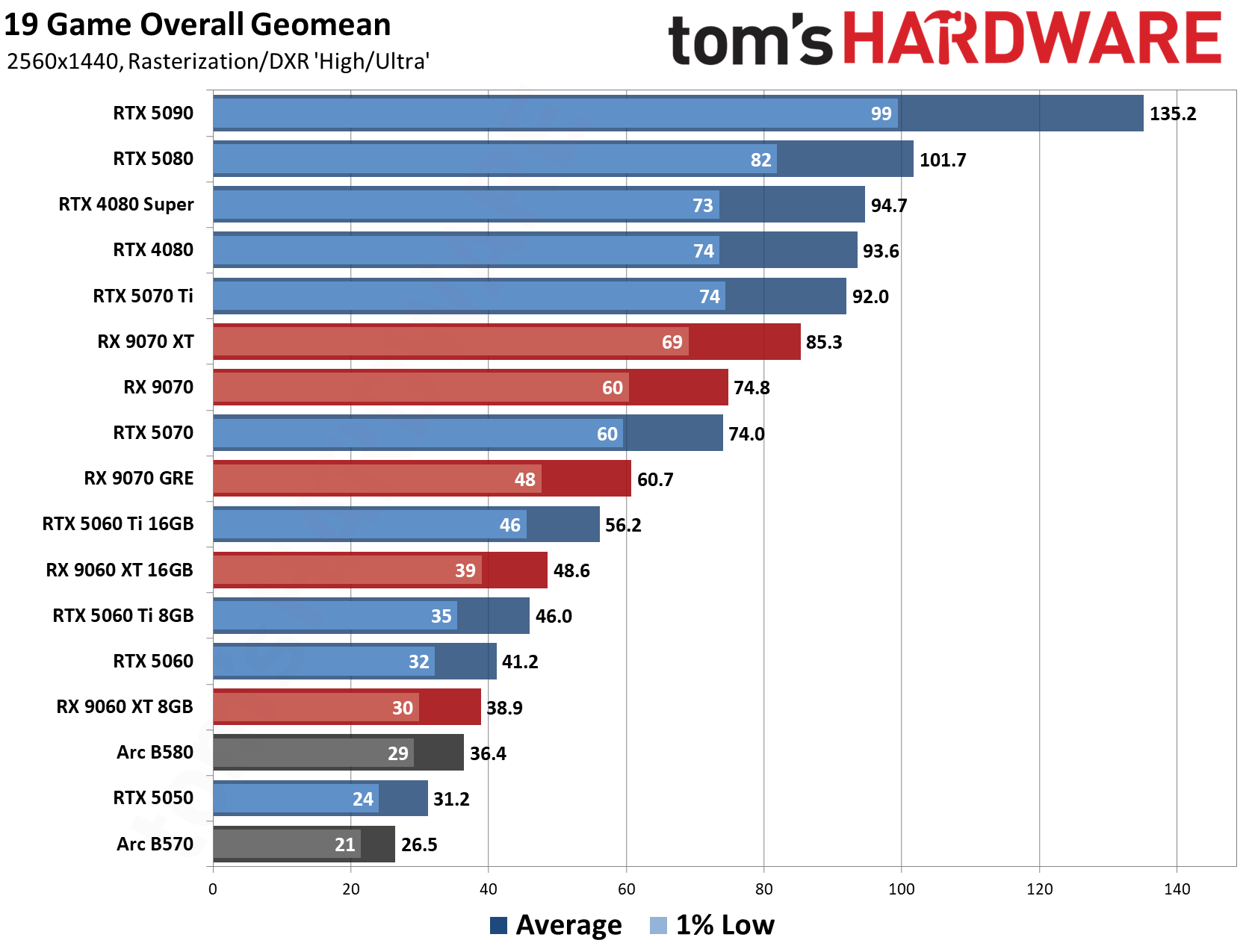
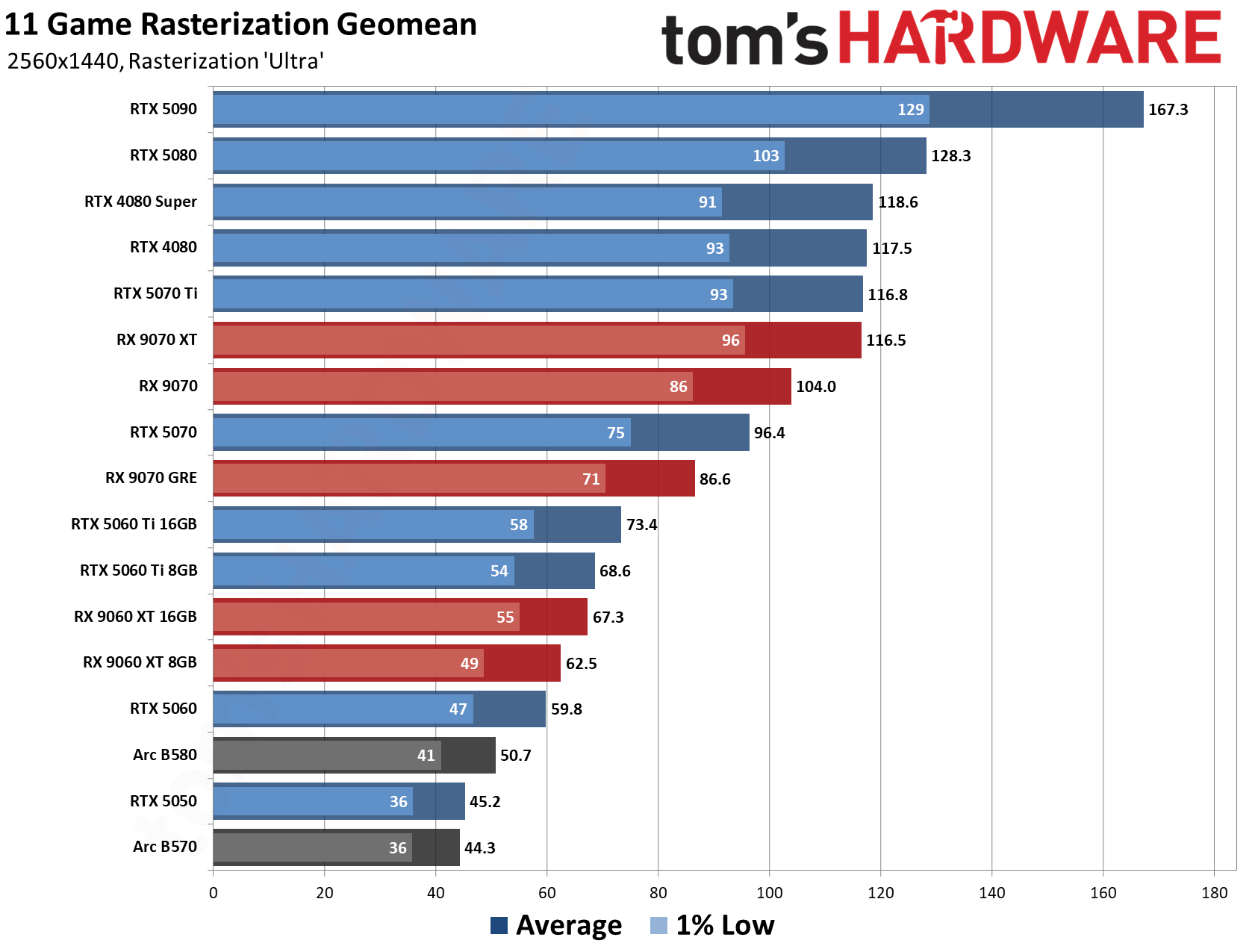
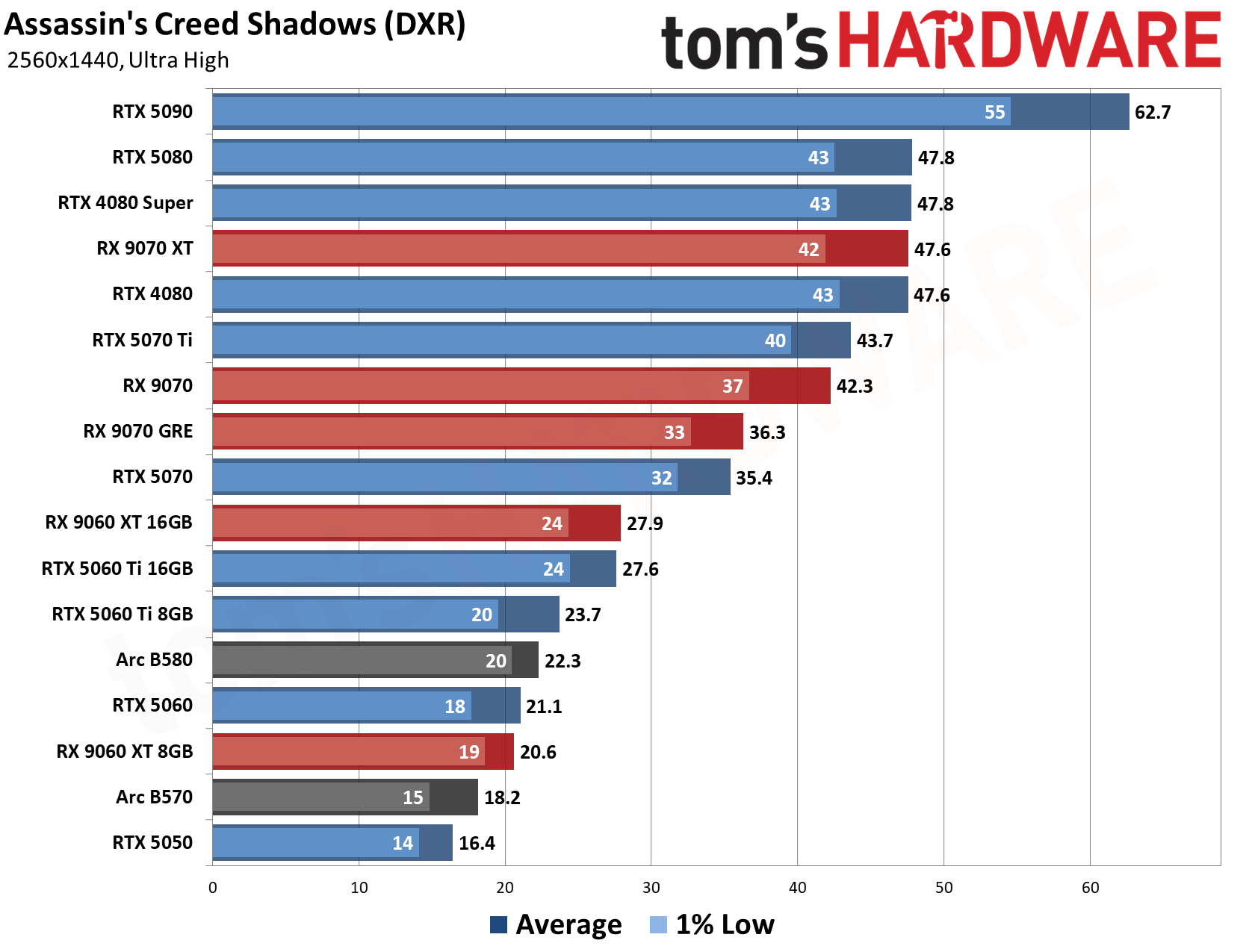
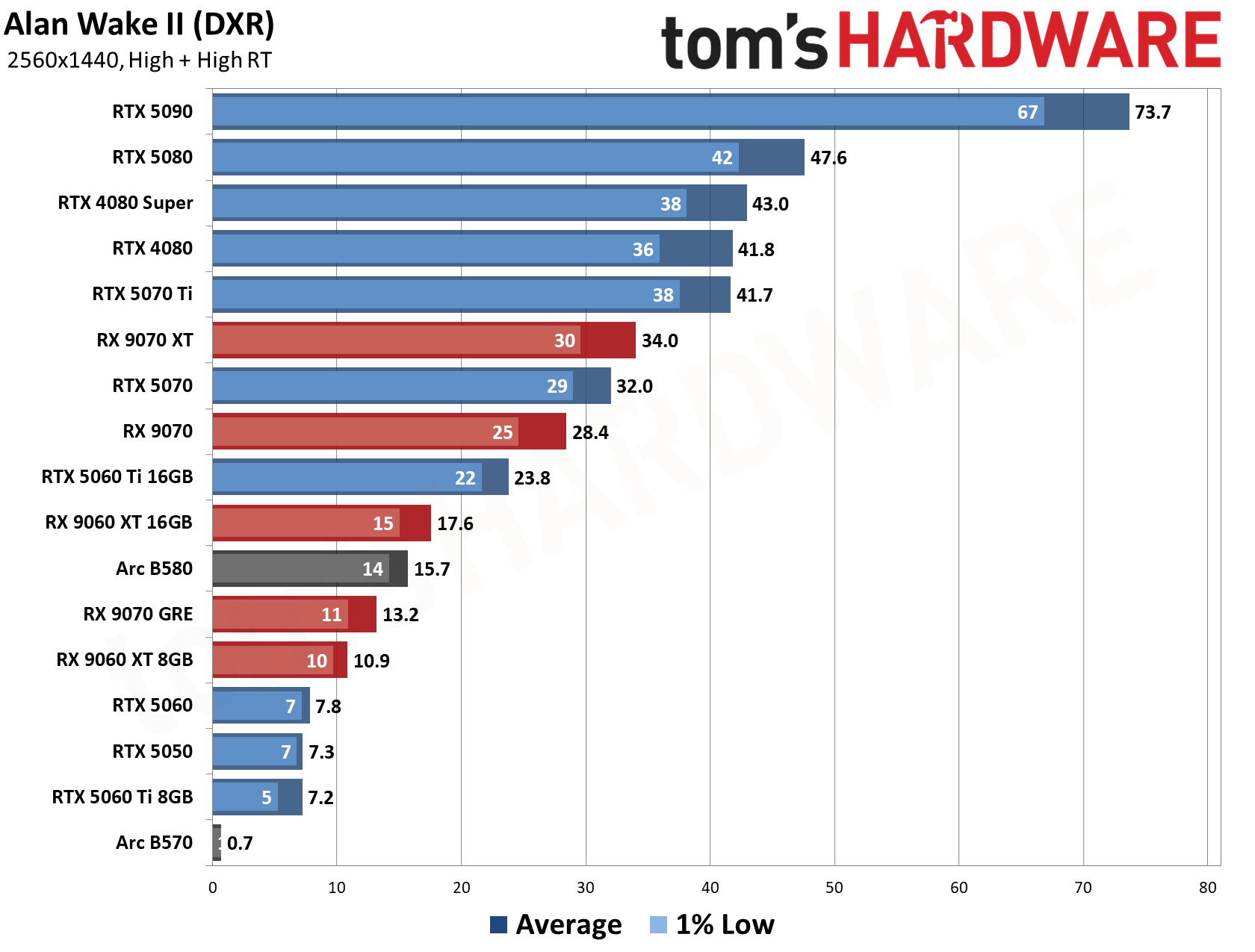
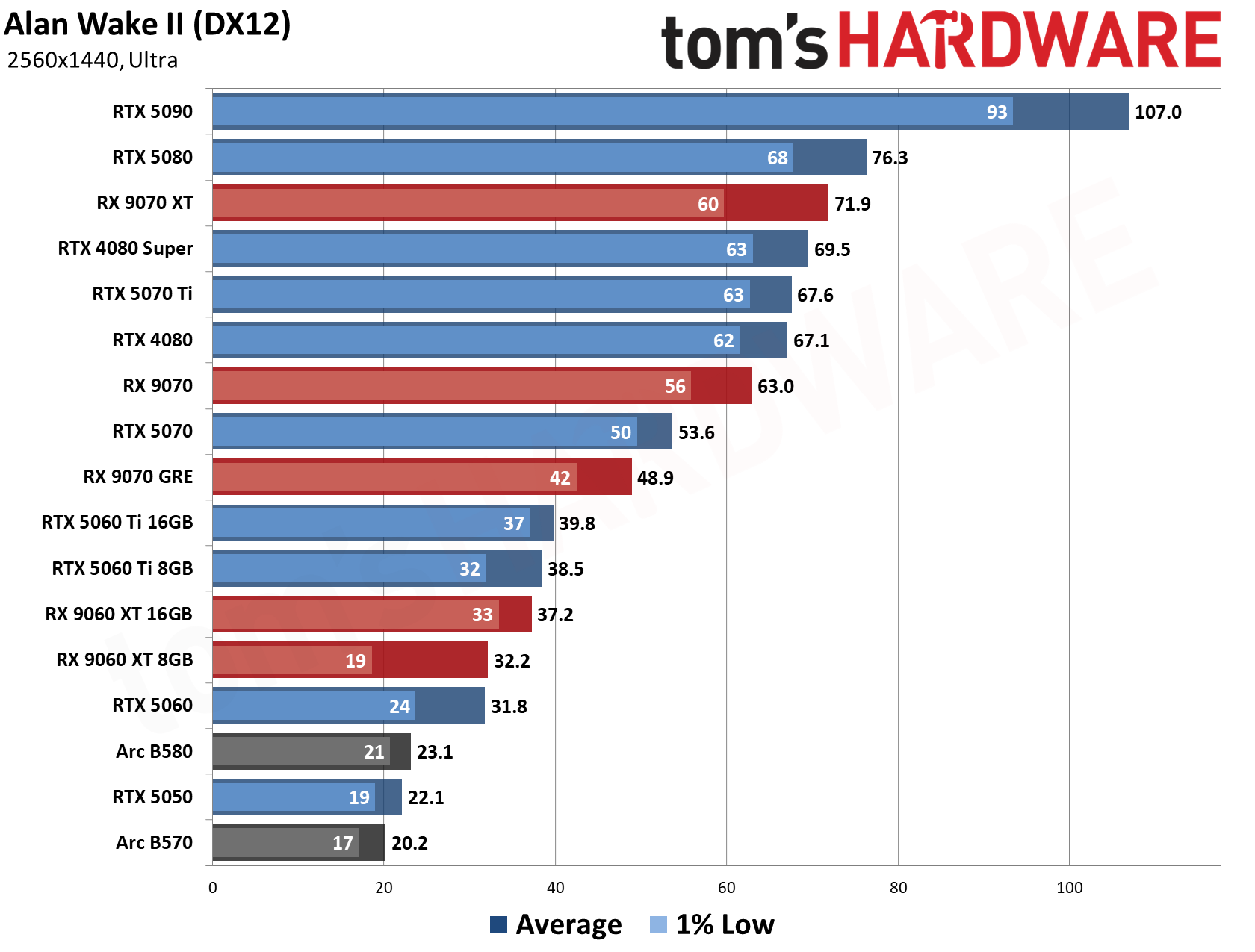
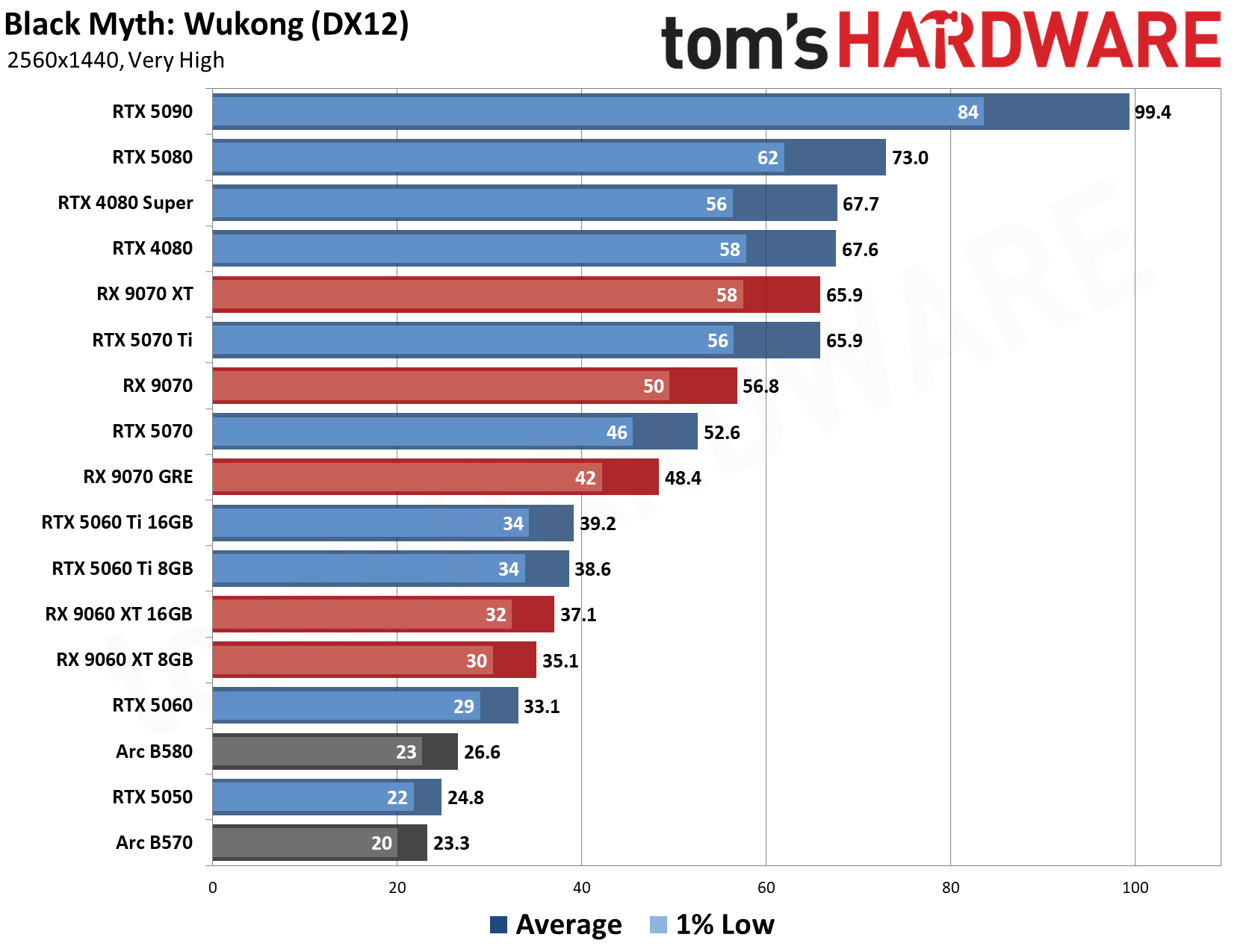
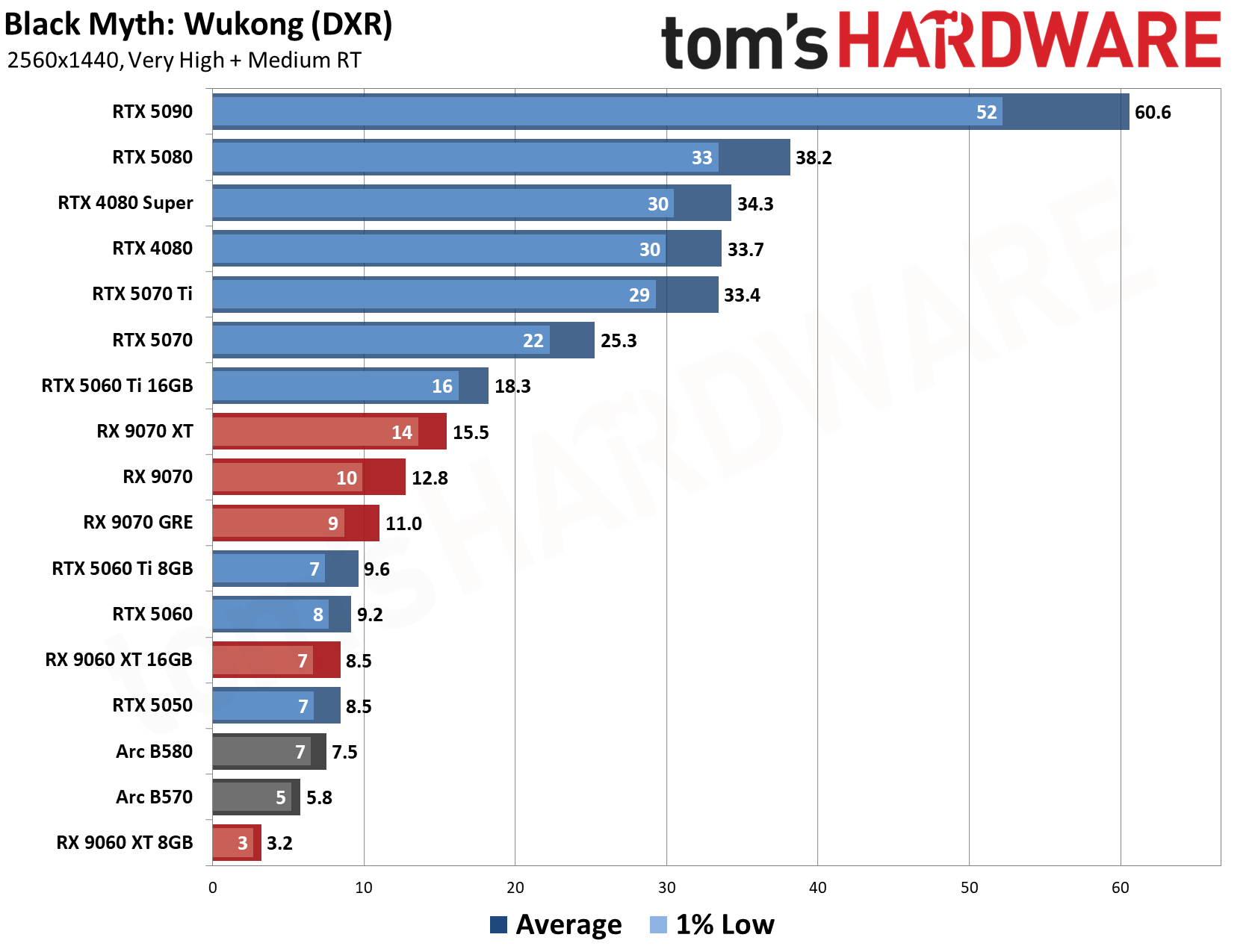
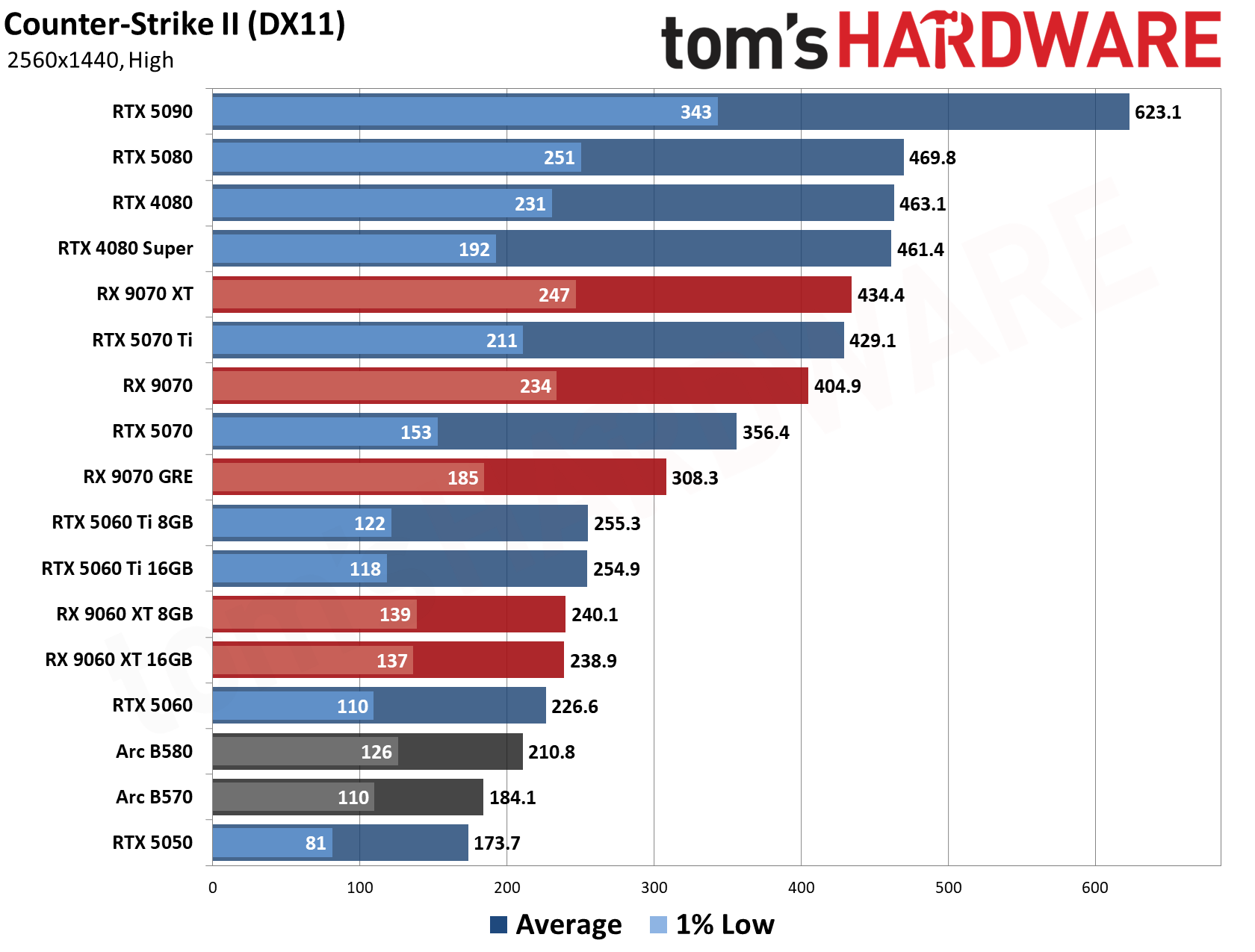
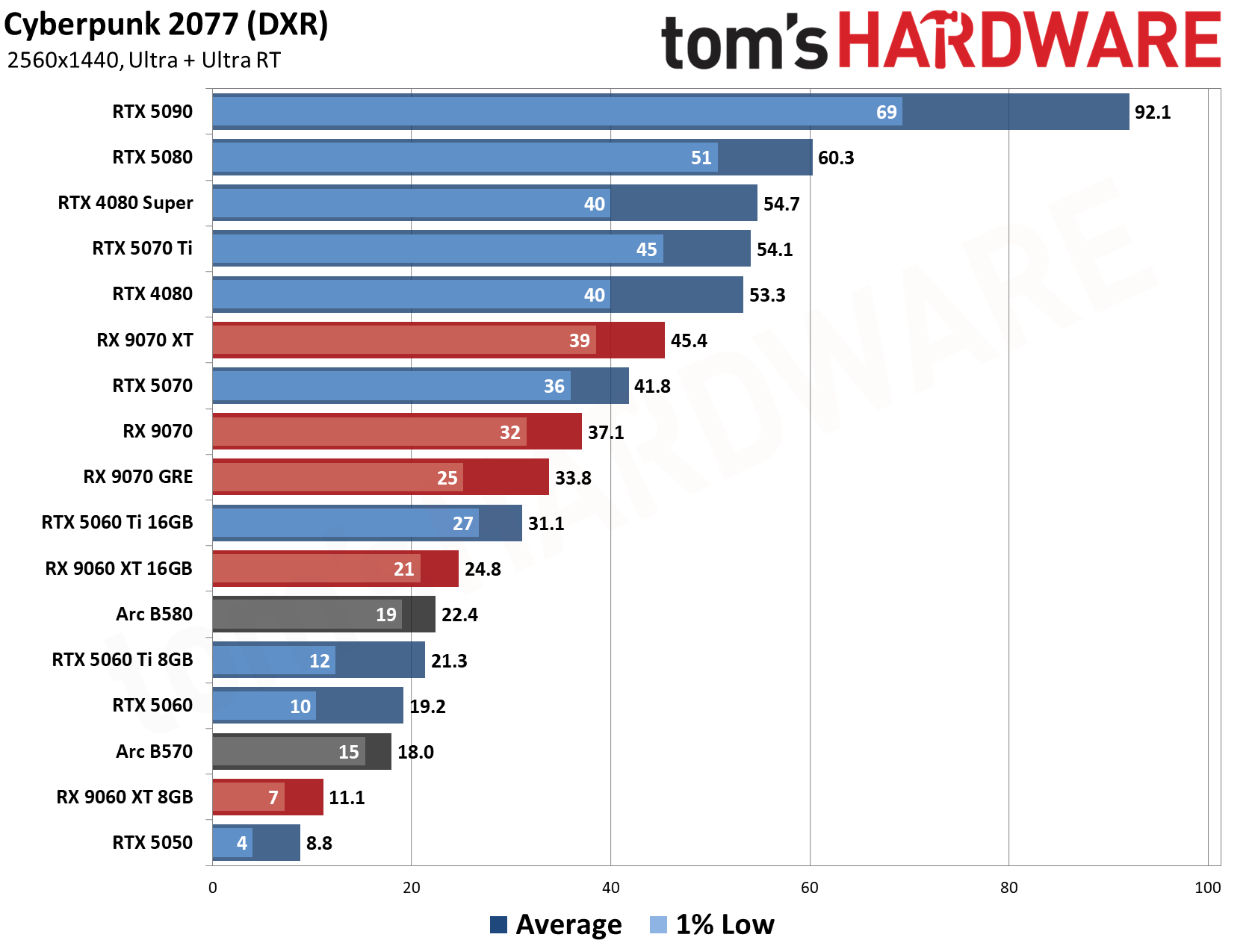
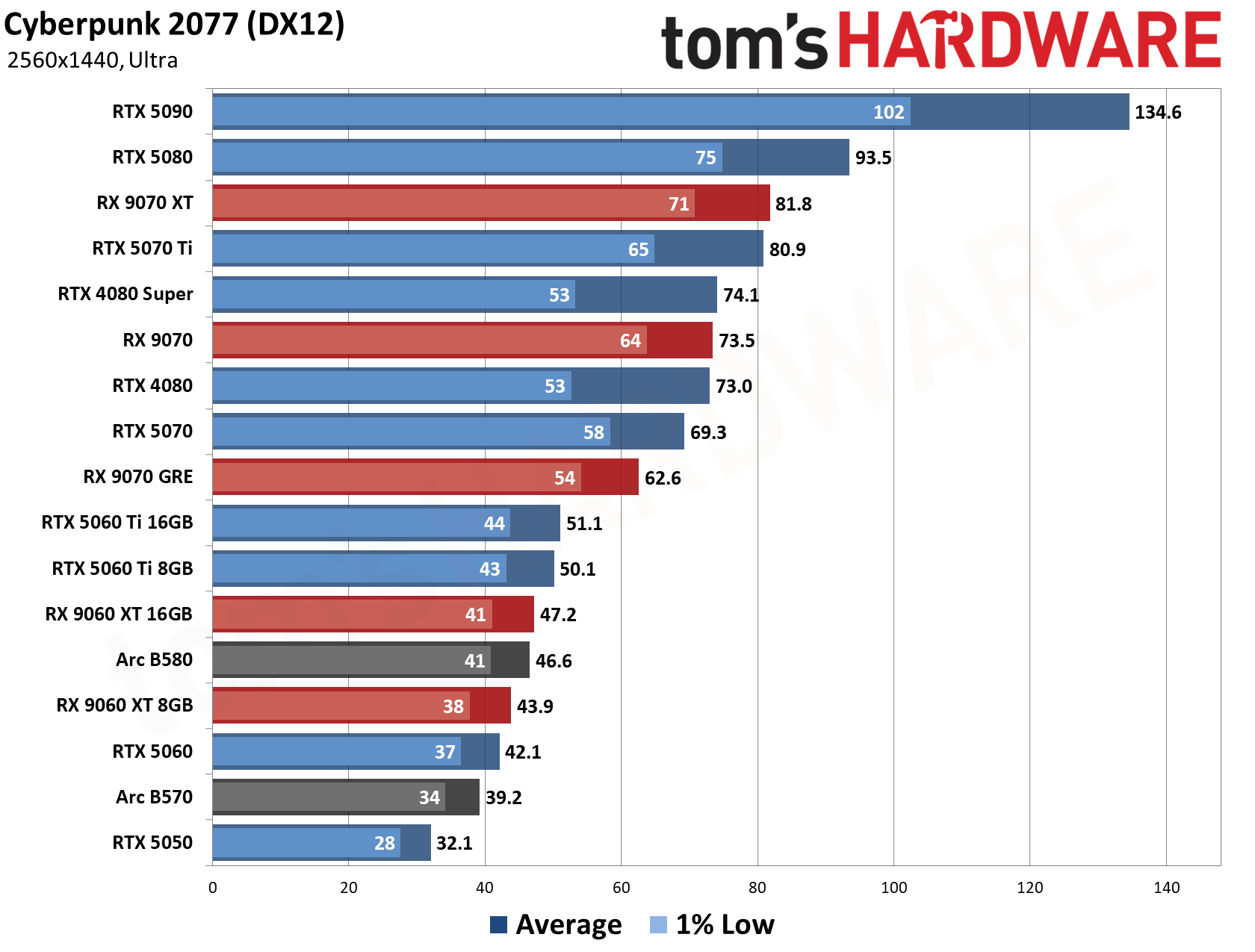
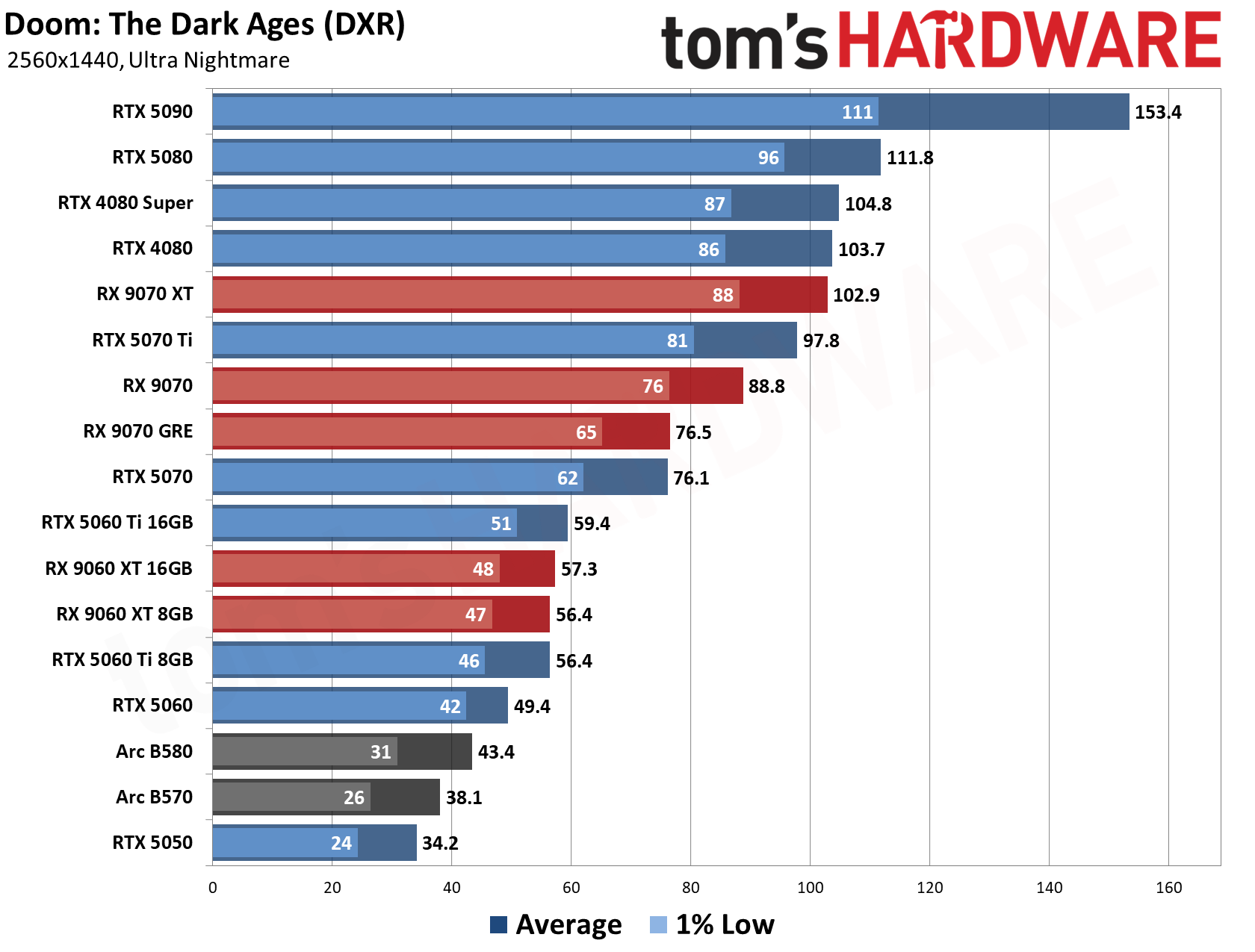
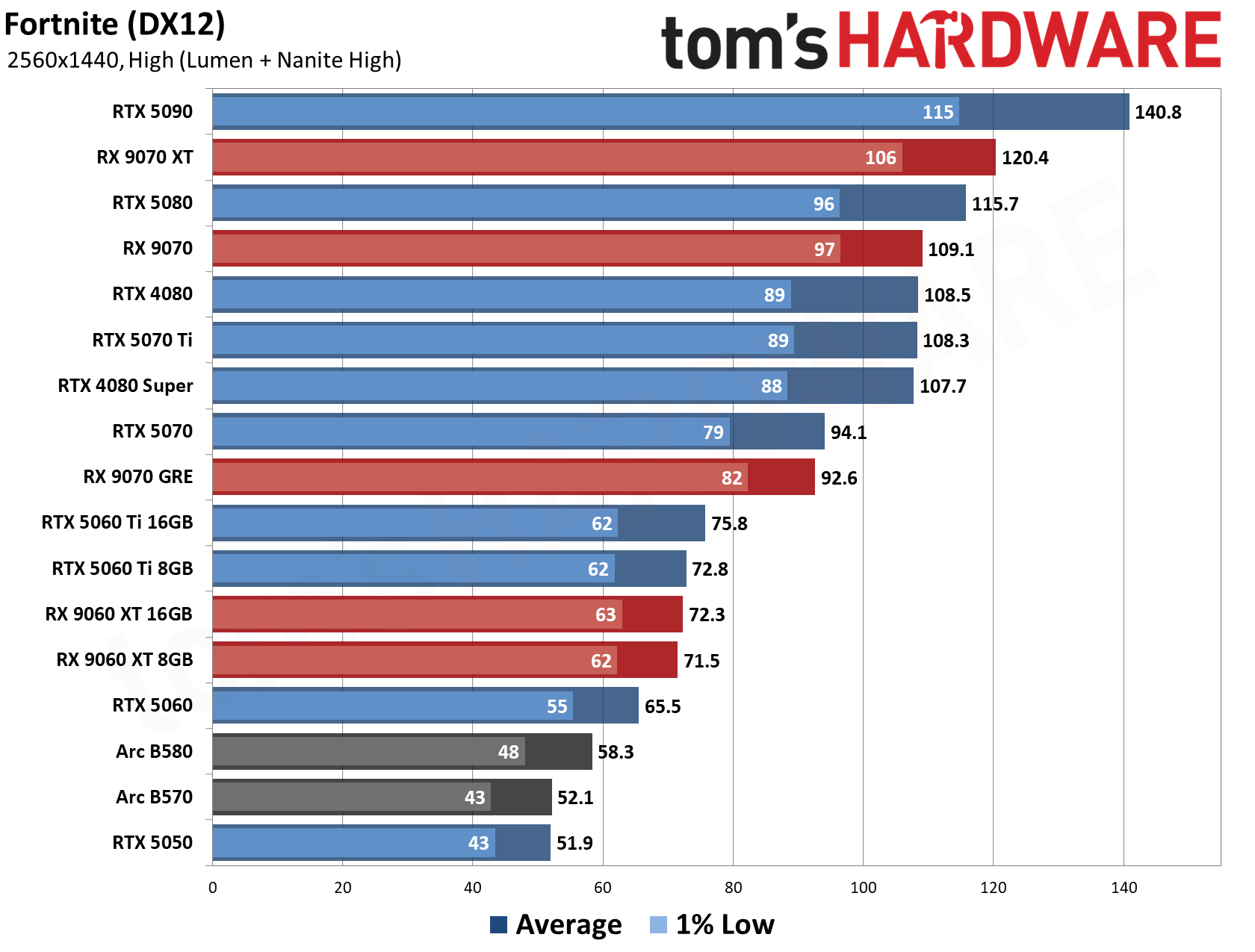
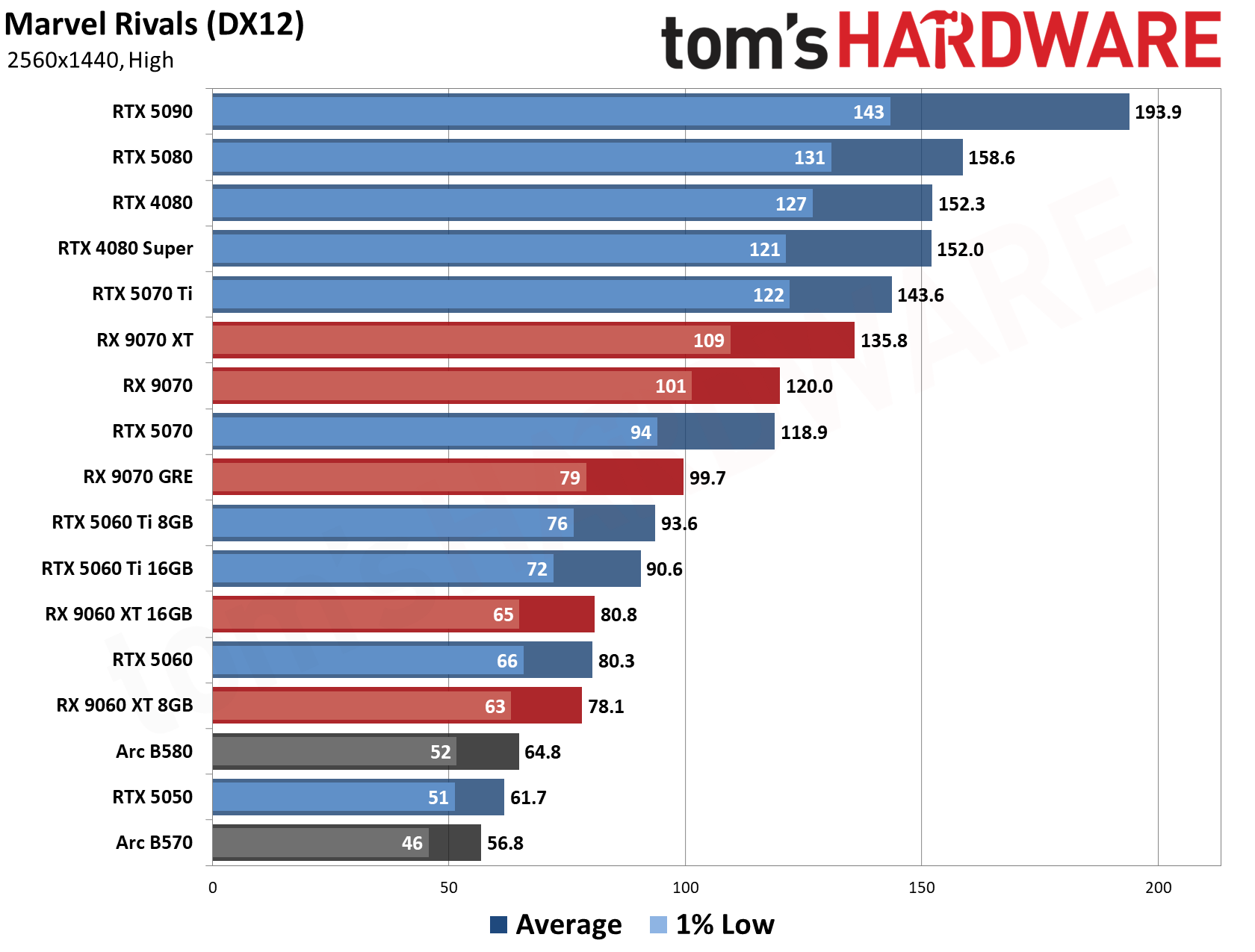
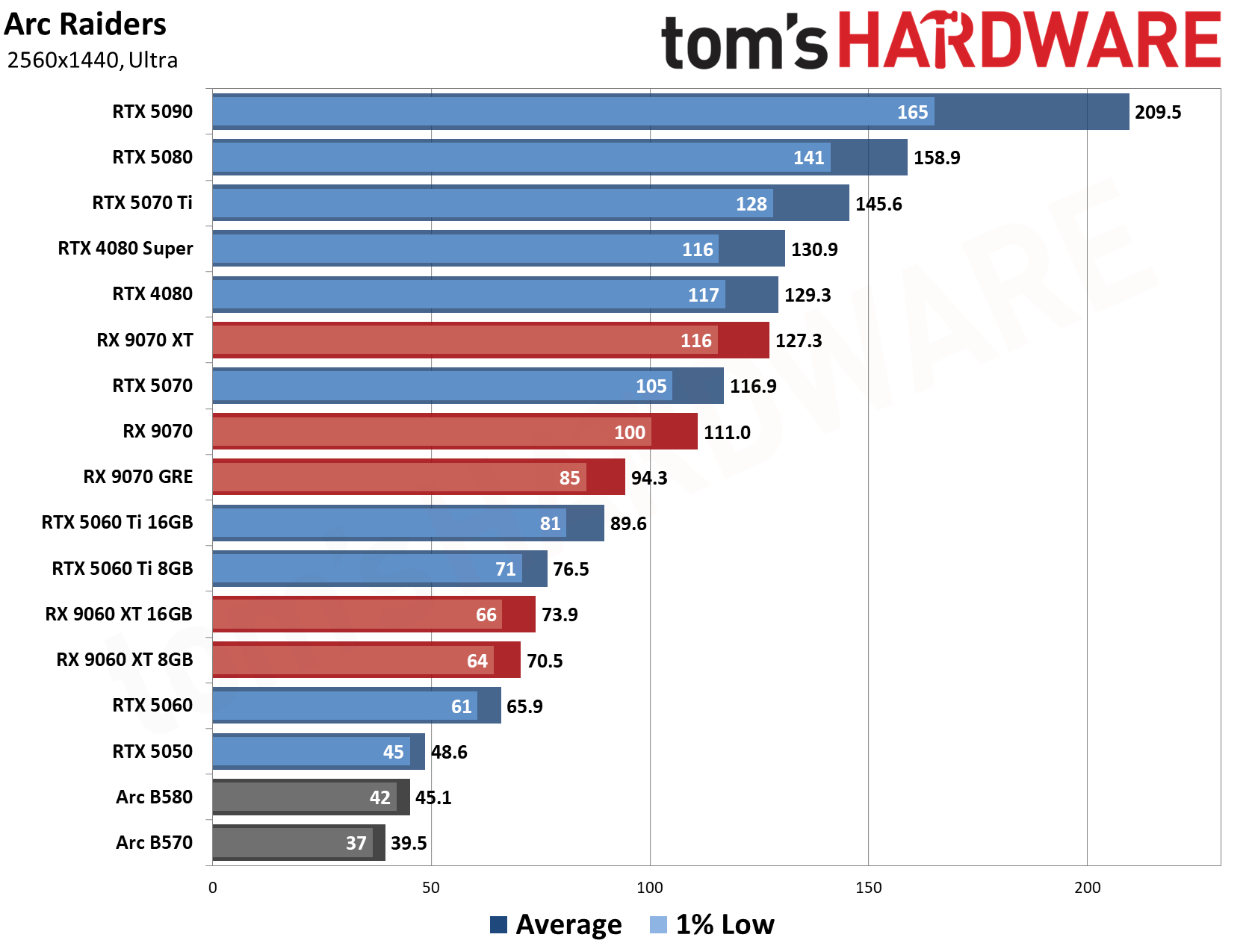
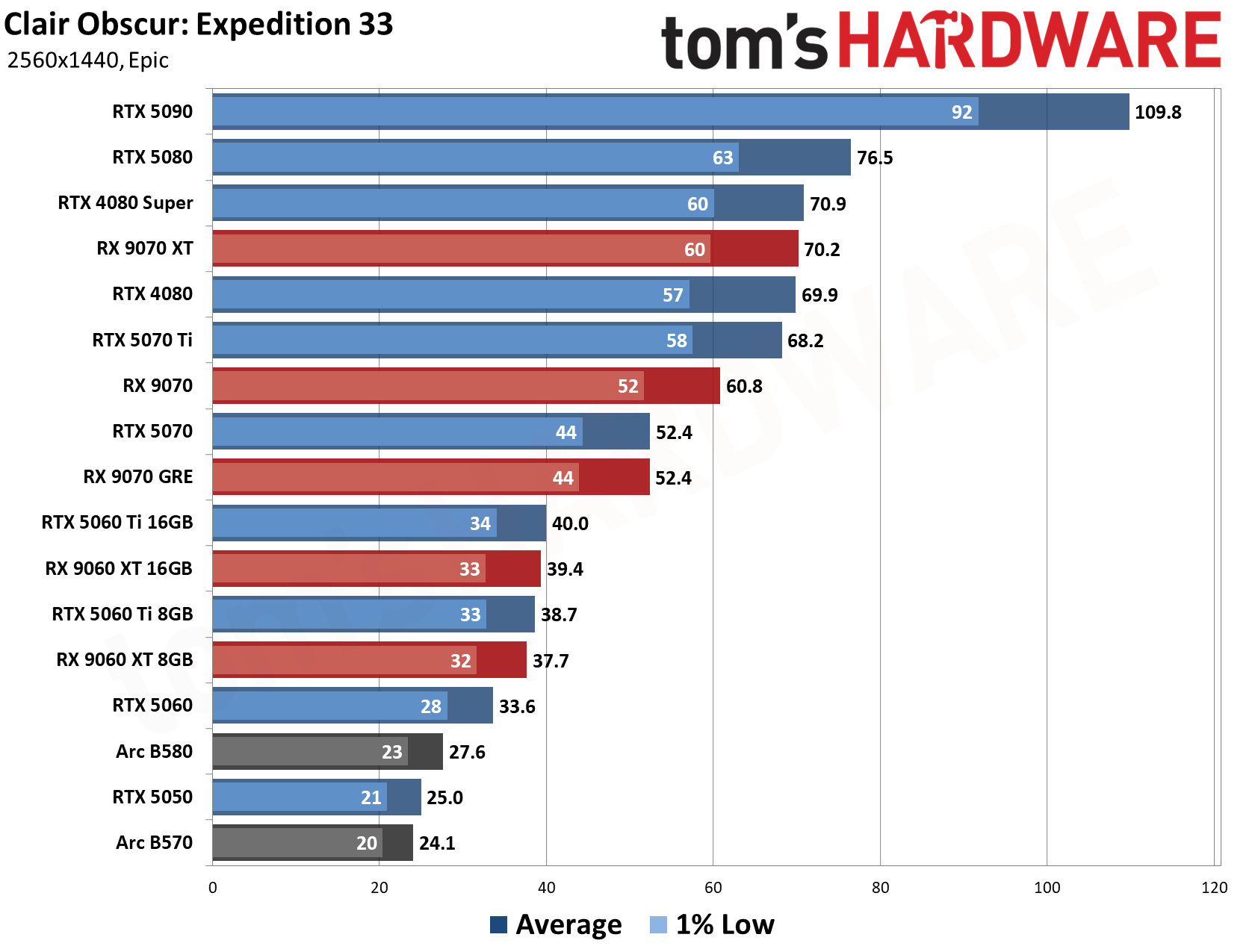
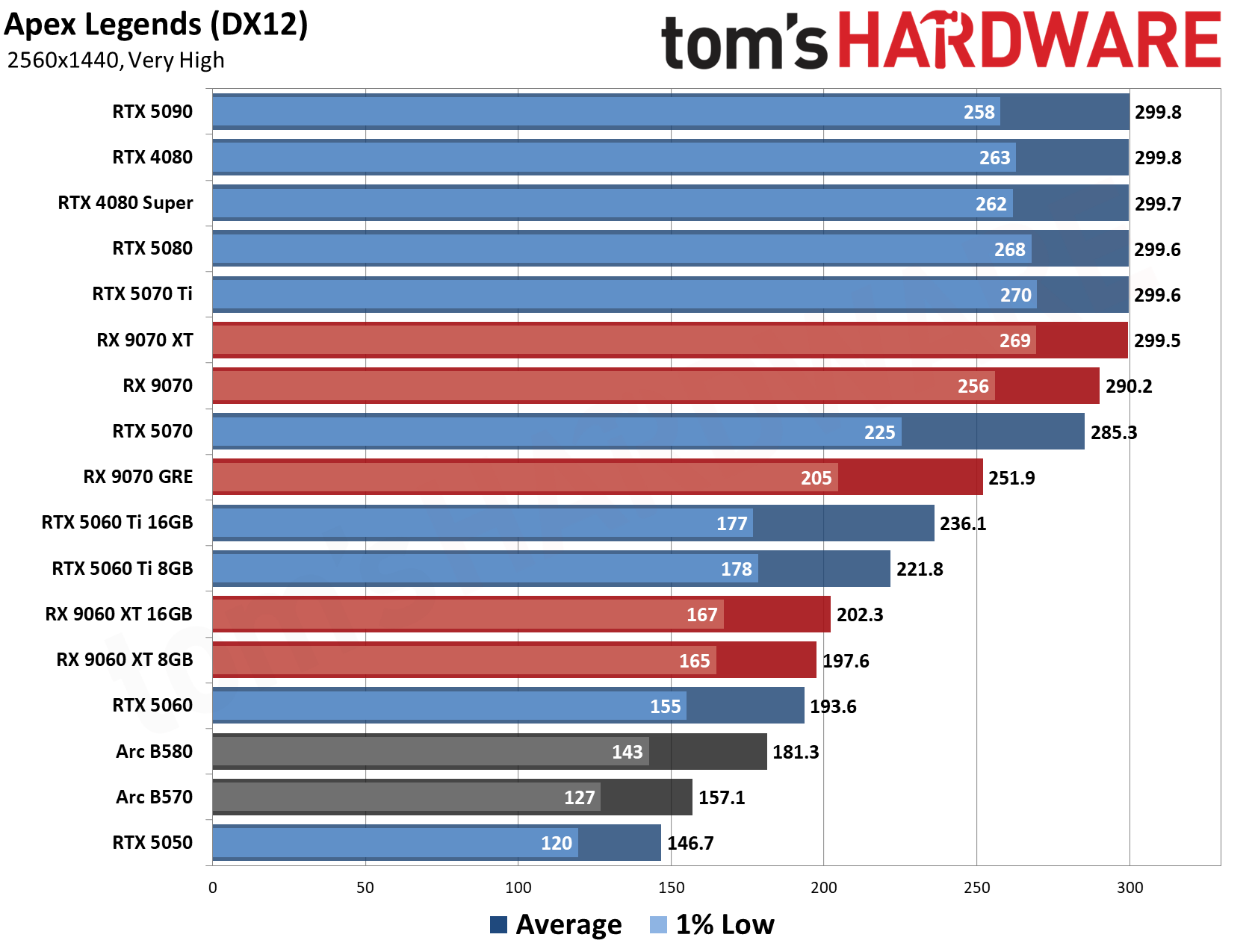
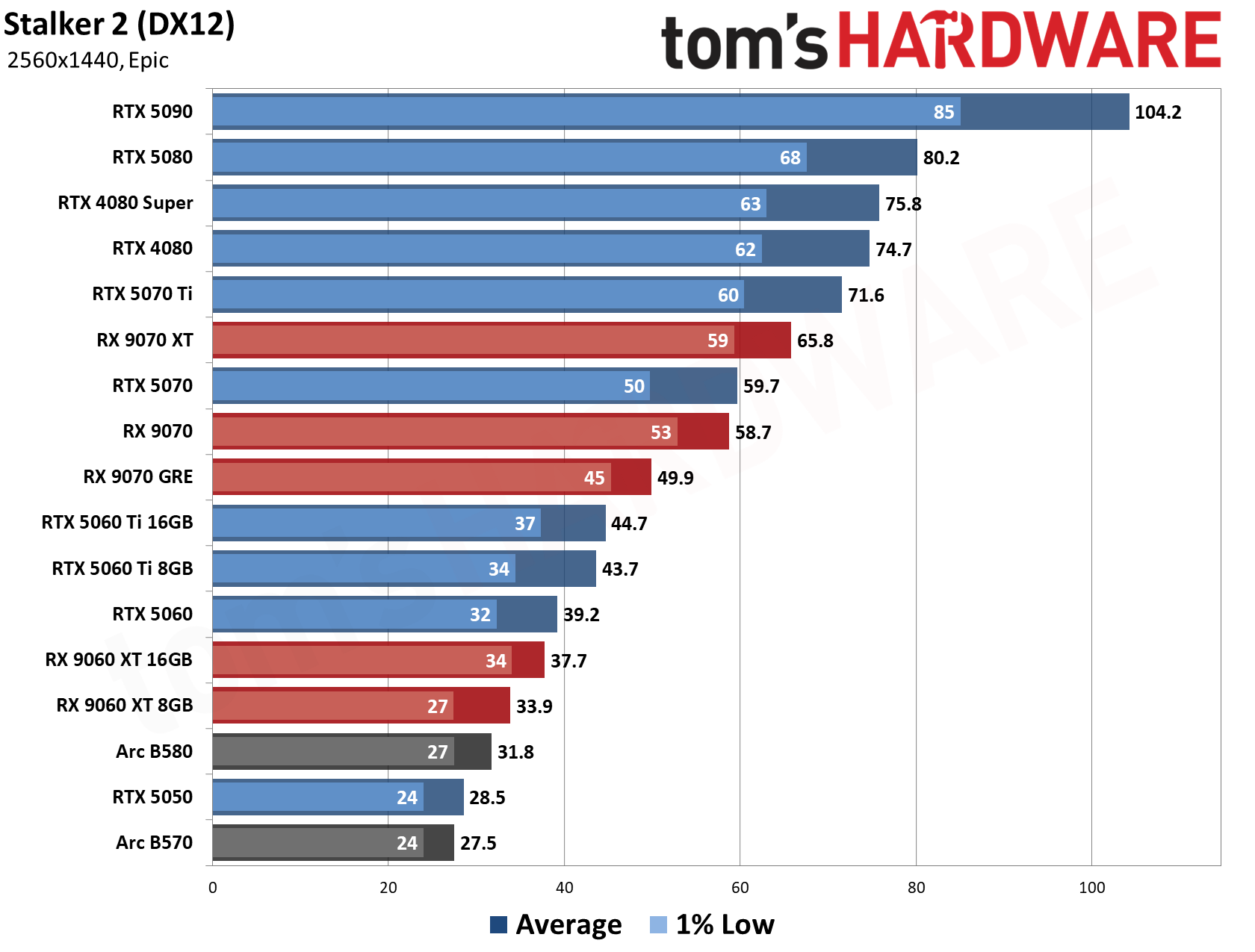
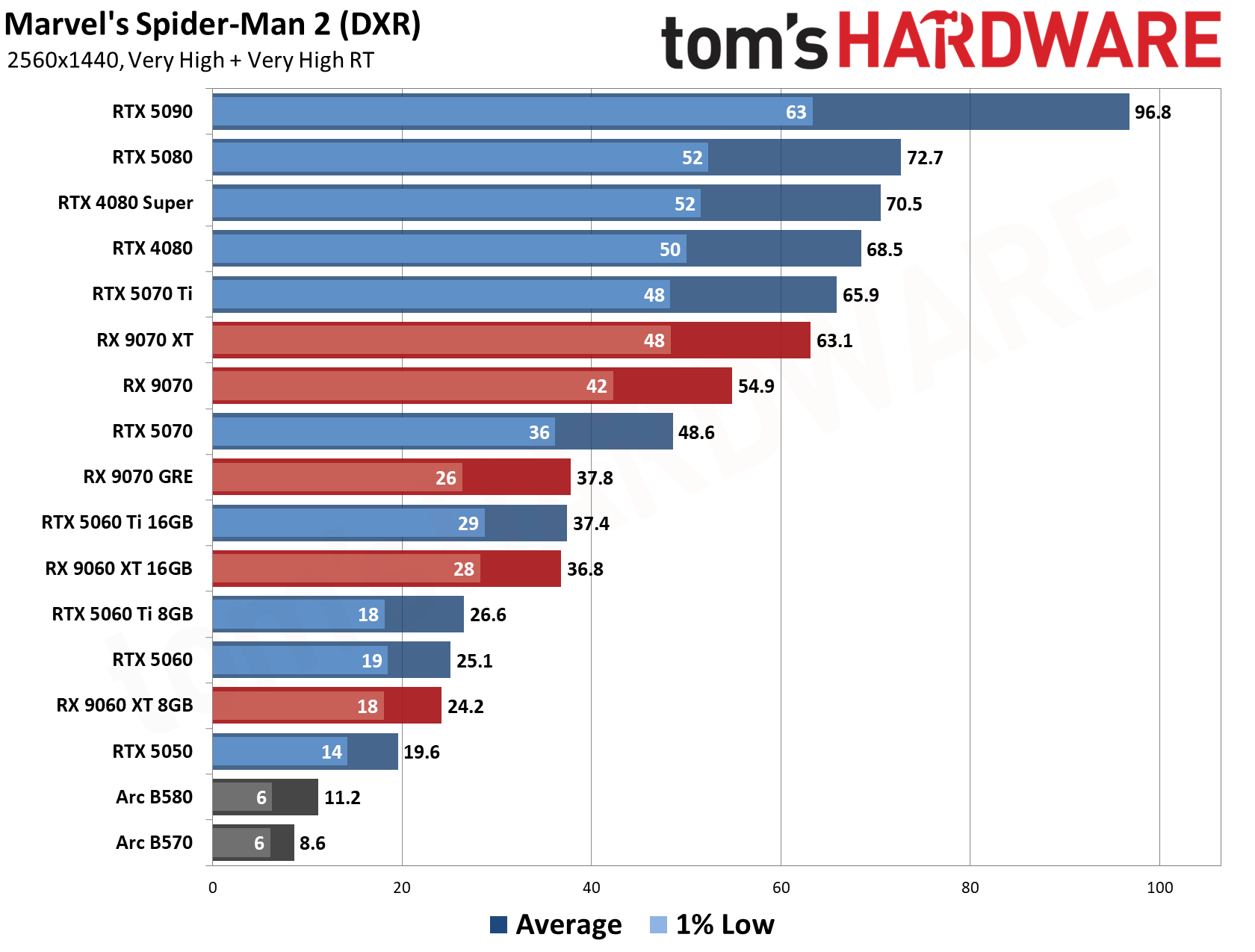
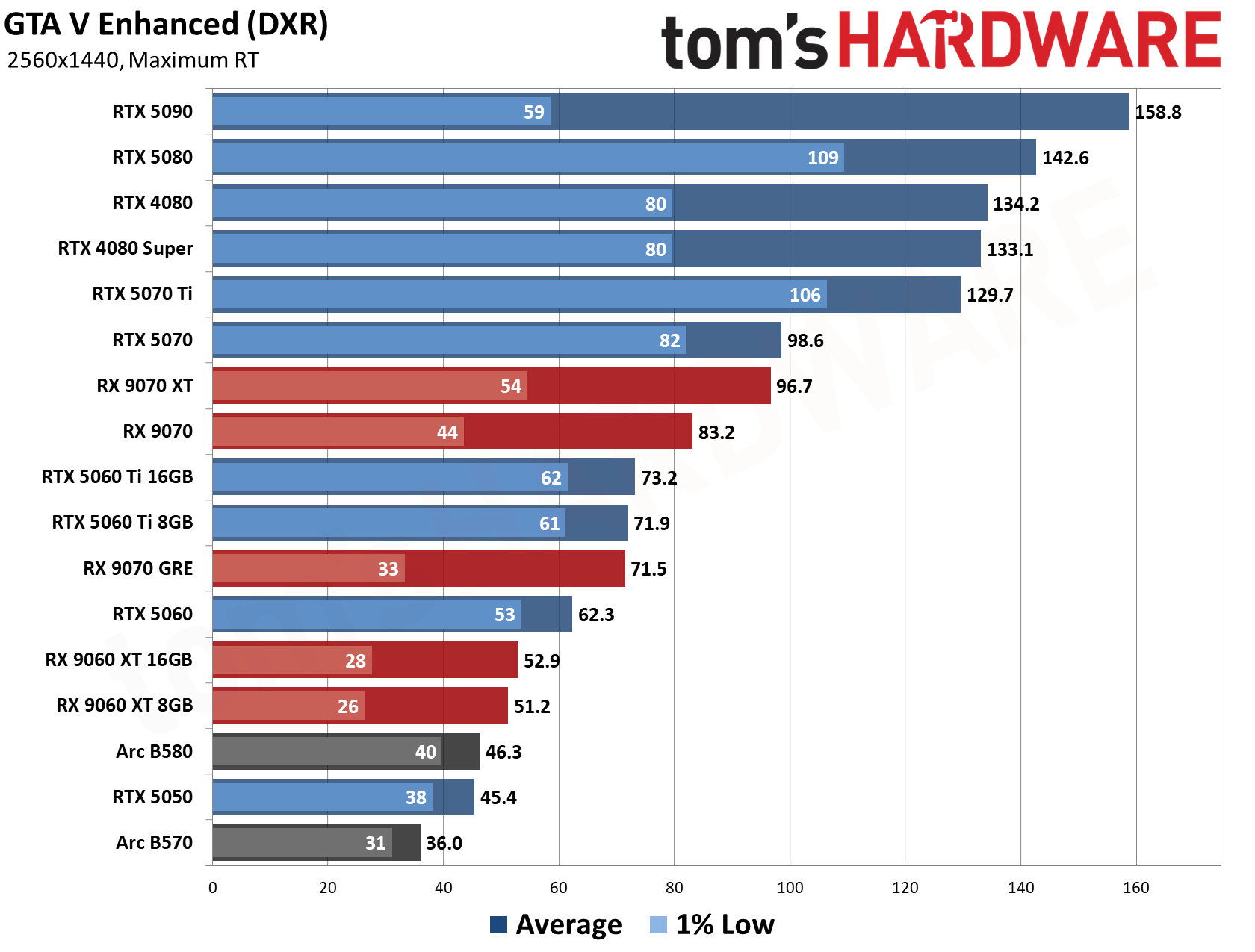
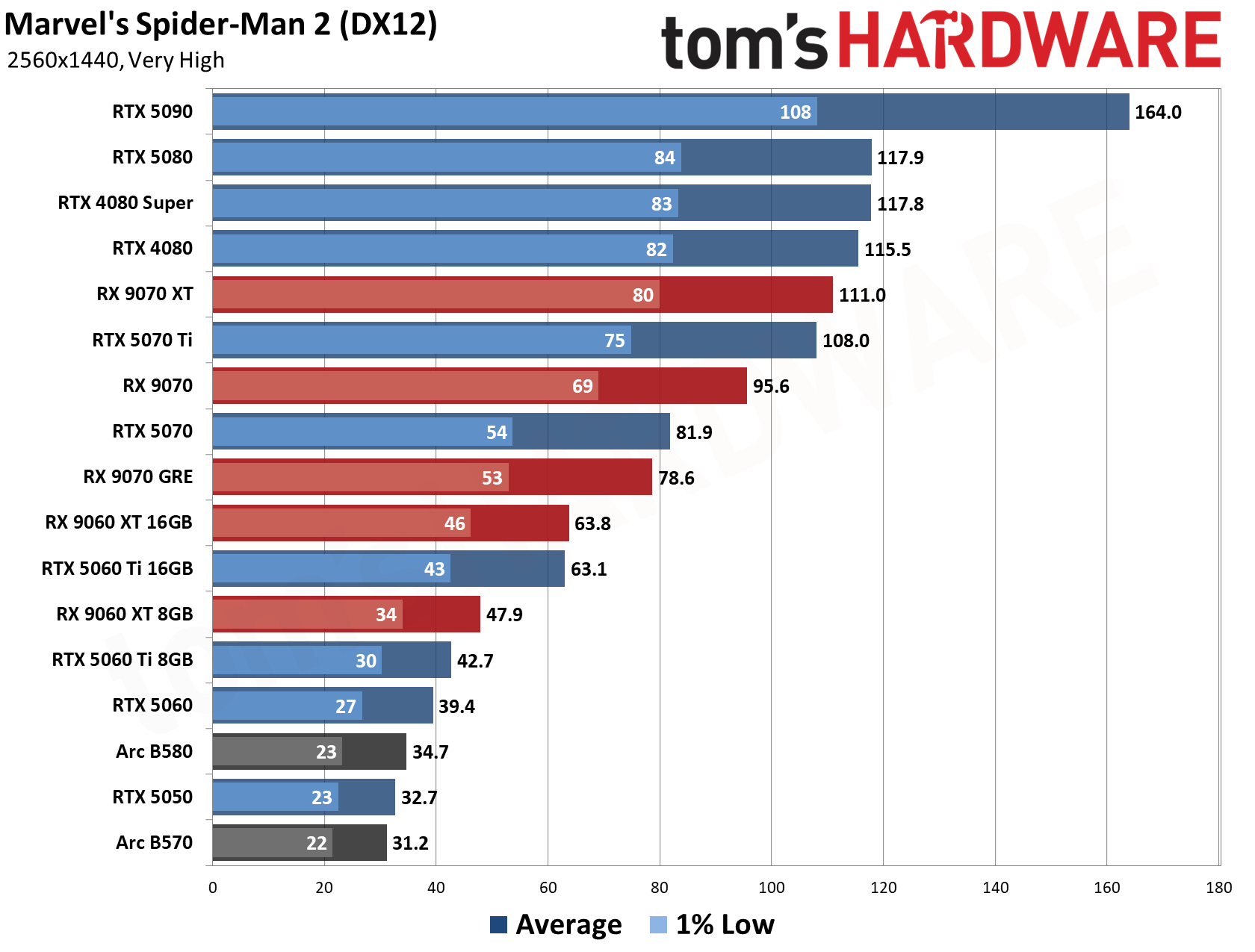
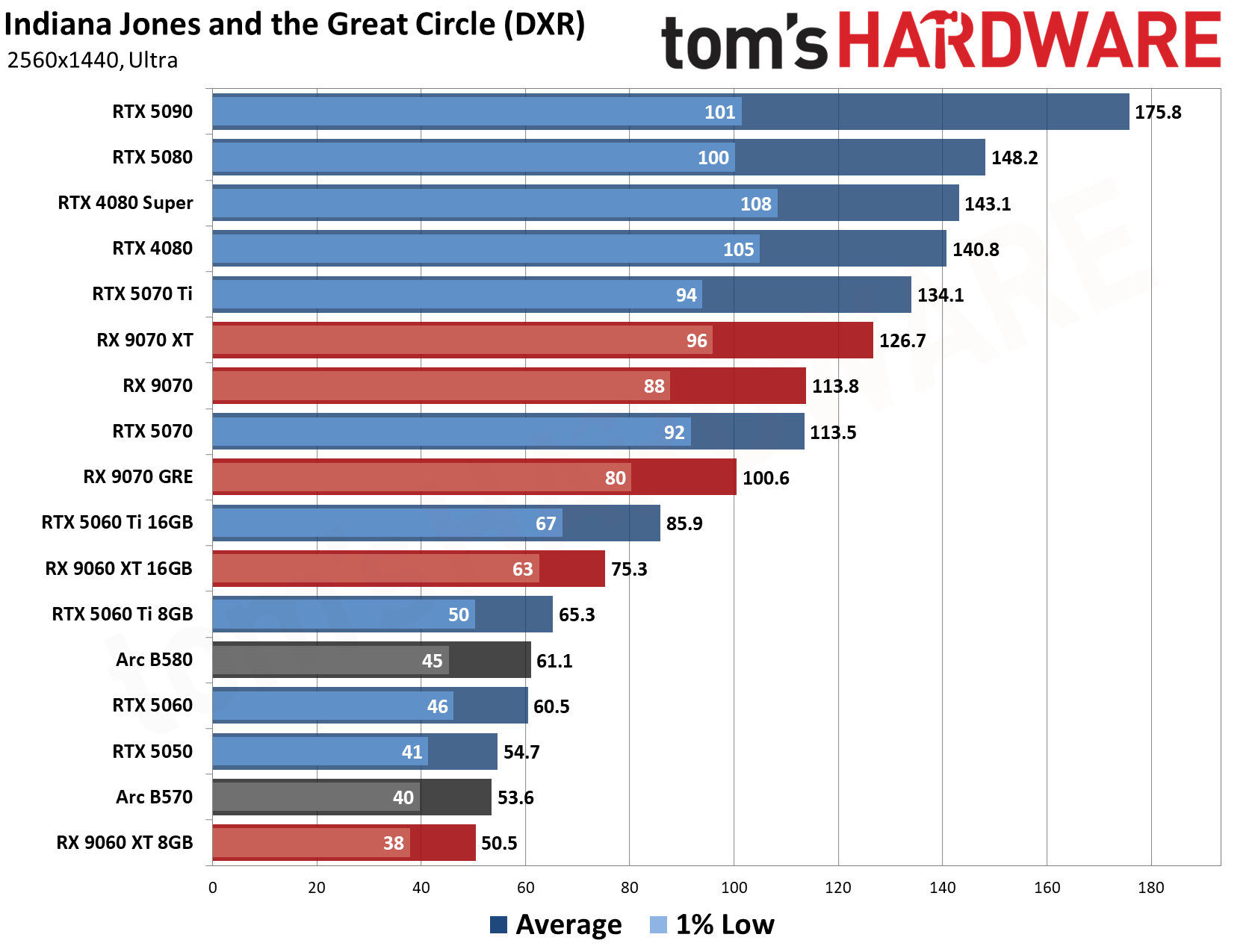
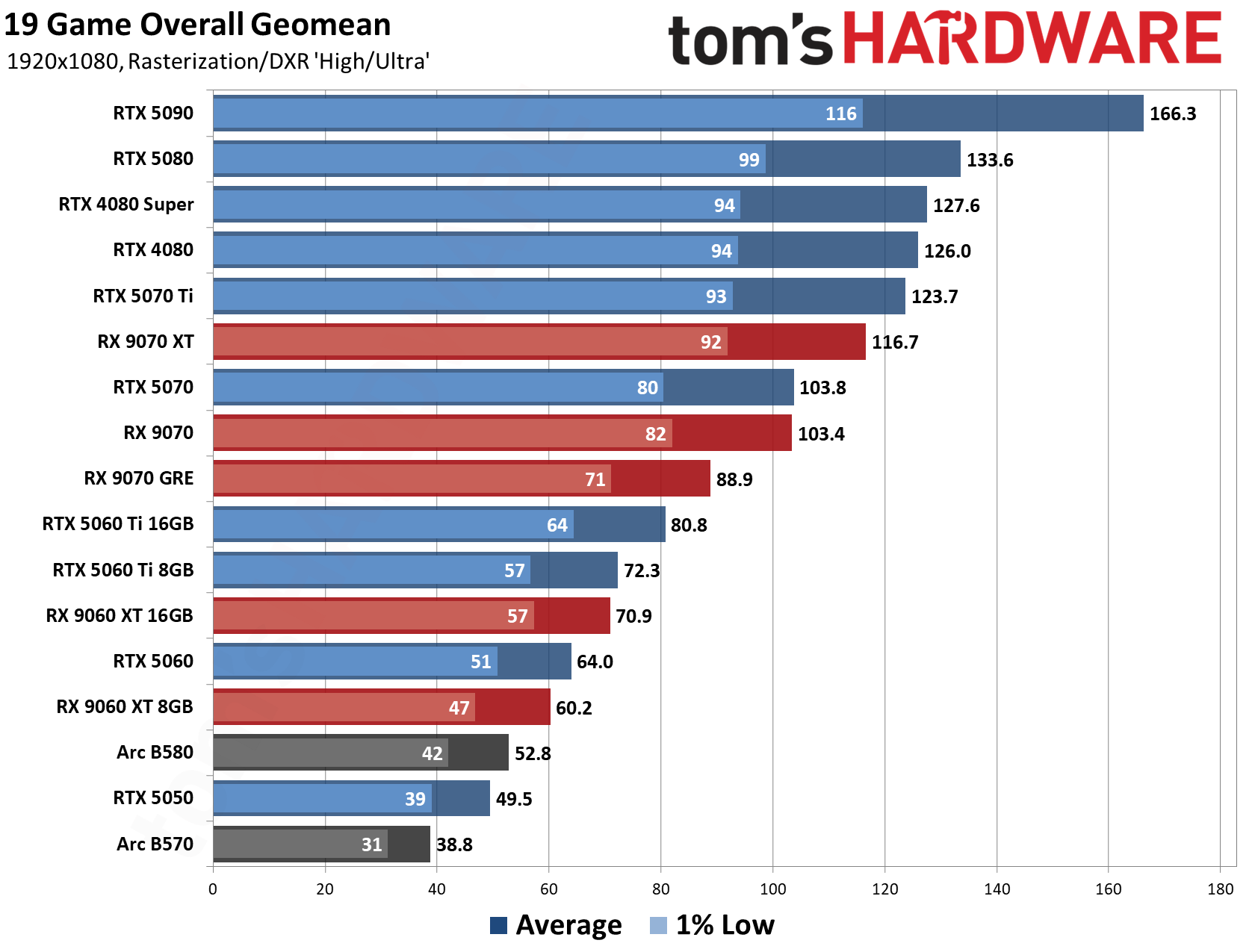
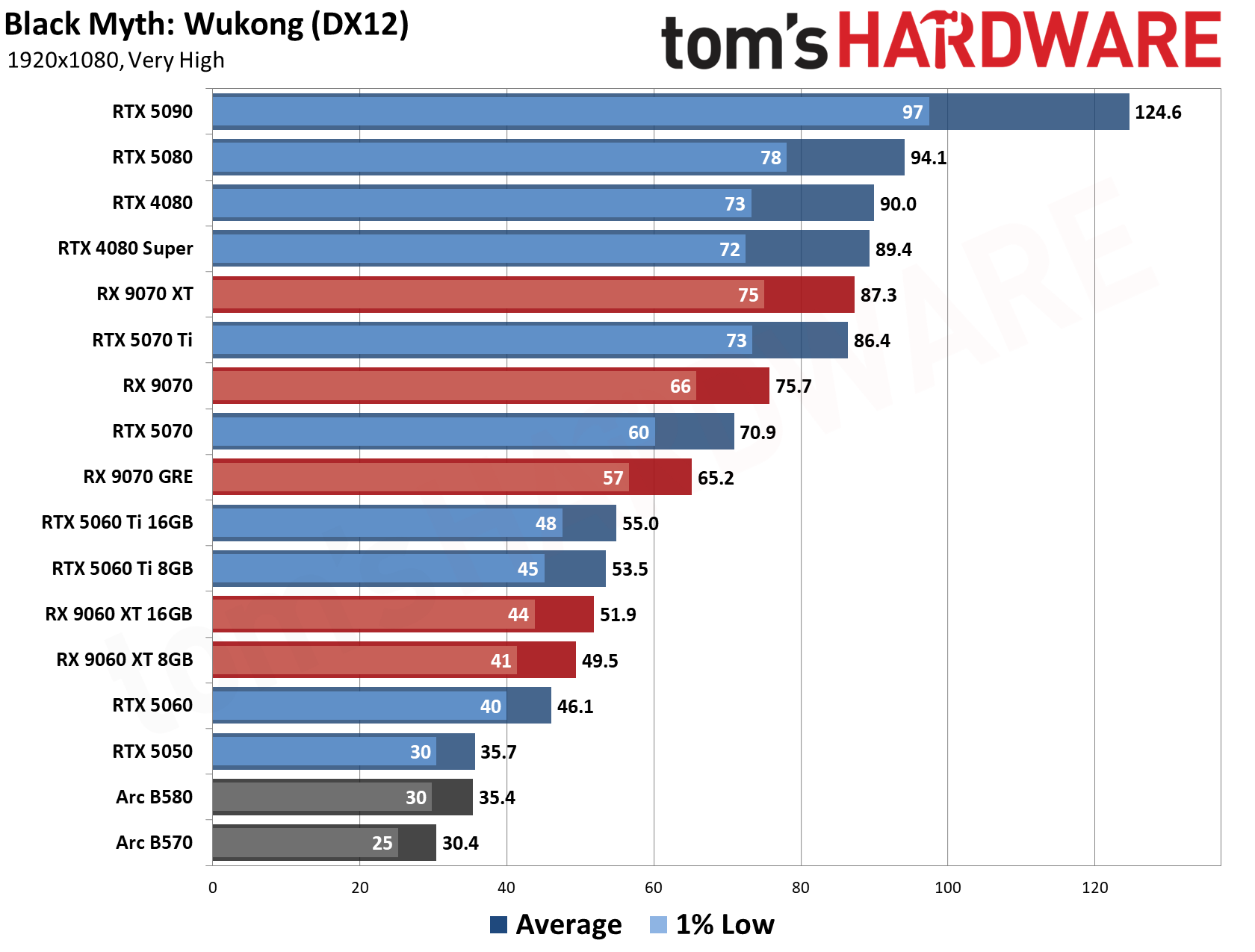
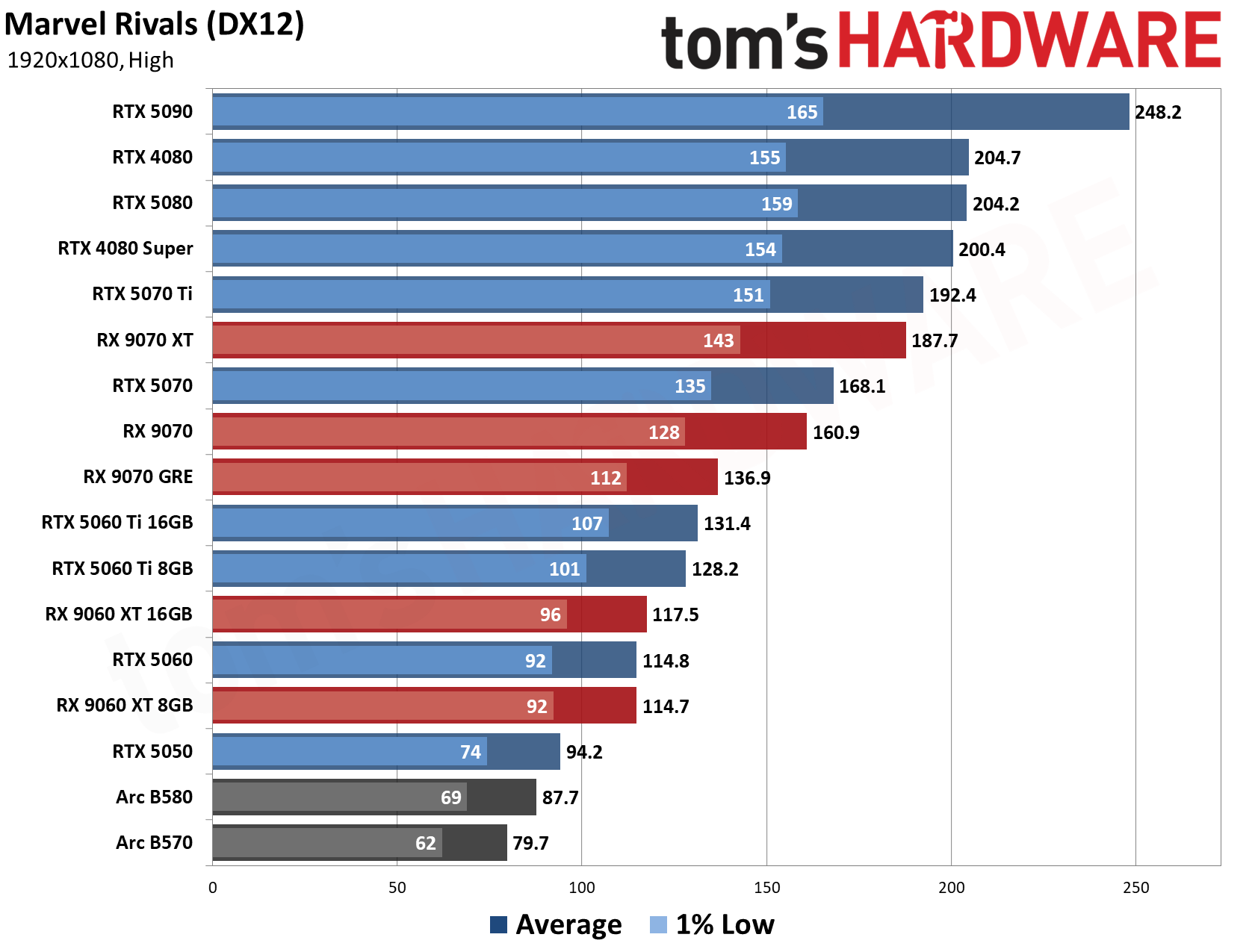
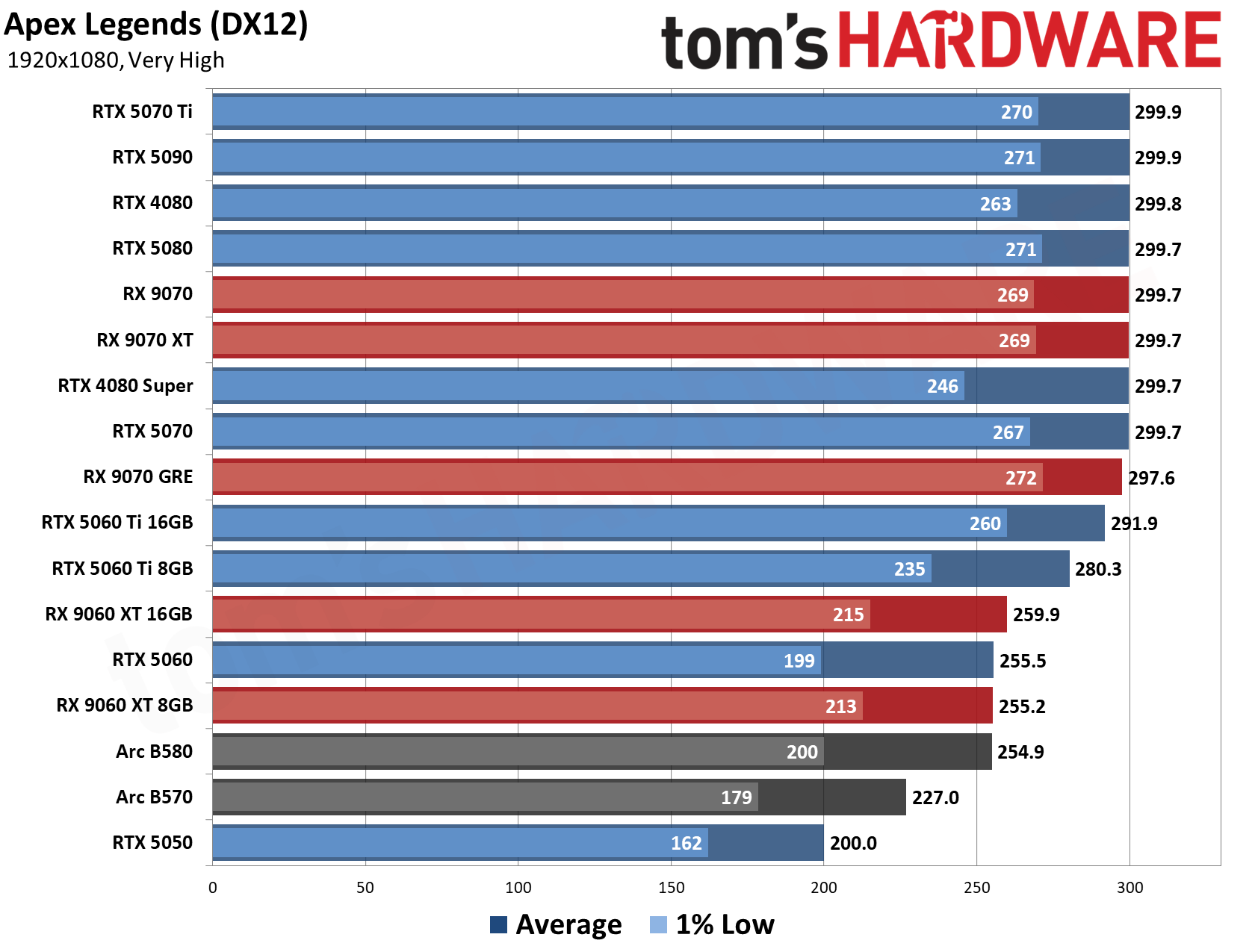
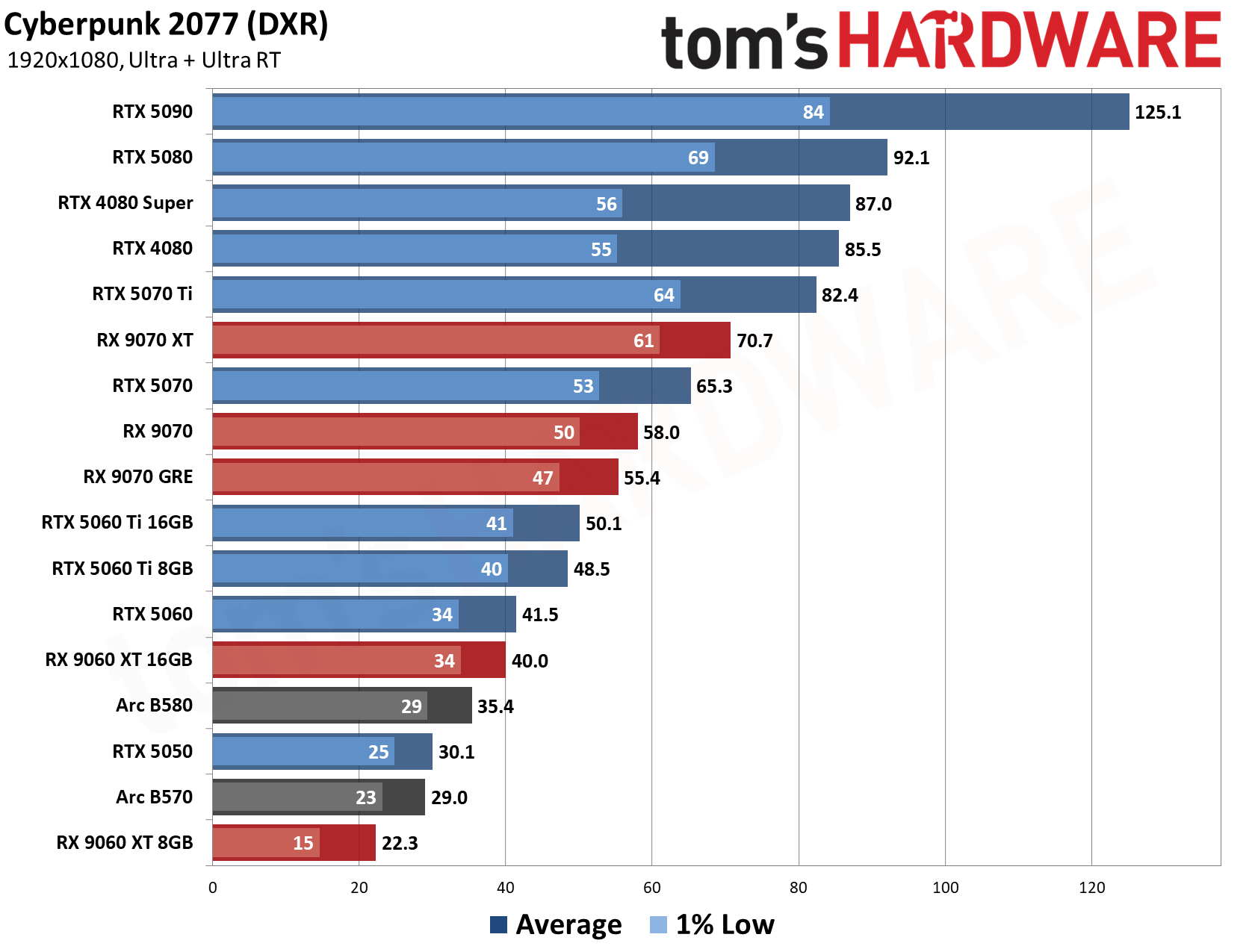
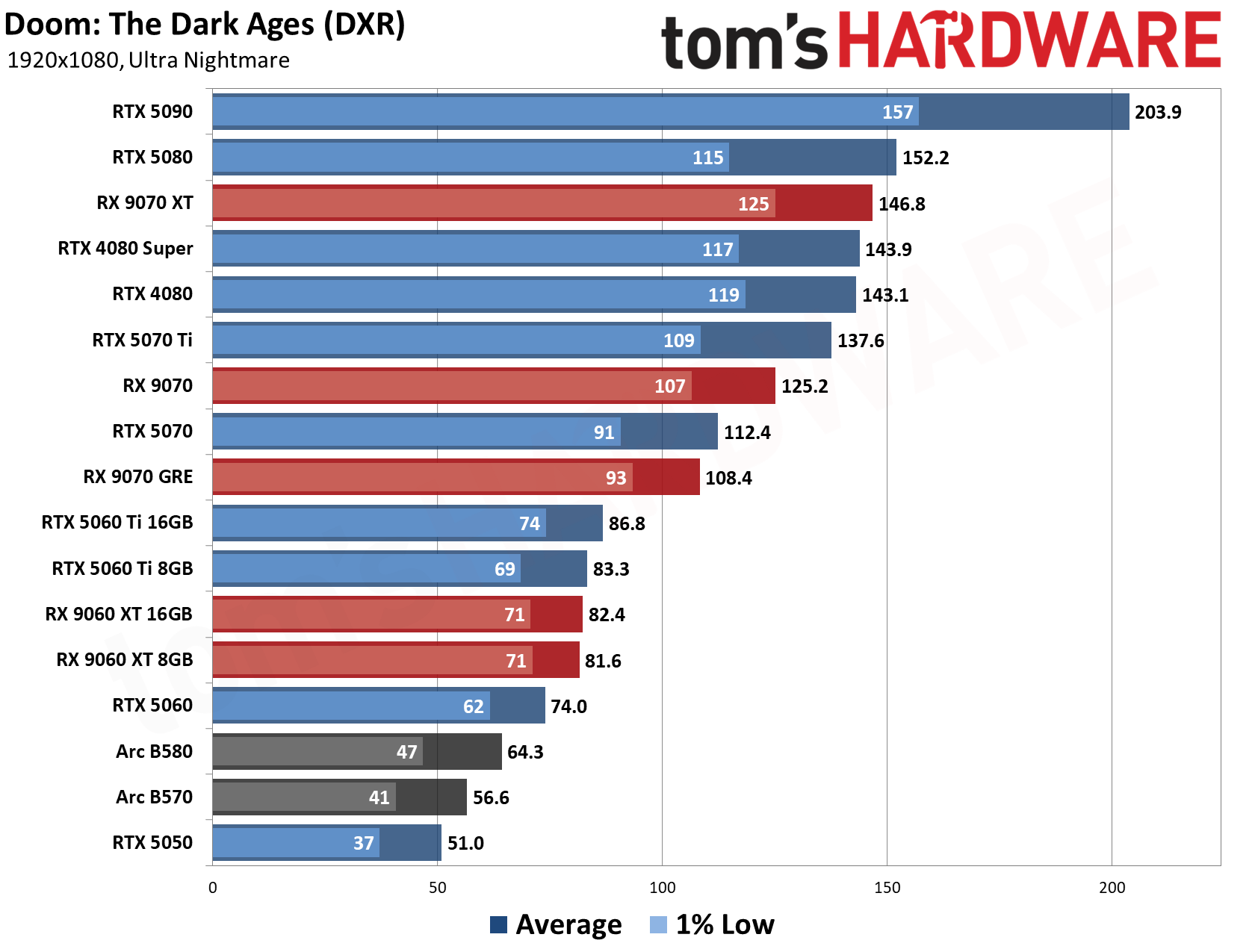
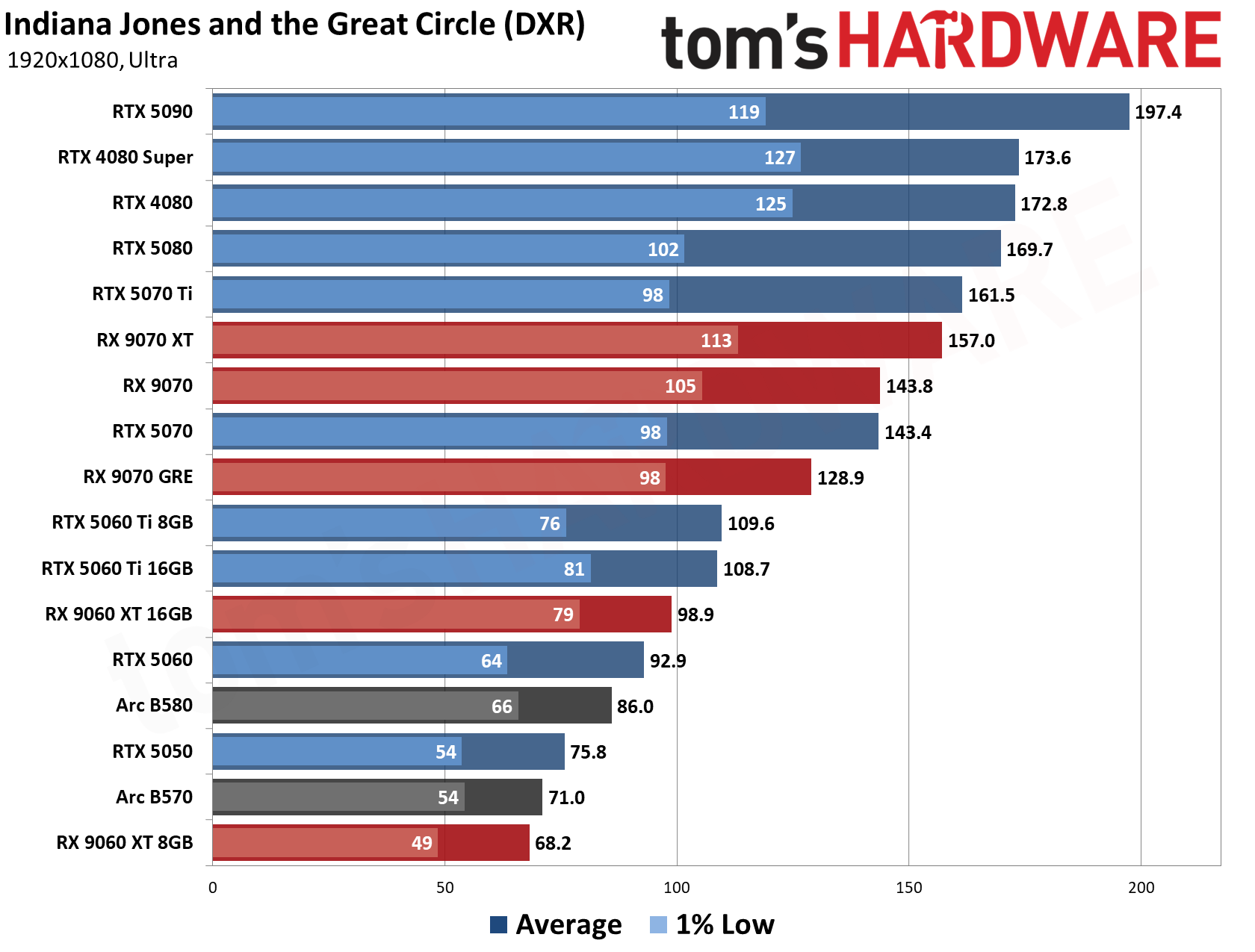
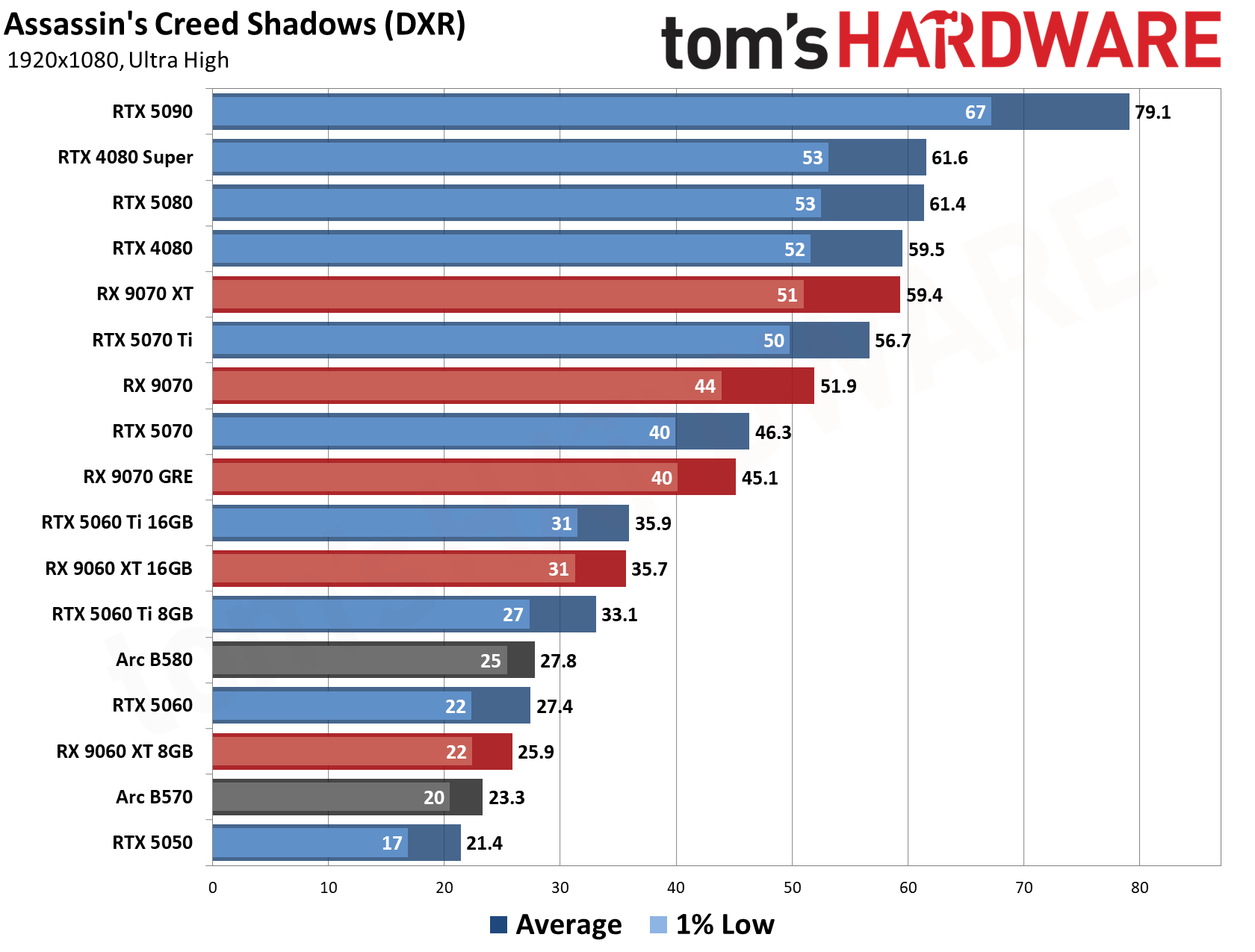
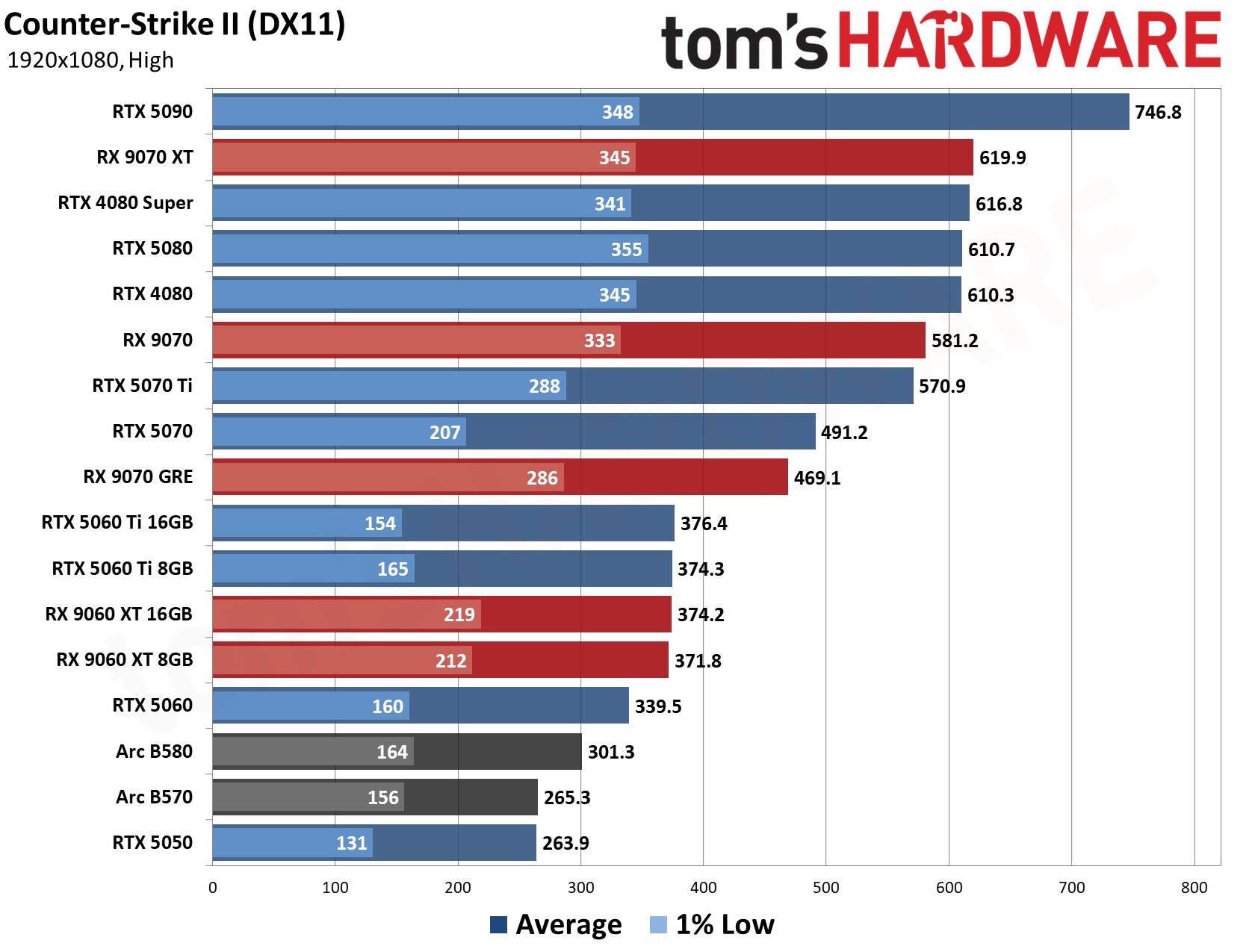
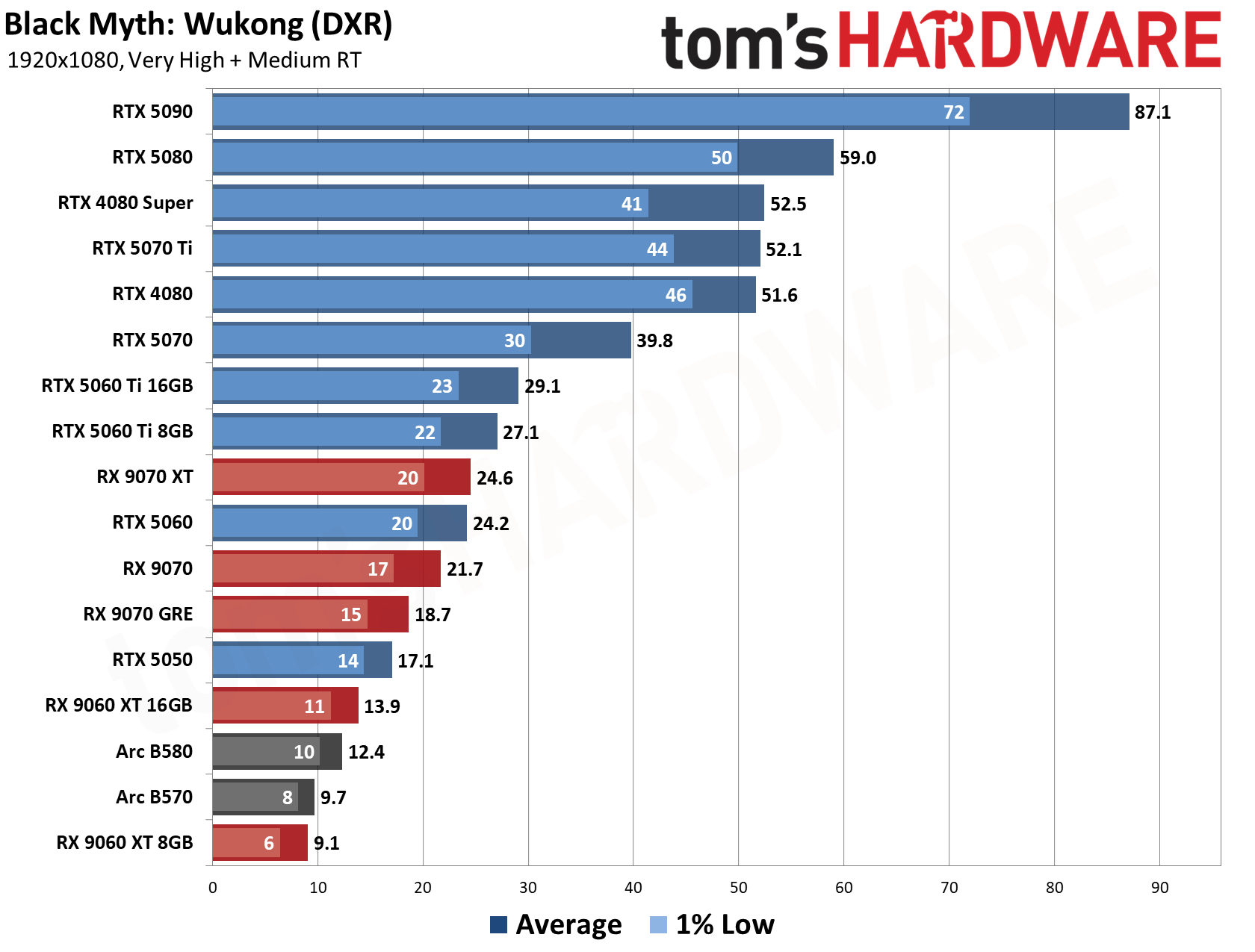
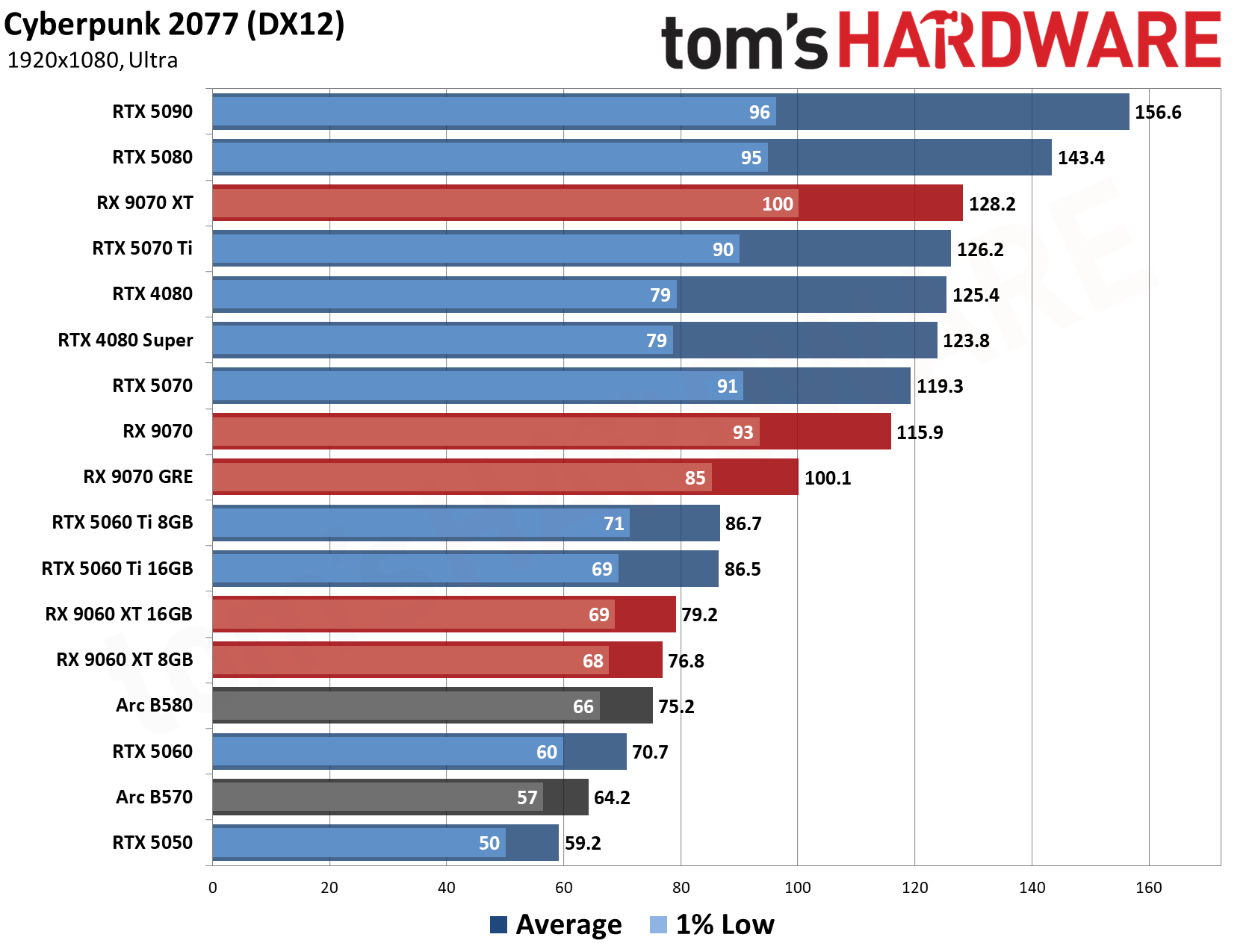
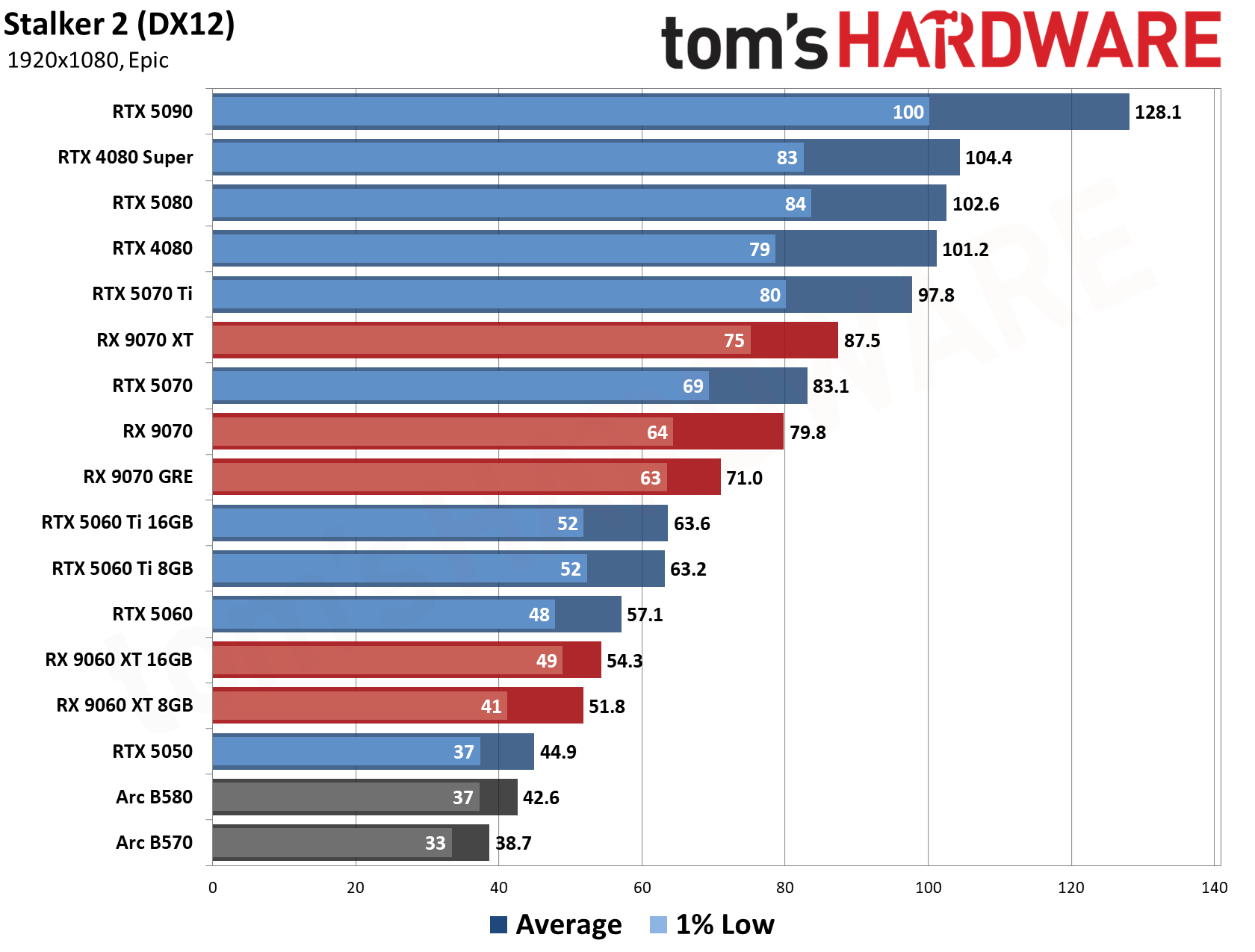
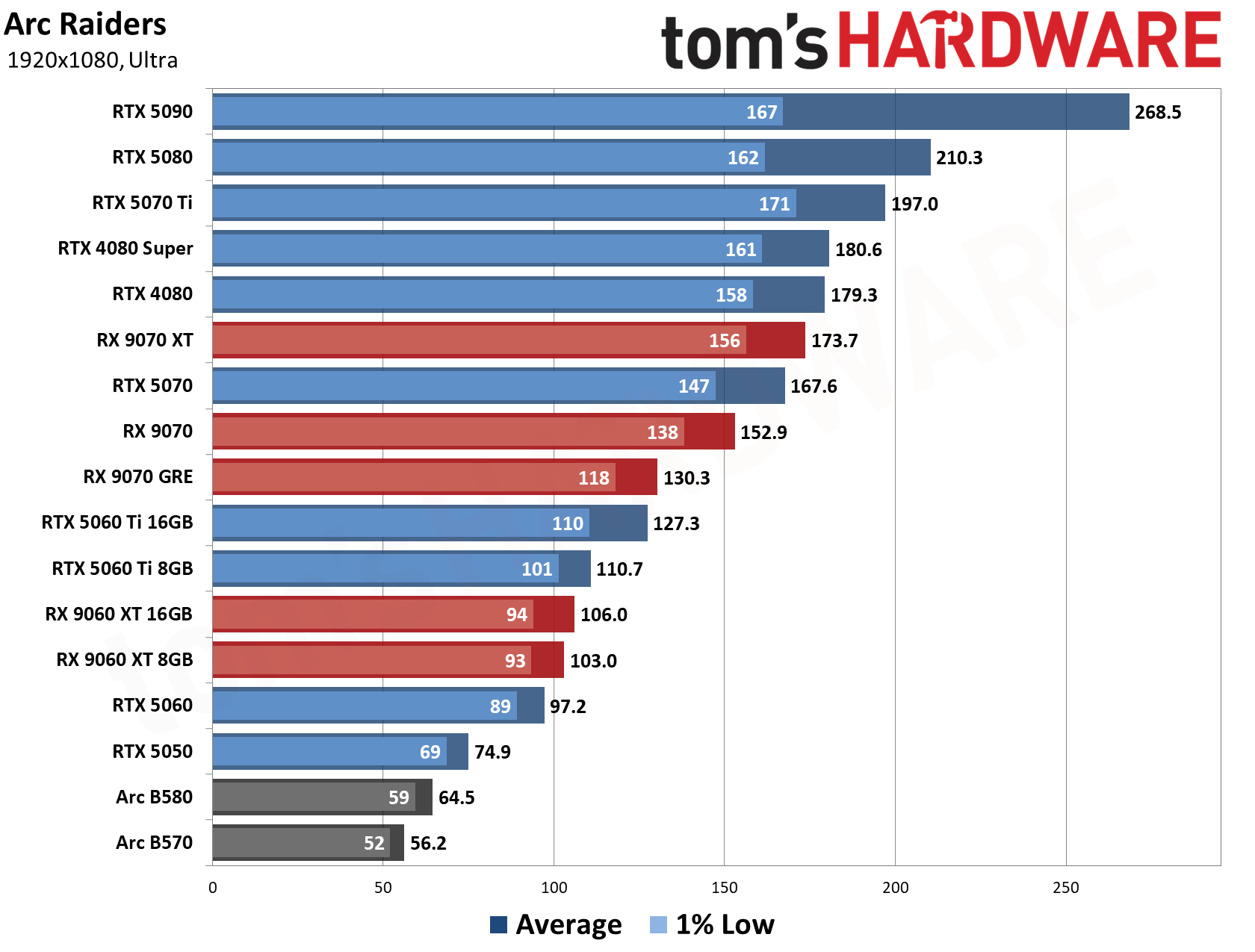
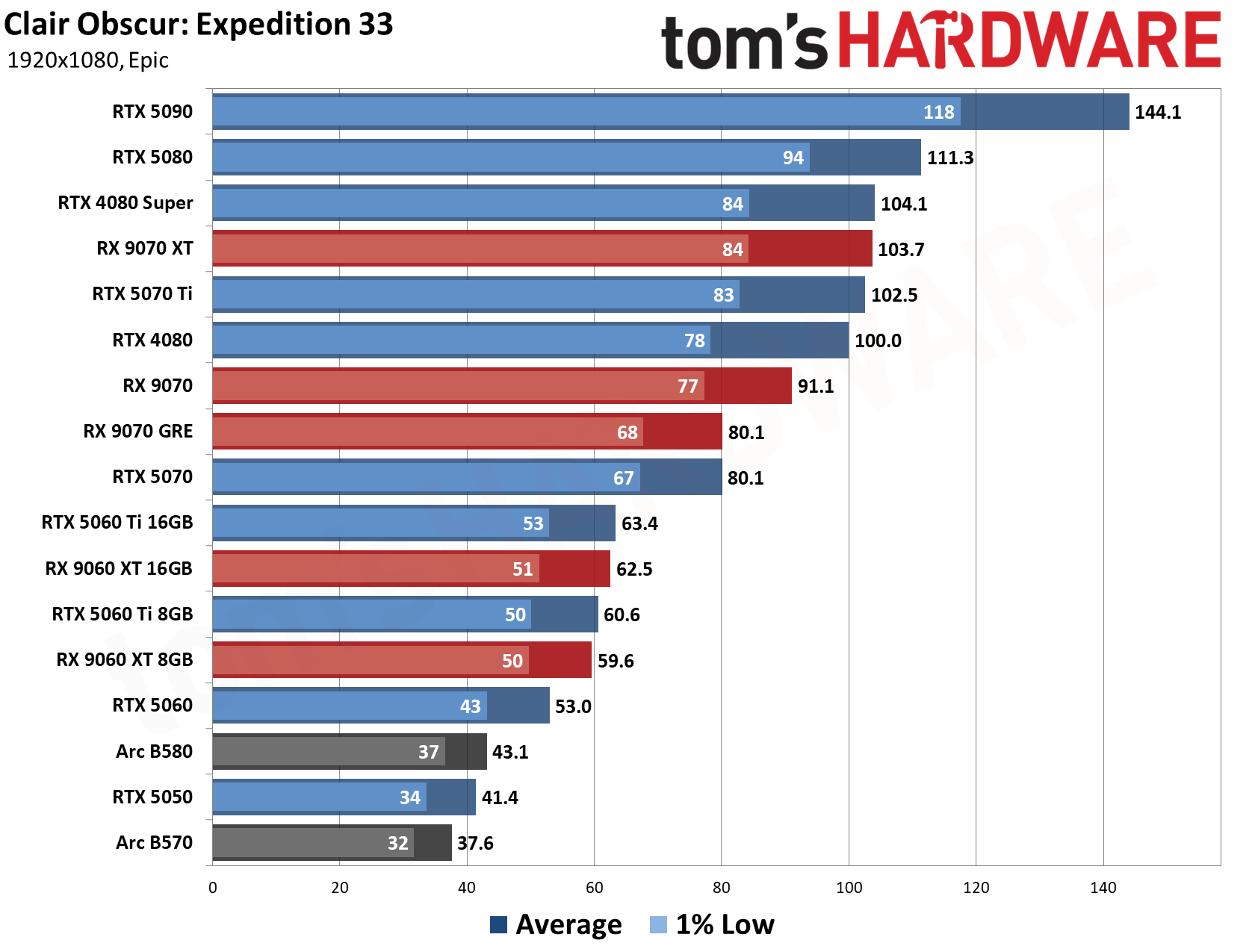
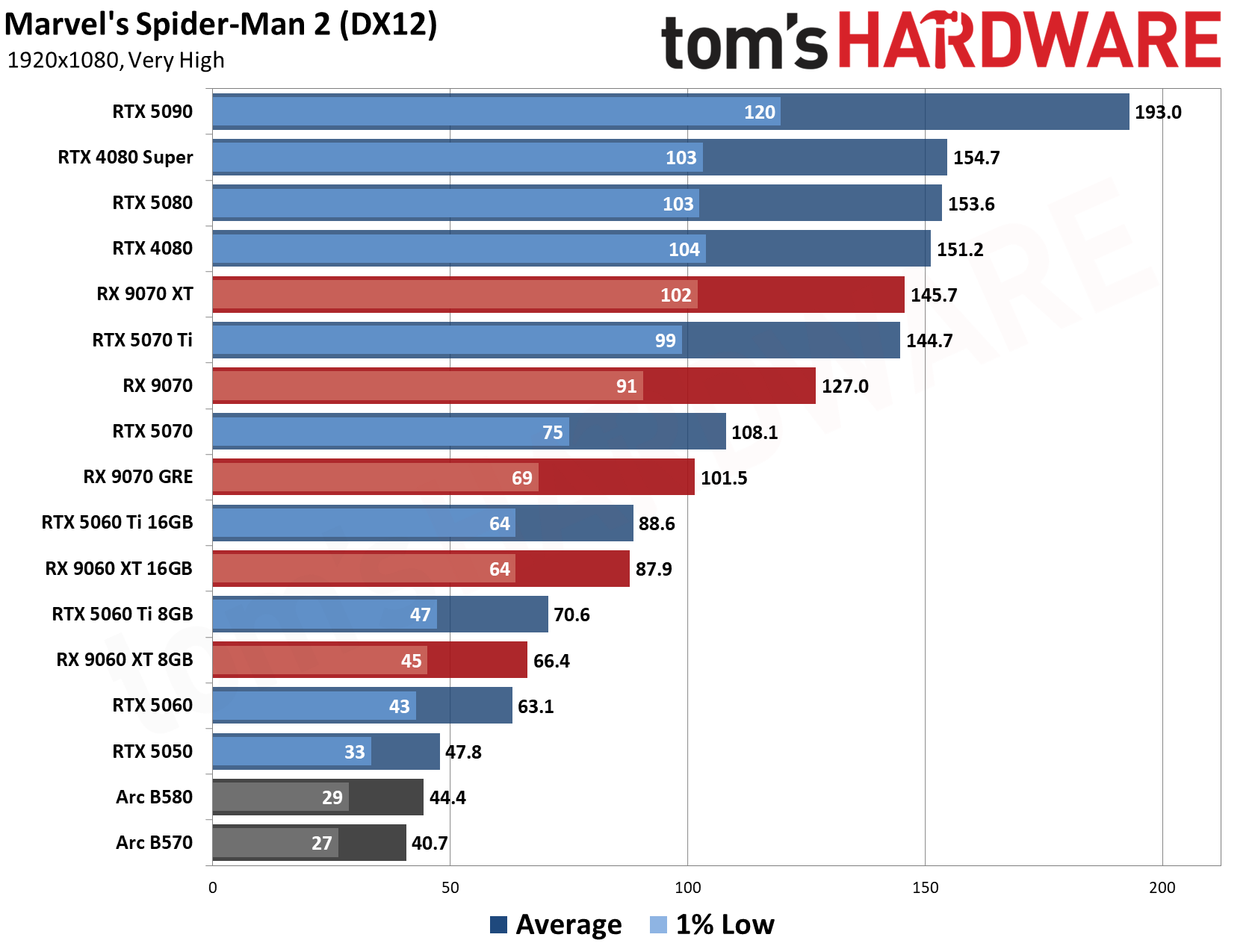
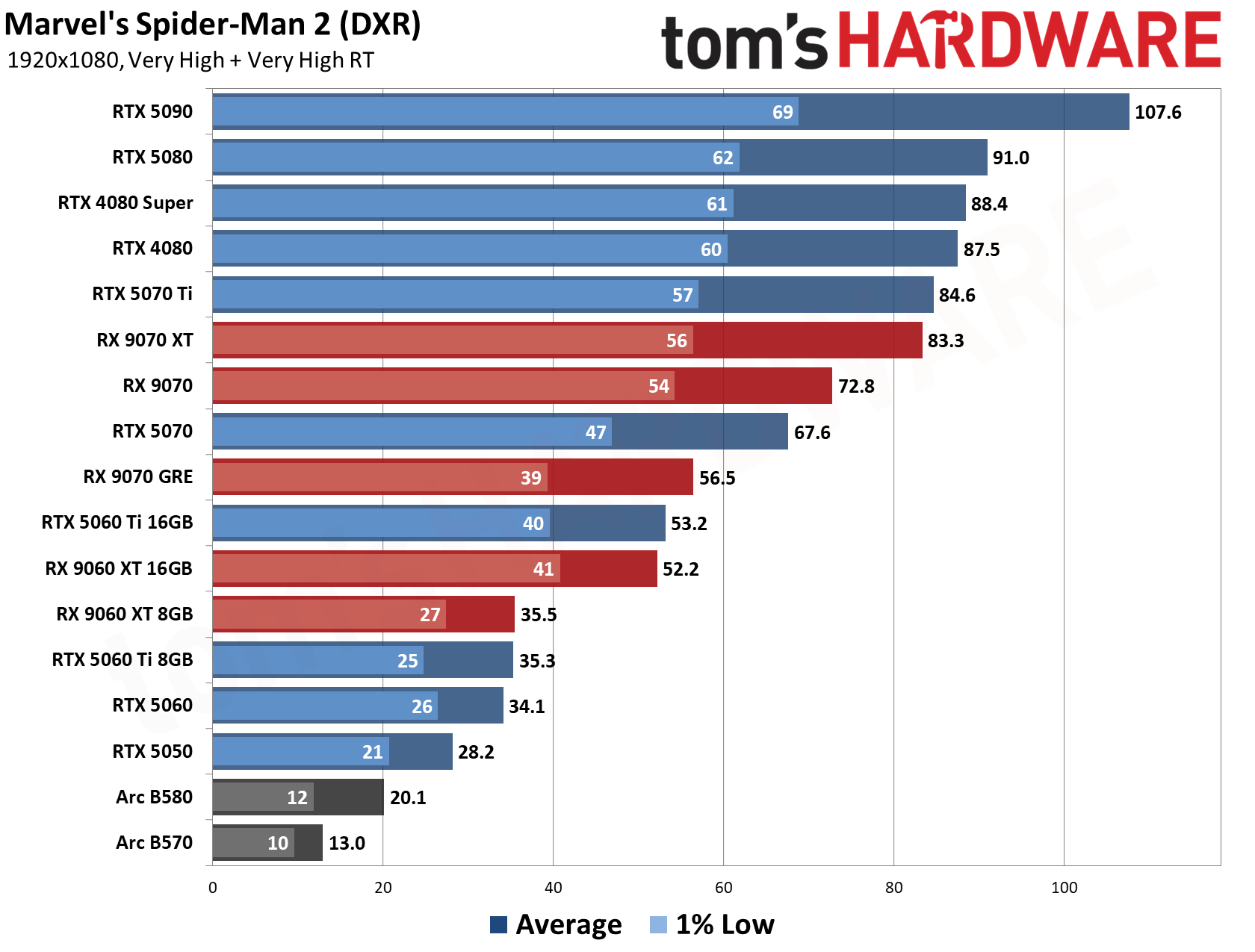
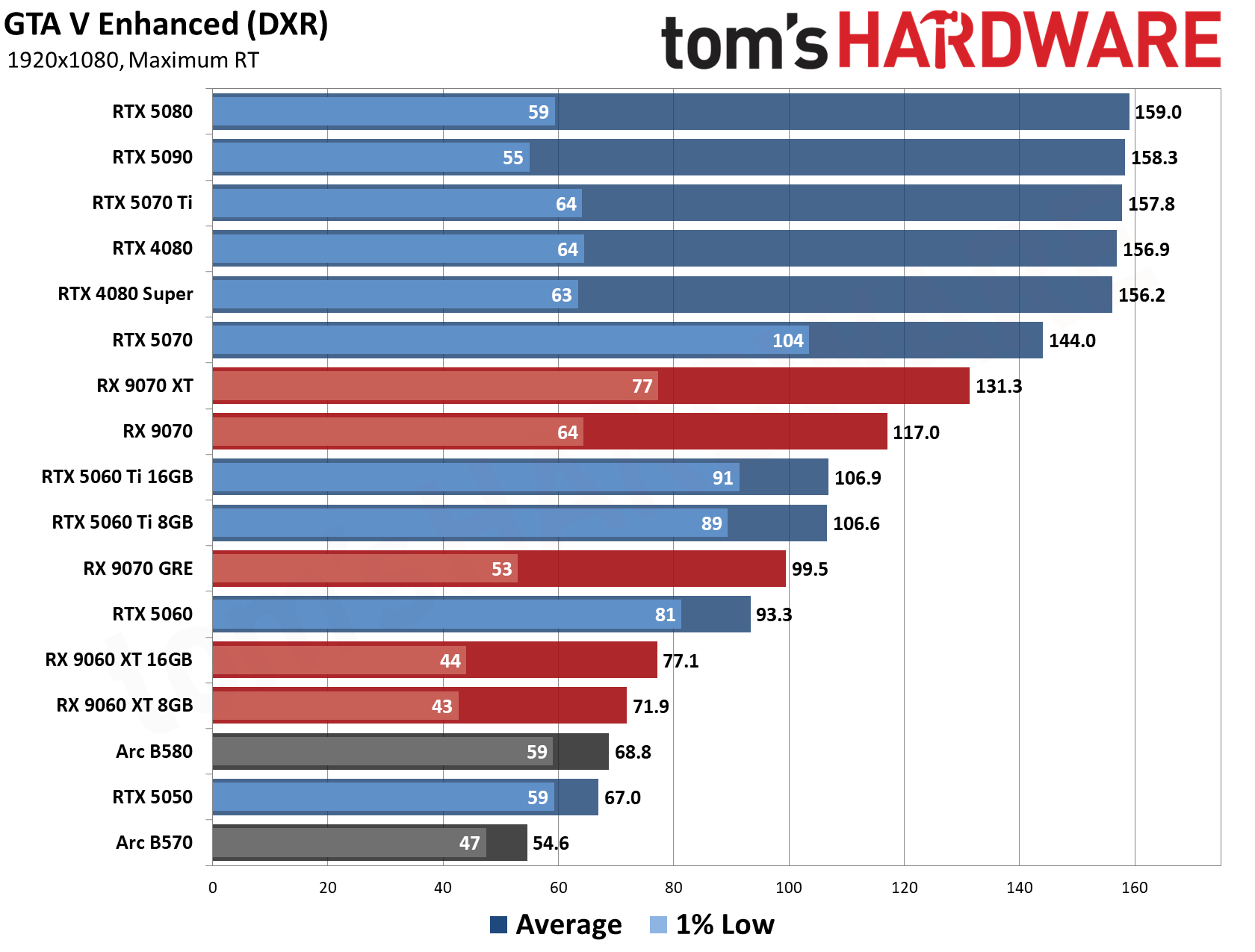
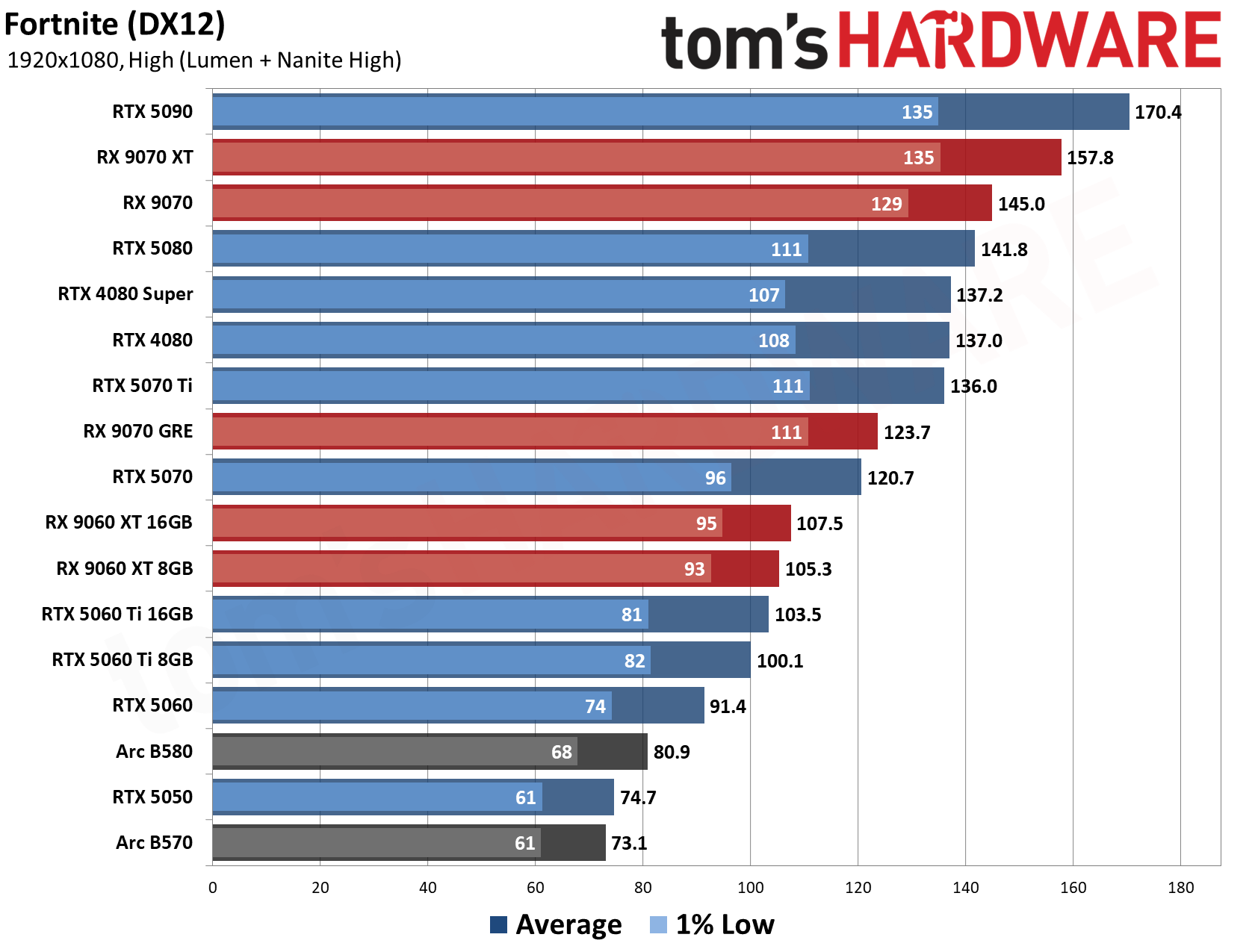
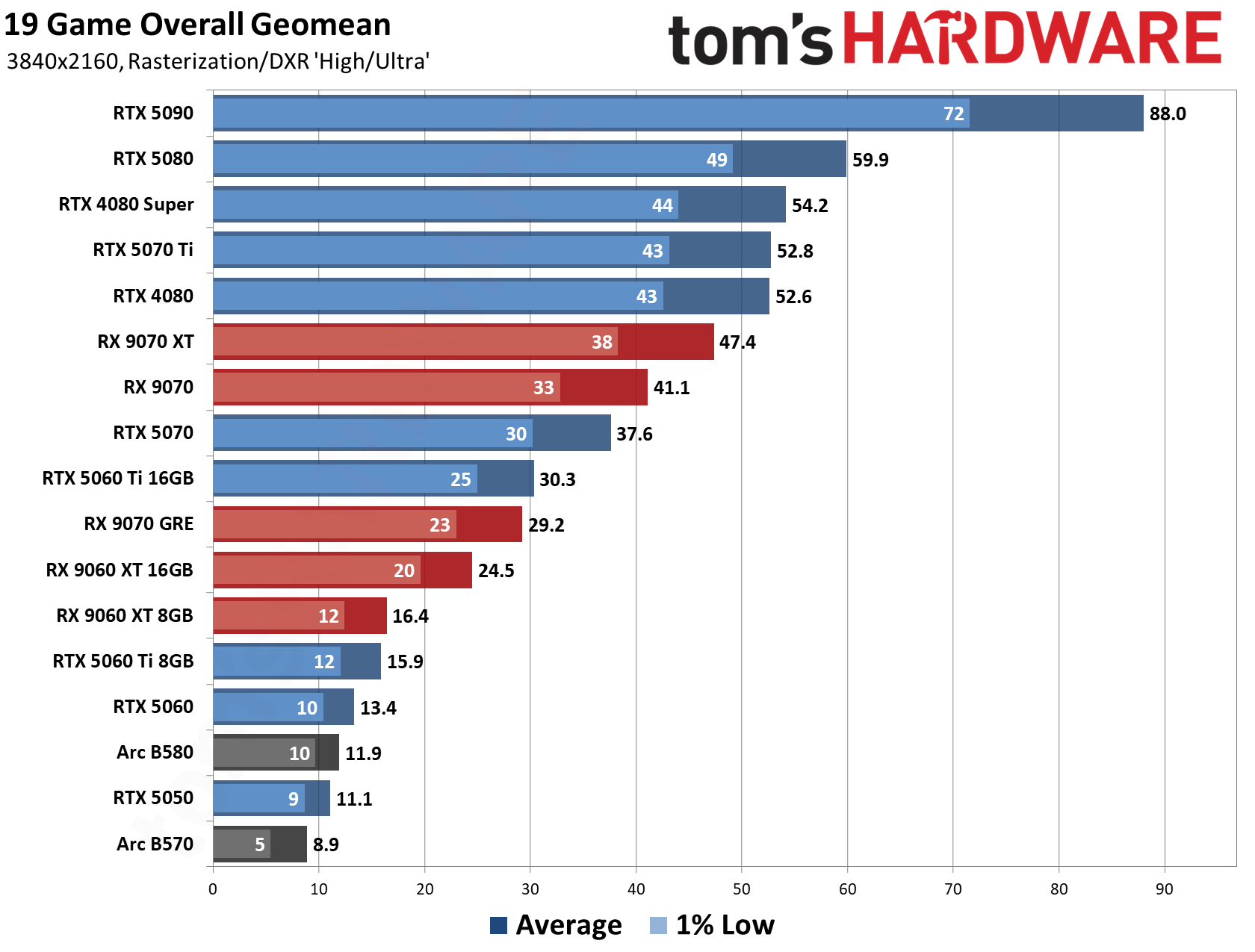
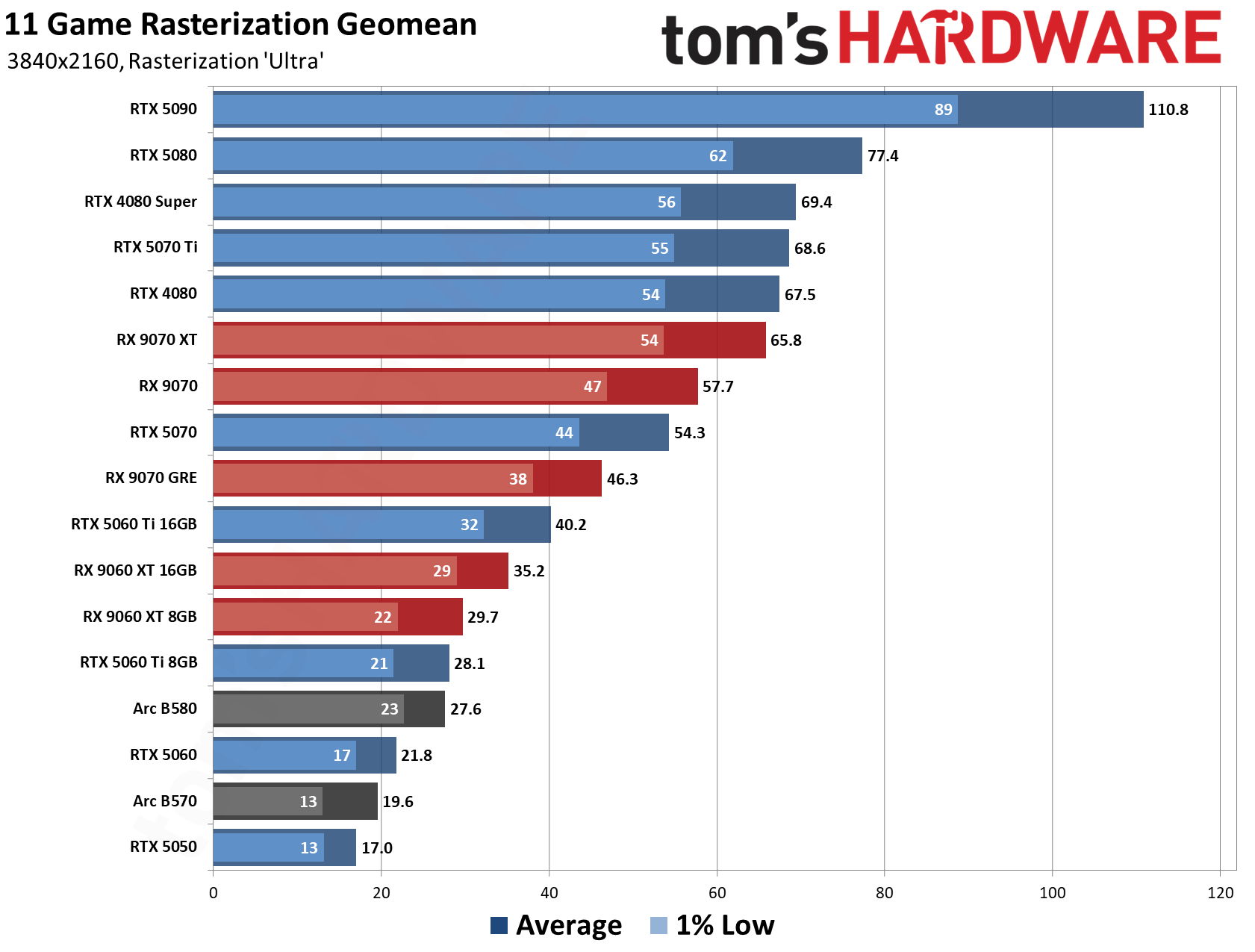
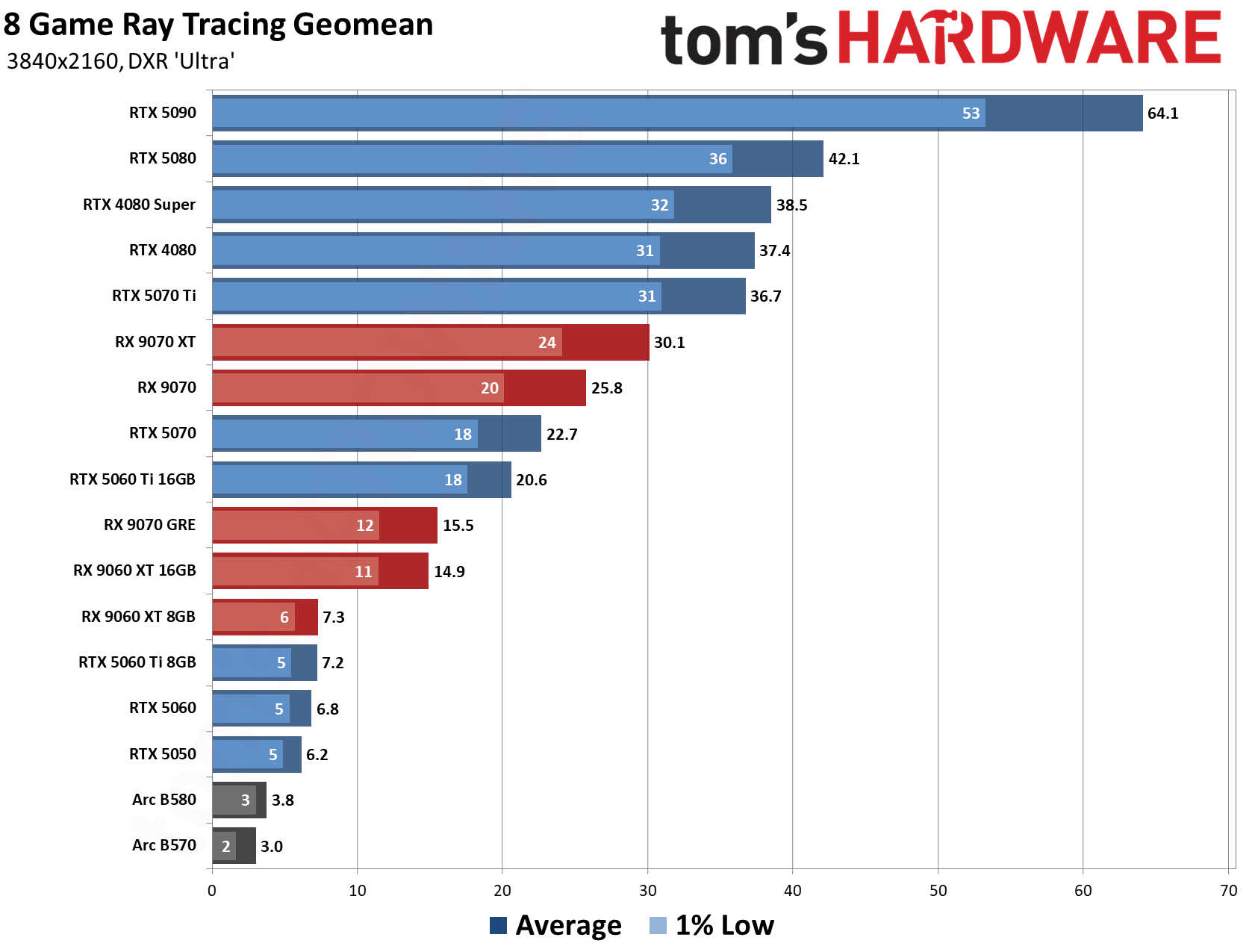
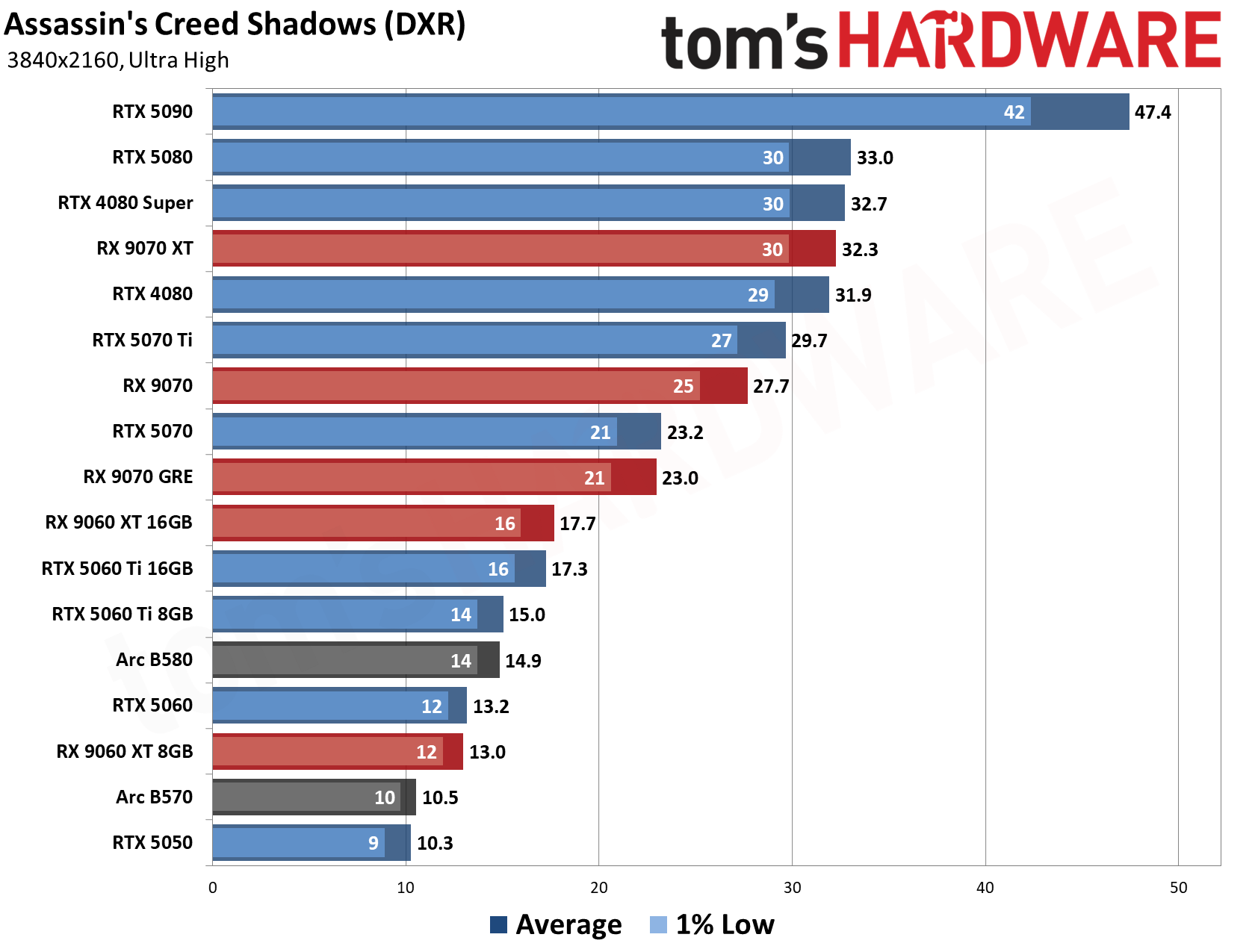
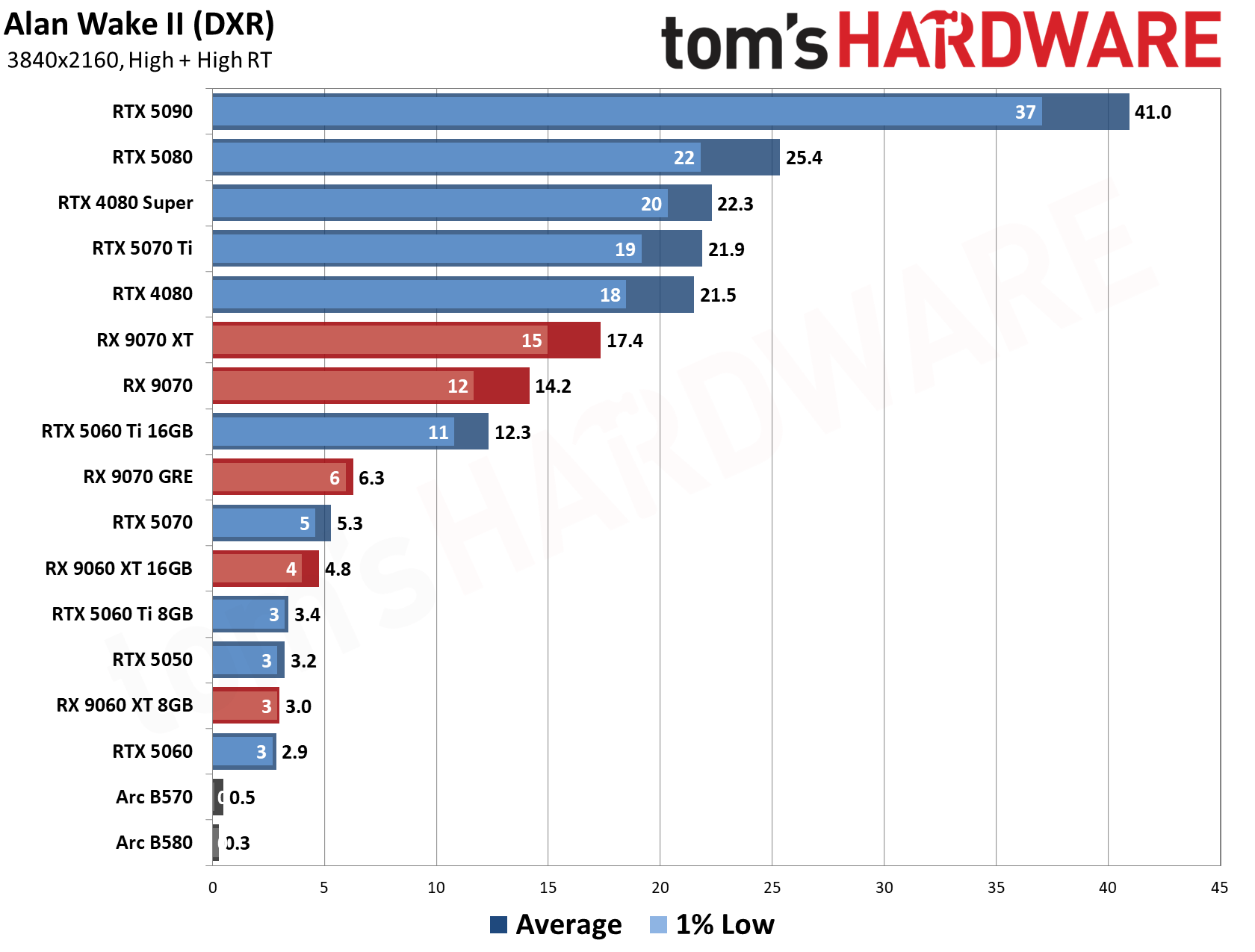
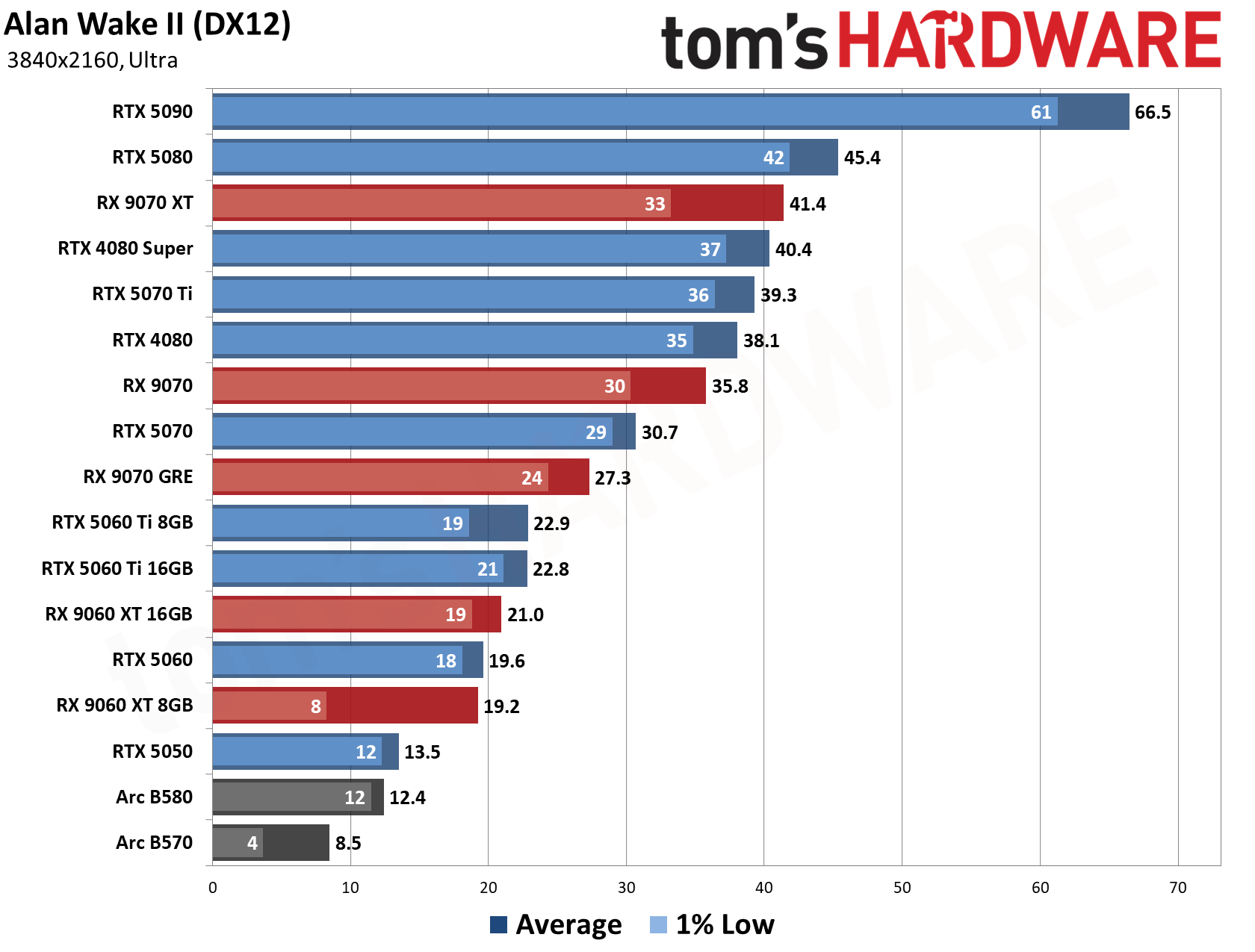
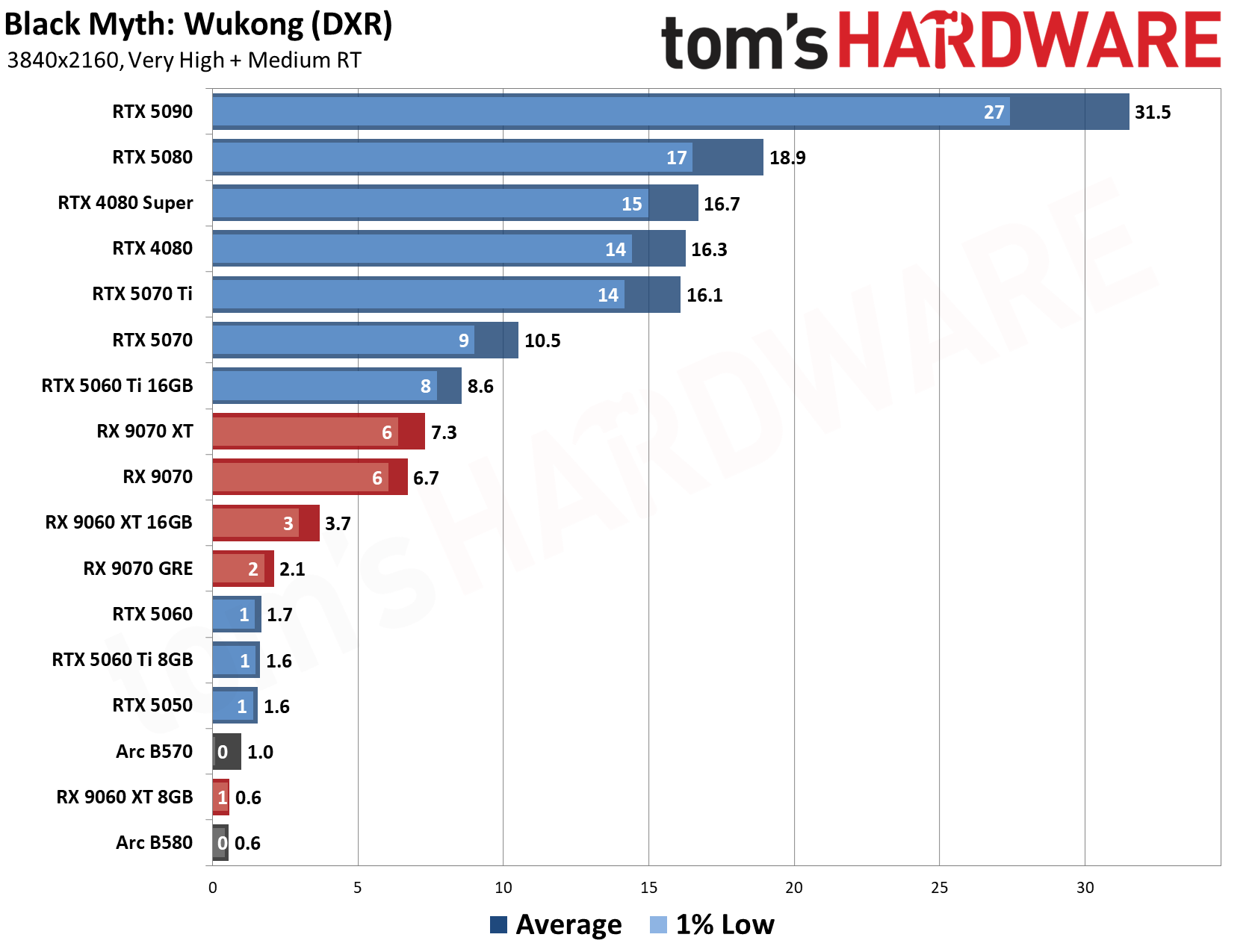
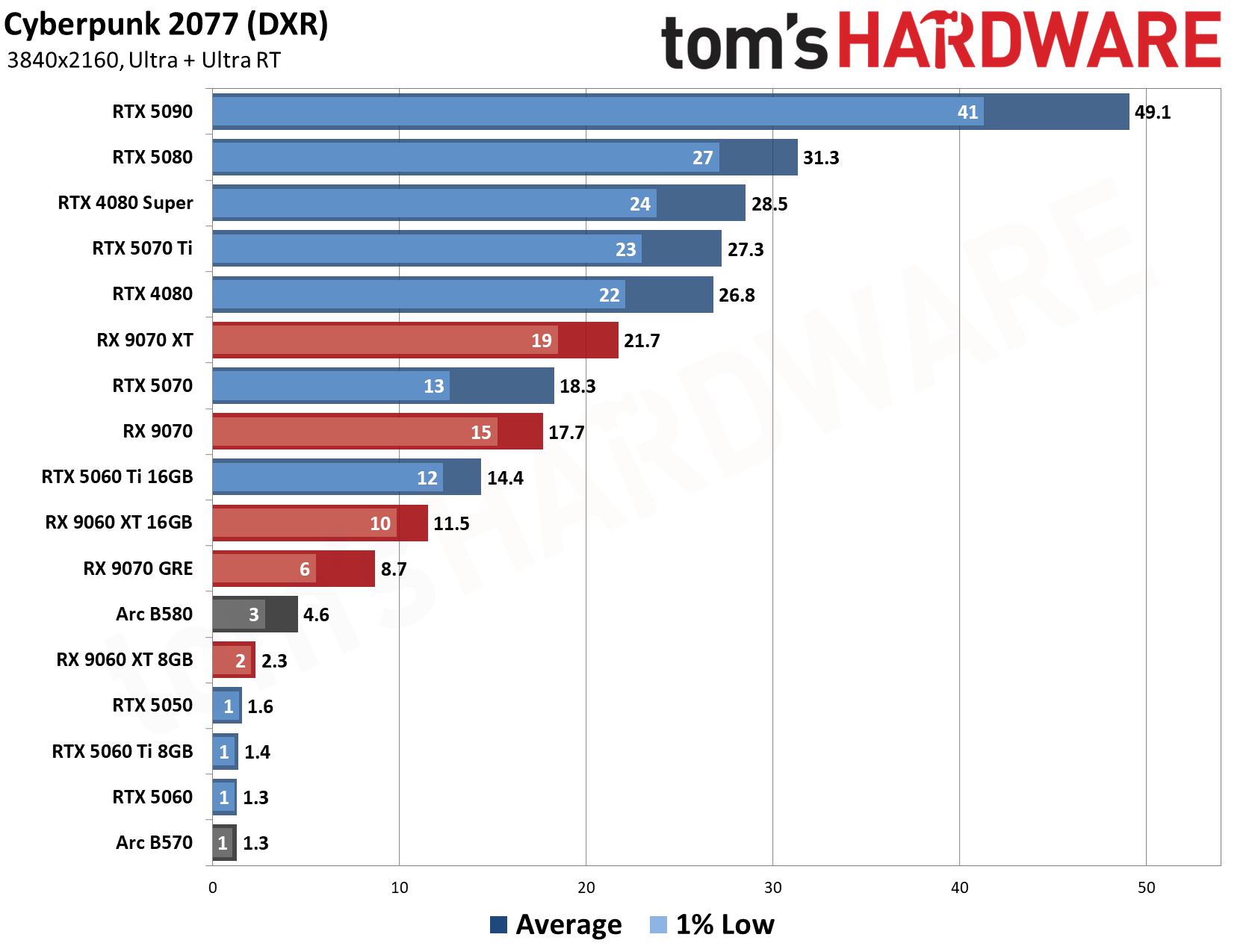
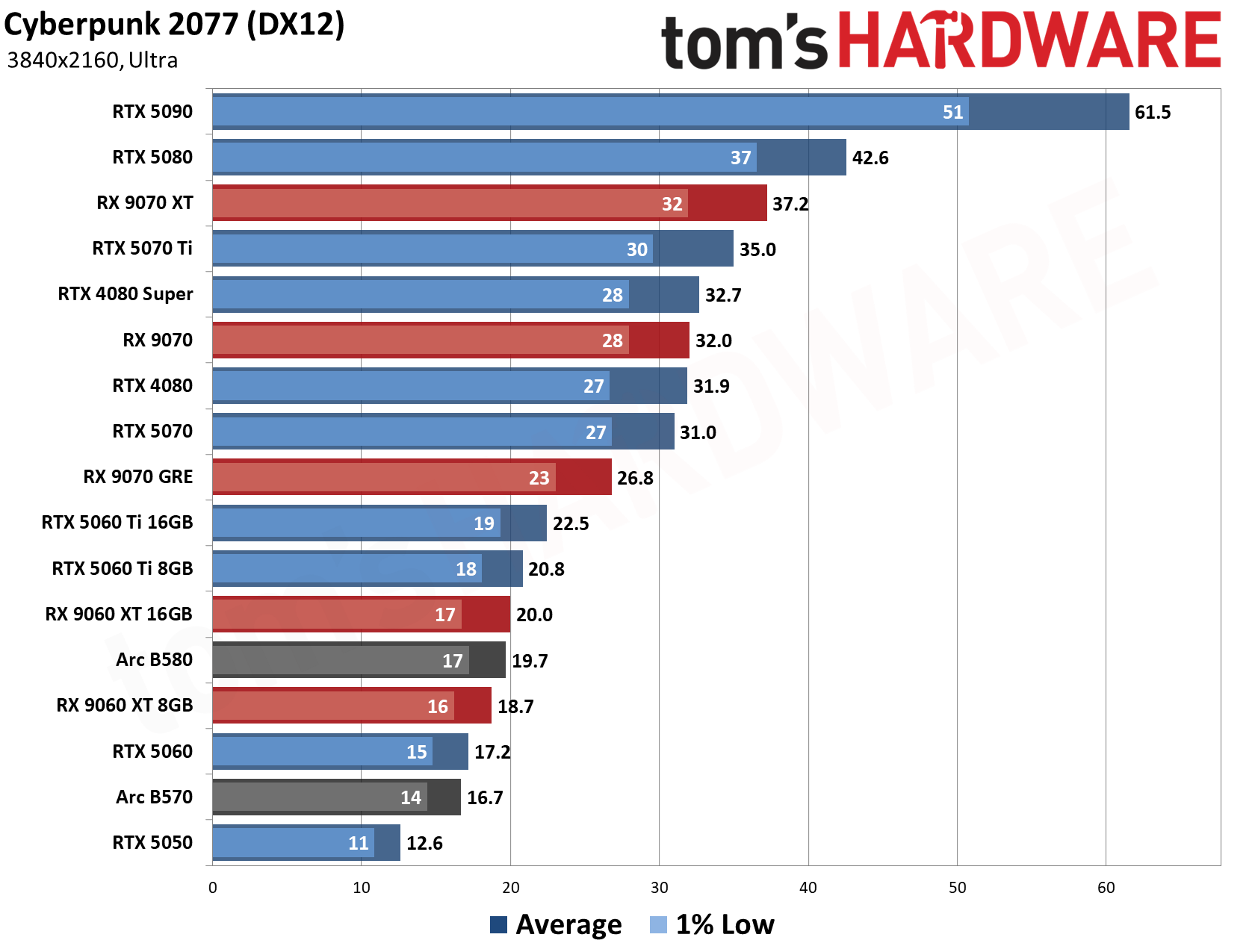
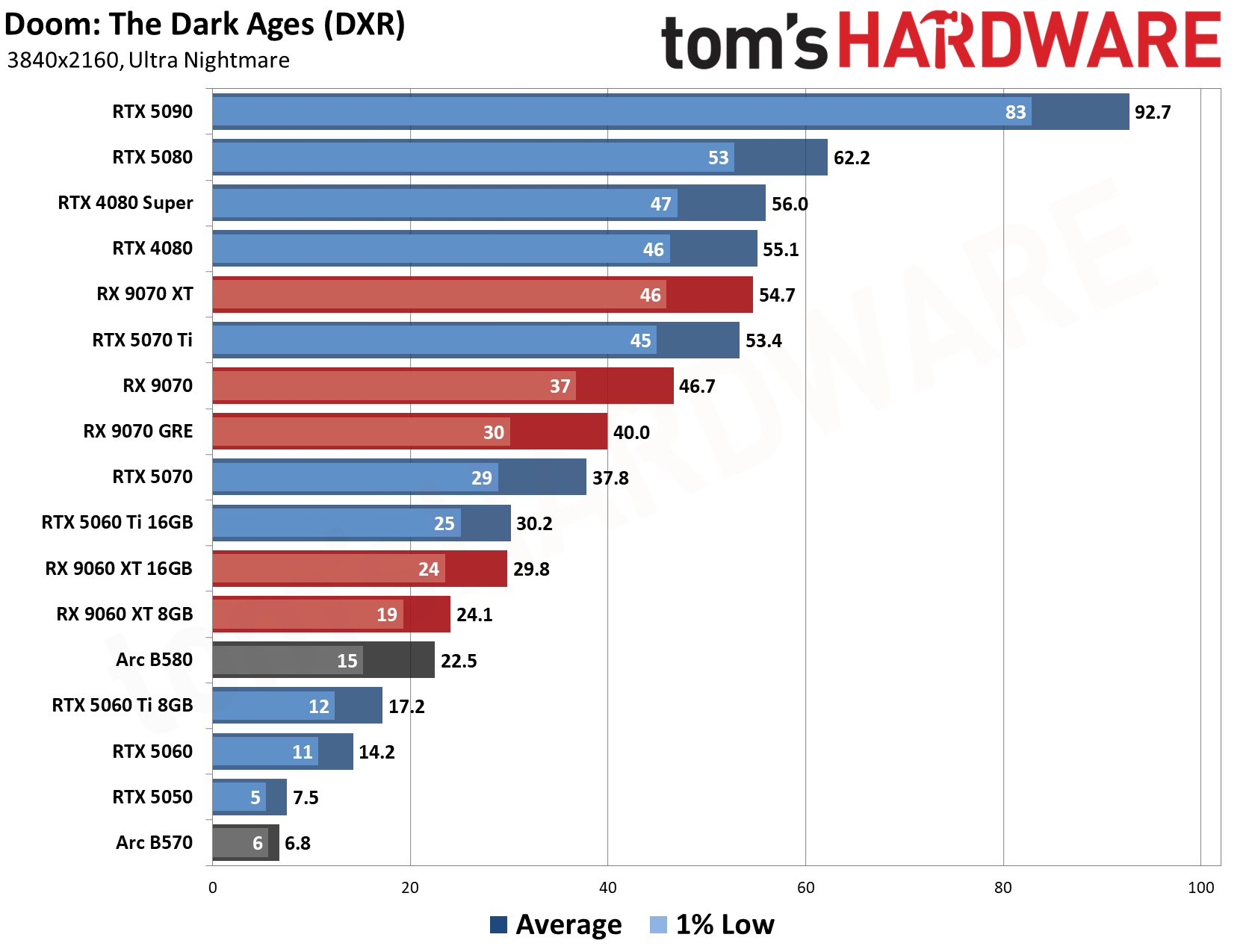
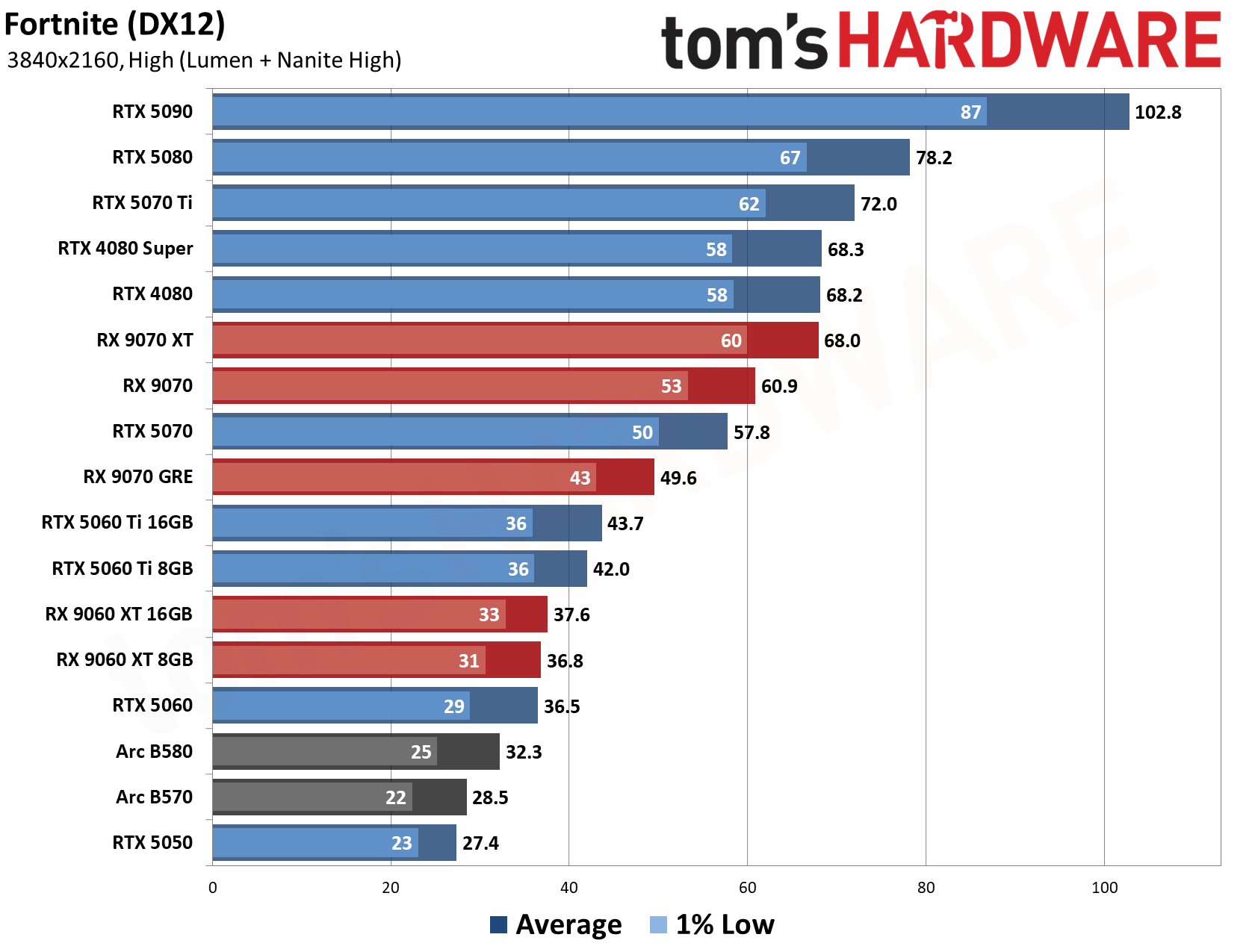
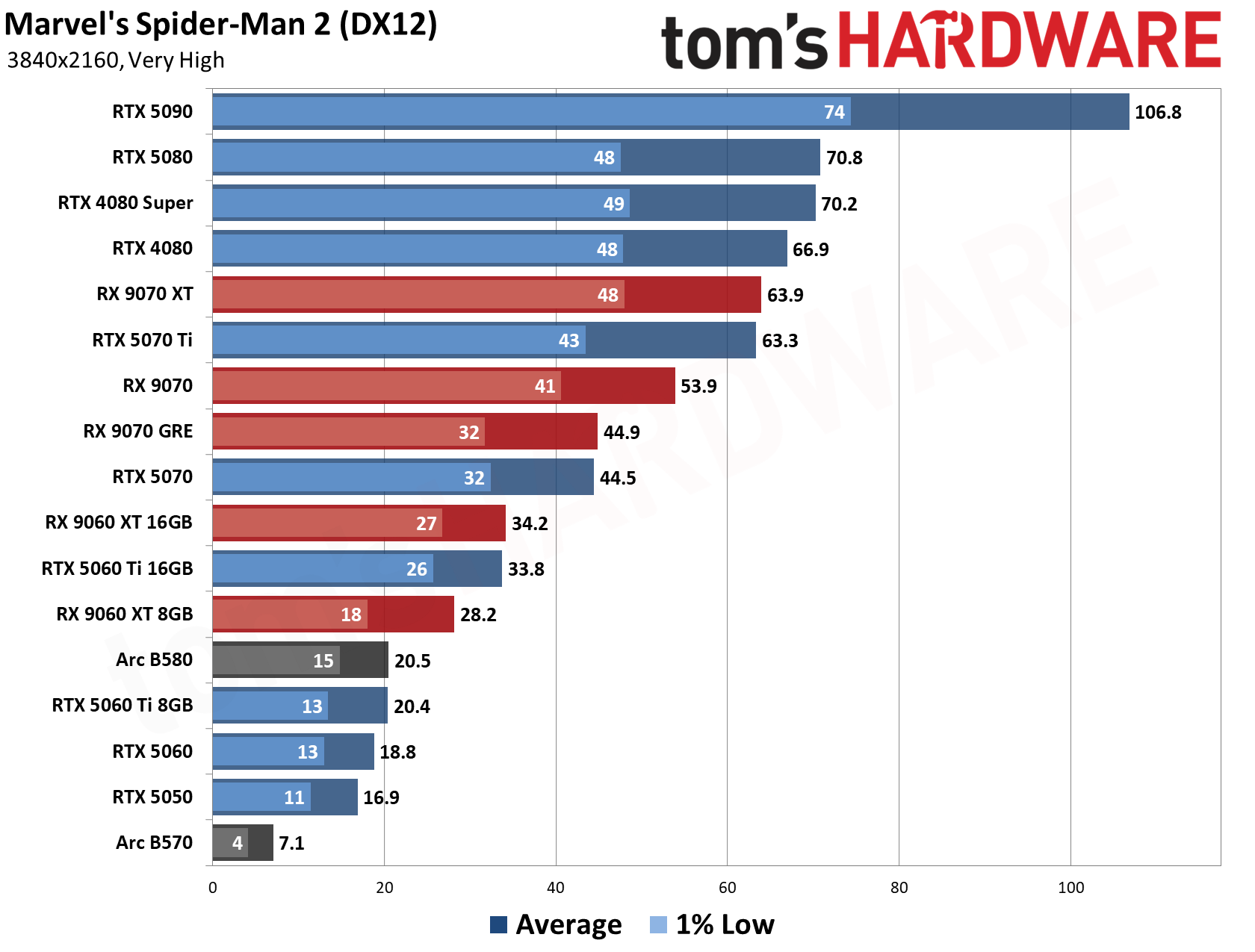
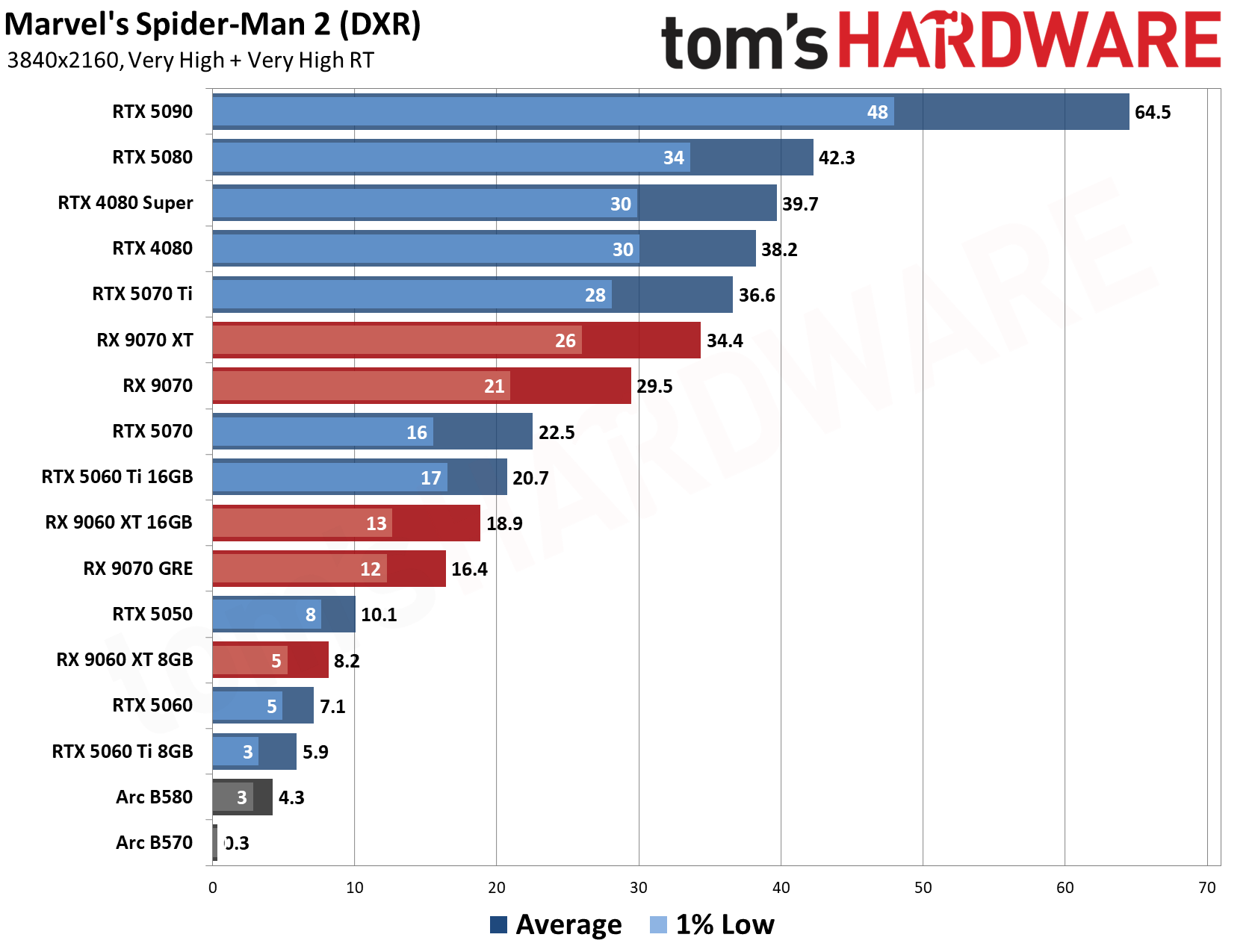
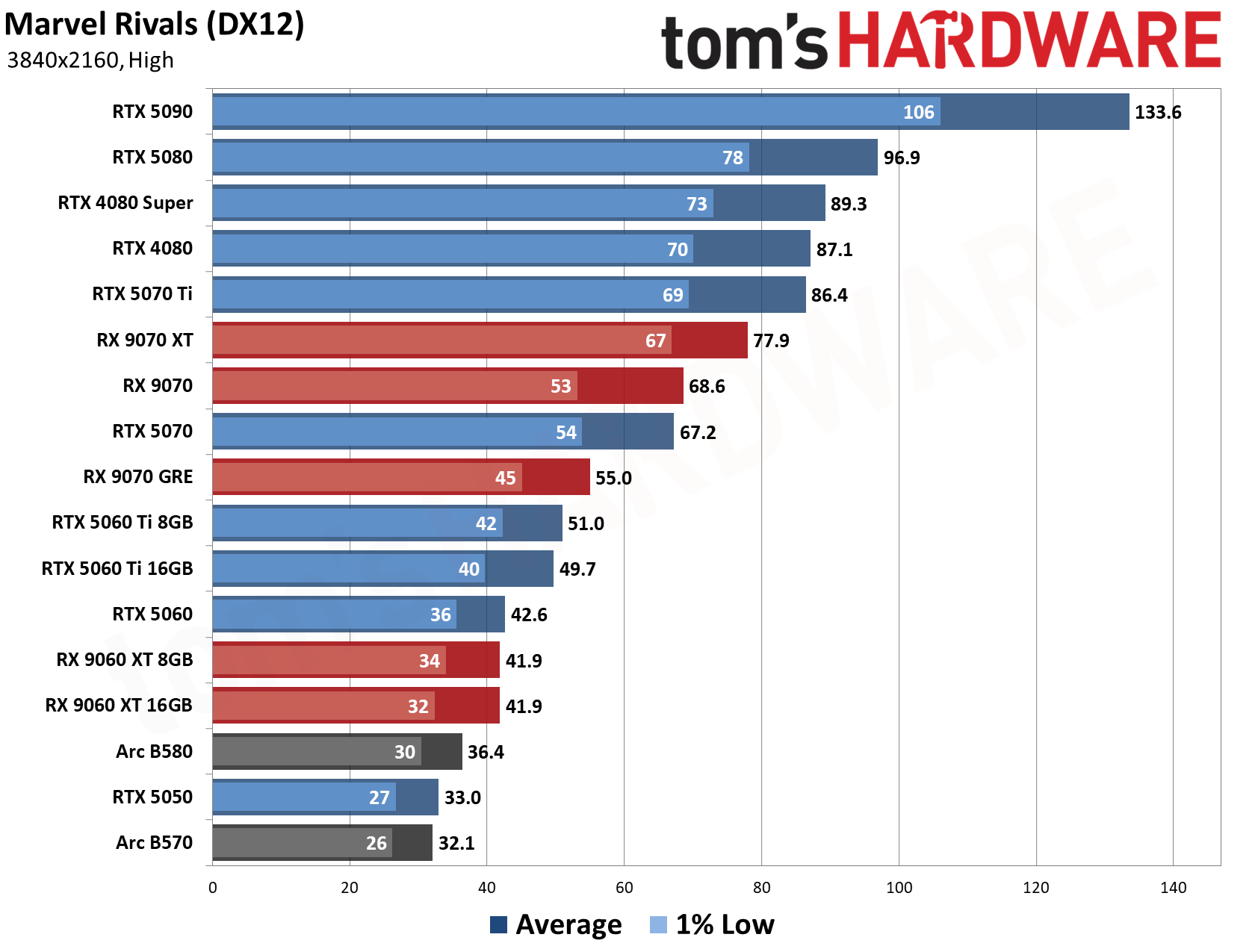
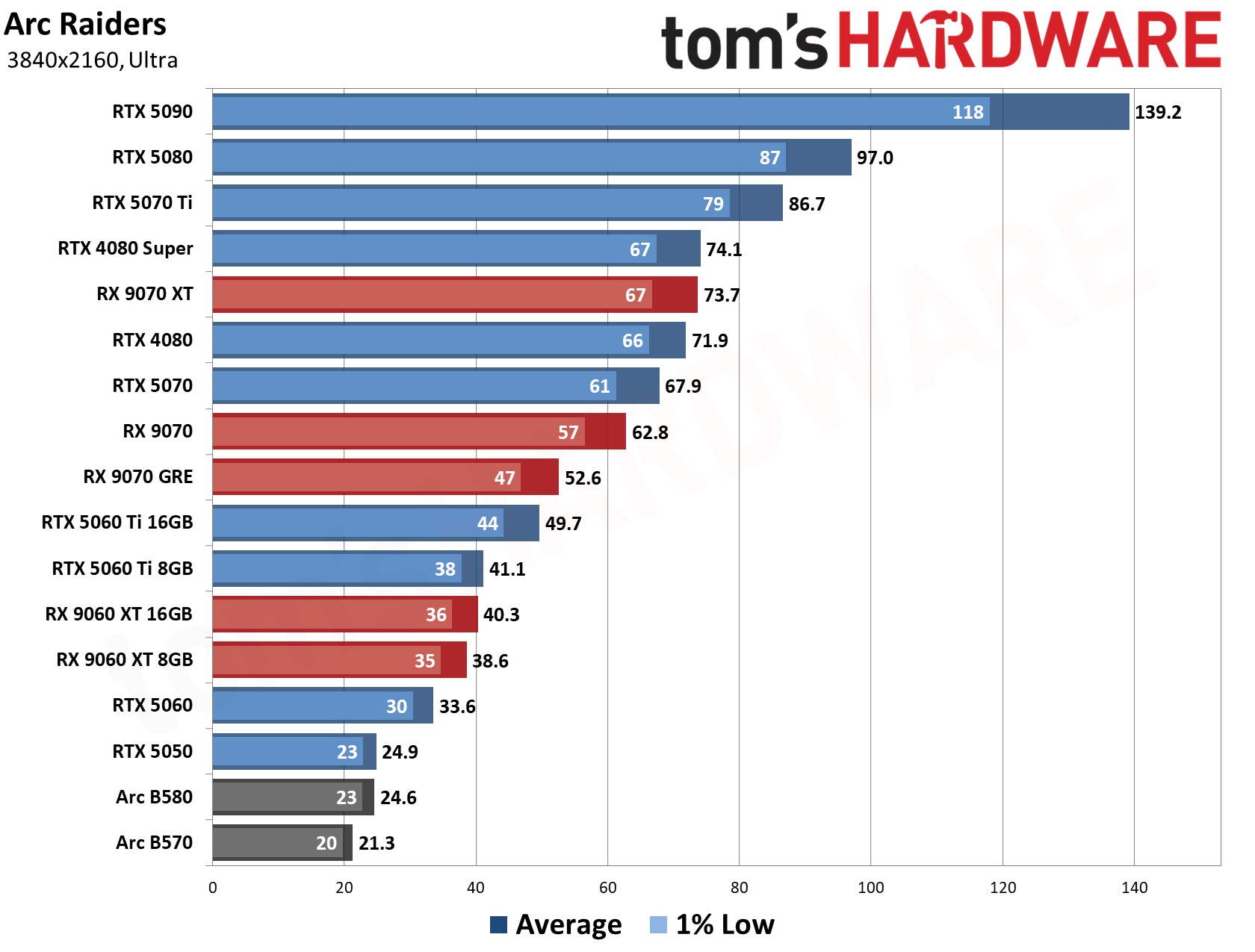
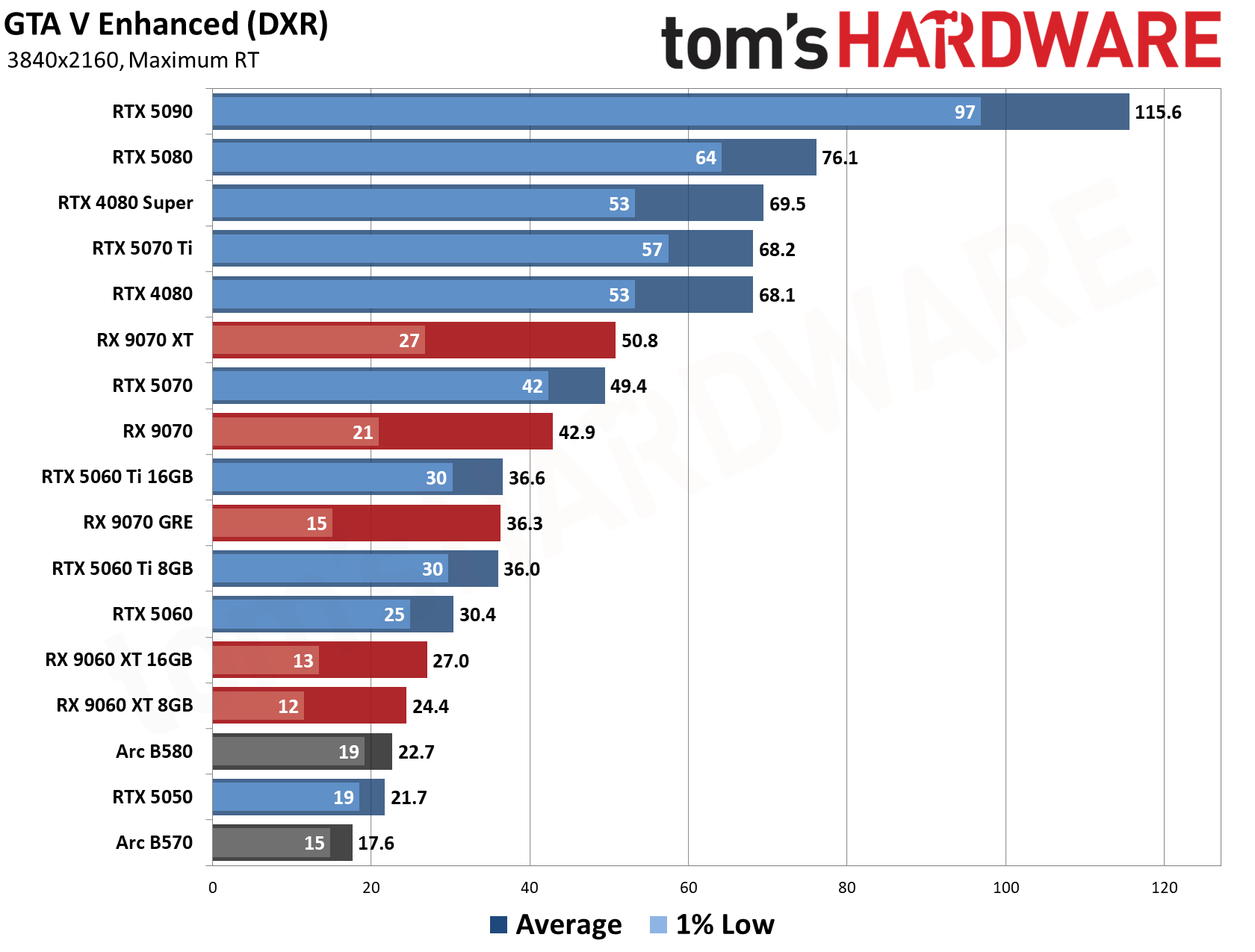
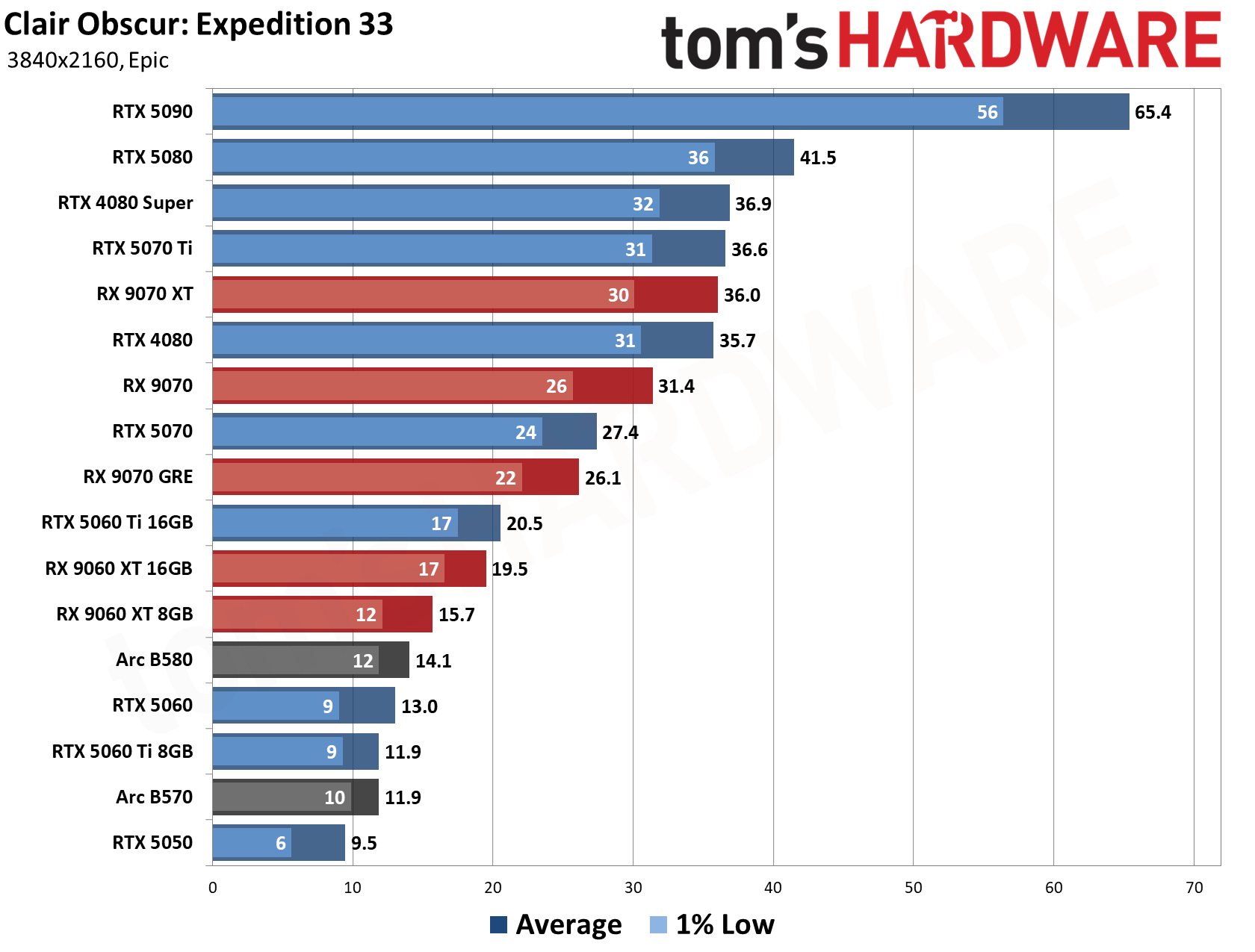
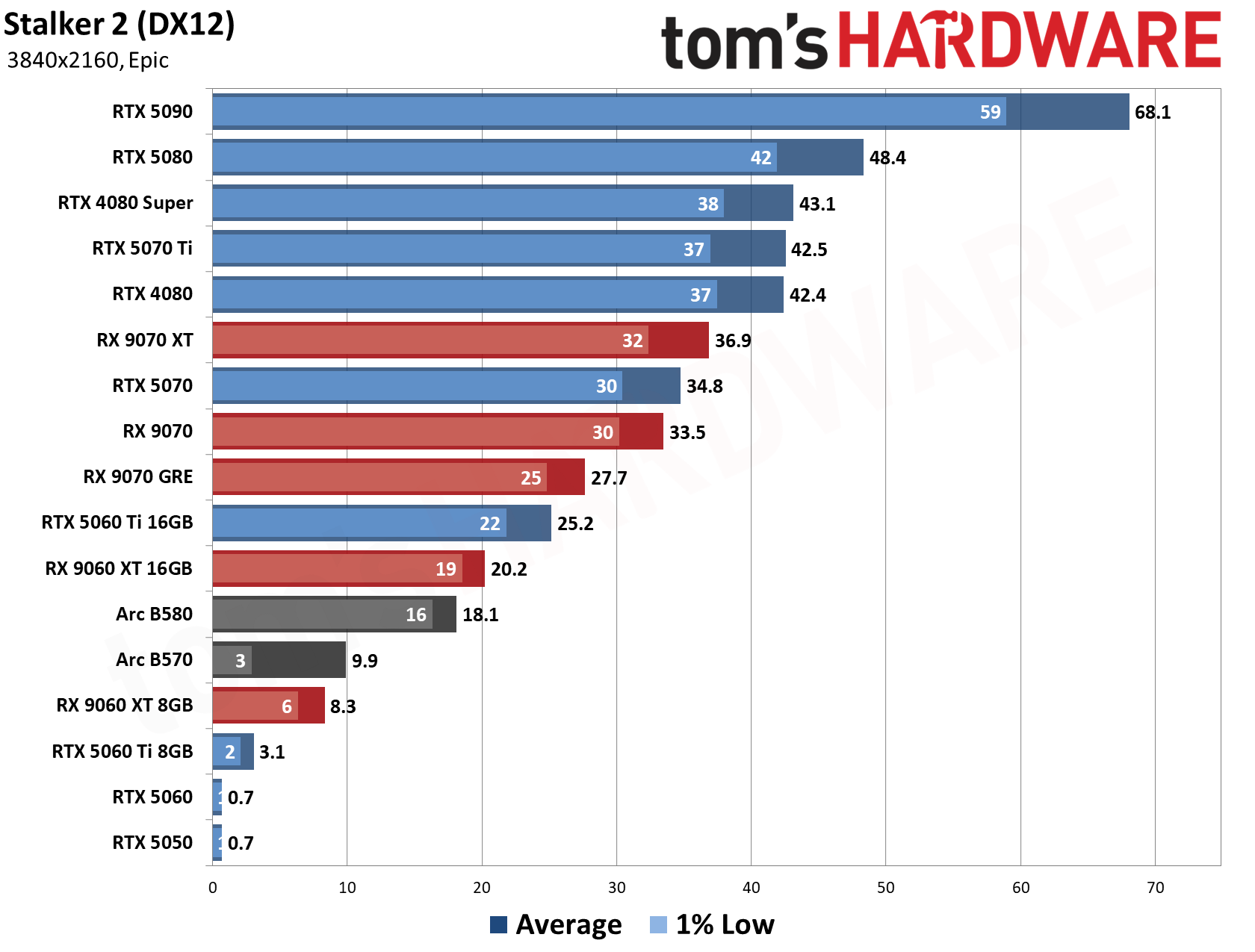
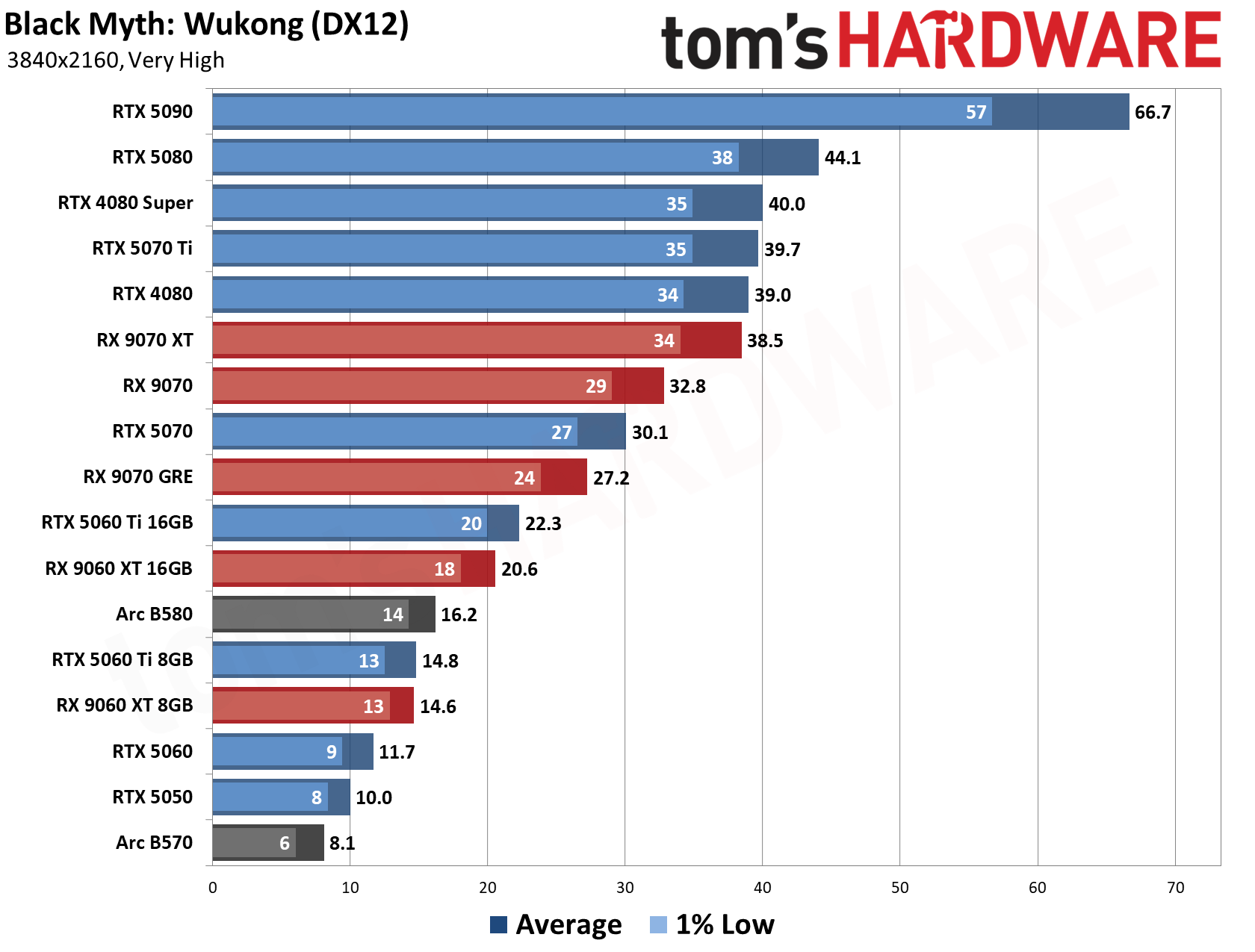
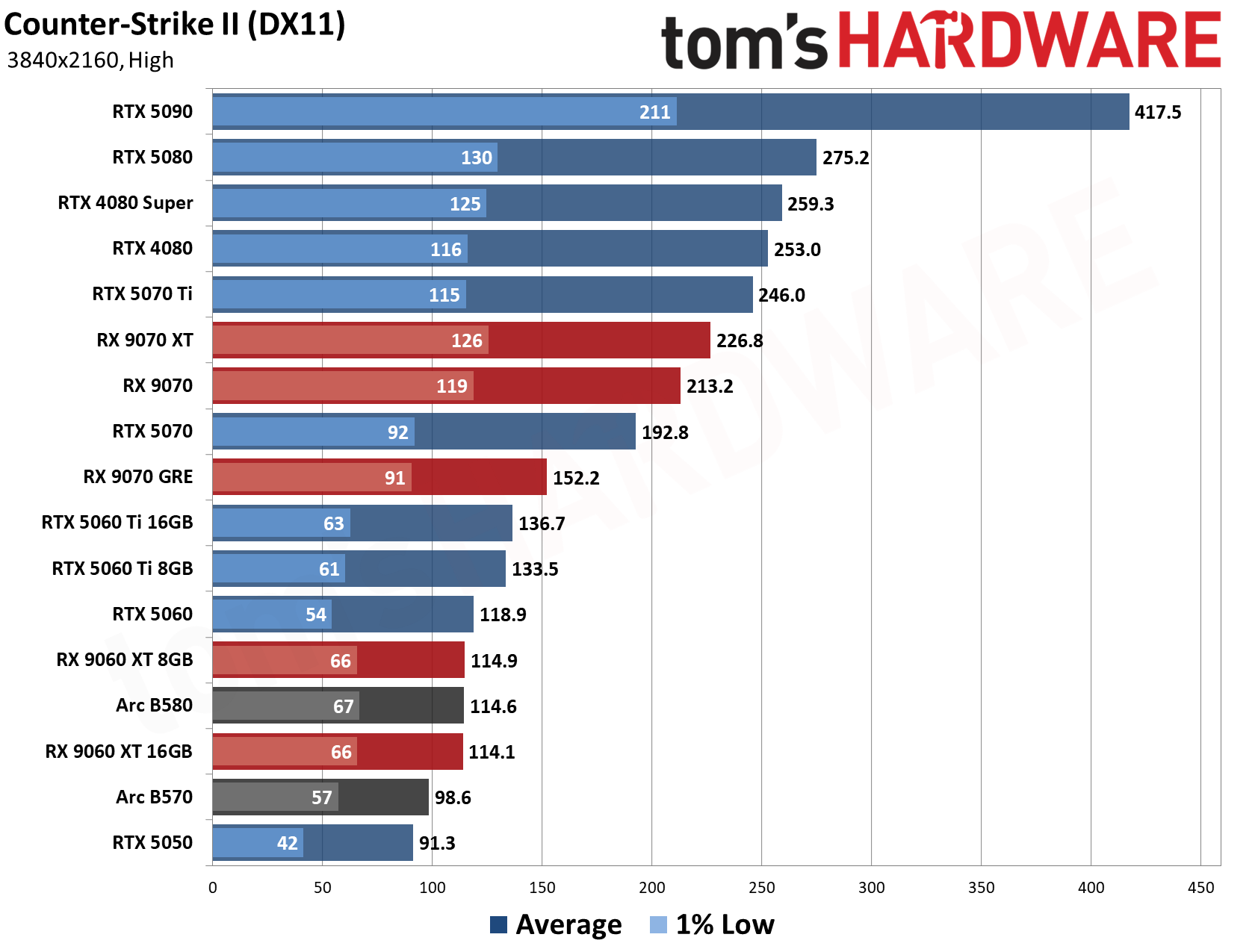
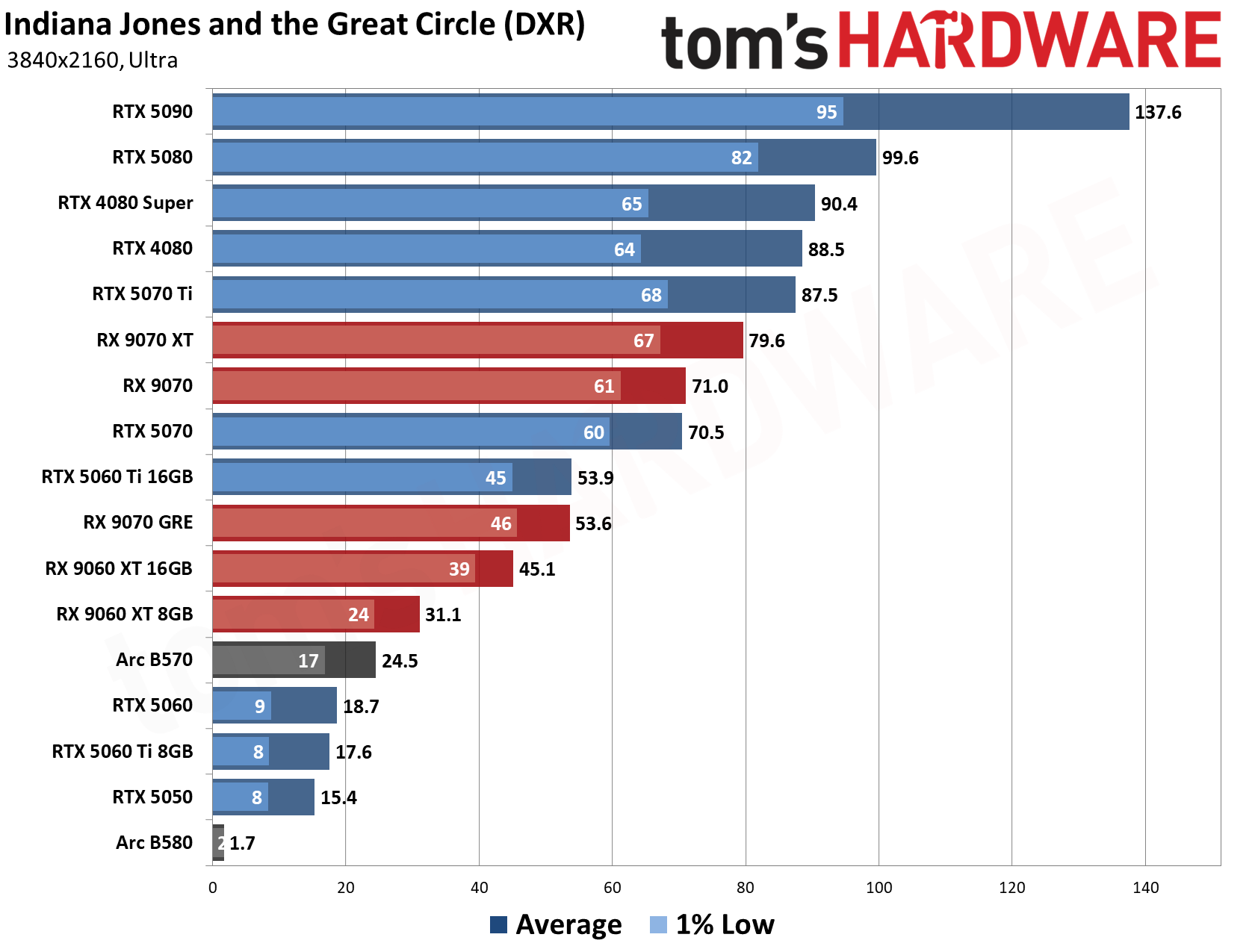
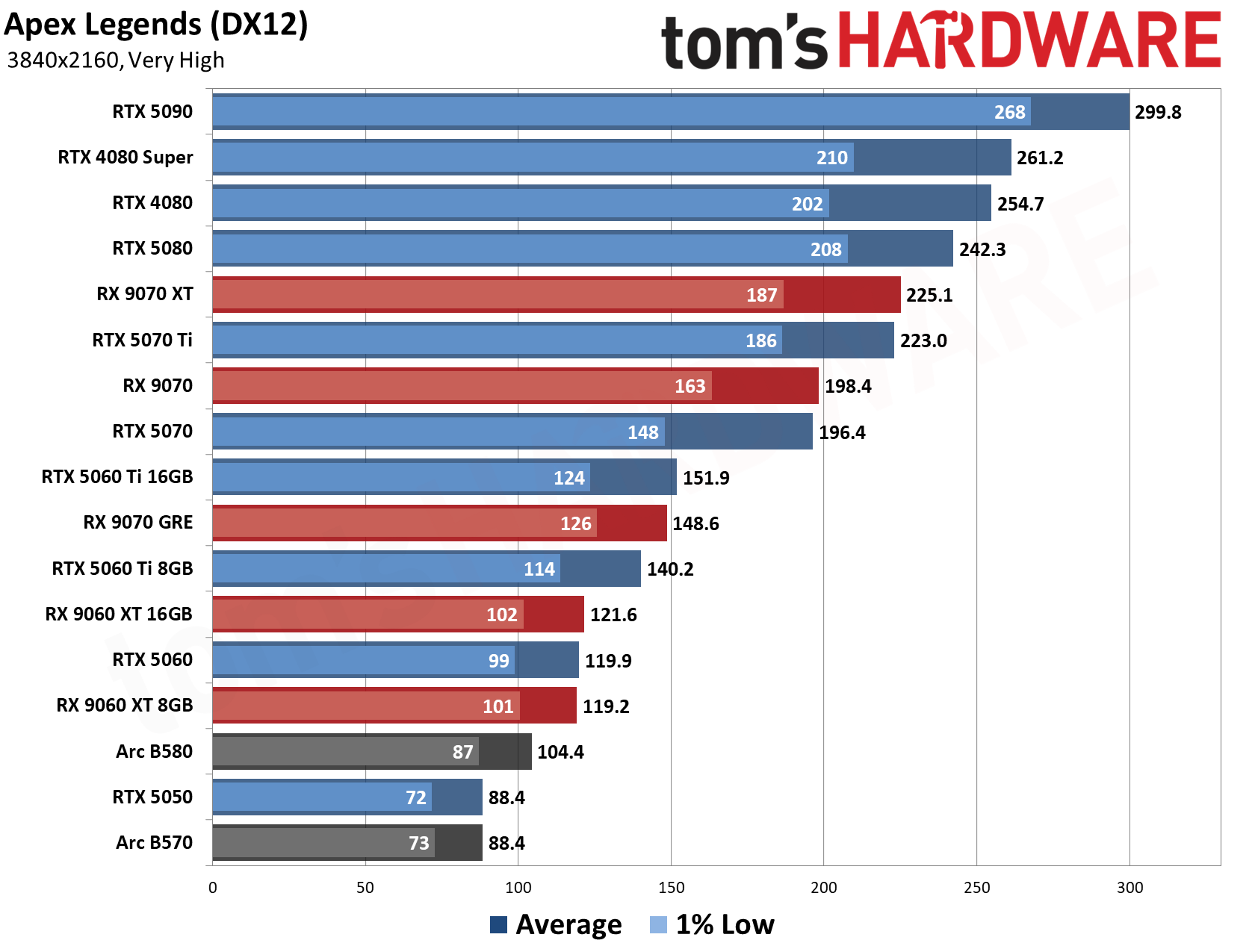
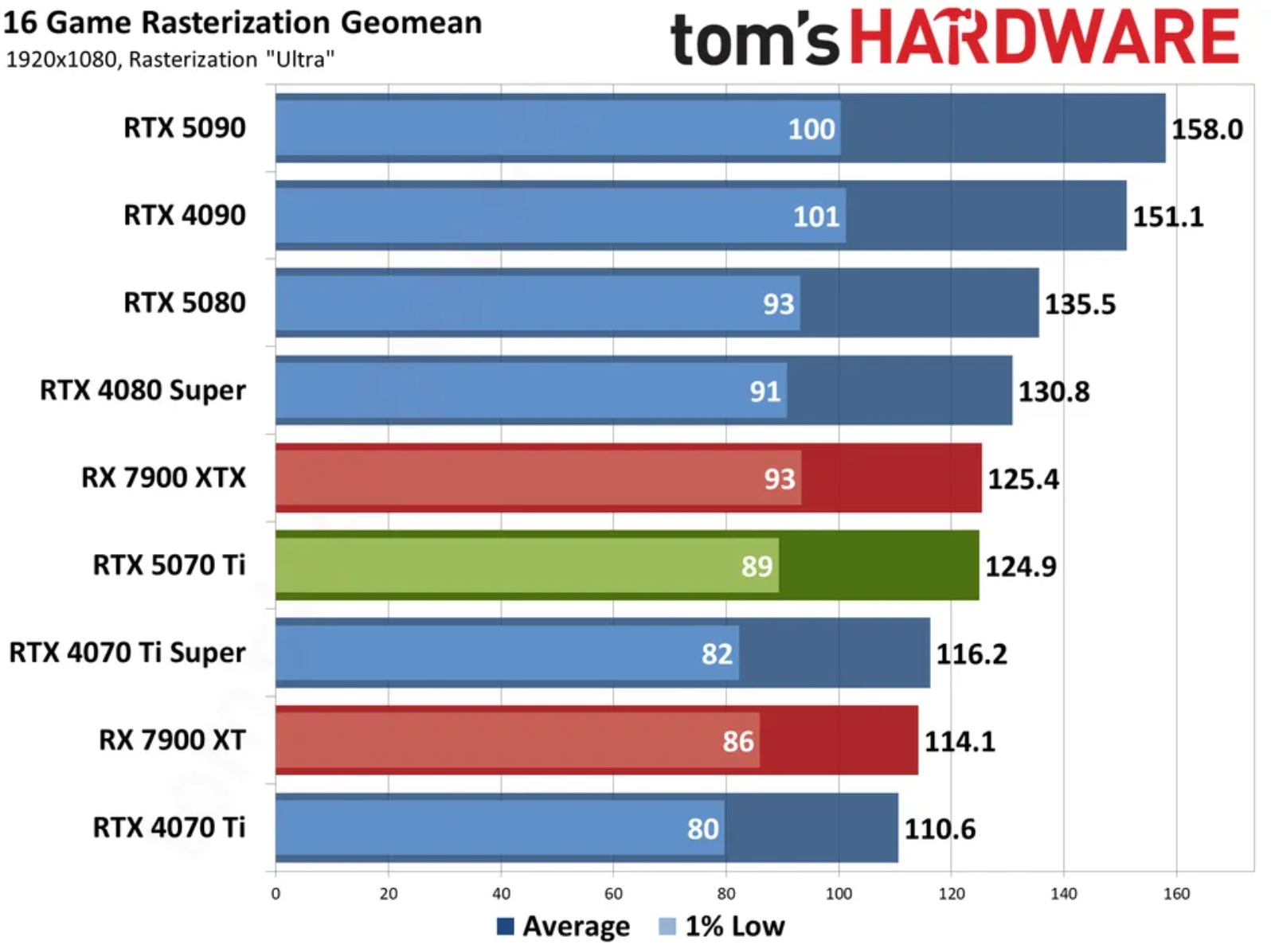
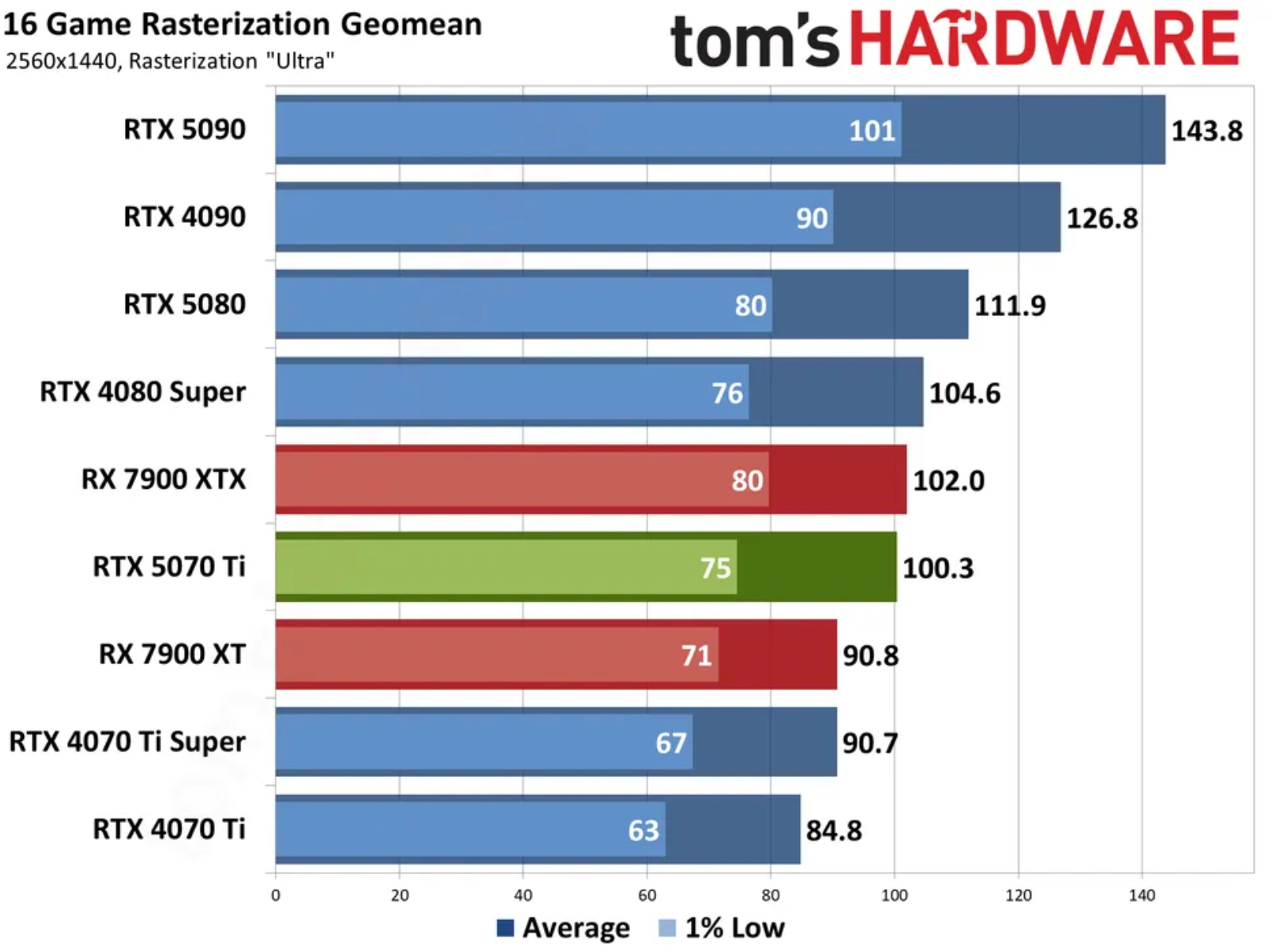
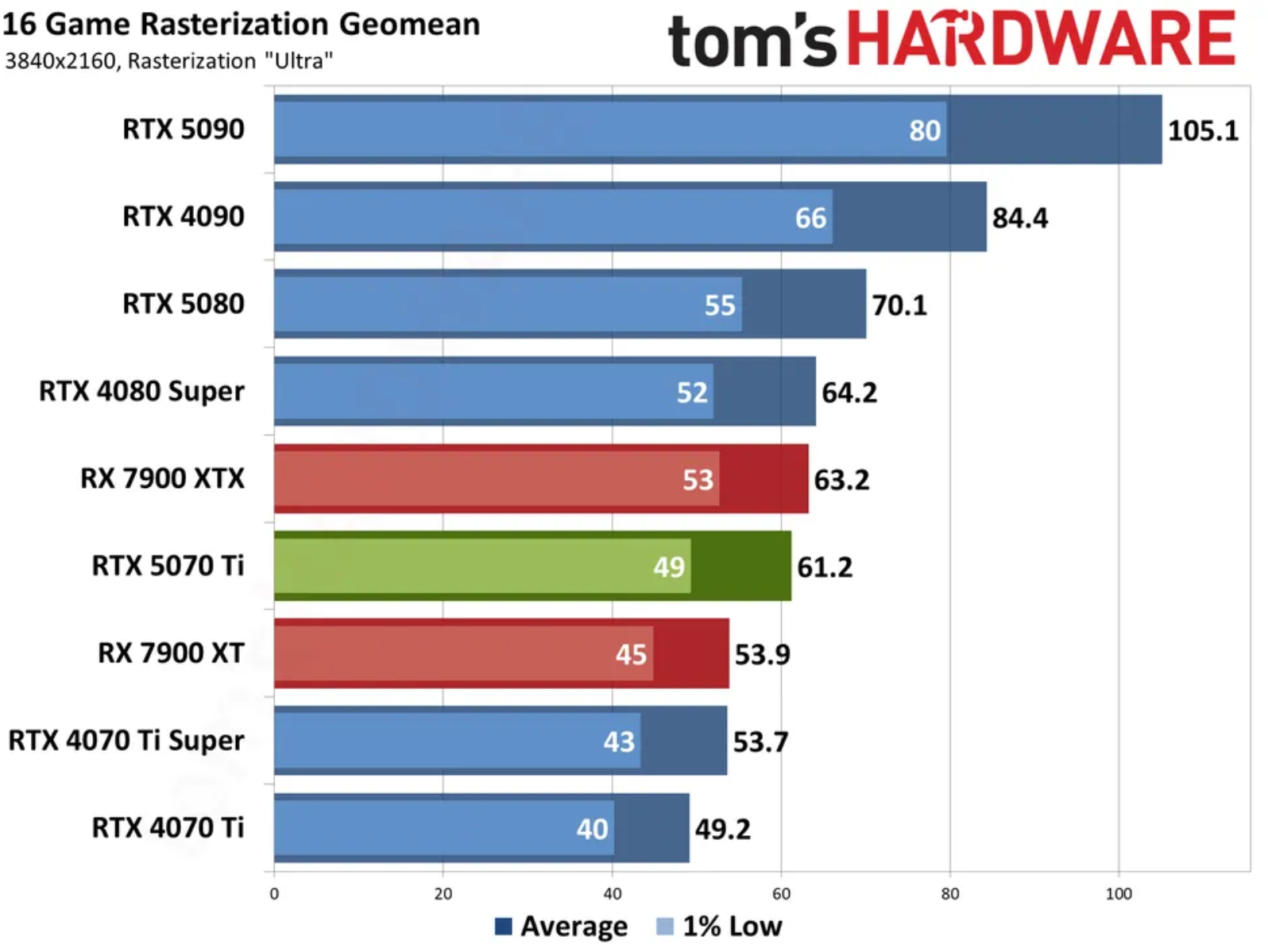
Our GPU hierarchy testing proves that whether you're gaming at 1080p or 1440p, the RTX 5070 in this PC stands ready to deliver a great experience across both raster and RT titles. Check it out:
And if you run into a game that's too tough for the RTX 5070 to conquer at native resolution, you have superior DLSS 4.5 upscaling and frame generation at your disposal with this system to get the optimal experience. The 12GB frame buffer gives you plenty of room for Multi Frame Generation, as well.
If you're looking for a midrange AMD X3D-powered gaming upgrade for a surprisingly low price in today's wild and crazy PC market, get on this deal quick, because it surely won't last long with these specs.
Sony doesn’t have a lot of love going its way among gamers right now, especially among the PC crowd, between the decision to abandon physical disc sales and reportedly shelve ports of its games to PC. Sony makes an excellent controller with the DualSense, not only for the PS5, but also for PC, with native support for its features (such as adaptive triggers) in some games. Still, it doesn’t feel great spending $74 on a controller if you don’t particularly align with Sony’s recent decisions, especially considering there are several other excellent controllers that either cost less or pack more features (and sometimes both).
Although there’s some impressive tech in the DualSense, it’s missing a lot of features that are now commonplace among third-party controllers, notably, TMR joysticks, additional rear paddle buttons, and multiple onboard controller profiles — you’ll need to spend $200 on the DualSense Edge for that. All of the controllers below come with those modern conveniences, as well as dedicated software for profile management and button remapping.
All except one also use a 2.4GHz connection, allowing you to use the controller wirelessly with virtually any device, and without the latency implications or connection limitations of Bluetooth.
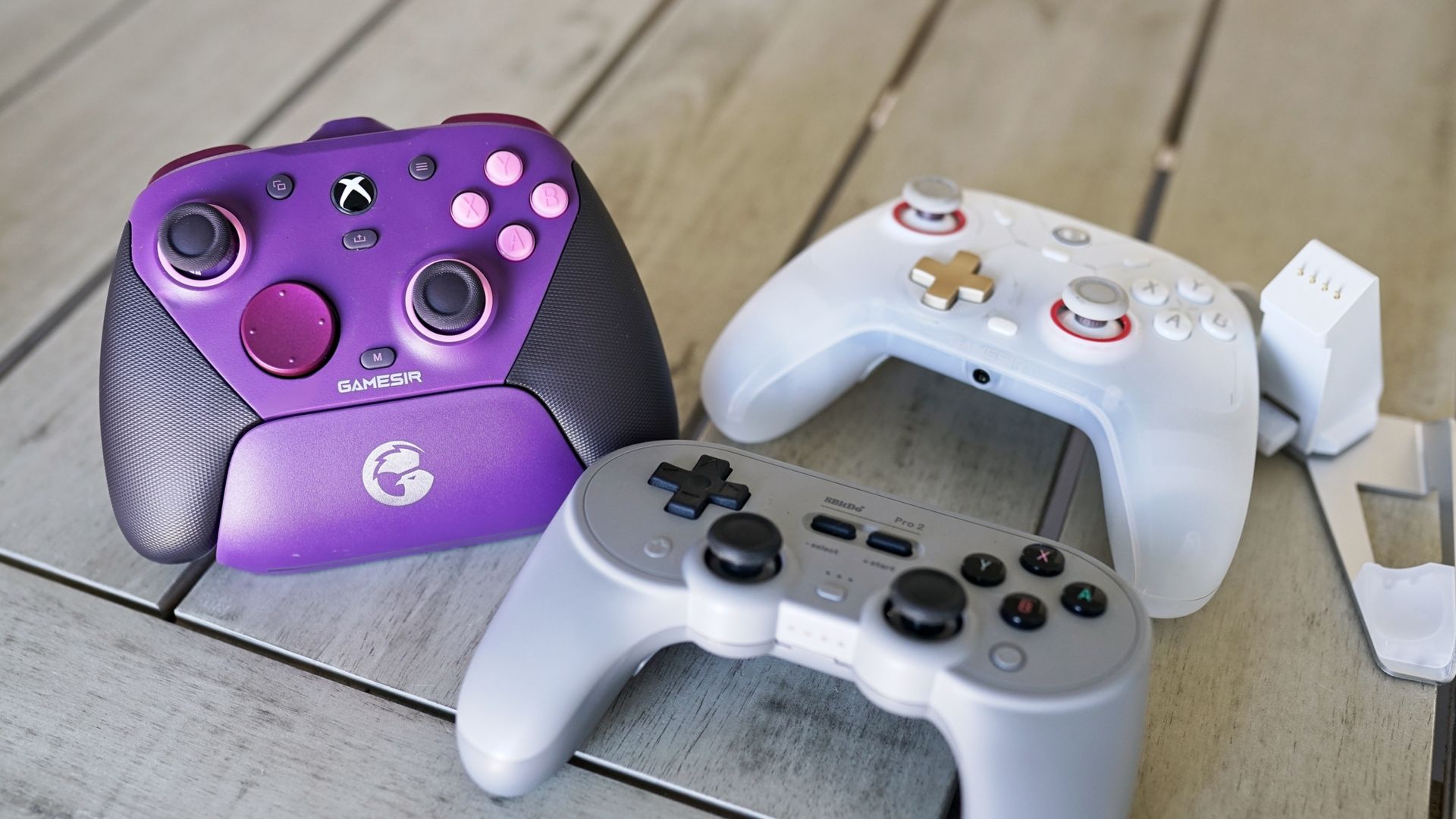
The controller for most PC gamers: GameSir G7 Pro
(Image credit: Tom's Hardware)
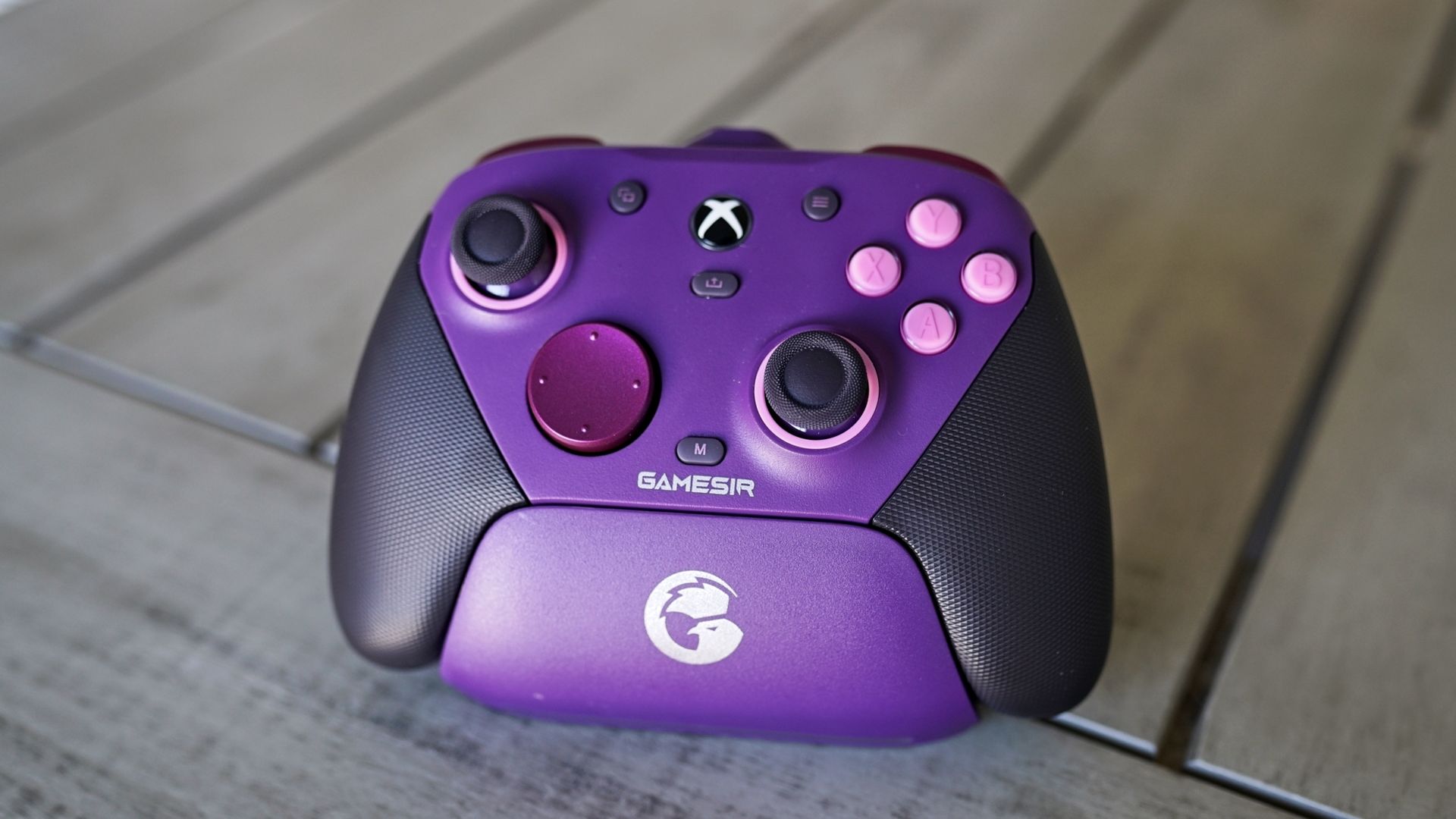
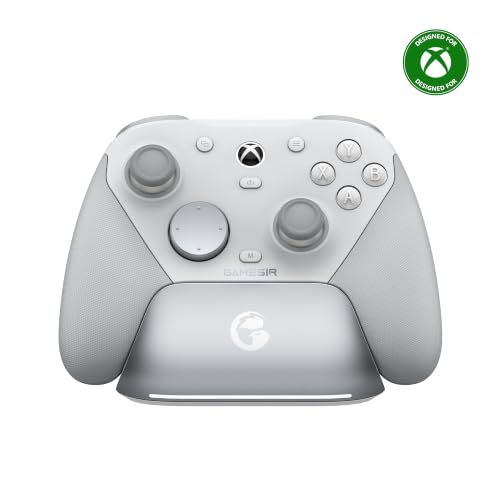
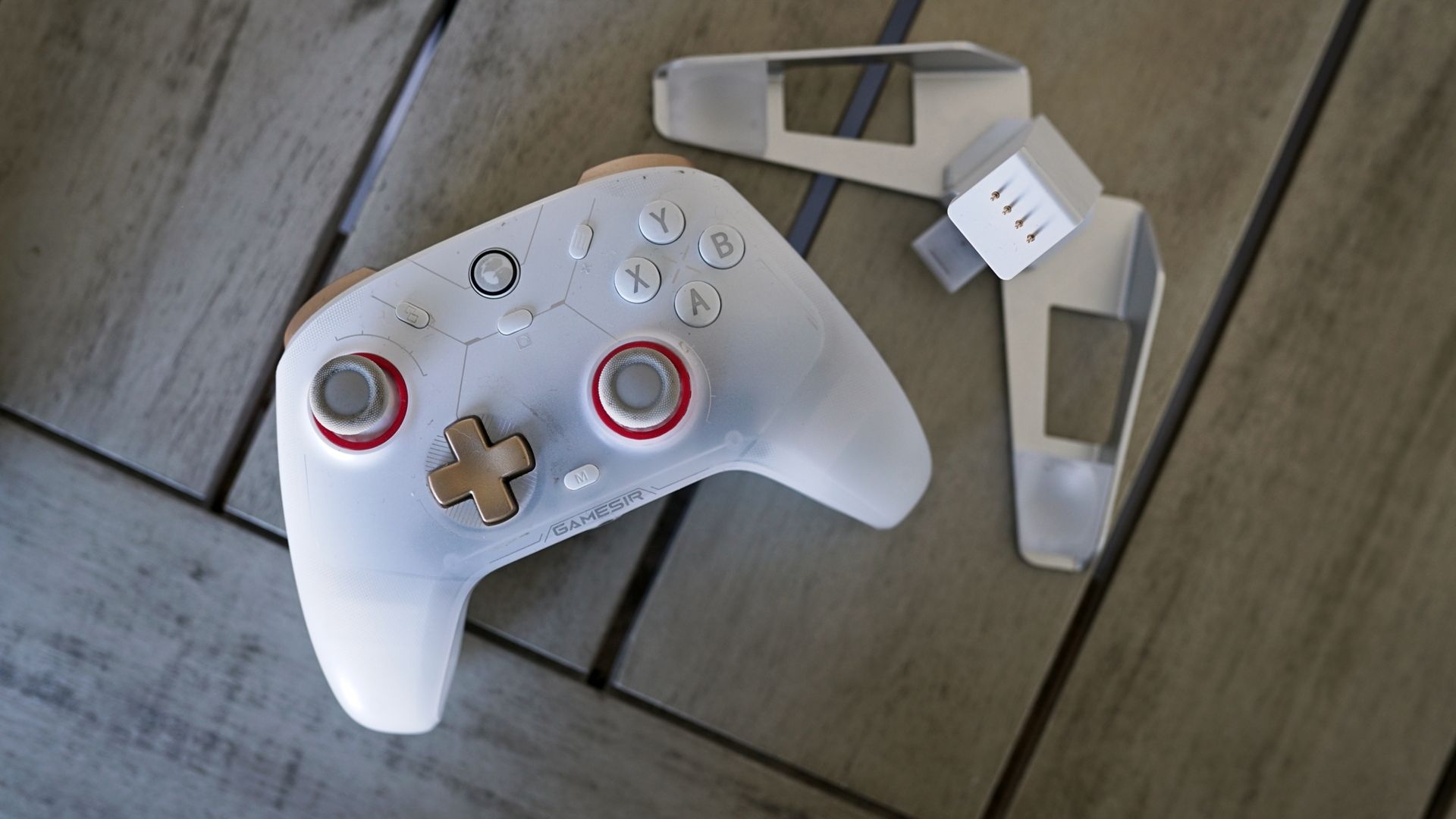
The GameSir G7 Pro is a pro-style controller without the extra luggage, literally. As more tech gets packed into controllers, they get heavier, which is an issue with the standard DualSense and, to a far greater extent, the Xbox Elite Controller (any version, really) and the DualSense Edge. With the G7 Pro, you get extra amenities like remappable buttons (including rear paddles), a charging dock, a 2.4 GHz connection, and a surprising number of different aesthetic variants. The primary difference is that the G7 Pro feels like a normal controller in your hands, and it’s less than half the price of the first-party options from Sony and Microsoft.
For feel, the G7 Pro clocks in at 7.1 ounces, a far cry from the Elite Controller's 12.2 ounces and the DualSense Edge’s 11.6 ounces. Like the first-party premium designs, you get four remappable buttons: two paddles on the back and two small buttons situated between the trigger and bumper. It also comes with removable sticks and three D-pad options in the box. The faceplate and grips come off, as well, if you want to change up the look in the future.
The G7 Pro stands out most for what it does differently, however. For the face buttons and D-pad, GameSir uses optical micro switches, which you can also carry over to the triggers. The G7 Pro includes Hall Effect analog triggers, but you can toggle over to a hair trigger setting with a slider on the back. In this mode, the controller instead uses a micro switch, giving you the tactile feedback you get with the face buttons.
For connectivity, 2.4GHz is the way to go, with the G7 Pro operating at a 1,000Hz polling rate and using its included charging dock for connection (the dongle is removable but sits inside the dock). It also supports Bluetooth and wired connections. For managing the controller, you can use the Nexus App, which gives you access to full controller remapping, calibration for the TMR sticks, and far more. But you don’t need to use the app, which is one of the highlights of the G7 Pro.
You can remap buttons, as well as calibrate your sticks and triggers, with combinations on the controller itself. The remapping is particularly useful, allowing you to quickly remap controls when you boot up a new game rather than opening Nexus to remap there. It’s seamless. Regardless of how you set up the G7 Pro, you can store up to three profiles on the controller itself, and far more within Nexus.
G7 Pro Controller: was $79.99 now $63.99 The GameSir G7 Pro is a controller for Xbox Series X/S, PC, and Android, and it comes with tri-mode connectivity, including Bluetooth, wired, and 2.4GHz connections. It also comes with a charging dock, as well as a swappable D-pad. View Deal
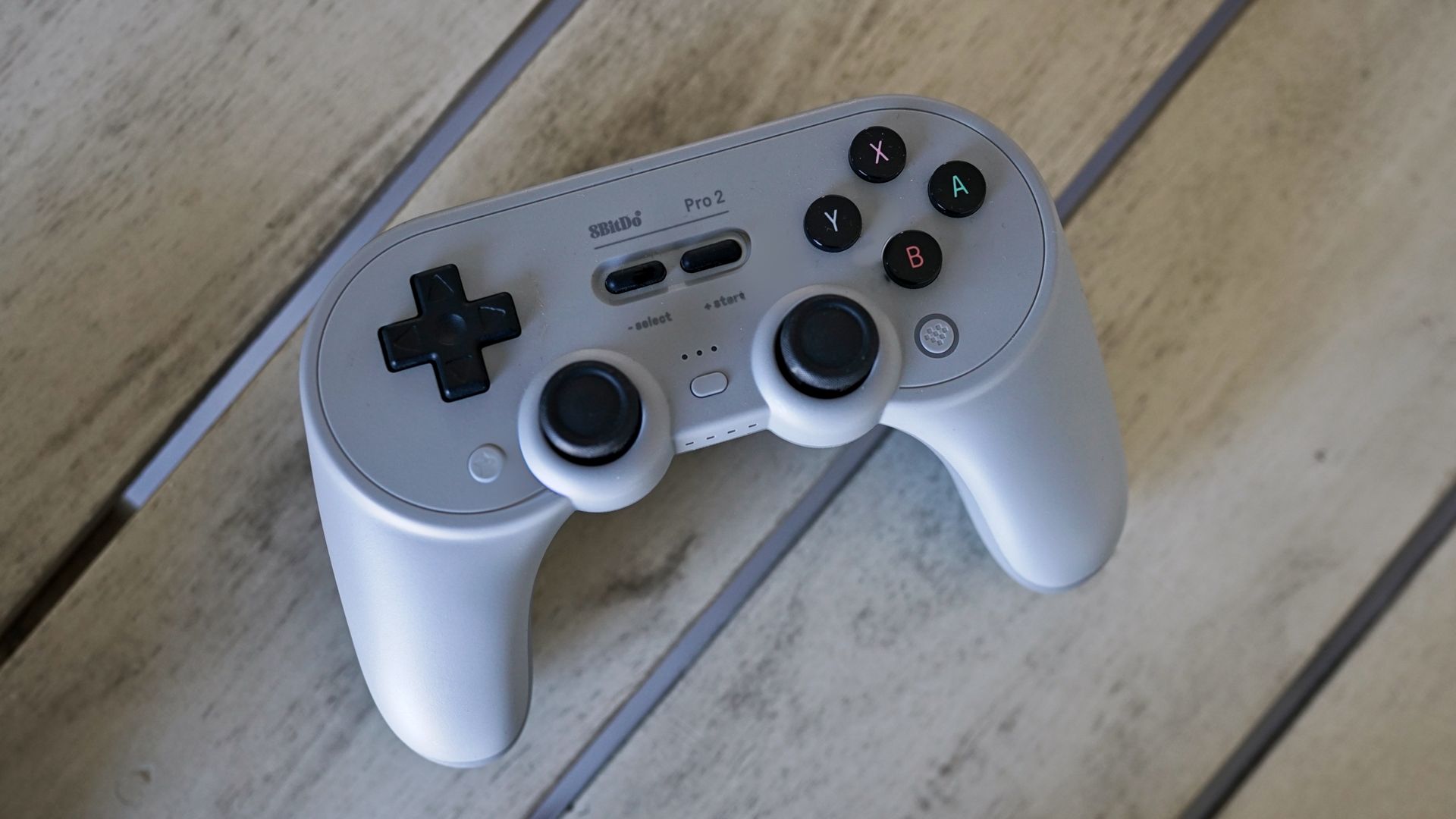
For retro enjoyers and DualShock fans: 8BitDo Pro 2 (SN30)
(Image credit: Tom's Hardware)
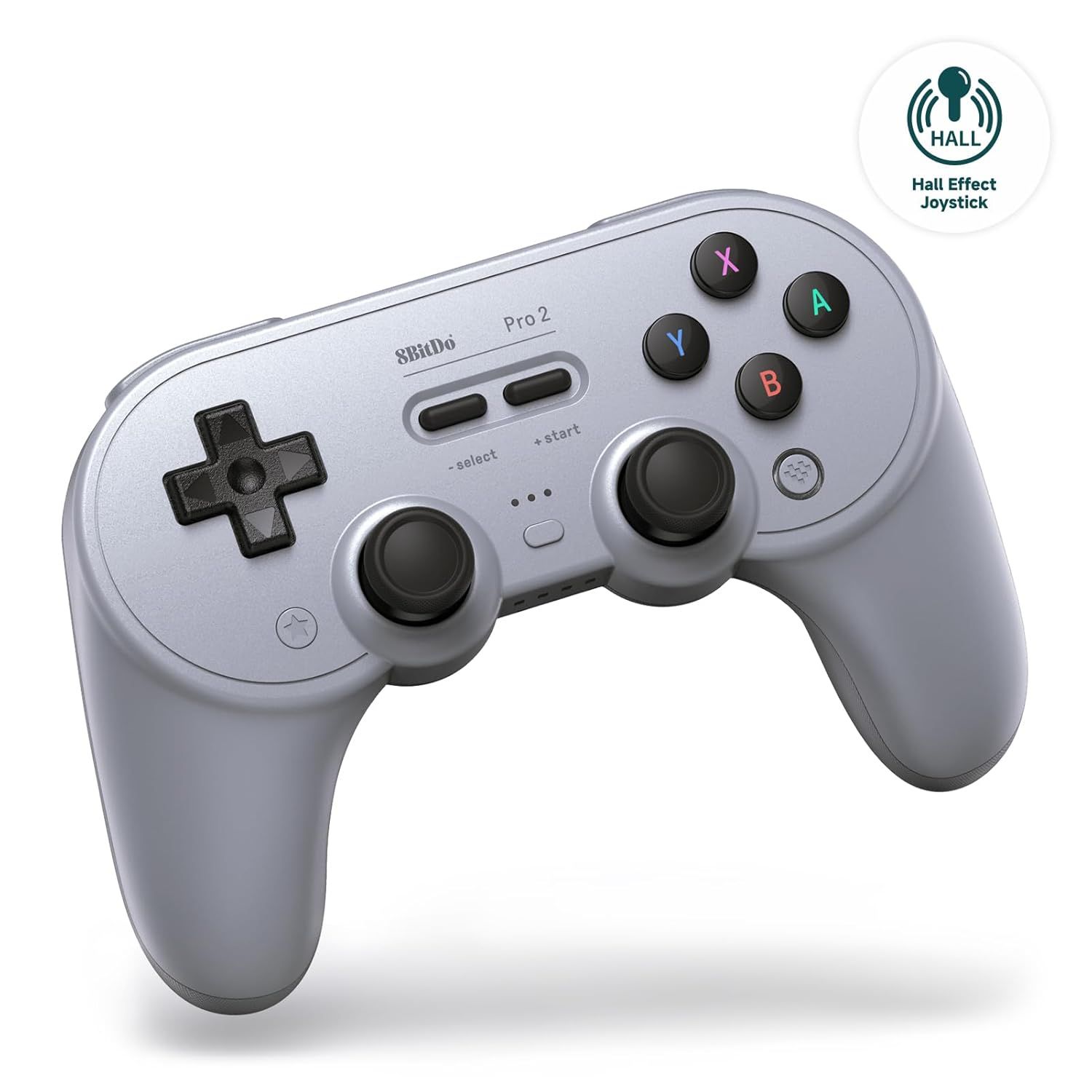
The 8BitDo Pro 2 (previously known as the SN30) is a more versatile controller than it first appears. It’s modeled after a Super Nintendo controller, supercharged with dual Hall Effect sticks, two back paddles, and triggers. It looks like a SNES controller, and the D-pad pulls off a good impression if you want to dive into any emulators or retro-style games. But with the handles, it feels most like a DualShock 4, a controller that you can’t use natively with Windows.
Although controller compatibility between platforms isn’t as big of an issue as it once was, the Pro 2 supports several platforms natively over Bluetooth, no cable required. A toggle on the back of the controller allows you to switch between Switch, Apple/macOS, Android/DirectInput, and PC/X-input modes. Unfortunately, there’s no 2.4GHz connection, though you can use the controller wired on any of the platforms it supports.
8BitDo allows you to store three profiles on the controller, which you can customize using the 8BitDo Ultimate software. It includes full controller remapping (including additional layers), macro support, trigger and stick deadzones, and vibration settings.
Pro 2 Controller: was $49.99 now $41.99 The 8BitDo Pro 2 is a controller for PC, Android, macOS, and Switch. It connects via a USB-C cable or Bluetooth, and it comes with two rear paddle buttons. View Deal
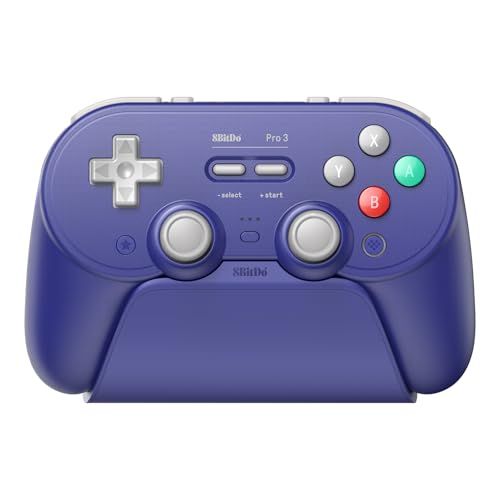
At $42, the 8BitDo Pro 2 is a solid deal. If you can stretch your budget a bit, the newer Pro 3 is $60 and comes with several upgrades. 8BitDo replaced the Hall Effect sticks with TMR sticks, added extra buttons between the bumpers and triggers, and added a hair trigger toggle for the triggers. The front buttons are swappable as well, as you can swap between a Nintendo and standard layout, and 8BitDo bundles in a charging dock.
The 8BitDo Pro 3 controller supports Windows, macOS, and Android, and it comes with Hall Effect triggers, TMR joysticks, and swappable ABXY buttons. View Deal
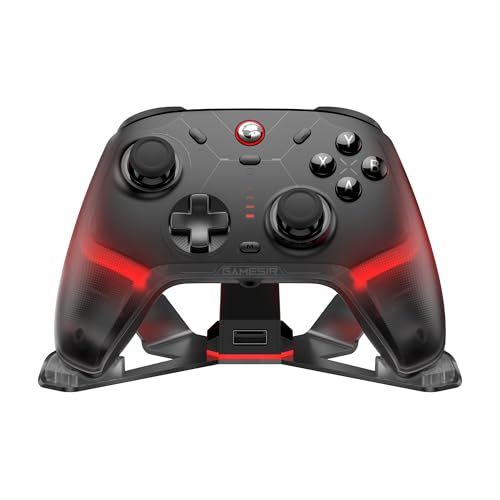
For around $50: GameSir Cyclone V2
(Image credit: Tom's Hardware)
The GameSir Cyclone V2 is a slightly worse version of the G7 Pro, and the difference really is slight. It comes with just two additional buttons (the back paddles) instead of four, and you don’t get the customization options for the sticks, D-pad, and faceplate. The primary annoyance with the Cyclone V2, which the G7 Pro solves, is the dock. It’s bad. It can hold and charge the controller, but you’ll fumble trying to make sure it’s actually sitting on the dock when you go to set the controller down.
Outside of that one usability issue, the Cyclone V2 is excellent, especially considering its price around $50. You still get quality TMR joysticks, responsive micro switches on the face buttons and D-pad, a 1,000Hz polling rate over the 2.4GHz wireless mode, and analog triggers with an optional micro-switch mode.
Instead of the dozen or so variants of the G7 Pro that are available, the Cyclone V2 is available in two colors: white or black, with a matching dock. The plastic shell isn’t fully opaque, however, and GameSir includes LEDs within the body of the controller that shine out while it’s on. You can customize these colors inside Connect (the software for the Cyclone V2), creating a smooth gradient of color (or just a solid color) across the controller while you’re playing.
Within Connect, you still get access to trigger and stick deadzone settings, button mappings, and profile management. Three profiles can live on the controller, and you can remap buttons (as well as access functions like macro recording) directly on the controller with key combinations.
The GameSir Cyclone 2 controller works with PC, Android, and Switch, and it supports three connectivity modes, including Bluetooth, wired, and 2.4GHz. It comes with an included charging dock and removable 2.4GHz dongle. View Deal
If you have money to spend and time to wait: Valve Steam Controller
(Image credit: Tom's Hardware)
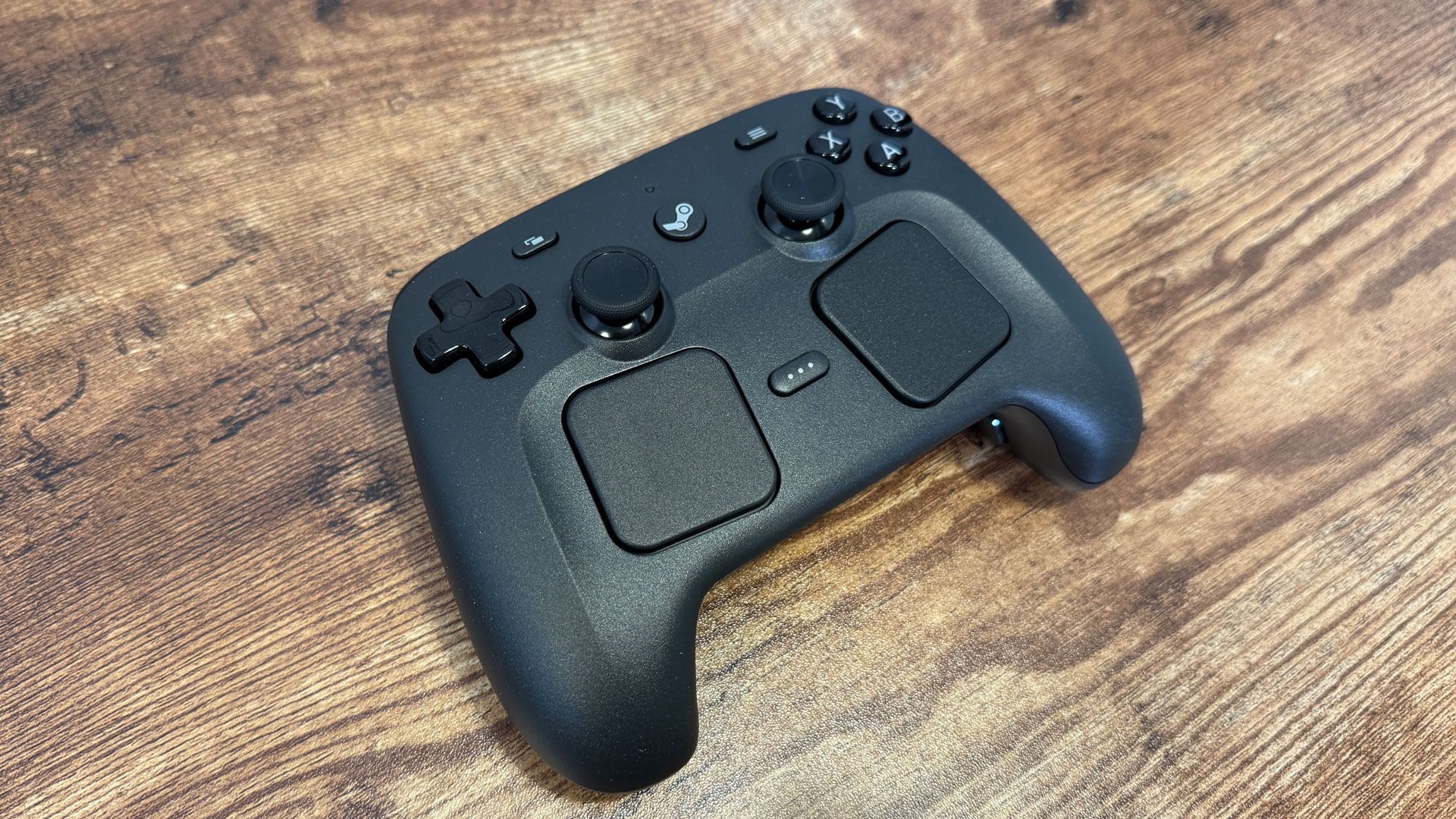
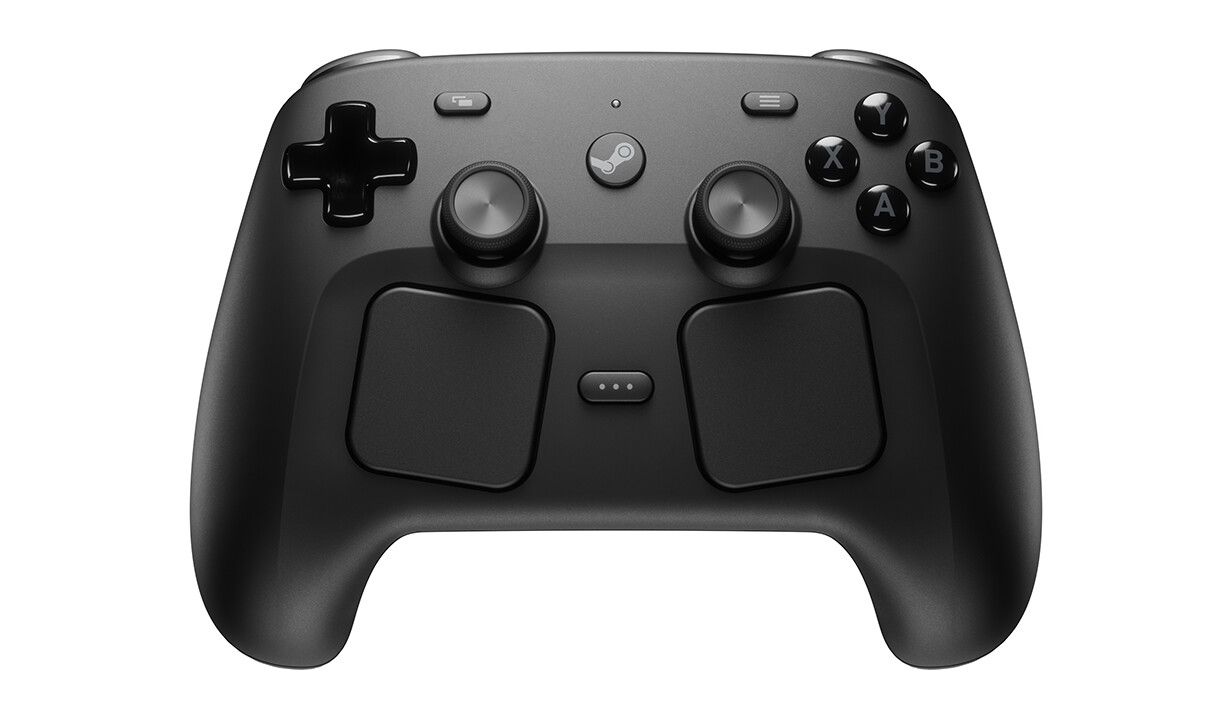
It’s hard to recommend the Steam Controller because it’s not on sale (it’s not even available outside of Steam), and you can’t actually buy it right now because it’s sold out. Still, it’s an excellent controller, and if you have $100 to burn and a few months you’re willing to wait, you’ll come out on the other side with perhaps the only purpose-built controller for modern PC gaming we’ve ever seen.
As Valve did with the Steam Deck before, the Steam Controller is only available via a reservation system. You need a Steam account in good standing to sign up for the queue. Thankfully, Valve’s queue isn’t some black hole lottery that you’ll never hear back from; you will get the chance to buy a Steam Controller eventually, but it might take several months before that time comes.
As you can read about in our Steam Controller review, the gamepad essentially recreates the feel and functionality of the Steam Deck with any PC. It’s built around Steam Input, giving you a deep level of customization over every aspect of your input, even in games that don’t natively support a controller. The dual touchpads come in handy in that case, mimicking the movement of a mouse.
Similar to other Valve devices, the Steam Controller has a solid modding scene around it. There are party trick mods, such as a tool that allows the controller’s haptics to play back 16-bit audio, but also practical hardware mods like third-party buttons and triggers. The modding community has had a field day with the puck that the Steam Controller uses for charging and connection, as well.
The Steam Controller is only available directly from Valve. You cannot purchase it directly. Instead, you'll need to sign up for a reservation list, which will put you in a purchase queue. View Deal
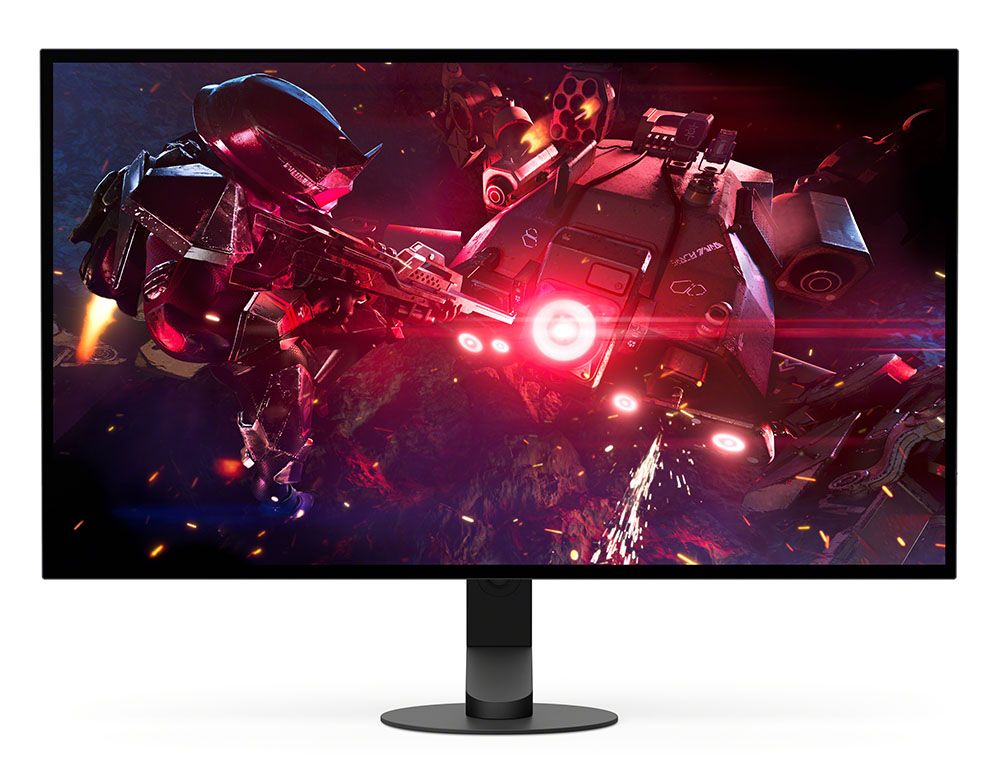
QD-OLED monitors continue to drop in price, and Amazon has a particularly good deal going right now on AOC's 27-inch 1440p QD-OLED display. Unlike most 27-inch, 1440p OLED displays, this monitor tops out at a 144Hz refresh rate. The more typical 240Hz refresh rate you see on this panel is available, as well, though at a higher $332.49 price. We saw this monitor on sale earlier in the week at $300, and it was a good deal then. An extra $20 off is even better.
There are other displays rocking this same panel that are on sale, but they're all more expensive than this AOC monitor. The MSI Pro Max 271QPX14G is $300 on sale, for instance. As with any QD-OLED panel, this monitor has practically perfect black levels, leading to a theoretically infinite contrast ratio. OLED panels also have extremely fast pixel transition times for extra-clear motion and low input lag.
AOC claims 147.6% coverage of the sRGB and 110.2% coverage of the DCI-P3 color gamuts (OLED panels are wide-gamut). For connectivity, AOC includes a single HDMI 2.1 and single DisplayPort 1.4 connection, allow with a 3.5mm audio out. You don't get an extra goodies like USB-C input, power delivery, or an integrated KVM, but that's unsurprising at this price.
Although the AOC Q27GADE is a budget OLED display, it should still be able to reach the peak HDR highlights of 1,000 nits that we've seen out of other OLED panels. The monitor supports HDR10 inputs, though note it doesn't come with an industry-standard HDR certification like VESA's DisplayHDR. However, AOC's other monitors in this family are certified with DisplayHDR True Black 400.
The display comes with G-Sync Compatible certification, so you shouldn't have issues with variable refresh rate gaming. The maximum 144Hz refresh rate should give most modern gaming rigs plenty of room to stretch out, especially with frame generation techniques.
Perhaps the biggest downside of this monitor is the stand. It includes just a single point of adjustment: around 20 degrees of tilt. There's a 100 mm x 100 mm VESA mount, thankfully, so you can throw the monitor up on an arm. If you stick with the included stand, there's a cable routing channel through the base to keep everything tidy.
Anything with memory or a GPU is tough to find at a good price right now, even on Prime Day. But over at HP, there's a desktop deal that's at a surprisingly good price given the components inside.
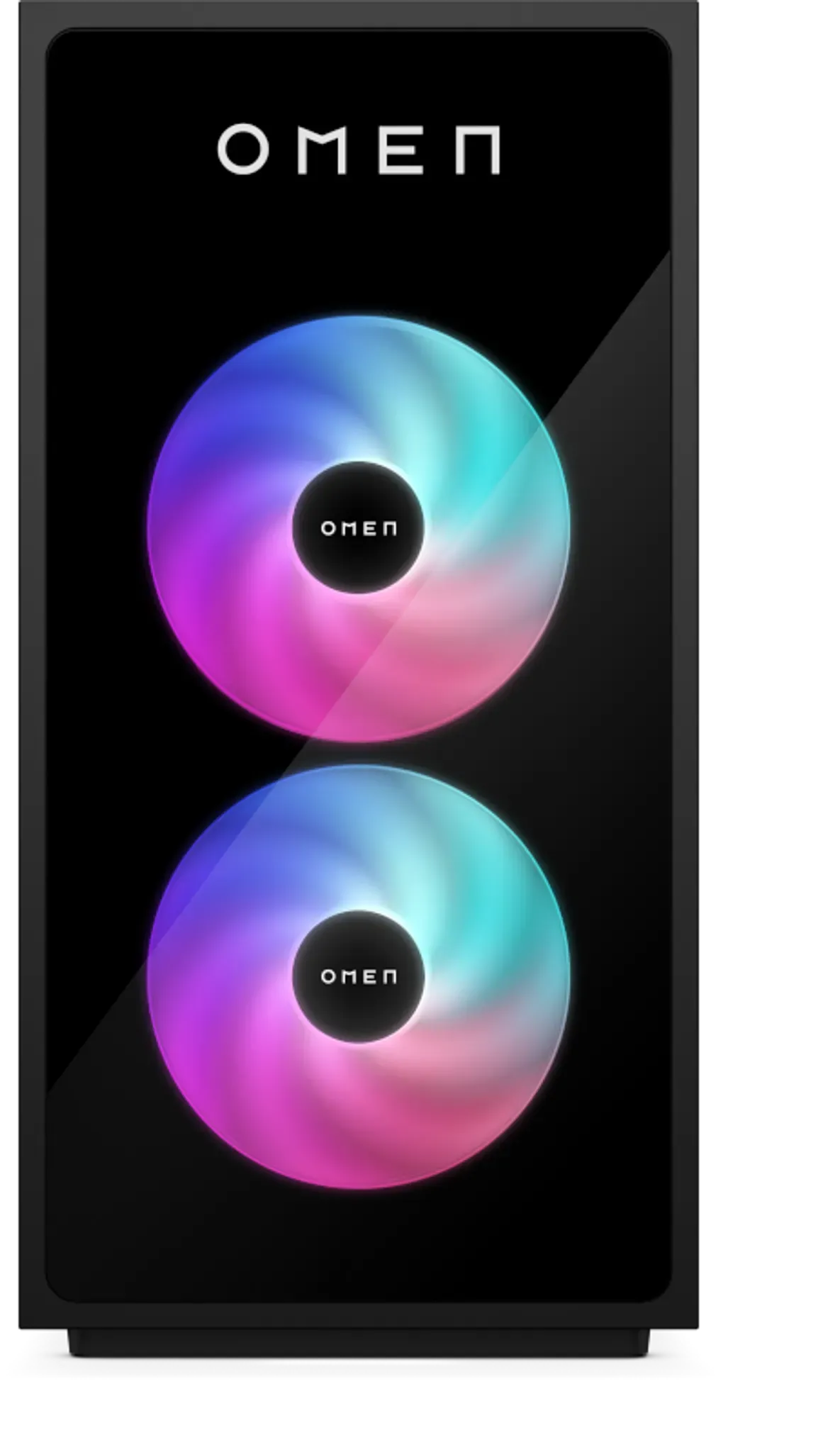
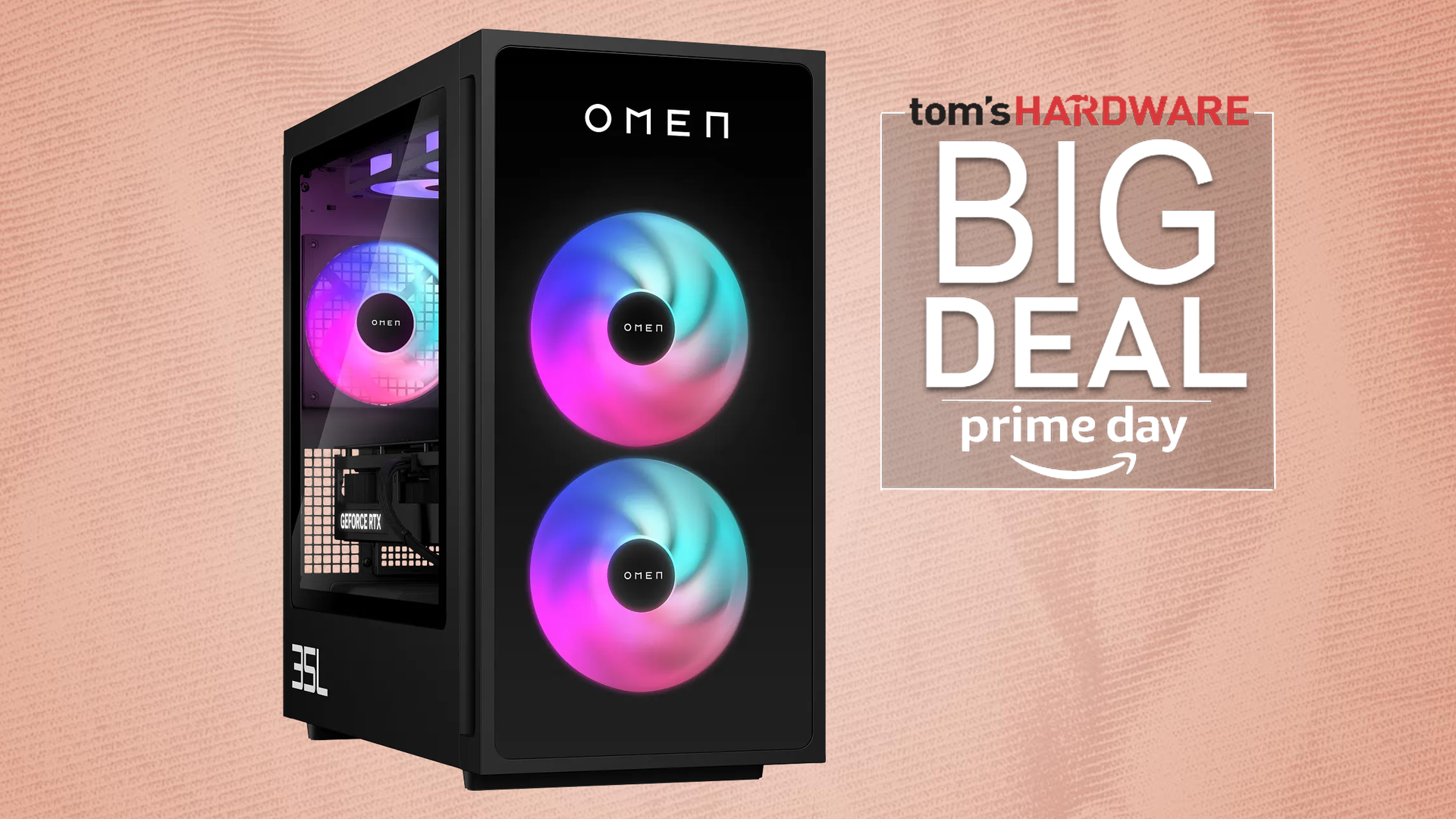
The Omen 35L with an Nvidia GeForce RTX 5080, AMD Ryzen 7 9800X3D, 32GB of memory, and 2TB of storage is $2,799.99, down from an MSRP of $4,999.99.
Given that the RTX 5080 on its own is typically going for anywhere between $1,600 and $2,000, this is a significant deal if you're willing to buy a PC rather than build one.
The system also comes equipped with a 1,000-watt, fully modular, 80-Plus Gold power supply; Wi-Fi 7; and a 240 mm AIO cooler for the CPU. The 35-liter chassis should be small enough for many desks, but will still be fine on the floor.
We haven't reviewed this model, but HP typically uses standardized parts, allowing for easy upgrades down the line.
Whether you're gaming at high refresh rates at 1440p or chasing the highest image quality possible at 4K, this system is, at least on paper, built for the job. The Ryzen 7 9800X3D is one of the fastest gaming CPUs available today, and the RTX 5080 is the fastest gaming graphics card around short of an RTX 5090.
Prices on these high-end components are only going to keep going up, especially the storage and RAM, so if you're looking for an awesome upgrade for yourself or a loved one, grab this deal before it's gone.
Businesses continue to refresh laptops more frequently, with the average laptop refresh cycle falling to four years in 2025, according to Sage.
And while Black Friday is typically a shopping window associated with consumer tech, it’s also a great time for businesses to snap up a good deal to upgrade their business laptops.
TL;DR
Black Friday deals promise big cost savings, but if you pick the wrong devices you may end up with a product ill-suited to your needs
Knowing what you want and need from a laptop before buying is key to getting a good deal, even on Black Friday
The Dell Pro 3 and Dell Pro 5 offer a strong mix of performance and connectivity, with excellent displays, long battery life, and strong security credentials
With laptops catering to lightweight workloads and more demanding tasks, the Dell Pro lineup is well suited to a range of business needs and sizes
As tempting as the cheapest models are, they rarely offer the best long-term value for growing businesses. In fact, Microsoft research shows almost a quarter (24%) of IT decision-makers said choosing cheaper hardware ultimately led to higher long-term costs through breakdowns and inefficiencies.
For small and medium-sized businesses (SMBs) concerned about making the right laptop decision, there are several key considerations:
Performance needs: Choose devices that can handle the unique workloads of you and your employees.
Battery life: Choose laptops that provide employees with juice to last a full working day, whether traveling, in meetings, or off-site.
Security features: SMBs are just as vulnerable as large enterprises. Protect company data and employee credentials with built-in security.
Ports selection: Make it easy for employees to connect monitors, peripherals, or other everyday equipment.
Display: Choose a display that suits your team’s unique needs, from everyday office tasks to creative work, and data analysis to customer presentations.
Wireless and cellular connectivity: Give your people reliable ways to stay connected in the office, at home, or while traveling.
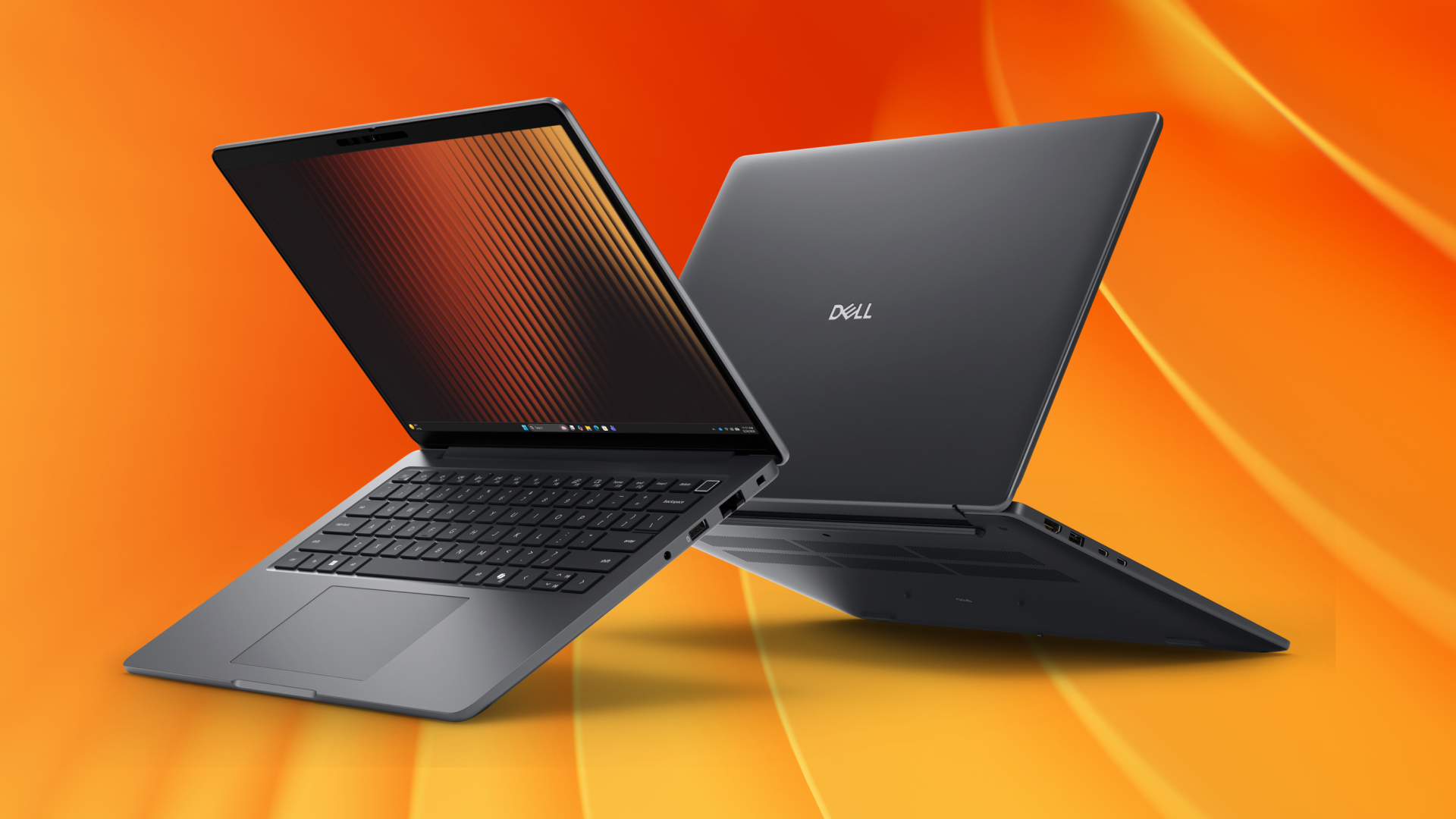
Dell Pro 3 and Dell Pro 5 laptops bring together the performance, battery life, security, connectivity, and display options businesses need to support their teams.
(Image credit: Dell)
What CPU and memory does your business need?
The CPU and memory are two of the most important components of any professional laptop, but the right ones for your business depend on the kind of work you're going to do with them. Both the Dell Pro 3 and Dell Pro 5 are available with Series 3 Intel® Core™ Ultra and AMD Ryzen™ AI PRO 400 Series CPUs, making them excellent for multitasking, even on the more affordable Pro 3.
For everyday tasks like email, web browsing, and office apps, a Dell Pro 3 configured with standard DDR5 memory is plenty. But for more demanding video editing, 3D design work, or heavy multitasking, the Dell Pro 5's optional expandable LPCAMM2 memory, with configurations up to 64GB, can give you a real boost.
How do you choose the right display?
For standard office work, the default non-touch, WUXGA LCD panels on Dell Pro 3 and Dell Pro 5 laptops are ideal. They offer a bright and responsive display, along with smart technologies that help preserve battery life. Optional built-in privacy panels on select Dell Pro 5 configurations help maintain organizational security and personal privacy too, enabling secure, flexible working conditions without the need for additional accessories.
If you're planning some color-intensive or creative work, the Dell Pro 5 also comes with high-definition display options, including WUXGA OLED panels that can help reduce eye strain and offer an accurate image of whatever photos or video you're working with, ideal for creatives.
(Image credit: Dell)
Dell Pro 3 vs Dell Pro 5 at a glance
Dell Pro 3
Dell Pro 5
Best suited to
Everyday business workloads
More demanding workloads
Processor options
Series 3 Intel Core and Core Ultra; AMD Ryzen AI processors
Series 3 Intel Core and Core Ultra; AMD Ryzen AI PRO 400 Series
Memory
Up to 64GB
Up to 64GB
Display
WUXGA LCD options, including low-power
WUXGA LCD options, plus higher-spec WUXGA OLED and WQXGA options
Camera
Up to FHD 1080p HDR
Up to 8MP 1440p RGB HDR
Cellular connectivity
Optional 4G/5G WWAN on selected configurations
Optional 4G/5G WWAN on selected configurations
Ports
USB-A, USB-C/Thunderbolt, HDMI 2.1 and RJ45 Ethernet, depending on configuration
USB-A, Thunderbolt 4, HDMI 2.1 and RJ45 Ethernet
What laptop requirements do SMBs need for working on the go?
Both the Dell Pro 3 and Dell Pro 5 laptops feature some of Dell’s longest-lasting batteries yet, with the Dell Pro 5, specifically, able to last well over 22 hours on a single charge for mixed-use workloads.
The two key features you need to consider when you're away from the office are battery life and portability. Both the Dell Pro 3 and Dell Pro 5 range feature some of Dell’s longest-lasting batteries yet, with the Dell Pro 5, specifically, able to last well over 22 hours on a single charge for mixed-use workloads.*
The Dell Pro 3 and Dell Pro 5 are built with mobility in mind, offering a lightweight design that's easy to carry between meetings, client sites, or home working setups.
When comparing configurations, consider:
Battery life that can cover a full working day
Weight and portability for commuting, meetings and client visits
Fast charging for quick top-ups when necessary
Cellular connectivity for working away from reliable Wi-Fi
A durable design that can cope with long-term use
(Image credit: Dell)
How secure are the Dell Pro 3 and Dell Pro 5 laptops?
Dell Pro 3 and Dell Pro 5 laptops feature a range of security features to keep company data safe, and the devices themselves secure from tampering. Quantum-resistant BIOS and TPM 2.0 support keep your workers protected against contemporary malware and theoretical future attack vectors, while the Dell Pro 5 additionally offers Dell SafeID with ControlVault3+ for added protection of passwords, biometric login data, and security codes.
What ports and connectors are the most important?
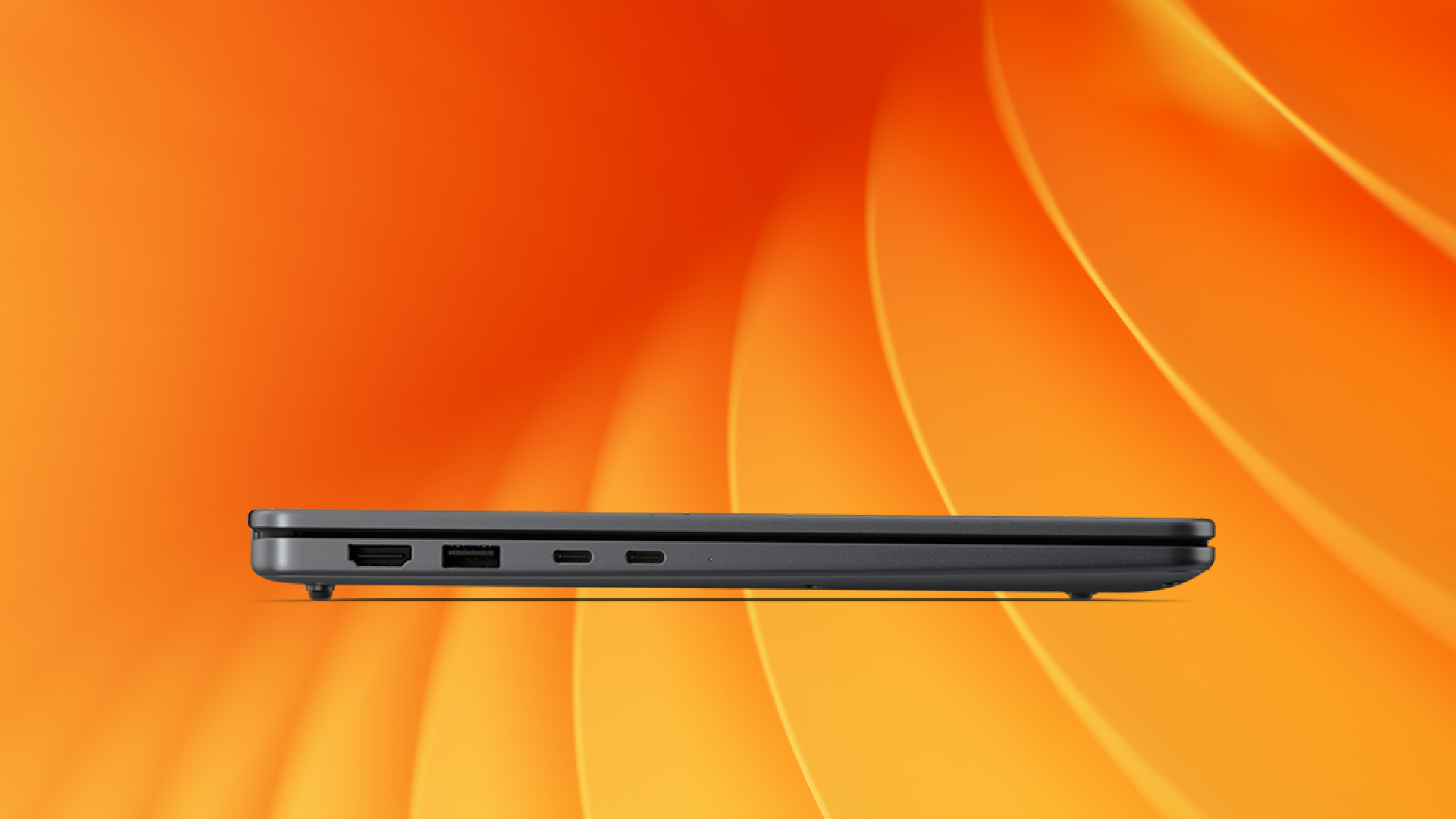
USB-A and USB-C ports are the most useful, everyday ports you’ll need providing support for legacy peripherals, high-speed data transfers, and device charging. Dell Pro 3 and Dell Pro 5 laptops come with a range of USB ports of both types, ensuring you have plenty of I/O for various accessories and adapters.
For external displays, HDMI 2.1 ports offer support for up to 4K resolution at 60Hz, while RJ45 Ethernet at Gigabit speeds delivers easy connectivity options for business networks.
What about webcams?
Both the Dell Pro 3 and Dell Pro 5 feature high-definition webcams, with the Dell Pro 3 offering up to an FHD (1080p) HDR camera and the Dell Pro 5 providing an upgraded option up to an 8MP (1440p) RGB HDR camera. High-quality video paired with optimized audio can help deliver a professional presence in virtual meetings, ensuring crisp, clear sound for all participants—even when sharing a single laptop.
Do the Dell Pro 3 and Dell Pro 5 keyboards have backlighting?
Yes, both the Dell Pro 3 and Dell Pro 5 laptops feature a backlit keyboard, which makes it much easier to work late into the evening or in dimmer environments.
Can you connect without Wi-Fi?
When you're away from a secure Wi-Fi network, select Dell Pro 3 and Dell Pro 5 configurations can keep employees connected with optional WWAN capability, including 5G, for high-speed internet access wherever they go. Availability varies by configuration and region.
If you think Dell laptops are the right call for your business, find out more on the Dell website: US readers click here.
* Based on testing using the Mobile Mark 30 battery life benchmark comparing Dell Pro 5 14 and Dell Pro 14 Plus, April 2026. Dell Pro 5 14 was tested with Intel® 336H vPro® CPU, UMA graphics, 32GB LPCAMM2 memory, WUXGA Non-Touch OLED display (dark mode) and 70 Whr battery. Dell Pro 14 Plus was tested with Intel® U5 236V vPro® CPU, UMA graphics, 16GB LPDDR5x memory, WUXGA Non-touch Super Low Power display, and 55Whr battery. For more information about this benchmark test, visit www.bapco.com. Actual battery life may be significantly less than the test results and varies depending on product configuration and use, software, usage, operating conditions, power management settings and other factors. Maximum battery life will decrease with time. The stated Watt-hour (Whr) is not an indication of battery life.
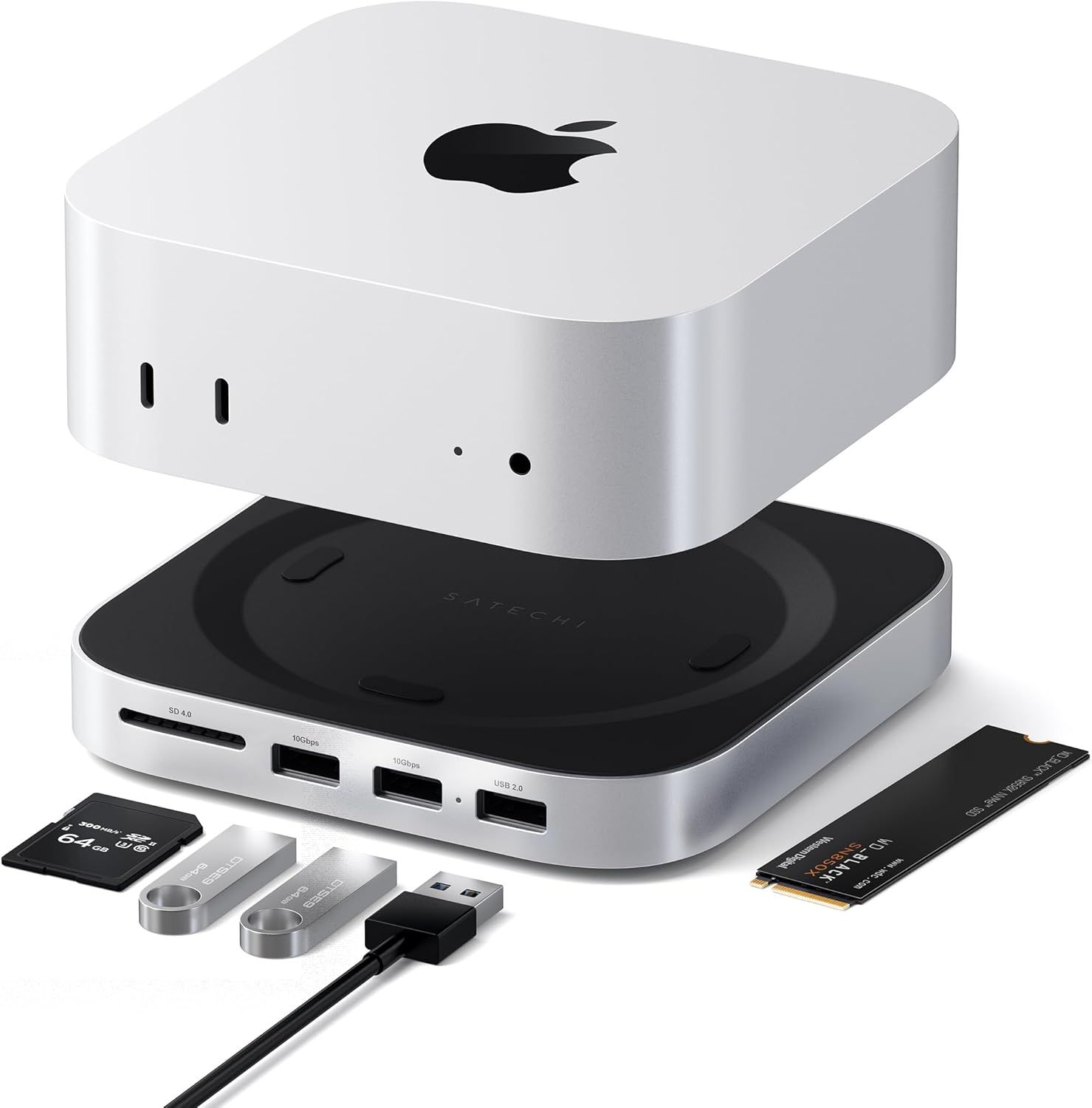
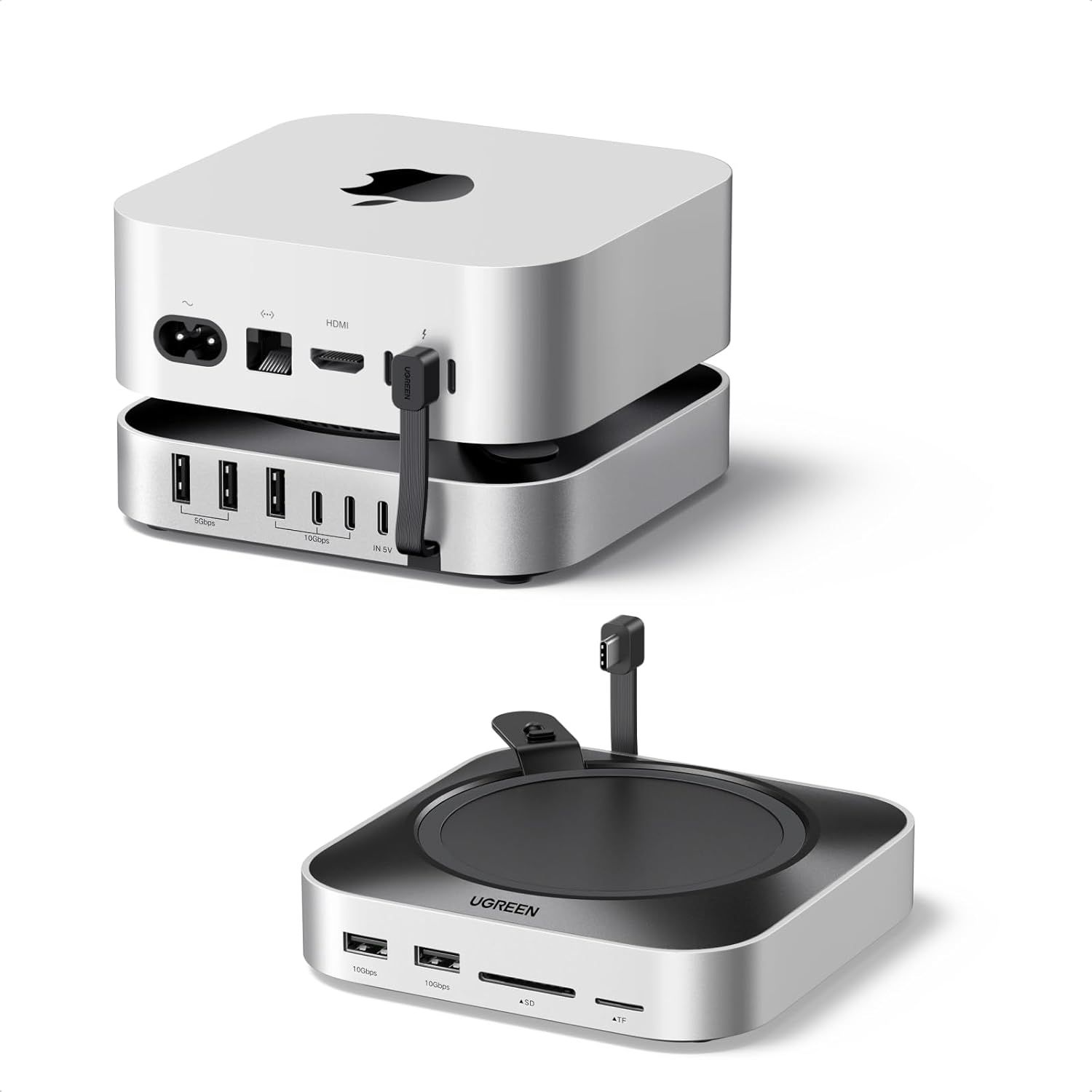
Whether you're one of the many people who rushed on the M4 Mac Mini this year or grabbed the M6 or M5 Pro Mac Mini that released last month, you're bound to eventually want to consider more storage, more ports, or both.
You can't upgrade the storage (it's soldered on the M6, and on M4 you need specialty NAND that will void the warranty and isn't easy to come by), so using external storage is all there is. And while the Mac Mini is fairly generous with five USB-C ports, there are no legacy USB-A ports or an SD Card slot like on the Mac Studio.
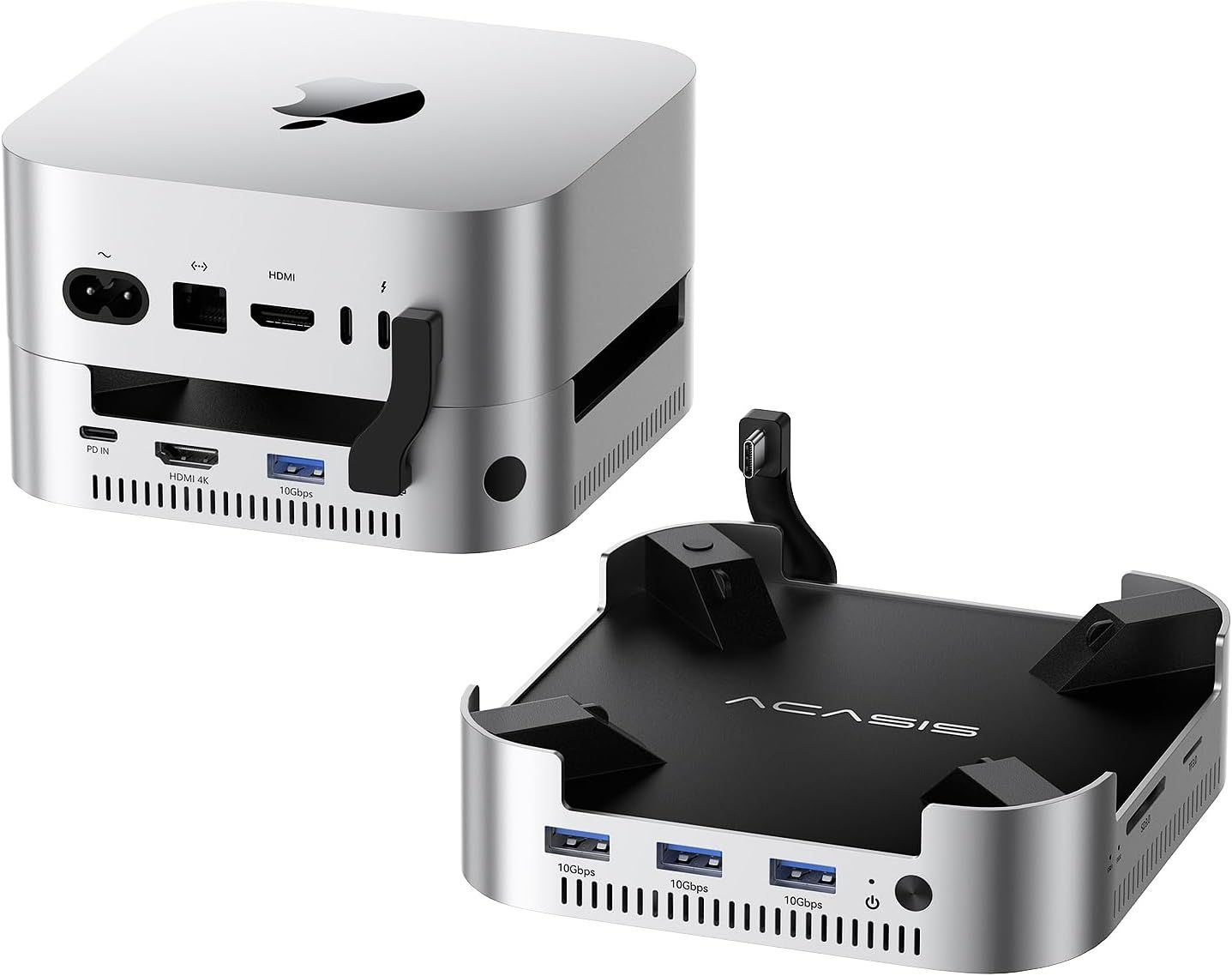
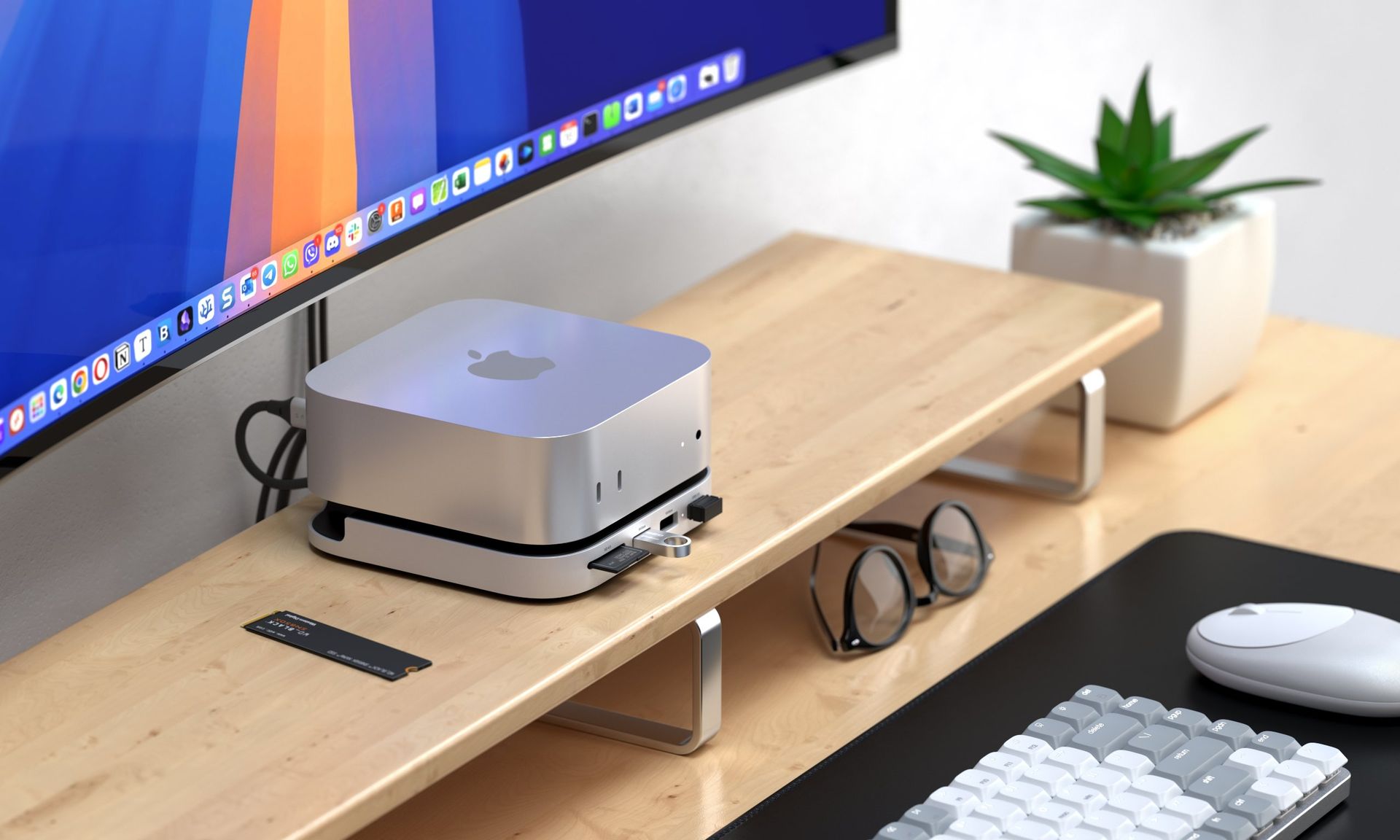
For Prime Day, there are a handful of docks specifically designed for Apple's Mac Mini that will give you more ports, including options with SSD slots to allow for more storage in a compact footprint. Keep in mind these won't work in older Mac Minis, which had a different chassis.
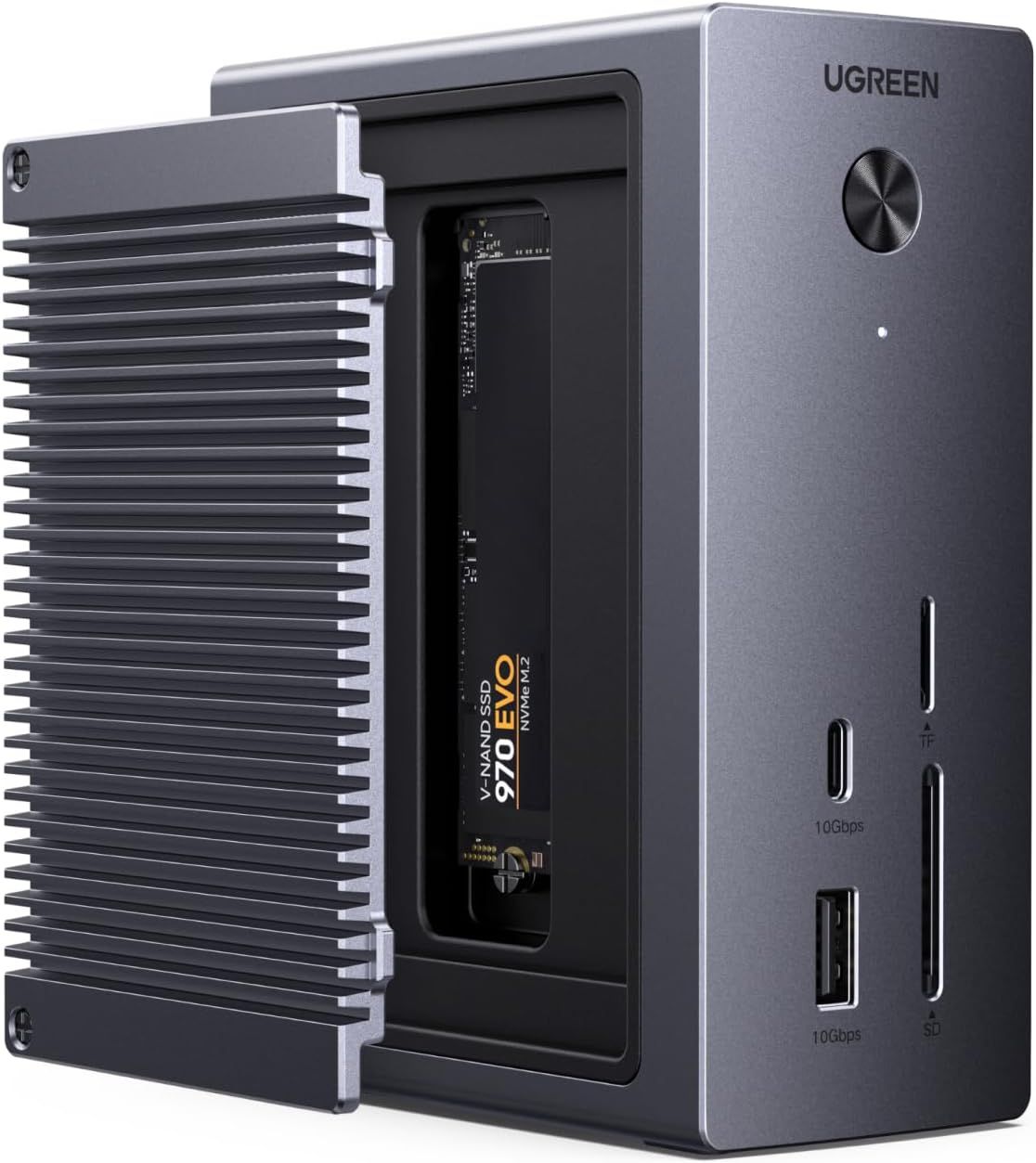
Mac Mini Dock & Hub with 2-Bay NVMe SSD Enclosure for M6/M4/M4 Pro: was $99.99 now $84.99 Acasis's dock has ports on three sides, but what's most interesting about it is that it has support for 2 NVMe SSDs for up to 16TB of internal storage. They won't be at their fastest over the 40GBps cable, but should be fine for making backups and other scheduled tasks. This dock also includes a 65W power brick.View Deal
In general, some Mac users love these docks, while others have suggested that placing them underneath a Mini can block the Wi-Fi signal. That's something to consider if you're not plugging into Ethernet.
While there are lots of specialized docks for the Mac Mini, you don't need that. If you're willing to use any standard, rectangular USB-C or Thunderbolt dock, which can offer the same advantages, just not in a bespoke shape.
The Prime Day sales season is in full swing, and there are plenty of deals on offer for anyone wanting to take up the hobby of 3D printing or for veteran creators to upgrade their existing equipment. One of our favorite 3D printer manufacturers, Anycubic, has a host of Prime Day deals available right now, where you can save big on the latest 3D printing tech.
There are numerous great deals on mainstream FDM (Fused Deposition Modeling) printers that utilize common filaments such as PLA and PETG. In addition to resin, SLA (Stereolithography Apparatus) 3D printers utilize layers of cured resin to produce highly detailed prints.
So whether you want to create spare parts to repair that old broken piece of tech, knock up a customizable gadget from a print schematic that you found online, or even create your own 3D miniature to paint, there's a 3D printer model that will suit your needs. From beginner to expert users, check out the excellent deals below.
Anycubic Deals
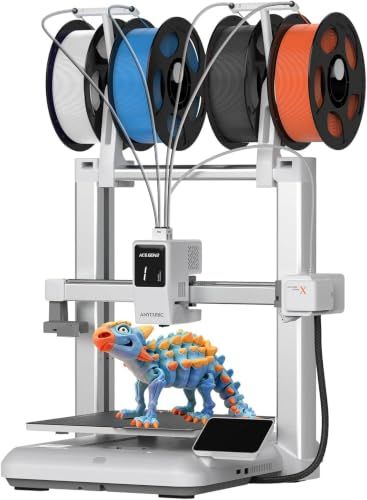
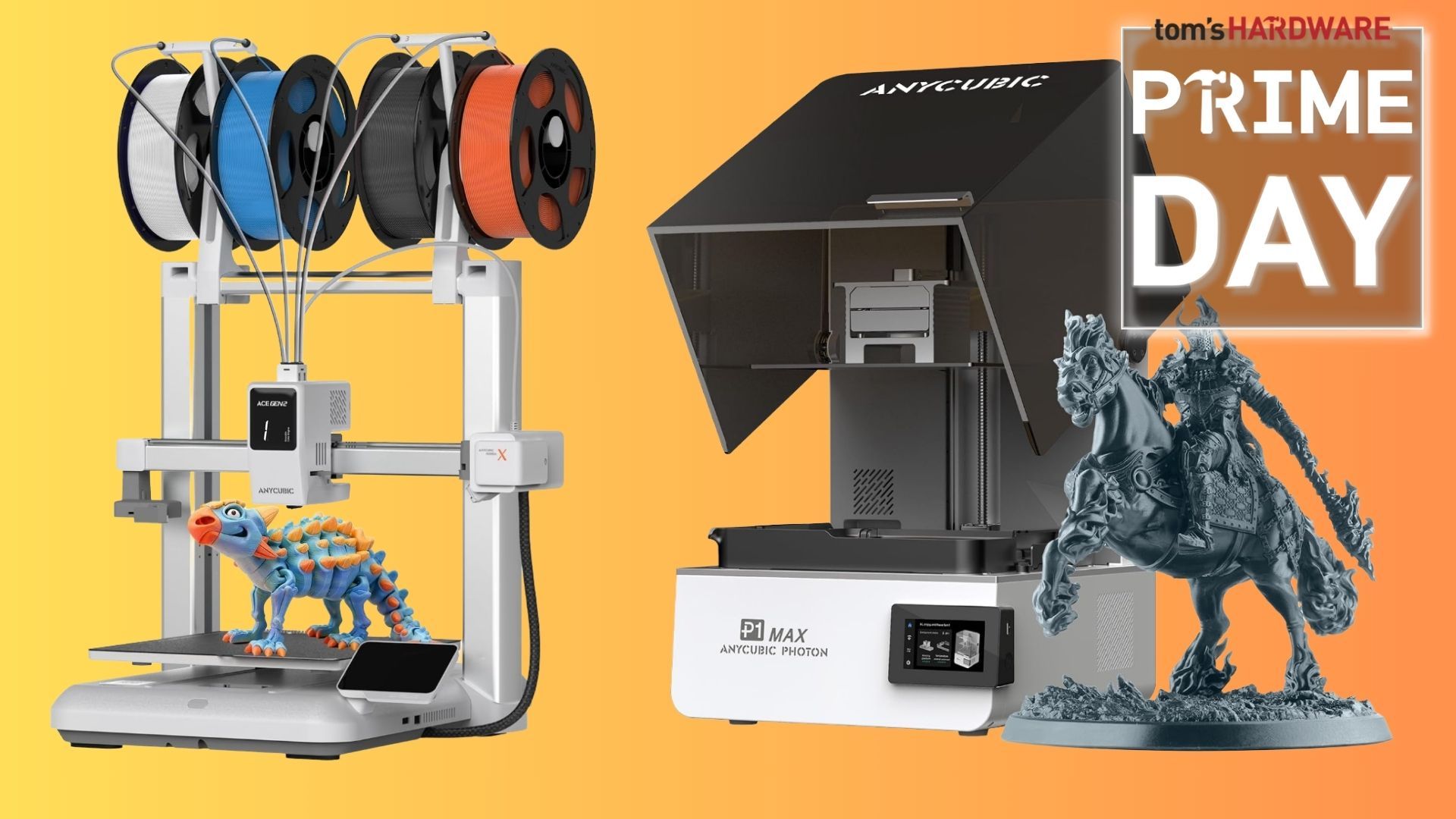
Kobra X Multicolor 3D Printer: was $459.99 now $284.99 A Tom's Hardware Editor's Choice award winner, the Anycubic Kobra X is a large, open, multi-color 3D printer with native 4-color printing and the ability to reach up to 19 colors. A fast 600 mm/s print speed brings your creations to life as quickly as possible.
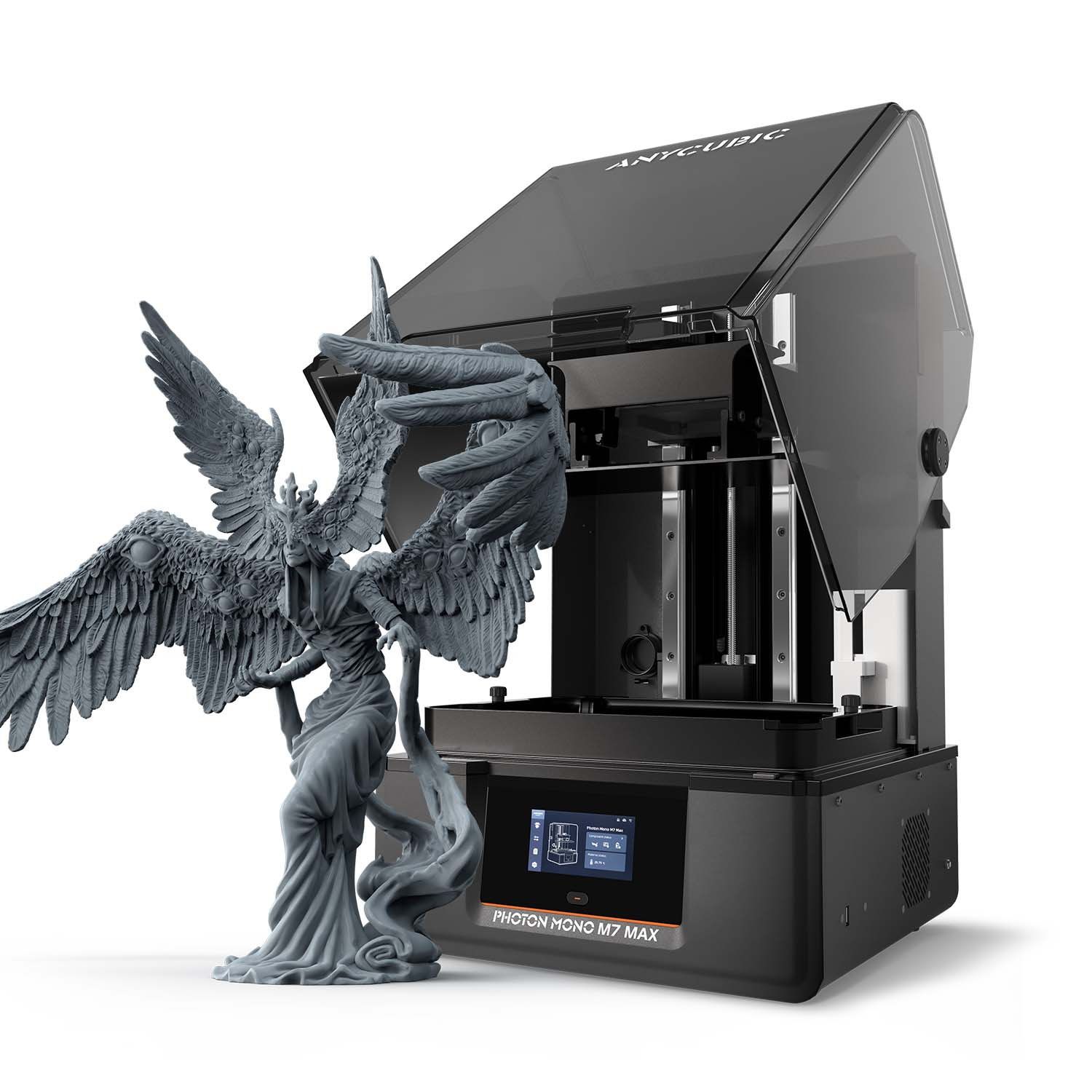
With its amazing speed and a huge build volume, the Anycubic Photon Mono M7 Max produces high-quality prints in just a fraction of the time it takes other machines. You can print entire armies of gaming miniatures or full-sized sculptures with excellent detail using ordinary resin. If you want to crank up the speed, switching to a thinner high-speed resin will let the machine run twice as fast.
The massive 298 x 164 x 300mm build volume is incredible for a resin (SLA) 3D printer, and the print speed is exceptional. If you need large, precise 3D prints, the Anycubic Photon Mono M7 is what you need.
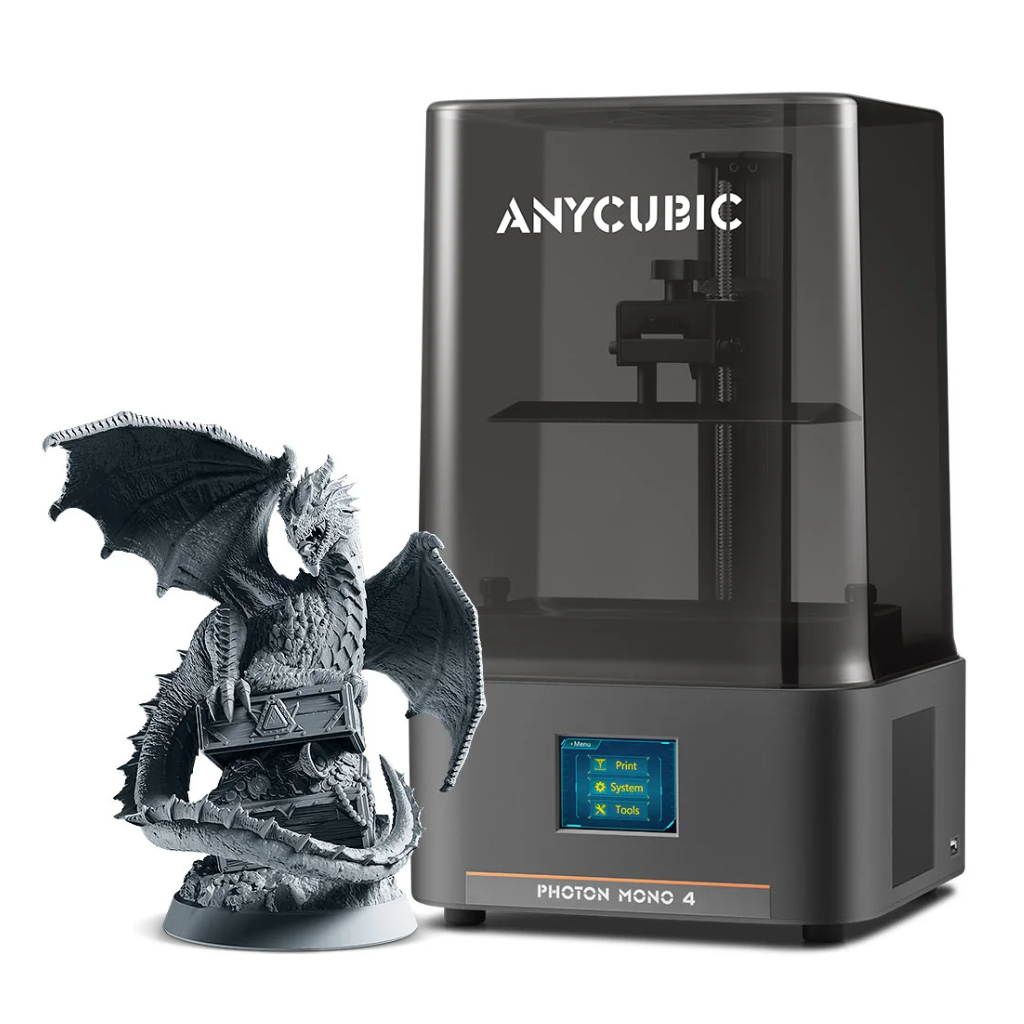
The Photon Mono 4 is Anycubic's latest iteration of its entry-level Mono resin 3D printers. It features a higher resolution compared to the previous model and an even larger build volume of 2.2 liters. It also comes packed with features you'll find on more expensive models, like the activated carbon air purifier and a resume last print option in case of power interruption.View Deal
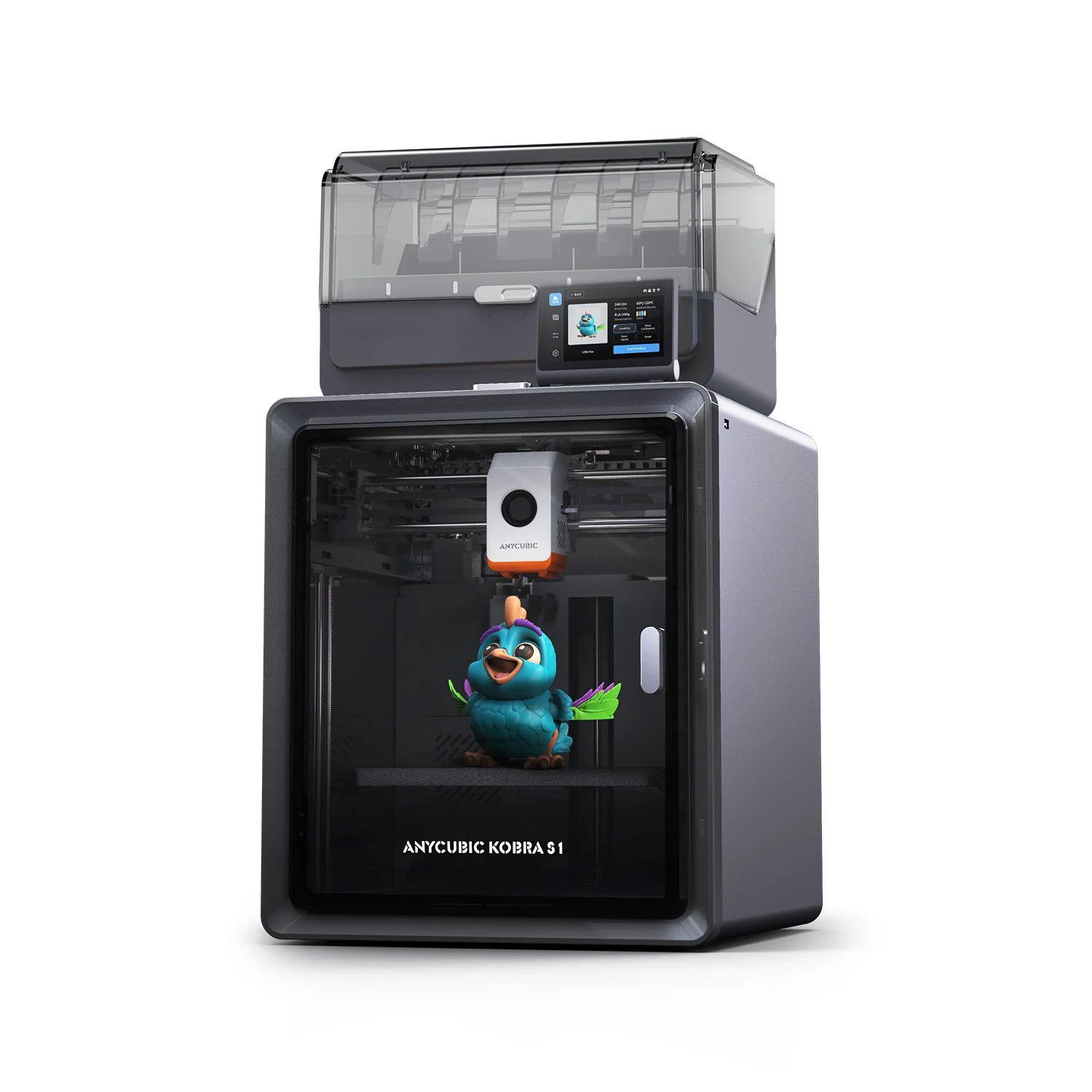
The Anycubic Kobra S1 Combo is a Core XY 3D printer that produces high-quality 3D prints. The 250 x 250 x 250mm build volume is a good size, and the 0.4mm high-flow nozzle and direct-drive extruder are compatible with PLA, PETG, TPU, ABS, and ASA up to 320 °C.
The multi-material system, ACE Pro, provides a means to serve up four additional filaments, either in multi-color or multi-material configurations.
This is a great FDM printer at a really low price. Check out our review to learn more.View Deal
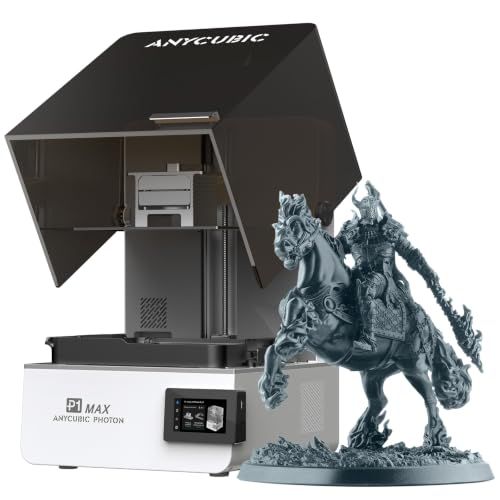
Photon P1 Max: was $1129.99 now $849.99 An 18.3-liter resin 3D printer with auto-leveling supports dual-color and dual-material printing with an optional upgrade kit. Make large creations with less chance of defects, thanks to the heated resin vat.View Deal
Kobra 3 Max Combo: was $812.98 now $552.82 This Anycubic bundle offering pairs the Kobra 3 Max printer with its ACE multi-color printing system. Fast print speeds of up to 600mm/s, and a large build volume of 420 x 420 x 500 mm, with auto bed leveling for stable prints. View Deal
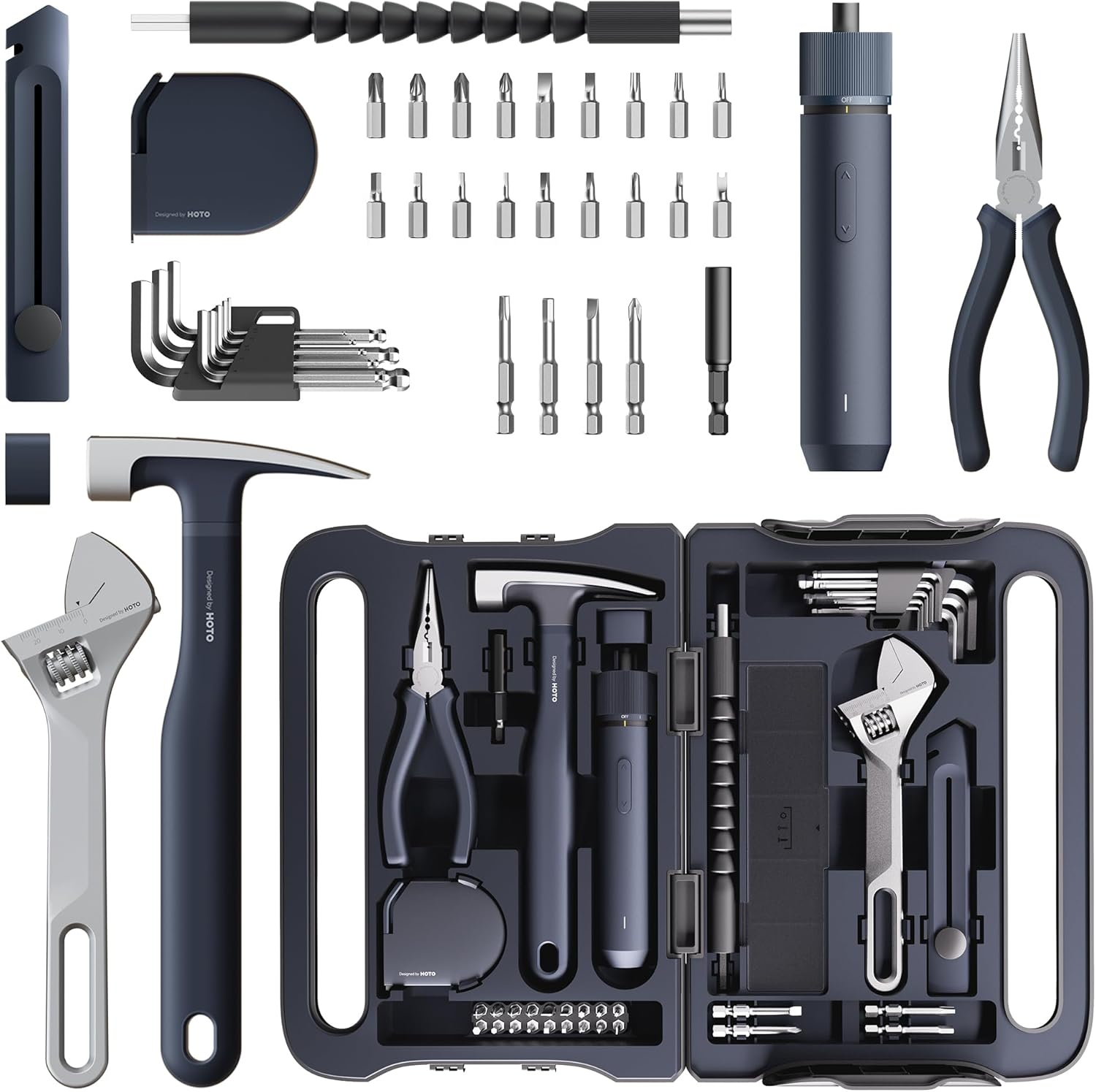
Hoto isn't a big household name, but it's a brand that Tom's Hardware staffers appreciate, as a good chunk of us have bought a Hoto tool or two for our toolkits. I personally own and use Hoto's electric screwdriver, and it's become indispensable as I'm renovating my home.
You don't need a fortune to pick up a set of Hoto tools, but Amazon's Big Deal Days discount event means you can pick them up at even lower prices. These popular and powerful, not to mention well-built tools have been slashed back to record-low prices and, in some cases, new lows entirely.
These Prime Day deals aren't going to be around for long, with the Big Deal Days event ending tomorrow night. If you want to pick up one of these Hoto tools, now is a brilliant time to do it, as you'll be paying less than you will by the end of the week. Check out our recommendations below for some of the best deals to choose from Hoto's line-up.
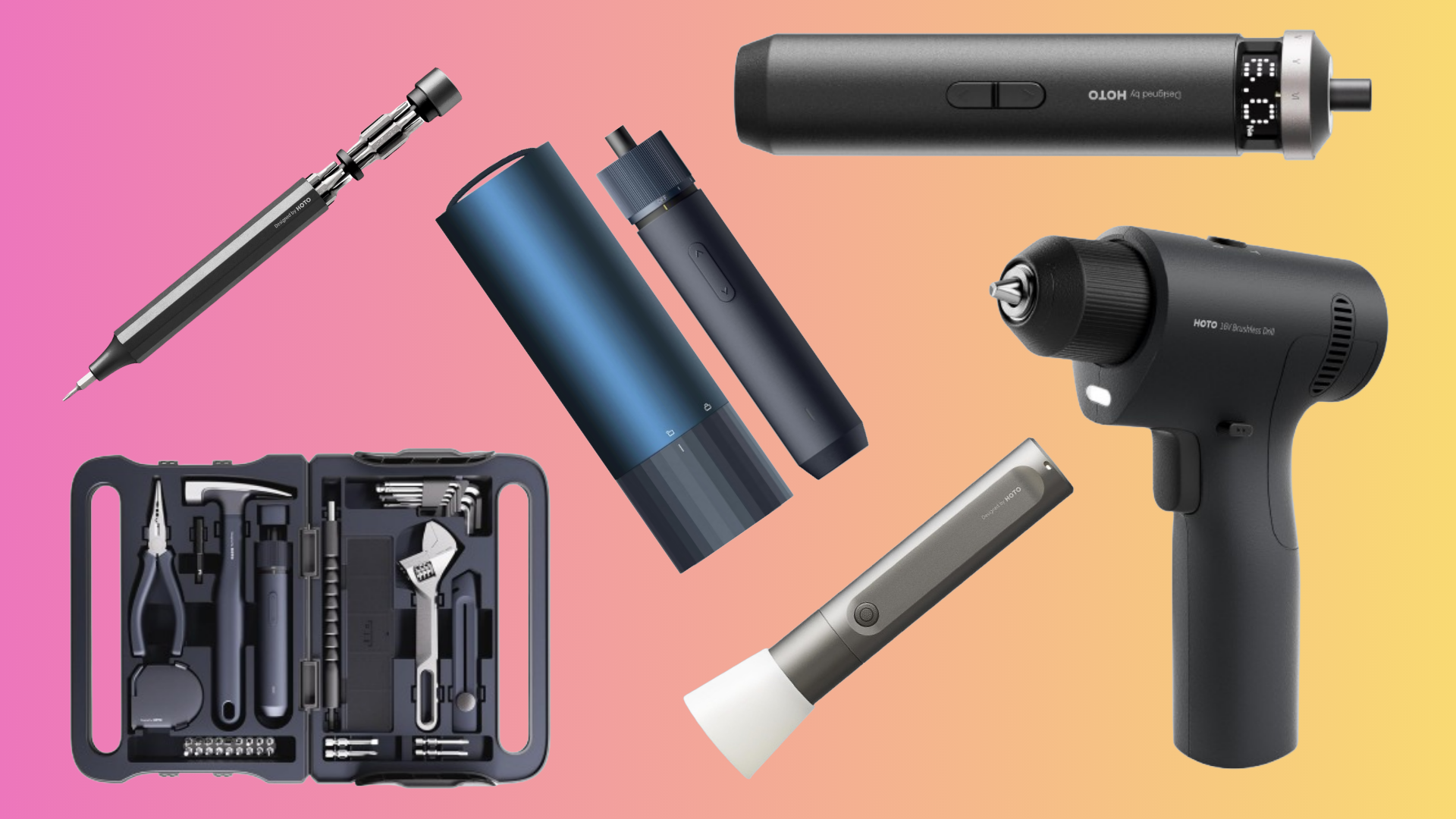
Deals on Hoto Tools
Hoto is launching new tools all the time, from vacuum cleaners to wine bottle openers. The tools we've listed below are the ones that techies, PC builders, hobbyists, and DIYers are going to need in their toolbox, though.
There are electric drivers, vacuum and air blowers, flashlights, rotary tools, precision driver kits, and more to choose from.
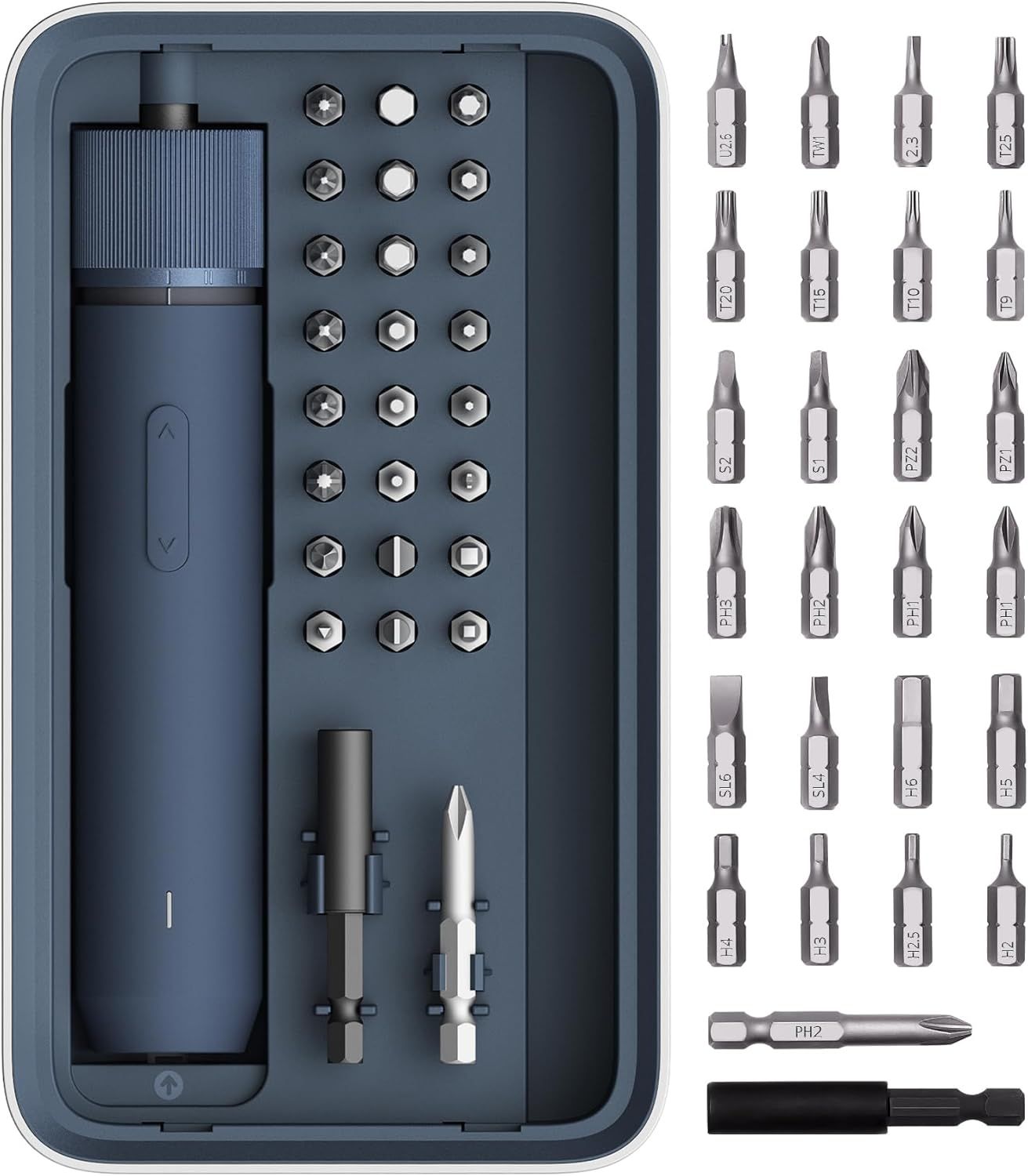
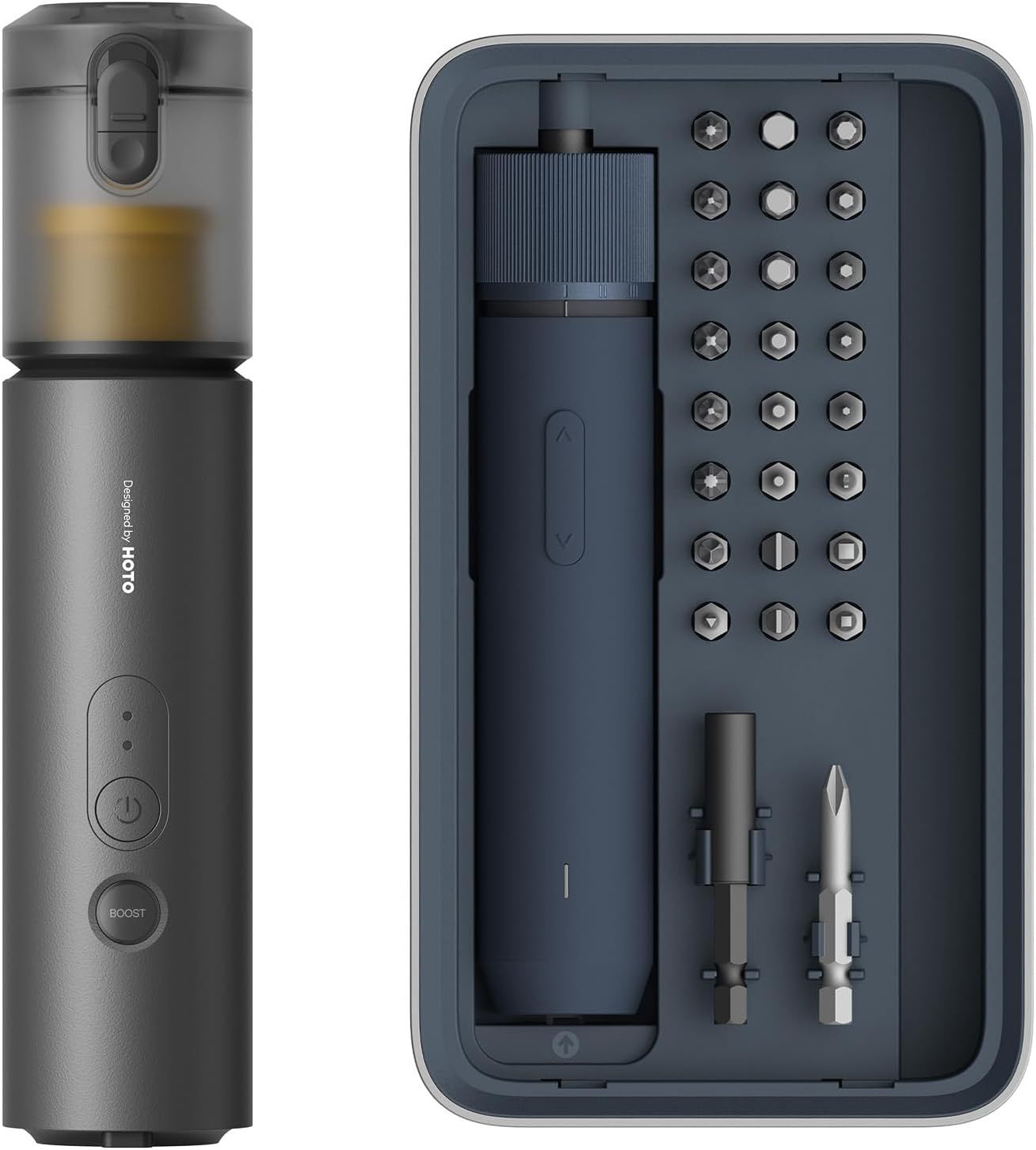
25 Bit Electric Screwdriver Kit: was $49.99 now $28.48 This deal features the Hoto NEX O1 Pro, a magnetic precision screwdriver powered by a 1,500 mAh battery that will drive over 1,000 screws on a single USB-C charge. There are 25 different bits included in the case. This kit comes with a sturdy box and all the bits you will need to keep your PC running.View Deal
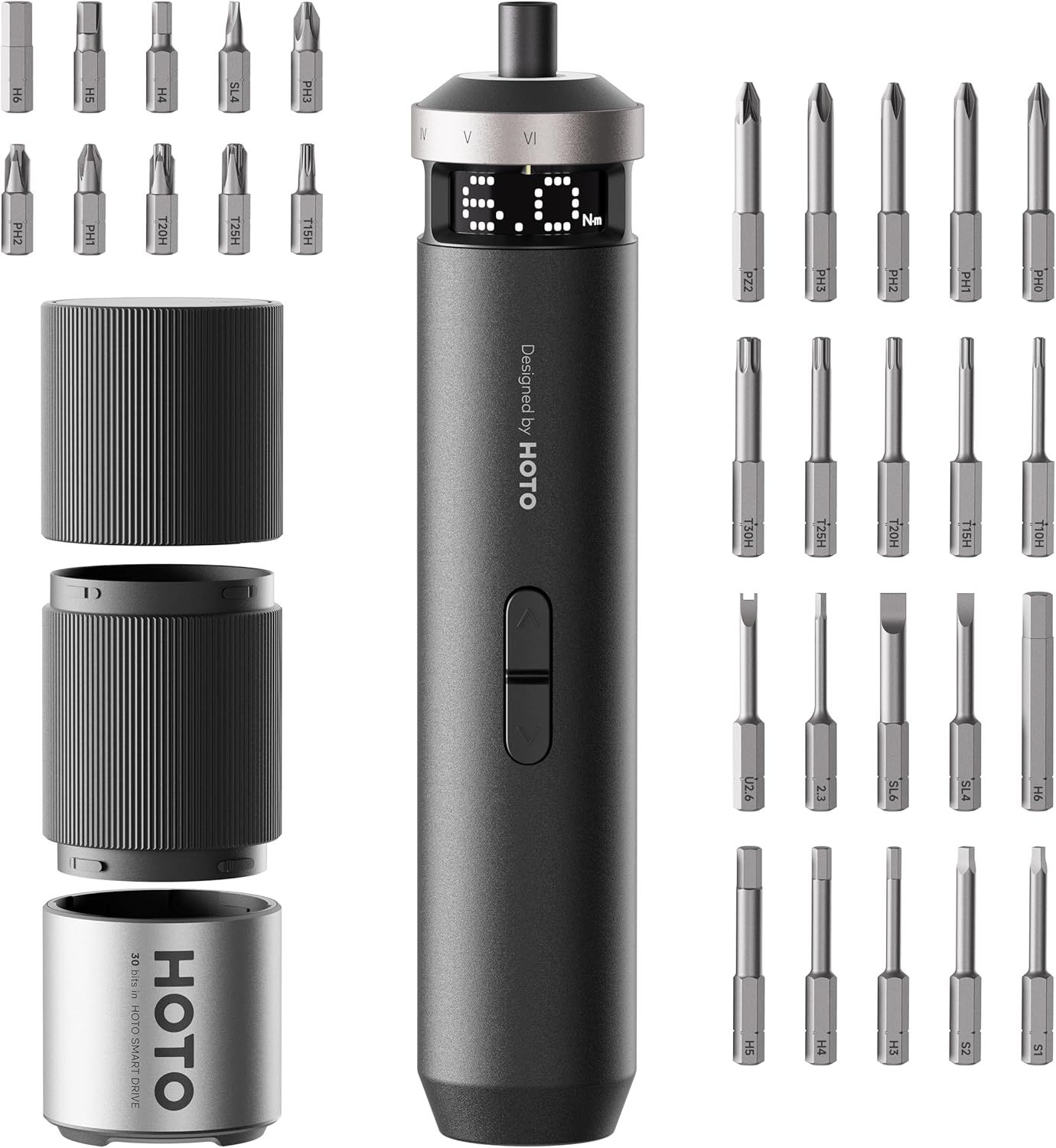
PixelDrive Electric Screwdriver with 30 bits: was $79.99 now $59.99 The Hoto PixelDrive is a magnetic, precision cordless screwdriver powered by a 2,500 mAh battery and charged via a USB-C cable. An upgrade over the Tom's Hardware favorite, the Nex O1 Pro, this model includes a built-in LCD screen to display torque and battery levels. It weighs 317g, features six different torque settings, and includes 30 different ultra-hard screw bits.View Deal
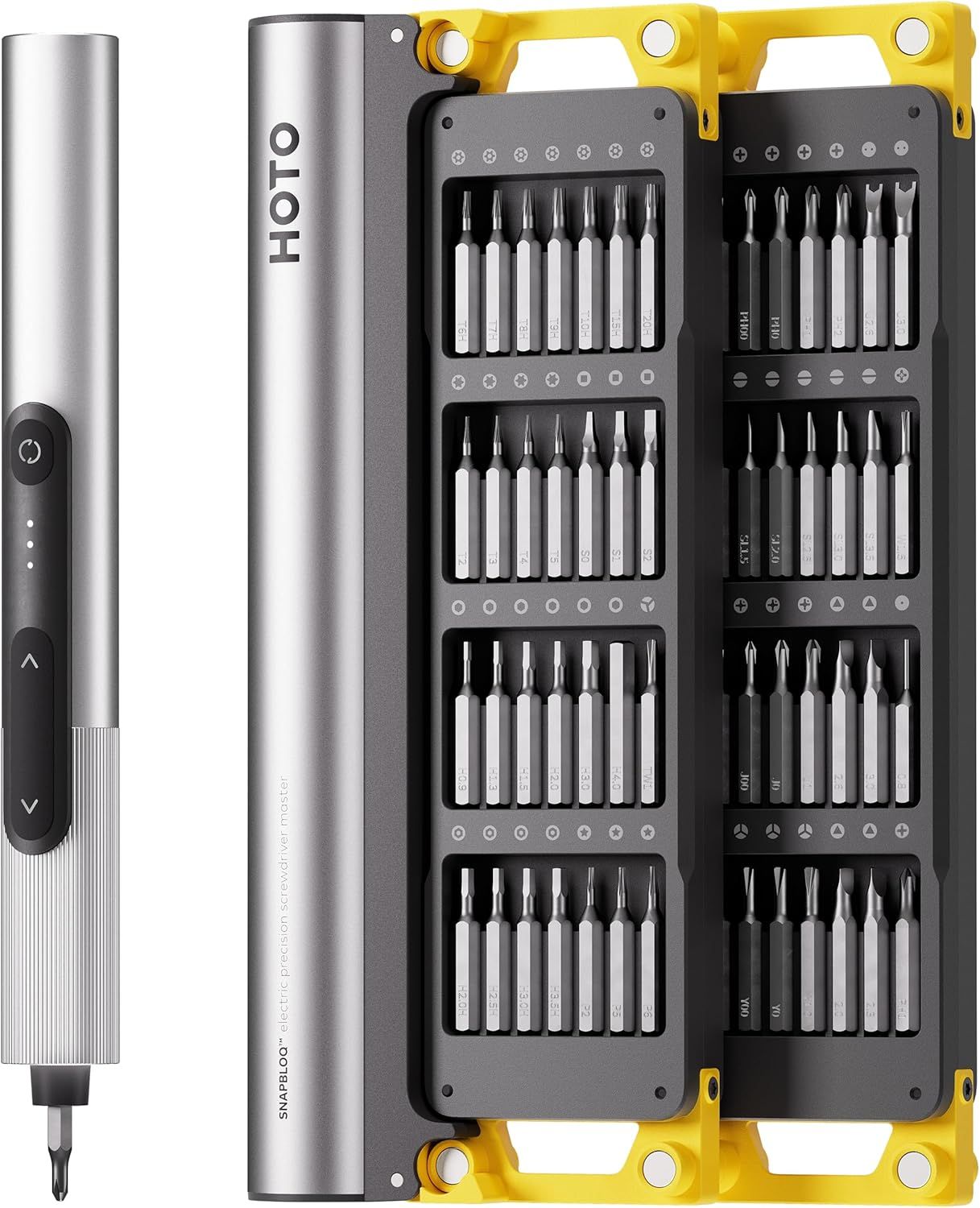
SNAPBLOQ S-A01 3.7V Electric Screwdriver: was $99.99 now $79.99 This HOTO SnapBloq 3.7V electric screwdriver includes 56 bits, including Slotted, Phillips, Hexagon, Hexagon Security, Torx, Torx Security, Pentalobe, Standoff, Y-Shaped, Tri-Wing, Triangle, Square, U-Shaped, JIS, and SIM Card Needle. It also has three torque settings, an integrated light, and charges via USB-C.View Deal
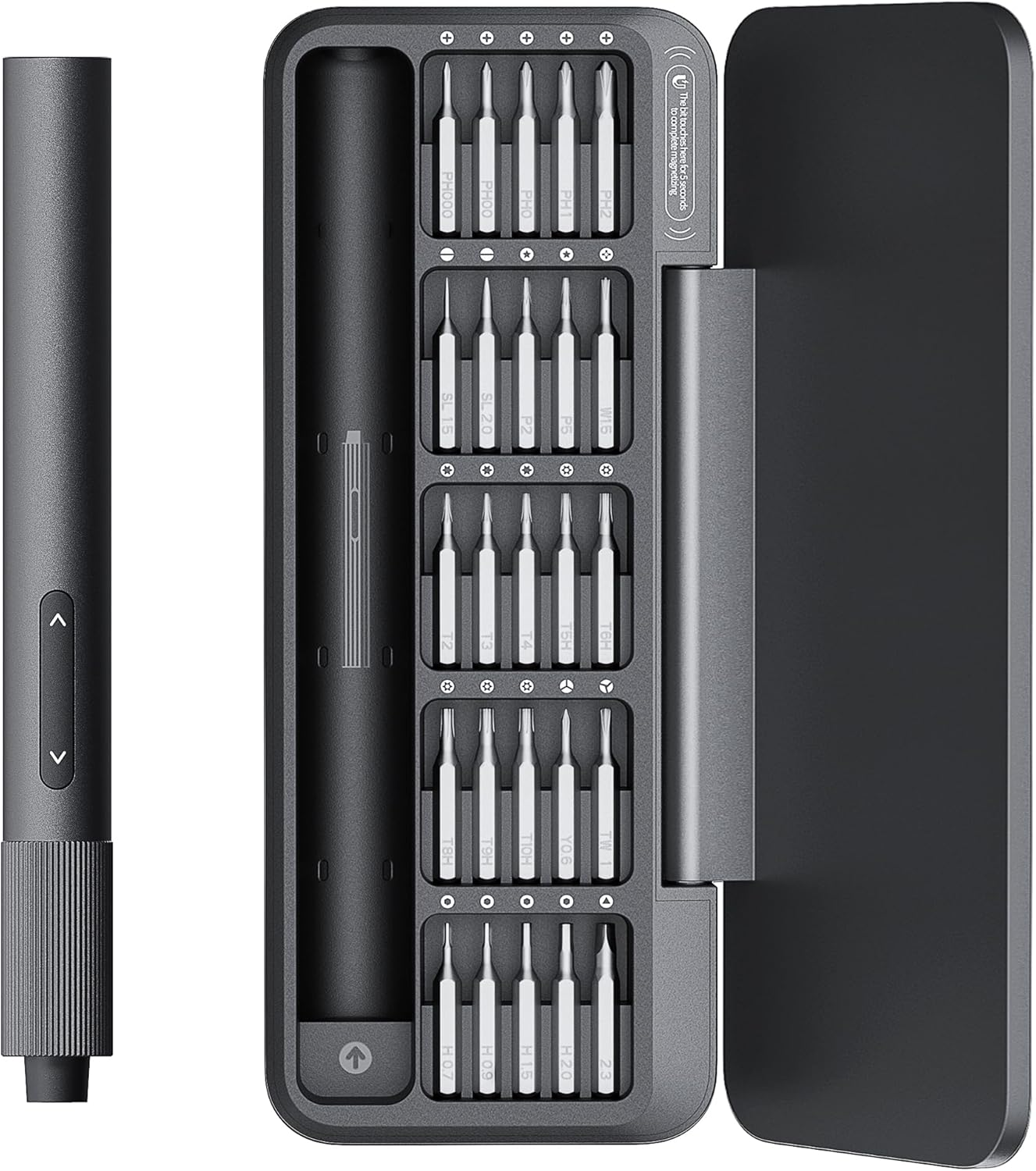
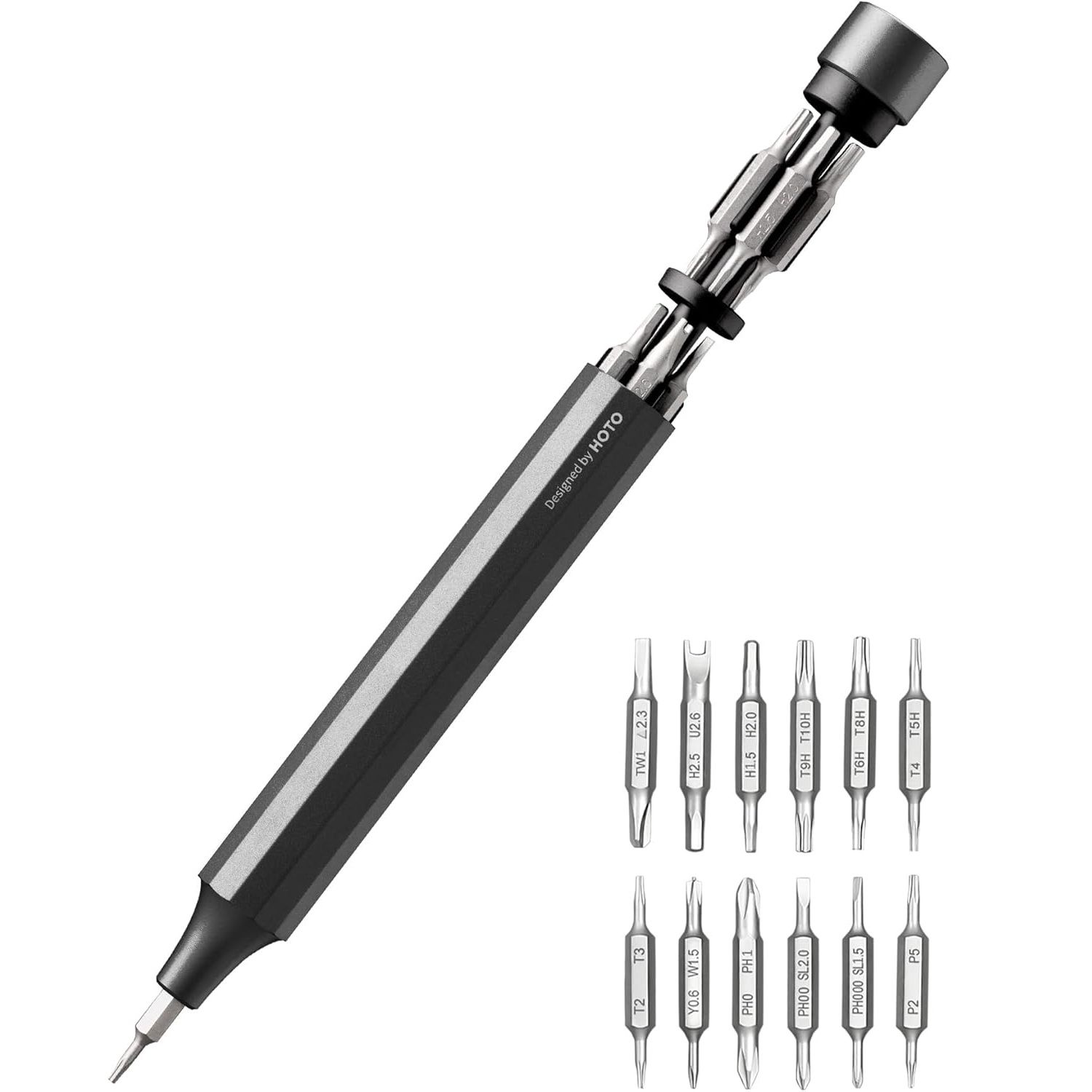
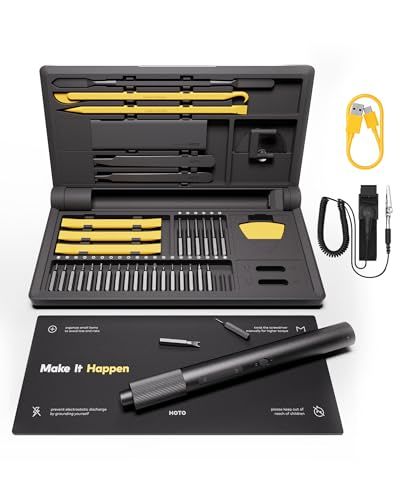
Complete Master Workstation Set: was $89.99 now $59.99 This Hoto workstation set is the go-to kit for on-the-go DIYers, PC builders, and hobbyists. It comes in a magnetic case that helps organize 26 different steel precision kits, six spudgers, five opening picks, two tweezers, a suction cup, and a pry knife.
You're also getting a magnetic pad, anti-static wrist strap, along with demagnetizing and magnetizing zones. It comes with an electric driver with a 350 mAh battery, rechargeable via USB-C, that's ultra-slim and portable.View Deal
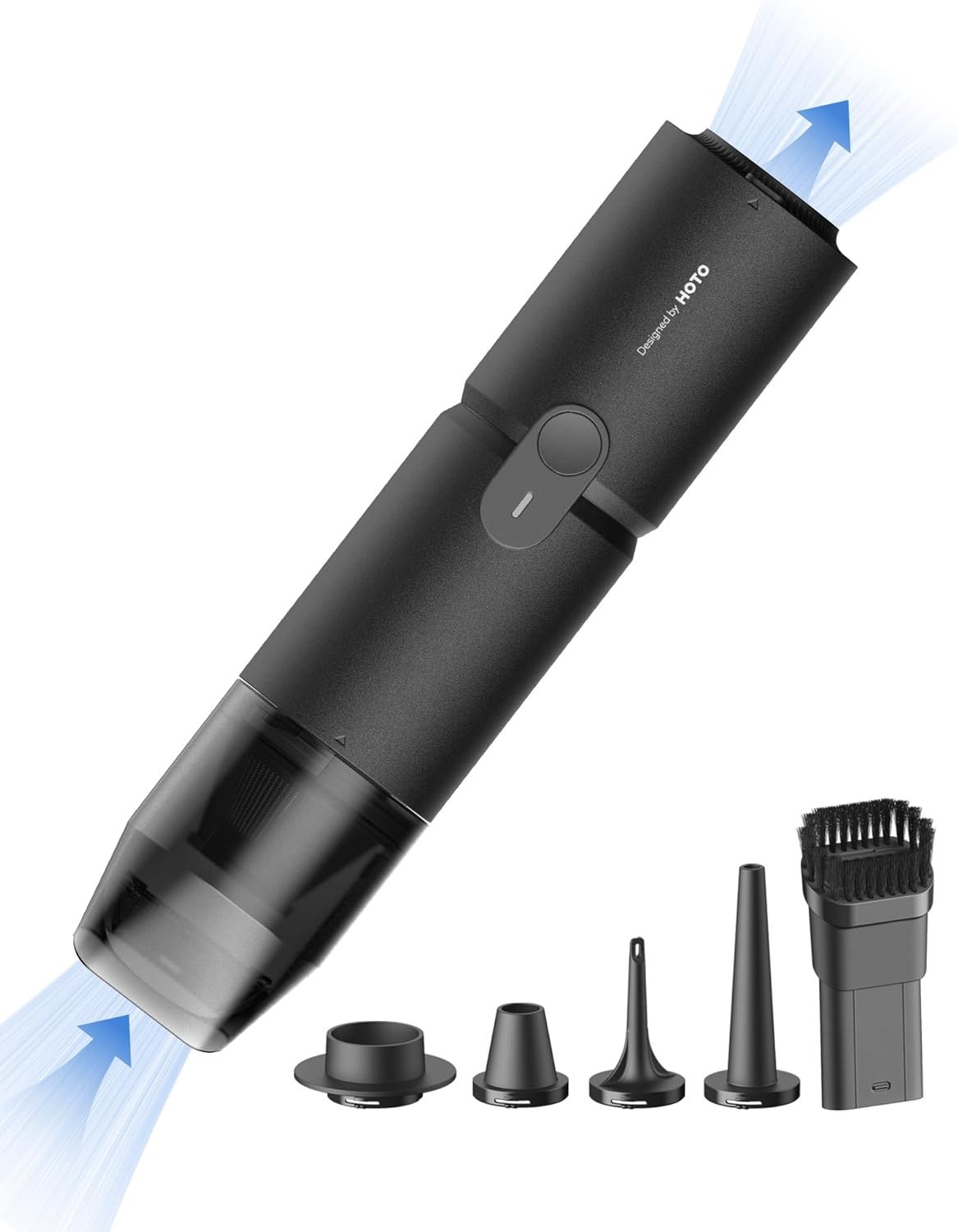
4-in-1 Handheld Vacuum and Air Blower: was $59.99 now $44.99 If your loved one suffers from a crumbly desk or a dusty PC, this all-in-one desk vacuum and portable air blower with 15,000 Pa suction is the appropriate gift to share. One side is for blowing, and one side is for sucking, with various magnetic tools, depending on your environment. This 4-in-1 tool is also good for inflating and vacuum sealing. View Deal
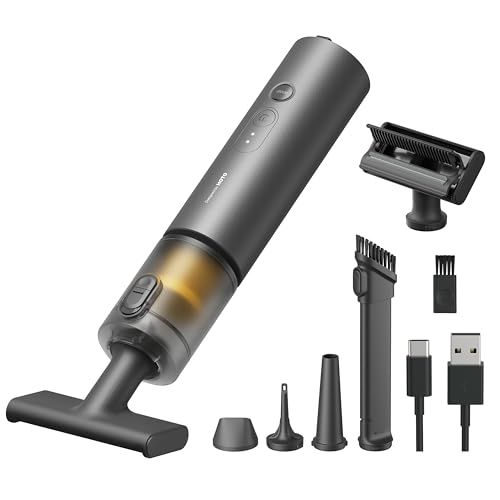
Handheld Car Vacuum Cleaner: was $99.99 now $59.99 The Hoto handheld car vacuum delivers 20,000 Pa suction for serious grime-busting capabilities, thanks to its 96,000 RPM motor. This 4-in-1 tool is more powerful than the one listed above, but comes with a 2-in-1 grooming brush head, as well as various nozzles for inflating and blowing.View Deal
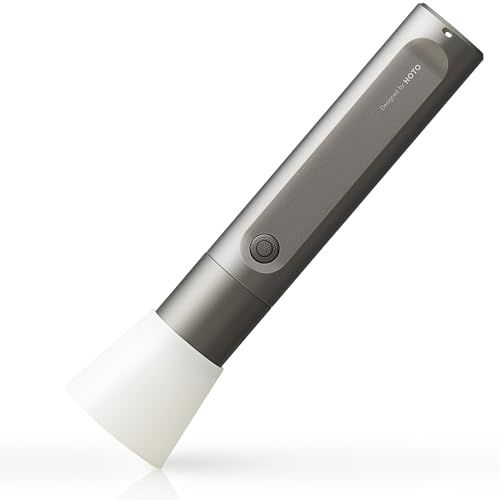
Rechargable Flashlight: was $25.99 now $16.99 Everyone needs a flashlight for an emergency (or in those tough-to-reach spaces). This Hoto model is rechargeable via USB-C and comes with up to 24 hours of battery life, thanks to its 1,500 mAh battery. The brightness is up to 280 Lumens, and it's waterproof, with an IP55 rating.View Deal
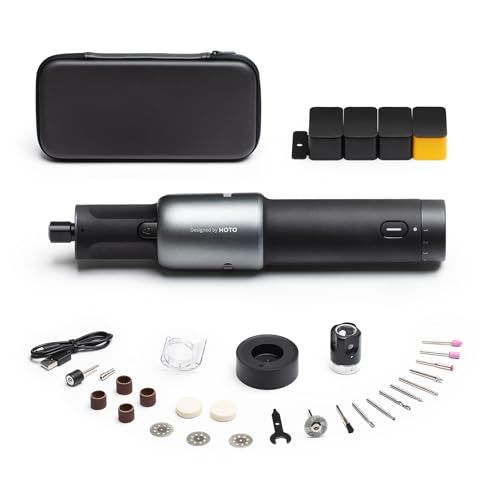
Hobbyists and makers will want to get hold of this Hoto 35-in-1 cordless rotary tool kit. The rotary tool itself is fitted with a high-speed motor, offering five speed modes between 5,000 and 25,000 RPM. You can use this for sanding, polishing, cutting, carving, as well as to finish off a 3D-printed model. It's battery-operated, uses USB-C for charging, and has a full array of attachments for various roles.View Deal
AutoCare Air Duster & Electric Screwdriver Kit: was $129.98 now $103.98 This combo deal features the Hoto NEX O1 Pro, a magnetic precision screwdriver powered by a 1,500 mAh battery that will drive over 1,000 screws on a single USB-C charge. It also includes the Hoto AutoCare 4-in-1 air duster and vacuum cleaner with five accessories.View Deal
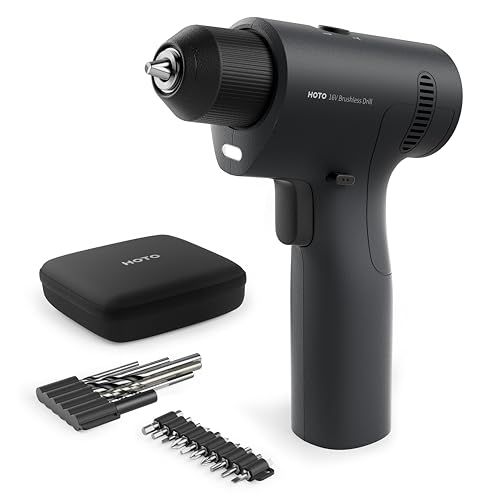
16V Brushless Power Drill: was $109.99 now $84.99 This Hoto 16V cordless drill delivers 50 newton-meter torque, with dual high-speed modes providing between 400 and 1,700 RPM for drilling and driving. It's fully rechargeable, with a 1,900 mAh battery. It comes with 10 screwdriver bits, two metal drill bits, three woodworking bits, a multi-purpose ceramic bit, and an extension rod with storage.View Deal
40-piece tool kit: was $79.99 now $56.98 This is the essential Hoto toolkit for somebody starting out. It includes 14 essential tools and 26 accessories, including the Hoto NEX O1 Pro electric screwdriver, arranged in a compact case.View Deal
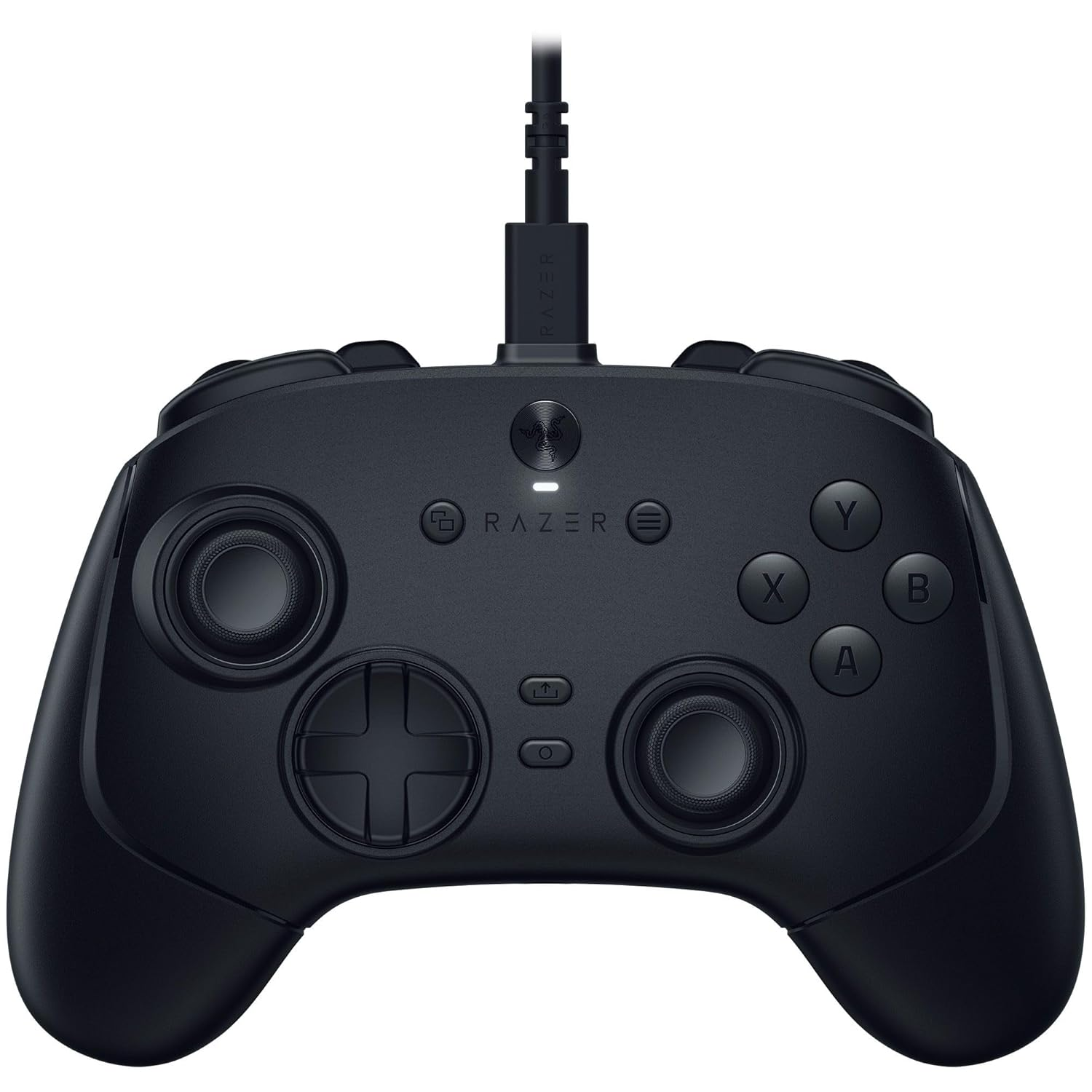
Getting the edge over your opponents can sometimes come down to the wire, or maybe the lack of one. A wireless gamepad gives you peace of mind that a wired controller can't. If you want a gamepad that doesn't compromise on specs while offering lightning-fast wireless performance, the Razer Wolverine V3 Pro can give you that for only $94.99, which is 53% off the normal price.
The Razer Wolverine V3 Pro is the wireless and more premium version of the already impressive Razer Wolverine V3 Tournament Edition.
The gamepad features 4 removable back buttons using high-performance mouse switches for minimal travel and sharp tactile feedback, 2 claw grip bumpers, and microswitches for the face buttons, just like the back buttons. Those specs are shared with the Tournament Edition, but the Pro features Razer's HyperSpeed 2.4 GHz wireless connectivity through a USB dongle for Xbox and PC.
The Pro also includes Chroma RGB lighting on the logo, Razer Sensa HD Haptics, and a 20-hour battery; features the Tournament Edition doesn't have. This high-performance gamepad will ensure your inputs don't miss a beat with its 8,000 Hz polling rate, drift-resistant TMR sticks, and 8-direction floating D-pad. If you ever need to go wired, it's also an option through the USB-C port, which also acts as a charging port.
If you're worried about who shoots first, the hall-effect triggers allow you to customize the activation point, allowing for true hair-trigger sensitivity, precise analog performance, and personalization.
Wired
This wired controller won't fail you in the middle of an intense battle, with its ultra-low latency and precise TMR thumbsticks helping you stay on top of your opponents. The Wolverine V3 Pro has an 8,000 Hz polling rate and is fully customizable through Razer's software. View Deal
OEM controllers don't offer the same level of performance as this controller, and you're sure to have an advantage. The Razer Wolverine V3 Pro gives you a familiar layout, but adds buttons in convenient and easy-to-reach areas so you can pick it up without much adjustment while being able to ease your way into the additional customizable buttons.
While OEM controllers are basically consumable products lasting only a few months, this controller is equipped with hall-effect and TMR for the analog inputs. This ensures a long lifespan with much more resistance to stick drift. Having magnets in your controller ensures no analog electrical contacts wear out while gaming, and you won't have to worry about buying a new and expensive controller every few months.
Its longevity and features make it a great deal, but the Razer Wolverine V3 Pro for only $94.99 is an even better one. Grab yours now while it's still in stock.
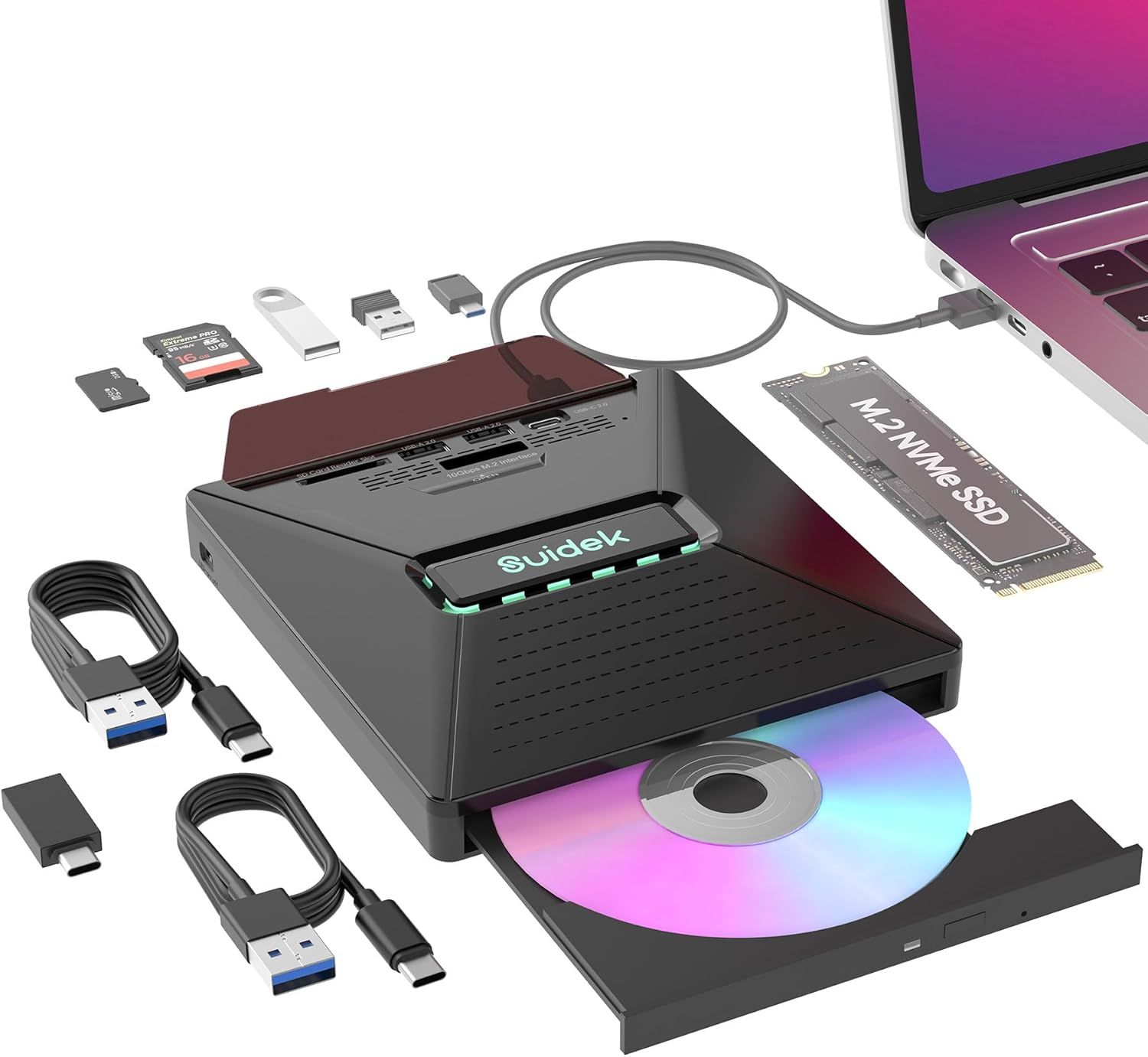
The most expensive of the bunch, this optical CD/DVD writer from SUIDEK upgrades the SATA dock to an M.2 NVMe SSD dock, but keeps the SD card reader, USB-A, and USB-C hub.View Deal
Update 10/7/2026 3:35pm PT: These deals, which have been exceedingly popular, are still going strong as the last hours of the Prime event wind down. With apparently ample stock, those who catch these deals while they are still live will walk away with a significant discount.
With desktops and laptops now almost certain to eschew an optical drive in 2026, keeping a USB optical drive and docking solution around will help you retain access to your collection of old software and media for years and PC generations to come. With this in mind, we've spotted a few flexible solutions on sale at Amazon that have wacky and seriously useful, yet odd, features that we just have to share:
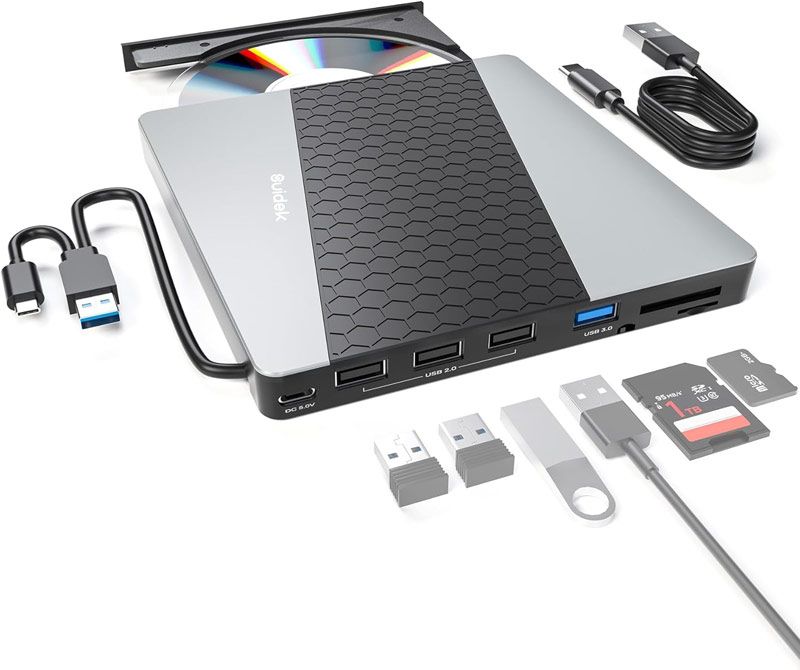
The cheapest SUIDECK drive still gives you lots of media connectivity options. This attractive portable device, with a silver metallic and black honeycomb finish, can read and write optical media at CD 24X and DVD 8X speeds. That's not all, as it also offers a USB 3.0 hub, 3x USB 2.0 ports, 1x USB 3.0 port, SD and TF card slot readers, and a USB-C port.
Compatibility of the SUIDEK External CD DVD Drive, USB 3.0 USB-C Portable CD DVD Drive for PC is also pretty extensive. For optical media, you can use CD±R/RW, CD-ROM, DVD±R/RW, DVD-RAM, VCD, and SVCD, the listing claims. Then, for systems/OS, you can plug this into Windows 11, 10, 8, 7, XP, Vista, Linux, and macOS 10.6 or above computers.
SUIDECK's portable USB connected optical and media reader peripheral also has USB HUB functionality. This has you covered for all sorts of old CDs, DVDs, and flash cards you might have in the back of your tech cabinets.View Deal
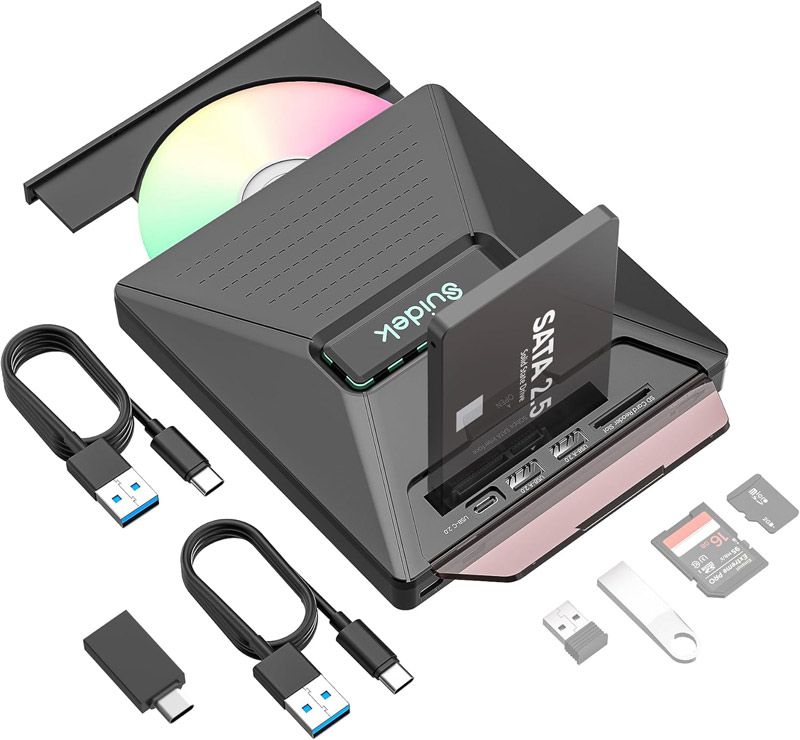
Those who feel that some SATA docking functionality will be useful might want to look more closely at this next SUIDECK optical drive and dock. For $33.83, you will have one portable device that can be used to read and write optical media at CD 24X and DVD 8X speeds. Again, there's a basic USB hub built in with 2x USB 2.0 ports, a USB-C port, plus SD and TF card readers. Extra appeal comes from the SATA 2.5-inch slot on top, which can be used for quick access to your old laptop hard drives or SSDs in what was once a very popular form factor.
This product listing isn't specific about things like DVD±R/RW or DVD-RAM support, but the exact same list of system/OS support is given: Windows 11, 10, 8, 7, XP, Vista, Linux, MacOS 10.6 or above.
This SUIDECK USB attached drive and dock adds flexibility with SATA drive docking. It is only about $5 more expensive than the drive without SATA.View Deal
If the requirements expand to an optical drive dock supporting the more common modern M.2 NVMe SSD storage standard, the SUIDECK portable CD/DVD burner with USB Hub and M.2 Dock for $39.99 is the ultimate Swiss Army knife of portable external optical drives. We're also happy to see both brands' peripherals score 4.3/5 or better on Amazon reviews, as we haven't tested these ourselves.
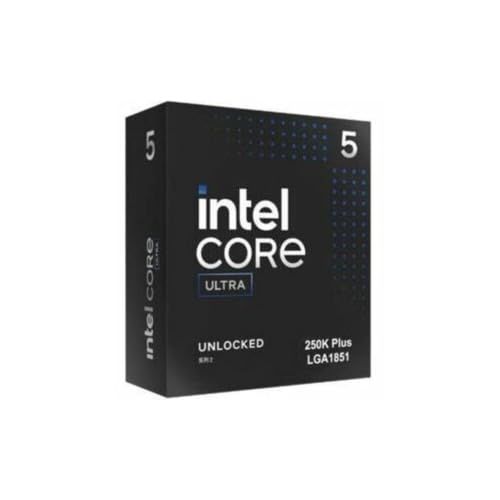
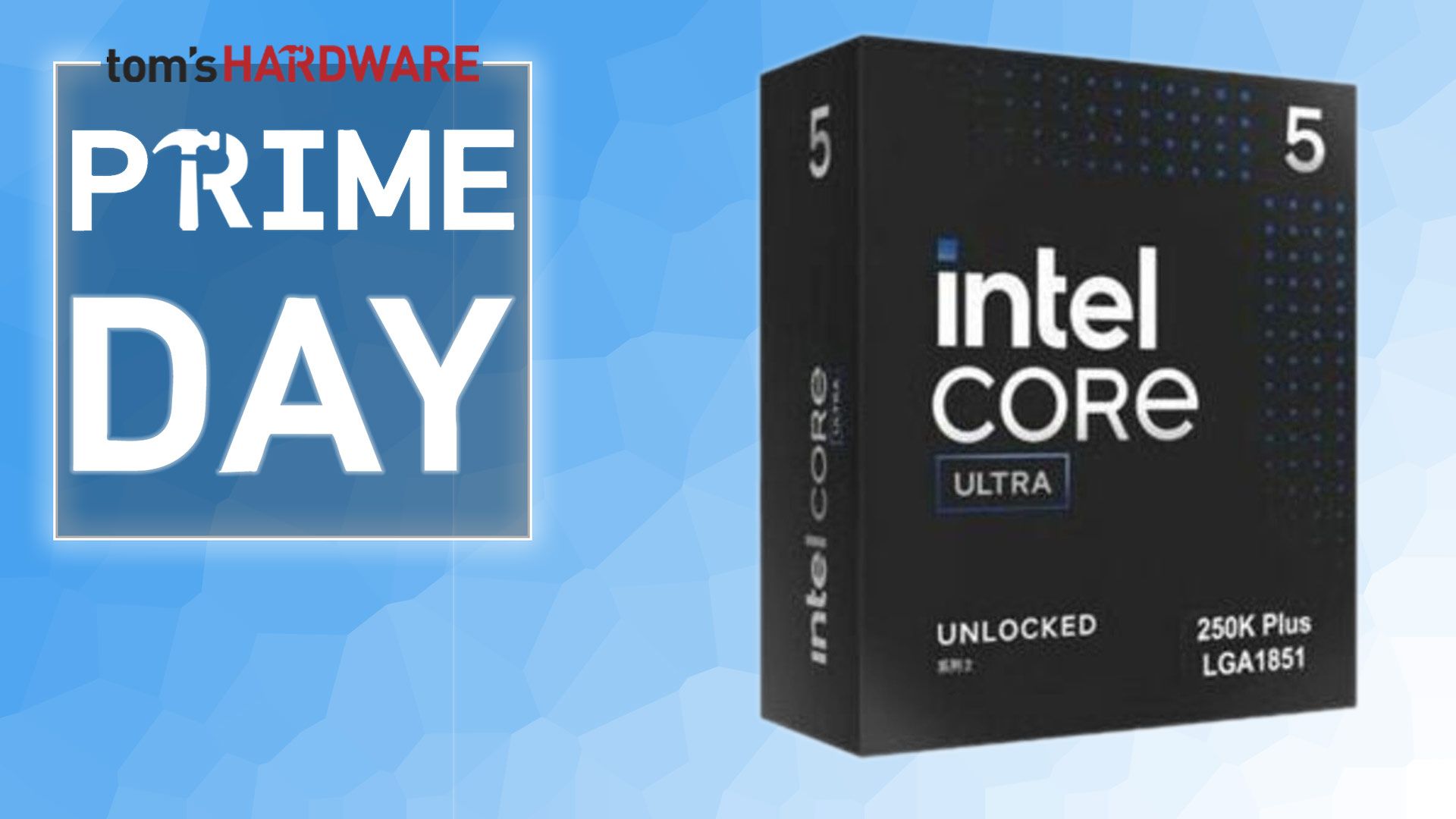
The Intel Core Ultra 5 250K Plus is down to its lowest price ever, with Amazon slashing 34% off the list price to bring it down to $145. That's even cheaper than the lowest price we've seen on the Core Ultra 5 250KF. Despite being priced like an entry-level CPU, the 250K Plus ranks among our best CPUs for gaming.
The Core Ultra 5 250K Plus originally launched for $200, but it didn't take long for its recommended price to climb to $220. That's likely because it punches far above what its price would suggest, even at full MSRP. It, along with the Core Ultra 7 270K Plus, was framed as a last-ditch effort to bring Arrow Lake to the masses after the failed launch of the original range.
The 18-core Core Ultra 5 250K Plus comes from Intel's Arrow Lake Refresh family. It sports a 5.3 GHz boost clock and six Lion Cove P-cores, alongside 12 Skymont E-cores. View Deal
And the refresh has worked. The Ultra 5 250K Plus is an 18-core CPU with a split between six Lion Cove P-cores and 12 Skymont E-cores. As with all Arrow Lake CPUs, the 250K Plus doesn't have Hyper-Threading, but having 18C/18T isn't too shabby, with its AMD arch rival offering 6C/12T. The chip comes with a maximum boost clock of 5.3 GHz, and a PL1/PL2 power of 125W/250W. As it's an unlocked K-series processor, you can overclock the chip, though you'll need to pair it with a more pricey Z-series chipset.
Although we almost always recommend a Z-series chipset with a K-series SKU, there actually isn't a locked version of the 250K Plus. Further, many of the OC improvements are baked into the chip, including a 900 MHz bump in die-to-die frequency and a 400 MHz increase in memory fabric speed. Overclocking is a big upside, though it's not strictly required, especially when we're looking at a $145 CPU.
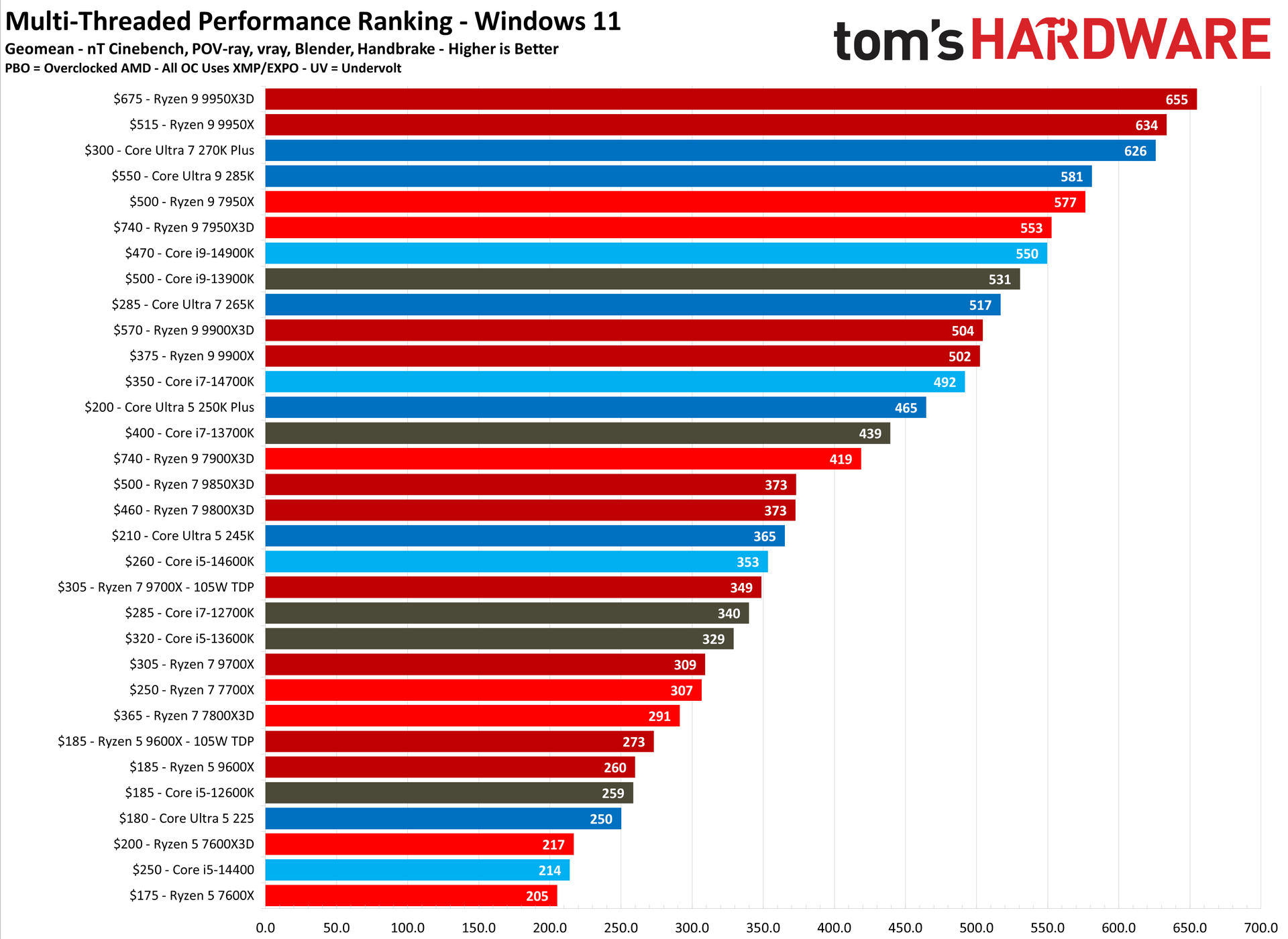
Although the Core Ultra 5 250K Plus is priced like an entry-level CPU, it performs much better than its current sales price would suggest, particularly in productivity workloads. You can see the results for the 250K Plus from our CPU benchmark hierarchy in the gallery below.
The 18 cores and threads help Intel's mid-ranger punch up in multithreaded performance. The chip is 33% faster in our multithreaded productivity geomean compared to AMD's competing Ryzen 7 9700X, despite Team Red's chip costing twice as much right now. Compared to the Ryzen 5 9600X that's in the same price bracket, Intel is a massive 80% ahead. Check out our Intel Core Ultra 250K Plus vs AMD Ryzen 5 9600X faceoff feature for more about that particular battle.
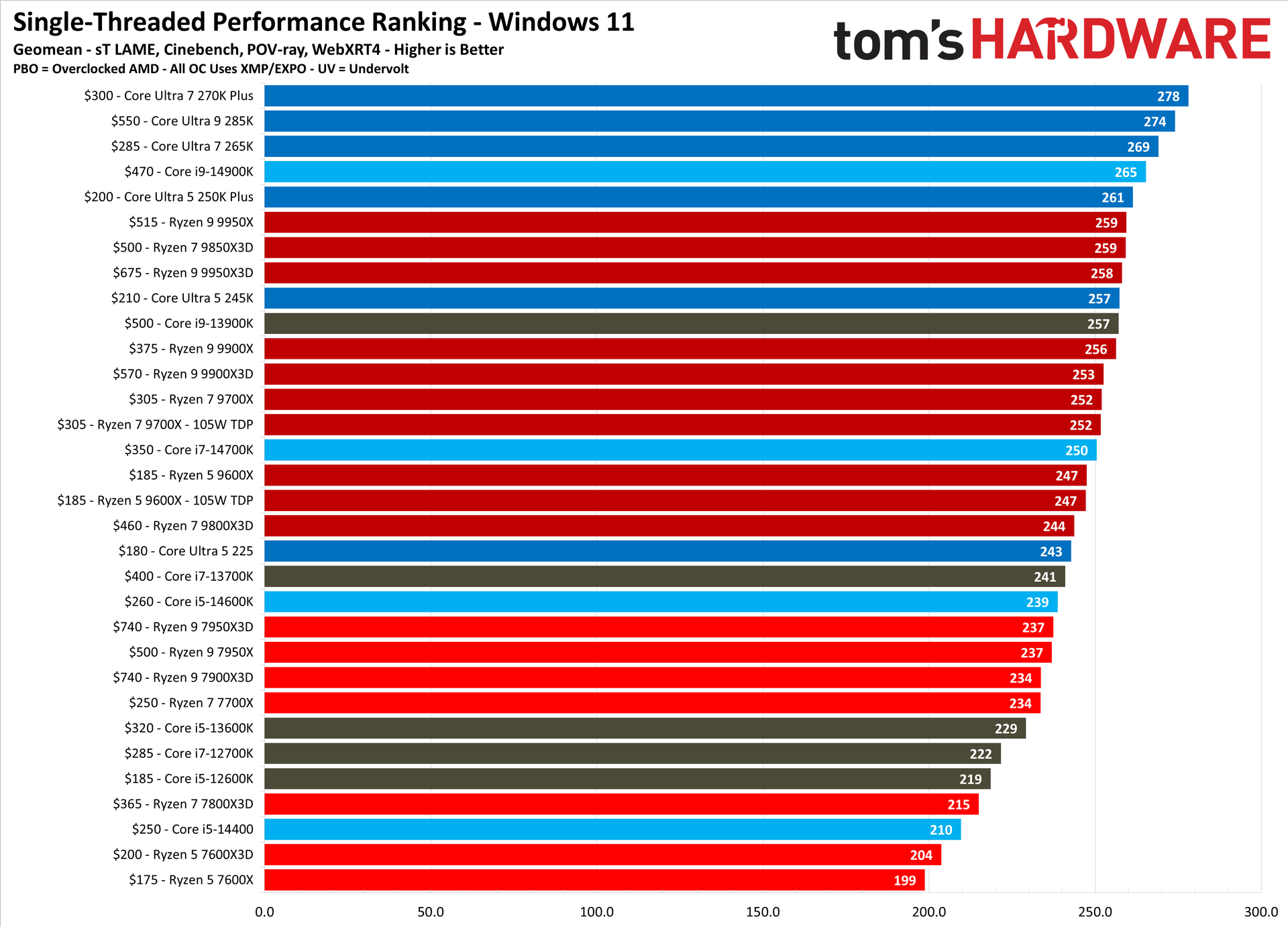
Intel's multithreaded performance here isn't a result of simply throwing a ton of weak cores at the problem. As you can see from our single-threaded rankings, the Core Ultra 5 250K Plus came out ahead of every AMD offering we tested, including the flagship Ryzen 9 9950X. Last-gen's Core i9-14900K is slightly faster, though it also costs nearly three times as much.
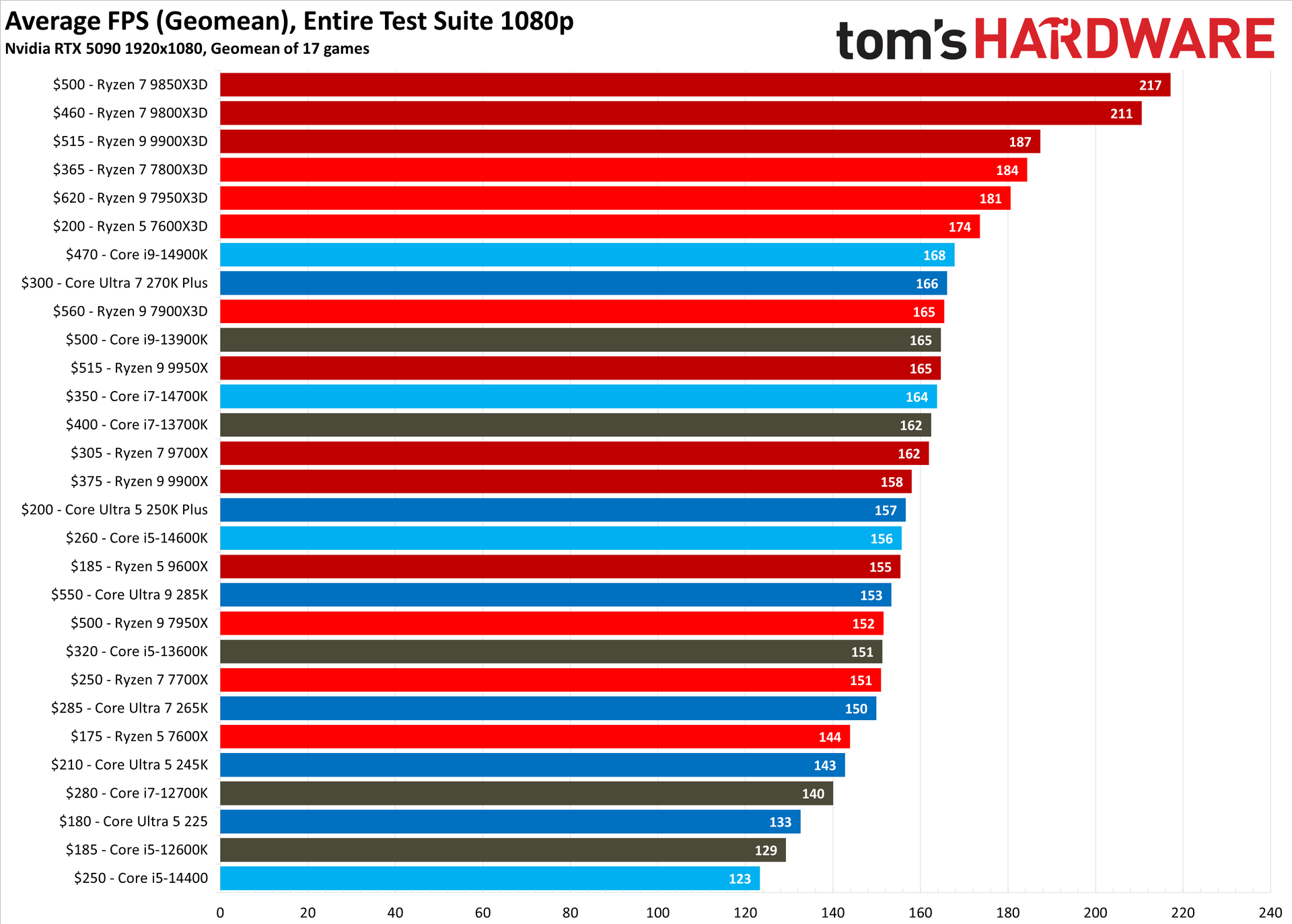
Gaming is where Intel has started to take a backseat to AMD, and the Core Ultra 5 250K Plus slips some rankings. On average, the chip is about as fast as the Core i5-14600K. That's marginally faster than the Ryzen 5 9600X and about 3% behind the Ryzen 7 9700X. AMD's Ryzen 5 7600X3D is about 10% faster, though in this current Core Ultra 5 250K Plus sale, Intel's CPU is about $100 cheaper.
At under $150, just getting a competent CPU is tough — just see our list of the best budget CPUs — and the Core Ultra 5 250K Plus is more than competent. Don't miss this deal on Amazon.
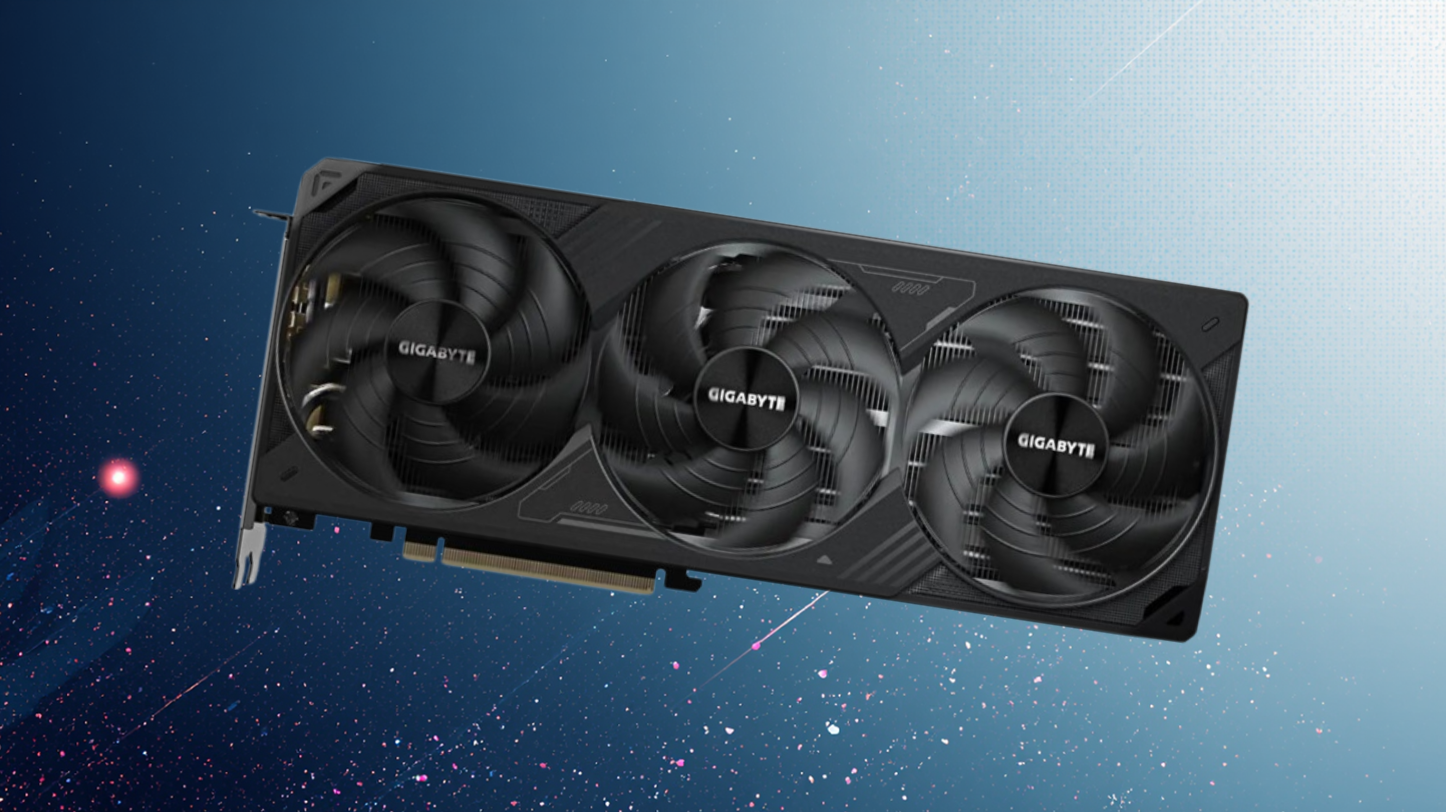
The past several months have been nothing but a pain in the wallet for anyone trying to buy RAM, storage, and graphics cards. Prices have shot through the roof since late 2025 and have, for the most part, only increased since. Today, we came across what is arguably one of the best deals on an RTX 5070 Ti we’ve seen in months: Gigabyte’s RTX 5070 Ti Windforce for only $1,099 after you click to get the promo code. All you need is a Newegg account to see the code. Click “Click to see the Extra discount,” select “Yes” to unlock it, confirm your Newegg email, and a pop-up will appear with the code.
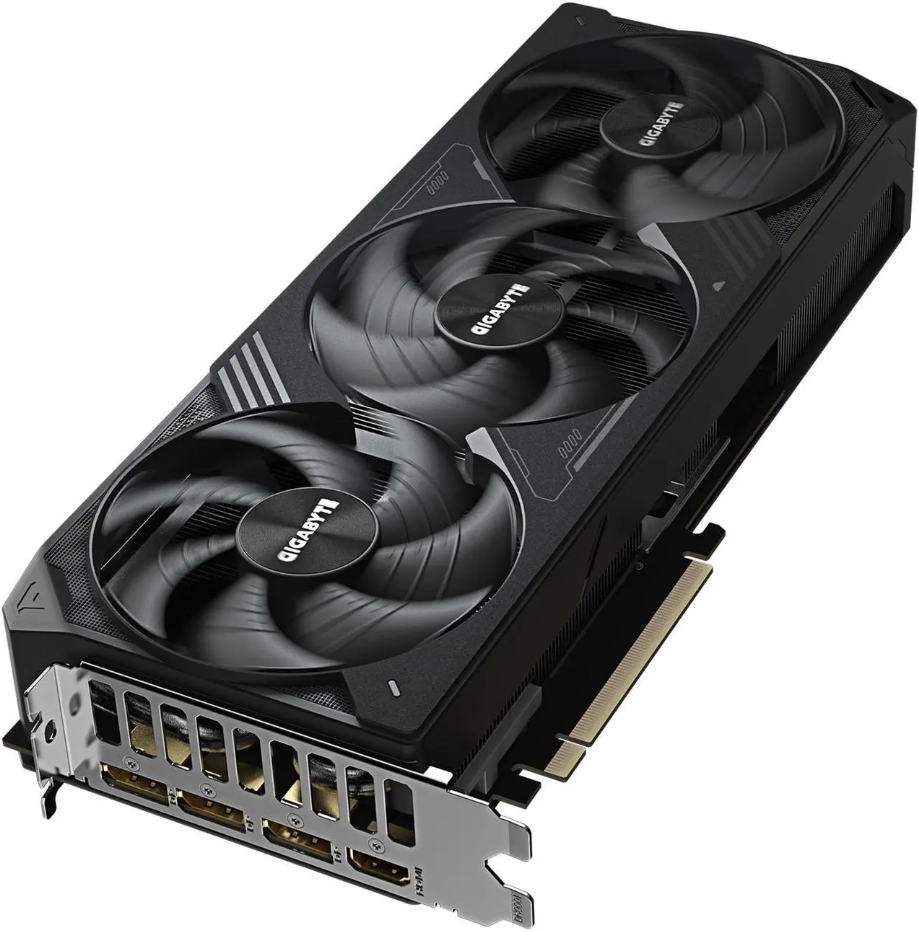
The Windforce on sale is an all-black version that forgoes any RGB bling. Three large ‘Hawk’ fans dominate the front face, sending air through a sizable heatsink with copper heatpipes and a copper baseplate. The fans are relatively quiet and shut off at low loads and temperatures for quiet desktop operation. The Windforce is also good for small-form-factor builds, as it’s a dual-slot (50mm deep) card. However, the three-fan card is long (304mm), so it may not fit in all small-form-factor chassis.
The Windforce 5070 Ti uses the ever-so-popular 12V-2x6 connector and includes a 2x PCIe 8-pin adapter if your power supply doesn’t use the 12V-2x6. Gigabyte recommends a 750W power supply for this card. Video outputs here typically include three DisplayPorts (v2.1b) and one HDMI (v2.1b). Base core clocks run at 2,497 MHz (a 45 MHz boost over reference), while the 16GB of GDDR7 runs at 28 Gbps across a 256-bit bus.
For performance, it’s great for high frame rates at 1080p and 1440p, and it's 60 FPS-capable in 4K UHD. Turn on Nvidia’s DLSS and MFG, and you can get even more out of it. Check out the performance charts below for a great idea of average frame rates across the three main resolutions.
If you’re shopping around for graphics cards, the landscape is still bleak and hyper-inflated. But sometimes you just need to buy (let’s be frank, this pricing debacle isn’t going to end soon), and the Gigabyte Windforce RTX 5070 Ti 16GB at $1,099 (with a promo code) is the best deal on this mid-range video card.
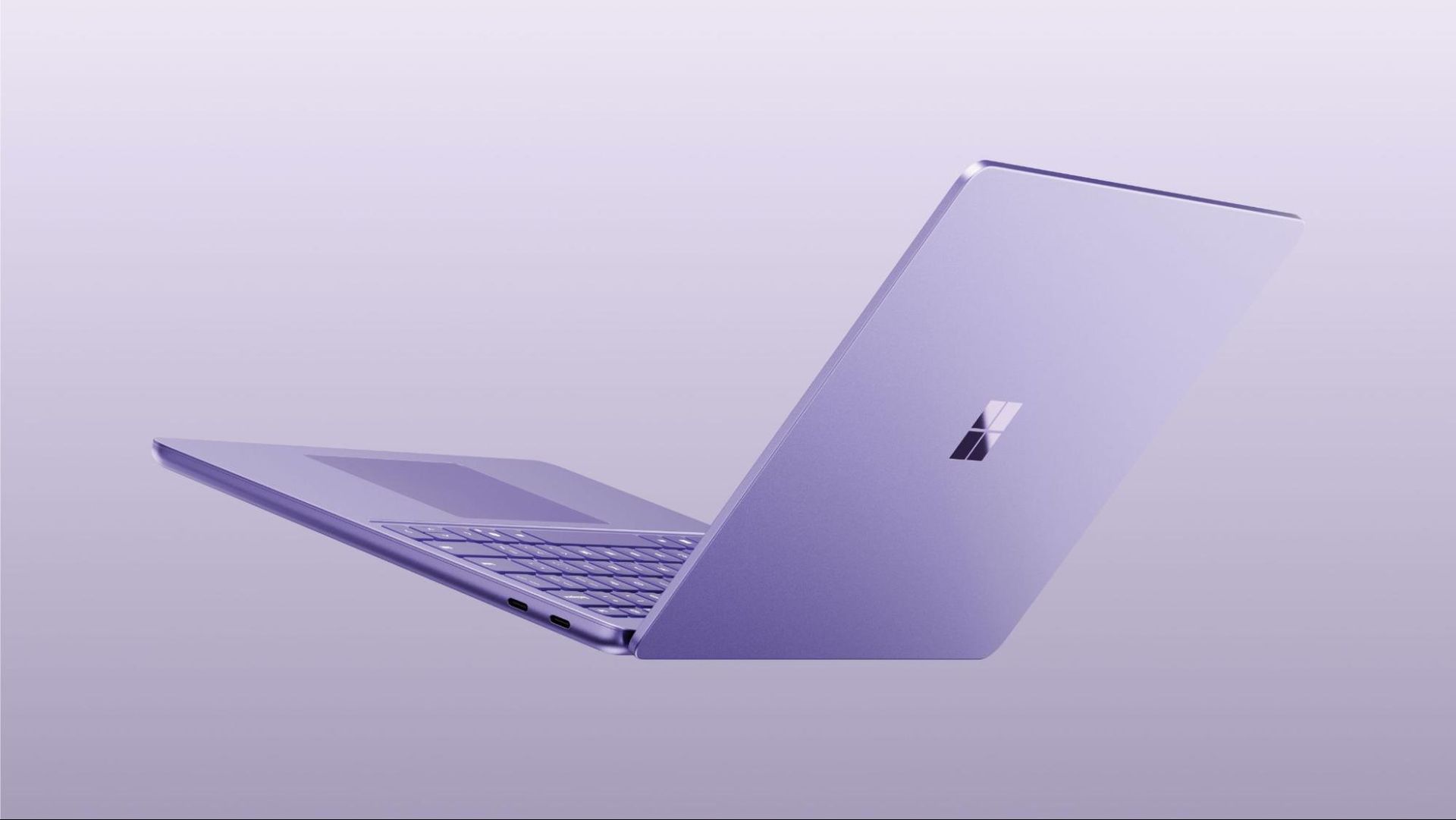
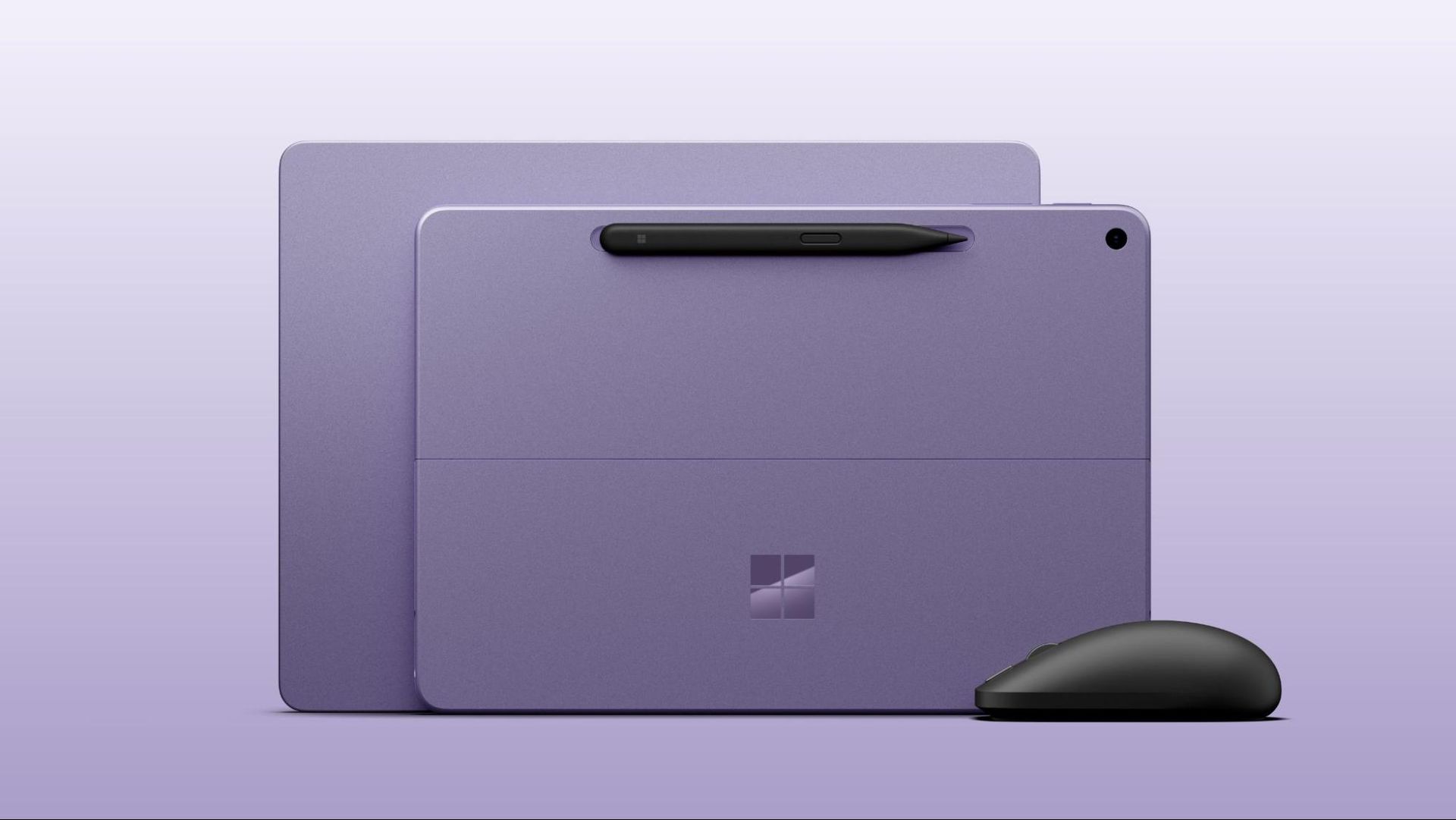
Microsoft is finally updating its lowest-end computers: the 13-inch Surface Laptop and 12-inch Surface Pro. Both systems are getting the Qualcomm Snapdragon X2 Plus processor (including an 80 TOPS NPU), up from a first-gen Snapdragon X Plus. The company announced the new Surfaces on its blog, in timing with Qualcomm's Snapdragon Summit.
Both new devices will launch on October 13. The Laptop will start at $1,199, while the Surface Pro will be $1,149. These are substantial increases over the previous versions, which started at $899 and $799, respectively, when they launched.
Microsoft Surface Laptop (13-inch)
Microsoft Surface Pro (12-inch)
CPU
Qualcomm Snapdragon X2 Plus (6-core)
Qualcomm Snapdragon X2 Plus (6-core)
GPU
Qualcomm Adreno GPU
Qualcomm Adreno GPU
Memory
16-24GB LPDDR5x RAM
16-24GB LPDDR5x RAM
Storage
256GB, 512GB UFS
256GB, 512GB UFS
Display
13-inch, 1920 x 1280, 3:2, 60 Hz, 500 nits maximum
12-inch, 2196 x 1464, 3:2, up to 90 Hz (60 Hz default), 500 nits maximum, touch
Release Date
October 13
October 13
Starting Price
$1,199
$1,149
Microsoft claims that the new systems are 17% faster in Microsoft Office workloads, up to 18% more efficient on battery, offer "more than" 60% faster graphics, and have up to 95% faster AI inferencing on the NPU. Those are all compared to previous-generation Snapdragon X Plus processors.
(Image credit: Microsoft)
Both systems are getting a new black color and 25% brighter displays than previous generations. The 12-inch Pro will also receive optional 5G connectivity, but only in enterprise versions of the device.
The Surface Pro will also introduce Ink Canvas, a new sketching and annotating app for Windows 11. It comes preinstalled on the new tablet and will be available for other Surface and supported Windows 11 devices through the Microsoft Store.
Surface Mouse
(Image credit: Microsoft)
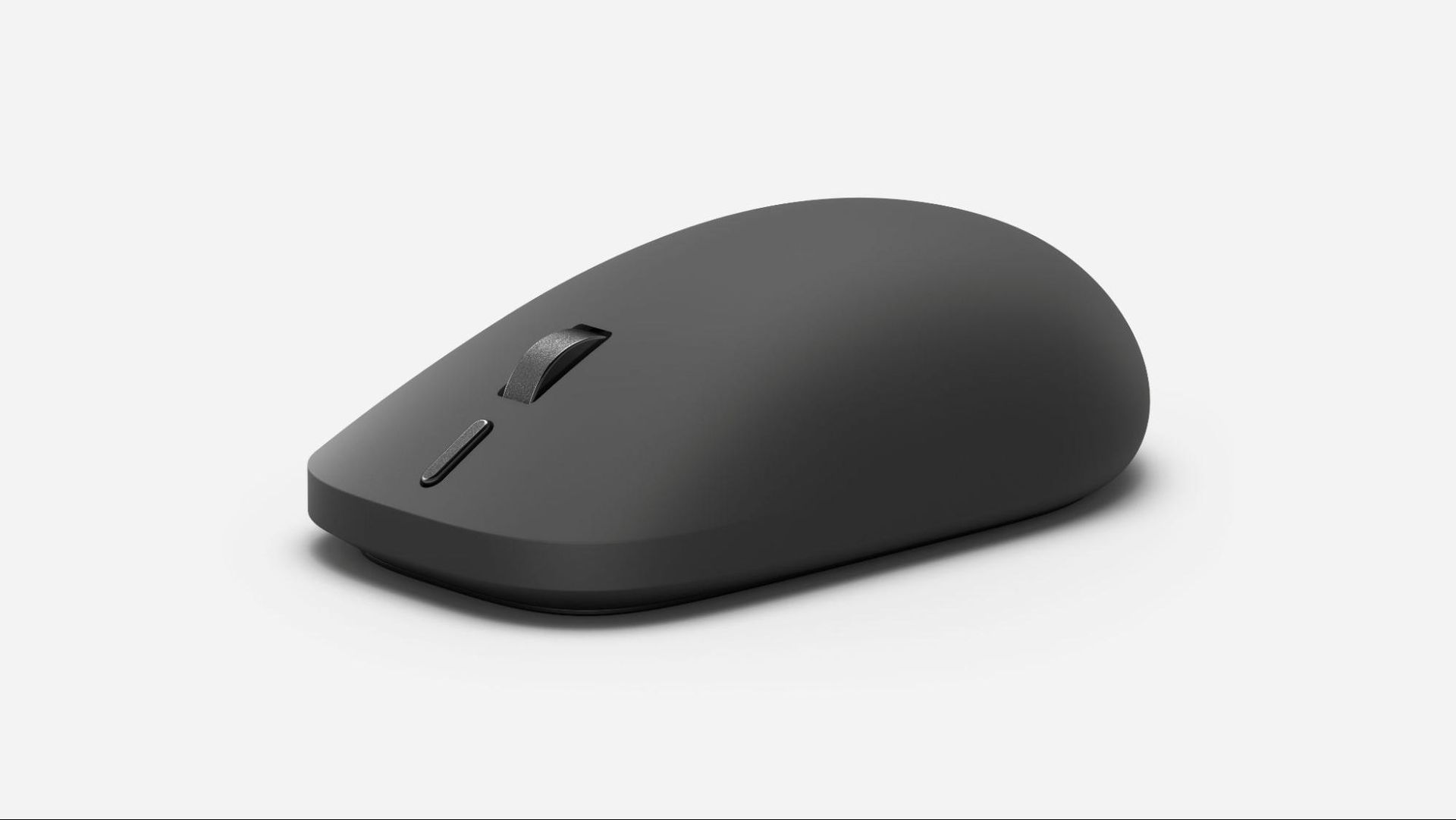
Beyond the two new Surface systems, the company is also announcing a new Surface Mouse. The $79.99 mouse includes haptic feedback, which has only been on some Surface notebooks so far. This can take advantage of features built into Windows 11 that allow for haptic responses for actions such as hovering over the exit button or resizing windows. Logitech's recently released MX Master 4 mouse also supports haptics.
Microsoft's pointer is designed for ambidextrous use (unlike the MX Master 4), connects over Bluetooth 6.0, uses two AAA batteries, and comes in both black and platinum colors. Like the laptops, it will launch on October 13.
A court in Germany has granted court injunctions against Micron, marking a win for YMTC on the European/German front in the 3-year legal war between the two companies over memory technology patents.
According to a Digitimes report, the court ruled on Sept. 18 that Micron did infringe YMTC’s 3D NAND technology patents in two instances. The injunctions could restrict Micron’s supply in Germany and impact the broader European NAND market. Micron said it disagreed with the court ruling and has already filed an appeal. It is also challenging the validity of the related patents in separate legal cases across various countries.
YMTC filed the lawsuit that won the recent injunctions in late 2025 at the Munich 1 Regional Court, opening five cases involving four German utility models and a European patent. The court granted injunctions on two of the utility models with 10-year protection periods — DE202020006166U1 (case No. 7O12615/25) and DE202021004551U1 (case No. 12614/25) — and adjourned the others. The injunctions are only first-instance rulings and can be suspended if Micron successfully appeals at the Munich Higher Regional Court.
The ruling is the latest development in a years-long dispute between the two memory makers that started in 2023 when YMTC sued Micron in California, alleging violations of eight 3D NAND architecture patents. The dispute has since snowballed into a multi-front war involving over 20 patents, with suits and countersuits on both sides. The cases cover patent infringement, declaratory judgment, spyware, libel, false advertising, and invalidation actions, and have been filed in courts across China, the U.S., the U.K., Germany, and in other parts of Europe.
Micron has vehemently denied any wrongdoing and has filed multiple patent invalidation challenges since 2024, the first of which came after YMTC dragged the company to court in China over related issues. Seven of the disputed patents have already been declared invalid, and Micron has said it will continue pushing to safeguard its intellectual property.
3D NAND is a flash-memory storage technology that stores data in products ranging from smartphones and SSDs to enterprise storage systems. Unlike older planar NAND, where memory cells are arranged side by side on a flat surface, 3D NAND stacks cells vertically in multiple layers, allowing manufacturers to pack more storage into a given area while increasing density and lowering cost per bit. Modern NAND chips can contain hundreds of these layers, making the architecture and manufacturing techniques behind them commercially valuable intellectual property.
Alibaba Cloud has released a new lightweight image generation AI model, called Qwen Image 2.1. Sporting just 7 billion parameters, it's an extremely lean open-weight model, able to run on even older consumer graphics cards like the RTX 3090. Despite its lightweight design, its developers claim it is more capable than a range of closed-weight models, including Google's Nano Banana 2.0.
That is on its own internal benchmark, so we'd like to see some additional testing before making any concrete claims, but early reports suggest it's a very capable image model, with native transparency support and the ability to create unified images from a range of reference images.
One area that has raised eyebrows, though, is the change to the Qwen Image 2.1 licensing agreement. Unlike the previous version, this one explicitly forbids commercial resale of the model, requiring anyone who wants to use it for that to obtain a separate license directly from the developer.
Competing with the best?
Qwen Image 2.1 introduces a number of new features that improve its utility and help it better compete with established alternatives. It supports native transparency, so you can have it generate images with transparent backgrounds, which can make it particularly useful for artists wanting to use AI as part of something else, or for print-on-demand products like stickers.
It also improves image editing, with the ability to use up to 10 reference images. Cited examples include taking an existing image of a person, feeding the model images of clothing items, and then it can composite an image of the person wearing those clothes. The Qwen team promises consistency across images, preserving people and products effectively.
The standout feature of Qwen Image 2.1, though, is its compact size. Its visual generation component has just 7B parameters, making it one of the leanest models of its kind. In first-party comparison testing, the only model with fewer parameters was LongCat-Image developed by Meituan, coming in at 6 billion parameters. Most other models are several times that size, or closed-weight entirely.
It's those closed-weight models that Qwen Image 2.1's developers claim it can compete directly with, though. On that same internal benchmark, its model scored 60.2 on the Qwen Image Benchmark. In comparison, OpenAI'S GPT Image 2.5 Sunburst scored 67, Muse Image 62.34, and Google's Nano Banana 2.0 59.82.
Preliminary testing on AI Arena suggests it's not quite as strong as that in less favorable benchmark conditions, but still very close. There, it achieved a score of 1228, while Nano Banana 2 managed 1260. Musw Image is ranked a few steps higher again, with a score of 1276, while GPT 65 Sunburst sits at the top with a score of 1423.
On the image editing front, AI Arena claims it's now the best of the open-weight options:
Qwen-Image-2.1 by @Alibaba_Qwen just landed as the #1 open source model in the Image Edit Arena and Text-to-Image Arena!With 1367 pts in the Image Edit Arena, Qwen-Image-2.1 took the #1 spot among open. It landed #16 overall, just 3 pts from GPT-Image-1.5-high-fidelity at #15.… https://t.co/J5MqBP22eM pic.twitter.com/MV5USBrMa9September 22, 2026
These are still early results, and more testing will be needed to fully confirm or refute the Qwen team's claims, but so far they seem to track pretty closely to reality. Although we can't know how many parameters the proprietary models lean on to achieve their higher scores, Qwen Image 2.1 appears to be nipping at their heels with its modest weights.
It works well on local hardware
Reports from individual early adopters of Qwen Image 2.1 claim it runs just fine on their consumer graphics cards. Hacker News forum member Vunderba, developer of the GenAI Showdown site, claims they were able to convert a 1MP image using Qwen Image 2.1 in around five seconds on an RTX 4090.
On the Stable Diffusion subreddit, user cgs019283 praised its capabilities, stating that it could generate 1MP images in around 25 seconds on modern Nvidia 50-series graphics cards like the RTX 5070 and 5080. They did, however, state that it can take a lot longer if you use lots of reference images, and that editing an image was the slowest function of the model in their testing.
Others have the model working on older and much lighter hardware. One user claims to be using it to generate 2K resolution images in around 50 seconds using an Nvidia RTX 3060 and 64GB of memory.
Although the setup and use of local AI is still a far cry from the accessibility of cloud-based platforms like Google's Nano Banana and OpenAI's GPT Image models, the early results appear, at least on the surface, to be impressive. If the feature set holds up under more rigorous testing, those wanting the kind of rapid, quality image generation but running locally with full control and no need for cloud accounts or subscriptions could make it a fierce competitor.
The licensing conundrum
Of all the commentary from Qwen Image 2.1 early adopters, a discussion that keeps coming up is how the developers are handling licensing. The wording comes across as ambiguous:
"You are granted a non-exclusive, worldwide, non-transferable, and royalty-free limited license under our intellectual property or other rights owned by us embodied in the Materials to use, reproduce, distribute, copy, create derivative works of, and make modifications to the Materials FOR NON-COMMERCIAL PURPOSES ONLY. "
It then says that anyone wanting to use those "Materials" for commercial purposes would need to acquire a license from the Qwen team specifically for that use case. It's caused enough concern among the community that the Qwen team released a statement on Twitter/X:
We’ve received so much love for Qwen-Image-2.1 over the past 24 hours, thank you!! Also gotten a lot of questions about the license, especially around model outputs. So here’s the answer:Outputs are not part of the licensed Materials. Users retain the rights to images and other… https://t.co/5kLG46bvN9September 21, 2026
That mostly seems to clear things up. Whatever you generate with the model shouldn't be classed as a licensed material, so it shouldn't be covered by this clause.
What this does mean, though, is that the model itself cannot be re-sold without a license from Alibaba. That's quite different from the Apache model the original Qwen Image was based on, and potentially stretches the definition of open-weight. It's certainly not as open as it could be.
But for most people, this is no concern. You can run Qwen Image 2.1 on your local hardware to make some pretty effective generated imagery and use them however you wish. With such a lightweight design offering such impressive capabilities, the response from closed-weight model developers will be interesting to see.
Forget RGB, OLED screens, figurines, and dioramas. We've never seen anything like the Cherry Bloom PC from Aftershock PC in Australia, though. This liquid-cooled, high-end gaming PC includes a Cherry Blossom tree, featuring 70 handcrafted, heat-reactive titanium-alloy cherry blossoms that unfurl when the machine heats up.
The 70 hand-crafted blossoms 'bloom' mechanically when the PC heats up, no motors or electricity required. (Image credit: Aftershock PC)
What makes this even more remarkable is that the PC — heat-reactive blossoms included — is actually commercially available, and isn't a one-off custom mod. You can buy one from Aftershock PC right now. There are no motors to break; the blooming blossoms are completely 'powered' by the heat generated from the high-end components in the PC, too. Those components include an AMD Ryzen 7 9800X3D processor, 64GB of fast DDR5 memory, a 1300-watt modular power supply, and most notably, a GeForce RTX 5080 graphics card.
The presence of an RTX 5080 might be surprising considering the price we mentioned in the headline; yes, this PC costs approximately $14,150 USD ($20,000 AUD, or around £10,650 GBP). But if you've got the cash to spare and are eyeing the PC up, just note that the eye-watering price doesn't include shipping. At that price, it's fair to expect truly top-end components, like a Ryzen 9 9950X3D2 Dual Edition and a GeForce RTX 5090 (as found in the very best PCs for gaming), but honestly, this machine is as much a work of art as a functional PC. You're not merely paying for the components; you're paying for the brilliant display inside.
It's not a small system, to be sure. The liquid cooling is fully custom for each system. (Image credit: Aftershock PC)
The chassis used for the Cherry Bloom is the "V2" by Taiwan's Advanced Performance Nexus, better known as APNX. The case has what APNX calls "one of the largest viewing area in its class," with wrap-around glass on three sides to allow you to admire the gorgeous sculpture in your case. Along with the previously mentioned components, you also get a 2TB Lexar NQ790 PCIe 4.0 SSD, a custom open-loop liquid cooling setup, eight Aftershock Chrome RGB fans, and Windows 11 Professional, naturally.
The high-end Gigabyte X870E motherboard offers gobs of connectivity. (Image credit: Aftershock PC)
Obviously, the Cherry Bloom PC isn't something that many people are going to buy. Much like the KFC console before it, it's a curious piece of marketing from Zotac Gaming, which designed the PC, according to the product listing. Nevertheless, the mechanism is indeed mind-bending enough. You can check out Aftershock's website and click through the slideshow to view videos showcasing the petals of the 'tree' unfurling; if nothing else, it's impressive to see the mechanism working in motion.
When I look at my collection of computer monitor reviews from the past 13 years, I see a tremendous number of displays from manufacturers that begin with the letter A. But there are lesser-represented companies with the same level of engineering expertise and high quality as mainstream brands when it comes to the best gaming monitors.
If you’re old enough to remember CRTs, then you’ve heard of the Sony Trinitron tube. This was an evolved display with a cylindrical shape rather than the bubble screens that fronted other CRTs. It wasn’t completely flat, but it curved only along one axis. And it was coveted by users for its sharp and undistorted image.
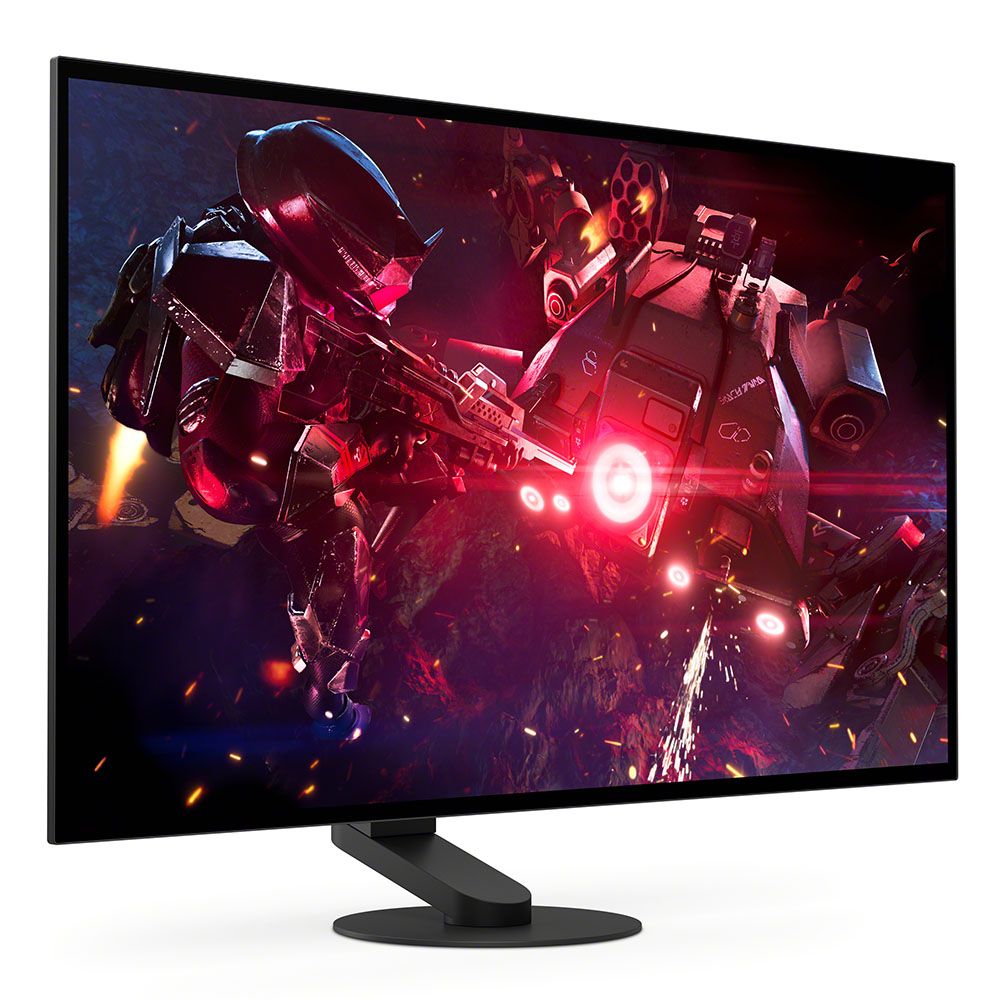
Today, you can still buy a premium gaming monitor from Sony, and here is its latest: the INZONE M10S II. It’s a 27-inch OLED with QHD resolution and 540 Hz refresh rate. It runs at 720 Hz in HD and supports Adaptive-Sync, HDR, and wide-gamut color. Let’s take a look.
Sony INZONE M10S II Specs
Panel Type / Backlight
Organic Light Emitting Diode (OLED)
Screen Size / Aspect Ratio
27 inches / 16:9
Max Resolution and Refresh Rate
2560x1440 @ 540 Hz
1280x720 @ 720 Hz
FreeSync and G-Sync Compatible
Native Color Depth and Gamut
10-bit / DCI-P3+
Response Time (GTG)
0.02ms
Brightness
283 nits full field
543 nits 25% window
Contrast
Unmeasurable
Speakers
None
Video Inputs
1x DisplayPort 2.1
2x HDMI 2.1
Audio
3.5mm headphone output
USB 3.2
1x up, 2x down
Power Consumption
43.5w, brightness @ 200 nits
Panel Dimensions
WxHxD w/base
23.8 x 14.9-19.7 x 7.8 inches
(604 x 378-500 x 197mm)
Panel Thickness
2.28 inches (58mm)
Bezel Width
Top: 0.28 inch (7mm)
Top/sides: 0.3 inch (8mm)
Bottom: 0.47 inch (12mm)
Weight
13.64 pounds (6.2kg)
Warranty
3 years
The M10S II starts with an OLED panel that runs natively at 2560x1440 QHD resolution and 540 Hz. A dual-refresh mode bumps that up to 720 Hz at HD, 1280x720 pixels. Adaptive-Sync runs on both AMD and Nvidia platforms, and you get HDR support with the ability to calibrate for HDR10 content. The screen coating is unusual in that it’s matte, while nearly every OLED that crosses my desk is shiny. That finish is extremely effective at rejecting image-spoiling ambient light. It literally swallows up reflections and displays the image without any visible grain.
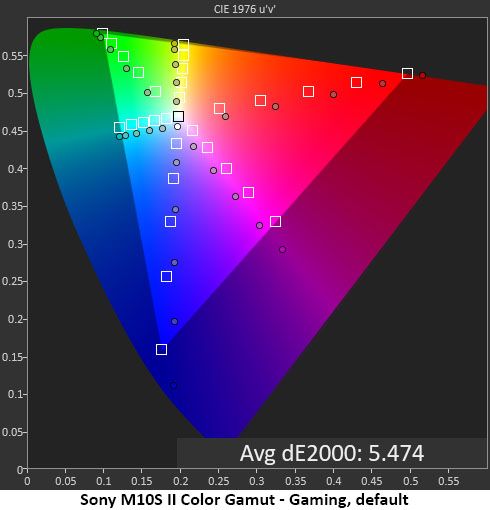
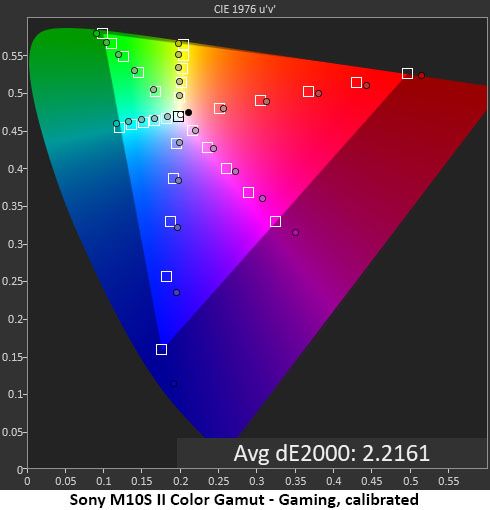
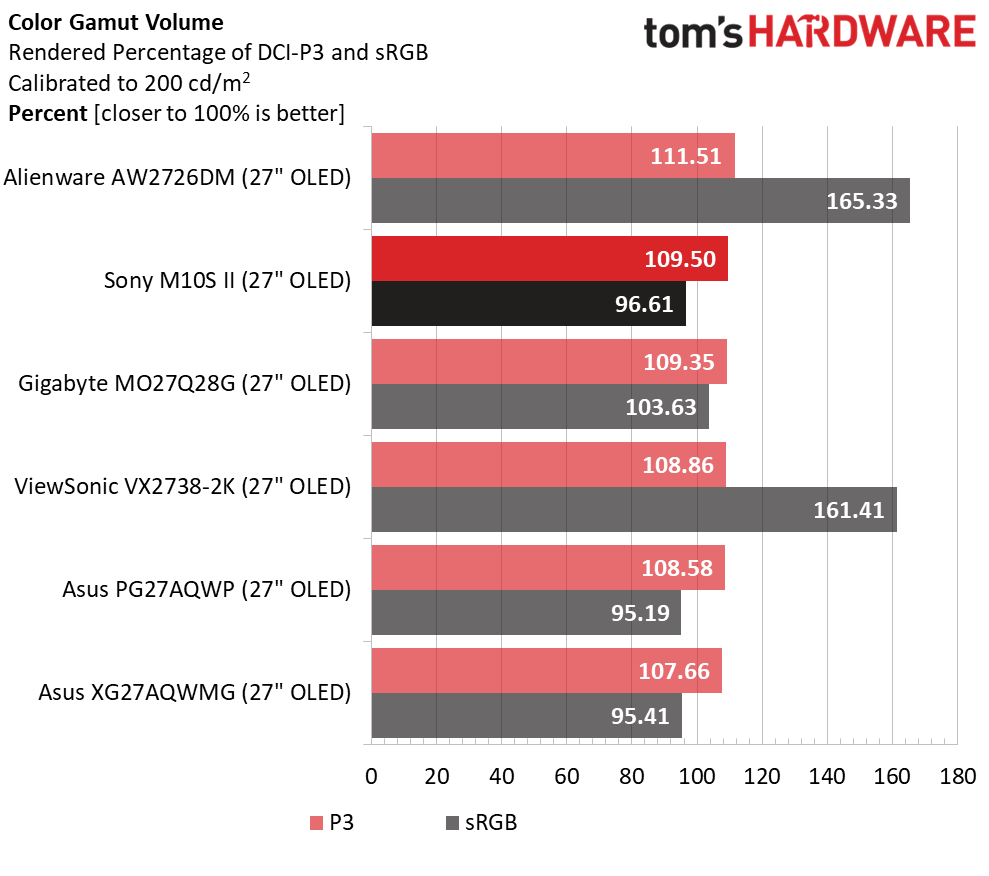
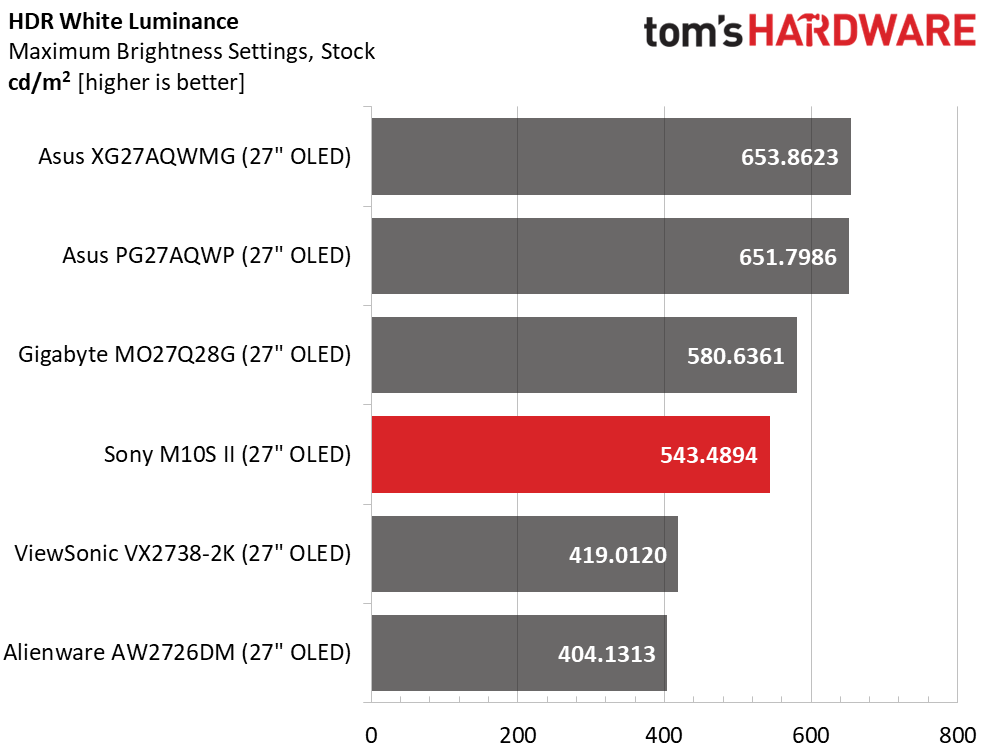
The M10S II delivers a huge color gamut that, in my tests, covered nearly 110% of DCI-P3. I found that calibration was necessary, but the reward was a beautifully saturated image. There’s an sRGB mode available if you need that smaller gamut for photography or graphics work. You also get variable brightness to stretch dynamic range. It has two settings that had a positive impact in both practice and testing. I’ll tell you more about that on page four. Peak output is around 475 nits in SDR mode and 543 nits in HDR mode when measuring a 25% window pattern.
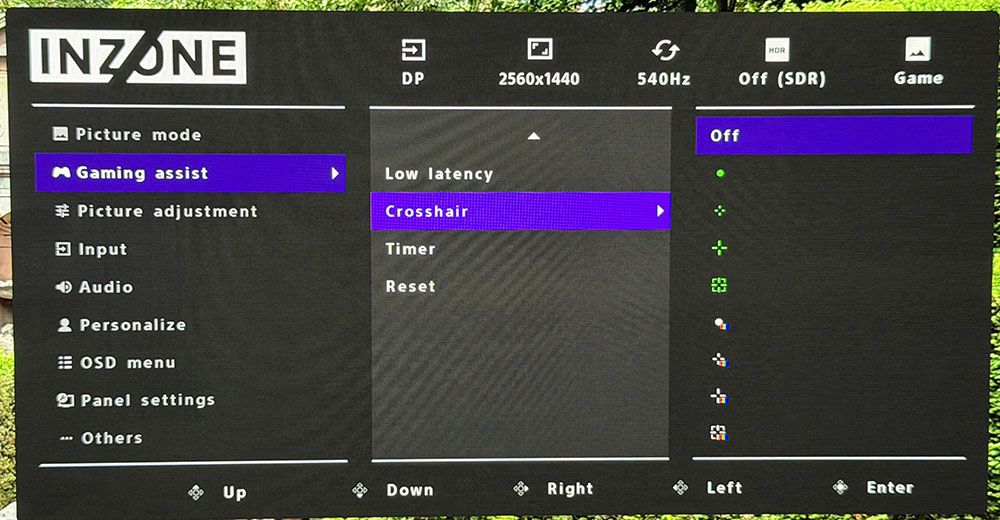
For gaming, you get plenty of goodness in the form of static and dynamic aiming points, OLED anti-flicker, black frame insertion for blur reduction at low frame rates, an FPS indicator, and a set of timers. Missing are internal speakers and LED lighting, but you do get USB ports for peripherals. There’s panel protection in the form of advanced heat management and OLED care options, such as panel refresh and pixel orbiting. The latest I/O ports also include one DisplayPort 2.1 and two HDMI 2.1 ports. A pair of headphones can be plugged into the provided 3.5mm jack. There’s a comprehensive OSD for control, or you can use Sony’s INZONE Hub app, which is free to download.
The M10S II sells for $1,100 at this writing, so it’s primed to compete with other speedy competition displays. While it isn’t quite as loaded as an Asus ROG Swift screen, it delivers equal performance and image quality.
Assembly and Accessories
The M10S II’s carton gets the full cardboard treatment with no crumbly foam in sight. The panel, upright, and base assemble without tools. If you plan to use an arm, there’s a 100mm VESA mount with fasteners included. Also in the box are a DisplayPort cable, an external power brick, and a sheet of INZONE stickers, in case you want to decorate your Trapper Keeper.
Product 360
SonySonySony
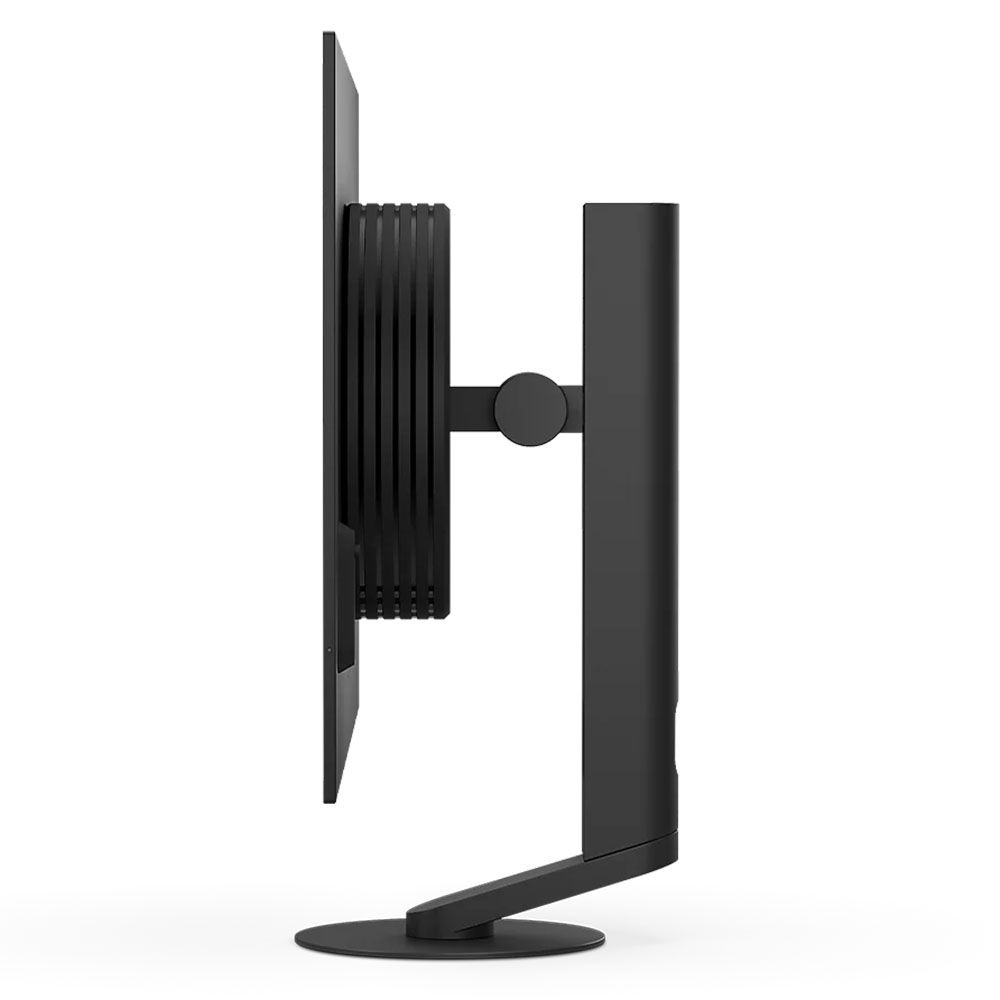
The M10S II’s most visible feature is its small-footprint base. Honestly, when I took it out of the box, I was dubious about its stability. It’s a heavy metal disc just six inches across. The upright bolts to its center with an offset that extends the depth to almost eight inches. It looks like it would fall over easily, but I gave it a few shakes, and it remained stable. This is geometry at work. The swivel point is where the upright and base meet, allowing you to swing the screen 360 degrees. You also get a 5/35-degree tilt and a 4.8-inch height range, no portrait mode, though. Movements are firm and smooth with no wobble or play.
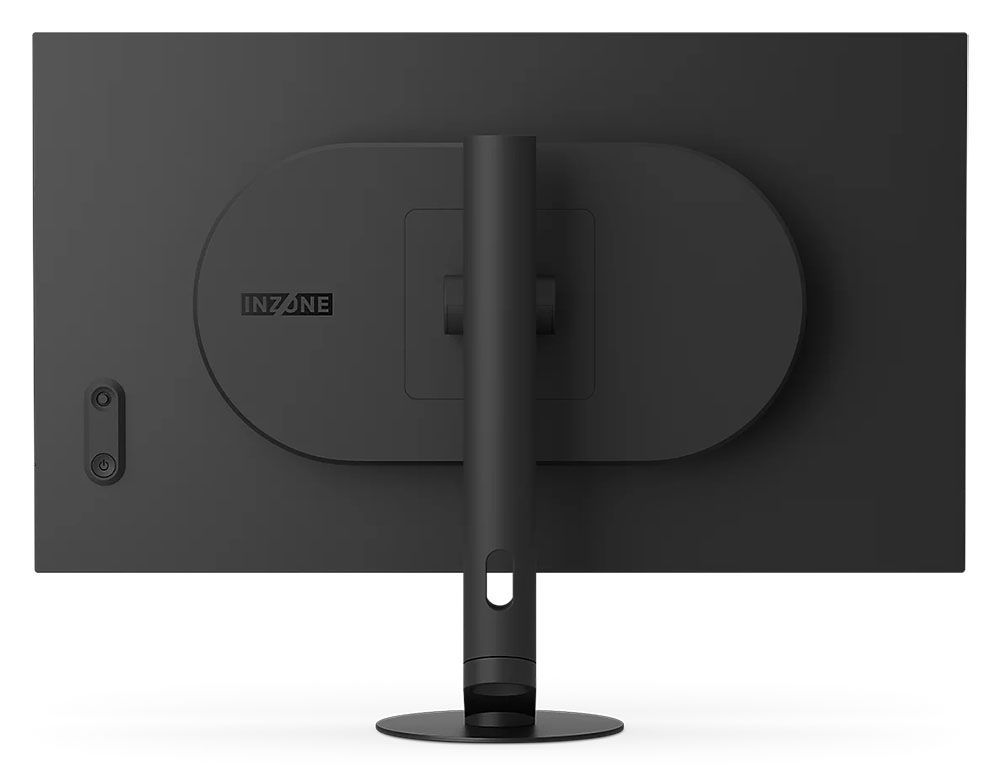
Reach around the back right, and you’ll find a small protrusion with a power button and a joystick for the OSD. Uniquely, the power LED is positioned on the side, just the right spot to light up your hand when you press the button. It isn’t visible from the front, but you can turn it off if you wish.
The side view shows a thick component bulge attached to a thin screen backed by a metal plate. It’s just 5mm thick, and the bezel is narrow too: 7mm on top, 8mm on the sides, and 12mm at the bottom. It’s flush, so you can’t see it when the power’s off.
The I/O panel is up and under and includes two HDMI 2.1 ports, one DisplayPort 2.1, and USB, one upstream and two downstream ports. There are no internal speakers, so you can plug headphones into the 3.5mm jack. An additional USB port is there for service and firmware updates.
OSD Features
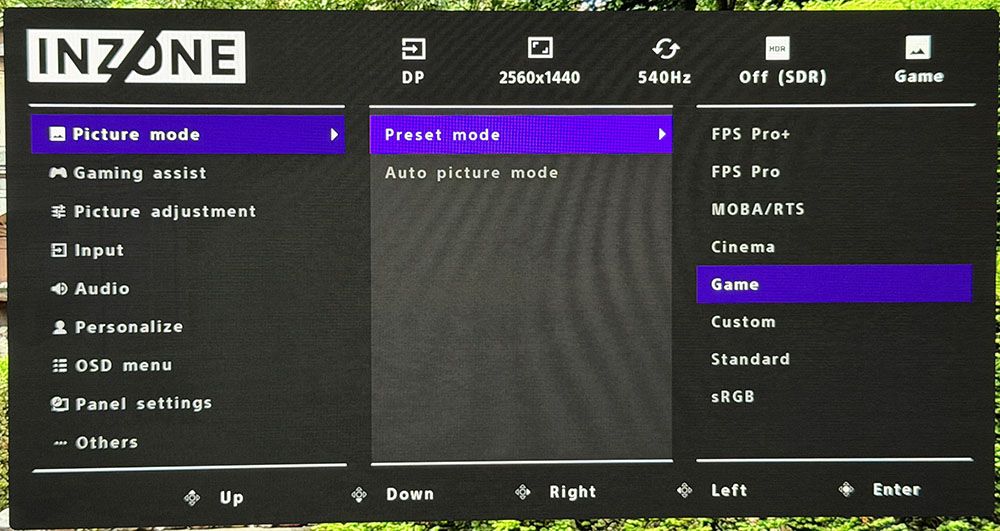
Pressing the M10S II’s joystick brings up an efficiently organized OSD. It’s divided into nine sections and has plenty of calibration and convenience options.
The OSD begins with picture modes, eight in total. The default is Game, and it looks good but needs a bit of tweaking to align it with broadcast standards. The other modes are aimed at specific game types or tasks, and there’s an accurate sRGB mode. I found the best results using Standard with a grayscale calibration, which you can read about below and on page four.
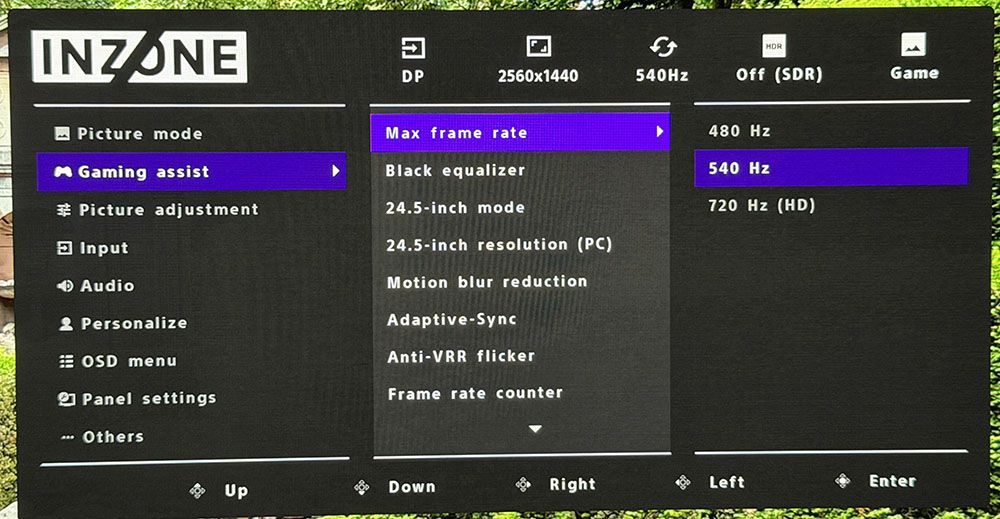
Gaming Assist includes the refresh rate switches and 24.5-inch modes which deliver 1080 vertical pixels while maintaining a 1:1 mapping. That way, there’s no scaling to soften the image. You also get motion blur reduction via a backlight strobe, which works well at low frame rates. It cuts brightness by around 30%. Anti-VRR flicker is unique to OLED monitors and prevents flickering during rapid frame-rate transitions. Hint: if your video card is fast enough to keep the action above 300 Hz, you won’t get flicker. Also in this menu are an FPS counter and aiming points, both static and dynamic.
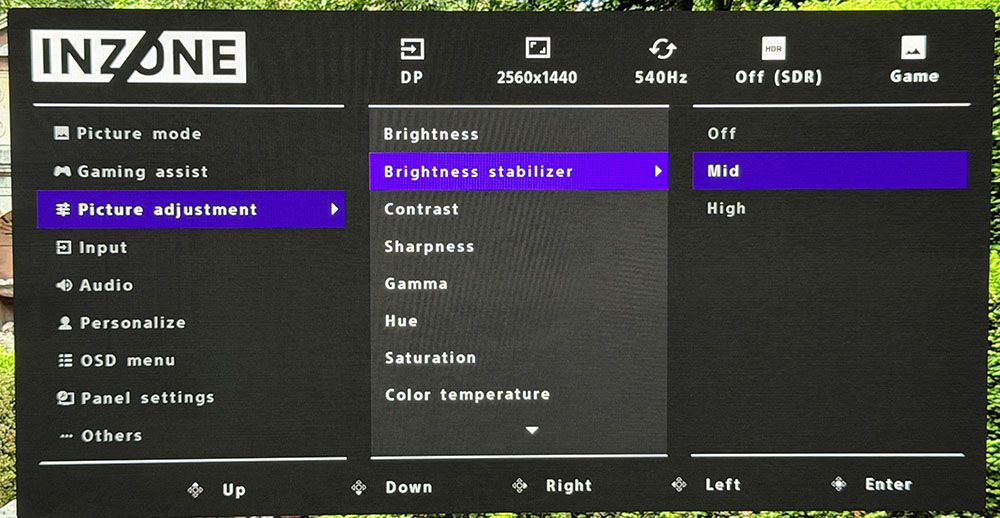
In the Picture adjustment menu, you’ll find the variable brightness options, which Sony calls Brightness stabilizer. It’s counter to other monitors I’ve encountered, in that off means variable brightness is fully engaged. I experimented with all three settings and found the best gamma, and therefore quality, on the Mid setting. Also, here are gamma presets and color temps with a set of RGB sliders. There is no color gamut selector, but you can opt for sRGB in the sRGB picture mode.
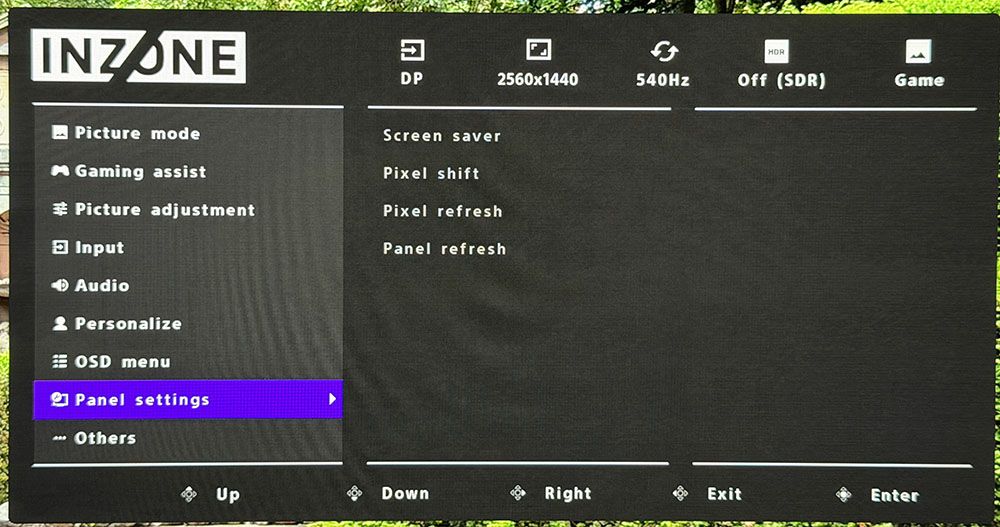
For panel care, the M10S II includes pixel shift, a screen saver, and refresh routines. Sony differentiates between pixel and panel refresh. I ran the pixel refresh when I first powered up my sample. Selecting panel refresh prompted a message that it should only be run once a year, so I concluded it was a very aggressive refresh routine.
Sony INZONE M10S II Calibration Settings
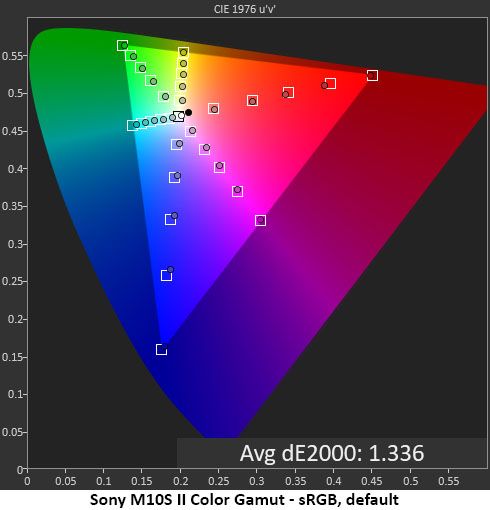
The M10S II arrived set to its Game mode, which had a cool grayscale and light gamma. I could fix the grayscale but not the gamma, so I turned to Standard mode, which was much better. After a few clicks of the RGB sliders, I had much improved grayscale, gamma, and color tracking. The gamut volume is just under 110% of DCI-P3, which is too large for the SDR standard but looks great, nonetheless. If you want sRGB, it’s there in the preset mode list. It has good gamut accuracy and supports grayscale calibration but not gamma adjustment. My recommended settings are below.
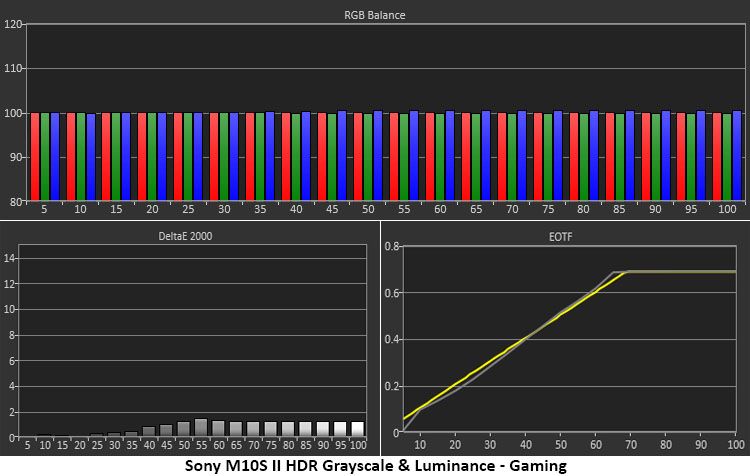
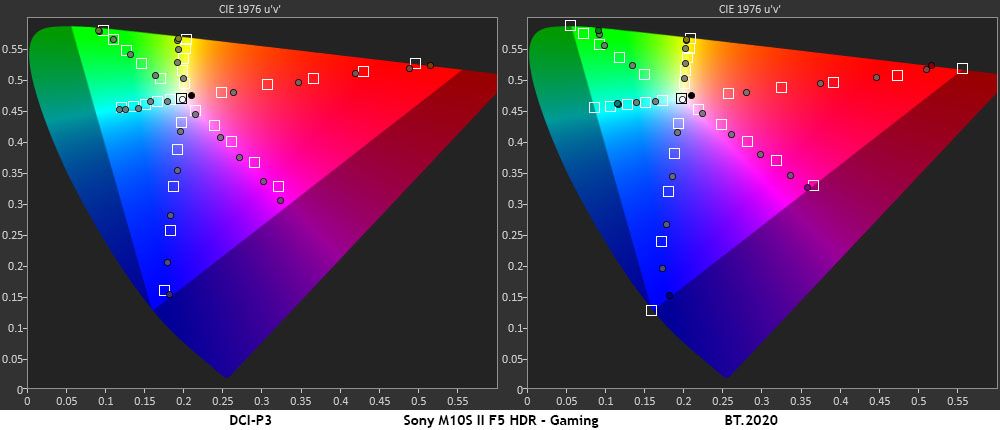
For HDR content, the M10S II switches over automatically and provides four specific picture modes. Game works the best, and I noted that it allowed grayscale calibration and brightness adjustment. You can see those test results on page five.
Picture Mode
Standard
Brightness 200 nits
51
Brightness 120 nits
28
Brightness 100 nits
23
Brightness 80 nits
17
Brightness 50 nits
8 (min. 22 nits)
Contrast
75
Gamma
2.2
Color Temp User
Red 100, Green 100, Blue 98
Gaming and Hands-on
Sony’s marketing for the M10S II clearly targets competition and hardcore gamers, and for those users, it delivers. Whether you need 540 Hz or not, it is super quick. Motion resolution is perfect, which means moving objects and backgrounds have the same clarity as stationary elements. Camera pans are free from blur or smearing. Adaptive-Sync worked perfectly for me when using a GeForce RTX 4090 video card. Frame rates in Doom Eternal set to max detail ranged from 350 to 540fps.
The M10S II has a couple of features designed to reduce motion blur and smooth out the image, but I didn’t find any need for them. Anti-flicker, which I’ve seen from Asus as well, is there to remove any flickering during frame rate transitions. I saw plenty of those with rates rapidly shifting 80-100fps by the second. There was no flicker. You also get blur reduction via backlight strobe. It only works below 270 Hz, and since my speeds never went below that, it wasn’t needed. To engage it, turn off Adaptive-Sync first. The M10S II will automatically reduce the refresh rate. It works well and shows no evidence of phasing or ghosting.
Input lag is low enough that I perceived instant response to control inputs during the most frenetic battle maneuvers. My skills are average, but I see this monitor’s benefit to a competitive gamer. The 720 Hz mode felt super quick even though its input lag is only a tad lower. Full-screen resolution is limited to 1280x720, but you can achieve dizzying frame rates in the process. Also available are 24.5-inch modes in which the picture occupies a portion of the screen. You can do 1920x1080 at 720 Hz this way or opt for 2368x1332 pixels in a 1:1 mapping.
In all scenarios, color and clarity are as good as it gets for the OLED genre. The M10S II has a huge color gamut, almost 110% of DCI-P3, and that shows in both SDR and HDR content. HDR has the additional capability of calibration, something most HDR monitors cannot do. I also liked the variable brightness options. The terminology is a little counterintuitive in that when Brightness stabilizer is off, variable brightness is engaged at maximum. The other settings, Mid and High, are less aggressive at modulating light output. I found the best gamma, and therefore picture quality, came from the Mid option.
As a 27-inch QHD flat panel, the M10S II is well suited for productivity and delivers a clean and colorful picture for general use. Small text is sharp and free of color fringing. Graphics and photos are deeply textured, and video looks great as well. The monitor makes a great personal TV. The only things I noted missing were internal speakers and LED lighting. But everything you need for gaming, entertainment, and work is there.
Takeaway: The M10S II is a competitor’s dream with its speedy response, smooth motion resolution, and multitude of refresh and resolution options. It delivers a clean and colorful picture for both SDR and HDR content. The anti-glare layer is among the best I’ve seen, with no effects seen from ambient light reflections. It’s a premium purchase for sure, but there is nothing it cannot do well.
Click here to read up on our pixel response and input lag testing procedures.
Tom's HardwareTom's Hardware
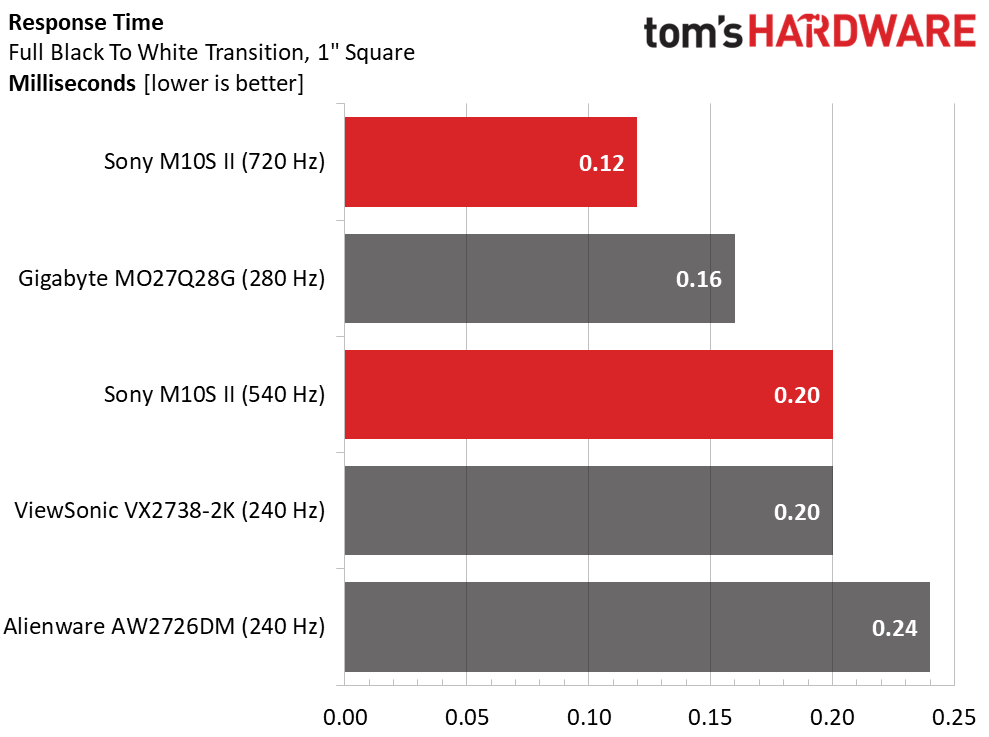
I can only include monitors tested with the Nvidia LDAT for a fair comparison, so I had to exclude the Asus screens from the response test results. The M10S II shows a difference between 540 and 720 Hz of 0.20 ms and 0.12 ms, respectively. You can’t see this difference as it is well below the human eye’s capabilities. Notice that the 240 Hz ViewSonic draws the one-inch white box in the same amount of time, and the Alienware is just behind at 0.24ms. Do you need a 540 Hz OLED? 240 Hz is enough for perfect motion resolution.
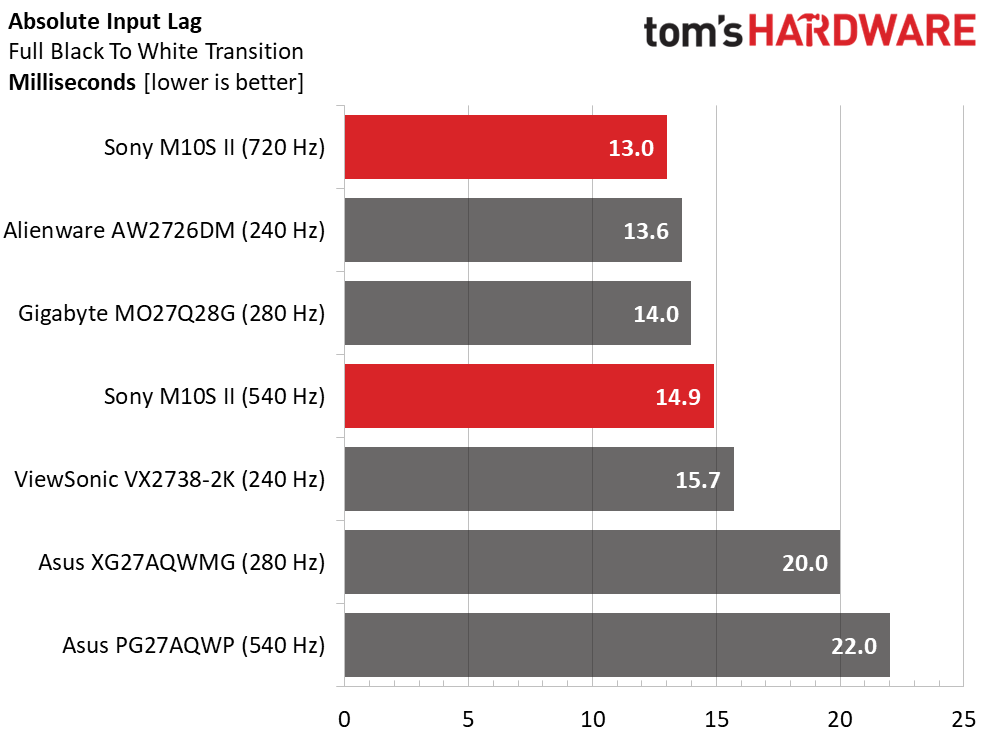
Faster refresh rates typically mean lower input lag, though not universally. The M10S II is quick at 14.9 ms, but again, it’s pipped by a 240 and a 280 Hz screen. At 720 Hz, it sits on top. Note the 540 Hz PG27AQWP can only muster 22ms. Is that a problem? Not if you consider that human reaction time is typically around 200ms.
Test Takeaway: The M10S II is certainly a fast monitor and among the quickest 27-inch QHD OLEDs currently available. It gains a slight advantage in test results at 720 Hz, but not enough to make a visible difference. If you can drive it at 540 Hz in QHD resolution, you’ll be rewarded with a superb feel and perfect motion resolution, with moving objects rendered as clearly as static ones.
Viewing Angles
(Image credit: Tom's Hardware)
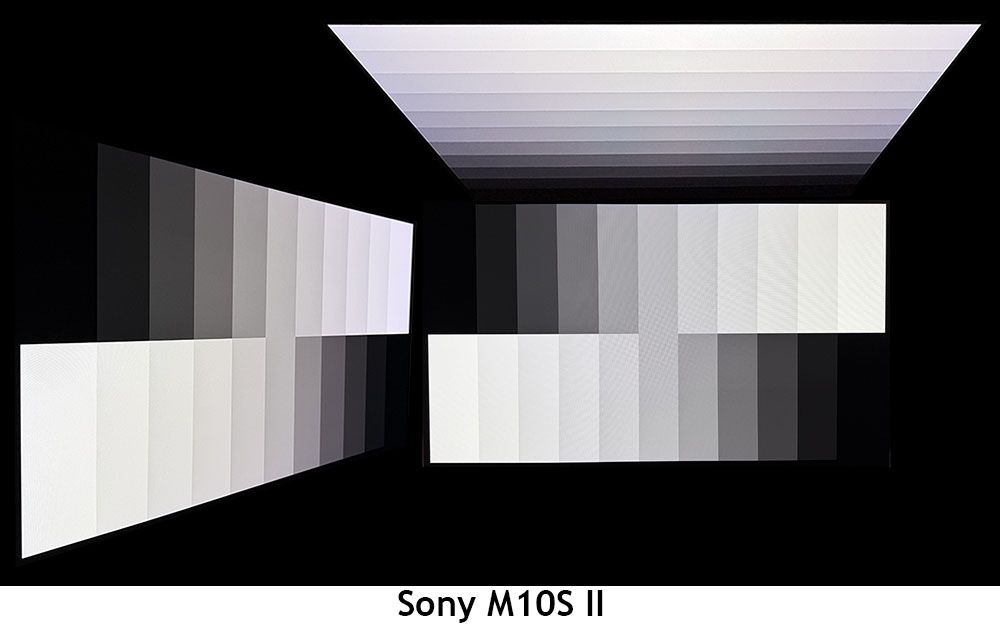
The M10S II shows a barely visible red tint at 45 degrees from the center, in both horizontal and vertical orientations. This is likely due to the anti-glare coating, which makes it the least shiny screen I’ve encountered. There’s no reduction in light output or gamma, and even the top view has good detail rendering. This is excellent performance.
Screen Uniformity
To learn how we measure screen uniformity,click here.
(Image credit: Tom's Hardware)
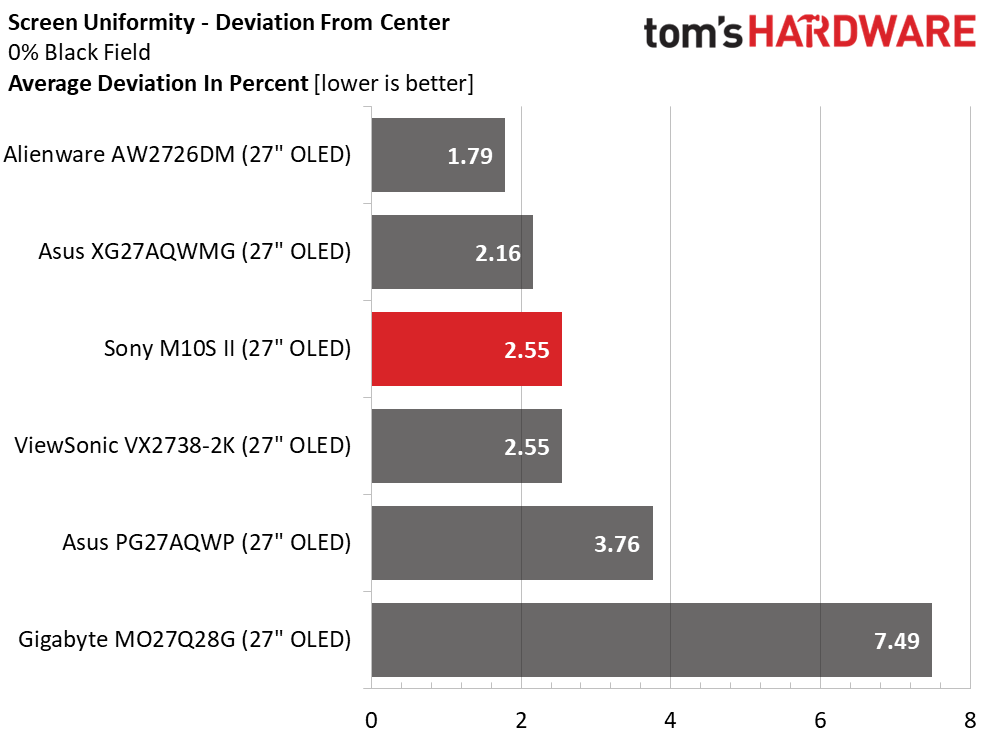
The M10S II has screen uniformity on par with the best monitors I’ve measured, OLED and LCD alike. 2.55% is about as good as it gets. I used the pixel refresh routine right after unpacking, which took five minutes, then ran moving patterns on the panel for a few hours before starting my tests. This is excellent performance.
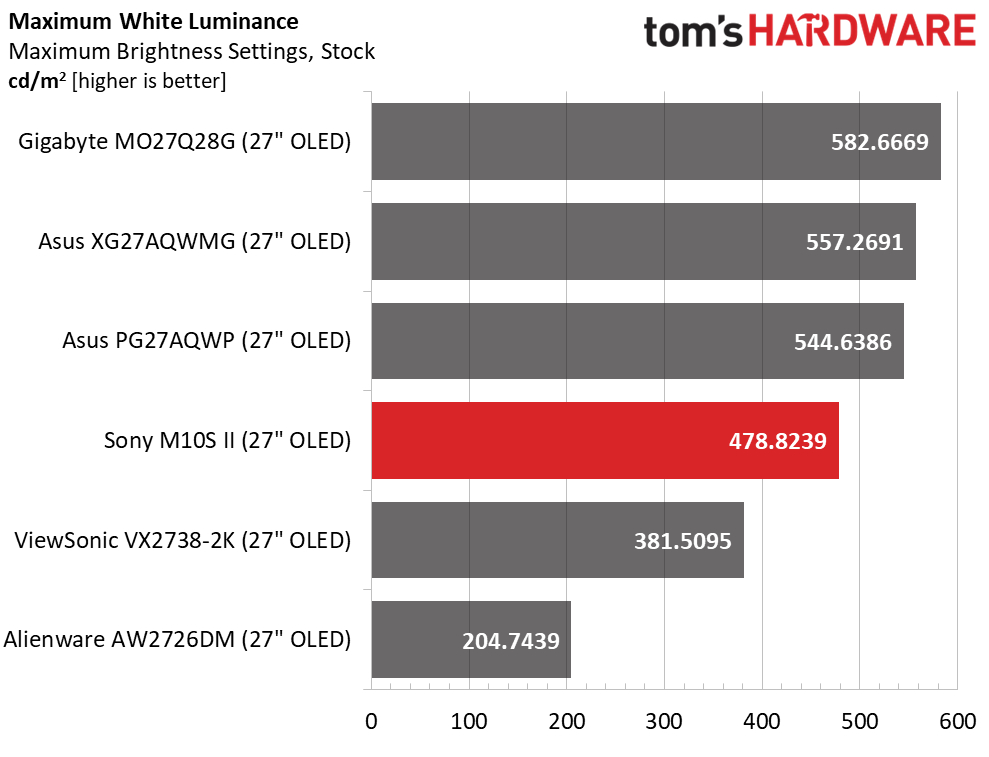
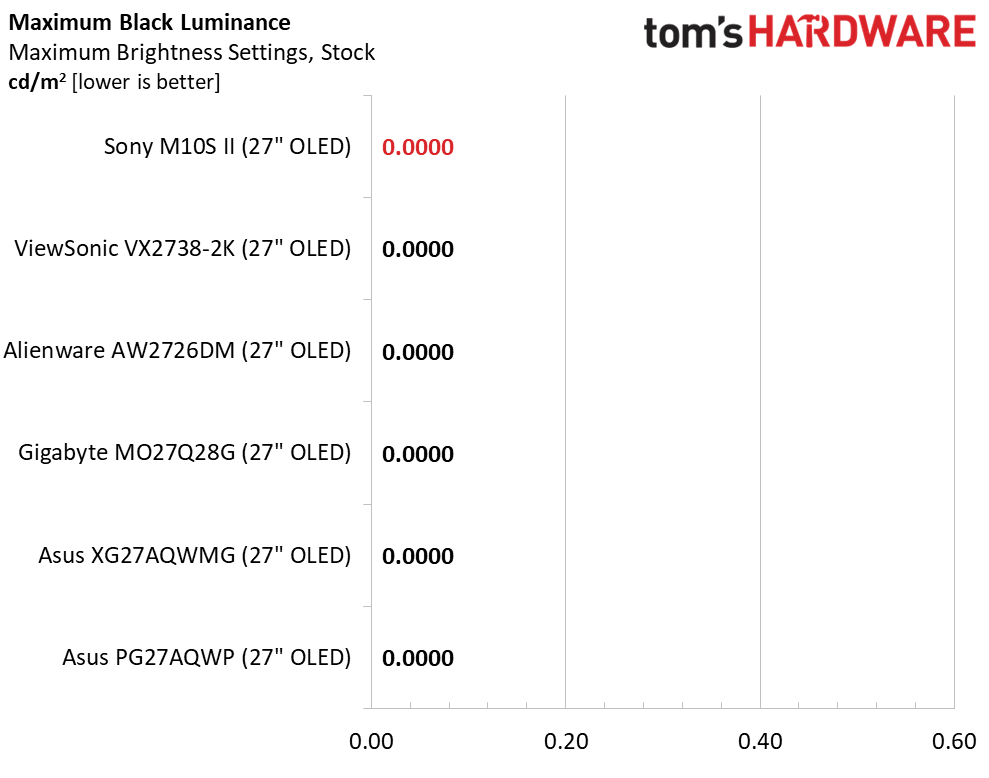
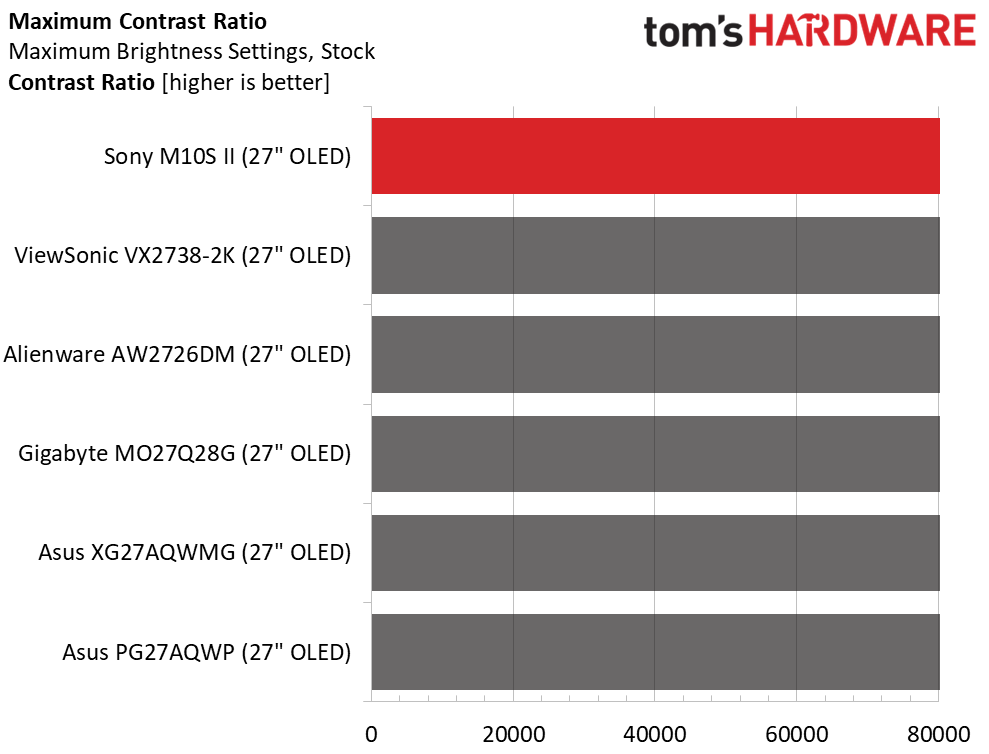
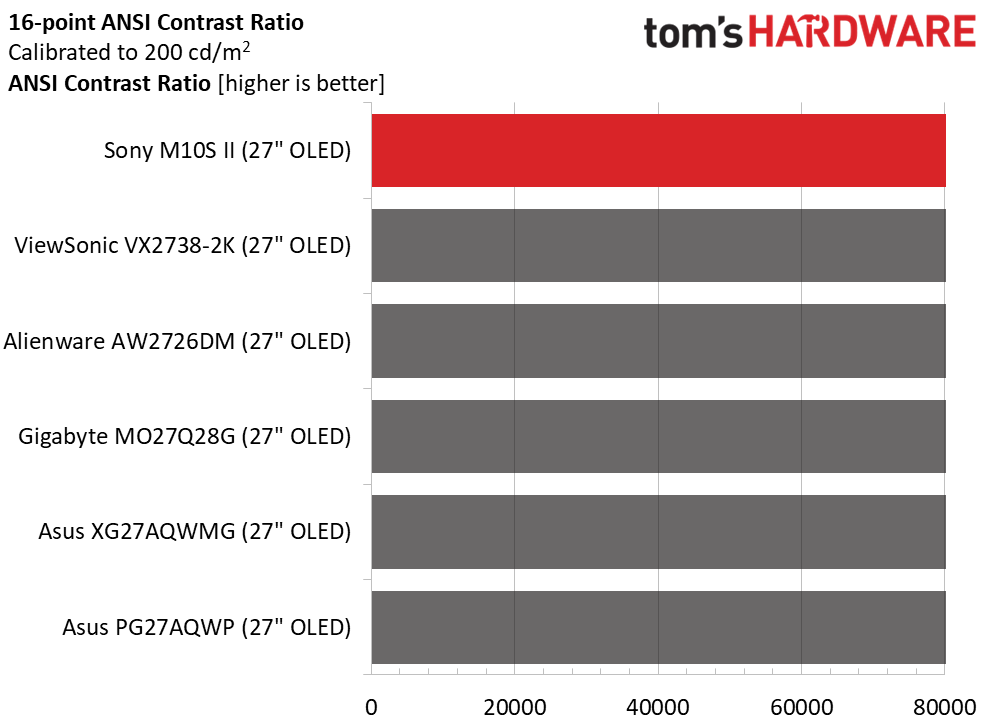
The M10S II includes both constant and variable brightness options. To find the peak luminance, I tested all three Brightness stabilizer settings. Off means variable brightness is fully engaged, measuring 478 nits with a 25% window pattern. A full field was 283 nits. Mid is 426 nits, and Off is the same 283 nits for any size window pattern or a full field. As you’ll see on the next page, Mid delivers the best gamma and is the setting I used for my hands-on tests. Black levels and contrast could not be measured.
After Calibration to 200 nits
Tom's HardwareTom's HardwareTom's Hardware
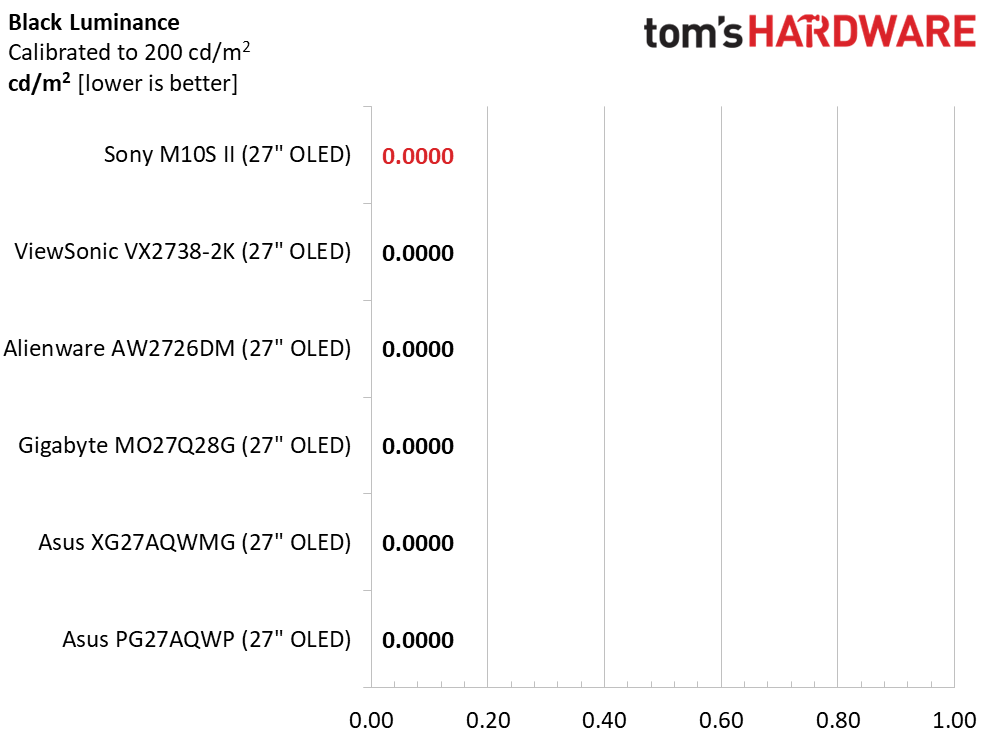
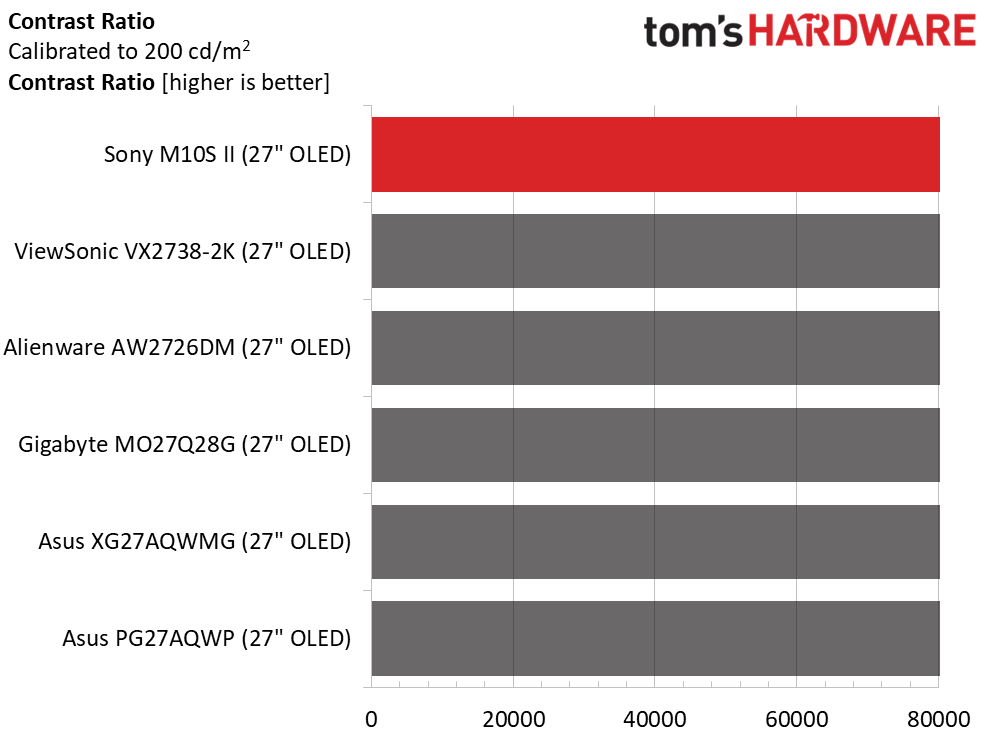
Calibration doesn’t change black levels or contrast. I found the best gamma on the Mid setting of the Brightness stabilizer, so I used a 25% window to set the slider to 200 nits. This is typical OLED performance.
Test Takeaway: The M10S II has typical brightness and contrast compared to other OLED displays with a variable-brightness option. It stands out by having three options instead of two. It also performs best in gamma tests and looks the best when the Mid setting of the Brightness stabilizer is used.
The M10S II includes a variety of picture modes tailored to different game types and tasks. They offer different levels of control for users who want to calibrate.
Grayscale and Gamma Tracking
Our grayscale and gamma tests use Calman calibration software fromPortrait Displays. We describe our grayscale and gamma tests in detail here.
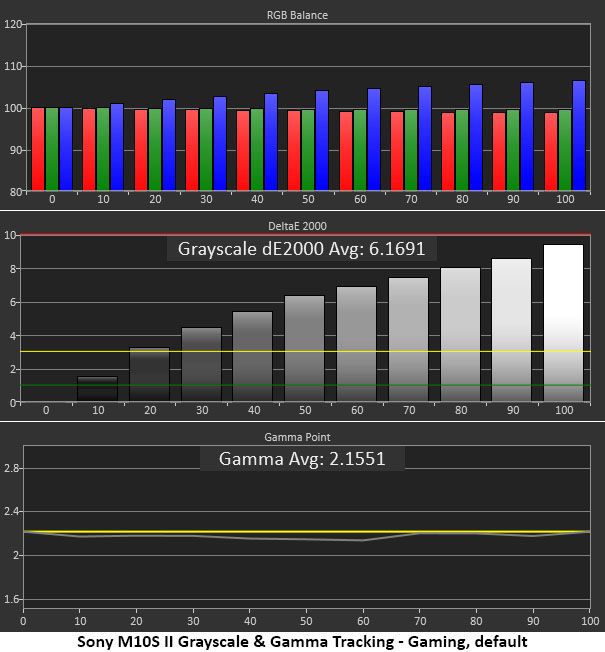
The M10S II’s Game mode is visibly cool in tone. No surprise, as its default color temp setting is neutral. You can find some relief from the Warm preset, but calibration is the best way to go. Gamma is a tad light as well. Adjustments also affect color tracking, which you’ll see just below.
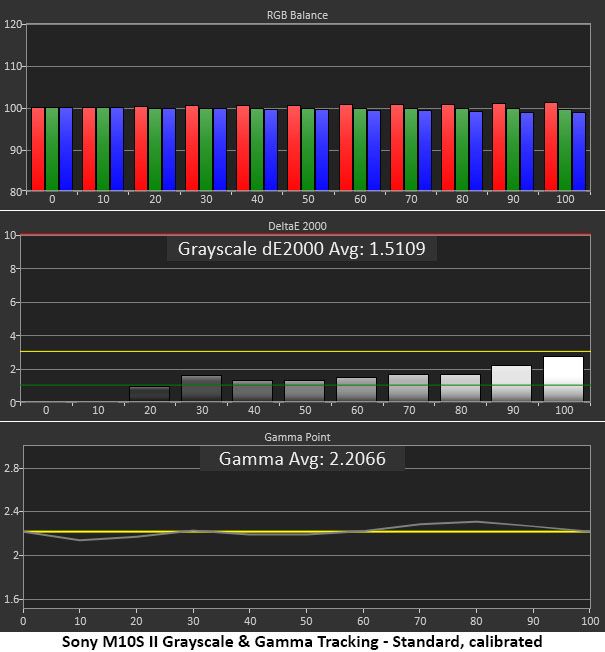
The RGB sliders are a bit coarse in operation, so I couldn’t quite get all the errors below 1dE. But aside from 90 and 100% brightness, they are all under 2dE, not too bad. I switched to Standard mode as well, which has better gamma. Though it’s a little skewed, more of it sticks close to 2.2, so the picture gains some texture and depth. This is solid performance.
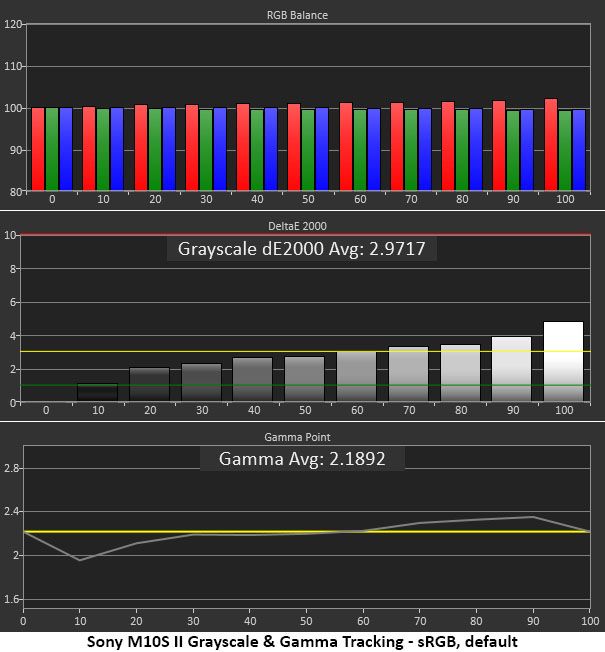
I measured the sRGB mode at its default settings. You can’t change brightness or gamma, but you can adjust the color temperature. The above result shows the default state. Gamma is too light in the darker parts of the image, while highlights are a tad dark.
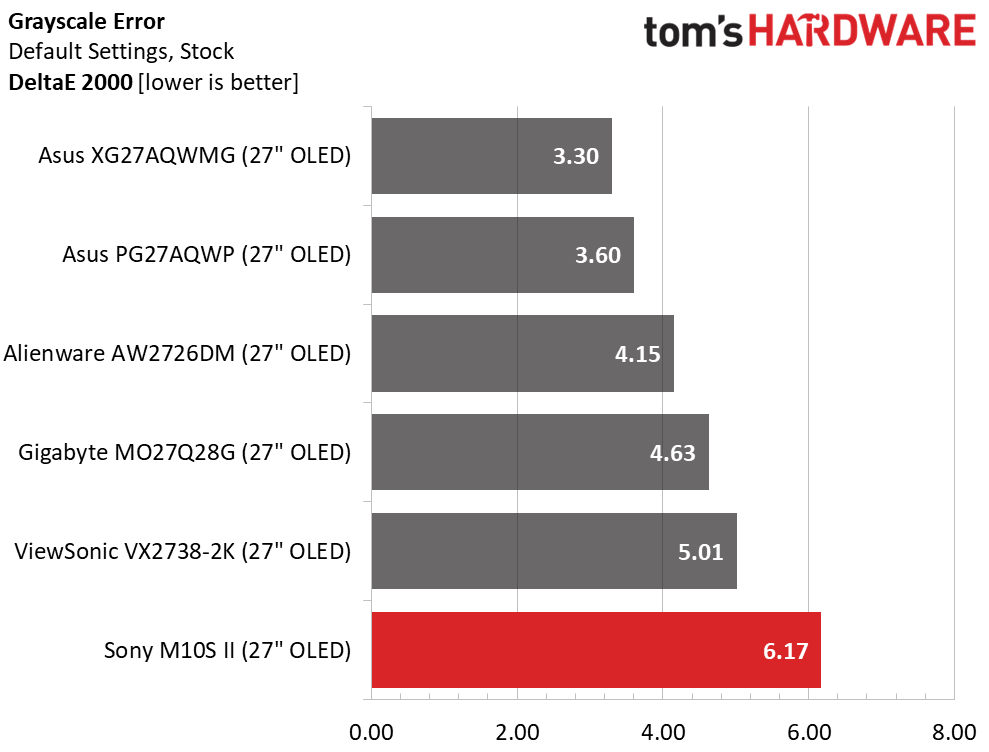
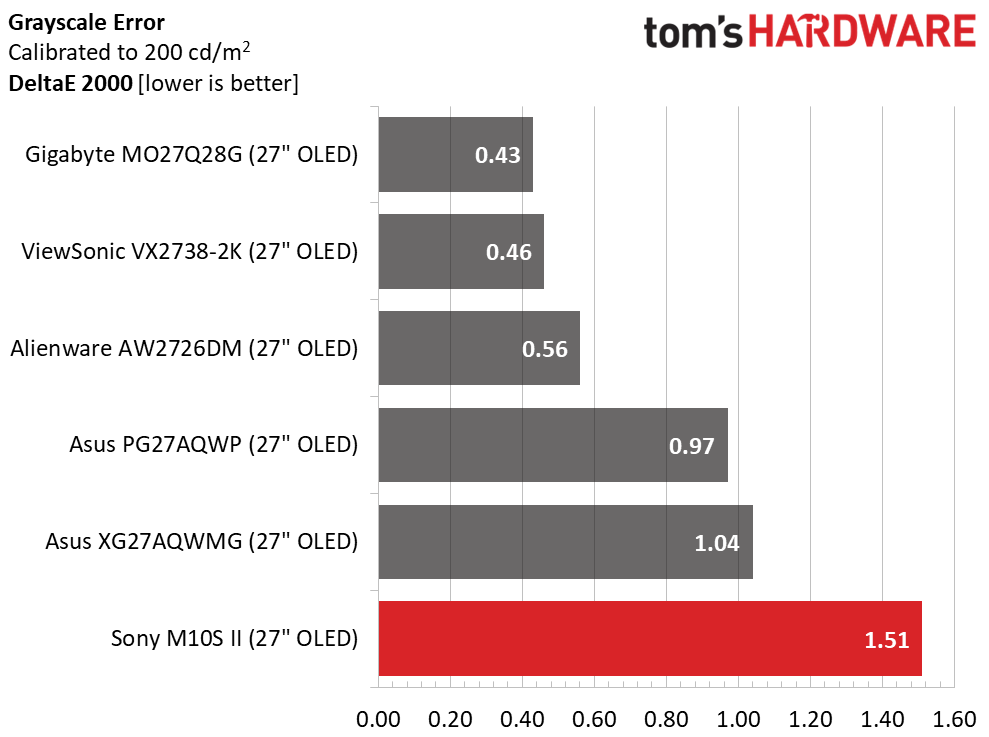
The M10S II’s out-of-box grayscale is clearly blue in tone. A 6.17dE error is visible to the naked eye. Changing the color temp to warm improves it; it measures around 3dE. The best option is to calibrate, which brings the error down to 1.51dE. Then, there is no visible issue.
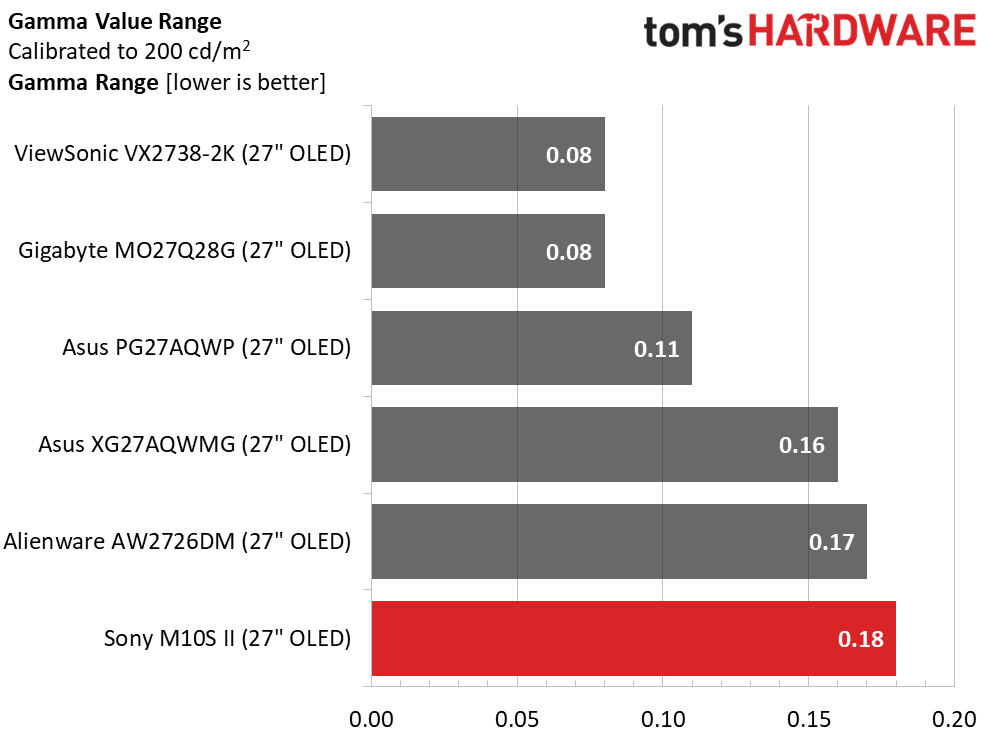
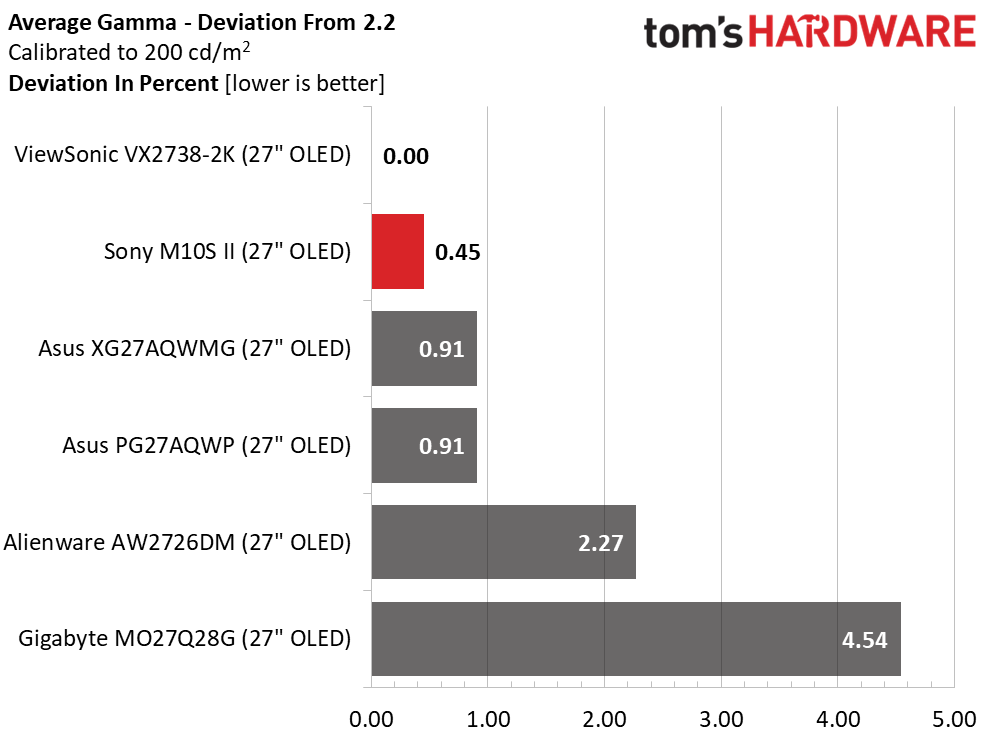
In the gamma test, the range of values is a bit wider than the other monitors, at 0.18 (low to high). But the numbers stay close to 2.2, so the deviation is only 0.45%; the actual value is 2.21. This is mainly because I changed the picture mode from Game to Standard.
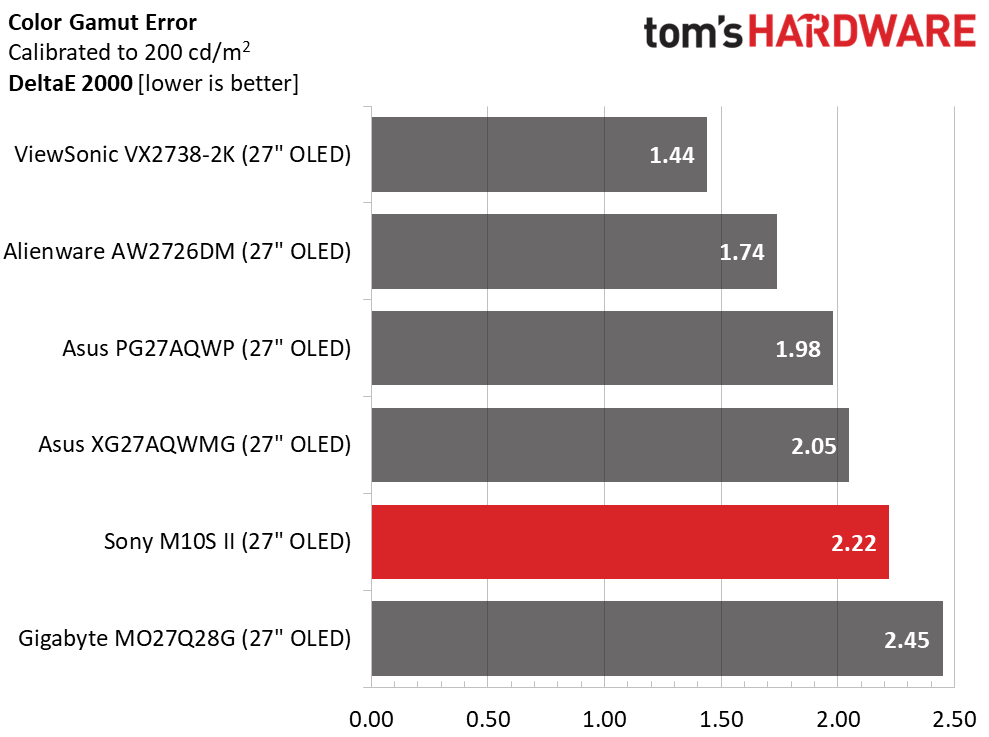
Color Gamut Accuracy
Our color gamut and volume testing usePortrait Displays’ Calman software. For details on our color gamut testing and volume calculations,click here.
The first chart is the main reason why the Game mode isn’t the best choice. The blue grayscale pulls the gamut tracking off target, resulting in visible hue errors across every color. Yellow is too green; magenta is too blue, and so on. The good part is that there is linear oversaturation, which delivers richer color without going over the top to a cartoonish look.
You can see what a difference calibration makes. Hue errors are now almost gone, and saturation points are at or near target. This makes a visible improvement in picture quality, making it look more natural.
Comparisons
Tom's HardwareTom's Hardware
It’s nigh impossible to find a bad OLED when it comes to color. Though the M10S II isn’t at the top of this group, it has no visible errors once calibrated. 2.22dE is still in the realm of excellent performance. I noted that the sRGB average error was 1.34 dE.
In the volume test, the M10S II proved itself to be one of the most colorful monitors you can buy in this category. OLED gamuts don’t get much bigger than 109.5% of DCI-P3. The 96.61% sRGB coverage is nearly ideal. The M10S II is suitable for color-critical work once calibrated.
Test Takeaway: The M10S II doesn’t come out of the box in its most accurate picture mode, but a few tweaks in the OSD take performance to a higher level. You can simply select the Standard picture mode with Warm color temp or calibrate for the best possible result. The sRGB mode is also accurate, and unlike most monitors, it can be calibrated for grayscale tracking. The M10S II’s overall color performance is on par with other premium OLED displays.
The M10S II accepts HDR10 signals and switches automatically to reveal four new picture modes. I noted that some adjustments were possible, which is unusual in a good way. Most monitors have no HDR picture options.
HDR Brightness and Contrast
Tom's HardwareTom's HardwareTom's Hardware
The M10S II’s brightest HDR picture mode is also the default, Game. A 25% window pattern measures over 543 nits, which puts it mid-pack in this comparison. In practice, and with its infinite black levels, it delivers punchy images with deep shadows and bright highlights with sharp detail throughout.
Grayscale, EOTF and Color
Portrait Displays CalmanPortrait Displays Calman
In the grayscale and EOTF test, the M10S II in Game mode proved to be one of the most accurate HDR monitors I’ve reviewed. The first chart above shows grayscale after a couple of tweaks to the RGB sliders. It’s one of the few HDR monitors that allow color adjustments. The EOTF tracks very closely to the reference with a correct tone-map transition at 68% brightness. This is where it should be given the measured white and black points.
In the color test, there is significant oversaturation in red and just typical oversaturation in blue and green. This isn’t all that different from other HDR displays, but some red-dominant images I viewed showed clipping. Most HDR monitors are engineered this way, but Sony goes a bit further than others. Hue tracking is good, though with only slight deviations in yellow and magenta. In the BT.2020 test, the M10S II runs out of color at 90% red, 80% green, and 98% blue.
Test Takeaway: The M10S II has superb HDR luminance and grayscale tracking. Color is a little oversaturated, but most users will not complain about a monitor this colorful. It fills more of the BT.2020 color space than nearly every monitor I’ve reviewed, including professional models. Brightness is on the high side of average with punchy highlights and deep shadows, all well detailed.
Based on the number of gaming monitors on offer, Sony might not be the first brand one thinks of, but that doesn’t mean it isn’t among the best. Its model line may be small, but it is no less mighty. Competitors looking for the fastest and most flexible OLED display should take a closer look at the INZONE M10S II.
(Image credit: Sony)
With a 540 Hz refresh rate at QHD resolution, the M10S II delivers speed right out of the gate. Then it adds performance options like 720 Hz at HD and two 24.5-inch modes that sport 1920x1080 and 2368x1332 resolutions with 1:1 pixel mapping. Add in blur reduction and anti-flicker, and you have a monitor that delivers smooth, responsive gaming on any PC or console.
(Image credit: Tom's Hardware)
Image quality is given equal attention. The OLED panel used here covers almost 110% of DCI-P3 and, with a few tweaks, delivers a color-accurate picture with the deep contrast and true blacks OLEDs are known for. The M10S II also includes variable brightness and HDR calibration, features not found in many OLED displays. I also noted the matte screen coating, which rejected ambient light better than any other OLED I’ve reviewed.
The Sony INZONE M10S II is a premium purchase for sure, and though it doesn’t include internal speakers or LED lighting, it performs on par with the very best. If you have the budget and you want a competition weapon for your gaming PC or console, you should definitely check it out.
UK-based “neocloud” Nscale built its business on a major deal with a ByteDance subsidiary named Spring, which accounted for $24 million of its $33 million annual revenue in 2025. This contract allowed Spring to access 2,304 Nvidia B200 chips at Nscale’s Glomfjord, Norway, data center. Even though the Financial Times reports that this was legal and exploited loopholes in the U.S.’s ongoing export controls against China, it still exposes the company to regulatory and reputational risk, especially as Washington continues to restrict Chinese access to its most advanced AI accelerators.
This information only came to light after Nscale released its S-1 documents as it filed for an initial public offering in the U.S. There was also no direct mention of the TikTok owner or its subsidiary anywhere in its S-1 filing; instead, it was noted in a supporting document, a $105 million loan agreement with Macquarie, that Spring (SG) Pte Ltd, a Singaporean ByteDance subsidiary, was a significant customer. This credit, alongside a $35 million in equity, helped fund the purchase of advanced Nvidia AI GPUs, which also caught the attention of the chipmaker.
A month after Nscale drew the first tranche of the loan, it closed a deal with Microsoft and Nvidia, with Jensen Huang committing to invest more than $660 million into the company. This funding is part of an agreement between Nscale and Nvidia, under which the latter promised to buy large volumes of AI chips in the future. Nvidia has since increased its commitments to over $2 billion, plus an additional $860 million guarantee on Nscale’s lease at a Texas facility. Nscale has since been able to secure larger deals with other AI hyperscalers, such as a $44 billion deal with Microsoft and another $45 billion contract with Anthropic. The company said that this would make its Spring contract fall to below 20% of its overall revenue, and it is expected to shrink further as Nscale secures other Western clients.
Because of Spring’s link to ByteDance, Macquarie compelled Nscale to monitor how the Chinese subsidiary used the AI chips and report “compute anomalies or suspicious configurations” that might be in violation of the U.S.’s export controls. Nscale also had a third party conduct due diligence on both the TikTok parent and the Singapore-based subsidiary to ensure that the deal complied with the law.
Chinese companies have been taking advantage of these loopholes in the U.S.’s export controls to gain access to advanced AI chips. While they cannot import the most advanced Nvidia AI GPUs, like Blackwell and Vera Rubin, into China, they could still rent these AI chips from companies based abroad or by using subsidiaries founded outside of China to purchase them directly. However, the U.S. has recently closed the latter loophole, with the Trump administration working to close the former, too. It’s unclear if these moves would affect the Spring-Nscale deal, but the recent delays on gigawatt-scale data center projects in the U.S. mean that Nscale could potentially get more clients as AI hyperscalers race to secure compute from smaller facilities.
Alibaba unveiled its powerful new Zhenwu V900 chip and ambitious Qwen model plans at the Apsara Conference 2026, the AP reports. Alibaba CEO Eddie Wu calls the Zhenwu 900 the most powerful AI chip in China, with three times the performance of the previous-generation M890. The chip is meant to support the training of future Qwen models in the 5 to 10 trillion parameter range, an increase over both the 2.4 trillion Qwen3.8-Max and Moonshot’s Kimi K3 and its 2.8 trillion parameter basis. The announcement follows Huawei’s new chip launch last week.
Alibaba describes the Zhenwu V900 as an AI training and inference processor with 216 GB of GPU memory and 1,200 GB/s of inter-chip bandwidth. Aside from performance being multiples of the last generation, the chip can scale out to a supernode cluster “comprising up to 500,000 cards.” The AI accelerator is due for mass production and commercial release in the first quarter of 2027, Alibaba says.
The company’s May roadmap placed the V900 in the third quarter of 2027, so the timeline has moved up. As of May, Alibaba chip arm T-Head had shipped more than 560,000 Zhenwu chips to over 400 external customers, a count Alibaba now puts above 650, with a Zhenwu refresh expected annually.
The technical specifications do not include FLOPS, a process node, foundry, power figures, or memory bandwidth claims. The prior M890 had 144GB of memory with 800GB/s of inter-chip bandwidth. The M890 could work in a supernode of 128 chips, while T-Head says more than 1,000 V900 chips can work as a single system.
For comparison, Huawei’s Ascend 960PR, due in the third quarter of 2027, is slated for 192GB of memory capacity, 2.4TB/s of memory bandwidth, and a 2.2TB/s scale-up interconnect. Alibaba’s most-powerful and three-times claims currently rest on no absolute figure for compute, but maximum achievable FLOPS are often far below calculated figures to begin with, so delivered performance will be the ultimate judge.
Alibaba Cloud’s greater goal is to reach a data center capacity of “more than 20 gigawatts” by 2032, the company said. However, global shortages in the AI supply chain “are currently limiting the speed at which we can scale our compute infrastructure,” Wu said. Alibaba also anticipates significant growth in its own annual AI chip shipments. Domestic demand remains high as Huawei had to shelve its global Ascend rollout. The report compared these goals to SpaceX, which has around 1.4GW of AI compute with a target of more than 10GW in 2027.
On the model side, Qwen 4 is “currently in training,” Alibaba said, and the Qwen 4.5 and 5 families will scale up further on the roadmap. As far as the achievements of its current models go, the company claims that Qwen3.8-Max ran “33 iterative cycles” over a month of automated runs to produce an Artificial Analysis score gain from 40 to 45. Meanwhile, a separate chip-design experiment with more than 10,000 EDA tool calls over more than 60 hours of test time showed an area cut of 42% without performance loss.
The announcements come ahead of Chinese President Xi Jinping’s summit with President Donald Trump in Washington on Thursday. AI remains a top subject on the agenda, following U.S.-proposed AI mechanisms. The AI talks in New York did not have export controls for chips or tools on the agenda.
As it stands, Alibaba’s V900 is months from commercial release and the 5-to-10-trillion-parameter model it promises remains untrained. Capacity targets remain six years out. The announcement is nevertheless timely as the two largest national AI powers come together to discuss and define AI security.
While RAM, video cards, and storage have become the most expensive parts of a PC build or upgrade, monitors haven’t really flinched price-wise. They can still offer a tangible upgrade, whether for gaming or productivity, for your PC. After all, you are staring at it the entire time you use your PC. Acer is currently offering an incredible deal on the Nitro (XV270U). Just $179 (a whopping 45%/$150 off the $239.99 MSRP) buys a 27-inch 2560x1440 IPS panel with a wicked-fast 270 Hz refresh rate without breaking the bank.
This IPS panel uses a matte anti-glare surface and supports up to 99% sRGB, making it suitable for a wide range of tasks, specifically gaming, entertainment, and basic creative work. It also supports brightness up to 250 cd/m², a 1ms (MPRT) response time, wide 178-degree viewing angles, and Acer VisionCare, a suite of technologies to reduce eye strain, headaches, and fatigue, including BlueLightShield, flicker-less technology, and a low-dimming feature for a more comfortable viewing experience during prolonged use. It also supports AMD FreeSync Premium technology to help prevent screen tearing and stuttering for a better visual experience.
Nitro XV270U Z1BMIIPRX: was $329.99 now $179.77 Snag an incredible deal on a 27-inch 270Hz IPS panel from Acer. The XV270U offers users a wide color gamut (99% sRGB), 250 cd/m brightness, and supports AMD FreeSync Premium to prevent screen tearing.View Deal
The monitor features a thin bezel on three edges for a cleaner look; however, it's not an ultra-thin bezel, so it may not be ideal for a surround setup. It comes with a stand that offers tilt adjustment from +25 degrees to -5 degrees, plus ~30mm of vertical height adjustment, and you can mount it on the wall using the standard 100x100mm VESA mounting holes on the back. As for I/O, the XV270U offers the standard fare of two HDMI (v2.0) and one DisplayPort (v1.4), which supports the panel’s specifications. It also has a single 3.5mm headphone out and two integrated speakers (2W x2).
If you’re in the market for a new gaming monitor, or even a secondary monitor, and just don’t have the cash for a much more expensive 4K OLED (which, chances are, also requires a potentially prohibitively expensive video card upgrade), you can still reap the benefits of a more pixel-dense, high-refresh-rate display. Acer’s XV270U is only $179, an incredible 45% off, and while it’s not at an all-time low, it is the cheapest it’s been in several months. It's a great deal for a 27-inch, 1440p, 270 Hz, FreeSync Premium-capable IPS panel.

 Login