❌

Reading view

Nvidia CEO Jensen Huang admits to having an affair with suspected Chinese spy

Nvidia CEO Jensen Huang has admitted to having an affair with a woman who is allegedly a Chinese spy. His apology came in a letter to Nvidia staff, which you can read in full below. Nvidia's board of directors released a statement late on Sunday to address the bombshell report that U.S. intelligence believes Huang had an affair with a Chinese spy. The board says it has no reason to believe sensitive corporate information or U.S. national security was compromised, but the company intends to examine all available information to determine what happened.

The BoD claims it is fully confident in Jensen Huang and his leadership team. Huang, who has been married to his wife, Lori Huang, for 41 years, says he fully supports the investigation.

"A committee of independent directors, assisted by outside independent counsel, will oversee the investigation," a statement by Nvidia's BoD reads. "The Board prioritizes U.S. national and economic security, which is paramount to the interests of Nvidia and its shareholders. […] Jensen fully supports the review and has committed to cooperating with it."

On Friday, the first reporting emerged claiming U.S. intelligence agencies believe Huang had a romantic relationship with Alice Huang, also known as Huang Le, a former executive at Singapore-based Megaspeed who was allegedly recruited by China's Ministry of State Security (MSS) to gather information and help Chinese companies obtain restricted AI GPUs. The company has been on the radar for smuggling restricted hardware to China since at least 2025: Megaspeed has been accused of smuggling $2 billion worth of AI chips into China via its subsidiary Speedmatrix.

To my colleagues at NVIDIA, I owe my family and all of you an apology.

Jensen Huang, Nvidia CEO

Nvidia has strenuously rejected suggestions of improper dealings, saying that its CEO regularly meets thousands of customers and that these interactions do not involve sensitive corporate information or national security secrets. Chinese officials have also dismissed the espionage allegations as unfounded.

The suspected Chinese intelligence operation targeting Jensen has not been independently confirmed as a fact. The relationship is alleged to follow the typical "honeypot" strategy, wherein foreign intelligence agencies use operatives to ensnare targets into romantic relationships to steal information and influence their decision-making.

Huang has been an outspoken critic of those opposed to limiting the supply of AI GPUs to China. Huang recently expressed his opinion that the label 'China hawk' is not a badge of honor Americans should wear; it is really 'a badge of shame.' Huang also said it "doesn’t have to be all us or them. It could be us and them," drawing fire from others in the administration and other tech companies, including the CEO of Palantir.

"I owe my family and all of you an apology," Huang wrote. "I was unfaithful to my wife. My actions hurt her and our children. There is no excuse for what I did. I am deeply sorry. Throughout my life, my family has given me love and support. They deserve my honesty and loyalty. Instead, I let them down and damaged the life we built together. I take full responsibility for what I did and the hurt I caused, and I accept the criticism that comes with it. To my wife and family: I love you. I know an apology cannot undo what I have done. I hope our family will heal and that, over time, I can earn back your trust."

In June 2018, Intel chief executive Brian Krzanich resigned after an internal investigation, assisted by external legal counsel, confirmed that he had engaged in a consensual romantic relationship with an Intel employee, which violated the company's non-fraternization policy applicable to all managers. Krzanich, who had led Intel since 2013, also stepped down from the company's board, while then-chief financial officer Robert Swan took over as interim CEO. For now, it remains unclear if Jensen will meet a similar fate and lose control of the company he founded.

Jensen's full letter to staff reads as follows:

To my colleagues at NVIDIA, I owe my family and all of you an apology. I was unfaithful to my wife. My actions hurt her and our children. There is no excuse for what I did. I am deeply sorry.

Throughout my life, my family has given me love and support. They deserve my honesty and loyalty. Instead, I let them down and damaged the life we built together. I take full responsibility for what I did and the hurt I caused, and I accept the criticism that comes with it.

To my wife and family: I love you. I know an apology cannot undo what I have done. I hope our family will heal and that, over time, I can earn back your trust.

To my colleagues at NVIDIA, including those I have worked alongside for decades, and to our board, partners, and shareholders around the world: you deserve better from me. Leading NVIDIA is the privilege of my life. My responsibility is to serve you and be worthy of your trust. I have fallen short of that responsibility. I am fully committed to NVIDIA and will work to earn back your confidence.

Regarding the national security concerns raised in news reports, NVIDIA’s Board of Directors has initiated an independent investigation. I support the investigation and will cooperate fully. I love our country and our company. I am committed to protecting NVIDIA and supporting America’s national security. I am proud and grateful to be an American.

My family bears no responsibility for my choices. I do. Please give them privacy.

Jensen

The whole statement from Nvidia's Board of Directors reads as follows:

The Nvidia Board is initiating an independent investigation in light of recent reporting that founder and CEO Jensen Huang has been the target of a foreign intelligence effort.

A committee of independent directors, assisted by outside independent counsel, will oversee the investigation.

The Board prioritizes U.S. national and economic security, which is paramount to the interests of NVIDIA and its shareholders.

While the Board has no reason to believe that either national security or NVIDIA secrets were compromised, the Board's inquiry will examine all available information.

Jensen fully supports the review and has committed to cooperating with it.

The Board has confidence in Jensen and his leadership team and will provide further updates as appropriate.
Diamond Foundry creates world's first 200mm single-crystal diamond wafer

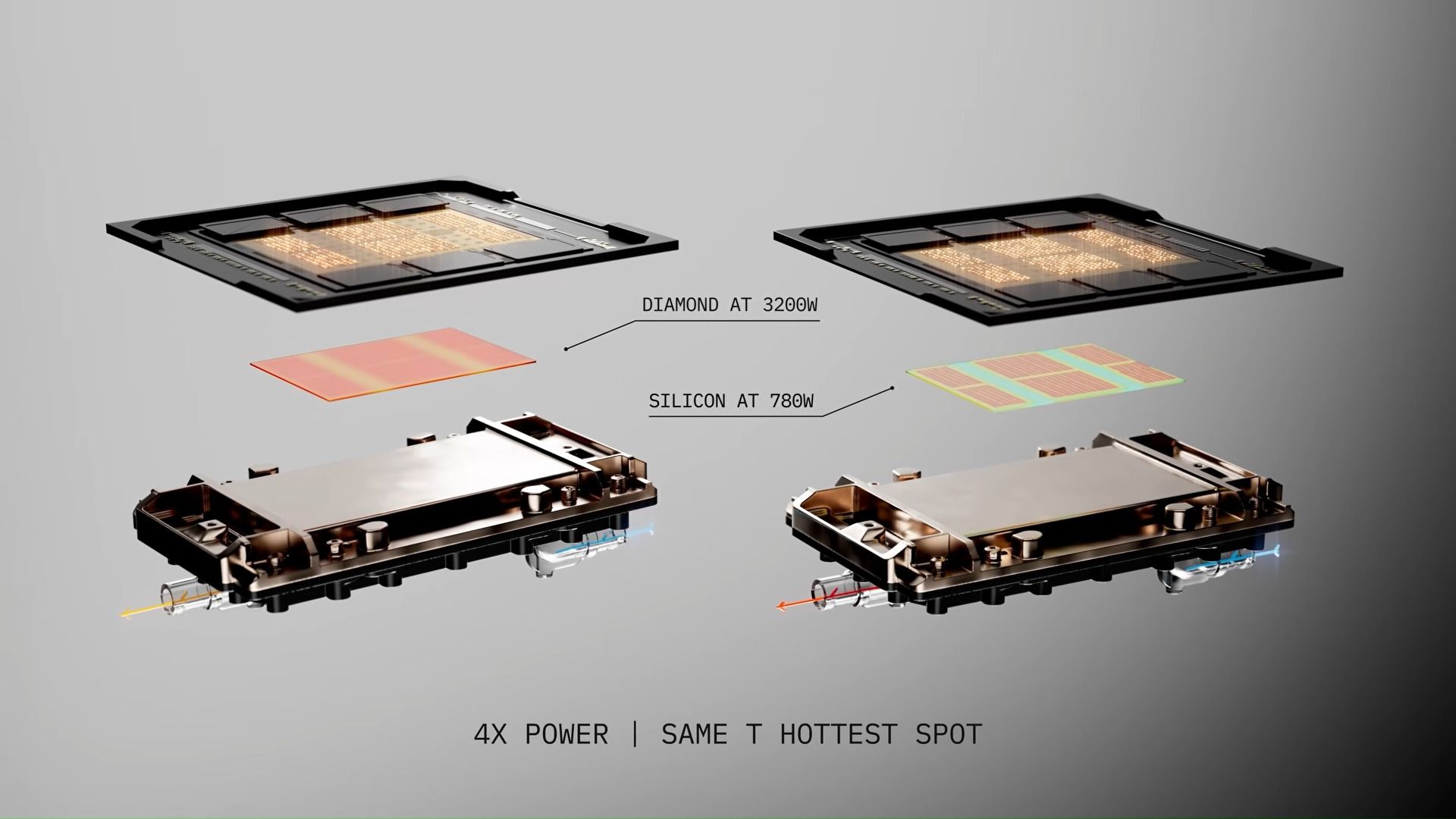
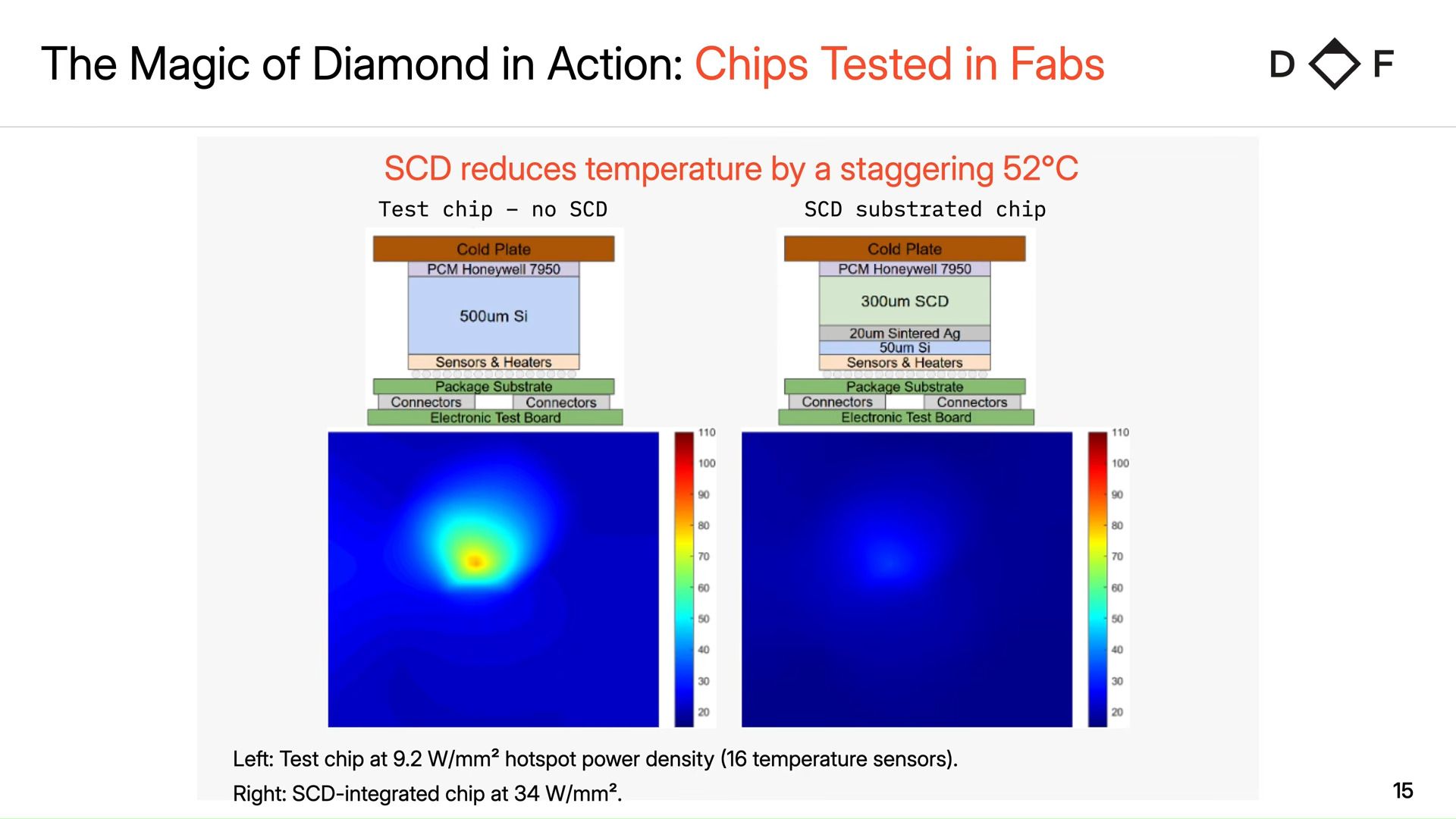
Diamonds have exceptional cooling capabilities due to their excellent thermal conductivity, with the material estimated to be at least five times more conductive than copper. Because of this, Diamond Foundry, a firm focusing on lab-grown diamonds, announced the world’s first 200mm single-crystal diamond (SCD) wafer. The 200mm SCD is about the same wafer size that semiconductor fabs use for older processes, with the company boasting on its website that “Single-crystal diamond has entered the wafer-scale era.” This is part of the effort to manufacture SCD at scale so that it can be used for semiconductor cooling, especially now that increasing power of AI chips has also led to enormous thermal problems.

What makes Diamond Foundry’s 200mm SCD wafer different from other lab-grown diamonds is that it’s created as a high-quality single-crystal piece instead of a polycrystalline gem. Although the former is difficult to manufacture, it is what allows diamond to become an extreme efficient thermal conductor while simultaneously retaining its electrical insulating properties — this efficiency should help cut down on hotspots, making SCDs an excellent solution for AI chip cooling.

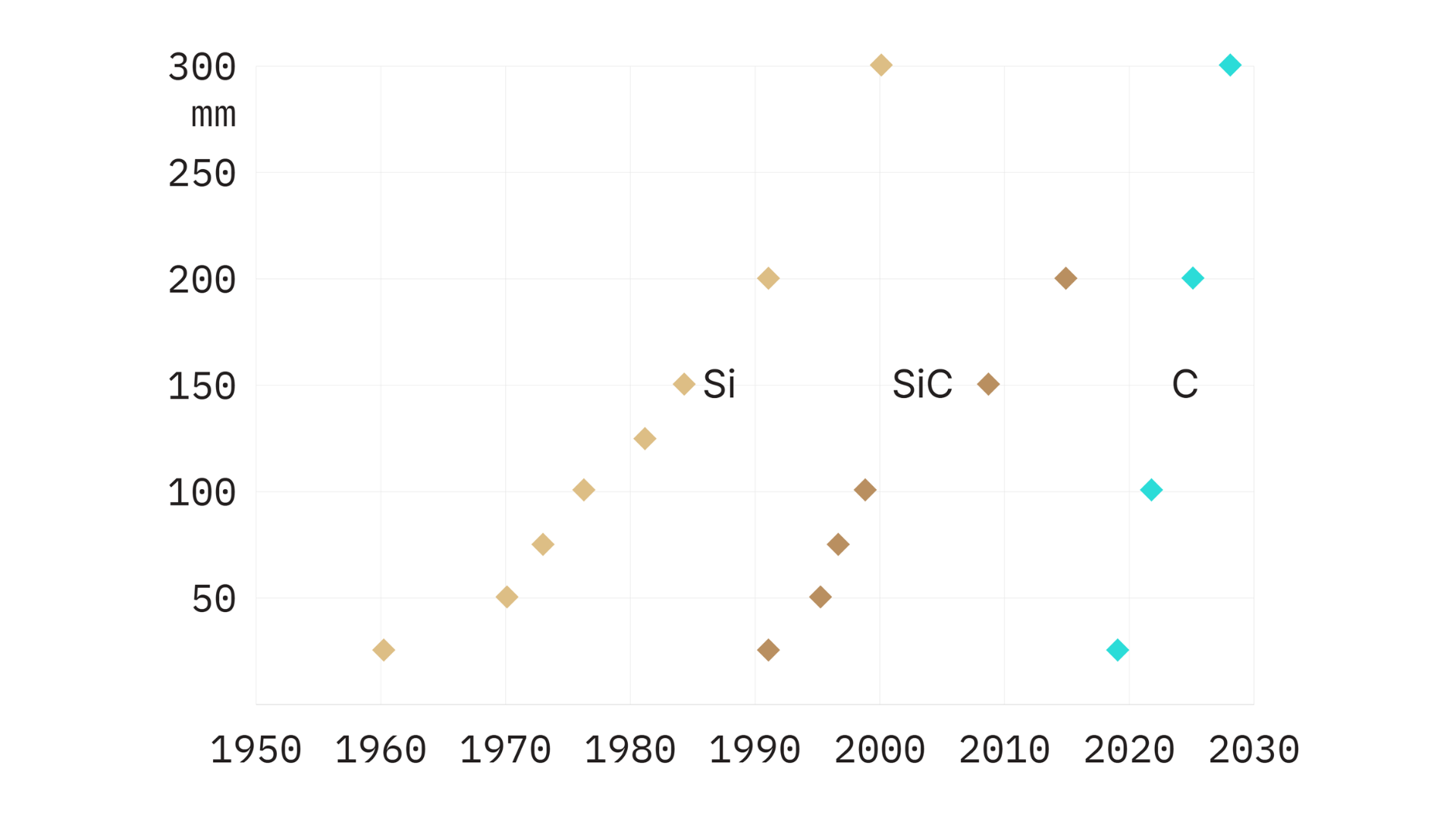
The company also showed in a graph that it is now thought possible to create a D300 SCD wafer before 2030, matching the size of the wafers used in leading node processes. However, it should be noted that the sample shown by the company remains unpolished, meaning it still needs to go through some processes to make it suitable for chipmakers.

Diamond Foundry prediction

(Image credit: Diamond Foundry)

Although the company was founded in 2012, it also acknowledged the work of scientists who have been chipping away at the scale problem of SCDs since the early 2000s. “This is one of those milestones that once seemed almost impossible. Hundreds of DF engineers, scientists, and technicians contributed to us getting here. It is the accumulated result of countless experiments, failures, inventions, rebuilt machines, and insights over more than a decade,” Diamond Foundry CEO Martin Roscheisen said.

“Stefan and Martin pursued this goal for 25 years. There are very few examples in technology of someone sticking to a really hard scientific challenge with that level of perseverance. They kept going when the prevailing view was that single‑crystal diamond simply could not be made at this scale. Today, the perseverance shows as the first-ever D200mm single‑crystal diamond. And best of all, it makes D300mm predictable as well.”

Diamond Foundry slides
Diamond Foundry
Diamond Foundry slides
Diamond Foundry

Diamond Foundry isn’t the only company that has identified the potential of lab-grown diamonds for semiconductor cooling. Akash Systems secured $18.2 million in CHIPS Act funding in 2024 to produce Gallium Nitride fused with synthetic diamond, which it claims will reduce temperatures by 20 degrees C. The De Beers Group, which is known for its diamond mines in Africa, is also building a copper-plated diamond composite material aimed at improving cooling efficiency for AI, high-performance computing, and GaN RF devices. Even Frore Systems, which is known for its solid-state cooler, is diving into diamond-infused watercooling cold plates for Nvidia’s next-generation AI GPUs.

Logitech G502 X Lightspeed Review: No lights, same price

Logitech's G502 X Lightspeed has been around for awhile — the mouse was introduced in 2022 alongside the fancier Logitech G502 X Plus (and the wired G502 X), but since it’s receiving a firmware update that upgrades its Hero 25K sensor to a Hero 44K sensor, this seemed like a good time to take a look at it. The G502X Lightspeed is available in black and white colorways and currently retails for $159.99, which is the same price as the G502 X Plus — however, it can (and should) normally be found for less than this.

Design and Comfort of the G502 X Lightspeed

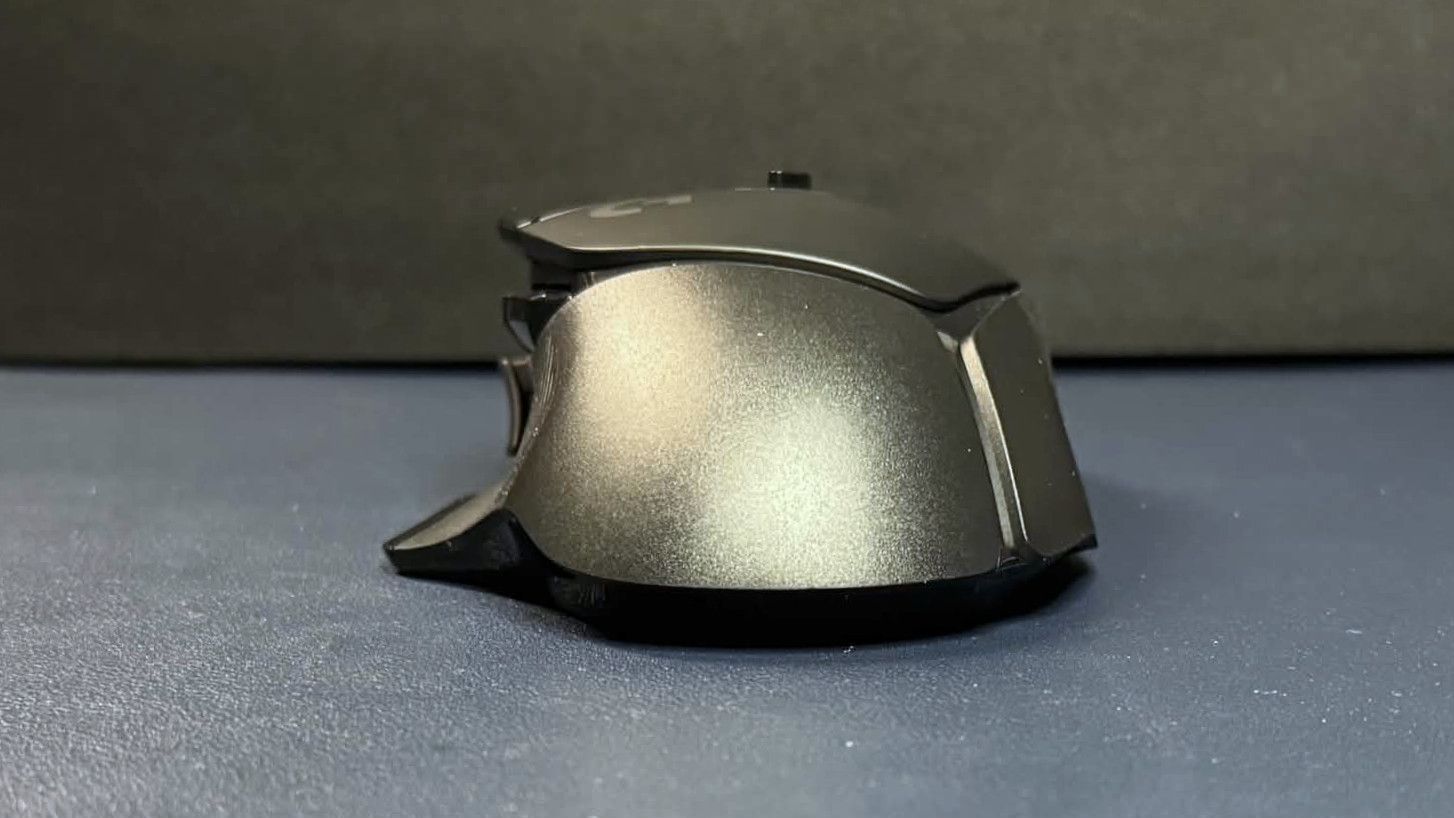
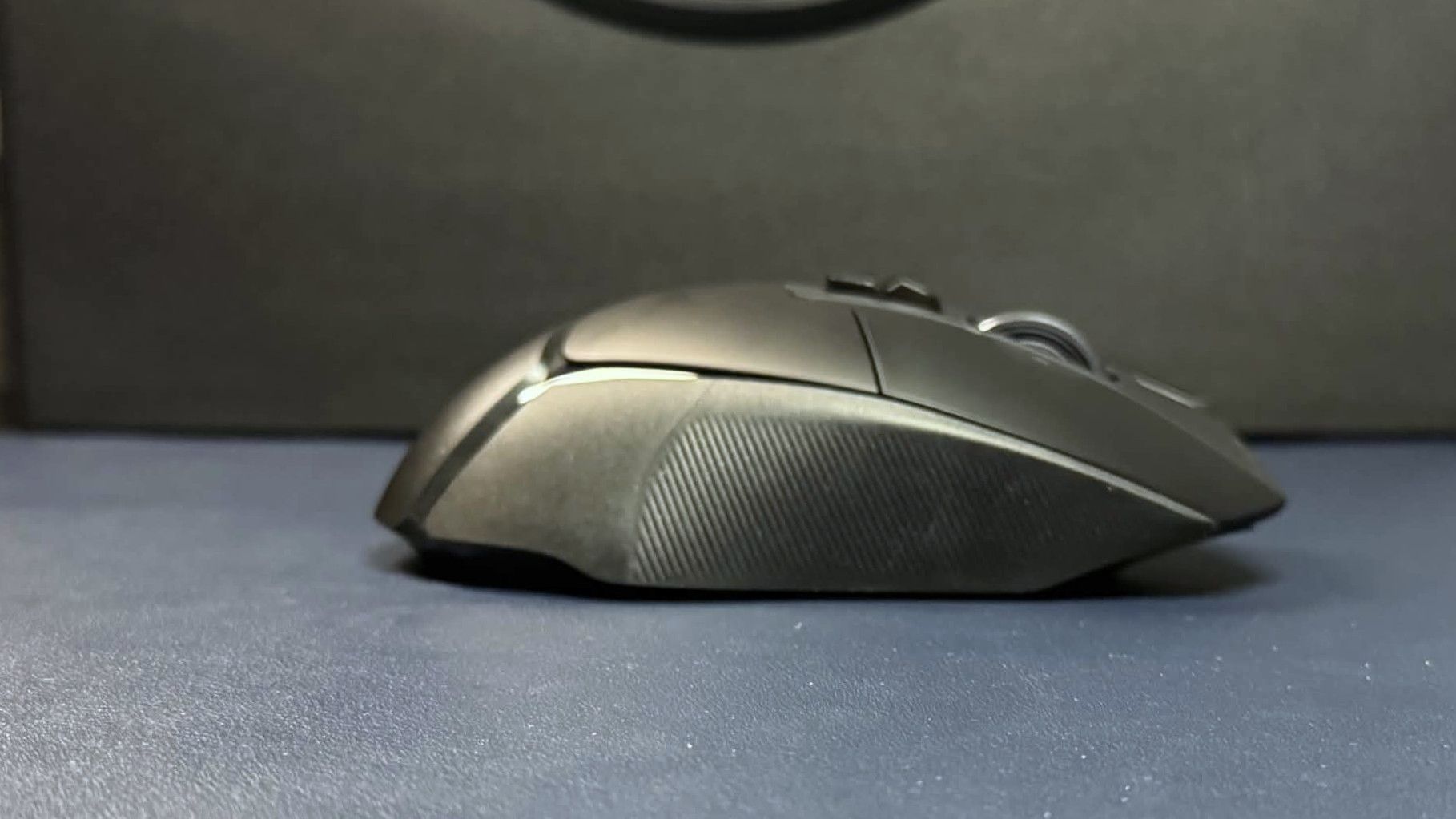
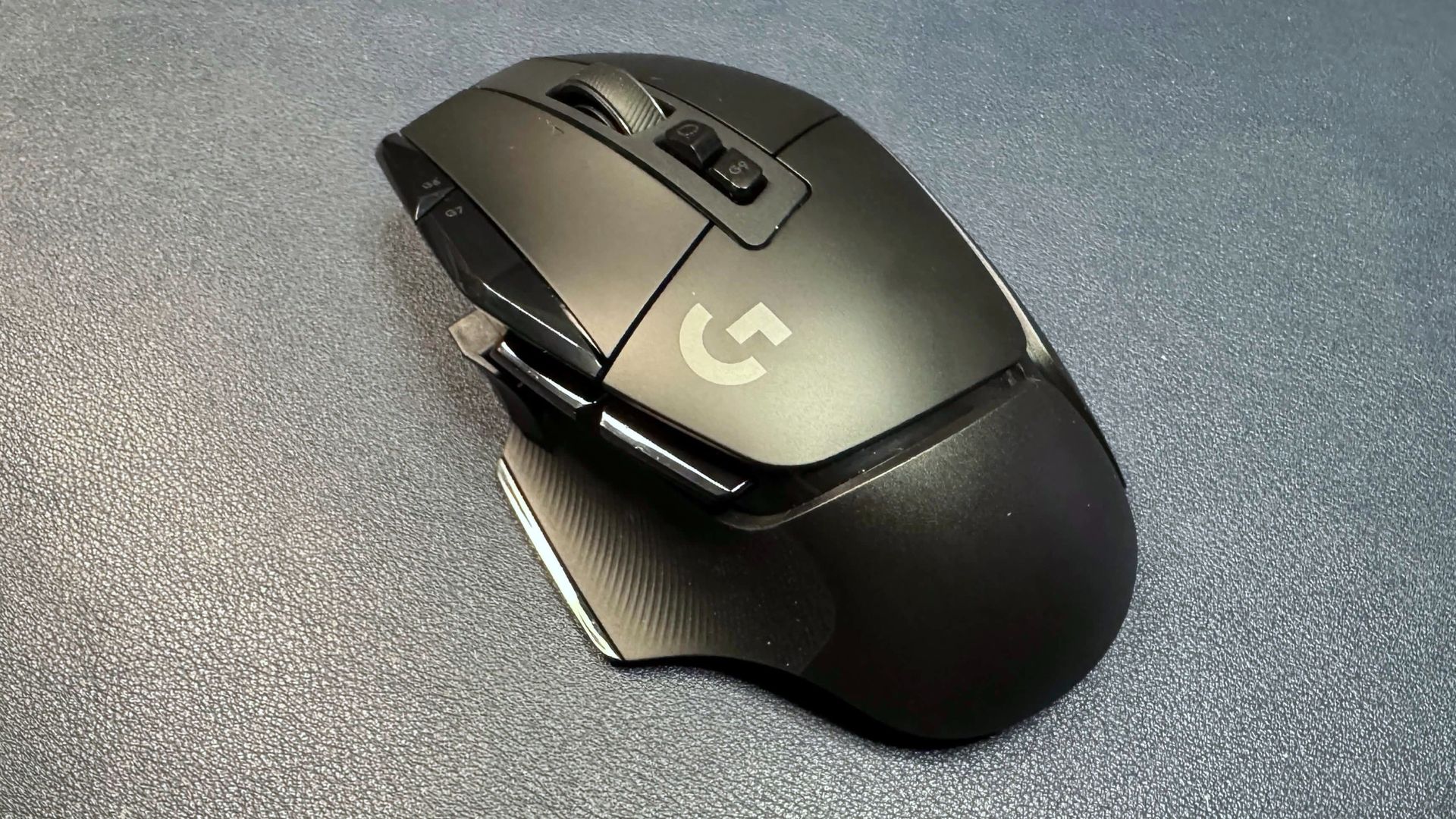
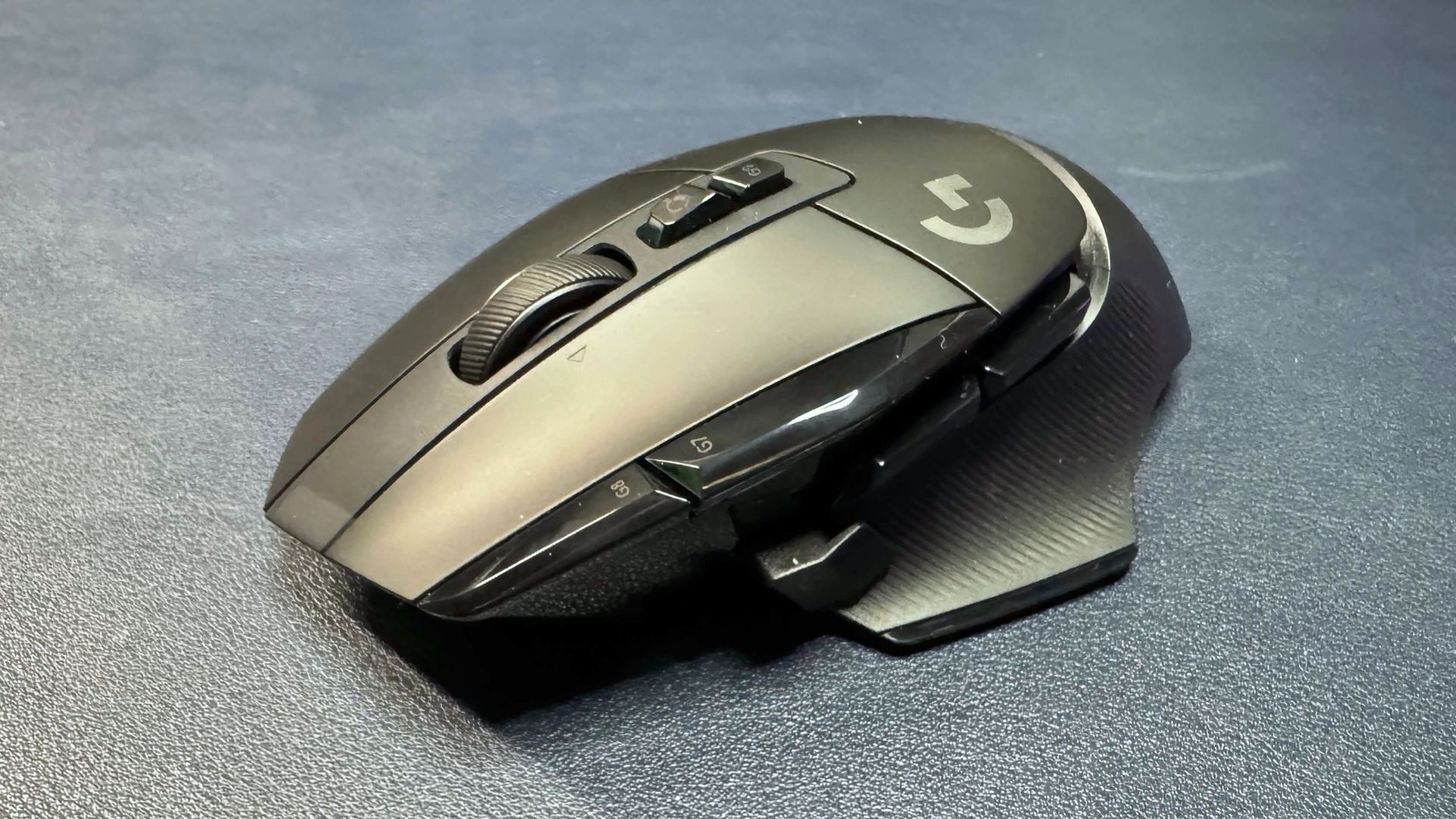
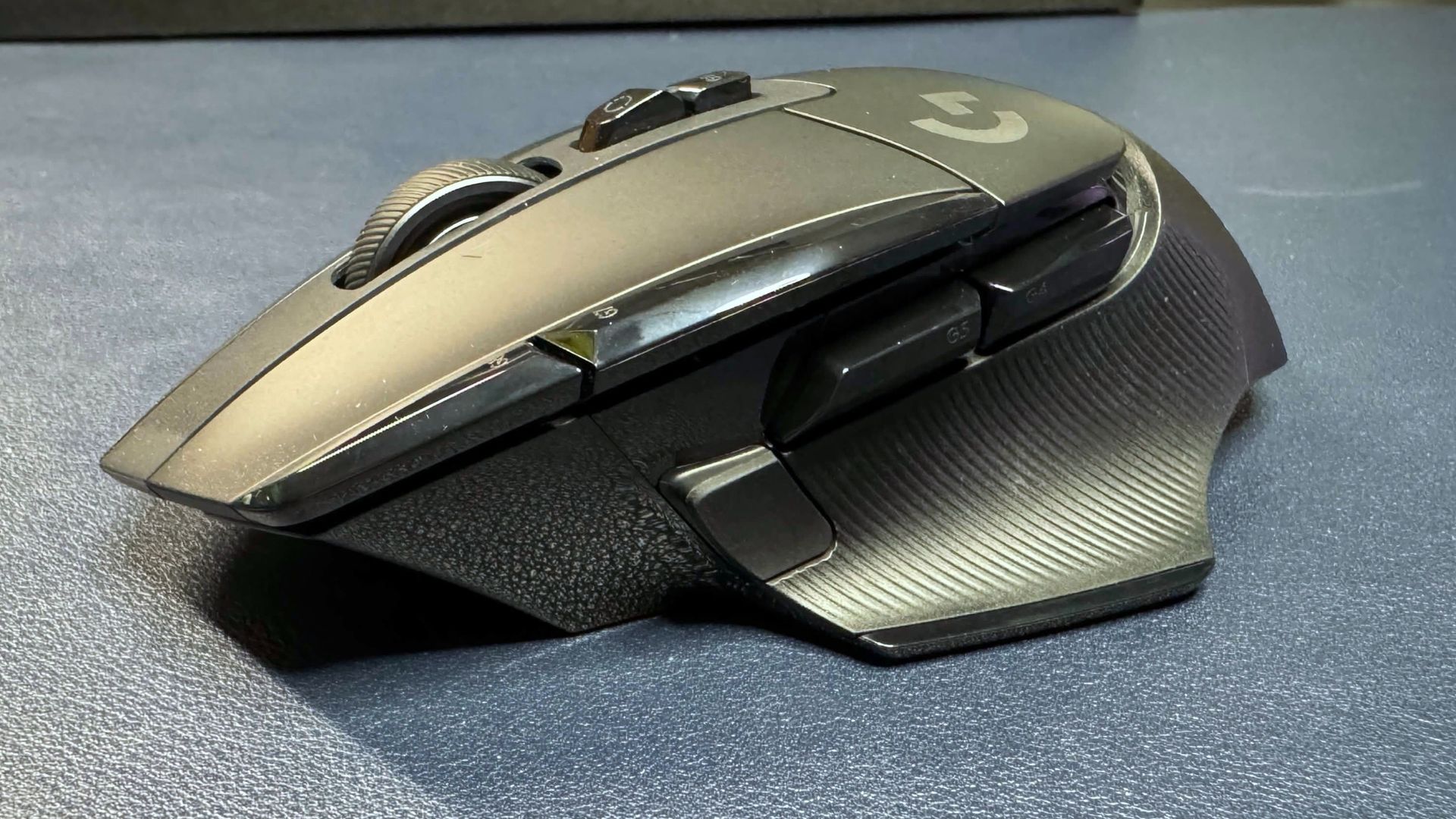
The Logitech G502 X Lightspeed is a right-handed gaming mouse with an ergonomically contoured shape. It's the same size and shape as the G502 X Plus, with large primary mouse buttons, textured rubber side panels for grip, and a smooth matte chassis with glossy accents. It comes in black and white colorways (our review unit was black) and has no lighting aside from a small indicator light at the front of the mouse to indicate connection and battery life.

Like the G502 X Plus, the G502 X Lightspeed is definitely on the larger side. It measures 5.17 inches (131.4mm) long by 3.12 inches (79.2mm) wide, and is 1.62 inches (41.1mm) high at its tallest point. It's larger than the Razer Basilisk V3 Pro and V4 Pro (5.11 x 2.96 x 1.67 inches / 130 x 75.4 x 42.5mm) — not by a lot, but it definitely feels like a much larger mouse. It weighs about 3.6 ounces (102g), which makes it lighter than the Basilisk V3 Pro, but slightly heavier than the Basilisk V4 Pro.

Logitech G502 X Lightspeed
Tom's Hardware
Logitech G502 X Lightspeed
Tom's Hardware
Logitech G502 X Lightspeed
Tom's Hardware
Logitech G502 X Lightspeed
Tom's Hardware

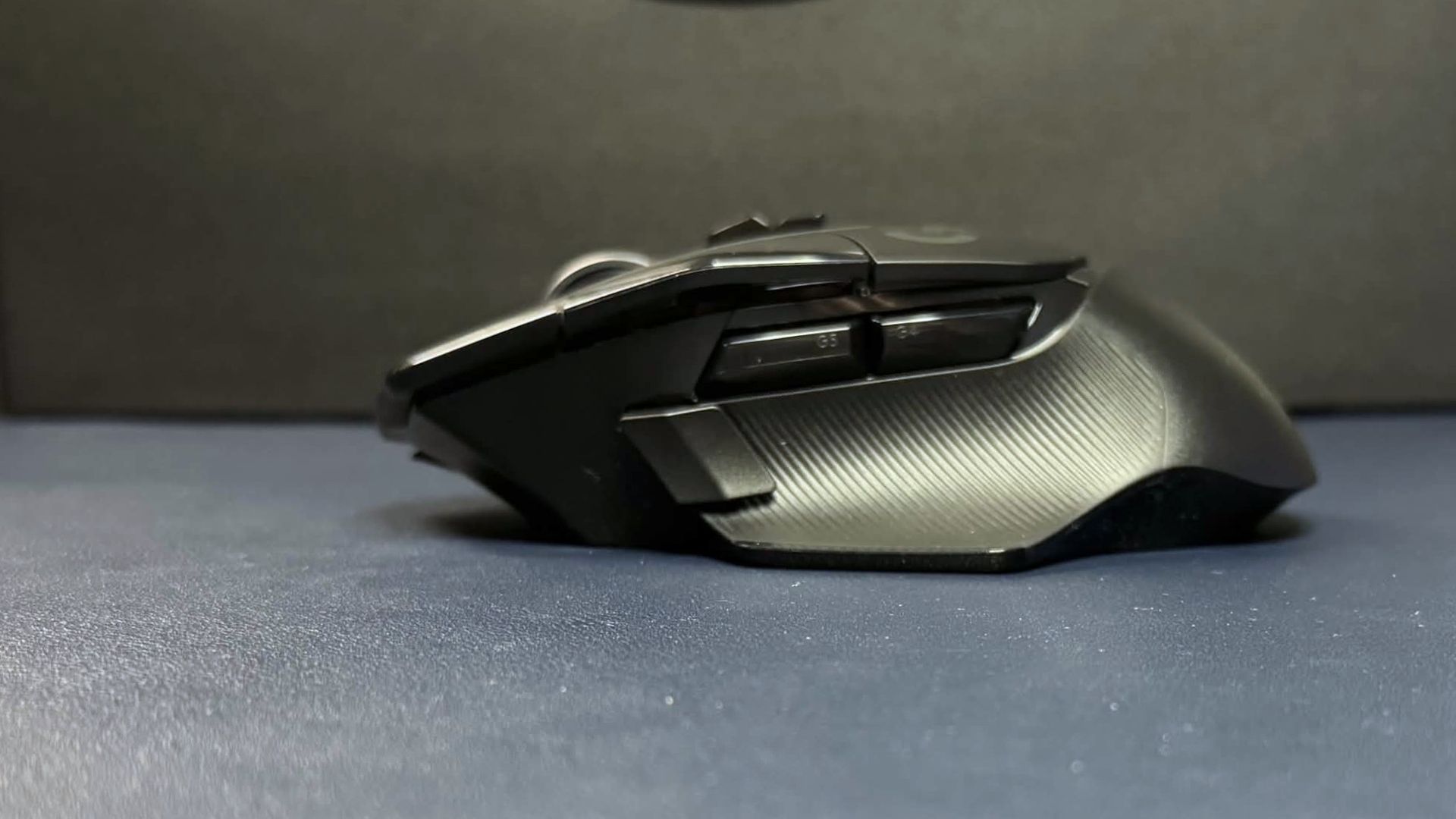
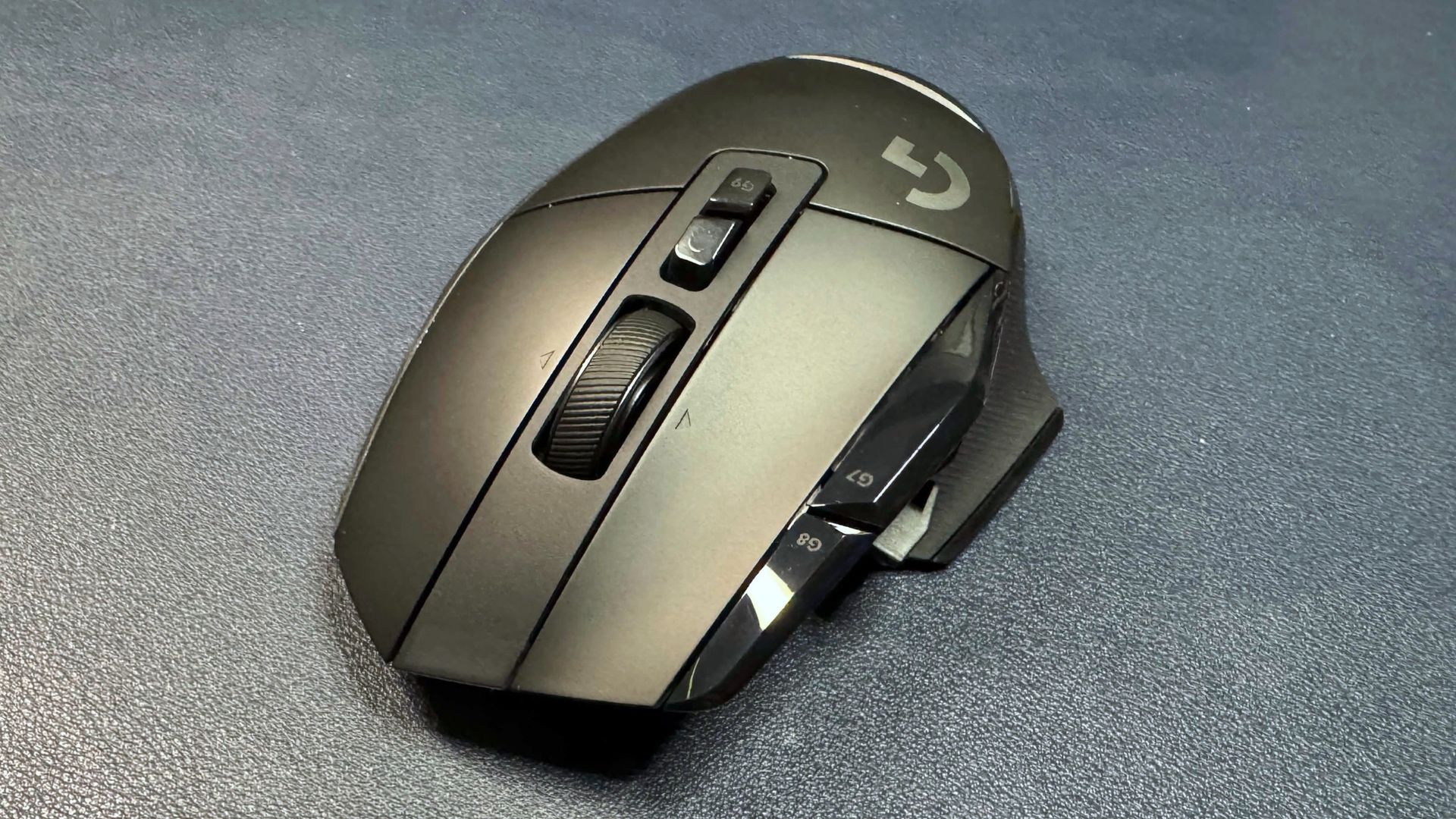
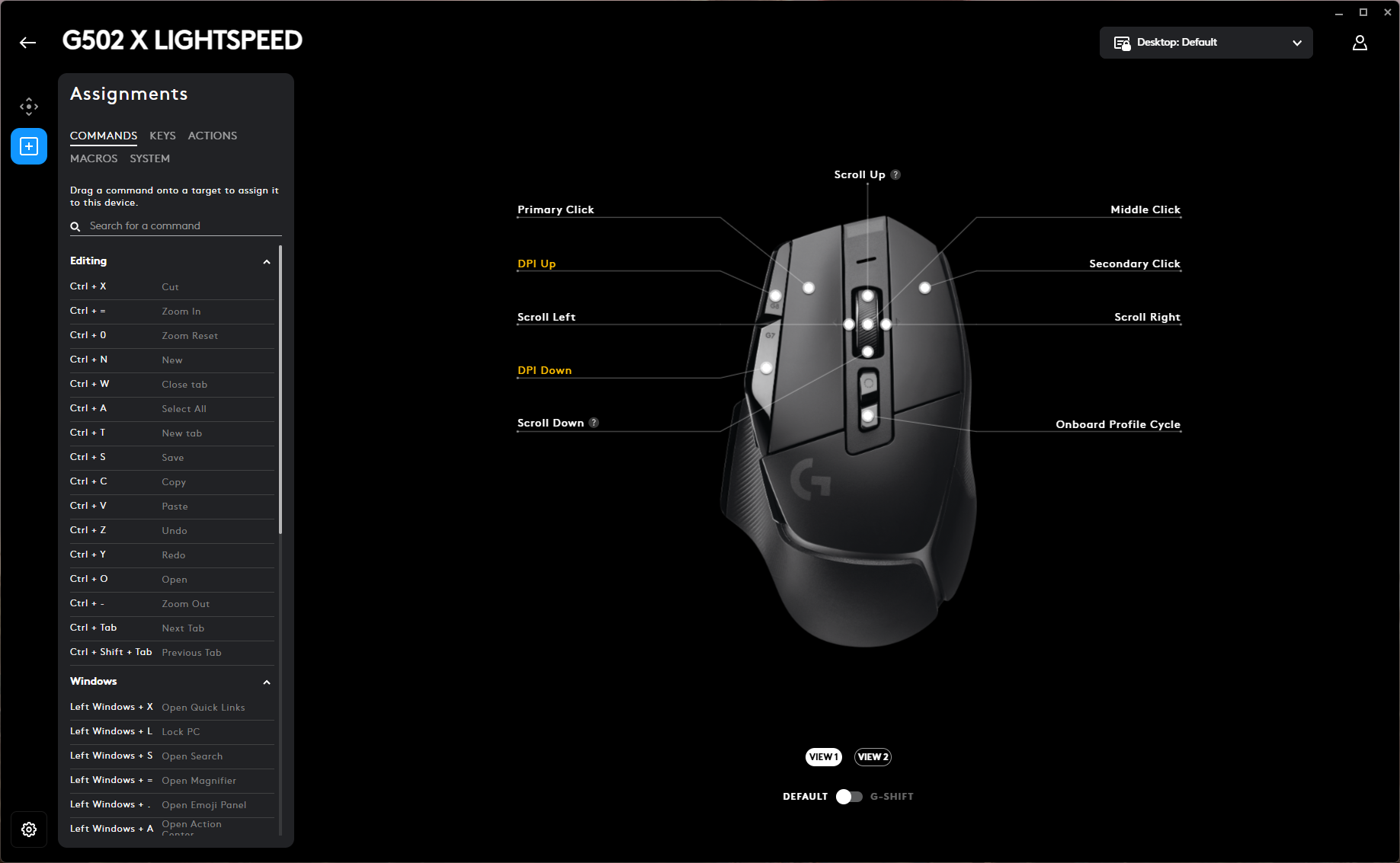
The G502 X Lightspeed has 11 programmable buttons, and 13 programmable controls if you include scroll up/down. There are the left and right primary mouse buttons, as well as two side buttons along the left edge of the left mouse button. On the left side of the mouse there are the two standard thumb buttons, plus a "sniper" button that's magnetically attached and can be flipped so that it's not in your way. The sniper button can also be "deleted," and Logitech includes a delete cover in the box that makes the button unpressable (and also has the same soft, rubbery texture as the rest of the thumb rest).

Logitech G502 X Lightspeed
Tom's Hardware
Logitech G502 X Lightspeed
Tom's Hardware
Logitech G502 X Lightspeed
Tom's Hardware

The scroll wheel is a 4-way tilt wheel, so it has three programmable "buttons" (left click, right click, and center click), as well as scroll up/down. Above the scroll wheel are two buttons: One is a mechanical scroll wheel switch that switches between notched, tactile scroll and free scroll — that’s not programmable, as it's a physical switch — and the other is a profile cycle button that can be remapped.

Logitech G502 X Lightspeed
Tom's Hardware
Logitech G502 X Lightspeed
Tom's Hardware

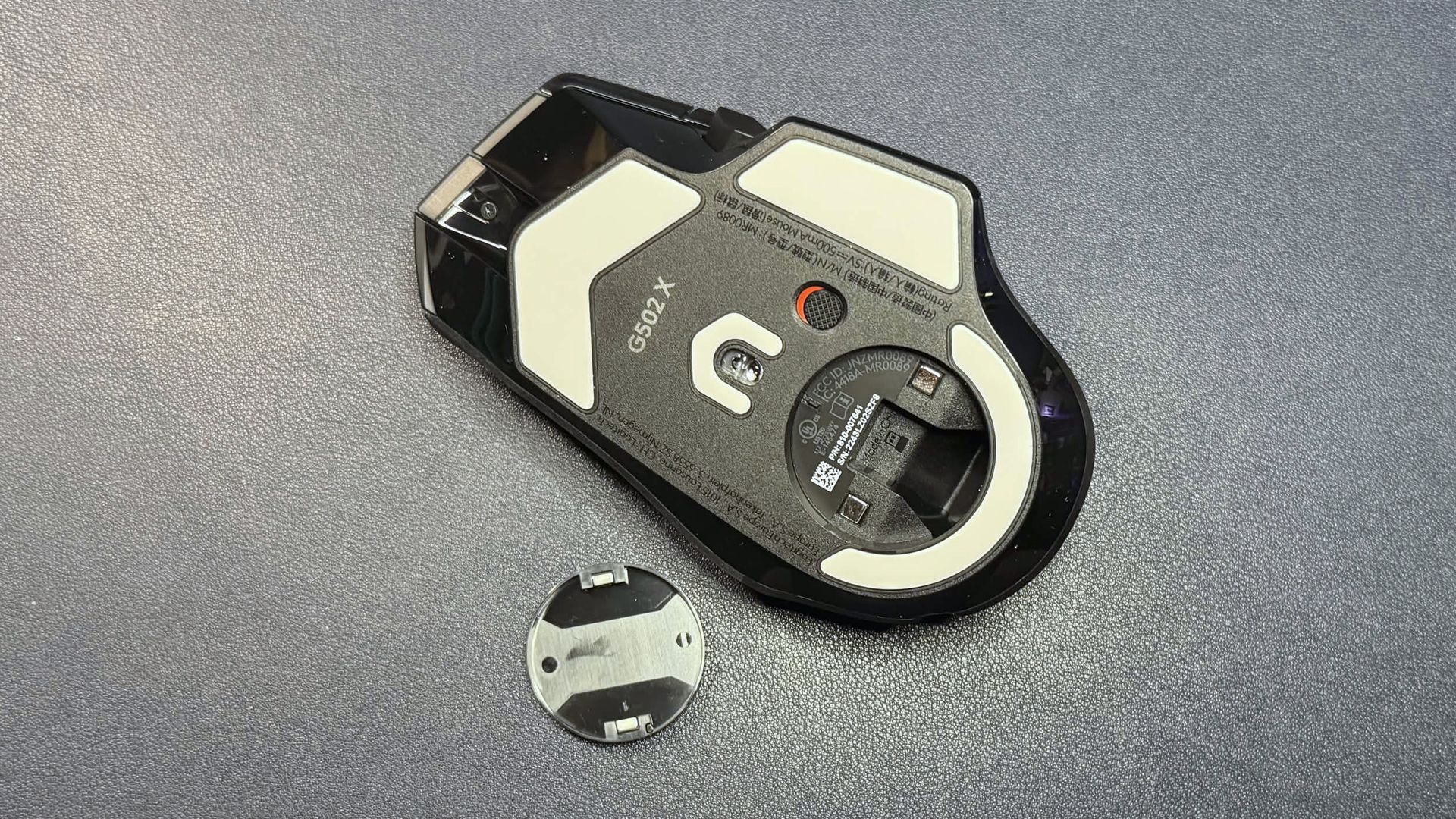
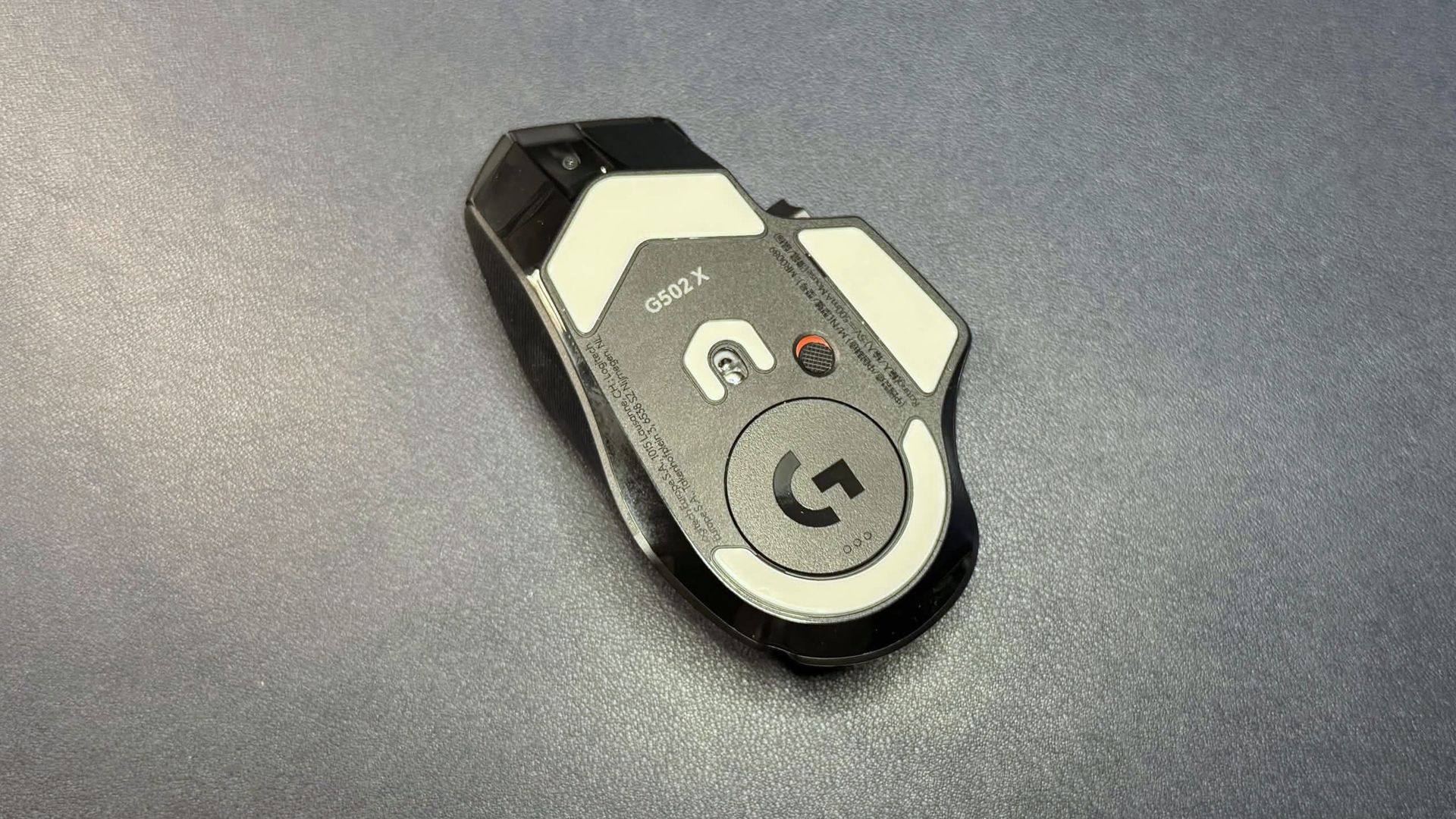
On the bottom of the mouse you'll find UHMWPE mouse feet — at the top and bottom, around the sensor, and under the thumb rest. There's a power switch, as well as a magnetically-attached dummy puck that can be swapped out for the charging puck included in the Logitech PowerPlay 2. Under the puck is a slot for storing the mouse's wireless dongle.

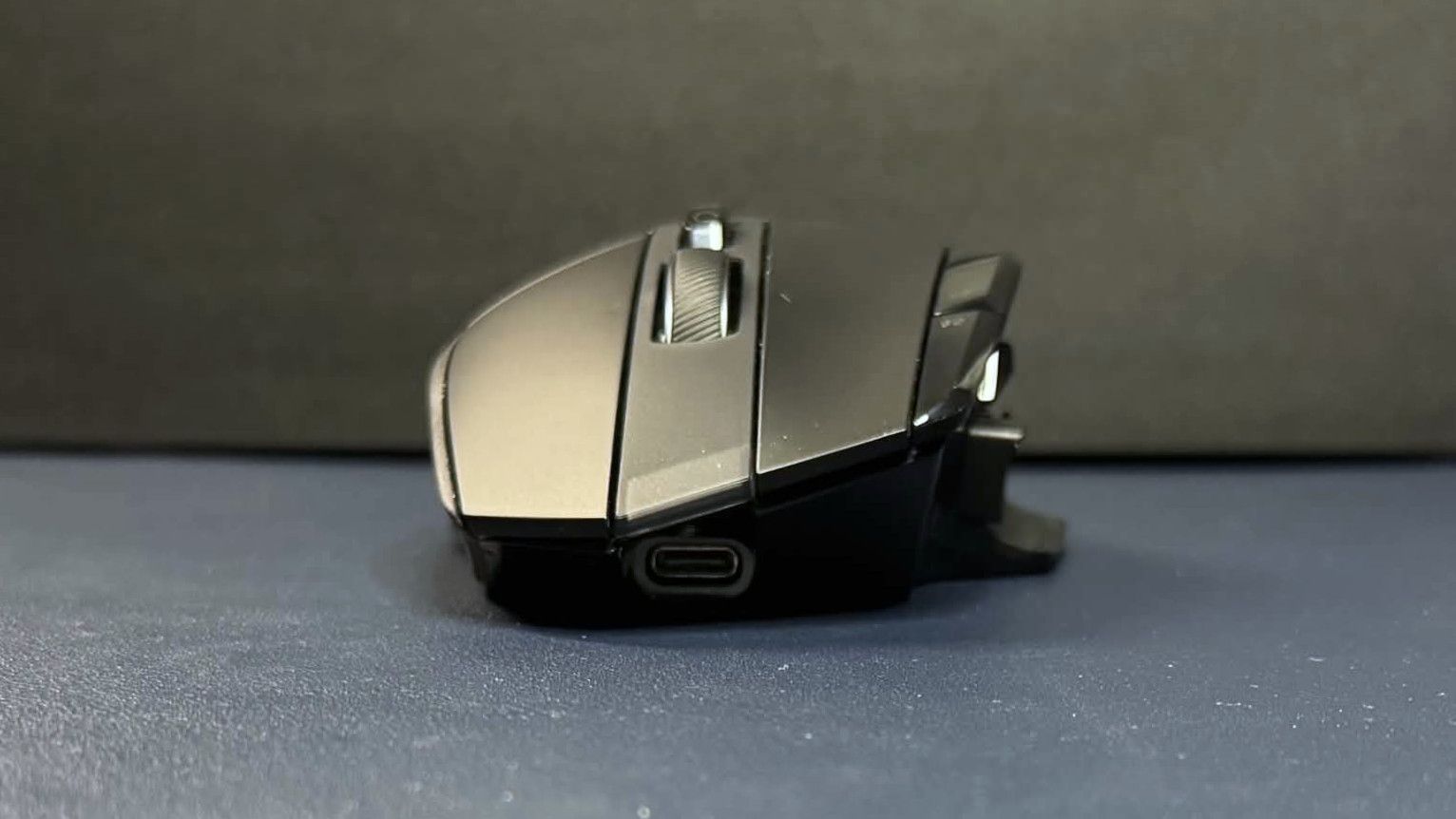
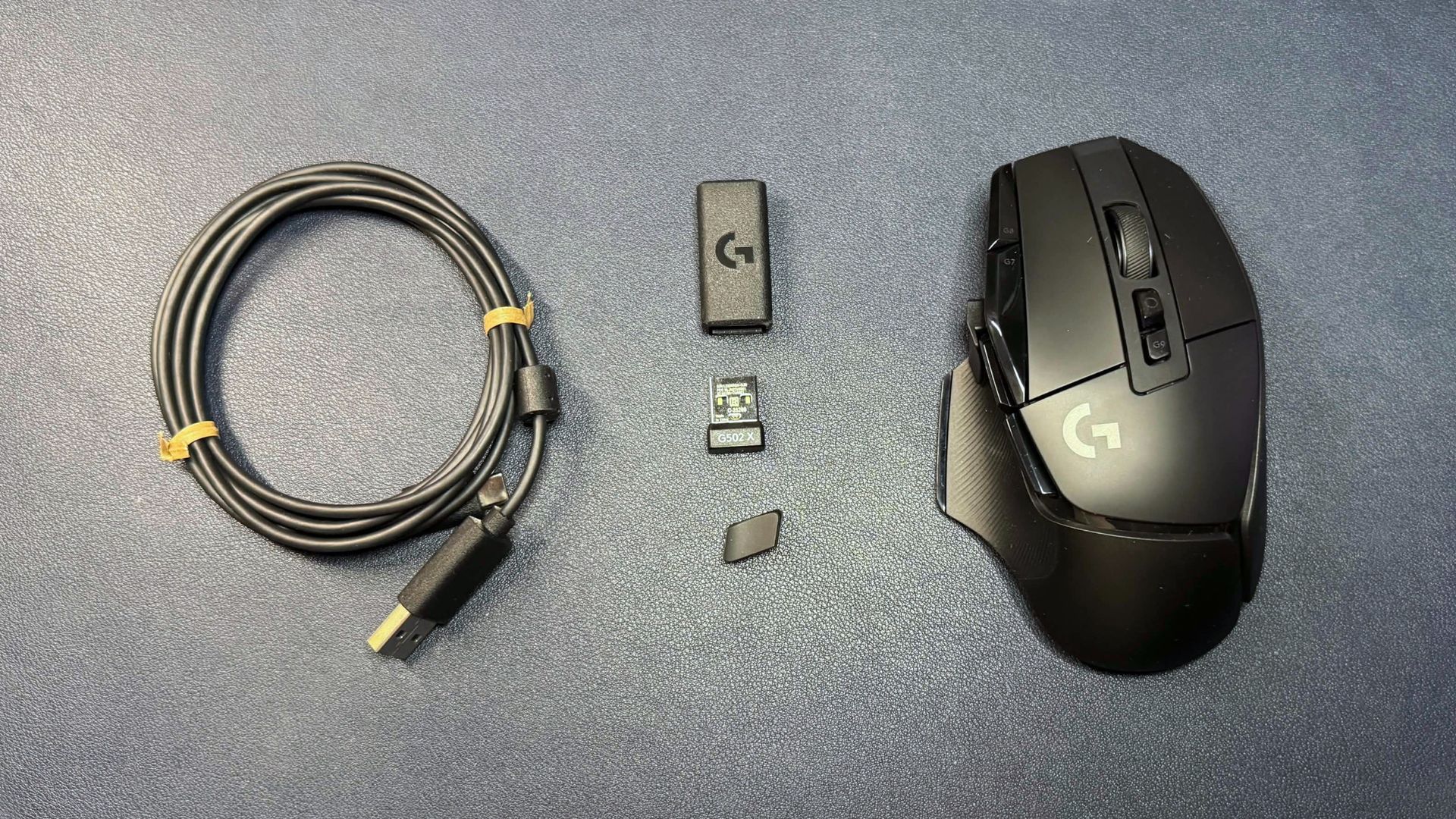
In the box, the G502 X Lightspeed comes with a 6-foot (1.8m) USB-C-to-USB-A cable, a USB-A dongle, a USB-C converter, and a sniper button delete cover.

Specs

Specs

Sensor Model

HERO 25K

Max Sensitivity

25,000 DPI (44,000 DPI with update)

Max Speed (IPS)

400 IPS (678 IPS with update)

Max Acceleration

40 G

Polling Rates

1000 Hz

Programmable Buttons

11 (13 programmable controls)

LED Zones

8

Cable

6ft / 1.8m USB-C to USB-A

Connectivity

2.4GHz wireless, wired (USB-C)

Measurements (L x W x H)

5.17 x 3.12 x 1.62 inches / 131.4 x 79.2 x 41.1 mm

Weight (excluding cable)

3.6oz / 102g

MSRP / Price at Time of Review

159.99

Release Date

Aug. 2022 / Firmware update Sept. 2026

Performance of the G502 X Lightspeed

The Logitech G502 X Lightspeed ships with Logitech's Hero 25K optical sensor, which has a max resolution of 25,600 DPI and a maximum speed of 400 IPS, and can handle up to 40 G's of force. However, both the G502X Lightspeed and the G502 X Plus are receiving a firmware update that will upgrade the Hero 25K optical sensor to a Hero 44K optical sensor, with a maximum resolution of 44,000 DPI and a maximum speed of up to 678 IPS. It's not clear when this upgrade will roll out, however, and I wasn't able to upgrade my review unit in G Hub as of this writing.

Upgrades aside, the G502 X Lightspeed's sensor is very good. It tracks on just about every surface you might possibly use while gaming, and is speedy, sensitive, and very accurate. The mouse supports a polling rate of up to 1,000 Hz, which is still pretty standard for most gamers — however, if you're someone who's convinced that the extra 0.125 milliseconds of lag is the reason for your losses, this is not a mouse with an 8,000 Hz or even a 4,000 Hz polling rate.

Logitech G502 X Lightspeed

(Image credit: Tom's Hardware)

The G502 X Lightspeed features Logitech's Lightforce hybrid optical-mechanical switches in its primary mouse buttons, which combine the feel of mechanical switches with the speed and reliability of optical ones. The G502 X Lightspeed's switches do have a nice, tactile click with a crisp sound that's definitely on the louder side. The side buttons also feel and sound good — not quite as tactile as the primary buttons, but with a very crisp click sound.

Logitech G502 X Lightspeed

(Image credit: Tom's Hardware)

The mouse features a dual-mode tilt wheel with a mechanical switch that lets you move between a notched, tactile scroll and a smooth, speedy free-scroll. Logitech's implementation of this is different from Razer's — Logitech's is mechanical, while Razer's is software-based. This means the modes are more distinct, but I'm not really sure if that's a good thing. While I liked the free-scroll mode of the G502 X Lightspeed better than I liked the free-scroll mode on Razer's mice (such as the Basilisk V4 Pro and the Naga V3 Pro), the tactile scroll was stiff, clunky, and very loud — with a lot of rattling. The scroll wheel only has two modes, so there's no middle ground — and while I'm fine to use free-scroll for most things, there are definitely games where I need a notched scroll wheel.

Features and Software of the G502 X Lightspeed

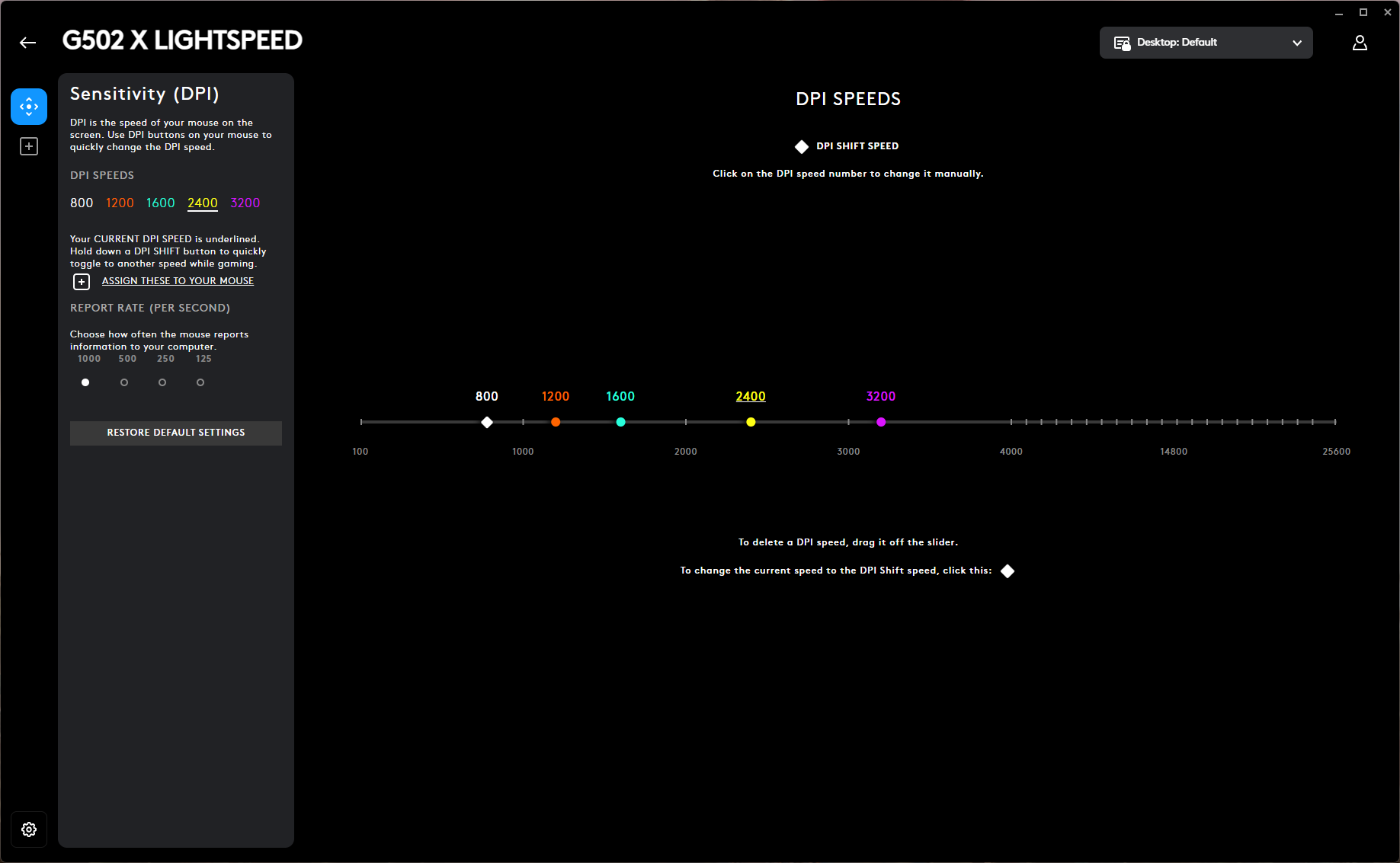
The G502 X Lightspeed is configurable via Logitech's universal peripheral software, G Hub. You can use G Hub to change the mouse's DPI settings (DPI steps and DPI shift speed — the DPI switch that occurs when you hit the DPI shift button) and remap keys. You can also use G Hub to update the mouse's firmware, so this is presumably where the Hero 44K sensor upgrade will come through.

Logitech G502 X Lightspeed
Tom's Hardware
Logitech G502 X Lightspeed
Tom's Hardware

Wireless Experience & Battery Life of the G502 X Lightspeed

The G502 X Lightspeed connects to your PC via 2.4GHz wireless; it can also utilize a wired connection, though the included USB-C cable is rubber and won't get you that smooth, drag-free wired mouse movement you can get with flexible paracord-covered mouse cables. The mouse does not include Bluetooth.

Logitech rates the G502 X Lightspeed at 140 hours of battery life, which is about 10 hours longer than the G502 X Plus (with no lighting). This is pretty impressive, even if there are similar wireless mice that last longer (the recently-launched Razer Basilisk V4 Pro gets up to 200 hours, for example). This should give you at least two weeks before you need to recharge, even with intense use. The G502X Lightspeed is also compatible with the PowerPlay 2, Logitech's wireless charging mousepad (sold separately).

Bottom Line

Logitech G502 X Lightspeed

(Image credit: Tom's Hardware)

The G502 X Lightspeed is a solid gaming mouse for most gamers — its contoured, ergonomic shape is comfortable, though it does feel bigger than similarly shaped mice, such as the Razer Basilisk V4 Pro. It has enough extra well-placed buttons for the average gamer (though, not enough for the average MMO player), and its 140-hour battery life is higher than average. Plus, assuming it actually gets this firmware update, it will have a competitive sensor — though it's not going to be quite as good as the actual Hero 2 sensor. But this mouse is currently priced at $159.99, which is the same price as the fancier Logitech G502 X Plus — and it's definitely supposed to be the more budget version of the two. Unless you find it at a great sale price, I'd pick up the G502 X Plus or even Razer's Basilisk V3 Pro 35K at a similar price.

Japanese arcades suffer week-long blackout following Sega server hack

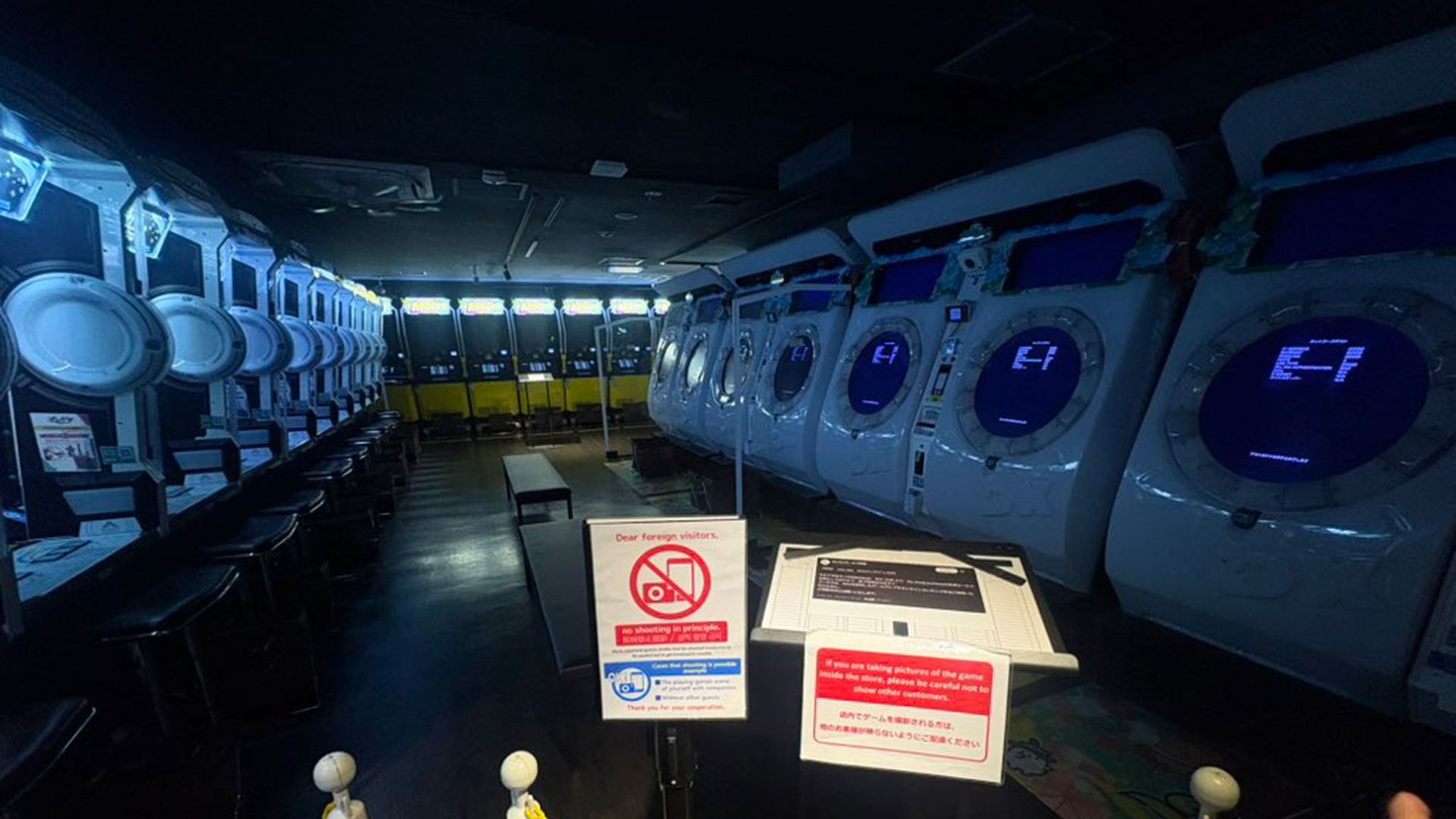
The sensory overload typically experienced when visiting video game arcades in Japan was eerily absent from some venues this week, reports ITMedia News [machine translation]. It says that a Sega system outage meant there was “no end in sight” for the rows of silent black screens. However, a recent tweet from arcade network operator ALL.net indicates that both Sega and Bandai Namco machines are affected. Moreover, arcade lovers will be pleased to hear that affected arcades will “gradually resume operation on a trial basis starting today.”

a friend sent me some pics of their local arcade and LMAO the sega outage is nuts https://t.co/3vSYjCYAIZNovember 3, 2026

ALL.Net, a contraction of Amusement Linkage Live Network, was launched by Sega in 2004 to allow arcade games to look up to the net for auto updates, data logging, implement online play, and power national leaderboards. Sega titles like Initial D The Arcade, Maimai, and CHUNITHM, rely on this network, as do Bandai Namco games like Aiko no Tatsujin, Mario Kart Arcade GP DX, and Gundam Extreme Vs.

Arcades go dark

Some services are gradually resuming operation today. (Image credit: ALL.Net, Sega Fave)

In its official apology blog post, dated November 2, ALL.Net / Sega Fave said that it suspended services a day prior after it became aware of its servers being affected by “unauthorized access by a third party.” It reassured customers that their personal info and billing data were not on the compromised server. However, it asked for more time to investigate, run safety checks, and so on, before restoring service.

This morning ALL.Net told customers that Bandia Namco titles “will gradually resume operation on a trial basis starting today (online play and card use enabled).” Sega products remain under maintenance, and online services are unavailable. There is currently no estimate for issue resolution, but a news bulletin is promised for November 10 (Tuesday).

Classic offline arcade machines weren’t affected by this outage, of course. Moreover, rival arcade gaming legends like Taito and Konami run their own, separate, arcade networks and authentication systems.

The end of an era as Linux 7.5 purges the last 30-year-old Intel MMX optimizations from Pentium age

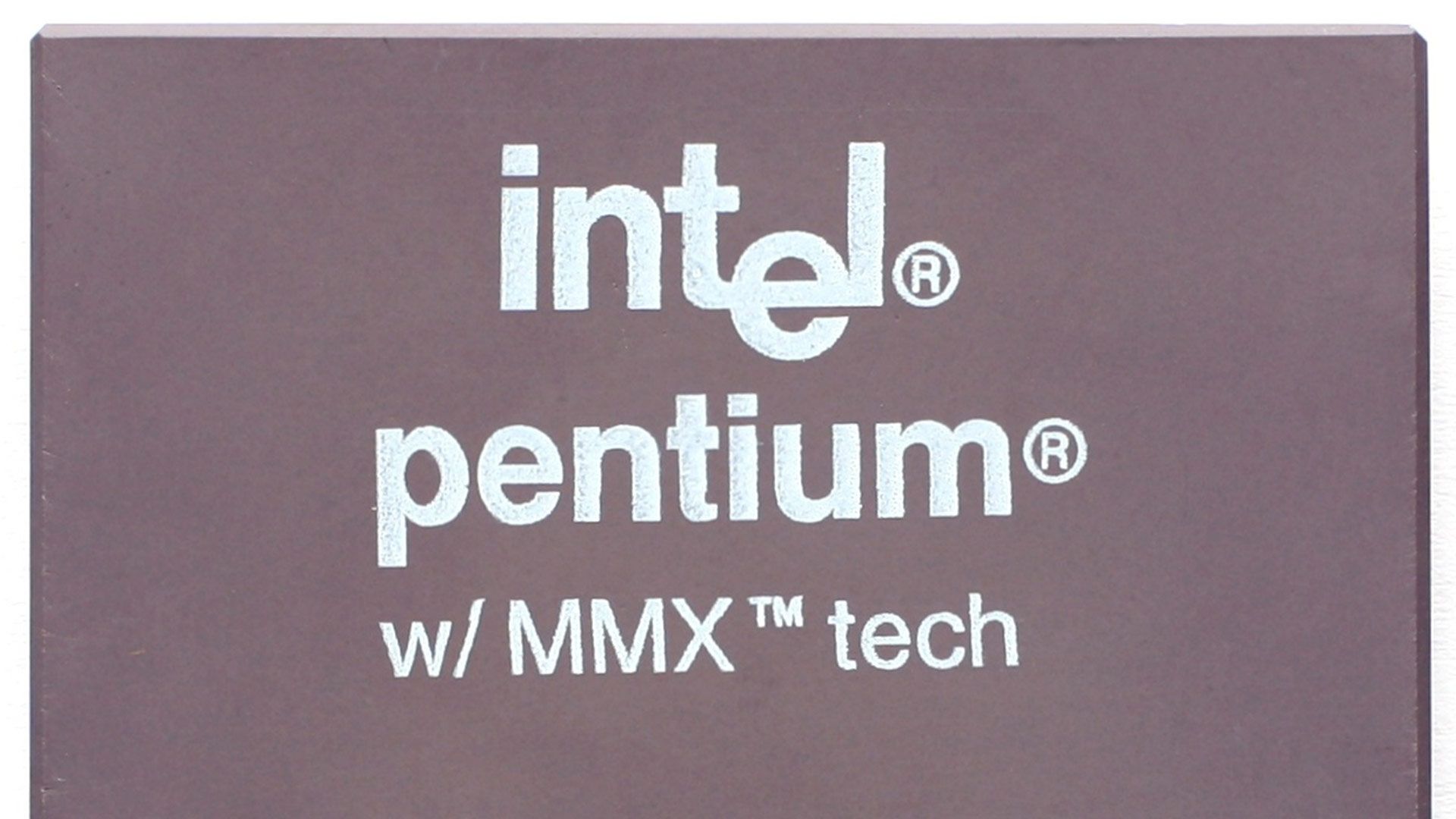
Linux developers are preparing to make Intel’s ancient MultiMedia eXtensions an irrelevance. Intel introduced MMX in the Pentium era, but a patch expected to merge into mainline Linux 7.5 will remove the last remaining optimized software from the open-source OS. Expected to be released in 2027, the new kernel will wipe MMX-optimized code from its software RAID XOR code, explains Phoronix.

Admittedly, there wasn’t much left in Linux in terms of MMX optimizations. But few folks will be running the most modern kernels on Pentium MMX and Pentium II chips in 2026. And most other MMX-optimized code disappeared from the OS half a decade ago, when some MMX-optimized memory management code was removed. Note that, if you are a determined late-90s Pentium devotee, you can still use software RAID, but it will lack the MMX fast path.

This is a classic case of Linux code housekeeping. With this change, the kernel will lose over 800 lines of code and replace them with just 12.

Remembering MMX

Intel first introduced MMX Pentium chips in January 1997. Though I vaguely remember these processors being marketed as being enhanced by ‘MultiMedia eXtensions,’ Wikipedia insists that “MMX is officially a meaningless initialism[6] trademarked by Intel.”

In a subsequent trademark battle with longtime foe AMD, a document produced in court indicated that MMX stood for ‘Matrix Math Extensions.’ AMD relied on this to sidestep the trademark, as an initialism cannot be trademarked, according to the encyclopedic source.

Eventually, all rival x86 processors managed to integrate MMX instructions – so as not to be pushed into the shade during the multimedia boom. A surprisingly large number of non-Intel chips ended up offering MMX, too. Along with Pentium MMX chips, AMD, Centaur, Cyrix, Rise, and Transmeta eventually offered MMX CPUs.

After MMX's marketing success, AMD pioneered 3DNow! instructions, and about a year later, Intel fired back with SSE and SSE2.

Ukraine builds combat robots to hunt Russian troops in underground gas pipelines

Ukraine is developing a new class of combat robots designed to operate inside underground gas pipelines, where Russian troops have repeatedly attempted to bypass frontline defenses, United24Media reports. The project, disclosed by Ukraine's 2nd National Guard Corps, Khartiia, involves modifying unmanned ground vehicles (UGVs) to perform reconnaissance and combat missions in spaces too narrow for conventional military machinery. Notably, the work is being carried out by specialists from the corps’ Lava Unmanned Systems Regiment, following Operation Veles — an underground assault that saw Ukrainian soldiers advance more than 15 kilometers through pipeline infrastructure near Kupiansk. Khartiia says the operation killed more than 100 enemy soldiers and resulted in over 30 captured, although those battlefield figures have not been independently verified.

The commander of Lavas ground robotic system battalion, identified by the callsign ‘Matematyk’, said the project addresses a category of warfare that requires a different approach from conventional battlefield robotics. “There is a very long list of tasks that need to be accomplished to fight underground and counter the enemy underground. This is a new class of technologies and challenges that we will have to confront,” he said.

The machines are being adapted from existing groundrobots,rather than developed as conventional surface vehicles. They must be compact enough to navigate narrow pipelines while retaining the ability to carry out military assignments . Most commercially available underground machinery, meanwhile, is designed for construction, drilling, and tunneling — not combat.

As of now, Khartiia is already developing several robotic systems to address those limitations, with the broader objective of sending machines into dangerous underground environments where soldiers would otherwise have to conduct reconnaissance, confront enemy positions, clear positions, or clear out themselves. “War is already underground, and it will expand. The question is how we adapt to this war,” Matematyk said.

The project follows unusual battlefield developments near Kupiansk, where Ukrainian forces used the same underground infrastructure that Russian troops have previously exploited to infiltrate behind Ukrainian defensive positions. During Operation Vels, Ukrainian soldiers moved through a gas pipeline measuring approximately 1.2 meters in diameter, according to a report by Ikrainska Pravda. The confined passage made movement and close-range firefights particularly,with Ukrainian troops having little-to-no room to maneuver.

Russia had previously used the pipeline network beneath the Oskil River to move soldiers toward Ukrainian-held territory. The Ukrainian battlefield monitoring group ‘Deepstate' reported an earlier Russian infiltration attempt in September 2025. Last month, President Volodymyr Zelenskyy said that Ukrainian forces had eliminated more than 100 Russian troops and captured over 30 during the operation. The experience also exposed the limitation of sending soldiers into such environments. Underground operations restrict visibility,complicate communications , and leave little room for maneuvering equipment.

That said, Ukraine has increased its reliance on unmanned military systems as battlefield terrain proves complicated to navigate. In July 2024, we reported on Ukrainian forces deploying AI-controlled drones capable of independently identifying and attaching targets. The country has also been experimenting with unmanned systems that operate beyond conventional aerial platforms. In August, the US Army tested an autonomous Ford F-250 breaching vehicle, which builds on the Lancer unmanned ground vehicle program and uses a counter-drone turret to protect military operations from aerial attacks.

However, autonomous ground systems still face considerable technical challenges. Russia's Shturm uncrewed assault tanks , for instance , repeatedly lost their command connection during the Tsentr-2026 military exercise. The vehicle eventually became stuck in mud, even after organizers switched to manual driving. Russia has also tested an AI powered Shahed variant using Nvidia's Jetson Orin computing platform. The system was reportedly capable of identifying targets without relying on externally supplied coordinates.

Nvidia released its 8800 GTX GPU 20 years ago today, celebrates with Steam game homage

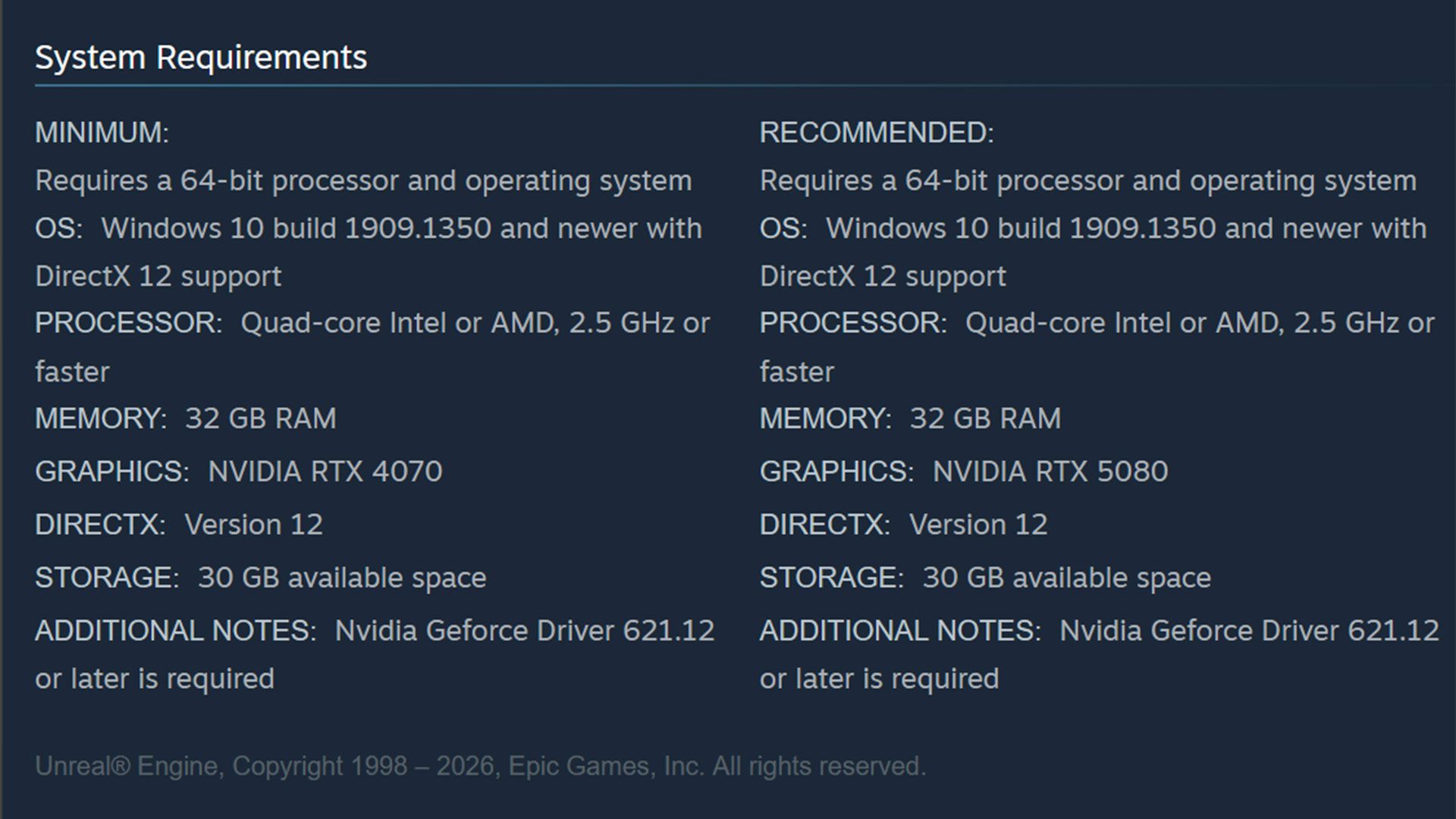
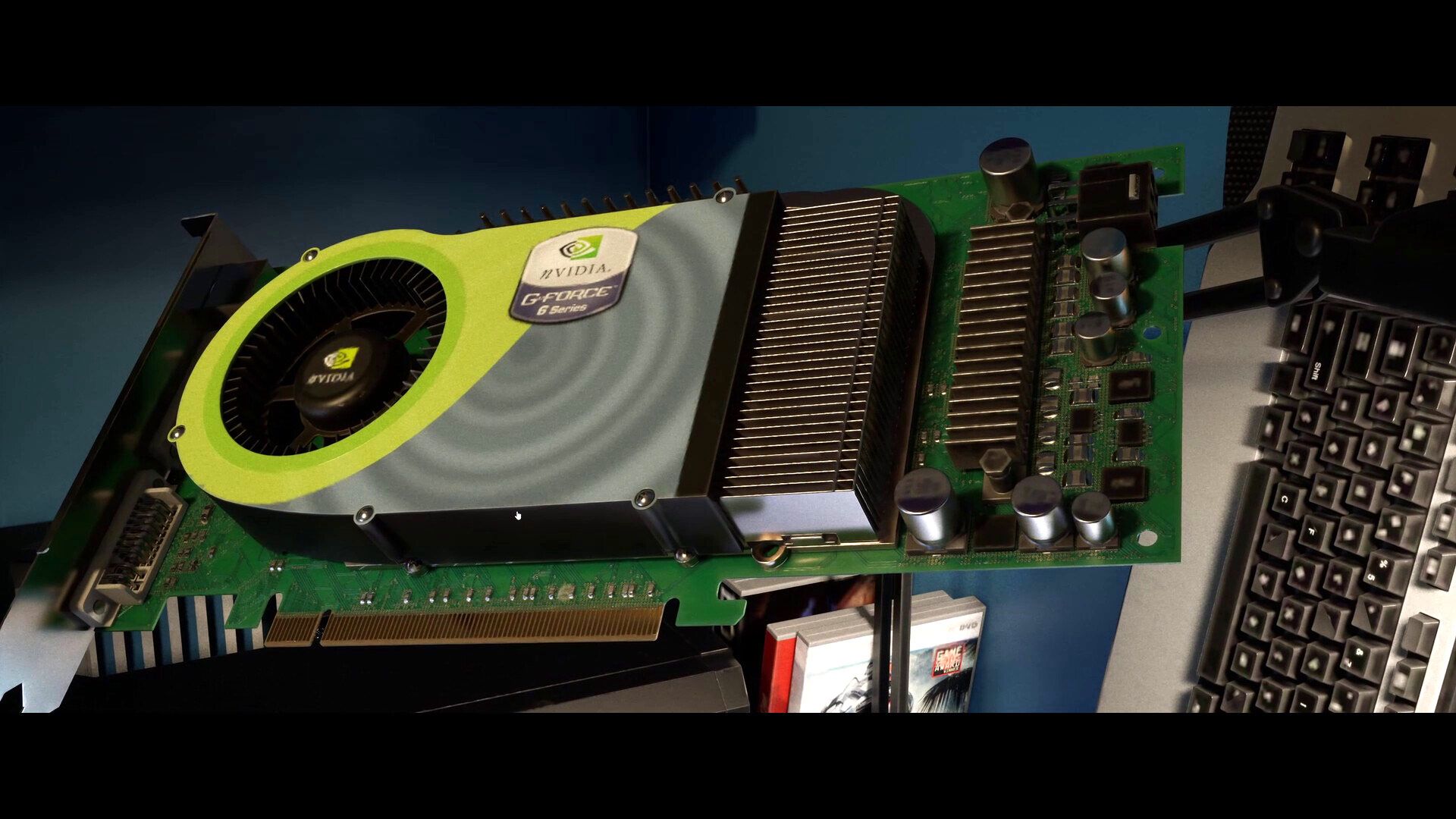
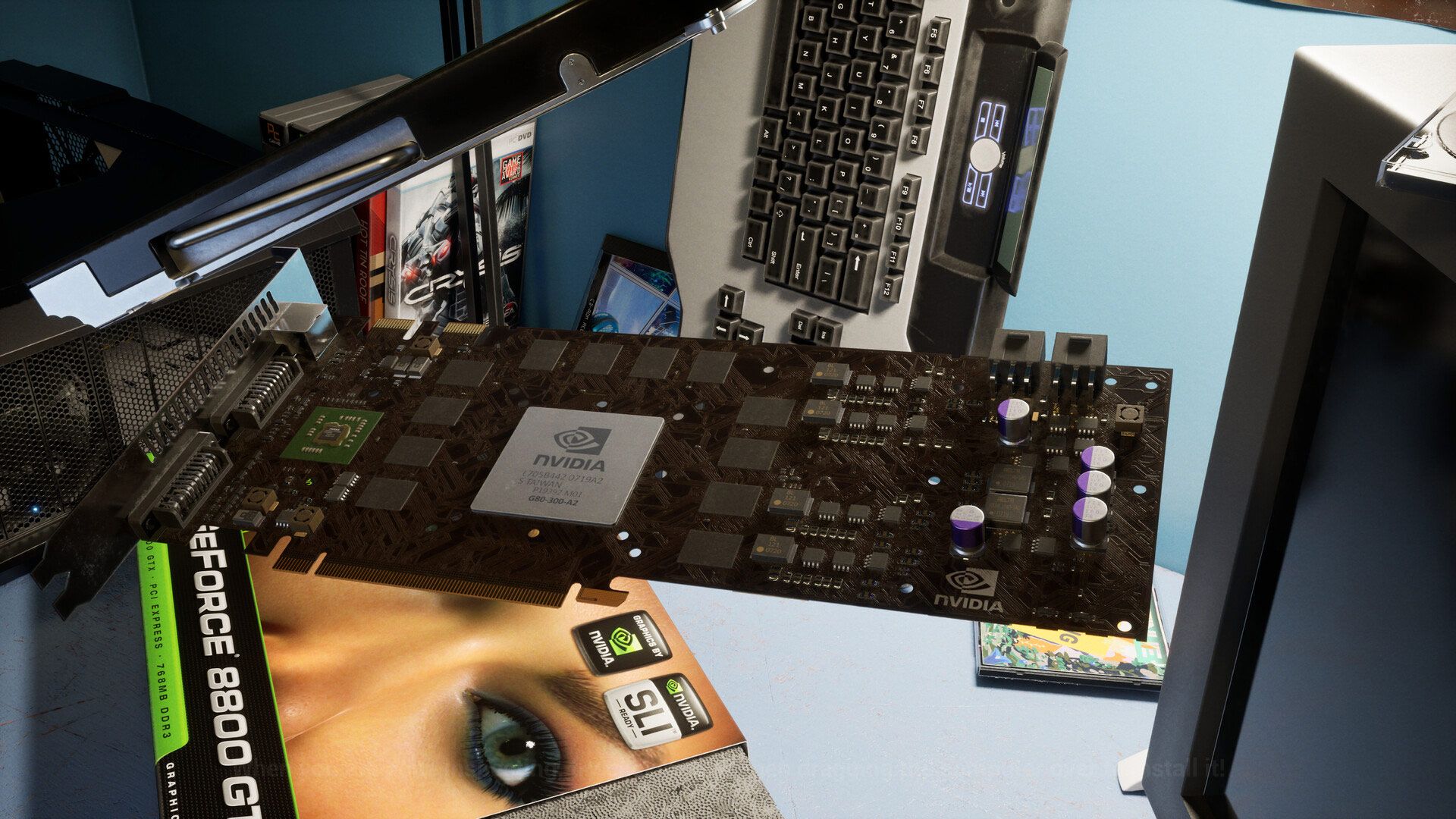
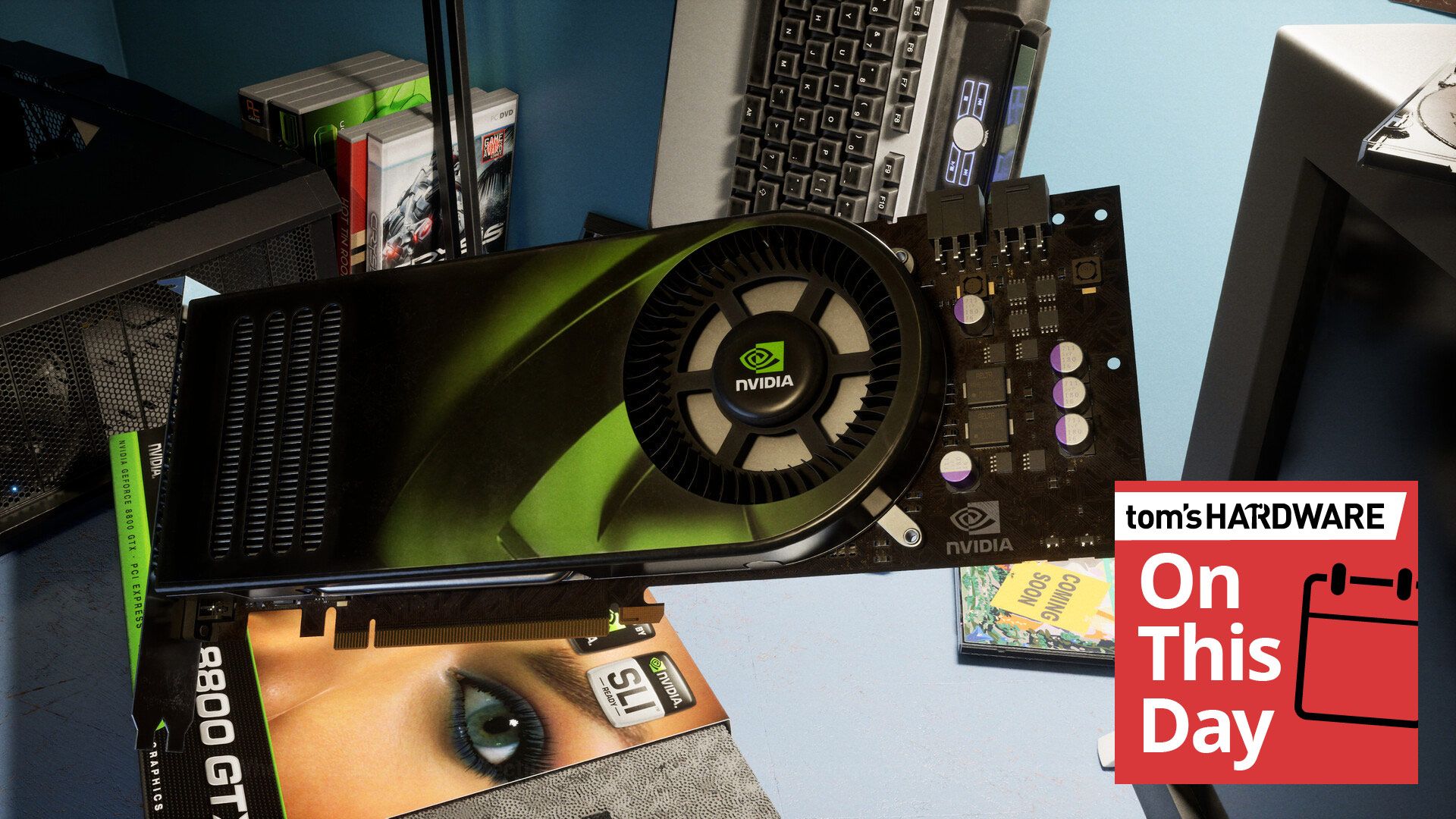
On this day in 2006, Nvidia released the legendary GeForce 8800 GTX and 8800 GTS graphics cards. Nvidia has decided to honor the flagship of the pair with its GeForce 8800 GTX - 20 Years of a Legend interactive demo, now free on Steam. However, the recommended specs to ‘play’ with this semi-interactive path-traced unboxing experience include a wallet-worrying RTX 5080. Or you could just watch the video, embedded below for your convenience.

The downloadable demo, which also requires 32GB of RAM and 30GB of free storage, was created by Dylan Browne, a senior special effects artist who frequently works with Unreal Engine, as in this case. This experience is said to deliver era-appropriate graphics, but requires the most advanced graphics tech available two decades after the 8800 GTX first hit the scene to work its graphical magic.

To run GeForce 8800 GTX - 20 Years of a Legend on a 2026 PC, you will need at least an RTX 4070 for acceptable performance, according to the Steam page. This software is stuffed with the latest graphics tech embraced by the green team. “DLSS 4.5 with Dynamic Multi Frame Generation, Ray Reconstruction, path tracing, and Mega Geometry” are all present, says Nvidia.

GeForce 8800 GTX - 20 Years of a Legend
Nvidia, Steam, Dylan Browne
GeForce 8800 GTX - 20 Years of a Legend
Nvidia, Steam, Dylan Browne
GeForce 8800 GTX - 20 Years of a Legend
Nvidia, Steam, Dylan Browne

There’s a bit more to the interactive demo than looking around and poking a box with your mouse and then prodding it to fit the shiny new GPU into your “era-accurate PC tower.” An extra layer of fun is promised by the provision of hidden Easter eggs in this experience.

However, the demo appears to show Windows Vista on the PC in the gaming den, which launched at retail a few months after the 8800 GTX. Admittedly, this legendary GeForce card and Windows Vista OS would roam the Earth at the same time, with many folks buying the GeForce 8800 GTX and 8800 GTS to shove into their Vista PCs from 2007 onwards. Crysis launched on PCs in late 2007, a year after the G80 architecture cards debuted.

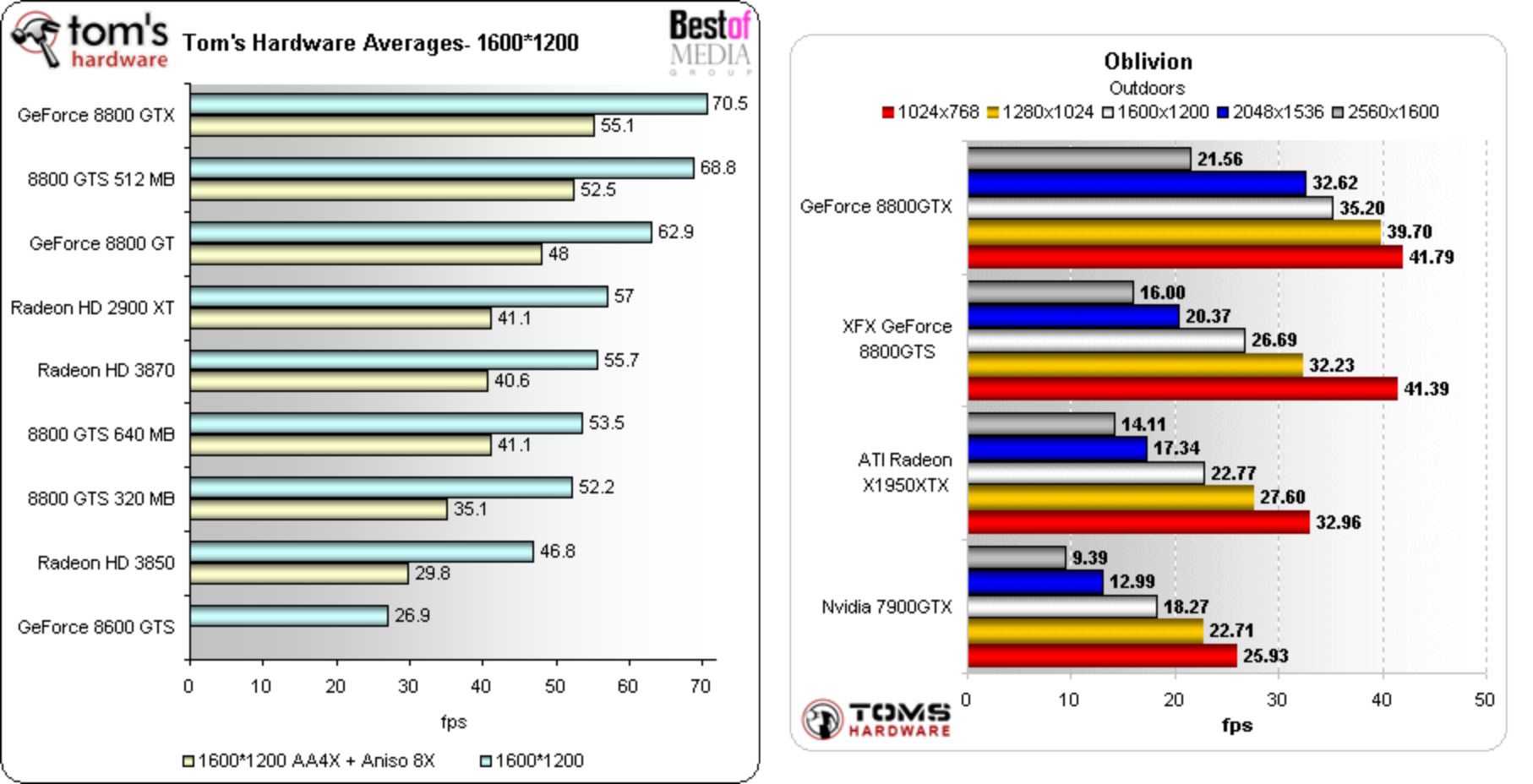
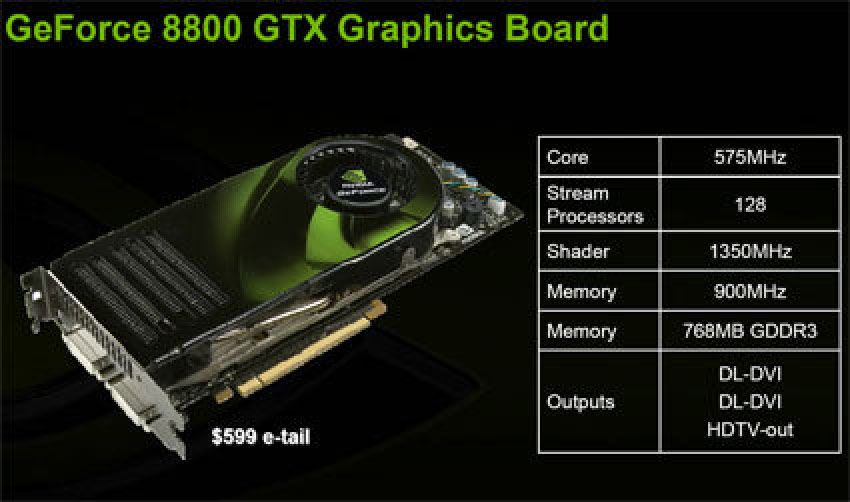
Nvidia launched the GeForce 8800 GTX (128 shader units) and 8800 GTS (96 shader units) at $599 and $449, respectively. These legendary Nvidia GPUs spearheaded the DirectX 10 era, accelerating existing PC titles and delivering next-gen visuals with new DX10 software. You can read more in our reviews from the time, like the 12-page review of the GeForce 8800 GTX and GTS from the launch week. Briefly, our reviewer thought these cards were “amazing” for their current performance and DX10 promise. They were also excited about the G80 architecture for bringing CUDA to consumers and the promise of making the GPU “something much more than a frame rendering device.” Some Luddite gamers may wish that had never happened.

GeForce 8800 GTX benchmarks
Future
GeForce 8800 GTX specs
Future

Nvidia driver support for the GeForce 8800 GTX and GTS would run out of road about a decade later. By that time, DirectX 11 hardware and games were mainstream, leaving older graphics hardware designs obsolete when it came to playing the latest AAA PC titles.

Open-source GPU task manager reveals exactly what's eating your VRAM

Microsoft VP Scott Hanselman has revealed a new open-source GitHub project called gputaskman. The name neatly encapsulates the headline role of this tool, a GPU-focused task manager, but its scope might be broader than you expect. This new tool for Windows, Linux, and macOS can show per-process GPU usage, VRAM consumption, active runtimes, and many more stats. It also breaks out AI/LLM task-specific information.

There's a lot going on in my GPU. I'm making a GPU Taskman to get insights to where my GPU memory is going. PRs welcome https://t.co/6FwKqnFWDWNovember 3, 2026

On social media, Hanselman snappily makes clear the technical itch that gputaskman was designed to scratch. “There's a lot going on in my GPU,” wrote the prominent public face of Microsoft's developer ecosystem. “I'm making a GPU Taskman to get insights to where my GPU memory is going.”

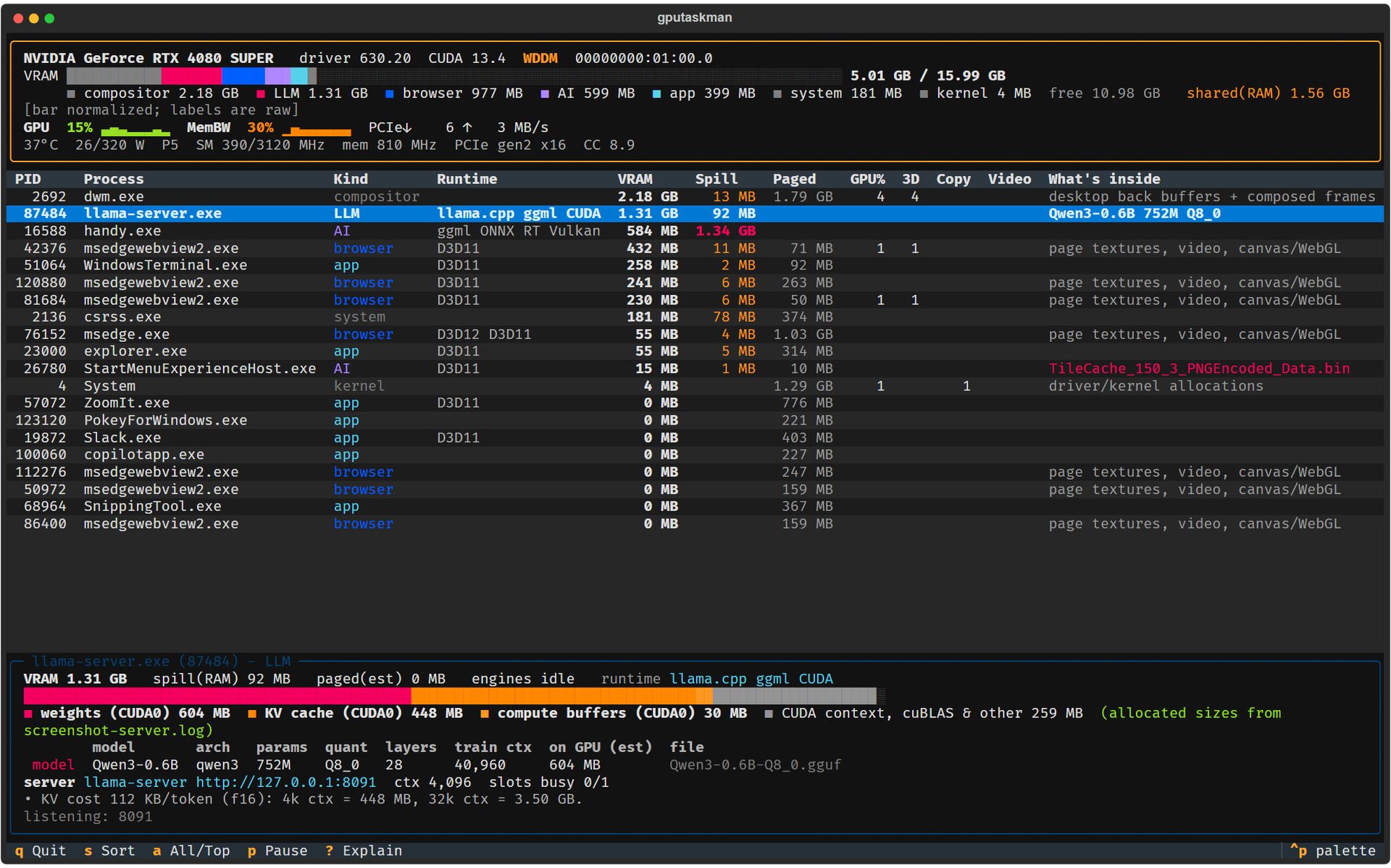
There are several example screenshots of GPU Taskman in use by the Microsoft VP. They clearly show the kinds of data that are presented in the terminal-like display that pops up in the tool. Hanselman’s tweet shows that the most VRAM-hungry app on his RTX 4080S system is the desktop windows manager. That is selected in the list, and more details are shown for this task at the bottom of the window. Also, we see AI/LLM apps consuming VRAM, and a few Windows staples.

gputaskman in action

Looking closer at llama-server.exe (Image credit: gputaskman on GitHub)

In a GitHub-embedded image, we see what details are broken out when the llama-server.exe app is selected in the list. The bottom of the window breakdown reveals that Qwen3-0.6B is being used, and there’s a breakdown of its weights, the KV cache, the number of parameters, and more. Very informative.

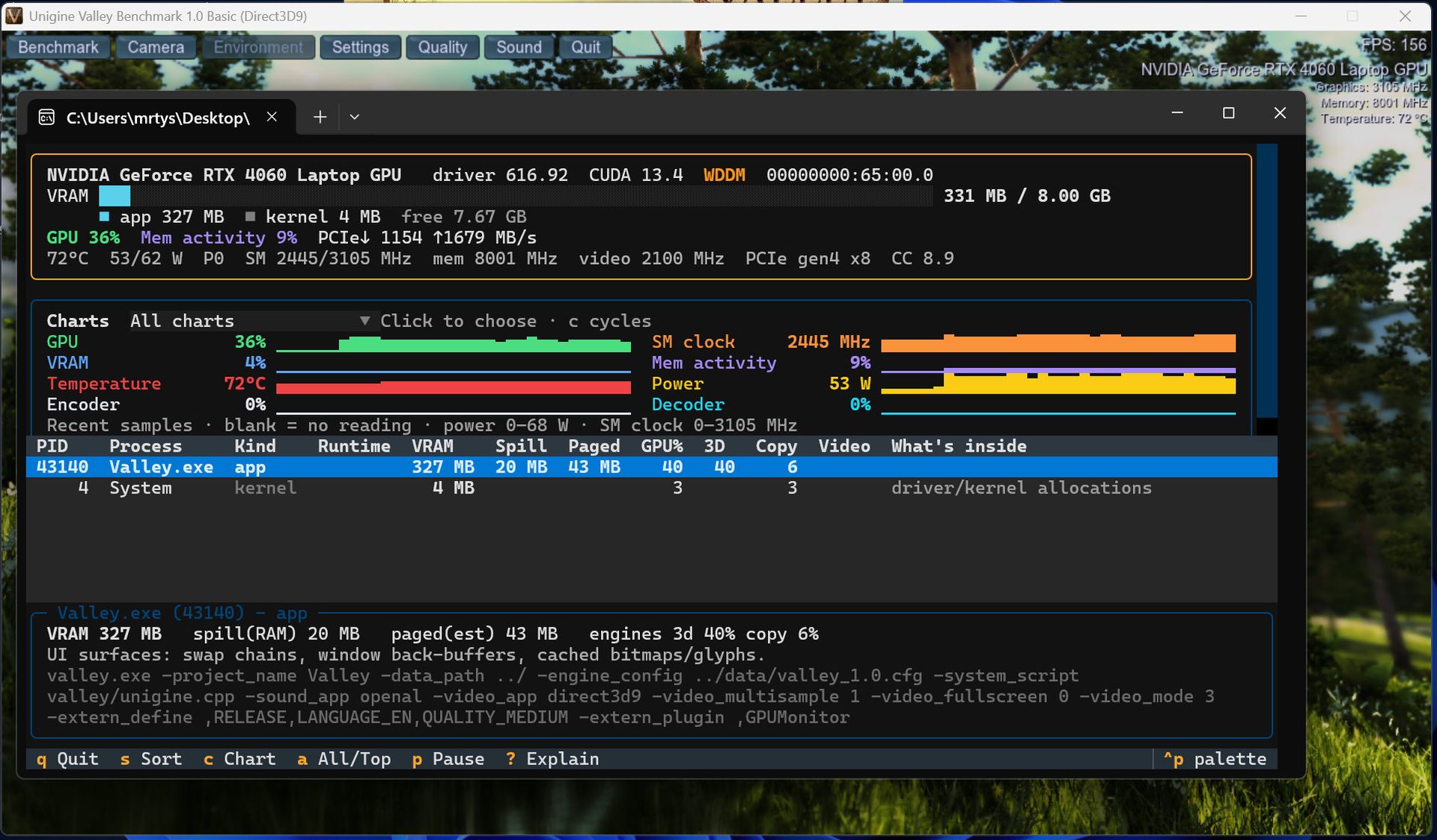
As the Microsoft developer has made portable Windows downloads of the latest v0.3.0 release of gputaskman, I couldn’t resist giving it a spin. Upon launch, I found that no tasks were using the discrete GPU in my laptop… so I fired up ye olde Unigine Valley GPU benchmark to stir the RTX 4060 from its slumber. I note the live-streaming charts showing GPU load, VRAM use, temperature, and so on are more prominent in my screenshot than in Hanselman’s examples. Perhaps he screen-shotted a previous version of the tool.

gputaskman in action

Valley's GPU resource use (Image credit: Future)

There’s a lot more information about gputaskman, its inner workings, and even its source code, on the linked GitHub repository. Hanselman is sharing his “experimental software” tool under the permissive MIT license. Finally, in social media comments, he hints that expanded GPU monitoring capabilities could be coming to Windows as standard.

Hundreds arrested after Microsoft data center protest turns violent

Amsterdam police have arrested 150 to 200 protesters at a Microsoft data center site on suspicion of trespassing. According to a Facebook post by the authorities [machine translated], tools designed for breaking into the site were seized from the protesters, who were then allowed on their way to protest peacefully. However, it appears that some members of the group decided to enter the construction site “with violence” anyway, forcing the police to intervene and leading to their arrest. There were also some allegedly stolen items from the construction site found among the belongings of some of the protesters, plus damage and vandalism done to the data center site.

Posted by politieamsterdam on 

This protest is a continuation of the action that started last Friday, where protesters breached the Microsoft data center, which was being owned by Pure Data Centers. It is also the first of many organized by the “Stop Dirty Data Centers” coalition across Europe, with actions planned for Amsterdam, Dublin, Warsaw, Denmark, and several other cities across the continent. The Dutch publication NOS [machine translated] identified the exact group at the site today as Fossielvrij, who are against the use of fossil fuels in data centers such as the jet engines that Elon Musk installed at xAI’s Mississippi data center.

“Gas prices are going through the roof, and new houses are being postponed because of the overcrowded power grid. Yet tech billionaires like Elon Musk and Jeff Bezos are building energy-guzzling, hideous data centers,” the group said on its website. “We can take back the power of Big Tech by pressing the pause button now. Give us the opportunity to democratically decide what we do and do not use AI for, so that it is not at the expense of our living environment and everything that makes our lives beautiful. Then we look at how many more data centers are needed.”

The protest comes amid the AI data center build-out, which has been facing increased opposition across the United States. A Google data center site in Finland is also in trouble after it cleared out around 1,300 acres worth of forest and trees without an environmental impact assessment, displacing wildlife, and leading to a criminal probe on Tuike Finland Oy, the Google subsidiary in charge of the site.

Fossielvrij’s action was supposed to be peaceful, but it appears that another group joined the demonstration and broke through the fences around the site, leading to the police confrontation. The suspects were arrested for domestic violence and then taken to a cell complex, where it will be decided if they will be detained longer. The police also said that “All suspects will be heard afterward.”

Two Chinese companies cleared to buy banned Nvidia AI chips have empty offices and unknown addresses

An investigation has found that addresses for two Chinese companies approved to purchase Nvidia H200 chips led to empty offices, and the receptionists at the buildings were unfamiliar with them. According to The New York Times, these companies didn’t just have empty offices; their executives are often linked to other firms sanctioned by the United States for working with and providing advanced technology to the Chinese military.

This news has revealed concerns that the U.S. Department of Commerce is simply rubber-stamping GPU export license applications instead of scrutinizing each one for potential links to Beijing. “I have a ton of concerns that neither the Commerce Department or Nvidia is doing the due diligence needed to ensure that the licensing terms are being followed,” former China director for the White House National Security Council Liza Tobin told the publication.

Many of these approved companies include well-known entities like Baidu, BYD, Tesla Shanghai, as well as ZTE, which has previously been blacklisted from the U.S. market, Alibaba, Tencent, and ByteDance. However, the outfit’s investigation also revealed approval for two relatively unknown firms: New Matrix and Maginfra. The offices for both companies were empty shells with some office furniture, and people working nearby said they’d never heard of the company or seen anyone go to the deserted spaces.

The New Matrix website also reportedly did not contain any information about its owners or its history, although public company records reveal that it was founded by Li Bin, who, along with two other primary owners, are connected to Wise Road, a Chinese private equity firm sanctioned by the U.S. for helping Beijing acquire sensitive chip technologies. Furthermore, Mr. Li chairs Tsinghua Unigroup, a tech conglomerate partly owned by the Chinese government, and owns New H3C Semiconductor Technologies, which has also been added to the Commerce Department’s Entity List for cooperating with the Chinese military.

Maginfra, on the other hand, is suspected of being linked to Inspur, which Washington has blacklisted since 2023 for supporting the People’s Liberation Army, with both companies sharing personnel, patents, and a similar government ownership structure. These two firms aren’t listed as the final users of Nvidia’s AI chips, though. Instead, they’re supposed to assemble them into AI servers, which would then be forwarded to a final user, although it’s unclear who their customers are.

Aside from these questionable non-entities, another company that received a license to purchase H200 GPUs has some suspicious links. Zhejiang Yindun Cloud Technology’s executives are reportedly related to the founder of Range Intelligent Computing Technology Group, a data center operator that has sold compute capacity to Chinese military contractors. It’s also reportedly partly operating out of a Range data center.

President Donald Trump banned the export of Nvidia AI GPUs in April 2025, even those customized to meet the performance ceiling Washington set for AI processors. The president reversed the decision late last year in exchange for a 25% cut of the sale, but it still took more than eight months for the first H200 shipments to arrive in China. Beijing’s refusal to give Chinese tech companies the green light to buy the chips for the first few months of the year caused the delay. But once China lifted its import ban on Nvidia chips, several Chinese companies applied for licenses to buy them, and The New York Times reported that around two dozen firms have already received approval, including these questionable ones.

❌