Reading view

Live from ICM 2026: What Is Math For in the Age of AI?

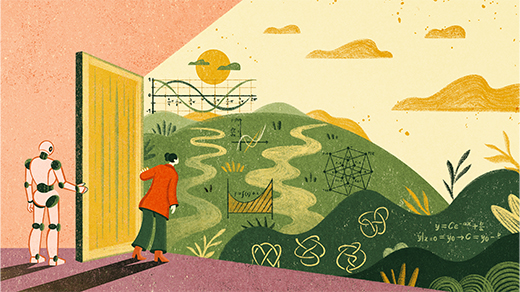
Mathematicians are witnessing a profound shift in their field. AI systems are now producing proofs, spotting connections between distant fields, and, in a few cases, solving problems that had stumped mathematicians for decades. The pace of progress over the past several months has raised challenging questions: What can AI systems actually do? And what happens to the more human…
Source

In an Age of AI, a Physicist Seeks What Endures

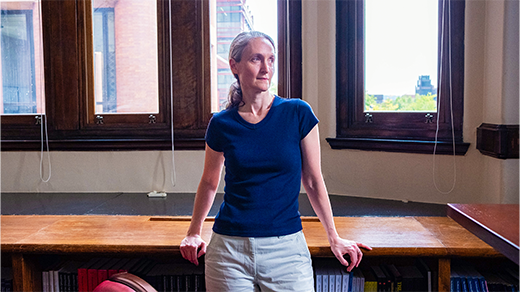
In July 2026, the U.S. Department of Energy selected 278 projects to fund as part of its Genesis Mission, meant to incorporate artificial intelligence into the scientific process. One project will use AI to help physicists search for a vanishingly rare particle transformation — a muon becoming an electron — by controlling different aspects of the Mu2e experiment at Fermi National Accelerator…

Source

Genome Duplication Is a Radical Evolutionary Gamble

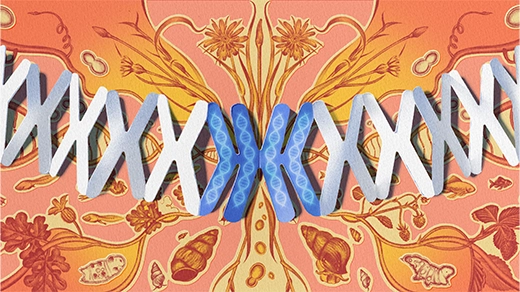
No larger than the head of a match, Potamopyrgus antipodarum doesn’t look very impressive. Few people visiting New Zealand’s Lake Alexandrina even notice the tiny gastropods littering the shores. The snail’s diminutive size, however, conceals a massive secret. Sometime in the recent past, its genome doubled. Instead of having two sets of chromosomes and two copies of every gene…

Source

‘Stunning’ Percolation Proof Solves Decades-Old Puzzle About Phase Transitions

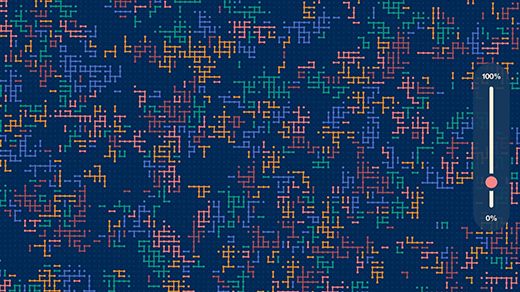
The week before Christmas 2025, five mathematicians were holed up in a classroom at ETH Zurich. The mood was electric: They were this close to a career-defining breakthrough. The group — consisting of then-postdocs Sahar Diskin and Philip Easo, graduate student Ritvik Ramanan Radhakrishnan, Benny Sudakov, and Vincent Tassion — was perfecting a solution to one of the biggest open problems in…

Source

Does Computer Science Need Computers?

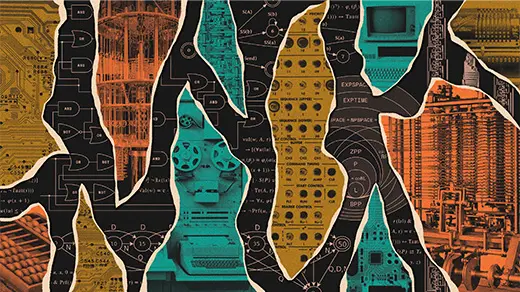
The pioneering computer scientist Edsger Dijkstra, winner of the 1972 A.M. Turing Award and inventor of one of the most iconic algorithms in all of computing, was nothing if not opinionated. Certain programming languages drew his ire, for example: He once dubbed Fortran “the infantile disorder” and stated that “the use of COBOL cripples the mind; its teaching should, therefore, be regarded as a…

Source

In Hilbert Space, All Things Are Quantumly Possible

At the heart of quantum mechanics lie a few sacred rules for how to use the theory. First and foremost is, roughly, that thou shalt not think about ordinary objects presently whizzing through ordinary space. Rather, quantum mechanics predicts — in exquisite detail — all the possible ways that an object might turn out to be in the future. Exploring those possible futures requires tracking an…

Source

A New Framework for How the Brain Compresses Our Noisy World

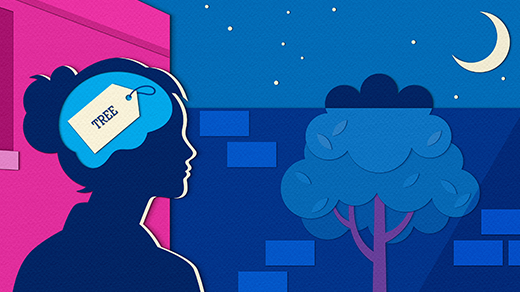
Every moment of our lives, our bodies are awash in sensory signals. Photons hit our retinas. Waves of compressed air collide with our eardrums. Volatile molecules bind to receptors in our nostrils, and chemicals slather our taste buds. Pressure and heat activate nerve endings in our skin. We are able to navigate this torrent because the brain does an enormous amount of data compression.

Source

‘Huge Breakthrough’ in the Math of Imbalance

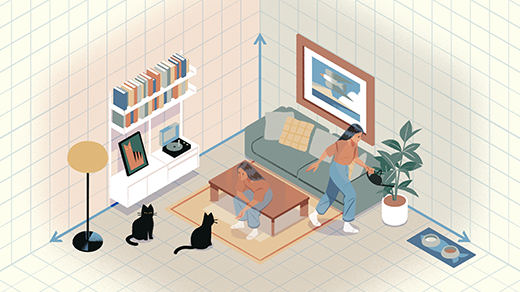
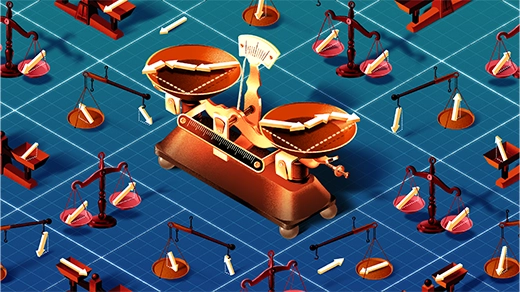
One does not need a doctorate in mathematics to split 12 eager trivia buffs into two competitive teams. But consider that each person arrives with unique strengths and liabilities: One may be a geography obsessive with no ear for music, another could be a naturalist who doesn’t own a television, and another could be a cinephile who never reads. Balancing traits between two camps becomes a lot…

Source

❌