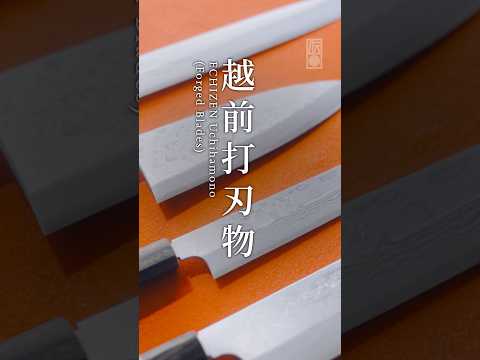
Echizen-uchihamono is said to have originated at the beginning of the 14th century. Craftsmen went to various places to collect lacquer sap for the lacquerware production industry nearby. At the same time they peddled sickles with the took with them. In this way they expanded their market for sickles throughtout Japan. Kitchen kneves, sickles, hatchets, and garden shears are manufactured ufilizing their highly specialized techniques.
Echizen-uchihamono is said to have originated at the beginning of the 14th century. Craftsmen went to various places to collect lacquer sap for the lacquerware production industry nearby. At the same time they peddled sickles with the took with them. In this way they expanded their market for sickles throughtout Japan. Kitchen kneves, sickles, hatchets, and garden shears are manufactured ufilizing their highly specialized techniques.
★詳細はこちら Click here for detail
https://kougeihin.jp/craft/0709/
ーーーーーーーーーー
■青山スクエアの公式WEBサイト official website
https://kougeihin.jp/
■工芸品を知る search for traditional crafts
https://kougeihin.jp/learn/
Mumyoi ware is made from red clay containing a large amount of iron oxide called “Mumyoi-do,” and was first produced in the early 19th century as Raku ware in red color mixed with Mumyoi-do, and the present Mumyoi ware, fired at high temperature and hardness, was completed in the Meiji period.
In principle, clay and glaze materials produced on Sado Island should be used, but with the advancement of technology and the ingenuity of potters over the years, glaze materials and forms have become more diverse in recent years, and each kiln produces products with different characteristics.

 Login
Login