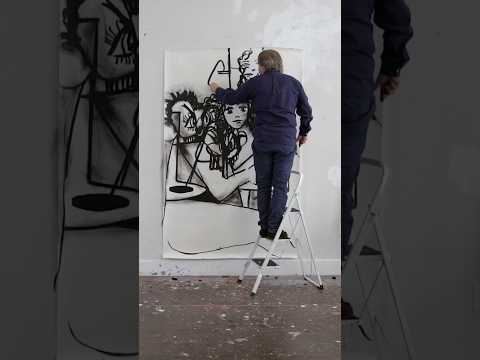
Danh Vo (b. 1975) is a Danish-Vietnamese artist. Vo has presented solo shows at several prominent art institutions, including The Royal Academy of Arts in London, Stedelijk Museum in Amsterdam, the Solomon R. Guggenheim Museum in New York, and Museo Jumex in Mexico City. In 2015, Vo represented Denmark in the Venice Biennial’s Danish pavilion. Vo is the recipient of prestigious awards a.o. the Hugo Boss Prize (2012).
Danh Vo was interviewed by Roxanne Bagheshirin Lærkesen in June 2020 at his studio Guldenhof in Germany.
Camera: Klaus Elmer
Produced and edited by Roxanne Bagheshirin Lærkesen
Subscribe to our channel for more videos on art: https://www.youtube.com/thelouisianachannel
SIGN UP FOR OUR NEWSLETTER:
https://channel.louisiana.dk/newsletter
FOLLOW US HERE:
Website: http://channel.louisiana.dk
Instagram: http://www.instagram.com/louisianachannel
Facebook: https://www.facebook.com/LouisianaChannel
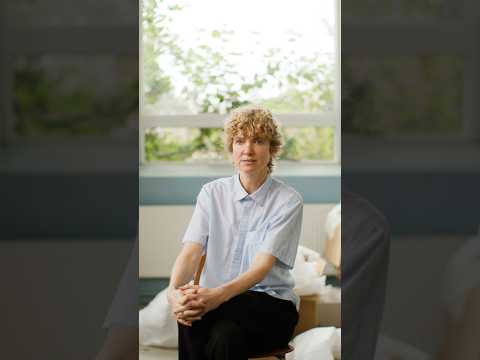
”What I have to say doesn’t need to be screamed or yelled.” We met California-based artist Hayley Barker while working on a print and spoke with her about her fascination with both nature and color.
”I think everything that I have to say with color can be said softly and with intention. Color to me is everything. It is...the feeling, the temperature, the weight or weightlessness, the gravity, the roughness or softness, the ease or the difficulty, like the sadness or the joy. It's all of those things rolled up.”
”Everything that I paint or make a print of is a place that I know very well. So, I have a relationship with it. And because I have a relationship with it, I also have memories of it in lots of different times or seasons or experiences. So, I bring all of that with me and not just how it looks in that one photograph or sketch.”
”I'm a quiet person. You know, I believe in peace, and I believe in non-violence, and I believe in celebrating the natural world and beauty and the seasons and protecting those things with everything we can.”
Hayley Barker was born in Oregon in 1973. She received her BA from the University of Oregon, and her MA & MFA in Intermedia from the University of Iowa. She lives and works in Los Angeles, California. Her works are part of the collections of the Brooklyn Museum, New York, Columbus Museum of Art, Columbus, Ohio, CVG Foundation, Beijing, High Museum of Art, Atlanta, Georgia, Houston Museum of Fine Arts, Houston, Texas, Museum of Contemporary Art, Los Angeles, Museo Inimá de Paula, Belo Horizonte, Brazil, New York Public Library Collection, Olivia Foundation, Mexico City, University of Iowa Museum of Art, Iowa City, Iowa, The Warehouse Collection, Atlanta, Georgia, Yageo Foundation, Taiwan, among others.
Hayley Barker was interviewed by Marc-Christoph Wagner at Edition Copenhagen in June 2026.
Camera: Simon Weyhe
Edited by: Roxanne Bagheshirin Lærkesen
Produced by: Marc-Christoph Wagner
Copyright: Louisiana Channel, Louisiana Museum of Modern Art, 2026
Louisiana Channel is supported by Den A.P. Møllerske Støttefond.
Subscribe to our channel for more videos on art: https://www.youtube.com/thelouisianachannel
SIGN UP FOR OUR NEWSLETTER:
https://channel.louisiana.dk/newsletter
FOLLOW US HERE:
Website: http://channel.louisiana.dk
Instagram: http://www.instagram.com/louisianachannel
Facebook: https://www.facebook.com/LouisianaChannel
Georgian-born German writer Nino Haratischwili reflects on the role of language and memory in her work, tracing her journey from a childhood in Tbilisi to a literary career in Germany. In this video, she discusses how writing in a foreign language has shaped her relationship to her native Georgian, and how her early experiences in theatre led her to literature.
For Haratischwili, writing in German, a language she learned in childhood, provides a distance that allows her to approach her material more freely. “I always need space, distance, a different perspective,” she says.
The freedom of writing in another language, however, comes at a cost. Although Georgian remains an essential part of her everyday life, returning to it as a literary language has become increasingly difficult. She describes the experience as a gradual estrangement from the language in which she grew up, while acknowledging that moving between languages also opens up new ways of seeing and understanding the world.
Born and raised in Tbilisi, Haratischwili grew up during a period of profound political and economic upheaval. The collapse of the Soviet Union, the struggle for Georgian independence and the civil conflicts of the 1990s shaped her early years. Alongside the instability, she remembers a strong sense of solidarity among people who relied on one another.
Her passion for literature began with her grandmother, an avid reader who introduced her to the world of books. At a school with close ties to German language and culture, Haratischwili began writing as a teenager and founded a theatre group. Seeing her texts brought to life on stage became a formative experience, revealing the possibilities of storytelling beyond the written page.
After studying film directing in Tbilisi, Haratischwili moved to Hamburg in 2003 to study theatre directing. She had initially intended to return to Georgia after four years, but her life and work took a different course. During her studies, writing became increasingly central. When she decided to stage one of her own plays, she chose to write it in German rather than Georgian, partly to avoid translating it herself. The decision marked the beginning of a new chapter in her artistic life. "I really wanted to learn that specific craft.“
Her transition from theatre to prose was similarly driven by the demands of the material. She does not regard the novel as a predetermined ambition but as a form that emerges from the story itself. Her historical family saga The Eighth Life (For Brilka), which took four years to write, began as a more limited exploration of the Georgia of her childhood. As she researched the country's history, the narrative expanded across generations and into the past.
The publication of the novel in 2014 established her as a major voice in German-language literature.
Haratischwili sees language as something alive, shaped by a person's circumstances, emotions and sense of belonging. “Language is a living thing and that is very tied to your own present.“
She is drawn above all to the substance of a story rather than to a particular literary style. Whether a work becomes a play or a novel depends on the material itself. For her, form follows content. “I’m simply a storyteller, I love stories.”
Nino Haratischwili (born 1983 in Tbilisi, Georgia) is a novelist, playwright and theatre director based in Germany. She studied film and theatre in Tbilisi and theatre directing at the Hamburg Theatre Academy. Her work explores Georgian history, identity, memory and the experience of living between cultures. Her major works include The Eighth Life (For Brilka) (2014), The Cat and the General (2018) and The Lack of Light (2022). The Eighth Life became an international bestseller and received the Anna Seghers Prize and the Bertolt Brecht Prize. The Cat and the General was shortlisted for the German Book Prize in 2018. Her other distinctions include the Schiller Memorial Prize and the Carl Zuckmayer Medal.
Nino Haratischwili was interviewed by Steen Bille at the Louisiana Literature festival in August 2021, at the Louisiana Museum of Modern Art, Denmark.
Camera: Jakob Solbakken
Edit: Signe Boe Pedersen
Produced by Christian Lund
Copyright: Louisiana Channel, Louisiana Museum of Modern Art, 2026.
Louisiana Channel is supported by Den A.P. Møllerske Støttefond
Subscribe to our channel for more videos on literature: https://www.youtube.com/thelouisianachannel
SIGN UP FOR OUR NEWSLETTER:
https://channel.louisiana.dk/newsletter
FOLLOW US HERE:
Website: http://channel.louisiana.dk
Instagram: http://www.instagram.com/louisianachannel
Facebook: https://www.facebook.com/LouisianaChannel
George Condo (b. 1957) is an American contemporary visual artist working in the mediums of painting, drawing, sculpture and printmaking. Condo mixes input from art history’s masters – such as Velasquez, Manet and Picasso – with elements of American Pop Art. He distorts and renews this material so that it stands out and becomes his own: a kind of strange hybrid that blurs boundaries between the comic and the tragic, the grotesque and the beautiful, the classic and the innovative. As part of the wild art scene in New York in the early 1980s, Condo was close to painters such as Jean-Michel Basquiat and Keith Haring, and worked for Andy Warhol’s Factory, applying diamond dust to silkscreen. Condo’s work is in the permanent collections of MoMA, the Whitney Museum, The Solomon R. Guggenheim Museum and the Metropolitan Museum of Art in New York, the Broad Foundation in Los Angeles, Tate Gallery in London, Centre George Pompidou in Paris and Astrup Fearnley Museum of Modern Art in Oslo, among others. He is the recipient of an Academy Award from the American Academy of Arts and Letters (1999) and the Francis J. Greenberger Award (2005). Condo lives and works in New York City.
George Condo was interviewed by Kasper Bech Dyg at his studio in Soho, New York City in September 2017.
Camera: Jakob Solbakken
Produced and edited by: Kasper Bech Dyg
Copyright: Louisiana Channel, Louisiana Museum of Modern Art, 2017
Supported by Nordea-fonden
Subscribe to our channel for more videos: https://www.youtube.com/thelouisianachannel
SIGN UP FOR OUR NEWSLETTER:
https://channel.louisiana.dk/newsletter
FOLLOW US HERE:
Website: http://channel.louisiana.dk
Instagram: http://www.instagram.com/louisianachannel
Facebook: https://www.facebook.com/LouisianaChannel
Tracey Emin was born in London in 1963 and grew up in Margate. She studied at Maidstone College of Art and the Royal College of Art, London. Emin works in a variety of media, including painting, drawing, printmaking, film, installation, embroidery, neon, and text. She uses her personal experiences to make highly confessional works in which she exposes herself, her hopes, humiliations, failures, and successes in a very direct manner. Emin deals relentlessly with the minutiae of her life and with the common subjects of sexuality, mortality, and what it means to be an artist.
Emin came to prominence as one of the loose grouping of contemporary artists popularly referred to as YBAs (Young British Artists). This group of artists, also including Damien Hirst, Sarah Lucas, and Angus Fairhurst, often exhibited together and collaborated. Among her early works were seminal installations such as Everyone I Have Slept With 1963-1995 and My Bed, as well as early performances and videos, including Why I Never Became a Dancer.
In 1999, Emin was nominated for the Turner Prize. In 2007, she represented Great Britain at the Venice Biennale and was elected a Royal Academician in the same year. In 2011, Emin became the Professor of Drawing at the Royal Academy of Arts, London. In June 2024, King Charles III appointed her Dame Commander of the Most Excellent Order of the British Empire for her contributions to the visual arts. Four years earlier, in 2020, she was diagnosed with bladder cancer and underwent extensive surgery. She currently lives and works between London, the South of France, and Margate, UK.
Emin has exhibited extensively including major solo shows. In 2026, Tate Modern presented the landmark exhibition A Second Life, traveling onwards to the Louisiana Museum of Modern Art, Humlebæk, Denmark; HoAm Art Museum, Yongin, South Korea; and the National Gallery of Victoria, Melbourne, Australia, in 2026-2027. Previous exhibitions include Yale Center for British Art, New Haven, Connecticut (2025); Palazzo Strozzi, Florence (2025); Munchmuseet, Oslo (2021); Royal Academy of Arts, London (2020); Musée d’Orsay, Paris (2019); Château La Coste, Aix-en-Provence, France (2017); Leopold Museum, Vienna (2015); Museum of Contemporary Art, Miami, Florida (2013); Museo de Arte Latinoamericano de Buenos Aires (2012); Turner Contemporary, Margate, UK (2012); Hayward Gallery, London (2011); Kunstmuseum Bern, Switzerland (2009); Scottish National Gallery of Modern Art, Edinburgh (2008); Centro de Arte Contemporáneo, Málaga, Spain (2008); Art Gallery of New South Wales, Sydney (2003); and Stedelijk Museum, Amsterdam (2002). Her works are part of major museum collections, including MoMA in New York and Tate Modern in London, among others.
Tracey Emin was interviewed by Marc-Christoph Wagner in her home in London, UK, in July 2026.
Camera: Simon Weyhe
Edited by: Roxanne Bagheshirin Lærkesen
Produced by: Marc-Christoph Wagner
Copyright: Louisiana Channel, Louisiana Museum of Modern Art, 2026
Louisiana Channel is supported by Den A.P. Møllerske Støttefond.
Subscribe to our channel for more videos on art: https://www.youtube.com/thelouisianachannel
SIGN UP FOR OUR NEWSLETTER:
https://channel.louisiana.dk/newsletter
FOLLOW US HERE:
Website: http://channel.louisiana.dk
Instagram: http://www.instagram.com/louisianachannel
Facebook: https://www.facebook.com/LouisianaChannel
We visited Tracey Emin in her London home, and suddenly the world stood still. Watch an in-depth conversation about her life, career, and unbroken will to make a difference.
”There was a period in my life where the outside axis pulled me too strongly. I was getting mixed up with things, seeing too much, the world, everything, traveling too much, wanting too much, being too greedy, not understanding what I had right within me. And I think as an artist that's the most important thing. It´s what I say to lots of young artists: look at what you've got inside and work outwards. Don't keep trying to get this and trying to get that.”
”I have to carry on making the work that I'm making. Because when I made My Bed, for example, people laughed at it. People thought it wasn't art. Now it's considered a seminal piece of art that has changed art history. When I made my tent, it was the same. When I made the abortion works 30 years ago, well before many other people. Now, if I go and show that same work in certain states in America, my life would be in danger.”
“I'm doing what I think is right and what I think needs to be said. For me, firstly. And then for others. I don't usually do it the other way around. I don't speak for other people. Because if I did speak for the other people, I wouldn't be an artist. I'd be a campaigner. I'd be an activist. I'd be a politician. I would be something like that. And we've already realized what I'm really good at is art.”
Tracey Emin was born in London in 1963 and grew up in Margate. She studied at Maidstone College of Art and the Royal College of Art, London. Emin works in a variety of media, including painting, drawing, printmaking, film, installation, embroidery, neon, and text. She uses her personal experiences to make highly confessional works in which she exposes herself, her hopes, humiliations, failures, and successes in a very direct manner. Emin deals relentlessly with the minutiae of her life and with the common subjects of sexuality, mortality, and what it means to be an artist.
Tracey Emin came to prominence as one of the loose grouping of contemporary artists popularly referred to as YBAs (Young British Artists). This group of artists, also including Damien Hirst, Sarah Lucas, and Angus Fairhurst, often exhibited together and collaborated. Among her early works were seminal installations such as Everyone I Have Slept With 1963-1995 and My Bed, as well as early performances and videos, including Why I Never Became a Dancer.
In 1999, Emin was nominated for the Turner Prize. In 2007, she represented Great Britain at the Venice Biennale and was elected a Royal Academician in the same year. In 2011, Emin became the Professor of Drawing at the Royal Academy of Arts, London. In June 2024, King Charles III appointed her Dame Commander of the Most Excellent Order of the British Empire for her contributions to the visual arts. Four years earlier, in 2020, she was diagnosed with bladder cancer and underwent extensive surgery. She currently lives and works between London, the South of France, and Margate, UK.
Emin has exhibited extensively including major solo shows. In 2026, Tate Modern presented the landmark exhibition A Second Life, traveling onwards to the Louisiana Museum of Modern Art, Humlebæk, Denmark; HoAm Art Museum, Yongin, South Korea; and the National Gallery of Victoria, Melbourne, Australia, in 2026-2027. Previous exhibitions include Yale Center for British Art, New Haven, Connecticut (2025); Palazzo Strozzi, Florence (2025); Munchmuseet, Oslo (2021); Royal Academy of Arts, London (2020); Musée d’Orsay, Paris (2019); Château La Coste, Aix-en-Provence, France (2017); Leopold Museum, Vienna (2015); Museum of Contemporary Art, Miami, Florida (2013); Museo de Arte Latinoamericano de Buenos Aires (2012); Turner Contemporary, Margate, UK (2012); Hayward Gallery, London (2011); Kunstmuseum Bern, Switzerland (2009); Scottish National Gallery of Modern Art, Edinburgh (2008); Centro de Arte Contemporáneo, Málaga, Spain (2008); Art Gallery of New South Wales, Sydney (2003); and Stedelijk Museum, Amsterdam (2002). Her works are part of major museum collections, including MoMA in New York and Tate Modern in London, among others.
Tracey Emin was interviewed by Marc-Christoph Wagner in her home in London, UK, in July 2026.
Camera: Simon Weyhe
Edited by: Roxanne Bagheshirin Lærkesen
Produced by: Marc-Christoph Wagner
Copyright: Louisiana Channel, Louisiana Museum of Modern Art, 2026
Louisiana Channel is supported by Den A.P. Møllerske Støttefond.
Subscribe to our channel for more videos on art: https://www.youtube.com/thelouisianachannel
SIGN UP FOR OUR NEWSLETTER:
https://channel.louisiana.dk/newsletter
FOLLOW US HERE:
Website: http://channel.louisiana.dk
Instagram: http://www.instagram.com/louisianachannel
Facebook: https://www.facebook.com/LouisianaChannel
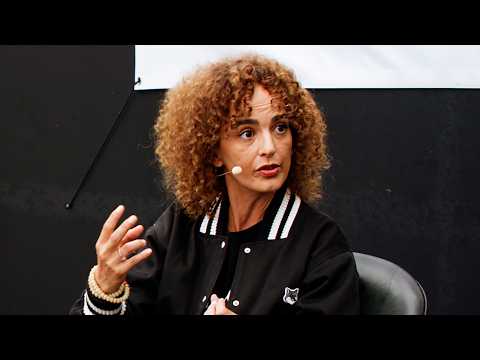
Moroccan-French writer Leila Slimani reflects on the events of the summer of 2026, when many of her countrymen spontaneously attempted to flee to the Spanish enclave of Ceuta.
“I feel that a lot of people in Morocco and in other countries have a certain feeling of shame. Of humiliation. Of living in a country where a lot of people would prefer to live somewhere else. And looking at the West with the idea that it's better over there.”
“There is also something that people in the West don't understand. You can decide tomorrow to go on the internet and buy a ticket to Marrakech. The youth from my country will never visit the Tour d’Eiffel, they will never visit the Alhambra, and they will never come to your country. Because for them, the world is forbidden.”
”I've always thought that I was very lucky because I have two things in my life. I have a room of my own, so a place where I can lock the door, and I can sit still. And I have a passport in the drawer of my office, and I can go whenever I want. And for a lot, a lot of young people in what we call the third world, they don't have a room of their own because they share a room with their brothers, with their parents, so they have no intimacy and no possibility to move. So, I think that maybe the key to dignity, the key to happiness, is having this balance between the possibility of having intimacy and having also the opportunity to discover the world. And when you don't have that, you experience humiliation.”
Leïla Slimani (b. 1981 in Rabat, Morocco) is a critically acclaimed French-Moroccan novelist, journalist, and cultural figure whose work has made her one of the most influential voices in contemporary francophone literature. She grew up between cultures — Moroccan, French, and Algerian — and studied political science in Paris before turning from journalism to fiction writing. Slimani’s literary career is marked by bold, provocative storytelling and a fearless exploration of taboo subjects such as sexuality, gender roles, societal pressures, and identity.
Her first novel, Adèle (Dans le jardin de l’ogre), was published in 2014 and examines female sexual addiction and self-destruction within a societal context of repression and shame. This debut work garnered critical attention, was nominated for the Prix de Flore, and won the La Mamounia Prize, marking her arrival on the French literary scene. It is being adapted as a film directed by Carolina Jabor and starring Alice Braga.
Slimani’s second novel, The Perfect Nanny (Chanson douce), published in 2016, became her international breakthrough. The novel was later adapted into a film, translated into multiple languages, and recognised as one of The New York Times Book Review’s 10 Best Books of 2018.
Following this success, Slimani published works that expanded her literary range: the essay Sex and Lies (2017), a series of intimate testimonies from women in the Arab world that highlights sexual politics and gendered silences; In the Country of Others (2020), the first in a family-history trilogy set in post-World War II Morocco; Watch Us Dance; and I’ll Take the Fire (Penguin, June 9, 2026). In 2026, Slimani published a personal essay, Assaut contre la frontière, in which she reflects on her relationship to the Arabic language, marking it as an absence, a loss, and a wound.
Beyond her books, Slimani has been honored for her advocacy and cultural impact. In 2017, French President Emmanuel Macron appointed her as his personal representative to promote the French language and culture. For her activism in women’s rights and freedom of expression, she was awarded the Simone de Beauvoir Prize for Women’s Freedom in 2020. In 2026, she is in residence at the Museo del Prado, where she will create a new work inspired by the museum. She was also awarded the 2026 International Prize at the 61st Valencia Book Fair and received the insignia of Chevalier de l'Ordre National du Mérite (National Order of Merit) from France. Themes across her work consistently probe power dynamics, sexual politics, motherhood, identity, and the social structures that shape personal freedom.
Leila Slimani on stage with Kiran Desai during the Louisiana Literature festival in August 2026. Both writers were interviewed by Lotte Folke Kaarsholm, cultural editor of the Danish newspaper Politiken.
Camera: Jakob Solbakken
Edited by: Signe Boe Pedersen
Produced by: Marc-Christoph Wagner
Copyright: Louisiana Channel, Louisiana Museum of Modern Art, 2026
Louisiana Channel is supported by Den A.P. Møllerske Støttefond
Subscribe to our channel for more videos on literature: https://www.youtube.com/thelouisianachannel
SIGN UP FOR OUR NEWSLETTER:
https://channel.louisiana.dk/newsletter
FOLLOW US HERE:
Website: http://channel.louisiana.dk
Instagram: http://www.instagram.com/louisianachannel
Facebook: https://www.facebook.com/LouisianaChannel
María de los Remedios Alicia Rodriga Varo y Uranga known as Remedios Varo (1908-1963) was born in northern Spain and grew up in a home with a staunch Catholic mother and a free-spirited father who was a hydraulic engineer. It was he who taught her to draw and supported her desire to become an artist.
She was only 15 years old when she enrolled at the Academy of Fine Arts in Madrid, and during the 1920s, she was influenced by the city’s artistic avant-garde, including Lorca, Buñuel, and Dalí. The increasing unrest in Spain in the 1930s led her to travel to Paris, where she became involved in surrealist circles. When the Nazis invaded Paris, she had to flee to Marseille and was among the artists rescued from France in 1941 with the help of Peggy Guggenheim and Helena Rubinstein, among others.
Varo settled in Mexico City with her partner, the surrealist poet Benjamin Péret, and became part of a vibrant community of Mexican and European artists who drew inspiration from Mexico’s culture and geography. In the early years, she had to support herself and Péret through odd jobs, e.g., creating illustrations for advertising campaigns.
It was not until 1949 that she was able to seriously engage in painting, and a few years later, her marriage to the Austrian emigrant Walter Gruen meant she no longer had to worry about finances. Her closest friends – and collaborators – became the British artist Leonora Carrington and the Hungarian photojournalist Kati Horna. They were so close that they were referred to as “the three witches.”
Remedios Varo achieved enormous success with her paintings, but since each one took a long time to make, her output was limited, and people had to join a waiting list for her works. She died suddenly of a heart attack at the age of only 54. André Breton, who is considered the spiritual father figure of surrealism, paid tribute to her with the words: “The sorceress has left us too soon.”ª
Olga Ravn and Samanta Schweblin were interviewed by Nanna Dahm. Maria Magdalena Campos-Pons, Alejandro Cardenas, and Gabriel de la Mora were interviewed by Marc-Christoph Wagner. All conversations took place between June and August 2026.
Camera: Jarl Therkelsen Kaldan (Alejandro Cardenas & Olga Ravn), Odette Peralta (Gabriel de la Mora), Olivia Newport (Samanta Schweblin), Sean Hanley (Maria Magdalena Campos-Pons)
Edit: Nanna Dahm & Jarl Therkelsen Kaldan
Produced by: Nanna Dahm & Marc-Christoph Wagner
Copyright: Louisiana Museum of Modern Art, 2026
Louisiana Channel is supported by Den A.P. Møllerske Støttefond.
Subscribe to our channel for more videos: https://www.youtube.com/thelouisianachannel
SIGN UP FOR OUR NEWSLETTER:
https://channel.louisiana.dk/newsletter
FOLLOW US HERE:
Website: http://channel.louisiana.dk
Instagram: http://www.instagram.com/louisianachannel
Facebook: https://www.facebook.com/LouisianaChannel
Louis Fratino (b. 1993) was born in Annapolis, Maryland. He received a BFA from the Maryland Institute College of Art in Baltimore in 2015 and works and lives in New York. In 2014, Fratino was selected to participate in the Ellen Battell Stoeckel Fellowship at the Yale Summer School of Art and Music in Norfolk, Connecticut. In 2016, he received a Fulbright Research Fellowship in Painting and Printmaking to study in Berlin. Fratino has been the subject of numerous solo and two-person global exhibitions. In 2024, the solo presentation Satura was held at Centro per l’arte contemporanea Luigi Pecci in Prato, Italy. The exhibition was accompanied by a fully illustrated monograph printed by Mousse Publishing. Spotlight: Louis Fratino was presented at the FLAG Art Foundation in New York in 2025. A two-person presentation placing Fratino’s work in dialogue with that of Henri Matisse was on view at the Baltimore Museum of Art in 2026. The artist’s work was presented in the Central Pavilion at the 60th Venice Biennale, Foreigners Everywhere, in 2024. Fratino has also been included in group exhibitions at institutions worldwide, including FLAG Art Foundation, New York; Columbus Museum of Art, Ohio; Musée Zadkine, Paris; Institute of Contemporary Art, Boston; Rudolph Tegners Museum og Statuepark, Dronningmølle, Denmark; Museum de Fundatie, Zwolle, The Netherlands; and Museum Brandhorst, Munich.
Work by Fratino is held in numerous institutional collections, including Art Gallery of New South Wales, Sydney; Art Institute of Chicago; Baltimore Museum of Art; British Museum, London; Centre national des arts plastiques (CNAP), Paris; Institute of Contemporary Art, Boston; Institute of Contemporary Art, Miami; Hammer Museum, Los Angeles; The Metropolitan Museum of Art, New York; The Morgan Library & Museum, New York; Museum Brandhorst, Munich; Museum of Contemporary Art Chicago; Museum of Contemporary Art, Los Angeles; Museum of Contemporary Art, San Diego; The Museum of Modern Art, New York; Museum of Fine Arts, Boston; Museum of Fine Arts, Houston; Portland Museum of Art, Maine; RISD Museum, Rhode Island School of Design, Providence; San Francisco Museum of Modern Art; and Whitney Museum of American Art, New York.
Louis Fratino was interviewed by Marc-Christoph Wagner in his studio in Brooklyn, New York. The conversation took place in June 2026.
Camera: Sean Hanley
Edited by: Nanna Dahm
Produced by: Marc-Christoph Wagner
Copyright: Louisiana Channel, Louisiana Museum of Modern Art, 2026
Louisiana Channel is supported by Den A.P. Møllerske Støttefond.
Subscribe to our channel for more videos: https://www.youtube.com/thelouisianachannel
SIGN UP FOR OUR NEWSLETTER:
https://channel.louisiana.dk/newsletter
FOLLOW US HERE:
Website: http://channel.louisiana.dk
Instagram: http://www.instagram.com/louisianachannel
Facebook: https://www.facebook.com/LouisianaChannel
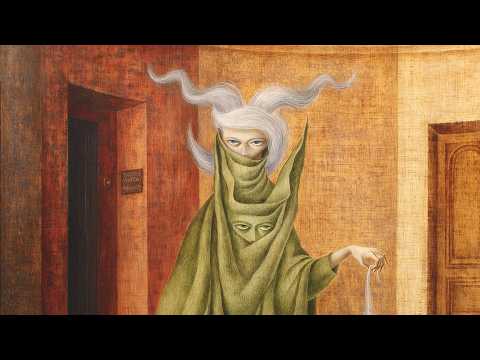
We asked three artists and two writers to tell us about their inspiration from the Spanish-Mexican painter Remedios Varo (1908-1963) and her surrealist universe, where precision and magic intersect.
”She was a brave woman. She gave me energy. She permitted me to be wild. She allowed me to be wild because before I was wild, she was wild,” says the acclaimed Cuban artist Maria Magdalena Campos-Pons.
Chilean-Peruvian painter Alejandro Cardenas, who is based in Madrid, agrees: “She obviously just got better and better. She is one of those artists that I feel like, if you look at her stuff chronologically, just get more specific, more detailed, more concrete, even though they also, weirdly, get more magical.”
Dream worlds and scientific exploration merge with magical thinking in Remedios Varo's fascinating, surreal imagery. With a unique blend of precision and poetry, the Spanish-Mexican artist conjured a universe of fantastical interiors and imaginary landscapes inhabited by mysterious musicians, eccentric scientists, and enigmatic travelers.
Mexican artist Gabriel de la Mora states: ”How I think Remedios Varo was as a person? I'm sure that she didn't divide her dreams from life. I have heard that she was very social. She had a lot of friends, and she was very connected with poets, with writers, with musicians, with dancers, and artists. But I'm sure she was very quiet and lonely at work. I can imagine her spending hours and days painting, drawing, thinking, or reading. I'm sure that she was spending a lot of time in nature, and I'm sure that she was also connected with science, her books, her library, her archive.”
Remedios Varo, who declared that “the dream world and the real world are the same,” attempted to combine vastly different techniques, ideas, and fantasies in an almost alchemical manner in her paintings, which have an enigmatic, cinematic character often incorporating hybrid creatures.
She used the random processes of surrealism, yet was at the same time incredibly precise, meticulous, and classical in her painterly expression and color approach, which has clear connections to Italian painting from the late Middle Ages and early Renaissance.
”A lot of surrealists will work with making clashes, like putting two very different objects together to make a third object, like a fish on a bicycle. And Varo is not interested in that at all,” says Danish writer Olga Ravn.
Varo’s sources of inspiration, therefore, range from, for example, Leonardo da Vinci, Jules Verne, and Niels Bohr to the Armenian philosopher and occult teacher Gurdjieff. She was also a feminist and formulated her own surrealist idiom, which is based on a feminine world of experience and ideas about female creativity and empowerment.
Argentinian writer Samanta Schweblin, who is regarded among the best writers in the Spanish language, sums up: ”Her work is not about something to say. It was like a very, very, very long, open question."
María de los Remedios Alicia Rodriga Varo y Uranga (1908-1963) was born in northern Spain and grew up in a household with a staunch Catholic mother and a free-spirited father, a hydraulic engineer. It was he who taught her to draw and supported her desire to become an artist.
It was not until 1949 that she was able to seriously engage in painting, and a few years later, her marriage to the Austrian emigrant Walter Gruen meant she no longer had to worry about finances. Her closest friends – and collaborators – became the British artist Leonora Carrington and the Hungarian photojournalist Kati Horna. They were so close that they were referred to as “the three witches.”
Remedios Varo achieved enormous success with her paintings, but since each one took a long time to make, her output was limited, and people had to join a waiting list for her works. She died suddenly of a heart attack at the age of only 54. André Breton, who is considered the spiritual father figure of surrealism, paid tribute to her with the words: “The sorceress has left us too soon.”
Olga Ravn and Samanta Schweblin were interviewed by Nanna Dahm. Maria Magdalena Campos-Pons, Alejandro Cardenas, and Gabriel de la Mora were interviewed by Marc-Christoph Wagner. All conversations took place between June and August 2026.
Camera: Jarl Therkelsen Kaldan (Alejandro Cardenas & Olga Ravn), Odette Peralta (Gabriel de la Mora), Olivia Newport (Samanta Schweblin), Sean Hanley (Maria Magdalena Campos-Pons)
Edit: Nanna Dahm & Jarl Therkelsen Kaldan
Produced by: Nanna Dahm & Marc-Christoph Wagner
Copyright: Louisiana Museum of Modern Art, 2026
Louisiana Channel is supported by Den A.P. Møllerske Støttefond.
Subscribe to our channel for more videos on art: https://www.youtube.com/thelouisianachannel
SIGN UP FOR OUR NEWSLETTER:
https://channel.louisiana.dk/newsletter
FOLLOW US HERE:
Website: http://channel.louisiana.dk
Instagram: http://www.instagram.com/louisianachannel
Facebook: https://www.facebook.com/LouisianaChannel
“The more you train your awareness muscle, the more aware you are.” French artist Colonel Thierry Geoffroy turns urgent global crises into art that awakens awareness and inspires action.
For Thierry Geoffroy, also known as Colonel, art must respond to the present before it’s too late: “I’m interested to see if I can be in advance of the catastrophe,” he continues: “If we’re too late, then we’re too late.” Geoffroy describes his practice as “format art about emergencies.” Each format has a set of rules that allows it to be repeated anywhere in the world. In his work ‘Emergency Room’, the artist creates and exhibits new works in response to the day’s news. Every afternoon, yesterday’s works are replaced, followed by a public debate: “I want to take the question: Why do museums not address urgent matter at the moment they happen? The ‘Emergency Room’ came as a solution.”
Geoffroy has his own daily work that confronts subjects such as war, climate change and public apathy. He is particularly concerned with images that make extreme temperatures appear enjoyable or even glamorous: “Maybe [people] get used to this glamorous vision of climate change, so they don’t protest so much,” he suggests.
Whether working in a museum, on the street or online, Geoffroy aims to train what he categorises as our “awareness muscle”. “The more you train your awareness muscle, the more aware you are,” he explains. For him, awareness must lead to action: “We can change the world, but it needs a strategy.”
Thierry Geoffroy (b. 1961, France), also known as Colonel, is a Danish-French artist based in Copenhagen, Denmark. He is known for his conceptual art using a wide variety of media, including video, installations, and collaborative performances with other artists. His work has been shown at MoMA PS1, New York; Moderna Museet, Stockholm, the Sprengel Museum, Hannover; ZKM Karlsruhe and the Venice Biennale, Italy. He has also exhibited at the National Gallery of Denmark, KUMU Art Museum and the National Museum of Iceland. In 2003, he was appointed Chevalier de l’Ordre des Arts et des Lettres.
Thierry Geoffroy was interviewed by Signe Boe Pedersen in Copenhagen, June 2026.
Camera: Rasmus Quistgaard
Edited and produced by Signe Boe Pedersen
Music by Thierry Geoffroy / Colonel
Copyright: Louisiana Channel, Louisiana Museum of Modern Art, 2026
Louisiana Channel is supported by Den A.P. Møllerske Støttefond.
Subscribe to our channel for more videos on art: https://www.youtube.com/thelouisianachannel
SIGN UP FOR OUR NEWSLETTER:
https://channel.louisiana.dk/newsletter
FOLLOW US HERE:
Website: http://channel.louisiana.dk
Instagram: http://www.instagram.com/louisianachannel
Facebook: https://www.facebook.com/LouisianaChannel
Nina Beier (b. 1975, Aarhus, Denmark) lives and works in Copenhagen, Denmark and Berlin, Germany. Beier has presented solo exhibitions at ARoS, Denmark (2026); Bozar, Brussels (2025); Museuo Tamayo, Mexico City (2024); Museum of Contemporary Art Kiasma, Helsinki (2024); Highline, New York (2022); Rønnebæksholm, Denmark (2020); Spike Island, Bristol, England (2018); Kunstverein Hamburg, Germany (2015); Contemporary Art Centre (CAC), Vilnius, Lithuania (2015); and the Yerba Buena Center for the Arts, San Francisco, California (2010). Her work has been included in group exhibitions at institutions including the Louisiana Museum of Modern Art (2024); Hammer Museum, Los Angeles, California (2022); the High Museum of Art, Atlanta, Georgia (2019); YUZ Museum, Shanghai, China (2018); Centre Pompidou, Paris, France (2014 and 2013); and Tate Modern, London, England (2012 and 2007). Her work has been featured in major international exhibitions, including the São Paulo Bienal, Brazil (2021); Glasgow International, Scotland (2021); the Riga International Biennial of Contemporary Art, Latvia (2020); 20th Sydney Biennale, Australia (2016) and 13th Biennale de Lyon, France (2015).
Nina Beier was interviewed by Roxanne Bagheshirin Lærkesen at her studio in Copenhagen in April 2026 and at Bozar in Brussels in October 2026.
Camera: Jarl Therkelsen Kaldan
Edited and produced by Roxanne Bagheshirin Lærkesen
Music via Upright:
Guitar Hi 1 Reverse by Drew J. Lerdal, Darren Mark Drew and Brian Burke Reidinger
Urban Hermit by Paul Aigner
Rostockk by Paul Elliott
Reversed Reflections by Maria Martine Jadg and Ida Duelund Hansen
Iorana by Penelope Fasy
Leaving Me by Anthony Francisco Ranere and Christian Campbell Celaya
Moments of Solitude by Bjarni Biering Margeirsson
Copyright: Louisiana Channel, Louisiana Museum of Modern Art, 2026
Louisiana Channel is supported by Den A.P. Møllerske Støttefond.
Subscribe to our channel for more videos: https://www.youtube.com/thelouisianachannel
SIGN UP FOR OUR NEWSLETTER:
https://channel.louisiana.dk/newsletter
FOLLOW US HERE:
Website: http://channel.louisiana.dk
Instagram: http://www.instagram.com/louisianachannel
Facebook: https://www.facebook.com/LouisianaChannel
Kae Tempest (born 1985 in London) is a writer, poet, playwright, and recording artist known for his genre-crossing body of work. His achievements include the bestselling poetry collections Hold Your Own (2014) and Let Them Eat Chaos (2016), the Mercury Prize–nominated albums Everybody Down and Let Them Eat Chaos, and the acclaimed novels The Bricks That Built the Houses and Divisible by Itself and One. Tempest has received the Ted Hughes Award for Brand New Ancients (2013), and is widely recognised for his innovative fusion of spoken word, music, and narrative craft.
Kae Tempest was interviewed by poet Caspar Eric at the Louisiana Literature festival, in August 2026, at the Louisiana Museum of Modern Art, Denmark
Cameras: Rasmus Quistgaard
Edit: Signe Boe Pedersen
Produced by Christian Lund
Copyright: Louisiana Channel, Louisiana Museum of Modern Art, 2026
Louisiana Channel is supported by Den A.P. Møllerske Støttefond.
Subscribe to our channel for more videos: https://www.youtube.com/thelouisianachannel
SIGN UP FOR OUR NEWSLETTER:
https://channel.louisiana.dk/newsletter
FOLLOW US HERE:
Website: http://channel.louisiana.dk
Instagram: http://www.instagram.com/louisianachannel
Facebook: https://www.facebook.com/LouisianaChannel
British writer, poet and performer Kae Tempest sits down for an in depth stage conversation about the craft of fiction, the emotional stakes of character-building, and the radical potential of storytelling. Speaking with a mix of precision and vulnerability, Tempest describes the novel as a uniquely demanding form—one that requires total immersion in the inner lives of imagined people.
Throughout the interview, Tempest emphasizes the exhaustive attention required to make a fictional world feel lived-in. “You have to know everything about everybody. You have to know every single day of their lives,” he says, explaining how unseen drafts and discarded characters still shape the emotional logic of the final narrative. Writing a novel, he notes, is not a liberating escape but “fucking intense,” a process of returning to difficult memories and transforming him into something new.
Tempest describes fiction as a technology of connection: “These novels, these are empathy machines. This is a very advanced technology, the story.” For him, the power of narrative lies in its ability to shift perspective, reminding readers that “you just don’t know what’s happening for a person” and encouraging a momentary suspension of judgment.
Discussing his novel Having Spent Life Seeking (2026) and it’s protagonist Rothko—an ex-convict whose life is shaped by addiction, institutionalization, and the failures of family systems—Tempest insists on resisting moral simplification. “Nobody should be condemned,” he says, recalling one of the guiding principles taped to his studio wall during the writing process. The novel’s structure, he explained, mirrors the complexity of lived experience: beauty intertwined with violence, forgiveness with grief, and community with isolation.
Tempest also reflects on the landscapes that inform his work, particularly the British coastline. “I love what happens at the edge of the land… it gives me this perspective that I need in order to feel like I can face anything,” he says, describing the horizon as both liberating and claustrophobic—a duality that shapes the fictional city of Edgecliff.
The conversation reveals a writer deeply committed to the emotional truth of his characters, willing to cut entire storylines to avoid “unintentional repetition,” and attentive to the mysterious moment when a character begins to “speak and you just eavesdrop and you just listen. It’s an encounter.”
Kae Tempest (born 1985 in London) is a writer, poet, playwright, and recording artist known for his genre-crossing body of work. His achievements include the bestselling poetry collections Hold Your Own (2014) and Let Them Eat Chaos (2016), the Mercury Prize–nominated albums Everybody Down and Let Them Eat Chaos, and the acclaimed novels The Bricks That Built the Houses and Divisible by Itself and One. Tempest has received the Ted Hughes Award for Brand New Ancients (2013), and is widely recognized for his innovative fusion of spoken word, music, and narrative craft.
Kae Tempest was interviewed by poet Caspar Eric at the Louisiana Literature festival, in August 2026, at the Louisiana Museum of Modern Art, Denmark.
Cameras: Rasmus Quistgaard
Edit: Signe Boe Pedersen
Produced by Christian Lund
Copyright: Louisiana Channel, Louisiana Museum of Modern Art, 2026
Louisiana Channel is supported by Den A.P. Møllerske Støttefond.
Subscribe to our channel for more videos on literature: https://www.youtube.com/thelouisianachannel
SIGN UP FOR OUR NEWSLETTER:
https://channel.louisiana.dk/newsletter
FOLLOW US HERE:
Website: http://channel.louisiana.dk
Instagram: http://www.instagram.com/louisianachannel
Facebook: https://www.facebook.com/LouisianaChannel
New York-based artist Louis Fratino depicts intimate personal experiences and domestic affairs in his works, frequently centering contemporary queer life and the male body.
In portraying all manner of subjects drawn from his immediate circle and from observation, he pairs an exuberant palette of bold, high-contrast colors with expressive figuration that reflects his considered study of art history and literature.
”It is important for me to maintain a kind of vulnerability. I mean, it's kind of a loaded word, vulnerability, but I think that it's important to make an artwork. It's so important for me to feel not embarrassed by anything. Like, how could you embarrass yourself in a kind of mental dialogue that you're having with yourself? In that way, my studio is a kind of sacred space.”
”The best things that happen in the studio are always the things where you're like: did I do that? How could I have done that? And sometimes I have these nightmares that I've got to remake something, but I have no idea how I would.”
”In our memory or in our lived experiences, it can be painful to experience something that... is so beautiful but that you know is already ending the moment you're able to recognize that it's even happening. It's kind of already gone. That could be light on a wall or touching someone or traveling somewhere, and I feel like painting, which is such a slow process and takes so much kind of repeated physical effort, is kind of this way of being in those spaces or spending that time over and over again.”
Louis Fratino (b. 1993) was born in Annapolis, Maryland. He received a BFA from the Maryland Institute College of Art in Baltimore in 2015 and works and lives in New York. In 2014, Fratino was selected to participate in the Ellen Battell Stoeckel Fellowship at the Yale Summer School of Art and Music in Norfolk, Connecticut. In 2016, he received a Fulbright Research Fellowship in Painting and Printmaking to study in Berlin. Fratino has been the subject of numerous solo and two-person global exhibitions. In 2024, the solo presentation Satura was held at Centro per l’arte contemporanea Luigi Pecci in Prato, Italy. The exhibition was accompanied by a fully illustrated monograph printed by Mousse Publishing. Spotlight: Louis Fratino was presented at the FLAG Art Foundation in New York in 2025. A two-person presentation placing Fratino’s work in dialogue with that of Henri Matisse was on view at the Baltimore Museum of Art in 2026. The artist’s work was presented in the Central Pavilion at the 60th Venice Biennale, Foreigners Everywhere, in 2024. Fratino has also been included in group exhibitions at institutions worldwide, including FLAG Art Foundation, New York; Columbus Museum of Art, Ohio; Musée Zadkine, Paris; Institute of Contemporary Art, Boston; Rudolph Tegners Museum og Statuepark, Dronningmølle, Denmark; Museum de Fundatie, Zwolle, The Netherlands; and Museum Brandhorst, Munich.
Work by Fratino is held in numerous institutional collections, including Art Gallery of New South Wales, Sydney; Art Institute of Chicago; Baltimore Museum of Art; British Museum, London; Centre national des arts plastiques (CNAP), Paris; Institute of Contemporary Art, Boston; Institute of Contemporary Art, Miami; Hammer Museum, Los Angeles; The Metropolitan Museum of Art, New York; The Morgan Library & Museum, New York; Museum Brandhorst, Munich; Museum of Contemporary Art Chicago; Museum of Contemporary Art, Los Angeles; Museum of Contemporary Art, San Diego; The Museum of Modern Art, New York; Museum of Fine Arts, Boston; Museum of Fine Arts, Houston; Portland Museum of Art, Maine; RISD Museum, Rhode Island School of Design, Providence; San Francisco Museum of Modern Art; and Whitney Museum of American Art, New York.
Louis Fratino was interviewed by Marc-Christoph Wagner in his studio in Brooklyn, New York. The conversation took place in June 2026.
Camera: Sean Hanley
Edited by: Nanna Dahm
Produced by: Marc-Christoph Wagner
Copyright: Louisiana Channel, Louisiana Museum of Modern Art, 2026
Louisiana Channel is supported by Den A.P. Møllerske Støttefond.
Subscribe to our channel for more videos on art: https://www.youtube.com/thelouisianachannel
SIGN UP FOR OUR NEWSLETTER:
https://channel.louisiana.dk/newsletter
FOLLOW US HERE:
Website: http://channel.louisiana.dk
Instagram: http://www.instagram.com/louisianachannel
Facebook: https://www.facebook.com/LouisianaChannel
We visited Brazilian-German artist Janaina Tschäpe in New York and found a passionate painter with endless energy for discovering the world.
Full interview via our YouTube channel.
Brazilian-German artist Janaina Tschäpe (b. 1973 in Munich, Germany) lives and works in New York. She has a multidisciplinary practice that spans painting, drawing, photography, performance, video art, sculpture, murals, and installations. Drawing from the natural world, Tschäpe presents dreamlike abstract landscapes inspired by memory and myth. Balancing fluidity with precision, her work is imbued with a universality that reflects the various topographies she has traveled through or calls home – from Germany, Brazil, and America to beyond.
Tschäpe received her BFA from the Hochschule für Bildende Künste Hamburg (HFBK) in 1997 and her MFA from the School of Visual Arts, New York, in 1998. Her work is in the collections of – among others – the Centre Pompidou, Paris, Musée National d’Art Moderne, Paris; Moderna Museet, Stockholm; MAM Rio – Museu de Arte Moderna do Rio de Janeiro, Rio de Janeiro; Museu Nacional Centro de Arte Reina Sofía, Madrid; National Gallery of Art, Washington, D.C.; S.M.A.K. – Stedelijk Museum voor Actuele Kunst, Ghent; Solomon R. Guggenheim Museum, New York; Nasjonalmuseet, Oslo.
Janaina Tschäpe was interviewed by Marc-Christoph Wagner in her New York and Long Island studios. The conversations took place in March 2026.
Camera: Simon Weyhe
Edit: Nanna Dahm
Produced by: Marc-Christoph Wagner
Copyright: Louisiana Museum of Modern Art, 2026
Music via Upright:
Floating Dots by Kaspar Kaae, Brian Batz Andersen
Weightless by Peter Hellemann, Noah Rosanes
Droplets by Mat Andasun Eagerly
Waiting by Bjarni Biering Margeirsso
Louisiana Channel is supported by Den A.P. Møllerske Støttefond.
Subscribe to our channel for more videos on art: https://www.youtube.com/thelouisianachannel
SIGN UP FOR OUR NEWSLETTER:
https://channel.louisiana.dk/newsletter
FOLLOW US HERE:
Website: http://channel.louisiana.dk
Instagram: http://www.instagram.com/louisianachannel
Facebook: https://www.facebook.com/LouisianaChannel
Peter Fischli (born 1952, Zurich) is a Swiss artist known for his long‑standing collaboration with David Weiss (1946–2012). Together, Fischli & Weiss produced some of the late 20th century’s most influential works, including The Way Things Go (1987), the Equilibres series, and the Polyurethane Objects. Their practice spans film, sculpture, photography and installation, often examining everyday materials with humor and philosophical depth. Fischli has exhibited widely, including at the Venice Biennale, MoMA, Tate Modern and the Walker Art Center, and is regarded as one of the most significant European artists of his generation.
Peter Fischli was interviewed at the Louisiana Museum of Modern Art, in June 2026 by Christian Lund.
Camera & edit: Jarl Therkelsen Kaldan
Produced by Christian Lund
Copyright: Louisiana Museum of Modern Art, 2026.
Louisiana Channel is supported by Den A.P. Møllerske Støttefond.
TwitterFacebook
Tags
Art
Peter Fischli
Subscribe to our channel for more videos on art: https://www.youtube.com/thelouisianachannel
SIGN UP FOR OUR NEWSLETTER:
https://channel.louisiana.dk/newsletter
FOLLOW US HERE:
Website: http://channel.louisiana.dk
Instagram: http://www.instagram.com/louisianachannel
Facebook: https://www.facebook.com/LouisianaChannel
”We live in this world of objects that we have created ourselves.” For artist Nina Beier, the endless number of objects surrounding us is anything but neutral. They carry histories, desires, contradictions, and traces of the society that created them.
Nina Beier started as a photographer but soon moved on to work with sculpture and performance. From her studio in Copenhagen, Denmark, she compares her artistic process to a camera trying to focus: “You feel like you recognise it and you know what you’re looking at, but then it opens up in a different way. It shows this foggy version of itself where you start understanding the complexity of the object.” Throughout her work, Beier returns to objects that have lived many lives – bronze busts, marble countertops, Hermes ties, and remote-controlled luxury cars. But rather than transforming them completely, she destabilises them, revealing hidden stories and relationships.
During her childhood, Nina Beier lived partly in Mozambique, where her parents worked for a Danish aid organisation. Beier developed an early awareness of how objects, people, and power circulate across borders. That experience shaped her suspicion of simple narratives: “I’ve always been wary of anything that’s said or done in the name of righteousness.” For Beier, art is not about providing answers or being mediated. Instead, it should create situations where meaning remains open and unresolved: “I’m trying to unlock something in these objects,” she continues, “where they basically become signs in a way.”
In Nina Beier's work, seemingly ordinary, familiar objects can trigger a shared visual language with the viewer. Books scattered on a floor might evoke a study hall, a graveyard, or a flock of birds in flight. The objects have their own language and the ability to generate images and associations beyond themselves. This makes Beier cautious about overexplaining her work: “What happens when we start mediating the art is, of course, that we’re speaking on top of that language.” In an ideal world, she adds, she would rather people encounter the work first and discover their own associations before any explanation intervenes.
Nina Beier (b. 1975, Aarhus, Denmark) lives and works in Copenhagen, Denmark and Berlin, Germany. Beier has presented solo exhibitions at ARoS, Denmark (2026); Bozar, Brussels (2025); Museuo Tamayo, Mexico City (2024); Museum of Contemporary Art Kiasma, Helsinki (2024); Highline, New York (2022); Rønnebæksholm, Denmark (2020); Spike Island, Bristol, England (2018); Kunstverein Hamburg, Germany (2015); Contemporary Art Centre (CAC), Vilnius, Lithuania (2015); and the Yerba Buena Center for the Arts, San Francisco, California (2010). Her work has been included in group exhibitions at institutions including the Louisiana Museum of Modern Art (2024); Hammer Museum, Los Angeles, California (2022); the High Museum of Art, Atlanta, Georgia (2019); YUZ Museum, Shanghai, China (2018); Centre Pompidou, Paris, France (2014 and 2013); and Tate Modern, London, England (2012 and 2007). Her work has been featured in major international exhibitions, including the São Paulo Bienal, Brazil (2021); Glasgow International, Scotland (2021); the Riga International Biennial of Contemporary Art, Latvia (2020); 20th Sydney Biennale, Australia (2016) and 13th Biennale de Lyon, France (2015).
Nina Beier was interviewed by Roxanne Bagheshirin Lærkesen at her studio in Copenhagen in April 2026 and at Bozar in Brussels in October 2026.
Camera: Jarl Therkelsen Kaldan
Edited and produced by Roxanne Bagheshirin Lærkesen
Music via Upright:
Guitar Hi 1 Reverse by Drew J. Lerdal, Darren Mark Drew and Brian Burke Reidinger
Urban Hermit by Paul Aigner
Rostockk by Paul Elliott
Reversed Reflections by Maria Martine Jadg and Ida Duelund Hansen
Iorana by Penelope Fasy
Leaving Me by Anthony Francisco Ranere and Christian Campbell Celaya
Moments of Solitude by Bjarni Biering Margeirsson
Copyright: Louisiana Channel, Louisiana Museum of Modern Art, 2026
Louisiana Channel is supported by Den A.P. Møllerske Støttefond.
Subscribe to our channel for more videos on art: https://www.youtube.com/thelouisianachannel
SIGN UP FOR OUR NEWSLETTER:
https://channel.louisiana.dk/newsletter
FOLLOW US HERE:
Website: http://channel.louisiana.dk
Instagram: http://www.instagram.com/louisianachannel
Facebook: https://www.facebook.com/LouisianaChannel
“Living with contrasts is something very meaningful.”
We went to Paris and visited the architectural studio Mikoü, founded by the French-Moroccan twins Salwa and Selma Mikoü.
”Actually, we are twins, but we have very different ways of looking at architecture. We are very complementary, so when approaching a new project, we like to work together, but we also like to work separately at the beginning. We like drawing, we like sketching, but above all, we love speaking because words and exchanging ideas have a very deep resonance for us.”
Salwa and Selma Mikoü (b.1975 in Fez, Morocco) are French–Moroccan architects, twin sisters, and founders of Mikoü Architecture, a Paris-based practice at the intersection of architecture, cultural narratives, and material research. They founded the studio in 2008 after working at Ateliers Jean Nouvel and Renzo Piano Building Workshop, respectively. From 2016 to 2018, they led Intermediate Unit 16 at the Architectural Association School of Architecture in London.
Rooted in France and Morocco, the practice brings the intelligence of craft into dialogue with the demands of complex public programs. For Mikoü, every site contains traces, resources, and collective imaginaries that can become active materials for design.
”We are interested in engineering because for us all this inner structure is something like the fundamentals of architecture. It's like a skeleton. It's something that sometimes we don't see, but you know it's something so important.”
”Also, regarding climate issues, ecological transition, we had from the beginning this intuition that contemporary construction processes could embody this issue and could bring some solutions for the project and for the future of architecture. We like to assemble things because, for us, it's very smart and also allows us to think and push forward the concept of prefabrication. We really like the idea of industrializing architecture because, for us, it's a kind of gesture of progress. It's a way to think architecture differently, to make it smart, but still not standard at all.”
The studio’s Atlas of Resonance is a way of reading territories through memory, local narratives, geology, climate, and craft traditions. Construction is understood as a form of writing — one that articulates relationships, makes latent structures legible, and engages with the cultural depth of a place.
Salwa and Selma Mikoü define their practice as a Manufacture of Architecture, in which technology and craftsmanship converge through a Poetics of Assembly. Prefabrication, dry construction, craft knowledge, and off-site processes are approached not only as construction strategies but as cultural and social acts that bring different histories, identities, and forms of knowledge into relation.
“I tend to say that as architects, we are building also our own personality, our own culture, our own way to see the world. And project after project, we push boundaries that could also be our own boundaries as women,” Salwa says.
Built works include Aquazena, a swimming pool and wellness center in Greater Paris; Balsanéo, an Olympic aquatic center and spa in Châteauroux; the Simone Veil School Campus in Boulogne-Billancourt; a residential tower in Nanterre; and the transformation of the former studio of Yves Saint Laurent and Pierre Bergé in Paris. Current projects include Art de Rives, a mixed-use development along the Garonne in Bordeaux; a cultural campus within rehabilitated industrial halls in Casablanca; a museum park in Normandy; and a metalworking facility for Hermès in Champigny-sur-Marne.
Salwa and Selma Mikoü also lecture internationally.
Camera: Simon Weyhe
Edit: Simon Weyhe
Produced by: Marc-Christoph Wagner
Copyright: Louisiana Museum of Modern Art, 2026
Louisiana Channel is supported by Den A.P. Møllerske Støttefond.
Subscribe to our channel for more videos on architecture: https://www.youtube.com/thelouisianachannel
SIGN UP FOR OUR NEWSLETTER:
https://channel.louisiana.dk/newsletter
FOLLOW US HERE:
Website: http://channel.louisiana.dk
Instagram: http://www.instagram.com/louisianachannel
Facebook: https://www.facebook.com/LouisianaChannel
Elif Shafak (b. 1971, Strasbourg, France) is an award-winning British Turkish novelist, whose work has been translated into fifty-eight languages. She is a bestselling author of twenty books, thirteen of which are novels, in many countries worldwide. Shafak’s novel, 10 Minutes 38 Seconds in this Strange World, was shortlisted for the Booker Prize and the RSL Ondaatje Prize. The Island of Missing Trees was a Sunday Times bestseller and was shortlisted for the Costa Novel Award and the Women’s Prize for Fiction. There are Rivers in the Sky, which won an Edward Stanford Award for Fiction, is her latest novel. Shafak holds a PhD in political science and is a Fellow and a Vice President of the Royal Society of Literature. She was awarded the Chevalier de l’Ordre des Arts et des Lettres medal and, in 2024, was awarded the British Academy President’s Medal for ‘her excellent body of work which demonstrates an incredible intercultural range’.
Elif Shafak was interviewed by Roxanne Bagheshirin Lærkesen in London, England, June 2025.
Camera: Rasmus Quistgaard
Produced and edited by Roxanne Bagheshirin Lærkesen
Copyright: Louisiana Channel, Louisiana Museum of Modern Art, 2026
Louisiana Channel is supported by Den A.P. Møllerske Støttefond
Subscribe to our channel for more videos on literature: https://www.youtube.com/thelouisianachannel
SIGN UP FOR OUR NEWSLETTER:
https://channel.louisiana.dk/newsletter
FOLLOW US HERE:
Website: http://channel.louisiana.dk
Instagram: http://www.instagram.com/louisianachannel
Facebook: https://www.facebook.com/LouisianaChannel

 Login